Recent Posts

Showing posts with label Sunday. Show all posts

Sunday, 19 April 2015

Misunderstanding the Third Commandment


There is an odd memorial in Upper State New York I have seen several times which notes that past this marker, there is no Sunday observance.

This marker noted the end of Christian influence and civilization in long ago colonial days.

The end of Sunday observance practically forms one boundary of the Adirondack State Park area.

Even today, as I have lived up there for months in the recent past, Sunday is simply not kept by the vast majority of people. The Ten Commandments were apparently set aside early on in that part of the States.

As the CCC states, the Ten Commandments are the moral voice of God, reminding us of our own moral voice, the conscience, reminding man of natural law.

The Ten Commandments are not extras, but fundamentals, all based on the natural duties man has towards God and other men.

The Catholic Church teaches an important point-all the commandments may be known by reason.

Revelation underscores reason, and makes the commandments key to the life of the followers of God.


Today, at nine in the morning, I was reminded that America is a nation of pagans. Grass cutting, weed clipping, pruning of trees and hedges all commenced, as if these things could not be done on Saturday or other days.

These jobs in this area are done by lawn contractors, who have their own businesses and could choose not to work on Sundays.

Only those who absolutely must work on Sundays, like nurses, doctors, firefighters, police and so on are given a pass to work on Sunday. Primary care workers and people in industries who cater to travellers who must travel, must work. Soldiers in the field must work on Sunday. Priests and those involved in ministries must work on Sunday.

Americans have forgotten God, and His Day.

However, when I was a child, restaurants were all closed on Sunday. This is true of many places in Malta, although sadly, the big shops are now open. I remember when gas stations were closed on Sunday. Big stores for sure....

and some little ones...

I remember when shops were all closed on Sunday in Iowa. My mother remembers the silence of Sundays in St. Louis.

To purposefully and carelessly break the Sunday work-ban is to commit grave sin.

I grew up in Protestant territory and no one, not the Lutherans or Methodists or Presbyterians, cut grass or worked in the gardens on Sunday.

Garden shops were closed as well.

In one Midwest town and in another town in another state, the Catholic schools had to create their own league for soccer, as the public schools changed all the games to the morning of Sundays.

This type of scheduling is sinful and unnecessary.

St. James notes that to break one of the commandments is to break them all as there is a unity in the following of the law.

Before I continue. a few notes from the CCC. Notice the last note--God does not ask the impossible. We make choices.

2075 "What good deed must I do, to have eternal life?" - "If you would enter into life, keep the commandments" (Mt 19:16-17).
2076 By his life and by his preaching Jesus attested to the permanent validity of the Decalogue.
2077 The gift of the Decalogue is bestowed from within the covenant concluded by God with his people. God's commandments take on their true meaning in and through this covenant.
2078 In fidelity to Scripture and in conformity with Jesus' example, the tradition of the Church has always acknowledged the primordial importance and significance of the Decalogue.
2079 The Decalogue forms an organic unity in which each "word" or "commandment" refers to all the others taken together. To transgress one commandment is to infringe the whole Law (cf. Jas 2:10-11).
2080 The Decalogue contains a privileged expression of the natural law. It is made known to us by divine revelation and by human reason.
2081 The Ten Commandments, in their fundamental content, state grave obligations. However, obedience to these precepts also implies obligations in matter which is, in itself, light.
2082 What God commands he makes possible by his grace.

Some playing fields for sport are still closed on Sunday in Scotland. Some places here are closed on Sundays. Support those, like the one below...


That the West allowed work on Sunday, which occurred under the greed and avarice of the Industrial Revolution, as feeding animals and mucking out barns would be considered necessary and still are, was the beginning of the death of the West.

People point to sexual sins as serious and these are, but working on Sunday, part of the first three commandments which owe God worship and justice, creates a godless society, one no longer focused on true worship of God, prayer, or reflection.

A day of grace and rest from work
2184 Just as God "rested on the seventh day from all his work which he had done,"121 human life has a rhythm of work and rest. The institution of the Lord's Day helps everyone enjoy adequate rest and leisure to cultivate their familial, cultural, social, and religious lives.122
2185 On Sundays and other holy days of obligation, the faithful are to refrain from engaging in work or activities that hinder the worship owed to God, the joy proper to the Lord's Day, the performance of the works of mercy, and the appropriate relaxation of mind and body.123 Family needs or important social service can legitimately excuse from the obligation of Sunday rest. The faithful should see to it that legitimate excuses do not lead to habits prejudicial to religion, family life, and health.
The charity of truth seeks holy leisure- the necessity of charity accepts just work.124
2186 Those Christians who have leisure should be mindful of their brethren who have the same needs and the same rights, yet cannot rest from work because of poverty and misery. Sunday is traditionally consecrated by Christian piety to good works and humble service of the sick, the infirm, and the elderly. Christians will also sanctify Sunday by devoting time and care to their families and relatives, often difficult to do on other days of the week. Sunday is a time for reflection, silence, cultivation of the mind, and meditation which furthers the growth of the Christian interior life.


2187 Sanctifying Sundays and holy days requires a common effort. Every Christian should avoid making unnecessary demands on others that would hinder them from observing the Lord's Day. Traditional activities (sport, restaurants, etc.), and social necessities (public services, etc.), require some people to work on Sundays, but everyone should still take care to set aside sufficient time for leisure. With temperance and charity the faithful will see to it that they avoid the excesses and violence sometimes associated with popular leisure activities. In spite of economic constraints, public authorities should ensure citizens a time intended for rest and divine worship. Employers have a similar obligation toward their employees.
2188 In respecting religious liberty and the common good of all, Christians should seek recognition of Sundays and the Church's holy days as legal holidays. They have to give everyone a public example of prayer, respect, and joy and defend their traditions as a precious contribution to the spiritual life of society. If a country's legislation or other reasons require work on Sunday, the day should nevertheless be lived as the day of our deliverance which lets us share in this "festal gathering," this "assembly of the firstborn who are enrolled in heaven."125
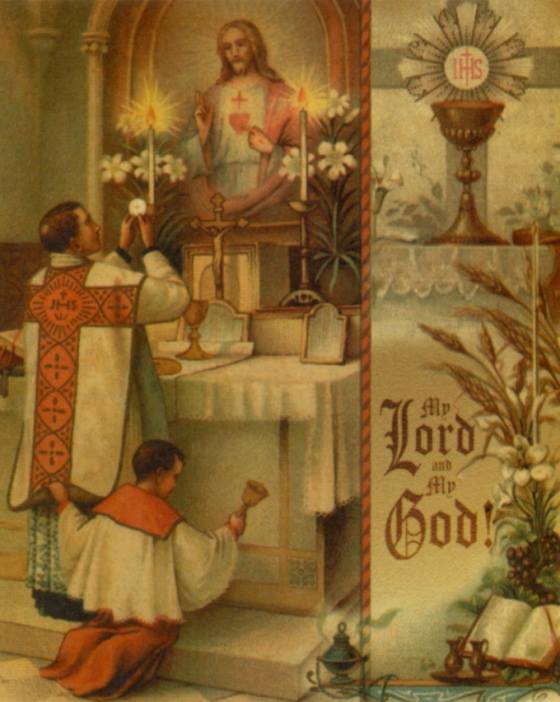


That many places of work now demand unnecessary work on Sunday actually is a tyranny against Christians. Some drug stores or chemists only have the pharmacies open on Sundays, which is reasonable, but to have the entire day of shopping open, making people work long hours, is a crime against God.

God will judge severely those owners who make money by forcing labor on Sunday. This situation has caused great injustice in America and other places.

Shopping and working are idols here. Idolatry of money (Mammon is a demon) and the capital sin of Avarice undermine the lives of millions of people who may not have a choice to not work on Sunday.

But, one does not have to work in the home, do laundry, do yard work, work on cars and so on.

If one owns a business, one cannot make the workers work on Sunday.

Some people think that they are blessed when they get rich or prosperous. God is not the god of money. Prosperity may very well be from satan, not God.

No longer is the "common good" considered but only personal wealth. Avarice has destroyed Catholic communities, which even in my lifetime, would get together on Sundays.

We are the "Sunday People", an ancient phrase from a Catholic who was asked why he was going to Mass on Sunday.  To work on purpose when it can be avoided is a serious sin.

Did you know that Sunday was a day for engaging in the corporal and spiritual works of mercy?

I remind all of these:

The corporal works of mercy are:
  • To feed the hungry;
  • To give drink to the thirsty;
  • To clothe the naked;
  • To harbour the harbourless;
  • To visit the sick;
  • To ransom the captive;
  • To bury the dead.
The spiritual works of mercy are:
  • To instruct the ignorant;
  • To counsel the doubtful;
  • To admonish sinners;
  • To bear wrongs patiently;
  • To forgive offences willingly;
  • To comfort the afflicted;
  • To pray for the living and the dead.
These are not options, but duties.

America is a pagan nation. The spiritual and corporal works of mercy to be done especially on Sunday have been forgotten. I am moving to nowhere soon. That would be a corporal work of mercy for someone to take me in...I instruct the ignorant, counsel the doubtful, admonish sinners, bear wrongs more and more patiently, forgive offences willingly, comfort the afflicted and pray for the living and the dead. Not having a car, I cannot visit the sick, but I do give water to workmen if they are in the vicinity, and I do pass on clothes readily if needed, if I can.

As a very poor person, I am limited in my ability to do the corporal works of mercy, but one can be creative.

I can phone a sick person and pray with them, or encourage them, if I cannot get to them. Thankfully, in most cities past Ohio, buses do not run on Sunday. This is a hang-over from the times when shops were shut. Better if all the shops would shut.

Sunday is the day to really do these works of mercy.

If one is not choosing to be a "Sunday Person", one mocks the very Eucharist we receive on this day.

Justin Martyr gave us the name... First Apology 67:
On the day called Sunday all who live in cities or in the country gather together to one place, and the memoirs of the apostles or the writings of the prophets are read, as long as time permits; then, when the reader has ceased, the president verbally instructs, and exhorts to the imitation of these good things. Then we all rise together and pray, and, as we before said, when our prayer is ended, bread and wine and water are brought, and the president in like manner offers prayers and thanksgivings, according to his ability, and the people assent, saying Amen….
But Sunday is the day on which we all hold our common assembly, because it is the first day on which God, having wrought a change in the darkness and matter, made the world; and Jesus Christ our Savior in the same day rose from the dead. For He was crucified on the day before that of Saturn (Saturday); and on the day after that of Saturn, which is the day of the Sun, having appeared to His apostles and disciples, He taught them these things, which we have submitted to you also for your consideration.

Update-when I chose this passage from Justin, I did not know it would be in Monday's Office of Readings--synchronicity.


Consider your own Sunday observance. Believe that the Lord will bless you, if not now, in heaven, for keeping His Day holy.


Sunday, 19 October 2014

Sunday Reflections Three


When I first moved to England in 1985, and went to parties of academics, my world then, people would start a conversation not with the American phrase, "Oh, and what do you do?", but with "Ah, and who are your people?"

In those days, the English identified a person by their "people". At first, I thought this odd and even rude, as asking about one's job is more objective and less intrusive.

Then, I began to realize that we are identified by our "people".

An ancient text explains who we are as a people, as Catholics. I cannot find the source today, maybe a reader can help, but the paraphrase is this, "We are the Sabbath people, and without the Sabbath we do not exist as a people."

The Catholic Encyclopedia reminds us that Sunday quickly become the day of Catholic worship.

The practice of meeting together on the first day of the week for the celebration of the Eucharistic Sacrificeis indicated in Acts 20:71 Corinthians 16:2; in Apocalypse 1:10, it is called the Lord's day. In the Didache (14)the injunction is given: "On the Lord's Day come together and break bread. And give thanks (offer the Eucharist), after confessing your sins that your sacrifice may be pure". St. Ignatius (Ep. ad Magnes. ix) speaks of Christiansas "no longer observing the Sabbath, but living in the observance of the Lord's Day, on which also Our Life rose again". In the Epistle of Barnabas (xv) we read: "Wherefore, also, we keep the eight day (i.e. the first of the week) with joyfulness, the day also on which Jesus rose again from the dead".
St. Justin is the first Christian writer to call the day Sunday (I Apol., lxvii) in the celebrated passage in which he describes the worship offered by the early Christians on that day to God. The fact that they met together andoffered public worship on Sunday necessitated a certain rest from work on that day. However, Tertullian (202) is the first writer who expressly mentions the Sunday rest: "We, however (just as tradition has taught us), on the day of the Lord's Resurrection ought to guard not only against kneeling, but every posture and office of solicitude, deferring even our businesses lest we give any place to the devil" ("De orat.", xxiii; cf. "Ad nation.", I, xiii; "Apolog.", xvi).


This day gives us an identity. We should be clear and careful not to lose our Sunday People identity.

Sunday Reflections Two

Sunday observance also reminds us of something else. Over the years, I have seen the locus of relationships change from family to work.

More and more people find that their primary relationships are with people with whom they work, instead of with family or friends.

This cultural phenomenon has happened especially in America, where people who work work more than 40 hours per week. We spend more time with our work mates than even with our immediate families.

Here is the problem with this: our families and friends, for the most part, share in our values, share our religious viewpoints, our morals. Our primary relationships in marriage and real friendship have a basis in commonly shared world views, or should.

Those with whom we work rarely share those same values or ideals. In fact, and I can attest for this fact working in academia most of my life, rarely do we find someone with whom we share the closest things in our hearts, and the center of our lives, Who is God.

Sunday observance gives us a chance to reconnect with the deepest feelings and thoughts which we hold. We stop and reconsider the week, repent and start again with renewed minds and hearts, if we keep Sunday as God intended.


Without this respite, one may easily lose focus, lose faith, hope and charity, which are missing in the world.

Sunday observance helps us to find ourselves, to recreate in the real sense of the word.  We need Sunday to be fully human, body and soul renewed.

We need to spend time with those who refresh our souls and renew our minds on Sunday.

We need to spend extra time in prayer.

Keep Sunday, as God's ideas are always better than ours.

No Beauty without Sunday

One of the changes I have seen in Malta since I first came several years ago, is the number of people working on Sunday in construction projects, deliveries, and so on.

The days of old, Sunday was truly a day of rest, with communal meals, family meals, gatherings, walks with loved ones and so on. Also, extra services marked the day, and quiet time for reflection.

My mother remembers that St. Louis shut down on Sunday when she was a child. The streets remained quiet, as people did not travel far. Families spent time together in small pursuits.

I remember when the stores first opened in Iowa in the 1970s. None of us liked this, as the malls took over from the old downtown shops, mostly family owned, which closed on Sunday.

Families.in the old days, brought out violins, sang, ate a meal together, visited grandparents and for a moment, life was joyful beautiful. Sunday reminded us of that Beauty was in our lives, and Beauty Is God.

To see so many shops open and see so many people doing heavy labor saddens me here in Malta.

Part of it has to do with the multicultural society which Malta has become with less Catholics here and more people who do not believe that Sunday is God's holy day

Why is Sunday observance important?


Keeping the Lord's Day reminds the individual as well as the culture Who is God.  God needs to be the First Love, First Person in each life of a nation. When commerce, money, entertainment, even sin push God to the side on Sunday, the people are clearly stating who their gods are now

To see the idolatry of money and work reminds me of the Tower of Babel incident.

God was upset with men for their pride and disregard for nature and His Plans for men. We all need a day of rest and reflection, a day when we set aside our own pursuits in order to listen to God speaking in the depths of our hearts. What does He want of us? What are His Plans for us?

Busyness and noise destroy humans, bit by bit by bit. Sunday observance is not about what one cannot do, but about what one must do-pay attention to the interior life with God. Sunday observance is also a foretaste of heaven, when all work has ended as we rejoice in the love of God together.

I pray that Malta and other countries realize that God demands this day to be holy. It is not a request.

Lest Catholics think only Protestants are supposed to obey God in keeping the Sabbath holy, I quote the entire section in the CCC here.


PART THREE
LIFE IN CHRIST

SECTION TWO
THE TEN COMMANDMENTS

CHAPTER ONE
"YOU SHALL LOVE THE LORD YOUR GOD WITH ALL YOUR HEART, AND WITH ALL YOUR SOUL, AND WITH ALL YOUR MIND"

ARTICLE 3
THE THIRD COMMANDMENT


Remember the sabbath day, to keep it holy. Six days you shall labor, and do all your work; but the seventh day is a sabbath to the Lord your God; in it you shall not do any work.90The sabbath was made for man, not man for the sabbath; so the Son of Man is lord even of the sabbath.91
 I. THE SABBATH DAY

2168 The third commandment of the Decalogue recalls the holiness of the sabbath: "The seventh day is a sabbath of solemn rest, holy to the LORD."92
2169 In speaking of the sabbath Scripture recalls creation: "For in six days the LORD made heaven and earth, the sea, and all that is in them, and rested the seventh day; therefore the Lord blessed the sabbath day and hallowed it."93
2170 Scripture also reveals in the Lord's day a memorial of Israel's liberation from bondage in Egypt: "You shall remember that you were a servant in the land of Egypt, and the LORD your God brought you out thence with mighty hand and outstretched arm; therefore the LORD your God commanded you to keep the sabbath day."94
2171 God entrusted the sabbath to Israel to keep as a sign of the irrevocable covenant.95 The sabbath is for the Lord, holy and set apart for the praise of God, his work of creation, and his saving actions on behalf of Israel.
2172 God's action is the model for human action. If God "rested and was refreshed" on the seventh day, man too ought to "rest" and should let others, especially the poor, "be refreshed."96 The sabbath brings everyday work to a halt and provides a respite. It is a day of protest against the servitude of work and the worship of money.97
2173 The Gospel reports many incidents when Jesus was accused of violating the sabbath law. But Jesus never fails to respect the holiness of this day.98 He gives this law its authentic and authoritative interpretation: "The sabbath was made for man, not man for the sabbath."99 With compassion, Christ declares the sabbath for doing good rather than harm, for saving life rather than killing.100 The sabbath is the day of the Lord of mercies and a day to honor God.101 "The Son of Man is lord even of the sabbath."102


II. THE LORD'S DAY

This is the day which the LORD has made; let us rejoice and be glad in it.103
The day of the Resurrection: the new creation
2174 Jesus rose from the dead "on the first day of the week."104 Because it is the "first day," the day of Christ's Resurrection recalls the first creation. Because it is the "eighth day" following the sabbath,105 it symbolizes the new creation ushered in by Christ's Resurrection. For Christians it has become the first of all days, the first of all feasts, the Lord's Day (he kuriake hemera, dies dominica) Sunday:

We all gather on the day of the sun, for it is the first day [after the Jewish sabbath, but also the first day] when God, separating matter from darkness, made the world; and on this same day Jesus Christ our Savior rose from the dead.106
Sunday - fulfillment of the sabbath
2175 Sunday is expressly distinguished from the sabbath which it follows chronologically every week; for Christians its ceremonial observance replaces that of the sabbath. In Christ's Passover, Sunday fulfills the spiritual truth of the Jewish sabbath and announces man's eternal rest in God. For worship under the Law prepared for the mystery of Christ, and what was done there prefigured some aspects of Christ:107

Those who lived according to the old order of things have come to a new hope, no longer keeping the sabbath, but the Lord's Day, in which our life is blessed by him and by his death.108
2176 The celebration of Sunday observes the moral commandment inscribed by nature in the human heart to render to God an outward, visible, public, and regular worship "as a sign of his universal beneficence to all."109 Sunday worship fulfills the moral command of the Old Covenant, taking up its rhythm and spirit in the weekly celebration of the Creator and Redeemer of his people.


The Sunday Eucharist
2177 The Sunday celebration of the Lord's Day and his Eucharist is at the heart of the Church's life. "Sunday is the day on which the paschal mystery is celebrated in light of the apostolic tradition and is to be observed as the foremost holy day of obligation in the universal Church."110
"Also to be observed are the day of the Nativity of Our Lord Jesus Christ, the Epiphany, the Ascension of Christ, the feast of the Body and Blood of Christi, the feast of Mary the Mother of God, her Immaculate Conception, her Assumption, the feast of Saint Joseph, the feast of the Apostles Saints Peter and Paul, and the feast of All Saints."111
2178 This practice of the Christian assembly dates from the beginnings of the apostolic age.112 The Letter to the Hebrews reminds the faithful "not to neglect to meet together, as is the habit of some, but to encourage one another."113

Tradition preserves the memory of an ever-timely exhortation: Come to Church early, approach the Lord, and confess your sins, repent in prayer. . . . Be present at the sacred and divine liturgy, conclude its prayer and do not leave before the dismissal. . . . We have often said: "This day is given to you for prayer and rest. This is the day that the Lord has made, let us rejoice and be glad in it."114
2179 "A parish is a definite community of the Christian faithful established on a stable basis within a particular church; the pastoral care of the parish is entrusted to a pastor as its own shepherd under the authority of the diocesan bishop."115 It is the place where all the faithful can be gathered together for the Sunday celebration of the Eucharist. The parish initiates the Christian people into the ordinary expression of the liturgical life: it gathers them together in this celebration; it teaches Christ's saving doctrine; it practices the charity of the Lord in good works and brotherly love:

You cannot pray at home as at church, where there is a great multitude, where exclamations are cried out to God as from one great heart, and where there is something more: the union of minds, the accord of souls, the bond of charity, the prayers of the priests.116


The Sunday obligation
2180 The precept of the Church specifies the law of the Lord more precisely: "On Sundays and other holy days of obligation the faithful are bound to participate in the Mass."117 "The precept of participating in the Mass is satisfied by assistance at a Mass which is celebrated anywhere in a Catholic rite either on the holy day or on the evening of the preceding day."118
2181 The Sunday Eucharist is the foundation and confirmation of all Christian practice. For this reason the faithful are obliged to participate in the Eucharist on days of obligation, unless excused for a serious reason (for example, illness, the care of infants) or dispensed by their own pastor.119 Those who deliberately fail in this obligation commit a grave sin.
2182 Participation in the communal celebration of the Sunday Eucharist is a testimony of belonging and of being faithful to Christ and to his Church. The faithful give witness by this to their communion in faith and charity. Together they testify to God's holiness and their hope of salvation. They strengthen one another under the guidance of the Holy Spirit.
2183 "If because of lack of a sacred minister or for other grave cause participation in the celebration of the Eucharist is impossible, it is specially recommended that the faithful take part in the Liturgy of the Word if it is celebrated in the parish church or in another sacred place according to the prescriptions of the diocesan bishop, or engage in prayer for an appropriate amount of time personally or in a family or, as occasion offers, in groups of families."120


A day of grace and rest from work
2184 Just as God "rested on the seventh day from all his work which he had done,"121 human life has a rhythm of work and rest. The institution of the Lord's Day helps everyone enjoy adequate rest and leisure to cultivate their familial, cultural, social, and religious lives.122
2185 On Sundays and other holy days of obligation, the faithful are to refrain from engaging in work or activities that hinder the worship owed to God, the joy proper to the Lord's Day, the performance of the works of mercy, and the appropriate relaxation of mind and body.123 Family needs or important social service can legitimately excuse from the obligation of Sunday rest. The faithful should see to it that legitimate excuses do not lead to habits prejudicial to religion, family life, and health.

The charity of truth seeks holy leisure- the necessity of charity accepts just work.124
2186 Those Christians who have leisure should be mindful of their brethren who have the same needs and the same rights, yet cannot rest from work because of poverty and misery. Sunday is traditionally consecrated by Christian piety to good works and humble service of the sick, the infirm, and the elderly. Christians will also sanctify Sunday by devoting time and care to their families and relatives, often difficult to do on other days of the week. Sunday is a time for reflection, silence, cultivation of the mind, and meditation which furthers the growth of the Christian interior life.
2187 Sanctifying Sundays and holy days requires a common effort. Every Christian should avoid making unnecessary demands on others that would hinder them from observing the Lord's Day. Traditional activities (sport, restaurants, etc.), and social necessities (public services, etc.), require some people to work on Sundays, but everyone should still take care to set aside sufficient time for leisure. With temperance and charity the faithful will see to it that they avoid the excesses and violence sometimes associated with popular leisure activities. In spite of economic constraints, public authorities should ensure citizens a time intended for rest and divine worship. Employers have a similar obligation toward their employees.
2188 In respecting religious liberty and the common good of all, Christians should seek recognition of Sundays and the Church's holy days as legal holidays. They have to give everyone a public example of prayer, respect, and joy and defend their traditions as a precious contribution to the spiritual life of society. If a country's legislation or other reasons require work on Sunday, the day should nevertheless be lived as the day of our deliverance which lets us share in this "festal gathering," this "assembly of the firstborn who are enrolled in heaven."125


IN BRIEF
2189 "Observe the sabbath day, to keep it holy" (Deut 5:12). "The seventh day is a sabbath of solemn rest, holy to the Lord" (Ex 31:15).
2190 The sabbath, which represented the completion of the first creation, has been replaced by Sunday which recalls the new creation inaugurated by the Resurrection of Christ.
2191 The Church celebrates the day of Christ's Resurrection on the "eighth day," Sunday, which is rightly called the Lord's Day (cf. SC 106).
2192 "Sunday . . . is to be observed as the foremost holy day of obligation in the universal Church" (CIC, can. 1246 § 1). "On Sundays and other holy days of obligation the faithful are bound to participate in the Mass" (CIC, can. 1247).
2193 "On Sundays and other holy days of obligation the faithful are bound . . . to abstain from those labors and business concerns which impede the worship to be rendered to God, the joy which is proper to the Lord's Day, or the proper relaxation of mind and body" (CIC, can. 1247).
2194 The institution of Sunday helps all "to be allowed sufficient rest and leisure to cultivate their amilial, cultural, social, and religious lives" (GS 67 § 3).
2195 Every Christian should avoid making unnecessary demands on others that would hinder them from observing the Lord's Day.


90 Ex 20:8-10; cf. Deut 5:12-15.
91 Mk 2:27-28.
92 Ex 31:15.
93 Ex 20:11.
94 Deut 5:15.
95 Cf. Ex 31:16.
96 Ex 31:17; cf. 23:12.
97 Cf. Neh 13:15-22; 2 Chr 36:21.
98 Cf. Mk 1:21; Jn 9:16.
99 Mk 2:27.
100 Cf. Mk 3:4.
101 Cf. Mt 12:5; Jn 7:23.
102 Mk 2:28.
103 Ps 118:24.
104 Cf. Mt 28:1; Mk 16:2; Lk 24:1; Jn 20:1.
105 Cf. Mk 16:1; Mt 28:1.
106 St. Justin, I Apol. 67:PG 6,429 and 432.
107 Cf. 1 Cor 10:11.
108 St. Ignatius of Antioch, Ad Magn. 9,1:SCh 10,88.
109 St. Thomas Aquinas, STh II-II,122,4.
110 CIC, can. 1246 § 1.
111 CIC, can. 1246 § 2: "The conference of bishops can abolish certain holy days of obligation or transfer them to a Sunday with prior approval of the Apostolic See."
112 Cf. Acts 2:42-46; 1 Cor 11:17.
113 Heb 10:25.
114 Sermo de die dominica 2 et 6:PG 86/1,416C and 421C.
115 CIC, can. 515 § 1.
116 St. John Chrysostom, De incomprehensibili 3,6:PG 48,725.
117 CIC, can. 1247.
118 CIC, can. 1248 § 1.
119 Cf. CIC, can. 1245.
120 CIC, can. 1248 § 2.
121 Gen 2:2.
122 Cf. GS 67 § 3.
123 Cf. CIC, can. 120.
124 St. Augustine, De civ. Dei 19,19:PL 41,647.
125 Heb 12:22-23.