Showing posts with label novella four. Show all posts
Friday, 2 January 2015
Instincts and More On The Eve of My Birthday
Posted by
Supertradmum
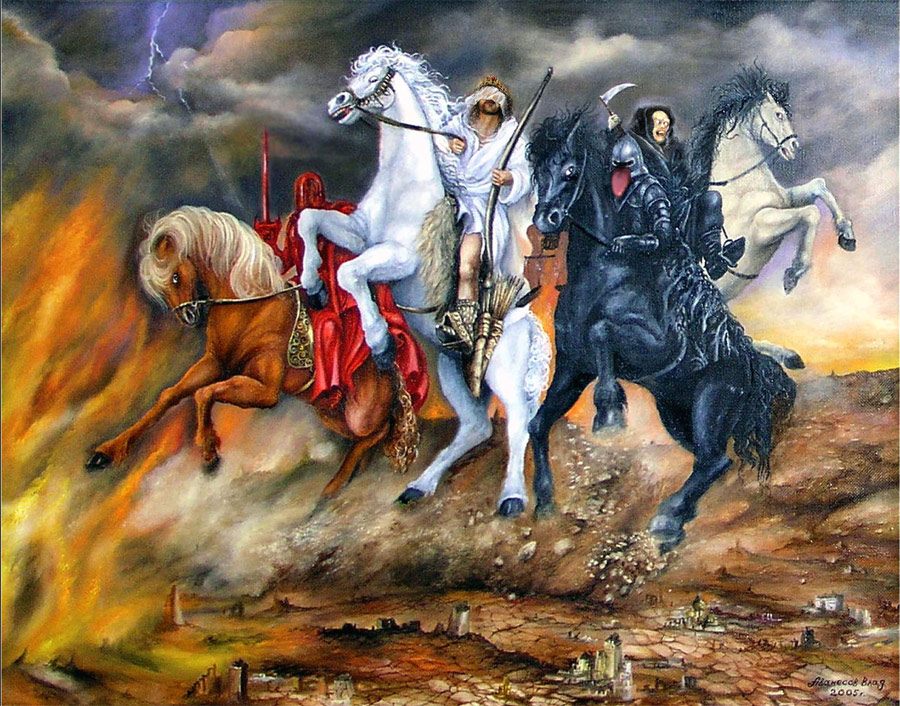
About two and a half weeks ago, I sensed a huge shift in evil and good in and over Malta and Europe. Something happened. This instinct is not based on the increased persecution of the Christians by the Muslims, nor the saber-rattling of the Russians, which have the Poles, Finns, and Lithuanians nervous.
God has allowed something to change, and we have been warned for a long time about the last, great tribulation of the Church. He is removing His protective Hand and allowing Satan a time to sift us all. I have written some fiction based on three days of visions I saw in the summer of 2008, some of which was verified by two other people, one who lived hundreds of miles away. As you know, I am not into private revelations, and believe that God merely inspires our imaginations. But, I was first warned by a small voice, in French, which is interesting. to pay attention to what was going to be shown to me over the next three days at the time. Again, details do not matter much, but as Hamlet said, "The readiness is all." When we see things like this, we are not adding to revelation, but being warned of what has already been revealed. There is no new revelation.
My novellas are partly base on those visions, which happened when I was wide awake, starting in the evening, moving into the night, and in the day time as well as into the night for three days. Twice I have had messages in French, which indicates something to me personally. I understand some simple things in French, my third language after English and Latin.
Since 2000, I warned my Catholic students that they were in the Age of the Martyrs. It has begun in earnest. If you think you can avoid suffering by moving somewhere, forget it. All the West will be engulfed by evil.
The reason why I want to stay in Europe is that this is part of my "destiny" as I cannot avoid suffering here. There are different kinds of suffering.
I do not need to go into detail and I am not infallible, nor a seer, but God showed me plainly in July, 2008, a series of happenings involving the States and the Western World. It does not matter what the details are, but the message was "get ready".
Now, many others see the same thing by watching politics and by paying attention. This is good, as we are rational creatures and need to use our brains.
2008 was seven years ago, and we have had time to do what we need to do to get ready for the greatest era of suffering the Church has ever seen.
The Church will be so weakened that only those who have a relationship with God the Father, the Son of God Christ and the Holy Spirit will keep the Faith. This is why I have written the perfection series, to help you all get holy, and ready for persecution.
Do not think America or Europe will emerge unscathed from the Wrath of God brought on, mostly by the millions of aborted babies crying out for justice. One other sin which cries out to God for vengeance, and I have written about this on the blog, is sodomy. If you do not believe me, here again, is the CCC note on this fact: 1867 The catechetical tradition also recalls that there are "sins that cry to heaven": the blood of Abel,139 the sin of the Sodomites,140 the cry of the people oppressed in Egypt,141 the cry of the foreigner, the widow, and the orphan,142 injustice to the wage earner.143
Do not think that you will have access to Mass or the sacraments to keep you going. You will have to keep yourself going and this is why I have begged you to pod.
I cannot impress upon my readers enough the coming catastrophes. which God will permit for four reasons: one, to create saints for His Kingdom, two to bring about converts, three, to chastise us all, and four, to purify the Church.
I cannot count the ostrich photos on this blog or the number of posts on the stages of persecution. The Church has many, many enemies, both within and without.
Are you ready?
If not, get ready. We are heading for the Last Battle, which will not be short, but will result in the glory of God.
Saturday, 15 November 2014
On The Apocalyptic Scriptures
Posted by
Supertradmum
As the Liturgical Year comes to an end, something is noticeable in the readings on Sunday and during the week. The reading become centered on three themes.
These are the days of tribulation and persecution; the end of the world and the final judgement; and the need for penance.
Advent continues with the call to repentance, especially in the words of St. John the Baptist.
But, in the weeks running up to Advent, we see the persistent themes noted above.
Why?
The end of the Liturgical Year is an appropriate time for reminders of the final judgement, end times, tribulation, persecution and penance. As the season of Autumn become more wintry, as cold and darkness set in, we are reminded of death, our death and the death of all mankind. We are reminded of our particular judgement and the final judgement.
Readings from Luke remind us of Christ's words on the end times.
Readings from the Apocalypse remind us of judgement.
Readings from the prophets warn us of the truths of Revelation that we shall be persecuted and judged.
These themes are not merely in this year of Luke, but are also found in the years of Mark and Matthew. The Church has always reminded us of persecution, judgment and death at this time of year, even in the Tridentine Calendar.
Indeed, as we move towards the great feast of Christ the King, this year on November 23rd, the last Sunday of the Church Year, we see this movement towards His Reign.
We are being asked to get prepared for the Kingdom of God. We are being asked to get ready for persecution, trials, the end of the world, the final judgement.
Get ready.
Friday, 27 June 2014
The Two Brothers of Malta-Ending
Posted by
Supertradmum
In the morning of August 9th, the second bombardment of
Birgu began. The area was already almost destroyed by the cannons but the fort
held out. Birgu was almost invaded but a
fluke of history caused the Turks to withdraw. Again, some strange power was at
work stopping the advancement against Christianity. Birgu and Fort St. Michael
did not succumb with the help of the charismatic Vallette, who had Frederico
and his men by his side. The people proved to be some of the bravest on the island.
The inhabitants fought well and stopped another attempt at
the end of the month. Vallette sensed that the invaders were losing their will
to win. However, the siege continued. The Turks had, at this point, before the
beginning of September, lost over 9,000 men. 6,100 Maltese had fought against
48,000 men from the East and had not given in. The Turks attempted to take over
the holy city of Mdina ,
but decide to withdraw in another surprise retreat. Mdina had little artillery,
so the entire withdrawal of the attack seemed a spiritual mystery to the
Maltese. Many of the Turks died of diseases adding to the number of dead,
making the count 10,000. The siege moved slowly to an end.
On the vigil of the
Feast of the Birthday of Our Lady, September 7th, the famous Don
Garcia appeared with his men in St.
Paul ’s Bay, clearing the area with 8,000
reinforcements. In a rage which could not be controlled, the Spanish soldiers
swept through the area, including Gozo, and freed Malta from the invaders. The Turks
left Malta on September 11th, a day to be later remembered for
another victory, as the Feast of the Holy
Name of Mary, celebrating, as Catholics do today, the victory at the Battle
for Vienna, a battle fought over two days, the 11th and 12th
in 1683.
Soon the people had food sent to them from Spain, Italy, and Sicily. Sadly, many thousands died, in the fighting or by starvation. There graves, unlike like those of the Knights, lie unmarked, under the rocky soil of Malta.
The Maltese understood to whom they owed this victory,
creating lovely churches in honor of Our Lady. The glory of Valletta revealed the beauty and love of the
Knights for their country, their Lady, and their God.
Immanuel finally went back to Gozo to resurrect his father’s
estates, and succeeded in being accepted into the Order, after training as a
Knight, on Christmas Day, 1601. He was remembered always for his kindness and
meekness. Vallette began to build the
most advanced fortified city in the world, but died before seeing it completed.
Frederico received permission from the Grand Master after the Siege to enter
the monastery in Mdina, where he lived to be a very old monk, writing this
memory of the Siege of Malta from the perspective of two brothers-the two
brothers of Malta .
When Frederico died, the monks opened the tomb of Tomas and Isabella to add
Frederico’s body to the dust. There, they found one white flower, a small white
rose, preserved, as if it had been placed there yesterday by a gentle hand.
There is another story here, but it will have to wait a bit....
The End.
Thursday, 26 June 2014
The Two Brothers of Malta Part Eleven
Posted by
Supertradmum
July was coming to a close, with a few odd encounters with
the enemy. The Muslims were encircling the peninsula with cannons for a huge
assault on Birgu and Senglea. In the Fort of St.
Michael, an encounter occurred which changed the lives of several people.
Isabella and Rebecca had been escorted out of the camp near
the harbor to St. Michael’s Fort. Immanuel accompanied them to the fort, before
he returned to the interior to help some of the Maltese, who were beginning to
starve, or who lacked water. Many goats had been stolen and eaten by the
invaders. Little food was left in the catecombs, as so many people had to be
fed. The cutting down of the unripe grain had caused a bread shortage and no
supply ships from Italy or Sicily could break
through the clogged harbours. In addition, some of the Suleiman’s ships sailed
into St. Paul ’s
Bay, causing interruptions in trade.
Immanuel, Rebecca and Isabella were accompanied by the
Bishop of Malta, a Knight of Malta, and by the servants of the Chevalier.
Because Isabella was dying, the Bishop gave her the Last Rites and absolution,
including a special blessing from the Pope. Immanuel stayed by her bedside in a
small villa near the Fort, while the Bishop and the servants went on to the
Fort.
It was the Feast of St. Anne, the Mother of Mary and
Grandmother of Christ. During normal times, there would have been processions
in Mdina and other towns honoring this beloved saint. Now, on this day, which
was overcast and grey, the Catholics could only remember days of festivities.
Rebecca fanned Isabella in the oppressive heat. The clouds
pressed the heat onto the island like a giant’s hands. Some said the heat was a
sign of defeat. Immanuel was thinking of his thirsting, dying people of Malta . He and
the Bishop went back to the chamber in the fort.
The first surprise was the arrival of Frederico. He had
heard that Immanuel and his mother were in the camp area, hidden away for
safety. He had met the Bishop himself. And thanked him for his kindness is
bringing a sad soul to some peace.
“She is not a bad women, Your Excellency. She was young and
weak. Personally, I believe she has suffered more than enough for her sins.”
The Bishop answered quickly, “I am inclined to agree with
you, Frederico. She will have a peaceful death. Her confession was that of a
child.”
Just then, Rebecca burst into the chamber. “Frederico, Your
Excellency, please come back to the villa. Isabella is dying, I am sure.” The
three men walked quickly down a small street to the house, but just as they were
going to enter the dark, cool room, they heard a voice in the street.
“Frederico, may I come in?”
It was Tomas. He had heard that his brother, son, and former
mistress had gathered in this place. He looked strange, almost feverish. “Are
you ill, my brother?” Frederico spoke first.
“I am better than I have been in years. Do you think she
would see me?”
The Bishop walked over to Tomas and whispered in his ear.
Tomas realized the closeness of death. “Then, I have no time. Bishop, listen to
me. Take this.’
Frederico and Immanuel could not see what Tomas handed to
the Bishop, but the Bishop looked for a long time at the object. “This is good,
Tomas, this is very good. Come.”
All walked into the sick room. Rebecca respectfully stood by
a back door. The Bishop approached Isabella who looked pale, very pale.
“My daughter, there is someone here who wants to see you. He
wants to ask your forgiveness, and he wants to ask you something else. Will you
see Tomas?”
Isabella tried to sit up. “Yes, yes, I shall. I will.” She
looked over the Bishop’s shoulder as Tomas stepped forward.
“Will you forgive me, a pig, a stubborn, selfish man,
Isabella? I took your son from you and I see God restored him behind my back.
But, I am content, except for one thing.”
Isabella pressed her thin hand on the brown strong hand of
Tomas. “Please know you were forgiven a long time ago. I have harbored no
hatred or unforgiveness. I, too, was selfish and irresponsible. But, we have a
beautiful son.”
Tomas looked at the worn face, but Isabella’s eyes glowed
with love and joy. “Isabella, will you marry me, now, here?”
She turned to the wall for a moment. “You have taken a long
time to ask this, Tomas. Yes, for the few days I have left, I can be restored
to society, as will your son.”
The Bishop suggested that Tomas first make a general
confession. In the next room, Tomas made the first confession he had made in
almost thirty years before receiving the sacrament of marriage. All left Tomas
and the Bishop alone for about a half-hour. Isabella was given some water. She
glowed with an odd light, but she was breathing normally. Tomas and the Bishop
returned to the sick room.
The Bishop came forward with his prayer book, and a small
package. In it was the ring which had belonged to the noble mother of Tomas and
Frederico. Immanuel choked. The ring was made of four emeralds and four
diamonds in the shape of the Maltese Cross. Tomas knelt by the bed and the
Bishop began the Nuptial Blessing.
A great silence enveloped all who were there. Frederico
noticed tears in his brother’s eyes, but Isabella’s eyes shone with love. They
said their vows quietly, serenely.
Then, the Bishop pronounced them man and left the room,
indicating to Immanuel and Frederico to follow him.
“She does not have much time, perhaps hours, or a day. We
can only pray.”
Immanuel hung his head but Frederico said, “You realize what
a miracle this is, Your Excellency. Something has happened to my brother. This
is a miracle, indeed.”
A few minutes passed and Tomas came out of the room. “She
fell asleep, smiling. I had forgotten the charm of her smile. Rebecca will care
for her and I shall come back after she rests, but I need some care.” He opened his shirt and there on his side was
a huge bandage, with blood beginning to seep through. “Father, we need to get
the surgeon, now.” Immanuel almost shouted, but remembered the woman in the
next room and lowered his voice.
“It is too late, my son. Look, I have blood poisoning and
gangrene. I came here to die and to make you my son in the law and in the eyes
of God. My son, no longer a bastard-the Bishop restores you as well to your
rightful place. Can you forgive me?”
Immanuel led his father to a chair. “This is a day of
forgiveness, Father. Of course. And as I love my mother as I love you, I am
forever grateful that you made her your wife. Father…” But, Immanuel could not
speak, for Tomas slid over and laid his head on the table. He took three or
four deep breaths. “Your Excellency, give me the Last Rites. Please.” Then, the Bishop began the prayers as the
brother and son walked outside as Immanuel was trembling. It was now dark. In a
few moments, the brother and son returned to watch Tomas receive the Body and
Blood of Christ, His Lord, Whom he had avoided for years. Now, God and he were
united again.
Then, after receiving the Eucharist peacefully, he fell into
a fever and then, later, a coma. By midnight, he was dead.
Frederico discovered that his brother had been ambushed by
Turks on the way to St. Michael’s Fort. He had killed two, but had received
this blow from the third. This encounter happened four days ago.
“He may have been poisoned by the swords as well,” remarked
Frederico. Some find mountebanks to buy poisons. He would not have died so
soon. He was a strong man.”
Early the next morning, while the sun rose over the sea,
Isabella passed away. Immanuel asked
permission for them to be buried in Mdina, in the Cathedral. The Bishop
heartily gave permission, and if you visit there today, you will see a white
tomb, embellished with stars, with the dust of Tomas and Isabella resting
together.
The son took a carriage and escorted the two caskets, made
hastily by soldiers, with Frederico and the Bishop back to Mdina.
Rebecca came as well, but did not stay in the house with the
Knights. She had someone else to find. After the twin funeral in the Cathedral,
she sought out Salim.
But, that is another story for another day.
July limped into August and the battering of the last two
forts began. The siege was not over for Immanuel and Frederico.
But, the two old lovers rested away from the din, in a place
for those who die in love and not in hate, who die in forgiveness and not in
rancor, who die in humility and not in pride.
To be continued…
The Two Brothers of Malta Part Ten
Posted by
Supertradmum
A tall, thin man from Ephesus
sat in his tent. His tent-mate had been killed in the assault on St. Elmo’s.
Salim was twenty-four, and from an ancient family. But, tonight, days before
the attack on Fort St. Michael’s and the landing parties crossing Mt. Sciberras , Salim lay on his bed in
torment. No one knew that he had been conscripted years ago into the army of
Suleiman. He had been taken from his town because he was a noted horseman, but
he had only seen duty as an arquebusiers. No one knew his mother was
a Christian, and that he was a Christian. He had avoided detection because of a
illustrious connection in the court, his uncle, a pious Muslim. All thought
Salim was pious as well. He was, but his piety was to a different God, a
Trinitarian God of his mother.
Salim
knew of the new plans to avoid the Knights guns, and new ships in the Harbour.
He had to decide to either stand up for his faith, finally, risking horrible
torture and death, and defect to the other side, or remain in shame, for fighting
on the wrong side.
His
torture was compounded by the thought of a beautiful servant who lived in a
small house north of the camp. This young girl, had met him by accident, when
Salim was carrying messages from Mustafa to Piyale concerning the movement of
small boats to the area around Senglea. He was on his way back to St. Elmo’s
camp when he had a strange and haunting meeting.
In
the dark of night, Salim had stumbled across a small party, two men and two
women, one of whom was on a horse, wrapped in shawls and obviously unwell. The
other woman, the young one, walked alongside the older woman, while the two
soldiers went ahead a bit. About five hundred feet separated the servants of de la Cassiere from Isabella and Rebecca, when Salim
practically ran into the small horse. Rebecca looked at the young man in the
dark and the servants turned back to hold him, and most likely, kill him. It
was obvious he was a Turk. Rebecca spoke quickly, “I know you. You are the
horse-trainer from Ephesus .”
The servants had drawn their swords to kill Salim. Rebecca held out her arms.
“Wait, I know this man. His mother is a Christian. Wait.”
Salim felt ashamed to be saved by
a young girl, but he now remembered her. “Rebecca, why are you here?”
The young girl asked the servants
to move out of hearing and they obeyed. The servant of Isabella, once paramour
of Sir Tomas should be obeyed, for now.
“I ran away from a marriage, like
my mistress, and found shelter with a good Knight in Mdina. He was uncle to a
young man, who asked me to take care of his mother, and pays for me to do so.
He is the son of a Knight.”
“Rebecca, you are a Christian as
well? I did not know this. Now, I understand why you left and disappeared.”
“I shall save you this time, but
you must come back to us, you must. Pray, Salim. Be who you are.”
Rebecca walked up to the servants.
They spoke with each other quietly. Then they came back to where Salim sat,
still on his horse.
“If we let you go, false
Christian, think that you owe the Knights a favor. Now, go, and be glad you
know this good woman.”
Salim said nothing but turned his
horse south and made his way back to the camp near St. Elmo’s ruins. Now, he
tossed and turned his tent, unable to sleep. Finally, he knew what he had to
do-be true to himself and his religion.
Just before dawn, Salim slipped
out of his tent and into the horse yard. There, he chose the fastest and wisest
of the Arabians, and managing to keep all of them quiet, he rode out of the
camp and around the harbour. If he was caught, he knew he would suffer the
worst tortures a man could bear. He rode on.
Finally, he found a camp and a
guard. “Take me to Vallette.” The guard looked at the youth and then, Salim
produced an ancient cross made of brass from under his tunic. The guard nodded
and led the young man across the camp to Vallette’s tent. Salim spoke quickly,
“Have mercy on me, a Christian youth, who was conscripted and has no heart to
fight the Knights of Malta. There is coming a two-fold attack on the Senglea.
As many as 100 boats have been brought across the mountain, and there will be
sea fight with the last of the Janissaries. Corsairs have been sent up to Fort
St. Michael’s to attack there from the land. Have mercy and let me help you.”
Vallette stood up and examined
Salim’s face. “Why should I believe you?”
Salim looked at the ground.
“Rebecca, servant of Isabella, mother of Immanuel, believes in me.”
Vallette almost laughed out loud.
So, this young man smote the heart of the young girl. He became serious again,
forcing himself not to smile.
“If I let you stay with us, will
you help me against these Turks?”
Salim looked up, “Yes, I shall do
what I can do.”
Vallette poured water with lemon
for them both. “What can you do?”
“I train horses and I am a horse
master.”
Vallette looked carefully at
Salim. “Then, I send you to Mdina, to train some of our peasants to ride and
care for horses. There are a few there in the city. Now, go, quickly, and take
this.” Vallette gave Salim a sword and knife, as he had left with no weapons.
On the handles were the Maltese Cross, the sign of the Order.
Salim took the weapons, but turned
back and kissed the hands of Vallette. In minutes, he was travelling west to
the holy city.
Vallette turned to his advisors.
“I want a palisade built immediately across the peninsula, at the promontory. I
want word to be sent to St. Angelo’s for
preparation for a sea attack. I know that de Guiral has cannons there. Tell him
to be on the alert.”
It was the middle of July, and the
weeks of the siege had cost the Turks more men than the Suleiman had
anticipated. He had to think of his last attempts to crush Malta .
One more time, Our Lady had
changed the game plan of the war. The battle would be won by the Knights, as
the cannons sunk all the boats, except one. And, over 800 of the Turks died in
this attack.
The attack on St. Michael’s failed
as well, as extra reinforcements arrived in time on an invention, a floating
bridge. Salim’s return to himself had won him a place of honor in Malta , and,
eventually, a Christian wife named Rebecca.
To be continued…
The Two Brothers of Malta Part Nine
Posted by
Supertradmum
Frederico awoke early to join the monks in prayer. He was
falling into his monastic life too easily. It was difficult being both a
warrior and a priest. His priesthood was hidden at this time, as he did not
want any shame to be brought against the Order in case he failed his duty as a
commander. Unlike many of his priestly peers, however, Frederico had found his
vocation naturally, as an answer to the deepest desires of his heart of hearts.
His only wish was to end his day in the simplicity and silence of this
monastery in Mdina. He prayed that the war, the siege would end in a time of
peace so that he could pursue contemplative prayer.
Today, in prayer, he seemed to find a great peace and a
greater joy concerning his own possible death. The death of Paulo had reminded
Frederico how close he was daily to the reality of eternity.
His small army gathered in the Cathedral for a Mass for the
dead Paulo. The bishop then blessed all the men and gave them general
absolution-a gift from the Pope in Rome .
Afterwards, Frederico called his military advisors for a
meeting. But, first, he ordered twelve lookouts on the walls of the small city.
They each had a grand view of the surrounding area and could warn of danger
quickly.
The city on the hill provided a temporary safe-haven for the
soldiers and for many inhabitants. Daily, farmers, merchants, fishermen came
with their children and wives into the walls. People slept outside on the
streets, and in doorways. The nuns and monks fed the displaced families as best
they could with soup made of grass and seaweed, while eggs were given to the
mothers nursing their babies and the very old.
Frederico brought up the question of the day. “Do you think
the Turks will attack?” The advisors disagreed, and just as a decision as to
defense was made, a messenger from Vallette rushed into the meeting.
“Pardon, but read this. There is need for great haste.” The
young man sat down and was given wine.
Frederico opened the scroll. He read and then spoke.
“Vallette is asking for the army to leave Mdina immediately and moved both arms
and men to St. Michael’s and St. Angelo’s.
Elmo’s’ has fallen.”
Frederico bowed his head. He feared for the holy city, but
more men were needed near the promontory and the peninsula. Vallette was busy building defenses on the
peninsula and Vallette had asked the Spanish in Sicily to send more men to
Birgu, and they were, apparently, on their way, while the Turkish fleet was in
three places.
“We, of course, will obey the command. I shall leave a few
men here, and hand armaments only. The army shall march tonight, under cover of
darkness. Our decision has been made for us. We shall take the large cannons”
More ships sailed into Marsamxett, now that Fort St. Elmo
was a ruin, while the army of Frederico left Mdina to a handful of his men and
a few armed farmers. The ships waited for more orders from Piyale or Mustafa. Suleiman
had decided on continuing the attacks on the forts. Perhaps he thought the loss
of the forts would undermine the confidence of the Knights and the bravery of
the Maltese inhabitants. The other orders from Suleiman, to attack overland,
did not come until too late. At Marsamxett, one third of the Turkish fleet languished. The decision to take
St. Elmo’s at all costs, a decision of mere pride and arrogance, and the
decision to split the fleet into three would prove to be decisions of wasted
opportunities and carnage. But, the Lady who watched over the Maltese was in
charge, not the three Turkish commanders.
Frederico
and his small company of men traveled as quickly as they could in the night.
Clouds covered the moon, and no sound of cannons or gunfire from the Senglea.
But, an attack would come in two days, an attack from both sides of the
peninsula. The history of the war would include battles at the remaining forts,
with both soldiers and inhabitants suffering losses. However, the Corsairs and
Turks found the locals capable of fighting one of the most experienced and
trained armies in the world, if necessary, to the death of all.
Both
brothers were moving towards the east. One with his entire group of dedicated
and relatively fresh men, one with a small body guard of two men made their way
in darkness. Both would meet up in unusual circumstances.
To
be continued…
Wednesday, 25 June 2014
The Two Brothers of Malta Part Eight
Posted by
Supertradmum
The day Frederico disbanded his temporary camp in order to
take his men to the defense of Mdina, a solitary horse slowly walked into the
camp, dirty, blood-stained, head down. This was Paulo’s Arabian. Frederico
easily read the signs of death and mourned his good servant. Not only was the
rider gone, but the leather satchel which contained messages from Frederico to
Vallette about the plans of the western flank was gone. Now, the enemy knew of
the plans to defend Mdina. Perhaps the Turks would change their minds about the
attacks.
The beautiful horse gently taken away and from that day,
treated as the god of the horses by the troops, which adopted it in the name of
the brave and faithful Paulo. For ten years, this horse accompanied the troops
in war and in peace, lovingly cared for in turns by most of the men.
Today, Frederico had to decide whether to stick with this
plan, now known to the enemy, or rebuild the tent camp. He chose to move on, as
planned. It was highly possible that the enemy would change their own plans,
knowing that up to 1,000 men would be crammed into Mdina and the surrounding
area. His own small unit was made up primarily by Spanish and soldiers from the
general Maltese people, whom he had trained himself. The Spaniards were
connected to the Order, either by religion or by family ties. Frederico’s men
proved to be the most loyal in the field, and the most deadly, as the farmers,
tradesmen, fishermen, and merchants fought for their own land, wives, children
and their beloved Catholic Faith.
What he did not know, because Paulo did not reach the
promontory for news, was that the great Turkish general, Turgut, once the scourge of Gozo,
had been shot by friendly fire, and lay dying. He would not see the shallow yet
costly victory at St. Elmo’s. Turgut died the same day as the fort fell.
Frederico did know that Vallette did not know all the
changes in the west. The nobleman made a bold decision to carry on without
sending another messenger at this time. From Mdina, he would send someone by a
more northern route to the eastern war.
He stood in the middle of the camp, now mostly packed in the
few wagons and on the horses. “We shall commence to Mdina, and immediately, I
shall ask the Bishop to pray a Mass for Paulo. Let us stop and remember his now.”
The men stood silently, each praying in his own way. They, most likely, thought
of their own possible deaths. Paulo’s body was never found, which grieved many
more so.
As Frederico and his men hurriedly moved north, Tomas
intended to visit both his regiments at St. Michaels’ and near the harbor at
Marsamxett, hoping to fight alongside
his men in either, or both places. To date, he had been robbed of glory and
honor. Again, he wondered how his lookouts did not see the Turkish fleet coming
south. Were there spies, or paid mercenaries among his own men who had sided
with the enemy? Had his men been betrayed by false reports, false sightings of
nothing? Tomas prided himself in knowing his men and could not imagine
quislings. Still, the entire success and ease of the landing of the Turkish
fleet in Marsaxlokk baffled his experienced sense. What he did not sense, was
that he would be involved in an extraordinary meeting in the camp. But, first,
he would visit St. Michaels’ Fort, partially built with his own money and
guarded by 500 of his own men, all from his relatives and the Order in Italy . The fort was held by about 800 men at this
point, soon to be joined by 400 more from the far northern estates.
Tomas raced his horse east, avoiding anyone he saw on the
way, and soon was on the road to Fort St. Michael. It was Midsummer in the
northern countries, June 23rd and Tomas could hear the bombardment
of Fort Elmo even from this distance. His shock
as a soldier of the ferocity of the cannons mixed with fear for the men at the
fort. However, his mind was on his two errands to encourage his own troops in
two places and he forced his heavy horse to go faster. What he had yet to learn
was that the Turks had decided to smash St. Elmo’s and wait on the attack on Mdina.
His men at the bay
of Masaxlokk had all died
for a cause, a plan which would be changed. His men died in vain, as the
leaders of the Turks fought over their own strategies.
Tomas could see smoke in the air towards the east and his
heart grew angry at the cruelty of the enemy. On this very day, the Turks captured St.
Elmo’s and Kızılahmedli
Mustafa responded to the great, overwhelming loss of his men with added
cruelty.
1,200
Maltese had stood against a much larger army, an army which lost 6,000 Turks
and up to 6,000 Janissaries from the beginning of June to this day. Only 1500 Janissaries,
his best troops, remained. He had other plans for them and had held them back
from this fray.
Mustafa
stood above the crumbled ramparts. His men picked through the rubble for
treasure, but could find none. Thankfully, some of the priests among the
Knights had taken the altar ware away secretly with the help of the people of
the area.
The
Pasha kicked stones in irritation. He had lost his bravest men, and realized
that this battle was too, too costly.
“Take
the dead men’s bodies, cut off their heads and make crucifixes. Then nail their
headless, infidel bodies to the crosses and send them the bay. If we cannot win
through arms, we shall win through fear.” His army carpenters got to work with
this grim task. Within the day, hundreds of crucifixes on which were impaled
the bodies of the mostly Knights of Malta forces were thrown into the sea,
where the waves took them up and sent them to the opposite shore, on the
promontory. Some women from the countryside were on the shores, far into the
Harbour and Mustafa could see them running to the corpses. A wail, like the
storms of the harsher seas, rose from the promontory, as mothers and sisters
knelt on the rocks and received the bodies of sons and brothers. Then, there
was a great silence.
Mustafa
turned to look across the Harbour. There, in the midst of the crucified dead, a
priest walked under a canopy with the Holy Eucharist in a glorious monstrance.
A small procession of Knights and acolytes followed. Another priest moved from
crucifix to crucifix, blessing the bodies of those who in death resembled
Christ.
The
Pasha sneered. “These infidels adore bread. How I hate this show. But, today, I
shall not waste any shot on this puppetry. We shall have our way in the future
on this superstitious island.” He turned and moved down the fallen battlements.
Walking across the ruins, his thoughts were on the possible error of the
decision to take this pile of rubble.
He
would have to change the strategic plans of taking over places, as now, he knew
his opponents were as brave and as fierce as his own men. Suddenly, he heard
cannons, and saw the cannon balls heading towards the rubble. What was Vallette
doing? He saw a ball land next to the feet of his body guard. Gruesome as it
was, a head of one of his own soldiers, one of those who had attacked the
mountain and the promontory, lay on the harsh stone pieces of fort. Another,
then another landed here, there, all over the ruined fort and into the camps of
the Turks.. Pasha smiled ruefully. de Vallette had a heart like his own, full
of steel and anger. The heads of the Janissaries who had been prisoners flew
into the fort, reminders that two could play the game of fear mongering. Pasha
walked away and disappeared from St. Elmo’s forever.
To be
continued….
The Two Brothers of Malta Part Seven
Posted by
Supertradmum
Tomas rode north to the Harbour from Marsaxlokk, having
secured his men there with enough arms to withstand at least a quarter of the
supposed 192 ships. About 700 men were
in base, in tents, with some rock and stone battlements. He also had men at
Marsamxett which was a real harbour and not merely a bay, in case the ships of
the Suleiman moved north. This was highly expected by Vallette, as noted, and
he was prepared as far north as St.
Paul ’s Bay, without endangering his army at Fort St . Elmo, so
he thought. The southern bay seemed an unlikely place for a landing, but the
avoidance of the winds and sandstorms could mean that no ships would come
around the western or far northern side of Gozo, as the Sahara storms blew
fiercely up through Sicily and even into Italy, where many in Rome took sick
this year because of the unusual length of the siroccos.
The winds circled around like dervishes, confusing those who
were caught up in the desert storms. Tomas, like his son fifty miles away,
covered his face with a loose, white collar around his tunic. His horses had
been trained to move as quickly as possible in the siroccos, and this horse, a
large black stallion, had no trouble withstanding the coming storms. The horse
was large and stocky, capable of holding a man in full armor, and a prize on
the island. Both Frederico and Tomas had brought horses from England ,
trained in the warfare of knights, at their own expense. These hefty animals
were unlike the smaller, faster stallions of the East, the famous Arabians,
which could run like the wind accosting Tomas’ face.
His own steed, called St. Tomas for its stubbornness and
strength, was one of twelve, all named after the apostles, except for Judas. The
twelfth was named Matthias. Today, Tomas rode St. Tomas, and he has given one
of his few, rare Arabians to Immanuel, who did not need to wear armor.
Immanuel’s horse, named St. Dimitri, was a sleek, white
beauty, the fastest on the island. It could race over the rocky terrain as if
it were a light breeze. Tomas loved this horse and gave it to his son for good
luck.
The armies of the Maltese would need more than luck. Their
numbers counted far short of those of the Turks. Tomas could see the ships
moving now into range of the forts. He could count at least seventy from his
view on a small hill close to the promontory. The ships had good wind and were
moving into range of Fort St. Elmo and the mountain, Sciberras. So, the men in
that Fort will be hit with the big guns from the mount, once it was taken, and
with the invading armies. Tomas spurred his horse. He had left the south bay to
ask Vallette in person what the plan was to defend Mdina, as well as keep the
enemy from landing anyway on the far northern coasts. A handful of farmers had
been armed, but most of the Knights had their men on the eastern coast. Tomas
feared that the landing parties in the south and west would find little
resistance.
From his small hill, Tomas then saw ships split from those
going into the Harbour to the north-Vallette was right, either in his
instincts, or through his spies on the continent and in the ancient capital of Constantinople . Marsamxett could be hit. However, what he
did not know was the confusion among the leaders of the enemy. Piyale Pasha
had fought with Kızılahmedli Mustafa Pasha as to where to anchor the fleet. Piyale
wanted to go to Marsamxett, which Vallette anticipated. But, Kizilahmedli
insisted on both taking Fort
Elmo first as well as
going south in order to invade Mdina. The ships at Marsaxlokk were intended to
destroy the holy city.
Tomas changed his own plans and pulled his horse back
towards the interior. He would go to the north and stand with his men there.
Half of his orders contained that duty, and now, he could see that a battle
would strike this quiet harbour. He grieved at the ready loss of his other men
at Marsaxlokk.
As he rode, Tomas saw a horseman approaching him from the
west. He recognized a servant of Frederico, Paulo. The man was Arabian himself,
a convert, and a brilliant horseman. He rode one of Frederico’s Arabian’s, a
coal black, small animal, with fire in its nostrils, Tomas thought.
“Sir Tomas, stop. A message from your brother. Here, in this
scroll.”
Tomas rode alongside Paulo, pulled up his horse and took the
scroll.
“Tomas, we see ships as far as off in the sea as Hagar Qim,
near the ruins. How they passed your men in Marsaxlokk, we do not know. But,
there is a fleet now settled in the bay which I hear you were to leave. At least one-third of the ships seem to be in
Marsaxlokk. We should have received word
from the watchers on the bay. They may be dead. Send some of your troops from
your reserve to us near Rabat .
We may be attacked there and I shall take my men into Mdina as soon as I can.”
Tomas mused on this information. How did his men not see the
ships move around to Marsaxlokk? One has a clear view of the sea from there.
Would the Suleiman have sent ships farther south in the sandy winds? He had
only left his men and the bay a few hours before. How could the ships have
landed so quickly? Was God on the side of the Knights?
He spoke quickly to Paulo. “Do you have a quill and ink? I
shall not give a verbal order.”
“Yes, Sir Tomas, I carry these and sheets always in this
pouch. Dictate and I shall write down what you desire.”
Tomas spoke hastily. “To Captain Filip of France at Fort Michael ,
my brother in arms, take my 500 men to Mdina. Marsaxlokk has been taken behind
my back. Act with haste. Ships have been seen on the western side. Tomas of St. John .”
Paulo wrapped up the sheets in leather and raced away, after saluting
Tomas. He rode so quickly that Tomas had to watch him disappear like a ghost.
Now, he decided to not to turn to the southern bay and perhaps face a useless
death, but felt in his gut he should go north. He desperately wanted to be with
Frederico, for some reason, as Tomas was not a sentimental man. He sensed in
his high sixth-sense, real danger for his brother. But, he had to go north to
help organize any attack either at Birgu or Marsamxett, so he spurred St. Tomas
on. He had to reach his men in the north. But, he hesitated. He wanted to help
Frederico, who he knew would move into Mdina.
Frederico had men stretched out at various high points on
the western shores. His tent city edged the cliffs on the western shores. He
had sent some of his men to Marsaxlokk. They watched the seventy ships, not
highly armed with large guns, but full of troops, as those on the hills could
see. So, a landing party was scheduled for this side. Perhaps Rabat and Mdina, the holy city, were to be
targets, most likely having to face land troops from Marsaxlokk. Frederico sat
in his tent looking at two maps, one of the terrain and one, a secret map with
codes, of his own army’s movements. Suddenly, a huge wind moved the tapestry
over his tent and in raced a person he did not expect to see, Immanuel.
“They have landed, Uncle, I have seen Turks creeping up the
rocky hills south of the ruins. They have guns. I was on my way to Father, but
raced back to you. I do not know where Father is.”
Frederico stared at the sunburnt face of Immanuel. He seemed
older, more confident than his years. “Have something to drink, Immanuel. I
have a letter from your Father that he is sending reinforcements from St.
Michael’s Fort. This tactic surprises all. And, we have word from Vallette that
St. Elmo’s is even now under fire.”
“Yes, the large guns are on the galleons in the Harbour. The
Turks do not even have to land, but merely sail up and use their artillery.
However, I expect landings beneath the fort as well. I they take the mountain,
they can use heavy guns from there. I think this will happen”
“So do I. God help those men. There cannot be more than
3,000 on the mountain, the promontory and in the Fort, all together. Immanuel,
can you do one more thing for me?”
The young man sat down, “Yes, of course. Anything.”
“Run like the wind, the wind which moves your stallion, and
warn Rabat and
Mdina. The people must be warned.”
“Of course, Uncle.” Frederico took a weapon from a carved
case behind him. “Take my best gun. You know how to use this, I know. You were
always my best pupil.”
“Thank you., Uncle, but I hope I do not have to use it. God
bless you. “ And, like the young man he was, Immanuel was on his horse and gone
before Frederico reached the opening of his tent.
“God be with you, Immanuel.”
The sunset in Malta fell quickly, as usual,
forcing the land into darkness without the long twilights of more northern
countries. Immanuel travelled in the night, the stars above his head guiding
him to the heights of Rabat
and Mdina. He raced up the hills and onto the bridge into the city of monks and
the Cathedral. The guard at the gate recognized him.
“You come here with fire in your eyes, Immanuel. Trouble?”
“We have Turks on this side, land troops, armed, about 2,000
at least, as there are many ships in Marsaxlokk, already anchored.” The guard
blanched hearing the number, but his white face was hidden in the darkness.
“This is, indeed, serious. Come in. We must warn all the inhabitants and the
surrounding farms.”
Mdina had two signs of warning for those in the countryside.
One was a flag, which could not be seen at night, with a Maltese Cross marked
with a raven. The other sign involved the ringing of the great bells of the
Cathedral. The time now demanded the use
of the bells. Within minutes, the peel rose out of the walls of Mdina and was
hurled across the lands surrounding the Cathedral, like a death shroud. Fires
could be seen being lit across the land, fires like a long dragon, winding its
way through the now-harvested fields and fruitless orchards. The soldiers
within the walls moved into position of warfare and the siege began in the
west.
Immanuel notified, Mathurin
Romegas, who was temporarily in Mdina before going back to Fort Elmo , but the
famous Knight wanted Immanuel to stay. However, the young man insisted
on moving farther east, across country, to Marsamxett. He wanted to survey the
entire scene of the battle for Malta ,
and spread the word of an attack from the west as well as the east. As Immanuel was not a Knight under orders,
Romegas could let his go his own way, within reason. Leaving at once, Immanuel
spurred his horse onward, after giving it water and only a few oats. He would
stop in a small farmhouse with which he was familiar on the way to the
harbour. This small, humble house of two
rooms sat half-way between Mdina and Marsamxett, and in it dwelt his own
mother, Isabella, a woman long forgotten by Tomas. Years ago, Immanuel had
discovered this woman and identified himself as her son. The two secretly saw
each other at least twice a year. Immanuel grew to love the quiet lady of a
strange northern race, once, obviously, a great beauty, but now a woman
bedridden with a wasting sickness. She looked older than her forty years and
her blond hair hung limp and fading.
Immanuel would rest his horse in her garden and wait for
pre-dawn. Both he and his Arabian needed rest and food. A woman who tended
Isabella met him at the door, and escorted both man and horse into a very small
walled garden in the back of the house. The house was surrounded by trees and a
short wall made of ancient stones. The house rested on a crest of a hill, from
where one could just see the sea, like a blue line, far away.
Isabella’s maid, paid for by Immanuel, as was all her keep,
took him into the kitchen for some late dinner, and then she took oats out to
the horse, mixed with a strange grass. Immanuel understood that the maid knew
the way of the Arabs with their horses.
Interesting. Immanuel wondered where Rebecca had learned the
art of caring for horses. But, he could not think of this now.
Isabella’s voice, weak and soft, called from the back room.
One window faced the northeast and the moon shown into the small bedroom.
Isabella held out her hands for Immanuel. “There is danger. I can feel it. I
heard the bells from Mdina and now, with you here at this hour, I know it is
the Turks. We have begged Our Lady for protection.”
“Mother, do not be afraid. If necessary, I shall carry you
away from here into Fort
Angelo . But, for now,
stay, as I cannot believe that the land troops will come this far immediately.
I can send for you and Rebecca as soon as I finished my journey.”
Isabella looked at her son with her large, blue eyes.
“Immanuel, I do not fear death, or even suffering. But, Rebecca, being young
and comely, must leave. They may take her.”
Immanuel stood up. “No Maltese woman will be taken. None. We
men shall all die first.”
Isabella smiled in the darkness. She was so proud of her
beautiful son. She was grateful to God that he resembled her, and, indeed, that
he looked like her father so long dead and gone in a far away country in
northern Europe . She had been a rebellious
child and run away from her parents when asked to marry someone she did not
love. She ran and ran and ran until she found a way to a boat from France to Sicily
and then to Malta .
Then, she stopped running, and became a lace-maker for a living, learning the
trade from a kind woman who took her in and taught her not only lace, but the
language of Malta .
Isabella grew to be a great beauty, unusual with her blond hair, tall frame,
and sea blue eyes. Tomas found her and kept her until the son was born, when he
took Immanuel and left Isabella forever. But, unlike the father, the son had a
heart, the heart of a Christian son, and he searched for her until he found her.
Immanuel supported her since he was thirteen years of age. At that time, she
was only 28, and still lovely, but illness came like a thief in the night and
stole her health and beauty all at once. Isabella accepted the wasting sickness
willingly, believing it was punishment for her former life of sin. She had been
forced to be in bed for twelve years.
“I shall send a servant and perhaps another will come within
the day. Rebecca and you shall be taken into the fort, and there stay until the
danger is over.”
Isabella nodded weakly. She did not want to tell her son
that she would never survive such a journey. She knew in her heart that her
time for travelling even with help, was over.
“Wait for the servant. Goodbye, Mother.” Then, as if he,
too, sensed they would never meet again, Immanuel bent down and kissed his
mother. “I bless you, dear son. Now, go.”
Horse and youth, rested and fed a little, sped on to the
coastal fortifications, hastily built, and marked by a tent city. About 1,000 Maltese
troops now resided at Marsamxett, more could not yet be spared. Immanuel needed
to seek out the commander, get a servant or two to return for Rebecca and
Isabella.
He pushed his horse through the crowds of men, making his
way to the main tent. Light was coming out of the Middle Sea, an eerie light,
as if the sea itself was on fire, only with a green fire. Several men were
pointing to the mysterious light, shimmering in the darkness. Some were
speaking as if it were a good omen, some as if it were a bad one.
Immanuel stared at the light, and then, proceeded to the
commander’s tent. The famous Jean de la Cassière was here, ordering the
units of Knights into strategic positions overlooking the harbor, preparing for
a large invasion here, perhaps only second to the one at the Harbour. de la
Cassiere met Immanuel, and answered his first plea to send two men to take
Isabella and Rebecca into Fort
Angelo near Birgu. de la
Cassiere asked no questions. He was a man of reflection, as well as action, born
with a sensitive, romantic nature. His tall, fair frame inspired not only
confidence, but trust. And he gave trust as well as demanded it. Like Isabella,
de la Cassiere was from a handsome northern family, the proud bearers of a long
line of a noble name.
“Immanuel, I think your ladies
should not go to St. Angelo’s but be brought here to this camp. I think this is
a safer place for them. I sincerely hope your honorable father is aware of the
three actions about to commence. We have had word of the ships in the Harbour
beginning to attack Fort
Elmo , and if you stand by
the cliffs, you can hear the guns even now, in the early morning light.”
As de la Cassiere said, the
booming of artillery grew more persistent, indicating the siege had begun in
earnest. Immanuel feared for the men at Fort Elmo .
“I agree for the women to be
brought here. There was disagreement among the commanders as to the attack on
Mdina.” Immanuel was not blaming anyone, but he needed to remind the commander
of the immediate danger to the west.
“Yes, yes, I know, and now we have
the three prongs of the triton of satan at our necks. Thank God for Vallette’s
far-sighted plans to the building of the forts.
Look, you can see this strange
light in the sea. What do you make of this? One wants to write a ballad and
place this light at the center of some great mystery which will lead to our victory.
Perhaps, I shall call this light the hem of Mary, as she leads us, does she
not, our Queen?”
Immanuel bowed as the commander
referred to the Lady of Malta, Mary, the Mother of God.
“But, we do not see the entire
fleet here. And word from St. Elmo’s indicates that the Ottomans have split
into three. This is a mistake, mark my words.”
Immanuel agreed with a nod.
Only God was in charge, neither lights
nor demons. Immanuel’s faith transcended superstition and fear. And, his faith
and love for the Madonna reassured him as he sat down, finally exhausted with
his full twenty-four hours of riding. He was sure St. Dimitri had earned its
extra oats, grasses, fresh water and rest as well. Now, he could sleep for a
while, and as soon as de la Cassiere gave him his own tent, Immanuel fell onto
the blankets on the ground and immediately fell asleep, as if he were an
experienced Knight of Malta. But, before he lay on the soft coverlets from de
la Cassiere’s own tent, he laid the gun of Frederico on the side of his bed.
The young man had the instincts of a Knight, but perhaps, because of Tomas and
Isabella, not the rights. His sleep was dreamless.
To be continued…
The Two Brothers Part Six
Posted by
Supertradmum
Immanuel did not want to poison the wells. But, he was under orders from Vallette. The local farmers filled hundreds of old crockery jars with water and hid these in their small houses and even underground in the few caves they could find. Some farmers put dried food stock in the ancient ruined temples, as the Turks thought these were the haunts of demons. The farmers knew better. They knew the island belonged to Mary, the Mother of God, and felt completely protected under her mantle.
Immanuel worked with the local farmers and helped them dry fruits and vegetables, store what grain was ripe, and burn the unripe grain. The farmers also got pigs from Sicily, knowing the Turks would not touch pork and made rashers, hams and other variations of dried ham.
These were kept in secret places, but in the end, many Maltese died of hunger and thirst, but that come later in this story.
In the meantime, the ships of the Turks came into the Harbour and began to shot the large cannons at St. Elmos and at the smaller fortifications on the promontory. Tomas, down in Marsaxlokk, trained unskilled men and worked with those of his Order who were eager for battle, but wondering why they had been stuck so far away from the action.
Tomas only had to wait a few weeks before it was clear why the Grand Master had sent him and his troops
up the coast. Too soon, ships were landing in the north and in the south, in a three-fold attacke. And, the few men there would have to fight the greater number pouring off these sailing fortresses.
But, something odd was happening, and Tomas felt uneasy. If he were either occultic, or religious, he superstitiously or discerningly would look for a spiritual answer. The siroccos started late and were going on
longer and harder than usual.
To be continued...
Tuesday, 24 June 2014
The Brothers of Malta-Five
Posted by
Supertradmum
Tomas would have to deal with Suleiman I and Frederico with Lala Kara Mustafa
Pasha. The ships had to be
destroyed by the guns of Tomas, and the land soldiers by the guns and swords of
Frederico. Both men approached their commands with different means. Frederico
had risen early, before the early dawn, and assisted at Mass. He then prayed before
the icon of Our Lady in the small chapel next to his apartments for two hours.
His orders came from a different authority than Vallette.
Today,
Frederico knew the battle would commence, and, sadly, many people would die.
But, he was assured by the Virgin that Malta would endure and win in the
end, after many trials.
Frederico
had been mentally prepared for suffering and victory. The French Grand Master
had joined Frederico for Mass, surprisingly prayer, and then breakfast. The tall and elegant Grand Master prepared for battle like his entire household, by going to the King of Kings and begging for spiritual prudent and perseverance. And, a break-fast it
was for both men. Frederico trusted Valette’s humility, born of his past as a
galley slave himself, and as a true Knight of the Order. Vallette had already
given new orders in the dark of pre-dawn. The promontory and St.
Elmo’s armies were on alert, even before Tomas saw the sails in the distance.
Vallette had received word from his men in Sicily
and southern Italy ,
men who would be called “secret service spies” in later days.
The
Grand Master poured fresh water with lime slices for both men. A small, brown bird hopped on the window sill.
“The rumour mills turn and turn, giving the numbers of ships belonging to the
Sultan Suleiman as 193. Do you suppose such numbers would be sent here? I do, but
we will hold back the enemy from the shores of Europe
herself.”
Frederico
tore some bread and spread soft cheese over the piece. “Yes, I believe the
numbers we are hearing. Why not, Vallette. Why not? The Sultan has many ships
and he has pride to match. He wants to destroy Catholicity on this island and
will use all his power to do so. Yes, I believe these numbers.”
Vallette
stood up and went to the window. “Listen, the bell, the warning bell. Tomas has
seen something-the something we knew was coming. Call for my horse and
attendant, please Frederico, and God bless you here. I assume you are ready? I
go to the eastern coast with God and Our Lady to guide me.”
Vallette
was outside, and turned to shake Frederico’s hand. “I am ready, Sir.”
Vallette
mounted his horse, and he and his attendant charged down the cobblestone
streets to the gate and off in the direction of the promontory. Frederico attache joined him, “Do you want
your horse, Sir?” Frederico looked at
the young man, who seemed frightened. The young man was a novice in the Order,
a young man from England ,
fair and tall, but scared. “Matthew, let us first stop and say a rosary to Our
Lady. Then, we shall join the troops. Pray for courage and perseverance, as
this will be a long battle.”
Within
the hour, the two were on their way to the tents at Fort Angelo .
In this Year of Our Lord, 1565, on May 18th, with the hardening breeze of
the sea in his face, mixed with the sand of the sirocco, Frederico thought,
either he would suffer and meet His God soon, or suffer and endure to fight for
many days. All rested in God’s Hands. He sped on his white horse and Matthew
followed on his bay.
To
be continued…
The Two Brothers of Malta Four
Posted by
Supertradmum
Tomas stood on the small battlements on Mt. Sciberras set-up on the peninsula, which in a few years, would present
one of the more beautiful cities to the world with a fortress no one could
overcome. But, today, only a handful of works had been hastily built around the
tents and guns of the Knights of Malta’s troops in the months before this
spring day.
Already news of a huge fleet sailing towards Malta had come
with the dawn breeze. The cry of the gulls never seemed so poignant to Tomas,
who was grateful that his only son was far away in Gozo tending flocks and
crops.
Tomas looked towards the East. Nothing yet was on the
horizon, and when the first ship would be spotted, the large bell on the coast
would cry out for all men to come to arms.
The elder brother wondered at his calm. He was not a
peaceful man, usually, but a man of restless energy and intense intellect. It
was no accident that Vallette had chosen Tomas for the front line of battle on
the edge of the promontory.
But, today, Tomas felt neither brilliant nor particularly
active. His thoughts were far away, in the cool streets of Rabat , in the past sadness of his youth, his
wasted youth. Tomas was no romantic. He saw clearly that he had scorned wisdom
for advancement, peace for pride, and position for temperance. He have loved
unwisely and those beneath his status, choosing none of the ladies who his
parents had chosen for him, but stubbornly choosing those who he knew could
never bear his name, or his title.
Today, however, Tomas reflected on the fact that his son was
hindered by the father’s stupidity and coarseness. Why had he not thought of a
son in those years, a son who could inherit title, even the name of the Order,
two honors of the father which were denied the son by birth?
Tomas looked one more time to the East, as if he sensed, or
even smelled, danger. And, there is was, a small black dot on the far edge of
the Middle Sea-growing ever so much larger, and flanked, in crescent shape, by
other black dots. The wind was “up” which bode evil for the small garrison on
the rocks above the small peninsula. Tomas watched the dots grow into shapes,
the shapes of sails. The fleet would be here in a matter of hours.
Tomas was under the command of the captains at Fort St. Angelo, Fort St. Michael and Fort
St. Elmo but directly
under Vallette as well. The great leaders de la Cassiere, de Medran and de Robles
would have authority over Tomas, as he was only fifth in command. But, as he
had the most men and movable armory, his role was not insignificant. That
Vallette moved Tomas to Marsaxlokk was an unusual move, leaving less men to
defend St. Elmo and the promontory overlooking the harbour. But, Tomas trusted
the Grand Master.
In the meantime,
his son had travelled overnight in a small fishing boat to Malta from
Gozo. Then, he moved quickly, with a group of his own men, about six youths,
south.
In the
countryside, Immanuel had been ordered to cut down all the crops on all the
estates, as had all the smaller farmers and other estates on the hillsides. Even
the young, unripe grains were sacrificed. The Gozo wine estates would be
guarded against those Turks who still lived on the island after the victory
years ago. But, most of those men, who lingered had become soft, even marrying
into some Catholic families, after being baptized. Immanuel did not worry about
his vineyards, but he had much work to do organizing the early harvest to keep
the grain and fruits out of the hands of the landing troops. Much of the
produce was stored in the ancient catacombs of Rabat . Immanuel and the other farmers had
also been ordered to poison most of the wells near the sea. This they did,
keeping only the ones in Mdina and Rabat ,
as well as a few in the north free of poison, so that the locals could drink..
Immanuel, sharing instincts regarding warfare with his father had poisoned the
wells around St. Paul ’s
Bay, angering the local inhabitants, but his foresight later proved correct.
Immanuel stood at
the gates of Mdina and looked out to the sea. Like his father, he could sense
danger in the airs above the blue waters. He knew instinctively that today was
to be the first day of the battle. He ordered more guards to the catacombs, and
turned to the south, where he would visit Frederico one more time before the
battles began. What Immanuel did not
know was that his father and the troops on the Grand Harbor
had split into two, some staying at St. Elmos and some moving to Marsamxett.
Vallette had a premonition about that northern base and had sent Tomas and his
men there. However, St. Elmo’s was the key fort.
As Immanuel rode
south, he could feel sand in the air, as the sirocco raged off the African
coast into the fair land
of Malta . These winds off
the Sahara caused Immanuel to put a scarf over
his face. He laughed. And, for a moment was glad that he was not a Knight,
forced to wear the armor of the Order. But, a strange thought crossed his
strategic mind. If the siroccos became worse, would not the fleet turn away
from the winds and move to the north? What then for the troops at St. Elmo’s
Fort? What if the land troops of the enemy chose to take Mdina and Rabat , where the
foodstuffs lay hidden? What if the promontory could not hold? What if the
Madonna left the people to their own devices because of their many sins?
Immanuel spurred
his horse to get to the camp near Fort St. Angelo, where his angelic uncle was
still training young men in the art of swordsmanship, even on this day.
To be continued…
Wednesday, 18 June 2014
The Brothers of Malta-Three
Posted by
Supertradmum
Rumors of the fleet began months before the ships were sighted. Fishermen who travelled beyond Sicily and trading vessels disappeared, without any trace of ruin or survivors. Widows cried and lit candles to St. Publius and St. Paul all over the island. Spanish, French and Roman ambassadors came and discussed plans for a great sea battle with the commander of all the Knights, Jean Parisot de Valette. They came in stealth, and with little pomp due to their status. Plans made in secret need to be kept secret in a small place, on a small island.
Frederico was given orders to get more volunteers to fight and defend the coastlines of the west and south. All knew that the small peninsula would see the great part of the fighting. The harbor, so deep and easily accessible invited invasion.
Valette had been elected as Grand Master in 1557, because a battle would happen. The inhabitants looked towards him as a messiah, as a savior. As a monk as well as a soldier, Vallette gained admiration from Frederico, who honored the Grand Master's efforts to be an example of chastity, prudence, and obedience to God. Unlike so many of the Knights, Valette was stamped with an inner as well as exterior greatness. He inspired his men because he invoked God, and was, unusually, a humble man.
Frederico was called into a meeting in late July, on the Feast of St. Anne, to discuss plans for the inevitable. Tomas, also, had an invitation. When Frederico met the two in a small, quiet back street in Mdina, near the Cathedral, he was surprised, but pleased, with a third attendant. Immanuel walked into the cool room, resplendent in his newly acquired Italian clothes. But, on his face was joy and relief. Immanuel desired nothing more than to help with the battles to come. His youth and energy flushed his fair face. His mother had been beautiful.
"Immanuel, sit next to me, and look at these diagrams. I need your advice." Frederico smiled, but Tomas beamed. His decision to call back his son had proved to be right. He silently thanked his own judgement, with a nod to Claire's memory. He would have a Mass of thanksgiving said, as soon as possible.
"I need five large estates on which to grow necessary food stuffs in case of a siege. In my mind, at night, in the darkness of this small room, I see our dear people unable to get help from other Christian nations, for weeks, for months."
I want you to start what I shall call "state farms". Here, near Rabat, here on Gozo, on your father's estates, here in new city I want to build, and here in or near the Grotto of St. Mary. I want these estates to be so large that all the people will eat well, even if they must eat like rabbits, for as long as the battles take place. Can you do this? And continue to make wine, as well? I shall provide workers."
Immanuel remained quiet. Then, he cleared his throat and said gently, quietly, "With the Madonna's help, I shall do this. And, for Christendom, not merely for Malta."
Tomas could hardly conceal his pride. Here, his blond, blue-eyed son of the north and south, answered with a graciousness and humility Tomas could hardly believe.
Frederico thought, "And, Our Lady will help this good, young man."
Vallette took out several bags of gold coins from an old chest on the floor behind him. "I give you money from France and from Spain, good gold, for you to start now. Purchase what you need and pay your laborers well. We shall all be grateful, all the Maltese."
The Grand Master stood up, and the three began to leave. "Immanuel. I cannot accept you as a Knight, but if you succeed in feeding our people, I shall see if I can change the Order's rules. You understand."
Immanuel blushed and glanced at his father, who started forward. Frederico stopped Tomas, with his arm. "Be quiet, Tomas. You created this obstacle, not Immanuel."
Tomas stepped back and bowed. No one noticed his blush, perhaps the first blush in his long life.
As the three entered the dark night, Tomas slapped his son on the back. "I am so proud of you, my son."
"Father, I have never wanted to be a Knight. My example has not encouraged me to see the beauty of the order. Now, let me go do what I must."
Tomas dropped his arm, and the youth walked away quickly into the dark. The two brothers stood side by side. Frederico spoke, softly, "It is not too late to make your son proud of you brother. Think on this."
"I shall, but not tonight. Good night, Frederico. We all have work to do, you in the courtyards with swords and shields and me on the ramparts."
to be continued....
Subscribe to:
Posts (Atom)


