Recent Posts

Showing posts with label Christmas. Show all posts

Sunday, 9 August 2015

Putting God Into A Box


Returning to the idea of discernment as understood by St. Ignatius, an idea which I covered in some posts earlier this year and last month, I want to emphasize a few points which may help some readers avoid the deadly fall into deceit when the times of tribulation come upon us.

One falls into deceit when one does not know one's self, and when one does not have a relationship with God. For St. Ignatius, one's relationship with God was a constant, something which "happened" all day, in every circumstance.

If one is talking with a friend, God is there in the conversation, When one is shopping, God is there with one, and when one is walking in the sunshine, God walks with one.

There is never, for the Catholic who is in sanctifying grace, a time when God is not in relationship.

For those who have been in love, we understand this permeation of love in all things, at all times.

God is conscious of us all the time. If He was not, we would not exist. In prayer, we attempt to become conscious of God, Who is with us all the time.

But, too many Catholics want to put God in a box. They do not want God to be in their living rooms, sitting by them at the computer, in the midst of a conversation.  The God-in-a-box is a safe God, a God controlled by one's own will.

Sometimes people remember their "conversion" or "reversion" experience as if that was the only time God was with them in some way.

It is good to remember important encounters with God, such as our First Communion Day, or the day one got married, or made a vow to a religious order and so on.

But, those peak moments do not define one's relationship with God.


God in one's life is not now and then, but always, all the time, everywhere.

God may be most obvious in suffering. Lately, I have encountered much I suffering and have tried to find God in that suffering.

Of course, I do find God in the suffering--the God of the Passion.

Every Friday, as part of my prayers for the Auxilium Christianorum, I pray the Litany of Humility.

Now, when one prays this, one must expect God to answer this litany. God takes us seriously when we pray.

Let me remind you of this litany. And, let me give you real examples of how God answers this, the God Who encounters us in ordinary as well as extraordinary events of our days.

O Jesus! meek and humble of heart, Hear me.
From the desire of being esteemed,

Deliver me, Jesus. Then, one loses a job, and loses status, becoming an invisible 

From the desire of being loved...Then, one is passed over by another, when one wants to be especially loved 
From the desire of being extolled ...Then, no one notices one's gifts or achievements
From the desire of being honored ...Ditto, and one is ignored even in small successes
From the desire of being praised ...Deeds are done unnoticed
From the desire of being preferred to others...One's friends have no time for one's company
From the desire of being consulted ...One is either told things one already knows, or one is not consulted when one has more knowledge
From the desire of being approved ...Then, one is actually not approved of, but finds only distrust and disdain from others; the following are the tests of saints...to no longer fear even betrayal or mistrust, or being unloved....because in holiness, they have found freedom...
From the fear of being humiliated ...Christ let Himself be put in a manger
From the fear of being despised...Christ allowed Himself to be hated by His Own People
From the fear of suffering rebukes ...Christ was slapped and spit upon
From the fear of being calumniated ...Christ was accused of false teaching
From the fear of being forgotten ...The foxes have holes and the birds of the air have nests....
From the fear of being ridiculed ..."If you are the Son of God, come down from the Cross."
From the fear of being wronged ...Judas, a friend, betrayed Christ
From the fear of being suspected ..."Is not this the carpenter's Son?"
That others may be loved more than I,
Jesus, grant me the grace to desire it.

That others may be esteemed more than I ...Finally, one takes joy in this...
That, in the opinion of the world,
others may increase and I may decrease ...Finally, one only wants to be hidden in God
That others may be chosen and I set aside ...One sits with Christ in the Garden of Gethsemane
That others may be praised and I unnoticed ...One comes to understand the truth of being lowly
That others may be preferred to me in everything...and, one rejoices in letting others be recognized over one
That others may become holier than I, provided that I may become as holy as I should…seeing that God has called one to be a little one, and not a great saint....

When one is able to fulfill the graces of this litany, a person would be completely free. God would not longer be in a box, but one would walk and talk and sleep in God constantly.

If a Catholic does not want to become truly humble, he or she should not say this prayer.

God answers this prayer and He is no longer in the box of one's own making.

Sometimes, God will take a person to the edge of Gethsemane and make one wait until one is strong enough spiritually to enter into the Garden. One can see the darkness, but not understand, until He allows one into the place of His Own suffering.

Then, and only then, does the Catholic become authentic. Until one really accepts suffering with Christ in His Passion, all is pretense and play.

Three times Christ asked Peter is he loved Him, because of the three denials of Peter.

Not only was Christ showing Peter how to forgive, but the necessity of being open to the daily encounter with God. 

It is too easy to betray God. It is too easy to put Him into a box.

Like St. Ignatius, one has to come to the knowledge that God is with us, all around us, in every circumstance, constantly.

In this realization, we come to knowledge of the self, and knowledge of God.

The more one knows one's self and knows God, the greater is one's capacity to love.

We meet Christ at Mass Who has allowed us to put Him in a box, the tabernacle.  Christ Present in the Host has become the Vulnerable God, the Hidden God in the Host. One thinks that one can manipulate this Small God. 

Those who have put God in a box cannot appreciate either spiritually or spiritually the great freedom which Christ has given us in the Eucharist.

We consume God. We become one with Him as He becomes one with us. We become the box, the tabernacle of God. We hold Him either in love and awe, or even in a darkness. For those who receive Him unworthily, (and only God can make us worthy), the Body of Christ is again, as during the Passion, put into the cell of satan, the prison of one's own making.

Christ has made Himself accessible to us in the Host. He is the God of Bethlehem's manger, the God of the prison of the Sanhedrin, the God on the Cross...

The sacrilege of receiving Christ when in serious sin is a mocking of the Passion of Christ, and a denial of His suffering.

Either one allows God to purify the body, soul, imagination, memory and will, in order to become a holy receptacle, or one mocks God by imprisoning Him in one's own self-centeredness and sin.

One loses the chance to become more like Christ, and in the narcissism of sin, one wants to make Christ into one's own image and likeness.

Only humilty and love can save one from this putting God into a box.


Once one understands and experiences love, the box of one's own self becomes a little place of heaven, the cell of contentment and peace.


But, this takes courage. 

Be a tabernacle, not a prison. Let God out of the box of selfishness, malice, mistrust, fear...let Him meet you in freedom.

He is always with us, always, desiring us to meet Him in freedom, humility and love.

All barriers, all boundaries melt away, and one becomes alive trusting in God.

Life becomes exciting and new, and one learns to live outside the box of conformity, false comfort, and selfishness.

Let God out of the box of your own making. Let Him lead you into freedom.

BTW, during the Protestant Revolt in England, the Protestants made fun of the True Presence, by referring to the Eucharist as the Jack-in-the-Box, a reference to an earlier myth that a local saint in Princes Risborough captured the devil and put him into a boot. This horrible disrespect and blasphemy of the Protestants towards the Eucharist displayed itself in the mockery of the Consecrated Hosts in many places, including the documented throwing of the Hosts on the ground at Fountains Abbey and the visitators forcing the horses to trample Christ.

They put Christ in the box of their own power, imaginations, hatred...

Those men crucified Him again and again and again...

The tabernacles of England were emptied for a long time because people wanted to put God into a box of their own making.

God is more than we know...


Friday, 2 January 2015

Being Christmasy

As I do not have a tree, I thought I would share some of my favorite ornaments with you today on the blog.

Have fun!


Monday, 29 December 2014

The Kindness of God

In today's reading from the Divine Office, St. Bernard writes of the kindness of God, referring back to St. Paul's note, that kindness and mercy brought about the Incarnation.

Kindness. a virtue, as well as an Attribute of God, is fast disappearing from this earth. One cannot measure kindness in terms of Christmas gifts, or party invitations, or coffee-dates. One measures kindness in such movements of the soul as forgiveness, love, and peace.

Too many religions and too many people fall into hatred, seeing this great evil as a strength rather than a weakness. Mercy comes from a strong heart, not a weak one. To forgive and to forget indicates an inner peace, most likely won through suffering and death of self.

Kindness comes from the soul when a person looks at another in mercy. Sometimes this is hard, as when one is insulted or worse, purposefully injured. But St. Bernard today reminds us that this type of deep mercy is what God gives us in Christ, in the Baby in the manger and on the Cross. Can we not attempt to do the same, measuring kindness by the stick of mercy?

When we become kind, we think of the suffering of the other more than our own. When we become kind, we see the suffering Christ in the face of the other. When we become kind, we have wrestled with our own sins, begging God to purify us through His mercy and grace.


In the fullness of time there came also the fullness of God from St. Bernard
The kindness and love of God our saviour for mankind were revealed. Thanks be to God, through whom we receive such abundant consolation in this pilgrimage, this exile, this distress.
  Before his humanity appeared, his kindness lay concealed. Of course it was already in existence, because the mercy of the Lord is from eternity, but how could men know it was so great? It was promised but not yet experienced: hence many did not believe in it. At various times and in various different ways, God spoke through the prophets,saying I know the plans I have in mind for you: plans for peace, not disaster.
  What reply did man make, man who felt the affliction, and knew nothing of peace? ‘How long will you keep saying “Peace, peace” when there is no peace?’ And so the angels of peace weep bitterly saying Lord, who has believed our report?
  But now at last let men believe their own eyes, because all God’s promises are to be trusted. So that it cannot escape the notice of even troubled eyes, He has set up his tabernacle in the sun. Behold, peace is no longer promised, but conferred; no longer delayed, but given; no longer predicted, but bestowed. Behold, God has sent down to earth a bag bulging with his mercy, a bag that, at the passion, is torn open so that our ransom pours out of it onto us. A small bag, perhaps, but a full one: for it was a small child that was given to us, but in him dwells all the fullness of the Godhead.
  After the fullness of time had come, there came too the fullness of the Godhead. He came in the flesh, so that at least he might make himself manifest to our earthly minds, so that when this humanity of his appeared, his kindness might also be acknowledged. Where the humanity of God appears, his kindness can no longer be hidden. In what way, indeed, could he have better commended his kindness than by assuming my flesh? My flesh, that is, not Adam’s, as it was before the fall.
  What greater proof could he have given of his mercy than by taking upon himself that very thing which needed mercy? Where is there such perfect loving-kindness as in the fact that for our sake the Word of God became perishable like the grass? Lord, what is man, that you make much of him or pay him any heed?
  Let man infer from this how much God cares for him. Let him know from this what God thinks of him, what he feels about him. Man, do not ask about your own sufferings; but about what God suffered. Learn from what he was made for you, how much he makes of you, so that his kindness may show itself to you from his humanity.
  The lesser he has made himself in his humanity, the greater has he shown himself in kindness. The more he humbles himself on my account, the more powerfully he engages my love. The kindness and humanity of God our Saviour appeared says St Paul. The humanity of God shows the greatness of his kindness, and he who added humanity to the name of God gave great proof of this kindness.

Thursday, 25 December 2014

Happy Christmas from Malta


and a popular secular song from this small island...as well.

Much love to all my friends and readers, many of whom qualify for both categories!!!!!!!!!!!!!!!


Wednesday, 26 November 2014

On Mosquitoes and The The Cycle of Grace

American mosquitoes hate me. I never get bites in the States. However, Maltese mosquitoes love me and think I am a rare treat.

During the night, I am actually awakened by these creatures as the "bites" pierce my sleep. Despite closing windows and doors at dusk, I cannot keep these insects out of my little flat.

Then, I get up, turn on the light and try to find the culprits. Of course, I usually cannot. What is also interesting is that some do not make that loud mosquito noise. Silent bombers.

Finally, I am forced to consider why God made mosquitoes or flies, or fleas or any other irritating critters. One can imagine that before the Fall of Adam and Eve, such insects did not prey upon us mammals. Were there any carnivores before Original Sin?

The coming season of Advent, followed by Christmas, reminds us all of the famous prophecy, which prefigures the Messianic Kingdom of Peace.


Isaiah 11:6Douay-Rheims 

The wolf shall dwell with the lamb: and the leopard shall lie down with the kid: the calf and the lion, and the sheep shall abide together, and a little child shall lead them.
We know that the Little Child is Christ, the Second Person of the Blessed Trinity Incarnate. The Incarnation brings peace, harmony, the reestablishment of the pre-sin world. Christ restores innocence to us, bringing us new life, forgiving the Sin of Adam, opening the doors of heaven, freeing the captives from Sheol.
That the animals would share in this revolution from death to life, from chaos to order symbolizes the entire restructuring of creation through the Passion, Death, and Resurrection of Our Lord.
That we cooperate in this harmony involves our own individual calls to holiness.
Mosquitoes would lie down with the humans and let, at least this one, sleep. But, we share in some of the effects of Original Sin, including sickness and death, the clouding of the intellect, the weakening of the will, and concupiscence. 
Mosquitoes fall into one of those categories, and remind me in the wee hours of this morning, that we all need grace to combat those flaws we inherited from our first parents.
I wish the Church would reinstate the Feast of Adam and Eve on Christmas Eve, as in the old days. The collect of that old Mass resounded with the words we hear at the Praeconium Paschale, the Proclamation of Easter, in the Exsultet.
In this peal of rejoicing, we hear a reference to the "felix culpa", the necessary sin of Adam, which caused the Incarnation, the Sacrifice of Christ on the Cross and the Resurrection.
That this fault was mentioned on Christmas Eve tied the entire Liturgical Year into one great cycle of grace.
That Exsultet praises the Lamb of God reminds us not only of the two Passovers, the one in the Old Testament which prefigured that Passover of Christ, wherein He gave us His Own Body and Blood on Maundy Thursday Night, the true beginning of His Passion, but of the lamb lying down with the lion, the Messianic Age instituted by Christ while on earth.


O truly necessary sin of Adam,
destroyed completely by the Death of Christ!

happy fault
that earned for us so great, so glorious a Redeemer!
O certe necessárium Adæ peccátum,
quod Christi morte delétum est!

O felix culpa,
quæ talem ac tantum méruit habére Redemptórem!


The reminder of the Harrowing of Hell, which we say in the Creed, points to Adam and Eve's freedom, as well as our own.
O truly blessed night,
worthy alone to know the time and hour
when Christ rose from the underworld!
O vere beáta nox,
quæ sola méruit scire tempus et horam,
in qua Christus ab ínferis resurréxit!


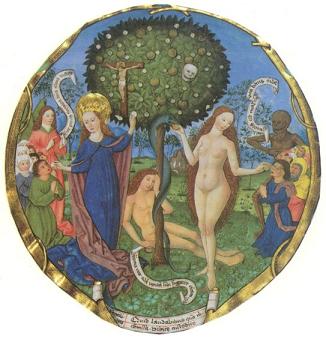
So the crib on Christmas Eve, the Christmas tree, which comes from the Medieval Paradise Tree, bring us to the mysteries of Holy Week. From Eden to Gethsemane, from death to life, from sin to redemption, we move in grace.

So, the mosquitoes of Malta bring me to the contemplation of this life of sin, disorder, and pain to the goal of our lives, heaven with God. Such is the cycle of grace. Such is the end of my meditation on this time of pilgrimage on earth.


Saturday, 28 December 2013

During The Cold Winter of Unbelief


The precious death of any martyr deserves high praise because of his heroic confession; the death of these children is precious in the sight of God because of the beatitude they gained so quickly. For already at the beginning of their lives they pass on. The end of the present life is for them the beginning of glory. These then, whom Herod's cruelty tore as sucklings from their mothers' bosom, are justly hailed as "infant martyr flowers"; they were the Church's first blossoms, matured by the frost of persecution during the cold winter of unbelief.  St. Augustine
for the Feast of the Holy Innocents

Thursday, 26 December 2013

St. Stephen's Day Food


Cannelloni is one of the foods in some countries for St. Stephen's Day. One recipe, including the making of the pasta is here, taken from http://lidiasitaly.com/recipes/detail/1092

Part of the idea of making cannelloni on the day after Christmas is that one could use leftover meat.


For the pasta:
2 cups all-purpose flour, plus more for working the dough
2 large whole eggs
¼ cups extra-virgin olive oil
3 tablespoons water

For the filling:
¼ cup extra-virgin olive oil
1 large onion, finely chopped
1½ pounds ground pork
1 cup dry white wine
2 medium carrots, finely chopped
2 celery stalks, finely chopped
2 teaspoons kosher salt
1 teaspoon chopped fresh rosemary
2 tablespoons tomato paste
1 quart hot chicken stock
10 ounce bag fresh spinach, roughly chopped
8 ounces mortadella, finely chopped
2 cups Grana Padano or Parmigiano-Reggiano
¼ cup chopped fresh Italian parsley
Zest of 1 lemon

For the besciamella:
1 quart low-fat or whole milk
2 fresh bay leaves, or 3 dried bay leaves
3 tablespoons unsalted butter
¼ cup all-purpose flour
¾ teaspoon kosher salt
Pinch freshly grated nutmeg
Pinch white pepper
3 tablespoons grated Grana Padano or Parmigiano-Reggiano

For the assembly of the cannelloni:
1½ cups Marinara sauce
½ cup grated Grana Padano or Parmigiano-Reggiano
Directions


Make the pasta: Put the flour in the bowl of a food processor and pulse to aerate. In a measuring cup, mix together the eggs, oil and 3 tablespoons water in a separate bowl, and pour through the feed tube into the food processor while running. Process until the dough forms a ball and sticks to the blade, about 30 seconds. Add more water or flour as necessary to achieve the right consistency – a smooth, homogenized, compact dough. Transfer the dough to a floured work surface and knead a few times, just to bring it together. Wrap the dough in plastic and let rest for an hour. In the meantime, make the filling and the besciamella sauce.

Make the filling: In a large skillet, heat the olive oil over medium heat. Toss in the onion, and cook until it starts to soften, about 5 minutes. Add the ground pork, and cook, crumbling with a wooden spoon, until no longer pink, about 5 minutes. Pour in the white wine, and cook until the wine and meat juices have cooked away and the meat is sizzling, about 10 minutes.

Add the carrots, celery, salt and rosemary. Push the vegetables and meat to the side to clear a “hot spot” in the pan to plop in the tomato paste. Let the tomato paste toast a minute or two, then stir it into the meat and vegetables. Pour in the hot chicken stock, and simmer until thickened and the flavors come together, about 10 minutes. Add the spinach, and cook until tender, about 5 minutes. Scrape filling into a bowl to cool. When cooled, stir in the mortadella, grated cheese, parsley, and lemon zest.

Make the sauce: Warm the milk with the bay leaves in a small saucepan. Melt the butter in a medium saucepan over medium heat. When melted, stir in the flour to make a smooth paste. Cook, stirring with a wooden spoon until roux smells toasty but has not darkened in color, about 4 minutes. Pour in the hot milk, whisking to avoid lumps. Bring to a simmer, whisking until thickened, about 5 minutes. Season with the salt, nutmeg and pepper. Remove from heat, and whisk in the grated cheese.

When an hour has passed, roll out the dough: Cut it into 4 equal pieces. Flatten a piece of dough into a rectangle, 2 by 2 inches, and roll through the widest setting on the pasta machine. Fold this rectangle of dough like a letter, and roll through again. Repeat the rolling and folding a few more times, to knead and smooth the dough. Repeat with the remaining pieces of dough.

Switch to the next-narrowest setting on the machine. Roll a dough strip through, short end first. Repeat with remaining dough strips. Continue this process with narrower settings, now rolling only once through each setting, until you've gotten to the next-to-last setting and the dough strips are about as wide as the machine (6 inches).

Cut dough strips into 4-by-6-inch rectangles. Bring a large pot of salted water to boil for pasta. Place a large bowl or pot of ice water next to the boiling pasta water. Boil the dough rectangles, just about a minute, then remove with a spider to the ice bath to cool. Drain, and spread out on baking sheets lined with damp kitchen towels

Preheat oven to 400 degrees F. To assemble the cannelloni: Spread 1 cup besciamella in the bottom of a 3 quart 9-by-13 Pyrex or ceramic baking dish. Top with ½ cup of the marinara sauce and spread. Fill the dough rectangles with about 1/2 cup of the filling, then roll up the long way like a cigar and fit them snugly together in the baking dish. Spread the remaining bseciamella on top, then drizzle the remaining 1 cup marinara sauce over the besciamella. Sprinkle with the grated cheese. Tent the baking dish with foil, and bake until heated through, about 10 to 15 minutes, then uncover and bake until browned and bubbly, about 10 to 15 minutes more


Wednesday, 25 December 2013

Urbi et Orbi from Pope Francis

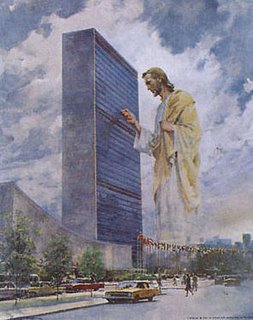
I remember  seeing the painting below a long time ago. I was always struck by how Christ was on the outside, and knocking. No door opened...

http://www.news.va/en/news/pope-francis-urbi-et-orbi-message

Pope Francis highlighted the persecution of Christians in the world as well as the many wars today in his address to the city and to the world.

Pray to the Prince of Peace, today, for a world shattered by hated, ignoring the Lord of Lords.

In this snippet, the Pope refers to the facade of peace.


The Prince of Peace by Harry Anderson
True peace is not a balance of opposing forces. It is not a lovely “façade” which conceals conflicts and divisions. Peace calls for daily commitment, starting from God’s gift, from the grace which he has given us in Jesus Christ.

This facade starts with the personal, with the individual soul. One must forgive and truly love those who hate.

Loving the enemy is not merely an intellectual process of forgiving, but it is turning to the will in order to will to love.

The daily commitment for peace among nations will not occur if people are not peaceful in their own lives.

I find it interesting that while the Pope pleads for peace in the world, the world leaders are silent, on vacation, concentrating on their own countries or on themselves.


    If the world hates you, you know that it hated me before it hated you.
    John 15:18 

The leaders of this world, except for the Pope, ignore suffering, especially the suffering of Christians.

But, so too, the people of Bethlehem ignored the suffering of one small family forced into a cave with animals for the Birth of the Lord, the Messiah, the King.

This year has proved to be a year of violence for many across the world, and in other situations. As you all know, three peace-keepers in South Sudan were killed five days ago. Those who seek peace of any kind, whether political or spiritual, are targets.


    Remember the word that I said to you, The servant is not greater than his lord. If they have persecuted me, they will also persecute you; if they have kept my saying, they will keep yours also.
    John 15:20 

But, we all have grace, tremendous grace. Grace leads us to love while surrounded by hate. Can we say "yes" to this challenge today?

Can we learn to find that peace within in order to create peace without? Remember, peace must be based on following Christ and not on ideologies. Without Christ, there is no true peace.


A Holy Blessed Christmas to All My Dear Readers


No merit of ours brought Christ down to earth. No merit of ours caused Mary's humility and Joseph's obedience. No merit of ours led the angels to proclaim the Good News to the weak and lowly.

All blessings of this night are in, through, and from grace.


Tuesday, 24 December 2013

My heart is in the monastery.....

http://songza.com/listen/gregorian-chants-monastic-peace-Catholicam/

Thanks, Emile! Pray for me, I am so homesick for Europe and my son.

Can you imagine the entire Arabic area singing this?


from an idea from Nervana Mahmoud. 

How To Deal with Christmas Rejection


Some of my friends, for various reasons, experience great rejection at Christmas time. This time of supposed holiday cheer and family friendliness can be marred by rejection by siblings, parents, even a spouse.

Rejection may be old, occurring over and over again in families owing to dysfunctional relationships, sin, even malice. One person I know was rejected in the womb and is still rejected by her mother who hates her.

Rejection may be new, like the loss of a new boyfriend, or a divorce, or a death in the family.

How one deals with rejection leads either to bitterness or perfection.

For those who choose the road to perfection, I have a few suggestions, having experienced myself many types of rejection, all which come to a head at this time of year.

First of all, rejection hits at the ego, which is a good thing. One may be full of too much self-love and rejection reminds one of personal imperfections and sin.

Second, rejection can be a time for reflection and repentance. But, most importantly, times of rejection are times of forgiveness.

One must say, "Lord, forgive them for they know not what they do."

Third, rejection can be a time of spiritual growth, as God asks one to join Him on the Cross, the ultimate rejection. Rejection brings humility.

I have three friends who are highly educated, charming women who were always, through-out their lives rejected by their fathers, who openly wanted a boy, and got a girl instead for a baby.

These women feel the pain of rejection, even though they are middle-aged. Even at parties, which I have attended, the fathers and the mothers prefer the men in the families openly, to the point of undermining the dignity of the women. These women have told me of their rejection. They have lived with it.

Now, one might say, why do not these women avoid this rejection? That is a good question. In one case, the daughter does not want to hurt her mother, and in another case, the daughter believes God is asking her to love her father even though he is verbally abusive.

One can only make these types of decisions on one's own. Sometimes rejection is so bad that one must avoid the situations entirely.

But, to avoid pain may be a running away from the Cross.

Another woman I know is rejected deeply by her mother. The mother favors the sons, and the daughter is seen as a second-class citizen. Because the mother has treated the woman as such since childhood, the men in the family do not respect the woman either, taking their cues from the mother.

This woman decided to love and honor her mother at Christmas, even though the verbal and emotional abuse is keen. She told me that the family ignores her as a non-person at the dinners and that no one, neither the siblings or the mother ask about her life. No one cares. No one "sees" her as a person.

That this woman visits her mother is a question of heroic virtue in my mind. She is trying to love an unlovable person. This woman is an artist, and her mother wanted her to be a doctor. The mother has preached the Gospel of Failure to this woman all her life, as the mother determined what the child would be and do, not appreciating the talents God gave the person.

Nativity by Carl Bloch

Rejection is what Our Lord experienced the night He was born. His mother experienced rejection, as did St. Joseph. 

The Baby was born outside the normal customs of the time, outside the care of neighbors or family. For a moment in time, the Holy Family was "homeless", in a cave. 

I cannot give advice on whether one should avoid rejection or take it. If one is emotionally secure enough and if one is spiritually able to join with Christ on the Cross, perhaps one can put one's self in a position of being rejected.

This action takes prayer and reflection.

I pray sincerely for all those who feel rejected, and who are rejected at this time of year. I know too many men and women in this type of pain. The list is, frankly, too long.

I know that God can use pain for purification, as sins must be atoned for-each sin of ours and the sins of others. Perhaps God asks some people to join Him in His pain-in His Mother's pain and in the pain of St. Joseph on this holy night.

If you are one of those people who are rejected, I pray for you today and tomorrow. If you are a person who becomes depressed at Christmas because of years of family rejection, I pray for you. I know two people who get very depressed at this time of year, both men. May God comfort them.

Please try and join Christ in His rejection-the rejection of an All-Loving God Who gave His Life that we may live.

I do not say "Happy Christmas", nor do I wish you "Merry Christmas".

I wish you a "Holy Christmas."

Returning to the Perfection Series-- À la recherche du temps perdu

This is a toe in the water of the perfection series, mark two. The next few posts in this series will be more on the detail of the passive purgation.

St. Teresa of Avila was in the passive purgation for 18 years.

One must understand these long times of dryness which demand Faith.

I am finding a confusion among people, especially some young ones, who do not understand that the levels of prayer are connected to the levels of progress, from consolation to dark night, to the illumination stage and finally to the unitive.

A keen look at these stages again reveals that in the passive purgation, which demands the working of the virtues, one is not in a unitive state or illuminative state yet. There is also a confusion as to the term "affective prayer" which is used by many authors to mean different things.

In the passive purgation, vocal prayer is almost impossible. One cannot meditate, the great insights into the Scriptures or Mysteries of the Rosary have ended.

One can only look at God in a great simplicity. This is what Blessed Mother Teresa of Calcutta meant, when she said that in Adoration, she looked at God and God looked at her.

That was all she could do.

Please so not mix up nomenclature or confuse stages.

In the passive purgation, one can only turn to God in small prayers, in small acts of the will.

In this stage, one desire God, not people, and God is vague, not specifically Jesus, the Father or the Holy Spirit. Faith tells one that God is the Trinity, not experience.

"The will is fixed on God by 'a vague love and a secret instinct.' ...by a dolorous and persistent need of a more intimate union with Him. It is as it were a longing, like home-sickness, after God absent, and assuaged thirst, which cannot do without Him; the soul would like to be inflamed with love, and, above all, to posses God; merely to love Him no longer satisfies her, she aspired to union with Him."

This quotation from  Lehodey's The Ways of Mystical Prayer reveals the mystery of the passive purgation.

One learns patience and humility, waiting on God and waiting for God.


One would love to be totally occupied in loving. One desires to love.

But, all the soul perceives is irritation and a new ennui, which is not directed towards anything but the realization of one's own sin and imperfections in the light of God's love.

One can honestly say, "All I want is you, Lord. And, if it is Your will that I go to hell, so be it. But, I love you."

One feels an indistinct unease about the spiritual life, as one does not know where to find God, as He has hidden Himself  in all the old ways.

One can only say, God has visited me before, He will not abandon me." The act of sheer will power towards faith, hope and love marks this period of passive purgation.

One learns to be patient with others, but most especially, with one's self. And, at times, one feels or even thinks one is on the way to hell.

Only hanging on to faith, hope and love give the soul any strength at this time.

Not every one must experience the reality of trials, such as illness, loss of employment, financial losses, loss of status, loss of family and so on.

God decides what suffering to send. And, some people suffer less than others moving towards the same end.

One cannot compare one's self with others at all. This is a waste of time, and dangerous.

To be content to be carried on the winds of trial is the best some can do.

The key is remaining focused on Christ and that little ember of past consolations of love which one may now and then remember.

to be continued....

Noisy Night, Unholy Night

Christ came to us in the silence of the night. We sing Silent Night, Holy Night.  Christ comes to us daily in silence. Do we meet Him in silence, or does He come and not find any, and leaves us to our noise?

Christ will not force Himself upon us. He will not come if our hearts, minds, and souls are full of junk. Noise is junk


The hymn provides us with a great lesson in prayer. Without silence, we hear only ourselves, and the noise of the world. Christ cannot come into a noisy mind or noisy heart. 

Listening to Catholics in the neighborhood talk about vacations, shopping, raises, money, investments, divorces, gossip is hard to avoid this time of year....I may go hide in the basement. Why do people talk about trivia?  Why cannot people be silent? Are they afraid of silence?

I retreat to my little cell I am working on in my heart, soul, mind...

Silence is a gift, so if you have it, do not ignore the beauty and grace therein. I am convinced that hell and purgatory are noisy.

Do not squander the gifts when you are given these.


If you are given silence, cherish it.

I am thinking of dear St. Catherine again--create a cell in your mind, heart and soul to which you can go.


1. Let all mortal flesh keep silence, 
 and with fear and trembling stand;
 ponder nothing earthly-minded, 
 for with blessing in his hand, 
 Christ our God to earth descendeth, 
 our full homage to demand. 

2. King of kings, yet born of Mary, 
 as of old on earth he stood, 
 Lord of lords, in human vesture, 
 in the body and the blood; 
 he will give to all the faithful 
 his own self for heavenly food. 

3. Rank on rank the host of heaven 
 spreads its vanguard on the way, 
 as the Light of light descendeth 
 from the realms of endless day, 
 that the powers of hell may vanish 
 as the darkness clears away. 

4. At his feet the six-winged seraph, 
 cherubim, with sleepless eye, 
 veil their faces to the presence, 
 as with ceaseless voice they cry: 
 Alleluia, Alleluia, 
 Alleluia, Lord Most High!


http://supertradmum-etheldredasplace.blogspot.com/2012/03/perfection-part-nine-silence.html

http://supertradmum-etheldredasplace.blogspot.com/2013/08/on-constant-quiet-yes-and-constant.html

http://supertradmum-etheldredasplace.blogspot.com/2013/02/give-up-noise-for-lent-and-here-is-how.html

http://supertradmum-etheldredasplace.blogspot.com/2013/02/on-silence-and-false-wisdom.html

http://supertradmum-etheldredasplace.blogspot.com/2013/11/on-listening-to-god.html

http://supertradmum-etheldredasplace.blogspot.com/2013/11/repeat-post-noise-is-rebellion.html

http://supertradmum-etheldredasplace.blogspot.com/2013/12/the-inner-life-bombarded.html


Monday, 23 December 2013

Mary, Star of the Sea


Dear Mary, Star of the Sea, take greetings of this holy season to all my friends in Gibraltar, Malta, Ireland, England, Scotland, Wales, and France. May all my dear friends feel the peace of this special, holy time.

The Sins of Christmas Time-Pride

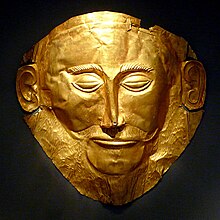
Masks of Agamemnon from Wiki

I love Greek drama and this genre shows us over and over the wheel of fortune flipping around from worldly success to abject failure. The Greek idea of hubris, gross pride, is that it is the primal sin, causing disease in the soul and in the community. Shakespeare picked up on this theme that when a leader falls into pride, the entire community falls into decline. Most of his monster antagonists are full of pride-the list is long.

Hubris, or pride, involves believing that one is greater than one is, that one's talents are more important than other peoples', that one feels superior to others.

Pride relies on an excessive view of one's self. Pride makes one the center of one's life. God is no longer God but the self is. Narcissism is an example of pride.

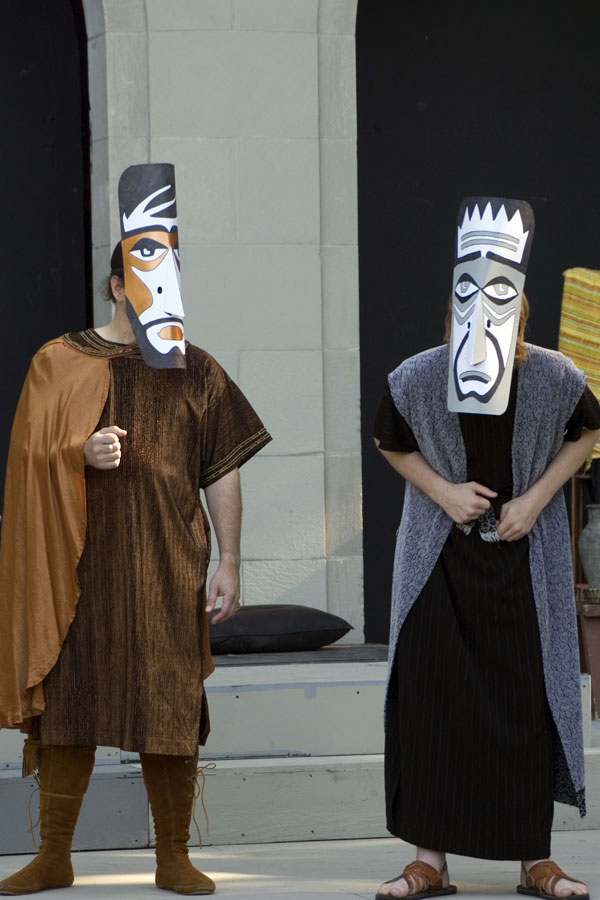
Electra


Dante puts those who are proud in hell, and links treachery and betrayal with pride. Pride creates a false world in which one puts one's needs, morals, goals, desires and passions at the center.

In the depths of hell is Lucifer, with Judas, Cassius, and Brutus, those who rebelled against authority, placing their own treachery in the same category as the rebellion of Satan. Pride dictates that one is above the law, all laws.

The Last Supper, Bloch, Wiki

I am pointing out one aspect of pride, that of betrayal. Why I am emphasizing this aspect in Advent may be puzzling for some.

Ask yourself, "Who am I betraying this Christmas?"

The answer may well be Christ Himself, Who came into the world to Love us all.

Are you betraying a spouse, a friend?

Are you betraying the Truth? Are you betraying children in the womb?

Are you betraying yourself through compromise and habitual sin?

Have you chosen money and status over your soul?

Betrayal is rebellion.

Betrayal is rooted in pride. Lucifer's sin happened in the blink of an eye. But, Judas' sin festered over a long period of time. He did not just decide to turn against Christ in a few weeks. We practice pride until it become natural, deadly so.

Pride is betrayal of ourselves as to who we are, and to what we have been called.

Ask the Lady Mary, Our Mother to make you humble, in imitation of her. This entire season is one of humility-a young woman, an unknown faithful man, a Little Baby all forced into the lowest place of rest-a stable.


Sunday, 22 December 2013

On Aging and Sainthood : The Habits of Old Age Are Formed in Youth

Because I am approaching a mile-stone birthday, I have been reflecting on aging and the growth of holiness, by examining some of the lives of the saints who lived to be older and old, and by looking at older and old people in the society in which I live.

I have noticed that saints who lived to be old, that is, into their 80s, have a different path than those who die young.

Most of the really young saints achieved holiness quickly, and we can look at the lives of Blessed Pier Giorgio Frassati, St. Therese of Lisieux, and St. Catherine of Siena as examples of meteor-like saints.

(I am omitting martyrs, who achieve holiness through the witness of their blood, such as Blessed Titus Brandsma or St. Lucy).

Those saints who lived to middle or old age had a path which is not as extreme, or clear as those who were young saints.

Some saints died in early middle age or middle-middle age, such as St. John of the Cross (49), St. Teresa of Avila (67) or St. Camillus of Lilles, (64).

Many modern saints died over the age of seventy, such as St. John of Avila, St. Padre Pio, Blessed Mother Teresa of Calcutta, Blessed John Paul II.

Those saints who lived to be over 80 had much suffering to bear in the world--years and years of suffering.

What I am interested in are the patterns of holiness depicted by those who lived to be old or older saints.

By old, I mean over 80. By older, I mean over 65.


I see five traits which separate the saints from those who have not achieved sanctity on earth.

First, a deep and consistent habit of prayer. All the saints, lay or religious or clergy, who have been canonized after living long lives had long years of the practice of prayer. This would have included all the six levels of prayer discussed on this blog.

Second, the intense love of God, especially Jesus in the Eucharist, marks the older saint. A love of Jesus, that "personal relationship" whether warm and fuzzy or distant and painful, defines the older saint.

Third, a great love of the Catholic Church. This is seen clearly in both the lay saints who lived to be old, such as Blessed Louis Martin (71), or religious, or clergy.

Fourth, a call to suffering physically, spiritually, emotionally, or mentally, or all these types of pain. Mother Teresa of Calcutta and St. Pio, (Padre Pio), are great examples of prolonged suffering, as is Blessed John Paul II.

Fifth, the ability to change and grow in holiness. This is what is missing in the society in which I live-the ability to change. Repentance is change. Too many old people, (and do we not say this), "are stuck in their ways."

The saint is never stuck in his or her own ways-never. A healthy personality is open to change, to new encounters with God, with grace.

The saddest thing for me to see in this aging parishes are people who are stuck in consumerism, materialism, trivia, and not preparing for death, not following the path of holiness.

Saints never "retire" from the Church Militant. Saints never retire to self-centered lives.

I give this warning to all my readers. Do not get stuck in your ways. Be open to you changing, your conditions changing, your lifestyle changing. Learn the ways of holiness early, as the habits of old age are the habits of youth.

We are pilgrims on this earth and the great lie of working for retirement, that long hiatus of holidays and comfort, may not lead one to God. I see in the shops, in church, in the restaurants crabby, grumpy, people who have not allowed God to change them.

A personality which can change is one God can bless and use.

God makes new doughnuts every day. Be aware, pay attention. Do not grow old either rebelling against God, or ignoring Him.


If one is struck with a disease in old age, which ends the process of growth, let us pray we have met God in the place where He has called us. Otherwise, we shall see purgatory.

to be continued...