Recent Posts

Showing posts with label private revelations. Show all posts

Tuesday, 5 May 2015

On Doctrine

When the Popes who declared the dogmas of the Immaculate Conception and the Assumption, the first, Pope Pius IX and the second, Pius XII, these popes contacted the bishops by mail as to their collegial agreement on these dogmas. We call these dogmatic definitions which are doctrines.

By mail.

Here is part of the statement of Pius IX in Ineffabilis Deus.

Accordingly, by the inspiration of the Holy Spirit, for the honor of the Holy and undivided Trinity, for the glory and adornment of the Virgin Mother of God, for the exaltation of the Catholic Faith, and for the furtherance of the Catholic religion, by the authority of Jesus Christ our Lord, of the Blessed Apostles Peter and Paul, and by our own: "We declare, pronounce, and define that the doctrine which holds that the most Blessed Virgin Mary, in the first instance of her conception, by a singular grace and privilege granted by Almighty God, in view of the merits of Jesus Christ, the Savior of the human race, was preserved free from all stain of original sin, is a doctrine revealed by God and therefore to be believed firmly and constantly by all the faithful."[29]


Here is part of the document from Pius XII in MUNIFICENTISSIMUS DEUS


41. Since the universal Church, within which dwells the Spirit of Truth who infallibly directs it toward an ever more perfect knowledge of the revealed truths, has expressed its own belief many times over the course of the centuries, and since the bishops of the entire world are almost unanimously petitioning that the truth of the bodily Assumption of the Blessed Virgin Mary into heaven should be defined as a dogma of divine and Catholic faith--this truth which is based on the Sacred Writings, which is thoroughly rooted in the minds of the faithful, which has been approved in ecclesiastical worship from the most remote times, which is completely in harmony with the other revealed truths, and which has been expounded and explained magnificently in the work, the science, and the wisdom of the theologians - we believe that the moment appointed in the plan of divine providence for the solemn proclamation of this outstanding privilege of the Virgin Mary has already arrived.
42. We, who have placed our pontificate under the special patronage of the most holy Virgin, to whom we have had recourse so often in times of grave trouble, we who have consecrated the entire human race to her Immaculate Heart in public ceremonies, and who have time and time again experienced her powerful protection, are confident that this solemn proclamation and definition of the Assumption will contribute in no small way to the advantage of human society, since it redounds to the glory of the Most Blessed Trinity, to which the Blessed Mother of God is bound by such singular bonds. It is to be hoped that all the faithful will be stirred up to a stronger piety toward their heavenly Mother, and that the souls of all those who glory in the Christian name may be moved by the desire of sharing in the unity of Jesus Christ's Mystical Body and of increasing their love for her who shows her motherly heart to all the members of this august body. And so we may hope that those who meditate upon the glorious example Mary offers us may be more and more convinced of the value of a human life entirely devoted to carrying out the heavenly Father's will and to bringing good to others. Thus, while the illusory teachings of materialism and the corruption of morals that follows from these teachings threaten to extinguish the light of virtue and to ruin the lives of men by exciting discord among them, in this magnificent way all may see clearly to what a lofty goal our bodies and souls are destined. Finally it is our hope that belief in Mary's bodily Assumption into heaven will make our belief in our own resurrection stronger and render it more effective.

For any Pope to declare an infallible doctrine, he need not call all the bishops to Rome. For centuries and for very good reasons regarding schedules and travel, bishops have not usually been called to Rome. I write this as a clarification for some readers who think that it is necessary for a Pope to wait for a big meeting to make an infallible statement from the Chair of Peter. Not so.

Lately, there has arisen again confusion as to what is infallible doctrine, what is approved Revelation and what is private revelation.

I have repeated this sentence on the blog many times. There is no official, true Revelation after the last word of the Book of Revelation in the Bible.

Any private revelations may be believe optionally. And, these, even of saints, are not infallible. Only when Rome picks something out of a private revelation to use in a devotion, like some of the prayers of St. Faustina, are these officially approved. Only, and still optional.

Only doctrines are not optional, but all private revelations are. Please keep this in mind and in perspective. 

To live one's life on private revelations of any type is dangerous, and keeps one from the virtue of studiosity.  Recall that vision chasing is the sin of curiosity. And, one is not to pay attention to a vision unless Rome approves it. 

Here are some of my ideas on studiosity versus curiosity, again.

Father Chad Ripperger has been one of the most influential priests in my life via his amazing set of talks and some personal input. He is the reason I am in the third order which he started. His intellect and spiritual insights are gifts from God.

One of the things he has pointed out is something I have written on this blog-the sin of curiosity.

This sin causes people to run after approved and unapproved apparitions. We do not need to concern ourselves with visions, but we do need to study our faith.

Recently, Father noted that curiosity is a vice, even when it is connected to wanting to know the latest about certain apparitions, even approved ones.

The virtue which is the opposite of this vice is studiosity, the virtue connected to temperance, which is a search for the truth which is disciplined and ordered. 

We are responsible for knowing the Faith, and we are also responsible for dulling our own intellects.

Raissa, as I noted, cried out in her diary for people to know their religion, the Catholic religion.

Without knowledge of the Faith, one easily falls into many other vices, and we are responsible for that type of falling away.

Studiosity is a virtue. If one is an adult and never studies the Faith in the Catechism or the encyclicals, or other excellent books, one is committing two sins at least. One is sloth and the other is neglect of conscience.

Ask yourselves honestly in your examination of conscience whether you are studying. If one merely chooses one author, such as St. Alphonsus, or the Pope Emeritus, or St. Augustine, or St. Therese of Lisieux, one is doing one's duty.

But the virtue demands that we study not only spirituality and prayer, but doctrine and dogma.

Studiosity is connected to the great virtue of temperance, the virtue which strengthens our reason. Temperance prepares us to combat temptation. Studiosity allows us to know the Faith so that we can avoid temptations and prepare for holiness.

Are you studying anything solid with regard to the Faith?

For those caught up with seers and visions, even approved ones, I challenge you to set those books aside and begin to study your Faith.

We are required to do this, and the fact that there is a virtue which helps us do so should be comforting.

Thomas Aquinas makes this distinction between curiosity, which actually is connected to lust and greed, and studying.  Curiosity connects us with the senses, not the intellect. Whereas studying increases our knowledge in order to help us know God and ourselves.

To be constantly distracted by trivia may be an indication that one has fallen into the vice of curiosity. To be chasing vision instead of studying is a sin of curiosity.


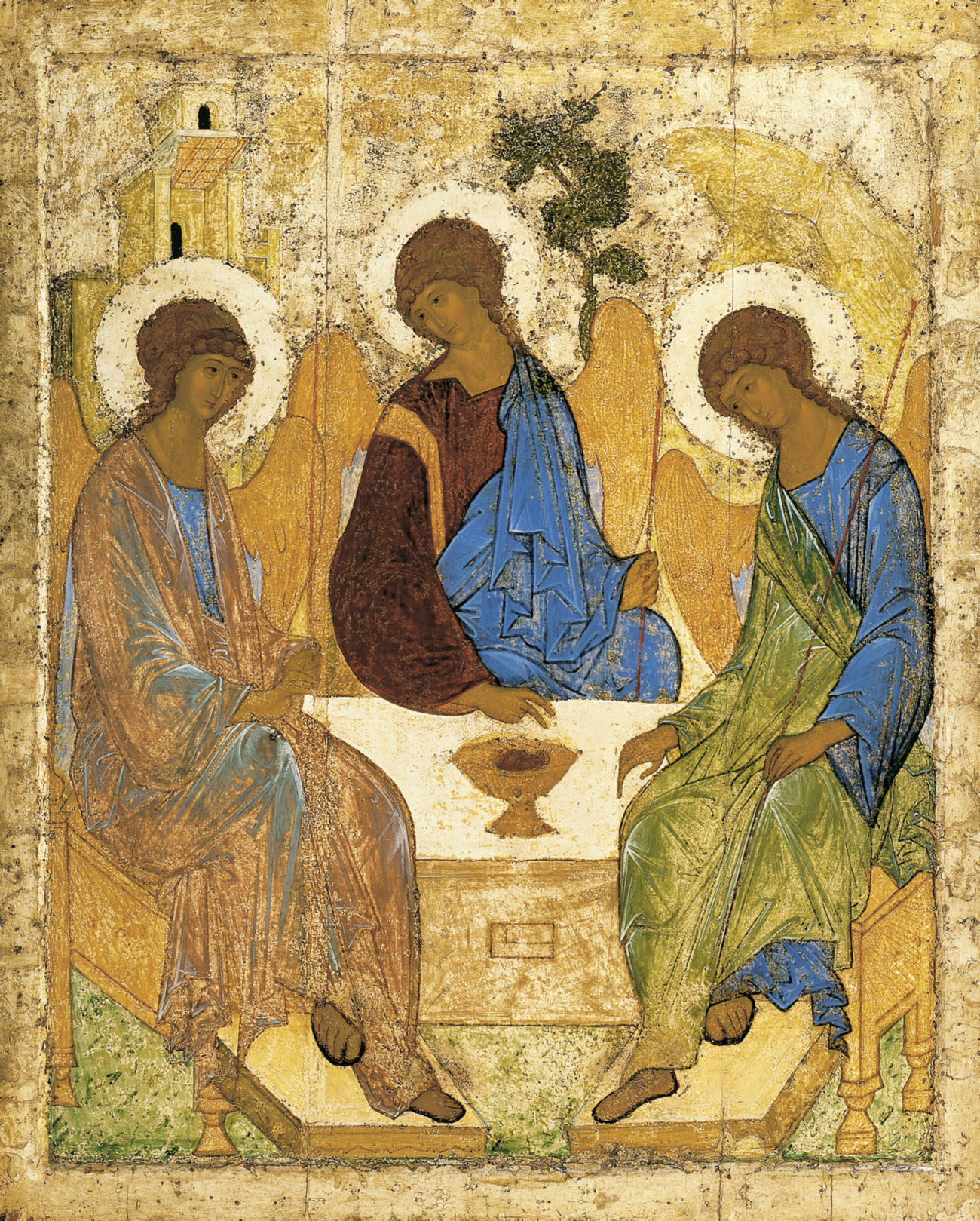
Monday, 22 December 2014

The Trinity Under Threat

Lately, it has dawned on me that there are several threats in this world against the revelation of the Trinity.

Now, as Catholics, we have been given the truth, that God is Three Persons, the Father, the Son, and the Holy Spirit.

Let me quote the CCC here:

234      The mystery of the Most Holy Trinity is the central mystery of Christian faith and life. It is the mystery of God in himself. It is therefore the source of all the other mysteries of faith, the light that enlightens them. It is the most fundamental and essential teaching in the “hierarchy of the truths of faith.”56 The whole history of salvation is identical with the history of the way and the means by which the one true God, Father, Son, and Holy Spirit, reveals himself to men “and reconciles and unites with himself those who turn away from sin.”57 (2157, 90, 1449)
235      This paragraph expounds briefly (I) how the mystery of the Blessed Trinity was revealed, (II) how the Church has articulated the doctrine of the faith regarding this mystery, and (III) how, by the divine missions of the Son and the Holy Spirit, God the Father fulfills the “plan of his loving goodness” of creation, redemption, and sanctification.


236      The Fathers of the Church distinguish between theology (theologia) and economy (oikonomia). “Theology” refers to the mystery of God’s inmost life within the Blessed Trinity and “economy” to all the works by which God reveals himself and communicates his life. Through the oikonomia the theologia is revealed to us; but conversely, the theologia illuminates the whole oikonomia. God’s works reveal who he is in himself; the mystery of his inmost being enlightens our understanding of all his works. So it is, analogously, among human persons. A person discloses himself in his actions, and the better we know a person, the better we understand his actions. (1066, 259)
237      The Trinity is a mystery of faith in the strict sense, one of the “mysteries that are hidden in God, which can never be known unless they are revealed by God.”58 To be sure, God has left traces of his Trinitarian being in his work of creation and in his Revelation throughout the Old Testament. But his inmost Being as Holy Trinity is a mystery that is inaccessible to reason alone or even to Israel’s faith before the Incarnation of God’s Son and the sending of the Holy Spirit. (50)
242      Following this apostolic tradition, the Church confessed at the first ecumenical council at Nicaea (325) that the Son is “consubstantial” with the Father, that is, one only God with him.66 The second ecumenical council, held at Constantinople in 381, kept this expression in its formulation of the Nicene Creed and confessed “the only-begotten Son of God, eternally begotten of the Father, light from light, true God from true God, begotten not made, consubstantial with the Father.”67 (465)
243      Before his Passover, Jesus announced the sending of “another Paraclete” (Advocate), the Holy Spirit. At work since creation, having previously “spoken through the prophets,” the Spirit will now be with and in the disciples, to teach them and guide them “into all the truth.”68 The Holy Spirit is thus revealed as another divine person with Jesus and the Father. (683, 2780, 687)

246      The Latin tradition of the Creed confesses that the Spirit “proceeds from the Father and the Son (filioque).” The Council of Florence in 1438 explains: “The Holy Spirit is eternally from Father and Son; He has his nature and subsistence at once (simul) from the Father and the Son. He proceeds eternally from both as from one principle and through one spiration.... And, since the Father has through generation given to the only-begotten Son everything that belongs to the Father, except being Father, the Son has also eternally from the Father, from whom he is eternally born, that the Holy Spirit proceeds from the Son.”75


247 The affirmation of the filioque does not appear in the Creed confessed in 381 at Constantinople. But Pope St. Leo I, following an ancient Latin and Alexandrian tradition, had already confessed it dogmatically in 447,76 even before Rome, in 451 at the Council of Chalcedon, came to recognize and receive the Symbol of 381. The use of this formula in the Creed was gradually admitted into the Latin liturgy (between the eighth and eleventh centuries). The introduction of the filioque into the Niceno-Constantinopolitan Creed by the Latin liturgy constitutes moreover, even today, a point of disagreement with the Orthodox Churches.

248 At the outset the Eastern tradition expresses the Father’s character as first origin of the Spirit. By confessing the Spirit as he “who proceeds from the Father,” it affirms that he comes from the Father through the Son.77The Western tradition expresses first the consubstantial communion between Father and Son, by saying that the Spirit proceeds from the Father and the Son (filioque). It says this, “legitimately and with good reason,”78 for the eternal order of the divine persons in their consubstantial communion implies that the Father, as “the principle without principle,”79 is the first origin of the Spirit, but also that as Father of the only Son, he is, with the Son, the single principle from which the Holy Spirit proceeds.80 This legitimate complementarity, provided it does not become rigid, does not affect the identity of faith in the reality of the same mystery confessed.

The threats to the truth of the Trinity being professed in the world come from three sources. I shall name these in order to show that Catholics must be clear on the teaching of the Trinity, and uphold the doctrine of the Trinity, without error.
First of all, the Muslim religion denies the Trinity. Jesus is not God and there is no Holy Spirit. There is only one god and not Three Divine Persons. Some historians of religion state that the Muslims accepted this simplistic belief as the belief in the Trinity is a mystery and difficult for some people to accept. This interpretation of their denial of a revealed truth given hundreds of years earlier could be true.
Second, I have been reading commentaries from theologians on Vassula Ryden and she confuses the nature of the Three Divine Persons. I suggest going back and looking at my posts which linked two sources explaining the fact that her statements concerning Christ and the Father are at variance with the Catholic Church's teaching.
Some other seers have also confused the Father with the Son, making the Father a material being which He is not. The Father is spirit. Only Christ is Incarnated. The Mormons do not believe that Christ is equal to the Father, that Christ was not always God. And, so on. 
Third, New Age "Catholics" and some charismatics do not understand the Church's teaching on the Holy Spirit as coming from the Father and the Son.  This indicates, of course, an equality of the Three Persons and the understanding we have of Christ being "consubstantial" with the Father, which we say in the Creed at Mass. Those who think that the Holy Spirit is somehow not connected with Christ want to separate the Second Person of the Blessed Trinity from the Father and the Spirit.
God is One, but the Father is not the Son, the Son is not the Father, the Holy Spirit is not the Son, the Holy Spirit is not the Father, the Son is not the Holy Spirit. 
To confuse this order is to deviate from Catholic teaching, which is revealed by God. 
Of course, it is Satan who wants all humans to fall into confusion as how and what we believe determines how we live. 
I shall write more on the Trinity later. But, be aware our wonderful teaching is under threat by those who do not want to follow what God has revealed to the Church through the Scriptures and Tradition.
to be continued...

Thursday, 18 December 2014

St. Iranaeus Against Heresies (Book IV, Chapter 20)

6. Men therefore shall see God, that they may live, being made immortal by that sight, and attaining even unto God; which, as I have already said, was declared figuratively by the prophets, that God should be seen by men who bear His Spirit [in them], and do always wait patiently for His coming. As also Moses says in Deuteronomy,We shall see in that day that God will talk to man, and he shall live. Deuteronomy 5:24 For certain of these menused to see the prophetic Spirit and His active influences poured forth for all kinds of gifts; others, again, [beheld] the advent of the Lord, and that dispensation which obtained from the beginning, by which He accomplished the will of the Father with regard to things both celestial and terrestrial; and others [beheld] paternal glories adapted to the times, and to those who saw and who heard them then, and to all who were subsequently to hear them. Thus, therefore, was God revealed; for God the Father is shown forth through all these [operations], the Spirit indeed working, and the Son ministering, while the Father was approving, andman's salvation being accomplished. As He also declares through Hosea the prophet: I, He says, have multiplied visions, and have used similitudes by the ministry (in manibus) of the prophets. Hosea 12:10 But theapostle expounded this very passage, when he said, Now there are diversities of gifts, but the same Spirit; and there are differences of ministrations, but the same Lord; and there are diversities of operations, but it is the same God which works all in all. But the manifestation of the Spirit is given to every man to profit withal.1 Corinthians 12:4-7 But as He who works all things in all is God, [as to the points] of what nature and how great He is, [God] is invisible and indescribable to all things which have been made by Him, but He is by no means unknown: for all things learn through His Word that there is one God the Father, who contains all things, and who grants existence to all, as is written in the Gospel: No man has seen God at any time, except the only-begotten Son, who is in the bosom of the Father; He has declared [Him]. John 1:18
7. Therefore the Son of the Father declares [Him] from the beginning, inasmuch as He was with the Father from the beginning, who did also show to the human race prophetic visions, and diversities of gifts, and His own ministrations, and the glory of the Father, in regular order and connection, at the fitting time for the benefit [of mankind]. For where there is a regular succession, there is also fixedness; and where fixedness, there suitability to the period; and where suitability, there also utility. And for this reason did the Word become the dispenser of the paternal grace for the benefit of men, for whom He made such great dispensations, revealing God indeed to men, but presenting man to God, and preserving at the same time the invisibility of the Father, lest man should at any time become a despiser of God, and that he should always possess something towards which he might advance; but, on the other hand, revealing God to men through many dispensations, lest man, falling away from God altogether, should cease to exist. For the glory of God is a living man; and the life of man consists in beholding God. For if the manifestation of God which is made by means of the creation, affords life to all living in the earth, much more does that revelation of the Father which comes through the Word, give life to those who see God.
8. Inasmuch, then, as the Spirit of God pointed out by the prophets things to come, forming and adapting us beforehand for the purpose of our being made subject to God, but it was still a future thing that man, through thegood pleasure of the Holy Spirit, should see [God], it necessarily behooved those through whose instrumentality future things were announced, to see God, whom they intimated as to be seen by men; in order that God, and the Son of God, and the Son, and the Father, should not only be prophetically announced, but that He should also be seen by all His members who are sanctified and instructed in the things of God, that man might be disciplinedbeforehand and previously exercised for a reception into that glory which shall afterwards be revealed in those who love God. For the prophets used not to prophesy in word alone, but in visions also, and in their mode of life, and in the actions which they performed, according to the suggestions of the Spirit. After this invisible manner, therefore, did they see God, as also Esaias says, I have seen with my eyes the King, the Lord of hosts, Isaiah 6:5pointing out that man should behold God with his eyes, and hear His voice. In this manner, therefore, did they also see the Son of God as a man conversant with men, while they prophesied what was to happen, saying that He who was not come as yet was present proclaiming also the impassible as subject to suffering, and declaring that He who was then in heaven had descended into the dust of death. Moreover, [with regard to] the other arrangements concerning the summing up that He should make, some of these they beheld through visions, others they proclaimed by word, while others they indicated typically by means of [outward] action, seeing visibly those things which were to be seen; heralding by word of mouth those which should be heard; and performing by actual operation what should take place by action; but [at the same time] announcing all prophetically. Wherefore also Moses declared that God was indeed a consuming fire Deuteronomy 4:24 (igneum) to the people that transgressed the law, and threatened that God would bring upon them a day of fire; but to those who had the fear of God he said, The Lord God is merciful and gracious, and long-suffering, and of great commiseration, and true, and keeps justice and mercy for thousands, forgiving unrighteousness, and transgressions, and sins.Exodus 34:6-7
9. And the Word spoke to Moses, appearing before him, just as any one might speak to his friend. Numbers 12:8But Moses desired to see Him openly who was speaking with him, and was thus addressed: Stand in the deep place of the rock, and with My hand I will cover you. But when My splendour shall pass by, then you shall see My back parts, but My face you shall not see: for no man sees My face, and shall live. Exodus 33:20-22 Two facts are thus signified: that it is impossible for man to see God; and that, through the wisdom of God, man shall see Him in the last times, in the depth of a rock, that is, in His coming as a man. And for this reason did He [the Lord] confer with him face to face on the top of a mountain, Elias being also present, as the Gospel relates,Matthew 17:3, etc. He thus making good in the end the ancient promise.
10. The prophets, therefore, did not openly behold the actual face of God, but [they saw] the dispensations and the mysteries through which man should afterwards see God. As was also said to Elias: You shall go forth tomorrow, and stand in the presence of the Lord; and, behold, a wind great and strong, which shall rend the mountains, and break the rocks in pieces before the Lord. And the Lord [was] not in the wind; and after the wind an earthquake, but the Lord [was] not in the earthquake; and after the earthquake a fire, but the Lord [was] not in the fire; and after the fire a scarcely audible voice (vox auræ tenuis). 1 Kings 19:11-12 For by such means was the prophet— very indignant, because of the transgression of the people and the slaughter of the prophets— both taught to act in a more gentle manner; and the Lord's advent as a man was pointed out, that it should be subsequent to that law which was given by Moses, mild and tranquil, in which He would neither break the bruised reed, nor quench the smoking flax. Isaiah 42:3 The mild and peaceful repose of His kingdom was indicated likewise. For, after the wind which rends the mountains, and after the earthquake, and after the fire, come the tranquil and peaceful times of His kingdom, in which the spirit of God does, in the most gentle manner, vivify and increase mankind. This, too, was made still clearer by Ezekiel, that the prophets saw the dispensations of God in part, but not actually God Himself. For when this man had seen the vision Ezekiel 1:1 of God, and the cherubim, and their wheels, and when he had recounted the mystery of the whole of that progression, and had beheld the likeness of a throne above them, and upon the throne a likeness as of the figure of a man, and the things which were upon his loins as the figure of amber, and what was below like the sight of fire, and when he set forth all the rest of the vision of the thrones, lest any one might happen to think that in those [visions] he had actually seen God, he added: This was the appearance of the likeness of the glory of God. Ezekiel 2:1
11. If, then, neither Moses, nor Elias, nor Ezekiel, who had all many celestial visions, saw God; but if what they did see were similitudes of the splendour of the Lord, and prophecies of things to come; it is manifest that the Father is indeed invisible, of whom also the Lord said, No man has seen God at any time. John 1:18 But His Word, as He Himself willed it, and for the benefit of those who beheld, did show the Father's brightness, and explained His purposes (as also the Lord said: The only-begotten God, which is in the bosom of the Father, He has declared [Him]; and He does Himself also interpret the Word of the Father as being rich and great); not in one figure, nor in one character, did He appear to those seeing Him, but according to the reasons and effects aimed at in His dispensations, as it is written in Daniel. For at one time He was seen with those who were around Ananias, Azarias, Misaël, as present with them in the furnace of fire, in the burning, and preserving them from [the effects of] fire: And the appearance of the fourth, it is said, was like to the Son of God. Daniel 3:26 At another time [He is represented as] a stone cut out of the mountain without hands, Daniel 7:13-14 and as smiting all temporal kingdoms, and as blowing them away (ventilans ea), and as Himself filling all the earth. Then, too, is this same individual beheld as the Son of man coming in the clouds of heaven, and drawing near to the Ancient of Days, and receiving from Him all power and glory, and a kingdom. His dominion, it is said, is an everlasting dominion, and His kingdom shall not perish. Daniel 7:4 John also, the Lord's disciple, when beholding thesacerdotal and glorious advent of His kingdom, says in the Apocalypse: I turned to see the voice that spoke with me. And, being turned, I saw seven golden candlesticks; and in the midst of the candlesticks One like the Son of man, clothed with a garment reaching to the feet, and girt about the paps with a golden girdle; and His head and His hairs were white, as white as wool, and as snow; and His eyes were as a flame of fire; and His feet like fine brass, as if He burned in a furnace. And His voice [was] as the voice of waters; and He had in His right hand seven stars; and out of His mouth went a sharp two-edged sword; and His countenance was as the sun shining in his strength. Revelation 1:12 For in these words He sets forth something of the glory [which He has received] from His Father, as [where He makes mention of] the head; something in reference to the priestly office also, as in the case of the long garment reaching to the feet. And this was the reason why Moses vested the high priest after this fashion. Something also alludes to the end [of all things], as [where He speaks of] the fine brass burning in the fire, which denotes the power of faith, and the continuing instant in prayer, because of the consuming fire which is to come at the end of time. But when John could not endure the sight (for he says, I fell at his feet as dead; Revelation 1:17 that what was written might come to pass: No man sees God, and shall live Exodus 33:20), and the Word reviving him, and reminding him that it was He upon whose bosom he had leaned at supper, when he put the question as to who should betray Him, declared: I am the first and the last, and He who lives, and was dead, and behold I am alive for evermore, and have the keys of death and of hell. And after these things, seeing the same Lord in a second vision, he says: For I saw in the midst of the throne, and of the four living creatures, and in the midst of the elders, a Lamb standing as it had been slain, having seven horns, and seven eyes, which are the seven spirits of God, sent forth into all the earth. Revelation 5:6 And again, he says, speaking of this very same Lamb: And behold a white horse; and He that sat upon him was called Faithful and True; and in righteousness does He judge and make war. And His eyes were as a flame of fire, and on His head were many crowns; having a name written, that no man knows but Himself: and He was girded around with a vesture sprinkled with blood: and His name is called The Word of God. And the armies of heaven followed Him upon white horses, clothed in pure white linen. And out of His mouth goes a sharp sword, that with it He may smite the nations; and He shall rule (pascet) them with a rod of iron: and He treads the wine-press of the fierceness of thewrath of God Almighty. And He has upon His vesture and upon His thigh a name written, King of Kings and Lordof Lords. Revelation 19:11-17 Thus does the Word of God always preserve the outlines, as it were, of things to come, and points out to men the various forms (species), as it were, of the dispensations of the Father, teaching us the things pertaining to God.

http://www.newadvent.org/fathers/0103420.htm

more later...to be continued....

Help from Rome on Discernment....


SACRED CONGREGATION FOR THE DOCTRINE OF THE FAITH

NORMS REGARDING THE MANNER OF PROCEEDING
IN THE DISCERNMENT OF PRESUMED
APPARITIONS OR REVELATIONS


PRELIMINARY NOTE

Origin and character of these norms

During the annual Plenary Session in November 1974, the Fathers of this Sacred Congregation examined the problems relative to presumed apparitions and to the revelations often connected with them and reached the following conclusions:
1. Today, more than in the past, news of these apparitions is diffused rapidly among the faithful thanks to the means of information (mass media). Moreover, the ease of going from one place to another fosters frequent pilgrimages, so that Ecclesiastical Authority should discern quickly about the merits of such matters.
2. On the other hand, modern mentality and the requirements of critical scientific investigation render it more difficult, if not almost impossible, to achieve with the required speed the judgments that in the past concluded the investigation of such matters (constat de supernaturalitate, non constat de supernaturalitate) and that offered to the Ordinaries the possibility of authorizing or prohibiting public cult or other forms of devotion among the faithful.
For these reasons, in order that the devotion stirred among the faithful as a result of facts of this sort might manifest itself in full communion with the Church, and bear fruits by which the Church herself might later discern the true nature of the facts, the Fathers judged that in this matter the following procedure should be promoted.
When Ecclesiastical Authority is informed of a presumed apparition or revelation, it will be its responsibility:
a) first, to judge the fact according to positive and negative criteria (cf. infra, no. I);
b) then, if this examination results in a favorable conclusion, to permit some public manifestation of cult or of devotion, overseeing this with great prudence (equivalent to the formula, “for now, nothing stands in the way”) (pro nunc nihil obstare).
c) finally, in light of time passed and of experience, with special regard to the fecundity of spiritual fruit generated from this new devotion, to express a judgment regarding the authenticity and supernatural character if the case so merits.


I. CRITERIA FOR JUDGING, AT LEAST WITH PROBABILITY,
THE CHARACTER
OF THE PRESUMED APPARITIONS OR REVELATIONS


A) Positive Criteria:
a) Moral certitude, or at least great probability of the existence of the fact, acquired by means of a serious investigation;
b) Particular circumstances relative to the existence and to the nature of the fact, that is to say:
1. Personal qualities of the subject or of the subjects (in particular, psychological equilibrium, honesty and rectitude of moral life, sincerity and habitual docility towards Ecclesiastical Authority, the capacity to return to a normal regimen of a life of faith, etc.);
2. As regards revelation: true theological and spiritual doctrine and immune from error;
3. Healthy devotion and abundant and constant spiritual fruit (for example, spirit of prayer, conversion, testimonies of charity, etc.).
B) Negative Criteria:
a) Manifest error concerning the fact.
b) Doctrinal errors attributed to God himself, or to the Blessed Virgin Mary, or to some saint in their manifestations, taking into account however the possibility that the subject might have added, even unconsciously, purely human elements or some error of the natural order to an authentic supernatural revelation (cf. Saint Ignatius, Exercises, no. 336).
c) Evidence of a search for profit or gain strictly connected to the fact.
d) Gravely immoral acts committed by the subject or his or her followers when the fact occurred or in connection with it.
e) Psychological disorder or psychopathic tendencies in the subject, that with certainty influenced on the presumed supernatural fact, or psychosis, collective hysteria or other things of this kind.
It is to be noted that these criteria, be they positive or negative, are not peremptory but rather indicative, and they should be applied cumulatively or with some mutual convergence.


II. INTERVENTION
OF THE COMPETENT ECCLESIASTICAL AUTHORITY


1. If, on the occasion of a presumed supernatural fact, there arises in a spontaneous way among the faithful a certain cult or some devotion, the competent Ecclesiastical Authority has the serious duty of looking into it without delay and of diligently watching over it.
2. If the faithful request it legitimately (that is, in communion with the Pastors, and not prompted by a sectarian spirit), the competent Ecclesiastical Authority can intervene to permit or promote some form of cult or devotion, if, after the application of the above criteria, nothing stands in the way. They must be careful that the faithful not interpret this practice as approval of the supernatural nature of the fact on the part of the Church (cf. Preliminary note c).
3. By reason of its doctrinal and pastoral task, the competent Authority can intervene motu proprio and indeed must do so in grave circumstances, for example in order to correct or prevent abuses in the exercise of cult and devotion, to condemn erroneous doctrine, to avoid the dangers of a false or unseemly mysticism, etc.
4. In doubtful cases that clearly do not put the good of the Church at risk, the competent Ecclesiastical Authority is to refrain from any judgment and from any direct action (because it can also happen that, after a certain period of time, the presumed supernatural fact falls into oblivion); it must not however cease from being vigilant by intervening if necessary, with promptness and prudence.


III. AUTHORITIES COMPETENT TO INTERVENE


1. Above all, the duty of vigilance and intervention falls to the Ordinary of the place.
2. The regional or national Conference of Bishops can intervene:
a) If the Ordinary of the place, having done his part, turns to it to judge the matter with greater certainty;
b) If the matter pertains to the national or regional level; always, however, with the prior consent of the Ordinary of the place.
3. The Apostolic See can intervene if asked either by the Ordinary himself, by a qualified group of the faithful, or even directly by reason of the universal jurisdiction of the Supreme Pontiff (cf. infra, no. IV).


IV. ON THE INTERVENTION
OF THE SACRED CONGREGATION
FOR THE DOCTRINE OF THE FAITH


1. a) The intervention of the Sacred Congregation can be requested either by the Ordinary, after he has done his part, or by a qualified group of the faithful. In this second case, care must be taken that recourse to the Sacred Congregation not be motivated by suspect reasons (for example, in order to compel the Ordinary to modify his own legitimate decisions, to support some sectarian group, etc.).
b) It is up to the Sacred Congregation to intervene motu proprio in graver cases, especially if the matter affects the larger part of the Church, always after having consulted the Ordinary and even, if the situation requires, the Conference of Bishops.
2. It is up to the Sacred Congregation to judge and approve the Ordinary’s way of proceeding or, in so far as it be possible and fitting, to initiate a new examination of the matter, distinct from that undertaken by the Ordinary and carried out either by the Sacred Congregation itself or by a special Commission.
The Present Norms, deliberated in the Plenary Session of this Sacred Congregation, were approved by the Supreme Pontiff, Paul VI on 24 February 1978.
In Rome, from the palace of the Sacred Congregation for the Doctrine of the Faith, 25 February 1978.


Francis Cardinal Å eper
Prefect


Jérôme Hamer, O.P.
http://www.vatican.va/roman_curia/congregations/cfaith/documents/rc_con_cfaith_doc_19780225_norme-apparizioni_en.htmlSecretary
  

Wednesday, 17 December 2014

Obedience, obedience, obedience..............

One old example of disobedience...and good guidelines, which I have also written on this blog before finding this...
http://www.mysticsofthechurch.com/2009/11/obedience-to-catholic-church-judging.html

The root cause of the ongoing deception: The necessity of spiritual direction and obedience The important missing element which allowed for the ongoing demonic deceptions in the life of Sr. Magdalena was the absence of a priest spiritual director to guide and discern her alleged mystical gifts and supernatural graces. Obedience is the "litmus test" of the Church, and it seems that Sr. Magdalena was never subjected to obedience to a spiritual director. Had she been, the demonic deceptions would certainly have been detected much sooner. Mystics and visionaries should always be guided by a priest spiritual director, and it should always be the priest who directs the mystic, and NOT the mystic who directs the priest. A priest spiritual director represents Christ and His authority within the Church, and therefore mystical and supernatural graces should be subjected to this authority to help discern their authenticity.

For sure another one of the spiritual lessons is that all that glitters is not necessarily gold, and the devil does not counterfeit tin or copper, or even silver---he seeks to counterfeit gold. So we need to be very careful, with the help of God, not to be misled by his phony deceptions. - See more at: http://www.mysticsofthechurch.com/2011/12/sister-magdalena-of-cross-nun-who-made.html#sthash.DPaahhyo.dpuf

"Diabolic Influence" Part Two

Someone wants to know what the signs of diabolic influence are when connected to visionaries and those who follow them.

Here are a few bullets.
  • Consistent disobedience to the rulings of the CDF and local bishops, with the proud attitude that one does not have to obey liberal bishops concerning seers and visions. Seers also exhibit disobedience to bishops.
  • Pre-occupation with consolations from God and a determination that these consolations mean the seers are true. Consolations can be from the evil one, as these are based on emotion.
  • Carelessness about doctrinal points, not considering the long teaching of the Church concerning the persons of the Trinity, Mary, and the nature of the Church. Often, the ecclesiology and Christology of the false seers are heretical.
  • Insistence that private revelations be considered seriously as part of one's spiritual life, instead of one developing one's own relationship with God. In other words, Satan deflects a person's focus.
  • Willful ignorance concerning sin, absolution, the Petrine authority and apostolic succession as residing in the Catholic Church.
  • Messages which state all religions are the same and there are many ways to God, clearly satanic, as there is only one way to God and that is Christ.
  • Fanatical loyalty to persons instead of to God, idolatry of people and places instead of detachment.
  • False fruits, false prophecies, which undermine the authority and teaching of the Catholic Church.
  • Money-making endeavors which make the seers rich and famous-a clear indication of falsity and demonic influences-at least three popular, unapproved seers or group of seers and their families have become rich on the false visions. Note that this is very different from Blessed Jacinta and Francesco and St. Bernadette and their families.
  • Refusal to repent when errors are pointed out clearly, especially doctrinal errors and false prophecies. A stubborness sets in to the hearts of the followers as well as the seers.
  • The followers place the messages over and above doctrine and dogma, again undermining the authority of the Teaching Magisterium.
  • Judgmental attitudes towards bishops and priests who disagree with the visions and seers. False support of the seers who sometimes adopt a victim attitude.
  • Denial of sin and punishment, such as the denial of hell-universal salvation as accepted
  • Denial of the fact that the way to perfection is already known and has been so there is no need for further knowledge.
  • Absolute error in stating that Revelation continues, when in fact it ended with the last word of the book of Apocalypse.
  • Hatred and despising of authority and those who disagree with the visions on the part of the followers, who create an "us" and "them" attitude. 
  • Refusal to study the encyclicals and the CCC, stating the visions are more important.
All this indicates a rebellious nature and a Gnostic tendency to want to be one of the special few who get to heaven with arcane knowledge, instead of seeing that the simplicity of the Gospel is the way to holiness.

Satan wants to undermine the authority of the Church. He wants to take people away from studying and appropriating an adult faith. He wants to distract them by creating a fanaticism for consolations. 

The way to holiness is the Cross.

to be continued....

"Diabolic Influence"

This may be one of the most important posts I write this year. This information came from three sources, none of which I can give online in order to protect those involved.

I can say that one source is a very holy priest, known here in Europe.

The information basically surrounds the serious problems of Gnosticism concerning the groups and individuals who follow false seers.

The facts are these: apparition chasing has become a prime focus for many, many, otherwise good Catholics. This preoccupation with private revelations forms a theme on this blog going back almost seven years, including on my first blog.

What I have learned through experience and the input of some holy people, including the priest, who is straight-down-the-wicket orthodox and traditional, is that most, if not all the false seers and false visions, originate from "diabolic influence". In other words, it is not merely the case wherein young and not-so-young people make mistakes and then carry on those errors, but that the visions and words are from demons, even satan himself.

In addition, those who religiously and rigorously follow these false seers and their messages "fall under the same influence".

I knew this from experience from encountering demonic activity connected to false seers, and now I have had my suspicions confirmed by several things which have happened on Sunday night, and Monday night of this week, as well as today, Wednesday.

The rule should be this: if the Catholic Church has not approved an apparition or messages, do not read books or pamphlets about these, or follow these, do not watch the videos, and do not go to those places of pilgrimages.

Do not go to talks or retreats connected with anyone of whom Rome and other bishops have given warnings or proclaimed that the messages and visions are personal meditations and not from God.

The problem has been complicated by the fact that too many Catholics do not understand the basic teaching of the Church regarding the nature of God, the Trinity, Mary's role in the plan of salvation, salvation, heaven, hell, purgatory, sin, grace, baptism, and confession.

I have gone into detail on this blog many times about some of the seers who are most dangerous, as they hold views contrary to the Teaching Magisterium.

After my own experiences of the past few days, and this information from a priest, I felt I must share the seriousness of the situation.

All I can say is, "Be obedient to Rome and local bishops".

Tuesday, 16 December 2014

Discernment Part Four


Again, we see that one can discern, can judge actions. Again, we see that the call to perfection is not an option. Again, we see that Garrigou-Lagrange could stand back and criticize the actions of priests who had fallen from this path, this call.

But, we are all called to be fervent in prayer, attentive in Mass, giving God time in silence, and being absolutely obedient to the teachings of the Catholic Church. 

To discern the human spirit is not difficult for most of us.  However, what is more difficult for some is the discerning of the spirit of evil, as satan pretends to be an angel of light.

First, a review of a priest caught up in his human spirit.

On the other hand, when this interior spirit is allowed to grow and develop it produces fruits of real sanctity. We become all the more clearly aware of the value and excellence of our religious vocation.
"This interior spirit is formed in us by the practice of the means of perfection suggested by ascetical theology, but it is firmly established and perfected by spiritual growth in the different stages of the mystical life, as is well explained by St. Thomas. The mystical life is the completion of the ascetical life, the peak of the soul's ascent through the various stages of Christian perfection. There have been periods when this teaching was regarded with suspicion, when practical errors in this respect stunted the growth of the spirit of genuine piety; but now we can be grateful for the return to traditional teaching, which has re-opened the way for souls a thirst for the supernatural life to come to a knowledge of mystical realities And in this life of perfection the spirit of God is most certainly present revivifying the soul."
Obvious examples of the influence of the spirit of nature are tepidity in the celebration of Holy Mass, haste in the saying of one's Office almost like a machine. curiosity and eventually sloth in the pursuit of one's studies, carelessness in observing the rule of silence and other practical rules, restrictions attached to the extent of one's obedience, cringing obedience out of love for the human superior and not for God or with a view to the obtaining of new honours and dignities.

Now, the hard bit....discernment of evil. We must all, in these difficult times of chaos and "mess" learn to discern the spirit of evil. We have the gift, the grace to do so. It is imperative that we learn to discern evil.

In contrast to the spirit of God the spirit of the devil at first lifts the soul to the heights of pride and then plunges it down into turmoil and despair, just as the devil himself sinned through pride and is now condemned to an eternity of despair and hatred of God.
In order to recognize this evil spirit we must first observe its effect on mortification, humility, and obedience, and then its effect on the theological virtues.

Prudence, temperance and obedience are signs of the spirit of God. The opposites show something else.

The spirit of the devil does not always deter a soul from mortification; in this respect it differs from the spirit of nature. On the contrary, it often urges the soul to go to extremes in the practice of exterior mortification which everyone can see, which results in spiritual pride and injury to the individual's health. Such a spirit has no time for the interior mortification of the imagination, heart, and one's own will and judgment, although it pretends to be concerned about it by making the soul scrupulous over details but careless in matters of greater importance; for example, in the principal duties of one's state of life. It prompts the soul to hypocrisy: "I fast twice in the week" (Luke xviii, 12).
Humility is never encouraged by this spirit, for it gradually distorts the soul's vision to see itself as greater than it really is, greater than anyone else. Almost unconsciously it makes the prayer of the Pharisee its own: "I thank thee, God, that I am not like the rest of men ... or like this publican here" (Luke xviii, 11). This spiritual pride goes hand in hand with a false humility, which accuses itself of some evil so as to avoid being accused by others of even greater faults and in order to make them think that we are truly humble. Sometimes the evil spirit leads us to confuse humility with faint-heartedness, which is the daughter of pride and fears to ran the risk of contempt. The evil spirit is also an enemy of obedience, prompting us either to open disobedience or to servility according to circumstances.

If I know a seminarian is practicing fasting, I know he will be a good priest. But, if a young person is caught up either in a middle class lifestyle or the excesses of asceticism, one can be sure that pride, if not ignorance, is involved.

Garrigou-Lagrange shows how each virtue of faith, hope and charity can be distorted by the evil one.

I do not have time to go into each category, but this section applies to the laity especially with regard to private revelations.

As regards the virtue of faith the spirit of the devil distracts our attention from the truths of the Gospel which are simpler and yet more profound such as those contained in the Our Father which we ought always to say with special care and devotion, or those portrayed in the mysteries of the Rosary and encourages us to focus our mind on what is extraordinary. Remember his tempting of Christ: "If thou art the Son of God, cast thyself down to earth; for it is written, He has given charge to his angels concerning thee, and they will hold thee up with their hands, lest thou shouldst chance to trip on a stone. Jesus said to him, But it is further written, Thou shalt not put the Lord Thy God to the proof" (Matt, iv, 6-7).

The spirit of God, on the other hand, shows us clearly how to discern a person of faith, and helps us on our way to perfection.

The spirit of God nourishes our faith on the simpler and more profound truths of the Gospel, such as those contained in the Our Father. It keeps us faithful to tradition and strangers to novelty. This genuine supernatural faith helps us to see God in our superiors, and thus our spirit of faith is perfected since we come to judge everything in the light of this virtue.

Garrigou-Lagrange then comes to the core of how to react to extraordinary graces. This section is important to all of us. Remember, revelations must tend towards bringing the person to greater holiness and greater humility.

It would be presumptuous on our part to crave for extraordinary graces, such as revelations or interior conversations. But a soul which lives and perseveres in humility, self-denial, and almost continual recollection often receives in accordance with the seven gifts of the Holy Ghost special inspirations which result in a wonderful blending of simplicity and prudence, humility and zeal, firmness and gentleness. This harmony and blending of the virtues is a sure sign of the presence of God's spirit.
Those who do receive extraordinary graces from God must be prepared to carry the cross, to maintain complete silence and secrecy, and to speak about their favours to no one other than their spiritual director. Otherwise they stand in grave peril of spiritual pride.
There is a special danger in revelations which seem to refer to future events or to questions of doctrine, since they so easily give rise to deception. Even if the original inspiration were from God, the individual could later on superimpose his own interpretation which may be to a greater or less extent erroneous and is usually too material. In conclusion, it cannot be stressed too often that ecstasies and revelations which do not result in a more perfect way of life and do not make the subject less sure of himself cannot be attributed to the spirit of God especially if they promote discord, and interfere with the fulfilment of the duties attached to one's state of life.
Therefore the signs of God's spirit are humble obedience, brotherly love, peace, spiritual joy which radiates itself to all around.

to be continued....

Sunday, 14 December 2014

I wish the authorities in other countries would do this...

Cardinal of Paris (November 2012)
http://www.pseudomystica.info/tligmarseille.htm
PDF Document with the Cardinal's signature:http://www.paris.catholique.fr/IMG/pdf/AVT_2012_11_12_Mise_en_garde_Vassula_RYDEN-2.pdf

Warning against Mrs Vassula Ryden's visit to the Ile-de-France region
The French association "True Life in God",who promotes Mrs Vassula Ryden's activities, has announced her next visit to Paris and a conference she will be holding at the Pavillon Baltard (Nogent-sur-Marne) on Sunday 25 November 2012.
The Holy See, through the voice of the Roman congregation for the Doctrine of the Faith, has pronounced itself several times regarding her (Notification dated 6 October 1995, letters of 4 April 2002 and 25 January 2007). The Holy See has expressed great reservations regarding her claimed revelations and has not recognized the supernatural nature of the messages that Mrs Ryden claims to have received. The Congregation advises the Catholic faithful not to lend support to Mrs Ryden's activities or those of the association "True Life in God" by participating in them.
Moreover, since Mrs Vassula Ryden is of Greek-Orthodox origin, the Holy Synod of the Ecumenical Patriarchate of Constantinople has published a declaration regarding her dated 16 March 2011, requesting that the faithful do not put their trust in her teachings.
I want to inform the Catholic faithful of Paris that the visit of Mrs Vassula Ryden and the events that will surround it are in no way connected to the Catholic Church. The acts of religious nature that could take place during it (the celebration of Mass or of deliverance and healing prayers) would be outside the communion with the Catholic Church.
+ André cardinal VINGT-TROIS
Archbishop of Paris

poshorsd.gif (164 bytes)

Archbishop of Strasbourg (November 2012)
Diocese of Strasbourg: http://www.diocese-alsace.fr/

Warning against Mrs Vassula Ryden's visit to the Diocese of Strasbourg
The French association "True Life in God", who promotes Mrs Vassula Ryden's activities, has announced her next visit to Strasbourg on Friday November 23, where she will hold a conference.
The Roman Congregation for the Doctrine of the Faith has pronounced itself several times regarding her by expressing great reservations and by not recognizing the supernatural nature of her claimed messages. The Congregation advises the Catholic faithful not to lend support to her activities by participating in them.
The Holy Synod of the Ecumenical Patriarchate of Constantinople has pronounced itself recently in an identical manner, since Mrs Vassula Ryden was a member of that Church.
I want to inform the Catholic faithful of the Diocese of Strasbourg that this event is in no way connected to the Church. The acts of religious nature that could take place during it - Mass, deliverance and healing prayers - if they do take place, will be outside the communion with the Catholic Church.
+ Jean-Pierre Grallet Archbishop of Strasbourg

poshorsd.gif (164 bytes)

Bishop of Nantes (November 2012)
Diocese of Nantes: http://nantes.cef.fr/textes-officiels/mise-en-garde-contre-la-venue-de-madame-vassula-ryden-dans-le-diocese-de-nantes

Warning against Mrs Vassula Ryden's visit to the Diocese of Nantes
The French association "True Life in God", who promotes Mrs Vassula Ryden's activities, has announced her next visit to Carquefou on November 22, where she will hold a conference.
The Roman Congregation for the Doctrine of the Faith has pronounced itself several times regarding her by expressing great reservations and by not recognizing the supernatural nature of her claimed messages. The Congregation advises the Catholic faithful not to lend support to her activities by participating in them.
The Holy Synod of the Ecumenical Patriarchate of Constantinople has pronounced itself recently in an identical manner, since Mrs Vassula Ryden was a member of that Church.
I want to inform the Catholic faithful of the Diocese of Nantes that this event is in no way connected to the Church. The acts of religious nature that could take place during it - Mass, deliverance and healing prayers - if they do take place, will be outside the communion with the Catholic Church.
+ Jean-Paul James
Note: The translation is not official and is the work of volunteers who are not professional translators. Please refer to the original text in French.

poshorsd.gif (164 bytes)

Bishop of Belley-Ars (November 2012)
Diocese of Belley-Ars: http://catholique-belley-ars.cef.fr/Mise-en-garde-contre-la-venue-de-madame-Vassula-Ryden-dans-le-diocese-de-Lyon.html
The Bishop of Belley-Ars Mgr. Pascal Roland adheres to the warning issued by Cardinal Barbarin Archbishop of Lyon regarding Mrs Vassula Ryden's visit to Lyon and reproduces the text of the warning on the website of the diocese of Belley-Ars.

poshorsd.gif (164 bytes)

Cardinal of Lyon (November 2012)
English translation of the warning signed by theCardinal of Lyon (France) regarding Vassula Ryden and published in the diocese'sofficial website: http://lyon.catholique.fr/?Mise-en-garde-contre-la-venue-de-madame-Vassula-Ryden-dans-le-diocese-de-Lyon

Warning against Mrs Vassula Ryden's visit to the Diocese ofLyon
The French association "True Life in God", who promotes Mrs Vassula Ryden's activities, has announced her next visit to Villeurbanne on November 5, 2012 where she will hold a conference.
The Roman Congregation for the Doctrine of the Faith has pronounced itself several times regarding her by expressing great reservations and by not recognizing the supernatural nature of her claimed messages. The Congregation advises the Catholic faithful not to lend support to her activities by participating in them.
The Holy Synod of the Ecumenical Patriarchate of Constantinople has pronounced itself recently in an identical manner, since Mrs. Vassula Ryden was a member of that Church.
I want to inform the Catholic faithful of the Diocese of Lyon that this event is in no way connected to the Church. The acts of religious nature that could take place during it - Mass, deliverance and healing prayers - if they do take place, will be outside the communion with the Catholic Church.
Philippe card. Barbarin
November 5, 2012

 poshorsd.gif (164 bytes)

Bishop of Avignon (October 2012)
Article published on Tuesday October 30, 2012 by Mgr Jean-Pierre Cattenoz, Bishop of Avignon (France) on the official website of his diocese: http://diocese-avignon.fr/spip/Communique

Communiqué
Mrs Vassula Ryden will be coming soon to Avignon at the Parc des Expositions. After having contacted the Nunciature, all the Catholic faithful are reminded that it is not appropriate to participate in the different meetings organized during her visit.
Likewise, it is requested that no priest celebrate the Eucharist in connection with her visit.
We have in the Gospel and in the New Testament the revelation of everything that is necessary for Salvation. We should not seek in Mrs Vassula Ryden's "True life in God", or in any other "revelation" or private meditation, enlightenment to grow in faith. Let's nourish ourselves with the Gospel and we will grow in the Church in the intimacy of Christ.
+ Jean-Pierre Cattenoz
Avignon, October 25, 2012
 poshorsd.gif (164 bytes)

Bishops of the Province of Marseille (October 2011)
The following warning, signed by several bishops of southern France - including three archbishops - was issued on October 22, 2011. The original text in French was published on the websites of several dioceses (for instance: http://nice.cef.fr/actu_anciennes.php?action=24u). You will find hereunder an English translation:

WARNING
Several sources have announced that on November 2011 Mrs Vassula Ryden will be coming to Marseille. The programme mentions conferences, Mass, deliverance and healing prayers.
The Roman Congregation for the doctrine of the faith has pronounced itself several times on her case, by emitting great reservations and not recognizing the supernatural character of her alleged messages. Itadvises Catholics not to support this person's activities by participating in her initiatives.
The Holy Synod of the Ecumenical Patriarchate of Constantinople has recently pronounced itself in a similar way, since Mrs Vassula Ryden was a member of that Church.
The bishops of the Province of Marseille want to bring to the attention of the catholic faithful of their dioceses that this event is in no way connected to our Church. The acts of religious nature (Mass, deliverance and healing prayers) - if they take place - will be performed outside the communion with the Catholic Church.
In Marseille, October 22, 2011.
+ Georges PONTIER Archbishop of Marseille
+ Christophe DUFOUR Archbishop of Aix-en-Provence and Arles
+ Jean-Pierre CATTENOZ Archbishop of Avignon
+ François-Xavier LOIZEAU Bishop of Digne
+ Dominique REY Bishop of Fréjus-Toulon
+ Jean-Michel di FALCO LEANDRI Bishop of Gap and Embrun
+ Louis SANKALÉ Bishop of Nice
+ Jean BONFILS Apostolic Administrator of Ajaccio


Note: The above translations are not official and are the work of volunteers who are not professional translators. Please refer to the original texts in French.