Recent Posts

Showing posts with label movies. Show all posts

Friday, 21 February 2014

Repost of the five most popular STM posts

Thursday, 21 November 2013

The Great Evil of Entertainment


For a long time, I have been pondering the effect of too much entertainment in the Western cultures. I cannot 
speak of other cultures, but it is clear to me that the preoccupation with sports, movies, computer games, and 
other forms of entertainment cause a blindness to the growth of the spiritual life not only among youth, but those of middle age and elderly people.

The seeking of entertainment destroys several aspects of the pursuit of the spiritual life.

I hope my readers can see through these problems and be honest with themselves concerning the amount of time 
and money which is spent on entertainment.

Bread and circuses killed the Roman Empire, as entertainment became more important that work or the interior life.

People think they need entertainment weekly, even daily. They think they need entertainment.

Now, there are novels and movies which teach morals and may be helpful for people to understand the spiritual life 
and the need for redemption in humanity. We all know these great books and some of the movies which have been made from them.

However, entertainment takes us away from the real reason we are here, to become holy, to gain salvation, to 
become one with Christ and to lead others to Christ.

We are addicted to entertainment, which feeds the passive part of us which should used for meditation and contemplative prayer.

I have shared on this blog the great insight of Thomas Merton on the biggest danger of television-that the passivity which one approaches tv is the aspect, the gift of the mind and soul for passive prayer. The television takes over 
this part of the human soul and mind and perverts the natural course of learning to be passive in the Presence of 
God.

"I am certainly no judge of television, since I have never watched it. All I know is that there is a sufficiently general agreement, among men whose judgment I respect, that commercial television is degraded, meretricious and 
absurd. Certainly it would seem that TV could become a kind of unnatural surrogate for contemplation: a 
completely inert subjection to vulgar images, a descent to a sub-natural passivity rather than an ascent to a 
supremely active passivity in understanding and love. It would seem that television should be used with extreme 
care and discrimination by anyone who might hope to take interior life seriously." (86) Seeds of Contemplation

Think of this--that the capacity for contemplation, the capacity which God created in each person for an intimate relationship with Him, has been perverted by television and other passive forms of entertainment.

God created us for Himself, and we must protect our imaginations, minds, souls, bodies from the pollution of false ideals which flood into us through all types of entertainment.

But, more than that, the actual act of passivity, the interaction of the passive and the soul, is being destroyed 
by this incursion into a part of us created by God to bring us into union with Him.

I want you to ask yourself a few honest questions today.

How much time do I spend on entertainment per week?

How much time do I prepare for going or engaging in entertainment?

How much time do I spend in prayer, learning to be passive before God in order to be purified and to receive His 
Love?

Do I clutter my imagination and my soul with too many statistics, too many games, too many hours of 
entertainment?

Do I understand that the greatest stress release is actually prayer and not entertainment?

Does the entertainment I am involved with bring me closer to God, or take me away from God?

Am I willing to give up entertainment in order to become a saint?

Thursday, 5 December 2013

Be watchful, but do not watch Hollywood...

Be sober and watch: because your adversary the devil, as a roaring lion, goeth about seeking whom he may devour. 1 Peter 5:8


Many social commentators, including Christians, see the 1960s as the turning point in American morals.

I disagree. Looking at some of the cultural icons in fashion and entertainment from thirty years earlier, I have discovered several trends which were already forming the minds of youth as early as the mid-thirties. My mini-thesis is that what happened in the sixties was already in the culture, already becoming main-stream.

In the past few weeks, I have been doing a little reflection on this blog on entertainment. I have been introduced to a short history of entertainment in America, and I have been truly shocked at what I have been discovering. 

If one actually listens to the words of songs and follows stories, one sees the unraveling of morals much earlier than most people want to admit.

We have an idea of an America which was morally homogeneous before WWII. This is not true.

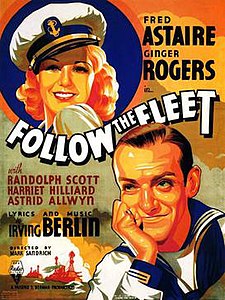
As earlier as the mid-1930s, loose sexual morality was more than hinted at in famous movies, such as the famous ones of Fred Astaire. I want to list some of the serious anti-Christian points made in movies which were supposed to be entertainment, and not serious drama since about 1935.

The reason why such a reflection is important is that the movies were aimed at taking people out of the sadness of the financial depression and also to prepare them for war, as the war effort in manufacturing began years before America actually came into WWII.

This is happening now, as people are still using movies and television to escape from the reality of the spiritual life and the reality of hardships.

Here are some of the points I have gleaned by examining some of the most popular movies of the 1930s and 1940s.

One, men were already being depicted as weak in sexual matters, and sex before marriage was strongly hinted at, if not portrayed. 

Two, men did not want to get married and were frequently tricked into it by the scheming women.

Three, women and men did not reveal respectful relationships, speaking rudely with each other and being sarcastic.


Four, entertainment was being pushed within entertainment, in obvious self-promotion. How many movies actually involved stories about plays, shows, dances, etc., revealing this obsession with promoting Hollywood?

Five, marriage was based on sex and not on homemaking or children.

Six, lies in relationships were common and accepted as either cute or necessary. Lying was used to get the girl or get the man and so on.

Seven, selfishness were rewarded in men especially. 

Eight, women were portrayed as having to pretend to be stupid in order to "get the guy".

Nine, yelling in movies and even arguing was considered normal in couples who were supposed to be in love.

Ten, rarely were children discussed as part of the future marriages and, in fact, many of the couples just went into show-business; see point four.

Eleven, women had to manipulate "to get the guy", either in lying, or in changing their looks or even compromising their ideals.

Twelve, romance never, never included God or a spiritual dimension.

All of these American characteristics show a contempt of most of the virtues. They relationships between the couples depended on exterior beauty and sex.

Now, some readers would say these early movies were harmless. I disagree. 

The formation of conscience is a delicate and steady process. The conscience needs to be cultivated with a long perspective of truth and prayer.

Sadly, in the States, billions of dollars has been spent over the last century on entertainment. Gone by the 1930s were the ideals of family, brought back briefly after the War, when people were settling down again.

I challenge readers to really listen to the words of the songs that were sung, the attitudes in the relationships, and the general atmosphere of the stories.

A culture does not suddenly decay. The process is long and complicated. I would state that several generations, before the wild sixties, engaged in watching stories which were just as damaging as those thirty years later.

to be continued....

Friday, 13 September 2013

Thoughts on Another Movie


Now, I have not seen this movie since the first time I saw it in 1960. I was eleven. My dear Uncle Charles, who died last year on November 11th, would take one of my brothers and I to the movies frequently. He is responsible for my love of the cinema. He was also my Godfather. May he rest in peace.

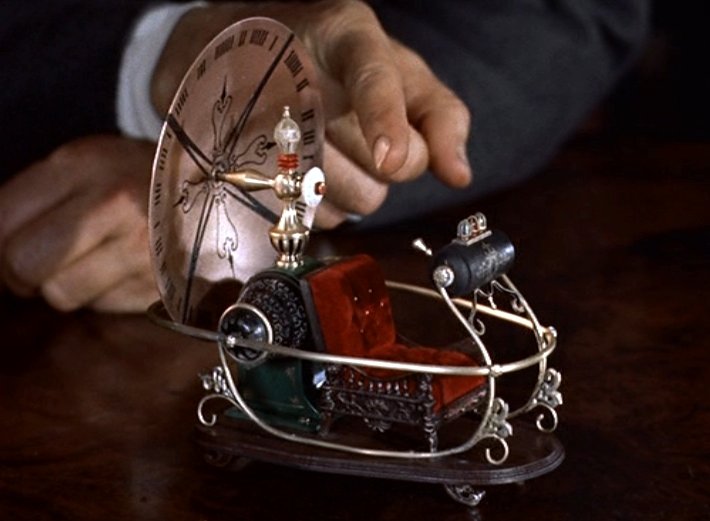
But, yesterday, a friend of mine in Germany reminded me of this film, The Time Machine. She, too, saw it as a child and was affected by it. Despite its limitations, the movie, based on the novel by H. G. Wells, seemed prophetic to those of us growing up practicing nuclear war drills in schools, which, by the way, in tornado alley, was just one more drill among many.

Now, the point of the movie, and the novel, is that mankind destroyed most of the world, with the help of the nuclear winter, and only two groups evolved-the predators, called the Morlocks, who raise and eat the Eloi, the peter pans.  The Eloi have become rather stupid, apathetic, docile and fearful creatures. But, they finally rise up with the help of the Time Traveler, and defeat the Worlocks.


When I saw it, the Cold War was at its height. We were aware of both apathetic and stupid nations as well as predator nations. I was intrigued that a man from Victorian England had to put "gumption", as we say in the Midwest, back into Eloi in order for them to defend themselves. 

I especially liked the 


I shall leave the extrapolations to you, dear readers....


Saturday, 26 January 2013

For those who asked about Les Mis


I am getting feedback from good Catholics that Les Miserables is a great film. I have not seen it, but here is a review.


Les Miserables

By Joseph McAleer
Catholic News Service

NEW YORK (CNS) -- If your Christmas wish list includes a lavish, big-budget musical crafted in the classic Hollywood manner, then "Les Miserables" (Universal) is just the ticket.

This rousing entertainment offers something for everyone: soaring anthems, tear-jerking romance, thrilling drama -- and a positive portrayal of the Catholic faith.

In fact, this faithful adaptation of the Victor Hugo novel, which was transformed into a worldwide stage sensation by impresario Cameron Mackintosh, is a deeply moral story. Characters rise and fall calling on God for grace and mercy, seeking personal redemption while trying to better the lives of others.

As the central character, ex-convict Jean Valjean (Hugh Jackman), comes to realize, "To love another person is to see the face of God."

Director Tom Hooper ("The King's Speech") paints with an enormous brush and "Les Miserables" is staged on an epic scale, overstuffed with grand set pieces and hundreds of extras. Hooper's fondness for extreme close-ups heightens the emotional wallop, and will likely send some viewers scrambling for tissues.

The labyrinthine story spans two decades in post-revolutionary France and revolves around three characters: Valjean, who breaks his probation and seeks a fresh start; Inspector Javert (Russell Crowe), obsessed with finding Valjean and bringing him to justice; and the doomed Fantine (Anne Hathaway), who sacrifices everything for the care of her out-of-wedlock daughter, Cosette (Isabelle Allen).

The kindness of a Catholic bishop (Colm Wilkinson) convinces Valjean to amend his life. Over time, he changes his identity, becoming the benevolent mayor of a village and a factory owner. When Fantine is unjustly fired from his factory and forced into a life of prostitution, Valjean steps in, promising the now-dying woman that he will raise Cosette as his own.

Cosette has been living with the Thenardiers (Sacha Baron Cohen and Helena Bonham Carter), wicked tavern owners and professional pickpockets. Their collusion with Javert makes for a narrow escape for Valjean.

Years pass, and Cosette has blossomed into a refined young woman (Amanda Seyfried). On a Paris street she meets a young revolutionary, Marius (Eddie Redmayne). It's love at first sight, much to the chagrin of fellow rebel Eponine (Samantha Barks), who happens to be the Thenardiers' daughter.

Can Cosette and Marius' love survive the rising tensions of the mob, as streets are barricaded and weapons drawn? Is Javert closing in on Valjean at long last? "Les Miserables" barrels along to a satisfying climax that is profound in its endorsement of the power of faith.

With little spoken dialogue and 50 songs from composer Claude-Michel Shonberg, and lyricist Herbert Kretzmer, "Les Miserables" is more opera than musical. Fortunately the actors' pipes are up to the challenge, especially Hathaway, whose heartbreaking rendition of the signature tune, "I Dreamed a Dream," is sensational.

The film contains scenes of bloody violence, a prostitution theme, and nongraphic nonmarital sexual activity. The Catholic News Service classification is A-III -- adults. The Motion Picture Association of America rating is PG-13 -- parents strongly cautioned. Some material may be inappropriate for children under 13.

- - -

McAleer is a guest reviewer for Catholic News Service.