I found out today from one of my friends of psychology generation that she had a school psychologist in the 1960s. WOW!
Needless to say, Catholic schools did not have school psychologist. I was amazed when I heard that public schools had these so early.
So, the damaging rot came into the schools exactly in the generation I call that of psychology. Can one imagine these kids growing up in a hot-house atmosphere of being examined for psychological reasons for acting up, which in days earlier would have resulted in being refused cookies and milk, or staying in for recess, or having a note sent home to dad, and then, oh-oh.
Sin disappeared from the consciousness and conscience to the extent that kids were not allowed to suffer from consequences, which would have taught them natural law philosophy from little on.
One breaks something, one sweeps it up and pays for it. One causes a person to suffer, one apologizes. One steals something, one must not only give it back but do restitution for the sin.
One of the members of the generation of psychology did not know, even though he has been a Catholic all his life, and goes to daily Mass, that purgatory was punishment due to sin. Until our recent discussion, he had no idea that sin had consequences past the confessional box, or that one did not get into heaven unless one was purified.
It never occurred to him that sin had consequences beyond this life, and, as a NO Catholic, in his mid-50s, he claims that he has never heard any teaching from the pulpit on purgatory, except on All Souls' Day--sermons which were vague and confusing.
The priest of his parish is probably a member of the generation of psychology.
Some seminaries in America have psychologists and even psychiatrists on staff to meet with the young men on a regular basis. Some men actually see this counselor more often than they do their spiritual director, who may come from "off campus" only once a month.
We have fallen for this false religion of psychology, using it to explain sin, rather than teaching and forming the conscience through examination and reflection.
After several discussions recently with members of the generation of psychology, I have to admit I am ready to throw up my hands in frustration and walk-away from an entire group of people, who honestly believe they have never chosen sin.
Sigh....I think this cultural shift was a great victory for the evil one and part of the psywars, about which I have written in the past.
Enough, already...if one does not think one is sinning, but merely unhappy because of emotional upheaval owing to those actions of some who sinned against them, one will never take responsibility for one's own salvation-something we all must do, begging God for the grace of conversion, change, and final perseverance.
Showing posts with label examination of conscience. Show all posts
Showing posts with label examination of conscience. Show all posts
Friday, 24 July 2015
Sunday, 5 July 2015
The Soul of The Apostolate, Part Eight

Some years ago when I was in Japan I was astonished and deeply moved when I had the happiness to come in contact with some members of the numerous Christian families which were discovered years ago near Nagasaki. I have never heard anything so amazing! Surrounded by pagans, forced to conceal their religion, deprived of priests for three centuries, these Christians of staunch courage received from their parents not only faith but fervor. Where are we to find the moving power strong enough to explain the strength and duration of this extraordinary heritage? The answer is easy. Their ancestors had been trained by a superb director of “shock troops,” St. Francis Xavier.
These are the last words I am putting on the blog for now from The Soul of The Apostolate. The book contains many more priceless paragraphs, but today, I want to emphasize the necessity, again, for the personal, adult appropriation of the Faith.
The Jesuits trained people, in the lands to which they went, to do examinations twice daily-one in the morning and one at night. This daily examen kept those in hiding in a state of holiness, as they prayed to God, as some of us do in the Divine Office, the see our hidden sins and to be freed of those. Save me from the faults I do not see. Save your servant from pride.
The daily examen focuses on both exterior and interior sins and imperfections.
Here is an example of the Examen. This is an excellent way to learn contemplative prayer. If God grants me the House of Prayer, those who join would be asked to do this type of examen daily. It fits in nicely with the time of lectio divina asked for by St. Benedict. How wonderful that the Cistercian way, the Benedictine way, and the Ignatian way overlap in teaching contemplative prayer.
I wrote almost two years ago on these hidden Christians. Now is the time to consider their courage. Below are two pertinent re-posts, especially for my new readers.
Saturday, 21 September 2013
The Kakure Kirishitan And The One Thing Necessary
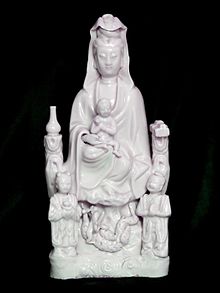 |
| Thanks to wikipedia for Japanese Blessed Virgin |
With all the chaos and sharp decline of democracy in Great Britain, Ireland and America, I have pondered on the one thing necessary at this time. But, I have come up with two. The first is obvious in St. Alphonsus Ligouri's prayer. We all must be dedicated to becoming saints . But, I add a second thing which is also of primary importance. We, you and I, not priests, or bishops, or cardinals, or nuns, we the laity must pass on the Faith to the next generations. This is our duty, stemming from our baptismal promises. We have no choice. To pass on the heritage and all the cultural trappings of Catholicism, the doctrines, the dogmas, the liturgical rites as far as we can, such as the Liturgy of the Hours, is our duty. We shall have no one to blame but ourselves if the faith continues to dwindle and disappear from some areas here, and in other countries. This is our Faith. Pass it on.
Pius IX declared it a miracle when the missionaries came back to Japan and found the 隠れキリシタン, the hidden Christians,Kakure Kirishitan laity who had kept the Faith without a priest for about 250 years. Bishop Bernard Thadee Petitjean, the first missionary priest back to Japan after 1853, and the first Vicar Apostolic of Japan, discovered these hidden Christians. They had passed on the Faith through a 100 generations. Are we strong enough and intelligent enough about our Faith to do this?
Here are two pages from one of the first modern Catholic Catechisms in Japan, 1865. The very first came out in 1860. From 1614 until 1860, the laity had to be responsible for their own faith and Catholicity. I assume they baptised their children and converts, prayed, honoured Mary (there were statues of Mary found), and keeping customs. Could we do this? In 2010, there were almost seven billion people in the world and 118,990 major seminarians. Who do you think is going to keep the Faith in the not-so-distant future? You, I.....

http://laures.cc.sophia.ac.jp/laures/www/media

ONLY ONE THING IS NECESSARY
A Prayer of Saint Alphonsus Liguori
O my God, help me to remember -
That time is short, eternity is long.
What good is all the greatness of this world at the hour of death?
To love You, my God, and save my soul is the one thing necessary.
Without You, there is no peace, no joy.
My God, I need fear nothing but sin.
For to lose You, my God, is to lose all.
O my God, help me to remember -
That to gain all I must leave all,
That in loving You I have all good things: the infinite riches of Christ
and His Church, the motherly protection of Mary,
peace beyond understanding, joy unspeakable!


Eternal Father, your Son has promised that whatever we ask in His Name will be given to us. In His Name I pray: give me a burning faith, a joyful hope, a holy love for Jesus Christ. Give me the grace of perseverance in doing Your will in all things. Do with me what You will. I repent of having offended You. Grant, O Lord, that I may love You always and never let me be separated from You.
O my God and my All, make me a saint!

I know for a fact that young men are saying no to God regarding becoming priests.

Saturday, 15 November 2014
Lost Souls because.....
I know for a fact that young men are saying no to God regarding becoming priests.
St. Francis, according to Fr. Minelli, was asked by a leader of a Japanese tribe, a man who had heard of God's love for the Japanese, this question: " How come God, if He is so good, as you say he is, has waited so long before making Christianity known to us?" "Do you want to know?" replied the Saint with sadness. "Here is why: God had inspired many Christians to come and announce to you the Good News, but many of the have not wanted to heed His call."
No priests, no sacraments, no Mass, no Eucharist, no absolution of sins, no communities...
The great sin of men who are refusing the call is one of sloth. It is too easy to just be single, go with the flow, live a completely self-centered life.
Those who are answering the call understand that the day of the comfortable cleric is over.
We are fast entering the new Age of the Martyrs.
Where are the real men who will answer God's call?
They have been pampered from birth by misguided parents. They only want to feed their own needs and they do not love God or His Bride, the Church.
Too many are saying no and souls will be lost.....
Yesterday, a priest and I discussed the love of the Church which should be in the hearts of priests.
Where is this bridal love? It is a gift for anyone who wants it. It is Christ's Own Love for all of us.


Wednesday, 15 April 2015
Sins Which Cry Out to God for Vengeance

Today, I am reminded of these sins, as I have been witnessing PDAs (public displays of affection), right here in suburbia, between lesbians, several who live in this neighborhood.
God will not be mocked. He created us and gave us natural law, which is being spurned by those who accept such lifestyles.
I repeat the CCC on these sins:
1867 The catechetical tradition also recalls that there are "sins that cry to heaven": the blood of Abel,139 the sin of the Sodomites,140 the cry of the people oppressed in Egypt,141 the cry of the foreigner, the widow, and the orphan,142 injustice to the wage earner.14
These are considered the sins which will bring down God's vengeance on all of us.
Those people who are violent---look at the news; those people who are sodomites--look in your own areas; those people who are abandoned to poverty, loneliness, even penury--look here; those who receive unjust wages to we can buy cheap goods--look at most of the stores and name brands and what they pay for goods, as opposed to what they charge; slavery, such as sexual abuse of children, (as in Great Britain), sexual slavery of women, slavery of those who are under tyrannies--look at the news.
God will not ignored these sins much longer. Reparation is needed.
We cannot lose the virtue of being shocked by sin. Complacency deadens the soul. We should be intolerant of our own sin, first, and then not tolerate sin in a society. But, as Fulton J. Sheen stated, intolerance is the only sin most Americans believe in. And, he said and wrote about this two generations ago. God will not be mocked.
http://www.northamericanmartyrs.org/pdf/Plea-for-Intolerance.pdf
Sunday, 5 April 2015
Disobedience and Injustice
Continuing with the fast review of the Cardinal Virtues, one can see that Justice infuses more virtues, as do all the other Cardinal Virtues.
Out of Justice comes giving God what is His due in worship, piety, devotions, penances and mortifications, piety towards one's parents, truthfulness, faithfulness, generosity towards God and others, giving others their due according to natural law and natural rights, and most importantly, obedience.
The virtue of obedience emanates from justice. Those who are hypocrites in the Church and in society lack obedience, lack justice.
Those who fall into following false seers or superstition sin against the virtue of justice, as they do not give to the Church obedience and they do not give God proper worship, which is His due.
Those who are rebellious against the authority of the Church in matters of contraception and irregular marriages, lack justice, towards God, His Church and others.
Lying is a sin against justice, as well as a running away from suffering. Yes, practicing justice can hurt, as it means "dying to self".
Too many Catholics live unjust lives, towards God and their neighbors. Most of the rebellion in the Church, specifically with regard to the happenings at the Synod. grows out of disobedience, the lack of the practice of justice.
Since all Catholics are given this virtue in baptism and have this virtue strengthened in confirmation, as well as in the receiving of the Eucharist, one must ask why the lack of justice seems to obvious
Mortal sin binds up the virtues and puts them in a virtual prison. Only repentance, confession, grace can operate the virtues, such as justice, again.
I write this on Holy Saturday noting the myriad ways in which priests and bishops have fallen into disobedience regarding liturgical norms. I think of heretical sermons, and false statements concerning Church teaching. But, I also think of the laity who lack piety, do not give due worship to God in Church by being reverent and modest, and who ignore the poor and the lonely.
Such are the sins against justice within the Church...
Such are the sins against the very virtue which has been given to all the baptized...
Practice make perfect with regard to the virtues. Practice justice. Pray in your daily examination of conscience to see how you may be sinning against justice. Reparation for sin and for the punishment due to sin involves the practice of justice.
This method of an examen is a tried and true way of the Jesuits and Dominicans--thinking of the virtues and the sins against these virtues. The graph on this blog which I highlighted yesterday lists all the above sins against justice. Those priests and bishops who follow a daily examen will not be disobedient. If the laity pray and practice justice, they will not follow false seers or ignore getting involved with the poor.
More later....
Out of Justice comes giving God what is His due in worship, piety, devotions, penances and mortifications, piety towards one's parents, truthfulness, faithfulness, generosity towards God and others, giving others their due according to natural law and natural rights, and most importantly, obedience.
The virtue of obedience emanates from justice. Those who are hypocrites in the Church and in society lack obedience, lack justice.
Those who fall into following false seers or superstition sin against the virtue of justice, as they do not give to the Church obedience and they do not give God proper worship, which is His due.
Those who are rebellious against the authority of the Church in matters of contraception and irregular marriages, lack justice, towards God, His Church and others.
Lying is a sin against justice, as well as a running away from suffering. Yes, practicing justice can hurt, as it means "dying to self".
Too many Catholics live unjust lives, towards God and their neighbors. Most of the rebellion in the Church, specifically with regard to the happenings at the Synod. grows out of disobedience, the lack of the practice of justice.
Since all Catholics are given this virtue in baptism and have this virtue strengthened in confirmation, as well as in the receiving of the Eucharist, one must ask why the lack of justice seems to obvious
Mortal sin binds up the virtues and puts them in a virtual prison. Only repentance, confession, grace can operate the virtues, such as justice, again.
I write this on Holy Saturday noting the myriad ways in which priests and bishops have fallen into disobedience regarding liturgical norms. I think of heretical sermons, and false statements concerning Church teaching. But, I also think of the laity who lack piety, do not give due worship to God in Church by being reverent and modest, and who ignore the poor and the lonely.
Such are the sins against justice within the Church...
Such are the sins against the very virtue which has been given to all the baptized...
Practice make perfect with regard to the virtues. Practice justice. Pray in your daily examination of conscience to see how you may be sinning against justice. Reparation for sin and for the punishment due to sin involves the practice of justice.
This method of an examen is a tried and true way of the Jesuits and Dominicans--thinking of the virtues and the sins against these virtues. The graph on this blog which I highlighted yesterday lists all the above sins against justice. Those priests and bishops who follow a daily examen will not be disobedient. If the laity pray and practice justice, they will not follow false seers or ignore getting involved with the poor.
More later....
Saturday, 4 April 2015
Help On The Predominant Fault
Some readers have asked me in the not-so-distant past how to recognize one's predominant fault. One person noted that this fault seemed hard to pin-down. Yes, that is a truism.
Here are some helpful hints.

Here are some helpful hints.
- One must first break away from all mortal and even venial sins. These sins blind one so that the predominant fault, always allusive, remains hidden.
- Tendencies towards venial sins can reveal the predominant fault. Example: if one is always confessing the same venial sins, most likely these are related to the predominant fault.
- Remember the sins of your childhood. Were you greedy, always taking the largest brownie on the plate? Did you steal candy out of the cupboard? Did you lie to your parents regularly? Were you mean to your siblings? And so on. Such an examination of your childhood sins can reveal pride, gluttony, deceit, avarice, malice, and so on.
- Have you really done a serious examination of conscience which includes sins of the imagination and thought? Sometimes, one sins inwardly but not outwardly, and these inward sins can reveal the predominant fault.
- Are you absolutely ruthless in confession, not hiding anything and asking God to show you sins of the past not yet confessed, although forgiven, but indicating patterns?
- What do you think of the most during the day? Sex? Food? Leisure? Money or shopping? These thoughts could indicate Lust, Gluttony, Sloth, Avarice and so on without one even sinning except in thought. Such preoccupations most likely point to the predominant fault.
- Ask your mum.
Seriously, the predominant fault is hard to pin down as we all have a survival instinct not to seem "that bad" to ourselves and others. But, until the predominant fault is overcome, there is no Illumination State and no Unitive State with God.
God blesses the pure in heart. And, purity in heart is not intention, but a reality.
Here are some previous posts on the predominant fault.
This one above has a great graph.
Here are some previous posts on the predominant fault.
18 Mar 2015
Before conquering our predominant fault, our virtues are often, to speak more properly, natural good inclinations rather than true and solid virtues that have taken root in us. Prior to victory over this fault, the fountain of graces is ...
12 Oct 2014
When one asks and allows God to enter into one's soul and deal with one's predominant fault or faults, He does. It is hard but once one begins the journey it is not so hard.In fact, one senses the way God breaks up that fault ...
22 Oct 2014
For example, a woman who suffers from the predominant fault of vainglory and cares too much about how she looks or how other people see her, will spend too much time on clothes, make-up, hair, even wasting money on ...
12 Sep 2014
... posts today have been by request of a friend. Now, the discussion of natural law can lead one to ask this question, "Is there a connection between natural law, written on the hearts of man, and people's predominant fault?"
16 Nov 2014
"If we are to be merciful and compassionate towards our neighbour, we ought to be so above all when we know his dominant fault. The first impulse is to bring all our severity to bear on it, but on the contrary, it is one that we ...
08 Apr 2014
Firstly, St. Alphonsus reveals that anyone who gets upset with sin in one's own life is not humble, but proud, and may be exhibiting the predominant fault of anger. Anger is not merely focused on other or events, but one can ...
25 Sep 2013
Youth can spot a hypocrite a mile away and the bad priests and neglectful husbands and fathers will have to face God as to why they did not work on their predominant fault. Being a Catholic man, like being a Catholic woman, ...
13 Aug 2014
The predominant fault is so much the more dangerous as it often compromises our principal good point, which is a happy inclination of our nature that ought to develop and to be increased by grace. For example, a man is ...
07 Apr 2014
Use the tags and labels to read the posts on one's predominant fault, if you have not done so already. Hard stuff, but necessary for the road to perfection. There are 45 posts dealing with that topic directly. And, speaking of ...
22 Jul 2012
Garrigou-Lagrange states that "it is of primary importance that we recognize our predominant fault and have no illusions about it. This is is so much the more necessary as our adversary, the enemy of our soul, knows it quite ...
18 Sep 2013
For without dealing with our predominant fault, there is no moving on into the Dark Night, Illumnative and Unitive states. Later on, I can show how the predominant fault, unless dealt with in this life, is the reason we go to ...
18 Sep 2013
The predominant fault is the defect in us that tends to prevail over the others, and thereby over our manner of feeling, judging, sympathizing, willing, and acting. It is a defect that has in each of us an intimate relation to our ...
19 Sep 2013
Garrigou-Lagrange helps us on our way. The graph at the very end of this post indicates how to break the sins of the predominant fault. This is hard work. This takes time and reflection. One must be ruthless with one's self to a ...
18 Sep 2013
The greatest fault is pride. Thinking that one knows better than a bishop or that one can judge a liberal bishop as unauthorized to make a statement on a visionary is pride. Period. But, those with a predominant fault of sloth or ...
27 Sep 2013
The second most common predominant fault of women could be pride. This is the primordial sin and one easy to fall into. But, if this is the main, underlining fault of all faults, it must be rooted out through serious attention, ...
27 Sep 2013
The Predominant Fault of Some Women. Posted by Supertradmum. Just to be fair, I have been talking with lovely, good Catholic women who want to become saints. They would be in the category of the really beautiful women ...
22 Jul 2012
Predominant Fault Three-perfection series. Posted by Supertradmum. Promptness of will and intolerance of our faults are part of the battle against our predominant faults. This is a battle from which we cannot escape if we ...
24 Jul 2012
Perfection Series continued-the predominant fault--four. Posted by Supertradmum. St. Augustine tells us, using Garrigou-Lagrange, that God never asks us to do the impossible. If God desires us to be one with Him and He ...
08 Apr 2014
St. Francis de Sales on His Predominant Faults-Two. Posted by Supertradmum. After being greatly insulted by a Knight of Malta for not giving a benefice to one of his servants, “the bishop‟s brother …asked him how it was he ...
25 Oct 2014
Ask God to show you your predominant fault or faults. One way is to look at the pattern of sins in your life, as repetitive venial sins reveal the predominant fault. Asking God to purge one of this fault is part of the Dark Night.
Wednesday, 1 April 2015
On Compunction

I apologize for re-posts, but I have been ill since yesterday a.m.
But, a reader asked for a post on compunction, something I distinctly remember learning about in school from the nuns preparing up for First Confession. Little children love words, and they love big words.
Perhaps one of the best writers on compunction, which is remorse for sin or contrition, is Thomas a Kempis, the author of The Imitation of Christ, another great book for spiritual reading. a Kempis states this below.
One can have imperfect or perfect compunction, which lead to repentance.
I shall make my comments in blue.

CHAPTER XXI
OF COMPUNCTION OF HEART
If thou wilt make any progress keep thyself in the fear of God, and long not to be too free, but restrain all thy senses under discipline and give not thyself up to senseless mirth. Give thyself to compunction of heart and thou shalt find devotion. Compunction openeth the way for many good things, which dissoluteness is wont quickly to lose. It is wonderful that any man can ever rejoice heartily in this life who considereth and weigheth his banishment, and the manifold dangers which beset his soul.Since all humans have natural law written on their hearts, remorse is a normal feeling, a reaction to sin. But, many people push down this reaction and ignore it, turning away from the warning of the conscience. Compunction can be "stoked" through meditating on the Four Last Things, death, judgement, hell, and heaven.
2. Through lightness of heart and neglect of our shortcomings we feel not the sorrows of our soul, but often vainly laugh when we have good cause to weep. There is no true liberty nor real joy, save in the fear of God with a good conscience. Happy is he who can cast away every cause of distraction and bring himself to the one purpose of holy compunction. Happy is he who putteth away from him whatsoever may stain or burden his conscience. Strive manfully; custom is overcome by custom. If thou knowest how to let men alone, they will gladly let thee alone to do thine own works.
Interesting that a Kempis writes on real joy coming from a good conscience. Those who no longer allow themselves to be distracted by the world, the flesh and the devil experience a renewed fear of the Lord, a renewed energy and desire to become holy.
One wants to move away from all sin, mortal and venial, for the love of self and the love of God. This type of self-love is good, as one must work for one's own salvation as well as that of others.
a Kempis states, "Strive manfully; custom is overcome by custom." Good habits with prayer and confession drive out bad habits.
3. Busy not thyself with the affairs of others, nor entangle thyself with the business of great men. Keep always thine eye upon thyself first of all, and give advice to thyself specially before all thy dearest friends. If thou hast not the favour of men, be not thereby cast down, but let thy concern be that thou holdest not thyself so well and circumspectly, as becometh a servant of God and a devout monk. It is often better and safer for a man not to have many comforts in this life, especially those which concern the flesh. But that we lack divine comforts or feel them rarely is to our own blame, because we seek not compunction of heart, nor utterly cast away those comforts which are vain and worldly.
Gossip must be set aside, follow your own good words, become a good servant of God not men..all of these things help hone compunction, which is a tool of repentance.
The less comforts of the flesh we have, the better, as our senses will not be deadened or burdened by sin or sinful thoughts. Truly, sins of the flesh make one spiritually sluggish.
St. John of the Cross writes that we should not seek after spiritual comforts, either. One can read this in my posts on him in the two series, perfection and Doctors of the Church.
4. Know thyself to be unworthy of divine consolation, and worthy rather of much tribulation. When a man hath perfect compunction, then all the world is burdensome and bitter to him. A good man will find sufficient cause for mourning and weeping; for whether he considereth himself, or pondereth concerning his neighbour, he knoweth that no man liveth here without tribulation, and the more thoroughly he considereth himself, the more thoroughly he grieveth. Grounds for just grief and inward compunction there are in our sins and vices, wherein we lie so entangled that we are but seldom able to contemplate heavenly things.
More and more, I know that suffering is a gift which tears us away from the world. Perfect compunction, or perfect contrition, actually make worldly things distasteful. Suffering must not be avoided when self-knowledge reveals sin. In fact, grieving over sin happens fairly constantly in the Dark Night of the Soul. A daily examination of conscience can help one move towards perfect compunction, perfect contrition, which is based on the love for God.
5. If thou thoughtest upon thy death more often than how long thy life should be, thou wouldest doubtless strive more earnestly to improve. And if thou didst seriously consider the future pains of hell, I believe thou wouldest willingly endure toil or pain and fear not discipline. But because these things reach not the heart, and we still love pleasant things, therefore we remain cold and miserably indifferent.
Here it is, as if I anticipated a Kempis' note on contemplating on death and hell-- and the other the Four Last Things.
6. Oftentimes it is from poverty of spirit that the wretched body is so easily led to complain. Pray therefore humbly unto the Lord that He will give thee the spirit of compunction and say in the language of the prophet, Feed me, O Lord, with bread of tears, and give me plenteousness of tears to drink.(1)
(1) Psalm lxxv. 5.
What the author means by poverty of spirit here is a littleness, a smallness of soul, a lack of generosity. When one see one's own sins and can weep, God carves out of our hearts a place for Him to rest.
to be continued...Treatise on the Four Last Things may be found at this site.
http://catholictradition.org/Classics/4last-things.htm
Monday, 23 February 2015
Conspiracy Tracking as A Cop-Out
OK. to set the record straight, I totally believe that the OWG is planned and coming.
However, I want to address Catholic conspiracies which take over people's imaginations and why these are dangerous to consider.
I have seen people obsessed with the Masonic conspiracies, Fatima conspiracies, or Vatican II conspiracies.
There is nothing wrong with being aware of history, however, to be eaten up with such not only is dangerous, but may indicate a sin of sloth.
One must be reaching out daily to those who need to be evangelized, to the lost, the hungry.
If the laity only look and read newspapers and books dealing with conspiracies, and want to blame these for all the troubles in the Church, these lay people are missing the boat.
Sin causes evil and sin causes groups to form who do conspire.
But, we should be concentrating on our own sin and our daily lives of prayer and work.
To be eaten up with conspiracies creates a mindset which takes attention away from daily examination of our own consciences and looks to blame others for evil.
Until we are saints, we all contribute to evil in the world in some way, however small. This is why working on the predominate faults is so important.
Perfection, interior life, charity...
God is about ready to take care of the biggies--He has, as I have said elsewhere. unleashed the dog from the chain for a time.
Get ready and help others get ready and set aside conspiracy hunting. We know what is out there.

However, I want to address Catholic conspiracies which take over people's imaginations and why these are dangerous to consider.
I have seen people obsessed with the Masonic conspiracies, Fatima conspiracies, or Vatican II conspiracies.
There is nothing wrong with being aware of history, however, to be eaten up with such not only is dangerous, but may indicate a sin of sloth.
One must be reaching out daily to those who need to be evangelized, to the lost, the hungry.
If the laity only look and read newspapers and books dealing with conspiracies, and want to blame these for all the troubles in the Church, these lay people are missing the boat.
Sin causes evil and sin causes groups to form who do conspire.
But, we should be concentrating on our own sin and our daily lives of prayer and work.
To be eaten up with conspiracies creates a mindset which takes attention away from daily examination of our own consciences and looks to blame others for evil.
Until we are saints, we all contribute to evil in the world in some way, however small. This is why working on the predominate faults is so important.
Perfection, interior life, charity...
God is about ready to take care of the biggies--He has, as I have said elsewhere. unleashed the dog from the chain for a time.
Get ready and help others get ready and set aside conspiracy hunting. We know what is out there.

Monday, 12 January 2015
People Die
One of the results of the recent horrors here in France is the realization of the brevity of life.
People die. In the West, we have sheltered ourselves from death. In past centuries, war and disease made death more real, and less frightening for most people. But, the vulnerability of life is such that one must stop and think of the last four things.
I have several posts on this.
Stay in sanctifying grace, stay holy, make God your priority in life.
Realize that life is short, very short.
People die. In the West, we have sheltered ourselves from death. In past centuries, war and disease made death more real, and less frightening for most people. But, the vulnerability of life is such that one must stop and think of the last four things.
I have several posts on this.
Stay in sanctifying grace, stay holy, make God your priority in life.
Realize that life is short, very short.
Monday, 15 September 2014
On The Sin of Anxiety

6 Humble yourselves therefore under the mighty hand of God, that he may exalt you in due time:
Luke 12:4 “I tell you, my friends, do not fear those who kill the body, and after that have no more that they can do. 5 But I will warn you whom to fear: fear him who, after he has killed, has power to cast into hell, yes, I tell you, fear him! 6 Are not five sparrows sold for two pennies? And not one of them is forgotten before God. 7 Why, even the hairs of your head are all numbered. Fear not; you are of more value than many sparrows.
And from Philippians 4:
6 Have no anxiety about anything, but in everything by prayer and supplication with thanksgiving let your requests be made known to God. 7 And the peace of God, which passes all understanding, will keep your hearts and your minds in Christ Jesus.
8 Finally,
brethren, whatever is true, whatever is honorable, whatever is just,
whatever is pure, whatever is lovely, whatever is gracious, if there is
any excellence, if there is anything worthy of praise, think about these
things. 9 What you have learned and received and heard and seen in me, do; and the God of peace will be with you.
For years, when I went to confession, I would tell the priest I was confessing the sin of anxiety. All said it was not a sin, but I knew my Scripture and the teaching of the Church concerning trusting in God and believing in Divine Providence. I knew I was sinning.
Finally, I met a priest who understood that anxiety, (unless caused by something physical), is indeed a sin. Then, I began to work on this sin in my life. God bless that good and holy priest.
I discovered several things.
 |
| thanks to wiki commons |
One, anxiety is an insult to God. St. Teresa of Avila states this plainly. She also has much to say about trust. Trust is obeying the First Commandment.
“Let nothing disturb you,
Let nothing frighten you,
All things are passing away:
God never changes.
Patience obtains all things.
Whoever has God lacks nothing;
God alone suffices.”
Let nothing frighten you,
All things are passing away:
God never changes.
Patience obtains all things.
Whoever has God lacks nothing;
God alone suffices.”
It is an insult not to trust because God takes care of all our needs. He is God.
Two, from all eternity, God knew you would be sitting right now at your computer reading this, with all your problems, concerns, sins. He does not ignore anything in your life.
Three, troubles, sufferings, pain, etc. are allowed by God in His Permissive Will. He allows these for our purification.
Again from St. Teresa:
Consider carefully, daughters, these few things that have been set down
here, though they are in rather a jumbled state, for I cannot explain
them better; the Lord will make them clear to you, so that these period
of aridity may teach you to be humble, and not make you restless, which
is the aim of the devil. Be sure that, where there is true humility,
even if God never grants the soul favors, He will give it peace and
resignation to His will, with which it may be more content than others
are with favors. For often, as you have read, it is to the weakest that
His Divine Majesty gives favors, which I believe they would not exchange
for all the fortitude given to those who go forward in aridity. We are
fonder for spiritual sweetness than of crosses. Test us, O Lord, Thou
Who knowest all truth, that we may know ourselves.
,_one_in_flight.jpg) |
| thanks to wiki |
Four, pride is the sin underlying anxiety as the priest told me. We want to be in control and not let God be God. Therefore, we let ourselves stew on things and worry. Again, trust is the response of the humble heart to the First Commandment. Humility is the virtue to combat anxiety.
Five, anxiety as a lack of trust, interferes with our relationship with God, of course. Can you imagine a love relationship between two people wherein one does not trust the other? That lack of trust would destroy the friendship or marriage. So, too, anxiety chips away at our relationship with God.
Six, anxiety may be a result of unresolved sins, especially the presence of the predominant faults. We sense we are not in the right place and begin to worry instead of facing the problem of purification. Some people are afraid to face sin in their lives and guilt turns into anxiety.
I was so relieved when I finally found that priest who spoke the truth about the sin of anxiety. It is the plague of Americans, who want everything to be "just so". Those who are use to being in control of situations panic in old age when they can no longer control their bodies. Learning to trust in God early is a great spiritual lesson which will continue all of our lives. Learning to rely on Divine Providence will be essential for the remnant.
Saturday, 13 September 2014
Repeat of a repeat on three examinations of conscience
Confession leaflet for children
- A5 leaflet suitable for children aged 7-10.
- A5 leaflet suitable for children aged 7-10.
Confession leaflet for teenagers
- A4 tri-fold leaflet suitable for young people 11-16.
- A4 tri-fold leaflet suitable for young people 11-16.
Confession leaflet for adults – A4 tri-fold
leaflet for adults.
leaflet for adults.
Monday, 26 May 2014
And Again, from Garrigou-Lagrange on Confession
The series on the predominant fault has received attention lately, so I am continuing posts on this theme.
One of the things I must remind readers is that the removal of the predominant fault is in the stage of Beginners.
This purification is part of the Dark Night, and not the stage of the proficients, who are involved in given contemplative prayer.
Several readers have written to me that one of the biggest problems is finding a confessor who takes the way of perfection seriously. As late as two weeks ago, I was confessing to a priest who wanted to talk me out of what I considered a serious sin of imperfection. One does not want to argue with priests, especially trad ones, but the laity must admit that not all priests themselves understand even the beginning stages of purification and, therefore, cannot help the person in the confessional.
To be honest, I have met no more than six priests in my entire in the confessional, who understood the way of perfection through purification.
Six, which is about one for every ten years of my life. The best, absolute best confessors I have had have either been FSSP priests or Opus Dei priests.
And the best of the best is at St. Kevin's in Dublin.
Here is a long section from Garrigou-Lagrange on the importance of confession in the Dark Night, the purification.
One of the things I must remind readers is that the removal of the predominant fault is in the stage of Beginners.
This purification is part of the Dark Night, and not the stage of the proficients, who are involved in given contemplative prayer.
Several readers have written to me that one of the biggest problems is finding a confessor who takes the way of perfection seriously. As late as two weeks ago, I was confessing to a priest who wanted to talk me out of what I considered a serious sin of imperfection. One does not want to argue with priests, especially trad ones, but the laity must admit that not all priests themselves understand even the beginning stages of purification and, therefore, cannot help the person in the confessional.
To be honest, I have met no more than six priests in my entire in the confessional, who understood the way of perfection through purification.
Six, which is about one for every ten years of my life. The best, absolute best confessors I have had have either been FSSP priests or Opus Dei priests.
And the best of the best is at St. Kevin's in Dublin.
Here is a long section from Garrigou-Lagrange on the importance of confession in the Dark Night, the purification.
If a man who tends towards perfection has the misfortune to commit mortal sins in a moment of weakness, he must accuse himself of them sincerely and clearly at the beginning of his confession, without, seeking to cause them to pass unperceived in the multitude of venial sins. He must indicate their number, kind, and cause, and especially have a profound contrition for them accompanied by a firm purpose of avoiding in the future not only the sins themselves, but their occasions and causes. Even after receiving pardon, he must also keep alive in his heart the sincere desire to atone, by an austere life and a generous love, for the evil committed. He should also remember how the Apostle, St. Peter, wept over his denial, humbled himself profoundly, thanked infinite Mercy, and continued on his way even to martyrdom.
An isolated mortal sin, when immediately confessed and atoned for, leaves scarcely any traces in the soul, which may at once resume its ascent from the very spot where it fell, without having to retrace all the road that had already been traveled. Thus he who stumbles midway in an ascent, may, when he picks himself up, promptly continue his climb from the spot which he had reached.
Venial sins committed with full deliberation are a serious obstacle to perfection, especially when they are frequent and the soul is attached to them. They are real maladies, which weaken the Christian soul. "Do not allow sin to grow old in thee," Christ said to St. Gertrude. Fully deliberate venial sin, when not rejected, is like a poison that is not vomited forth and that, although it does not cause death immediately, acts slowly on the organism. For instance, close attention must be paid to avoid keeping voluntarily any petty rancor, or attachment to one's own judgment, to self-will, to habits of rash judgment, of slander, of dangerous natural affections that would be a fetter, depriving us of liberty of spirit and all spontaneous movement toward God. When we deliberately refuse the Lord these manifestly demanded sacrifices, we cannot expect from Him the graces that lead to perfection. Consequently we must plainly accuse ourselves of fully deliberate venial sins against charity, humility, the virtue of religion, and so forth, especially those which are most humiliating. Their cause must be sought with a firm resolution to avoid them. Otherwise, of course, there is no longer any real and effective tendency to perfection. This is a point of primary importance.
There are other semi-deliberate venial sins, which are committed with less reflection and into which there enters a certain amount of surprise and impulse, but to which the will adheres with a certain complacency. We must guard against them, especially if they recur frequently; they show that the soul fights too feebly and is not determined to free itself from all obstacles.
Sins of frailty are those committed inadvertently because of human weakness; the will has only a small share in them; it yields momentarily, but promptly disavows its weakness. Sins of this kind cannot be completely and continually avoided, but their number should be diminished. They are not a serious obstacle to perfection because they are quickly atoned for; yet it is well to submit them to the influence of the sacrament of penance because thereby purity of soul will become more complete.(1)
On this last point, an excellent confessor is essential and a great blessing. How fortunate you are if you find such a holy priest, who has allowed himself to go through the hard stages of purification, in order to help his flock, as well as save his own soul.
Sins of fraility are those which one has committed from childhood and are ingrained in our souls, sins such as white lies, cowardice, defensiveness, and even rebellion, which can become a habit. When one commits these, one must repent immediately and confess these in order for the bad habits to be broken. It is interesting that those sins of human weakness may not at all be connected to one's predominant fault.
Here is another link which might help....
http://supertradmum-etheldredasplace.blogspot.com/2013/10/practicing-virtues-in-dark-night.html
Here is another link which might help....
http://supertradmum-etheldredasplace.blogspot.com/2013/10/practicing-virtues-in-dark-night.html
to be continued.....
Subscribe to:
Posts (Atom)