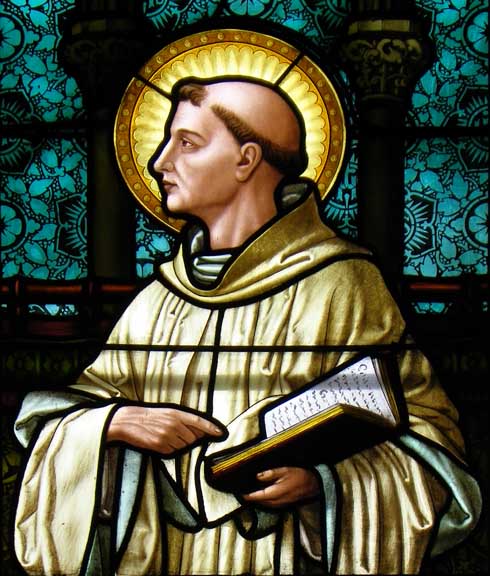
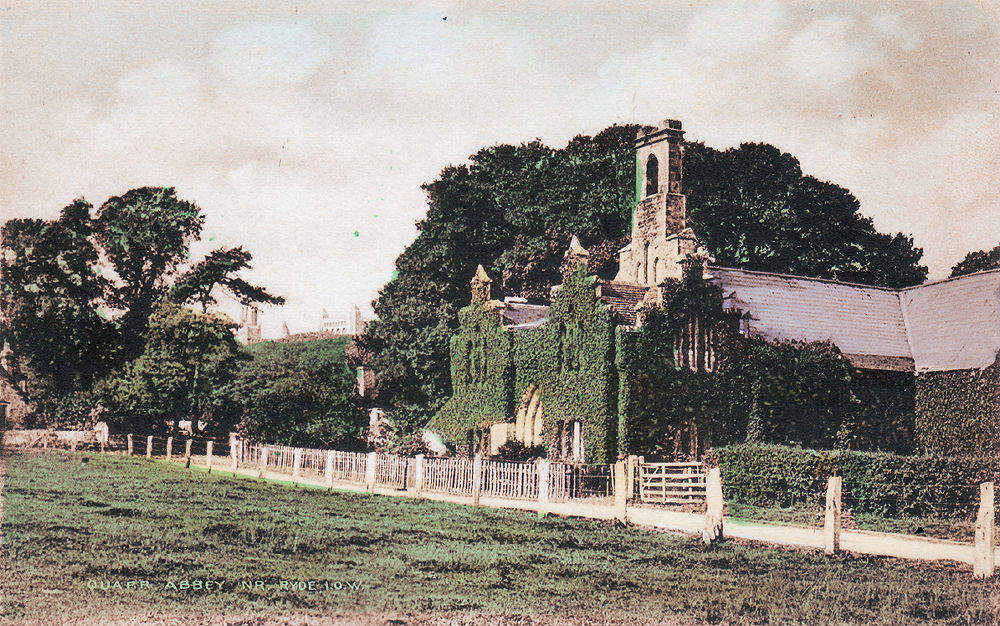
Do you know he is my favorite saint?
Check out the 64 posts on him and the 26 on the Cistercians.
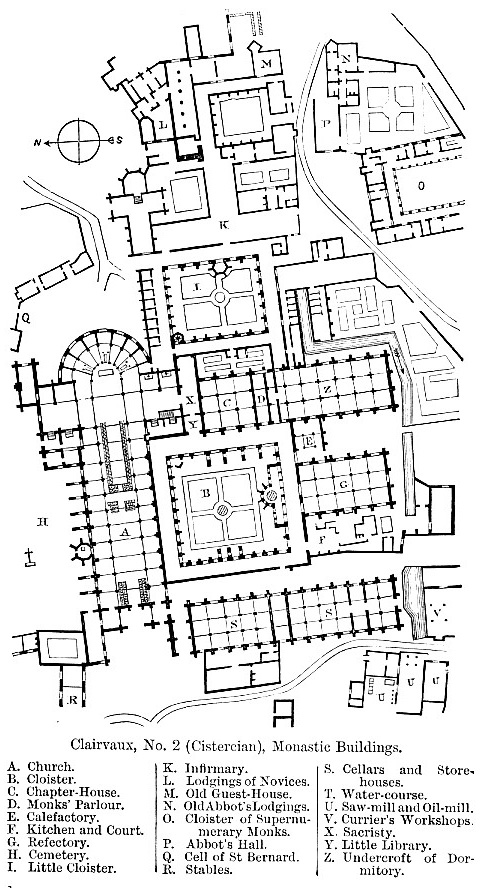
Below is a 1902 diagram of Clairvaux from an old encyclopedia.
Showing posts with label St. Bernard of Clairvaux. Show all posts
Thursday, 20 August 2015
Sunday, 5 July 2015
From The Soul of The Apostolate, Part Seven
Posted by
Supertradmum
The book, The Soul of the Apostolate, I have been using this week on the blog for meditations, praises my favourite, St. Bernard of Clairvaux many times, using his as a perfect example of the interior life leading to the active life.
Here is one reference:
Take St.
Bernard, for example. This oracle of his own time was one of those saints who showed
most firmness in his zeal for God. But the attentive reader of his life will be able to see to
what an extent the interior life had made this man-of-God selfless. He only fell back on
strong measures when he had clear evidence that all other means were useless. Often, too,
he varied between gentleness and strength. After having shown his great love for souls by
avenging some principle with holy indignation and stern demands for remedies,
reparation, guarantees, and promises, he would at once display the tenderness of a mother
in the conversion of those whom his conscience had’ forced him to fight. Pitiless towards
the errors of Abelard, he speedily became the friend of the one whom his victory had
reduced to silence.
When it was a matter of choosing means, if he saw that no principle was necessarily
involved, he always stood before the hierarchy of the Church as a champion of nonviolent
procedure. Learning that there was a movement on foot to ruin and massacre the
Jews of Germany, he left his cloister without a moment’s delay and hurried to their
rescue, preaching a crusade of peace. Fr. Ratisbonne quotes a document of great
significance in his Life of St. Bernard. It is a statement of the most exalted Rabbi of that
land, expressing his admiration for the monk of Clairvaux, “without whom,” he says,
“there would not be one of us alive in Germany.” And he urges future generations of
Jews never to forget the debt of gratitude they owe to the holy abbot. On this oc-casion
St. Bernard uttered the following words: “We are the soldiers of peace, we are the army
of the peacemakers, fighting for God and peace: Deo et pact militantibus. Persuasion,
good example, loyalty to God are the only arms worthy of the children of the Gospel.”
There is no substitute for the interior life as a means of obtaining this spirit of
selflessness which characterizes the zeal of every saint.
And, another:
As a member of the Cistercian Order, so completely consecrated to Mary, and as a child of that great saint who was, for half a century, the apostle of Europe, St. Bernard, how can we forget that the holy abbot of Clairvaux attributed to Mary all his progress in union with Jesus, and all his success in the apostolate? Everybody knows what tremendous effects were produced by the apostolate of this saint, who remains the most illustrious of the sons of St. Benedict: an apostolate that embraced nations and kings, Councils and even Popes. On all sides we hear the praises of the sanctity, the genius, the deep knowledge of Holy Scripture, and the penetrating unction of the writings of this the last of the Fathers of the Church. But one title above all others sums up all the admiration of the ages for this holy doctor: Cytha-rista Mariae, “the Harpist of Mary.” This “Bard of Mary” has never been surpassed by any of those who have proclaimed the glories of the Mother of God. St. Bernardine of Siena and St. Francis of Sales, as well as Bossuet, St. Alphonsus, St. Grignon de Monfort, and so on, all draw largely upon the treasures of St. Bernard when they want to speak of her, and find arguments to support that great truth which the holy Doctor so emphasized: “Everything comes to us through Mary.” “See, my brethren, with what sentiments of devotion God has desired us to honor Mary, He Who has placed in her the fullness of all good. If there is in us any hope, any grace, any pledge of salvation, let us admit that all this overflows upon us from her who is flowing with delights. . . . Suppose you were to take away the sun, which enlightens the world: what would become of the day? Take away Mary, that star of the sea, of our huge, vast sea, what is left but deep obscurity, the shadow of death, pitchy blackness? Therefore it is from the depths of our hearts, from the very vitals of our being, and with all our mind and will that we must honor the Virgin Mary: for such is the will of Him Who willed us to have all through Mary.”106 Strong with the strength of this doctrine we will not hesitate to lay down as a principle that no matter what the apostle may do to ensure salvation and spiritual progress and the fruitfulness of his apostolate, he runs the risk of finding that he has built on sand if his activity does not rest on a very special devotion to Our Lady. a. For His Personal Interior Life The apostle cannot claim to have a sufficient devotion to Our Lady if his confidence in her is not enthusiastic, and if his homage to her is almost entirely external. Like her Son, intuetur cor, she only looks at our hearts, and judges us to be her true children only by the power with which our love corresponds to hers. She looks to find a heart that is firmly convinced of the glories and privileges and offices of her who is at the same time the Mother of God and the Mother of men: A heart that is convinced of this truth: that the fight against faults, the acquisition of virtues, the Kingdom of Christ in souls, and consequently all guarantee of salvation and sanctity, are in proportion to the degree of our devotion to Mary;10T A heart that is gripped with the thought that everything is easier, more delightful, and progresses more rapidly in the interior life when we act in union with Mary.108 A heart full to overflowing of filial confidence, come what may, in her whose gentle tact, and wise anticipation of our needs, and whose tenderness and mercy and generosity we know by experience;108 My little children, she it is who is the foundation of all my trust and the whole reason for all my hope (St. Bernard).
more later...one more on this book
Monday, 20 April 2015
On Gifts Three, with a bit of humor...
Posted by
Supertradmum
My images for the understanding of gifts are four saints. Bear with me as I examine their lives to show the difference in "gifting".
The first is Blessed Margaret of Castello, probably the ugliest, and most unlikely of women ever to be called blessed.
This woman was born a dwarf, blind, deformed, hunchbacked and lame. Her "noble" parents disowned her to the point of abandoning her in a church when God did not answer their prayers for a healing. Before that, she had been virtually imprisoned and kept out of sight. She was, therefore, psychologically abused.
But, Margaret was given the gifts of heroic charity, forgiving her horrid parents, and remaining cheerful. She was also given a great intellect, plus infused knowledge, and could even tutor children and teach adults, despite her great infirmities. She could discern demons, and healed those who were sick.
She was homeless, and had to be passed from house to house in the community which finally adopted her. She was never bitter. Her beauty was interior, and God gave her the gift of dying at the age Jesus did, plus being an incorruptible, just to prove to us that God's chosen ones are His choice, not ours.
She would have not been able to take a gifting course as she was too poor to pay the fees, blind, and deaf.
The second is one of my personal patrons, St. Joseph Cupertino. Born into poverty with a harsh mother and an alcoholic father, he was "retarded" or what we call today, "mentally challenged". Yet, God gave him extraordinary gifts of knowledge and wisdom, as well as visions. His love for Mary is well-known. His amazing gifts included levitation. His gifts were highly personal, but also for the upbuilding of his own community.
St. Joseph Cupertino would not have been able to take the "gifted and talented" courses, as his intellect was too low.
The third is my favorite saint of all men, St. Bernard of Clairvaux, one of the most talented and charismatically gifted men to ever walk this earth. Not only was he handsome, but he was noble, highly intelligent, a real intellectual with great gifts of meditation, contemplation, counsel, writing, preaching, and leadership. He is rare among saints for the number and quality of his gifts. His love for his monks shines through his works. His love for Mary is found in his prayers and meditations. His great love for Christ, as seen in his sermons on the Song of Songs, cannot be matched among male saints,except for the assumption of the love of SS. John the Baptist and Joseph.
He would have refused the gift courses, exorcised the presenters, then given them all a course on humility.
The fourth is Mary of Egypt, a prostitute and most likely a nymphomaniac from the age of twelve, who underwent a complete conversion at the age of seventeen. She was told by God to cross the Jordan after going to confession and the Eucharist, living a life of complete denial of self in the desert. St. Zosima was led to her and gave her Communion the day of the night she died, coming back to bury her with the help of a lion.
She would have been refused the gifting course, for sure, as she would have smelled bad, been stark naked, and refused to leave the desert.
Gifting and talented classes are part a narcissistic trend in middle-class spirituality. I hope these courses fade away and people return to common sense and humility. Once one is praying and reflecting, living in grace, God reveals His gifts. Hopefully before one is an adult, one has a sense of one's talents as well as one's gifts. One does not have to pay for such knowledge. For those who pray, God gives self-knowledge.
Saturday, 11 April 2015
Monday, 6 April 2015
Indwelling Part Four
Posted by
Supertradmum
I can state absolutely that the biggest blocks to discovering God within are the seeking of comforts and the avoidance of suffering. Once one accepts suffering and stops looking for comforts, one begins to see the light within.
This seeking of either physical or spiritual comforts stops the self-denial of the body and soul. Running away from suffering is the denial of the Cross.
My son told me something a while ago now which resonated with me. He said, "Mother, you got more serious about things after your cancer operation." Such wisdom from a man who observed a spiritual change in his mum when he was 21...
Yes, I did, because I faced death, having had a death experience in a previous operation and realizing that I could very well not make it through another serious one...I detached myself from many things, people, places even my life, then, but not completely. That is why I am still suffering purgation.
St. John of the Cross notes this, and I repeat the ideas, if not the exact quotations, as there are at least 134 posts on this saint alone.
"If you purify your soul of attachment to and desire for things, you will understand them spiritually. If you deny your appetite for them, you will enjoy their truth, understanding what is certain in them...
How is it you dare to relax so fearlessly, since you must appear before God to render an account of the least word and thought?"
This saint states exactly what St. Bernard does--that one must fight the self daily in order to find God. Sin is merely the replacing of things, people, desires, for the God within.
One must be completely detached from all things, persons, places and self. God is within, but He wants to be found by the pure in heart. That is the end of purification. If one does not do this willingly, God may impose His Will upon us and send us great suffering in order to make one pure.
Even John of the Cross experienced great suffering at the hands of his own community. So did St. Padre Pio. So did St. Faustina. And so on...
St John of the Cross tells us that we shall not advance towards oneness with God until we get rid of ambition, desires, attachments.
But, God wills to be found. He waits within us. He waits for us to love solitude, holy books, meditation, contemplation. He waits until we guard our imaginations, memories, understanding and will to love Him more than anything or anyone else. St. John uses the word "guard", meaning that to pursue perfection, one must be "on guard". There is, simply, no real rest until heaven.
A hard, but true thought from this saint..."The soul that walks in love neither rests nor grows tired."
We see an agreement here among the four saints mentioned so far, SS. Augustine, Teresa, Bernard, and John of the Cross for the need for purification and perseverance.
Teresa states, “God withholds Himself from no one who perseveres.”
Augustine writes, "Holy Spirit, powerful Consoler, sacred Bond of the Father and the Son, Hope of the afflicted, descend into my heart and establish in it your loving dominion. Enkindle in my tepid soul the fire of your Love so that I may be wholly subject to you. We believe that when you dwell in us, you also prepare a dwelling for the Father and the Son. Deign, therefore, to come to me, Consoler of abandoned souls, and Protector of the needy. Help the afflicted, strengthen the weak, and support the wavering. Come and purify me. Let no evil desire take possession of me. You love the humble and resist the proud. Come to me, glory of the living, and hope of the dying. Lead me by your grace that I may always be pleasing to you."
Amen.
Bernard writes,
"But it will be well to note what class of people takes comfort in the thought of God. Surely not that perverse and crooked generation to whom it was said, ‘Woe unto you that are rich; for ye have received your consolation’ (Luke 6.24). Rather, those who can say with truth, ‘My soul refuseth comfort’ (Ps. 77.2). For it is meet that those who are not satisfied by the present should be sustained by the thought of the future, and that the contemplation of eternal happiness should solace those who scorn to drink from the river of transitory joys. That is the generation of them that seek the Lord, even of them that seek, not their own, but the face of the God of Jacob." On Loving God
and John of the Cross, again
"He will be unable to reach perfection who does not strive to be content with having nothing, in such fashion that his natural and spiritual desire is satisfied with emptiness; for this is necessary in order to reach the highest tranquillity and peace of spirit. Hence the love of God in the pure and simple soul is almost continually in act."
The Indwelling of the Trinity is discovered by the pure in heart.
This is our goal, as stated clearly by St. John:
"The very pure spirit does not meddle with exterior attachments or human respect, but it communes inwardly with God, alone and in solitude as to all forms, and with delightful tranquility, for the knowledge of God is received in divine silence."
to be continued...maybe
This seeking of either physical or spiritual comforts stops the self-denial of the body and soul. Running away from suffering is the denial of the Cross.
My son told me something a while ago now which resonated with me. He said, "Mother, you got more serious about things after your cancer operation." Such wisdom from a man who observed a spiritual change in his mum when he was 21...
Yes, I did, because I faced death, having had a death experience in a previous operation and realizing that I could very well not make it through another serious one...I detached myself from many things, people, places even my life, then, but not completely. That is why I am still suffering purgation.
St. John of the Cross notes this, and I repeat the ideas, if not the exact quotations, as there are at least 134 posts on this saint alone.
"If you purify your soul of attachment to and desire for things, you will understand them spiritually. If you deny your appetite for them, you will enjoy their truth, understanding what is certain in them...
How is it you dare to relax so fearlessly, since you must appear before God to render an account of the least word and thought?"
This saint states exactly what St. Bernard does--that one must fight the self daily in order to find God. Sin is merely the replacing of things, people, desires, for the God within.
One must be completely detached from all things, persons, places and self. God is within, but He wants to be found by the pure in heart. That is the end of purification. If one does not do this willingly, God may impose His Will upon us and send us great suffering in order to make one pure.
Even John of the Cross experienced great suffering at the hands of his own community. So did St. Padre Pio. So did St. Faustina. And so on...
St John of the Cross tells us that we shall not advance towards oneness with God until we get rid of ambition, desires, attachments.
But, God wills to be found. He waits within us. He waits for us to love solitude, holy books, meditation, contemplation. He waits until we guard our imaginations, memories, understanding and will to love Him more than anything or anyone else. St. John uses the word "guard", meaning that to pursue perfection, one must be "on guard". There is, simply, no real rest until heaven.
A hard, but true thought from this saint..."The soul that walks in love neither rests nor grows tired."
We see an agreement here among the four saints mentioned so far, SS. Augustine, Teresa, Bernard, and John of the Cross for the need for purification and perseverance.
Teresa states, “God withholds Himself from no one who perseveres.”
Augustine writes, "Holy Spirit, powerful Consoler, sacred Bond of the Father and the Son, Hope of the afflicted, descend into my heart and establish in it your loving dominion. Enkindle in my tepid soul the fire of your Love so that I may be wholly subject to you. We believe that when you dwell in us, you also prepare a dwelling for the Father and the Son. Deign, therefore, to come to me, Consoler of abandoned souls, and Protector of the needy. Help the afflicted, strengthen the weak, and support the wavering. Come and purify me. Let no evil desire take possession of me. You love the humble and resist the proud. Come to me, glory of the living, and hope of the dying. Lead me by your grace that I may always be pleasing to you."
Amen.
Bernard writes,
"But it will be well to note what class of people takes comfort in the thought of God. Surely not that perverse and crooked generation to whom it was said, ‘Woe unto you that are rich; for ye have received your consolation’ (Luke 6.24). Rather, those who can say with truth, ‘My soul refuseth comfort’ (Ps. 77.2). For it is meet that those who are not satisfied by the present should be sustained by the thought of the future, and that the contemplation of eternal happiness should solace those who scorn to drink from the river of transitory joys. That is the generation of them that seek the Lord, even of them that seek, not their own, but the face of the God of Jacob." On Loving God
and John of the Cross, again
"He will be unable to reach perfection who does not strive to be content with having nothing, in such fashion that his natural and spiritual desire is satisfied with emptiness; for this is necessary in order to reach the highest tranquillity and peace of spirit. Hence the love of God in the pure and simple soul is almost continually in act."
This is our goal, as stated clearly by St. John:
"The very pure spirit does not meddle with exterior attachments or human respect, but it communes inwardly with God, alone and in solitude as to all forms, and with delightful tranquility, for the knowledge of God is received in divine silence."
to be continued...maybe
Indwelling Part Three
Posted by
Supertradmum
Perhaps the saint who most explains the Indwelling of the Trinity is my favorite, St. Bernard of Clairvaux. Those who have followed this blog know there are now at least sixty posts on this great saint of love.
His own experience communicated in the eloquence of his words helps us to draw closer to the understanding of the Indwelling of the Holy Trinity in us. One word stands out in his works--love.
One of my posts underlines the key to finding God within. We cannot find God unless we are willing to do violence to our own egos and self-will in order to see the love of God.
Saturday, 2 August 2014
"Man's Life on Earth Is Ceaseless Warfare" Perfection Series III
This title is a direct quotation from St. Bernard of Clairvaux, the saint who has accompanied me for most of my adult life.
He adds to the truth that we are all called to perfection. In the first of his sermons on the Song of Songs, he notes this: "Before the flesh has been tamed and the spirit set free by zeal for truth, before the world's glamour and entanglements have been firmly repudiated, it is a rash enterprise on man's part to presume to study spiritual doctrines....'an unspiritual person cannot accept anything of the spirit of God.'"
He, of course, is describing what I have been trying to teach on this blog for years-that unless we allow God to purify us, we cannot approach the intimacy with God He wants each one of us, while on earth, to know.
God calls us all to love, to "the gift of holy love, the sacrament of endless union with God."
In this union is the real renewal of our lives. How can we serve the Church without this renewal?
Again, there are too many worldly Catholics who have not allowed God to start the purgation, in order to make the hole in the heart for Him to fill.
I am starting the third series on perfection this week. This is the road we must all take now. The time for criticism and explanations of failures in the Church is over. I shall give warnings, but am backing off from the criticisms. We know what we have to do-become saints.
Labels: perfection, perfection again, perfection series II, perfection series III, St. Bernard of Clairvaux
In short, we cannot find God within without this daily battle of dying to self. God is faithful and will give us many opportunities to do so.
The body has to be tamed--hence, the Dark Night of the Senses; the spirit has to be set free-hence the Dark Night of the Soul. This time is the true beginning of seeking the Trinity within. St. Augustine calls this, of course, self-knowledge, but that knowledge forms the beginning of the search for God.
As we pursue God, God in His Goodness shows us our sins, our imperfections, our predominant fault.
St. Bernard reveals to us in his great set of sermons on the Song of Songs, highlighted many times on this blog, that he experienced the Indwelling of the Trinity. No one who had only intellectual knowledge could write this-but we need both, intellectual and experiential knowledge to come to the understanding of the Indwelling. This intimacy to which the saint refers is the awareness of the Indwelling of the Holy Trinity.
“If, as is properly understood, the Father is he who kisses, the Son he who is kissed, then it cannot be wrong to see in the kiss the Holy Spirit, for he is the imperturbable peace of the Father and the Son, their unshakable bond, their undivided love, their indivisible unity.” Sermon Eight.
to be continued...
New Series Coming Up This Week: Part One The Indwelling
Posted by
Supertradmum
I shall look at St. Thomas Aquinas and others' thoughts on the Indwelling of the Holy Trinity, Months ago, I wrote a blog on how I could not trust people who were not in sanctifying grace. The fact is that those who are in sanctifying grace have the Indwelling of the Trinity, and I can trust God in them.
Christ could not trust Himself to the Jews who did not listen to Him or love Him. They did not pursue Him, Who Alone could merit grace.
I can trust a person who is attempting to live in the Truth and not be content with egotism and self-will. I have time for those who really want to convert and be saints, but to those who are closed and do not listen, I can only pray and offer up penance for them. I cannot play God and force anyone to convert. We all have free will.
Those who are baptized with the Trinitarian form of baptism I can trust, as they are in God and God is in them.
God, states Aquinas, is not loved as a friend who is absent, but One Who is Present. The act of adoption, which happens at baptism, is an action of all Three Persons of the Blessed Trinity.
Garrigou-Lagrange states this:
If the Blessed Trinity lives in the just soul as in a temple, [589] a living temple of knowledge and love even while the just man lives on earth, how wondrously intimate must be this indwelling of the Blessed Trinity in the blessed who form the temple of heaven! [590].
This doctrine of the indwelling leads from the treatise on the Trinity to the treatise on grace. Grace is the created gift, brought forth and preserved in us by the Holy Spirit, who, by appropriation, is the Uncreated Gift, or by the Blessed Trinity, wholly present in us. Adoptive filiation, says St. Thomas, [591] comes to us, by appropriation, from the Father, who is the principle of natural filiation; but it comes also by the gift of the Holy Spirit, who is the love of the Father and the Son. The act of adoption by grace, he says elsewhere, [592] though it is common to the entire Trinity, is appropriated nevertheless to each person singly, to the Father as author, to the Son as exemplar, to the Holy Spirit as imprinting on us the likeness of that exemplar.
The Father gives us grace and makes us His children, the Son shows us how to live in grace, and the Holy Spirit brings back the likeness gone through sin by imprinting this likeness on us, Who also gives us the gifts which come from the love between the Father and the Son. I merely repeat Church teaching.
As St. Bernard of Clairvaux writes, "We have been made in the image and likeness of God, but we have kept the image and lost the likeness."
This likeness is sanctifying grace.
Christ merited grace for us, points out Garrigou-Lagrange, on the Cross. We do not merit this grace of being returned to the likeness of God. The entire lesson of this past weekend has been about our debt to Christ Who merited grace for us to be adopted children of God.
One may ask, why do we not perceive the Indwelling of the Trinity?
to be continued...
Wednesday, 1 April 2015
Re-post Fitting for This Holy Week
Posted by
Supertradmum
Wednesday, 20 August 2014
Perfection Series IV: Part Nine; The Nature of Love
Posted by Supertradmum
I have called St. Bernard of Clairvaux the Saint of Love. More than any other man, with St. John of the Cross, he communicates to his audience, his monks, us, the glory of being loved by the Bridegroom, Christ.
In Sermon 15 on The Song of Songs, Bernard notes this: "Love's business is to educate the mind as well as to provide the body's food." He is referring to the Names of Jesus, but most particularly, the Name of Jesus.
Those who have experienced love understand how precious the name of the beloved is to the one who speaks the name.
But, what is the meaning of educating the mind and speaking or meditating on the Name of Jesus? Bernard tells all that Christ's Name is "oil poured out", quoting the Scriptures. This oil brings gladness and healing, and spreads.
"How shall we explain the world-light of faith, swift and flaming in its progress, except by the preaching of Jesus' name.? Is it not by the light of this name that God that God has called us into his wonderful light, that irradiates the darkness and empowers us to see the light"
The love of Christ leads us into the Illuminative State. Called into God's light through the darkness of purgation, Christ pours His love into our minds, and we are then educated in the virtues and the gifts of the Holy Spirit, lying dormant since Confirmation.
St. Bernard experienced the power of good works which are unleashed in Illumination.
Here he quotes St. Paul, "You were darkness once, but now you are light in the Lord."
Only those who have learned humility, who have called upon the Name of the Bridegroom in the Dark Night are the "light in the Lord". Once one has allowed the oil which is Jesus' Name to heal and to teach, one can do God's work in the world.
The intellect become enlightened with the Holy Spirit, being taught by Christ Alone.
How profoundly Bernard expresses his illumination. "I am conscious, I am alive! I am perfectly restored, my resurrection is complete. What else is the death of the body than to be deprived of life and feeling? Sin, which is the death of the soul, took from me the feeling of compunction, hushed my prayers of praise; I was dead. Then he who forgives sin came down, restored my senses again and said, 'I am your deliverer.' Why wonder that death should yield when he who is life comes down?"
The coming down of Christ is the Bridegroom coming to the bride, the soul now cleansed and humbled. When one can say these words of Bernard in truth, in the second conversion, one is in the Illuminative State.
I wrote of rational, not affective love, in the beginning of this new series. The enlightened mind now experiences rational love.
to be continued...
Monday, 5 January 2015
OK, Not Science But...
Posted by
Supertradmum
A seminarian remarked to me a few days ago that he thought mom's of seminarians shared lots in common. I wonder what the apostles' moms had in common? Did Levi's mom go to the synagogue and beg God for a miracle for her son to stop being a horrid tax collector, despised by the Jews? Did she stay up nights weeping over her son's life?
Of course, being a mom of a seminarian, I asked what he meant.
He went on to say that he could spot a real vocation from a false one by watching the moms.
Hmmm, now this is anecdotal, but here is what this young man said.
First of all, he said that all the moms he had met were really strong practicing Catholics. Not so much the dads, but the moms...of course, I thought of St. Monica.
He noted that the moms knew what was going on in the Church, followed ecclsiastical news, and were, well, 'nerdy' and not typical.
Second, by not typical he meant that they were idea people, did not like to go shopping, and were pray-ers.
This gets more interesting.
They shared a love of the Blessed Virgin Mary and many were or are active in the Church, in various roles, such as catechesis. choir, on Adoration lists, and so on.
Third, they have distinctly unique ideas about education.
Fourth, the moms know priests and frequently, bishops, by name, as in friends and acquiantances.
Fifth, moms who were more like "normal" women, who talked about vacations rather than vocations, and money and stuff, rather than spiritual topics seemed to have sons who left or were leaving the seminary. In other words, those young men who did not have ecclesiastical or prayful talk at home, but came from more secular famlies, especially, and those with secular homes not only had a harder time, but would leave.
The moms seem to be more important than the dads, and I agree with this. Years ago, a mom complained to me over and over again about her only son choosing the priesthood. After several years of being a priest, he left.
She was openly anti-clerical, but more than that, she did not love the Church.
This to me is the key factor--women who love the Church will have boys who love the Church.
Why? Because the Church is the Bride of Christ and this is the relationship a young man as a priest has with the Church. Women teach this principle with love and example.
Moms, if you want a son of yours to be a priest, love the Church and be obedient to the Church, which leads me to the last point.
Sixth, sems with moms who are absolutely obedient to the Church in all things, have more love for the Church. The ones who are rebellious regarding contraception or false seers undermine their sons' vocations.
Simple, really. Do not blame priests for the lack of vocations. Blame parents, and maybe, especially moms. If you are taking your kids shopping all the time and talking about fake apparitions, clothes, sports, movies, and stuff, rather than taking them to Adoration and talking about God and His Church, you, Mom, have only yourself to blame for those boys in your family not taking a vocation seriously.
I think this seminarian has an insight into real vs. false vocations. Those moms who have taught their sons to be servants have helped create servant-priests. not prima donna priests.
This is all very interesting....I have noticed that families involved in the Church and those who have had vocations in their families in the past are more likely to have new vocations.
Some families are just more "ecclesiastical" than others. I think of the holy moms of saints...and there are many.
Blessed Aleth, mother of St. Bernard of Clairvaux and several other blesseds...all her childen becoming monks and one a nun. St. Gerard, Blessed Nivard, St. Bernard, Blessed Guy, and Blessed Humbeline are her saintly children...
Here is a link about Bernard's holy sister, Humbeline...http://supertradmum-etheldredasplace.blogspot.com/2013/02/saints-of-february-continuedhumbeline.html
Blessed Joan of Aza, mother of St. Dominic and Blessed Mannes...
St, Monica, of course, mother of St. Augustine...
St. Emilia, mother of SS. Basil and Gregory and Ven. Macrina...
St.Bridget of Sweden, mother of St. Catherine of Sweden...
Blessed Gerturde of Altenburg, mother of St. Elizabeth of Hungary and St. Louis...
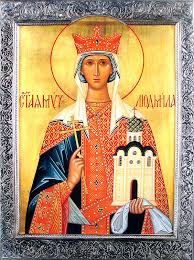
SS, Agnes of Bohemia and Wenceslaus were brother and sister saints...whose saintly grandmother is St. Ludmila.
SS. Sanchia, Malfada and Teresa of Portugal are sister saints...
SS. Isabel of France and Louis IX, King, are brother and sister saints-- they are related to Mohammed, St. David, through his son Nathan and St. Joseph of Arimathea, as well as the list plus more under St. Ferdinand...some say that the daughter of Joseph of Arimathea married Blessed Bran, who was a descendent of Ephraim, son of Joseph the Patriarch, and Anna of Arimathea, Josephs' mother,(another holy mom), goes back to Simon the Just and Judah. Down another seven generations is Blessed Bernard of Baden. St. Ferdinand is also related to St. Francis Borgia, as an ancestor to this humble superior of the Jesuits.
St. Margaret of Hungary has two Blessed siblings, Jolenta and Cunegunda, as well as being a descedant of SS. Isaac Pahlav and Gregory the Enlightened. St. Joan of Valois is related to the two latter saints as well.
St. Olga is grandmother to the great saint Vladimir and a descendent is St. Michael of Chernigov.
St. Andrew Barlow Venerable has St. Margaret of Scotland as an ancestor, and her son, St. David, King of Scotland. Guess who they all have an ancestor. St. John Southworth is also related.
Blesseds Zelie and Louis Martin, with one saint already, and two most likely "in the queue".
There are many, many more...
Of course, some saints had saintly fathers, such as Etheldreda, who had three sisters who are saints, and a holy dad, King Anna of East Anglia.
St. Edward. Confessor, is said to be a descendent of St. King David of Israel, and Blessed Seraphina Sforza is seven generations down a saint, whose husband tried to poison her and she escaped to a convent, eventually becoming an abbess.
Blessed Margaret of Savoy is eight generations down from the illustrious St. Humbert III, who is descended from one of the sons of King David, Chileab.
Blessed Margaret Pole is related to the long list above, including SS. Joseph of Arimathea, Helen, mother of Constantine, David and Judah.
If you are a saint in Europe, it seems that you could most likely be related to Joseph of Arimathea or King David.
St. Pius V's brother is related to St. Charles Borromeo's sister...
And, so on....
Point? Holy families create holy kids.....vocations most likely, (but not all), come from religious families. Grace can be passed down for generations, just as sin can be...this is our choice to cooperate with grace.
Thoughts on a cold Monday in January, and some, but not all, notes taken from a old book I found; Ascent of the Saints Whose Lineage is Known by Brian Daniel Starr, which I assume is out of print.
Of course, being a mom of a seminarian, I asked what he meant.
He went on to say that he could spot a real vocation from a false one by watching the moms.
Hmmm, now this is anecdotal, but here is what this young man said.
First of all, he said that all the moms he had met were really strong practicing Catholics. Not so much the dads, but the moms...of course, I thought of St. Monica.
He noted that the moms knew what was going on in the Church, followed ecclsiastical news, and were, well, 'nerdy' and not typical.
Second, by not typical he meant that they were idea people, did not like to go shopping, and were pray-ers.
This gets more interesting.
| I have this icon in a box in Silvis.... |
They shared a love of the Blessed Virgin Mary and many were or are active in the Church, in various roles, such as catechesis. choir, on Adoration lists, and so on.
Third, they have distinctly unique ideas about education.
Fourth, the moms know priests and frequently, bishops, by name, as in friends and acquiantances.
Fifth, moms who were more like "normal" women, who talked about vacations rather than vocations, and money and stuff, rather than spiritual topics seemed to have sons who left or were leaving the seminary. In other words, those young men who did not have ecclesiastical or prayful talk at home, but came from more secular famlies, especially, and those with secular homes not only had a harder time, but would leave.
The moms seem to be more important than the dads, and I agree with this. Years ago, a mom complained to me over and over again about her only son choosing the priesthood. After several years of being a priest, he left.
She was openly anti-clerical, but more than that, she did not love the Church.
This to me is the key factor--women who love the Church will have boys who love the Church.
Why? Because the Church is the Bride of Christ and this is the relationship a young man as a priest has with the Church. Women teach this principle with love and example.
Moms, if you want a son of yours to be a priest, love the Church and be obedient to the Church, which leads me to the last point.
Sixth, sems with moms who are absolutely obedient to the Church in all things, have more love for the Church. The ones who are rebellious regarding contraception or false seers undermine their sons' vocations.
Simple, really. Do not blame priests for the lack of vocations. Blame parents, and maybe, especially moms. If you are taking your kids shopping all the time and talking about fake apparitions, clothes, sports, movies, and stuff, rather than taking them to Adoration and talking about God and His Church, you, Mom, have only yourself to blame for those boys in your family not taking a vocation seriously.
I think this seminarian has an insight into real vs. false vocations. Those moms who have taught their sons to be servants have helped create servant-priests. not prima donna priests.
This is all very interesting....I have noticed that families involved in the Church and those who have had vocations in their families in the past are more likely to have new vocations.
Some families are just more "ecclesiastical" than others. I think of the holy moms of saints...and there are many.
Blessed Aleth, mother of St. Bernard of Clairvaux and several other blesseds...all her childen becoming monks and one a nun. St. Gerard, Blessed Nivard, St. Bernard, Blessed Guy, and Blessed Humbeline are her saintly children...
Here is a link about Bernard's holy sister, Humbeline...http://supertradmum-etheldredasplace.blogspot.com/2013/02/saints-of-february-continuedhumbeline.html
Blessed Joan of Aza, mother of St. Dominic and Blessed Mannes...
St, Monica, of course, mother of St. Augustine...
St. Emilia, mother of SS. Basil and Gregory and Ven. Macrina...
St.Bridget of Sweden, mother of St. Catherine of Sweden...
Blessed Gerturde of Altenburg, mother of St. Elizabeth of Hungary and St. Louis...
SS, Agnes of Bohemia and Wenceslaus were brother and sister saints...whose saintly grandmother is St. Ludmila.
| Ludmilla, family name... |
SS. Sanchia, Malfada and Teresa of Portugal are sister saints...
SS. Isabel of France and Louis IX, King, are brother and sister saints-- they are related to Mohammed, St. David, through his son Nathan and St. Joseph of Arimathea, as well as the list plus more under St. Ferdinand...some say that the daughter of Joseph of Arimathea married Blessed Bran, who was a descendent of Ephraim, son of Joseph the Patriarch, and Anna of Arimathea, Josephs' mother,(another holy mom), goes back to Simon the Just and Judah. Down another seven generations is Blessed Bernard of Baden. St. Ferdinand is also related to St. Francis Borgia, as an ancestor to this humble superior of the Jesuits.
St. Margaret of Hungary has two Blessed siblings, Jolenta and Cunegunda, as well as being a descedant of SS. Isaac Pahlav and Gregory the Enlightened. St. Joan of Valois is related to the two latter saints as well.
St. Olga is grandmother to the great saint Vladimir and a descendent is St. Michael of Chernigov.
St. Andrew Barlow Venerable has St. Margaret of Scotland as an ancestor, and her son, St. David, King of Scotland. Guess who they all have an ancestor. St. John Southworth is also related.
Blesseds Zelie and Louis Martin, with one saint already, and two most likely "in the queue".
There are many, many more...
| I had a gold version of this from Russia St. Olga |
Of course, some saints had saintly fathers, such as Etheldreda, who had three sisters who are saints, and a holy dad, King Anna of East Anglia.
St. Edward. Confessor, is said to be a descendent of St. King David of Israel, and Blessed Seraphina Sforza is seven generations down a saint, whose husband tried to poison her and she escaped to a convent, eventually becoming an abbess.
Blessed Margaret of Savoy is eight generations down from the illustrious St. Humbert III, who is descended from one of the sons of King David, Chileab.
Blessed Margaret Pole is related to the long list above, including SS. Joseph of Arimathea, Helen, mother of Constantine, David and Judah.
If you are a saint in Europe, it seems that you could most likely be related to Joseph of Arimathea or King David.
St. Pius V's brother is related to St. Charles Borromeo's sister...
And, so on....
Point? Holy families create holy kids.....vocations most likely, (but not all), come from religious families. Grace can be passed down for generations, just as sin can be...this is our choice to cooperate with grace.
Thoughts on a cold Monday in January, and some, but not all, notes taken from a old book I found; Ascent of the Saints Whose Lineage is Known by Brian Daniel Starr, which I assume is out of print.
Friday, 2 January 2015
Nice
Posted by
Supertradmum
A sweet reader of another blog on another blog said that Etheldredasplace was the "Garrigou". Out of about 8950 posts, at least one fourth either quote the great Dominican, Garrigou-Lagrange, or refer to his works. Possibly more than 2,000....I do not keep track. Maybe closer to a third....
I have referred to Third Ages of the Interior Life many times, as it is the cornerstone of the perfection series, Grace, Providence, Predestination, Beatitude, Christ the Savior, and other books. On my desk is his Reality—A Synthesis Of Thomistic Thought, which I have also used on the blog.
I noticed that Rorate has an excellent article on the suppression of Thomism, which is not new, as this was happening when I was studying philosophy a very long time ago now.
Yes, I am an unabashed Thomist. If you want Thomism, this is one of the blogs!
And, while thinking of saints, besides St. Thomas Aquinas, the two other most quoted saints on this blog are St. Catherine of Siena, and of course, St. Bernard of Clairvaux, my favorite. The two Carmelites, Teresa and Therese come in on the top ten list as well as St. Benedict and St. Augustine.
By the way, I am going to write on The Trinity and God the Creator, extensively, soon.
Thursday, 1 January 2015
Repost on Mercy and Justice Because of Earlier Posts Today
Posted by
Supertradmum
Mercy vs. Judgement
Posted by Supertradmum
Many Catholics have been confused by statements in the media attributed to our Pope regarding judgment and sin.
I have been talking with two Catholics who are very confused on the two ideas of Judgment and Mercy.
The problem, again, is the inability to think in terms of objectivity.
As I wrote in the perfection series, the saints learn to be objective.
Objective thinking means, simply, standing back and looking at one's own sins. A person learns mercy through objectivity, not subjectivity.
St. Bernard, in The Steps of Humility and Pride, writes this.
"The Son of God, the Word and Wisdom of the Father, mercifully assumed to himself human reason, the first of our powers. He found it oppressed by the flesh, held captive by sin, blinded by ignorance, distracted by outward things. He raised it by his might, taught it by his wisdom, drew it to things interior. More wonderfully still, he delegated it his own power to Judge. To judge is the proper act of Truth and in this it shared when out of reverence for the Word to which it joined it became accuser, witness and judge against itself.
Humility had been born from the union of the Word with human reason. Then the Holy Spirit lovingly visited the second power, the will; he found it rotten with the infection of the flesh, but already judged by reason.
Gently he cleansed it, made it burn with affection, made it merciful until, like a skin made pliable with oil it would spread aborad the heavenly oil of love even to its enemies. The union of the Holy Spirit with the human will give birth to charity."
There is more which I shall highlight later. If one is not being objective with one's self and others, one is not pursuing holiness. As long as Catholics are stuck in the subjective, they cannot move into the levels of holiness demanded by God for salvation and in order to avoid purgatory.
We can judge, ourselves and objective actions. Not to do so shows a tendency to self-deceit.
Do not listen to sound bites or the media. Listen to the wisdom of the Church.
To be continued...
Monday, 29 December 2014
The Kindness of God
Posted by
Supertradmum
In today's reading from the Divine Office, St. Bernard writes of the kindness of God, referring back to St. Paul's note, that kindness and mercy brought about the Incarnation.
Kindness. a virtue, as well as an Attribute of God, is fast disappearing from this earth. One cannot measure kindness in terms of Christmas gifts, or party invitations, or coffee-dates. One measures kindness in such movements of the soul as forgiveness, love, and peace.
Too many religions and too many people fall into hatred, seeing this great evil as a strength rather than a weakness. Mercy comes from a strong heart, not a weak one. To forgive and to forget indicates an inner peace, most likely won through suffering and death of self.
Kindness comes from the soul when a person looks at another in mercy. Sometimes this is hard, as when one is insulted or worse, purposefully injured. But St. Bernard today reminds us that this type of deep mercy is what God gives us in Christ, in the Baby in the manger and on the Cross. Can we not attempt to do the same, measuring kindness by the stick of mercy?
When we become kind, we think of the suffering of the other more than our own. When we become kind, we see the suffering Christ in the face of the other. When we become kind, we have wrestled with our own sins, begging God to purify us through His mercy and grace.
| In the fullness of time there came also the fullness of God from St. Bernard The kindness and love of God our saviour for mankind were revealed. Thanks be to God, through whom we receive such abundant consolation in this pilgrimage, this exile, this distress. |
|---|
Before his humanity appeared, his kindness lay concealed. Of course it was already in existence, because the mercy of the Lord is from eternity, but how could men know it was so great? It was promised but not yet experienced: hence many did not believe in it. At various times and in various different ways, God spoke through the prophets,saying I know the plans I have in mind for you: plans for peace, not disaster.
What reply did man make, man who felt the affliction, and knew nothing of peace? ‘How long will you keep saying “Peace, peace” when there is no peace?’ And so the angels of peace weep bitterly saying Lord, who has believed our report?
But now at last let men believe their own eyes, because all God’s promises are to be trusted. So that it cannot escape the notice of even troubled eyes, He has set up his tabernacle in the sun. Behold, peace is no longer promised, but conferred; no longer delayed, but given; no longer predicted, but bestowed. Behold, God has sent down to earth a bag bulging with his mercy, a bag that, at the passion, is torn open so that our ransom pours out of it onto us. A small bag, perhaps, but a full one: for it was a small child that was given to us, but in him dwells all the fullness of the Godhead.
After the fullness of time had come, there came too the fullness of the Godhead. He came in the flesh, so that at least he might make himself manifest to our earthly minds, so that when this humanity of his appeared, his kindness might also be acknowledged. Where the humanity of God appears, his kindness can no longer be hidden. In what way, indeed, could he have better commended his kindness than by assuming my flesh? My flesh, that is, not Adam’s, as it was before the fall.
What greater proof could he have given of his mercy than by taking upon himself that very thing which needed mercy? Where is there such perfect loving-kindness as in the fact that for our sake the Word of God became perishable like the grass? Lord, what is man, that you make much of him or pay him any heed?
Let man infer from this how much God cares for him. Let him know from this what God thinks of him, what he feels about him. Man, do not ask about your own sufferings; but about what God suffered. Learn from what he was made for you, how much he makes of you, so that his kindness may show itself to you from his humanity.
The lesser he has made himself in his humanity, the greater has he shown himself in kindness. The more he humbles himself on my account, the more powerfully he engages my love. The kindness and humanity of God our Saviour appeared says St Paul. The humanity of God shows the greatness of his kindness, and he who added humanity to the name of God gave great proof of this kindness.
Tuesday, 16 December 2014
Today's First Reading
Posted by
Supertradmum
In the Old Testament, the idea of rebellion encompasses several aspects.
In some translations of other texts, rebellion indicates a need for healing. But in today's reading, rebellion is clearly seen as having three other facets.
In the first instance, rebellion does not listen. Rebellion reveals an unteachable heart, a stubbornness about the truth. Sometimes in the Church this means not heeding authority or guidance, as well as defying Church teaching.
In the second aspect, rebellion is connected with a lack of discipline, either external or internal discipline. This lack of discipline could entail not studying the Faith, not going to frequent confession, compromising or never fasting, or not mortifying one's self in any way.
In the third description, rebellion is seen as a lack of trusting in Divine Providence, a serious sin of self-reliance, and perhaps even an ignoring of God's will and plan for one's life. If one insists on one's own way, this attitude indicates a rebellious spirit. There can be an arrogance about being rebellious.
In the last reference, the soul which is rebellious, or in this case, the entire city, refuses to come to God, refuses to pray and observe the liturgical rites of the Old Law, from the heart. How many Catholics have I met who do not think that missing Sunday Mass is a serious sin? They are not giving God what is due to Him as God, honor and worship.
Sadly, Western society romanticizes rebellion with the adulation of the anti-hero as well as the belief that men have a right, even a need to rebel.
A truly spiritually rebellious person exhibits a hardness of heart, a stubbornness no to listen, learn, pray, repent. An over-emphasis on being unique spiritually is a bad sign. See my posts on Benedictine spirituality and the need to move away from singularity. That Gnosticism is rife in the Church today indicates that many people have fallen into rebellion through the desire and pursuit of "secret" or "special" knowledge.
Today, the prophet calls us all to repentance, and meekness, as humility is a sign of compliance with God's will.
Zephaniah 3:1-2Douay-Rheims
3 Woe to the provoking, and redeemed city, the dove.
2 She hath not hearkened to the voice, neither hath she received discipline: she hath not trusted in the Lord, she drew not near to her God.
Tuesday, 25 November 2014
Love without love?
Posted by
Unknown
Can a person who has never known love from a human being know the love of God?
Each of you knows that the foundation of our faith is charity. Without it, our religion would crumble. We will never be truly Catholic unless we conform our entire lives to the two commandments that are the essence of the Catholic faith: to love the Lord, our God, with all our strength, and to love our neighbor as ourselves... With charity, we sow the seeds of that true peace which only our faith in Jesus Christ can give us by making us all brothers and sisters. I know that this way is steep, and difficult, and strewn with thorns, while at first glance the other path seems easier, more pleasant, and more satisfying. But the fact is, if we could look into the hearts of those who follow the perverse paths of this world, we would see that they lack the serenity that comes to those who have faced a thousand difficulties and who have renounced material pleasure to follow God's law. Blessed Pier Giorgio Frassati
We have many examples in the saints of those who received abuse and intolerance as young men and women who, yet, became tremendously holy.
So, the answer is "Yes".
Now, the charismatics want everyone to be healed before they can experience God's love. But, God is not hindered by a lack of human love and even care. Healing comes with belief, as a man told me yesterday.
SS. Catherine of Siena and Thomas Aquinas were not loved by their parents, who were secular and did not understand the call to holiness in their children. Both saints, as young persons, were held captive for a while.
Blessed Margaret of Castello was not only imprisoned by her parents, but abandoned. These two horrible people took her to a church and left the blind, ugly, little hunchbacked girl there, where she sat for twelve hours until a priest came and took her to kind people.
Blessed Pier Giorgio Frassati had atheists for parents, and he died alone, ignored, not cared for by his own family.
The great St. Francis had to leave his father, who did not share the love of poverty or the radical love of God with his son. But, Francis knew love and could communicate this love to all.
Blessed is the servant who loves his brother as much when he is sick and useless as when he is well and an be of service to him. And blessed is he who loves his brother as well when he is afar off as when he is by his side, and who would say nothing behind his back he might not, in love, say before his face. St. Francis of Assisi
And, this list is much longer. St. Barbara was cruelly treated by her father. St. Damien the Leper's father never spoke to him again after the young men went into the seminary. Not all of us have been loved by one special person in this life, a husband, a wife, parents. Not all of us have had a relationship of mature, committed love. Not all have had loving parents or loving siblings.
It does not matter if we have been deprived, as God can fill in the blanks, and He does, if we are willing to face the suffering and join with His Passion. This is key to becoming holy, even giving up the desire to be loved.
Weekly, in the prayers of the Auxilium Christianorum, I say the great Litany of Humility of Cardinal Merry de Val. One must really get to the state of each line in the Dark Night, in order to find Love. All these desires and fears keep us from Love. This is a real deliverance prayer.....a deliverance of unlove in order to find Love.
If we pray this litany and seriously want this state of detachment, God will organize events in our lives to bring about humility. God will answer this prayer, as I myself am experiencing daily. But, unlove leads to the freeing up of the mind, the soul, the heart to meet God. As St. Bernard notes in one of his sermons on the Song of Songs, the little foxes are those distractions from loving the Bridegroom, Christ.
From Sermon 63:
Catch us the little foxes that destroy the vines.' This text has a moral import, and taking it in a moral sense we have already shown that these spiritual vineyards signify spiritual men within whom all things are cultivated, all things, are germinating, bearing fruit and bringing forth the spirit of salvation. What was said of the kingdom of God we can equally say of these vineyards of the Lord of hosts - that they are within us. We read in the Gospel that the kingdom will be given to a people who will produce its fruits. St Paul enumerates these: 'The fruit of the Spirit is love, joy, peace, patience, kindness, goodness, forbearance, gentleness, faithfulness, modesty, self-control, chastity.' These fruits indicate our progress. They are pleasing to the Bridegroom because he takes care of us. Is God concerned about bushes? The Man-God loves men, not trees, and counts our progress as his own fruits. Unflaggingly he watches for their season, smiles when they appear, and anxiously strives that we should not lose them when they do appear; or rather that he should not lose them, for we are as dear to him as he is. With foresight then he orders that the cunning little foxes be caught for him, lest they pilfer the immature fruits: 'Catch us the little foxes,' he says, 'that destroy the vines.' And if someone were to object: 'Your fears are premature - the time of fruiting has not yet come', he answers: 'it is not so, already "our vineyard has flowered".' Between flowers and fruit there is no delay: while the flowers are falling the fruits are budding forth, they begin to show at once.
We spend so much time worrying about our psychological states, that we forget that God heals in Confession, in the receiving of the Eucharist, and in Adoration. We forget that thousands of canonized saints have been brutally tortured and murdered as martyrs, experiencing hatred not love. We forget St. Bernard, thin and ill, enduring the cold of winter at Clairvaux, leading his monks to the most sublime spirituality of love ever written by a man.
The love of the saints for God transcended hatred. But, this love is the result of prayer, focusing on Christ, and not the self. Christ spoke words on denying the self after He announced His Own Passion. St. Peter rejected Christ's prophecy, and these words were part of Christ attempting to explain to Peter, and as a rebuke to the evil one, the necessity of death of self.
Matthew 8:34-39 DR
34 And calling the multitude together with his disciples, he said to them: If any man will follow me, let him deny himself, and take up his cross, and follow me.
Seek love and you will find love, even if you have never experienced it. Love is all around us, even if we do not feel it. Remember St. Therese, the Little Flower, said that Jesus was asleep in her like He had been asleep in the boat with the apostles. She noted over and over that her suffering was not to experience joy, but to have "unfelt joy" in her relationship with Christ. She wrote, “Aridity! Sleep!…Since Jesus wants to sleep, why will I hinder him?… I assure you, he is going to no trouble about carrying on a conversation with me!”
St. Therese is the perfect saint for our times, a little person, unknown to the world, who suffered greatly for the sake of love. She knew in her strong faith, that although she languished in the Dark Night for years, God never forgot her. She knew Jesus was there, only asleep in her soul, her little boat.
If God forgot about us for one nanosecond, we would not exist. The world's peoples are looking frantically for love. They miss love because they are not looking for Christ. As Catholics, we are given Love daily in the Eucharist, if we so desire. God has not forgotten us.
But, we forget Him. He is here, He is Present daily to us in the Eucharist, in the small white Host.
Every day He humbles Himself just as He did when from from His heavenly throne into the Virgin's womb; every day He comes to us and lets us see Him in lowliness, when He descends from the bosom of the Father into the hands of the priest at the altar. St. Francis of Assisi
This is Love.
We have many examples in the saints of those who received abuse and intolerance as young men and women who, yet, became tremendously holy.
So, the answer is "Yes".
Now, the charismatics want everyone to be healed before they can experience God's love. But, God is not hindered by a lack of human love and even care. Healing comes with belief, as a man told me yesterday.
SS. Catherine of Siena and Thomas Aquinas were not loved by their parents, who were secular and did not understand the call to holiness in their children. Both saints, as young persons, were held captive for a while.
Blessed Pier Giorgio Frassati had atheists for parents, and he died alone, ignored, not cared for by his own family.
The great St. Francis had to leave his father, who did not share the love of poverty or the radical love of God with his son. But, Francis knew love and could communicate this love to all.
Blessed is the servant who loves his brother as much when he is sick and useless as when he is well and an be of service to him. And blessed is he who loves his brother as well when he is afar off as when he is by his side, and who would say nothing behind his back he might not, in love, say before his face. St. Francis of Assisi
And, this list is much longer. St. Barbara was cruelly treated by her father. St. Damien the Leper's father never spoke to him again after the young men went into the seminary. Not all of us have been loved by one special person in this life, a husband, a wife, parents. Not all of us have had a relationship of mature, committed love. Not all have had loving parents or loving siblings.
It does not matter if we have been deprived, as God can fill in the blanks, and He does, if we are willing to face the suffering and join with His Passion. This is key to becoming holy, even giving up the desire to be loved.
Weekly, in the prayers of the Auxilium Christianorum, I say the great Litany of Humility of Cardinal Merry de Val. One must really get to the state of each line in the Dark Night, in order to find Love. All these desires and fears keep us from Love. This is a real deliverance prayer.....a deliverance of unlove in order to find Love.
| O Jesus! meek and humble of heart, Hear me. From the desire of being esteemed, Deliver me, Jesus.From the desire of being loved... From the desire of being extolled ... From the desire of being honored ... From the desire of being praised ... From the desire of being preferred to others... From the desire of being consulted ... From the desire of being approved ... From the fear of being humiliated ... From the fear of being despised... From the fear of suffering rebukes ... From the fear of being calumniated ... From the fear of being forgotten ... From the fear of being ridiculed ... From the fear of being wronged ... From the fear of being suspected ... That others may be loved more than I, Jesus, grant me the grace to desire it. That others may be esteemed more than I ... That, in the opinion of the world, others may increase and I may decrease ... That others may be chosen and I set aside ... That others may be praised and I unnoticed ... That others may be preferred to me in everything... That others may become holier than I, provided that I may become as holy as I should… |
From Sermon 63:
Catch us the little foxes that destroy the vines.' This text has a moral import, and taking it in a moral sense we have already shown that these spiritual vineyards signify spiritual men within whom all things are cultivated, all things, are germinating, bearing fruit and bringing forth the spirit of salvation. What was said of the kingdom of God we can equally say of these vineyards of the Lord of hosts - that they are within us. We read in the Gospel that the kingdom will be given to a people who will produce its fruits. St Paul enumerates these: 'The fruit of the Spirit is love, joy, peace, patience, kindness, goodness, forbearance, gentleness, faithfulness, modesty, self-control, chastity.' These fruits indicate our progress. They are pleasing to the Bridegroom because he takes care of us. Is God concerned about bushes? The Man-God loves men, not trees, and counts our progress as his own fruits. Unflaggingly he watches for their season, smiles when they appear, and anxiously strives that we should not lose them when they do appear; or rather that he should not lose them, for we are as dear to him as he is. With foresight then he orders that the cunning little foxes be caught for him, lest they pilfer the immature fruits: 'Catch us the little foxes,' he says, 'that destroy the vines.' And if someone were to object: 'Your fears are premature - the time of fruiting has not yet come', he answers: 'it is not so, already "our vineyard has flowered".' Between flowers and fruit there is no delay: while the flowers are falling the fruits are budding forth, they begin to show at once.
We spend so much time worrying about our psychological states, that we forget that God heals in Confession, in the receiving of the Eucharist, and in Adoration. We forget that thousands of canonized saints have been brutally tortured and murdered as martyrs, experiencing hatred not love. We forget St. Bernard, thin and ill, enduring the cold of winter at Clairvaux, leading his monks to the most sublime spirituality of love ever written by a man.
The love of the saints for God transcended hatred. But, this love is the result of prayer, focusing on Christ, and not the self. Christ spoke words on denying the self after He announced His Own Passion. St. Peter rejected Christ's prophecy, and these words were part of Christ attempting to explain to Peter, and as a rebuke to the evil one, the necessity of death of self.
Matthew 8:34-39 DR
34 And calling the multitude together with his disciples, he said to them: If any man will follow me, let him deny himself, and take up his cross, and follow me.
35 For whosoever will save his life, shall lose it: and whosoever shall lose his life for my sake and the gospel, shall save it.
36 For what shall it profit a man, if he gain the whole world, and suffer the loss of his soul?
37 Or what shall a man give in exchange for his soul?
38 For he that shall be ashamed of me, and of my words, in this adulterous and sinful generation: the Son of man also will be ashamed of him, when he shall come in the glory of his Father with the holy angels.
39 And he said to them: Amen I say to you, that there are some of them that stand here, who shall not taste death, till they see the kingdom of God coming in power.
Seek love and you will find love, even if you have never experienced it. Love is all around us, even if we do not feel it. Remember St. Therese, the Little Flower, said that Jesus was asleep in her like He had been asleep in the boat with the apostles. She noted over and over that her suffering was not to experience joy, but to have "unfelt joy" in her relationship with Christ. She wrote, “Aridity! Sleep!…Since Jesus wants to sleep, why will I hinder him?… I assure you, he is going to no trouble about carrying on a conversation with me!”
St. Therese is the perfect saint for our times, a little person, unknown to the world, who suffered greatly for the sake of love. She knew in her strong faith, that although she languished in the Dark Night for years, God never forgot her. She knew Jesus was there, only asleep in her soul, her little boat.
If God forgot about us for one nanosecond, we would not exist. The world's peoples are looking frantically for love. They miss love because they are not looking for Christ. As Catholics, we are given Love daily in the Eucharist, if we so desire. God has not forgotten us.
But, we forget Him. He is here, He is Present daily to us in the Eucharist, in the small white Host.
Every day He humbles Himself just as He did when from from His heavenly throne into the Virgin's womb; every day He comes to us and lets us see Him in lowliness, when He descends from the bosom of the Father into the hands of the priest at the altar. St. Francis of Assisi
| by Darren Tanti, Malta |
This is Love.
Subscribe to:
Posts (Atom)