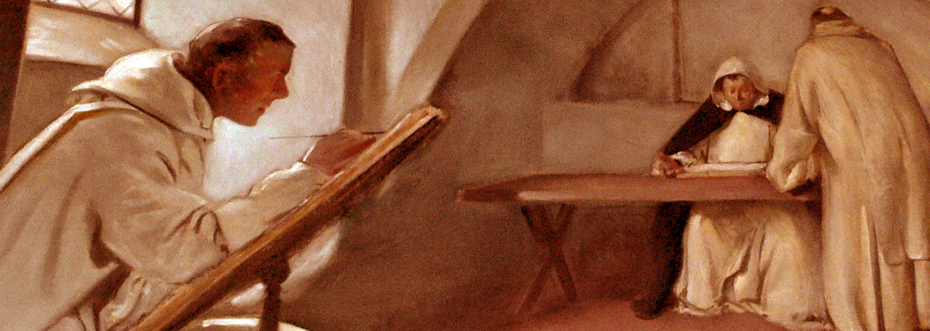
Do you know he is my favorite saint?
Check out the 64 posts on him and the 26 on the Cistercians.
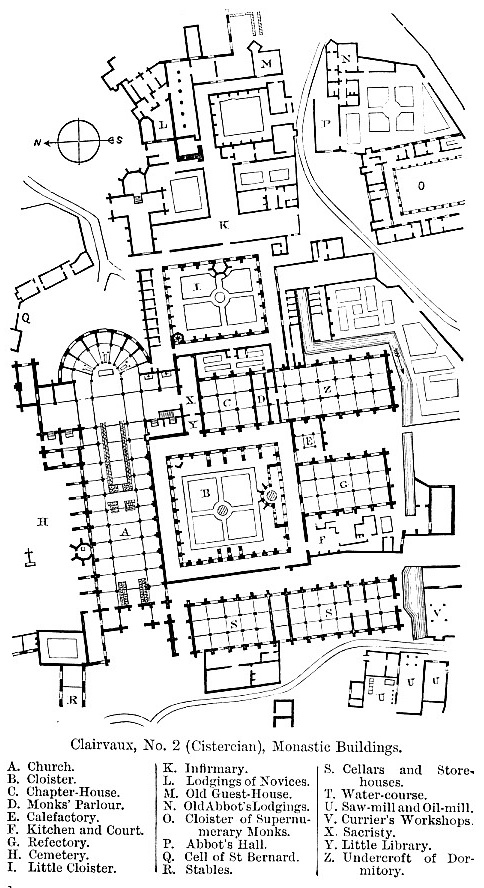
Below is a 1902 diagram of Clairvaux from an old encyclopedia.
Showing posts with label Cistercians. Show all posts
Thursday, 20 August 2015
Friday, 31 January 2014
On The Third Step of Humility Perfection Series II:xvi
Posted by
Supertradmum
The third step of humility is, for the love of God, to submit to one’s superior in all obedience, imitating the Lord of whom the apostle says, ‘He became obedient even to death.’
Tertius humilitatis gradus est ut quis pro pro Dei Amore oboedientia se subdat maiori, imitans Dominum, de quo dicat apostolus: Factus oboediens usque ad mortem. (RB 7. 34)
http://www.ibenedictines.org/2014/01/31/the-third-degree-of-humility/?utm_source=twitterfeed&utm_medium=twitter&utm_campaign=Feed%3A+Ibenedictines+%28iBenedictines%29
I love synchronicity, when things overlap or come about at the same time. The blog above is covering St. Benedict's Third Step of Humility today, when I have just covered the First and Second.
How cool. Worth a read and well written.....
For the laity,this means obedience to God in the manner in which He shows you. To your state in life, such as in a marriage, there are levels of obedience. But, all laity must be obedient to Holy Mother Church in Her Teaching and in Her Liturgy.
That is simple.
The Steps of Humility and Community; Perfection II:xii
Posted by
Supertradmum
St. Bernard writes that the first two steps of humility of the monk start and are accomplished outside the monastery.
These are: In the fear of God to be constantly on watch against sin.
And
Not to love one's own will.
The first is the first step on the road to perfection as well. One must decide to be detached from all mortal and venial sin. One must live in the fear of the Lord concerning one's salvation. This determination is part of our baptismal promises.
One must be on the watch and not take our salvation for granted.
The second goal, which is also found outside the monastery, is not to love one's own will. This means having a spiritual director or a good, regular confessor. This means daily prayer. This means brutal honesty with one's self.
That these happen first before community is key to those who are thinking about community.
Community builds on the first and second conversions. Only when one is dedicated to the life of perfection, can one succeed in community. First, a conversion to Christ and then a conversion to the baptismal promises and the life of the virtues.
To be continued....
Monday, 27 January 2014
On Knowledge and God
Posted by
Supertradmum
Through-out my life, I have had a love affair with truth. I love teaching logic and reading essays, encyclicals, and documents which follow exquisite rational discourse.
Our faith embraces reason and rationality. We are made in the image and likeness of God and our intellect and rationality are part of that image and likeness. Along with the will and the immortal soul, reason marks each one of us as human, made for eternity.
When I try and speak with youth, especially, or the Gen-Xers on faith being reasonable, I find that there is a resistance to the idea that we can reason out many truths in our religion. The sign of an adult faith formation is the use of reason with regard to doctrine and spirituality.
But, the world, the flesh and the devil conspire to deny the use of reason with regard to the Faith. The over-emphasis on the appetites, the sensual, the idea that religion is always primarily "experiential", stop people of all ages of appropriating an adult faith.
I have written on this many times under the label "thinking like Catholics", which many of you have read.
Why logical reasoning has been denigrated has partly been for political reasons, partly because of the "Protestantization" of some Catholic circles, and partly because of laxity in the training of young minds.
Without reasonable discourse being trained in schools, at home, and even in the workplace, the ability to reason atrophies and one becomes either the cog in the machine or a emotionally reactive person, only.
This is what satan and his minions want; non-thinking Catholics, Catholics who only react, never reflect, do not read, do not study the Faith and do not want to apply the principles of religion to themselves. The unthinking Catholic cannot form a correct, right conscience and cannot critique the deceit of the world, the flesh, and the devil.
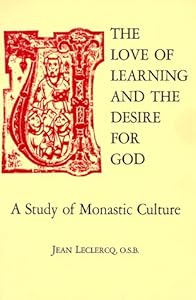
But, none of the intellectual capacities truly "work" with grace. Grace purifies and hones the intellect. The Benedictines have known this since the beginning of the Rule. The love of learning in the abbey schools was always connected to the desire for God, as one of my favorite books explained to me so long ago when I first read this masterpiece.
Since I started my blog in 2007, I have been referring to this book, but even though one may not read the book, the ideal is presentable is a simple phrase.
If one desires God, one will seek Him in learning.
Simple, really.
When St Anselm, in order to renew the seminaries, introduced the classical Trivium and Quadrivium into the training for the priesthood, he got his ideas from his own Benedictine order. Included in those studies were geometry, astronomy, music, art, mathematics, grammar. The study of the Scriptures, the Doctors of the Church, and other Catholic literature, as well as philosophy, theology, and logic, brought alive the intellect to be cleaned from the cobwebs of the world in order to shine forth for the building of the Kingdom of God.
Some of the oldest libraries in the world are monastic.
What are you reading?
What are you studying?
Are you learning to think like a Catholic?
Ask yourself today, why this is more important now than ever before in the history of the world.
Oh, my soul, how much longer do you wish to be so stingy with Jesus? Why so negligent towards Jesus who made You? Why so lazy towards Jesus who redeemed you? Who do you want to love, if you do not want to love Jesus? St. Gemma Galgani.
To know is to love and to love is to want to know. The pursuit of knowledge, using logic and reason, brings us closer to the One is Knows Himself and knows us intimately. There is a great mystery in learning and remembering, in that one creates, as Henri Gilson notes, a sort of metaphysical background to the soul"
Slowly, through the Dark Night, when one's intellect and soul are cleansed, one comes to the real knowledge of self and God, as much as He reveals Himself this side of death.
This knowledge become a huge oasis, or universe surrounding one with the omnipresence of God, as Gilson notes, with the growing knowledge of the Indwelling of the Trinity.
Except for the chosen few mystics, like St. Gemma Galgani, or the young saints like St. Therese, the Little Flower who have infused knowledge, for most of us, the way through the years and years of learning and seeking, through the Dark Night into the Illuminative State is one of intense suffering and pain.
Those Catholics who refuse to start on the journey of learning, cannot get to the mystic places they believe come through experience, and this is the tragedy of so many good people who do not grow in holiness
They do not desire God enough to get out of their comforts zones in order to really learn, use the reason God has given them, and not only for themselves, but for the world, which is starving for reason.
![]() |
| Brno Capuchin Library |
Those who deny themselves the time, or waste time instead of pursuing the knowledge of God may one day stand in heaven and see the great saints they could have been, if they had responded to the grace of learning.
Only in the Dark Night of the Soul is one then allowed to die to memory and understanding, as God takes that which has been learned and changes all into the infused knowledge of sheer grace.
This can only happen after the purification of the imagination and memory. Do not waste any time. Read, study, think, reflect, pray, act.
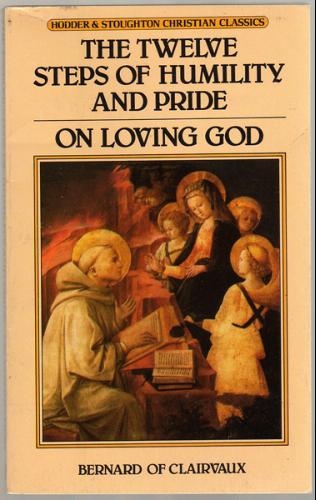
Be a Catholic. Think like St. Bernard below....from On Loving God.
There is no glory in having a gift without
knowing it. But to know only that you have it, without knowing that it
is not of yourself that you have it, means self-glorying, but no true
thou that thou didst not receive? Now, if thou didst receive it, why
glory in God. And so the apostle says to men in such cases, What hast
dost thou glory as if thou hadst not received it? (I Cor. 4.7). .. .....
The apostle shows how to discern the true glory from the false, when he
says, He that glorieth, let him glory in the Lord, that is, in the
Truth, since our Lord is Truth (I Cor. 1.31; John 14.6).
We must know, then, what we are, and that it is not of ourselves that
we are what we are. Unless we know this thoroughly, either we shall not
glory at all, or our glorying will be vain. ...
And this is right. For man, being in honor, if he know not his
thou know not, go thy way forth by the footsteps of the flock' ..
own honor, may fitly be compared, because of such ignorance, to the
beasts that perish. Not knowing himself as the creature that is
is own true glory which is within, he is led captive by his curiosity
distinguished from the irrational brutes by the possession of reason,
he commences to be confounded with them because, ignorant ...
and... concerns himself with external, sensual things. So he is made to
resemble the lower orders by not knowing that he has been more highly
endowed than they.
Tuesday, 21 January 2014
Friday, 17 January 2014
Bernard of Clairvaux and Humility
Posted by
Supertradmum
This sounds like an echo, but those of you who have followed this blog know how much I love Bernard of Clairvaux. I literally "fell in love" with him in graduate school, when I discovered his treatises on Divine Love and the Song of Songs.
Much of my personal formation is owing to St. Bernard, and I hope he takes mercy on me for my feeble efforts.
I have many posts on him, and as I am reading him again, I shall dedicated several posts on this books.
I shall get back to you all. I hope you fall in love with the soul of this great Doctor of the Church.
Much of my personal formation is owing to St. Bernard, and I hope he takes mercy on me for my feeble efforts.
I have many posts on him, and as I am reading him again, I shall dedicated several posts on this books.
I shall get back to you all. I hope you fall in love with the soul of this great Doctor of the Church.
Mercy vs. Judgement
Posted by
Supertradmum
Many Catholics have been confused by statements in the media attributed to our Pope regarding judgment and sin.
I have been talking with two Catholics who are very confused on the two ideas of Judgment and Mercy.
The problem, again, is the inability to think in terms of objectivity.
As I wrote in the perfection series, the saints learn to be objective.
Objective thinking means, simply, standing back and looking at one's own sins. A person learns mercy through objectivity, not subjectivity.
St. Bernard, in The Steps of Humility and Pride, writes this.
"The Son of God, the Word and Wisdom of the Father, mercifully assumed to himself human reason, the first of our powers. He found it oppressed by the flesh, held captive by sin, blinded by ignorance, distracted by outward things. He raised it by his might, taught it by his wisdom, drew it to things interior. More wonderfully still, he delegated it his own power to Judge. To judge is the proper act of Truth and in this it shared when out of reverence for the Word to which it joined it became accuser, witness and judge against itself.
Humility had been born from the union of the Word with human reason. Then the Holy Spirit lovingly visited the second power, the will; he found it rotten with the infection of the flesh, but already judged by reason.
Gently he cleansed it, made it burn with affection, made it merciful until, like a skin made pliable with oil it would spread aborad the heavenly oil of love even to its enemies. The union of the Holy Spirit with the human will give birth to charity."
There is more which I shall highlight later. If one is not being objective with one's self and others, one is not pursuing holiness. As long as Catholics are stuck in the subjective, they cannot move into the levels of holiness demanded by God for salvation and in order to avoid purgatory.
We can judge, ourselves and objective actions. Not to do so shows a tendency to self-deceit.
Do not listen to sound bites or the media. Listen to the wisdom of the Church.
To be continued...
I have been talking with two Catholics who are very confused on the two ideas of Judgment and Mercy.
The problem, again, is the inability to think in terms of objectivity.
As I wrote in the perfection series, the saints learn to be objective.
Objective thinking means, simply, standing back and looking at one's own sins. A person learns mercy through objectivity, not subjectivity.
St. Bernard, in The Steps of Humility and Pride, writes this.
"The Son of God, the Word and Wisdom of the Father, mercifully assumed to himself human reason, the first of our powers. He found it oppressed by the flesh, held captive by sin, blinded by ignorance, distracted by outward things. He raised it by his might, taught it by his wisdom, drew it to things interior. More wonderfully still, he delegated it his own power to Judge. To judge is the proper act of Truth and in this it shared when out of reverence for the Word to which it joined it became accuser, witness and judge against itself.
Humility had been born from the union of the Word with human reason. Then the Holy Spirit lovingly visited the second power, the will; he found it rotten with the infection of the flesh, but already judged by reason.
Gently he cleansed it, made it burn with affection, made it merciful until, like a skin made pliable with oil it would spread aborad the heavenly oil of love even to its enemies. The union of the Holy Spirit with the human will give birth to charity."
There is more which I shall highlight later. If one is not being objective with one's self and others, one is not pursuing holiness. As long as Catholics are stuck in the subjective, they cannot move into the levels of holiness demanded by God for salvation and in order to avoid purgatory.
We can judge, ourselves and objective actions. Not to do so shows a tendency to self-deceit.
Do not listen to sound bites or the media. Listen to the wisdom of the Church.
To be continued...
Tuesday, 20 August 2013
A Compendium of Supertradmum on St. Bernard of Clairvaux
Posted by
Supertradmum
Happy Feast Day, St. Bernard of Clairvaux. Here is an incomplete list of the posts on this blog concerning him.
26 Feb 2013
I am sure that readers can tell by now that I cannot write enough on my favourite male saints, Bernard of Clairvaux. I hope you have received his insights and experiences of God with the pleasure and amazement with which I ...
20 Mar 2013
St. Bernard of Clairvaux on the Knights Templar. Posted by Supertradmum · http://www.the-orb.net/encyclop/religion/monastic/bernard.html. Prologue TO HUGH, KNIGHT OF CHRIST AND MASTER OF CHRIST'S MILITIA: ...
23 Feb 2013
Therefore, when I read St. Bernard of Clairvaux and some of his commentators, one of the things which comes across very clearly is that he understands the progress of holiness as explained in these few words. Know, love ...
22 Feb 2013
Part 47: DoC: St. Bernard of Clairvaux, continued, and perfection. Posted by Supertradmum. Those of us who are workaholics have the hardest time with meditation and contemplation. But, was there ever a man busier than St.
24 Feb 2013
Words for the Papabile from St. Bernard of Clairvaux: Part 51: DoC. Posted by Supertradmum. If I remember, the subject of my discourse. to your Excellency was to be Consideration. And certainly. the matter to which I have ...
19 Aug 2012
Can you imagine in the cold and damp monastery of Clairvaux, in the refectory or monastery church, St. Bernard reading to his monks an exposition of The Song of Songs? I wonder at his audacity as well as his mystic insights ...
23 Nov 2012
The reason I encourage reading is that is the first step on the chair to Contemplation as taught by St. Bernard of Clairvaux. We must read the right books, however. Some people get bogged down in conversion stories. That is ...
28 Feb 2013
I know I started the postings on St. Augustine, which will continue on Friday, but today I was reading in the sermon of St. Bernard of Clairvaux, On Detraction. I am only going to refer to two ideas, both repetitions on this blog.
23 Nov 2012
Here is the quotation from St. Bernard of Clairvaux, from a homily of his at Easter. "We look for God where He is not to be found, or rather, we do not look for Him where He is chiefly to be found; hence, all the confusion, all the ...
21 Feb 2013
As those of you who read my blog know, St. Bernard of Clairvaux is my favourite saint. I discovered him when in a particularly Romantic period of my life was unfolding and he captured my imagination as well as my intellect.
24 Feb 2013
Part 52: DoC: Bernard of Clarivaux and the Perfection of Love. Posted by Supertradmum. From St. Bernard of Clairvaux on Love from Sermon 83 on the Canticle of Canticles. Love is sufficient of itself, it gives pleasure by itself ...
26 Feb 2013
Posted by Supertradmum. On this blog, I have already referred to the sermons of St. Bernard of Clairvaux on the Song of Songs, or. Canticle of Canticles. These sermons may be considered his masterpiece as a Doctor of the ...
29 Aug 2012
St. Bernard of Clairvaux has a fascinating sermon on two aspects of love regarding St. John and St. Peter. St. Bernard, in St. Peter and St. John, XLI, In Joannic Evang; Tract CXXIV. Bernard says the Peter loved Christ more ...
20 Jan 2013
St. Bernard of Clairvaux would have made an excellent 21st century psychologist He understood human nature and nurture. He understood the workings of the soul, the psyche. He understood the need for the seeking of ...
23 Dec 2012
As the year comes to an end soon, and the Feast of St. John is upon us after Christmas, I want to revisit a strange saying of St. Bernard of Clairvaux He has a fascinating sermon on two aspects of love regarding St. John and ...
04 Feb 2013
All the members of St. Bernard of Clairvaux's immediate family are either Blesseds or Saints, including his father and mother. Here they are listed, plus a cousin and in-law.
07 May 2012
St. Bernard of Clairvaux created a movement of love outside himself, because he was in love with Christ. So too were St. John of the Cross, St. Teresa of Avila. St. Maximilian Kolbe and many, many other witnesses to the Faith.
21 Nov 2012
Bernard of Clairvaux's famous sermon on the meeting of Christ and Mary Magdalen in the Garden highlights the theme I have here and in the previous post on the Presence of Christ within us. Bernard states that Mary was ...
07 Apr 2013
Some commentators, like my friend CK, wanted a simple version of the perfection series and I have finally found a good description from St. Bernard of Clairvaux, my favourite saint. He describes in his sermon "On the Different ...
29 Jan 2012
I do not have my works of St. Bernard of Clairvaux with me, but I can paraphrase one of his sayings: There is rejoicing in heaven when a bad man becomes good, but how much more rejoicing is there when a good man ...
27 Aug 2012
I have been reading the Sermons of St. Bernard of Clairvaux, specifically on the Feeding of the Five Thousand. Without going into great detail, one of the points St. Bernard makes, which has been made by many saints, is that ...
19 Aug 2012
St. Bernard of Clairvaux is my favourite saint and Dante puts him high in heaven, Beatrice leaving Dante in the hands of the mystic saint. St. Bernard is, in my mind, the Saint of Love. He asks Mary, Queen and Mother, to allow ...
12 Dec 2012
St. Bernard of Clairvaux in his great sermons on the Bride in the Song of Songs, notes that the Church is Christ's Bride. Many of the so-called womynpriests are also liberals in other ways. The Anglican Church, which has ...
18 Feb 2013
Anselm, Archbishop of Canterbury, Bede the Venerable, Peter Damian, Gregory the Great, and the reformer of the Benedictine Order, Bernard of Clairvaux. So, although the Franciscans claim they have the most, I count more ...
27 Aug 2012
Like the works of St. Thomas Aquinas, or Augustine, the writings of Bernard of Clairvaux give us endless spiritual milk to drink on these points. In his sermon, On Humility and Patience, Bernard writes this, “Some endure ...
15 Feb 2013
St. Bernard of Clairvaux and his family were in the highest echelons of their society. They owned great tracts of land, at least on castle, and had labourers, as well as house staff and so on. St. Bernard gave up his inheritance, ...
28 Dec 2012
Bernard of Clairvaux had seven-hundred monks and lay brothers at the peak of the monastery's history, which allows for a steady stream of visitors. We need more vocations to the religious life. There are two young ones in the ...
04 Dec 2012
St. Bernard of Clairvaux cooperated with grace. So did St. Paul and St. Peter. Yesterday was the feast day of St. Francis Xavier, a saint who learned the Ignatian method of prayer. Pray that God's Perfect Will be done in your life ...
09 Dec 2012
St. Bernard of Clairvaux writes that great men ask God for great things. Moses, Joshua, David, Daniel, and many others asked God for great things, including the revelation of the Glory of God. We do not ask because we are ...
20 Jul 2013
2 comments: Corax said... Dear Supertradmom How do guys like myself relate to this whilst still being masculine? 20 July 2013 00:12 · Supertradmum said... Read SS. Bernard of Clairvaux and John of the Cross. Good night.
07 Jun 2013
9) Christ the Bridegroom calls us to the stages of understanding that each one of us must experience, as explained, for example, by Bernard of Clairvaux; these stages are knowing one is a child of a loving Father; that one is ...
Prayer of St. Bernard of Clairvaux
Posted by
Supertradmum
MEMORARE, O piissima Virgo Maria, non esse auditum a saeculo, quemquam ad tua currentem praesidia, tua implorantem auxilia, tua petentem suffragia, esse derelictum. Ego tali animatus confidentia, ad te, Virgo Virginum, Mater, curro, ad te venio, coram te gemens peccator assisto. Noli, Mater Verbi, verba mea despicere; sed audi propitia et exaudi. Amen.
Sunday, 28 April 2013
Fountains Poem 32
Posted by
Supertradmum
Deer in the park remind me of the freedom
of youth, innocence long gone, resting in the
grey stones of the Fair Lady of the West Riding.
She waits, like a dowager queen, for attention,
knowing that some pay her homage in small
tokens of love, like tickets at the gate.
So long, at the gate, the porters opened doors
for the guests, the rich, the poor, the lost
wanting the security of the arms of Mary.
She, too, waits, for England to return
to her. She waits for her sons and
daughters to find themselves again.
Lost children walk the paths of old
prayers and longings for God.
But, they are too busy to know
the quiet of the place, which is only
found inside and not in the bustle
of pilgrimage or holidays...
Time is speeding up
and all is shortened..
visions truncated
by the lack
of love.
For Mary and for My Mother, Charlene
Posted by
Supertradmum
They walk in silence,
the men in white robes.
thinking of beer and cheese
in the dark evening..
They sing in darkness,
lighting candles at nocturnes
waiting for the intonation
before the bird's chorus..
They pray in lightness,
waiting for those who
bring their horses
into the sanctuaries
of the Nine Altars,
trampling the Body
of the Vulnerable God
unwilling servants
of the Visitators, who
bragged to Cromwell
(the first one) of such
sacrilege and hate.
They draw water from
other wells and die in
small cottages of those
who take them in
the sheepherders who
are not afraid of the
King's Men, sensing
where God is..
Mary's springs still seep
from the hillsides and
down into the small
Skell, rippling in the wind.
Our Lady of Fountains,
I love you...
Thursday, 28 February 2013
A Quick Note from St. Bernard:Part 60 on the DoC and Perfection
Posted by
Supertradmum
I know I started the postings on St. Augustine, which will continue on Friday, but today I was reading in the sermon of St. Bernard of Clairvaux, On Detraction.
I am only going to refer to two ideas, both repetitions on this blog.
Bernard states plainly that without orthodoxy, our good works remain worthless.
Faith, and that means the True Faith, which is found in the Teaching Magisterium of the Church, forms
the basis of all good works.
Bernard goes so far as to say that only those who are orthodox can work in the Lord.
So many people start projects which flag and die. So many people begin ministries which are not exactly in God's Will but merely reflect that person's need for activity.
Bernard is clear. Orthodoxy and good works are both necessary for salvation, but orthodoxy must come first.
He also noted that if one suffers for one's own sins, that is not the same as suffering for Christ, with Christ and in Christ. Only when we are purged of sin can we suffer for Christ's sake.
Ponder these simple but true statements.
Tomorrow, back to Augustine of Hippo.
Tuesday, 26 February 2013
DoC and Perfection: Bernard of Clairvaux Part 57; The love of strength
Posted by
Supertradmum
I am sure that readers can tell by now that I cannot write enough on my favourite male saints, Bernard of Clairvaux. I hope you have received his insights and experiences of God with the pleasure and amazement with which I have chosen these.
His writings would fill my little room. But, his three volumes of his Sermons on the Canticle of Canticles are all I would need for meditations for years to come.
I have not commented much, as how can one in my lowly state comment on a soul who came to unity with God before he died? That Bernard was given illumination by God about love and the soul is clear.
Therefore, here is one more section, which I share.
were still his enemies we were reconciled to God through the
blood of his Son."
If he had not loved his enemies, he could not have had any friends, just as he would have
Christian, learn from Christ how you ought to love Christ. Learn a love that is tender,
His writings would fill my little room. But, his three volumes of his Sermons on the Canticle of Canticles are all I would need for meditations for years to come.
I have not commented much, as how can one in my lowly state comment on a soul who came to unity with God before he died? That Bernard was given illumination by God about love and the soul is clear.
Therefore, here is one more section, which I share.
But there is something else that moves me, arouses and
enflames me even more.
Good Jesus, the chalice you drank, the price of our
redemption, makes me love you
more than all the rest. This alone would be enough to claim
our love. This, I say, is what
wins our love so sweetly, justly demands it, firmly binds
it, deeply affects it. Our Savior
had to toil so hard in this, in fact in making the whole
world the Creator did not labor so
much. Then he spoke and they were made; he commanded and
they were created. But
in saving us he had to endure men who contradicted his
words, criticized his actions,
ridiculed his sufferings, and mocked his death. See how much
he loved us.
Add to this
Add to this
the fact that he was not returning love but freely offering
it. For who had given him
anything first, that it should be returned to him? As St
John said: "Not that we had loved
him, but that he first loved us." He loved us even
before we existed, and in addition he
loved us when we resisted him. According to the witness of St Paul : "Even when
we
If he had not loved his enemies, he could not have had any friends, just as he would have
had no one to love if he had not loved those who were not.
In our darkness and stupidity, Christ loves us first. He waits; he freely gives.
His love was sweet, and wise, and strong. I call it sweet
because he took on a human
body, wise because he avoided sin, strong because he endured
death. Even though he
took a body, his love was never sensual, but always in the
wisdom of the Spirit. "A Spirit
before our face is Christ the Lord," jealous of us but
with the jealousy of God, not man,
and certainly not like that of the first man, Adam, for Eve.
So those whom he sought
after in a body, he loved in the spirit and redeemed in
power. How sweet it is to see as
man the Creator of humanity. While he carefully protected
nature from sin, he forcefully
drove death from that nature also. In taking a body he
stooped to me, in avoiding sin he took counsel with himself, in accepting death he satisfied
the Father.
A dear friend, a
A dear friend, a
wise counselor, a strong helper. Should I not willingly
entrust myself to the one who had
the good will, the wisdom, the strength to save me? He
sought me out, he called me
through grace; will he refuse me as I come to him? I fear
neither force nor fraud which
can snatch me from his hand. He is the one who conquered all
things, even death, and
tricked the serpent, the seducer of the world, with a holy
deception. He was more
prudent than the one, more powerful than the other. He took
to himself a true body but
only the likeness of sin, giving a sweet consolation to weak
men in the one and in the
other hiding a trap to deceive the devil. To reconcile us to
the Father he bravely suffered
death and conquered it, pouring out his blood as the price
of our redemption. His divine
majesty would not have sought me in chains unless he had
loved me so tenderly, but he
added wisdom to his affection by which he deceived the
serpent. Then he added
patience with which to appease his divine Father who had
been offended.
These are the qualities of love of which I promised to tell
you. But I have shown them to
you first in Christ, to make them so much more acceptable to
you.
Be simple and look for the one thing that matters....
Christian, learn from Christ how you ought to love Christ. Learn a love that is tender,
wise, strong; love with tenderness, not passion, wisdom, not
foolishness, and strength,
lest you become weary and turn away from the love of the
Lord. Do not let the glory of
the world or the pleasure of the flesh lead you astray; the
wisdom of Christ should
become sweeter to you than these. The light of Christ should
shine so much for you that
the spirit of lies and deceit will not seduce you.
Finally, Christ as the strength of God
should support you so that you may not be worn down by
difficulties.
Nothing can separate us from the love of God.
Let love enkindle
Nothing can separate us from the love of God.
Let love enkindle
your zeal, let knowledge inform it, let constancy strengthen
it. Keep it fervent, discreet,
courageous. See it is not tepid, or temerarious, or timid.
See for yourself if those three
commands are not prescribed in the law when God says:
"You shall love the Lord your
God with your whole heart, your whole soul and your whole
strength." It seems to me, if
no more suitable meaning for this triple distinction comes
to mind, that the love of the
heart relates to a certain warmth of affection, the love of
the soul to energy or judgment
Lord your God with the full and deep affection of your
heart, love him with your mind
wholly awake and discreet, love him with all your strength,
so much so that you would
not even fear to die for love of him. As it is written:
"For love is strong as death, jealousy
is bitter as hell." Your affection for your Lord Jesus
should be both tender and intimate,
to oppose the sweet enticements of sensual life. Sweetness
conquers sweetness as
one nail drives out another. No less than this keep him as a
strong light for your mind
and a guide for your intellect, not only to avoid the
deceits of heresy and to preserve the
purity of your faith from their seductions, but also that
you might carefully avoid an
indiscreet and excessive vehemence in your conversation. Let
your love be strong and
constant, neither yielding to fear nor cowering at hard
work. Let us love affectionately,
discreetly, intensely. We know that the love of the heart,
which we have said is
affectionate, is sweet indeed, but liable to be led astray
if it lacks the love of the soul.
And the love of the soul is wise indeed, but fragile without
that love which is called the
Part 56: DoC and Perfection: Bernard on the Song of Songs
Posted by
Supertradmum
On this blog, I have already referred to the sermons of St. Bernard of Clairvaux on the Song of Songs, or
Canticle of Canticles. These sermons may be considered his masterpiece as a Doctor of the Church.
Today, I emphasize the love of the Bride for the Bridegroom, which is the love of the soul for Christ, by
noting his sermon on the angels.
Again, Bernard's sensitivity and insights indicate a man in the Unitive State. May we all aspire and ask God
for the graces necessary for perfection, which is our destination.
SERMON 19 THE LOVES OF THE ANGELS
The love-inspired bride will go on speaking, will chatter without end about her
Bridegroom's excellence; and in order to entice more favors from him she shows that
the ones already received have not been fruitless. To the words that have so long
preoccupied us she adds: "That is why the
maidens love you beyond measure." In
effect she means: "It was not in vain, not without purpose, that you emptied out the
power of your name, Beloved, and poured it on
my breasts; that is why the maidens
love you so much." But why exactly? Because of
the outpouring of your name, because
of the breasts it has suffused. It is this that aroused their love of the Bridegroom, this
that inspired their affections. No sooner had the bride received the infused gift than
they, who could never stay far from their mother's side, at once perceived its fragrance.
Filled with its sweetness they proclaim: "God's love has been poured into our hearts
through the Holy Spirit who has been given to us." The bride commends their
devotedness: "This, Beloved," she says, "is the fruit of the outpouring of your name, it
is why the maidens love you. They perceive the outpouring of something that surpasses
their capacity to absorb in its entirety; and so they give you their love." Thus, as far as
the maidens are concerned, the outpouring makes your name knowable, knowledge
makes it lovable. Those whose capacity is greater enjoy the name in its fullness without
the need for an outpouring.
What St. Bernard is saying is that we have little understanding of the movement of Love from God.
We ask and cooperate with grace without understanding. It is
part of the humility of the soul not to
understand until God gives us understanding.
The angels, looking with undeviating gaze into the
profound abyss of the divine
judgments, are filled with inexpressible joy at the sight of their supreme righteousness; it
is their glory that, through their ministry, these judgments are put into operation and
made known to men. For this reason they so rightly love
the Lord Christ. Scripture says:
"The truth is they are all spirits whose work is service, sent to help those who will be the
heirs of salvation. And the archangels - whom we must regard as differing in some
degree from those called angels - experience a delight that is filled with awe as they
enter more closely into the counsels of eternal wisdom, and are commissioned to
execute them with supreme skill at the proper place and time. Here you have the reason
why these in turn love the Lord Christ.
Do we stop and think that the angels have already been taken up into their reason for creation; that is, the
good angels have found their rest in the Love of God? How wonderful to think of how happy these spirits
are, knowing God completely and serving Him.
But this is the destiny of all of us. We are all called to this perfection in Love.
That is why we were created. That is who we are to become.
In some ways, the Song of Songs is the recapturing of Eden before the Fall.
Other blessed spirits are named Virtues because
their God-given vocation is to explore and admire with a
happy curiosity the hidden and
eternal causes of signs and wonders, signs that they display
throughout the earth
whenever they please by the powerful manipulation of the
elements. As a consequence.
these naturally burn with love for the Lord of Hosts, for Christ,
the power of God.
For it is
an occupation full of sweetness and grace to contemplate the obscure mysteries of
wisdom in Wisdom itself, a source of the greatest honor and glory that the effects
produced by causes hidden in the Word of God should be revealed for the world's
admiration by their ministry.
Subscribe to:
Posts (Atom)