Showing posts with label contemplation. Show all posts
Saturday, 1 August 2015
St. Veronica Giuliani's Trip to Hell
Posted by
Supertradmum
One day the devil showed her a vision of hell. “It seems that the tempter showed my soul hell being opened, and that in fact he had placed it (her soul) in it, and that only a small push was needed to cast it inside. It seemed then that I heard screams and voices of lamentation from the damned. I only saw infernal monsters, many serpents, many ferocious animals, and an infernal stench and extremely hot flames, which were so big that their height could not be measured. I could only compare it to the distance between heaven and earth. As far as the size of the place, one could not see the beginning or the end. You could hear many blasphemies and curses against God. How sad. What torment this caused my soul.”
She was shown hell once more: “At that moment I was once again shown hell opened; and it seemed many souls descended there, they were so ugly and black that they struck terror in me. They all dropped down in a rush, one after the other, and once they had entered those chasms there was nothing to be seen but fire and flames.” This vision led Veronica to offer herself as a victim of Divine Justice: “My Lord, I offer myself to stand here as a doorway, so that no one may enter down there and lose You.” Then she stretched out her arms and said, “As long as I stand in this doorway, no one shall enter. O souls, go back! My God, I ask nothing else of You but the salvation of sinners. Send me more pains, more torments, more crosses!”
The Blessed Virgin Mary speaking to Veronica about her trips to hell told her, “When you were going around hell, you came across torments and tormentors at every step; but that time when you went by the seat of Lucifer, you were terrified at seeing so many souls were on the seat of Lucifer himself. This is in the center of hell and is seen by all the damned, by all the devils, and this sight causes all of them great suffering. I also let you know that, in the same way that the sight of God in Paradise constitutes Paradise itself; down there in hell, the sight of Lucifer is what constitutes hell.”
The Blessed Virgin Mary also told her, “Many do not believe that hell exists, and I tell you yourself, who have been there, have understood nothing of what hell is.”
- See more at: http://www.mysticsofthechurch.com/2015/07/st-veronica-giuliani-extraordinary.html#sthash.KomNEvn2.dpuf
Tuesday, 21 July 2015
Interior/Exterior Presence ofGod
Posted by
Supertradmum
A few months ago, when I was in southern Illinois for several months, I lived in a house which belonged to a friend of mine. He was selling the house, as he lived elsewhere and no longer had any need for this place. At the time, I did not realize that the Jesuits had come this far west and south, in a town not too far from where I was living.
For years, members of my friend's family, all good, practicing, orthodox Catholics, enjoyed living in this house. The atmosphere of the building radiated peace and joy. Obviously, the spiritual lives of the members of that family had made that a place where one could sense God's Presence, even in a city which was growing more and more Godless.
This external sense of the Presence of God helped me to pray daily, following my little Benedictine schedule with ease. That the world brought hassles into my life, like the local needed trips to the local restaurant, which we dubbed the "evil Mac's", where young people who dabbled in the occult gathered, or like the neighboring houses owned and dwelt in by those into porn, did not matter as I could shut the door and enter my little chapel and be in the Presence of God.
The exterior Presence of God may be experienced, of course, in every Catholic Church, and in some houses where holy people have lived or do live. Hopefully, many readers experience God's Presence in their own family homes. The creation of domestic churches, that is, holy families, allows God to dwell our midst.
However, I had to leave that little haven and be in a completely different type of situation, where God's Presence had to be perceived in a different manner-in the cell within. When one lives in places where God has been denied entrance, one must find Him within one's own soul.
If you recall my little series on the Indwelling of the Holy Trinity, you will remember that all baptized persons who live in sanctifying grace can find God within. This Indwelling of the Trinity, the interior Presence of God, transcends the experience of evil in particular places, and, even, in particular people.
Last night, I became aware of the God within, the Indwelling of the Trinity, and was able to rest in that Presence in the midst of some persistent and heavy spiritual warfare. God showed me in this situation that I could experience the type of peace anywhere once I was aware of His internal Presence.
This awareness belongs to all of us. This is not a dramatically emotional experience, but a steady peace, and a complete resting in God, without anxiety or stress, even when one finds one's self in the middle of chaos and the disorder of evil.
In the coming days of tribulation, the interior Presence of God will guide us and give us peace in the midst of turmoil and grave sin, as the darkness of evil will become more and more obvious.
I share this moment, which is becoming a way of life for me, a steady resting in the Indwelling of the Trinity, as God is calling His People to this state of the lack of anxiety and stress.
We shall be called upon soon to reach out to those who will not be able to withstand alone the coming onslaught of evil.
Places which exude the exterior Presence of God may become rare, or even, non-existent, in one's immediate areas.
Find the God Within now, and practice the Presence of God so that the Church may be manifested where you live.
And, please keep praying so that I can set up little place like I experienced on the plains of southern Illinois--a little house of prayer and rest for the Church Militant.
btw....What would America be like today if the French has won the Seven Year's War in the States?
Check out this map...https://commons.wikimedia.org/wiki/File:Nouvelle-France_map-en.svg And, some of my Canadian friends claim that their country was founded by a company, the Hudson Bay Company, which has an interesting history.
Monday, 13 July 2015
Framing Prayer 19 The Jesuits--Paying Attention
Posted by
Supertradmum
Starting now... perhaps the most useful approach to prayer for the laity--the Jesuit method. I want to begin with a basic idea that the Jesuits absolutely believe that God is always active and active now. This idea forms the foundation for our responses to God daily.
Remember when I wrote of active contemplation in the perfection series? The key is to still our hearts and minds so that we can be attentive. Attentiveness underlines the Jesuit way of prayer.
Do you pay attention to signs in your life regarding God's Presence?
Do you pay attention to the Word of God, in Scripture, as Mass, in the homily, in discussions with your friends?
Do you pay attention to excellent spiritual leaders?
Do you pay attention to movements of the Holy Spirit in your life, the ebb and flow of grace?
Attentiveness, of course, means that you cannot pay attention to trivia, to entertainment, to gossip, etc.?
Recently, someone told me that the good emphasis on excellence and individuality in the Jesuit order is connected to attentiveness. What talents has God given the priest to use in the world? What gifts are for the building up of the Kingdom? What does the Church need now?
God does not want to grab us by the face with His "two hands" and say "pay attention". He wants to meet us in the attentive time of prayer, in the silence of our hearts and minds.
Number one lesson today from the Jesuits--be attentive to God.
Framing Prayer 17 Humility and Love
Posted by
Supertradmum
Blessed Elizabeth of the Trinity gives us new insights into the virtue of humility. Amazingly, these are shared in retreat notes written by such a young person one sees clearly her holiness.
Elizabeth's insights into the Scriptures make one forget that she wrote over one-hundred years ago-- she is a saint with infused knowledge regarding the works of St. Paul, and the Gospels.
Let me share two of her insights into those who are humble. First, "...their weakness turns into wisdom, and the imperfection of their acts, always insufficient in their eyes, will be the greatest delight of their lives."
In other words, one experiences joy when one sees one's sins, as then one understands the soul's real relationship to God and is grateful for His love and mercy. Perhaps, this is why some saints struggle with imperfections and even venial sins for years, while others are freed of these early on in their lives---for greater humility. St. Augustine comes to mind.
And, even more profound is this note from Elizabeth, an extension from a quotation from the Belgium mystic Ruybroeck . "...to be plunged into humility is to be plunged into God, for God is at the bottom of the abyss. That is why humility, like charity, is capable of increasing."
Elizabeth was meditating on the words of both St. Teresa of Avila and Blessed John of Ruysbroeck, a mystic who wrote on humility. He used the word "abyss" but Elizabeth takes his reference to humility a step further and applies this experience of the Dark Night to an experience of bridal love, the bridal love of the soul of a contemplative, which joins with humility in the mystery of God's Presence within the soul-the Indwelling of the Trinity.
Ruysbroeck taught, among other things. that the contemplative life, a life which brings a clarity of mind, (Illuminative State) creates these following attributes in a person of prayer: a spiritual freedom from worldliness, including detachment from things and desires--which would correspond with the purgation of the senses and spirit as described by St. John of the Cross; an inward silence--the little "cell" of St. Catherine of Siena, which brings with it a purgation of the imagination; and lastly, union. Shades of Garrigou-Lagrange and the perfection series.....
Elizabeth was allowed to see the connection between deep humility and love. Her bridal love for Christ and the perception of Christ's bridal love for the individual soul create a bridge from the abyss of the Dark Night to the stage of enlightenment, which brings to the soul a seeing of the world and one's self as Christ does, and a living in constant virtue. In other words, Elizabeth's gift to us on these levels of prayer is that love moves one through the stages, and love is the reward of each stage.
It is significant that this young saint experienced the love of union with God, as did St. Therese of Lisieux, but both were asked to suffer after that unitive experience, as victims of reparation for others.
For the lay person, this seeking of the contemplative life cannot be seen as a luxury, but a necessity.
(By the way, I just found out today that Dag Hammarskjöld's Markings, a book I came across as a teenager and which may have been the first book I read on the mystical life, was influenced by Ruysbroeck in a manner I missed as a young person. Interesting. I read it and moved on to the Catholic mystics, not dwelling on Markings, but using it as a reference--I had no one to explain the real meaning of contemplation found therein, but, thankfully was introduced to Ignatian spirituality, which put me on the right Catholic track.)
Elizabeth, even in the last sufferings of her illness, maintained her great faith and hope for union with Christ in heaven. She was very aware that she was destined for heaven. Her humility, founded on love, teaches us all that even in a young and simple life, one can endure suffering more easily when one has self-knowledge of one's sins and also clings to Christ.
Let us ask for these graces, in order to withstand the coming suffering we shall all have to face. After one more posting on Elizabeth of the Trinity, I shall move on to St. Ignatius.
Elizabeth's insights into the Scriptures make one forget that she wrote over one-hundred years ago-- she is a saint with infused knowledge regarding the works of St. Paul, and the Gospels.
Let me share two of her insights into those who are humble. First, "...their weakness turns into wisdom, and the imperfection of their acts, always insufficient in their eyes, will be the greatest delight of their lives."
In other words, one experiences joy when one sees one's sins, as then one understands the soul's real relationship to God and is grateful for His love and mercy. Perhaps, this is why some saints struggle with imperfections and even venial sins for years, while others are freed of these early on in their lives---for greater humility. St. Augustine comes to mind.
And, even more profound is this note from Elizabeth, an extension from a quotation from the Belgium mystic Ruybroeck . "...to be plunged into humility is to be plunged into God, for God is at the bottom of the abyss. That is why humility, like charity, is capable of increasing."
Elizabeth was meditating on the words of both St. Teresa of Avila and Blessed John of Ruysbroeck, a mystic who wrote on humility. He used the word "abyss" but Elizabeth takes his reference to humility a step further and applies this experience of the Dark Night to an experience of bridal love, the bridal love of the soul of a contemplative, which joins with humility in the mystery of God's Presence within the soul-the Indwelling of the Trinity.
Ruysbroeck taught, among other things. that the contemplative life, a life which brings a clarity of mind, (Illuminative State) creates these following attributes in a person of prayer: a spiritual freedom from worldliness, including detachment from things and desires--which would correspond with the purgation of the senses and spirit as described by St. John of the Cross; an inward silence--the little "cell" of St. Catherine of Siena, which brings with it a purgation of the imagination; and lastly, union. Shades of Garrigou-Lagrange and the perfection series.....
Elizabeth was allowed to see the connection between deep humility and love. Her bridal love for Christ and the perception of Christ's bridal love for the individual soul create a bridge from the abyss of the Dark Night to the stage of enlightenment, which brings to the soul a seeing of the world and one's self as Christ does, and a living in constant virtue. In other words, Elizabeth's gift to us on these levels of prayer is that love moves one through the stages, and love is the reward of each stage.
It is significant that this young saint experienced the love of union with God, as did St. Therese of Lisieux, but both were asked to suffer after that unitive experience, as victims of reparation for others.
For the lay person, this seeking of the contemplative life cannot be seen as a luxury, but a necessity.
(By the way, I just found out today that Dag Hammarskjöld's Markings, a book I came across as a teenager and which may have been the first book I read on the mystical life, was influenced by Ruysbroeck in a manner I missed as a young person. Interesting. I read it and moved on to the Catholic mystics, not dwelling on Markings, but using it as a reference--I had no one to explain the real meaning of contemplation found therein, but, thankfully was introduced to Ignatian spirituality, which put me on the right Catholic track.)
Elizabeth, even in the last sufferings of her illness, maintained her great faith and hope for union with Christ in heaven. She was very aware that she was destined for heaven. Her humility, founded on love, teaches us all that even in a young and simple life, one can endure suffering more easily when one has self-knowledge of one's sins and also clings to Christ.
Let us ask for these graces, in order to withstand the coming suffering we shall all have to face. After one more posting on Elizabeth of the Trinity, I shall move on to St. Ignatius.
Sunday, 12 July 2015
Choosing Lesser Gods
Posted by
Supertradmum
In my long perfection series, I noted again and again, the God purifies the imagination in the Dark Night. For most of us who go through this process, this means the total giving up of television, movies, and other forms of imaginative creations which take over the place where God wants to meet us in contemplation. I no longer listen to classical music which I love, because it distracts my imagination from God. I get to much "into " the music. Yes, sometimes classical music and art can lead us to a powerful aesthetic experience and then, into a transcendent experience of God--this has happened to me. But, silence is a better choice for me. Beauty may be found in silence.
I hope you remember my quotation from Thomas Merton. Here is a section of those postings where I shared his great insight on this point....
.. I am certainly no judge of television, since I have never watched it. All I know is that there is a significantly general agreement, among men, whose judgement I respect, that commercial television is degraded, meretricious and absurd. Certainly it would seems that TV could become a kind of unnatural surrogate for contemplation: a completely inert subjection to vulgar images, a descent to a sub-natural passivity rather than an ascent to a supremely active passivity in understanding and love. It would seem that television should be used with extreme care and discrimination by anyone who might hope to take interior life seriously. from Seeds of Contemplation, Thomas Merton
I wrote about this years ago on this blog. I quoted Merton from this source: Cistercian Studies Quarterly, "Inner Experience: Problems of the Contemplative Life (VII)", Vol 19, 1984, notes on pp. 269-270,
God has given each human being the capacity of passive contemplation. This capacity is for God alone, for the creation of the space which He fills in the Unitive State.
Being passive before the tv fills that space with sewage and deadens the capacity for real contemplation. Worse than that, one becomes contemplatively united with whatever is on the tv through this passive contemplation, which brings one into "mystic attraction until one is spellbound in a state of complete union."
Merton states that either God or tv takes over the "will on a temporal or material level...the other...is the nadir of intellectual and emotional slavery."
Satan knows this and uses tv for his grooming of damned souls.
To move from meditation, to active contemplation, to passive contemplation, is the call of each Catholic.
Are you clogging up the very gift God has given you by passive contemplation of tv? More on this in these posts.
The reason I return to these thoughts today has to do with the fact that I had a discussion with a young person last night on computer games. This young woman told me that she did not have any clue about spiritual warfare and was curious about my ability to see clearly the spiritual warfare around me. She and I had discussed this before, but this was the first time I made the connection with Thomas Merton's insight and her life choices.
As the great teachers of prayer tell us, to give up the passivity of our minds to another source rather than God means that we give up discernment, a gift given to us in confirmation, connected to the gift of knowledge. Many things can interfere with this gift but too much entertainment, and the type of entertainment can clog the imagination, stopping the use of the gift so needed in today's world.
Note the dates on the posts above. I have tried to point out the need for the clarification of the imagination for years. There must be an unclogging of the imagination which has been purposefully "clogged up".
Silence and passivity before God must be priorities in our lives now. How can we hear God and see with His Mind if we are not cooperating with the gift of knowledge?
My young friend is not convinced. She and I have discussed this subject for a long time But, she cannot yet make the connection I have tried to explain to her. Perhaps readers who "get" this can pray for her and those other young people she plays games with online. All these people in her group of gamers are good people, several are Catholic-- they are in their twenties and thirties, but God is calling them to a greater use of their imaginations than gaming---contemplative prayer.
How can one come into union with Christ when the imagination is full of lesser gods?
UPDATE: Since we spoke, the young woman emailed me to say she has given up playing computer games. I am truly grateful to God for this grace. Please continue to pray for her in her pursuit of prayer. This is a huge turn-around! She will keep me posted on her efforts of prayer.
I hope you remember my quotation from Thomas Merton. Here is a section of those postings where I shared his great insight on this point....
.. I am certainly no judge of television, since I have never watched it. All I know is that there is a significantly general agreement, among men, whose judgement I respect, that commercial television is degraded, meretricious and absurd. Certainly it would seems that TV could become a kind of unnatural surrogate for contemplation: a completely inert subjection to vulgar images, a descent to a sub-natural passivity rather than an ascent to a supremely active passivity in understanding and love. It would seem that television should be used with extreme care and discrimination by anyone who might hope to take interior life seriously. from Seeds of Contemplation, Thomas Merton
I wrote about this years ago on this blog. I quoted Merton from this source: Cistercian Studies Quarterly, "Inner Experience: Problems of the Contemplative Life (VII)", Vol 19, 1984, notes on pp. 269-270,
God has given each human being the capacity of passive contemplation. This capacity is for God alone, for the creation of the space which He fills in the Unitive State.
Being passive before the tv fills that space with sewage and deadens the capacity for real contemplation. Worse than that, one becomes contemplatively united with whatever is on the tv through this passive contemplation, which brings one into "mystic attraction until one is spellbound in a state of complete union."
Merton states that either God or tv takes over the "will on a temporal or material level...the other...is the nadir of intellectual and emotional slavery."
Satan knows this and uses tv for his grooming of damned souls.
To move from meditation, to active contemplation, to passive contemplation, is the call of each Catholic.
Are you clogging up the very gift God has given you by passive contemplation of tv? More on this in these posts.
11 Sep 2012
Figures for an Apocalypse by Thomas Merton. Posted by Supertradmum. As a foreigner in a foreign land, I shall not be able to talk about 9-11 as I would want to do today. But, I was in Canada on 9-11. Father Z has part of ...
22 Jan 2013
We only have so much time...watch the video here and the next one posted. I have read all of Thomas Merton's books many, many years ago but I have missed some of his articles. Now, I have come across a startling one ...
27 Oct 2014
He also mentioned Thomas Merton, who I had just put back on the blog this morning. Synchronicity. One more point this good priest made was that we all need to think about death. Again, synchronicity considering I just wrote ...
27 Oct 2014
Remember what Thomas Merton said, which I have quoted here before on this blog that television is the opposite of contemplation. And that the very energies of passivity which most men use in watching television are the .
21 Nov 2013
I have shared on this blog the great insight of Thomas Merton on the biggest danger of television-that the passivity which one approaches tv is the aspect, the gift of the mind and soul for passive prayer. The television takes ...
10 Aug 2014
Re meditation, is there room for 'quieting' the mind, stopping the mental chatter and allowing God into the stillness? are Thomas Murton's thoughts upon meditation in Western Christianity agreeable with Catholic Christian ...
09 Jan 2015
... anonymous contemplatives in the city, going about their daily tasks? 9 January 2015 at 17:31 · Supertradmum said... Mary Ann, actually, the reference I know is from Thomas Merton, but Maritain may have said this as well.
28 Nov 2013
Remember what Thomas Merton said, which I have quoted here before on this blog that television is the opposite of contemplation. And that the very energies of passivity which most men use in watching television are the ...
29 Nov 2013
As Thomas Merton notes, we are geared to passive intake of knowledge, which happens at the contemplative stage, but if our minds are full of goo from the television, we shall never learn either meditation or contemplation.
07 Dec 2014
Remember the posts on Thomas Merton's brilliant insight into the evil of television? Without a strong intellect, one cannot properly deal with the bombardment of images, good or bad, in this hyperactive world. Even to get on ...
25 Jan 2013
Cardinal Bernadine of Chicago, Thomas Merton (in a yoga pose), Martin Luther King, or homosexual "saints" such as Mychal Judge, Mark Bingham, Harvey Milk, or such people as Oscar Romero, John Donne, We-wha the ...
11 Nov 2014
http://www.amazon.co.uk/New-Seeds-Contemplation-Directions-Paperbook/dp/0811217248/ref=sr_1_1?ie=UTF8&qid=1415803141&sr=8-1&keywords=merton+contemplation. 12 November 2014 at 14:39 · Supertradmum ...
11 Sep 2012
... Father Mark "Vultus Christi" Kirby's first Oblate, I have to say my Benedictine soul is envious. Please know that you're in my prayers, and I'll be asking St. Scholastica and St. Thomas More for their intercession on your behalf.
The reason I return to these thoughts today has to do with the fact that I had a discussion with a young person last night on computer games. This young woman told me that she did not have any clue about spiritual warfare and was curious about my ability to see clearly the spiritual warfare around me. She and I had discussed this before, but this was the first time I made the connection with Thomas Merton's insight and her life choices.
As the great teachers of prayer tell us, to give up the passivity of our minds to another source rather than God means that we give up discernment, a gift given to us in confirmation, connected to the gift of knowledge. Many things can interfere with this gift but too much entertainment, and the type of entertainment can clog the imagination, stopping the use of the gift so needed in today's world.
Note the dates on the posts above. I have tried to point out the need for the clarification of the imagination for years. There must be an unclogging of the imagination which has been purposefully "clogged up".
Silence and passivity before God must be priorities in our lives now. How can we hear God and see with His Mind if we are not cooperating with the gift of knowledge?
My young friend is not convinced. She and I have discussed this subject for a long time But, she cannot yet make the connection I have tried to explain to her. Perhaps readers who "get" this can pray for her and those other young people she plays games with online. All these people in her group of gamers are good people, several are Catholic-- they are in their twenties and thirties, but God is calling them to a greater use of their imaginations than gaming---contemplative prayer.
How can one come into union with Christ when the imagination is full of lesser gods?
UPDATE: Since we spoke, the young woman emailed me to say she has given up playing computer games. I am truly grateful to God for this grace. Please continue to pray for her in her pursuit of prayer. This is a huge turn-around! She will keep me posted on her efforts of prayer.
Tuesday, 7 July 2015
Framing Prayer 7 Continuing with The Carmelites
Posted by
Supertradmum
I shall return to St. Teresa Benedicta when the book I am borrowing comes in. If any readers want to help me with the purchase of some of those at the bottom of the last post, let me know.
One thing all these saints have in common, from the humble Brother Lawrence, to the great Ignatius, and all here to be covered, is the awareness that there is no holiness without first expiating for one's sins and the complete absence of vices earned through the Dark Night of purgation. The illuminative states of prayer cannot happen without this purification, a theme I have stressed over and over in the perfection series.
Life events can purged one of sin, such as hardships, failures, the loss of status. Some have told me that a brush with death saved them and brought them on the road of prayer which leads to purgation.
Not one saint skipped this step, and here, in the life of Blessed Titus Brandsma, we see a great purging brought on, through the Will of God, by suffering and martyrdom.
But, what of the prayers connected to this type of suffering and how can one incorporate such suffering into the daily life of the prayer of the laity?
Are you suffering with a long illness? Are you suffering grief, from the loss of a loved one? Is your family torn apart by sin?
How does such a creative man as Titus Brandsma speak to us in our routines of busyness and even, sadness?
First of all, Blessed Titus was a busy man, and in his writings, he was not afraid. His prayer life, that of a mystic Carmelite, trained in silence and discipline, led him to stand up against the marginalization and finally, planned destruction of the Jews early on in his career. His career as both an educator, where he refused to hand in the names of Jewish children to the authorities, and his career as a publisher, wherein he refused to print the propaganda of the Nazis, led directly to his arrest and death.
A man of action whose life was underpinned by prayer, in the midst of the obvious stages of persecution of Jews, and Catholics who continued to believe and protect the dignity of all--this was Blessed Titus Brandsma.
How does the peaceful retreat-like setting of Carmel feed such a courageous soul?
Prayer which makes one face one's sin makes one totally dependent on God. St. John of the Cross described the terrors of the Dark Night. Titus Brandsma met these in Dachau, but he was ready for such suffering before his arrest.
The desolation of the desert of the spirit-the Dark Night of the senses and spirit, in which one is called to pursue God through faith alone would have prepared Titus for his ordeal.
What has this type of holiness got to do with a busy lay person, a dad, a mum, a student?
Several bullet points:
- No experience should be wasted by non-reflection. Reflect on everything which happens. God speaks daily to us in events, through people, even in nature around us. Waste nothing.
- Remember that love is in the will. One wills to love others, God...Titus would have loved the Jewish people even under threat, not only in his heart but in acts of the will, as times became dangerous for him.
- Being faithful to moral teachings of the Church, as we are witnessing today, means suffering. Titus has to accept this reality by focussing on Christ and not himself.
- Testing in God, like the loss of a job, a spouse, friends, is only as valuable as prayer and reflection make these. Take time to respond to events by examining where, how, when God is involved in your life. Titus grew, most likely, through testing--first in the warnings given to him by the Nazis, then through the warnings he received from his superiors, and finally in the solitude of his prison cell.
- Blessed Solitude. I already feel completely at home in this little cell. I haven’t been bored at all, in fact just the opposite. I am here alone, but never was our Lord so close to me. I could shout for joy that He has again let himself be found by me without me being able to be among people or people with me. He is now my only refuge and I feel safe and happy. I would like to stay here always, If He wills that. I have seldom been so happy and so content.
- How could he be so content, in such horrible conditions? Practice, practice of self-denial. One does not become a saint overnight......
- Now you are asking me what all these has to do with prayer in the home? That Titus Brandsma "held down" full-time jobs and manage to give time to God in order to face martyrdom. We make choices daily for truth and these choices come out of our life of prayer. Of course, Mary, Our Lady of Mt. Carmel is the patron of the order and much loved by all the Carmelites.
- So, what type of prayer is Carmelite prayer? Like the Benedictines, Carmelites study, read holy books, and meditate on a psalm or an episode from the Life of Christ. Devotion to Our Lady of Mt. Carmel is also part of Carmelite prayer. The emphasis is not on saying the Divine Office together, but in one's cell, or on one's own, which is a something the lay person can do daily, without a community. The Tertiaries base their prayer on the prayer guidelines from the various constitutions of their groups. By the way, in America, the Tertiaries are now called "Seculars". These Seculars say at least three hours of the Divine Office, on their own daily, plus a half-hour of mental prayer. Titus Brandsma's life would be a great example for all those aspiring to follow the Carmelite.
St. Teresa's guidelines to prayer may be found in her books, already highlighted on this blog.
to be continued....
Wednesday, 1 July 2015
The Heresy of Good Works
Posted by
Supertradmum
Many, many times on this blog, I have written in the past, about Pelagianism and Neo-Pelagianism, which laid the foundation for the heresy of good works.
American Catholics have been caught up in the heresy of good works, This heresy denies the power of prayer, especially contemplative prayer, and is the main reason why I cannot get my house started in certain areas of the world.
The heresy of good works denies that all actions which build the Kingdom of God, whether charitable or benevolent groups, or active religious orders, or even priests, must be founded on a basis on prayer.
Don Jean -Baptist-Chautard, whose book, The Soul of the Apostolate, I highly recommend to all my readers at this time, puts the words, THE HERESY OF GOOD WORKS, in large caps. People in America have told me that praying a lot during the day is a waste of time when there is so much to do.
These people do not understand that the battles which are not seen are greater than those which are seen.
Americans have told me that one needs a business model to begin a small lay or religious order. As I have written here, these people do not understand that God does not work in business models, but in organic models. One begins small and slowly, like a little plant from a seed.
One of my personal patrons is the greatest of all saints from Moscow, Basil, the Blessed, canonized in 1588 by the Orthodox. Let me quote from a book a reflection by Anna Vicini, on a icon of Basil, naked and looking up to Mary and Baby Jesus, who reach down to him.
On the fools for Christ, she writes,
"The folly for Christ will make a comeback and be a constant in the history of the Church in every age and culture where the 'signs of the times' require that there be a re-asserting the Christianity cannot be reduced to ethics, to liturgical, pietistic, or moral forms, or to social practices favored generally by the culture that dominates."
A prime characteristic of the life of these saints is their extreme freedom, which allows Basil to talk to anyone, to embrace the least or the greatest, the czar, to reproach them and correct them in a fraternal way starting from the one foundation which is the love of Christ."
Contemplatives understand fools for Christ, as they live in contradiction to the world. While healthy people eat whole grain wheat bread, they eat white bread which is the cheapest to identify with the poor, or make their own simple breads.
While the world feeds, because of the sins of novelty and curiosity, the news and gossip of newspapers and magazines, they only read what is essential.
While some Catholics brag about "my ministry", they follow simple rules of silence and the hidden life.
While people accumulate goods, they wear simple clothes, and have few, sharing what is important, such as spiritual books, prayers, silence.
I again plead for the small house of prayer. One reason why Catholicism continues to be weak in America, England and Ireland, is the lack of constant prayer, rising up above the din, to God, imploring him for the graces needed for those who need to be active.
Fr. Chautaud notes, "... in the earliest centuries came the contemplative orders, whose ceaseless prayer and fierce penances were such a powerful aid in the conversion of the pagan world...."
I hope to inspire readers and others to understand that pagan America, with the Rainbow House in Washington, will not be converted unless we have the shock troops of contemplatives in the world
I only ask for a small heart of prayer in a diocese which welcomes those who understand the message of Christ to Martha concerning Mary.
My life has been like Basil's for four and one-half years. Some people have understood that this has been the result of God's call to be a sign of contradiction in the world
May the next step occur in God's plan, a lay contemplative group.
American Catholics have been caught up in the heresy of good works, This heresy denies the power of prayer, especially contemplative prayer, and is the main reason why I cannot get my house started in certain areas of the world.
The heresy of good works denies that all actions which build the Kingdom of God, whether charitable or benevolent groups, or active religious orders, or even priests, must be founded on a basis on prayer.
Don Jean -Baptist-Chautard, whose book, The Soul of the Apostolate, I highly recommend to all my readers at this time, puts the words, THE HERESY OF GOOD WORKS, in large caps. People in America have told me that praying a lot during the day is a waste of time when there is so much to do.
These people do not understand that the battles which are not seen are greater than those which are seen.
Americans have told me that one needs a business model to begin a small lay or religious order. As I have written here, these people do not understand that God does not work in business models, but in organic models. One begins small and slowly, like a little plant from a seed.
One of my personal patrons is the greatest of all saints from Moscow, Basil, the Blessed, canonized in 1588 by the Orthodox. Let me quote from a book a reflection by Anna Vicini, on a icon of Basil, naked and looking up to Mary and Baby Jesus, who reach down to him.
On the fools for Christ, she writes,
"The folly for Christ will make a comeback and be a constant in the history of the Church in every age and culture where the 'signs of the times' require that there be a re-asserting the Christianity cannot be reduced to ethics, to liturgical, pietistic, or moral forms, or to social practices favored generally by the culture that dominates."
A prime characteristic of the life of these saints is their extreme freedom, which allows Basil to talk to anyone, to embrace the least or the greatest, the czar, to reproach them and correct them in a fraternal way starting from the one foundation which is the love of Christ."
Contemplatives understand fools for Christ, as they live in contradiction to the world. While healthy people eat whole grain wheat bread, they eat white bread which is the cheapest to identify with the poor, or make their own simple breads.
While the world feeds, because of the sins of novelty and curiosity, the news and gossip of newspapers and magazines, they only read what is essential.
While some Catholics brag about "my ministry", they follow simple rules of silence and the hidden life.
While people accumulate goods, they wear simple clothes, and have few, sharing what is important, such as spiritual books, prayers, silence.
I again plead for the small house of prayer. One reason why Catholicism continues to be weak in America, England and Ireland, is the lack of constant prayer, rising up above the din, to God, imploring him for the graces needed for those who need to be active.
Fr. Chautaud notes, "... in the earliest centuries came the contemplative orders, whose ceaseless prayer and fierce penances were such a powerful aid in the conversion of the pagan world...."
I hope to inspire readers and others to understand that pagan America, with the Rainbow House in Washington, will not be converted unless we have the shock troops of contemplatives in the world
I only ask for a small heart of prayer in a diocese which welcomes those who understand the message of Christ to Martha concerning Mary.
My life has been like Basil's for four and one-half years. Some people have understood that this has been the result of God's call to be a sign of contradiction in the world
May the next step occur in God's plan, a lay contemplative group.
Thursday, 25 June 2015
Why A House of Prayer Is Necessary
Posted by
Supertradmum
Over the past week, it is obvious that the battle for the heart of the Church has increased by confusion concerning the political opinions in The Encyclical.
I pointed out errors in the work in my long series, but I also wanted to point out good ideas, which have been in the Church for a long time, such as simplicity of lifestyle.
Sadly, what is missing in all the comments in the media proves the need for houses of prayer. Without prayer, no amount of talking about the problems or political solutions will work.
As I have noted, without contemplatives praying for the Pope, cardinals, bishops, priests, seminarians, the evils of the world, the flesh and the devil can walk all over the activities of those in the Church. First comes prayer, then activity. And actions without prayer are hollow, ineffective, full of ego.
Prayer, intense prayer, is absolutely necessary for a strong Church. Cannot those in the Church see the connection between the weakness of Church leaders and the lack of contemplative prayer?
How many of us are there who set time aside daily to pray for the Pope and his good and bad advisers? Nothing will change without prayer.
All holiness in the Church begins with a heart of prayer. Out of all the religious orders in the United States for women, I counted today only 16 devoted primarily to contemplative prayer--16!
In England alone, there are about 27.
I am very far from the goal I need to start this house of prayer. At this writing, I need more benefactors. All those who want to live in simplicity and rely on Divine Providence, and the list of founders in that position is long, need those who believe in contemplative prayer and simplicity
to help.
I try to pray in the houses of others and so did St. Paul, But, stability, like the lifestyle of good Benedictines, allows for deeper, more consistent prayer. Plus, I do not want to pray on my own, but with others, as where two or three are gathered together, there is more intercessory power, so Christ tells us.
Please pray about helping set-up the heart of prayer wherever God wants this to be in His Kingdom. Please consider giving to my plea on the side of this blog.
Sunday, 21 June 2015
A Journey into The Past: The Courage To Be Happy
Posted by
Supertradmum
While visiting my parents for Father's Day, today, I was given a medium size box by my mother of all the letters and postcards I had sent her from England, from when I moved there in the first few days of January, 1985, until I came back eleven years later. She also gave me some things from when we lived in Canada, from 2000, for a few years.
Amazing. The overwhelming message of these notes, as I pursued them this afternoon, was one of happiness at being in England, and the wonderful people I had met. Of course, after the birth of STS, most of the notes have to do with Baby.
We all have "Golden Years" in our lives. I have had many. My time at Notre Dame was magical, as all grads, even trad grads, admit. My times in England again, many years later, my months in Ireland, Malta and France likewise were wonder years. But, those early days in England have to be considered some of the happiest of my life--most likely, the happiest.
I even wrote, on December 14th, 1985, that I was "so happy here...." in Norton St. Philip.
But, happiness must be seen as only part of the warp and weft of our lives. Some mothers, and I agree wholeheartedly, look back and see the "baby-days" as some of the happiest times of their lives.
In another notes, dated June 22, 1988, almost exactly 27 years ago, from Hayward's Heath, I wrote that baby "is so cute". He still is...lol.
As one grows older, the past seems farther and farther away, as if one lived in fairyland for awhile under blue skies and puffy white clouds.
However, another thing was buried under the letters, cards, and postcards in this box, a book I bought in 1975--imagine!
The title, Seeking Purity of Heart.
The knowledge of self, the knowledge of others, and the knowledge of God form the themes in this book, just like in this blog. I bought this exactly 40 years ago, and I am marvelling that God has been so faithful in my pursuit, inconsistent as it has been, of "the gift of ourselves to God" as the subtitle states.
Like so many of us, I wish I has paid attention to all the graces earlier, even though in 1975 I was in a lay community and in a celibate commitment for three years to that community. God has been very, very, very patient with me. I stand, still wrapped in the beginner stage of the purification, not yet moving into Illumination or Union, after all this time.
One line in this old book resonates with me today. "Repentance and conversion, ongoing for our whole lives, is the opposite side of the coin of falling in love with God."
God has been wooing me all of my life. The great happiness turned to sorrow, and then to a growing, slowing building joy which passes all understanding in the face of suffering, which most people, including myself, cannot understand. But, one must know one's self before absorbing the outpouring of God's love, as St. Bernard, and the compiler of this little book notes. Suffering unmasks the ego.
Only when one grows in sensitivity, compassion and humility, can one let go of the ego and truly love persons in and with God. This has been the long lesson of my life.
The key to real joy and holiness, as St. Bernard, and so many other saints have shared with us, is totally falling in love with God. From this experience, one desires only one thing-God Himself.
God is all I want, all I want to think about, and why I am willing to continue to ask for purity of heart and suffering.
Under all these letters, notes, cards, and postcards from some of the happiest days of my life, lies the real message--freedom in God, which includes knowledge of one's self, others, and finally, Him.
Poverty of heart leads to purity of heart. Purity of heart brings about a deep integrity of one's personhood. Purity of heart brings real happiness. I am not afraid to be happy, despite my sins and imperfections.
I have learned what real happiness entails-the one thing necessary--sitting at the feet of Jesus, contemplating His in love and rest.
Let me end this little journey into the past, by moving up into the present moment through the words of Pope Francis, from January of this year.
“Blessed are the pure in heart, for they shall see God” (Mt 5:8). Dear young men and women, as you see, this beatitude speaks directly to your lives and is a guarantee of your happiness. So once more I urge you: Have the courage to be happy!
http://w2.vatican.va/content/francesco/en/messages/youth/documents/papa-francesco_20150131_messaggio-giovani_2015.html
Amazing. The overwhelming message of these notes, as I pursued them this afternoon, was one of happiness at being in England, and the wonderful people I had met. Of course, after the birth of STS, most of the notes have to do with Baby.
We all have "Golden Years" in our lives. I have had many. My time at Notre Dame was magical, as all grads, even trad grads, admit. My times in England again, many years later, my months in Ireland, Malta and France likewise were wonder years. But, those early days in England have to be considered some of the happiest of my life--most likely, the happiest.
I even wrote, on December 14th, 1985, that I was "so happy here...." in Norton St. Philip.
But, happiness must be seen as only part of the warp and weft of our lives. Some mothers, and I agree wholeheartedly, look back and see the "baby-days" as some of the happiest times of their lives.
In another notes, dated June 22, 1988, almost exactly 27 years ago, from Hayward's Heath, I wrote that baby "is so cute". He still is...lol.
As one grows older, the past seems farther and farther away, as if one lived in fairyland for awhile under blue skies and puffy white clouds.
However, another thing was buried under the letters, cards, and postcards in this box, a book I bought in 1975--imagine!
The title, Seeking Purity of Heart.
The knowledge of self, the knowledge of others, and the knowledge of God form the themes in this book, just like in this blog. I bought this exactly 40 years ago, and I am marvelling that God has been so faithful in my pursuit, inconsistent as it has been, of "the gift of ourselves to God" as the subtitle states.
Like so many of us, I wish I has paid attention to all the graces earlier, even though in 1975 I was in a lay community and in a celibate commitment for three years to that community. God has been very, very, very patient with me. I stand, still wrapped in the beginner stage of the purification, not yet moving into Illumination or Union, after all this time.
One line in this old book resonates with me today. "Repentance and conversion, ongoing for our whole lives, is the opposite side of the coin of falling in love with God."
God has been wooing me all of my life. The great happiness turned to sorrow, and then to a growing, slowing building joy which passes all understanding in the face of suffering, which most people, including myself, cannot understand. But, one must know one's self before absorbing the outpouring of God's love, as St. Bernard, and the compiler of this little book notes. Suffering unmasks the ego.
Only when one grows in sensitivity, compassion and humility, can one let go of the ego and truly love persons in and with God. This has been the long lesson of my life.
The key to real joy and holiness, as St. Bernard, and so many other saints have shared with us, is totally falling in love with God. From this experience, one desires only one thing-God Himself.
God is all I want, all I want to think about, and why I am willing to continue to ask for purity of heart and suffering.
Under all these letters, notes, cards, and postcards from some of the happiest days of my life, lies the real message--freedom in God, which includes knowledge of one's self, others, and finally, Him.
Poverty of heart leads to purity of heart. Purity of heart brings about a deep integrity of one's personhood. Purity of heart brings real happiness. I am not afraid to be happy, despite my sins and imperfections.
I have learned what real happiness entails-the one thing necessary--sitting at the feet of Jesus, contemplating His in love and rest.
Let me end this little journey into the past, by moving up into the present moment through the words of Pope Francis, from January of this year.
“Blessed are the pure in heart, for they shall see God” (Mt 5:8). Dear young men and women, as you see, this beatitude speaks directly to your lives and is a guarantee of your happiness. So once more I urge you: Have the courage to be happy!
http://w2.vatican.va/content/francesco/en/messages/youth/documents/papa-francesco_20150131_messaggio-giovani_2015.html
Saturday, 13 June 2015
The Force of The Soul
Posted by
Supertradmum
This little book, which I bought many, many years ago at a second-hand bookstore, supplies the wisdom of the great spiritual writers is a succinct manner.
More quotations to share:
from St Teresa "...we should grow more in virtue (humility) by contemplating the divine Perfections, than by keeping the eyes of our soul fixed on the vile clay of our origin....The best method of acquiring self-knowledge is to apply ourselves to the knowledge of God. His greatness makes us see our lowliness, his purity reveals our stains, and his humility show us how far we are from being humble. We draw to advantages from this practice; one, a clearer vision of our own nothingness in contrast to the divine grandeur...the other, that our intelligence and our will become ennobled and capable of every kind of good."
The Interior Castle, First Manson, Chapter ii.
The Maritains, who were both Benedictine Oblates, wrote this as well:
"The study of the Sacred Doctrine and of Holy Scripture is also a normally necessary means of the attainment of contemplation. This is what the ancients called, with S. Benedict, lectio divina. 'It is no mere cold and abstract speculation, it is not an affair of simply human curiosity or of superficial reading, it is a serious, profound and persevering research into Truth itself. It is informed by prayer and tenderness. It is called lectio, and it is but the first degree of the ascending scale: lectio, cogitation, studium, meditatio, oratio, contemplatio; but S. Benedict knew well that in the case of a loyal and courageous soul he others would in their turn be added...The method of prayer of the ancients was simple and easy: it consisted in self-forgetfulness and living in habitual recollection, in assiduously steepig their souls in the beauty of the mysterious, in taking an interest in all the aspects of the supernatural economy following the inspiration of that Spirit of God who alone can teach us to pray..."
Dom Delatte in Commentary on the Rule of S. Benedict
The Maritains refer to the "dissipation" and feverishness of our modern daily lives. This is why I have written so much here on simplicity. A true Catholic, in order to concentrate more on God and His ways, on Himself, must simplify one's lifestyle.
There are so many things one can omit from a daily schedule. Talking without necessity may be the first way.
Again, the Maritains: "It is probable that may souls deprive themselves of the choice graces of higher states of prayer because they are unable to sacrifice themselves with the requisite generosity to the exigencies for this heart to heart communion with God."
The writers refer to S. Teresa yet again: "There is but one road which reaches God, and that is prayer; if anyone shows you another, you are being deceived."
And, to S. John of the Cross: "Mental prayer should take precedence of every other occupation; it is the force of the soul."
Great works and activities in the Church will not save us--we are not saved by good works, but by the holiness of those works, which come from a pure heart and pure mind.
Without mental prayer, one thrashes around uselessly, creating things in the world which are not only ephemeral, but not part of the Kingdom of God.
As a parent, I created a quiet house in order to teach solitude and listen for the small, still voice of God at home. Too many activities wear out the soul and the body, taking away energy from the interior life, which takes energy.
Prayer demands attention and energy. The Maritains admit that those of us in the world fall into imperfections and many venial sins because of the lack of contemplation. Here is a crunch idea--if there are no contemplative houses of prayer in your area, praying for you and interceding for the Church in the area, one is absolutely in need of personal contemplative prayer, as one has no external support.
There is NO orthodox, obedient, contemplative house in this entire diocese. Pray that if God wants me to start this here, the needed benefactors come forth. I found several houses with three bedrooms, with room for a chapel, for three to six women, for under 100,000 USD. That is not a lot for the Heart of Prayer at the center of activity here in this wounded place. I need a benefactor. I have a priest who says the Latin Mass who is encouraging me, although he does not live very close to the location of the houses for sale. However, his moral support has been gratifying.
Pray for this cause. If it does not happen here, God will lead me somewhere else, and this area will keep lacking the Heart of Prayer it needs to survive the coming onslaught of evil. A diocese without a Heart of Prayer cannot endure, as the laity need this backup, this bulwark of prayer power-the force of the soul.
More quotations to share:
from St Teresa "...we should grow more in virtue (humility) by contemplating the divine Perfections, than by keeping the eyes of our soul fixed on the vile clay of our origin....The best method of acquiring self-knowledge is to apply ourselves to the knowledge of God. His greatness makes us see our lowliness, his purity reveals our stains, and his humility show us how far we are from being humble. We draw to advantages from this practice; one, a clearer vision of our own nothingness in contrast to the divine grandeur...the other, that our intelligence and our will become ennobled and capable of every kind of good."
The Interior Castle, First Manson, Chapter ii.
The Maritains, who were both Benedictine Oblates, wrote this as well:
"The study of the Sacred Doctrine and of Holy Scripture is also a normally necessary means of the attainment of contemplation. This is what the ancients called, with S. Benedict, lectio divina. 'It is no mere cold and abstract speculation, it is not an affair of simply human curiosity or of superficial reading, it is a serious, profound and persevering research into Truth itself. It is informed by prayer and tenderness. It is called lectio, and it is but the first degree of the ascending scale: lectio, cogitation, studium, meditatio, oratio, contemplatio; but S. Benedict knew well that in the case of a loyal and courageous soul he others would in their turn be added...The method of prayer of the ancients was simple and easy: it consisted in self-forgetfulness and living in habitual recollection, in assiduously steepig their souls in the beauty of the mysterious, in taking an interest in all the aspects of the supernatural economy following the inspiration of that Spirit of God who alone can teach us to pray..."
Dom Delatte in Commentary on the Rule of S. Benedict
The Maritains refer to the "dissipation" and feverishness of our modern daily lives. This is why I have written so much here on simplicity. A true Catholic, in order to concentrate more on God and His ways, on Himself, must simplify one's lifestyle.
There are so many things one can omit from a daily schedule. Talking without necessity may be the first way.
Again, the Maritains: "It is probable that may souls deprive themselves of the choice graces of higher states of prayer because they are unable to sacrifice themselves with the requisite generosity to the exigencies for this heart to heart communion with God."
The writers refer to S. Teresa yet again: "There is but one road which reaches God, and that is prayer; if anyone shows you another, you are being deceived."
And, to S. John of the Cross: "Mental prayer should take precedence of every other occupation; it is the force of the soul."
Great works and activities in the Church will not save us--we are not saved by good works, but by the holiness of those works, which come from a pure heart and pure mind.
Without mental prayer, one thrashes around uselessly, creating things in the world which are not only ephemeral, but not part of the Kingdom of God.
As a parent, I created a quiet house in order to teach solitude and listen for the small, still voice of God at home. Too many activities wear out the soul and the body, taking away energy from the interior life, which takes energy.
Prayer demands attention and energy. The Maritains admit that those of us in the world fall into imperfections and many venial sins because of the lack of contemplation. Here is a crunch idea--if there are no contemplative houses of prayer in your area, praying for you and interceding for the Church in the area, one is absolutely in need of personal contemplative prayer, as one has no external support.
There is NO orthodox, obedient, contemplative house in this entire diocese. Pray that if God wants me to start this here, the needed benefactors come forth. I found several houses with three bedrooms, with room for a chapel, for three to six women, for under 100,000 USD. That is not a lot for the Heart of Prayer at the center of activity here in this wounded place. I need a benefactor. I have a priest who says the Latin Mass who is encouraging me, although he does not live very close to the location of the houses for sale. However, his moral support has been gratifying.
Pray for this cause. If it does not happen here, God will lead me somewhere else, and this area will keep lacking the Heart of Prayer it needs to survive the coming onslaught of evil. A diocese without a Heart of Prayer cannot endure, as the laity need this backup, this bulwark of prayer power-the force of the soul.
Great Summary of The Entire Perfection Series
Posted by
Supertradmum
"Without contemplation, no great advance will be made in virtue and we shall never be able to help others towards it. Without contemplation we shall never completely abandon our weaknesses and imperfections. We shall always remain attached to the earth and we shall never rise much above the sentiments of human nature. Never shall we be able to give God a perfect service. With contemplation, we shall do more for ourselves and others in one month, than we shall do without it in ten years." (Pere Lallemant. Spiritual Doctrine, from the Maritains' book Prayer and Intelligence.
Thursday, 11 June 2015
More Tidbits from The Maritains
Posted by
Supertradmum
P rayer is simplicity and purity of mind reaching up to God and allowing Him to just Be with us. Too often, many things, thoughts, people stop us from that simplicity and purity. Modern life dictates against simplicity and purity. Go back into the perfection series for more on purity, but look at the small ways here in which one can break away from unnecessary complexity.
One of the great problems of those who are trying to become closer to God could be called, as the Maritains do, the "reflex of the mind". Too often, through habitual sin, or even the sins of families, one reverts back to such reflexes, which stop the growth of holiness. We fall into spiritual illusions. I talk to people who are on the right path, but fall into habits of mind, like judgment, criticism, negativity, scrupulosity, spiritual sloth.
One of the most common reflexes of the mind which I have encountered since I have been back to the States has been identified by the Maritains as a psychological knee-jerk reaction involving "psychological curiosity".
Oh my, yes. Since January, I have heard numerous Catholics try and explain away sin in terms of psychological weaknesses. I left off on point four the other day regarding the descriptions and definitions of contemplation. As we continue to examine these, we see the opposite of "staring at one's navel" as we use to say in the seventies--the over examination of self. One cannot explain away sin. God will not allow us to explain ourselves when we stand before Him and see the depth of our failings. But, now, we can learn to do this type of contemplation of our nothingness and His Goodness.
Here are some more of the tidbits from the Maritains.
Point Six, "The contemplative life consists in a sort of holy leisure and repose...."
One must be still and seek solitude. God does not like rivals to His Person, His time, His ways.
Point Seven, "The contemplative life is related to divine things, and the active to human things; which is why St. Augustine says in the book De Verbis Domini: 'In the beginning was the Word, this is he to whom Mary listened: and the Word was made Flesh, this is he whom Martha served.'"
But, we can be so focused on the things of daily life, that we miss the small, still voice of God speaking to us in the midst of even chaos. To train one's mind to disregard such confusion is to break through the reflexes of the mind.
Point Eight, "The contemplative life is related to what is specifically proper to man, that is, the intellect, while the lower forces common to human and to animal life take part in the operations of the active life...."
One of my favorite psalms embodies this call-Psalm 24 DR. This is a good prayer for those in tribulation.
Verse 9 refers to those who allow God to humble them in the Nights.
One of the great problems of those who are trying to become closer to God could be called, as the Maritains do, the "reflex of the mind". Too often, through habitual sin, or even the sins of families, one reverts back to such reflexes, which stop the growth of holiness. We fall into spiritual illusions. I talk to people who are on the right path, but fall into habits of mind, like judgment, criticism, negativity, scrupulosity, spiritual sloth.
One of the most common reflexes of the mind which I have encountered since I have been back to the States has been identified by the Maritains as a psychological knee-jerk reaction involving "psychological curiosity".
Oh my, yes. Since January, I have heard numerous Catholics try and explain away sin in terms of psychological weaknesses. I left off on point four the other day regarding the descriptions and definitions of contemplation. As we continue to examine these, we see the opposite of "staring at one's navel" as we use to say in the seventies--the over examination of self. One cannot explain away sin. God will not allow us to explain ourselves when we stand before Him and see the depth of our failings. But, now, we can learn to do this type of contemplation of our nothingness and His Goodness.
Here are some more of the tidbits from the Maritains.
Point Six, "The contemplative life consists in a sort of holy leisure and repose...."
One must be still and seek solitude. God does not like rivals to His Person, His time, His ways.
Point Seven, "The contemplative life is related to divine things, and the active to human things; which is why St. Augustine says in the book De Verbis Domini: 'In the beginning was the Word, this is he to whom Mary listened: and the Word was made Flesh, this is he whom Martha served.'"
But, we can be so focused on the things of daily life, that we miss the small, still voice of God speaking to us in the midst of even chaos. To train one's mind to disregard such confusion is to break through the reflexes of the mind.
Point Eight, "The contemplative life is related to what is specifically proper to man, that is, the intellect, while the lower forces common to human and to animal life take part in the operations of the active life...."
One of my favorite psalms embodies this call-Psalm 24 DR. This is a good prayer for those in tribulation.
Verse 9 refers to those who allow God to humble them in the Nights.
Psalm 24 Douay-Rheims
24 Unto the end, a psalm for David. To thee, O Lord, have I lifted up my soul.
2 In thee, O my God, I put my trust; let me not be ashamed.
3 Neither let my enemies laugh at me: for none of them that wait on thee shall be confounded.
4 Let all them be confounded that act unjust things without cause. shew, O Lord, thy ways to me, and teach me thy paths.
5 Direct me in thy truth, and teach me; for thou art God my Saviour; and on thee have I waited all the day long.
6 Remember, O Lord, thy bowels of compassion; and thy mercies that are from the beginning of the world.
7 The sins of my youth and my ignorances do not remember. According to thy mercy remember thou me: for thy goodness' sake, O Lord.
8 The Lord is sweet and righteous: therefore he will give a law to sinners in the way.
9 He will guide the mild in judgment: he will teach the meek his ways.
10 All the ways of the Lord are mercy and truth, to them that seek after his covenant and his testimonies.
11 For thy name's sake, O Lord, thou wilt pardon my sin: for it is great.
12 Who is the man that feareth the Lord? He hath appointed him a law in the way he hath chosen.
13 His soul shall dwell in good things: and his seed shall inherit the land.
14 The Lord is a firmament to them that fear him: and his covenant shall be made manifest to them.
15 My eyes are ever towards the Lord: for he shall pluck my feet out of the snare.
16 Look thou upon me, and have mercy on me; for I am alone and poor.
17 The troubles of my heart are multiplied: deliver me from my necessities.
18 See my abjection and my labour; and forgive me all my sins.
19 Consider my enemies for they are multiplied, and have hated me with an unjust hatred.
20 Keep thou my soul, and deliver me: I shall not be ashamed, for I have hoped in thee.
21 The innocent and the upright have adhered to me: because I have waited on thee.
22 Deliver Israel, O God, from all his tribulations.
more later....
Monday, 8 June 2015
The Vision of The Principle
Posted by
Supertradmum
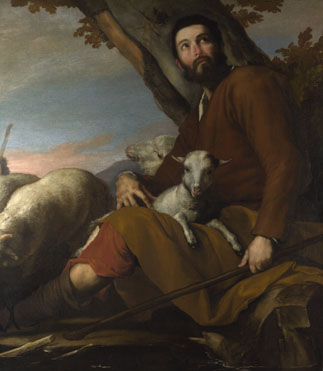
For centuries, the Fathers and Doctors of the Church have likened the two wives of Jacob to the active or contemplative life. In modern times, in order not to make active women feel bad about their lives, priests have not quoted these passages comparing Leah to the active life and Rachel to the contemplative life.
I remember reading about this many, many decades ago. To make the distinction is not to dis women in the active life, (I was a single mum, working, homeschooling, keeping the books, etc. and I did not feel dissed), but to reflect on the two ways which must both end up in the same place, perfection.
Aquinas, again quoted by the Maritains, states, "Absolutely speaking and in itself, the contemplative life is better than the active. The Philosopher proves this by eight reasons."
Here theses are with more explanation as to the comparison of Rachel to Leah.
One, "The contemplative life is suitable to man in regard to his most perfect possession, the intellect, and in relation to the proper objects of that faculty, namely the intelligibles, while the active life is concerned with exterior things. Wherefore the name of Rachel, who represents the contemplative life, means the vision of the principle, the active life being represented by Lia, who suffered from weak eyes..." Maritains quoting St. Gregory here.
Rachel was the great beloved wife of Jacob who bore him his favorite sons, Joseph and Benjamin. His long time of labor in order to "pay" for her to her father, Laban, represents the long journey of purgation in the Dark Nights, purging one of sins.
Laban tricked Jacob, (a punishment from God for Jacob tricking his own father), and gave Leah to him first. Finally, Jacob won Rachel, the desire of his heart, and his soul mate.
Rachel came to represent the contemplative life, not only because of her name, but because she represented the true desire, the purer love. of Jacob's heart.
Our truest desire is for God alone. That is the key to following the contemplative life. Being back in the States, I have seen the terrible distractions and waste of energy for so many things which are not necessary to the spiritual life.
The second point, Two, has been discussed by those in monasteries.
"The contemplative life can be more continuous (though this continuity cannot be referred to the supreme act of contemplation); this is why Mary, who symbolises contemplative life, s shewn us as always at the feet of the Lord.:
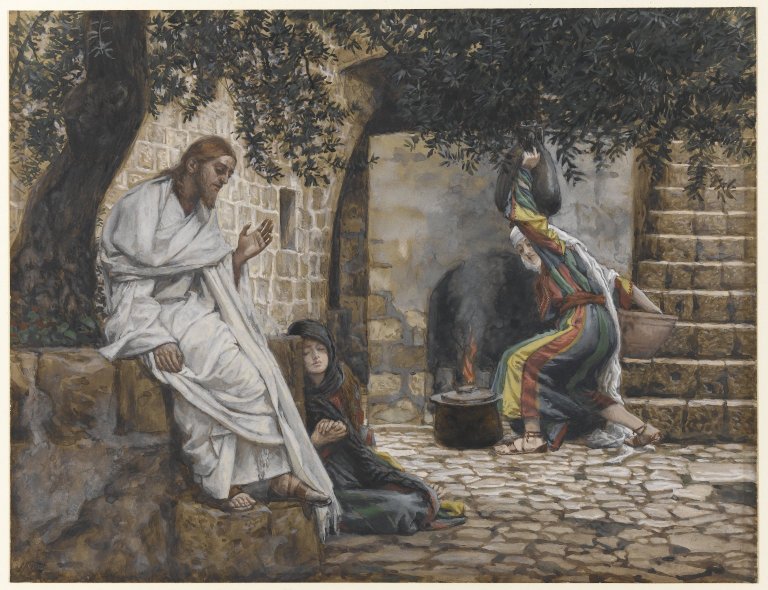
Three, "The delectation of the contemplative life is greater than that of the active; this is the meaning of S. Augustine's saying that Martha was worried while Mary was feasting."
Four, "In the contemplative life man is more self-sufficient for he depends in this exercise less on external things; wherefore it is said in Luke IV, 'Martha, Martha, thou are troubled and worried about many things."
I remember reading about this many, many decades ago. To make the distinction is not to dis women in the active life, (I was a single mum, working, homeschooling, keeping the books, etc. and I did not feel dissed), but to reflect on the two ways which must both end up in the same place, perfection.
Aquinas, again quoted by the Maritains, states, "Absolutely speaking and in itself, the contemplative life is better than the active. The Philosopher proves this by eight reasons."
Here theses are with more explanation as to the comparison of Rachel to Leah.
One, "The contemplative life is suitable to man in regard to his most perfect possession, the intellect, and in relation to the proper objects of that faculty, namely the intelligibles, while the active life is concerned with exterior things. Wherefore the name of Rachel, who represents the contemplative life, means the vision of the principle, the active life being represented by Lia, who suffered from weak eyes..." Maritains quoting St. Gregory here.
Rachel was the great beloved wife of Jacob who bore him his favorite sons, Joseph and Benjamin. His long time of labor in order to "pay" for her to her father, Laban, represents the long journey of purgation in the Dark Nights, purging one of sins.
Laban tricked Jacob, (a punishment from God for Jacob tricking his own father), and gave Leah to him first. Finally, Jacob won Rachel, the desire of his heart, and his soul mate.
Rachel came to represent the contemplative life, not only because of her name, but because she represented the true desire, the purer love. of Jacob's heart.
Our truest desire is for God alone. That is the key to following the contemplative life. Being back in the States, I have seen the terrible distractions and waste of energy for so many things which are not necessary to the spiritual life.
The second point, Two, has been discussed by those in monasteries.
"The contemplative life can be more continuous (though this continuity cannot be referred to the supreme act of contemplation); this is why Mary, who symbolises contemplative life, s shewn us as always at the feet of the Lord.:
Three, "The delectation of the contemplative life is greater than that of the active; this is the meaning of S. Augustine's saying that Martha was worried while Mary was feasting."
Four, "In the contemplative life man is more self-sufficient for he depends in this exercise less on external things; wherefore it is said in Luke IV, 'Martha, Martha, thou are troubled and worried about many things."
One reason I love going to Europe is that I can walk and not have to drive or have a car, eat much more simply, get to daily Mass and Adoration easily, and have a lower lifestyle. Americans have fallen into Satan's trap of complicating their lives by desires for novelties and more and more things. When one settles for less, one is freer to meet God daily.
Five, "The contemplative life is loved for its own sake, while the active life is ordained for something beyond itself; wherefore it is said in Ps. 26, (translated) ' One thing I have asked of the Lord, this will I seek after; that I may dwell in the house of the Lord all the days of my life. That I may see the delight of the Lord, and may visit his temple.'"
I shall continue with the next three points later. I am still looking for the small place where I can pray and for two women, two only, to join me in contemplation, and, thankfully, after slightly over two weeks of being here, starting tomorrow, I can go back into my monastic schedule. Thank God.
May I add that since the late 1970s, when some mothers had to go to work, that I thought this was a lie from Satan to destroy the contemplative atmosphere of a disciplined, well-ordered home, where the mother was the quiet center of life and order.
When there is no home-centered woman, it is much harder to have daily rosary or novenas in the home, or other times of meditation.
Home schooling moms of my generation, even those with many children. created that quiet atmosphere of prayer and study, very monastic, very simple, thus leading themselves and their children into a place of contemplation. Consumerism and financial lies about "having it all" caused some of the chaos. Women's lib created some of the deceit that a mother's role at home had no value. Of course, without that still center, families cannot easily come to listen and know God or the life of virtue. A home can be active and yet quiet...like the old Montessori schools wherein we whispered and the children worked in a quiet hum of activity.
to be continued....
Five, "The contemplative life is loved for its own sake, while the active life is ordained for something beyond itself; wherefore it is said in Ps. 26, (translated) ' One thing I have asked of the Lord, this will I seek after; that I may dwell in the house of the Lord all the days of my life. That I may see the delight of the Lord, and may visit his temple.'"
I shall continue with the next three points later. I am still looking for the small place where I can pray and for two women, two only, to join me in contemplation, and, thankfully, after slightly over two weeks of being here, starting tomorrow, I can go back into my monastic schedule. Thank God.
May I add that since the late 1970s, when some mothers had to go to work, that I thought this was a lie from Satan to destroy the contemplative atmosphere of a disciplined, well-ordered home, where the mother was the quiet center of life and order.
When there is no home-centered woman, it is much harder to have daily rosary or novenas in the home, or other times of meditation.
Home schooling moms of my generation, even those with many children. created that quiet atmosphere of prayer and study, very monastic, very simple, thus leading themselves and their children into a place of contemplation. Consumerism and financial lies about "having it all" caused some of the chaos. Women's lib created some of the deceit that a mother's role at home had no value. Of course, without that still center, families cannot easily come to listen and know God or the life of virtue. A home can be active and yet quiet...like the old Montessori schools wherein we whispered and the children worked in a quiet hum of activity.
to be continued....
Subscribe to:
Posts (Atom)