Recent Posts

Showing posts with label predestination. Show all posts

Tuesday, 23 June 2015

The Last Look Bar One of Laudato Si--The Present Moment and Ecology

Truly beautiful is this section....I am again reminded of the Benedictine Rule and my experience in Tyburn. Moderation, being happy with little, simplicity, all great themes on this blog, are ideals close to my Benedictine heart.

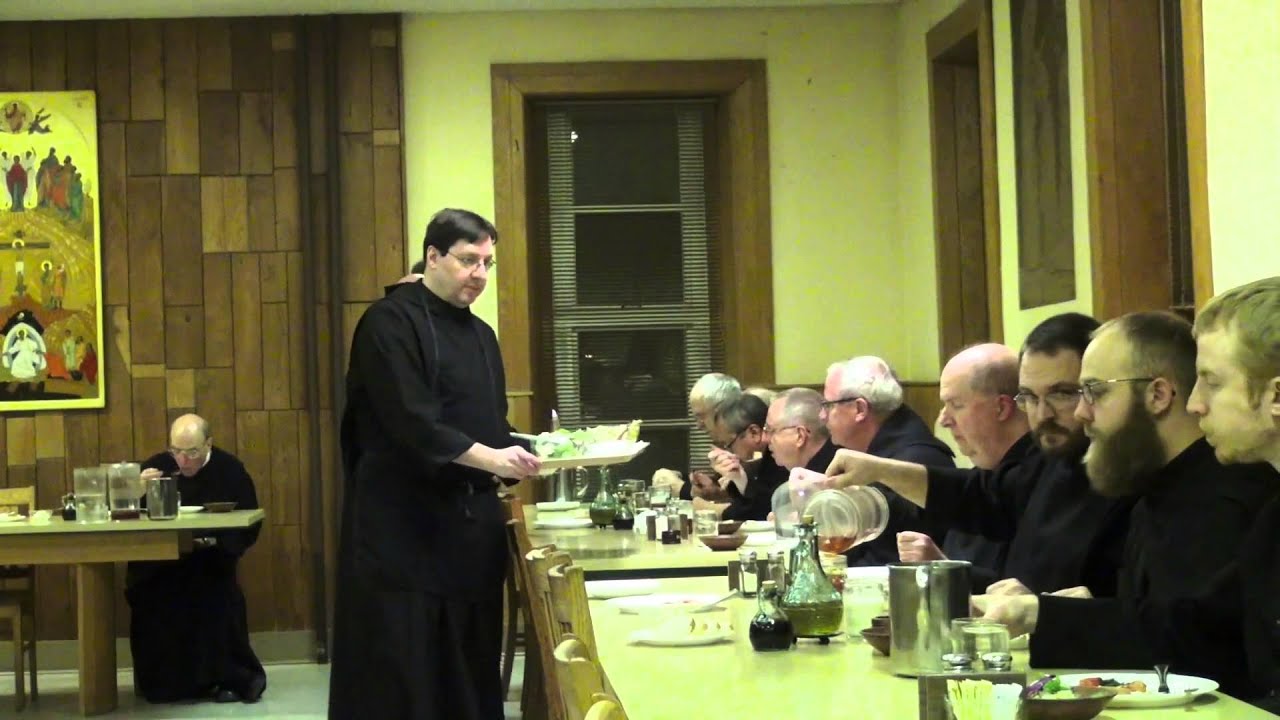
I know some of these men.....
And, this section is about the heart. How many times I have written that less is more? I live this way myself and am more peaceful than one can imagine with less things.

Even after reading this, I want to cull even more things from my stacks of boxes. God provides, and His Providence brings a freedom to serve God and honor nature as one of His creatures.

For four years, I lived out of two suitcases and a computer bag. I missed few things, and my dear readers provided me with books, which I share on this blog.

Indeed, after this view of this work, I shall return to Providence and Predestination, by Garrigou-Lagrange, whose ideas of simplicity as a way to perfection are echoed here.

IV. JOY AND PEACE

222. Christian spirituality proposes an alternative understanding of the quality of life, and encourages a prophetic and contemplative lifestyle, one capable of deep enjoyment free of the obsession with consumption. We need to take up an ancient lesson, found in different religious traditions and also in the Bible. It is the conviction that “less is more”. A constant flood of new consumer goods can baffle the heart and prevent us from cherishing each thing and each moment. To be serenely present to each reality, however small it may be, opens us to much greater horizons of understanding and personal fulfilment. Christian spirituality proposes a growth marked by moderation and the capacity to be happy with little. It is a return to that simplicity which allows us to stop and appreciate the small things, to be grateful for the opportunities which life affords us, to be spiritually detached from what we possess, and not to succumb to sadness for what we lack. This implies avoiding the dynamic of dominion and the mere accumulation of pleasures.

223. Such sobriety, when lived freely and consciously, is liberating. (and I say, "Amen").

It is not a lesser life or one lived with less intensity. On the contrary, it is a way of living life to the full. In reality, those who enjoy more and live better each moment are those who have given up dipping here and there, always on the look-out for what they do not have. They experience what it means to appreciate each person and each thing, learning familiarity with the simplest things and how to enjoy them. So they are able to shed unsatisfied needs, reducing their obsessiveness and weariness. Even living on little, they can live a lot, above all when they cultivate other pleasures and find satisfaction in fraternal encounters, in service, in developing their gifts, in music and art, in contact with nature, in prayer. Happiness means knowing how to limit some needs which only diminish us, and being open to the many different possibilities which life can offer.

Echoes of St. Benedict....


224. Sobriety and humility were not favourably regarded in the last century. And yet, when there is a general breakdown in the exercise of a certain virtue in personal and social life, it ends up causing a number of imbalances, including environmental ones. That is why it is no longer enough to speak only of the integrity of ecosystems. We have to dare to speak of the integrity of human life, of the need to promote and unify all the great values. Once we lose our humility, and become enthralled with the possibility of limitless mastery over everything, we inevitably end up harming society and the environment. It is not easy to promote this kind of healthy humility or happy sobriety when we consider ourselves autonomous, when we exclude God from our lives or replace him with our own ego, and think that our subjective feelings can define what is right and what is wrong.

I am harder than the Pope on this point and call this attitude of the lack of sobriety and humility arrogant pride.
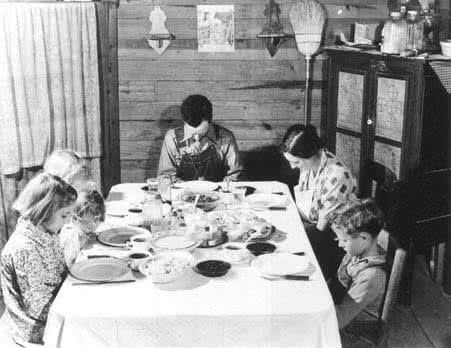

225. On the other hand, no one can cultivate a sober and satisfying life without being at peace with him or herself. An adequate understanding of spirituality consists in filling out what we mean by peace, which is much more than the absence of war. Inner peace is closely related to care for ecology and for the common good because, lived out authentically, it is reflected in a balanced lifestyle together with a capacity for wonder which takes us to a deeper understanding of life. Nature is filled with words of love, but how can we listen to them amid constant noise, interminable and nerve-wracking distractions, or the cult of appearances? Many people today sense a profound imbalance which drives them to frenetic activity and makes them feel busy, in a constant hurry which in turn leads them to ride rough-shod over everything around them. This too affects how they treat the environment. An integral ecology includes taking time to recover a serene harmony with creation, reflecting on our lifestyle and our ideals, and contemplating the Creator who lives among us and surrounds us, whose presence “must not be contrived but found, uncovered”.[155]

The heart leads one to love all of nature. I am listening to the birds' chorus, which brings me much peace and joy. The Pope is referring to living in the Present Moment, always. And giving up all for the sake of Christ, which we are all called to do to the best of our ability in our state of life.

226. We are speaking of an attitude of the heart, one which approaches life with serene attentiveness, which is capable of being fully present to someone without thinking of what comes next, which accepts each moment as a gift from God to be lived to the full. Jesus taught us this attitude when he invited us to contemplate the lilies of the field and the birds of the air, or when seeing the rich young man and knowing his restlessness, “he looked at him with love” (Mk 10:21). He was completely present to everyone and to everything, and in this way he showed us the way to overcome that unhealthy anxiety which makes us superficial, aggressive and compulsive consumers.
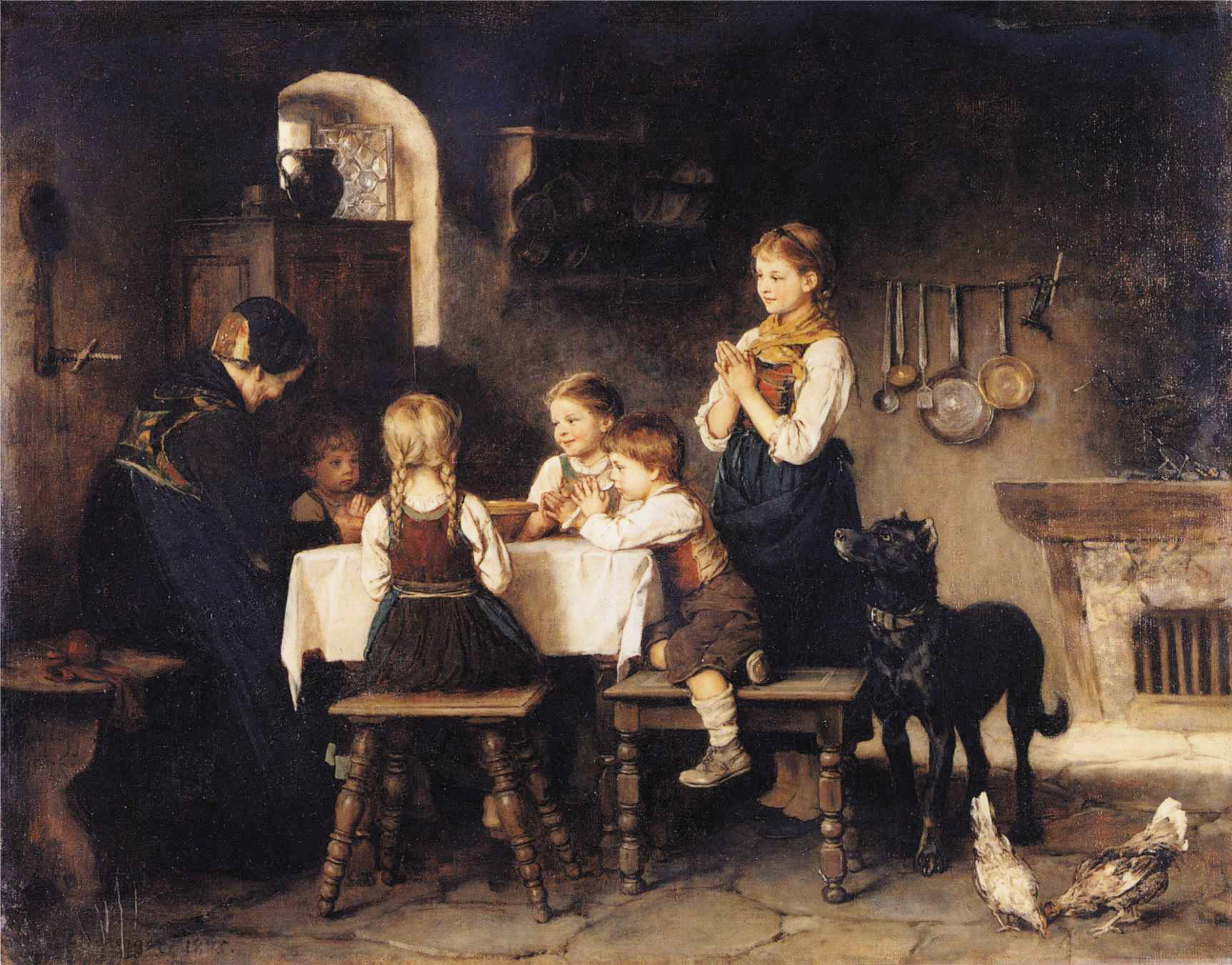


227. One expression of this attitude is when we stop and give thanks to God before and after meals.  (Even in restaurants.....I add) I ask all believers to return to this beautiful and meaningful custom. That moment of blessing, however brief, reminds us of our dependence on God for life; it strengthens our feeling of gratitude for the gifts of creation; it acknowledges those who by their labours provide us with these goods; and it reaffirms our solidarity with those in greatest need.

Tuesday, 6 January 2015

An Unpopular Subject

St. Paul wrote: As for a man who is factious, after admonishing him once or twice, have nothing more to do with him, knowing that such a person is perverted and sinful; he is self-condemned (Titus 3:10-11).

And, again from St. Paul: When Gentiles who have not the law do by nature what the law requires, they are a law to themselves, even though they do not have the law. They show that what the law requires is written on their hearts, while their conscience also bears witness and their conflicting thoughts accuse or perhaps excuse them on that day when, according to my gospel, God judges the secrets of men by Christ Jesus. (Rom 2:14-16)


Pope Pius IX,  December 9th, 1854 said:
We must hold as of the faith, that out of the Apostolic Roman Church there is no salvation; that she is the only ark of safety, and whosoever is not in her perishes in the deluge; we must also, on the other hand, recognize with certainty that those who are invincible in ignorance of the true religion are not guilty for this in the eyes of the Lord. And who would presume to mark out the limits of this ignorance according to the character and diversity of peoples, countries, minds and the rest?
And...

 in Quanto conficiamur moerore 10 August, 1863:
It is known to us and to you that those who are in invincible ignorance of our most holy religion, but who observe carefully the natural law, and the precepts graven by God upon the hearts of all men, and who being disposed to obey God lead an honest and upright life, may, aided by the light of divine grace, attain to eternal life; for God who sees clearly, searches and knows the heart, the disposition, the thoughts and intentions of each, in His supreme mercy and goodness by no means permits that anyone suffer eternal punishment, who has not of his own free will fallen into sin.

The problem is, of course, that without the sacraments, and especially Baptism, Eucharist and Confession, it is almost impossible not to fall into mortal sin with one's free will. It is hard to imagine anyone in today's world maintaining innocence, without mortal sin, being saved outside the Church, which gives us opporunities for grace over and over and over.

Sadly, God will actually stop giving grace if persons decide consistently to choose mortal sin over His Truth, either as given to all in natural law, as codified in the Ten Commandments, (which is the natural law "written in stone" ), and the holiness called for in the Beatitudes. Remember, only the perfect see God, so in addition, one must submit to purgation.

I am not sure there is such a thing as invincible ignorance for adults in this day and age of information glut. 

Yes, God gives sufficient grace to all men and women, but to those who turn towards Him, He gives more and more grace.

And, contrary to some clergy and lay people, a misinformed or underdeveloped conscience in a Catholic is not invincible ignorance.

Christ is clear on what one needs for salvation as seen in these passages: Mark 16:16, Luke 13:3 John 6:54.

And from the CCC: Basing itself on Scripture and Tradition, the Council teaches that the Church, a pilgrim now on earth, is necessary for salvation: the one Christ is the mediator and the way of salvation; he is present to us in his body which is the Church. He himself explicitly asserted the necessity of faith and baptism, and thereby affirmed at the same time the necessity of the Church which men enter through baptism as through a door. Hence they could not be saved who, knowing that the Catholic Church was founded as necessary by God through Christ, would refuse either to enter it or to remain in it. (CCC 846)

Monday, 5 January 2015

Slavery of the Will; Freedom of the Will Part Eleven

All of us have been predestined for a place in heaven. As I noted in the previous posts on this theme, all humans ever created have been given sufficient grace for salvation. All.

No one has been denied this.

Those who are demanding recognition of sin in their lives, or those cardinals who are allowing people to stay in sin are denying grace and not being faithful to grace.

The first thing we must always do to be holy is to stop sinning. This is possible as all of us are given grace to do this. Pain and suffering do not matter.

We are to be like God, and to remain in sin is to reject God's invitation to be like Him.

I wish one cardinal who is confused on these issues would read Thomas Aquinas, Garrigou-Lagrange and listen to such Thomists as Father Ripperger.

Beg for grace, all grace, actual, sanctifying, in order to give glory to God, to merit heaven, and to serve others in the Church.

My entire perfection series in on purgation. That is what our life is now...of which Father Ripperger reminds us, to be purged of sin and adorn our selves in virtue.

Accept suffering, either here or in purgatory....that is what some of the synodal fathers are forgetting.


Sunday, 4 January 2015

We Are Not Equal Part Seven


There is no such thing a coincidence, only God-incidences.

Returning to the theme of predilection, today's reading of the Te Deum praises God for choosing and watching over His People.


O God, we praise Thee, and acknowledge Thee to be the supreme Lord.
Everlasting Father, all the earth worships Thee.
All the Angels, the heavens and all angelic powers,
All the Cherubim and Seraphim, continuously cry to Thee:
Holy, Holy, Holy, Lord God of Hosts!
Heaven and earth are full of the Majesty of Thy glory.
The glorious choir of the Apostles,
The wonderful company of Prophets,
The white-robed army of Martyrs, praise Thee.
Holy Church throughout the world acknowledges Thee:

The Father of infinite Majesty;
Thy adorable, true and only Son;
Also the Holy Spirit, the Comforter.
O Christ, Thou art the King of glory!
Thou art the everlasting Son of the Father.
When Thou tookest it upon Thyself to deliver man,
Thou didst not disdain the Virgin's womb.
Having overcome the sting of death, Thou opened the Kingdom of Heaven to all
believers.

Thou sitest at the right hand of God in the glory of the Father.
We believe that Thou willst come to be our Judge.
We, therefore, beg Thee to help Thy servants whom Thou hast redeemed with Thy
Precious Blood.
Let them be numbered with Thy Saints in everlasting glory.


V.  Save Thy people, O Lord, and bless Thy inheritance!
R.  Govern them, and raise them up forever.


V.  Every day we thank Thee.
R.  And we praise Thy Name forever, yes, forever and ever.

V.  O Lord, deign to keep us from sin this day.
R.  Have mercy on us, O Lord, have mercy on us.

V.  Let Thy mercy, O Lord, be upon us, for we have hoped in Thee.
R.  O Lord, in Thee I have put my trust; let me never be put to shame.

Te Deum laudamus: te Dominum confitemur.
Te aeternum Patrem omnis terra veneratur.
Tibi omnes Angeli; tibi caeli et universae Potestates;
Tibi Cherubim et Seraphim incessabili voce proclamant:
Sanctus, Sanctus, Sanctus, Dominus Deus Sabaoth.
Pleni sunt caeli et terra maiestatis gloriae tuae.
Te gloriosus Apostolorum chorus,
Te Prophetarum laudabilis numerus,
Te Martyrum candidatus laudat exercitus.
Te per orbem terrarum sancta confitetur Ecclesia,
Patrem immensae maiestatis:
Venerandum tuum verum et unicum Filium;
Sanctum quoque Paraclitum Spiritum.
Tu Rex gloriae, Christe.
Tu Patris sempiternus es Filius.
Tu ad liberandum suscepturus hominem, non horruisti Virginis uterum.
Tu, devicto mortis aculeo, aperuisti credentibus regna caelorum.
Tu ad dexteram Dei sedes, in gloria Patris.
Iudex crederis esse venturus.
Te ergo quaesumus, tuis famulis subveni: quos pretioso sanguine redemisti.
Aeterna fac cum sanctis tuis in gloria numerari.

V.  Salvum fac populum tuum, Domine, et benedic hereditati tuae.
R.  Et rege eos, et extolle illos usque in aeternum.

V.  Per singulos dies benedicimus te.
R.  Et laudamus nomen tuum in saeculum, et in saeculum saeculi.

V.  Dignare, Domine, die isto sine peccato nos custodire.
R.  Miserere nostri, Domine, miserere nostri.

V.  Fiat misericordia tua, Domine, super nos, quemadmodum speravimus in te.
R.  In te, Domine, speravi: non confundar in aeternum.


(note...whenever I play Gregorian Chant, no matter what time of day or night, 
the birds in the courtyard and 
neighborhood here in Malta begin to sing. 
This has happened over and over in the months I have been here.)


We Are Not Equal Part Six


One of the readings in today's Divine Office is from Maximus the Confessor. One small paragraph contains the kernel of truth reiterated in the readings of the Mass.

 For surely the word of the Law and the Prophets when it is understood with faith is like a star which leads those who are called by the power of grace in accordance with his decree to recognise the Word incarnate.

The great teacher, Maximus, shows us that "those who are called by the power of grace" are given power in grace to respond to God's Will. These who are called and given power "in accordance with is decree", that is, according to God's Will, recognize Christ as the Savior, as the Incarnated Second Person of the Blessed Trinity. Those in the Synod who want to change Church teaching need to read Maximus today, as they must as priests, and ponder their own position.

The heresies I pointed out three days ago are here anticipated by Maximus--sin is not natural, which is against the Semi-Pelagians, as is the last statement, referring to man's pre-Original Sin nature.

Do the synodal fathers hear what they read today? Do they reflect on sin, grace, human nature and the call to holiness, which is possible in Christ, but not outside of Christ?

Here is the reason why God became a perfect man, changing nothing of human nature, except to take away sin (which was never natural anyway). His flesh was set before that voracious, gaping dragon as bait to provoke him: flesh that would be deadly for the dragon, for it would utterly destroy him by the power of the Godhead hidden within it. For human nature, however, his flesh was to be a remedy since the power of the Godhead in it would restore human nature to its original grace.


We Are Not Equal Part Five

Today's Gospel, well-known especially to those who attend the TLM, brings home the point that not all people are equal.

Note verse 5-not all to whom Christ is revealed "comprehend" or accept Him.

The pertains not only to the Jews at the time of Christ, but to all those who hear the Word of God and reject Him.

Verses ten through twelve could not be more specific in relating the rejection of the Jews and the acceptance of the Gospel who hear the Word of God, who hear Christ and accept His Truth. Those who accept Christ become "sons of God" and those who do not are not "sons of God".

Those who are enlightened, the same term used by St. Paul in the second reading, are given power to become sons of God.  And, those people, the new chosen, are born of the Will of God, God's Will not man's will.

Again, we are faced with the mystery of predestination, of predilection.

Christ alone reveals the Father to us, no one else does this. Therefore, those who accept Christ, those who become Christians, either through their parents at baptism or older, become the chosen ones of God, preordained from all time.

Let me here quote, again, Garrigou-Lagrange. What he explains is the Teaching of the Catholic Church, and, again, you may go back to the two long selections I placed on the blog in order for you to understand that not all are equal according to God's Will.

The Supreme Principles
Nothing comes to pass, either in heaven or on earth, unless God either brings it to pass in mercy, or then in justice permits it. This principle, taught in the universal Church, shows that there is in God a conditional and antecedent will, relative to a good which does not come to pass, the privation of which He permits in view of some higher good.
To this principle we must add another: [1457] God does not command the impossible. From these two revealed principles derives the distinction between God's efficacious consequent will and His antecedent will, which is the source of sufficient grace.
All that God wills, He does. This principle has no exception. All that God wills (purely, simply, unconditionally) comes to pass without our freedom being thereby in any way forced, because God moves that freedom sweetly and strongly, actualizing it, not destroying. He wills efficaciously that we freely consent and we do freely consent. The supreme efficacy of divine causality, says St. Thomas, [1458] extends to the free mode of our acts.
Many repeat these principles, but do not see that they contain the foundation of the distinction between the two kinds of grace, one that is self-efficacious, the other simply sufficient which man may resist, but not without divine permission.
Hence we find that in the ninth century, to terminate the long controversy with Gottschalk, the Council of Thuzey (860): at the instance of the Augustinian bishops, harmonized God's will of universal salvation with the sinner's responsibility. That Council's synodal letter [1459] contains this sentence: Whatever He has willed in heaven or on earth, God has done. For nothing comes to pass in heaven or on earth that He does not in mercy bring to pass or permits to come to pass in justice.
Since God's love is the cause of created goodness, says St. Thomas, [1460] no created thing would be better than another, if God did not give one a great good than He gives to another. This is equivalent to St. Paul's word: [1461] What hast thou that thou hast not received?

Have the synodal cardinals who are fighting the long teaching of the Church regarding marriage understand or even know the teaching of the Church on these matters? Are they rebellious? Have they lost their faith in grace and God's Will? Do they understand that all have sufficient grace, and that some say "no" to this grace? See my long series on January 1st and follow through with reading the two long selections from Garrigou-Lagrange, who merely recapitulates the Church's teaching on grace and predilection, seen in today's Gospel.


John 1:1-18Douay-Rheims 

In the beginning was the Word, and the Word was with God, and the Word was God.
The same was in the beginning with God.
All things were made by him: and without him was made nothing that was made.
In him was life, and the life was the light of men.
And the light shineth in darkness, and the darkness did not comprehend it.
There was a man sent from God, whose name was John.
This man came for a witness, to give testimony of the light, that all men might believe through him.
He was not the light, but was to give testimony of the light.
That was the true light, which enlighteneth every man that cometh into this world.
10 He was in the world, and the world was made by him, and the world knew him not.
11 He came unto his own, and his own received him not.
12 But as many as received him, he gave them power to be made the sons of God, to them that believe in his name.
13 Who are born, not of blood, nor of the will of the flesh, nor of the will of man, but of God.
14 And the Word was made flesh, and dwelt among us, (and we saw his glory, the glory as it were of the only begotten of the Father,) full of grace and truth.
15 John beareth witness of him, and crieth out, saying: This was he of whom I spoke: He that shall come after me, is preferred before me: because he was before me.
16 And of his fulness we all have received, and grace for grace.
17 For the law was given by Moses; grace and truth came by Jesus Christ.
18 No man hath seen God at any time: the only begotten Son who is in the bosom of the Father, he hath declared him.

We Are Not Equal, Part Four

Ephesians 1:15-18 Douay-Rheims 

15 Wherefore I also, hearing of your faith that is in the Lord Jesus, and of your love towards all the saints,

16 Cease not to give thanks for you, making commemoration of you in my prayers,

17 That the God of our Lord Jesus Christ, the Father of glory, may give unto you the spirit of wisdom and of revelation, in the knowledge of him:

18 The eyes of your heart enlightened, that you may know what the hope is of the glory of his inheritance in the saints.

Today's reading from the New Testament continues with the mystery of the proclamation of the Gospel being appropriated by the Ephesians, resulting in love for the community.
  
What follows is St. Paul's happy note that he is grateful for what he hears of the faith of this Church in Ephesus.

Note that this Jewish scholar understands that wisdom, one of the gifts of the Holy Spirit, and the revelation of Christ, as well as knowledge, another gift, lead each member to holiness, through "enlightenment", which is illumination of the self., giving hope.

Now, the word "inheritance" reminds us that the Church is the New People of God, the chosen. Those who are chosen, who listen to the Word of God, inherit the Kingdom of God, which is heaven.
In order to be chosen, one must admit that there are some who are not chosen.
We are not all equal. Do those bishops and cardinals who listen and ponder these words today apply these pastorally? I am coming to the conclusion that some have lost their own faith, and departed from the Word of God, the Word Made Flesh, in Whose feast we celebrate today.

With these passages in mind from the last few posts, go back and read the long selections from Garrigou-Lagrange and apply his clear commentary on Church teaching to these passages, with the Synod in mind.

(apologies for the spacing...blogspot problem)

We Are Not Equal, Part Three

Today's second reading, from Ephesians, reveals the mystery of God's Church as the New Chosen People.

Looking at the beginning of the reading, one sees again the idea of selection, of God's Will for a People. In verse 3, St. Paul immediately refers to God the Father giving us a special blessing through and in Christ. Verse 4 indicates that those in the Church are chosen from all time, referring to God's Will for those in the Church to become holy, and perfect--"unspotted".  Verse 5 is even more specific, when the great Apostle of the Gentiles uses the word, "predestinated" or predestined. This is not a poetic word-choice, but the reality of God's predilection.

"According to the purpose of his will" cannot be a clearer statement that God, in Christ, calls the members of the Church on purpose, from all time, to holiness.

Ephesians 1:3-6Douay-Rheims

Blessed be the God and Father of our Lord Jesus Christ, who hath blessed us with spiritual blessings in heavenly places, in Christ:
As he chose us in him before the foundation of the world, that we should be holy and unspotted in his sight in charity.
Who hath predestinated us unto the adoption of children through Jesus Christ unto himself: according to the purpose of his will:
Unto the praise of the glory of his grace, in which he hath graced us in his beloved son.

to be continued....

We Are Not Equal, Part Two

The Old Testament reading for today's Mass is from the 24th Chapter of Ecclesiasticus. The entire chapter is here below repeated in order to understand the meaning of this selection.

Here, one sees that God called a "privileged people"  or "honorable people" as some translations read. Israel was not equal to the other nations surrounding her. God had created His Own People through Abraham.

Look at verse 3. The Douay-Rheims translations makes the connection between the People of God and the Church. In verse 4, the word "elect" indicates that there is predilection, a choice of God, a chosen group, set apart to become holy.

Wisdom personified here as a female, has been seen as Christ Himself, the "firstborn before all creatures" , the Incarnate One, which is one reason this passage is read today.

Sion and Jerusalem represent not only the Jews, but the Church, the New Jerusalem.

Again, the DR refers to the Chosen People as the "saints", those called by God to become holy, and given the grace to do so.

Verse 25 employs the word "grace".  But, notice, Wisdom calls all to Himself, that is Christ calls all, but only those who desire Him receive the Spirit. Again, the mystery of grace indicates that "many are called, but few are chosen".

Over and over again in the Scriptures, we are reminded of God's choice, His Will regarding the elect. the Jews, the Chosen People, turned against the Messiah, Christ, Wisdom, and He created His Church from those who did follow Him, and the Gentiles.

But, not all are equal. Those who do not follow Christ, who do not embrace Wisdom, do not become part of the honorable people. Here is Chapter 24.

Wisdom praiseth herself: her origin, her dwelling, her dignity, and her fruits.
[1] Wisdom shall praise her own self, and shall be honoured in God, and shall glory in the midst of her people, [2] And shall open her mouth in the churches of the most High, and shall glorify herself in the sight of his power, [3] And in the midst of her own people she shall be exalted, and shall be admired in the holy assembly. [4] And in the multitude of the elect she shall have praise, and among the blessed she shall be blessed, saying: [5] I came out of the mouth of the most High, the firstborn before all creatures:
[6] I made that in the heavens there should rise light that never faileth, and as a cloud I covered all the earth: [7] I dwelt in the highest places, and my throne is in a pillar of a cloud. [8] I alone have compassed the circuit of heaven, and have penetrated into the bottom of the deep, and have walked in the waves of the sea, [9] And have stood in all the earth: and in every people, [10]And in every nation I have had the chief rule:
[11] And by my power I have trodden under my feet the hearts of all the high and low: and in all these I sought rest, and I shall abide in the inheritance of the Lord. [12] Then the creator of all things commanded, and said to me: and he that made me, rested in my tabernacle, [13] And he said to me: Let thy dwelling be in Jacob, and thy inheritance in Israel, and take root in my elect.[14] From the beginning, and before the world, was I created, and unto the world to come I shall not cease to be, and in the holy dwelling place I have ministered before him. [15] And so was I established in Sion, and in the holy city likewise I rested, and my power was in Jerusalem.
[16] And I took root in an honourable people, and in the portion of my God his inheritance, and my abode is in the full assembly of saints. [17] I was exalted like a cedar in Libanus, and as a cypress tree on mount Sion. [18] I was exalted like a palm tree in Cades, and as a rose plant in Jericho: [19] As a fair olive tree in the plains, and as a plane tree by the water in the streets, was I exalted. [20] I gave a sweet smell like cinnamon. and aromatical balm: I yielded a sweet odour like the best myrrh:
[21] And I perfumed my dwelling as storax, and galbanum, and onyx, and aloes, and as the frankincense not cut, and my odour is as the purest balm. [22] I have stretched out my branches as the turpentine tree, and my branches are of honour and grace. [23] As the vine I have brought forth a pleasant odour: and my flowers are the fruit of honour and riches. [24] I am the mother of fair love, and of fear, and of knowledge, and of holy hope. [25] In me is all grace of the way and of the truth, in me is all hope of life and of virtue.
[26] Come over to me, all ye that desire me, and be filled with my fruits. [27] For my spirit is sweet above honey, and my inheritance above honey and the honeycomb. [28] My memory is unto everlasting generations. [29] They that eat me, shall yet hunger: and they that drink me, shall yet thirst. [30] He that hearkeneth to me, shall not be confounded: and they that work by me, shall not sin.

We Are Not Equal (What Some Synodal Fathers Forget)

One of the great lies coming from the pulpits and in the institutions of the modern Church seems to be this idea that we are all equal in grace or holiness. We most certainly are not. The Parable of the Talents teaches us this, as well as the pericope in Scripture where Christ corrects the other apostles for wanting to know the future of John.  Even the apostles wanted all the same graces and position in Christ's Kingdom. They questioned Christ as to the role of John, as they could see that he was "the beloved disciple".


John 21:23New Revised Standard Version Catholic Edition 

23 So the rumor spread in the community that this disciple would not die. Yet Jesus did not say to him that he would not die, but, “If it is my will that he remain until I come, what is that to you?"

I do not have the same graces as St. Bernard of Clairvaux, for example, and if I desired to be him, I would be committing two serious sins--pride and presumption. St. Peter and St. James were not equal in grace, nor Our Blessed Lady and other saints.

Some of the cardinals want everyone to be the same, with the same grace and life.

This is part of the faulty thinking behind wanting those living in sin to be able to receive Communion. Those who are not in communion with Christ in their lifestyles either have refused grace, recevingin grace sufficient to salvation, but not converting.

Really, it is none of our business to apply these thoughts to certain couples, but to state that a person who has gone through the annulment process is the same as one who has not denies grace. To ignore the discipline of the Church regarding the sanctify of marriage is to deny grace working in people's lives. Are some of the cardinals so cynical or without faith? Perhaps so....

This is my point over and over again in the synod series posted last week. We cannot deny grace or individual responses to grace. To do so denies several teachings of the Catholic Church concerning God's Will, predestination and predilection. To deny the mystery of grace in a person's life actually insults God, Who is not bound by human ideas of equality.

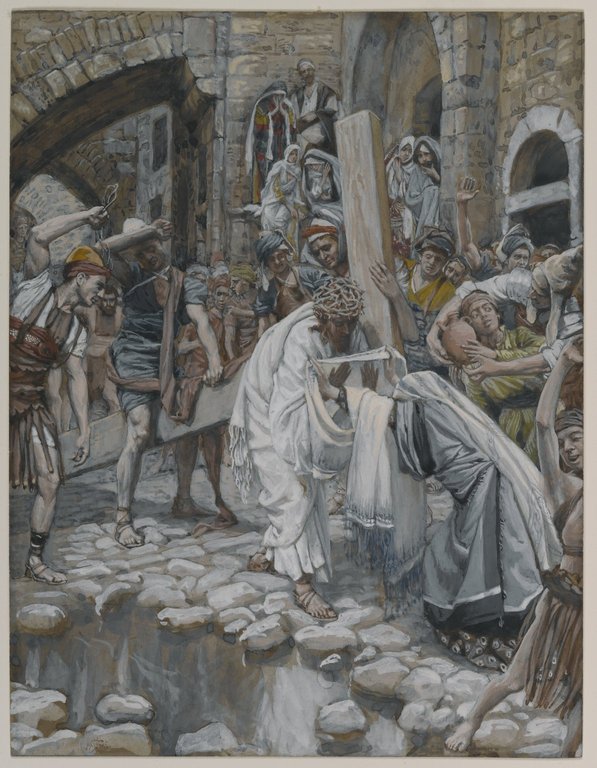
I think of all the women in Jerusalem watching Christ in His horrible suffering on the way to Golgotha. Yet, only one woman responded in compassion, wiping His Face with her veil.

For this bravery and kindness, Christ left the imprint of His Face on her piece of cloth. One woman, one veil, one miracle of grace....

to be continued..


Thursday, 1 January 2015

Slavery of the Will; Freedom of the Will Part Eight Bullet Points


As two people requested bullet points, here are a few. and will be continued...help from Garrigou-Lagrange on this list as it is an expansion of a graph in his book, Grace.

Think of the confusion regarding the wording of the synodal document.


  • Catholic teaching-God does not ask the impossible as noted by St. Augustine, so all men can be saved through sufficient grace. God gives efficacious grace. Because of the sacrifice on the Cross, God wills all men to be saved. Not clear in the synodal papers.
  • Catholic teaching-God gives us grace to be saved and become holy-gratuitous grace; complete gift and never merited. Predilection means that God gives more to the humble, to those who seek Him. Love comes from the will and Truth from the intellect, as God gives more and more grace to the humble. Not covered in the synodal papers.
  • Suarez on congruism, which I did not cover, but which is found both in Garrigou-Lagrange's book Grace and other sources, such as CE. I do not think this falls into the faulty thinking in the Synod.
  • Thomistic position, all grace is efficacious and enlightens the will. Will follows grace. Not addressed in the pastoral approaches in the synodal papers.
  • Molinists, not all grace is efficacious in and of itself-problem with libertarian will and question of previous merit. Falls into earning salvation too easily.
  • Thomism and Augustinism on predestination, which indicates few are saved, despite grace given to all for salvation. The will follows grace. Implied in the synodal papers.
  • Semi-Pelagianism-nature brings about conversion without grace; grace coming later. Another aspect of Gradualism and more than implied in the synodal papers.
  • Jansenism-opposite heresy to Molina in that this heresy denies the use of free will entirely and that grace cannot be resisted and does not need a person's assent, or conversion. Implied in the synodal papers.
  • Pelagianism-grace is not necessary for conversion or holiness and denial of Original Sin. How many of the laity are reading the Synod because many of the laity believe in this heresy.
  • Predestinarianism-some people are predestined for hell and salvation is not for all. Few consider this.
Now, obviously, only the Molinist, Semi-Pelagian, Pelagian and Jansenist positions, imho, are infecting the Synod. 

To allow those who do not want to convert to receive Communion, or to continue in same-sex relationships is a position ignoring both Catholic teaching, Thomism and Augustinianism.

I blame the lack of seminary training and the inclusion of heretical ideas in theological studies, not to contradict but to absorb, as one root of the problem.

What the heresies of Jansenism, Pelagianism, gradualism, Semi-Pelagianism and Molinism have in common is the misunderstanding of grace and the misunderstanding of mercy and justice.


Reviewing Justice and Mercy in Slavery of the Will; Freedom of the Will Part Seven


Last year, I wrote about predestination, going through some points of Garrigou-Lagrange's book. Here are some notes from that book and Providence, also unpacked on this blog.

One of the problems with the thinkers at the Synod is confusion about justice and mercy. Again, I find this confusion in comments made by two cardinals especially, names withheld.

If you are interested in pursuing this point, read this page, and my previous posts.

 http://www.thesumma.info/predestination/predestination7.php

I want to make a small comment on justice and mercy, again somewhat of a repeat of things on the blog in the past.

Here is Garrigou-Lagrange on justice and mercy. First, we realize that justice makes up for horrible injustices on earth. This is clear to most of us. But, when it comes to pastoral decisions, such as those coming out of the Synod, the two virtues, or rather, attributes of God have been confused. What has been set aside in the discussions in Rome has indicated that some of the cardinals lack faith.

Yes...

When one lacks faith in Providence, one sets aside the salvific merit of intense suffering. How many people who could have been called to saintliness have not followed that path as they have avoided, indeed, run away from suffering?

Those in an irregular marriage do not want to face the suffering necessary for justice to work out one's salvation.

Those with homosexual tendencies do not want to face a life of celibacy and even loneliness, which many heterosexuals who do not fornicate and give up consolations do.

Justice demands righteousness and this is being forgotten in Rome.


Providence and justice combine in this present life to give us whatever is necessary to reach our true destiny: that is, to enable us to live an upright life, to know God in a supernatural way, to love and to serve Him, and so obtain eternal life.
There is a great inequality, no doubt, in circumstances, natural and supernatural, among men here on earth. Some are rich, others are poor; some are possessed of great natural gifts, whereas others are of a thankless disposition, weak in health, of a melancholy temperament. But God never commands the impossible; no one is tempted beyond his strength reinforced by the grace offered him. The savage of Central Africa or Central America has received far less than we have; but if he does what he can to follow the dictates of conscience, Providence will lead him on from grace to grace and eventually to a happy death; for him eternal life is possible of attainment. Jesus died for all men, and among those who have the use of reason only those are deprived of the grace necessary for salvation who by their resistance reject it. Since He never commands the impossible, God offers to all the means necessary for salvation.

Moreover, not infrequently providence and justice will make up for the inequality in natural conditions by their distribution of supernatural gifts. Often the poor man in his simplicity will be more pleasing to God than the rich man, and will receive greater graces. Let us recall the parable of the wicked rich man recorded in St. Luke (16: 19-31) :There was a certain rich man who was clothed in purple and fine linen and feasted sumptuously every day. And there was a certain beggar named Lazarus, who lay at his gate, full of sores, desiring to be filled with the crumbs that fell from the rich man's table. And no one did give him: moreover the dogs came and licked his sores. And it came to pass that the beggar died and was carried by the angels into Abraham's bosom. And the rich man also died.... And lifting up his eyes when he was in torments, he saw Abraham... and he cried and said: Father Abraham, have mercy on me.... And Abraham said to him; Son, remember that thou didst receive good things in thy lifetime, and likewise Lazarus evil things: but now he is comforted and thou art tormented.
This is to declare in effect that, where natural conditions are unequal, providence and justice will sometimes make up for it in the distribution of natural gifts. Again, the Gospel beatitudes tell us that one who is bereft of this world's enjoyments will in some cases feel more powerfully drawn to the joys of the interior life. This is what our Lord would have us understand when He says: "Blessed are the poor in spirit.... Blessed are the meek... that suffer persecution for justice' sake: for theirs is the kingdom of heaven." [138]
The love of Jesus goes out to those servants of His nailed to the cross, because then they are more like Him through the effective oblation they make of their entire being for the salvation of sinners. In them He continues to live; in them He may be said to prolong down to the end of time His own prayers and sufferings, and above all His love, for perfect love consists in the complete surrender of self.
For some there comes a time when every road in life is barred against them; humanly speaking, the future holds out no prospect whatever to them. In some cases this is the moment when the call comes to something higher. Some there are who spend long years confined to a bed of pain; for these henceforth there is no way open but the way of holiness. [139]
And so providence and justice, while giving to each one what is strictly necessary, will often make up for any disparity in natural conditions by the bestowal of grace. They reward us, even in this life, for the merits we have gained, reminding us, too, of our solemn duties by salutary warnings and well-deserved corrections, which are no more than medicinal punishments for the purpose of bringing us back into the right path. In this way will a mother correct her child if she loves it with a really enlightened, ardent love. When these salutary corrections are well received, we make expiation for our sins, and God takes the opportunity of inspiring us with a more sincere humility and a purer, stronger love. There is a sharp distinction between souls according to their willingness or unwillingness to listen to these warnings from God.

If this solid doctrinal thinking was present in the making of the synodal document, we would see a different emphasis on holiness, through justice.

That mercy is seemingly extended indicates a great deception among some of the leaders. Such a deceit damns souls to eternal loss of God in heaven. The great Dominican writes of disorder and conscious disorder. Those in sin want to change the rules so that the Church accepts sin. Are these people being told the truth of the state of their immortal souls, which is a lack of justice?

A false mercy rises out of all the heresies covered today.

Here is Garrigou-Lagrange again:

Justice will then mete out condign punishment for sins committed, to last for a time or for eternity. Mortal sin still unrepented at the moment of death will be henceforth like an incurable disease, but in something that cannot die, the immortal soul. The sinner has turned his back unrepentantly on the sovereign good, has in practice denied its infinite dignity as the last end, and has failed to revoke this practical denial while there was yet time. It is an irreparable disorder and a conscious one. Remorse is there, but without repentance; pride and rebellion will continue forever and with them the punishment they deserve. But above all it involves the perpetual loss of the divine life of grace and the vision of God, of supreme bliss, the sinner clearly realizing that through his own fault he has failed forever to attain his destined end. 

May I add that the Dominican points out that absolution for our sins is Mercy from God. We do not merit any of the sacraments. which brings me back to the Synod.

The reception of the sacraments is a mercy based on justice. One cannot separate the two concepts.

The grace of absolution from mortal sin is not something that can be merited, it is a gratuitous gift. And how often has that grace been granted us!
Again, by no merit of ours could we obtain the grace of communion; it is the fruit of the sacrament of the Eucharist, which of itself produces that grace within us, even daily if we wish. And how many communions has not the divine mercy granted us! Let us bear in mind that if we are faithful in fighting against all attachment to venial sin, each successive communion becomes substantially more fervent than the last, since each successive communion must not only preserve but increase charity within us, thus disposing us to receive our Lord on the morrow with a substantial fervor, a readiness of desire not merely the same but more intense.

Garrigou-Lagrange also points out that those raised Catholic have been given already a great Mercy, by being given the truth and grace. To turn against these constitutes a serious rebellion against what one knows to be true.


Slavery of the Will; Freedom of the Will Part Four


I do not want to get into all the complications of the theory of Molina concerning predestination and the knowledge of God. However,  I want to zero in on one aspect of  Molinism, which I think is infecting the thinking behind the Synod, and obvious in some of the commentary from the two cardinals to which I referred without naming them.

First, if a reader wants a good breakdown on the Molinists controversy, see Garrigou-Lagrange's work Grace, which, of course, as written by a Dominican Thomist, holds the opposite stand to Molina's idea of the middle knowledge of God.

Here is my emphasis. The problem with Molina's position is that predestination, which the Church does hold as a teaching, involves God predestining a person according to merits which are foreseen.

Now, this position undermines grace and free will, as well as putting God's perfect knowledge and providence, as well as predestination, into a category of fluidity, instead of certainty.

Taken to its logical conclusion, Molina's theory, and that is all it is. although it is held by most Jesuits, allows for the meriting of grace, which is totally against Catholic teaching. No one merits grace, which is always a free gift.

Molina's view also makes free will somehow greater than grace, As seen in a previous post, one's free will is enlightened by grace. Yes, there is a cooperation of free will and grace, but the will does not determine grace. This is a Pelagian argument condemned in Trent.

Now, what has all this to do with the Synod?

Firstly, those cardinals who want to give the Eucharist to those in mortal sin as supposing that merit somehow is gained, which it is not, to be "cashed in" or as part of a process of conversion. All these elements of thought contradict Catholic teaching on sin and merit, grace and merit.

Secondly, among some of the cardinals, there is either an out-and-out denial of God's predestination, or a gross misunderstanding based on Molinism which denies that God see merit, gives grace freely and predestines that person for heaven. The fact that God sees a person choosing evil for all eternity, that is, living in a state of de-merit, is also part of the Catholic teaching of predestination. The Molinist would deny, it seems, at least in practice, that damnation and salvation depend on God seeing this merit or demerit, which puts salvation into the hands of a person, not God.

How this plays out in pastoral practice would then be that the will of the person in the irregular marriage trumps grace. If the person wants to be saved, he just gets merit and that is a sign he is saved.

Not so, states the Church in more than one council. Grace is a free gift and grace brings us to salvation, neither intentions, nor good works. Again, we do not merit grace. Here is a note from Garrioug-Lagrange, who in another place in Grace, states the Church's teaching that we do not merit justification.


Proof from the definitions of the Church. This truth is of faith; cf. against the Pelagians, the Council of Orange (Denz., no. 176), can. 3-7, 9, 14-25; the definition is renewed by the Council of Trent, Sess. VI, chap. 6 (Denz., no. 798): “Therefore are we said to be justified gratuitously, since none of those things which precede justification, whether faith or works, deserves the grace of justification itself.” It also appears clearly enough from these declarations that man cannot merit even the first grace for himself de congruo properly speaking ; for it is defined against the Pelagians and Semi-Pelagians that no one can by merely natural powers dispose himself for grace. (Cf. Council of Orange, can. 3-7, 14-25.)
This doctrine of the Church is manifestly based upon many scriptural texts; especially are cited: “Being justified freely by His grace” (Rom. 3:24; 4:4); “And if by grace, it is not now by works” (ibid., 11:6); in fact, almost the entire dogmatic portion of this Epistle; also I Cor. 12:13; II Cor. 3:5; Eph. 25-10; Phil. 2:13; II Tim. 1:9; John 15:16; I John 4:10-19.

Also, the intention of the person in sin must be that of conversion in order to both receive the gift of grace and, therefore, convert. If the intention is to remain living in sin, either in an irregular marriage or in an active homosexual relationship, there is no conversion. Grace has been refused.

Again, here is Garrigou-Lagrange on merit.


It must be a work ordained by God toward a promised reward; cf. q. 114, a. I ad 3: “Our action has no reason for merit except on the presupposition of a divine ordination; [wherefore] it does not follow that God becomes our debtor absolutely [who hath first given to Him?], but rather His own, so far as it is due to Him that His ordination should be fulfilled.” Again in article 2 c: “The merit of man depends on divine preordination” since “all the good in man comes from God” and man has no right before God unless he receives such a right from God. Hence without this divine ordination and promise, our good works would give us no right to a reward, since they are already due to God by several other titles, such as creation, supreme dominion, final end. Therefore, even if God had not promised us a reward, man ought to love God above all things.6
This doctrine is based on Holy Scripture: “The man that endureth temptation . . . when he hath been proved, . . . shall receive the crown of life, which God hath promised to them that love Him” (Jas. 1:12); “He that cometh to God, must believe that He is, and is a rewarder to them that seek Him” (Heb. 11:6). The Council of Trent (Sess. VI, chap. 16; Denz., no. 809) defines: “To those who work well unto the end, hoping in God, eternal life is offered both as the grace mercifully promised to the sons of God through Christ Jesus and as the reward faithfully rendered to their good works by the promise of the same God.”’

Confirmation. The good works of the blessed and of the souls in purgatory are not meritorious, because God has not ordained them to a reward. For God does not order good works to a reward outside of the state of wayfarer, although He could do so if He so willed. 

Once we are converted and moving towards perfection, we can merit and grow in love. Only then...and to deny that is a false Protestant view as against the teaching of the Church on holiness.

Proof from the Council of Trent (Sess. VI, can. 32; Denz., no. 842): “If anyone should say . . . he who is justified by good works, which are done by him through the grace of God and the merit of Jesus Christ (of whom he is a living member), does not really merit an increase of grace, eternal life, and the attainment of eternal life itself (provided, however, that he dies in grace), and also an increase of glory: let him be anathema.” This definition is based upon many scriptural texts, for example: “By doing the truth in charity, we may in all things grow up in Him who is the head, even Christ” (Eph.  4:15); also Phil. 1:9 and Rom. 6:19; Augustine, commenting on chapter 5 of St. John’s Gospel, writes: “Charity merits increase, that being increased, it may also merit to be perfected.”

In addition to these problems of thought, is the heresy which states that we can will final perseverance and that the grace of final perseverance is not a special grace.

Again, one can see how this false idea of persevering on one's own informs the poor pastoral judgement of some of the cardinals. If one is not in grace, how can one persevere to death, and if one denies a special grace of final perseverance, one is denying that salvation is a gift from God and not earned by humans. Going to Mass and being accepted in the community does not merit one salvation. Only grace does this. Those in sin cannot gradually become holy. This is impossible for one in serious sin.

Here is Garrigou-Lagrange again. And here is where the modern Molinists fall into Semi-Pelagianism from a different cliff.

The Councils likewise affirm the gratuity of the gift of final perseverance. Several of the preceding scriptural texts are quoted by the Second Council of Orange, which declared against the Semi-Pelagian contention that this gift fell under merit (can. 10; Denz., no. 183): “Even those reborn and restored to health must always implore the help of God that they may attain to a good end and may persevere in good works.” If this must always be implored, it is not a thing the attainment of which is assured by previous merits.
Again, the Council of Trent (Sess. VI, chap. 13; Denz., no. 806) declares with reference to perseverance, “that a certain gift cannot be had from anyone, unless it be from Him who is able to make him who stands stand, that he may stand perseveringly, and to raise him who falls”; cf. Rom. 14:4 ff. Nevertheless the fact that a man merits, although it derives principally from God, is not said to proceed from God alone, but also from man by his merits. It is likewise defined by the Council of Trent (Denz., no. 826): “If anyone should say with absolute and infallible certainty that he will receive that great gift of perseverance to the end, unless he learns this by special revelation, let him be anathema.” (Also Denz., no. 832.) Chapter Twelve in Grace

to be continued...


Friday, 5 December 2014

On Grace, and Damnation


All humans, each and every person who has ever lived and will live, has been, is and will be given the grace for salvation.

All...

This means that each person in a lifetime, and most likely, more than once, is given light to choose Christ, Who is the Way, the Truth and the Life. Now, the Church teaches that we do not understand necessarily how God imparts this grace, as the normal channels of grace are through the Church.

The brilliant Garrigou-Lagrange has a book on grace, which is found here on line.

http://www.romancatholicism.org/pdf/gl-grace.pdf

I have written a lot on grace on this blog and one can follow the tags and labels.

However, today, because I have been thinking of this for weeks and weeks, I want to share some thoughts on the denial of grace and damnation.

I have been wondering why we do not see many saints in our day and age, except for martyrs.

One knows that St. John Paul II and the Pope Emeritus canonized many saints, but most were martyrs of the Faith from the horrible times of persecution in the past 200 years.

We can understand clearly the response to grace regarding martyrdom. We see Christians being killed almost daily in some parts of the world even now.

But, where are the everyday saints, those who lead us to God by examples and leadership? Where are those like Ignatius, or Teresa, or even the small saints, like Bernadette, canonized not because she saw the Mother of God, but because of her personal holiness?

And, why are there so many people who refuse to follow Christ, refuse to consider religion at all?

Perhaps it is because I take the bus daily to Mass that I see thousands of people who are not Christians, or not practicing Christians. Many friends tell me that their grandchildren are not baptized.

That grace is given is a truth. That grace is deferred or ignored or out-and-out rejected creates tragedies-the loss of people to eternal damnation.

That some people seem to be better than others, seem to be following Christ closely, is attributed to efficacious grace. God puts both the will and the ability of such people to follow Him.

But, that all men are called to salvation, that all are given sufficient grace to be saved seems to be a truth ignored by many. It is heretical to state that God demands the impossible from all human beings.

Trent makes it clear that God helps us not merely in general with grace, but in the particular, in individual cases.

Garrigou-Lagrange quotes Christ, reminding us that He gives us all the necessary grace to repent and follow Him

Matthew 23:37Douay-Rheims 

37 Jerusalem, Jerusalem, thou that killest the prophets, and stonest them that are sent unto thee, how often would I have gathered together thy children, as the hen doth gather her chickens under her wings, and thou wouldest not?
It is not poverty or hunger, the lack of training or even riches which cause damnation, but the choosing against God. Choice is what we have all been given. We all have free will to decide yes or no, cooperating or not cooperating with grace.
Once a person accepts the grace of conversion, more grace follows. 
I am astounded at the number of people I meet daily who have refused grace. 
Habitual grace is lost when one commits mortal sin. Prevenient grace is no good unless one perseveres.  Garrigou-Lagrange quotes St. Paul as well, but I choose only one of his references here.

1 Timothy 2:4-6Douay-Rheims 

Who will have all men to be saved, and to come to the knowledge of the truth.
For there is one God, and one mediator of God and men, the man Christ Jesus:
Who gave himself a redemption for all, a testimony in due times.

Garrigou-Lagrange reminds us that St. Augustine taught that hardness of heart may be removed by grace. Many re-verts to Catholicism attest to this fact. We are also reminded in the text that we may beg for more grace in order to live holy, perfect lives.
I am saddened by those who refuse grace. Let us continually pray for God's mercy on those who have said "no" to Him, that they may respond to grace and say "yes".

Read tomorrow's Gospel. What you have been freely given, you should freely share-the good news of salvation.