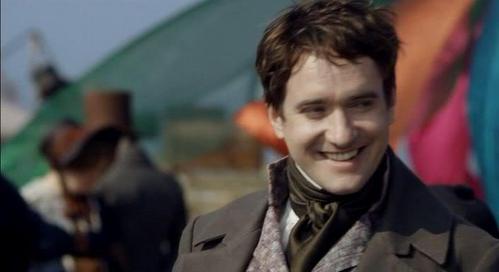
Because I love the works of Jane Austen so much, having read the novels many times over, taught a few, and watching the movies and series several times as well, I have come to some conclusions for the approach a Catholic could take towards her work. I want to examine in a short space ideals of marriage in order for readers to understand the type of unity which is necessary for our times.
First of all, Austen was a master at understanding human nature, both in the apprehension of virtues and vices. She was a keen observer of people. She was also raised in a religious atmosphere, wherein character formation would have been part of the training of a young person.
She, no doubt, learned the Anglican version of virtues early on, with a strong sense of the necessity for virtue not only for the individual, but for society, and by extension, the nation.
Second, her world was not so circumscribed that she did not come into contact with the less scrupulous. Her "villains" and those exhibiting such weaknesses of the flesh as fornication, adultery, gambling and abuse of alcohol, as well as the evil of greed, are in each book. That vices affect families and bring down the ruin of society Austen makes clear.
Third, she was also aware of the failings of those great families and "houses" which should have produced leaders, but merely, more and more, were producing greed and corruption. This view is most obvious in
Mansfield Park and in
Sense and Sensibility. The upper classes were decaying, and London, according to Austen, seethed with sin and provided a corrupting influence, which reached out into the old country houses, like an octopus with giant tentacles.
But, what I want to examine is the view of God in Austen's marriages in her society, briefly, of course, as this is a blog post and not a dissertation.
I have found it interesting that Austen holds marriage as the key to a good society. Really good marriages keep the life of virtue alive and provide stability to the nation as a whole. This is in keeping with Catholic Church teaching, and Anglican teaching at the time of Austen's writing.
Divorce is despicable in her books, and being single not a good place of protection for a female.
However, I am more interested in the fact that because of her Protestant upbringing, Austen had to place virtue in marriage and in specific "houses". In other words, virtue training for children, and character formation would be limited to one's choice of mate and for honorable, church-going families. It is clear that Austen was aware that not all marriages not made in heaven, but founded on lust and folly, as especially seen in
Pride and Prejudice, wherein Mr.and Mrs. Bennet do not have a holy marriage, and of course, neither do Lydia and Wickham.
This theme is also seen in
Persuasion, where Mrs. Clay and Mr. William Eliot join in an unholy union. Mrs. Clay is a social climber and Mr. Eliot seems to want to be perverse and deceitful in several areas, as seen in his financial dealings with Mrs. Smith's husband.

Another unholy marriage is depicted between the clergyman Mr. Elton, in
Emma, (the clergyman being another social climber), who marries for money to the horrid Augusta Hawkins, whose name always reminds me of pirates. And, in
Mansfield Park, we see the result of a marriage made for money merely and not love or respect, ending in adultery and shame, in comparison to Fanny and Edmund's good marriage.
Back to the main point....
The trouble with Jane Austen's world is that there is no place for a single person to find God or for the development of saintliness in marriage. It seems that marriage is the only place where people can truly find love and fulfillment. The ideal of Catholic spirituality depending on one's total focusing on God as an individual is never emphasized or even hinted at except in the virtuous single lives of such as Elinor Dashwood, or Anne Eliot, who eventually gets married, or Jane Bennet, who is obviously naturally, if not supernaturally "good". Does holy love only exist in special, unique marriages?
My answer, as a Catholic, is "no".
The most "holy" character is my favorite, Fanny Price, in
Mansfield Park, which modern interpretations in film miss entirely as a model of virtue and humility. The humble Fanny is the center of calm and honesty in the book and she represents the old ways which use to be found in the great houses of England. Fanny is the heart of Mansfield Park, the great house crumbling from vice on the inside, even as one brought in from the outside.
Outside of finding love in marriage, there is little deep love in Austen. Now, one may say, that is not the point of her books, but I think it is. For the Protestant, celibacy is not a virtue or a truly noble way of life. All the clergymen in Austen must get married, and in fact, Austen sees that clergymen could be a source of gossip and temptation to unwed women unless they marry, and so on.
The Anglican stance against celibacy and chastity have pride of place in Austen. The family is all, and love between husband and wife the greatest good in a society. That this is true for Catholics, is also clear, but I think we have a deeper understanding of the sacrament and the ideal relationship between a husband and a wife. Catholics know that God must be the center of an ideal marriage, not society or class structure, or even romance involving hearts and minds.
Now, I do not need a novelist to be a theologian or even a saint, but I think that the popularity of Austen in the past thirty years has something to do with the denigration of celibacy and chastity.
There still is, especially in American society, a strong belief that a woman or man cannot possibly be happy and fulfilled outside of a sexual relationship.
Here, on the other hand, is Raissa on marriage. I want to highlight three points.
",,,,(marriage) this sacrament is for temporal humanity and for the perfecting of the species."
First, we see in this line that perfection is part of marriage, in that the husband and wife should perfect each other and train their children in the virtues, forming character, which carries down in posterity and into society.
Second, she writes this:
"But does there then remain nothing for heaven of the union of a husband and wife, faithful to each other until death?---What remains is friendship may have created of purely spiritual union between them, of similarity of soul, of equality of merits, perhaps, in a life in which everything has been in common."
I want to unpack this statement and expand on it. As readers know from one of my earliest posts, the Maritains made a commitment of celibacy in their marriage in order to become more perfect in serving the world through Jacques' ministry of philosophy and Raissa's call to intense prayer.
One can see this here if one missed it.
http://supertradmum-etheldredasplace.blogspot.com/2014/11/without-contemplatives-there-can-be-no.html

Here, again, is the line I want to examine.
What remains is friendship may have created of purely spiritual union between them, of similarity of soul, of equality of merits, perhaps, in a life in which everything has been in common."
But, the friendship idea is one part of the multi-faceted description of marriage in that short statement of Raissa's above.
Friendship in the Lord, an ideal which I have cherished since my twenties, is a particular grace of intense love totally built on love for God first. The love one has for God spills out into friendship, which sometimes leads to marriage and great intimacy, and sometimes not.
Raissa and Jacques experienced this, and Eliza Bennet expresses this need, but one does not see it in the book as it unfolds. One only sees the romantic attraction and some meeting of the minds and hearts, but not the meeting of the souls.
This friendship, as Raissa knows, must be a spiritual union. Now, I think Austen was hinting at this by having some of her heroines marry clergyman, such as Elinor Dashwood marrying Edward Ferrars, and Fanny Price marrying Edmund Bertram. Of course, we all know that Austen herself was in love, at one time, with a clergyman. The Anglican cleric is a symbol of virtuous continuity, stability and religion in Austen.
These characters represent a spiritual life, but one does not see it in the novels as a truly spiritual friendship, as noted by Raissa. That Austen sees that Fanny and Edmund, and Elinor and Edward have similarities of souls is a good. But, the description of those friendships do not go far enough for the Catholic reader, especially for young men and women who want to understand marriage.
Raissa means a profound union of holiness while on earth, a striving for perfection on the part of both husband and wife. This ideal has been lost among Catholics. How often have I heard people say, "Oh, if he just finds a religious, good woman to marry, he will convert", or be saved.
This is simply day-dreaming and putting the onus of becoming holy on one person, possibly leading to an unhappy, unequally yoked union. Similarity of souls means that both parties want to become saints, not merely one dragging the other along into heaven.
The next point is what Raissa terms "equality of merits". Now, I do not think see means equality of talents or gifts, such as intellectual or physical gifts at this point in the sentence.
What she means is "spiritual merits", again, pointing to the fact that both husband and wife desire God first and virtue over anything else.
Merit in Catholic terminology, which I have written about on this blog, is defined and described in the
CCC, which I reproduce again here. Before one reads this, may I state that in marriage, the couple works with grace, with the understanding that they are both children of God, brother and sister in Christ, working with God in order to bring each other to heaven.
God initiates merit, but in cooperating with grace, these gifts become part of who each person is,
a question of being and not just action. Therefore, in a good marriage, there is an equality of merit, again, an "equal yoking" between the two souls who are becoming one. St. Therese, the Little Flower, is quoted at the end of this section of the CCC, but I shall save that quotation until the end of this post.
III. MERIT
- You are glorified in the assembly of your Holy Ones, for in crowning their merits you are crowning your own gifts.59
2006 The term "merit" refers in general to the recompense owed by a community or a society for the action of one of its members, experienced either as beneficial or harmful, deserving reward or punishment. Merit is relative to the virtue of justice, in conformity with the principle of equality which governs it.
2007 With regard to God, there is no strict right to any merit on the part of man. Between God and us there is an immeasurable inequality, for we have received everything from him, our Creator.

2008 The merit of man before God in the Christian life arises from the fact that God has freely chosen to associate man with the work of his grace. The fatherly action of God is first on his own initiative, and then follows man's free acting through his collaboration, so that the merit of good works is to be attributed in the first place to the grace of God, then to the faithful. Man's merit, moreover, itself is due to God, for his good actions proceed in Christ, from the predispositions and assistance given by the Holy Spirit.
2009 Filial adoption, in making us partakers by grace in the divine nature, can bestow true merit on us as a result of God's gratuitous justice. This is our right by grace, the full right of love, making us "co-heirs" with Christ and worthy of obtaining "the promised inheritance of eternal life."60 The merits of our good works are gifts of the divine goodness.61 "Grace has gone before us; now we are given what is due. . . . Our merits are God's gifts."62
2010 Since the initiative belongs to God in the order of grace, no one can merit the initial grace of forgiveness and justification, at the beginning of conversion. Moved by the Holy Spirit and by charity, we can then merit for ourselves and for others the graces needed for our sanctification, for the increase of grace and charity, and for the attainment of eternal life. Even temporal goods like health and friendship can be merited in accordance with God's wisdom. These graces and goods are the object of Christian prayer. Prayer attends to the grace we need for meritorious actions.
2011 The charity of Christ is the source in us of all our merits before God. Grace, by uniting us to Christ in active love, ensures the supernatural quality of our acts and consequently their merit before God and before men. The saints have always had a lively awareness that their merits were pure grace.
In a truly holy marriage, the couple grows together, as one, in grace and merit. We see this in the lives of Blessed Louis and Zelie Martin, and most likely, when Blessed Karl's wife, Zita, is made blessed, in their relationship, as man and wife, under terrible circumstances.

The last point of Raissa's in this short quotation, is that the husband and wife, in order to reach a state of spiritual friendship, should have shared everything in common. By this she would mean intellectual capacities, philosophy of life, spirituality, prayer life, and vision. This type of union would lend itself to great holiness. It is harder and harder in our society to find this type of compatibility, which was taken for granted even when I was a young person.
Jane Austen was an Anglican and she never married. Raissa was a Catholic and was married, albeit in an unusual union. One must see that the emphasis on the outward life, the forms of religion, and the fact that Anglicanism was and still is the national religion of England, and therefore, in Austen's world the soul of the national character, varies from the emphasis on the inward life of Raissa and Jacques, which formed the core of their marriage.
As Catholics, and I address those who are not yet married, this deep union of souls is one which will lead the two to God, and allow for both to walk on the way to perfection.
That some reach perfection because of the lack of this friendship is the Lord is all too tragic and too common among Catholics.
Raissa and Jacques did not live in the stable times of Jane Austen. They lived through two world wars, and the terrible onslaught of communism, Nazism and all the forms of modernism against the Church they loved so much.

We are in their world, not Austen's world, which, although changing because of the industrial revolution and the migration to the cities, still had the stability of agricultural life and the big house families.
I suggest that our models for marriages are not Darcy and Liz, or Marianne and Brandon, but Raissa and Jacques, Karl and Zita, Louis and Zelie, truly a challenge for us today.
Here is the promised quotation, from a celibate saint, Therese, who, like Bernard of Clairvaux, could be called a "saint of love".
After earth's exile, I hope to go and enjoy you in the fatherland, but I do not want to lay up merits for heaven. I want to work for your love alone. . . . In the evening of this life, I shall appear before you with empty hands, for I do not ask you, Lord, to count my works. All our justice is blemished in your eyes. I wish, then, to be clothed in your own justice and to receive from your love the eternal possession of yourself.63


1.jpg)