Recent Posts

Showing posts with label japan. Show all posts

Sunday, 5 July 2015

The Soul of The Apostolate, Part Eight


Some years ago when I was in Japan I was astonished and deeply moved when I had the happiness to come in contact with some members of the numerous Christian families which were discovered years ago near Nagasaki. I have never heard anything so amazing! Surrounded by pagans, forced to conceal their religion, deprived of priests for three centuries, these Christians of staunch courage received from their parents not only faith but fervor. Where are we to find the moving power strong enough to explain the strength and duration of this extraordinary heritage? The answer is easy. Their ancestors had been trained by a superb director of “shock troops,” St. Francis Xavier.

These are the last words I am putting on the blog for now from The Soul of The Apostolate. The book contains many more priceless paragraphs, but today, I want to emphasize the necessity, again, for the personal, adult appropriation of the Faith.

The Jesuits trained people, in the lands to which they went, to do examinations twice daily-one in the morning and one at night. This daily examen kept those in hiding in a state of holiness, as they prayed to God, as some of us do in the Divine Office, the see our hidden sins and to be freed of those. Save me from the faults I do not see. Save your servant from pride.

The daily examen focuses on both exterior and interior sins and imperfections. 

Here is an example of the Examen. This is an excellent way to learn contemplative prayer. If God grants me the House of Prayer, those who join would be asked to do this type of examen daily. It fits in nicely with the time of lectio divina asked for by St. Benedict. How wonderful that the Cistercian way, the Benedictine way, and the Ignatian way overlap in teaching contemplative prayer.

I wrote almost two years ago on these hidden Christians. Now is the time to consider their courage. Below are two pertinent re-posts, especially for my new readers.

Saturday, 21 September 2013


The Kakure Kirishitan And The One Thing Necessary
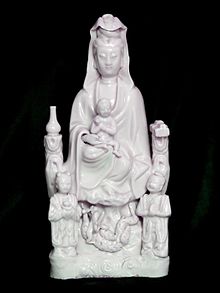
Thanks to wikipedia for Japanese Blessed Virgin
With all the chaos and sharp decline of democracy in Great Britain, Ireland and America, I have pondered on the one thing necessary at this time. But, I have come up with two. The first is obvious in St. Alphonsus Ligouri's prayer. We all must be dedicated to becoming saints . But, I add a second thing which is also of primary importance. We, you and I, not priests, or bishops, or cardinals, or nuns, we the laity must pass on the Faith to the next generations. This is our duty, stemming from our baptismal promises. We have no choice. To pass on the heritage and all the cultural trappings of Catholicism, the doctrines, the dogmas, the liturgical rites as far as we can, such as the Liturgy of the Hours, is our duty. We shall have no one to blame but ourselves if the faith continues to dwindle and disappear from some areas here, and in other countries.  This is our Faith. Pass it on.

Pius IX  declared it a miracle when the missionaries came back to Japan and found the  隠れキリシタンthe hidden Christians,Kakure Kirishitan laity who had kept the Faith without a priest for about 250 years. Bishop Bernard Thadee Petitjean,  the first missionary priest back to Japan after 1853, and the first Vicar Apostolic of Japan, discovered these hidden Christians. They had passed on the Faith through  a 100 generations. Are we strong enough and intelligent enough about our Faith to do this?

Here are two pages from one of the first modern Catholic Catechisms in Japan, 1865. The very first came out in 1860.  From 1614 until 1860, the laity had to be responsible for their own faith and Catholicity. I assume they baptised their children and converts, prayed, honoured Mary (there were statues of Mary found), and keeping customs. Could we do this? In 2010, there were almost seven billion people in the world and 118,990 major seminarians. Who do you think is going to keep the Faith in the not-so-distant future? You, I.....


http://laures.cc.sophia.ac.jp/laures/www/media


ONLY ONE THING IS NECESSARY
A Prayer of Saint Alphonsus Liguori


O my God, help me to remember - 
That time is short, eternity is long.
What good is all the greatness of this world at the hour of death?
To love You, my God, and save my soul is the one thing necessary.
Without You, there is no peace, no joy.
My God, I need fear nothing but sin.
For to lose You, my God, is to lose all.
O my God, help me to remember - 
That to gain all I must leave all,
That in loving You I have all good things: the infinite riches of Christ
and His Church, the motherly protection of Mary,
peace beyond understanding, joy unspeakable!


Eternal Father, your Son has promised that whatever we ask in His Name will be given to us. In His Name I pray: give me a burning faith, a joyful hope, a holy love for Jesus Christ. Give me the grace of perseverance in doing Your will in all things. Do with me what You will. I repent of having offended You. Grant, O Lord, that I may love You always and never let me be separated from You.
O my God and my All, make me a saint!


Saturday, 15 November 2014


Lost Souls because.....


I know for a fact that young men are saying no to God regarding becoming priests.

St. Francis, according to Fr. Minelli, was asked by a leader of a Japanese tribe, a man who had heard of God's love for the Japanese, this question: " How come God, if He is so good, as you say he is, has waited so long before making Christianity known to us?" "Do you want to know?" replied the Saint with sadness. "Here is why: God had inspired many Christians to come and announce to you the Good  News, but many of the have not wanted to heed His call."

No priests, no sacraments, no Mass, no Eucharist, no absolution of sins, no communities...

The great sin of men who are refusing the call is one of sloth. It is too easy to just be single, go with the flow, live a completely self-centered life.

Those who are answering the call understand that the day of the comfortable cleric is over.

We are fast entering the new Age of the Martyrs.

Where are the real men who will answer God's call?

They have been pampered from birth by misguided parents. They only want to feed their own needs and they do not love God or His Bride, the Church.

Too many are saying no and souls will be lost.....

Yesterday, a priest and I discussed the love of the Church which should be in the hearts of priests.

Where is this bridal love? It is a gift for anyone who wants it. It is Christ's Own Love for all of us.


Saturday, 21 September 2013

The Kakure Kirishitan And The One Thing Necessary

Thanks to wikipedia for Japanese Blessed Virgin
With all the chaos and sharp decline of democracy in Great Britain, Ireland and America, I have pondered on the one thing necessary at this time. But, I have come up with two. The first is obvious in St. Alphonsus Ligouri's prayer. We all must be dedicated to becoming saints . But, I add a second thing which is also of primary importance. We, you and I, not priests, or bishops, or cardinals, or nuns, we the laity must pass on the Faith to the next generations. This is our duty, stemming from our baptismal promises. We have no choice. To pass on the heritage and all the cultural trappings of Catholicism, the doctrines, the dogmas, the liturgical rites as far as we can, such as the Liturgy of the Hours, is our duty. We shall have no one to blame but ourselves if the faith continues to dwindle and disappear from some areas here, and in other countries.  This is our Faith. Pass it on.

Pius IX  declared it a miracle when the missionaries came back to Japan and found the  隠れキリシタンthe hidden Christians,Kakure Kirishitan laity who had kept the Faith without a priest for about 250 years. Bishop Bernard Thadee Petitjean,  the first missionary priest back to Japan after 1853, and the first Vicar Apostolic of Japan, discovered these hidden Christians. They had passed on the Faith through  a 100 generations. Are we strong enough and intelligent enough about our Faith to do this?

Here are two pages from one of the first modern Catholic Catechisms in Japan, 1865. The very first came out in 1860.  From 1614 until 1860, the laity had to be responsible for their own faith and Catholicity. I assume they baptised their children and converts, prayed, honoured Mary (there were statues of Mary found), and keeping customs. Could we do this? In 2010, there were almost seven billion people in the world and 118,990 major seminarians. Who do you think is going to keep the Faith in the not-so-distant future? You, I.....


http://laures.cc.sophia.ac.jp/laures/www/media


ONLY ONE THING IS NECESSARY
A Prayer of Saint Alphonsus Liguori


O my God, help me to remember - 
That time is short, eternity is long.
What good is all the greatness of this world at the hour of death?
To love You, my God, and save my soul is the one thing necessary.
Without You, there is no peace, no joy.
My God, I need fear nothing but sin.
For to lose You, my God, is to lose all.
O my God, help me to remember - 
That to gain all I must leave all,
That in loving You I have all good things: the infinite riches of Christ
and His Church, the motherly protection of Mary,
peace beyond understanding, joy unspeakable!


Eternal Father, your Son has promised that whatever we ask in His Name will be given to us. In His Name I pray: give me a burning faith, a joyful hope, a holy love for Jesus Christ. Give me the grace of perseverance in doing Your will in all things. Do with me what You will. I repent of having offended You. Grant, O Lord, that I may love You always and never let me be separated from You.
O my God and my All, make me a saint!


Tuesday, 29 January 2013

Japanese Folk Song from 1975


12th century instruments and influence from the Portugese were part of the Japanese folk song tradition.

You might enjoy this.

Tuesday, 22 January 2013

From the Great Pat Buchanan


Clouds Over Obama’s Second Term

Social Share Counters
By Patrick J. Buchanan
Rarely have second terms lived up to the hopes and expectations of presidents or their electorates.
FDR’s began with an attempt to pack the Supreme Court by adding new justices and a second Depression of 1937. He was rescued only by the war in Europe in 1939 and the GOP’s nomination of “the barefoot boy from Wall Street,” Wendell Willkie.
What can be called Harry Truman’s second term was a disaster.
In 1949, the Soviets exploded an atom bomb and China fell to Mao. In 1950, the Rosenbergs were convicted as atomic spies for Stalin and North Korea invaded the South, igniting a three-year war Truman could not win or end.
He lost the New Hampshire primary in 1952 to Sen. Estes Kefauver, dropped out and saw would-be successor Adlai Stevenson crushed by Gen. Dwight Eisenhower, as Republicans captured Congress. Truman left with the lowest approval rating of a president before or since.
In his second term, Ike did better, but suffered a GOP defeat in 1958, saw Fidel Castro seize Cuba in January of 1959, and had the U-2 shot down by Russia in May 1960 and his Paris summit blown up by Nikita Khrushchev, who berated Ike to his face. His vice president, Richard Nixon, then lost the White House.
The Kennedy-Johnson second term began spectacularly, with passage of all the Great Society legislation. But, in 1966, LBJ’s party suffered huge losses. In 1968, that year of assassinations of Martin Luther King Jr. and Robert Kennedy, of race riots in a hundred cities, and of campus anarchy, antiwar protests and an endless war in Vietnam, LBJ was challenged in the primaries, quit the race, and saw Nixon succeed him.
After his own 49-state re-election victory, Nixon did not survive his second term. Jimmy Carter did not get a second term.
Ronald Reagan comes close to being the exception.
While he lost 10 Senate seats in 1986, he cut income tax rates from 50 to 28 percent, and his summiteering with Mikhail Gorbachev is seen as a historic success, leading to America’s victory in the Cold War.
The Iran-Contra scandal — trading of arms to Iran for hostages in Lebanon — almost broke his presidency. But by the time Reagan left in 1989, his popularity had been restored, the Cold War was ending, and his vice president was taking the oath of office to succeed him.
George H.W. Bush was denied a second term. And the main event of Bill Clinton’s was his impeachment and Senate trial for the Monica Lewinsky affair.
In his second term, George W. Bush lost his battle for Social Security reform and lost both houses of Congress in 2006, ending his presidency with America mired in two unwinnable wars and plunging into a near-depression.
By January 2009, Bush’s approval rating was approaching the Truman low, and his party had lost the White House.
About Obama’s second term it is hard to be sanguine.
The hopeful news is that, after four years, the U.S. economy appears to be recovering. Progress is slow, but we seem to be out of intensive care and walking the hospital halls.
The perils, however, are visibly present. With its massive creation of money, the Federal Reserve is taking an immense risk that as recovery takes root, inflation may explode. And the hostility between President Obama and House Republicans likely means no big deal to constrain future deficits. Obama added $5 trillion to America’s debt bomb in his first term, and his second promises the same.
This cannot go on forever. Foreign and domestic creditors will one day demand a risk premium for lending money to Uncle Sam.
But it is abroad where the problems and perils seem imminent.
Iraq is drifting toward sectarian-civil-ethnic war. Few are optimistic about the fate of Syria when Bashar Assad falls. Even fewer are optimistic about Afghanistan after U.S. troops depart. The Taliban of Afghanistan’s past may be her future.
Notwithstanding Obama’s campaign claim about al-Qaida being “on the run,” Islamism and Islamist terrorism seem to be growth stocks in the Sahel region of Africa, the Maghreb, and the Middle and Near East, all the way to nuclear-armed Pakistan.
In East Asia, escalating tensions between Japan and China are spawning a new nationalism in both nations, and now warships and jet fighters of both have begun circling the Senkaku Islands.
The most immediate crisis may come this year, when a re-elected Bibi Netanyahu and his neocon and War Party allies demand of the president an ultimatum to Tehran, followed by U.S. air strikes on its nuclear facilities at Natanz and Fordow if Iran does not capitulate.
Obama may be dreaming of amnesty for illegal aliens and a Federal Gun Registry, but most of us would settle for no more wars and no double-dip recession.
Remarkable how the expectations of Americans seem so modest compared to what they were when we were young.
Today, the minimalist slogan, “General Motors is alive, and Osama bin Laden is dead!” is enough to get you re-elected president.

Welcome New Readers

The blog has a number of new readers from Canada and Brazil.

Welcome.

Here are some of the countries where there are readers. The order is arbitrary.

United States
United Kingdom
Ireland
Malta
Ukraine
Russia
Czech Republic
Slovakia
Serbia
France
Spain
Germany
Philippines
Singapore
Jordan
Malaysia
Australia
India
Italy
Poland
Bulgaria
Finland
Romania
Pakistan
Saudi Arabia
Kuwait
Greece
South Korea
Norway
Taiwan
Israel
Egypt
Costa Rica
Argentina
Belgium
Bosnia and Herzegovina
Ecuador
Macedonia
Thailand
Netherlands
Slovenia
New Zealand
Hungary
Indonesia
Hong Kong
Japan
Finland
Switzerland


Wednesday, 5 December 2012

Simplicity of Life Is Not Enough


There is a fallacy among Americans, at least, that simplifying a lifestyle is enough for happiness.

It is a start, but the search for Zen-like gardens and minimalist furnishings in a house, which has been so popular for the past twenty years or so. is a mere deception.

Simplicity of life means nothing if the goal is not holiness. If we merely want to avoid tremendous responsibilities and clutter, simplicity is a temporary not eternal solution.


In and of itself, there is nothing salvific about a simple life.

I have known two wealthy people seek out the simple life. One went to live in the mountains of upper state New York. He lived in a small château at the edge of the mountains. He learned hunting and shooting and read Japanese and New Age spirituality on the simple life.


Yet, he lived without repenting of some serious sins. He was not a happy man. He was trying to simplify his life in order to find meaning. The meaning was not in the simplicity but in his facing the need to become a new man in Christ. I hope he found Christ.

One thing which can cause us to lose simplicity is too much activity. We do not have to do everything we think we must do. Busyness can be a sign of a lack of inner simplicity. Part of real simplicity is seeing what is around you, paying attention to details and then moving into the peace which only God can give in giving up those details. That is part of contemplation-letting God purify the imagination and our hearts.

The second person, a millionaire, did something similar. This very good person simplified his life and dropped membership in the country club and pulled back from what he saw as the empty pursuit of California social life at the very top echelons  He did simplify, but could not believe in Christ. He tried to deal with the reality of the Incarnation and live a moral, generous life, but he never became a Christian. Simplification did not lead him to Christ. It lead him to a new level of clarity of thinking, but not to the step of accepting Christ as his Saviour and God.

Simplicity is a beginning, but never an end in itself. This is true of so many things we choose to do, but if the goal is not oneness with Christ, we shall never find true meaning.

Part of the mystery here is that Faith is a gift. Some people strive and strive, and never take that step in admitting that Christ is True God and True Man.

The desert fathers lived extremely simple lives, but not for the sake of simplicity. They lived day to day in poverty for one reason.They were in love with God.

If we seek the means to become holy, we must fall in love with God. Then, simplicity becomes an act of worship and a sharing in the mystery of love.

Simplicity then becomes a means to concentrate on Christ, the Beloved more and more without distractions. Suffering pares away the excess.

One of the saddest days of my life was when I was in Mississippi helping out after Katrina. If one did not see the horror of that storm, the damage and disruption, one cannot understand what people experienced. The sad thing I saw was not the devastation, but a person I met who immediately built a bigger and better, more extravagant house than he had before the storm. He was very wealthy, but had learned nothing by losing all his belongings. To make the point more pathetic, he established his new house in an area of destruction in the style of a Roman villa. with Zen influences. It was as if a survivor of the Fall of the Roman Empire just moved to another area and built another pagan temple to the same gods who had not protected him-those gods who cannot see and cannot speak. The entire project seemed so futile and empty to me. Had this person learned nothing from his huge loss except to build something bigger and more outrageously elegant? Yet, he did it in a Zen style, as if to say that he had learned simplicity. A hut would have been more appropriate. Everyone else at the party was praising his project. I felt sick and saddened that he was still in the dark,  but was covering his grief with a panacea which would not cure his inner emptiness.

There were so many stones in the house, I was afraid to turn around and start an avalanche.

Only love changes us. If we can reach through the suffering and loss and find God Who waits for us in the ruin, we have learned the lesson of dying to self.  Then we find love.            

If I love someone, do I not want to be in his presence and just be there?

Simplicity allows us space to love God, not merely space.

The Eucharist is our example of extreme simplicity. So is the Babe in the manger. We can approach the God Who gave up all in order to be like us. Therefore, we can give up all to be like Him.

Monday, 3 December 2012

Manners...the Lost Christian Legacy... and a Sign of Virtue in a Man

The sign of a protector male is that he is willing to suffer for another. Being mannerly can be a type of suffering as it is dying to self. Rudeness is egotism and narcissism. Predator men are rude-perhaps not at first-but the rudeness will reveal itself.

There are too many predator men and not enough protectors. Protectors have manners. One of the most delightful aspect of a truly Catholic man, who has given his life to God, is that he becomes more and more a protector. Hopefully, even if he has not learned manners at home, he acquires these. The old man, the Adam in him becomes the New Man, the Christ. Christ is the model for the protector. So is St. Joseph. Protectors are usually made so in families, but one can learn and change and become the kind of man God desires for His Kingdom. A protector wants to make a woman happy and peaceful. He wants to keep that woman happy and safe. That is a protector's goal.


I cannot imagine St. Francis or St. Francis de Sales being rude to a woman. I cannot imagine St. Edmund Campion or St. Maximilian Kolbe being rude to a woman. I cannot imagine Blessed Pier Giorgio Frassati being rude to anyone.

Such behaviour as respect and manners, which may be called chivalry, is achieved and must be sought after. It is not necessarily natural to some men. If one is raised as a wolf cub in a cave, one must learn and achieve gentility. 

Sadly, some priests are very rude. I find this disconcerting and odd that a man who is set aside by God to be another Christ is rude and sometimes, specifically to women. I have witnessed this behaviour from priests towards people many times since being here in Eire. One of the most gentlemanly clerics I know has the last name of Knight. Do you think this is an accident?

OK, I am from a generation which learned manners. One learned to listen to others and share in conversations. As a woman, I expect men to help me with heavy packages and doors, as well as not walking 20 feet ahead of me on the street. Boys and girls in the 1960s in Catholics schools learned manners from the nuns. Even in high school, we had guidelines on dating manners, and in college, we had a course on "finishing". This sounds like the Jurassic Age to most, but I am concerned. I think the lack of manners is causing a barbarism among the younger ones. Women who are traditional Catholics should be able to expect a higher degree of respect from their male counterparts.

Young women, do not settle for less. Do not go out, or date, rude men. They will only get worse. They are predators who only think of their own needs.

The cell phone is part of the problem. When I am talking with someone, it is very rude to me that the texting and messaging interrupts good conversation. Thankfully, some young people have been taught this is rude, but for the vast majority, this is not the case.

I text maybe ten times a week and mostly on skype, rather than my phone number. I realize this is unthinkable for most teens and university students who talk on the phone hours by texting. To text while in a conversation with another is just plain rude.

I cannot be bothered and nothing is THAT important. Plus, if I want to talk with a friend, I try and meet up with them for coffee. That is called relating in the real world.

Texting is anti-social. Thankfully, when I was teaching, the colleges had rules about turning off cell-phones in the classrooms and if not, we instructors were allowed to put it in our syllabi, which I did . (My last teaching job ended in December of 2010).

But the lack of manners is serious. Catholic girls should not even think of dating a young man with bad manners. This is a serious problem reflecting a disrespect. Such small things as coughing and yawning without covering one's mouth, or talking with a mouth full of food, or not waiting for all to sit down to start eating form some of these criticisms. Fast food has ruined manners. Cursing is rude behavior, as well as sinful. In fact, if a man is living a virtuous life, he will not exhibit rudeness.

Not dressing for an occasion is rude as well. Jeans do not belong at Sunday Mass, and I notice even men older than myself wearing designer jeans at the TLM. I find this very odd. Do they not care how they look? They look like old hippies, even at the TLM. They are being rude to God, the Trinity.

I have noticed in Europe that there are certain groups of men whose manners are worse than others. Sadly, the Irish young men have horrible manners, but so do many older Irish men, even of my generation or older. The typical situation is a complete absence of the awareness of a real need of any woman. And, the roughness of speaking, which I have noticed, indicates a lack of gentility and respect. Some young Irish women have told me they would never marry an Irish man for some of these reasons. What has happened cannot be blamed on these girls and women from good families, which are used to manners.

I witness the lack of manners daily. Smoking in front of people without asking is a huge problem here. Where I come from, and in England, a person asks if it is fine to smoke in front of others. Not here. Also, men do not put a woman first in lines, or open doors, or allow a woman to walk on the pavement rather than the street. Even traditional Irish Catholic men lack manners. Coming from a background and class where manners are the rule of the day, I notice these things.

Some of the problems are ethnic. American men from the Mid-West are some of the most polite men in the world. So too are English men.

Some of the worst examples of a lack of manners are found in men from the Middle-East and Asia-except for the Japanese men I have met, who are very mannerly. I am sorry, but I have much experience in the world and this is a truism. Where there is not Christianity, there is more rudeness.

There are many old people walking on the streets and in Church. It pains me to see them struggle without help. Even ancient women who are alone are no longer helped with doors, or even noticed. I try to help when I can. I see these old women and old men, as well, standing in buses. I give them my seat. It is a sign of decadence that the old are not honoured. The old are invisible to the young. This is not Christianity.

My concern is the growing brutality towards women which goes unnoticed. The attacks in Cairo and others places during the recent demonstrations indicate a growing hatred of women. The experiences of some students regarding their ex-boyfriends is another. There are too many violent men. Violence can be demonstrated in body language and words as well. Rudeness is a type of violence. Listen to how people speak to one another. It makes me sad.

I believe the age of chivalry is long gone, and I believe that unless a man is dedicated to honour and love Mary, a Catholic young woman should not give him the time of day, as we say in the States.

The Blessed Mother conquered Europe, and civilized men through their devotion to her. Most men who have this devotion are mannerly, polite and respectful. Without a love of the Queen of Heaven and Earth in his heart, a man is not an entire man.

I praise those men who love Mary.The difference is obvious. What I do not understand are the Irish men who pray the rosary and are very rude. I just do not understand. Three men were rude yesterday while praying the rosary, or in line at church. Amazing, rudeness in church. Men have slipped into selfish preoccupation with the man's own comfort. Men have lost the ability to be uncomfortable and suffer for the sake of another.

Accepting and absorbing suffering is a sign of a mature man, a gentleman and a protector.

Piety and devotion mean nothing if the inner person is not changed. Such things become superstitions if not connected to the daily examination of conscience.

Chivalry crossed national boundaries at one time. Ethnicity made no difference. There was a nobility of mind and heart which changed the course of history. Europe has lost this awareness and desire for gentility. We are becoming, and are alerady in some areas, barbarians.

I shall quote Blessed John Henry Cardinal Newman again on this subject. Mothers, teach your children. Fathers, honor the wife and mother of your children. This is how they learn.

A Definition of a Gentleman

It is almost a definition of a gentleman to say he is one who never inflicts pain. This description is both refined and, as far as it goes, accurate. He is mainly occupied in merely removing the obstacles which hinder the free and unembarrassed action of those about him; and he concurs with their movements rather than takes the initiative himself. His benefits may be considered as parallel to what are called comforts or conveniences in arrangements of a personal nature: like an easy chair or a good fire, which do their part in dispelling cold and fatigue, though nature provides both means of rest and animal heat without them. The true gentleman in like manner carefully avoids whatever may cause a jar or a jolt in the minds of those with whom he is cast; — all clashing of opinion, or collision of feeling, all restraint, or suspicion, or gloom, or resentment; his great concern being to make every one at their ease and at home. He has his eyes on all his company; he is tender towards the bashful, gentle towards the distant, and merciful towards the absurd; he can recollect to whom he is speaking; he guards against unseasonable allusions, or topics which may irritate; he is seldom prominent in conversation, and never wearisome. He makes light of favours while he does them, and seems to be receiving when he is conferring. He never speaks of himself except when compelled, never defends himself by a mere retort, he has no ears for slander or gossip, is scrupulous in imputing motives to those who interfere with him, and interprets every thing for the best. He is never mean or little in his disputes, never takes unfair advantage, never mistakes personalities or sharp sayings for arguments, or insinuates evil which he dare not say out. From a long-sighted prudence, he observes the maxim of the ancient sage, that we should ever conduct ourselves towards our enemy as if he were one day to be our friend. He has too much good sense to be affronted at insults, he is too well employed to remember injuries, and too indolent to bear malice. He is patient, forbearing, and resigned, on philosophical principles; he submits to pain, because it is inevitable, to bereavement, because it is irreparable, and to death, because it is his destiny. If he engages in controversy of any kind, his disciplined intellect preserves him from the blunder. From The Idea of a University, 1852

Friday, 24 August 2012

In stories, there is knowledge and healing...


I just watched Princess Mononoke again, which is one of my favourite animes. The story is intriguing for many reasons. One reason is that the hero and heroine are complex, modern, and yet portray universal traits, necessary for fairy stories, which it basically is. I do not like the dubbed version, preferring the original.

The very young hero is named Ashitaka,  a prince, of course, as he must come from noble background and appeal to the universal desire for knights in shining armour. But, he is cursed by killing a demon in order to save his people and he must go on a quest to fulfil his doom and, we hope, be healed. I am not going to spoil the story if readers have not seen it.

The girl with whom he falls in love is a typical wild, wolf-girl; a character found in many stories across the globe, and of course, she is a princess. Her name is San. But, she has the old story of a foundling, one of the most ancient oft fairy tale plots in the world. We are like orphan,s who have been found.

So far, East meets West in symbolism and appeal. What I like about the story is the plot which involves a keen understanding of human nature, and the fact that imperfection must become perfect. Again, I shall not spoil the ending, but a type of perfection is achieved--not quite.

It is a story of love and healing, sacrifice and bravery. Good stuff. It is very Christian, and the Japanese anime movies of this ilk tend to pursue Western and well as Eastern themes of fall and redemption. One of my other favourites, which I have mentioned on this blog is Gankutsuou, which is physically beautiful as well as profoundly "Christian". (But the book is better).

This movie is not for young children, as it is scary and too violent, and involves demons and spirits of another religious view, fine for older ones, but not the young. However, children need stories of failure and redemption. It is our story, as humans, starting in the Garden of Eden. And, we have a happy ending, because of the Passion and Death of Christ. The Resurrection brings us new life.

The human spirit reaches out for such stories. May these types of productions never stop being produced. We need them.

Sunday, 15 July 2012

Wednesday, 13 June 2012

"Wait" and "Hope"


One of the greatest books in the world is The Count of Monte Cristo by Alexander Dumas. Now, when I read a novel, I skip the learned introductions until I have finished the book, as I want to discover for myself the riches of the text without being given a map to do so.

What has struck me is that this is one of those novels which takes one completely away from the world in which we live to another world. Not many works of literature can do this. This transportation of the imagination lies in a masterpiece, such as Dante's Divine Comedy, Dickens' Little Dorrit, or E. M. Foster's Howard's End. Few book or poems can carry us into the mind of the maker, who creates for us a world of characters, events, and the majesty of language, even caught in translation. We are transported out of our grey world into a world of intensity and insight, colours and mystery, love, life, death.

The fact that the Count plays God and learns that he is a man who needs love and forgiveness, like all men and women, is one of the themes. That the Count is open to love after realizing the depths of his own sin and the horror of the evil in the world, is a theme of transcendent hope. In fact, the two last words in the novel are "wait" and "hope"-- the mark of the Christian in this world of darkness and uncertainty.

Another theme, and I have refused to read the scholarly introduction, is that suffering is redemptive. Of course, in 2012, most people no longer believe in this truth.

God allows suffering, although He does not necessary will it is His Love and Mercy. That some of us suffer more than others is a great mystery. The Book of Job holds that mystery. The Count of Monte Cristo does as well.

Suffering can be caused by many things, such as illness, poverty, or failure. But, the greatest suffering is not to have experienced love in this world. To live without experiencing human love is the greatest suffering.

Can there be a greater suffering than the lack of experiencing true love?

Christ allowed Himself to die at the hands of His Own People. He was betrayed to the enemy and endured the pain only a God, only the Second Person in the Blessed Trinity could suffer-that of all the terrible suffering which man inflicts on other men in this vale of tears.

For me, love is always a gift, even if unrequited. I would rather have experienced love, and not have it returned, than not to have loved at all. This takes courage. This is the Love of God on the Cross.

The Count learns what it is to sacrifice freely, willingly, for the sake of others. He is rewarded by a second chance to love and be loved. Would that we were all given a second chance in love and life.

I remember a great line from The Importance of Being Earnest. Miss Prism is speaking to Cecily about the three volume novel the governess-companion wrote.  She states about the story that,  "The good ended happily, and the bad unhappily.  That is what Fiction means."

But, in Christianity, the good end happily and the bad unhappily, as the story of Redemption has created for once and for all, the happy ending. One can read Tolkien on this for more insight. But, we can see this ourselves in the Gospel and in the Teachings of the Church. We know that the only real Truth is the happy ending. Wait and hope.

The Count finds new love and he is able to return such love, after realizing he has gone too far in his revenge. He is generous and forgiving, finally, and finds generosity and forgiveness. This is a novel written in the Christian spirit of hope and love, waiting and finding.

I still have not read the scholarly introduction. I already know the philosophy of Dumas, being familiar with The Three Musketeers, which readers of my age grew up with on the shelves at home. Our fathers came from the age of heroes, and Dumas' generation was similar. Real heroism is found in sacrificial love. We have the best example in the world. He is our Lord and King, Jesus Christ.

As a post-script, it always astounds me how much writing these great men, like Dickens and Dumas, did in their short lives. Dumas was 68 when he died, after a career in journalism, drama, novels, and even children's books. One is in awe of such genius. For my part, this novel is one of my favorites. If, dear readers, you have not read it, do so.


A post-post-script is that I have never seen a movie or television adaption of this except for the very old Robert Donat version, as a child in black and white on television; and the anime, which I do like, as it is imaginative and artistic and excels in its genre. But, it is darker and less Christian. The Japanese are true romantics, but they have not discovered, at least in their rendering of Dumas, the secret of real love. It is almost there in the anime, just out of reach. The book, as they say, is better.