
Supertradmum on The Guild of Blessed Titus Brandsma
Sunday, 25 August 2013
Rethinking The New Evangelization
The call to new evangelization cannot be a static one. As Catholics, we have a duty to know our audience,
our target groupings. And, I am convinced we are not addressing the youth of today in the mode which they need.
Too often, evangelization either is too banal, that is, watered down to the lowest common denominator;
or it is an attempt to bring people out of serious sin by attacking the sins; or it is the speaking of Jesus as
Saviour again outside of context of the larger perspective of what is means to be human and what it
means to know a particular God.
I have been thinking about St. Augustine and his importance to our Catholic world today. He wrote in a similar
time-the great destruction of a civilization which had endured for hundreds of years. He also bought a philosophical
approach to all that chaos.
The Hebrews experienced much the same situation over and over and over. Either they were destroying old
civilizations, or their own was being destroyed by whatever conqueror was the most powerful.
The reason for my ruminations is that we need, desperately, Catholic minds which can stop addressing the moral
questions, stop addressing the ethical questions, and go back further to the basic questions of the existence of God
and the nature of what it is to be human.
Now, obviously, we need the ethical discussion, so prominent among good Thomists, as Aquinas, like Aristotle,
who dealt with vice, virtue, law and so on, but the world we are dealing with now is one of agnosticism and
atheism. Those people deserve better discussions than what we have been able to give. Starting with morals
is not the way to converse with atheists or agnostics, who lack a moral structure and may not even believe in one,
except relativism.
There are few great Catholic minds which can address the basic questions youth ask today. Here are a few of
those questions.
Is there a God?
What would be the meaning of being human?
What is the relationship between men and God?
Why are we here?
Do you ever doubt?
Why do you want to be a Catholic?
Augustine wrote his City of God in direct response to pagans, agnostics, and even atheists who were blaming
Catholics for the fall of Rome. Hey, folks, this will happen again and I do not see the bright spark, a new Augustine,
who can address the entire question of the nature of man, the City of God and the secular city in terms of basic
principles. Phenomenology is too personalistic for this discussion. We need to revisit the Greeks, the Romans,
all part of our heritage. We need to go back to the basics, or we shall continue to lose yet another generation.
Apologetics has been so slanted towards ethics, towards morality, that it has set aside the first principles.
As humans and as Catholics, we must be able to discuss metaphysics at this level. Aristotle, Aquinas,
the neo-Thomists, even educators, such as Montessori, all of whom are part of my mindset, my history,
used the scientific method of rational discourse.
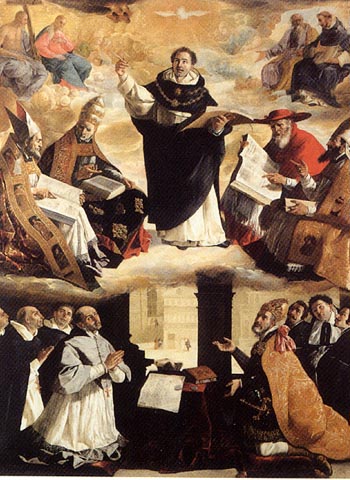
This is no longer accepted by many, and we cannot meet physicists, politicians, academics of any kind with
language they no longer accept.
We must go back further. And, I do not mean Duns Scotus, who was more popular than Aquinas for a very long
time. Nominalism is limited as well. We must go back and ask the basic questions of believing, of the
supernatural, of God Himself.
We must evangelize at this level, and not merely the moral or ethical one.
Those Millennials who ask the basic questions have no framework for morality because they have no philosophical
framework. Benedict, the Pope Emeritus, was the man of the time, reminding us that Augustine was not only a
theologian, but a philosopher. We need to look at him again in that light, and at those Doctors of the Church who
helped the Church develop doctrine from the basic principles.
The reason we must think in different terms is that we are witnessing the chaos of the death of Western Civilization
and to speak in any terms purely from moral or ethical viewpoints will not speak to the hearts of those completely
at a loss, at sea in chaos.
That is what the Muslims do - speak only in ideological, so-called moral terms. This type of approach does not
to the very essence of who a person is and who God is. Imposing law without the reasons for such begs the
question of religion.
I read and hear too many high-ranking priests, bishops, theologians, especially moral theologians, who do not
have the proper perspective of the problem of basic principles, because their own training was so limited.
Try and find excellent philosophers in seminaries who are orthodox and can engage at this level of thinking.
When one answers the questions of who man is and Who God is, then the moral and ethical questions fall
into place.
I hope God raises up some great metaphysical minds in this era. I hope and pray that both clergy and laity can learn
to evangelize from basic principles.


