Recent Posts

Showing posts with label popular culture and religion. Show all posts

Friday, 10 April 2015

Vintage Buchanan

http://www.arcamax.com/politics/fromtheright/patrickbuchanan/s-1638957?source=outbrain

On the assumption of power, revolutionaries become more intolerant than those they dispossessed.
The French Revolution was many times more terrible than the Bourbon monarchy. The Russian Revolution made the Romanovs look benign. Fidel Castro's criminality exceeded anything dreamt of by Fulgencio Batista.
...
What explains the rout in Indianapolis? The GOP simply cannot stand up to media denunciations as intolerant bigots, especially if the corporations upon which they depend threaten economic reprisals.
With the Democratic Party irretrievably lost, and the Republican Party moving to neutrality in the culture wars, traditionalists should probably take comfort in the counsel, "Put not your trust in princes."
When that father and daughter at Memories Pizza in Walkerton, Ind., said their religious beliefs forbade them from catering a same-sex wedding, they were subjected to a hailstorm of hate, but were also showered with $840,000 from folks who admired their moral courage.
Religious folks who do not believe in collaborating with what they think is wrong should go forth and do likewise.
Courage as well as cowardice is contagious

Thursday, 9 April 2015

Not Cultural Wars, War Against Christ


Let us stop using this lame phrase of culture war and call the war which is raging against the Church for what it is-an out-and-out assault of the Catholic Faith and the Catholic Church.

Period.

Satan and his minions want to destroy us and Christ's Church.

This is the real war, not a culture war.

What we are seeing is the War Against Christ.


Revelation 13 

13 And I saw a beast rising out of the sea, having ten horns and seven heads; and on its horns were ten diadems, and on its heads were blasphemous names. And the beast that I saw was like a leopard, its feet were like a bear’s, and its mouth was like a lion’s mouth. And the dragon gave it his power and his throne and great authority. One of its heads seemed to have received a death-blow, but its mortal wound[a] had been healed. In amazement the whole earth followed the beast. They worshiped the dragon, for he had given his authority to the beast, and they worshiped the beast, saying, “Who is like the beast, and who can fight against it?”
The beast was given a mouth uttering haughty and blasphemous words, and it was allowed to exercise authority for forty-two months. It opened its mouth to utter blasphemies against God, blaspheming his name and his dwelling, that is, those who dwell in heaven. Also it was allowed to make war on the saints and to conquer them.[b] It was given authority over every tribe and people and language and nation, and all the inhabitants of the earth will worship it, everyone whose name has not been written from the foundation of the world in the book of life of the Lamb that was slaughtered.[c]
Let anyone who has an ear listen:
10 If you are to be taken captive,
    into captivity you go;
if you kill with the sword,
    with the sword you must be killed.
Here is a call for the endurance and faith of the saints.

Monday, 23 February 2015

Read this on Kulturkampf

The reason the U.S. faces the risk of declining educational achievement is its failure to sufficiently respond to the profound demographic change reshaping society. The current school year marks the first time in American history when a majority of all K-12 public school students nationwide are minorities. Minority students already comprise nearly two-fifths of high-school graduates and will reach about half by 2023, the Education Department projects.

http://www.nationaljournal.com/next-america/population-2043/the-coming-college-decline-20150114

I have nothing against community colleges and some of the best professors in America teach in these small colleges.

I also think most kids in university do not need to be there, as we need more schools teaching basics such as mechanics.

However, to undermine universities, especially those which have liberal arts as a basis for curriculum, which community colleges do not, is to follow Bismarck's deliberate undermining of the academies, for the support of gymasiums. which I have written about at length on this blog. Some are listed below.

Why is this bad? Only liberal arts create a thinking populace. Technical schools do not.

The Holocaust and Hitler were a direct result of Bismarck's education "reforms". Read my previous posts.

And wake up, America!


07 Dec 2012
Bismarck and Dewey would be pleased. American literature classics are to be replaced by insulation manuals and plant inventories in US classrooms by 2014. A new school curriculum which will affect 46 out of 50 states will ...
20 Apr 2012
The Popes of the 19th century fought against the Bismarck movement to change social and political life, partly by emphasizing Thomism in the face of the other isms which grew up after the Reformation: godless republicanism ...
07 Apr 2013
For centuries, children and adolescents learned the liberal arts in order to learn how to think. This ideal was destroyed on purpose in the 19th century by Bismarck and by Dewey, among others. If a Catholic has not had the ...
01 Feb 2013
Years and years of propaganda and hatred, plus the loss of critical thinking among the German people under Bismarck's changes in education, created a compliant people. Here are a few highlights of article for Stage Four.

01 Feb 2013
... from atheistsforum.org. Catholics who are weak-minded have allowed these types of pre-persecution ideas to simmer in the culture. So too, Bismarck and others took advantage of simmering anti-Semitism. To be continued.
07 Feb 2012
But, as you know, anti-Catholicism goes back to Bismarck, who hated the Church, so you are witnessing 100 plus years of such. As to finding all those friends, three are in England, two in America, one in Malta and so on...so ...
12 Oct 2014
Steven, all done on purpose, like Bismarck's gymnasium vs. academies. I use to give lectures on the undermining of the rational in education about 15 years ago--too late now with two generations with goo in their heads.

Saturday, 21 February 2015

Revisionist Church History

Matthew 8:20New Revised Standard Version Catholic Edition (NRSVCE)

20 And Jesus said to him, “Foxes have holes, and birds of the air have nests; but the Son of Man has nowhere to lay his head.”

Having one of my degrees in history, I am able to spot false revisionist history. Revisionist history became a popular ideological tool of academia, a tool which is now used at every level of education, down to kindergarten. Revisionist history is one reason I did consulting for schools in the early 2000s, bringing them back to Classical Education, using original sources, instead of propaganda generated in the 1970s. Unfortunately, revisionist historians infiltrated the scholarly discipline of Church History, to the point where many things which are now normally accepted by Catholics in the pew can be traced to ideologies perpetrated by various revisionist Catholic historians who departed from centuries of Church teaching, including history.

Three dangerous developments worm their way into the minds and hearts of Catholic through the lies of revisionist history. More than three exist, but these are the most pernicious.

Some of these lies affect the nature of Christ's mission on earth, but let me start with the least "stupid" and move towards the worst revisionist ideal.

Today, the first one I want to consider is the lie that the Early Church was not persecuted and that the history of the martyrs is exaggerated. Secular historians have always desired to undermine the power of the Early Church, including some Protestant church historians, as it strengthens the argument that the Church was not that strong immediately after the Apostolic Age.

Early historians outside of Biblical texts testify to the large, planned extermination of Christians. As I noted in the series last year, February 24, 303, Christianity, or Catholicism, to be exact, came under the empirical title of "heresy", as paganism, and specifically, empire-emperor worship, was the state religion.

Those who try and undermine the impact of Catholicism need only read St. Augustine, and look at the number of dioceses, cathedrals, and churches which existed at the time of the Fall of Rome. At the Council of Carthage, six Catholic provinces of 466 dioceses just in Africa alone were represented by bishops. When Huneric, an Arian and King of the Vandals, exiled the African bishops, 464 went into hiding or moved out of their dioceses to other safe havens. Some were martyred. Ironically, the date of his removal of the bishops was February 24, 484,181 years after Diocletian's persecution began. And those numbers reflect the Church in northern Africa without consideration of the Church in the Levant or Europe.

The lie that the Church was, one, not large, and two, not persecuted, has popped up in articles online as late as two months ago.  What is behind this lie may be the growing worship of the State, which, of course, would never hurt Christians. This lie lulls people into a false sense of security, especially Catholics, as the State wants all to believe it supports religious freedom. Not so then, not so now. Many Catholics still trust the State when they should be very wary as there is a conflict of interests in most Western countries between Catholicism and State practices and beliefs.

The second revisionist lie involves the spreading of the falsity of the following of chastity for priests and bishops in the Early Church. One only needs to look at the writings of the Fathers on the importance of chastity and the growing discipline of celibacy in the priesthood, as well as the lives of the myriad celibate and chaste saints to bring this untruth into the light. Those who push for the married priesthood and who want to destroy the discipline of celibacy in the Church have developed this revisionist historical lie. Yes, some of the early bishops, and even the Apostles, were married. But, we know that these men entered into celibate relationships, even Peter leaving his family, when God called him to Rome.  The exhortation of St. Paul that a bishop should be a man with one wife is not a revisionist interpretation that there was polygamy, but that if the wife died, the cleric would not remarry. This is true today in the rule of the Ordinariates, those priests who have come in under the Personal Provision of St. John Paul II, and deacons. In fact, with the re-establishment of the deaconate, it was the desire of the Church that such men, and the new Ordinariate and PP priests, would enter into Josephite relationships with their wives. But, sadly, some bishops ignore this desire on the part of the Church, and also ask for exemptions. Celibacy has been, since the time of Christ, the norm which became the accepted discipline over the years.

The last and third revisionist lie of history is to me one of the most pernicious. I have referred to this many times on this blog, but as it reared its ugly head this week, I bring it up again.

This is the lie, perpetrated after Vatican II, that the Holy Family, specifically St. Joseph and Jesus, were "middle class".

When I hear this lie, from the pulpit and see it, as I have this week in a little Lenten book passed out at church, I want to break into laughter.

Those of us who have studied the history of the ancient and medieval world know one thing for sure. There existed the rich, about 5% of any given population, and the very poor, about 95%.

The middle class came into being in the late medieval, early Renaissance boom of banking and trade, and the term was not even in print until the mid-1700s. The word, bourgeoisie, originally meant a person who lived and worked in a town, rather than in the agricultural world.

The entire concept of a middle class as existing in the class structure of the Roman Empire is not only terribly unhistorical, but laughable.

There are several reasons for this creeping lie concerning workmen, such as Jesus and Joseph, who were carpenters, being middle class.

The first is the denial of holy poverty. The Protestant historians were the first to deny the value of poverty, following their guides, the Protestant theologians, who saw and still see, poverty as punishment for gross sin. Those who are middle class are blessed by God because they are holier than the poor, and so on. 

For centuries before the 1970s, holy poverty was held up as not only an ideal, as practiced by the great religious orders, but as a comfort for the vast majority of  Catholics in the world who were living in poverty. Priests pointed to the simplicity and poverty of the Holy Family as an example for all families to follow. One of the reasons the orders made vows of poverty was directly linked to Christ's own poverty, in an effort to live exactly as He did while on earth. Holy poverty links one to the denial of self and detachment from worldly goods, hardly a popular subject for priests in the pulpit these days.

The second reason for perpetuating the lie of the Holy Family as middle class is the constant re-definition of the working class in recent years. To blur the distinctions between labor or blue collar and white collar workers, some historians have purposefully looked to the Holy Family as an example of middle class wealth gotten by work of the hands.

Well, it is true that plumbers and carpenters make more money than I ever did teaching, but this comparison of modern workmen cannot be made with those of the past. I made $21 per hour as a college teacher, while I paid my plumber $70 per hour to fix a pipe. That the term "laborers" now covers those who make 100,000 USD a year or more in the construction business, or those who make expensive hand-made furniture, like someone I know who charges $800 for a hand-made chair, has nothing to do with the lot of the Holy Family.

Those who worked with their hands in the ancient times were either slaves, or just above the slave class, that is freemen, who worked for very poor wages. Even an independent furniture maker, or a builder of walls, would not be paid today's market prices for labor. These modern fees have come about because of the lack of skilled workers, or unions.

The ancient world upper class did not have any responsibility to pay fair wages, an idea which simply did not exist outside of Judaism and Christianity. There is a reason why one of the four sins which cry out to God for vengeance includes not giving a fair wage to workers....because it was a huge problem in the ancient world! That the one, true God through the prophets exhorted the Hebrews on this very point reveals the depth of the sins of greed and pride among the few rich.

Joseph and Jesus would have "gotten by", as we say in the Midwest, but just. The typical laborer in the Roman and Jewish world would have been poor by even today's standards-small houses of one or two rooms, dirt floors, work space connected to the house and so on. Mary's daily trip twice a day to the well reveals her poverty. They had no maid, no helpers, no family that we know of, only the Son of God who humbled Himself to live among the poorest of people in the ancient world, the Jews, long subdued and taxed mercilessly.

The third reason, but not the end of the list, for the perpetuation of the lie which states that Jesus, Mary and Joseph were middle class, is the worst reason of all.

When the Catholic Church members, especially in the United States, became middle class, they no longer wanted to remember their impoverished ancestors, or even their recent past. The new middle class wanted to forget the trials and sufferings of poverty and not be reminded of their duties to the still poor.

To purposefully forget one's past poverty means that a person has fallen into the sin of pride and desires the esteem of others in the society. To identify with a poor Christ means that one cannot forget that we are all poor, indeed, naked before God.

The comforts and consolations of the middle class prevent people from growing in the one virtue which invited God into the heart, and mind and soul--humility.

Today, there is about three feet of snow on the ground. Yesterday, I asked a couple to take me shopping as I am almost out of food. I can pay for it, but I have no way to get to the grocery stores unless I take a cab.

They said "no".

This type of thinking, even among Catholics, has to do with the revisionist history people hear from the pulpit and read in their Lenten meditations. Many priests themselves are too comfortable in middle class lifestyles, like going on extensive vacations, even more than once a year, driving expensive cars, eating out frequently at the best places. They cannot preach what they themselves do not live.

They do not understand the Holy Family. They do not understand what it means to create a holy family in their own parishes. They may not think of the necessity of Jesus giving Mary to John at the Cross. Why? She had no one else and would have been forced into the street--(and another proof of her ever-virginity, as there were no so-called brothers and sisters of Christ to take her in.)

Think on that.

Without Joseph and Jesus, Mary would have had to rely on her community for things. Perhaps, they would not have helped her, thus Jesus remembering her plight from the place of His Death.

I have no Joseph, no Jesus in my home to help me. How many others are overlooked, especially in these places of bad weather, because they do not measure up to the false idea of the middle class Jesus?

I shall nibble on what I have and be comforted by the thought that the Holy Family lived in poverty and had great joy even in suffering, and perhaps, having days without adequate food.

That is the model still for Catholics today. Revisionists allow themselves to judge and to not be involved with the plight of others because "their Jesus" did not suffer poverty.

He did. He still does.

From Philippians 2:

 Let each of you look not to your own interests, but to the interests of others. Let the same mind be in you that was[a] in Christ Jesus,
who, though he was in the form of God,
    did not regard equality with God
    as something to be exploited,
but emptied himself,
    taking the form of a slave,
    being born in human likeness.
And being found in human form,
    he humbled himself
    and became obedient to the point of death—
    even death on a cross.
Therefore God also highly exalted him
    and gave him the name
    that is above every name,
10 so that at the name of Jesus
    every knee should bend,
    in heaven and on earth and under the earth,
11 and every tongue should confess
    that Jesus Christ is Lord,
    to the glory of God the Father.


Tuesday, 6 January 2015

Now, interesting from a historical/theological view

http://www.firstpost.com/politics/ghar-wapsi-row-now-owaisi-says-islam-real-home-religions-2031107.html

Brief timeline.....

God promised the Messiah, the Christ Saviour in Genesis, written about 1,500 B.C. but with older oral traditions dating to at least 2,000 B.C.

Call of Abraham circa, 2000 B.C.

Law of Moses, 1450 B.C. or so.

Formal Hinduism, 1450 B. C., or so.

Buddha 563 B.C. at the earlliest

Exile of the Jews and many battles, including the Kingdom of David, proved by archaeology and texts. King David's Jewish reign, 1000 B. C. Exile and other events in the Old Testament proved by extra-Biblical sources. which "even" Wiki lists partially,
http://en.wikipedia.org/wiki/List_of_biblical_figures_identified_in_extra-biblical_sources

Christ, Second Person of the Blessed Trinity, and Son of God, born most likely 7 B.C. at the census of Augustus, but common date is year zero, A. D.

Christ's public ministry, 30-33 A. D , including extablishment of the Catholic Church

Christ's death and resurrection, 33 A.D.

Dates of lives of apostles, Acts of the Apostles, Gospels and all epistles known and all before 100 A. D., the ending of revelation.

Mohammed born 570 A. D., died 632 A. D.

The only leader of any "religion" who has claimed to be God is Christ.

As C. S. Lewis states, Christ, therefore was either a liar, mad, or indeed, the Son of God, the Second Person of the Blessed Trinity.

All humans are born in Adam's Sin, and we all need baptism to become free of Original Sin, to become heirs of heaven, and chilren of God. From the CCC:

THE CELEBRATION OF THE CHRISTIAN MYSTERY
SECTION TWO
THE SEVEN SACRAMENTS OF THE CHURCH
CHAPTER ONE
THE SACRAMENTS OF CHRISTIAN INITIATION
ARTICLE 1
THE SACRAMENT OF BAPTISM

1213 Holy Baptism is the basis of the whole Christian life, the gateway to life in the Spirit (vitae spiritualis ianua),4 and the door which gives access to the other sacraments. Through Baptism we are freed from sin and reborn as sons of God; we become members of Christ, are incorporated into the Church and made sharers in her mission: "Baptism is the sacrament of regeneration through water in the word."5


1214 This sacrament is called Baptism, after the central rite by which it is carried out: to baptize (Greek baptizein) means to "plunge" or "immerse"; the "plunge" into the water symbolizes the catechumen's burial into Christ's death, from which he rises up by resurrection with him, as "a new creature."6
1215 This sacrament is also called "the washing of regeneration and renewal by the Holy Spirit," for it signifies and actually brings about the birth of water and the Spirit without which no one "can enter the kingdom of God."7
1216 "This bath is called enlightenment, because those who receive this [catechetical] instruction are enlightened in their understanding . . . ."8 Having received in Baptism the Word, "the true light that enlightens every man," the person baptized has been "enlightened," he becomes a "son of light," indeed, he becomes "light" himself:9
Baptism is God's most beautiful and magnificent gift. . . .We call it gift, grace, anointing, enlightenment, garment of immortality, bath of rebirth, seal, and most precious gift. It is called gift because it is conferred on those who bring nothing of their own; grace since it is given even to the guilty; Baptism because sin is buried in the water; anointing for it is priestly and royal as are those who are anointed; enlightenment because it radiates light; clothing since it veils our shame; bath because it washes; and seal as it is our guard and the sign of God's Lordship.10

Prefigurations of Baptism in the Old Covenant

1217 In the liturgy of the Easter Vigil, during the blessing of the baptismal water, the Church solemnly commemorates the great events in salvation history that already prefigured the mystery of Baptism:
Father, you give us grace through sacramental signs,
which tell us of the wonders of your unseen power.In Baptism we use your gift of water,
which you have made a rich symbol
of the grace you give us in this sacrament.11
1218 Since the beginning of the world, water, so humble and wonderful a creature, has been the source of life and fruitfulness. Sacred Scripture sees it as "overshadowed" by the Spirit of God:12
At the very dawn of creation
your Spirit breathed on the waters,
making them the wellspring of all holiness.13
1219 The Church has seen in Noah's ark a prefiguring of salvation by Baptism, for by it "a few, that is, eight persons, were saved through water":14
The waters of the great flood
you made a sign of the waters of Baptism,
that make an end of sin and a new beginning of goodness.15
1220 If water springing up from the earth symbolizes life, the water of the sea is a symbol of death and so can represent the mystery of the cross. By this symbolism Baptism signifies communion with Christ's death.
1221 But above all, the crossing of the Red Sea, literally the liberation of Israel from the slavery of Egypt, announces the liberation wrought by Baptism:
You freed the children of Abraham from the slavery of Pharaoh,
bringing them dry-shod through the waters of the Red Sea,
to be an image of the people set free in Baptism.16
1222 Finally, Baptism is prefigured in the crossing of the Jordan River by which the People of God received the gift of the land promised to Abraham's descendants, an image of eternal life. The promise of this blessed inheritance is fulfilled in the New Covenant.

Christ's Baptism

1223 All the Old Covenant prefigurations find their fulfillment in Christ Jesus. He begins his public life after having himself baptized by St. John the Baptist in the Jordan.17 After his resurrection Christ gives this mission to his apostles: "Go therefore and make disciples of all nations, baptizing them in the name of the Father and of the Son and of the Holy Spirit, teaching them to observe all that I have commanded you."18
1224 Our Lord voluntarily submitted himself to the baptism of St. John, intended for sinners, in order to "fulfill all righteousness."19 Jesus' gesture is a manifestation of his self-emptying.20 The Spirit who had hovered over the waters of the first creation descended then on the Christ as a prelude of the new creation, and the Father revealed Jesus as his "beloved Son."21
1225 In his Passover Christ opened to all men the fountain of Baptism. He had already spoken of his Passion, which he was about to suffer in Jerusalem, as a "Baptism" with which he had to be baptized.22 The blood and water that flowed from the pierced side of the crucified Jesus are types of Baptism and the Eucharist, the sacraments of new life.23 From then on, it is possible "to be born of water and the Spirit"24 in order to enter the Kingdom of God.
See where you are baptized, see where Baptism comes from, if not from the cross of Christ, from his death. There is the whole mystery: he died for you. In him you are redeemed, in him you are saved.25
Baptism in the Church

1226 From the very day of Pentecost the Church has celebrated and administered holy Baptism. Indeed St. Peter declares to the crowd astounded by his preaching: "Repent, and be baptized every one of you in the name of Jesus Christ for the forgiveness of your sins; and you shall receive the gift of the Holy Spirit."26 The apostles and their collaborators offer Baptism to anyone who believed in Jesus: Jews, the God-fearing, pagans.27 Always, Baptism is seen as connected with faith: "Believe in the Lord Jesus, and you will be saved, you and your household," St. Paul declared to his jailer in Philippi. And the narrative continues, the jailer "was baptized at once, with all his family."28
1227 According to the Apostle Paul, the believer enters through Baptism into communion with Christ's death, is buried with him, and rises with him:
Do you not know that all of us who have been baptized into Christ Jesus were baptized into his death? We were buried therefore with him by baptism into death, so that as Christ was raised from the dead by the glory of the Father, we too might walk in newness of life.29
The baptized have "put on Christ."30 Through the Holy Spirit, Baptism is a bath that purifies, justifies, and sanctifies.31
1228 Hence Baptism is a bath of water in which the "imperishable seed" of the Word of God produces its life-giving effect.32 St. Augustine says of Baptism: "The word is brought to the material element, and it becomes a sacrament."

Monday, 29 December 2014

Making Saints Part Two

Holy communities with real saints for abbots or prioresses or whoever, would make for excellent followers.

The same is true for families. If the leader, that is the dad, is holy, the chance for vocations and holiness in the children seems more likely.

Some people say saints are born, not made. Yes, God does decide through Divine Providence and predestination, who will have more grace and what types of grace. One can follow my other posts on grace and predestination on these points.

But, environment must be an issue of importance. Children raised in godless households, totally spoiled and without virtue training, can become saints, but it is much harder. One cannot count on a St. Augustine.

The newer orders may have a better chance of nurturing saints than the older ones, and many older ones are dying out. The vocation numbers reflect both the charism of the founders, such as Dominic or John Bosco, but also those in current authority.

Of course, if the older orders embraced the Latin Mass, I am convinced we would see a renewal of the traditional orders.

to be continued...


Tuesday, 3 June 2014

Two Popular Heresies

Cardinal Manning in the book I am sharing with my readers, notes two heresies which seem to be popular today.

He points out that Alexander VIII condemned that the heathen, the heretics and the Jews do not have any influence from the graces of Christ and do not have help for their wills.

Everyone is given grace sufficient for salvation.

The second point is also a heresy condemned by Clement XI, which is that there is no grace given outside the Church.

I have heard over and over, especially in Great Britain, that people are so in ignorance that they have no culpability for not being converted.

Cardinal Manning states this; "The work, therefore, of the Holy Ghost, even in the order of nature, so to say, that is, outside of the church of God and of the revealed knowledge of Jesus Christ among the heathen--that working is universal in the soul of every individual  human being..."

I have had healthy discussions with those who honestly do not believe that God comes to each person, not once, not twice, but several times and in nature, in daily mercies.

Manning notes that every gift is a grace, that every knowledge which can lead us to God is a grace.

So, why do so many lay people deny these two truths? Here are my insights:

One, people make excuses for their own lack of zeal and lack of evangelization.

Two, people do not honestly believe in hell, or that some people who refuse graces are damned.

Three, people seem to make excuses as if every adult is a child-adults can come to know God through their reason-even children can do this.

Four, many do not believe that there is no neutrality in the spiritual world and think that there are neutral territories. Not so.

All humans who have ever lived since the Incarnation, since the Passion and Death of Christ have access to the light of faith, the truth of hope and the life of love.

To deny this is to deny the work of the Holy Spirit in the world.

In England, many turn against grace for these common reasons:

One, the spirit of rebellion, which takes hold of the heart and mind and declares total independence from God.

Two, the spirit of protest, or protestantism, which claims that the Church has not been true and makes excuses for turning away from the grace of union.

Three, social comfort is seen as more important than leaving all, including, perhaps, family, to follow Christ.

Four, false identification with religion and the state-or, in other words, the unwillingness to leave the Anglican Communion as it seems more "British" than Catholicism.

Five, the denial of sin and judgement-in other words, the denial of particular and final judgement.

We need grace and we are given grace.

to be continued...

Friday, 7 February 2014

A Warning Long Overdue

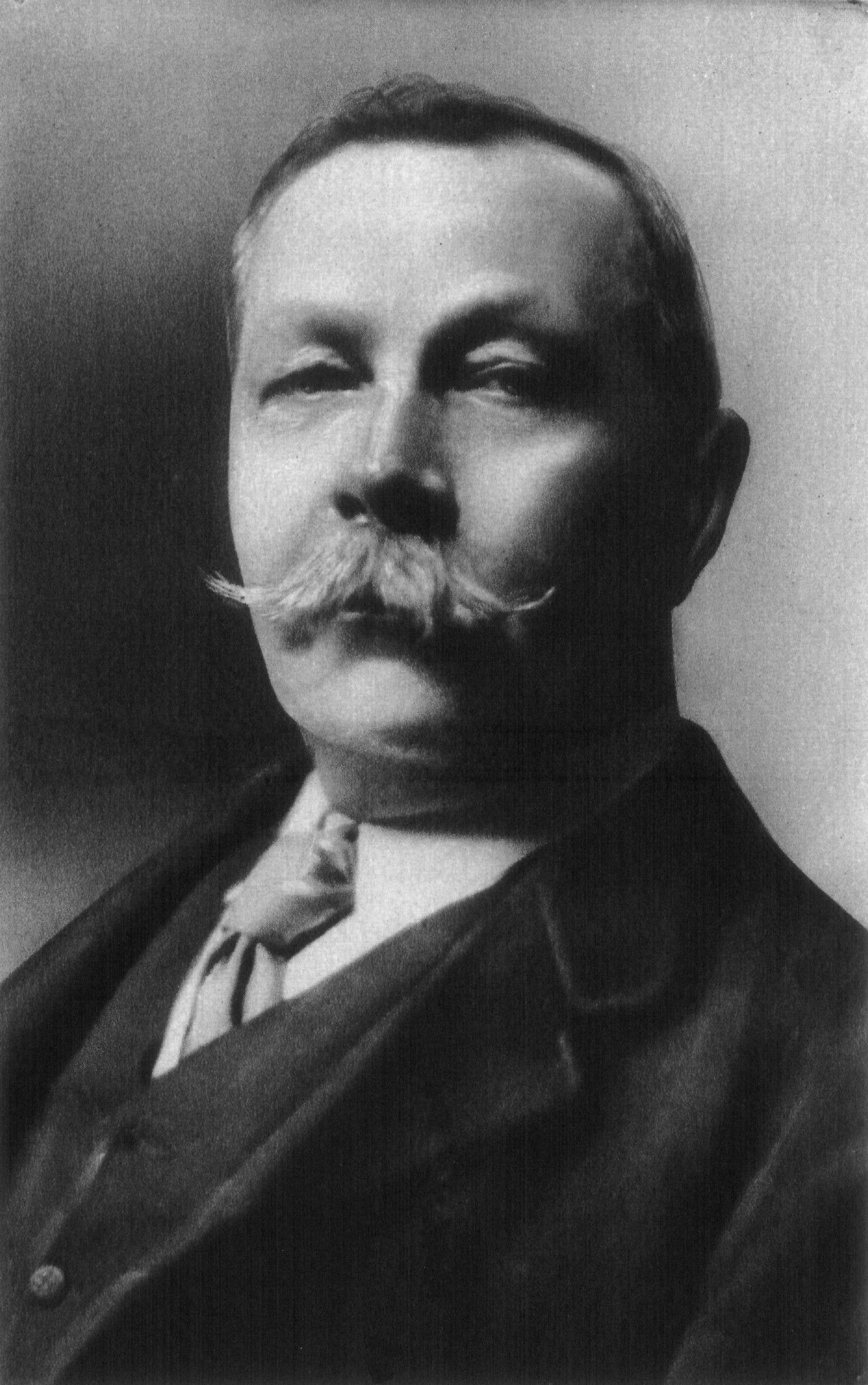
Arthur Conan Doyle, famous spiritualist, thanks to wiki
Time for an honest appraisal of the roots of a popular pseudo-scientific method. I shall give the occult backgrounds first.

The founder was involved in spiritualism, one of the most serious of mortal sins. Coming from a Protestant background, he became involved in the movement which believed that spirits of the dead could and should be contacted for advice and comfort.

This is the heinous sin of necromancy. Sadly, in the States and in England, Anglican and other Protestants, including Quakers, became interested in this occult tool. The founder of the pseudo-science was one of these men who experimented with contacting the dead. He attended regular meetings of the local spiritualist society.

He also wrote a book stating that he received his method of healing from a dead person. Here is his statement.

"The knowledge and philosophy given me by Dr. Jim Atkinson, an intelligent spiritual being, together with explanations of phenomena, principles resolved from causes, effects, powers, laws and utility, appealed to my reason. The method by which I obtained an explanation of certain physical phenomena, from an intelligence in the spiritual world, is known in biblical language as inspiration. In a great measure The Chiropractor's Adjuster was written under such spiritual promptings." (p. 5)"

In a May 4th 1911 letter, D. D. wrote this:

"... we must have a religious head, one who is the founder, as did ChristMohamedJo. SmithMrs. EddyMartin Luther and other who have founded religions. I am the fountain head. I am the founder of chiropractic in its science, in its art, in its philosophy and in its religious phase."[8]


In his 1914 book, the first chapter expanded on his religious views of chiropractic: "The Moral and Religious Duty of a Chiropractor".[11] In it he dealt with religious liberty and stated:
"... nor interfere with the religious duty of chiropractors, a privilege already conferred upon them. It now becomes us as chiropractors to assert our religious rights." (p. 1)
"The practice of chiropractic involves a moral obligation and a religious duty." (p. 2) 

wiki references and footnotes to original texts...........

He also believed in the false idea of "innate intelligence" in the body, and that this was connected to an impersonal God of innate intelligence in the universe. One can see how far D. D. moved away from Christianity.
http://www.letusreason.org/NAM33.htm

Now you know of whom I speak, D.D. Palmer, the founder of chiropractic methods. His son, B.J. Palmer was also heavily involved in the occult, which I found out as a very young child. From early on, I refused to go to one, and would try to talk others out of this method. Roots run deep and Catholics have deceived themselves as to the evil of this method.

When I was very young, the college had an exhibit and a garden of items collected by B. J. These items included statues of Buddha, bodishattvas, which are Buddhist "saints" but really incarnated images of demons, talismans from every possible Eastern religion, and the worst thing, a Shinto Gateway. This gateway is a door to the spirit world which I sensed at the age of nine. My dad asked us all one day if we wanted to go into the gardens at the college, as we were out visiting something in the area. I said no, I did not want to go there, as even across the street, I knew something was wrong with the gateway.

My father honored my concerns and we did not go into the gardens, which are now gone. It was called a Little Bit O'Heaven and here is a description of it, and the ideals behind it which should make one's skin crawl..

For many years A Little Bit O' Heaven was the most popular tourist attraction in Davenport. A guidebook produced by the Palmer School claims that the garden directly inspired numerous home hobbyist to take up the trowel and build their own rock gardens, but one wonders if part of its popularity was also the esoteric drama of its world-spanning exotica. With B.J. scouring the globe for the ripest fruits of wisdom and artistic endeavor, the visitor could understand how chiropractic medicine tapped into deeper beliefs than the simplistic notions of mechanistic modern medicine. Was a man simply a pile of disconnected bones and tissue? Or was he an outpouring of innate and inborn emotion and desires from some central core? Here at A Little Bit O' Heaven the visitor could contemplate the strange and perhaps a bit frightening from around the world while in an informal and stimulating garden setting. Here live alligators, grimacing idols and taboo icons of fertility cults relaxed among the foliage with classical statuary and uplifting inspirational aphorisms painted on the walls. In this small recreation of Heaven on Earth, the Dionysian and Apollonian were united in a vision of health and happiness for all pilgrims to see in practice.


The Shinto Gateway is not merely a gateway to a shrine, but a door to the spirit world. One of my university professors years ago explained that on one side of the gate were the living and on the other side, the dead.

Of course, the Palmers would be interested in such a gate, and even as a child, baptized and in sanctifying grace, I could sense the demon spirits on the other side. That this type of thing was treated so cavalierly by too many Catholics has puzzled me over the years. And idolatry was practiced on the spot for years.

Though it is impossible to see from outside the gate, the ancient Wishing Buddha is still there today. Inside the shelter is a 1100-yr old Japanese bronze buddha, at 10 feet high and 3-tons one of the largest buddhas in the U.S. One story about its purchase says that when B.J. purchased the statue in 1927 the Japanese government attempted to block its removal. B.J. persuaded the officials by assuring them that the statue would be given proper respect, and indeed for many years incense was burned 24 hours a day in its honor, perhaps up until the garden was dismantled. http://www.mnmuseumofthems.org/Grotto/Heaven3.html

I cannot show you the torii gate but it is seen on this link,  on this copyrighted site, for skeptics.

http://en.wikipedia.org/wiki/Torii
Remember, there is no neutral territory. The torii gate is not neutral and the so-called deities of the Shinto religion are not gods but demons, which is rather ironic, as some followers believe that one must exorcise demons. That would be impossible, as only Catholic exorcists can do this and demons cannot cast out demons. However, they can and do lie. 

I write this just a few miles from the college which has trained thousands of so-called doctors, whose own method is based on occultist beliefs which have no bearing to real science. I write this as I have known this for 56 years, and have been waiting for any Catholic to write against this cult. None have. None will. There is too much money and corruption in the system. Pray for those who cannot see that the roots of something indicate that the philosophy of the entire scheme is spiritually flawed. Some things just cannot be "baptized."

Sadly, some people see spiritualism as a hoax, which is can be. But, it can and is mostly one of the deadliest mortal sins of all. Check this site out for someone who does not understand the real evil but a person who discovered more on D.D. real involvement with the occult..

http://spinalcolumnradio.com/2013/01/25/chiro-pickers-fresh-pick-the-story-of-the-vanishing-spirit-book-and-the-appearance-of-another/

Here is the CCC on divination:

Divination and magic
2115 God can reveal the future to his prophets or to other saints. Still, a sound Christian attitude consists in putting oneself confidently into the hands of Providence for whatever concerns the future, and giving up all unhealthy curiosity about it. Improvidence, however, can constitute a lack of responsibility.

2116 All forms of divination are to be rejected: recourse to Satan or demons, conjuring up the dead or other practices falsely supposed to "unveil" the future.48 Consulting horoscopes, astrology, palm reading, interpretation of omens and lots, the phenomena of clairvoyance, and recourse to mediums all conceal a desire for power over time, history, and, in the last analysis, other human beings, as well as a wish to conciliate hidden powers. They contradict the honor, respect, and loving fear that we owe to God alone.

2117 All practices of magic or sorcery, by which one attempts to tame occult powers, so as to place them at one's service and have a supernatural power over others - even if this were for the sake of restoring their health - are gravely contrary to the virtue of religion. These practices are even more to be condemned when accompanied by the intention of harming someone, or when they have recourse to the intervention of demons. Wearing charms is also reprehensible. Spiritism often implies divination or magical practices; the Church for her part warns the faithful against it. Recourse to so-called traditional cures does not justify either the invocation of evil powers or the exploitation of another's credulity.


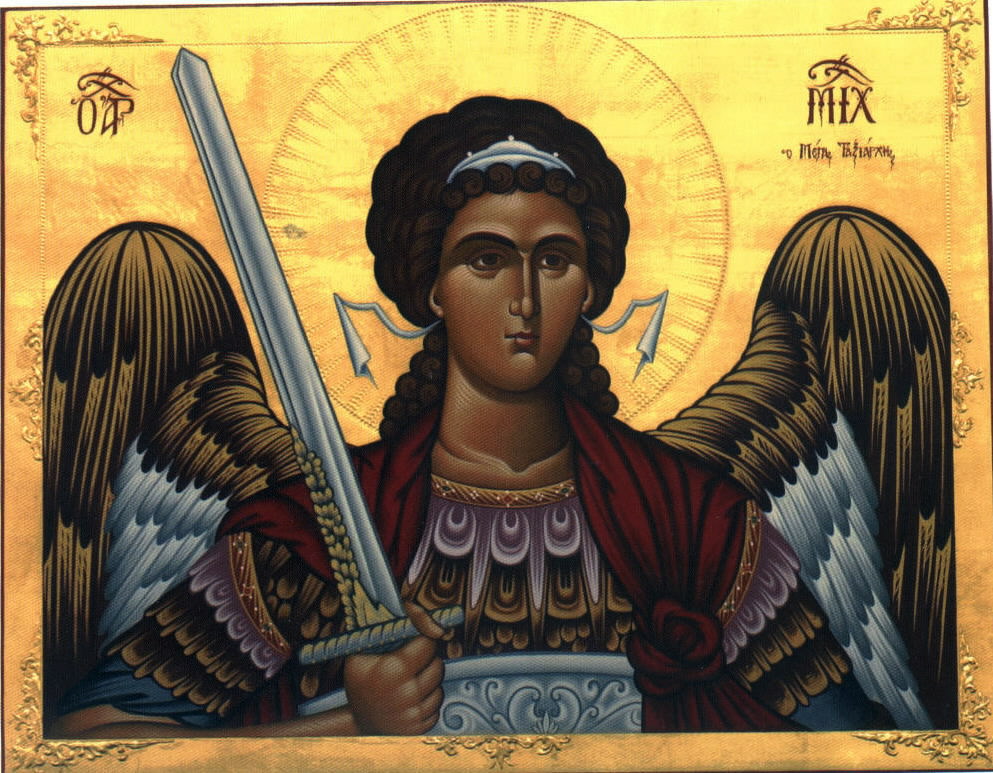
Saint Michael the Archangel,
defend us in battle.
Be our protection against the wickedness and snares of the devil.
May God rebuke him, we humbly pray;
and do Thou, O Prince of the Heavenly Host -
by the Divine Power of God -
cast into hell, satan and all the evil spirits,
who roam throughout the world seeking the ruin of souls.

Amen.


Friday, 6 December 2013

No Cookie-Cutter Saints


Blessed Mother Teresa of Calcutta, I was told recently, told a priest that she never had clarity about her life. She just went day to day, working, praying, living in darkness as to God's Perfect Will.

She had rare moments of consolation.

Each saint experiences God differently, as each person is created uniquely. We cannot and should not judge how God works in the lives of those around us.

What may seem like something worldly may be the Perfect Will of God in someone's life.

To discern God's Will is part of our journey to perfection. If God withholds clarity, that is His Plan and one must humbly accept such a state. If one can only see the day presented today and nothing else, rejoice in that Plan.

Some people find their vocation and God's Will as young people. Some struggle in long years of searching for God's Perfect Will. Some people actually run away from God's Plan. St. Benedict Labre failed at everything he did. He is a great saint of humility and peace.

God's Will does not change, but He can will change in our lives, states Thomas Aquinas. But, all that God wills is good. There is an additional mystery that all things which happen to us are in the Will of God-even suffering and trials.

Here is a snippet from Thomas Aquinas: Thus in the case of the raising of Lazarus, one who looked only on inferior causes might have said: "Lazarus will not rise again," but looking at the divine first cause might have said: "Lazarus will rise again." And God wills both: that is, that in the order of the inferior cause a thing shall happen; but that in the order of the higher cause it shall not happen; or He may will conversely. We may say, then, that God sometimes declares that a thing shall happen according as it falls under the order of inferior causes, as of nature, or merit, which yet does not happen as not being in the designs of the divine and higher cause. Thus He foretold to Ezechias: "Take order with thy house, for thou shalt die, and not live" (Is. 38:1). Yet this did not take place, since from eternity it was otherwise disposed in the divine knowledge and will, which is unchangeable. Hence Gregory says (Moral. xvi, 5): "The sentence of God changes, but not His counsel"---that is to say, the counsel of His will. When therefore He says, "I also will repent," His words must be understood metaphorically. For men seem to repent, when they do not fulfill what they have threatened.

This is a mystery not accepted by most of the world, which rejects the value of suffering. God's Will may include tremendous suffering. St. Faustina suffered the ill treatment of nuns in her own house. St. Padre Pio suffered the ill treatment of men in his own house. St. Louis de Montfort met obstacle after obstacle on his path to perfection.

Many times, it is those in the Church, even other good people, who provide the suffering in one's life.
Such was the case for St. Damian of Molokai, who was stymied in his work by his own bishop. He was accused of pride and arrogance. The saint kept going on with the vision God had given Him

The vision or vocation of one saint is not the same as that of another. There is no such thing as a cookie-cutter saint.

If Catholics stand back and judge other Catholics by outward signs of success or even successful holiness, this type of attitude is not of God. God works in so many different ways.

I am learning that a friend of mine has become holy because of a divorce. She has become holy because of great suffering which has left her alone. Some people in her life criticize her. I see the re-birth of a beautiful soul.

Can one imagine the type of judgments Blessed Teresa of Calcutta endured? She was criticized for taking money when she received the Nobel Peace Prize. She was criticized for not working for political changes, or setting up hospitals, but only tending to the dying. She was criticized for having a ministry which gave dignity to death and suffering instead of taking it away.

Blessed Mother Teresa was criticized for having long periods of doubt and darkness, of not being on top of financial issues, of fraternizing with less than holy men and women for the sake of her missionaries.

There are over 5,000 sisters in her order in the world today. Her story is one of courage and persistence.

Do not judge anyone. Do not suppose you understand someone's spiritual life because of your own. Do not judge the suffering of another.

And, most of all, as warned by Father Ripperger, be suspicious of psychological explanations which may undermine the path to perfection. Psychology is limited. Those who were keen on psychology criticized both Blessed Teresa and Blessed John Paul II. They would only want to see wholeness rather than holiness. These are not the same thing. God may allow a person not to be what the world would call "whole" for the greater Glory of His Name. God may allow a person deep suffering for a reason. Blessed John Paul II was not physically whole at the end of his papacy. Yet, in that long illness, he was being made holy.

The world does not understand that mystery of suffering.


In the Dark Night, the soul and God move from brokenness to a deeper brokenness, that of the breaking of the ego.

The worldling does not understand suffering and purgation. To become a blessed was a hard road for Teresa of Calcutta. Perhaps that is her message for us today. Persevere totally in Faith. Keep going. Do not give up.

Rejoice in the suffering, somehow,as God is in both the overall picture and in the details.

Christ was abandoned by all His best friends but young John. Why? One simple reason--that His friends did not want to share in His Suffering. They ran away rather than suffer with Someone Who loved them. They ran away rather than enduring the pain of failure and rejection.

They ran away out of fear.

They did not want to stand up with He Who took on sin. Sometimes, we have to stand up with sinners; we are sinners as well. Only the falsely perfect reject the sinner. Guess what? I am a sinner and all my friends are sinners. But, we love each other through and even out of the sin.

Love and forgive, forgive and love-and be willing to suffer on your own and with others.

Do not be afraid. And, if, like my friend, who is so far away facing divorce, you find yourself suffering alone, know that you are being called to Calvary.

Blessed Teresa said this:  “If someone criticizes you, first ask yourself, is it right? If he is right, apologize and change, and the issue is resolved. If he is not right, clarify and correct, but if that does not work, take up the unjust accusations with both hands and offer it to Jesus in union with his suffering, because he was slandered by all sides.”

In her case, such judgments were God's Plan for her sanctification. God works in the spiritual realm, and most people in the world do not understand what that means.

To be continued....