Compassion must be the most misunderstood virtue in today's world. It is increasingly obvious that few people in America have true compassion. The train wreck out East a few months ago created chaos, and witnesses noted that some passengers were walking over those who were injured. A lack of compassion....Lately, we saw a minority woman pleading with violent demonstrators not to wreck her business, as she was a single mom who had worked for years creating a decent lifestyle for her children...the business was torched anyway...a lack of compassion.
Narcissism stops the growth of personal virtue. Narcissistic societies reward narcissist and not the compassionate. One of my great-grandmothers, who came from Bohemia, lived in St. Louis. During the depression, my mother, who is 87, but was then a little girl, remembers her grandmother feeding tramps on the back porch, tea and sandwiches, without being able to speak with them as they only spoke English and she only spoke Czech---compassion.
Justice and mercy must grow out of compassion. We call Mary the "Mirror of Justice" as she gave us the Saviour, and as her humility reflects the clarity of justice and mercy of God. She is, as we say in the litany, prudent, faithful, merciful, just, wise....She, as the Model of Humility, reflects compassion.
But, over the past three generations of the passing on in families of gross individualism, the lack of virtue training in children, the ideal of getting rich, staying single, and having fun, the lack of teaching the needed moral framework of sacrifice and the Ten Commandments, has led to an increase in narcissism to the point where it is no longer considered either a psychological or an illness.
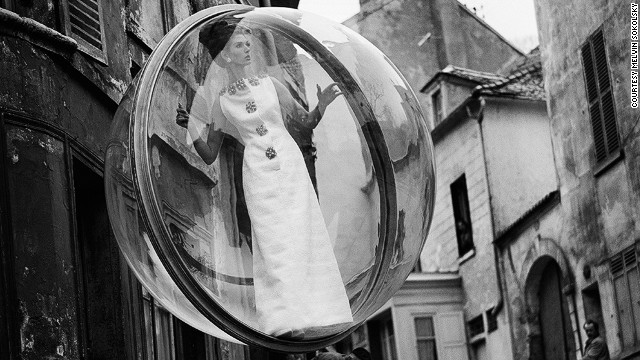
Even the word sacrifice is considered offensive and nasty. A good friend of mine once said that he never considered sacrificing or doing penance, or mortification, as he saw that as unnecessary for humans. We talked about it for awhile and then I realized that he had chosen his single lifestyle in order not to engage with anyone or their problems. He had created a little bubble of narcissistic comfort and no one would pop this bubble, if he could help it...not even God. lad
Actually, the virtue of compassion comes after one has been stripped of one's own sins in the Dark Night, when one has come to the patience of humility, when one sees that one is part of the stream of the love of God flowing out into the world. Pride stops compassion. Arrogance nails it to the Cross. Gross selfishness mocks it.
Compassion makes one vulnerable, open, at the disposal of others, be it one's husband, baby, children or the larger community. Without compassion, there can be no community, no real family life, no holy marriages.
Purgation first, then one finds out the truth of one's self, that one is a sinner just like everyone else--this is the first step.
Then, the acquiring of humility through this purgation, which allows one to love God, because one is grateful for salvation and for the constant love of God.
Then, compassion for others, the result of loving them in God and with God.
We do not have the ability to be freely compassionate without the love of God flowing through us into the world.
But, compassion is not gooey love, but tough love. Real compassion cares not only for
bodies but for souls. I remind readers of my many posts on the corporal and spiritual works of mercy. There was a man who spoke with compassion and with tough love. This man was Fulton J. Sheen. He captured the imagination of a generation with his unfailing honesty, and his ability to speak the truth to millions in an attractive, intellectual, yet compassionate manner.
He was not liked by many of his fellow bishops, who wanted a comfortable life, and who chose faux-compassion by supporting abortion and birth-control, as well as the cozy false American dream.
Many people will go to hell because they refuse to pop their bubble of complacency and comfort. They chose a false heaven on earth and forfeit the real deal of everlasting joy with those to whom they could have shown compassion.
More later....
and here is a repost on narcissim, which kills or prevents the growth of compassion
In psychology, there is a part of the underdeveloped person who falls into the category of being narcissistic labelled "narcissistic awe". Narcissistic awe may be described as the judgment of the narcissist who sees the parent or adult as either completely good and wonderful or completely bad. The person is incapable of seeing someone as a good person with faults and flaws.
This type of view is found among those with a narcissitic personality disorder. That person cannot see adults in authority as anything but in black and white terms.
A healthy child grows up realizing that his parents are good people but imperfect. He will not either demonize nor idolize the adult.
Now, I have been watching many people in the traditional camp of Catholicism turn against this present pope. They have demonized him to the point of denying any good in this man. Some of their judgment is based on faulty media reports, but some is based on the problem of "narcissistic awe".
Those who blame this pope for the evils of other priests and for the evils of the Church are exhibiting the downside of the "cult of personality", which, imo, grows out of "narcissistic awe." In other words, these people adore one pope unrealistically and hate another one unrealistically.
Popes, and, indeed, the Church of the past are idealized, into persons and institution which never really existed. I have written on the false romanticizing of the past concerning the Church before, but now I am writing about the root cause-narcissistic awe.
Very often, people who seem religious fall into this cult of personality growing out the inability to look at the adults in their lives realistically. One young person I know was abused as a child, but instead of demonizing the parent, she has fallen into deceitful idolization of that parent. She could not face her own pain, and her adult life reflected deceit in other relationships.
This may seem both impossible and amazing, but her own narcissism will not allow her to see the emotional truth of the situation.
So, too, with the pope blasters, who cannot see him as an imperfect man, chosen by the College of Cardinals, to be the pope. That he deserves the respect of office seems obvious.
Because of the decay of the healthy family, there seems to be more narcissists about than in the past. And, many of those in the Church are into papal blasting on a daily basis.
Time to look at narcissistic awe as the root of this cult of personality gone wild and on the negative side at this time in history.
to be continued....and see these posts
http://supertradmum-etheldredasplace.blogspot.com/2014/03/the-forgotten-past-has-been-romanticized.html
http://supertradmum-etheldredasplace.blogspot.com/2014/05/memoricide-and-memory-continued.html
Showing posts with label compunction. Show all posts
Wednesday, 24 June 2015
Wednesday, 15 April 2015
Sins Which Cry Out to God for Vengeance
Posted by
Supertradmum
These sins may even be found in the CCC, as noted here before. What many Catholics do not understand is the Justice, Righteousness, Innocence of God, Who is not "hurt", as we sometimes are by sins against us, but "offended" because He is All Good. See my other posts on this.
Today, I am reminded of these sins, as I have been witnessing PDAs (public displays of affection), right here in suburbia, between lesbians, several who live in this neighborhood.
God will not be mocked. He created us and gave us natural law, which is being spurned by those who accept such lifestyles.
I repeat the CCC on these sins:
1867 The catechetical tradition also recalls that there are "sins that cry to heaven": the blood of Abel,139 the sin of the Sodomites,140 the cry of the people oppressed in Egypt,141 the cry of the foreigner, the widow, and the orphan,142 injustice to the wage earner.14
These are considered the sins which will bring down God's vengeance on all of us.
Those people who are violent---look at the news; those people who are sodomites--look in your own areas; those people who are abandoned to poverty, loneliness, even penury--look here; those who receive unjust wages to we can buy cheap goods--look at most of the stores and name brands and what they pay for goods, as opposed to what they charge; slavery, such as sexual abuse of children, (as in Great Britain), sexual slavery of women, slavery of those who are under tyrannies--look at the news.
God will not ignored these sins much longer. Reparation is needed.
We cannot lose the virtue of being shocked by sin. Complacency deadens the soul. We should be intolerant of our own sin, first, and then not tolerate sin in a society. But, as Fulton J. Sheen stated, intolerance is the only sin most Americans believe in. And, he said and wrote about this two generations ago. God will not be mocked.
http://www.northamericanmartyrs.org/pdf/Plea-for-Intolerance.pdf
Today, I am reminded of these sins, as I have been witnessing PDAs (public displays of affection), right here in suburbia, between lesbians, several who live in this neighborhood.
God will not be mocked. He created us and gave us natural law, which is being spurned by those who accept such lifestyles.
I repeat the CCC on these sins:
1867 The catechetical tradition also recalls that there are "sins that cry to heaven": the blood of Abel,139 the sin of the Sodomites,140 the cry of the people oppressed in Egypt,141 the cry of the foreigner, the widow, and the orphan,142 injustice to the wage earner.14
These are considered the sins which will bring down God's vengeance on all of us.
Those people who are violent---look at the news; those people who are sodomites--look in your own areas; those people who are abandoned to poverty, loneliness, even penury--look here; those who receive unjust wages to we can buy cheap goods--look at most of the stores and name brands and what they pay for goods, as opposed to what they charge; slavery, such as sexual abuse of children, (as in Great Britain), sexual slavery of women, slavery of those who are under tyrannies--look at the news.
God will not ignored these sins much longer. Reparation is needed.
We cannot lose the virtue of being shocked by sin. Complacency deadens the soul. We should be intolerant of our own sin, first, and then not tolerate sin in a society. But, as Fulton J. Sheen stated, intolerance is the only sin most Americans believe in. And, he said and wrote about this two generations ago. God will not be mocked.
http://www.northamericanmartyrs.org/pdf/Plea-for-Intolerance.pdf
Wednesday, 1 April 2015
Compunction Six-Regret And The Worm of Conscience
Posted by
Supertradmum
| "Maud-Muller-Brown" by John Gast, artist, after J.G. Brown Public Domain |
This is the last in this part of the series on contrition, on repentance. Pray for the sense of compunction if you have lost this. Offer up suffering for those who are hell-bound. Where there is life, there is hope.
Regret for wrong decisions will be the everlasting torment of those in hell.
My comments in blue...
PART III. ON HELL.
VII. The Worm that Dieth Not.
OUR Divine Saviour says: "If thy hand scandalize thee, cut it off; it is better for thee to enter into life, maimed, than, having two hands, to go into Hell, into the fire that cannot be quenched, where their worm dieth not, and the fire is not extinguished. And if thy foot scandalize thee, cut it off; it is better for thee to enter lame into life, than, having two feet, to be cast into the Hell of unquenchable fire, where their worm dieth not, and the fire is not extinguished. And if thy eye scandalize thee, pluck it out; it is better for thee with one eye to enter the kingdom of God, than, having two eyes, to be cast into the Hell of fire, where their worm dieth not, and the fire is not extinguished" (Mark ix. 42-47).
By these words our blessed Redeemer wished to impress on our minds the necessity of avoiding the occasions of sin and of making even the most painful sacrifices to avoid sin and thus escape the endless pains of Hell. He, moreover, wished to engrave deeply in our minds the fact that two of the most fearful torments of Hell are its unquenchable fire and its never-dying worm. We have seen in a foregoing chapter in what consists the terrible fire of Hell. It now remains to us to examine in what consists "the worm that dieth not."
We have reason, which the lower creatures do not. Our intellects can be enlightened by grace and faith. Faith can be enlightened by the intellect.
Those in hell still have the same intellect, but now eaten up, like the worm eats dirt, by regret.
This remorse never ends in forgiveness or mercy, as that time for the sacraments is gone.
All the senses of the reprobate have each their peculiar punishment; their reason, or intellect, is punished by the pain of loss, as we have seen in the preceding chapter, a punishment far surpassing that of the senses. The memory of the reprobate is tormented by " the worm that dieth not," that is by a most keen and constant remorse of conscience, which will give them no rest.
Each one of us, because we are sinners, can look back with regret on many sins of omission and commission. But, on earth, while we are still alive, we can change.
How many Catholics think of sins of omission, the passing up of opportunities to follow grace upon grace?
The lost sinner will remember how many graces and means of salvation he had during life to save his soul ; how God sent him so many holy inspirations, how he received so many good instructions, how he had the grace of prayer within his power to enable him to practise the virtues of his state, to overcome temptation, to keep the Commandments of God and of His Church; how his pious friends exhorted him to lead a good life both by their exhortations, but especially by their good example; how he had so many opportunities of instructing himself in his obligations by the hearing of the word of God and the reading of good books, and of strengthening himself in the discharge of his duties by the reception of the Sacraments and by the practice of devotion to the Blessed Virgin!
As Catholics, we are not merely given sufficient grace for heaven, but, as this good priest notes, "a superabundance of means of salvation".
The lost sinner will, in a word, remember with how little trouble he might have saved his soul and avoided Hell. He will say to himself: " So little effort was required for my salvation; even after my numerous sins a good confession would have sufficed. But through shame, through human respect, I did not make it. How foolish I was! How often did my conscience, my family, my friends urge me to go to confession! But it was all in vain. Others committed greater sins than I did, but they bewailed them, went to confession and changed their life, and now they are enjoying unspeakable happiness in Heaven! And as for me, I am lost forever, and that through my own fault, for I had at my disposal a superabundance of means of salvation. But now repentance is unavailing, it is too late!"
But let us consider the expressions of regret of the various lost sinners. Their sorrow is vain, for, like that of Judas, it is the sorrow of despair.
"During life," these lost sinners will say to themselves, "I loved ease and comfort and luxury, fine garments, costly jewellery and princely mansions. To gain these I did not scruple to defraud my neighbour in every available way. I stole from my employers, I took false oaths, I joined secret societies, I even sold my virtue! I stayed away from Mass, I ate meat on forbidden days, I neglected the Sacraments, I went so far as to deny my faith. I contracted marriage before a civil magistrate, or before a heretical minister; I contracted a mixed marriage without dispensation; I got a divorce and then ventured to break the laws of God and of the Church by getting married again! I wished to be free, to do just as I pleased.
This could have been written yesterday and it was written 116 years ago. Could those who give bad advice in the synod, or from their cardinals' or bishops' chairs not tremble if they read these words?
The laws of God and of His Church forbade me to frequent dangerous occasions, and I spurned these laws because I wished to enjoy myself and gratify my passions by going with persons and into places that were dangerous to me, and thus I fell repeatedly into sins, even the most shameful.
Clubs. porn websites, evil computer games, bad movies, or bad television shows....the list is endless.
God commanded me to be pure and chaste, and I took delight in gratifying my basest passions in every possible way, and sought every occasion of doing so. How criminally I acted in neglecting to give my children a religious education, and thus caused them to lose their souls !
This part is, frankly, scary, as too many parents are not educating their children correctly. Yes, and many young people, even children, will lose their souls. It is terrifying....Remember Padre Pio telling the mother he would not hear her confession as her son was in hell because of her...and she had not repented of whatever sin she had committed to cause her own son's damnation. Horrible thought, indeed
During life I was fond of listening to and joining in backbiting, calumny, obscene discourses, and even irreligious conversations. I loved to read filthy novels and to gaze on immodest pictures and objects. While on earth, I yielded to my passion for strong drink, and indulged in it to excess, until I degraded myself below the brute and committed crimes innumerable against my wife and children, against my neighbour.
During life I delighted in cursing, swearing, in uttering fearful oaths and imprecations and in quarrelling, in gambling and in almost every crime.
And now I find myself in the gloomy prison of Hell, in company of a countless multitude of villains, murderers, of the most degraded beings that have ever lived I have no longer a loving parent, a loving child, a sympathizing friend. No; all the ties of friendship, all the ties of nature, are forever broken, forever turned into devilish hate. Every evil spirit, every reprobate insults me, curses me, tortures me, seeks to make me suffer the more. I must submit to all this, because during life I refused to submit to the holy will of God. I could so easily have been saved, and now I am lost, lost forever, and that through my own fault! Never shall I see God, never shall I enjoy the delights of Heaven, never more shall I be released from these terrible torments. It is now too late!"
All this, and much more, will the worm of conscience say to the damned, stinging him with reproaches so relentlessly that he will almost be driven crazy with despair. In fact, the damned will rave and rage as if they were possessed, and will invoke curses on themselves. But all in vain; it is too late for repentance. This terrible remorse will do nothing towards atoning for their sins, it will only add to their anguish.
Consider this, obdurate sinner, who dost sin so boldly, and even when thy conscience pricks thee, turnest a deaf ear to its reproaches. Be assured that one day thy own conscience will be thy tormentor, and will plague thee more pertinaciously than the demons themselves. If thou dost desire to escape this never-ending misery, listen to the voice of conscience now, follow its counsel when it bids thee abstain from doing evil, and urges thee to do that which is right.
Enough! These posts must help each one of us to have compunction. Without contrition and the turning away from sin, we are lost.
My comments in blue...
PART III. ON HELL.
VII. The Worm that Dieth Not.
OUR Divine Saviour says: "If thy hand scandalize thee, cut it off; it is better for thee to enter into life, maimed, than, having two hands, to go into Hell, into the fire that cannot be quenched, where their worm dieth not, and the fire is not extinguished. And if thy foot scandalize thee, cut it off; it is better for thee to enter lame into life, than, having two feet, to be cast into the Hell of unquenchable fire, where their worm dieth not, and the fire is not extinguished. And if thy eye scandalize thee, pluck it out; it is better for thee with one eye to enter the kingdom of God, than, having two eyes, to be cast into the Hell of fire, where their worm dieth not, and the fire is not extinguished" (Mark ix. 42-47).
By these words our blessed Redeemer wished to impress on our minds the necessity of avoiding the occasions of sin and of making even the most painful sacrifices to avoid sin and thus escape the endless pains of Hell. He, moreover, wished to engrave deeply in our minds the fact that two of the most fearful torments of Hell are its unquenchable fire and its never-dying worm. We have seen in a foregoing chapter in what consists the terrible fire of Hell. It now remains to us to examine in what consists "the worm that dieth not."
We have reason, which the lower creatures do not. Our intellects can be enlightened by grace and faith. Faith can be enlightened by the intellect.
Those in hell still have the same intellect, but now eaten up, like the worm eats dirt, by regret.
This remorse never ends in forgiveness or mercy, as that time for the sacraments is gone.
All the senses of the reprobate have each their peculiar punishment; their reason, or intellect, is punished by the pain of loss, as we have seen in the preceding chapter, a punishment far surpassing that of the senses. The memory of the reprobate is tormented by " the worm that dieth not," that is by a most keen and constant remorse of conscience, which will give them no rest.
Each one of us, because we are sinners, can look back with regret on many sins of omission and commission. But, on earth, while we are still alive, we can change.
How many Catholics think of sins of omission, the passing up of opportunities to follow grace upon grace?
The lost sinner will remember how many graces and means of salvation he had during life to save his soul ; how God sent him so many holy inspirations, how he received so many good instructions, how he had the grace of prayer within his power to enable him to practise the virtues of his state, to overcome temptation, to keep the Commandments of God and of His Church; how his pious friends exhorted him to lead a good life both by their exhortations, but especially by their good example; how he had so many opportunities of instructing himself in his obligations by the hearing of the word of God and the reading of good books, and of strengthening himself in the discharge of his duties by the reception of the Sacraments and by the practice of devotion to the Blessed Virgin!
As Catholics, we are not merely given sufficient grace for heaven, but, as this good priest notes, "a superabundance of means of salvation".
The lost sinner will, in a word, remember with how little trouble he might have saved his soul and avoided Hell. He will say to himself: " So little effort was required for my salvation; even after my numerous sins a good confession would have sufficed. But through shame, through human respect, I did not make it. How foolish I was! How often did my conscience, my family, my friends urge me to go to confession! But it was all in vain. Others committed greater sins than I did, but they bewailed them, went to confession and changed their life, and now they are enjoying unspeakable happiness in Heaven! And as for me, I am lost forever, and that through my own fault, for I had at my disposal a superabundance of means of salvation. But now repentance is unavailing, it is too late!"
But let us consider the expressions of regret of the various lost sinners. Their sorrow is vain, for, like that of Judas, it is the sorrow of despair.
"During life," these lost sinners will say to themselves, "I loved ease and comfort and luxury, fine garments, costly jewellery and princely mansions. To gain these I did not scruple to defraud my neighbour in every available way. I stole from my employers, I took false oaths, I joined secret societies, I even sold my virtue! I stayed away from Mass, I ate meat on forbidden days, I neglected the Sacraments, I went so far as to deny my faith. I contracted marriage before a civil magistrate, or before a heretical minister; I contracted a mixed marriage without dispensation; I got a divorce and then ventured to break the laws of God and of the Church by getting married again! I wished to be free, to do just as I pleased.
This could have been written yesterday and it was written 116 years ago. Could those who give bad advice in the synod, or from their cardinals' or bishops' chairs not tremble if they read these words?
The laws of God and of His Church forbade me to frequent dangerous occasions, and I spurned these laws because I wished to enjoy myself and gratify my passions by going with persons and into places that were dangerous to me, and thus I fell repeatedly into sins, even the most shameful.
Clubs. porn websites, evil computer games, bad movies, or bad television shows....the list is endless.
God commanded me to be pure and chaste, and I took delight in gratifying my basest passions in every possible way, and sought every occasion of doing so. How criminally I acted in neglecting to give my children a religious education, and thus caused them to lose their souls !
This part is, frankly, scary, as too many parents are not educating their children correctly. Yes, and many young people, even children, will lose their souls. It is terrifying....Remember Padre Pio telling the mother he would not hear her confession as her son was in hell because of her...and she had not repented of whatever sin she had committed to cause her own son's damnation. Horrible thought, indeed
During life I was fond of listening to and joining in backbiting, calumny, obscene discourses, and even irreligious conversations. I loved to read filthy novels and to gaze on immodest pictures and objects. While on earth, I yielded to my passion for strong drink, and indulged in it to excess, until I degraded myself below the brute and committed crimes innumerable against my wife and children, against my neighbour.
During life I delighted in cursing, swearing, in uttering fearful oaths and imprecations and in quarrelling, in gambling and in almost every crime.
And now I find myself in the gloomy prison of Hell, in company of a countless multitude of villains, murderers, of the most degraded beings that have ever lived I have no longer a loving parent, a loving child, a sympathizing friend. No; all the ties of friendship, all the ties of nature, are forever broken, forever turned into devilish hate. Every evil spirit, every reprobate insults me, curses me, tortures me, seeks to make me suffer the more. I must submit to all this, because during life I refused to submit to the holy will of God. I could so easily have been saved, and now I am lost, lost forever, and that through my own fault! Never shall I see God, never shall I enjoy the delights of Heaven, never more shall I be released from these terrible torments. It is now too late!"
All this, and much more, will the worm of conscience say to the damned, stinging him with reproaches so relentlessly that he will almost be driven crazy with despair. In fact, the damned will rave and rage as if they were possessed, and will invoke curses on themselves. But all in vain; it is too late for repentance. This terrible remorse will do nothing towards atoning for their sins, it will only add to their anguish.
Consider this, obdurate sinner, who dost sin so boldly, and even when thy conscience pricks thee, turnest a deaf ear to its reproaches. Be assured that one day thy own conscience will be thy tormentor, and will plague thee more pertinaciously than the demons themselves. If thou dost desire to escape this never-ending misery, listen to the voice of conscience now, follow its counsel when it bids thee abstain from doing evil, and urges thee to do that which is right.
Enough! These posts must help each one of us to have compunction. Without contrition and the turning away from sin, we are lost.
But, thanks be to God for His Mercy.
Compunction Five-The Loss of the Beatific Vision 2
Posted by
Supertradmum
There are several misunderstandings among some Catholics regarding those in heaven. Those blissful souls in heaven cannot mourn for us, cannot cry. There is no unhappiness in heaven.
Those in heaven enjoy the happiness each person was created to have. But, those is hell are full of the regret that they did not become the person God created them to be--His son or daughter forever happy with Him in heaven.
Pray for those who are in mortal sin. Pray for those who have left the Church. Do penance for unbaptized adults and children who fall so easily prey to Satan.
This lack of the vision of God is the destiny of the unrepentant.
To realize, in some measure, how great this pain of loss is, we should bear in mind that we have been created by God to be forever happy. This love of happiness, this yearning for it, which every one of us feels in his heart, will never be destroyed, not even in Hell. During this life men, impelled by this desire and blinded by passion, seek happiness in riches, in honours, in sensual gratification. These vain images of happiness deceive us so long as our soul is united with our body. But after the soul has severed her connection with the body, all these false, fleeting pleasures disappear, and she becomes aware that God alone is the source of all happiness, and that she can find happiness solely in the possession of Him.
I would think that seeing all the opportunities for grace and virtue which one passed up while on earth would be some of the pain of hell. Self-knowledge, and the Knowledge of Divine Things, including the Beauty of God as beyond one's grasp forever would be the worst pain of all.
No longer deceived by false appearances, no longer blinded by passion, she perceives clearly the ineffable, ravishing beauty of God and His infinite perfections ; she sees His infinite power in creating the world, His infinite wisdom in governing it, His excessive love for her in be coming man, in dying for her, in giving Himself to her as the food of her soul in the Blessed Sacrament, in destining her to share His own happiness forever in Heaven. This knowledge of the grandeur, of the goodness and loveliness of God will remain deeply impressed on her for all eternity. She will also see the justice of the punishments which God inflicts forever in Hell upon all those who do not keep His commandments.
Unfulfilled desire is the lot of the damned. We are only happy in God.
Then the reprobate soul, yearning after happiness, and feeling irresistibly drawn to God, who alone can make her happy, endeavours to rush to God with all the impetuosity of her nature, in order to behold Him, to enjoy Him, to be united to Him; but she finds herself repelled with infinite force from God, and hated by Him on account of her sins. Were all the riches, honours and pleasures of the world now offered to that soul, she would turn away from them, and would even curse them all, for she yearns for God alone, and can be happy only in God.
The reprobate soul in Hell, spurred on by frightful pains, looks about her for some alleviation, for some word of comfort; but not even a sympathizing look greets her, for she is surrounded by cruel devils and bitter enemies. Not meeting with any compassion where she is, she raises her eyes to Heaven, and beholds it so beautiful, so enchanting, so delightful, so full of true happiness. She remembers that she was created and destined to enjoy its bliss, and now, in the midst of her most excruciating pains, she longs for its pleasures with a still more indescribable yearning, and makes extraordinary efforts to go there, but she cannot leave her abode of torment.
No one in Heaven seems to take any notice of her. She sees the throne that God, in His goodness, had prepared for her, now occupied by someone else ! There is no longer any room for her in Heaven. She beholds there some of her relatives, of her companions and acquaintances; but they do not heed her. She beholds all the elect in Heaven full of joy and gladness. They do not even sympathize with her, but as the Psalmist sings, "the just will rejoice when he shall see the revenge" (Ps. Ivii. ii).
In vain the reprobate soul calls on the Saints, on the Blessed Virgin and on our Divine Saviour Himself. She feels drawn to God by an irresistible impulse, and understands that God alone can quench her thirst for enjoyment and make her happy. She longs to see and possess Him; she repeatedly endeavours to spring towards Him, but she feels herself repulsed by Him with invincible force; she beholds herself the object of Divine wrath, of the Divine anathema. She is aware that her case is hopeless, and that she shall never be admitted into the mansions of the blessed, or leave the abode of endless misery.
Despair seizes her; she utters the most fearful imprecations against God and the elect, against Heaven, against herself, her parents, her companions, against all creatures. All Hell resounds with her horrid blasphemies, and she becomes, in her ravings, an object of terror to all the other reprobates.
Such is the loss of God...the tormented become tormentors to others.
One more post on compunction....
Those in heaven enjoy the happiness each person was created to have. But, those is hell are full of the regret that they did not become the person God created them to be--His son or daughter forever happy with Him in heaven.
Pray for those who are in mortal sin. Pray for those who have left the Church. Do penance for unbaptized adults and children who fall so easily prey to Satan.
This lack of the vision of God is the destiny of the unrepentant.
To realize, in some measure, how great this pain of loss is, we should bear in mind that we have been created by God to be forever happy. This love of happiness, this yearning for it, which every one of us feels in his heart, will never be destroyed, not even in Hell. During this life men, impelled by this desire and blinded by passion, seek happiness in riches, in honours, in sensual gratification. These vain images of happiness deceive us so long as our soul is united with our body. But after the soul has severed her connection with the body, all these false, fleeting pleasures disappear, and she becomes aware that God alone is the source of all happiness, and that she can find happiness solely in the possession of Him.
I would think that seeing all the opportunities for grace and virtue which one passed up while on earth would be some of the pain of hell. Self-knowledge, and the Knowledge of Divine Things, including the Beauty of God as beyond one's grasp forever would be the worst pain of all.
No longer deceived by false appearances, no longer blinded by passion, she perceives clearly the ineffable, ravishing beauty of God and His infinite perfections ; she sees His infinite power in creating the world, His infinite wisdom in governing it, His excessive love for her in be coming man, in dying for her, in giving Himself to her as the food of her soul in the Blessed Sacrament, in destining her to share His own happiness forever in Heaven. This knowledge of the grandeur, of the goodness and loveliness of God will remain deeply impressed on her for all eternity. She will also see the justice of the punishments which God inflicts forever in Hell upon all those who do not keep His commandments.
Unfulfilled desire is the lot of the damned. We are only happy in God.
Then the reprobate soul, yearning after happiness, and feeling irresistibly drawn to God, who alone can make her happy, endeavours to rush to God with all the impetuosity of her nature, in order to behold Him, to enjoy Him, to be united to Him; but she finds herself repelled with infinite force from God, and hated by Him on account of her sins. Were all the riches, honours and pleasures of the world now offered to that soul, she would turn away from them, and would even curse them all, for she yearns for God alone, and can be happy only in God.
The reprobate soul in Hell, spurred on by frightful pains, looks about her for some alleviation, for some word of comfort; but not even a sympathizing look greets her, for she is surrounded by cruel devils and bitter enemies. Not meeting with any compassion where she is, she raises her eyes to Heaven, and beholds it so beautiful, so enchanting, so delightful, so full of true happiness. She remembers that she was created and destined to enjoy its bliss, and now, in the midst of her most excruciating pains, she longs for its pleasures with a still more indescribable yearning, and makes extraordinary efforts to go there, but she cannot leave her abode of torment.
Trapped in suffering forever...but, now, we can repent, we can change.
Now is the time for contrition, mortification, reparation, new life through the sacraments of the Church.
We only have the "now".
No one in Heaven seems to take any notice of her. She sees the throne that God, in His goodness, had prepared for her, now occupied by someone else ! There is no longer any room for her in Heaven. She beholds there some of her relatives, of her companions and acquaintances; but they do not heed her. She beholds all the elect in Heaven full of joy and gladness. They do not even sympathize with her, but as the Psalmist sings, "the just will rejoice when he shall see the revenge" (Ps. Ivii. ii).
In vain the reprobate soul calls on the Saints, on the Blessed Virgin and on our Divine Saviour Himself. She feels drawn to God by an irresistible impulse, and understands that God alone can quench her thirst for enjoyment and make her happy. She longs to see and possess Him; she repeatedly endeavours to spring towards Him, but she feels herself repulsed by Him with invincible force; she beholds herself the object of Divine wrath, of the Divine anathema. She is aware that her case is hopeless, and that she shall never be admitted into the mansions of the blessed, or leave the abode of endless misery.
Despair seizes her; she utters the most fearful imprecations against God and the elect, against Heaven, against herself, her parents, her companions, against all creatures. All Hell resounds with her horrid blasphemies, and she becomes, in her ravings, an object of terror to all the other reprobates.
Such is the loss of God...the tormented become tormentors to others.
One more post on compunction....
Compunction Four-On The Loss of The Beatific Vision 1
Posted by
Supertradmum
Staying with the same source, one reads that the loss of seeing God is the worst punishment of all--lost Love, lost Beauty, lost Innocence, lost Peace...all that is Good and Wonderful lost forever.
Yet of all these pains, that which gives the keenest anguish is being deprived of the vision of God. It will never be given to the damned to behold the Divine countenance. This pain will far outweigh all the other torments of which we have spoken.
It is impossible for mortal man to understand how this can be so great an affliction for the damned.
Yet such is the teaching of the Fathers ; they all maintain that there is nothing which the lost bewail so bitterly as being shut out forever from the vision of God. Whilst we live in this world, we think but little of the vision of God, and what it would be to us to be deprived of it eternally. This arises from the bluntness of our perception, which prevents us from comprehending the infinite beauty and goodness of God, and the delight experienced by those who behold Him face to face. But after death, when we are freed from the trammels of the body, our eyes will be opened, and we shall at least to some extent perceive that God is the supreme and infinite Good, and the enjoyment of Him our highest felicity.
...
Imagine loving the most Beloved Person of all and never being able to see Him. We crave to be loved and to love. We rarely understand that Who we crave is the Trinity.
St. Bonaventure bears witness to this, when he says: "The most terrible penalty of the damned is being shut out forever from the blissful and joyous contemplation of the Blessed Trinity." Again, St. John Chrysostom says: "I know many persons only fear Hell because of its pains, but I assert that the loss of the celestial glory is a source of more bitter pain than all the torments of Hell."
No Beauty, no Awe, no completeness...
No Perfection, no Sweetness, no Proportion, no Light...
"And pray," the good monk inquired, "what wouldst thou give to be admitted to the vision of God?" And the devil replied: "If there were a pillar reaching from earth to Heaven, beset with sharp points and nails and hooks, I would gladly consent to be dragged up and down that pillar from now until the Day of Judgment, if I could only be permitted to gaze on the Divine countenance for a few brief moments."
to be continued....more later
Compunction Three-On Hell Two
Posted by
Supertradmum
Saul Alinsky said that he would not be happy in heaven. Here is wiki's account of his famous interview two months before he died. These words create dread in me.
http://en.wikipedia.org/wiki/Saul_Alinsky
V. On the Company of Hell.
THERE are many bold sinners who, when they are punished for their crimes and threatened with Hell-fire are wont audaciously to answer: "Wherever I go, I shall at any rate not lack company," as if the presence of others could afford any solace to them, or any alleviation of their torment. In order that these shameless sinners may see how wrong they are to speak thus, and how little cause they have to anticipate any relief from the company in which they will find themselves, this chapter shall be devoted to showing them how woeful that company will be, and how it will aggravate their misery.
Would one want to live in grief, confusion, misery, tyranny and pain forever?
The society of the damned consists of devils and lost souls. Both of these are countless in number. As for the society of the devils, this is so detestable that it may be reckoned as the worst penalty of the lost in Hell. The place of torment would be far less deserving of this name were there no devils in it. On account of the multitude of demons there, such confusion, such grief, such misery, such tyranny prevails, that it is heartbreaking even to think of it.
We mortals have no worse enemy than the devil, who hates us with so intense a hatred that he longs every moment to hurl us down into the abyss of perdition. And when at length he has got some one into his power, he deals with him more barbarously than savage despot ever dealt with his deadliest foe.
Would one want to live in hatred forever under a being which is the most horrible tyrant of all?
All the envy and hatred which at the time of his fall he conceived against God, and which he cannot vent upon Him, he vents upon the damned, tormenting them with plagues the very thought of which makes a man s blood run cold. Even if he were not to do any harm to the damned, the mere fact of his dwelling with them for all eternity would be such terrible misery for the unhappy sinners, that the horror of their position would be like a continual death to them.
Everlasting death does not mean peace....we all have time to repent and that time is now.
Of all the fallen spirits, not one is so abominable as the chief of all, the haughty Lucifer, whose cruelty, malice and spite render him an object of dread not merely to the damned, but also to the devils subject to him. This Lucifer is called by various names in Holy Scriptures, all indicating his malignity. On account of his repulsiveness he is called a dragon; on account of his ferocity, a lion; on account of his malice, the old serpent; on account of his deceitfulness, the father of lies; on account of his haughtiness, king over all the children of pride; and on account of his great power and might, the prince of this world.
Hell is physical, not just spiritual torment...after the Last Day of Judgement, the Final Judgement.
Listen to what the Fathers of the Church and some expositors of Holy Scriptures say of the dreadful appearance that Satan presents: they apply to him the description given of the leviathan in the book of Job: "Who can discover the face of his garment, or who can go into the midst of his mouth? Who can open the doors of his face? his teeth are terrible round about. His body is like molten shields, shut up close with scales pressing one upon another. One is joined to another, and not so much as any air can come between them. His sneezing is like the shining of fire, and his eyes like the eyelids of the morning. Out of his mouth go forth lamps, like torches of lighted fire. Out of his nostrils goeth smoke, like that of a pot heated and boiling. His breath kindleth coals, and a flame cometh forth out of his mouth.
In his neck strength shall dwell, and want goeth before his face. His heart shall be as hard as a stone, and as firm as a smith’s anvil. When he shall raise him up, the Angels shall fear and, being affrighted, turn to God for protection. He shall make the deep sea to boil as a pot; there is no power upon earth that can be compared with him who was made to fear no one. He beholdeth every high thing ; he is king over all the children of pride" (Job xli.).
It is the opinion of St. Cyril, St. Athanasius, St. Gregory and other learned expositors of both the Greek and Latin Churches, that although this description, taken literally, is that of a monster of the sea, yet it is intended, in its mystic sense, to apply to Lucifer. And if one compares what is said of the leviathan with the attributes ascribed to the prince of darkness, it is impossible to deny their coincidence; moreover, one knows as a general fact that evil things have their types and figures in the natural world as well as good things, the one serving us for warning, the others for an example.
Besides the prince of darkness there are hundreds of thousands of inferior devils, which though less bad and abominable than himself, are yet so wicked and horrible that one could hardly look upon them and live.
Just think of all the monstrous people who ever lived for a view of the companions of hell. Devils are worse.
St. Antony relates that one of the Brothers of his Order uttered a piercing scream at the sight of a devil who appeared to him. His fellow-monks, running to him in alarm, found him more dead than alive. After giving him something to revive and strengthen him, they asked him what was the matter. Then he told them that the devil had appeared to him, and terrified him so that all the life had gone out of him. And on their inquiring what the devil looked like, he answered: "That I really cannot say; I can only say that if the choice were given me I would rather be put into a red-hot furnace, than look again at the countenance of the demon."
We read much the same thing in the life of St. Catharine of Sienna. She too declared that she had rather walk through a flaming fire than gaze for one instant at the devil.
If the mere sight of the evil one is so appalling that the Saints think it more intolerable than the pain of exposure to a burning fire, what, my God, must be the fear and horror of the damned, dwelling forever in the midst of countless fiends!
How terrified thou wouldst be if a mad dog were suddenly to spring upon thee, pull thee to the ground, and begin to tear thee with his teeth ! Do not imagine that the devil will fall upon the damned with less fury, or treat them more mercifully. The account Job gives of his persecutors describes very accurately the state of a lost soul in Hell:
"My enemy hath gathered together his fury against me, and threatening me he hath gnashed with his teeth upon me; he hath beheld me with terrible eyes. They have opened their mouth upon me and reproaching me they have struck me on the cheek, they are filled with my pains. He hath taken me by my neck, he hath broken me, and hath set me up to be his mark. He hath compassed me round about with his lances, he hath wounded my loins, he hath not spared. He hath torn me with wound upon wound, he hath rushed in upon me like a giant" (Job xvi. 10-15). This passage will give us some idea of the awful character of the company the damned will find themselves among in Hell.
http://en.wikipedia.org/wiki/Saul_Alinsky
Alinsky died at the age of 63 of a sudden, massive heart attack in 1972, on a street corner in Carmel, California. Two months previously, he had discussed life after death in his interview with Playboy:[4]
- ALINSKY: ... if there is an afterlife, and I have anything to say about it, I will unreservedly choose to go to hell.
- PLAYBOY: Why?
- ALINSKY: Hell would be heaven for me. All my life I've been with the have-nots. Over here, if you're a have-not, you're short of dough. If you're a have-not in hell, you're short of virtue. Once I get into hell, I'll start organizing the have-nots over there.
- PLAYBOY: Why them?
- ALINSKY: They're my kind of people.
- But, what does Father von Cochem write about the "kind of people".
V. On the Company of Hell.
THERE are many bold sinners who, when they are punished for their crimes and threatened with Hell-fire are wont audaciously to answer: "Wherever I go, I shall at any rate not lack company," as if the presence of others could afford any solace to them, or any alleviation of their torment. In order that these shameless sinners may see how wrong they are to speak thus, and how little cause they have to anticipate any relief from the company in which they will find themselves, this chapter shall be devoted to showing them how woeful that company will be, and how it will aggravate their misery.
Would one want to live in grief, confusion, misery, tyranny and pain forever?
The society of the damned consists of devils and lost souls. Both of these are countless in number. As for the society of the devils, this is so detestable that it may be reckoned as the worst penalty of the lost in Hell. The place of torment would be far less deserving of this name were there no devils in it. On account of the multitude of demons there, such confusion, such grief, such misery, such tyranny prevails, that it is heartbreaking even to think of it.
We mortals have no worse enemy than the devil, who hates us with so intense a hatred that he longs every moment to hurl us down into the abyss of perdition. And when at length he has got some one into his power, he deals with him more barbarously than savage despot ever dealt with his deadliest foe.
Would one want to live in hatred forever under a being which is the most horrible tyrant of all?
All the envy and hatred which at the time of his fall he conceived against God, and which he cannot vent upon Him, he vents upon the damned, tormenting them with plagues the very thought of which makes a man s blood run cold. Even if he were not to do any harm to the damned, the mere fact of his dwelling with them for all eternity would be such terrible misery for the unhappy sinners, that the horror of their position would be like a continual death to them.
Everlasting death does not mean peace....we all have time to repent and that time is now.
Of all the fallen spirits, not one is so abominable as the chief of all, the haughty Lucifer, whose cruelty, malice and spite render him an object of dread not merely to the damned, but also to the devils subject to him. This Lucifer is called by various names in Holy Scriptures, all indicating his malignity. On account of his repulsiveness he is called a dragon; on account of his ferocity, a lion; on account of his malice, the old serpent; on account of his deceitfulness, the father of lies; on account of his haughtiness, king over all the children of pride; and on account of his great power and might, the prince of this world.
Hell is physical, not just spiritual torment...after the Last Day of Judgement, the Final Judgement.
Listen to what the Fathers of the Church and some expositors of Holy Scriptures say of the dreadful appearance that Satan presents: they apply to him the description given of the leviathan in the book of Job: "Who can discover the face of his garment, or who can go into the midst of his mouth? Who can open the doors of his face? his teeth are terrible round about. His body is like molten shields, shut up close with scales pressing one upon another. One is joined to another, and not so much as any air can come between them. His sneezing is like the shining of fire, and his eyes like the eyelids of the morning. Out of his mouth go forth lamps, like torches of lighted fire. Out of his nostrils goeth smoke, like that of a pot heated and boiling. His breath kindleth coals, and a flame cometh forth out of his mouth.
In his neck strength shall dwell, and want goeth before his face. His heart shall be as hard as a stone, and as firm as a smith’s anvil. When he shall raise him up, the Angels shall fear and, being affrighted, turn to God for protection. He shall make the deep sea to boil as a pot; there is no power upon earth that can be compared with him who was made to fear no one. He beholdeth every high thing ; he is king over all the children of pride" (Job xli.).
It is the opinion of St. Cyril, St. Athanasius, St. Gregory and other learned expositors of both the Greek and Latin Churches, that although this description, taken literally, is that of a monster of the sea, yet it is intended, in its mystic sense, to apply to Lucifer. And if one compares what is said of the leviathan with the attributes ascribed to the prince of darkness, it is impossible to deny their coincidence; moreover, one knows as a general fact that evil things have their types and figures in the natural world as well as good things, the one serving us for warning, the others for an example.
Besides the prince of darkness there are hundreds of thousands of inferior devils, which though less bad and abominable than himself, are yet so wicked and horrible that one could hardly look upon them and live.
Just think of all the monstrous people who ever lived for a view of the companions of hell. Devils are worse.
St. Antony relates that one of the Brothers of his Order uttered a piercing scream at the sight of a devil who appeared to him. His fellow-monks, running to him in alarm, found him more dead than alive. After giving him something to revive and strengthen him, they asked him what was the matter. Then he told them that the devil had appeared to him, and terrified him so that all the life had gone out of him. And on their inquiring what the devil looked like, he answered: "That I really cannot say; I can only say that if the choice were given me I would rather be put into a red-hot furnace, than look again at the countenance of the demon."
We read much the same thing in the life of St. Catharine of Sienna. She too declared that she had rather walk through a flaming fire than gaze for one instant at the devil.
If the mere sight of the evil one is so appalling that the Saints think it more intolerable than the pain of exposure to a burning fire, what, my God, must be the fear and horror of the damned, dwelling forever in the midst of countless fiends!
How terrified thou wouldst be if a mad dog were suddenly to spring upon thee, pull thee to the ground, and begin to tear thee with his teeth ! Do not imagine that the devil will fall upon the damned with less fury, or treat them more mercifully. The account Job gives of his persecutors describes very accurately the state of a lost soul in Hell:
"My enemy hath gathered together his fury against me, and threatening me he hath gnashed with his teeth upon me; he hath beheld me with terrible eyes. They have opened their mouth upon me and reproaching me they have struck me on the cheek, they are filled with my pains. He hath taken me by my neck, he hath broken me, and hath set me up to be his mark. He hath compassed me round about with his lances, he hath wounded my loins, he hath not spared. He hath torn me with wound upon wound, he hath rushed in upon me like a giant" (Job xvi. 10-15). This passage will give us some idea of the awful character of the company the damned will find themselves among in Hell.
![]() |
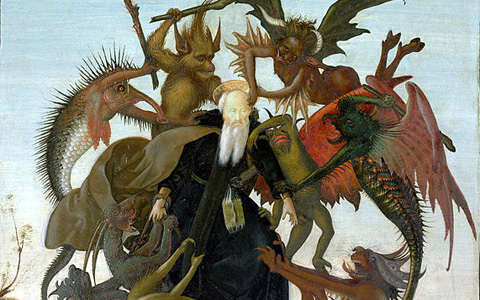
| The Torment of St. Anthony by Michelangelo |
I hope this is enough to cause compunction in some who may not have had true contrition for sins.
to be continued....
Compunction Two--On Hell
Posted by
Supertradmum
The beginning of the section on hell in Father von Cochem, The Four Last Things, written in 1899, sounds like something from 2015...http://catholictradition.org/Classics/4last-things3a.htm
It would undoubtedly be very agreeable for these people if all things ended with this life, if there were no day of reckoning, or if, at least, the infernal regions were somewhat less intolerable. This accounts for their catching at any apparent arguments wherewith to delude themselves and lull to sleep their fear of the eternal chastisements of Hell. We will not enter upon any examination of the wretched sophisms wherewith these fools deceive themselves ; for the teaching of the Catholic Church on this point is all we need* She teaches that there is a place or state of unequalled and never-ending pain in reserve for the damned.
We know that there really is fire in Hell, from the words Christ spoke to the wicked : " Depart from Me, ye cursed, into everlasting fire, which was prepared for the devil and his Angels " (Matt. xxv. 41). This shows that there is real fire in Hell, and that in it the damned must burn eternally. What the intensity of that pain will be it is beyond the power of man to depict. For of all the varied kinds of physical suffering to which man can be subjected, there is none so great, so cruel, so agonizing, as that which is caused by fire. The rack, the wheel, amputation of a man's limbs, are all terrible torture, but they are not to be compared to the pain of burning. If one does but touch a red-hot iron, what exquisite pain it occasions! In a moment the skin is off, the raw flesh protrudes, blood and matter exude from the wound, and the pain goes to the very marrow of our bones. One cannot refrain from crying out and screaming as if one had lost one’s senses. Now if momentary contact with the red-hot iron causes such acute pain, what would it be if one had to hold a red-hot iron for any length of time
Death is not an easy thing to face or "go through". I shall return to his section on death. But, I wanted to skip to Father's part on hell, as it is difficult for most Catholics today to realize that going to hell is a real possibility for each of us.
Thinking on the Four Last Things can help one train one's conscience to be more sensitive, and have more compunction. To become more aware that even a venial sin offends God must be the goal of every person who wants to be a saint. Christ Himself refers to hell and the fires of hell. These fires cannot be seen as symbolic, or as poetry. Here is a bit from Father's book.
PART III. ON HELL.
I. On the Fire of Hell.
ALTHOUGH in the present day many are found to deny the existence of Hell, or, at any rate, the eternity of punishment, we do not consider it incumbent upon us to bring forward a number of proofs that there is such a place as Hell. In the case of the Christian reader, for whom this book is intended, evidence of this nature is quite superfluous, because he will not have made shipwreck of his faith. Indeed, what further proofs can be required for the existence of Hell and the eternity of punishment, seeing that the prophets, that Christ Himself, that the apostles, and the Fathers of the Church, nay, the very Turks and heathens, speak of it as an unquestioned fact. Those who deny the existence of Hell must consequently be counted amongst the fools who say in their heart that there is no God who punishes their misdeeds.
PART III. ON HELL.
I. On the Fire of Hell.
ALTHOUGH in the present day many are found to deny the existence of Hell, or, at any rate, the eternity of punishment, we do not consider it incumbent upon us to bring forward a number of proofs that there is such a place as Hell. In the case of the Christian reader, for whom this book is intended, evidence of this nature is quite superfluous, because he will not have made shipwreck of his faith. Indeed, what further proofs can be required for the existence of Hell and the eternity of punishment, seeing that the prophets, that Christ Himself, that the apostles, and the Fathers of the Church, nay, the very Turks and heathens, speak of it as an unquestioned fact. Those who deny the existence of Hell must consequently be counted amongst the fools who say in their heart that there is no God who punishes their misdeeds.
It would undoubtedly be very agreeable for these people if all things ended with this life, if there were no day of reckoning, or if, at least, the infernal regions were somewhat less intolerable. This accounts for their catching at any apparent arguments wherewith to delude themselves and lull to sleep their fear of the eternal chastisements of Hell. We will not enter upon any examination of the wretched sophisms wherewith these fools deceive themselves ; for the teaching of the Catholic Church on this point is all we need* She teaches that there is a place or state of unequalled and never-ending pain in reserve for the damned.
We know that there really is fire in Hell, from the words Christ spoke to the wicked : " Depart from Me, ye cursed, into everlasting fire, which was prepared for the devil and his Angels " (Matt. xxv. 41). This shows that there is real fire in Hell, and that in it the damned must burn eternally. What the intensity of that pain will be it is beyond the power of man to depict. For of all the varied kinds of physical suffering to which man can be subjected, there is none so great, so cruel, so agonizing, as that which is caused by fire. The rack, the wheel, amputation of a man's limbs, are all terrible torture, but they are not to be compared to the pain of burning. If one does but touch a red-hot iron, what exquisite pain it occasions! In a moment the skin is off, the raw flesh protrudes, blood and matter exude from the wound, and the pain goes to the very marrow of our bones. One cannot refrain from crying out and screaming as if one had lost one’s senses. Now if momentary contact with the red-hot iron causes such acute pain, what would it be if one had to hold a red-hot iron for any length of time
Compunction may arise for contemplating hell. This type of compunction is imperfect, but enough to bring us to repentance and salvation.
Father quotes Isaiah:
"Behold, the wrath of the Lord burneth and is heavy to bear, His lips are filled with indignation, and His tongue as a devouring fire. His breath as a torrent overflowing even to the midst of the neck, to destroy the nations unto nothing." And again: " Topheth (Hell) is prepared from yesterday, deep and wide. The nourishment thereof is fire and much wood ; the breath of the Lord as a torrent of brimstone kindling it" (Is. xxx. 27, 33).
The priest refers to St. Augustine as well.
St. Augustine tells us that the most fearful fire on earth is, in comparison with the fire of Hell, like a painting of fire compared to a real fire.
I am afraid that many people will go to hell from our times. This is why we must share the Gospel and love in and out of season. We, also, must resolve to endure the suffering of purgation. Purification is a gift from God.
...
Woe betide me and all who have the terrible misfortune to commit mortal sin. May God keep me from such sin as would be the means of casting me into eternal perdition. I will gladly suffer all things, the greatest temporal troubles, the acutest pains, even the cruellest death, in order to escape everlasting torment in Hell. This is my firm purpose; wherefore grant me Thy grace and strengthen me in my good resolution.
On Compunction
Posted by
Supertradmum
I apologize for re-posts, but I have been ill since yesterday a.m.
But, a reader asked for a post on compunction, something I distinctly remember learning about in school from the nuns preparing up for First Confession. Little children love words, and they love big words.
Perhaps one of the best writers on compunction, which is remorse for sin or contrition, is Thomas a Kempis, the author of The Imitation of Christ, another great book for spiritual reading. a Kempis states this below.
One can have imperfect or perfect compunction, which lead to repentance.
I shall make my comments in blue.
CHAPTER XXI
OF COMPUNCTION OF HEART
If thou wilt make any progress keep thyself in the fear of God, and long not to be too free, but restrain all thy senses under discipline and give not thyself up to senseless mirth. Give thyself to compunction of heart and thou shalt find devotion. Compunction openeth the way for many good things, which dissoluteness is wont quickly to lose. It is wonderful that any man can ever rejoice heartily in this life who considereth and weigheth his banishment, and the manifold dangers which beset his soul.Since all humans have natural law written on their hearts, remorse is a normal feeling, a reaction to sin. But, many people push down this reaction and ignore it, turning away from the warning of the conscience. Compunction can be "stoked" through meditating on the Four Last Things, death, judgement, hell, and heaven.
2. Through lightness of heart and neglect of our shortcomings we feel not the sorrows of our soul, but often vainly laugh when we have good cause to weep. There is no true liberty nor real joy, save in the fear of God with a good conscience. Happy is he who can cast away every cause of distraction and bring himself to the one purpose of holy compunction. Happy is he who putteth away from him whatsoever may stain or burden his conscience. Strive manfully; custom is overcome by custom. If thou knowest how to let men alone, they will gladly let thee alone to do thine own works.
Interesting that a Kempis writes on real joy coming from a good conscience. Those who no longer allow themselves to be distracted by the world, the flesh and the devil experience a renewed fear of the Lord, a renewed energy and desire to become holy.
One wants to move away from all sin, mortal and venial, for the love of self and the love of God. This type of self-love is good, as one must work for one's own salvation as well as that of others.
a Kempis states, "Strive manfully; custom is overcome by custom." Good habits with prayer and confession drive out bad habits.
3. Busy not thyself with the affairs of others, nor entangle thyself with the business of great men. Keep always thine eye upon thyself first of all, and give advice to thyself specially before all thy dearest friends. If thou hast not the favour of men, be not thereby cast down, but let thy concern be that thou holdest not thyself so well and circumspectly, as becometh a servant of God and a devout monk. It is often better and safer for a man not to have many comforts in this life, especially those which concern the flesh. But that we lack divine comforts or feel them rarely is to our own blame, because we seek not compunction of heart, nor utterly cast away those comforts which are vain and worldly.
Gossip must be set aside, follow your own good words, become a good servant of God not men..all of these things help hone compunction, which is a tool of repentance.
The less comforts of the flesh we have, the better, as our senses will not be deadened or burdened by sin or sinful thoughts. Truly, sins of the flesh make one spiritually sluggish.
St. John of the Cross writes that we should not seek after spiritual comforts, either. One can read this in my posts on him in the two series, perfection and Doctors of the Church.
4. Know thyself to be unworthy of divine consolation, and worthy rather of much tribulation. When a man hath perfect compunction, then all the world is burdensome and bitter to him. A good man will find sufficient cause for mourning and weeping; for whether he considereth himself, or pondereth concerning his neighbour, he knoweth that no man liveth here without tribulation, and the more thoroughly he considereth himself, the more thoroughly he grieveth. Grounds for just grief and inward compunction there are in our sins and vices, wherein we lie so entangled that we are but seldom able to contemplate heavenly things.
More and more, I know that suffering is a gift which tears us away from the world. Perfect compunction, or perfect contrition, actually make worldly things distasteful. Suffering must not be avoided when self-knowledge reveals sin. In fact, grieving over sin happens fairly constantly in the Dark Night of the Soul. A daily examination of conscience can help one move towards perfect compunction, perfect contrition, which is based on the love for God.
5. If thou thoughtest upon thy death more often than how long thy life should be, thou wouldest doubtless strive more earnestly to improve. And if thou didst seriously consider the future pains of hell, I believe thou wouldest willingly endure toil or pain and fear not discipline. But because these things reach not the heart, and we still love pleasant things, therefore we remain cold and miserably indifferent.
Here it is, as if I anticipated a Kempis' note on contemplating on death and hell-- and the other the Four Last Things.
6. Oftentimes it is from poverty of spirit that the wretched body is so easily led to complain. Pray therefore humbly unto the Lord that He will give thee the spirit of compunction and say in the language of the prophet, Feed me, O Lord, with bread of tears, and give me plenteousness of tears to drink.(1)
(1) Psalm lxxv. 5.
What the author means by poverty of spirit here is a littleness, a smallness of soul, a lack of generosity. When one see one's own sins and can weep, God carves out of our hearts a place for Him to rest.
to be continued...Treatise on the Four Last Things may be found at this site.
http://catholictradition.org/Classics/4last-things.htm
Subscribe to:
Posts (Atom)


.jpg)