I found out today from one of my friends of psychology generation that she had a school psychologist in the 1960s. WOW!
Needless to say, Catholic schools did not have school psychologist. I was amazed when I heard that public schools had these so early.
So, the damaging rot came into the schools exactly in the generation I call that of psychology. Can one imagine these kids growing up in a hot-house atmosphere of being examined for psychological reasons for acting up, which in days earlier would have resulted in being refused cookies and milk, or staying in for recess, or having a note sent home to dad, and then, oh-oh.
Sin disappeared from the consciousness and conscience to the extent that kids were not allowed to suffer from consequences, which would have taught them natural law philosophy from little on.
One breaks something, one sweeps it up and pays for it. One causes a person to suffer, one apologizes. One steals something, one must not only give it back but do restitution for the sin.
One of the members of the generation of psychology did not know, even though he has been a Catholic all his life, and goes to daily Mass, that purgatory was punishment due to sin. Until our recent discussion, he had no idea that sin had consequences past the confessional box, or that one did not get into heaven unless one was purified.
It never occurred to him that sin had consequences beyond this life, and, as a NO Catholic, in his mid-50s, he claims that he has never heard any teaching from the pulpit on purgatory, except on All Souls' Day--sermons which were vague and confusing.
The priest of his parish is probably a member of the generation of psychology.
Some seminaries in America have psychologists and even psychiatrists on staff to meet with the young men on a regular basis. Some men actually see this counselor more often than they do their spiritual director, who may come from "off campus" only once a month.
We have fallen for this false religion of psychology, using it to explain sin, rather than teaching and forming the conscience through examination and reflection.
After several discussions recently with members of the generation of psychology, I have to admit I am ready to throw up my hands in frustration and walk-away from an entire group of people, who honestly believe they have never chosen sin.
Sigh....I think this cultural shift was a great victory for the evil one and part of the psywars, about which I have written in the past.
Enough, already...if one does not think one is sinning, but merely unhappy because of emotional upheaval owing to those actions of some who sinned against them, one will never take responsibility for one's own salvation-something we all must do, begging God for the grace of conversion, change, and final perseverance.
Showing posts with label conscience. Show all posts
Showing posts with label conscience. Show all posts
Friday, 24 July 2015
Thursday, 9 April 2015
Re-posts for the times..by the sword divided
Satan divides. Most of the families with whom I am familiar, including my own, are divided on issues of religion, morality, political ethics. Some of us are the only practicing Catholics among our siblings. Some have parents who have fallen away into heresy and compromise. Many parents have children and grandchildren who have left the Church, or who have refused baptism and confirmation. The names of these people would fill several pages of intercession, just for my prayer time.This state of division in families is not new. I repeat an older post. It is not comforting, but it is the truth of what we all are experiencing today, April 9, 2015.The sword of truth divides.Prayer, fasting, becoming perfect, mortification---the answers. But, all men and women have free will. Remember that you may not be the person to bring your family members back to Christ and His Church. Pray for someone to enter their lives to do this. Be humble, but firm. Friday, 23 August 2013
Musings on treachery

I have been, in the past few weeks, pursuing a personal study on the Civil War in England, as well as the times immediately leading up to the killing of a rightful king.
Now, what has always intrigued and concerned me were the families divided by religion and politics. I have written about this briefly here, http://guildofblessedtitus.blogspot.ie/2013/08/by-press-divided.html, but want to share some thoughts which will apply to us Catholics today, August 23, 2013.
That religion, Catholic, Anglican, and Calvinist loyalties led to warfare, demonstrates the deeply held beliefs of those involved.

That families were ripped apart by religion is also a fact. To this day, there are Catholic and Protestant branches of the same family existing in England, Scotland, Ireland and America. I have met people of Catholic branches in England, who have long-lost cousins of the same name in certain states in America, and these American families came over as Protestants.

The hatred and persecution by the Anglicans and Calvinists of the Catholics form the stuff of history, the stories of the Tyburn Martyrs, the heroic tales of St. Thomas More, St. John Fisher, St. Oliver Plunkett, and so on. The age of the martyrs turned into the age of civil war.
The fact that some people changed sides reveals the sad stories of betrayal and treachery.
But, there was and still is, a third category of people, who were the new men and women of the 16th and 17th centuries. These were the people who left religion entirely, became cynics, and merely worked for their own status, careers, comfort. These men and women were the moderns, those self-centred ones whose only principle was me, me, me.

These opportunists spawned further generations of non-believers, who outwardly conformed, but whose souls were impervious to the interior spiritual life.
In the days to come of persecution and testing, we shall see Catholics betraying Catholics, Catholics becoming cynics, and seizing opportunities for advancement, building their little kingdoms on the backs of those whom they betray.

We cannot kid ourselves, dear Catholic readers, Christ has prepared us for this.
And a man’s enemies shall be they of his own household. Matthew 10:36 DR
In the coming days, which side will you be on--the real Catholics, the schismatic Catholics, or the cynics? Will you be Cavaliers, Roundheads, or opportunists?


Wednesday, 1 April 2015
On Compunction

I apologize for re-posts, but I have been ill since yesterday a.m.
But, a reader asked for a post on compunction, something I distinctly remember learning about in school from the nuns preparing up for First Confession. Little children love words, and they love big words.
Perhaps one of the best writers on compunction, which is remorse for sin or contrition, is Thomas a Kempis, the author of The Imitation of Christ, another great book for spiritual reading. a Kempis states this below.
One can have imperfect or perfect compunction, which lead to repentance.
I shall make my comments in blue.

CHAPTER XXI
OF COMPUNCTION OF HEART
If thou wilt make any progress keep thyself in the fear of God, and long not to be too free, but restrain all thy senses under discipline and give not thyself up to senseless mirth. Give thyself to compunction of heart and thou shalt find devotion. Compunction openeth the way for many good things, which dissoluteness is wont quickly to lose. It is wonderful that any man can ever rejoice heartily in this life who considereth and weigheth his banishment, and the manifold dangers which beset his soul.Since all humans have natural law written on their hearts, remorse is a normal feeling, a reaction to sin. But, many people push down this reaction and ignore it, turning away from the warning of the conscience. Compunction can be "stoked" through meditating on the Four Last Things, death, judgement, hell, and heaven.
2. Through lightness of heart and neglect of our shortcomings we feel not the sorrows of our soul, but often vainly laugh when we have good cause to weep. There is no true liberty nor real joy, save in the fear of God with a good conscience. Happy is he who can cast away every cause of distraction and bring himself to the one purpose of holy compunction. Happy is he who putteth away from him whatsoever may stain or burden his conscience. Strive manfully; custom is overcome by custom. If thou knowest how to let men alone, they will gladly let thee alone to do thine own works.
Interesting that a Kempis writes on real joy coming from a good conscience. Those who no longer allow themselves to be distracted by the world, the flesh and the devil experience a renewed fear of the Lord, a renewed energy and desire to become holy.
One wants to move away from all sin, mortal and venial, for the love of self and the love of God. This type of self-love is good, as one must work for one's own salvation as well as that of others.
a Kempis states, "Strive manfully; custom is overcome by custom." Good habits with prayer and confession drive out bad habits.
3. Busy not thyself with the affairs of others, nor entangle thyself with the business of great men. Keep always thine eye upon thyself first of all, and give advice to thyself specially before all thy dearest friends. If thou hast not the favour of men, be not thereby cast down, but let thy concern be that thou holdest not thyself so well and circumspectly, as becometh a servant of God and a devout monk. It is often better and safer for a man not to have many comforts in this life, especially those which concern the flesh. But that we lack divine comforts or feel them rarely is to our own blame, because we seek not compunction of heart, nor utterly cast away those comforts which are vain and worldly.
Gossip must be set aside, follow your own good words, become a good servant of God not men..all of these things help hone compunction, which is a tool of repentance.
The less comforts of the flesh we have, the better, as our senses will not be deadened or burdened by sin or sinful thoughts. Truly, sins of the flesh make one spiritually sluggish.
St. John of the Cross writes that we should not seek after spiritual comforts, either. One can read this in my posts on him in the two series, perfection and Doctors of the Church.
4. Know thyself to be unworthy of divine consolation, and worthy rather of much tribulation. When a man hath perfect compunction, then all the world is burdensome and bitter to him. A good man will find sufficient cause for mourning and weeping; for whether he considereth himself, or pondereth concerning his neighbour, he knoweth that no man liveth here without tribulation, and the more thoroughly he considereth himself, the more thoroughly he grieveth. Grounds for just grief and inward compunction there are in our sins and vices, wherein we lie so entangled that we are but seldom able to contemplate heavenly things.
More and more, I know that suffering is a gift which tears us away from the world. Perfect compunction, or perfect contrition, actually make worldly things distasteful. Suffering must not be avoided when self-knowledge reveals sin. In fact, grieving over sin happens fairly constantly in the Dark Night of the Soul. A daily examination of conscience can help one move towards perfect compunction, perfect contrition, which is based on the love for God.
5. If thou thoughtest upon thy death more often than how long thy life should be, thou wouldest doubtless strive more earnestly to improve. And if thou didst seriously consider the future pains of hell, I believe thou wouldest willingly endure toil or pain and fear not discipline. But because these things reach not the heart, and we still love pleasant things, therefore we remain cold and miserably indifferent.
Here it is, as if I anticipated a Kempis' note on contemplating on death and hell-- and the other the Four Last Things.
6. Oftentimes it is from poverty of spirit that the wretched body is so easily led to complain. Pray therefore humbly unto the Lord that He will give thee the spirit of compunction and say in the language of the prophet, Feed me, O Lord, with bread of tears, and give me plenteousness of tears to drink.(1)
(1) Psalm lxxv. 5.
What the author means by poverty of spirit here is a littleness, a smallness of soul, a lack of generosity. When one see one's own sins and can weep, God carves out of our hearts a place for Him to rest.
to be continued...Treatise on the Four Last Things may be found at this site.
http://catholictradition.org/Classics/4last-things.htm
Saturday, 20 December 2014
Too Many Lonely People

What is wrong with Western Culture? I have met so many people, men and women, who will be spending Christmas alone. One man is having Christmas with friends, his first invitation in years.
I cannot understand this. When I was in graduate school and could not get home for Christmas because of the horrible weather, I would invite all those other students in for a meal so that no one would be alone.
And, when I had my own home, we always invited single people who had no families in for dinner and the day.
I cannot understand why families do not invite those who are alone for the day.
Christianity is not merely to be practiced in the immediate family.
Are you aware of people in your parish who may not have anyone with whom to celebrate Christmas or New Year's? Hospitality is a virtue under the larger category of charity.
As a single person, my heart breaks for those who have no place to go. I shall be eating out, with a special person, as neither of us have a place big enough to cook or convenient for company.
How sad that neither one of us was invited to Christmas dinner.
Catholics under persecution will be worse off than this. It is time to reconsider what it means to love your neighbor as yourself.
The Inns Are Full

Many good priests have been preaching from the pulpit the necessity for preparation for Christmas in matters spiritual and not merely material.
I am afraid that too many events create four weeks of celebration, instead of penance. I am also afraid that some priests deny that Advent is a penitential time, hence, the purple vestments. Most of the sermons I have heard have emphasized this time of penance.
If we do not make room for the Incarnate God, Christ, the Second Person of the Blessed Trinity, we cannot celebrate His Coming. If we are busy going to concerts, baking, cooking, shopping, and decorating, we end up like the innkeeper who told Mary and Joseph there was no room at the inn.
Inns were built with courtyards, which filled up with noisy animals and people who did not mind sleeping "rough" as long as they were behind the closed door of the inn. Mary and Joseph needed the quiet, silent place in order for Jesus to come into this world.
Are we making a silent place for His coming? I have some friends who are doing this-taking time daily to read daily prayers, going to extra Masses, and so on.
But, too many are doing less spiritual preparation, and they will end up like the innkeeper. Christ wants to come to them, but there is no room in their hearts, minds, souls, imaginations.
The will has decided that other things are more important than preparation.
We all have habits of self-deceit, because humans do not want to face that they are lacking in some thing, or doing something wrong. To say "I wish I could go to daily Mass, but I am too busy" when one can do so, or visit Christ in Adoration, and read the Scriptures, is self-deceit.
We create our own busyness. We can say no.
I have done little but pray. I have met a few friends who are going to other countries for Christmas and I shall not see them as I shall be gone when they return.
If I were here permanently, there would have been no need to meet up for lunch before Christmas.
I know families who do not have Christmas trees but trees which look like Christmas trees. I call them Advent trees. These family members tell me the trees were put up and decorated weeks ago and will come down right after New Year's day.
I asked these people whether they knew about Epiphany or the Twelve Days of Christmas.
The answer was "no". Sad that such riches of our heritage have been lost. The identity of the Catholic way of celebrating Christmas has been washed away by consumerism and parties in Advent. I refuse to go to concerts or parties. I have said no to years, and people who know me now ask me to come over after Christmas. Many weeks exist for celebration after Christmas.
To go back to work right after Christmas is a creation of both the Puritans, who hated celebrations which were based in Catholic identity, or by the secular pagans, who worship another god-Mammon.
To hold on to Catholic identity in the world is difficult, but not impossible.
I sincerely hope that none of us are like the innkeeper who had no private rooms for Mary, Joseph and the coming Jesus in his inn.
Christ will come to those who have made space for Him. He will manifest Himself to those who are paying attention, waiting for him.
Too many inns are full.
Sunday, 30 November 2014
What is "the deposit of faith"?
Some Catholics have expressed to me that they like religions which allow them a fluidity of belief. Indeed, I heard a sermon last week, wherein the priest was appealing to the congregation to change their ideas concerning Church teaching. Only the Church, usually in the person of the Pope, can explain, modify or re-express the deposit of faith. That happens through the infallibility of certain documents, such as Humanae Vitae.
Explaining or modifying is not the same as a fluidity at base. This wish or desire for fluidity is a misunderstanding of the Church's depositum fidei, the deposit of faith.
One can start with the CCC, on the section concerning sacred transmission of truth. This truth is found in its fullness in the Catholic Church.

THE TRANSMISSION OF DIVINE REVELATION
74 God "desires all men to be saved and to come to the knowledge of the truth":29 that is, of Christ Jesus.30 Christ must be proclaimed to all nations and individuals, so that this revelation may reach to the ends of the earth:
75 "Christ the Lord, in whom the entire Revelation of the most high God is summed up, commanded the apostles to preach the Gospel, which had been promised beforehand by the prophets, and which he fulfilled in his own person and promulgated with his own lips. In preaching the Gospel, they were to communicate the gifts of God to all men. This Gospel was to be the source of all saving truth and moral discipline."32
In the apostolic preaching. . .
76 In keeping with the Lord's command, the Gospel was handed on in two ways:
- orally "by the apostles who handed on, by the spoken word of their preaching, by the example they gave, by the institutions they established, what they themselves had received - whether from the lips of Christ, from his way of life and his works, or whether they had learned it at the prompting of the Holy Spirit";33
- in writing "by those apostles and other men associated with the apostles who, under the inspiration of the same Holy Spirit, committed the message of salvation to writing".34
. . . continued in apostolic succession
77 "In order that the full and living Gospel might always be preserved in the Church the apostles left bishops as their successors. They gave them their own position of teaching authority."35 Indeed, "the apostolic preaching, which is expressed in a special way in the inspired books, was to be preserved in a continuous line of succession until the end of time."36
78 This living transmission, accomplished in the Holy Spirit, is called Tradition, since it is distinct from Sacred Scripture, though closely connected to it. Through Tradition, "the Church, in her doctrine, life and worship, perpetuates and transmits to every generation all that she herself is, all that she believes."37 "The sayings of the holy Fathers are a witness to the life-giving presence of this Tradition, showing how its riches are poured out in the practice and life of the Church, in her belief and her prayer."38
79 The Father's self-communication made through his Word in the Holy Spirit, remains present and active in the Church: "God, who spoke in the past, continues to converse with the Spouse of his beloved Son. And the Holy Spirit, through whom the living voice of the Gospel rings out in the Church - and through her in the world - leads believers to the full truth, and makes the Word of Christ dwell in them in all its richness."39

Now, we know that the Protestants chucked out most of Tradition in favor of the solas, to which I referred in a post yesterday, but also in the past on this blog. To disregard the preaching of the apostles and keep only Scripture (and not all) impoverished the Christian Faith in the Protestant denominations. Of course, without a concern for the deposit of faith, a fluidity of doctrine and knowledge became acceptable. If someone does not like something, one can change the doctrine-such as that of marriage. More from the CCC:
II. THE RELATIONSHIP BETWEEN TRADITION AND SACRED SCRIPTURE
One common source. . .
80 "Sacred Tradition and Sacred Scripture, then, are bound closely together, and communicate one with the other. For both of them, flowing out from the same divine well-spring, come together in some fashion to form one thing, and move towards the same goal."40 Each of them makes present and fruitful in the Church the mystery of Christ, who promised to remain with his own "always, to the close of the age".41
. . . two distinct modes of transmission
81 "Sacred Scripture is the speech of God as it is put down in writing under the breath of the Holy Spirit."42
"And [Holy] Tradition transmits in its entirety the Word of God which has been entrusted to the apostles by Christ the Lord and the Holy Spirit. It transmits it to the successors of the apostles so that, enlightened by the Spirit of truth, they may faithfully preserve, expound and spread it abroad by their preaching."43
82 As a result the Church, to whom the transmission and interpretation of Revelation is entrusted, "does not derive her certainty about all revealed truths from the holy Scriptures alone. Both Scripture and Tradition must be accepted and honored with equal sentiments of devotion and reverence."44
Apostolic Tradition and ecclesial traditions
83 The Tradition here in question comes from the apostles and hands on what they received from Jesus' teaching and example and what they learned from the Holy Spirit. The first generation of Christians did not yet have a written New Testament, and the New Testament itself demonstrates the process of living Tradition.
Tradition is to be distinguished from the various theological, disciplinary, liturgical or devotional traditions, born in the local churches over time. These are the particular forms, adapted to different places and times, in which the great Tradition is expressed. In the light of Tradition, these traditions can be retained, modified or even abandoned under the guidance of the Church's Magisterium.
An example of this would be the allowance of usury. Such major changes are not based on the doctrines given to us by Christ, the Second Person of the Blessed Trinity, passed to the apostles, down directly to us today, but only changes which are not key teachings of the Church. So, for example, the teaching that marriage is between one man and one woman for life cannot be changed.

Now, two quick points-reason, not emotions, guide the acceptance of truth in the deposit of faith. Notice how the CCC refers to both the intellect and the heart.
Secondly, the faithful who are docile and obedient hold the sensus fidei. One, in other words, cannot be disobedient to Christ's words and the long heritage of Tradition and believe one is living in truth. Again, as an example, Humanae Vitae separates those who have the supernatural appreciation of the faith and those who do not.
See also the mini-series on infallibility.
III. THE INTERPRETATION OF THE HERITAGE OF FAITH
The heritage of faith entrusted to the whole of the Church
84 The apostles entrusted the "Sacred deposit" of the faith (the depositum fidei),45 contained in Sacred Scripture and Tradition, to the whole of the Church. "By adhering to [this heritage] the entire holy people, united to its pastors, remains always faithful to the teaching of the apostles, to the brotherhood, to the breaking of bread and the prayers. So, in maintaining, practicing and professing the faith that has been handed on, there should be a remarkable harmony between the bishops and the faithful."46
The Magisterium of the Church
85 "The task of giving an authentic interpretation of the Word of God, whether in its written form or in the form of Tradition, has been entrusted to the living teaching office of the Church alone. Its authority in this matter is exercised in the name of Jesus Christ."47 This means that the task of interpretation has been entrusted to the bishops in communion with the successor of Peter, the Bishop of Rome.
86 "Yet this Magisterium is not superior to the Word of God, but is its servant. It teaches only what has been handed on to it. At the divine command and with the help of the Holy Spirit, it listens to this devotedly, guards it with dedication and expounds it faithfully. All that it proposes for belief as being divinely revealed is drawn from this single deposit of faith."48
87 Mindful of Christ's words to his apostles: "He who hears you, hears me",49 the faithful receive with docility the teachings and directives that their pastors give them in different forms.
The dogmas of the faith
88 The Church's Magisterium exercises the authority it holds from Christ to the fullest extent when it defines dogmas, that is, when it proposes, in a form obliging the Christian people to an irrevocable adherence of faith, truths contained in divine Revelation or also when it proposes, in a definitive way, truths having a necessary connection with these.
89 There is an organic connection between our spiritual life and the dogmas. Dogmas are lights along the path of faith; they illuminate it and make it secure. Conversely, if our life is upright, our intellect and heart will be open to welcome the light shed by the dogmas of faith.50
90 The mutual connections between dogmas, and their coherence, can be found in the whole of the Revelation of the mystery of Christ.51 "In Catholic doctrine there exists an order or hierarchy of truths, since they vary in their relation to the foundation of the Christian faith."52
The supernatural sense of faith
91 All the faithful share in understanding and handing on revealed truth. They have received the anointing of the Holy Spirit, who instructs them53 and guides them into all truth.54
92 "The whole body of the faithful. . . cannot err in matters of belief. This characteristic is shown in the supernatural appreciation of faith (sensus fidei) on the part of the whole people, when, from the bishops to the last of the faithful, they manifest a universal consent in matters of faith and morals."55
93 "By this appreciation of the faith, aroused and sustained by the Spirit of truth, the People of God, guided by the sacred teaching authority (Magisterium),. . . receives. . . the faith, once for all delivered to the saints. . . The People unfailingly adheres to this faith, penetrates it more deeply with right judgment, and applies it more fully in daily life."

to be continued...
Explaining or modifying is not the same as a fluidity at base. This wish or desire for fluidity is a misunderstanding of the Church's depositum fidei, the deposit of faith.
One can start with the CCC, on the section concerning sacred transmission of truth. This truth is found in its fullness in the Catholic Church.
THE TRANSMISSION OF DIVINE REVELATION
74 God "desires all men to be saved and to come to the knowledge of the truth":29 that is, of Christ Jesus.30 Christ must be proclaimed to all nations and individuals, so that this revelation may reach to the ends of the earth:
- God graciously arranged that the things he had once revealed for the salvation of all peoples should remain in their entirety, throughout the ages, and be transmitted to all generations.31
75 "Christ the Lord, in whom the entire Revelation of the most high God is summed up, commanded the apostles to preach the Gospel, which had been promised beforehand by the prophets, and which he fulfilled in his own person and promulgated with his own lips. In preaching the Gospel, they were to communicate the gifts of God to all men. This Gospel was to be the source of all saving truth and moral discipline."32
In the apostolic preaching. . .
76 In keeping with the Lord's command, the Gospel was handed on in two ways:
- orally "by the apostles who handed on, by the spoken word of their preaching, by the example they gave, by the institutions they established, what they themselves had received - whether from the lips of Christ, from his way of life and his works, or whether they had learned it at the prompting of the Holy Spirit";33
- in writing "by those apostles and other men associated with the apostles who, under the inspiration of the same Holy Spirit, committed the message of salvation to writing".34
. . . continued in apostolic succession
77 "In order that the full and living Gospel might always be preserved in the Church the apostles left bishops as their successors. They gave them their own position of teaching authority."35 Indeed, "the apostolic preaching, which is expressed in a special way in the inspired books, was to be preserved in a continuous line of succession until the end of time."36
78 This living transmission, accomplished in the Holy Spirit, is called Tradition, since it is distinct from Sacred Scripture, though closely connected to it. Through Tradition, "the Church, in her doctrine, life and worship, perpetuates and transmits to every generation all that she herself is, all that she believes."37 "The sayings of the holy Fathers are a witness to the life-giving presence of this Tradition, showing how its riches are poured out in the practice and life of the Church, in her belief and her prayer."38
79 The Father's self-communication made through his Word in the Holy Spirit, remains present and active in the Church: "God, who spoke in the past, continues to converse with the Spouse of his beloved Son. And the Holy Spirit, through whom the living voice of the Gospel rings out in the Church - and through her in the world - leads believers to the full truth, and makes the Word of Christ dwell in them in all its richness."39
Now, we know that the Protestants chucked out most of Tradition in favor of the solas, to which I referred in a post yesterday, but also in the past on this blog. To disregard the preaching of the apostles and keep only Scripture (and not all) impoverished the Christian Faith in the Protestant denominations. Of course, without a concern for the deposit of faith, a fluidity of doctrine and knowledge became acceptable. If someone does not like something, one can change the doctrine-such as that of marriage. More from the CCC:
II. THE RELATIONSHIP BETWEEN TRADITION AND SACRED SCRIPTURE
One common source. . .
80 "Sacred Tradition and Sacred Scripture, then, are bound closely together, and communicate one with the other. For both of them, flowing out from the same divine well-spring, come together in some fashion to form one thing, and move towards the same goal."40 Each of them makes present and fruitful in the Church the mystery of Christ, who promised to remain with his own "always, to the close of the age".41
. . . two distinct modes of transmission
81 "Sacred Scripture is the speech of God as it is put down in writing under the breath of the Holy Spirit."42
"And [Holy] Tradition transmits in its entirety the Word of God which has been entrusted to the apostles by Christ the Lord and the Holy Spirit. It transmits it to the successors of the apostles so that, enlightened by the Spirit of truth, they may faithfully preserve, expound and spread it abroad by their preaching."43
82 As a result the Church, to whom the transmission and interpretation of Revelation is entrusted, "does not derive her certainty about all revealed truths from the holy Scriptures alone. Both Scripture and Tradition must be accepted and honored with equal sentiments of devotion and reverence."44
Apostolic Tradition and ecclesial traditions
83 The Tradition here in question comes from the apostles and hands on what they received from Jesus' teaching and example and what they learned from the Holy Spirit. The first generation of Christians did not yet have a written New Testament, and the New Testament itself demonstrates the process of living Tradition.
Tradition is to be distinguished from the various theological, disciplinary, liturgical or devotional traditions, born in the local churches over time. These are the particular forms, adapted to different places and times, in which the great Tradition is expressed. In the light of Tradition, these traditions can be retained, modified or even abandoned under the guidance of the Church's Magisterium.
An example of this would be the allowance of usury. Such major changes are not based on the doctrines given to us by Christ, the Second Person of the Blessed Trinity, passed to the apostles, down directly to us today, but only changes which are not key teachings of the Church. So, for example, the teaching that marriage is between one man and one woman for life cannot be changed.
Now, two quick points-reason, not emotions, guide the acceptance of truth in the deposit of faith. Notice how the CCC refers to both the intellect and the heart.
Secondly, the faithful who are docile and obedient hold the sensus fidei. One, in other words, cannot be disobedient to Christ's words and the long heritage of Tradition and believe one is living in truth. Again, as an example, Humanae Vitae separates those who have the supernatural appreciation of the faith and those who do not.
See also the mini-series on infallibility.
III. THE INTERPRETATION OF THE HERITAGE OF FAITH
The heritage of faith entrusted to the whole of the Church
84 The apostles entrusted the "Sacred deposit" of the faith (the depositum fidei),45 contained in Sacred Scripture and Tradition, to the whole of the Church. "By adhering to [this heritage] the entire holy people, united to its pastors, remains always faithful to the teaching of the apostles, to the brotherhood, to the breaking of bread and the prayers. So, in maintaining, practicing and professing the faith that has been handed on, there should be a remarkable harmony between the bishops and the faithful."46
The Magisterium of the Church
85 "The task of giving an authentic interpretation of the Word of God, whether in its written form or in the form of Tradition, has been entrusted to the living teaching office of the Church alone. Its authority in this matter is exercised in the name of Jesus Christ."47 This means that the task of interpretation has been entrusted to the bishops in communion with the successor of Peter, the Bishop of Rome.
86 "Yet this Magisterium is not superior to the Word of God, but is its servant. It teaches only what has been handed on to it. At the divine command and with the help of the Holy Spirit, it listens to this devotedly, guards it with dedication and expounds it faithfully. All that it proposes for belief as being divinely revealed is drawn from this single deposit of faith."48
87 Mindful of Christ's words to his apostles: "He who hears you, hears me",49 the faithful receive with docility the teachings and directives that their pastors give them in different forms.
The dogmas of the faith
88 The Church's Magisterium exercises the authority it holds from Christ to the fullest extent when it defines dogmas, that is, when it proposes, in a form obliging the Christian people to an irrevocable adherence of faith, truths contained in divine Revelation or also when it proposes, in a definitive way, truths having a necessary connection with these.
89 There is an organic connection between our spiritual life and the dogmas. Dogmas are lights along the path of faith; they illuminate it and make it secure. Conversely, if our life is upright, our intellect and heart will be open to welcome the light shed by the dogmas of faith.50
90 The mutual connections between dogmas, and their coherence, can be found in the whole of the Revelation of the mystery of Christ.51 "In Catholic doctrine there exists an order or hierarchy of truths, since they vary in their relation to the foundation of the Christian faith."52
The supernatural sense of faith
91 All the faithful share in understanding and handing on revealed truth. They have received the anointing of the Holy Spirit, who instructs them53 and guides them into all truth.54
92 "The whole body of the faithful. . . cannot err in matters of belief. This characteristic is shown in the supernatural appreciation of faith (sensus fidei) on the part of the whole people, when, from the bishops to the last of the faithful, they manifest a universal consent in matters of faith and morals."55
93 "By this appreciation of the faith, aroused and sustained by the Spirit of truth, the People of God, guided by the sacred teaching authority (Magisterium),. . . receives. . . the faith, once for all delivered to the saints. . . The People unfailingly adheres to this faith, penetrates it more deeply with right judgment, and applies it more fully in daily life."
to be continued...
Tuesday, 11 November 2014
Last Post Out of Six on Natural Law Today and Yesterday
As the fundamental and all-embracing obligation imposed upon man by the Creator, the natural law is the one to which all his other obligations are attached. The duties imposed on us in the supernatural law come home to us, because the natural law and its exponent, conscience, tell us that, if God has vouchsafed to us a supernatural revelation with a series of precepts, we are bound to accept and obey it. The natural law is the foundation of all human law inasmuch as it ordains that man shall live in society, and society for its constitution requires the existence of an authority, which shall possess the moral power necessary to control the members and direct them to the common good.
Human laws are valid and equitable only in so far as they correspond with, and enforce or supplement the natural law; they are null and void when they conflict with it...... Logically, chronologically, and ontologically antecedent to all human society for which it provides the indispensable basis, the natural or moral law is neither—as Hobbes, in anticipation of the modern positivistic school, taught—a product of social agreement or convention, nor a mere congeries of the actions, customs, and ways of man, as claimed by the ethicists who, refusing to acknowledge the First Cause as a Personality with whom one entertains personal relations, deprive the law of its obligatory basis.
from the Catholic Encyclopedia on natural law...
Catholic teaching has been clear on the fact that we can come to know Divine Law, through reason, our consciences, and through Divine Revelation.
If there is confusion, it is that some people are listening not the Holy Mother Church, but to the siren songs of the world, the flesh and the devil.
Natural and supernatural laws are not options. These laws are not to be ignored by humans, who risk their immortal souls by not considering God and His Ways.
Human laws, tragically, having deviated from both natural law and the law of Revelation. Souls are lost daily because the understanding of free will and natural law have been ignored.
I hope the last few posts, plus the long list of posts on free will answer some questions.
All the information I have shared is the Teaching of the Church, founded by Christ.
Check out other tags as well.
Saturday, 7 June 2014
Lest there be confusion concerning one's conscience
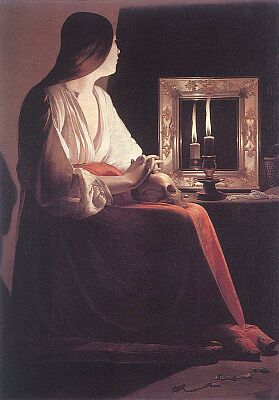
from the CCC
1795 "Conscience is man's most secret core, and his sanctuary. There he is alone with God whose voice echoes in his depths" (GS 16).
1796 Conscience is a judgment of reason by which the human person recognizes the moral quality of a concrete act.
1797 For the man who has committed evil, the verdict of his conscience remains a pledge of conversion and of hope.
1798 A well-formed conscience is upright and truthful. It formulates its judgments according to reason, in conformity with the true good willed by the wisdom of the Creator. Everyone must avail himself of the means to form his conscience.
1799 Faced with a moral choice, conscience can make either a right judgment in accordance with reason and the divine law or, on the contrary, an erroneous judgment that departs from them.
Monday, 26 May 2014
And Again, from Garrigou-Lagrange on Confession
The series on the predominant fault has received attention lately, so I am continuing posts on this theme.
One of the things I must remind readers is that the removal of the predominant fault is in the stage of Beginners.
This purification is part of the Dark Night, and not the stage of the proficients, who are involved in given contemplative prayer.
Several readers have written to me that one of the biggest problems is finding a confessor who takes the way of perfection seriously. As late as two weeks ago, I was confessing to a priest who wanted to talk me out of what I considered a serious sin of imperfection. One does not want to argue with priests, especially trad ones, but the laity must admit that not all priests themselves understand even the beginning stages of purification and, therefore, cannot help the person in the confessional.
To be honest, I have met no more than six priests in my entire in the confessional, who understood the way of perfection through purification.
Six, which is about one for every ten years of my life. The best, absolute best confessors I have had have either been FSSP priests or Opus Dei priests.
And the best of the best is at St. Kevin's in Dublin.
Here is a long section from Garrigou-Lagrange on the importance of confession in the Dark Night, the purification.
If a man who tends towards perfection has the misfortune to commit mortal sins in a moment of weakness, he must accuse himself of them sincerely and clearly at the beginning of his confession, without, seeking to cause them to pass unperceived in the multitude of venial sins. He must indicate their number, kind, and cause, and especially have a profound contrition for them accompanied by a firm purpose of avoiding in the future not only the sins themselves, but their occasions and causes. Even after receiving pardon, he must also keep alive in his heart the sincere desire to atone, by an austere life and a generous love, for the evil committed. He should also remember how the Apostle, St. Peter, wept over his denial, humbled himself profoundly, thanked infinite Mercy, and continued on his way even to martyrdom.
An isolated mortal sin, when immediately confessed and atoned for, leaves scarcely any traces in the soul, which may at once resume its ascent from the very spot where it fell, without having to retrace all the road that had already been traveled. Thus he who stumbles midway in an ascent, may, when he picks himself up, promptly continue his climb from the spot which he had reached.
Venial sins committed with full deliberation are a serious obstacle to perfection, especially when they are frequent and the soul is attached to them. They are real maladies, which weaken the Christian soul. "Do not allow sin to grow old in thee," Christ said to St. Gertrude. Fully deliberate venial sin, when not rejected, is like a poison that is not vomited forth and that, although it does not cause death immediately, acts slowly on the organism. For instance, close attention must be paid to avoid keeping voluntarily any petty rancor, or attachment to one's own judgment, to self-will, to habits of rash judgment, of slander, of dangerous natural affections that would be a fetter, depriving us of liberty of spirit and all spontaneous movement toward God. When we deliberately refuse the Lord these manifestly demanded sacrifices, we cannot expect from Him the graces that lead to perfection. Consequently we must plainly accuse ourselves of fully deliberate venial sins against charity, humility, the virtue of religion, and so forth, especially those which are most humiliating. Their cause must be sought with a firm resolution to avoid them. Otherwise, of course, there is no longer any real and effective tendency to perfection. This is a point of primary importance.
There are other semi-deliberate venial sins, which are committed with less reflection and into which there enters a certain amount of surprise and impulse, but to which the will adheres with a certain complacency. We must guard against them, especially if they recur frequently; they show that the soul fights too feebly and is not determined to free itself from all obstacles.
Sins of frailty are those committed inadvertently because of human weakness; the will has only a small share in them; it yields momentarily, but promptly disavows its weakness. Sins of this kind cannot be completely and continually avoided, but their number should be diminished. They are not a serious obstacle to perfection because they are quickly atoned for; yet it is well to submit them to the influence of the sacrament of penance because thereby purity of soul will become more complete.(1)
On this last point, an excellent confessor is essential and a great blessing. How fortunate you are if you find such a holy priest, who has allowed himself to go through the hard stages of purification, in order to help his flock, as well as save his own soul.
Sins of fraility are those which one has committed from childhood and are ingrained in our souls, sins such as white lies, cowardice, defensiveness, and even rebellion, which can become a habit. When one commits these, one must repent immediately and confess these in order for the bad habits to be broken. It is interesting that those sins of human weakness may not at all be connected to one's predominant fault.
Here is another link which might help....
http://supertradmum-etheldredasplace.blogspot.com/2013/10/practicing-virtues-in-dark-night.html
Here is another link which might help....
http://supertradmum-etheldredasplace.blogspot.com/2013/10/practicing-virtues-in-dark-night.html
to be continued.....
Wednesday, 14 May 2014
Conversations on Conscience Three
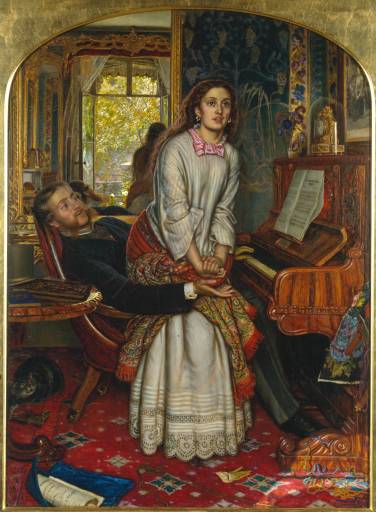 |
| The Awakening Conscience by Holman Hunt |
http://catholicharboroffaithandmorals.com/Conscience.html
I want to highlight the lax conscience in this last of three posts on conscience. The lax conscience is one which is ignored. Unlike the reference above, a person who ignores the voice of God through natural law in one's conscience denies the Holy Spirit working in them.
Such a person is totally responsible for ignoring that "still, small voice" which is the voice of God.
Many times a lax conscience happens when one purposefully chooses to ignore the advice of holy people, or even peers who understand the law of the Church.
When I was a teenager, I went on a weekend retreat in college. Someone had brought an Ouija board and set it up during "relaxation" time. A small group started to play with it. This was in the late sixties, and no one seemed to be familiar with this board, and some were curious. Thankfully, we have many more warnings now about the demonic connection with the Ouija board. One girl went over and touched it and immediately drew back. She almost yelled, but said this, "Stand back, this is dangerous. I am having nothing to do with this."
Some of those around here, thankfully, left the group. This is an example of how others can warn us of spiritual dangers and sin.
A mother told me her girl was hanging around wiccas. She warned her adult daughter to drop those friends. Many horrible things happened to the girl, like repeated car accidents and losing job after job, until she began to listen to her mom. Her so-called friends wished evil onto her through malice.
We are responsible for the loss of keenness in our consciences.
A couple which is living in fornication repeatedly make excuses for their living in sin. A side-effect of self-delusion is the hardening of conscience.
But, God's grace is stronger than any person's hardness of heart.
Pray for those who have allowed their consciences to become lax.
They have dulled their sense of sin. From the CCC.
1849 — Sin is an offense against reason, truth, and right conscience; it is a failure in genuine love for God and neighbor caused by a perverse attachment to certain goods. Its wounds the nature of man and injures human solidarity. It has been defined as “an utterance, a deed, or a desire contrary to the eternal law.”
1850 — Sin is an offense against God: “Against you, you alone, have I sinned, and done that which is evil in your sight” (Ps 51:4). Sin sets itself against God's love for us and turns our hearts away from it. Like the first sin (of Adam and Eve), it is disobedience, a revolt against God through the will to become “like gods” (Gen 3:5), knowing and determining good and evil. Sin is thus “love of oneself even to contempt of God.” In this proud self-exaltation, sin is diametrically opposed to the obedience of Jesus, which achieves our salvation (cf. Phil 2:6-9).
Conversations on Conscience Two
The Church is quite clear on the teaching regarding conscience. There are several types of conscience.
Sadly, some teachers in Catholic institutions do not teach this fact, from the CCC.
1793 If - on the contrary - the ignorance is invincible, or the moral subject is not responsible for his erroneous judgment, the evil committed by the person cannot be imputed to him. It remains no less an evil, a privation, a disorder. One must therefore work to correct the errors of moral conscience.
Invincible ignorance is an evil, a disorder. It is not a "pass-go" into heaven. How this idea became corrupted, I do not know, but those who teach that invincible ignorance exonerates someone entirely from pursuing the truth is not Catholic teaching.
Natural law is given to all by the fact that we are human. Therefore, those who suppress natural law within their consciences are guilty of sin.
As the CCC notes, "one must work to correct the errors of moral conscience".
Here is a reminder of the primacy of natural law as against the false laws of men. From Dignitatis Humanae:
More here...
http://www.vatican.va/archive/hist_councils/ii_vatican_council/documents/vat-ii_decl_19651207_dignitatis-humanae_en.html
The types of conscience follow, beginning with the faulty ones:
A dubious or doubtful conscience suspends judgement, and is faulty. Many of the relativists have not developed their consciences and live in this area of doubt or agnosticism. They are absolutely responsible for not developing their consciences. Many who followed the philosophy of Existentialism fell into this trap of non-judgement. But, the false tolerance of today is connected with the doubtful conscience.
A false or erroneous conscience is one which confuses right with wrong. If we are culpable for such, our consciences would be culpably erroneous. Only those in true invincible ignorance could fall under this title.
of inculpably erroneous. Perhaps people in isolated areas of the world, or those who are under strict communist or Islamic tyrannies may have not heard the truth of the Gospel.
If we are responsible, and most people in the West would fall under this sanction, then we have a culpable erroneous conscience.
A certain conscience is one which we must follow even if there may be errors. For if we are certain of something and do it against our conscience, we fall into sin.
An example would be if a Catholic did not realize that the bishops of his conference did not declare Friday fasts as obligatory, but thought eating fish on Friday was a mortal sin, and did eat fish on Friday, that certain conscience would be violated and there would be sin. Protestants who believe something in the Catholic Church is seriously wrong and avoid the Church because they believe that thing is sinful, such as devotion to Mary, are less culpable but still in error. They must try and find out their errors, but if they are following a certain conscience, they are less culpable. Error is in not growing in truth.
The true conscience is one formed according to Revelation and the Teachings of the Catholic Church.
That this teaching on the formation of consciences has been overlooked is a serious matter for Catholic teachers.
If you want to read more, go to Summa Theologiae Ia, q. 79, a. 13 and http://www.mercifulredeemer.org/Apologetics/catholic_morality.htm#_Toc250715
as well as Fr. Laux' Catholic Morality.
to be continued....
Sadly, some teachers in Catholic institutions do not teach this fact, from the CCC.
1793 If - on the contrary - the ignorance is invincible, or the moral subject is not responsible for his erroneous judgment, the evil committed by the person cannot be imputed to him. It remains no less an evil, a privation, a disorder. One must therefore work to correct the errors of moral conscience.
Invincible ignorance is an evil, a disorder. It is not a "pass-go" into heaven. How this idea became corrupted, I do not know, but those who teach that invincible ignorance exonerates someone entirely from pursuing the truth is not Catholic teaching.
Natural law is given to all by the fact that we are human. Therefore, those who suppress natural law within their consciences are guilty of sin.
As the CCC notes, "one must work to correct the errors of moral conscience".
Here is a reminder of the primacy of natural law as against the false laws of men. From Dignitatis Humanae:
First, the council professes its belief that God Himself has made known to mankind the way in which men are to serve Him, and thus be saved in Christ and come to blessedness. We believe that this one true religion subsists in the Catholic and Apostolic Church, to which the Lord Jesus committed the duty of spreading it abroad among all men. Thus He spoke to the Apostles: "Go, therefore, and make disciples of all nations, baptizing them in the name of the Father and of the Son and of the Holy Spirit, teaching them to observe all things whatsoever I have enjoined upon you" (Matt. 28: 19-20). On their part, all men are bound to seek the truth, especially in what concerns God and His Church, and to embrace the truth they come to know, and to hold fast to it. This Vatican Council likewise professes its belief that it is upon the human conscience that these obligations fall and exert their binding force. The truth cannot impose itself except by virtue of its own truth, as it makes its entrance into the mind at once quietly and with power. Religious freedom, in turn, which men demand as necessary to fulfill their duty to worship God, has to do with immunity from coercion in civil society. Therefore it leaves untouched traditional Catholic doctrine on the moral duty of men and societies toward the true religion and toward the one Church of Christ. Over and above all this, the council intends to develop the doctrine of recent popes on the inviolable rights of the human person and the constitutional order of society. 2. This Vatican Council declares that the human person has a right to religious freedom. This freedom means that all men are to be immune from coercion on the part of individuals or of social groups and of any human power, in such wise that no one is to be forced to act in a manner contrary to his own beliefs, whether privately or publicly, whether alone or in association with others, within due limits. The council further declares that the right to religious freedom has its foundation in the very dignity of the human person as this dignity is known through the revealed word of God and by reason itself.(2) This right of the human person to religious freedom is to be recognized in the constitutional law whereby society is governed and thus it is to become a civil right. It is in accordance with their dignity as persons-that is, beings endowed with reason and free will and therefore privileged to bear personal responsibility-that all men should be at once impelled by nature and also bound by a moral obligation to seek the truth, especially religious truth. They are also bound to adhere to the truth, once it is known, and to order their whole lives in accord with the demands of truth. However, men cannot discharge these obligations in a manner in keeping with their own nature unless they enjoy immunity from external coercion as well as psychological freedom. Therefore the right to religious freedom has its foundation not in the subjective disposition of the person, but in his very nature. In consequence, the right to this immunity continues to exist even in those who do not live up to their obligation of seeking the truth and adhering to it and the exercise of this right is not to be impeded, provided that just public order be observed. 3. Further light is shed on the subject if one considers that the highest norm of human life is the divine law-eternal, objective and universal-whereby God orders, directs and governs the entire universe and all the ways of the human community by a plan conceived in wisdom and love. Man has been made by God to participate in this law, with the result that, under the gentle disposition of divine Providence, he can come to perceive ever more fully the truth that is unchanging. Wherefore every man has the duty, and therefore the right, to seek the truth in matters religious in order that he may with prudence form for himself right and true judgments of conscience, under use of all suitable means. Truth, however, is to be sought after in a manner proper to the dignity of the human person and his social nature. The inquiry is to be free, carried on with the aid of teaching or instruction, communication and dialogue, in the course of which men explain to one another the truth they have discovered, or think they have discovered, in order thus to assist one another in the quest for truth. Moreover, as the truth is discovered, it is by a personal assent that men are to adhere to it. On his part, man perceives and acknowledges the imperatives of the divine law through the mediation of conscience. In all his activity a man is bound to follow his conscience in order that he may come to God, the end and purpose of life. It follows that he is not to be forced to act in a manner contrary to his conscience. Nor, on the other hand, is he to be restrained from acting in accordance with his conscience, especially in matters religious. The reason is that the exercise of religion, of its very nature, consists before all else in those internal, voluntary and free acts whereby man sets the course of his life directly toward God. No merely human power can either command or prohibit acts of this kind.(3) The social nature of man, however, itself requires that he should give external expression to his internal acts of religion: that he should share with others in matters religious; that he should profess his religion in community. Injury therefore is done to the human person and to the very order established by God for human life, if the free exercise of religion is denied in society, provided just public order is observed. |
More here...
http://www.vatican.va/archive/hist_councils/ii_vatican_council/documents/vat-ii_decl_19651207_dignitatis-humanae_en.html
The types of conscience follow, beginning with the faulty ones:
A dubious or doubtful conscience suspends judgement, and is faulty. Many of the relativists have not developed their consciences and live in this area of doubt or agnosticism. They are absolutely responsible for not developing their consciences. Many who followed the philosophy of Existentialism fell into this trap of non-judgement. But, the false tolerance of today is connected with the doubtful conscience.
A false or erroneous conscience is one which confuses right with wrong. If we are culpable for such, our consciences would be culpably erroneous. Only those in true invincible ignorance could fall under this title.
of inculpably erroneous. Perhaps people in isolated areas of the world, or those who are under strict communist or Islamic tyrannies may have not heard the truth of the Gospel.
If we are responsible, and most people in the West would fall under this sanction, then we have a culpable erroneous conscience.
A certain conscience is one which we must follow even if there may be errors. For if we are certain of something and do it against our conscience, we fall into sin.
An example would be if a Catholic did not realize that the bishops of his conference did not declare Friday fasts as obligatory, but thought eating fish on Friday was a mortal sin, and did eat fish on Friday, that certain conscience would be violated and there would be sin. Protestants who believe something in the Catholic Church is seriously wrong and avoid the Church because they believe that thing is sinful, such as devotion to Mary, are less culpable but still in error. They must try and find out their errors, but if they are following a certain conscience, they are less culpable. Error is in not growing in truth.
The true conscience is one formed according to Revelation and the Teachings of the Catholic Church.
That this teaching on the formation of consciences has been overlooked is a serious matter for Catholic teachers.
If you want to read more, go to Summa Theologiae Ia, q. 79, a. 13 and http://www.mercifulredeemer.org/Apologetics/catholic_morality.htm#_Toc250715
as well as Fr. Laux' Catholic Morality.
to be continued....
Conversations on Conscience
We have a conscience before we are born. It is given to us from the moment of our conception. This ability to apply natural law to situations is actually a judgement from reason. As all people are born with reason, all people at some levels of competency are able to judge according to conscience.
St. John Chrysostom writes that since all humans have a conscience, no human needs a guide or teacher with regard to natural law. He also writes that no one can "...pretend to ascribe the neglect of virtue to ignorance..."
Some Catholic teachers have been very wrong is saying that humans have no culpability for certain actions, such as abortion or contraception or homosexual sex. The Catholic Church through her teaching has always held that simply by the fact that we are human, we know certain things are unnatural and sinful
But, it is also the duty of Catholics to develop their consciences to become more sensitive through the teachings of the Church.
God is the first Creator of Law, both natural law and revealed law, the Ten Commandments. Natural law and the Ten Commandments are one and the same. God revealed the Ten Commandments because men forgot to look into their own reason and sinned against their natural consciences.
Christ Himself, through His Life and teaching also taught us how to follow and illuminate our consciences through the sacraments of the Church, through those conduits of sanctifying grace.
God is the first Creator of Law in the Church as well.
St. Paul is the first person to use the word conscience in the Scriptures, as teachers have told us.
Romans 2:15
New Revised Standard Version Catholic Edition (NRSVCE)
15 They show that what the law requires is written on their hearts, to which their own conscience also bears witness; and their conflicting thoughts will accuse or perhaps excuse them.
When we die, we shall stand before God and accuse ourselves in our particular judgment. I had a small glimpse of this almost three years ago and it was a terrible but revealing happening. I have written about this before. One so-called small venial sin before the Perfection, Goodness and Purity of God is like a mountain.
What I have learned about conscience has been taught to me through the teachings of the Catholic Church from my Holy Communion prep days until even this day. None of what I write about the conscience should be new or startling. But, many false teachers make excuses and even deny natural law, to the peril of the souls of those they teach.
St. Paul also states,
Romans 9:1
New Revised Standard Version Catholic Edition (NRSVCE)
9 I am speaking the truth in Christ—I am not lying; my conscience confirms it by the Holy Spirit—
When we are in the Holy Spirit, after baptism, we have the ability to develop our consciences. A really good conscience is one which finds the fullness of truth in the Catholic Church. One author, who taught about the conscience, Fr. Laux, which I use in teaching religion and who I used in home schooling and from whom I have been reminded of the above truths, writes this:
"A true conscience speaks the truth; it tells what is truly right and truly wrong. It is a genuine Echo of the voice of God."
to be continued..

Sunday, 2 February 2014
February 24, 303 III

Moving from the established fact that totalitarian states guard the status quo by eliminating threats, and that such resulting persecutions are legal. one can state that such times of terror are actually popular with the vast majority of people.
One thinks of the crowds at Tyburn who came to watch the death of "traitors". Remember, Diocletian's laws against the Catholics were seen as necessary for the "morality" of the Roman Empire. He had an ideology and he was an authoritarian. Does this sound familiar?
He created his own popularity. He was seen as a "reformer" for the good of the people. Of course, he would make sure his ideas were popular. By definition, popularity is conformist.
Catholics, by design, are non-conformists, a sign of contradiction in the world. So, too, were those in the time of Diocletian.
Popular support of any type of persecution can be outlined.
1) Those who hate the Catholic would be relieved to join in such a persecution, and there are many who hate Catholics.
2) Catholics would be unpopular because their lifestyle makes people uncomfortable, reminding them of natural law and the Ten Commandments.
3) Popular support comes from a mind-set that "peace in our times" is more important than standing up for minorities or religious groups.
4) People thrive on the spoils of war from persecutions. My own family lost land and houses in the Holocaust, for example. Most of the existing aristocracy in Great Britain became wealthy land owners under Henry VIII and Elizabeth I from stolen land and resources taken from the monasteries, churches, and laity.

5) The unseen powers of the air, satan and his minions, hate the Church and use their slaves to bring down the Church. This is one of the goals of demonic activity. People involved in the occult and Masonry know this and cooperate with evil in popular movements.
6) Many people are just plain cowards or apathetic and will go along with the times.
And so on.....
The stage is being set for the out and out persecution of the Catholic Church in the Western World. And, those who want a false peace, to placate their stained consciences, who hate God and His Church, and who live carpe diem, will go along with whatever a state decides.
To be continued....
Subscribe to:
Posts (Atom)