Recent Posts

Wednesday, 16 January 2013

Defence is a Duty as Well as a Right


Engagements of the Knights of Malta, when men were brave and understood their duty. From Wiki

The Crusades
Siege of Ascalon (1153)
Battle of Arsuf (1191)
Siege of Acre (1291)
Siege of Rhodes (1480)
Siege of Rhodes (1522)
Battle of Preveza (1538)
Siege of Tripoli (1551)
Siege of Malta (1565)
Battle of Lepanto (1571)
Barbary Pirates (1607)
Other service in European navies.


Changed timetable for abortion bill in Ireland


From Tuesday's Irish Times on line.
Abortion Bill 
It is expected the Bill that will legalise abortion in restricted circumstances will be on the priority list for the summer session.
Minister for Health James Reilly has said he expects the legislation to be enacted before the summer but many of his colleagues in the Dáil and Seanad say that his timetable is too ambitious. Chairman of the Oireachtas health committee Jerry Buttimer is holding a meeting with committee colleagues this week to finalise arrangements for writing its report on last week’s hearing from medical and legal experts as well as churches and advocacy groups.

January 19th pro-life vigil planned in Dublin

Pro-Life Articles • DFW Catholic.org


Dublin, Ireland, Jan 16, 2013 / 02:06 am (CNA/EWTN News).- A Jan. 19 pro-life vigil in Dublin aims to rally against the government's proposal to permit some abortions, warning that abortion advocates are blurring important moral distinctions in the debate.

“Time and again, when the distinction is made between current medical practice which cares for both the mother and baby and direct, intentional abortion, voters give their unambiguous support to pro-life laws,” Caroline Simons, a legal consultant for the Pro Life Campaign, said in a Jan. 14 announcement.

She said the debate over the legalization of some abortions is a “defining moment for Ireland” and Irish people need to “make their voices heard loud and clear.”

The rally will take place in Dublin’s Merrion Square Saturday at 4:30 p.m. local time. A Dec. 4 rally outside of the Dáil Eireann in Dublin drew over 10,000 people.

Simons on Jan. 15 further explained that everyone agrees women must receive life-saving treatments even if it may lead to the unintentional death of the unborn baby.

“Where the disagreement arises is that some are skilfully but unfairly using the occasion to push for an abortion regime in Ireland and are blurring the distinction between necessary medical treatments and abortion,” she said.

More on site

This for That............? !

That

This, but it is sunny right now BUT freezing

Poll update


Boomers, where are you? The 0-49ners are 64% of the poll at this point. Gens X and Y.

Hey, socialists really, really, do not love the poor


The foxes have holes, and the birds of the air nests: but the s
Son of man hath not where to lay his head Matthew 8:20 DR


This may surprise some of you. The socialists really do not love the poor. They do not invite them into their houses and feed them from their tables. They do not know their names.

Socialism has nothing to do with being kind or helping the poor, or even understanding the plight of the poor.

It is about social engineering. It is about control. It is not about sanctity.

Power. It is about power.

It is about empowering a government and taking away dignity and personal rights for people to earn money and make money in business, and keep it and use it as they so wish. It is about taking power away from the people

The Catholic Church is not a socialist institution.

When Christ said, "The poor you will always have with you", He was reminding us of our duty to share. This statement is in three Gospels. It is important. Matthew 26:11; Mark 14:7; John 12:8. The apostles thought this statement was important enough to include it in their Testaments from, perhaps, thousands of sayings of Christ. Christ is God. He chose poverty.

But emptied himself, taking the form of a servant, being made in the likeness of men, and in habit found as a man. Philippians 2:7, DR

He did not prophecy a classless society, or a society where all people have the same things.

I am not rich. I am poor. Now, God chooses to bless the rich. That is God's business. I am not God. I do not judge His wisdom and grace. 

I do not judge myself. That He, is His wisdom and goodness has decided that I am poor, is also God's business. 

So, why do people hate and suspect me of something? This is a mystery of poverty. That the poor are not favoured and the rich are is a truism one sees daily. I would rather be invisible than hated. People think,"She is not my kind of person. She cannot do what I can do. She is not in my social set." So be it.

Neither was Christ in the social set of His day. He was despised, rejected. 

Christ was hated to the point of murder.

Such is life. People are nice to the rich for their own reasons-perhaps for advancement, or status.

Perhaps for the perks. Some people are kind to the poor. I have met kind people. Some are really so, and some are out of guilt or duty, not the heart. Not many. Most judge.

But, for me, this is a learning experience. Do not judge the rich, either.

Do not judge either the rich or the poor. All that happens is God's Will.

St. Thomas More said that. I paraphrase. He was well-to-do and in a very short time, he and his family were impoverished by a viscous king.

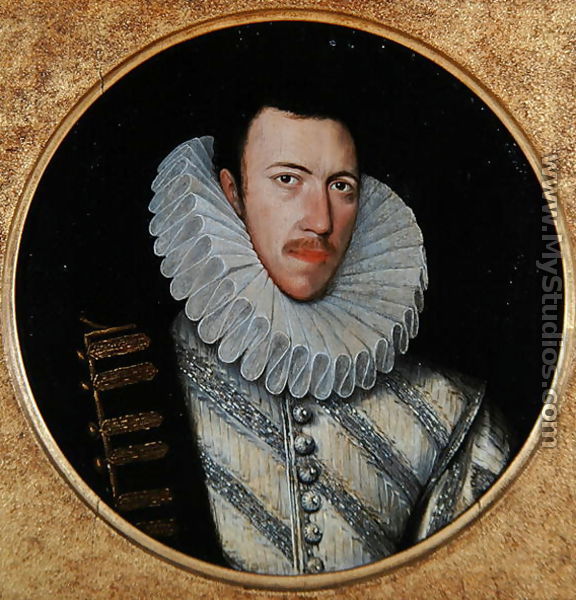
St. Philip Howard spent long, long years in the Tower of London, impoverished.

His family had to flee to France.

Empress Zita ended up exiled almost for life from Austria. She was not a wealthy woman at the end of her life and relied on friends for help for herself and her children.

So,why are the poor judged? 

Fear of failure, fear of loss of status, fear of illness-as the poor cannot afford health, fear of getting involved, fear of the unknown, fear of criticism.

My idea is that if I entertain a person poorer than myself, I am serving Christ Himself.

Kindness is the most important gift to the poor, who suffer from harsh criticisms daily.

Where some of the bishops have fallen away from consistent Catholic teaching on individual charity is that they have looked to institutions which are large to do the work we all should be doing.

The greatest pain for the poor is the lack of respect. Why money means respect is a mystery to me. I have never understood this principle of respecting a person less because they had less. The most generous and kind people I have ever met have been the poor-Maria, Denise, Anne, those who never quite made it into the middle class and never will.

Why is it that they have been generous?

They understand the need for love, real love, as the poor are hated and feared.

They are not esteemed. They are given less on their plate than are given to the rich. No one has to impress the poor.

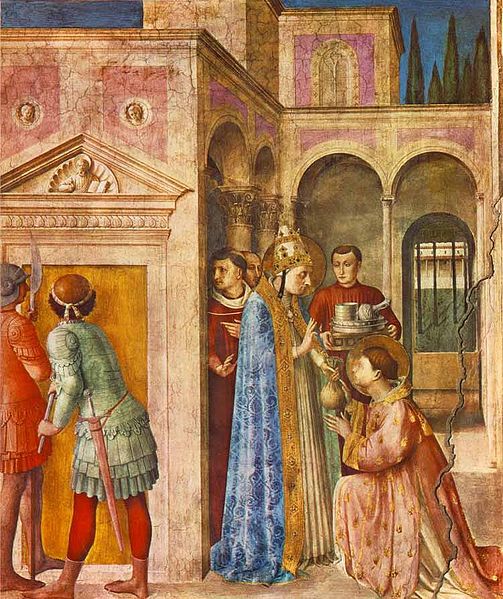
St. Lawrence should be our example.

Ambrose relates (De officiis min. xxviii) that when St. Lawrence was asked for the treasures of the Churchhe brought forward the poor, among whom he had divided the treasure, in place of alms. Catholic Encyclopedia

An American middle class woman asked me why the Church has asked for preferential option for the poor in economics. She was angry. She did not understand that her life and that of the poor were connected. She did not understand her own freedom in choosing not to help the real poor.

The poor remind me of who I am before God. We are all poor in some way. Poverty reminds me of my spiritual state, which is pathetic in the eyes of God, Who is all Holiness. If I am poor in material things, it is a real projection of my spiritual state.

That is a good. If I am poor, that is the reality of my soul. I do not want to pretend. If I am poor inside, I want to be poor outside. 

This is hard, very hard. One is judged by clothes, shoes, and the size of one's house. If one has no house, oh my goodness.

Christ had no where to lay His Head. 

I would rather identify with Him on earth than any other person.

I want to become more and more like the Person I love.

St. Gemma Galgani is the patron saint of the poor and unemployed.

She was very poor. She is a saint.

From a website dedicated to her. These are her words in bold.

'We had nothing. The Court and the creditors took all. In the beginning we depended upon the charity of the good, but afterwards Guido got a position as chemist at the City Hospital.' Gemma, however, was not appalled by the poverty to which she and her family were reduced, because she considered poverty and the sorrows of life as precious gifts from God-as an ignored inheritance reserved by Him for the elect.


And these are her words. 

"I wish, oh Jesus, that my voice could reach to the ends of the world, to call all sinners and tell them to enter into Thy Heart....Oh, if only all sinners would come to Thy Heart!... Come! Come sinners, do not be afraid! The sword of Justice cannot reach you Here!" 


If you had a choice to say those words from the heart, while being poor and not having a clue what these words mean and be wealthy, what would you choose?


And some words to ponder from 


The Compendium of the 
Social Doctrine of the Church

Pontifical Council for Justice and Peace, 2005

“Solidarity without subsidiarity, in fact, can easily degenerate into 
a ‘Welfare State’, while subsidiarity without solidarity runs the risk 
of encouraging forms of self-centred localism. In order to respect 
both of these fundamental principles, the State’s intervention in 
the economic environment must be neither invasive nor absent, 
but commensurate with society’s real needs (no. 351).
“...the universal destination of goods requires that the poor, the 
marginalized and in all cases those whose living conditions interfere 
with their proper growth should be the focus of particular concern. 
To this end, the preferential option for the poor should be reaffirmed in all its force.... 
It affects the life of each Christian inasmuch as he or she seeks to imitate the life of Christ, but it 
applies equally to our social responsibilities and hence to our manner of living…” (no. 182).


And what do the poor do for us? They challenge our idols. They show us our weaknesses. They remind us to be grateful. They represent Christ on the Cross.  They demand our attention to not merely do good, but BE good.

No small vocation, that...............................

A contentious subject and many viewpoints

Predestination is not only the extreme teaching of the Calvinists, but a part of our own Teaching in the Catholic Church. Some people may be shocked by this.

I read quite a bit on this subject and recommend Garrigou-Lagrange's book which is on line and found here.

http://www.thesumma.info/predestination/index.php

To get you all interested, here is a snippet. I have written on this subject before and need to write more to unpack this great Thomist's theology.

There is a great mystery between grace and effort. Some Protestants believe that one cannot strive for grace at all.

Garrigou-Lagrange helps us with St. Augustine and St. Thomas Aquinas' explanations on predestination. This is merely the beginning of the discussion.


For St. Augustine, predestination presupposes a decisive and definite will on God's part to sanctify and save freely all the elect.(13) God knows them individually and He wills to have them perform meritoriously acts that are required for entering heaven. He wills to give them the grace to persevere until the end, this being what St. Paul means when he says: "For it is God who worketh in you, both to will and to accomplish according to His good will."(14) The fact that God foresees our salutary and meritorious acts presupposes, according to the teaching of St. Augustine, the decree of the divine will as regards these acts.(15) Father Portalié considers that St. Augustine favors the theory of the scientia media because of the following sentence: "Far be it that man should have the power to frustrate the intention of the omnipotent Being who has foreknowledge of all things."(16) We know, on the contrary, that for St. Augustine the foreknowledge of our salutary acts refers to what God has decreed that created wills should do. The words that immediately follow the text quoted by Father Portalié prove this to be so, for we read: "These have but a faint conception of so great a question, or what they have does not suffice, who think that the omnipotent God wills something and is powerless to effect it because of weak man preventing Him." Father Portalié should have remarked that Molina, on the other hand, reproved St. Augustine for not having known of the scientia media.(17)
To what cause must we assign, according to the great doctor's opinion, the efficacy of grace that is granted to the elect? The principles laid down by him reveal his mind on this point. God's will, he says, is omnipotent and efficacious (most efficacious).(18) We read in one of his treatises as follows: "There is no doubt that human wills cannot resist (in sensu composito) the will of God, who hath done whatsoever He willed in heaven and on earth, in that He does what He wills and when He wills. Undoubtedly He has the power to move the human heart to submit, as it pleases Him, to His omnipotent will."(19) From this we see that, in St. Augustine's view, the decrees of the divine will are infallible not because God foreknows that we will give our consent, but because He is omnipotent. He also says: "The wills of men are more in God's power than in their own."(20) In another of his works he says: "There is no doubt that we will whenever we will, but He is the cause of our willing what is good; . . . there is no doubt that we act whenever we act, but He is the cause of our acting, by most efficaciously strengthening our will."(21) Still more clearly when speaking professedly on this subject of predestination, he says that "no one who is hardened in heart rejects grace, because it is primarily given to remove this hardness of heart.''(22)
Lastly, St. Augustine repeatedly teaches that predestination is gratuitous. And he means predestination as he defined it, which is not only to grace but also to glory; for predestination to grace alone does not lead one effectively to eternal life. It has but the name of predestination, since it belongs equally to those who, after being justified, do not persevere.

In this past week, two people said they could not believe that God did not love all men enough to allow them free will.   They could not understand that God loved us so much as to give us free will to separate from Him.

They could not understand that grace is given, but some say no. 

They could not understand that God does not give the same gifts to all the same--even grace. They wanted all people to go to Heaven. So do I. But, that is not the teaching of the Church.

But, all are given the chance and grace at some point.  The theologians have discussed this question for centuries. I can do a little discussion on this blog.  To be continued.....

A discovered saint and horned helmets

It is fun to find out about a saint of whom one was not aware in the past. Today, I discovered St. Henry of Cocket. As I am into hermits right now, I thought I would share this.

Here is his life in brief from Catholic Online and Wiki. 

 A Danish hermit who had a hermitage on Cocket, an island off the coast of Northumbria, England. He lived under the director of the monks of Tynemouth. He died in 1127
Henry of Coquet (died 1127) was a Dane who lived in a hermitage on the island of Coquet, off the Northumberlandcoast. He died there in 1127. He is venerated as a saint in the Catholic Church. There is a stained glass window in the church of St Thomas of Canterbury in Deal, Kent, England, showing an image of 'St Henry the Dane'. He is wearing a horned helmet.[1]    

I like the fact that in the stained glass window he is wearing a helmet. I cannot find a photo of the window, but here is Danish helmet with horns. I am not sure why a hermit would need such armour. 
Maybe the English needed to be reminded that this St. Henry was Danish. Maybe he was an ex-marauder. 


On shoe-string potatoes and socialism

Not the McCafe. I am in a different cafe today, eating a ham and cheese sandwich which could be from a shop in Iowa. Weird how Western culture is all over.

But, Western ideals are not. I have been thinking about these times in Malta and in other parts of Europe. People in America still believe the financial crisis cannot happen there. Malta, which has a better economy than most, is also blind-sided by socialism and the false press, which only shows prosperity and not the crisis across the waters. Italian television is more realistic.

 But, people do not want to face the coming climax of the euro-crisis. Why not? The Europeans think that America will fall first and Americans think Europe will fall first. So? It will all happen together. We have a global economy. Duh. (I am eating, by mistake, prawn shoestring potatoes. I could not read the wrap correctly--eeiiuu--so much for being homesick for Iowa shoe-string potatoes).

 Any person who is following the president who has signed more Executive Orders than all the presidents before him, or who is following the new possible Supreme Court appointees should realize we have lost the culture war.


This means we have lost the political culture war as well. Not merely have we lost the abortion, contraception, health-care, same-sex marriage and other moral issues, but the moral issue of thrift, savings, working for a living, earning one's way and not relying on big bloated government. It it any wonder that this president was re-elected in climate where so many people are on food stamps?

The government bought votes.

 As to the Second Amendment, Europe just does not understand how independent minded some of us still are. Unless one is independent in one's spirit and prizes individual freedoms over material benefits, one is a slave.

Socialism is slavery.

I have written so many times on this blog as to the depraved idea of the individual held by socialists and how every Pope for the past 150 plus years has condemned this type of social engineering. And yet, so many Catholics confuse helping the poor with big government.

The Marxists have won the brain game. People think in terms of socialism and not democracy. They think in terms of the free lunch. Nothing is free.


So be it...and so will both national federation fall-America and Europe.

I forgot I am different....

All of my adult life, I have rarely watched television. I can say that I have never bought a t.v. And, I can say that no one wants to play television trivia games with me as a partner.

I have followed the news on line and in newspapers. If you watch television news, you are getting the owner of the station or the franchise's views only.

I watch movies either by going once a year or playing DVDs on my computer. The sport I did follow was cricket and from 1997 watched it mostly on line. Same with tennis.

I have gone years not watching t.v. and certain series, I have seen on the computer by DVDs. However, I do not follow anything. I have better things to do. When I use to help students with time management problems, t.v.would be the first thing to go.

 We were readers in my family. We did things, like sport, drama, painting, talking about ideas. I simply cannot understand watching hours of television.

Tuesday, 15 January 2013

True Goodness


For LM to be inspired: and some of you know this tale.

Two years ago, almost, I had an experience which some people in Europe have described as well. I call it a "mini-particular judgement".

I have written about a person I knew and here is that story.

I think some of us have been given a special grace to see the intense and amazing Purity of God.

To be in the face of Pure Innocence and Goodness changed my life two years ago. It was like encountering a solid rock, immovable, strong, pure.

I was in the Presence of an immutable God, an Absolute Purity, so strong that this encounter changed me into a person realizing how the slightest sin is an insult. That more than one person is experiencing this can only be described as sheer grace. Why this is happening to some, I cannot say..............

But, one must be brave and be open to change.

One must be brave enough to stand up to those who think one is being over-sensitive to sin.

If you had experienced what I did, you would fear sin and death, without the Great Mercy of Christ.

Which is part of the experience--the reason for the Crucifixion and Death of Our Lord. Following the judgement comes Mercy and Love.

Nothing else matters except accepting His Love, which is so beyond anything we can imagine.

Secondly, one must be willing to change, drastically, focussing on Christ and His Kingdom, focussing on God the Father, Who is All in All, and the Holy Spirit, Who is Love.

What else matters? I did not ask for this grace and neither have others who have experienced God thus.

Grace for a great sinner. I sin constantly. I fail myself and others. I insult God.

I hope you are inspired, LM. God be with you always, and I shall pray for you especially today. May you live in God's Love.  Bye, I am supposed to be on retreat!


Wednesday, 25 April 2012


The Purity of God

Dante Seeing Beatrice for the First Time: Holiday
I hear so many people today say that they do not believe in Hell, because "a good God would not send anyone to such a place." Love without Justice is sentiment, not Love. I try to explain to such ladies and gentlemen that God is so Perfect, that one small indiscretion on our part is an affront to Purity Himself.

God is Just, not as a human judge, but because He is All-Good and All-Loving. In the Face of Perfect Love, one sees one's limitations, failings imperfections, sins.

Last year, I know a person who had such an experience of the Purity of God. In one purgatorial moment, in December of 2011, he experienced being in the Presence of Pure Goodness, Pure Innocence, and how the smallest transgression was like the worst sin in the proximity of God. This he experienced, and wept for his sin, for failing God. This was very much like the particular judgement, except that he did not die, and that he knew that if he said yes to suffering, he was saying yes to life, to love. And, yet, experiencing Love, Who is God, had been through an other, his beloved friend, whom he wanted to marry, whom he had hurt rather inadvertently, which caused this moment of grace. This person said that his small imperfection, which many would think is not even a sin, caused him such grief in the Face of the Living Purity Who is God, that he sobbed for two and one-half hours. He felt two things and he knew two things: that God is all Just and that God is all Love. And, that if God did move the heart of his loved one to love him, it would be grace and not anything he deserved. He was, metaphorically, stripped naked in the Sight of God. All of his life and history was in the Will of God. He also understood that his one small imperfection merited hell, not merely purgatory, and that the Passion of Christ had taken away his own punishment. I do not know the end of the story. But, I am sure the man was changed forever. He does not mind that I share this with you. He thought, perhaps, that his moment of a glimpse of the particular judgement would help others understand the magnitude of the Love and Purity of God.

This story, which is true, is amazing. That a man could see his imperfection, and in Love, in the Presence of God, still know that he could have been damned showed me that God's Justice is actually God's Love. Any other understanding is pure sentimentality and far from the teaching of the Church.

Dante meeting Beatrice in Heaven: Rossetti


On cold England, onions and self-will


On vineyards, onions and the necessity for personal holiness.

The self is the soul.

St. Bernard of Clairvaux, in his sermons on The Song of Songs, notes in the one entitled, “On the Mystical Vineyards” that there are two dangers for which the great author Solomon warns us.

The first is for those who are in charge of other souls, the priests, bishops, abbots, mother superiors, parents.

Bernard writes, “I am amazed my brethren, at the audacity of some, who are we see, can gather nothing in their own vineyards but ‘thorns and briers’, and who yet have the daring to intrude themselves into the vineyards of the Lord. No keepers, no husbandmen they, but ‘thieves and robbers…”

Bernard continues, “…because, having to watch over many, I am compelled to be less diligent and less solicitous with regard to my own. I am not permitted to ‘make a hedge round about it’,  nor to ‘dig in it a press.’”  He notes that the hedge is “exposed to sadness; it is open to anger and impatience.  The busy ‘little foxes’ of  ‘present necessities’ lay it waste. Anxieties, suspicions, and solicitudes rush in upon it from every side.”

Now, he is referring to the authority given to him as abbot and the care he must take for the souls of his men.  But, the danger is for one to become sterile in one’s own soul, while taking care of others.

Here, he defines the vineyard as the soul.

So, too for parents, this is a warning. Doing all the things which seem to be “present necessities” impinge upon the prayer lives of the family and the parents themselves.

It is no good taking your children to all the extra-curricular activities or school, or going to many social activities, or watching television, or even doing good works, is the parents are not tending to their own souls.

We cannot give what we do not have.

As a parent, I see how easy it is to lie to one’s self and say one is doing something for the kids, when in reality it is merely building up my own status in society or my own self-worth.

Parents, the most important duty you have is not merely to pass on the Faith to your children, but to nurture a prayer life in each one.

Bernard notes that St. Peter was made the First Pope because he became fearless, he became one who had Faith in Christ.

Bernard also states this truism for today: “Yet, how many have rated of more worth than their won salvation a little of that vile thing we call money! St. Paul would not give such a preference even to his life. “Neither”, and here Bernard quotes Paul, “do I count myy life more precious than myself”.

The self is the soul.

If we do not tend to our own soul assiduously, we cannot lead others to Christ.

We become open to falseshoods and even, God forbid, heresies. We look for spiritual guides over than Christ and His Church.

Here is Bernard extrapolating on St. Paul:

“’When I speak of myself’, he seems to say, ‘think of that which is most excellent in me, and in which I stand by the grace of God, namely, my mind and reason. But when I talk of my life, I mean the inferior part of my soul which is employed in animating the body, and constitutes with it the principle of concupiscence. That, I confess, I once made myself to be, but now I do so no longer. For I do not now walk according to the flesh but according to the spirit. “I live, now not I, but Christ liveth in me.”’”

Give up your wills, dear parents and leaders and allow all the attractions of the flesh to be crucified, is the advice of Bernard.

I see it in myself, if I do not have custody of the eyes. There are so many temptations. Just walk through Duty Free!

If we lose our souls, we cannot govern ourselves and if we cannot govern ourselves, we cannot govern others.

Why do parents give in to all the whims of their children, who want things and activities, but ignore the deep formation of their souls?

Bernard states that luxury does not lead to wisdom of the soul.

In fact, spurning luxury leads to wisdom of the soul.

He has a sense of humour.

“’Pulse’, thou complainest, ‘produces flatulency, cheese cause indigestion, milk gives me headaches, my chest will not suffer me to drink cold water, cabbage makes me melancholy, I  always feel choleric after onions, fish from the lake or from muddy water does not agree with my constitution.’ What! In all rivers, fields, gardens, cellars, thou canst find scarcely anything fit to be they food!”

Readers, if you are around people who talk only of material things, like vacations, diamonds, food, activities, choose other friends.

Surround yourself with people who, like Bernard, see the need for the eyes of a spiritual soul.

Do not think that these things do not affect your spiritual life.

Bernard concludes this sermon with these words. He exhorts all to die to self, and the visions of self, and the ideas of self, and when one has given one’s soul to Christ, given one’s free will and soul to Him, He will tend the vineyard.

I am distressed at so many parents missing the point of family life by immersing themselves in business.

Holiness demands prayer, silence, an atmosphere of belief and peace in the home.

God bless you all.

And, as I am back now in England, hello to cold and damp.


Good-bye to perhaps the most beautiful church in the world

I wish you could hear the bells booming out across the piazza
St. John's Co-Cathedral


Too bad there is no TLM here.

Ciao-ciao


I would like to thank the staff and management of the St. Julian's McDonald's for being so nice over the past weeks I have come in for tons of coffee, cheese cake, and brioches. I did pay for all my food, but as they got to know me, coming in to use the Internet on an almost daily basis, they warmed up to the strange "English lady" who took a very small table in a corner and typed away.

Goodbye to Kristina, the singing waitress. She has a beautiful voice. And, she always has a smile.


There were a few men now and then who also typed away, but I must admit, I was the only female doing so...


The coffee is especially good at the McCafe. Ciao-ciao.

On the Dialogue Mass

By the way, while here, I discovered a blog from a Tridentine Mass group. Here is a really interesting article for you all. Here is the on line address: http://pro-tridentina-malta.blogspot.com/2012/10/dialogue-mass.html

I do not know anything personal about those who write this blog, but check it out.


Dialogue Mass

Tridentine Mass held in St. Paul's Bay, Malta
A Dialogue Mass (Missa dialogata orMissa recitata) is a Tridentine Mass in which the people recite some parts of the Latin text.

The Dialogue Mass was introduced by Pope Saint Pius X. He made a strong plea for active lay participation in the liturgy decades before the Second Vatican Council.

In November 1922, the Holy See's Sacred Congregation of the Council gave approval to the practice whereby "at least in religious houses and institutions for youth, all people assisting at the Mass make the responses at the same time with the acolytes", a practice that it declared praiseworthy in view of the evident desire expressed in papal documents "to instil into the souls of the faithful a truly Christian and collective spirit, and prepare them for active participation." Further approval was granted by the Sacred Congregation of Rites on 30 November 1935, and on 3 September 1958.

The Dialogue Mass never became popular in English-speaking countries, and current celebrations of Tridentine Mass in these countries are rarely structured as a Dialogue Mass. In other countries, especially in continental Europe, the Dialogue Mass met with a greater acceptance and, at times, is the almost exclusive version of the Low Mass.

Since the promulgation of Summorum Pontificum, most of the Tridentine Masses in Malta were Dialogue Masses. This means therefore that people join with the altar servers in reciting the responses. In addition, the people are allowed to recite those parts of the Ordinary of the Mass that are sung by all at a Missa Cantatanamely the Gloria, Credo, Sanctus, and Agnus Dei. They also are allowed to recite with the priest the tripleDomine non sum dignus that he said as part of the rite of Communion of the faithful.
Therefore when people attend Tridentine Mass in Malta or abroad, it is useful to know beforehand whether the Mass will be a Dialogue one or not to avoid misunderstandings.

Similar, (but not quite)--Octopus in Tomato Sauce

I love this dish and my hostess made her version of it. Superb. This is the closest I could find on line.

Try it.

Yum. Credit to All Recipes on line below.

Octopus in Tomato Sauce
 
recipe image
Rated:rating
Submitted By: 112
Photo By: daidai
Prep Time: 30 Minutes
Cook Time: 1 Hour
Ready In: 1 Hour 30 Minutes
Servings: 4

"Enjoy this traditional recipe from Malta which makes a very flavorful sauce for octopus with potatoes, tomatoes, red wine and a hint of citrus that can be served over spaghetti, or just on its own. "
INGREDIENTS:
1 1/2 pounds octopus
2 tablespoons olive oil
1 large onion, chopped
6 cloves garlic, chopped
1/4 cup chopped fresh mint leaves
1 teaspoon curry powder
1 teaspoon mixed spice
salt and pepper to taste
1 cup red wine
1/2 teaspoon grated lemon zest
1/2 teaspoon grated orange zest
1 (28 ounce) can whole peeled tomatoes
2 tablespoons tomato paste
1 (8 ounce) can peas, drained
2 potatoes, peeled and cubed
10 whole pitted ripe olives
4 bay leaves
1 teaspoon white sugar
DIRECTIONS:
1.Place the octopus into a large pot and fill with enough lightly salted water to cover. Bring to a boil, and then simmer over medium heat until octopus is opaque, about 15 minutes. Drain and allow to cool slightly; cut into bite-size pieces.
2.Heat the olive oil in a large skillet over medium heat. Add the onion, garlic, mint leaves, curry powder and mixed spice; cook and stir until onion is soft. Season to taste with salt and pepper. Mix in the octopus pieces, wine, lemon zest and orange zest. Simmer for 3 to 4 minutes to blend the flavors, then stir in the tomatoes, tomato paste, peas, potatoes, olives and bay leaves. Cover and simmer over low heat until potatoes and octopus are tender, about 45 minutes.
ALL RIGHTS RESERVED © 2013 Allrecipes.comPrinted from Allrecipes.com 1/13/2013

Saint of the Day for January 15th


I am intrigued by the first hermit, ever, St. Paul. Now, St. Mary Magdalen is said to have gone off into the desert, but she is called a "Penitent" by the Church and not a hermit.

She may have lived with or around others.

St. Paul the Hermit is fascinating to me, as I am tempted after this visit to Malta, which is one of, if not the most, crowded country in the world, to go off into a desert somewhere. I am serious.

There are many lives of St. Paul on line, but here is the one from the Catholic Encyclopaedia on line.


There are three important versions of the Life of St. Paul: (1) the Latin version (H) of St. Jerome; (2) a Greek version (b), much shorter than the Latin; (3) a Greek version (a), which is either a translation of H or an amplification of b by means of H. The question is whether H or b is the original. Both a and b were published for the first time by Bidez in 1900 ("Deux versions grecques inédites de la vie des s. Paul de Thébes", Ghent). Bidez maintains that H was the original Life. This view has been attacked by Nau, who makes b the original in the "Analect. Bolland." of 1901 (XX, 121-157). The Life, minor details excepted, is the same in other versions.
When a young man of sixteen Paul fled into the desert of the Thebaid during the Decian persecution. He lived in a cave in the mountain-side till he was one-hundred-and-thirteen. The mountain, adds St. Jerome, was honeycombed with caves.
When he was ninety St. Anthony was tempted to vain-glory, thinking he was the first to dwell in the desert. In obedience to avision he set forth to find his predecessor. On his road he met with a demon in the form of a centaur. Later on he spied a tiny old man with horns on his head. "Who are you?" asked Antony. "I am a corpse, one of those whom the heathen call satyrs, and by them were snared into idolatry." This is the Greek story (b) which makes both centaur and satyr unmistakably demons, one of which tries to terrify the saint, while the other acknowledges the overthrow of the gods. With St. Jerome the centaur may have been a demon; and may also have been "one of those monsters of which the desert is so prolific." At all events he tries to show the saint the way. As for the satyr he is a harmless little mortal deputed by his brethren to ask the saint's blessing. One asks, on the supposition that the Greek is the original, why St. Jerome changes devils into centaurs and satyrs. It is not surprising that stories of St. Anthony meeting fabulous beasts in his mysterious journey should spring up among people with whom belief in such creatures lingered on, as belief in fairies does to the present day. The stories of the meeting of St. Paul and St. Anthony, the raven who brought them bread, St. Anthony being sent to fetch the cloak given him by "Athanasius the bishop" to bury St.Paul's body in, St. Paul's death before he returned, the grave dug by lions, are among the familiar legends of the Life. It only remains to add that belief in the existence of St. Paul seems to have existed quite independently of the Life.

Monday, 14 January 2013

Perfection series continued--like people asleep


This is my longest series. I suggest those who read any of the posts read all of the series. Here is a great section from Garrigou-Lagrange on his own work. I am backtracking a bit, but some readers have plunged in at the end of the purification stage without looking at the whole. If one does not believe this holiness is the call of all men and women, do not bother to follow the series.

Follow the tags.

And, read St. Bernard of Clairvaux, as well as SS. John of the Cross, Teresa of Avila and others.


Lastly, it is of prime importance to remark that the normal way of sanctity may be judged from two very different points of view. We may judge it by taking our nature as a starting point, and then the position that we defend as traditional will seem exaggerated. We may also judge it by taking as a starting point the supernatural mysteries of the indwelling of the Blessed Trinity, the redeeming Incarnation, and the Blessed Eucharist. This manner of judging per altissimam causam is the only one that represents the judgment of wisdom; the other manner judges by the lowest cause, and we know how "spiritual folly," which St. Thomas speaks of, is contrary to wisdom.(44)
If the Blessed Trinity truly dwells in us, if the Word actually was made flesh, died for us, is really present in the Holy Eucharist, offers Himself sacramentally for us every day in the Mass, gives Himself to us as food, if all this is true, then only the saints are fully in order, for they live by this divine presence through frequent, quasi­experimental knowledge and through an ever-growing love in the midst of the obscurities and difficulties of life. And the life of close union with God, far from appearing in its essential quality as something intrinsically extraordinary, appears alone as fully normal. Before reaching such a union, we are like people still half-asleep, who do not truly live sufficiently by the immense treasure given to us and by the continually new graces granted to those who wish to follow our Lord generously.
By sanctity we understand close union with God, that is, a great perfection of the love of God and neighbor, a perfection which nevertheless always remains in the normal way, for the precept of love has no limits.(45) To be more exact, we shall say that the sanctity in question here is the normal, immediate prelude of the life of heaven, a prelude which is realized, either on earth before death, or in purgatory, and which assumes that the soul is fully purified, is capable of receiving the beatific vision immediately. This is the meaning of the words "prelude of eternal life" used in the title of this work.

January and April


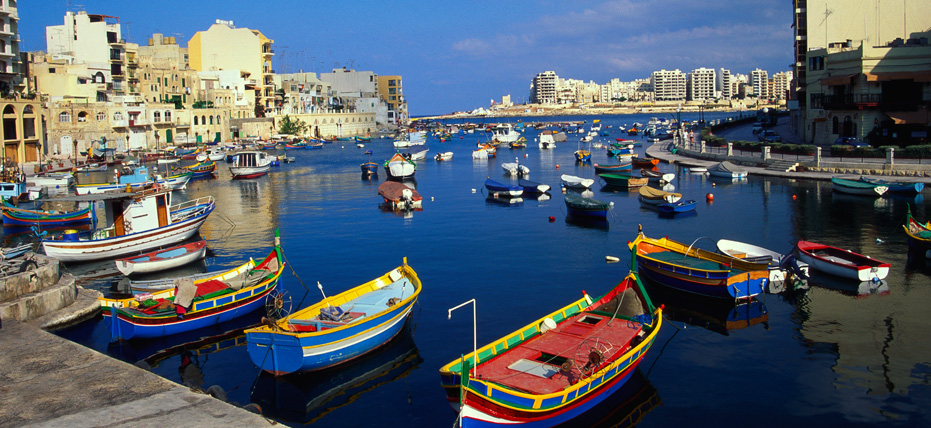
Today in Malta is like April in the Midwest. The sky is bright blue and the clouds puffy and sometimes pink.

There is a little rain, and temperatures in the low 60s Fahrenheit. If there was a Latin Mass SOMEWHERE on this island on a regular basis, I could consider this home.

But, there is not, and my heart has been breaking because of the abuses and lack of reverence in the churches.

This fact has been eating at my soul for two weeks. I cannot understand the laissez faire attitudes and protestantization of the liturgies.

So sad. This island is not a Mecca for liturgical splendour.

London has several Latin Mass venues, and I shall be glad to go again.

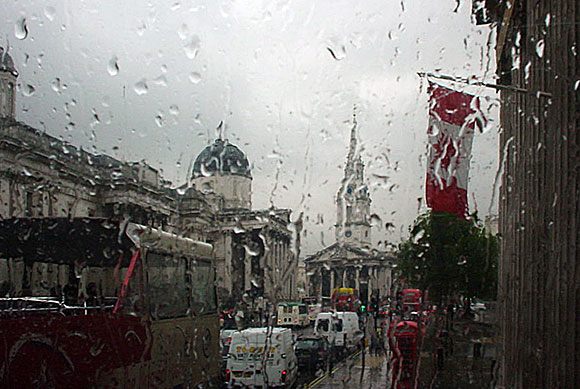
Tears for the soul of Malta. The rain is like the tears for the lost heritage of liturgy here.

Blessed Karl, pray for us...

“The husband is the head of the wife just in so far as he is to her what Christ is to the Church - read on - and give his life for her (Eph. V, 25). This headship, then, is most fully embodied not in the husband we should all wish to be but in him whose marriage is most like a crucifixion; whose wife receives most and gives least, is most unworthy of him, is - in her own mere nature - lease lovable. For the Church has not beauty but what the Bride-groom gives her; he does not find, but makes her, lovely. The chrism of this terrible coronation is to be seen not in the joys of any man's marriage but in its sorrows, in the sickness and sufferings of a good wife or the faults of a bad one, in his unwearying (never paraded) care or his inexhaustible forgiveness: forgiveness, not acquiescence. As Christ sees in the flawed, proud, fanatical or lukewarm Church on earth that Bride who will one day be without spot or wrinkle, and labours to produce the latter, so the husband whose headship is Christ-like (and he is allowed no other sort) never despairs.” The Four Loves

A man must assume headship. He must be the authority over his children. We need such leaders more than ever in these days of chaos.

I have written a lot on the male person on this blog.

I grew up with three brothers and a dad.

I have a son.

I was a bit of a tom-boy.

But, I am continually praying for my single, female friends to find real men.

Less and less am I convinced this will happen.

Too many men have abdicated their roles as leaders in society, in the Church, in their families.

They think that being pals with the kids is being a dad.

They think that women can protect themselves.

They think that they do not have to take responsibility for the lives of family members

Blessed Karl of Austria is one of the patrons of this blog. He gave his life for his country.

He was a man. He will be canonized for his holiness, sacrifice and manliness.

His example is one of Christ on the Cross.


He faced the evils of socialism and apostasy in his country. Some men turn a blind eye to such.

They think that they can ignore apostasy, deceit and pride in their friends.

Some even ignore sin in their friends and families.

C.S. Lewis had a few things to say on the character of men, friendship and love. The first I chose is above. Blessed Karl taught by example, but a few words seem apropos.

"Surely what a man does when he is taken off his guard is the best evidence for what sort of a man he is? Surely what pops out before the man has time to put on a disguise is the truth? If there are rats in a cellar you are most likely to see them if you go in very suddenly. But the suddenness does not create the rats: it only prevents them from hiding. In the same way the suddenness of the provocation does not make me an ill-tempered man; it only shows me what an ill-tempered man I am. The rats are always there in the cellar, but if you go in shouting and noisily they will have taken cover before you switch on the light." 
Mere Christianity

“There is no safe investment. To love at all is to be vulnerable. Love anything, and your heart will certainly be wrung and possibly be broken. If you want to make sure of keeping it intact, you must give your heart to no one, not even to an animal. Wrap it carefully round with hobbies and little luxuries; avoid all entanglements; lock it up safe in the casket or coffin of your selfishness. But in that casket - safe, dark, motionless, airless - it will change. It will not be broken; it will become unbreakable, impenetrable, irredeemable. The alternative to tragedy, or at least to the risk of tragedy, is damnation. The only place outside Heaven where you can be perfectly safe from all the dangers and perturbations of love is Hell.” The Four Loves

“We make men without chests and expect from them virtue and enterprise. We laugh at honor and are shocked to find traitors in our midst.” The Abolition of Man


Countries which have a long history of matriarchy have more problems with real masculinity than patriarchies. This might surprise some readers. Matriarchies insist on the women taking control of the household entirely. Matriarchies keep the boys at home too long, turning them into "momma boys". Matriarchies take the power away from men. We in the West find such paradigms funny, but these are deadly for raising boys.

Men must lead not only by example, but becoming strong Catholic men, obedient to Holy Church, but obvious in the prayer life of the family. The kids should see dad praying the rosary, going to Holy Communion, getting to Adoration and regular Confession. Otherwise, words are useless. A weak and pliable dad is a bad example. He will be accountable to God for his over-lenience or misplaced tolerance.

This leads to the lack of discipline of the children and sometimes, the lack of protection for the women. Men need to lead by example and in humility, but not weakness.

To lead is to be able to suffer and to love without counting the cost.  Women friends, do not settle for less....