Recent Posts

Monday, 21 January 2013

From Zenit--about time


VATICAN PREPARING A MANUAL TO HELP PRIESTS CELEBRATE MASS


Prefect Warns Against Making Liturgy Into a 'Show'

H. Sergio Mora
ROME, January 16, 2013 (Zenit.org).
The Congregation for Divine Worship and the Sacraments is preparing a booklet to help priests celebrate the Mass properly and the faithful to participate better, according to the prefect of the Congregation for Divine Worship and the Sacraments.
Cardinal Antonio CaƱizares confirmed this Tuesday at an address at the Spanish Embassy to the Holy See on "Catholic Liturgy since Vatican II: Continuity and Evolution."
"We are preparing it; it will help to celebrate well and to participate well. I hope it will come out this year, in the summer," the cardinal told ZENIT. 
During his talk the cardinal reiterated the importance Vatican II gave to the liturgy, "whose renewal must be understood in continuity with the Tradition of the Church and not as a break or discontinuity." A break either because of innovations that do not respect continuity or because of an immobility that  freezes everything at Pius XII, he said.
In particular, Cardinal CaƱizares stressed the importance that Sacrosanctum Concilium gave to the sacred liturgy, through which "the work of our Redemption is exercised, above all in the divine sacrifice of the Eucharist," adding that "God wants to be adored in a concrete way and it's not up to us to change it."
The cardinal said that there is talk of a renewed Church, which must not be understood as a mere reform of structures, but as a change starting with the liturgy, because it is from the liturgy that the work of our salvation is effected.
When speaking of the liturgy, continued the cardinal, one must not forget what the conciliar document states: "Christ is always present in his Church, especially in the liturgical action. He is present in the sacrifice of the Mass, be it in the person of the minister, 'offering himself now through the ministry of the priests as he then offered himself on the cross,' be it especially under the Eucharistic species."
He stressed that the objective of the liturgy "is the adoration of God and the salvation of men," which is not a creation of ours, but source and summit of the Church."
The prefect of the Congregation for Divine Worship and the Sacraments criticized existing abuses such as showmanship, and praised moments of silence "that are action," which enable the priest and the faithful to talk with Jesus Christ and which exclude the predominance of words that often becomes showmanship on the part of the priest. The correct attitude is the one "indicated by Saint John the Baptist, when he says he must decrease and the Messiah must increase."
The cardinal criticized the effort to make the Mass "entertaining" with certain songs -- instead of focusing on the mystery -- in an attempt to overcome "boredom" by transforming the Mass into a show.
He added that the Council did not speak of the priest celebrating Mass facing the people, that it stressed the importance of Christ on the altar, reflected in Benedict XVI's celebration of the Mass in the Sistine Chapel facing the altar. This does not exclude the priest facing the people, in particular during the reading of the word of God. He stressed the need of the notion of mystery, and particulars such as the altar facing East and the fact that the sacrificial sense of the Eucharist must not be lost.
Asked by the ambassador of Panama to the Holy See about the action of native cultures in the liturgy, the cardinal specified that "the Council speaks of inculturation of the liturgy," respecting "the legitimate varieties," without affecting the principles.
He recalled his experience on Palm Sunday in Santa Fe, Spain, when he attended a gypsy Mass in which a youth sang the "Lamb of God," with an instrument used in flamenco singing, "a real groan of the soul," which "moved everyone and brought the whole assembly to participate."
He also referred to the fact that in many churches the Most Blessed Sacrament is placed in a side altar or chapel, so that "the tabernacle disappears," and people talk before the Mass and arrive less prepared.
In regard to the case of Marcel Lefebvre, the founder of the traditionalist Society of St. Pius X, the cardinal said that Benedict XVI offered a healing measure, but that the archbishop's followers did not respond. To "think that Tradition stops with Pius XII is also a break," he noted.

Where are the British commentators on this?

http://www.memri.org/clip/en/0/0/0/0/0/0/3721.htm

London, January 12th

Poll alert two............hey, guys, help me out here!


Poll alert two...this one seems to not be getting attention. Perhaps it is too boring....

Desire and Prayer for Purity of Heart


A prayer for purity of heart through the intercession of Saint Gemma

http://www.stgemmagalgani.com/2010/08/prayer-to-st-gemma-for-purity-of-heart.html

Oh devout virgin Saint Gemma, you once prayed: "To come to heaven requires purity of heart: give it to me, my Jesus; Yes, I so desire purity of heart!" And then, turning also to the Blessed Virgin Mary for Her heavenly help you once said: "Blessed Mother, never allow me to lose holy purity. Place me under your mantle, guard this treasure for me, and I shall become more pleasing to Jesus."

We turn to you then, Oh holy Gemma, and we make your prayers to Jesus and Mary our own, calling upon your heavenly assistance for the grace of holy purity. Assist us then, dear Gemma, in obtaining this precious jewel from Jesus, with the help of our beloved Mother Mary. Be our heavenly friend and patroness, and lead us ever closer into the Sacred Heart of Jesus, the infinite source of purity. We ask this through Jesus Christ our Lord. AMEN.

Illumination and the Boast of St. Paul

St. Paul listed his sufferings for a reason.

He was in the Illuminative State, if not the Unitive State. And, he was trying to teach us what this meant for him. 

I use a Protestant version for clarity here as I like the listing.


The Apostle Paul's Sufferings 2 Corinthians 11:21-33

Paul said: "What anyone else dares to boast about—I am speaking as a fool;I also dare to boast about.
Are they Hebrews? So am I. Are they Israelites? So am I. Are they Abraham's descendants? So am I. Are they servants
of Christ? (I am out of my mind to talk like this.) I am more.
 - I have worked much harder
 - been in prison more frequently
 - been flogged more severely
 - been exposed to death again and again
 - Five times I received from the Jews the forty lashes minus one
 - Three times I was beaten with rods
 - once I was stoned
 - three times I was shipwrecked
 - I spent a night and a day in the open sea
 - I have been constantly on the move
 - I have been in danger from rivers
 - in danger from bandits
 - in danger from my own countrymen
 - in danger from Gentiles
 - in danger in the city
 - in danger in the country
 - in danger at sea
 - in danger from false brothers
 - I have labored and toiled
 - have often gone without sleep
 - I have known hunger
 - I have known thirst
 - I have often gone without food
 - I have been cold
 - I have been naked
 - I face daily the pressure of my concern for all the churches
Who is weak, and I do not feel weak? Who is led into sin, and I do not inwardly burn? If I must boast, I will boast of the
things that show my weakness. The God and Father of the Lord Jesus, who is to be praised forever, knows that I am not
lying. In Damascus the governor under King Aretas had the city of the Damascenes guarded in order to arrest me. But I
was lowered in a basket from a window in the wall and slipped through his hands.

I also quote from a Sermon of St. John Chrysostom on this passage:


For this is the brilliant victory, this is the Church's trophy, thus is the Devil overthrown when we suffer injury. For when we suffer, he is taken captive; and himself suffers harm, when he would fain inflict it on us. And this happened in Paul's case also; and the more he plied him with perils, the more was he defeated. Nor did he raise up against him only one kind of trials, but various and diverse. For some involved labor, others sorrow, others fear, others pain, others care, others shame, others all these at once; but yet he was victorious in all. And like as if a single soldier, having the whole world fighting against him, should move through the mid ranks of his enemies, and suffer no harm: even so did Paul, showing himself singly, among barbarians, among Greeks, on every land, on every sea, abide unconquered. And as a spark, falling upon reeds and hay, changes into its own nature the things so kindled; so also did this man setting upon all make things change over unto the truth; like a winter torrent, sweeping over all things and overturning every obstacle. And like some champion who wrestles, runs, and boxes too; or soldier engaged by turns in storming , fighting on foot, on shipboard; so did he try by turns every form of fight, and breathed out fire, and was unapproachable by all; with his single body taking possession of the world, with his single tongue putting all to flight. Not with such force did those many trumpets fall upon the stones of Jericho and throw them down, as did the sound of this man's voice both dash to the earth the devil's strong-holds and bring over to himself those that were against him. And when he had collected a multitude of captives, having armed the same, he made them again his own army, and by their means conquered. Wonderful was David who laid Goliah low with a single stone; but if you will examine Paul's achievements, that is a child's exploit, and great as is the difference between a shepherd and a general, so great the difference you shall see here. For this man brought down no Goliath by the hurling of a stone, but by speaking only he scattered the whole array of the Devil; as a lion roaring and darting out flame from his tongue, so was he found by all irresistible; and bounded everywhere by turns continually; he ran to these, he came to those, he turned about to these, he bounded away to others, swifter in his attack than the wind; governing the whole world, as though a single house or a single ship; rescuing the sinking, steadying the dizzied, cheering the sailors, sitting at the tiller, keeping an eye to the prow, tightening the yards, handling an oar, pulling at the mast, watching the sky; being all things in himself, both sailor, and pilot, and pilot's mate , and sail, and ship; and suffering all things in order to relieve the evils of others. For consider. He endured shipwreck that he might stay the shipwreck of the world; a day and a night he passed in the deep, that he might draw it up from the deep of error; he was in weariness that he might refresh the weary; he endured smiting that he might heal those that had been smitten of the devil; he passed his time in prisons that he might lead forth to the light those that were sitting in prison and in darkness; he was in deaths oft that he might deliver from grievous deaths; five times he received forty stripes save one that he might free those that inflicted them from the scourge of the devil; he was beaten with rods that he might bring them under the rod and the staff of Christ; Psalm 23:4 he was stoned, that he might deliver them from the senseless stones; he was in the wilderness , that he might take them out of the wilderness; in journeying, to stay their wanderings and open the way that leads to heaven; he was in perils in the cities,that he might show the city which is above; in hunger and thirst, to deliver from a more grievous hunger; in nakedness, to clothe their unseemliness with the robe of Christ; set upon by the mob, to extricate them from the besetment of fiends; he burned, that he might quench the burning darts of the devilthrough a window was let down from the wall, to send up from below those that lay prostrate upon the ground. Shall we then talk any more, seeing we do not so much as know what Paul suffered? Shall we make mention any more of goods, or even of wife, or city, or freedom, when we have seen him ten thousand times despising even life itself? The martyr dies once for all: but that blessed saint in his one body and one soul endured so many perils as were enough to disturb even a soul of adamant; and what things all the saints together have suffered in so many bodies, those all he himself endured in one: he entered into the world as if a race-course, and stripped himself of all, and so made a noble stand. For he knew the fiends that were wrestling with him. Wherefore also he shone forth brightly at once from the beginning, from the very starting-post, and even to the end he continued the same; yea, rather he even increased the intensity of his pursuit as he drew nearer to the prize. And what surely is wonderful is that though suffering and doing such great things, he knew how to maintain an exceeding modesty. For when he was driven upon the necessity of relating his own gooddeeds, he ran quickly over them all; although he might have filled books without number, had he wished to unfold in detail every thing he mentioned; if he had specified the Churches he was in care for, if his prisons and his achievements in them, if of the other things one by one, the besetments , the assaults. But he would not. Knowing then these things, let us also learn to be modest and not to glory at any time in wealth or other worldly things, but in the reproaches we suffer for Christ's sake, and in these, only when need compels; for if there be nothing urging it, let us not mention these even, (lest we be puffed up,) but our sins only. For so shall we both easily be released from them and shall have God propitious to us, and shall attain the life to come; where unto may we all attain through the grace and love towards men of our Lord Jesus Christ, with Whom to the Father, with the Holy Ghost, be glory, might, honor, now and for ever, and world without end. Amen.


It is the chain of patient suffering that forms the ring with which Christ espouses a soul to Himself. Louis de Blois


If one thinks that suffering and tribulation end in the illumination state, the answer is a resounding NO.

Although there is a daily awareness of the love of God, suffering becomes more intense, as one endures misunderstanding and separation from friends and even family, as the perspective of life has changed so drastically.

The joy of knowing one is in and with the Trinity and that one is being raised up from nothingness to God provide consolations.

But, such feelings do not necessarily last.

One the contrary, in order for the senses to be completely purified, a new type of redemptive suffering occurs.

One is on Calvary with Christ. There is no escaping this honourable and yet painful state without forsaking all.

That is what so many of the heretics did. They got to this state and departed from Rome, thinking they were holier, or their ideas better than those of the Church.

Dangerous temptation for this stage....

Also what is dangerous, but has to be accepted if one is going to cooperate with grace in the Illuminative state is the intensity of the trials.

No kidding....

Not only are temptations trials, but real physical difficulties, such as fasting, poverty (willingly), misunderstandings, ridicule, even hatred.

The best quotation I have ever found on this state is from the monk Louis de Blois, who echoes the words of St. Bernard of Clairvaux. I  put it at the top of this post and here it is again.

It is the chain of patient suffering that forms the ring with which Christ espouses a soul to Himself.

This is so absolutely true, that I cannot stress it enough.

The espousal of the soul to Christ, as a Bride, cannot happen without such suffering.

Here is the Catholic Encyclopedia on the Illuminative State:


The soul in the illuminative way will have to experience periods of spiritual consolations and desolations. It does not at once enter upon the unitive way when it has passed through the aridities of the first purgation. It must spend some time, perhaps years, after quitting the state of beginners in exercising itself in the state of proficients. St. John of the Cross tells us that in this state the soul, like one released from a rigorous imprisonment, occupies itself in Divine thoughts with a much greater freedom and satisfaction, and its joy is more abundant and interior than it ever experienced before it entered the night of the senses. Its purgation is still somewhat incomplete, and the purification of the senses is not yet finished and perfect. It is not without aridities, darkness, and trials, sometimes more severe than in the past. During the period of desolation it will have to endure much suffering from temptations against the theological virtues and against the moral virtues. It will have to endure sometimes other diabolical attacks upon its imagination and senses. Also, God will permit natural causes to combine in afflicting the soul, such as the persecutions of men, and the ingratitude of friends. Patient suffering and resignation have to be borne during all these trials, and the devout soul should remember the encouraging words of the pious and learned Blosius:
Nothing more valuable can befall a man than tribulation, when it is endured with patience for the love of God; because there is no more certain sign of the divine election. But this should be understood quite as much of internal as of external trials which people of a certain kind of piety forget.
And again he says,...
It is the chain of patient suffering that forms the ring with which Christ espouses a soul to Himself. (Institutio Spiritualis, viii, 3)

To be continued

Cassian and Duty Free


The way of purification is up to God, but it must happen. For most of us, the first stage of purgation is the breaking of the will and the purifying of the heart to the point where one is no longer a slave to mortal, or even venial sin.

This is possible, as I have noted before, but not without discipline and grace. 

Purity of heart means being focussed on God. 

Some people realize that the sufferings they receive are part of this purgative stage and they go with these and do not fight God at this level. The faster one realizes what is going on, that is, purgation, and then cooperates with God, the shorter the process takes.

For those who are particularly interested in the aspect of renunciations, go here.

Purgation is more than renunciation for the lay person, as these steps are not written into their lives, as they are the lives of monks.

Therefore, we must pay attention more closely to what God is doing in our souls.

For the lay person, these conditions must be seen as happening in the purgative state.

1. Adherence to the Commandments;
2. Acceptance of suffering;
3. Frequent Confession;
4. Mortification;
5. Growth in humility;
6. Lack of consolations;
7. Awareness of one's possible damnation;
8. Complete avoidance of mortal sin;
9. Moving away from venial sin;
10. Movement from Meditation in prayer to Contemplation.

These stages lead to purity of heart.

Only when these have been accomplished, is the soul ready for the illuminative stage.


Cassian helps us:

So then the end indeed which
we have set before us is, as the Apostle says, eternal life, as he declares,
"having indeed your fruit unto holiness, and the end eternal life;"[1] but the
immediate goal is purity of heart, which he not unfairly terms
"sanctification," without which the afore-mentioned end cannot be gained; as
if he had said in other words, having your immediate goal in purity of heart,
but the end life eternal.  Of which goal the same blessed Apostle teaches us,
and significantly uses the very term, i.e., skopos, saying as follows,
"Forgetting those things which are behind and reaching forward to those that
are before, I press toward the mark, for the prize of the high calling of the
Lord:"[2] which is more clearly put in Greek kata skopon dioko, i.e., "I press
toward the mark, as if he said, "With this aim, with which I forget those
things that are behind, i.e., the faults of earlier life, I strive to reach as
the end the heavenly prize."  Whatever then can help to guide us to this
object; viz., purity of heart, we must follow with all our might, but whatever
hinders us from it, we must shun as a dangerous and hurtful thing.  For, for
this we do and endure all things, for this we make light of our kinsfolk, our
country, honours, riches, the delights of this world, and all kinds of
pleasures, namely in order that we may retain a lasting purity of heart.  And
so when this object is set before us, we shall alnways direct our actions and
thoughts straight towards the attainment of it; for if it be not constantly
fixed before our eyes, it will not only make all our toils vain and useless,
and force them to be endured to no purpose and without any reward, but it will
also excite all kinds of thoughts opposed to one another.  For the mind, which
has no fixed point to which it may return, and on which it may chiefly fasten,
is sure to rove about from hour to hour and minute to minute in all sorts of
wandering thoughts, and from those things which come to it from outside, to be
constantly changed into that state which first offers itself to it.

There is no skipping of this process...The hard part is allowing God to purify your desires and thoughts, not merely your deeds. In the past few months, those who have been following this blog, can see my own struggles here.

I call it "passing through Duty Free without caring, noticing or stopping for anything..." The purgation of all desire for worldly things.............


This happens at the end of the purgative stage and in the beginnings of the illuminative stages. The laity are called to this process in order to bring about the Kingdom of God on earth.


To be continued.....


Cassian and perfection part three; more on Divine Providence


I cannot go through all this writings, but I am trying to highlight some. I am using different saints and authors so that readers have a choice of styles and approached.

An important point to remember, to which I have already referred, but which needs emphasizing  is that all Catholics wanting to pursue perfection can do so in whatever state they find themselves.

Here he is on Divine Providence:


FOR the purpose of God whereby He made man not to perish but to live for ever, stands immovable. And when His goodness sees in us even the very smallest spark of good will shining forth, which He Himself has struck as it were out of the hard flints of our hearts, He fans and fosters it and nurses it with His breath, as He "willeth all men to be saved and to come to the knowledge of the truth," for as He says, "it is not the will of your Father which is in heaven that one of these little ones should perish," and again it says: "Neither will God have a soul to perish, but recalleth," meaning that he that is cast off should not altogether perish.[75] For He is true, and lieth not when He lays down with an oath: "As I live, saith the Lord God, for I will not the death of a sinner, but that he should turn from his way and live."[76] For if He willeth not that one of His little ones should perish, how can we imagine without grievous blasphemy that He does not generally will all men, but only some instead of all to be saved? Those then who perish, perish against His will, as He testifies against each one of them day by day: "Turn from your evil ways, and why will ye die, O house of Israel?"[77] And again: "How often would I have gathered thy children together as a hen gathereth her chickens under her wings, and ye would not;" and: "Wherefore is this people in Jerusalem turned away with a stubborn revolting? They have hardened their faces and refused to return."[78] The grace of Christ then is at hand every day, which, while it "willeth all men to be saved and to come to the knowledge of the truth," calleth all without any exception, saying: "Come unto Me, all ye that labour and are heavy laden, and I will refresh you."[79] But if He calls not all generally but only some, it follows that not all are heavy laden either with original or actual sin, and that this saying is not a true one: "For all have sinned and come short of the glory of God;" nor can we believe that "death passed on all men."[80] And so far do all who perish, perish against the will of God, that God cannot be said to have made death, as Scripture itself testifies: "For God made not death, neither rejoiceth in the destruction of the living."[81] And hence it comes that for the most part when instead of good things we ask for the opposite, our prayer is either heard but tardily or not at all; and again the Lord vouchsafes to bring upon us even against our will, like some most beneficent physician, for our good what we think is opposed to it, and sometimes He delays and hinders our injurious purposes and deadly attempts from having their horrible effects, and, while we are rushing headlong towards death, draws us back to salvation, and rescues us without our knowing it from the jaws of hell.

to be continued...


Why God Made Snow...

Snow is beautiful.

Snow creates less activity.

Snow makes the world more silent.

Snow changes our expectations.

Snow reminds us of our mortality.

Snow reminds us of Original Sin

Snow reveals the Creativity of God making something cold and wet so essential for growth of plants.

Snow creates poetry and art in the mysterious beauty of the snowflake and icicle.

Snow tells us to stop, listen, reflect and wait.

Snow tells us that we are not in control of nature. God is.

Snow changes our perspective on hills, streets, buildings  the countryside, trees, bushes as we see things with new eyes.

Snow challenges us to be kind to each other and animals who may need our care.

Snow makes us all children again, as we play with our kids, making angels, sledding, throwing snowballs.

Snow appeals to our human need for variety and physical challenges.


Snow....allows us to suffer patiently.

.

On a roll...


    • Crazy Blogging Days, and I am reading two books and talking to friends and petting the cat.....not this one...and out in the snow...and....


More Cassian-grace

thanks to Orthowiki

Cassian is also one of the earliest writers to list the deadly vices which keep us from God. He lists lust, avarice, hubris, gluttony, wrathe, envy, boasting, and acedia. Some of these have been discussed on this blog. If  you are having trouble with one of these, check out this site. 

All these sins, plus more, are diagnosed and help is given in the Institutes.

But, his real value is the extent of his understanding of the growth of the spiritual life as noted in the Conferences.

Here he is on grace:


AND therefore though in many things, indeed in everything, it can be shown that men always have need of God's help, and that human weakness cannot accomplish anything that has to do with salvation by itself alone, i.e., without the aid of God, yet in nothing is this more clearly shown than in the acquisition and preservation of chastity. For as the discussion on the difficulty of its perfection is put off for so long, let us meanwhile discourse briefly on the instruments of it. Who, I ask, could, however fervent he might be in spirit, relying on his own strength with no praise from men endure the squalor of the desert, and I will not say the daily lack but the supply of dry bread? Who without the Lord's consolation, could put up with the continual thirst for water, or deprive his human eyes of that sweet and delicious morning sleep, and regularly compress his whole time of rest and repose into the limits of four hours? Who would be sufficient without God's grace to give continual attendance to reading and constant earnestness in work, receiving no advantage of present gain? And all these matters, as we cannot desire them continuously without divine inspiration, so in no respect whatever can we perform them without His help. And that we may ensure that these things are not only proved to us by the teaching of experience, but also made still clearer by sure proof and arguments, does not some weakness intervene in the case of many things which we wish usefully to perform, and though the full keenness of our desire and the perfection of our will be not wanting, yet interfere with the wish we have conceived, so that there is no carrying out of our purpose, unless the power to perform it has been granted by the mercy of the Lord, so that, although there are countless swarms of people who are anxious to stick faithfully to the pursuit of virtue, you can scarcely find any who are able to carry it out and endure it, to say nothing of the fact that, even when no weakness at all hinders us, the opportunity for doing everything that we wish does not lie in our own power. For it is not in our power to secure the silence of solitude and severe fasts and undisturbed study even when we could use such opportunities, but by a chapter of accidents we are often very much against our will kept away from the salutary ordinances so that we have to pray to the Lord for opportunities of place or time in which to practise them. And it is clear that the ability for these is not sufficient for us unless there be also granted to us by the Lord an opportunity of doing what we are capable of (as the Apostle also says: "For we wanted to come to you once and again, but Satan hindered us"[73]), so that sometimes we find for our advantage we are called away from these spiritual exercises in order that while without our own consent the regularity of our routine is broken and we yield something to weakness of the flesh, we may even against our will be brought to a salutary patience. Of which providential arrangement of God the blessed Apostle says something similar: "For which I besought the Lord thrice that it might depart from me. And He said to me: My grace is sufficient for thee: for my strength is made perfect in weakness:" and again: "For we know not what to pray for as we ought."[74]

to be continued....


Cassian on the way to perfection


John Cassian, who died in 435, was one of the first "monks" I read about thirty-five years ago. His wisdom provides us with a perspective to help us begin the spiritual process of perfection.

I have been writing for a year on perfection, but am backtracking a bit on purpose. Check out the saint's Conferences here. 

He is part of his sayings:

The beginning and end of our salvation as well as its safeguard is fear of the Lord. It is through this that those who give themselves to the way of perfection acquire the beginning of conversion, the cleansing of vices, and the safeguarding of the virtues. When fear of the Lord penetrates someone's mind, it brings to birth a contempt for all things, forgetfulness of family, and a drawing back from the world.

The fact is that humility is acquired through contempt for and privation of everything.

...humility can be verified...(in these ways)

1. If  (the monk) mortifies in himself all ....self-will.
2. If he reveals to his senior not only his actions but his thoughts.
3. If he allows nothing to his own power of discernment but entrusts everything to the judgement (of his senior)
4. If....he maintains the meekness that is obedience and the constancy that is patience.
5. If.(he does not injure another)...he is not .... saddened when another inflicts on him an undeserved injury...
6. If he not only openly declares himself to be inferior to all, but believes it in the very depths of his heart.
7. If he controls his tongue and does not speak loudly.
8. If he is not inclined to ready laughter.

There are more....

Cassian states that humility leads to delight in virtue and love of goodness.

These are signs that one is on the road to perfection.

But, all this is done through human persons--why the single state does not usually lead to perfection and why I say it is not, usually, a vocation. A vocation leads us to perfection.

Humility and fear of the Lord grow together, but fear of the Lord is necessary first.

The modern pastors do not talk about fearing God. Some deny hell.

Without the realization that imperfection leads us further and further from God, one cannot even start the process.

to be continued....


from Damian Thompson


Joke of the Day
What do Obama and God have in common?
Neither has a birth certificate.
But, here is a sad joke
from Damian Thompson
Sad...
BBC praises the Lord for Obama
Employees of the BBC tend to be atheists or agnostics, but the re-election of Barack Obama has persuaded them that there is a God after all. At 10 past eight tomorrow morning you can hear a Radio 4 Sunday Worship service “anticipating the second inauguration of President Obama”.
We’re used to Auntie’s schoolgirl crush on Obama, but this is bizarre. If Romney had won, would there have been a service for his swearing-in? Of course not. The venue, incidentally, is St Martin-in-the-Fields. Quite what form the Obama-worship will take I can’t say, but may I suggest that, for added authenticity, the sermon should be given by the Prez’s former pastor, the delighful Rev Jeremiah Wright?

Hmmm, Americans are not happy any more...


US Slips Out of Top 10 ‘Happiest Countries’ from Newsmax.com

For the first time, the United States does not rank in the top 10 of the Legatum Institute’s annual ranking of the World’s Happiest Countries.

The country ranked No. 10 last year in Legatum’s Prosperity Index, which has been computed for the past six years, but this year the United States ranks No. 12.

The Prosperity Index is based on a study of 142 countries. Nations are ranked on 89 indicators in eight categories including Economy, Governance, Education, Health, Personal Freedom, and Entrepreneurship & Opportunity.

“In general, the most prosperous (thus ‘happiest’ in my book) countries enjoy stable political institutions, a strong civil society with freedom of expression, good education and healthcare, personal freedom, and a feeling of being safe and secure,” observes Christopher Helman on Forbes.com.

The United States slipped to No. 12 in the Entrepreneurship & Opportunity category “due to a decline in citizens’ perception that working hard gets you ahead,” the Legatum’s report states.

America ranks only 27th in Safety & Security and 20th in Economy, but No. 2 in Health and No. 5 in Education. Its rank for Personal Freedom is 14th.

Luxembourg is the healthiest nation, Iceland the safest, and Switzerland is tops in the Economy and Governance categories. But the No. 1 spot overall goes to Norway, which ranks among the top six in seven categories and is No. 1 or No. 2 in three of them.

Norway has a per capita GDP of $57,000 a year; 95 percent of Norwegians say they are satisfied with the freedom to choose the direction of their lives; and 74 percent say other people can be trusted.

The No. 2 spot goes to Denmark, which is tops for Entrepreneurship & Opportunity, followed by Sweden, Australia, New Zealand (which has the No. 1 spot in the Education category), Canada (No. 1 in Personal Freedom), Finland, Netherlands, Switzerland, Ireland, Luxembourg, and the United States.

At the bottom of the rankings at No. 142, the “saddest” country is the Central African Republic, where the per capita GDP is $790 a year and life expectancy is 48 years. The country ranks dead last in Education and next to last in Entrepreneurship & Opportunity.
The next lowest ranking goes to Republic of Congo — last in Health and Entrepreneurship & Opportunity — followed by Afghanistan, Zimbabwe, and Haiti.

Among other countries, Iran is No. 102, Mexico is No. 61, Iraq is No. 131, Israel is No. 40, and China is No. 55.

The most dangerous country on earth? Chad, which ranks No. 142 in the Safety & Security category.

Yemen ranks last in Personal Freedom, although several countries including North Korea were not included in the rankings.

Poll Alert

Another supertradmum poll.....

You can vote for more than one category....

Where Are the Ken Dolls? Who Cares?


In an effort to show that Barbie was an influence in the making of at least one generations' views of women, authors have traced the importance of Barbie in suburbia.

Now, my question is, where are the articles on Ken? My second question is where are the Kens? The trouble with Ken is that he was pretty face with no personality. Why did we want Kens? We should have paired off the GI-Joes with the Barbies. At least they looked like men and were DOING something.  Comments wanted.


Let me quote an author on this: http://universityhonors.umd.edu/HONR269J/projects/wolf.html


Because of Barbie's lack of a family, her first relation was a male companion named Ken. The first advertisement for Ken said, "He's a doll!" (BillyBoy 40). Barbie's boyfriend was given an image of "innocence, cleanliness, extroverted playfulness, boyish masculinity, and a hint of shyness" (BillyBoy 40). To accompany this image, Ken came with teenage male essentials, such as a letter sweater, tuxedo, and a gray flannel suit. One of the biggest questions facing Mattel was how anatomically correct should Ken be. They finally determined that young girls did not need to be exposed to some realities of adulthood; therefore Ken was born with permanent underwear.

Ken's development portrays one of the expectations of 1950's women. It was necessary to create Ken because "women were considered failures without male companionship" (Johnson "Barbie's Effects on American Suburban Culture").

All propaganda involving Barbie and Ken portray them as the stereotypical teenage couple. The first television commercial for Ken takes place at a ball. Amid this romantic scene, Barbie spots Ken, and it's love at first sight. All of the ads for Barbie and her "handsome steady" are a   reflection of the innocent qualities of courtship (Weiss "Toys Were Us"). Ken and Barbie had coordinating outfits for the "beach, fraternity dances, after-school sodas, etc" (BillyBoy 41). A magazine about Barbie and Ken's adventures was published. Barbie and Ken were seen as being so much in love that they could not go anywhere without each other (as seen in Figure 3). After Barbie helps Ken in the garden, she says, "I'd do it any time Ken, just so long as we're together" (BillyBoy 42). Compared to modern culture, this is an extremely cordial and sappy relationship. The Barbie and Ken comic book furthers the portrayal of male and female relations of the early 1960's before the hippie culture invaded.

In 1961, Mattel produced a record of songs about Ken performed by Barbie. Through this music, girls could learn about proper social manners when dating. Evident in the lyrics are the games girls would play, such as coyness and aloofness, in teenage relations. This record also reinforced Barbie as a realistic character helping to shape her personality (BillyBoy 44).


Hey, isn't GI Joe better for Barbie?

Sunday, 20 January 2013

OK That's Not Right


A nod to Fr. Z. in the second scene here on feeling disgusted about certain things.................


Open Letter to Bishops and Priests of Great Britain, Ireland, and America

Dear Holy Men of God, Dear Excellencies and Fathers,

For many years, I have sat in the congregations of many churches which have parochial schools attached, or some form of Catholic schools attached to dioceses.

For many years, I have heard bishops and priests stand up at the pulpit and recommend the local elementary, grade or grammar schools, as well as high schools, or secondary schools, or sixth-form colleges which are Catholic.

For many years, I have heard the leaders of the Church praise Catholic education.

I have one question. If these schools are so excellent, where are the vocations from these institutions?

The priest shortage in your dioceses in the countries I have listed here, Ireland, Great Britain and America, is not only reaching a severely critical stage, but is irreversible in most areas.

As you, Dear Bishops, know, schools and parishes have been and are closing down under your care.

As you, Dear Priests, know, families are still contracepting and not supporting the Teaching Magisterium of the Church in many other areas of doctrine and morality.

Yet, you praise and encourage Catholic education.

Where are the vocations to the priesthood from these schools?

Where are the vocations to the religious life from these schools?

Private independent Catholic schools in America are seeing a rise in vocations, as are home schooling families.

Where are the vocations from the thousands of Catholic schools which are being supported in your three countries?

Please pray and admit that Catholic education has failed the Universal Church in the West.

Please pray and be honest about false pride in local schools or boarding schools, which have not produced vocations. False pride hides the disobedience of teachers, administrations and boards.

Please stop thinking that something is better than nothing, even if unorthodoxy reigns.

Please pray for obedience to Rome regarding the Oath and the Promise which all good Catholic teachers would want to take.

Please pray and answer my question. Where are the vocations?

Sincerely,

Supertradmum

Setting post records this weekend


It is snowing again. It is really cold outside. And, I have good internet access.

Taking advantage of the days here. Take your time and read all the posts from Friday slowly. Lots of good stuff.

It is so fun being a Catholic! Plus, I read all the Jane Austen novels yet again for the umpteenth time last year.

I need to go back to my journey through all the Dickens.

I have read several Dickens many times, and same with George Eliot. Reading is good. Writing is better.


Cute Wednesday on a Sunday


Even baby bats are cute..............


And more....


The Eve of St. Agnes


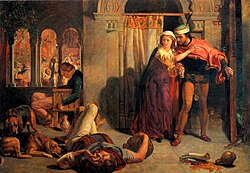
Well, last year, this caused a storm, but almost every year I refer to Keat's melancholy, but interesting poem on "The Eve of St. Agnes".

It is a secularized version of the custom of a young woman putting a piece of wedding cake under her pillow the night before the feast, and then being given a dream of who her future husband is. By the way, Americans, British traditional wedding cake is a hard fruit cake with marzipan frosting, so one could put it under one's pillow without the great mess a white, soft American wedding cake would cause.

The poem is not to be read as a moral lesson, but as a restoration of the glory of the language and the
interest the Romantics had in medieval life, long gone, and suppressed by the Puritan and secular government of England. This romantic outlook is limited, but the religious and poetic imagination of the English was a reaction to the Enlightenment.

Keat's was a master poet and the poem is worth reading. It was a favourite theme of the Pre-Raphaelite painters as well. The theme is a Romeo and Juliet story.

But, today, I want to emphasize the need for poetry in our lives. We are people of the Word, if we are Catholics, and the language of poetry moves us in a different way than prose.

If you have not delved into poetry, take a minute today.

And ladies, only one small slice of cake will do.....(smile). Here is a photo of old wedding cake tins which were given to the guests for this very night.