Recent Posts

Monday, 16 September 2013

Heresy Watch Two from this past 24 hours


Heresies abound. This is the idea that we can choose God at death, as if our choices on earth were antithetical to the one made at our particular judgment. In other words, I have just bumped into some people how think purgatory is a second chance

No, purgatory is not a second chance but the final purgation of sins, tendencies to sin and imperfections whic could have been accomplished on earth.

Purgatory is not like this."Oh, is that what you meant all this time God, now I see it and will gladly go to purgatory."

This undermines the choices we make in life daily. And, it undermines free will as the faculty we use while alive in order to make proper judgements, with the help of grace.

Some people are actually saying that we cannot know truth now. Wow! This is a slap in the face to God and to the thousands of missionaries in the world since Christ's Ascension. It also denies the reality of the canonized saints. those who have gone before us as witnesses and have achieved holiness while on earth.

Some people actually think they cannot make choices now which will determine heaven, hell. or purgatory.

These same people are not turning to the Church for instruction, but to either Protestant works, New Age books and talks, or exercises from false religions.
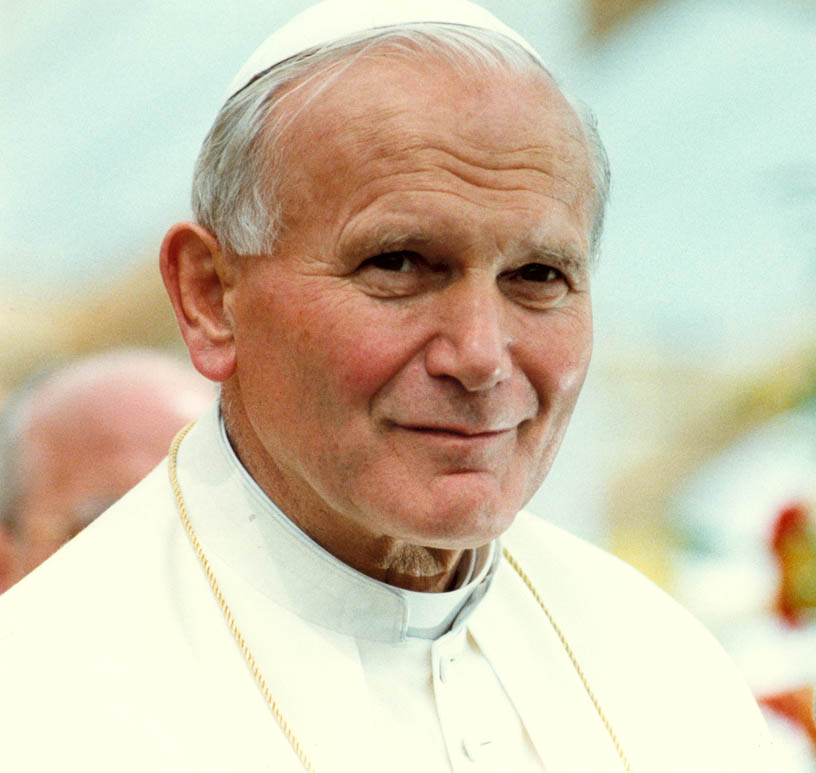

Here is a reminder from Blessed John Paul II from Veritatis Splendor. 


30. In addressing this Encyclical to you, my Brother Bishops, it is my intention to state the principles necessary for discerning what is contrary to "sound doctrine", drawing attention to those elements of the Church's moral teaching which today appear particularly exposed to error, ambiguity or neglect. Yet these are the very elements on which there depends "the answer to the obscure riddles of the human condition which today also, as in the past, profoundly disturb the human heart. What is man? What is the meaning and purpose of our life? What is good and what is sin? What origin and purpose do sufferings have? What is the way to attaining true happiness? What are death, judgment and retribution after death? Lastly, what is that final, unutterable mystery which embraces our lives and from which we take our origin and towards which we tend?".50 These and other questions, such as: what is freedom and what is its relationship to the truth contained in God's law? what is the role of conscience in man's moral development? how do we determine, in accordance with the truth about the good, the specific rights and duties of the human person? — can all be summed up in the fundamental question which the young man in the Gospel put to Jesus: "Teacher, what good must I do to have eternal life?" Because the Church has been sent by Jesus to preach the Gospel and to "make disciples of all nations..., teaching them to observe all" that he has commanded (cf. Mt 28:19-20), she today once more puts forward the Master's reply, a reply that possesses a light and a power capable of answering even the most controversial and complex questions. This light and power also impel the Church constantly to carry out not only her dogmatic but also her moral reflection within an interdisciplinary context, which is especially necessary in facing new issues.51
It is in the same light and power that the Church's Magisterium continues to carry out its task of discernment, accepting and living out the admonition addressed by the Apostle Paul to Timothy: "I charge you in the presence of God and of Christ Jesus who is to judge the living and the dead, and by his appearing and his kingdom: preach the word, be urgent in season and out of season, convince, rebuke, and exhort, be unfailing in patience and in teaching. For the time will come when people will not endure sound teaching, but having itching ears they will accumulate for themselves teachers to suit their own likings, and will turn away from listening to the truth and wander into myths. As for you, always be steady, endure suffering, do the work of an evangelist, fulfil your ministry" (2 Tim 4:1-5; cf. Tit1:10, 13-14).

List of heresies spotted on the weekend in a heresy watch

http://gryphonrampant.blogspot.ie/2012/07/saint-anthony-of-padua-hammer-of.html to buy this
1) A misunderstanding on the meaning of the Incarnation-Christ did come to redeem us from sin and death.

2) The denial of Original Sin, which is connected to the misunderstanding of the Salvific act of Christ on the Cross.

3) The denial of the uniqueness of the one, holy, Catholic and apostolic Church, confusing the Church with other man-made institutions.

4) False ecumenism, which involves stating that all religions have some fullness of truth (no) and that the Catholic Church has much in common with Buddhist and Hindu idea of transcendence (no).

5) Lack of knowledge of the meaning of the Immaculate Conception and that Mary is the new Eve-a woman of perfection, without sin, without Original Sin and with a unique, intimate relationship with the Trinity.

6) The belief in universal salvation, that everyone is saved and that there is no Hell. Sorry, but God is Just as well as Merciful. This belief states that only demons are in hell.

7) The idea that Allah is the same as God the Father, as revealed both in the Old and the New Testament. No-Allah is not a father, he is not the father of the Son of God, nor is he in relationship with the Holy Spirit as in the Trinity.

8) The idea that the Church is invisible and not an institution created by Christ.

9) The belief that we can have a reasonable hope that no one is in Hell-no, sorry, connected to 6.

10) The idea that holiness is separate from the sacraments, grace, and the merits of the Catholic Church and can, therefore, be attained by man's own efforts without the above.

11) The idea that all religions are revealed by God-no there are only two revealed religions: Judaism and Catholicism

12)  That there are errors of doctrine or dogma in the Old Testament-no; in fact, even historical facts, such as the Fall of Jericho, have been demonstrated by archaeology. There are many mysteries yet to be discovered in Old Testament history.

13) That is one is a heretic in one small way, one is not a heretic. No, a person who is a heresiarch is usually off in more than one area.

14) And a misconception, rather than a heresy, that community is more important than the abuses in the Mass and therefore, one chooses knowingly to attend a Mass where there are liturgical abuses just for the community. 

15) The other big heresy met is the denial of the unique creation of man and woman, an Adam and Eve, which we must believe-the unique creation of two-perfect humans; and the unique creation of the soul. 

Check this out. Humani Generis.


37. When, however, there is question of another conjectural opinion, namely polygenism, the children of the Church by no means enjoy such liberty. For the faithful cannot embrace that opinion which maintains that either after Adam there existed on this earth true men who did not take their origin through natural generation from him as from the first parent of all, or that Adam represents a certain number of first parents. Now it is in no way apparent how such an opinion can be reconciled with that which the sources of revealed truth and the documents of the Teaching Authority of the Church propose with regard to original sin, which proceeds from a sin actually committed by an individual Adam and which, through generation, is passed on to all and is in everyone as his own.[12]

38. Just as in the biological and anthropological sciences, so also in the historical sciences there are those who boldly transgress the limits and safeguards established by the Church. In a particular way must be deplored a certain too free interpretation of the historical books of the Old Testament. Those who favor this system, in order to defend their cause, wrongly refer to the Letter which was sent not long ago to the Archbishop of Paris by the Pontifical Commission on Biblical Studies.[13] This letter, in fact, clearly points out that the first eleven chapters of Genesis, although properly speaking not conforming to the historical method used by the best Greek and Latin writers or by competent authors of our time, do nevertheless pertain to history in a true sense, which however must be further studied and determined by exegetes; the same chapters, (the Letter points out), in simple and metaphorical language adapted to the mentality of a people but little cultured, both state the principal truths which are fundamental for our salvation, and also give a popular description of the origin of the human race and the chosen people. If, however, the ancient sacred writers have taken anything from popular narrations (and this may be conceded), it must never be forgotten that they did so with the help of divine inspiration, through which they were rendered immune from any error in selecting and evaluating those documents.
39. Therefore, whatever of the popular narrations have been inserted into the Sacred Scriptures must in no way be considered on a par with myths or other such things, which are more the product of an extravagant imagination than of that striving for truth and simplicity which in the Sacred Books, also of the Old Testament, is so apparent that our ancient sacred writers must be admitted to be clearly superior to the ancient profane writers.


To be continued...

Heart Knowledge Postscript

When one falls in love with a person, does one not want to find out all about that person? Does not love demand knowledge, not merely feeling?

I suggest that those who have trouble with heart and head knowledge discussions watch, or better yet, read Jane Austens's Sense and Sensibility.


A brief note on YouCat

Someone asked me this morning if I would use the YouCat. I said no. I do not need to go into all the reasons, and I think there are problems with translations. One can read a good review here. If anyone has information on updates which correct the problems, please comment.

http://catholicinformation.aquinasandmore.com/2011/08/12/theological-problems-with-the-youcat-have-forced-us-to-discontinue-selling-it/

I personally would start with the Compendium of the Catechism of the Catholic Church, and as a teacher who uses "original" sources, I would be using encyclicals and basic texts rather than the YouCat.

By the way, the recommendation of use for the YouCat is that it is for ages 14-17. I disagree. A teen can use the Compendium and the CCC. Why do we dumb-down truth?

Heart and Head Knowledge Heart Speaks to Heart

Ok, I decided to write more on this. I had such superb Old and New Testament professors, that I want to share some of their insights. We actually discussed the heart in Jewish tradition and the heart in the Christian tradition in order to understand love and the other virtues, as well as the gifts of the Holy Spirit.

The heart has been the symbol of love for centuries. Literary historians and art historians have traced the use of the heart as a sign of love back to Christian Europe in the 13th century. However, the term goes back much further than that. 

However, St. David wrote in the beautiful Psalm 50, Create a clean heart in me, O God: and renew a right spirit within my bowels. DR

Now, we no longer see the spirit in the bowels, nor do we necessarily use the heart as a symbol of anything but the passions, or perhaps, love. For Catholics, love at its highest expression, is in the will. 

But, the idea of the heart as being the center of wisdom, will and desire is from our Jewish roots. This is clear in David's psalms, but also in other parts of the Old Testament. This article reminds me of some of the writing of St. Alphonsus Ligouri on the heart. 

From the Jewish Encyclopedia on line.-http://www.jewishencyclopedia.com/articles/7436-heart

The heart as the seat of thought is referred to in "maḥshebot libbo" (thoughts of his heart; Ps. xxxiii. 11) and in "morashe lebabi" (possessions or thoughts of my heart; Job xvii. 11). So "amar beleb" (Obad. i. 3), "amar el leb" (Gen. viii. 21), "dibber 'im leb" (Eccl. i. 16) (= "to speak to the heart" or "to oneself"), mean "to think." The heart knows and perceives (Deut. xxix. 3 [A. V. 4]); it remembers and forgets (I Sam. xxi. 13 [A. V. 12]; Deut. iv. 9). "A dead man out of heart" (A. V. "mind"; Ps. xxxi. 13 [A. V. 12]) means a dead man forgotten. The man of understanding is called "ish [plur. "anshe"] lebab" = "the man of heart" (Job xxxiv. 10, 34), and the man without understanding "ḥasar leb" (Prov. x. 13) or "en leb" (Jer. v. 21), "the man void of heart" or "without heart."
That the heart is the seat of emotion is the generally accepted opinion of all investigators into the psychology of the Bible, though Carl Grüneisen ("Der Ahnenkultus und die Urreligion Israels," p. 39) denies it. All modes of feeling, from the lowest physical forms, as hunger and thirst, to the highest spiritual forms, as reverence and remorse, are attributed by the Hebrews to the heart (comp. Gen. xviii. 5; Judges xix. 5; Ps. cii. 5 [A. V. 4]); so joy and gladness, sorrow and grief, fear and reverence (Zeph. iii. 14; Isa. lxvi. 14; Ps. xiii. 3 [A. V. 2]; Deut. xx. 3, 7, 8; Jer. xxxii. 40). Still the term "nefesh" (soul) is more frequently used with reference to the appetites.
Is the Seat of Volition.
The heart is also the seat of volition. It is self-directing and self-determining. All conscious resolvesemanate from that source (comp. "mela'olibbo" [Esth. vii. 5]; "nadab libbo oto" [Ex. xxxv. 29]; "nesa'o libbo" [Ex. xxxv. 21]; and "natan libbo" [Eccl. i. 13]). When the words "heart" and "soul" are used in connection with each other (Deut. vi. 5), they are not used merely as synonymous terms in order to add force to the expression, for the phrase "with all your heart" denotes the love of conscious resolve, in which the whole being consents, and which must at once become a natural inclination (see Cremer, "Biblico-Theological Lexicon," s.v. καρδία, transl. by William Urwick, p. 347).
It is in the heart that the heart becomes conscious of itself and of its own operations. It recognizes its own suffering. It is the seat of self-consciousness: "the heart knoweth its [A. V. "his"] own bitterness" (Prov. xiv. 10). As the whole physical and psychical life is centralized in the heart, so the whole moral life springs from and issues out of it. This is clear from such expressions as "shalem" and "tam" (perfect), "ṭahor" (pure), "ṭob" (good), and "yashar" (upright), used in connection with the heart. The Biblical writers speak of the false heart, the stubborn and obstreperous heart, and the heart distant from God (Ps. ci. 4; Jer. v. 23; Isa. xxix. 13). The hypocrite is the man with a double or divided heart: where one would say "two-faced," the Psalmist says "two-hearted" ("beleb waleb"; Ps. xii. 3 [A. V. 2]). Lazarus ("The Ethics of Judaism," Engl. transl., ii. 60, note) observes that "the Talmudic 'libbo' rarely reaches the inclusive meaning of the Hebrew 'leb,' which comprises the whole psychic phenomena. As a rule, the Talmudic expression approaches the modern 'heart,' primarily indicating inner conviction as contrasted with external deed" (see Sanh. 106b; Ber. 20a, Munich MS.). There is an interesting discussion between Rabbi Eliezer and Rabbi Joshua as to whether the heart or the head should be regarded as the seat of wisdom (Yalḳ., Prov. 929).
Maimonides, in discussing the term "leb," says that it is a word used homonymously, primarily signifying the organ of life and then coming to mean "center," "thought," "resolution," "will," "intellect" ("Moreh Nebukim," i. 39). SeePsychology of the Bible.
"Leb" is used figuratively for the center or innermost part of objects other than the human body, in expressions such as "the heart of the sea" (Ex. xv. 8; Jonah ii. 3); "the heart of heaven" (Deut. iv. 11; A. V. "midst"); "the heart [A. V. "midst"] of an oak-tree" (II Sam. xviii. 14). In this use "heart" has gone over into the English language as a Hebraism when mention is made of the "heart" or "core" (Latin "cor") of a subject or object, meaning its central or innermost part, its central idea or essence. "She'er" (flesh) and "leb" (heart) are used conjointly to designate the whole inner and outer life of man (Ps. lxxiii. 26).
We have many saints who use the term heart in their writings-Blessed John Cardinal Henry Newman is one of the most famous, as is the Great St. Augustine. I shall return to them in another post.
But, the heart in their writings is one either already turned over to God, or one seeking God. The heart is the symbolic place of love, and it is love which is being sought by those who want to love God and be open to His Love.
But, love for those who are moving into the higher levels of holiness has nothing to do with feelings and everything to do with decisions.
As good spouses know, love is in the will once romance and desire have left a marriage, for what ever reason, and the will can re-kindle desire and feelings. But, the locus of love is not the emotions.


The problem of modern usage of the term is when
knowledge and love are only seen as in the heart at the expense of the will, soul, intellect.
Over-simplistic use of language leads to theological and philosophical misunderstandings.
The Greeks gave us, in God's plan, the ability to see the virtues as part of the intellect and will.
Therefore, when we speak of wisdom or knowledge, the locus of such are not necessarily in the heart, but in the mind. One sees this movement of learning about one's self, self-knowledge, as a key element of wisdom.
Wisdom directs the will to love and controls the passions of the heart.
Again, to use the term "heart knowledge" is to simplify wisdom as the virtue and the gift of the Holy Spirit with regard to the use of the intellect. 
To be continued....

Third Part-Heart and Head Knowledge Debate-Protestant and Post-Modern Anti-Intellectualism

Giotto Allegory of Charity
Now, this is a horribly short review on heart and head knowledge, but I want to shake the bushes a bit and get some people thinking on this false dichotomy.  When the Protestant Revolt occurred, the great damage done to Christianity fell into three categories of heresy. These are sola fide, sola scriptura and solo Christo.

Now, these are well-known to you all as faith alone, without good works; Scripture alone, without Tradition; and Christ alone, without the Catholic priesthood, the sacraments, The Blessed Virgin or the Pope.

All of these elements of Protestant heresies, in the various manners is which these are manifested, created an over-emphasis on the working of the Holy Spirit on the heart alone-and here, the word heart is ambiguous. When Protestants refer to the heart, are they referring to the passions, or Charity, that is love? This ambiguity has led directly to the post-modern denial of the objective, traditional modes of knowing something.

Gone are the Aristotelian guidelines on how humans obtain knowledge, both practical and spiritual. This breakdown provides moderns with an easy denial of reality, a denial of any personal responsibility to get to know something, someone or God. Most post-moderns, and that would include many Catholics, deny reality, both physical and spiritual

If all knowledge is merely based on shared experiences of language, or on relativistic, subjective interpretations of reality, then head knowledge becomes a transitory, ephemeral mode of thinking and speaking. The Deconstructionists, in my view, are a direct result of the Protestant insistence on sola everything.

Here is Derrida:

On the one hand, we must traverse a phase of overturning. To do justice to this necessity is to recognize that in a classical philosophical opposition we are not dealing with the peaceful coexistence of a vis-a-vis, but rather with a violent hierarchy. One of the two terms governs the other (axiologically, logically, etc.), or has the upper hand. To deconstruct the opposition, first of all, is to overturn the hierarchy at a given moment. To overlook this phase of overturning is to forget the conflictual and subordinating structure of opposition.

Derrida's phrase, il n'y a pas de hors-texte, there is nothing outside the text, seems a direct result of the relationship of the Protestant reader of the Scriptures who denies 2,000 years of Tradition, that is, outside context, comment, critique, understanding. 

I take great interest in questions of language and rhetoric, and I think they deserve enormous consideration; but there is a point where the authority of final jurisdiction is neither rhetorical nor linguistic, nor even discursive. The notion of trace or of text is introduced to mark the limits of the linguistic turn. This is one more reason why I prefer to speak of 'mark' rather than of language. In the first place the mark is not anthropological; it is prelinguistic; it is the possibility of language, and it is every where there is a relation to another thing or relation to an other. For such relations, the mark has no need of language.

As with his definitions of difference and deferral, the idea of non-presence, or the showing of the problems of doctrinal statements or philosophical ideas in writing which have to be destroyed to come to real understanding of the meaning of a text, or even speech, Derrida puts off real meaning. He does not want to be nihilistic, but, on the other hand, he wants to undo the constructs of historical modes of coming to meaning.

This anti-intellectualism underlying Derrida, who is looking for meaning in the absent of old paradigms of thinking, believing and writing is the same impetus behind Protestantism-a negation of tradition and Tradition, a negation of word and Word. One's understanding can only really be in the present. 

So, too, is the search for heart knowledge, which, as separated from the intellect, or head knowledge, leads either to complete subjectivity, or complete meaninglessness. Heart knowledge cannot be sustained as a platform for living-the limits of one's experience without reflection and the use of reason soon ends in ennui. 

Relativism in religion mirrors the modern man's desire to throw off the fetters of the past systems of thinking and rely merely on the meaning of the present spoken word. As authors fail to communicate though the text for Derrida, so too, the text of Tradition fails the Protestant seeking only immediate knowledge for the heart-whatever that is. If one cannot find meaning in the text immediately, there is no other meaning. 

This type of approach has nothing to do with the striping of the imagination as taught by Ignatius Loyola or John of the Cross, as the difference there is that is meaning resides beyond the purification of the soul and the senses and that reality, that meaning, is God.

Sadly, for so many Protestants, as well as Catholics, the meaning of life is really not God, but their own selves, and in that sense, they cannot find identity or meaning outside the context of seeking knowledge-either in the form of studying Revelation, which is what Tradition is, and interpreting Scripture, as well as the infused knowledge which comes both from reflection and grace.

To deny the intellectual search for meaning outside of any context is to have a desire to do exactly the opposite of Derrida, and that is to find meaning in the written word in order to understand one's self. Of course, the only real way to do this is by using rationality within the Tradition of the Church and the Scriptures as organized and explained by the Church.

People will say, but, oh, the sacraments are not intellectual. These are efficacious despite one's understanding. 

That does not mean that there is not an intellectual understanding, but merely that there is mystery as well. And, of course, the Post-Modernist denies the value or even reality of history, denigrating the meaning of history in much the same way as the Protestant denies Tradition. 

Both groups see human constructs merely, as power structures, instead of the workings of the Incarnate God. 

Most Catholics who reflect on the denial of the spiritual and the emphasis on the self, believe the movement started with Descartes. I think is started with Luther.


Heart and Head Debate Continued..."What does Athens have in common with Jerusalem?"

What most people mean by heart knowledge is feeling. This type of false definition leads good Catholics into running after the latest experiences in religion, new age spiritualities, private revelations, and other feel-good Gnosticisms.

Sadly, none of those things have anything to do with the pursuit of holiness or the real love of God.


I remind people all the time that love is in the will.

The problem is that many Catholics have been affected both by post-modernism's denial of the traditional means of knowing something, and the older, fideistic emphasis on the antagonism of faith and reason.

Here is what Blessed John Paul II has to say about this.

It is no accident that, when the sacred author comes to describe the wise man, he portrays him as one who loves and seeks the truth: “Happy the man who meditates on wisdom and reasons intelligently, who reflects in his heart on her ways and ponders her secrets. He pursues her like a hunter and lies in wait on her paths. He peers through her windows and listens at her doors. He camps near her house and fastens his tent-peg to her walls; he pitches his tent near her and so finds an excellent resting-place; he places his children under her protection and lodges under her boughs; by her he is sheltered from the heat and he dwells in the shade of her glory” (Sir 14:20-27).


For the inspired writer, as we see, the desire for knowledge is characteristic of all people. Intelligence enables everyone, believer and non-believer, to reach “the deep waters” of knowledge (cf. Prov 20:5). It is true that ancient Israel did not come to knowledge of the world and its phenomena by way of abstraction, as did the Greek philosopher or the Egyptian sage. Still less did the good Israelite understand knowledge in the way of the modern world which tends more to distinguish different kinds of knowing. Nonetheless, the biblical world has made its own distinctive contribution to the theory of knowledge.


What is distinctive in the biblical text is the conviction that there is a profound and indissoluble unity between the knowledge of reason and the knowledge of faith. The world and all that happens within it, including history and the fate of peoples, are realities to be observed, analysed and assessed with all the resources of reason, but without faith ever being foreign to the process. Faith intervenes not to abolish reason's autonomy nor to reduce its scope for action, but solely to bring the human being to understand that in these events it is the God of Israel who acts. Thus the world and the events of history cannot be understood in depth without professing faith in the God who is at work in them. Faith sharpens the inner eye, opening the mind to discover in the flux of events the workings of Providence. Here the words of the Book of Proverbs are pertinent: “The human mind plans the way, but the Lord directs the steps” (16:9). This is to say that with the light of reason human beings can know which path to take, but they can follow that path to its end, quickly and unhindered, only if with a rightly tuned spirit they search for it within the horizon of faith. Therefore, reason and faith cannot be separated without diminishing the capacity of men and women to know themselves, the world and God in an appropriate way.

...

41. The ways in which the Fathers of East and West engaged the philosophical schools were, therefore, quite different. This does not mean that they identified the content of their message with the systems to which they referred. Consider Tertullian's question: “What does Athens have in common with Jerusalem? The Academy with the Church?”.(40) This clearly indicates the critical consciousness with which Christian thinkers from the first confronted the problem of the relationship between faith and philosophy, viewing it comprehensively with both its positive aspects and its limitations. They were not naive thinkers. Precisely because they were intense in living faith's content they were able to reach the deepest forms of speculation. It is therefore minimalizing and mistaken to restrict their work simply to the transposition of the truths of faith into philosophical categories. They did much more. In fact they succeeded in disclosing completely all that remained implicit and preliminary in the thinking of the great philosophers of antiquity.(41) As I have noted, theirs was the task of showing how reason, freed from external constraints, could find its way out of the blind alley of myth and open itself to the transcendent in a more appropriate way. Purified and rightly tuned, therefore, reason could rise to the higher planes of thought, providing a solid foundation for the perception of being, of the transcendent and of the absolute.
It is here that we see the originality of what the Fathers accomplished. They fully welcomed reason which was open to the absolute, and they infused it with the richness drawn from Revelation. This was more than a meeting of cultures, with one culture perhaps succumbing to the fascination of the other. It happened rather in the depths of human souls, and it was a meeting of creature and Creator. 

To be continued....

On The False Dichotomy of Head Knowledge and Heart Knowledge And The Heresy of Fideism

I have written some posts on this topic of reason and faith before, but I am going to write a few more today. I want to avoid Pascal et co. and the Post-Moderns if I can in this short discussion. But, rather, concentrate on Fideism as it reveals itself in Catholic circles as a direct influence from Calvinism rather than Lutheranism, although there is a connection. I shall also avoid, at this stage, Fénelon & Bossuet.

I have long suspected great Calvinistic influences in both Irish and English Catholicism with regard to this argument about the difference between head knowledge and heart knowledge. The errors are rooted in anti-intellectualism, Jansenism (which greatly influence Irish Catholics), and the seeking of experiential religion, or Enthusiasm. I taught several classes on Johnathan Edwards in the past and presented him as a mystical Enthusiast. In one of my boxes in Illinois, I have his fascinating biography which proves this point. George M. Marsden's life of Edwards is worth reading. Marsden also wrote Fundamentalism and American Culture. Another classic book of this ilk is The Puritan Dilemma: The Story of John Winthrop by  Edmund Morgan, which I taught, and other books, such as Ronald Knox's Enthusiam, which, someone in their enthusiasm stole from me....amazing. If some nice reader would like to buy this for me, I would greatly appreciate it. But, read it first....

As far as I can ascertain, the first person to make the huge mistake of separating knowledge into heart and head was the heretic, Johnathan Edwards. And Fideism, the heresy, existed before Kant.  In fact, the famous Johnathan Edwards in one of his sermons, Divine and Supernatural Light, states clearly that God cannot be found by reason, when he was referring to a specific gift of light, 

This light, and this only, has its fruit in a universal holiness of life. No merely notional or speculative understanding of the doctrines of religion will ever bring to this. But this light, as it reaches the bottom of the heart, and changes the nature, so it will effectually dispose to a universal obedience. It shows God's worthiness to be obeyed and served. It draws forth the heart in a sincere love to God, which is the only principle of a true, gracious, and universal obedience; and it convinces of the reality of those glorious rewards that God has promised to them that obey him.


Edward's faulty thinking, which is what a heresy is, can be seen in this snippet.

But if we take reason strictly -- not for the faculty of mental perception in general, but for ratiocination, or a power of inferring by arguments -- the perceiving of spiritual beauty and excellency no more belongs to reason, than it belongs to the sense of feeling to perceive colours, or to the power of seeing to perceive the sweetness of food. It is out of reason's province to perceive the beauty or loveliness of any thing: such a perception does not belong to that faculty. Reason's work is to perceive truth and not excellency. It is not ratiocination that gives men the perception of the beauty and amiableness of a countenance, though it may be many ways indirectly an advantage to it; yet it is no more reason that immediately perceives it, than it is reason that perceives the sweetness of honey: it depends on the sense of the heart. -- Reason may determine that a countenance is beautiful to others, it may determine that honey is sweet to others; but it will never give me a perception of its sweetness.

The teaching of the Catholic Church is quite different. And, too often, I have heard silly sermons on the difference between head knowledge and heart knowledge. Here are some helps from the Catholic Encyclopedia.

The heresy of Fideism denies that "the power of unaided human reason to reach certitudeaffirms that the fundamental act of human knowledge consists in an act of faith, and the supreme criterion of certitude is authority." Edwards was a Fideist.  But, so are many, many Catholics. They do not understand that the intellect is involved in Faith.


... "it must be noted that authority, even the authority of God, cannot be the supreme criterion of certitude, and an act of faith cannot be the primary form of human knowledge. This authority, indeed, in order to be a motive of assent, must be previously acknowledged as being certainly valid; before we believe in a proposition as revealed by God, we must first know with certitude that God exists, that He reveals such and such a proposition, and that His teaching is worthy of assent, all of which questions can and must be ultimately decided only by an act of intellectual assent based on objective evidence. Thus, fideism not only denies intellectual knowledge, it logically ruins faith itself."

The strong anti-intellectualism of the charismatics and other groups has led to Fideism. Several popes have condemned this heresy.


In 1348, the Holy See proscribed certain fideistic propositions of Nicholas d'Autrecourt (cf. Denzinger, Enchiridion, 10th ed., nn. 553-570). In his two Encyclicals, one of September, 1832, and the other of July, 1834, Gregory XVI condemned the political and philosophical ideas of Lamenais. On 8 September, 1840, Bautain was required to subscribe to several propositions directly opposed to Fideism, the first and the fifth of which read as follows: "Human reason is able to prove with certitude the existence of God; faith, a heavenly gift, is posterior to revelation, and therefore cannot be properly used against the atheist to prove the existence of God"; and "The use of reason precedes faith and, with the help of revelation and grace, leads to it." The same proposition were subscribed to by Bonnetty on 11 June, 1855 (cf. Denzinger, nn. 1650-1652). In his Letter of 11 December, 1862, to the Archbishop of Munich, Pius IX, while condemning Frohschammer's naturalism, affirms the ability of human reason to reach certitude concerning the fundamental truthsof the moral and religious order (cf. Denzinger, 1666-1676). And, finally, the Vatican Council teaches as a dogma of Catholic faith that "one true God and Lord can be known with certainty by the natural light of human reason by means of the things that are made" (Const., De Fide Catholicâ", Sess. III, can. i, De Revelatione; cf. Granderath, "Constitutiones dogmaticae Conc. Vatic.", Freiburg, 1892, p. 32 cf. Denzinger, n. 1806).


As to the opinion of those who maintain that our supernatural assent is prepared for by motives of credibility merely probable, it is evident that it logically destroys the certitude of such an assent. This opinion was condemned by Innocent XI in the decree of 2 March, 1679 (cf. Denzinger, n. 1171), and by Pius X in the decree "Lamentabili sane" n. 25: "Assensus fidei ultimo innititur in congerie probabilitatum" (The assent of faith is ultimately based on a sum of probabilities). Revelation, indeed, is the supreme motive of faith in supernatural truths, yet, the existence of this motive and its validity has to be established by reason

The Pope Emeritus gave excellent talks on the use of reason. Here are selections from his November 21, 2012 speech on this subject. I highly suggest reading the entire address from here.  One must remember that faith is not the enemy of reason and reason is not the enemy of faith. There should be no antagonism between these two gifts. 


http://www.vatican.va/holy_father/benedict_xvi/audiences/2012/documents/hf_ben-xvi_aud_20121121_en.html


The Catholic faith is therefore reasonable and fosters trust in human reason as well. The First Vatican Council, in the Dogmatic Constitution Dei Filius, said that reason is able to know with certainty that God exists through the Creation, whereas the possibility of knowing “easily, with complete certainty and without error” (DS 3005) the truths that concern God in the light of grace, belongs to faith alone. The knowledge of faith, moreover, is not in opposition to right reason. Blessed Pope John Paul II, in fact, in his Encyclical Fides et Ratio, sums it up in these words: “human reason is neither annulled nor debased in assenting to the contents of faith, which are in any case attained by way of free and informed choice” (n. 43).

In the irresistible desire for truth, only a harmonious relationship between faith and reason is the right road that leads to God and to the person’s complete fulfilment. This doctrine is easily recognizable throughout the New Testament. St Paul, in writing to the Christians of Corinth, maintains, as we have heard: “Jews demand signs and Greeks seek wisdom, but we preach Christ crucified, a stumbling block to Jews and folly to Gentiles” (1 Cor 1:22-23). God in fact did not save the world with an act of power, but through the humiliation of his Only-Begotten Son. Measured in human parameters, the unusual ways of God clash with the demands of Greek wisdom. And yet, the Cross of Christ has a reason of its own which St Paul calls: ho logos tou staurou “the word of the cross” (1 Cor 1:18). Here the term logos means both the word and reason and, if it alludes to the word, it is because it expresses verbally what reason works out.....

At the same time, God, with His grace, illuminates reason and opens up new horizons, immeasurable and infinite. Therefore, faith is a continuous stimulus to seek, never to cease or acquiesce in the inexhaustible search for truth and reality....Intellect and faith are not foreign or antagonistic to divine Revelation, they are both prerequisites for understanding its meaning, for receiving its authentic message, for approaching the threshold of the mystery. The Catholic faith is therefore rational and also nurtures trust in human reason....Knowledge of faith, furthermore, is not contrary to reason. In the irresistible desire for truth, only a harmonious relationship between faith and reason can show the correct path to God and to self-fulfilment.
Another reason for which it is rational to believe is this: if science is a valuable ally of faith in our understanding of God's plan for the universe, faith also directs scientific progress towards the good and truth of mankind, remaining faithful to that original plan....This is why it is vital for man to open himself to faith, and to know God and His plan for salvation through Jesus Christ. The Gospel establishes a new humanism, an authentic 'grammar' of humankind and reality".

In the next post, I shall take a brief look at Blessed John Paul II's encyclical on the topic as mentioned above. To be continued.....

Busy Day


Sunday was a day for tackling hard questions and clearing the errors of some popular catechesis. Some young people know how to find stuff and some need prompting but the Millennials I spent the day with are eager for the Truth and reading voraciously. One was from Canada, one was from England, one was from Poland and one was from Singapore. Converts and reverts....

I have tried to recommend many books. The other great topics of the day included the evil of Harry Potter and Twilight, Descartes, evil national health systems, the problem of liturgical abuse, priests who do not give good marriage instruction, the general malaise of the Church in Ireland, England, and the continent,  and the lack of vocations. We discussed Gramsci, an author known to one of the young persons, Fr. Gabriele Amorth, the books put out by Evangelium, and Church architecture.  I have spent the day with at least two saints out of the group.

When people want to know the Faith and when then want to love God, they find out what they need to know. We are responsible for our own faith.


Sunday, 15 September 2013

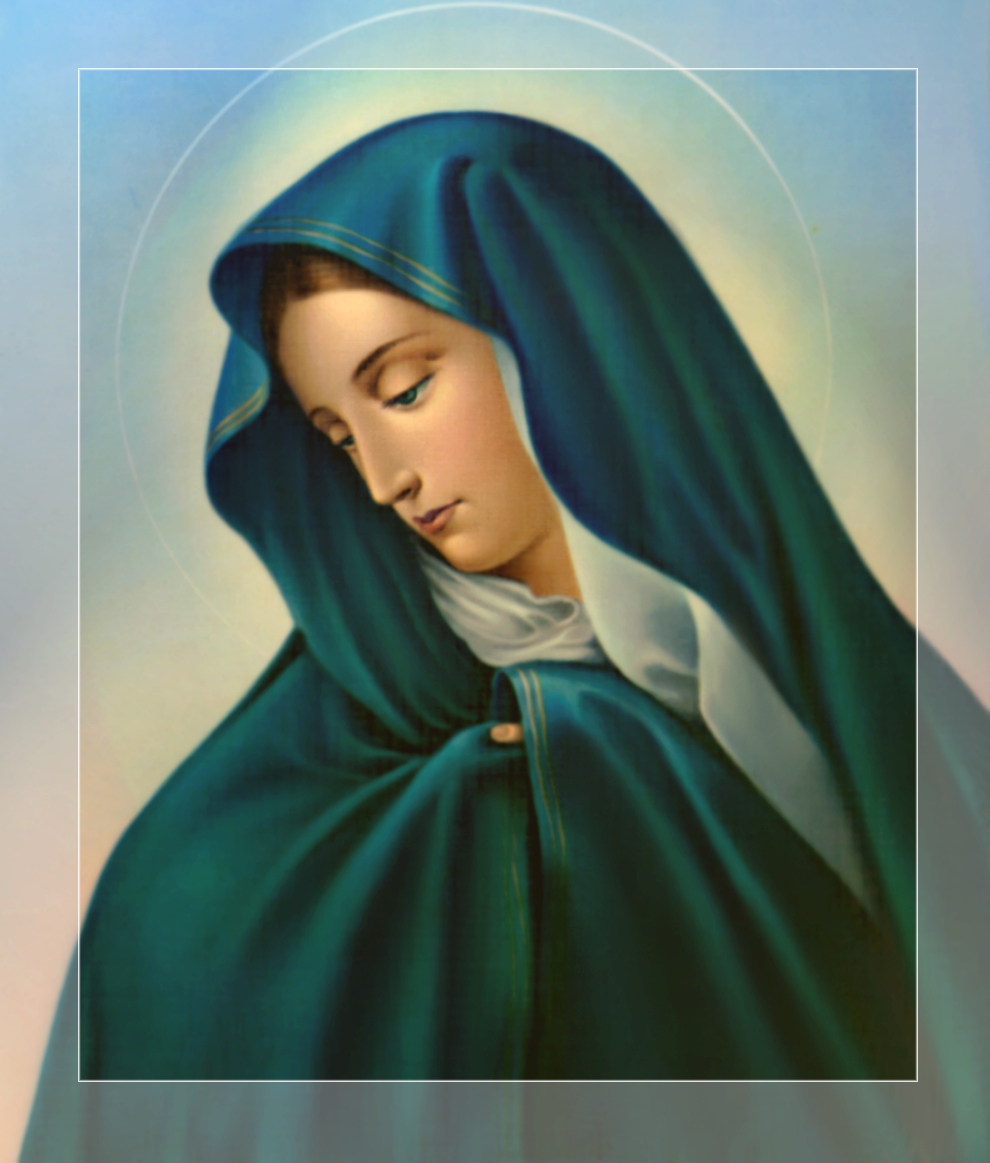
The Seven Sorrows of Mary


The Seven Sorrows of Mary are all based on Biblical events except for the meeting of Christ on the Way of the Cross. This feast will not be celebrated today because it is a Sunday, but many countries, including Slovakia and Malta have a great devotion to Our Lady of Sorrows. In some countries, the feast is celebrated on Holy Saturday. A site listed below has meditations from the Holy Saturday devotion. This September feast is the common day of remembrance of these sorrows in the Latin Rite.

These are these Seven Sorrows of Mary. 
  1. The Prophecy of Simeon.  or the Circumcision of Christ
  2. The Flight into Egypt. 
  3. The loss of the child Jesus in the Temple. 
  4. Mary meets Jesus on the way to Calvary.
  5. Jesus dies on the cross. 
  6. The piercing of the side of Jesus, and Mary's receiving the body of Jesus in her arms. 
  7. The body of Jesus is placed in the tomb. 

Any mother, or anyone with compassion, will recognize the pain involved with each of these events. One may meditate on these, one each day this week, for Lectio Divina. The Biblical references are here. Luke 2: 34-35, Matthew 2:13, Luke 2:43-45, John 19:25, Matthew 27:57-59; John 19:40-42 ( thanks to Wiki I did not have to look these up-list from Wiki above as well.)

Those who love Mary and Her Son may do well in these times of growing hardship for the Church to pray to Our Lady of Sorrows. She is particularly powerful for families with difficulties, one priest noted.

This site for meditations is that of the Dominican nuns in St. Julian's, in Malta. 

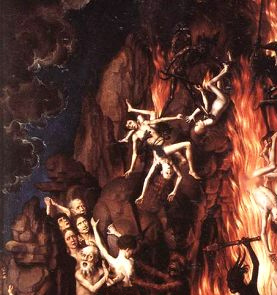
On Hell from Ven. Fulton J. Sheen And St. Teresa of Avila


Life, Truth, Love, states Ven. Fulton J. Sheen, are what we find in heaven. The soul who hates those would be tormented in heaven and that soul, who has chosen over and over Death, Deceit and Hate, wants to be in hell.

Sad, is it not? Sheen's talk on hell must have disturbed his audience, reminding them that all humans have free will. The justice of God is merely an acknowledgment of a human's own choices.

Sheen writes that justice forces those who hate God to love His Justice in hell, and that is part of the punishment.  The Archbishop states that hell is hating those things one loves. I cannot imagine such unhappiness. One could, therefore, hate one's self for all eternity.

Secondly, Sheen notes that hell is being angry with one's self for choosing evil instead of good. The third point he makes is the one about justice. All humans have free will in this life, but the justice of God determines one's will after death and judgement.

I truly wish more priests would talk about hell from the pulpit. Not enough people fear God. Too many people love their own wills more than God.

And, here is St. Teresa of Avila's great vision of hell.


"While I was at prayer one day, I found myself in a moment, without knowing how, plunged apparently into Hell. I understood that it was Our Lord's will that I should see the place which the devils kept in readiness for me, and which I had deserved by my sins. It lasted but for a moment, but it seems to me impossible that I should ever forget it even if I were to live many years.
"The entrance seemed to be by a long narrow pass, like a furnace, very low, dark, and close. The ground seemed to be saturated with water, mere mud, exceedingly foul, sending forth pestilential odors, and covered with loathsome vermin. At the end was a hollow place in the wall like a closet, and in that I saw myself confined. All this was ever pleasant to behold in comparison with what I felt there. There is no exaggeration in what I am saying.
"But as to what I then felt, I do not know where to begin if I were to describe it; it is utterly inexplicable. I felt a fire in my soul but such that I am still unable to describe it. My bodily sufferings were unendurable. I have undergone most painful sufferings in this life, and, as the physicians say, the greatest that can be borne, such as the contraction of my sinews when I was paralyzed, without speaking of other ills of different types - yet, even those of which I have spoken, inflicted on me by Satan; yet all these were as nothing in comparison with what I then felt, especially when I saw that there would be no intermission nor any end to them.
"These sufferings were nothing in comparison with the anguish of my soul, a sense of oppression, of stifling, and of pain so acute, accompanied by so hopeless and cruel an infliction, that I know not how to speak of it. If I say that the soul is continually being torn from the body it would be nothing - for that implies the destruction of life by the hands of another - but here it is the soul itself that is tearing itself in pieces. I cannot describe that inward fire or that despair, surpassing all torments and all pain. I did not see who it was that tormented me, but I felt myself on fire, and torn to pieces, as it seemed to me; and I repeat it, this inward fire and despair are the greatest torments of all.
"Left in that pestilential place, and utterly without the power to hope for comfort, I could neither sit nor lie down; there was no room. I was placed as it were in a hole in the wall; and those walls, terrible to look on of themselves, hemmed me in on every side. I could not breathe. There was no light, but all was thick darkness. I do not understand how it is; though there was no light, yet everything that can give pain by being seen was visible.


"Our Lord at that time would not let me see more of Hell. Afterwards I had another most fearful vision, in which I saw the punishment of certain sins. They were the most horrible to look at, but because I felt none of the pain, my terror was not so great. In the former vision Our Lord made me really feel those torments and that anguish of spirit, just as if I had been suffering them in the body there. I know not how it was, but I understood distinctly that it was a great mercy that Our Lord would have me see with my own eyes the very place from which His compassion saved me. I have listened to people speaking of these things and I have at other times dwelt on the various torments of Hell, though not often, because my soul made no progress by the way of fear; and I have read of the diverse tortures, and how the devils tear the flesh with red-hot pincers. But all is as nothing before this: It is a wholly different matter. In short, the one is a reality, the other a description; and all burning here in this life is as nothing compared with the fire that is there.
"I was so terrified by that vision - and that terror is on me even now as I write - that though it took place nearly six years ago, the natural warmth of my body is chilled by fear even now when I think of it. And so, amid all the pain and suffering which I may have had to bear, I remember no time in which I do not think that all we have to suffer in this world is as nothing. It seems to me that we complain without reason. I repeat it, this vision was one of the grandest mercies of God. It has been to me of the greatest service, because it has destroyed my fear of trouble and of the contradictions of the world, and because it has made me strong enough to bear up against them, and to give thanks to Our Lord who has been my Deliverer, as it now seems to me, from such fearful and everlasting pains.


"Ever since that time, as I was saying, everything seems endurable in comparison with one instant of suffering such as those I had then to bear in Hell. I am filled with fear when I see that, after frequently reading books which describe in some manner the pains of Hell, I was not afraid of them, nor made any account of them. Where was I? How could I possibly take any pleasure in those things which led me directly to so dreadful a place? Blessed forever be Thou, O my God! And oh, how manifest is it that Thou didst love me much more than I did love Thee! How often, O Lord, didst Thou save me from that fearful prison! And how I used to get back to it contrary to Thy will.
"It was that vision which filled me with very great distress which I felt at the sight of so many lost souls, especially of the Lutherans - for they were once members of the Church by Baptism - and also gave me the most vehement desires for the salvation of souls; for certainly I believe that to save even one from those overwhelming torments, I would willingly endure many deaths. If here on earth we see one whom we specially love in great trouble or pain, our very nature seems to bid us compassionate him; and if those pains be great, we are troubled ourselves. What, then, must it be to see a soul in danger of pain, the most grievous of all pains, forever? It is a thought no heart can bear without great anguish. Here we know that pain at last ends with life, and that there are limits to it, yet the sight of it moves us so greatly to compassion; that other pain has no ending, and I know not how we can be calm when we see Satan carry so many souls daily away.

"This also makes me wish that, in a matter which concerns us so much, we did not rest satisfied with doing less than we can do on our part - that we left nothing undone. May Our Lord vouchsafe to give us His grace for that end." http://www.tldm.org/News8/realityofhell.htm

The Sphere Within A Sphere-Synchronity


This sphere within the sphere is here in Dublin, one exactly like it in Iowa, in Des Moines, and one in Rome. The sculpture is by  Pomodoro, If it is not raining on Monday, I shall go see it.


The Sin of Malice

The society is seeing an explosion of malice outside and inside the Church. For years, malice has been subtle and underground, but now, it is obvious and terribly nasty. What is malice? Malice is the intention to do evil on purpose. Those who fall into the habit of malice reveal a will which is always inclined towards evil.

This evil can exhibit itself in words, actions, thoughts through the will, and not through passion. A malicious person chooses to do a certain evil. That person is not acting out of the emotions, the passions. Thomas Aquinas explains this for us.

One can see how despicable this sin is. It is a willed habit.  Aquinas states that the sin comes from either a corruption within the person; in other words, the sin "presupposes some inordinateness"; or through habit; but malicious becomes a habit of the will.

Signs of malice can be multiple. Have you ever met a person who constantly is negative, who undermines other people on a regular basis, who is constantly finding fault? Have you ever met someone who thinks mean practical jokes are funny, or destroying someone's reputation a game? Have you ever met someone who simply hates everyone and delights in slander, calumny, gossip?

These are malicious people. Sometimes someone will say to me, "I really do not like being around this person because she carries a cloud around with her and dampens joy and positive attitudes in others."

That is a good description of the sin of malice.

Of course, Catholics know who the Father of Malice is , the Father of Lies, a Liar from the his first and only sin against God-Satan.

One cannot choose to be friends with persons who are addicted to being malicious unless one is patient and kind. And, this is not necessarily good for a person on one's own. It is not healthy to be around malicious people, as they are living in a powerfully negative world and desire to bring other's down into their hells, which they have created. Pray for such people if you must deal with them at work or in the family. Kindness is a good Christian virtue to combat malice.

Here is Garrigou-Lagrange on the sin of malice, which is a bit of a repetition from the perfection series, but helpful here again.

THE SIN OF MALICE
In contradistinction to the sin of ignorance and that of frailty, the sin of malice is that by which one chooses evil knowingly. In Latin it is called a sin de industria, that is, a sin committed with deliberate calculation, design, and express intention, free from ignorance and even from antecedent passion. The sin of malice is often premeditated. This is not equivalent to saying that evil is willed for the sake of evil; since the adequate object of the will is the good, it can will evil only under the aspect of an apparent good.
Now he who sins through malice, acting with full knowledge of the case and through evil will, knowingly wills a spiritual evil (for example, the loss of charity or divine friendship) in order to possess a temporal good. It is clear that this sin thus defined differs in the degree of gravity from the sin of ignorance and that of frailty. But we must not conclude from this that every sin of malice is a sin against the Holy Ghost. This last sin is one of the gravest of the sins of malice. It is produced when a man rejects through contempt the very thing that would save him or deliver him from evil: for example, when he combats recognized religious truth, or when by reason of jealousy, he deliberately grows sad over the graces and spiritual progress of his neighbor.
The sin of malice often proceeds from a vice engendered by multiple faults; but it can exist even in the absence of this vice. It is thus that the first sin of the devil was a sin of malice, not of habitual malice but of actual malice, of evil will, of an intoxication of pride.
It is clear that the sin of malice is graver than the sins of ignorance and frailty, although these last are sometimes mortal. This explains why human laws inflict greater punishment for premeditated murder than for that committed through passion.
The greatest gravity of the sins of malice comes from the fact that they are more voluntary than the others, from the fact that they generally proceed from a vice engendered by repeated sins, and from the fact that by them man knowingly prefers a temporal good to the divine friendship, without the partial excuse of a certain ignorance or of a strong passion.
In these questions one may err in two ways that are contradictory to each other. Some lean to the opinion that only the sin of malice can be mortal; they do not see with sufficient clearness the gravity of certain sins of voluntary ignorance and of certain sins of frailty, in which, nevertheless, there is serious matter, sufficient advertence, and full consent.
Others, on the contrary, do not see clearly enough the gravity of certain sins of malice committed in cold blood, with an affected moderation and a pretense of good will or of tolerance. Those who thus combat the true religion and take away from children the bread of divine truth may be sinning more gravely than he who blasphemes and kills someone under the impulse of anger.
Sin is so much the more grave as it is more voluntary, as it is committed with greater light and proceeds from a more inordinate love of self, which sometimes even goes so far as contempt of God. On the other hand, a virtuous act is more or less meritorious according as it is more voluntary, more free, and as it is inspired by a greater love of God and neighbor, a love that may even reach holy contempt of self, as St. Augustine says.
Thus he who prays with too great attachment to sensible consolation merits less than he who perseveres in prayer in a continual and profound aridity without any consolation. But on emerging from this trial, his merit does not grow less if his prayer proceeds from an equal degree of charity which now has a happy reaction on his sensibility. It is still true that one interior act of pure love is of greater value in the eyes of God than many exterior works inspired by a lesser charity.
In all these questions, whether good or evil is involved, particular attention must be paid to what proceeds from our higher faculties, the intellect and will: that is, to the act of the will following full knowledge of the case. And, from this point of view, if an evil act committed with full deliberation and consent, like a formal pact with the devil, has formidable consequences, a good act, such as the oblation of self to God, made with full deliberation and consent and frequently renewed, can have even greater consequences in the order of good; for the Holy Ghost is of a certainty infinitely more powerful than the spirit of evil, and He can do more for our sanctification than the latter can for our ruin. It is well to think of this in the face of the gravity of certain present-day events. The love of Christ, dying on the cross for us, pleased God more than all sins taken together displeased Him; so the Savior is more powerful to save us than the enemy of good is to destroy us. With this meaning, Christ said: "Fear ye not them that kill the body and are not able to kill the soul: but rather fear him that can destroy both soul and body in hell." (28) Unless we open the door of our hearts to him, the enemy of good cannot penetrate into the sanctuary of our will, whereas God is closer to us than we are to ourselves and can lead us strongly and sweetly to the most profound and elevated meritorious free acts, to acts that are the prelude of eternal life.
 http://www.christianperfection.info/tta33.php


Saturday, 14 September 2013

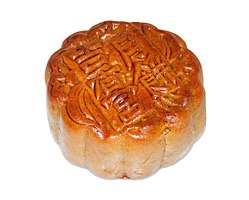
A Mooncake Day

Thanks to Wiki
OK, I just ate half of a mooncake and I think I am going to die. It is like eating half of a Death by Chocolate cake. The inside is lotus seed paste with a duck egg yolk. Mooncakes are eaten today because in Singapore it is Autumn Festival (Zhongqiu) today. 


Now, I did not worship the moon, but I do feel like the moon. There is a legend which states that the fall of the Mongolian rulers happened with messages smuggled in mooncakes.


Lanterns are a big deal today for this feast day.


update: http://vaticaninsider.lastampa.it/en/world-news/detail/articolo/mooncakes-hongkong-prisons-china-27944/