The USCCB had originally declared June 21 to July 4th as fourteen days for prayer and penance for religious freedom.
However, if someone could help me clarify this, I heard this morning after Mass that the Bishops have asked for special prayers this Saturday, June 14th, as the decision from the Supreme Court is expected on Monday.
I have not been able to find this morning an article on this special call to prayer. If anyone knows of this, please let me know so I can post this.
Monday, 8 June 2015
Fotos from First Mass
Fr. Trevino's First Mass yesterday on the Feast of Corpus Christi....plenary indulgence for all who attended if they went or go to Confession within two weeks either side of the Mass and said prayers for the intentions of the Pope...Benediction followed after the Corpus Christi procession--The Benediction "foto" is first.


more later.....


more later.....


From Today's Office of Readings
Second Reading
The letter of St Ignatius of Antioch to the Romans
Let me not only be called a Christian, but prove to be one
You have never begrudged the martyrs their triumph but rather trained them for it. And so I am asking you to be consistent with the lessons you teach them. Just beg for me the courage and endurance not only to speak but also to will what is right, so that I may not only be called a Christian, but prove to be one. For if I prove myself to be a Christian by martyrdom, then people will call me one, and my loyalty to Christ will be apparent when the world sees me no more. Nothing you can see is truly good. For our Lord Jesus Christ, now that he has returned to his Father, has revealed himself more clearly. Our task is not one of producing persuasive propaganda; Christianity shows its greatness when it is hated by the world.
I am writing to all the churches to declare to them all that I am glad to die for God, provided you do not hinder me. I beg you not to show me a misplaced kindness. Let me be the food of beasts that I may come to God. I am his wheat, and I shall be ground by the teeth of beasts, that I may become Christ’s pure bread.
I would rather that you coaxed the beasts to become my tomb and to leave no scrap of me behind; then when I have died I will be a burden to no one. I shall be a true disciple of Christ when the world no longer sees my body. Pray to Christ for me that by these means I may become a sacrifice to God. I do not give you orders like Peter and Paul. They were apostles, I am a condemned criminal; they were free, I am still a slave. But if I suffer, I shall become the freedman of Jesus Christ and I shall rise again to freedom in him.
Now as a prisoner I am learning to give up my own wishes. All the way from Syria to Rome I am fighting wild beasts, by land and by sea, by day and by night, chained as I am to ten leopards, I mean the detachment of soldiers who guard me; the better you treat them, the worse they become. I am more and more trained in discipleship by their ill usage of me, but I am not therefore justified. How happy I will be with the beasts which are prepared for me! I hope that they will make short work of me. I shall even coax them to devour me quickly and not to be afraid of touching me, as sometimes happens; in fact, if they hold back, I shall force them to it. Bear with me, for I know what is good for me. Now I am beginning to be a disciple. May nothing visible or invisible rob me of my prize, which is Jesus Christ! The fire, the cross, packs of wild beasts, lacerations, rendings, wrenching of bones, mangling of limbs, crushing of the whole body, the horrible tortures of the devil – let all these things come upon me, if only I may gain Jesus Christ!
The Vision of The Principle
For centuries, the Fathers and Doctors of the Church have likened the two wives of Jacob to the active or contemplative life. In modern times, in order not to make active women feel bad about their lives, priests have not quoted these passages comparing Leah to the active life and Rachel to the contemplative life.

I remember reading about this many, many decades ago. To make the distinction is not to dis women in the active life, (I was a single mum, working, homeschooling, keeping the books, etc. and I did not feel dissed), but to reflect on the two ways which must both end up in the same place, perfection.
Aquinas, again quoted by the Maritains, states, "Absolutely speaking and in itself, the contemplative life is better than the active. The Philosopher proves this by eight reasons."
Here theses are with more explanation as to the comparison of Rachel to Leah.
One, "The contemplative life is suitable to man in regard to his most perfect possession, the intellect, and in relation to the proper objects of that faculty, namely the intelligibles, while the active life is concerned with exterior things. Wherefore the name of Rachel, who represents the contemplative life, means the vision of the principle, the active life being represented by Lia, who suffered from weak eyes..." Maritains quoting St. Gregory here.
Rachel was the great beloved wife of Jacob who bore him his favorite sons, Joseph and Benjamin. His long time of labor in order to "pay" for her to her father, Laban, represents the long journey of purgation in the Dark Nights, purging one of sins.
Laban tricked Jacob, (a punishment from God for Jacob tricking his own father), and gave Leah to him first. Finally, Jacob won Rachel, the desire of his heart, and his soul mate.
Rachel came to represent the contemplative life, not only because of her name, but because she represented the true desire, the purer love. of Jacob's heart.
Our truest desire is for God alone. That is the key to following the contemplative life. Being back in the States, I have seen the terrible distractions and waste of energy for so many things which are not necessary to the spiritual life.

The second point, Two, has been discussed by those in monasteries.
"The contemplative life can be more continuous (though this continuity cannot be referred to the supreme act of contemplation); this is why Mary, who symbolises contemplative life, s shewn us as always at the feet of the Lord.:

Three, "The delectation of the contemplative life is greater than that of the active; this is the meaning of S. Augustine's saying that Martha was worried while Mary was feasting."
Four, "In the contemplative life man is more self-sufficient for he depends in this exercise less on external things; wherefore it is said in Luke IV, 'Martha, Martha, thou are troubled and worried about many things."

I remember reading about this many, many decades ago. To make the distinction is not to dis women in the active life, (I was a single mum, working, homeschooling, keeping the books, etc. and I did not feel dissed), but to reflect on the two ways which must both end up in the same place, perfection.
Aquinas, again quoted by the Maritains, states, "Absolutely speaking and in itself, the contemplative life is better than the active. The Philosopher proves this by eight reasons."
Here theses are with more explanation as to the comparison of Rachel to Leah.
One, "The contemplative life is suitable to man in regard to his most perfect possession, the intellect, and in relation to the proper objects of that faculty, namely the intelligibles, while the active life is concerned with exterior things. Wherefore the name of Rachel, who represents the contemplative life, means the vision of the principle, the active life being represented by Lia, who suffered from weak eyes..." Maritains quoting St. Gregory here.
Rachel was the great beloved wife of Jacob who bore him his favorite sons, Joseph and Benjamin. His long time of labor in order to "pay" for her to her father, Laban, represents the long journey of purgation in the Dark Nights, purging one of sins.
Laban tricked Jacob, (a punishment from God for Jacob tricking his own father), and gave Leah to him first. Finally, Jacob won Rachel, the desire of his heart, and his soul mate.
Rachel came to represent the contemplative life, not only because of her name, but because she represented the true desire, the purer love. of Jacob's heart.
Our truest desire is for God alone. That is the key to following the contemplative life. Being back in the States, I have seen the terrible distractions and waste of energy for so many things which are not necessary to the spiritual life.
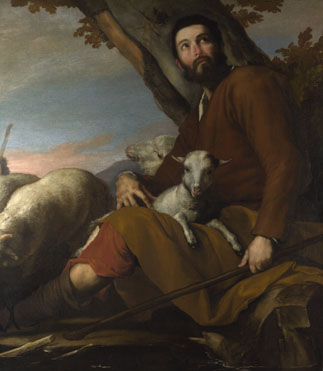
The second point, Two, has been discussed by those in monasteries.
"The contemplative life can be more continuous (though this continuity cannot be referred to the supreme act of contemplation); this is why Mary, who symbolises contemplative life, s shewn us as always at the feet of the Lord.:
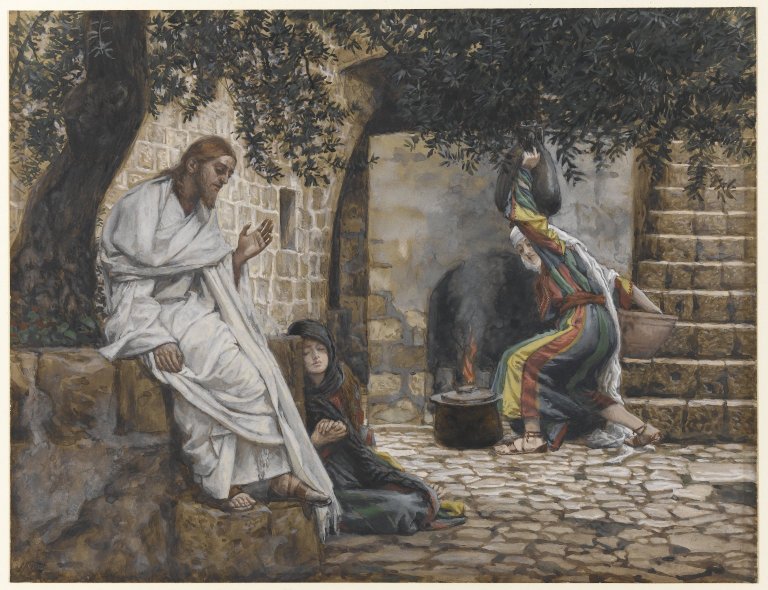
Three, "The delectation of the contemplative life is greater than that of the active; this is the meaning of S. Augustine's saying that Martha was worried while Mary was feasting."
Four, "In the contemplative life man is more self-sufficient for he depends in this exercise less on external things; wherefore it is said in Luke IV, 'Martha, Martha, thou are troubled and worried about many things."
One reason I love going to Europe is that I can walk and not have to drive or have a car, eat much more simply, get to daily Mass and Adoration easily, and have a lower lifestyle. Americans have fallen into Satan's trap of complicating their lives by desires for novelties and more and more things. When one settles for less, one is freer to meet God daily.
Five, "The contemplative life is loved for its own sake, while the active life is ordained for something beyond itself; wherefore it is said in Ps. 26, (translated) ' One thing I have asked of the Lord, this will I seek after; that I may dwell in the house of the Lord all the days of my life. That I may see the delight of the Lord, and may visit his temple.'"
I shall continue with the next three points later. I am still looking for the small place where I can pray and for two women, two only, to join me in contemplation, and, thankfully, after slightly over two weeks of being here, starting tomorrow, I can go back into my monastic schedule. Thank God.
May I add that since the late 1970s, when some mothers had to go to work, that I thought this was a lie from Satan to destroy the contemplative atmosphere of a disciplined, well-ordered home, where the mother was the quiet center of life and order.

When there is no home-centered woman, it is much harder to have daily rosary or novenas in the home, or other times of meditation.
Home schooling moms of my generation, even those with many children. created that quiet atmosphere of prayer and study, very monastic, very simple, thus leading themselves and their children into a place of contemplation. Consumerism and financial lies about "having it all" caused some of the chaos. Women's lib created some of the deceit that a mother's role at home had no value. Of course, without that still center, families cannot easily come to listen and know God or the life of virtue. A home can be active and yet quiet...like the old Montessori schools wherein we whispered and the children worked in a quiet hum of activity.
to be continued....
Five, "The contemplative life is loved for its own sake, while the active life is ordained for something beyond itself; wherefore it is said in Ps. 26, (translated) ' One thing I have asked of the Lord, this will I seek after; that I may dwell in the house of the Lord all the days of my life. That I may see the delight of the Lord, and may visit his temple.'"
I shall continue with the next three points later. I am still looking for the small place where I can pray and for two women, two only, to join me in contemplation, and, thankfully, after slightly over two weeks of being here, starting tomorrow, I can go back into my monastic schedule. Thank God.
May I add that since the late 1970s, when some mothers had to go to work, that I thought this was a lie from Satan to destroy the contemplative atmosphere of a disciplined, well-ordered home, where the mother was the quiet center of life and order.

When there is no home-centered woman, it is much harder to have daily rosary or novenas in the home, or other times of meditation.
Home schooling moms of my generation, even those with many children. created that quiet atmosphere of prayer and study, very monastic, very simple, thus leading themselves and their children into a place of contemplation. Consumerism and financial lies about "having it all" caused some of the chaos. Women's lib created some of the deceit that a mother's role at home had no value. Of course, without that still center, families cannot easily come to listen and know God or the life of virtue. A home can be active and yet quiet...like the old Montessori schools wherein we whispered and the children worked in a quiet hum of activity.
to be continued....
Aquinas on Contemplation from The Maritains
This quotation is so beautiful, I just have to share it with you.....
From the same little book I have been using for the past few days, Prayer and Intelligence, by Jacques and Raissa Maritain.
"The contemplative life consists in a sort of leisure, a repose....a liberty of spirit" in which man,"burns with a desire of seeing the beauty of God"....and offers him, "his soul in sacrifice", it has its beginning and end in love, it is "directly and immediately concerned with the love of God himself, "it is ordained not to any kind of love of God, but to the perfect love of Him" and constitutes in a certain sense a commencement of beatitude...."
The burning desire for God makes one desire silence in order to hear the Bridegroom speak in the soft, love voice of love.
Again, I cannot stress the important of choosing simplicity of lifestyle. One can choose to eliminate so many unnecessary things, events, thoughts, which crowd out the voice of Christ.
Simplicity means choosing the smallest, the simplest, the plain, over the complicated.
Remember, without a schedule, one cannot become holy, and without simplicity, one cannot hear God.

From the same little book I have been using for the past few days, Prayer and Intelligence, by Jacques and Raissa Maritain.
"The contemplative life consists in a sort of leisure, a repose....a liberty of spirit" in which man,"burns with a desire of seeing the beauty of God"....and offers him, "his soul in sacrifice", it has its beginning and end in love, it is "directly and immediately concerned with the love of God himself, "it is ordained not to any kind of love of God, but to the perfect love of Him" and constitutes in a certain sense a commencement of beatitude...."
The burning desire for God makes one desire silence in order to hear the Bridegroom speak in the soft, love voice of love.
Again, I cannot stress the important of choosing simplicity of lifestyle. One can choose to eliminate so many unnecessary things, events, thoughts, which crowd out the voice of Christ.
Simplicity means choosing the smallest, the simplest, the plain, over the complicated.
Remember, without a schedule, one cannot become holy, and without simplicity, one cannot hear God.

What a Treat!
Heard this one while blogging in the evening on Sunday.
And, my friend has these in her backyard...
Boomeranging Back to The Self
The Maritains describe some of these tendencies to fall back into pride and egotism which they call "the reflex action of the mind, the tendency to come back on ourselves." A grave sin of those who in this day and age, note the Maritains, have a propensity to want to describe or examine self in terms of analysis and psychological curiosity.
In 2015, I can plainly state, that the most common sin I have witnessed among Catholics has been the psychologizing of sin. Now people can explain away, apparently, responsibility and consequences of sin because of psychological interpretations of so-called hurt, emotional upset, or even abuse, as if God's grace could not and would not cut through the most terrible of sins a person can endure from others.
Looking too much at sin may be part of the fault of this psychological thinking, as well as the need to talk too much and not rest in quiet. The Maritains make it quite clear that there are many reasons why a person falls back into the self, and noise or senseless talking take one away from quiet.
Years ago now, (time flies), if you remember my time in Tyburn, I recall being aware that I had sinned much less in the convent and fallen back into habitual venial sins when coming out. The one big reason why this was true, in fact, THE reason, was the lack of keeping silent all day except for prayer, classes, and the forty-five minutes of communal talk time, in which one was not allowed to talk about one's self.
Simply, talk brings about a myriad of sins. Bragging, lying, exaggerating, gossiping, and so on, all sins of the tongue, cannot happen if one keeps long silences. Time wasted on speaking of trivia, also a sin, cannot happen if one keeps silence as much as possible. Talk takes us back into the realm of the ego. Silence demands that we leave egotism for contemplation of God.
The second reason we boomerang back into the self is one which I have described on this blog many times-acting out of ego, even in so-called "ministries" instead of acting out of humility and the other virtues. There is no merit, none, in actions formed out of the ego. Only when one has been stripped of the ego can one truly serve God and the Church. Dying to self means that one is not aware of one's good works.
The Maritains make it quite clear that one should not read mystical books in order to find out what level of spirituality one has come to know or live in daily. This is boomeranging back into the self. In our overly self-conscious society, when we are fixated on our health, finances, and general well-being, curiosity, which is always a sin, about our own spiritual life sets us back to the self. We must become detached from ourselves and from our own prayer. The Maritains quote St Anthony Abbot in a startling sentence: "The prayer is not perfect if the monk knows he is praying."
The third turning back to self is something I am learning quickly, having read such things in the stories of the Desert Fathers, but now experiencing again, and perhaps finally "getting it", that one does not have to nor should one defend one's self when one is falsely accused of some sin.
This happened today, again. Sadly, I fell into defensive mode, and realized, again, that I had not passed the test. Several stories, including the one about a later saint, St. Gerard Majella, reveal the non-necessity of defending one's innocence, just as Christ did not do so in front of the Sanhedrin.
Defense brings us back to the self. To absorb or even transcend false accusations brings a peace and a quietude to the soul, and also, frees up the Holy Spirit to step in and defend one.
One story surrounds the life of St. Macarius, one of my favorite Desert Fathers. Even as a young man, he was known for his wisdom and discernment.
He was married but his wife died young and he finally went into the desert again. Because of his great gifts of discernment and wisdom, his superior gave him the job of counseling religious women. However, a pregnant woman accused Macarius publicly of violating her, and he did not defend himself. When the time for the birth of the baby came, the woman was in such long labor and pain, she admitted that she had lied to bring down the righteous man. The superior asked Macarius why he had not defended himself, as the saint had said nothing to stand up for himself when accused. Macarius knew that defense would being him back into himself.
This stance may seem strange to Americans and the English who love to hire lawyers for detraction. However, God loves those who chose the humble way of relying on Him instead of looking at themselves.
The fourth way in which one boomerangs back is concentrating too much on one's "vocation" or "gifts". I have mentioned the horrible gifting programs which are not based on Catholic theology, and to over concentrate on a lost vocation or any vocation, constantly going back over one's life regarding vocation is a sign of boomeranging back into the self.
When one is tempted to turn back to the self, one can merely look at Christ, either on the Cross, or in glory. I personally like the Face Painted Without Hands to bring my thoughts back to the Bridegroom.
For years I have been convinced that the great heretics were in the Illuminative State when they boomeranged back into the self. Why? Why would Luther, Zwingli, Calvin, Arius and many others fall into heresy from a height of infused knowledge?
They boomeranged back into pride on the discovery of the new graces God had given them. To me, the great sin of heretics is that they twisted knowledge from God into their own image and likeness, choosing power over humility, choosing self over God.
There but for the grace of God go I or any others.
A Hierarchy of Virtues

The theological virtues help us practice the moral virtues. But, the Maritains point out that there is a hierarchy of virtue. Faith "attains God in obscurity, remaining as it were from a distance from Him in so far as Faith is belief in that which is not seen." Therefore, we live in Faith when we are not in union with God, do not perceive Him or do not experience being in His Presence.
Hope, as the CCC notes, "is the theological virtue by which we desire the kingdom of heaven and eternal life as our happiness, placing our trust in Christ's promises and relying not on our own strength, but on the help of the grace of the Holy Spirit."
Hope is, again, based on desires unfulfilled. We use hope to trust in God and not rely on ourselves but on God.
Faith and hope form the basis of our walk in the Dark Nights of the Senses and Spirit. Once a person is purified, the virtue of love takes over the soul and mind. Here are the Maritains on this point:
"...charity attains god immediately in Himself, making an intimate union precisely with that which is concealed in Faith. And thus, although Faith regulates love and union with God in so far as it proposes the object to the will: nevertheless, in virtue of the union by which love adheres immediately to God, the intelligence is moved by the affective experience of the soul to judge of divine things in a higher fashion than belongs to the obscurity of Faith..."
One cannot love but very imperfectly without the necessary purification of the senses and soul. Thus, those who have a hard time loving in truth have tried to love without the purgation of those faults which stand in the way of union. This is one reason why love must be purified in marriage, through sacrificial actions.
But, the more one loves God, the more one wants to love Him and others, as love leads to greater understanding and forbearance. Then, discernment "kicks in". Only those who are orthodox and those who allow God to purify their imaginations, wills, intellect and senses can have true discernment of higher things, such as God's will.
If one is confused, go back to the posts on Divine Knowledge I did this year. Divine Knowledge comes from love. When one realizes the Indwelling of the Trinity, this love becomes a way of life. We shall finally, in heaven, in the Beatific Vision, have knowledge of God as He really is.
Sunday, 7 June 2015
A Timely Repeat
http://www.theotokos.org.uk/pages/fatima/ngruner/wanderer.html
I never did follow this priest. He drew attention to himself instead of being obedient. He wrote about things which are not doctrine and which we do not have to believe.
I never did follow this priest. He drew attention to himself instead of being obedient. He wrote about things which are not doctrine and which we do not have to believe.
Icons "Gone with The Wind"
Icons are "window into heaven" and sacramentals, if blessed, like statues, medals and rosaries. To have icons stolen seems odd to me unless someone did not know the meaning of the label "icons". Sad to say, all the Evangelists are gone, as is a large icon of my beloved St. Bernard of Clairvaux. STS and I discovered Monastery Icons in 1996, almost six years after they began making and selling icons. In those days, things were made on site. Now, the icons come from somewhere else and the customer service is horrible. A friend of mine had to order the same icon three times as the first two came damage either because of poor packaging, or the icons were made in an inferior fashion.
So, someone decided that a box marked "icons' would be a good thing to take...interesting. Also missing are large icons of the three Archangels, matching ones, my very large Rublev Trinity given to us as a gift, and one of Mary, the Immaculata. Obviously, these were paced in separate boxes and now all are gone with the wind.
There are few icons of St. Bernard although there are several different writings of icons of the Evangelists. I had to mark all the boxes as these were going to be shipped overseas.
We are also missing St. Francis and the animals. Thankfully, I have some bought at Boscobel in 2004. If you are in Wisconsin, take time to visit the skete.St Isaac of Syria, there. The chapel holds one of the most magnificent collection of icons, as do the nuns at Clyde in Missouri, btw. https://www.skete.com
Ephraim the Fool is missing, as is St. John the Baptist. Sigh, and I cannot replace these. Also gone is Christ, the Great Humility.....sigh. At least fourteen missing....not new ones, but ones which should have been in storage for four years.
I hope those who took the icons now are being blessed and not using these for nefarious reasons. If these were thrown away by disappointed thieves, like my old and venerable St. Thomas Summa Contra Gentiles years ago, with many rare books by or about the Benson family, some art work and my Montessori library, I hope they have had some type of conversion.
Anything is possible in God while there is still life....

So, someone decided that a box marked "icons' would be a good thing to take...interesting. Also missing are large icons of the three Archangels, matching ones, my very large Rublev Trinity given to us as a gift, and one of Mary, the Immaculata. Obviously, these were paced in separate boxes and now all are gone with the wind.
There are few icons of St. Bernard although there are several different writings of icons of the Evangelists. I had to mark all the boxes as these were going to be shipped overseas.
We are also missing St. Francis and the animals. Thankfully, I have some bought at Boscobel in 2004. If you are in Wisconsin, take time to visit the skete.St Isaac of Syria, there. The chapel holds one of the most magnificent collection of icons, as do the nuns at Clyde in Missouri, btw. https://www.skete.com
Ephraim the Fool is missing, as is St. John the Baptist. Sigh, and I cannot replace these. Also gone is Christ, the Great Humility.....sigh. At least fourteen missing....not new ones, but ones which should have been in storage for four years.
I hope those who took the icons now are being blessed and not using these for nefarious reasons. If these were thrown away by disappointed thieves, like my old and venerable St. Thomas Summa Contra Gentiles years ago, with many rare books by or about the Benson family, some art work and my Montessori library, I hope they have had some type of conversion.
Anything is possible in God while there is still life....

OMGoodness BB strikes again
http://www.wnd.com/2015/06/government-to-monitor-family-spirituality/
Another law which undermines the family as the center of society, family religion, and family rights.
Another law which undermines the family as the center of society, family religion, and family rights.
Ordination Pics from June 6th
Congratulations, Father Trevino. one of my "second sons".


Supertradmum getting first blessing from Father Trevino.
Early photo of Father Trevino with STS's cricket team, 2005 or so...

Any one interested in helping?
One of the mysteries of moving is that I have Volumes Two and Four of The Philokalia, but am missing One and Three. If anyone wants to help me get these, I would be very grateful and would do a walk through the volumes for you all.
I have the 1990 texts from Faber and Faber, which I got when living in England. These are in English.
Called: The Philokalia--The Complete Text. The two I have are in paperback. I actually gave these to STS for his birthday in 2009, although I was using them before that. However, when he left to go into the seminary, he left his books with me. He actually now has more than I do.....
http://www.amazon.com/s/?ie=UTF8&keywords=philokalia+the+complete+text&tag=googhydr-20&index=aps&hvadid=29140950595&hvpos=1t1&hvexid=&hvnetw=g&hvrand=4041729128216385830&hvpone=&hvptwo=&hvqmt=b&hvdev=c&ref=pd_sl_7hskqo5nch_b
I have the 1990 texts from Faber and Faber, which I got when living in England. These are in English.
Called: The Philokalia--The Complete Text. The two I have are in paperback. I actually gave these to STS for his birthday in 2009, although I was using them before that. However, when he left to go into the seminary, he left his books with me. He actually now has more than I do.....
http://www.amazon.com/s/?ie=UTF8&keywords=philokalia+the+complete+text&tag=googhydr-20&index=aps&hvadid=29140950595&hvpos=1t1&hvexid=&hvnetw=g&hvrand=4041729128216385830&hvpone=&hvptwo=&hvqmt=b&hvdev=c&ref=pd_sl_7hskqo5nch_b
The Devolution Question Yet Again And Some Maritain
I first learned about devolution from two men-one a major in the Army and the other a famous Catholic priest. They talked about the growing stupidity of people across the world as a planned and also, physical de-evolution of the species.
Lately, this idea, which I have written about before on this blog, of devolution, has become more obvious to me.
Points:
Lately, this idea, which I have written about before on this blog, of devolution, has become more obvious to me.
Points:
- Young people who have never heard of the Bilderberg Group, the Trilateral Commission or the Council on Foreign Relations. Amazing.
- Young people who have never, ever thought of the spiritual side of humans, who either ignore or deny the soul and are, therefore, practical atheists, denying the Spirit of God.
- Catholics who have never read one encyclical, not even Humanae Vitae.
- Catholics who do not know that there are four Eucharistic Prayers, many movable feasts, or who understand the liturgical year. and worse, do not read to find out. They do not know one can buy a missal, and are not interested in doing so.
- Young people who do not believe in natural law philosophy.
- Young people who have never studied American or Western History, or taken any other Humanities course.
- A complete lack of the ability to do mental math among the younger generations.
- Reading difficulties of those under sixty, causing serious problems with basic pronunciation and understanding of content which has been read.
- The inability to debate or discuss rationally.
- No sense of the goal or end of human beings and not interested in the big question of why we are here.
- Complete lack of interest in foreign affairs, geography, or world events.
- Complete lack of interest in eating in a healthy manner, thus creating an unhealthy body while still young.
- An interesting lack of common sense which I, as an ex-Montessori teacher, where children do practical things and learn common sense, plagues the younger generation.
All of these problems of thinking or living or degeneration I have met in the past three weeks. There are more examples, but these I have seen and experienced more than once in a short period of time.
De-evolution is not merely a physical problem, but a spiritual problem. Why it is a spiritual problem is that the soul is the form of the body, which means that all movements of the intellect need to be under grace in order to be truly in God's will and effective. The Maritains note that those in the active life, which would include most of the laity, "have a more pressing need of prayer" and that the active people should "ask of the divine mercy the grace of a sufficient intensity of interior life for their very activity, at least in its mode of production, to proceed from the superabundance of their contemplation..."
Devolution is a direct result from a lack of commitment to a life of prayer in the active life, and spiritual sloth. The Maritains, in this little jewel I have been reading, quote St. Augustine. "The love of truth seeks a holy repose, the necessity which love imposes accepted justified toil...If no duty be imposed on us, let us be busy with the study and contemplation of truth; and if labours are laid on us, charity itself obliges us to accept them. Even so, however, the sweet contemplation of truth should not be abandoned, for fear that with the disappearance of their sweetness, we should be overwhelmed by our necessities."
Devolution happens when reflection ends. Man was created as a thinking, reflecting animal, an animal with an immortal soul, will and intellect. To ignore all or any create a bestial condition of emotional responses to stimuli instead of a studied, virtuous response.
To state this simply, spiritual sloth and indecision in following Christ and His Church lead to devolution. The mind becomes dulled by sin and excess.
Prayer and intelligence being the process of purification leading to perfect charity.
The Indwelling of the Trinity, given in baptism, but absent without baptism, gives each one of us the ability to contemplate, to decide to follow Christ, to love. Those in grace do not devolve or degenerate.
Devolution is a direct result from a lack of commitment to a life of prayer in the active life, and spiritual sloth. The Maritains, in this little jewel I have been reading, quote St. Augustine. "The love of truth seeks a holy repose, the necessity which love imposes accepted justified toil...If no duty be imposed on us, let us be busy with the study and contemplation of truth; and if labours are laid on us, charity itself obliges us to accept them. Even so, however, the sweet contemplation of truth should not be abandoned, for fear that with the disappearance of their sweetness, we should be overwhelmed by our necessities."
Devolution happens when reflection ends. Man was created as a thinking, reflecting animal, an animal with an immortal soul, will and intellect. To ignore all or any create a bestial condition of emotional responses to stimuli instead of a studied, virtuous response.
To state this simply, spiritual sloth and indecision in following Christ and His Church lead to devolution. The mind becomes dulled by sin and excess.
Prayer and intelligence being the process of purification leading to perfect charity.
The Indwelling of the Trinity, given in baptism, but absent without baptism, gives each one of us the ability to contemplate, to decide to follow Christ, to love. Those in grace do not devolve or degenerate.
2 Peter 3:18Douay-Rheims
18 But grow in grace, and in the knowledge of our Lord and Saviour Jesus Christ. To him be glory both now and unto the day of eternity. Amen
Again, Where Love Rests

Some people that have not remembered my blogs on where love is located. True charity is in the intellect and the will and not the heart. The heart is merely an image of the emotions, and this comes from Jewish theology which put the will in the heart, as well as the movements of the soul. However,
God in His Wisdom revealed to Catholics through Tradition that the intellect moves the will through grace to love in real charity.
Garrigou-Lagrange explains this and so do other great writers in his text below. As the Maritains stress, love comes out of the reflection of the intellect and the will to study and learn Sacred Doctrine, and not the heart. The heart has been confused in modern times for many reasons as the main "place" for love. But, one must decide to have a willing heart to pursue perfection in order to be charitable.

"Christian perfection consists essentially in charity", states the Maritain. In fact, real perfection is real charity. The perfection of charity is the end of perfection and the pursuit of perfection leads to love of God and love of neighbor, the first love being necessary before the second.
The Maritains quote Cajetan: "The lowest degree of divine love is to love nothing more than God, nothing contrary to God, nothing as much as God. He who does not reach this degree of Christian perfection in no way accomplishes the precept."
Perhaps Garrigou-Lagrange''s selection would help.
CONFORMITY TO HIS WILL AND LOVE OF THE CROSS
Heroic charity toward God manifests itself in the first place by an ardent desire to please Him. In fact, to love someone not for oneself but for himself, is to wish him well, to wish what is suitable for him and pleasing to him. To love God heroically is, in the midst of even the greatest difficulties, to wish that His holy will be accomplished and His reign profoundly established in souls.
This holy desire to please God is a form of affective charity, which is proved by effective charity, or by conformity to the divine will, in the practice of all the virtues. The soul thus reaches unswerving fidelity in little things and in great things, or what is most difficult.
Heroic love of God is shown, we have seen, in the passive purification of the spirit, when it is a question of loving God for Himself, without any consolation, in great and protracted aridity, in spite of temptations to disgust, acedia, and murmuring, when the Lord seems to withdraw His gifts and leave the soul in anxiety. God is for this reason none the less infinitely good in Himself and deserves to be loved purely for Himself. If then, in spite of such prolonged dryness, the soul loves to be alone with God, especially before the Blessed Sacrament, and if it still continues to pray, if in spite of everything its life remains a perpetual prayer, this is a sign of heroic love of God.
As St. Francis de Sales (1) shows, heroic conformity to the divine will appears when the soul receives lovingly every agreeable or painful occurrence as coming either from the positive will of God, or from a divine permission directed toward a higher good. It then sees with ever greater clearness the truth of the words of Ecclesiasticus: "Good things and evil, life and death, poverty and riches, are from God." (2) The soul here becomes deeply convinced that God makes use even of the malice of men, for example, of persecutors, as an occasion of merit for those who wish to live only for Him. Thus Job accepted adversity, and in the same way David bore the insults of Semei. (3)
In the greatest difficulties, the saints, while doing what is in their power, say: "It will be as God wishes."
To this sign is added a confirmation: namely, one who thus renounces his own will and adheres heroically to the will of God finds a holy joy in this adherence. In conforming his will more and more to God's will, he has all that he wishes. He experiences the truth of the Psalmist's words: "O Lord, Thou hast crowned us, as with a shield of Thy good will." (4) This is what the martyrs have particularly experienced.
In his explanation of the Canticle of Canticles, St. Bernard describes the ascending degrees of heroic charity as follows: "Divine love leads to an unceasing search for God, to continual labor for Him; it bears indefatigably all trials in union with Christ; it gives a true thirst for God; it makes us run rapidly toward Him; it gives us a holy boldness and an undaunted audacity; it attaches us inseparably to God; it burns and consumes us with a very sweet ardor for Him; finally, in heaven, it likens us completely to Him." (5)
These degrees of perfect charity are explained in a short work attributed to St. Thomas,(6) and also by St. John of the Cross in The Dark Night,(7) where he shows that the second last degree is the transforming union, the prelude of that of heaven. "The Apostles," he says, "experienced this sweetness of ardent love when the Holy Ghost descended visibly upon them." (8)
The greatest sign of heroic charity toward God, is love of the cross. The patience and conformity to the divine will of which we have spoken, lead to this love.
In The Dialogue of St. Catherine of Siena, the Lord says: "It now remains to be told thee how it can be seen that souls have arrived at perfect love. This is seen by the same sign that was given to the holy disciples after they had received the Holy Spirit, when they came forth from the house, and fearlessly announced the doctrine of My Word, My only-begotten Son, not fearing pain, but rather glorying therein. They did not mind going before the tyrants of the world to announce to them the truth, for the glory and praise of My name." (9)
In the same Dialogue we read: "Such as these, . . . as if enamored of My honor, and famished for the food of souls, run to the table of the most holy cross." (10) "They slacken not their pace on account of the persecutions, injuries, or pleasures of the world. They pass by all these things, . . . their affection clothed in the affection of charity, and eating the food of souls with true and perfect patience, which patience is a sign that the soul is in perfect love, loving without any consideration of self." (11) "Such as these do not feel any separation from Me. . . . I remain continually both by grace and feeling in their souls." (12)
In other words, the eminent exercise of charity is accompanied in a proportionate degree by the act of the gift of wisdom, which enables us, says St. Thomas,(13) to know God present in us in a quasiexperimental manner. This is truly the mystical life, the summit of the normal development of grace and the prelude of the life of heaven. This summit cannot exist without love of the cross, and love of the cross does not exist without the contemplation of the mystery of the redemption, of the mystery of Christ dying for love of us.
Consequently, in The Dialogue, the Lord, speaking to St. Catherine of Siena for herself and for her spiritual children, says: "It is right for thee, and My other servants who have learned My truth in this way, to sustain, even unto death, many tribulations and injuries and insults in word and deed, for the glory and praise of My name; thus wilt thou endure and suffer pains"; (14) that is, with patience, gratitude, and love.
Such are the great signs of heroic love of God: perfect conformity to His will in trials and love of the cross. There is also another sign, perfect charity toward one's neighbor, which we shall now discuss.
HEROIC CHARITY TOWARD ONE'S NEIGHBOR: THE ARDENT DESIRE FOR HIS SALVATION AND RADIATING GOODNESS TOWARD ALL
Charity leads us to love our neighbor in God and for Him; that is, because God loves him and as God loves him. It makes us desire that our neighbor may belong entirely to God and glorify Him eternally.
Heroic love of neighbor already exists when one promptly dominates strong temptations to envy, discord, isolation, so different from solitude; likewise when one quickly surmounts temptations to presumption, which incline one, in the wake of certain insults, to wish to get along without the help of others - of friends, director, superiors.
Perfect charity appears when, in the midst of great difficulties, one loves one's neighbor, mente, ore, et opere, that is, judging him with benevolence, speaking well of him, helping him in his necessity, perfectly pardoning offenses, and making oneself all to all. This charity is still more obvious if by preference one seeks out, as St. Vincent de Paul did, friendless and fallen souls, poor, strayed, and gravely guilty creatures, in order to lift them up, rehabilitate them, and set them back on the road to heaven.
A chief characteristic of heroic love of neighbor is an ardent desire for the salvation of souls, a thirst for souls, which recalls Christ's words on the cross: "I thirst." St. John used to say: "My little children, let us not love in word nor in tongue, but in deed and in truth." (15)
Heroic love of neighbor led some saints to the point of wishing to sell themselves as slaves that they might deliver captives and thus rescue families from wretched poverty. This zeal inspired St. Paul to write: "I wished myself to be an anathema from Christ, (16) for my brethren, who are my kinsmen according to the flesh, who are Israelites." (17)
This zeal inspired the apostolic activity of great missionaries, of St. Francis Xavier, St. Louis Bertrand, Las Casas, St. Peter Claver. Nearer our own day, it is the inspiration of apostles, like St. John Bosco, who are completely engrossed in bringing back to God the misguided masses in our Christian countries who no longer know the Gospel.
Another sign of heroic love of neighbor is radiating goodness toward all amid the greatest difficulties, according to the evangelical beatitude: "Blessed are the peacemakers," that is, those who not only preserve peace in most difficult moments, but who give it to others and hearten the most troubled. This eminent sign appears in Mary, the Consoler of the Afflicted, and in all those who resemble her. Our Lord says: "Love one another as I have loved you." (18) "By this shall all men know that you are My disciples." (19)
Communicative goodness, love of neighbor carried even to daily and hidden sacrifice, is the indisputable mark of the presence of God in a soul. This goodness, which is as strong as it is gentle, sometimes leads one to correct others, but without bitterness, sharpness, or impatience. And that the correction may be effective, it points out the good, the salutary seed which should be developed in the one who deserves the reprimand. Then the person receiving the reproof feels that he is loved and understood; he takes courage. If the Blessed Virgin were to appear and tell us our defects, she would do so with such goodness that we would immediately accept her corrections and draw from them the strength to make progress.(20)
Perfect charity toward one's neighbor springs from close union with God, and it leads one's neighbor to this same union, according to our Savior's words: "I pray. . . for them also who through their word shall believe in Me; that they all may be one, as Thou, Father in Me, and I in Thee." (21) The more united the soul is to God, the more it draws others to Him, never to itself. In the soul united to God, shines forth the divine goodness, which radiates, attracts powerfully and sweetly, and ends by triumphing over all obstacles.(22)
An incident from the life of St. Catherine of Siena will serve to illustrate this teaching. One day Peter Ventura, a Sienese involved in the affairs of the government, was brought to Catherine with his heart full of implacable hatred. "Peter," Catherine said to him, "I take all your sins on myself, I shall do penance in your place. But grant me a favor; go to confession." "I have just been to confession recently," said the Sienese. "That is not true," replied the saint, "it is seven years since you went to confession," and, one by one, she enumerated all the sins of his life. Stupefied, Peter admitted his guilt, repented of his sins, and pardoned his enemies. By promising Peter Ventura that she would take his sins on herself and expiate them, the saint had truly offered herself as a victim, and the Lord required of His servant, or rather His spouse, expiation through suffering. She interpreted literally Christ's words: "Love one another, as I have loved you."
In the same heroic manner St. Catherine obtained the conversion of Andrea Mei, a Sienese invalid, who had grievously calumniated her. The saint with consummate devotion nursed this woman, who was being eaten by a cancer. The unfortunate creature had the sorry courage to impugn the virginal honor of her devoted nurse, and these evil remarks spread abroad. Catherine, however, did not cease to tend her with the same zeal. Her patience and humility triumphed over Andrea Mei. One day the saint, as she approached the sick woman's bed, was surrounded by light, as if resplendent in glory; "Pardon!" cried the guilty woman. Catherine threw her arms around her neck, and their tears mingled. It was like the radiation of the divine goodness and the realization of our Savior's words: "The glory which Thou hast given Me, I have given to them; that they may be one, as We also are one." (23)
Two souls united in God by charity are like two candles whose flames unite and fuse.
Charity, which thus triumphs over wickedness, makes the saints share in the victory of Christ over sin and the devil. It is one of the glories of His mystical body; through it shine forth the grandeur of the life of the Church, its fruitfulness in every kind of good and of works of mercy. It is the confirmation of the divine origin of the Church.
| Footnotes | |
| 1. Treatise on the Love of God, Bk. VIII, chaps. 5 f.; Bk. IX, chaps. 3-6, 15 f. 2. Ecclus. 11: 14. 3. Cf. II Kings 16: 10. 4. Ps. 5:13. 5. The Canticle of Canticles, V, 8; VIII, 6. 6. Opus., 61. 7. The Dark Night, Bk. II. chaps. 18-20. 8. Ibid., chap. 20. 9. The Dialogue, chap. 74. 10. Ibid., chap. 78. 11. Ibid., chap. 76. 12. Ibid., chap. 78. 13. Summa, IIa IIae. q.45. a.2. 14. The Dialogue, chap. 4. 15. Cf. I John 3:18. 16. Not for eternity. but for a more or less protracted period. 17. Rom. 9:3 f. 18. John 15: 12. 19. Ibid., 13:35. 20. We find an example of this goodness united to deep humility in the life of the foundress of the Cenacle, who at the age of thirty-three resigned as superior general, and for almost fifty years obeyed like a simple sister. She was so obedient that it was only at the end of her life that those about her understood all that the Lord had given her and how closely she was united to Him. He had hidden her, but the radiation of her goodness in humility ended by revealing her. It was she who, by her love for God and souls, bore the burden of the congregation of which she was truly the foundress. Cf. P. H. Perroy, S.J., Une grande humble, Paris, 1916. 21. John 17:20 f. 22. One of the characteristics of heroic charity is to bear with great generosity the sufferings that come from those one loves. Thus saints who, like St. Catherine of Siena and St. Joan of Arc, had a great love for the Church, have also had to suffer particularly from the faults of churchmen. This suffering was in the nature of reparation. 23. John 17:22. |
Saturday, 6 June 2015
Subscribe to:
Posts (Atom)