http://www.france24.com/en/20150617-greek-central-bank-warns-painful-eurozone-eu-exit
Wednesday, 17 June 2015
Poll Alert
Note the new poll at the side. When I was in England in 2013 at the time running up to the passing of ssm, and the actual vote, (see my posts on that), everyday, at every Mass in my parish there, the pastor spoke against this. Have you heard any sermons on the coming SCOTUS vote?
The poll has to do with words FROM A PULPIT!
The poll has to do with words FROM A PULPIT!


From Voice of The Family
| |||||
|


The Eucharistic Heart of Jesus

The Heart of the Church is prayer, where in the Blood of Christ gives life to the soul. When I was in Tyburn, I studied the foundress' great insights on the Eucharistic Heart of Jesus, insights which were a gift of illumination from God, insights which brought together, joining together,the love and devotion to the Sacred Heart of Jesus with Adoration of the Eucharist, daily, 24/7.
Without the focus being on Christ Himself, actions cannot be performed with purity of heart. Contemplation is the heart of the Church, not action. All actions which are done in the Church pour out of the merit gained by those who are praying. A long time ago, a good priest told me that the contemplative orders were like the Marines who cleared the beaches so that the rest of the Army can "mop up". Prayer of the faithful joins with the prayers of Christ and Mary for the People of God. If there is a lack of contemplative orders, or lay associations involved in contemplative prayer, actions by those who are in such active ministries, will be imperiled.
Those places in the world, where there are contemplatives praying for hours in intercession for the Church, the bishops, the priests the seminarians, see the fruits of these prayers and sacrifices.
Real contemplative prayer must not be considered "an extra", but an essential. And, this type of prayer is extremely difficult, both physically and spiritually, even for those who do this daily and by vocation.

Mother Mary of St. Peter, Marie Adele Garnier, foundress of Tyburn, was a governess with a vision to adore the Eucharistic Heart of Jesus daily. She began her now thriving order, (ten houses in the world), with one person and the blessing of a farsighted bishop. At first, she and her one companion went to the local church to adore Christ daily. After a while, more women joined the two.
Without Adoration and contemplation, the Church weakens from within, as the Heart of the Church becomes flaccid.
I am praying for a benefactor, and I shall continue to worship and adore, and intercede to the Eucharistic Heart of Jesus for the Church, the clergy, seminarians, and contemplative souls to join with me in being the silent, quiet, Heart of Prayer for the Church.
The Last Post on Trusting vs.Triumphalism IV

Humility and the ability to be objective rather than subjective, form the pillars of trusting in Divine Providence, and avoiding a triumphalist position.-
Again, one can turn to Garrigou-Lagrange for insights into this dynamic.
The great Dominican notes that one cannot replace hope with presumption.
If there is one thing that is dependent on Providence, it is the hour of our death." Be ye also ready, " says our Lord, "for at what hour you think not the Son of man will come" (Luke 12: 40). The same is true of the manner of our death and the circumstances surrounding it. It is all completely unknown to us; it rests upon Providence, in which we must put all our trust, while preparing ourselves to die well by a better life.
Looked at from the point of view of divine justice, what a vast difference there is between the death of the just and that of the sinner! In the Apocalypse (20: 6, 14) the death of the sinner is called a "second death, " for he is already spiritually dead to the life of grace, and if the soul departs from the body in this condition it will be deprived of that supernatural life forever. May God preserve us from that second death. The unrepentant sinner, says St. Catherine, [140] is about to die in his injustice, and appear before the supreme Judge with the light of faith extinguished in him, which he received burning in holy baptism (but which he has blown out with the wind of pride) and with the vanity of his heart, with which he sets his sails unfurled to all the winds of flattery. Thus did he hasten down the stream of the delights and dignities of the world at his own will, giving in to the seductions of his weak flesh and the temptations of the devil.
Only when one is firmly planted in the Will of God through humility and trust can one begin to grow. In the long perfection series, over and over, I have pointed to the fact that one cannot grow in holiness if one is not orthodox, believing in the doctrines of the Church.
Recently, the great heresies of relativism, (people stating that all religions are the same and will get one to heaven), and universalism, (that all people go to heaven, and no one goes to hell), have been reiterated to me by Catholic church-going people.
Garrigou-Lagrange appeals to St. Catherine of Siena:
If the sinner will only disburden his conscience by a sincere confession, making acts of faith, of confidence in God, and contrition, at the last moment the divine mercy will enter in to temper justice and will save him. By reason of God's mercy every man may cling to hope at death if he so wills, if he offers no resistance. Remorse will then give place to repentance.
Otherwise the soul succumbs to remorse and abandons itself to despair, a sin far more heinous than any of the preceding, as in that neither infirmity nor the allurements of sensuality can excuse, a sin by which the sinner esteems his wickedness as outweighing God's divine mercy. And once in this despair, the soul no longer grieves over sin as an offense against God, it grieves only over its own miserable condition, a grief very different from that which characterizes attrition or contrition.
Blessed is the sinner who like the good thief then repents, reflecting that, as St. Catherine says, [142] "the divine mercy is greater without comparison than all the sins which any creature can commit."
Happier still is the just soul that throughout life has given due thought to the loving fulfilment of duty and, after the merits won and the struggle sustained here on earth, yearns for death in order to enjoy the vision of God, even as St. Paul desired "to be dissolved and to be with Christ" (Phil. 1: 23).
Being honest with one's self, states St. Augustine, is the key to holiness. St. Teresa of Avila repeats this call to know one's self, one's sins. This knowledge will keep us from triumphalism.
Let me end with these words of Garrigou-Lagrange and St. Catherine of Siena.
As a rule a great peace fills the soul of the just in their last agony, a peace the more profound the greater their perfection; and this is often most true of those who during life have had the greatest dread of the divine justice. For them death is peaceful because their enemies have been vanquished during life. [143] Sensuality has been reduced to subjection under the curb of reason. Virtue triumphs over nature, overcoming the natural fear of death through the longing to attain their final end, the sovereign good. Being conformed to justice during life, conscience continues tranquil, though the devil seeks to trouble and alarm it.
At that moment, it is true, the value of this present time of trial, which is the price of virtue, will be more clearly seen, and the just soul will reproach itself for not having made better use of its time. But the sorrow it then experiences will not overwhelm it; it will be profitable in inducing the soul to recollect itself and place itself in the presence of the precious blood of our Savior, the Lamb of God who takes away the sins of the world. In the passage from time to eternity there is thus an admirable blending of God's mercy and justice. In his dying moments the just man anticipates the bliss prepared for him; he has a foretaste of his destiny which may sometimes be seen reflected in his countenance.
A Balanced View, with Humor, of the New Encyclical Coming Out Tomorrow
http://southernorderspage.blogspot.com/2015/06/the-top-10-things-that-wont-be-in-new.html
Read this and take a deep breath, please....

Read this and take a deep breath, please....

Asking Our Angels for Help
Fr. Ripperger tells us in one of his talks on our guardian angels, as a friend reminded me yesterday, that we can and should ask our angels for help in growing more perfect.
Specifically, one can ask one's angel to humble one and make one see one's predominant fault.
I am praying this prayer-Dear Angel, humble me interiorly and show me my predominant fault. Then, show me how to destroy this fault, for the glory of God and His Church.
I made up this prayer, but it works for me. Your angel wants you to become perfect. I am asking mine more directly to help me on the way to illumination and union with God.

Specifically, one can ask one's angel to humble one and make one see one's predominant fault.
I am praying this prayer-Dear Angel, humble me interiorly and show me my predominant fault. Then, show me how to destroy this fault, for the glory of God and His Church.
I made up this prayer, but it works for me. Your angel wants you to become perfect. I am asking mine more directly to help me on the way to illumination and union with God.
God is in the details

God does not hide from us, nor does God withhold knowledge from us. If we really want to know His Will, He will show us.
The problem is this: too many people do not give themselves enough time to listen to God in prayer. Silence must precede knowledge. God gives parents knowledge of vocations for their children, if they are praying and listening. God lets us know His will is we turn away from distractions.
God's Will sometimes, as St. Thomas More stated, is what actually happens in our lives. It was God's Will that St. Thomas More became a martyr for the edification of us all, and for the building up of the Church.
An interior conversation with God allows one to ask God for guidance and to listen to His answers.
God's Will is actually the same as God's Love for each one of us. Love for us is in the will, This also is true in God as well. He loves us perfectly and wills our lives perfectly. As, God knows us perfectly and loves us perfectly, it makes sense to follow His Will for us.

When we will according to God's Will, we are joining in the love of God in a more perfect way. When we surrender to God's Will, we are entering into God's "good pleasure".
Here is my favorite mystical writer, Garrigou-Lagrange on love and will. from his book, Providence.
The beginning in us of a pure love for God will then be some participation in that love which God has for Himself, a spark from that Divine furnace of His own self-love. And as our love grows purer daily, it will increase in holiness, generosity, and strength. Indeed it will make us invincible, according to the phrase of St. Paul (Rom. 8:1), "If God be with us, who is against us?" And finally, our love thus gradually purified will enable us to triumph over death itself and will open the gates of paradise to us. When we enter into glory, we shall be established forever in a supernatural love for God that can nevermore be lost or lessened.
In the same book, the author makes this point about knowing God's Will.
When the will of God is made known to a soul, and has made the soul realize His willingness to give Himself to it, provided that the soul, too, gives itself to God - then under all circumstances the soul experiences a great happiness in this coming of God, and enjoys it the more, the more it has learned to abandon itself at every moment to His most adorable will.
The more we surrender ourselves to God, the more we sense God's Will for us. This truth has been reiterated by many theologians.
Garrigou-Lagrange states this:
God is like the ocean, sustaining those who in all confidence surrender themselves to Him and do everything in their power to follow His inspirations as a ship will respond to a favorable breeze. This is what our Lord meant when He said: "The spirit breatheth where He will and thou hearest His voice: but thou knowest not whence He cometh and whither He goeth. So is everyone that is born of the Spirit" (John 3: 8).

And this next section is key for understanding the cooperation of grace in the soul with God's plan.
Our Lord tells us (Luke 16: 10): "He that is faithful in that which is least is faithful also in that which is greater." Again, in the parable of the talents He says to each of the faithful servants: "Well done, good and faithful servant, because thou hast been faithful over a few things, I will place thee over many things: enter thou into the joy of thy Lord" (Matt. 25: 21). We have here a most important lesson on the value of trivial things, one very often ignored by those who are naturally high-minded, who take the first step on the wrong path when their sense of dignity degenerates into pride. We cannot lay too much stress on this point in considering the fidelity we ought to show to the grace of the present moment.
Trivial things must be followed faithfully. Many lay people get upset when priests do not follow the words and actions of the Mass, as they can see that the small things are not being followed faithfully.
Being faithful to the grace of the moment must be seen as part of following God's Will. But, the paragraph in italics below indicated how a critical moment separates those who want to be saints from those who do not.
This "critical moment" of choosing God over one's personality, personal choices, even characteristics which may seem essential to a person's identity, or one's desires which may not be in God's Will, must be faced. This moment can be a compromise of one's conscience, or a falling into doubt from sure faith, or an act of uncharitableness.


Choosing real humility means choosing the narrow gate. Concentrating on God brings one to understand His Will.
As often noted, in many cases where souls have given themselves to God in all sincerity and have made generous, even heroic efforts to prove their love for Him, a critical moment comes when they must abandon a too personal way of judging and acting - though it may be of a high order - so as to enter upon the path of true humility, that "little humility" which loses sight of self and looks henceforward on God alone.
One chooses to slide backwards when one does not accept God's Will, and we kid ourselves at this point in denying that it is known to us.
At that moment two widely different courses are possible: either the soul seeks for itself the course to take and pursues it, or it fails to do so, sometimes going so far astray in its upward path as to go back again without being altogether aware of it.
God gives us opportunities to do little things daily-like share a book, or article, or video with a friend. Or listen to someone who is upset with God, or mourn with someone who has lost a loved, which are all moments of grace in God's Will, if one is loving in and with God. Sometimes one choses not to go to daily Mass when one can, or to not seek out local times of adoration....all these things may seem trivial at the time, but these add up to times of saying "no" to grace.
To see this path of true humility is to discover in our everyday life, from morning to night, opportunities of performing seemingly trivial acts for the love of God. But the frequent repetition of these acts is of immense value and leads to a delicacy of attitude to God and our neighbor which, if constant and truly sincere, is the mark of perfect charity.
The acts then demanded of the soul are very simple and pass by unnoticed. There is nothing in them for self-love to take hold of. God alone sees them, and the soul thinks it is offering Him, so to speak, nothing at all. And yet these acts, St. Thomas says, 5 are like drops of water continually falling on the same spot: eventually they bore a hole in the rock. The same real effect is gradually produced by the assimilation of the graces we receive. They penetrate the soul and its faculties, at the same time sublimating them and gradually bringing everything to the required supernatural focus. Without this fidelity in little things actuated by the spirit of faith and love, humility, patience and gentleness, the contemplative life will never penetrate the active, the ordinary everyday life. Contemplation will be confined, as it were, to the summit of the intellect, where it is more speculative than contemplative; it will fail to permeate our whole existence and manner of life and will remain almost completely barren whereas it should become every day more fruitful.
This is one reason why scheduling must be part of the growth in holiness. Without scheduling, one cannot be faithful, but merely act in spontaneous or knee-jerk reactions to events, things, and people. Scheduling allows reflection to enter into the day of trivial things. Quoting St. Thomas, Garrigou-Lagrange reminds us that no action is "morally indifferent". Each action must be deliberate, not merely reactive. The trivial becomes important through reflection and the awareness of God's love active in each moment of the day.
Detachment has to be considered as an important attitude of the soul, mind, and body. The more one is detached from people, things, one's own desires, the more one "sees" God's Will in one's life.
This is a matter of supreme importance. St. Francis de Sales more than once speaks of it. St. Thomas says the same thing in another way when he teaches, as we have already seen, that in the concrete reality of life no deliberate act is hic et nunc morally indifferent. In a rational being every deliberate act should be rational, should have an "honorable" end in view, and in the Christian every act should be directed at least virtually to God as to the supreme object of love. This truth brings out the importance of the multifarious actions we have to perform day by day. Perhaps they are trivial in themselves, nevertheless they are of great importance relative to God and the spirit of faith and love, of humility and patience that should actuate us in performing them and offering them to Him.
We know when we are facing this "critical moment". God gives us many hints and signs of this time. For me, it was having cancer. That was my critical moment of following God more closely, or choosing my own will. But, willfulness can be a life-long struggle for some, as a way for God to humble one by letting one suffer one's faults over and over.

This critical moment of which we are speaking marks a difficult crisis in the spiritual life of many fairly advanced souls, who then run the risk of falling back again. If a soul that has shown itself generous or even heroic, after reaching this point is still far too personal in its manner of judging and acting and does not see the need of a change, it continues on its way with a merely acquired impetus, and its prayer and activities are no longer what they should be. There is a real danger here. The soul may become stunted and its development arrested like one dwarfed through some deformity. Or it may take a false direction. Instead of true humility, it may almost unawares develop a sort of refined pride, which scarcely appears at first except in the small details of daily life. For that reason this will remain unknown to a spiritual director living apart from those he directs. This pride will steadily take the form of an amused condescension, and subsequently develop into an acerbity of manner in our relations with our neighbor, permeating the whole life of the day and thus stultifying everything. This acerbity may lead to rancor and contempt for our neighbor, whom nevertheless we should love for God's sake.
Arrested growth may be one of the most common problems of good people wanting to become perfect. This refined pride masks itself as humility. But, then, the mask falls, and the growing hatred for neighbor comes forth in all its ugliness. The fruit becomes judgemental attitudes, criticisms, self-centeredness, and all this is worse than when one was a newbie Christian, as one has been given grace to advance, and one has chosen to slide back into the self. Remember my posts on "boomeranging".
A soul that has come to this pass will not easily be led to make those holy considerations which are necessary for it to return to the point whence it went astray. Such a soul should be recommended to our Lady's care; in many cases she alone can lead it back into, the right path.
The remedy for this evil is to make the soul very attentive to the grace of the moment and faithful in trivial things.
What are trivial things? What are the things this soul needs to which this person must pay attention?
The list varies according to one's role in society, and in the family. The trivial duties of children involve obedience and docility to good parents. The trivial duties of parents revolve around creating a domestic church and passing the Faith on to the children daily. A trivial duty of a single person could be speaking the truth to friends, evangelizing one's peers, and supporting the Church and so on in small, almost unnoticed ways. Intercessory prayer, which no one notices may be the core of the trivial which pleases God. The saints tell us that it is the faithfulness in little things which make the saint. When I was in the convent, washing the kitchen floor to a point of excellence was just as important as decorum in prayer.
One had to be on time, dressed appropriately, following each detail of the schedule, and so on. Nothing was too trivial to be unimportant, as God is seen to be in the details in the Benedictine Rule.
Two huge problems of today's society must be the inappropriateness of so much behavior, which causes a laxity of thought and leads to a more undisciplined mind. The disobedience of so many leaders in the Church and in religious orders can be seen in trivial things, like the words of a banned breviary, or the lack of a habit or signs of being a contradiction in the world, and so on.
Nothing is too small in God's eyes, as He stated:
Luke 16:10Douay-Rheims
10 He that is faithful in that which is least, is faithful also in that which is greater: and he that is unjust in that which is little, is unjust also in that which is greater.
When I was in Tyburn, cleaning the kitchen floor in an excellence manner was deemed as important as proper decorum in chapel. Obedience in little things, like using the correct cloth for the floor, or turning out a light, created a habit of mind of obedience in larger things, like kneeling upright for one's time before the Lord in the Monstrance, or reciting the lessons of the day given by the Novice Mistress. Nothing is trivial.

Here is a little prayer from the book:
For love of Thee, O my God, and for the discharge of my debts, I will confine myself to the one essential business, that of the present moment, and thus enable Thee to act.
to be continued....
Interesting Article on The Exorcismo Magno
http://www.patheos.com/blogs/catholicnews/2015/06/what-happens-when-an-entire-country-becomes-infested-with-demons/
God, Our True Rest
In 1991, my then husband and son visited the small cell of Julian of Norwich. This tiny house was a replica of the one built onto the Shrine of St. Julian, from which Julian took her name. Christ favored her with "shewings", or visions, which she wrote down in the first book written in English by a woman.
The visions began in 1373 and Julian wrote her book in 1393.
When I was culling my books two weeks ago, I found the little book I bought on that trip. I intend to share a thought a day from her this week.
Here is today's...little thought.

This is the cause why we are not at rest in heart and soul: that here we seek rest in things that are so little there is no rest in them, and we do not know our God who is all might, all wise and all good. For He is our true rest.
For He is endless and has made us for his own self only, and has restored us by his blessed Passion, and keeps us in His blessed love. And He does all of this through His goodness.
God of your goodness give me yourself for you are enough for me.
The visions began in 1373 and Julian wrote her book in 1393.
When I was culling my books two weeks ago, I found the little book I bought on that trip. I intend to share a thought a day from her this week.
Here is today's...little thought.

This is the cause why we are not at rest in heart and soul: that here we seek rest in things that are so little there is no rest in them, and we do not know our God who is all might, all wise and all good. For He is our true rest.
For He is endless and has made us for his own self only, and has restored us by his blessed Passion, and keeps us in His blessed love. And He does all of this through His goodness.
God of your goodness give me yourself for you are enough for me.
Tuesday, 16 June 2015
Happytudes or Beatitudes? And A Fleece Moment
Remember the old movie, The Inn of the Sixth Happiness, based loosely on the life of Gladys Aylward? This woman understood a basic truth of finding true happiness. The film begins with this statement.
This story is based upon the life of Gladys Aylward, a woman of our time, who was and is dedicated to the simple, joyful and rare belief that we are all responsible for each other.
Christ states this principle like this.
And, a simple commentary on this movie found on the website here, reminds us all of the true call to happiness. The person making this comment is a Mormon, but she knows something which the vast majority of our youth in today's America do not know.

The American Dream grew out of the immigrant desire for a better life, and connected with the messianic myth of Manifest Destiny.
In this new survey, the falsity of the American Dream has morphed into a more dangerous form, indicating a lack of spiritual insight in our youth.
As an ex-college lecturer, I can say for sure that the vast majority of youth in my classes should not have been taking college courses, but learning some necessary, useful trade or skill, many which are missing from our society. Apparently, there is a shortage, for example, of car mechanics, as well as practical nurses.
The substitution of the desire for money rather than the desire for a house, family, status, security indicates a decay of spiritual focus among youth. Money does not make one happy, but, of course, the falsity of the original American Dream, being basically a materialistic formula, does not make a person happy, either.
Yes, we all need, and do I not know this personally, housing, food, stability, safe environments. But, we all do not need to own property, although this is laudable and a right, even held sacred by the Catholic Church's teaching on private property, we all do not need lots of stuff, and we certainly do not need to be rich.
The problem with these dreams points to the lack of knowledge or understanding that as Americans, our ultimate goal is not the house for sale down the block, or the newest car, or a flat-screen tv, or the ability to go out eating daily with friends. The goal of each human is union with God.
Not part of the American Dream.....
But part of God's Perfect Will for us....
The only ways to be happy in the old version of the American Dream have been set aside by fantastical dreams of wealth, and power.
Do we all need a reminder of these "happytudes" as we use to call the Jerusalem Bible translation of the Beatitudes?
And, of course, beatitude is not the same as happytude.
The vision of Christ for our happiness is not the same as the American Dream. But, this permutation of it as expressed by some young people, of being rich, shows how far some members of this generation are from the truth of the necessity of a relationship with God and with others in service and love.
Sad.
Matthew tells us of the real American Dream, which is not a dream, the but reality of God's plan for each one of us who walk these lands, and all lands.

By this sign, Gideon knew God's Will for him. His feast day, btw, is September 26th, as we consider him, like the patriarchs of old, a saint.
This story is based upon the life of Gladys Aylward, a woman of our time, who was and is dedicated to the simple, joyful and rare belief that we are all responsible for each other.
Christ states this principle like this.
John 12:24-25Douay-Rheims
24 Amen, amen I say to you, unless the grain of wheat falling into the ground die,
25 Itself remaineth alone. But if it die, it bringeth forth much fruit. He that loveth his life shall lose it; and he that hateth his life in this world, keepeth it unto life eternal.
And, a simple commentary on this movie found on the website here, reminds us all of the true call to happiness. The person making this comment is a Mormon, but she knows something which the vast majority of our youth in today's America do not know.
We will never know what we are capable of without completely, totally trusting in God.
“And I was led by the Spirit, not knowing beforehand the things which I should do.” – 1 Nephi 4:6
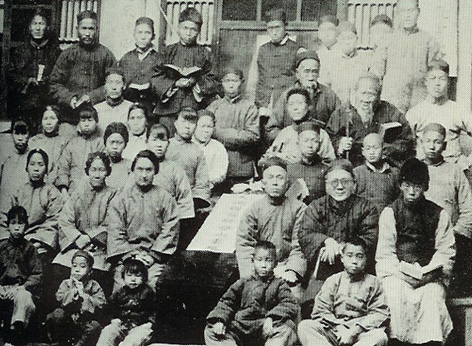
Ms. Alyward had a dream for happiness in being a missionary to China. Too many people have self-centered dreams, which will never make them happy.
http://www.theatlantic.com/business/archive/2015/06/teenagers-are-losing-confidence-in-the-american-dream/395780/The American Dream grew out of the immigrant desire for a better life, and connected with the messianic myth of Manifest Destiny.
In this new survey, the falsity of the American Dream has morphed into a more dangerous form, indicating a lack of spiritual insight in our youth.
As an ex-college lecturer, I can say for sure that the vast majority of youth in my classes should not have been taking college courses, but learning some necessary, useful trade or skill, many which are missing from our society. Apparently, there is a shortage, for example, of car mechanics, as well as practical nurses.
The substitution of the desire for money rather than the desire for a house, family, status, security indicates a decay of spiritual focus among youth. Money does not make one happy, but, of course, the falsity of the original American Dream, being basically a materialistic formula, does not make a person happy, either.
Yes, we all need, and do I not know this personally, housing, food, stability, safe environments. But, we all do not need to own property, although this is laudable and a right, even held sacred by the Catholic Church's teaching on private property, we all do not need lots of stuff, and we certainly do not need to be rich.
The problem with these dreams points to the lack of knowledge or understanding that as Americans, our ultimate goal is not the house for sale down the block, or the newest car, or a flat-screen tv, or the ability to go out eating daily with friends. The goal of each human is union with God.
Not part of the American Dream.....
But part of God's Perfect Will for us....
The only ways to be happy in the old version of the American Dream have been set aside by fantastical dreams of wealth, and power.
Do we all need a reminder of these "happytudes" as we use to call the Jerusalem Bible translation of the Beatitudes?
And, of course, beatitude is not the same as happytude.
The vision of Christ for our happiness is not the same as the American Dream. But, this permutation of it as expressed by some young people, of being rich, shows how far some members of this generation are from the truth of the necessity of a relationship with God and with others in service and love.
Sad.
Matthew tells us of the real American Dream, which is not a dream, the but reality of God's plan for each one of us who walk these lands, and all lands.
Matthew 5 Douay-Rheims
5 And seeing the multitudes, he went up into a mountain, and when he was set down, his disciples came unto him.
2 And opening his mouth, he taught them, saying:
3 Blessed are the poor in spirit: for theirs is the kingdom of heaven.
4 Blessed are the meek: for they shall possess the land.
5 Blessed are they that mourn: for they shall be comforted.
6 Blessed are they that hunger and thirst after justice: for they shall have their fill.
7 Blessed are the merciful: for they shall obtain mercy.
8 Blessed are the clean of heart: for they shall see God.
9 Blessed are the peacemakers: for they shall be called children of God.
10 Blessed are they that suffer persecution for justice' sake: for theirs is the kingdom of heaven.
11 Blessed are ye when they shall revile you, and persecute you, and speak all that is evil against you, untruly, for my sake:
12 Be glad and rejoice, for your reward is very great in heaven. For so they persecuted the prophets that were before you.
I am putting the proverbial fleece before the Lord. If you do not know this phrase, read this:
Judges 6:36-40Douay-Rheims
36 And Gedeon said to God: If thou wilt save Israel by my hand, as thou hast said,
37 I will put this fleece of wool on the floor: if there be dew on the fleece only, and it be dry on all the ground beside, I, shall know that by my hand, as thou hast said, thou wilt deliver Israel.
38 And it was so. And rising before day wringing the fleece, he filled a vessel with the dew.
39 And he said again to God: let not thy wrath be kindled against me if I try once more, seeking a sign in the fleece. I pray that the fleece only may be dry, and all the ground wet with dew.
40 And God did that night as he had requested: and it was dry on the fleece only, and there was dew on all the ground.
By this sign, Gideon knew God's Will for him. His feast day, btw, is September 26th, as we consider him, like the patriarchs of old, a saint.
Now, I am asking for a "fleece moment". Two priests have encourage me to pursue setting up the Chapel of St. Mary of the Angels and Martyrs and the house of contemplation here, where I am. Of course, I did not want to be where the two priests are suggesting, but if this is God's Will, so be it.
My life is not my own.
I need about 150,000 USD to buy a house in an area suggested by one of the priests. If the money comes to do this, (and the house is three minutes from a church where there is Sunday Latin Mass), then I know God wants this here.
Anyone who thinks he or she can be a benefactor, please let me know through comments, which now ask for Google links, in order to comment. Or if you have my email already, just contact me that way.
Thanks for your consideration and prayers.
Excuse spacing problems--am hurrying out the door soon for Holy Mass.
Excuse spacing problems--am hurrying out the door soon for Holy Mass.
Encyclical
I shall wait for the official release on Thursday instead of making a comment on the leaked version.
By the way, the Guardian states this today...
The draft is not a detailed scientific analysis of the global warming crisis. Instead, it is the pope’s reflection of humanity’s God-given responsibility as custodians of the Earth.
By the way, the Guardian states this today...
The draft is not a detailed scientific analysis of the global warming crisis. Instead, it is the pope’s reflection of humanity’s God-given responsibility as custodians of the Earth.
Trusting vs.Triumphalism III
Not infrequently we hear people who are beset by difficulties say in a flippant sort of way: "Why worry?" That is a sheer materialistic and egotistic conception of the doctrine we are here considering. The animating principle of this doctrine is a trustful self-abandonment to Providence. If this trustful self-abandonment is no longer present, as in such recipes for life as that "why worry?" then nothing is left but a body without a soul, a formula of no greater value than the moral energy of the person who utters it. When one has departed from this way of salvation, all that is left of the noblest maxims on life is a dead formula that will serve as an excuse for anything. Yet to all is offered the light of life in the Gospel. The consecrated host elevated every morning on our altars is offered up for all, and all can unite themselves with this oblation. In place of that confidence in God which should accompany our daily task, for us to substitute an arrogant assurance based on purely human calculations is a tremendous misfortune. Man then sets himself up in the place of God; he destroys the theological virtues within him. He is poles asunder from the doctrine we are considering here, which is pre-eminently that of life.
Garrigou-Lagrange states the problem of pride in the clearest of terms. Those who are "flippant" have fallen into a "materialistic" and "egotistic" idea of Providence. One must abandon self. Garrigou-Lagrange highly recommends daily Mass, with the Catholic uniting himself to the Sacrifice of the Mass, in which Christ joins His suffering with us.
Confidence in God is not confidence either in fantasy or in one's own strength. The key here is detachment for things, people, events. As one separates one's self from the world, one becomes more and more in union with Christ.
This profound teaching was expressed with remarkable clearness by a seventeenth century Dominican, Pere Chardon, in his book, La Croix de Jesus. [97] He points out that the divine action, in gradually detaching us from all that is not God, sometimes in most painful ways, tends by that very detachment to unite us more and more closely to Him. Loss is thus turned into gain. As grace increases within us, it becomes at once a source of separation and of union; the progressive separation is simply the reverse side of the union.
Here is a prayer from St. Augustine, an anonymous prayer, which Garrigou-Lagrange shares with us:
Garrigou-Lagrange states the problem of pride in the clearest of terms. Those who are "flippant" have fallen into a "materialistic" and "egotistic" idea of Providence. One must abandon self. Garrigou-Lagrange highly recommends daily Mass, with the Catholic uniting himself to the Sacrifice of the Mass, in which Christ joins His suffering with us.
Confidence in God is not confidence either in fantasy or in one's own strength. The key here is detachment for things, people, events. As one separates one's self from the world, one becomes more and more in union with Christ.
This profound teaching was expressed with remarkable clearness by a seventeenth century Dominican, Pere Chardon, in his book, La Croix de Jesus. [97] He points out that the divine action, in gradually detaching us from all that is not God, sometimes in most painful ways, tends by that very detachment to unite us more and more closely to Him. Loss is thus turned into gain. As grace increases within us, it becomes at once a source of separation and of union; the progressive separation is simply the reverse side of the union.
Here is a prayer from St. Augustine, an anonymous prayer, which Garrigou-Lagrange shares with us:
O my God, I leave myself entirely in Thy hands. Turn and turn again this mass of clay, as a vessel that is fashioned in the potter's hand (Jer. 18: 6). Give it a shape; then break it if Thou wilt: it is Thine, it has nothing to say. Enough for me that it serves all Thy designs and that nothing resists Thy good pleasure for which I was made. Ask, command. What wouldst Thou have me to do? What wouldst Thou have me not to do? Lifted up, cast down, in persecution, in consolation, in suffering, intent upon Thy work, good for nothing, I can do no more than repeat with Thy holy Mother: "Be it done unto me according to Thy word."
Give me that love which is beyond all loves, the love of the cross—not those heroic crosses with a glory that might foster self-love, but those ordinary crosses which we bear with so much distaste—those daily crosses with which our life is strewn and which at every moment we encounter on our way through life: contradictions, neglect, failures, opposition, false judgments, the coldness or impulsiveness of some, the rebuffs or contempt of others, bodily infirmities, spiritual darkness, silence and interior dryness. Only then wilt Thou know that I love Thee, even though I neither know nor feel it myself; and that is enough for me.
Again, persecution may makes us all saints.
This is truly holiness of a high order. Were there but a few such moments of great affliction in our lives, we should then have reached the topmost heights and have come very nigh to God. Now every moment God is inviting us to live this way and lose ourselves in Him. Especially at such moments as these it can be truly said: "The Lord leadeth the. just by right ways and showeth him the kingdom of God" (Wis. 10: 10).
more later.....
more later.....
Trusting vs. Triumphalism II

I am now in the habit of saying daily, if things do not "go my way", which is a sign of the sin of pride lurking in me still, that this thing, this event, is God's Will.
I wanted to get some things for the project on which I am working and am being delayed by others in authority, causing me not to be able to finish stage one. So, I first, I was impatience, complaining to myself that I wanted this stage done by Friday and now it will all be delayed by a week.
Not my idea, but God's idea, to let this delay happen....and what do I learn? The world does not revolve around my wishes or desires.
Patience, docility, humility...nothing happens by chance. More Garrigou-Lagrange:
With Providence there is no such thing as chance; and so by some little unforeseen incident it can easily upset the cunning calculations of those hostile to spiritual good. We have an example of this in the life of Joseph, who was sold by his brethren. Had not the Ismaelite merchants, by chance apparently, passed by just when his brothers had decided to put him to death, he would have been left there in the cistern where they had thrown him. But it was then and not an hour later, as was ordained by God from all eternity, that the merchants arrived on the scene, and Joseph was thus sold into slavery. And so, being led into Egypt, he was later to be a benefactor to those who had wished to destroy him. Let us recall also the story of Esther, of the prophet Daniel, and of many others. j Similar and more striking are the circumstances surrounding the birth of our Lord. Herod had organized all the forces at his disposal to put the Messias to death and had then requested the wise men from the East to obtain for him precise information about the child. But, "having received an answer in sleep that they should not return to Herod, they went back another way to their own country" (Matt. 2: 12)." Then Herod, perceiving that he was deluded by the wise men,... sending, killed all the men children that were in Bethlehem and in all the borders thereof" (ibid., 2: 16), but an angel, appearing in sleep to Joseph, commanded him to save the child from the king's wrath and flee into Egypt.
In the lives of the just it is not miraculous that their guardian angels intervene at God's command to inspire some holy thought in them, whether they be asleep or awake; it is a providential occurrence by no means rare in the lives of those who abandon themselves completely to God. In the Book of Psalms (90: 10) we are told: "There shall be no evil come to thee: nor shall the scourge come near thy dwelling. For the Lord hath given His angels charge over thee, to keep thee in all thy ways. In their hands they shall bear thee up, lest thou dash thy foot against a stone." We must not tempt God, of course; but in the fulfilment of our daily duties we must resign ourselves humbly into His hands, and those who thus abandon themselves to Him, He will protect as a mother protects her children. If He allows persecution, often bitter persecution, to come upon them, as He did in the case of His own Son, nevertheless He will not allow the just to lose courage, but will sustain them in invisible ways and, if in a moment of weakness they should fall, as Peter did, He will raise them up again and lead them on to the haven of salvation.

This is the bishop
...who supports the Third Order of the Most Sorrowful Mother. Pray for him.
https://www.lifesitenews.com/news/tulsas-bishop-pulls-out-of-justice-group-over-gay-march-i-have-to-be-the-bi
https://www.lifesitenews.com/news/tulsas-bishop-pulls-out-of-justice-group-over-gay-march-i-have-to-be-the-bi
“Well they didn’t make the statement,” the bishop told LifeSiteNews. “If we didn’t withdraw we would have sent a different message that would have been in conflict with the Catholic Church.”
In his letter announcing the bishop’s decision, Msgr. Gaalaas wrote, “To march in such a parade seems to us to be a deliberate and full-throttled expression of support for the so-called gay agenda, a central component of which is same-sex marriage.”
In the same letter, he stated that, “Among those teachings of the Church are all the things the OCCJ has traditionally stood for: the rights and dignity of every human being and the protest against bigotry and all unjust discrimination.”
....
"This is the problem we're having today in our society, is that you want everything. You want to be able to join everything, even though you don't agree with it,” he said. “It's the dictatorship of relativism, that's what Benedict calls it, it's the dictatorship of relativism. You can believe what you want, I can believe what I want, but we can both be Catholic."
....
"This is the problem we're having today in our society, is that you want everything. You want to be able to join everything, even though you don't agree with it,” he said. “It's the dictatorship of relativism, that's what Benedict calls it, it's the dictatorship of relativism. You can believe what you want, I can believe what I want, but we can both be Catholic."
Monday, 15 June 2015
Prayers, Please, Please
https://www.lifesitenews.com/news/uk-catholic-hermit-charged-with-harassment-for-trying-to-convert-lesbian-wi
I have been following this for months. I am personally connected with one of these hermits.
This did not have to happen if the bishops would have supported this man and the other two.
I have been following this for months. I am personally connected with one of these hermits.
This did not have to happen if the bishops would have supported this man and the other two.
Trusting vs. Triumphalism I

In his great work, Providence, Garrigou-Lagrange clearly states that true trust involves humility, and the awareness that one is never worthy of God's graces or protection.
Starting with this quotation, one begins to sense the difference between Triumphalism and Trusting in Divine Providence.
As the psalms declare: "Blessed are they that trust in the Lord" (2: 12) ; "They that trust in the Lord shall be as Mount Sion: he shall not be moved forever that dwelleth in Jerusalem" (124: 1) ; "Preserve me, O Lord, for I have put my trust in Thee" (15: 1) ; "In Thee, O Lord, have I hoped, let me not be confounded" (30: 1).
St. Paul (Rom. 4: 18) reminds us how Abraham, in spite of his advanced years, believed in the divine promise that he would be the father of many nations, and adds: "Against hope, he believed in hope.... In the promise also of God he staggered not by distrust: but was strengthened in faith,, giving glory to God: most fully knowing that whatsoever He has promised, He is able to perform."
We, too, while fulfilling our daily duties, should look to our Lord for the realization of these words of His: "My sheep hear My voice: and I know them, and they follow Me... and no man shall pluck them out of My hand" (John 10: 27). As Father Piny notes, [74] to do one's duty in all earnestness and then to resign oneself with entire confidence into our Lord's hands is the true mark of a member of His flock. What better way can there be of hearkening to the voice of the good Shepherd than by constantly acquiescing in all that He demands of us, lovingly beseeching Him to have pity on us, throwing ourselves confidently into the arms of His mercy with all our failings and regrets? By so doing, we are at the same time placing in His hands all our fears for both the past and the future. This holy self-abandonment is not at all opposed to hope, but is childlike confidence in its holiest form united with a love becoming ever more and more purified.
Two keys to trusting and not falling into Triumphalism have been defined as humility and childlike confidence, which is not the same as a prideful arrogance which either borders on presumption, or leads to the sin of presumption.
The unpurified, those who have not gone through the Dark Nights, and have not moved into the Illuminative State, in other words, the beginners, float back and forth between presumption and doubt. This vacillation is caused by the lack of humility, and the still present predominant fault, which interferes with purity of heart.
One can see this dynamic in one's life, if one is honest.
More from the great Dominican:
Our Lord loves with a most tender love those who are so happy as to abandon themselves wholly to His fatherly care, letting themselves be governed by His divine providence, without any idle speculations as to whether the workings of this providence will be useful to them, to their profit, or painful to their loss, and this because they are well assured that nothing can be sent, nothing permitted by this paternal and most loving heart, which will not be a source of good and profit to them. All that is required is that they should place all their confidence in Him. [75]... When, in fulfilling our daily duties, we abandon everything, our Lord takes care of everything and orders everything.... The soul has nothing else to do but to rest in the arms of our Lord like a child on its mother's breast. When she puts it down to walk, it walks until she takes it up again, and when she wishes to carry it, she is allowed to do so. It neither knows nor thinks where it is going, but allows itself to be carried or led wherever its mother pleases. So this soul lets itself be carried when it lovingly accepts God's good pleasure in all things that happen, and walks when it carefully effects all that the known (expressed) will of God demands. [76]
Then it can truly say with our Lord: "My meat is to do the will of Him that sent Me" (John 4: 34). Therein it finds its peace, which even now is in some sort the beginning of eternal life within us—inchoatio vitae aeternae.
The mystery of the times of persecution involve the purification of the elect, those who desire God and want to learn to trust completely in Providence.
If, then, as a result of our failings, something happens to distress us, it is a providential lesson which we must accept in all humility and thus derive some profit from it. If, through no fault of our own, God permits us to be deprived of certain help, this is because that help is not really necessary for our sanctification and salvation. The saints find that in a sense nothing is wanting to them unless it be a greater love for God. If only we knew the inner meaning of those incidents we call hindrances, contradictions, reverses, disappointments, misfortunes, and failures, we should of course deplore any disorder they might involve (and the saints deplored it, were pained by it far more than we), but we should also reproach ourselves for complaining and give more consideration to the higher purpose God is pursuing in all that He wills and even in His divine permission of evil. [77]
Should we wonder that the ways of providence are some times mysterious and that reason is disconcerted at the mystery? "The just man liveth by faith" (Rom. 1: 17), says the Scripture, and in particular he lives by the mystery of providence and its ways. Eventually he realizes that, far from being contradictory, the mystery cannot be rejected without every phase of our life becoming a contradiction.
The problem is that most people do not want to spend the time necessary to learn patience, and humility.
Could we but grasp this truth, then not only the time of mass or our hours of prayer and visits to the Blessed Sacrament would be a source of sanctification to us, but every hour of the day would take on a supernatural significance and remind us that we are on our way to eternity. Hence the pious practice of blessing each hour as it begins, calling down the divine benediction upon it. At every moment we should be at God's service; there is no moment of the day that has not some duty for us to fulfil, some duty toward God or our neighbor, the duty at least of patiently waiting when external action is no longer possible. Every minute must find us hallowing the name of God as though there were nothing more to keep us here in time, as though the next moment must see our entry into eternity.
The reference to the War is significant for us today. War is just another form of the justice of God allowing people to be punished for serious sin, as we see over and over again in the Old and the New Testament.
In the World War this was the attitude of the more spiritually-minded when under gunfire. In those three-minute intervals before firing recommenced, they would say to themselves: "One moment, perhaps, and then death, " and they would live the present moment as though it were the prelude to eternity.
This, too, was the attitude of the saints, not only in exceptional circumstances, but in the ordinary routine of their lives: they never lost the sense of God's presence. Now light is thrown on this attitude of theirs by the Gospel principles we mentioned and which are as applicable to us as to them.
The key is humility, humility, humility...and the refusal to fall into subjective attitudes.
As often noted, in many cases where souls have given themselves to God in all sincerity and have made generous, even heroic efforts to prove their love for Him, a critical moment comes when they must abandon a too personal way of judging and acting—though it may be of a high order—so as to enter upon the path of true humility, that "little humility" which loses sight of self and looks henceforward on God alone.
One must move away from all narcissism. One must look at the Cross.
At that moment two widely different courses are possible: either the soul seeks for itself the course to take and pursues it, or it fails to do so, sometimes going so far astray in its upward path as to go back again without being altogether aware of it.
To see this path of true humility is to discover in our everyday life, from morning to night, opportunities of performing seemingly trivial acts for the love of God. But the frequent repetition of these acts is of immense value and leads to a delicacy of attitude to God and our neighbor which, if constant and truly sincere, is the mark of perfect charity.
Trivial acts bring us closer to the depth of cleaning out the ugliness of our hearts and minds. The little things are important., not just the big things.
If one truly gives one's self to God, He more than meets that generous spirit with His Own Abundant generosity. God cannot be outdone in generosity.
If a soul that has shown itself generous or even heroic, after reaching this point is still far too personal in its manner of judging and acting and does not see the need of a change, it continues on its way with a merely acquired impetus, and its prayer and activities are no longer what they should be. There is a real danger here. The soul may become stunted and its development arrested like one dwarfed through some deformity. Or it may take a false direction. Instead of true humility, it may almost unawares develop a sort of refined pride, which scarcely appears at first except in the small details of daily life. For that reason this will remain unknown to a spiritual director living apart from those he directs. This pride will steadily take the form of an amused condescension, and subsequently develop into an acerbity of manner in our relations with our neighbor, permeating the whole life of the day and thus stultifying everything. This acerbity may lead to rancor and contempt for our neighbor, whom nevertheless we should love for God's sake.
Triumphalism is based on pride or fear. Trust is based on a loving relationship with the Father, which destroys both pride and fear.
I have written on the Illumination State and I have only met three people in my life who have reached this state.
Here is Garrigou-Lagrange again, and look up the many posts on Providence and the Dark Nights posts.
In God's dealings with souls that abandon themselves to Him, much remains obscure, mysterious, disconcerting, impenetrable; but He makes it all contribute to their spiritual welfare, and some day they will see that what at times to them was the cause of profound desolation was the source of much joy to the angels.
Moreover, God enlightens the soul by means of this very darkness and just when He appears to blind it. When the things of sense, which once so charmed and fascinated us, are obliterated, then the grandeur of spiritual things begins to be seen. A fallen monarch, like Louis XVI after losing his throne, sees more clearly than ever before the sublimity of the Gospel and of the many graces he has received in the past. Formerly he scarcely gave them a thought, being too absorbed in the external splendors of his kingdom. And now it is the kingdom of heaven that is revealed to him.
An important law in the spiritual world is that the transcendent darkness of divine things is in a sense more illuminating than the obviousness of earthly things. We have an illustration of this in the sensible order. Surprising as the truth may at first appear, we see much farther in the darkness of the night than in the light of day. The sun, in fact, must first be hidden before we can see the stars and have a glimpse of the unfathomable depths of the sky. The spectacle presented to us on a starry night is sometimes incomparably more beautiful than anything to be seen on even the sunniest day. In the daytime, doubtless, our view may extend far over the surrounding country, and even to the sun itself, though its light takes eight minutes to reach us. But in the darkness of the night we see at a single glance thousands of stars, although the light from even the nearest requires four and a half years to reach us. From the spiritual point of view the same holds true: as the sun prevents our seeing the stars, so in human life there are things which by their glare obstruct our view of the splendors of the faith. It is fitting, then, that from time to time in our lives Providence should subdue this glare of inferior things so as to give us a glimpse of something far more precious for our soul and our salvation.
Mary is our model for such trust and humility. She is Queen of Heaven and Earth because she trusted in God, totally.
more later....
Subscribe to:
Posts (Atom)