Recent Posts

Sunday, 5 July 2015

Denial, Two--Priests in Denial

In a city of eight parishes, only four priests, three at the same parish, have referred to the SCOTUS decision as it really is, from the pulpit.

This morning, a friend of mine went to one of the parishes where the priests are not talking about this decision, and after Mass, three people went up to the priest and asked him why for ten days nothing has been said about this from the pulpit by the four priests who serve that parish.

The three laypeople told the priest that they needed courage and guidance from their pastors and assistants. The priest actually said that nothing bad would happen to Catholics, and that there would be no persecution.

The three lay people could not believe the blindness of this priest.

They tried to explain to him that many people would lose their jobs or businesses, that the Episcopalians and Presbyterians had caved. The priest denied that Catholics would be affected.

My friend talked to me later, as I went to another parish, and he was upset. Of course, and as he said, we are sheep without good shepherds.


Denial reveals a lack of discernment. The priest said that people had walked out of a church in the diocese where the bishops' letter had been read.

So?

Are the priests into numbers games? Those who leave have to answer to God, not the priests, but if the priests are silent. and silence is consent, they are responsible. So, some priests decide not to speak the truth because people will leave the Church. Not to worry, some Episcopalians will join us. The righteous will make up the numbers if the priests are honest and true.

These silent priests are not feeding the good and faithful Catholics, but giving in to the bad ones, who agree with the decision. Why?

Ezekiel 3:18-19

18 If I say to the wicked, ‘You shall surely die,’ and you give him no warning, nor speak to warn the wicked from his wicked way, in order to save his life, that wicked man shall die in his iniquity; but his blood I will require at your hand. 19 But if you warn the wicked, and he does not turn from his wickedness, or from his wicked way, he shall die in his iniquity; but you will have saved your life.


Another man in the conversation said that he did not want to go to hell for not upholding the Church's teaching. That second man noted that he may go to hell for other things, but not ignoring the Church's teaching on marriage. The priest responded, "I'll see you in hell."

My friend was so shocked, he became speechless.


This is the state of so many of the clergy-either being flippant about hell, or honestly supporting the gay cause.

Maybe the priest should read this....http://www.churchmilitant.com/news/article/christian-bakers-fined-135k-given-gag-order-for-refusing-same-sex-wedding

"Brad Avakian has been outspoken throughout this case about his intent to 'rehabilitate' those whose beliefs do not conform to the state's ideas," said Harmon. "Now he has ruled that the Kleins' simple statement of personal resolve to be true to their faith is unlawful. This is a brazen attack on every American's right to freely speak and imposes government orthodoxy on those who do not agree with government sanctioned ideas."

Pray, readers, we are in for it---here is a repost of the first Denial post.

Friday, 3 July 2015


Denial

Too many Catholics are in denial.
They only want to think happy thoughts. Of course, denial is one stage of trauma. Having been through traumas, I recognize the stages. I expected this decision and saw it coming many years ago, so I am not traumatized, merely saddened and righteously angry.

The stages of trauma are:

Emotional and psychological symptoms of trauma:

Shock, denial, or disbelief
Anger, irritability, mood swings
Guilt, shame, self-blame
Feeling sad or hopeless
Confusion, difficulty concentrating
Anxiety and fear
Withdrawing from others
Feeling disconnected or numb


Physical symptoms of trauma:

Insomnia or nightmares
Being startled easily
Racing heartbeat
Aches and pains
Fatigue
Difficulty concentrating
Edginess and agitation
Muscle tension


Many good Catholics have had trouble sleeping this week. Many are still in shock, denial and disbelief. Some are anxious and fearful, Some are agitated.

God is in charge, always. If we truly believe in Providence, we believe that God has allowed sin to triumph, temporarily in order to bring the faithful to perfection, and to punish the evil.

Purification of the Church and this land seems inevitable. Those who are in denial need to move into the various stages and come into reality.

America, like Ireland, like Britain, like Spain, will never be the same again. Christianity will triumph in the end, but I most likely will not see any earthly triumph.

Get ready. Become holy. Pray for me to keep blogging.

Still, nothing from the pulpits where I have been going to Mass. Nothing. I have felt abandoned by the clergy and I am angry that many of the laity in this area have been left in confusion, when clarity could have come from the pulpits.

God, forgive us and forgive these lax priests. As one of my friends said yesterday, a bit sarcastically, "Why should they hunger and thirst after righteousness, or endure persecution for His Name's sake?"

I shall continue to pray for all priests, bishops, cardinals, and seminarians. 

Saints of The Day

 Saints of the day from Universalis...

Pintura de San Antonio Maria Zaccaria

St Antony Mary Zaccaria (1502 - 1539) A reformer for the laity as well as the clergy...
He was born in Cremona in Lombardy and started by studying medicine, but soon decided to become a priest instead and was ordained in 1528. He founded the Congregation of Clerks Regular of St Paul, generally known as the Barnabites (after the church that was their headquarters), whose aim was the reform of the clergy and laity. He was part of the general movement to self-reform in a Church that was coming increasingly under attack from the Protestant Reformation.

Other saints: Saint Modwen an evangelizer and woman of prayer

The memory of St Modwen is strongly established at Burton-on-Trent where she is venerated as a virgin who lived as a hermit on the island-meadow of Andressey on the Trent. Her name is Irish and she seems to have belonged to the group of Irish monks and hermits who worked for the conversion of Anglo-Saxons in the seventh century; Irish women hermits, such as St Dympna, are also known at that period. The medieval parish church at Burton is dedicated to her; she was adopted as patron of the restored Catholic parish when the Catholic Church in Guild Street was built in 1879.

Other saints: Blessed George Nichols, Richard Yaxley, Thomas Belson, Humphrey Pritchard (-1589)
brave martyrs

These four men were executed at Oxford on 5 July 1589. Two were priests: George Nichols, born at Oxford, and Richard Yaxley, born at Boston, Lincolnshire, both ordained at the English College at Rheims. Thomas Belson was a gentleman from Oxfordshire who worked as a layman to support the underground work of the priests in Elizabethan England and had previously been imprisoned and deported; he was 26. All three were arrested at the Catherine Wheel at Oxford, together with Humphrey Pritchard, employed by the widow who owned the public house; she was condemned to perpetual imprisonment. After examination and torture in London, the four were tried and executed at Oxford. Blessed Humphrey Pritchard, the barman, was taunted for his ignorance by some of the university men present at the execution. When he said that he died for being a Catholic, one of them shouted that he was unable to explain what being a Catholic meant. Blessed Humphrey replied: “What I cannot say in words, I will seal with my blood”. They were beatified by Pope John Paul II in 1987.

Not sure if this is the same Catherine Wheel where the men were caught...maybe a reader knows.


The Age of the Laity, Two

This link is a MUST read.

http://southernorderspage.blogspot.com/2015/07/wherever-two-or-three-are-gathered-in.html

I wrote in the past year that when Blessed Paul VI declared this the Age of the Laity, for me, that meant keeping the Faith, learning the Faith, not following false shepherds.

If I am weak, I have no one to blame but myself as God gives grace to all His People.


The Soul of The Apostolate, Part Eight


Some years ago when I was in Japan I was astonished and deeply moved when I had the happiness to come in contact with some members of the numerous Christian families which were discovered years ago near Nagasaki. I have never heard anything so amazing! Surrounded by pagans, forced to conceal their religion, deprived of priests for three centuries, these Christians of staunch courage received from their parents not only faith but fervor. Where are we to find the moving power strong enough to explain the strength and duration of this extraordinary heritage? The answer is easy. Their ancestors had been trained by a superb director of “shock troops,” St. Francis Xavier.

These are the last words I am putting on the blog for now from The Soul of The Apostolate. The book contains many more priceless paragraphs, but today, I want to emphasize the necessity, again, for the personal, adult appropriation of the Faith.

The Jesuits trained people, in the lands to which they went, to do examinations twice daily-one in the morning and one at night. This daily examen kept those in hiding in a state of holiness, as they prayed to God, as some of us do in the Divine Office, the see our hidden sins and to be freed of those. Save me from the faults I do not see. Save your servant from pride.

The daily examen focuses on both exterior and interior sins and imperfections. 

Here is an example of the Examen. This is an excellent way to learn contemplative prayer. If God grants me the House of Prayer, those who join would be asked to do this type of examen daily. It fits in nicely with the time of lectio divina asked for by St. Benedict. How wonderful that the Cistercian way, the Benedictine way, and the Ignatian way overlap in teaching contemplative prayer.

I wrote almost two years ago on these hidden Christians. Now is the time to consider their courage. Below are two pertinent re-posts, especially for my new readers.

Saturday, 21 September 2013


The Kakure Kirishitan And The One Thing Necessary

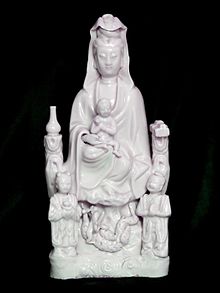
Thanks to wikipedia for Japanese Blessed Virgin
With all the chaos and sharp decline of democracy in Great Britain, Ireland and America, I have pondered on the one thing necessary at this time. But, I have come up with two. The first is obvious in St. Alphonsus Ligouri's prayer. We all must be dedicated to becoming saints . But, I add a second thing which is also of primary importance. We, you and I, not priests, or bishops, or cardinals, or nuns, we the laity must pass on the Faith to the next generations. This is our duty, stemming from our baptismal promises. We have no choice. To pass on the heritage and all the cultural trappings of Catholicism, the doctrines, the dogmas, the liturgical rites as far as we can, such as the Liturgy of the Hours, is our duty. We shall have no one to blame but ourselves if the faith continues to dwindle and disappear from some areas here, and in other countries.  This is our Faith. Pass it on.

Pius IX  declared it a miracle when the missionaries came back to Japan and found the  éš ã‚Œã‚­ãƒªã‚·ã‚¿ãƒ³the hidden Christians,Kakure Kirishitan laity who had kept the Faith without a priest for about 250 years. Bishop Bernard Thadee Petitjean,  the first missionary priest back to Japan after 1853, and the first Vicar Apostolic of Japan, discovered these hidden Christians. They had passed on the Faith through  a 100 generations. Are we strong enough and intelligent enough about our Faith to do this?

Here are two pages from one of the first modern Catholic Catechisms in Japan, 1865. The very first came out in 1860.  From 1614 until 1860, the laity had to be responsible for their own faith and Catholicity. I assume they baptised their children and converts, prayed, honoured Mary (there were statues of Mary found), and keeping customs. Could we do this? In 2010, there were almost seven billion people in the world and 118,990 major seminarians. Who do you think is going to keep the Faith in the not-so-distant future? You, I.....


http://laures.cc.sophia.ac.jp/laures/www/media


ONLY ONE THING IS NECESSARY
A Prayer of Saint Alphonsus Liguori


O my God, help me to remember - 
That time is short, eternity is long.
What good is all the greatness of this world at the hour of death?
To love You, my God, and save my soul is the one thing necessary.
Without You, there is no peace, no joy.
My God, I need fear nothing but sin.
For to lose You, my God, is to lose all.
O my God, help me to remember - 
That to gain all I must leave all,
That in loving You I have all good things: the infinite riches of Christ
and His Church, the motherly protection of Mary,
peace beyond understanding, joy unspeakable!


Eternal Father, your Son has promised that whatever we ask in His Name will be given to us. In His Name I pray: give me a burning faith, a joyful hope, a holy love for Jesus Christ. Give me the grace of perseverance in doing Your will in all things. Do with me what You will. I repent of having offended You. Grant, O Lord, that I may love You always and never let me be separated from You.
O my God and my All, make me a saint!


Saturday, 15 November 2014


Lost Souls because.....


I know for a fact that young men are saying no to God regarding becoming priests.

St. Francis, according to Fr. Minelli, was asked by a leader of a Japanese tribe, a man who had heard of God's love for the Japanese, this question: " How come God, if He is so good, as you say he is, has waited so long before making Christianity known to us?" "Do you want to know?" replied the Saint with sadness. "Here is why: God had inspired many Christians to come and announce to you the Good  News, but many of the have not wanted to heed His call."

No priests, no sacraments, no Mass, no Eucharist, no absolution of sins, no communities...

The great sin of men who are refusing the call is one of sloth. It is too easy to just be single, go with the flow, live a completely self-centered life.

Those who are answering the call understand that the day of the comfortable cleric is over.

We are fast entering the new Age of the Martyrs.

Where are the real men who will answer God's call?

They have been pampered from birth by misguided parents. They only want to feed their own needs and they do not love God or His Bride, the Church.

Too many are saying no and souls will be lost.....

Yesterday, a priest and I discussed the love of the Church which should be in the hearts of priests.

Where is this bridal love? It is a gift for anyone who wants it. It is Christ's Own Love for all of us.


From The Soul of The Apostolate, Part Seven


The book, The Soul of the Apostolate, I have been using this week on the blog for meditations, praises my favourite, St. Bernard of Clairvaux many times, using his as a perfect example of the interior life leading to the active life.

Here is one reference:

 Take St. Bernard, for example. This oracle of his own time was one of those saints who showed most firmness in his zeal for God. But the attentive reader of his life will be able to see to what an extent the interior life had made this man-of-God selfless. He only fell back on strong measures when he had clear evidence that all other means were useless. Often, too, he varied between gentleness and strength. After having shown his great love for souls by avenging some principle with holy indignation and stern demands for remedies, reparation, guarantees, and promises, he would at once display the tenderness of a mother in the conversion of those whom his conscience had’ forced him to fight. Pitiless towards the errors of Abelard, he speedily became the friend of the one whom his victory had reduced to silence. When it was a matter of choosing means, if he saw that no principle was necessarily involved, he always stood before the hierarchy of the Church as a champion of nonviolent procedure. Learning that there was a movement on foot to ruin and massacre the Jews of Germany, he left his cloister without a moment’s delay and hurried to their rescue, preaching a crusade of peace. Fr. Ratisbonne quotes a document of great significance in his Life of St. Bernard. It is a statement of the most exalted Rabbi of that land, expressing his admiration for the monk of Clairvaux, “without whom,” he says, “there would not be one of us alive in Germany.” And he urges future generations of Jews never to forget the debt of gratitude they owe to the holy abbot. On this oc-casion St. Bernard uttered the following words: “We are the soldiers of peace, we are the army of the peacemakers, fighting for God and peace: Deo et pact militantibus. Persuasion, good example, loyalty to God are the only arms worthy of the children of the Gospel.” There is no substitute for the interior life as a means of obtaining this spirit of selflessness which characterizes the zeal of every saint.  

And, another:


As a member of the Cistercian Order, so completely consecrated to Mary, and as a child of that great saint who was, for half a century, the apostle of Europe, St. Bernard, how can we forget that the holy abbot of Clairvaux attributed to Mary all his progress in union with Jesus, and all his success in the apostolate? Everybody knows what tremendous effects were produced by the apostolate of this saint, who remains the most illustrious of the sons of St. Benedict: an apostolate that embraced nations and kings, Councils and even Popes. On all sides we hear the praises of the sanctity, the genius, the deep knowledge of Holy Scripture, and the penetrating unction of the writings of this the last of the Fathers of the Church. But one title above all others sums up all the admiration of the ages for this holy doctor: Cytha-rista Mariae, “the Harpist of Mary.” This “Bard of Mary” has never been surpassed by any of those who have proclaimed the glories of the Mother of God. St. Bernardine of Siena and St. Francis of Sales, as well as Bossuet, St. Alphonsus, St. Grignon de Monfort, and so on, all draw largely upon the treasures of St. Bernard when they want to speak of her, and find arguments to support that great truth which the holy Doctor so emphasized: “Everything comes to us through Mary.” “See, my brethren, with what sentiments of devotion God has desired us to honor Mary, He Who has placed in her the fullness of all good. If there is in us any hope, any grace, any pledge of salvation, let us admit that all this overflows upon us from her who is flowing with delights. . . . Suppose you were to take away the sun, which enlightens the world: what would become of the day? Take away Mary, that star of the sea, of our huge, vast sea, what is left but deep obscurity, the shadow of death, pitchy blackness? Therefore it is from the depths of our hearts, from the very vitals of our being, and with all our mind and will that we must honor the Virgin Mary: for such is the will of Him Who willed us to have all through Mary.”106 Strong with the strength of this doctrine we will not hesitate to lay down as a principle that no matter what the apostle may do to ensure salvation and spiritual progress and the fruitfulness of his apostolate, he runs the risk of finding that he has built on sand if his activity does not rest on a very special devotion to Our Lady. a. For His Personal Interior Life The apostle cannot claim to have a sufficient devotion to Our Lady if his confidence in her is not enthusiastic, and if his homage to her is almost entirely external. Like her Son, intuetur cor, she only looks at our hearts, and judges us to be her true children only by the power with which our love corresponds to hers. She looks to find a heart that is firmly convinced of the glories and privileges and offices of her who is at the same time the Mother of God and the Mother of men: A heart that is convinced of this truth: that the fight against faults, the acquisition of virtues, the Kingdom of Christ in souls, and consequently all guarantee of salvation and sanctity, are in proportion to the degree of our devotion to Mary;10T A heart that is gripped with the thought that everything is easier, more delightful, and progresses more rapidly in the interior life when we act in union with Mary.108 A heart full to overflowing of filial confidence, come what may, in her whose gentle tact, and wise anticipation of our needs, and whose tenderness and mercy and generosity we know by experience;108 My little children, she it is who is the foundation of all my trust and the whole reason for all my hope (St. Bernard). 

more later...one more on this book

A Prayer of Blessed Miguel Pro

Just a selection from a longer prayer by this Jesuit martyr.


Let me spend my life near thee, O Mother,
to keep thee company in they solitude and deepest grief;
let me feel in my soul the sadness of thine eyes
and the abandonment of thy heart.....

My wish in life is for the jeers and derision of Calvary;
for the slow agony of thy Son,
for the contempt, the disgrace and infamy of the Cross.
My wish, O most sorrowful Virgin, is to stand near thee,
to strengthen my soul through thy tears, 
to complete my offering through thy martyrdom,
to temper my heart through thy solitude
and to love my God and thy God through my self-sacrifice.

from here

The Great Houses Revisited-A Rare Double Post


Recently, in a British Catholic online mag, a discussion on the necessity for elite Catholic leaders was put forth by someone, imho, who missed the point of having leaders in the first place. There is in the West a leadership crisis, mostly brought on by the loss of noblese oblige and the tough Catholic immigrant blood which became, sadly, too watered down by "acceptance."

I am re-reading a book my mother bought me for Christmas in 1995, the year I returned to North America, with a very young son, to work out my life without a husband. I left England thinking that America would be friendly to me and son, a false dream of acceptance and community, which did not happen, except for a brief time in Alaska, and, ironically, Canada.

The book is on the great recusant houses in the country which was my spiritual home, where I taught, worked for the Church, got married, had my baby and experienced some of the greatest friendships I have ever made. Those days are gone, and my hopes for living in England have faded with the realities of the present politics against immigration. But, I still think someday I shall return somehow to the land of my spiritual brothers and sisters. How, I do not know.

However, I am a woman without a home here in the great plains of the Midwest, where I was born, and where my ancestors set up Catholic schools, a monastery and more, in happier days long ago. Now, the great houses of the noble recusants of England and Scotland create a longing in my heart for that type of courageous rebellion, silent but strong, against the evils of paganism, religious fanaticism, and secularism. We, in this country, do not have the great noble families, which intermarried and held the Catholic Faith as the most important heritage in their communities, risking life and fortunes for the pope, the Mass, the sacraments, and priests, intermarrying, sending sons to the great continental seminaries of Valladolid, Rome, Douai and Lisbon to become priests and martyrs.

We are approaching the same times, as I have noted here before, without the great houses. Malachi Martin in one of his novels imagined a house like Wardour, or Boscobel, in Windswept House. But, his book is and will always be a fictive creation of a clan center for Catholicism. Such things do not exist in this Protestant and apostate land. Too many of the new Catholics who are of "great families" are, in fact, practical heretics, in disobedience to Rome concerning many doctrines.

We, like most of the Catholic world, including Rome, lack leadership.

However, the houses haunt me. Names like Hendred House, Norbury Manor, Baddesley Clinton and Coughton Court resounded as I imagine the old families kneeling, like the great scene in Gone with the Wind, saying the rosary before the fire at night, while the young girls dream of some Catholic man in the households of Mapledurham or Stonor Park. Hundreds of years of Catholic occupancy kept some of the families alive in the Faith. I wonder if the "15" still meet in London and toast the Pope?

But, the point of this post is not a romantic view of the past, but a stark view of the present. In all Catholic lands, leadership may be at the lowest ebb of the tide than at any time in history. One is hard put to name great orthodox Catholic leaders in England, Scotland, Wales, Ireland or America. Too many families have lost one of two generations to secularism and apostasy, or the worst plague of all, mediocrity, what Christ calls in the Book of Revelation, the "lukewarm". I fear a harder time for Catholics here in days to come than in the worst purging of the Roundheads. The reason is simple--we lack both clerical and lay leaders.

Sadly, American Catholic history has been that of a Church struggling since Day One in a Protestant land still rife with anti-Catholicism, which will rear it ugly head again very soon in real persecution. Whether this persecution lasts as long as the suppression of the Catholics in Great Britain, remains to be seen. I, for one, may never see the triumph of Catholicism again in this country, or any country, in my lifetime.

"This is not my country" has become a mantra for many of us on this side of the pond. Some of us saw the inevitable coming for a long time, especially those of us to whom God had given certain discernment and even a prophetic nature, but we were not heard. So be it. One moves on to the next stage of reality, coping with a culture which wants to destroy the Catholic Faith, as it will be seen again, as anti-American.

The sons and daughters of Gibbons, Keane, Ireland and those who fell into the false ideal of being American first and Catholic second, will survive physically. Whether they will spiritually is another matter. Those who have kept the remnant Faith may face hardships which no one wants to imagine.

There are no great houses here, no priest holes, no states which are so united as to form a legal confederacy against the Hydra tyranny of paganism and secularism. No, only small houses of the descendants of those who may even have come here for religious freedom. That is gone, truly gone
.
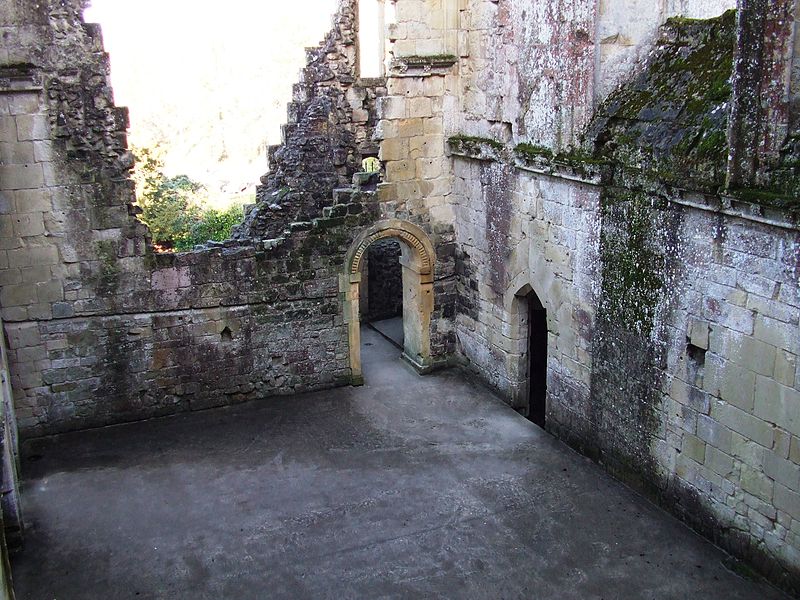
"Coughtoncourtmorris edited". Licensed under Public Domain via Wikimedia Commons - https://commons.wikimedia.org/wiki/File:Coughtoncourtmorris_edited.jpg#/media/File:Coughtoncourtmorris_edited.jpg

Already, there is a test case in Macon, Georgia regarding Catholic schools. Already the Episcopalians have voted to have false "marriages" in their churches. Already, only the Evangelical Baptists, the Catholics and a handful of independent churches have kept the ancient teachings of Christ and the laws of nature sacred in their congregations. But, the rot has set into the Church. One only needs to ponder the weak responses of some bishops, and the non-response of the leading cardinal of this land.

I mourn the lack of great houses and great families. Like so many, my own family, with a fantastic Catholic heritage, including a great-grandfather who was a Knight of St. Gregory, is split with more siblings having left the Church than staying in--three to one, in fact. My generation and those following have witnessed the weakening of the Church from within, and now we must face the onslaught of legal constrictions from without.

As the Pope Emeritus said a long time ago, more than forty years ago now, the Catholic Church will be small scattered groups of the faithful in a sea of unbelief. May God raise us some new great houses, whether large or small, rich or poor, in these recusant times.


Saturday, 4 July 2015

St. Elizabeth of Portugal, Pray for Us


The grand-niece of the great saint, Elizabeth of Hungary, this Elizabeth is known as a great peacemaker, intervening in several battles to stop fighting.  She was a Third Order Franciscan, taking care of the poor and ill as well as personally caring for poor young women by paying their dowries so they could marry.

St. Elizabeth of Portugal, pray for us today on your feastday.

Americanism

I began a huge study on the heresy of Americanism in 2007, when I started this blog. My first book to read of many was a Notre Dame publication, by Thomas J. McAvoy, The Americanist Heresy in Roman Catholicism 1895-1900.

I also read some excellent "conservative", and, therefore, critical biographies of Gibbons, Keane, Ireland and other bishops who began the rot in the Church regarding compromising Catholic identity, education, liturgy, culture and even, the Faith.

Part of my reparation this weekend hearkens back to the evil these men let into the Church, including false ecumenism. Those who blame Vatican II for the ills of the American Church do not know the history of compromise, called "progressivism" which undermined the authority of Rome and caused the political playing footsy with anti-Catholic groups, even those associated with the Masons, which have led this country to the recent decision.

The rotten roots of the Americanist heresy brought us to this state of paganism enshrined by law.

I highly suggest reader consider this heresy, as I did in 2007, as worthy of study. Basically, these bishops pushed Catholics into being Americans first, and Catholics second.

I am on a mini-retreat this weekend because of the evil which these men wrought a long time ago.

More on Sunday...bye for now.

Day of Prayer and Mortification


Calling for Day of Prayer and Penance on July 4th

Will you readers join me, please?

Nothing to celebrate but many things for which to pray and mourn. 


A suggestion for reading today..................

Conformity To God's Will

St. Alphonsus Mary Liguori Translated by Thomas W. Tobin, C.SS.R.

“Perfection is founded entirely on the love of God: ‘Charity is the bond of perfection;’ and perfect love of God means the complete union of our will with God’s.

While I am praying and doing penance today, if you cannot join me, please read St. Alphonsus Liguori on persecution and resignation. Also, I had so many posts this past week, take time to go back and read them all. 

St. Alphonsus provides us with meat, not milk.

Here are a few tidbits.

Furthermore, we must unite ourselves to God’s will not only in things that come to us directly from his hands, such as sickness, desolation, poverty, death of relatives, but likewise in those we suffer from man -- for example, contempt, injustice, loss of reputation, loss of temporal goods and all kinds of persecution. On these occasions we must remember that whilst God does not will the sin, he does will our humiliation, our poverty, or our mortification, as the case may be. It is certain and of faith, that whatever happens, happens by the will of God: “I am the Lord forming the light and creating the darkness, making peace and creating evil[21].” From God come all things, good as well as evil. We call adversities evil; actually they are good and meritorious, when we receive them as coming from God’s hands: “Shall there be evil in a city which the Lord hath not done[22]?” “Good things and evil, life and death, poverty and riches are from God[23].”


The devout Father John Tauler[45] relates this personal experience: For years he had prayed God to send him someone who would teach him the real spiritual life. 

One day, at prayer, he heard a voice saying: “Go to such and such a church and you will have the answer to your prayers.” He went and at the door of the church he found a beggar, barefooted and in rags. He greeted the mendicant saying: “Good day, my friend.”

“Thank you, sir, for your kind wishes, but I do not recall ever having had a ‘bad’ day.”

“Then God has certainly given you a very happy life.”

“That is very true, sir. I have never been unhappy. In saying this I am not making any rash statement either. This is the reason: When I have nothing to eat, I give thanks to God; when it rains or snows, I bless God’s providence; when someone insults me, drives me away, or otherwise mistreats me, I give glory to God. I said I’ve never had an unhappy day, and it’s the truth, because I am accustomed to will unreservedly what God wills. Whatever happens to me, sweet or bitter, I gladly receive from his hands as what is best for me. Hence my unvarying happiness.”

“Where did you find God?”

“I found him where I left creatures.”

“Who are you anyway?”

“I am a king.”

“And where is your kingdom?”

“In my soul, where everything is in good order; where the passions obey reason, and reason obeys God.”

“How have you come to such a state of perfection?”

“By silence. I practice silence towards men, while I cultivate the habit of speaking with God. 

Conversing with God is the way I found and maintain my peace of soul.”

Union with God brought this poor beggar to the very heights of perfection. In his poverty he was richer than the mightiest monarch; in his sufferings, he was vastly happier than worldlings amid their worldly delights. 

http://www.stalphonsusbalt.org/conformity.htm

Pray for these graces now...we shall all need to be like these good examples of complete peace in the face of adversity.


We ought to view in the light of God’s holy will, the loss of persons who are helpful to us in a spiritual or material way. Pious souls often fail in this respect by not being resigned to the dispositions of God’s holy will. Our sanctification comes fundamentally and essentially from God, not from spiritual directors. When God sends us a spiritual director, he wishes us to use him for our spiritual profit; but if he takes him away, he wants us to remain calm and unperturbed and to increase our confidence in his goodness by saying to him: “Lord, thou hast given me this help and now thou dost take it away. Blessed be thy holy will! I beg thee, teach me what I must do to serve thee.”

In this manner too, we should receive whatever other crosses God sends us. “But,” you reply, “these sufferings are really punishments.” The answer to that remark is: Are not the punishments God sends us in this life also graces and benefits? Our offenses against God must be atoned for somehow, either in this life or in the next. Hence we should all make St. Augustine’s prayer our own: “Lord, here cut, here burn and spare me not, but spare me in eternity!” Let us say with Job: “Let this be my comfort, that afflicting me with sorrow, he spare not[67].” Having merited hell for our sins, we should be consoled that God chastises us in this life, and animate ourselves to look upon such treatment as a pledge that God wishes to spare us in the next. When God sends us punishments let us say with the high-priest Heli: “It is the Lord, let him do what is good in his sight[68].”
The time of spiritual desolation is also a time for being resigned. When a soul begins to cultivate the spiritual life, God usually showers his consolations upon her to wean her away from the world; but when he sees her making solid progress, he withdraws his hand to test her and to see if she will love and serve him without the reward of sensible consolations. “In this life,” as St. Teresa used to say, “our lot is not to enjoy God, but to do his holy will.” And again, “Love of God does not consist in experiencing his tendernesses, but in serving him with resolution and humility.” And in yet another place, “God’s true lovers are discovered in times of aridity and temptation.”


Friday, 3 July 2015

Change in Davenport Diocese Latin Mass

As of July 12th, the TLM (EF), which has been for some time at St. Alphonsus, will be celebrated weekly at St. Mary's Church in Davenport, Iowa. The Mass time is now Sunday, at 8:00 a.m. preceded by confessions at 7:30 a.m.

The parish priest of St. Mary's is Father Chris Young, a priest of the Pastoral Provision, set up by St. John Paul II.

One can get directions on Google-map. Father Chris Young with retired priest Fr. Michael Phillips in photo below.


You need to know this...

Links with news.....

http://www.huffingtonpost.com/2014/06/27/gay-pride-parade-sponsorships_n_5537189.html

http://www.aim.org/aim-column/walmart-comcast-celebrate-gay-pride/


A Rant from STM

Truly, I am tired of hearing lay people lament the lack of vocations. When Catholic women begin to talk on this point, I am beginning to say nothing, but listen and pray silently. However, if I have to make a comment, I simply say, "Where are your children and grandchildren?"

Part of the punishment of the Church in the West will be a serious priest shortage, which I have written about many times on this blog. Some dioceses will shrink, and the laity will not have access to the sacraments.

Part of the problem is the fact that people simply do not respond to the call of God to be a priest or nun. Some parents block vocations for selfish reasons, especially since contraception has created one or two children in a family as a norm.

No longer do even some Catholic parents want their one or two children to become a priest or religious.

Remember, St. John Bosco believed that one out of four boys is called to the priesthood.

Look at the numbers of boys graduating from Catholic high schools this year. As I have noted before here, if one out of four would have gone into the seminary, we would not have a priest shortage.

At the end of 2007, for example, there were 638,239 students in Catholic high schools. Allowing for non-Catholic students, let us say one sixth, that would leave about 535,000, half of which could be boys. So, there could have been 267,500 Catholic high school boys in 2007. If a quarter had gone into the seminary, using Don Bosco's insight, that would mean that 66,750 young men would have entered the seminary in a four year period between 2007-2011, just from the Catholic high schools.

Of course, this did not happen.


St. Alphonsus writes about those who do not follow their true vocations. Perhaps one reason why there are so many unhappy young men and women, not being able to find their true "job" in the world, is that they either said "no" to God, for their own reasons, or by being discouraged by family members, including parents.

St. Alphonsus seems to be ranting here, so I shall quote him on the subject....

  • It is clear that our eternal salvation depends principally on the choice of our state... In regard to choosing a state, if we want to make sure of our eternal salvation, we must follow the divine vocation, where alone God has prepared efficacious helps to save us... This is exactly the order of predestination described by the same Apostle: “He whom he predestined, he also called; and those whom he called, he also justified... and those he also glorified.”... Upon vocation follows justification, and upon justification follows glorification, namely eternal life. He who places himself outside of this chain of salvation will not be saved. With all the efforts and with everything else that one will do, St. Augustine will say to him: “You run well, but outside of the way,” namely outside of the way through which God will have called you to walk, in order to attain to your salvation. The Lord does not accept the sacrifices offered from one’s own inclination: “For Cain and his offering he had no regard.” Rather, he enjoins great punishment on those who want to turn their backs to their calls, to follow the plans of their own inclination: “Woe to the rebellious children,” says the Lord through Isaiah, “who carry out a plan, but not from me; and who make a league, but not by my spirit!” The punishment of the disobedient will begin already during his lifetime, when he will always be restless; for Job says, “Who has resisted him and had peace?” Hence he will be deprived of the abundant and efficacious helps for living well. Therefore the Theologian Habert wrote: “Not without great difficulties will he be able to look out for his salvation.” With great difficulty will he be saved, being forever like a member out of its proper place, so that only with great difficulty will he be able to live well... Therefore he concludes that “although absolutely speaking he could be saved, he will with difficulty enter the way, and lay hold of the means of salvation.”

  • Another block to vocations is that parents are not raising children to have purity of heart. Here is the great saint again on this subject.

    • It is necessary for you to pray diligently to God to make you know his will as to what state he wants you in. But take notice that to have this light, you must pray to him with indifference. He who prays to God to enlighten him in regard to a state of life, but without indifference, and who, instead of conforming to the divine will, would sooner have God conform to his will, is like a pilot that pretends to wish his ship to advance, but in reality does not want it to: he throws his anchor into the sea, and then unfurls his sails. God neither gives light nor speaks his word to such persons. But if you entreat him with indifference and resolution to follow his will, God will make you know clearly what state is better for you. 
    • (On the utility of the spiritual exercises made in solitude)

Sorry, moaners and complainers, look to your own failings and the failings of your local Church. I have said to some priests that high schools which have not produced a vocation in twenty years should be shut down. What about forty years?  Yes, some Catholic high schools have not seen a priestly vocation for forty years. Something is wrong. And, if parishes are to be shut down, close the ones where there have been no vocations for twenty years, now considered a generation. Something is wrong.  Financial viability is not the only criteria for keeping a church open. What about spiritual viability? What about the number of marriages, baptisms, and priestly vocations as a sign of viability?

Where are the Latino vocations? Here are statistics from this year's ordinands. Note that a quarter were not American born. This is a scandal for our American Church.


Two-thirds of responding ordinands (69 percent) report their primary race or ethnicity as Caucasian/European American/white. Compared to the adult Catholic population of the United States, ordinands are more likely to be of Asian or Pacific Islander background (10 percent of responding ordinands), but less likely to be Hispanic/Latino (14 percent of responding ordinands). Compared to diocesan ordinands, religious ordinands are less likely to report their race or ethnicity as Caucasian/European American/white.  One-quarter of the ordinands (25 percent) were born outside the United States, with the largest numbers coming from Colombia, Mexico, the Philippines, Nigeria, Poland, and Vietnam. On average, responding ordinands who were born in another country have lived in the United States for 12 years. Between 20 and 30 percent of ordinands to diocesan priesthood for each of the last ten years were born outside of the United States, as were 25 percent of this year’s diocesan ordinands.  Most ordinands have been Catholic since birth, although 7 percent became Catholic later in life. Eighty-four percent report that both of their parents are Catholic and more than a third (37 percent) have a relative who is a priest or a religious.  Almost all ordinands in the Class of 2015 (96 percent) have at least one sibling. Seven in ten (74 percent) have more than two siblings, while one in five (22 percent) have five or more siblings. Ordinands are most likely to be the oldest in their family (36 percent). USCCB website.

Parents, give the first child to God....a long tradition in the Catholic Church. I also blame priests for not speaking out against mixed religion marriages. Note that the vast majority of priests ordained had Catholic mums and dads. 

I know of many churches in the Midwest where there have not been vocations for forty years or more, and a few which have young men going into the seminaries in a regular fashion-especially in rural areas.. Interesting...and the blocks to vocations are yet more reasons for a house of prayer set aside to pray for priests, bishops, cardinals, and seminarians.

From Today's Office

1 Corinthians 4:1-16

The Ministry of the Apostles

This is how one should regard us, as servants of Christ and stewards of the mysteries of God. Moreover it is required of stewards that they be found trustworthy. But with me it is a very small thing that I should be judged by you or by any human court. I do not even judge myself. I am not aware of anything against myself, but I am not thereby acquitted. It is the Lord who judges me. Therefore do not pronounce judgment before the time, before the Lord comes, who will bring to light the things now hidden in darkness and will disclose the purposes of the heart. Then every man will receive his commendation from God.
I have applied all this to myself and Apollos for your benefit, brethren, that you may learn by us not to go beyond what is written, that none of you may be puffed up in favor of one against another. For who sees anything different in you? What have you that you did not receive? If then you received it, why do you boast as if it were not a gift?
Already you are filled! Already you have become rich! Without us you have become kings! And would that you did reign, so that we might share the rule with you! For I think that God has exhibited us apostles as last of all, like men sentenced to death; because we have become a spectacle to the world, to angels and to men. 10 We are fools for Christ’s sake, but you are wise in Christ. We are weak, but you are strong. You are held in honor, but we in disrepute.11 To the present hour we hunger and thirst, we are ill-clad and buffeted and homeless, 12 and we labor, working with our own hands. When reviled, we bless; when persecuted, we endure; 13 when slandered, we try to conciliate; we have become, and are now, as the refuse of the world, the offscouring of all things.

Fatherly Admonition

14  I do not write this to make you ashamed, but to admonish you as my beloved children. 15 For though you have countless guides in Christ, you do not have many fathers. For I became your father in Christ Jesus through the gospel. 16 I urge you, then, be imitators of me.


Thomas, Saint: stained-glass window, St. Mary’s Church, Bury St. Edmunds, Enggland


From a homily on the Gospels by Saint Gregory the Great, pope

My Lord and my God

Thomas, one of the twelve, called the Twin, was not with them when Jesus came. He was the only disciple absent; on his return he heard what had happened but refused to believe it. The Lord came a second time; he offered his side for the disbelieving disciple to touch, held out his hands, and showing the scars of his wounds, healed the wound of his disbelief.
Dearly beloved, what do you see in these events? Do you really believe that it was by chance that this chosen disciple was absent, then came and heard, heard and doubted, doubted and touched, touched and believed? It was not by chance but in God’s providence. In a marvellous way God’s mercy arranged that the disbelieving disciple, in touching the wounds of his master’s body, should heal our wounds of disbelief. The disbelief of Thomas has done more for our faith than the faith of the other disciples. As he touches Christ and is won over to belief, every doubt is cast aside and our faith is strengthened. So the disciple who doubted, then felt Christ’s wounds, becomes a witness to the reality of the resurrection.
Touching Christ, he cried out: My Lord and my God. Jesus said to him: Because you have seen me, Thomas, you have believed. Paul said: Faith is the guarantee of things hoped for, the evidence of things unseen. It is clear, then, that faith is the proof of what can not be seen. What is seen gives knowledge, not faith. When Thomas saw and touched, why was he told: You have believed because you have seen me? Because what he saw and what he believed were different things. God cannot be seen by mortal man. Thomas saw a human being, whom he acknowledged to be God, and said: My Lord and my God. Seeing, he believed; looking at one who was true man, he cried out that this was God, the God he could not see.
What follows is reason for great joy: Blessed are those who have not seen and have believed. There is here a particular reference to ourselves; we hold in our hearts one we have not seen in the flesh. We are included in these words, but only if we follow up our faith with good works. The true believer practises what he believes. But of those who pay only lip service to faith, Paul has this to say: They profess to know God, but they deny him in their works. Therefore James says: Faith without works is dead
.