Recent Posts

Thursday, 5 December 2013

Doctors of the Church 2:5

Saturday, 9 February 2013


On the Doctors of the Church Part Seven-The Two Teresas

Part Seven in the Original Series is Part Five, as some are in the text, and some part of the perfection series. This may happen again and again, as texts were reused. But, in this case, six is here from another series. See the link below.

I am using a link to a post from last year for the two Teresas. Both Teresa of Avila and Therese, the Little Flower are Doctors of the Church. Sometimes, Teresa is call the Great Teresa and Therese is called the Little Therese.

They lead us to God more directly than most saints because of the honesty of their writings.


St. Teresa of Avila clarifies the way to perfection for us.

St. Therese of Lisieux gives us an everyday applicable way to holiness. She is perhaps the greatest saint canonized in the 20th Century.  Here is my link to what I wrote so I do not have to re-invent the wheel: enjoy.

 http://supertradmum-etheldredasplace.blogspot.co.uk/2012/02/perfection-part-six-teresas.html

This Is Cool

http://www.jpost.com/National-News/Unprecedented-finding-from-Hasmonean-period-unearthed-in-City-of-David-333898

Liturgical Words for The Day

Just for fun--sacrarium and piscina

sacrarium (plural sacraria)

  1. (in Ancient Rome) A place where sacred objects were kept, either in a temple (the adytum) or in a house (holding the penates)
  2. The area surrounding the altar of a Christian church; the sanctuary or piscina. Sometimes specifically a drain directly to the earth, perhaps including reference to a basin, for washing vessels from consecration.


piscina is a shallow basin placed near the altar of a church, or else in the vestry or sacristy, used for washing the communion vessels. The sacrarium is the drain itself. Anglicans usually refer to the basin, calling it a piscina. Roman Catholics usually refer to the drain, and by extension, the basin, as the sacrarium. They are often made of stone and fitted with a drain, and are in some cases used to dispose of materials used in the sacraments and water from liturgical ablutions. They are found in Roman CatholicAnglican, and Lutheranchurches, and a similar vessel is used in Eastern Orthodox churches.

from Wiki


More from The Meditations of the Passion of Our Lord by St. Alphonsus

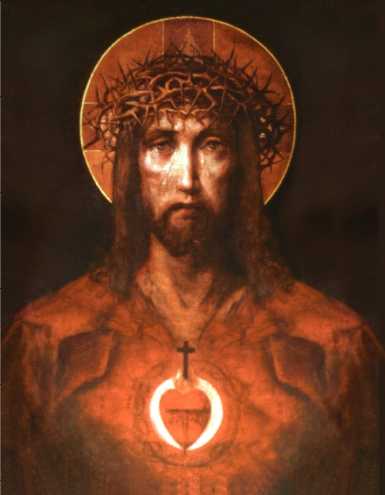
O Loving heart of Jesus, inflame this poor heart of mine.

My Jesus, when shall I begin to love You, as You have loved me?
My God, when shall I die to everything, to live for You alone?
My beloved, make me love You even in the midst of sufferings.
You have loved me without reserve; I wish to love You without reserve.
My Jesus, make Yourself known, make Yourself loved by all.
My Jesus, grant that I may die, saying, I love You, I love You.
My God, suffer me not to lose You for ever.
Give me the grace to love You, and then do with me what You will.
At this hour, I might have been in hell, but now I love You, and I hope always to love You.
And what else do I desire, my God! but You, my chief, my only good?
My Jesus, in the day of judgment do not send me away from You.
My Jesus, how lovely are You; but by how few are You loved!


My Jesus, grant me Your love; I ask for nothing more.
You have died for me, I wish also to die for You.
O death of Jesus, from you I hope for a happy death.

O blood of Jesus, from you I hope for pardon of all my sins.

O wounds of Jesus, from you I hope to love Jesus for ever.

O agony of Jesus, from you I hope to bear peacefully the agony of my death.
O sorrows of Jesus, from you I hope for patience in contradictions.

O scourges of Jesus, deliver me from everlasting despair.

O tears of Mary, obtain for me sorrow for my sins.

O my own St. Joseph, by your happy death, obtain for me a good death.
O holy Apostles, by your blessed deaths obtain for me the grace to die in the love of God.
And what do I desire, either in this life or in the next, but You alone, my God?
O my Jesus, had I died in sin, I could never more love You; now I desire to love You and You alone.

My God, I love You, and I will love none but You.
St. Teresa, St. Philip Neri, my patrons, make me burn with the love of God with which you were inflamed.

My Jesus, by the pain which You did endure when Your right hand was pierced with the nail, give me perseverance in Your grace.

My Jesus, by the pain which You did endure when Your left hand was pierced with the nail, give me a true sorrow for my sins.
My Jesus, by the pain which You did endure when Your left foot was pierced with the nail, deliver me from the pains of hell.
My Jesus, by the pains which You did endure when Your right foot was pierced with the nail, give me the grace to love You eternally in heaven.
My Jesus, by the wound that was made in Your Sacred Heart, give me the grace to love You always in this life and in the next.

Love Is Not Loved

More from St. Alphonsus:


God with the Father, to take human flesh, so that as Man, by dying might pay the debt due to divine justice, and, as God, 
might make to it full satisfaction. The Passion has, moreover, made known how strict is the Justice of God. According to 
Saint John Chrysostom, it is not so much in hell that the strictness of divine justice is seen; it is revealed rather in seeing 
Jesus on the Cross; for in hell creatures are punished for sins of their own, while on the Cross we see a God cruelly treated 
to make satisfaction for the sins of men. And what obligation had Jesus to die for us? None: He was offered because it 
was His own will. (Isaias liii. 7.) He might have, with justice, abandoned man to perdition; but the love which He had for 
us, would not allow Him to see us lost; therefore He chose to give Himself up to so painful a death, that He might save us: 
He hath loved us and hath delivered Himself for us. (Eph. v. 2.) 
God had from all eternity loved man: I have loved thee with an everlasting love. (Jer. Xxxi. 3) But afterwards seeing 
that His justice obliged Him to condemn man and to keep him ever at a distance from Him and in hell, His mercy urged 
Him to find a way by which He might save him. But how? By making satisfaction to divine justice by His own death. 
And, consequently He willed that the condemnation to eternal death which man had merited should have been fixed to 
that very Cross on which He died, that thus it might be cancelled in His blood: Blotting out the writing of the decree that 
was against us, which was contrary to us, He hath taken the same out of the way, fastening it to the Cross. (Col. ii. 14.) 
Thus, by the merits of His own blood, He pardoned all our sins: Forgiving you all offences (Ibid.) At the same time He 
deprived the devils of the rights which they had acquired over us, carrying with Him in His triumph both His enemies and 
ourselves whom He had delivered, and who were till then the prey of the devils: And despoiling the principalities and 
powers, He hath exposed them confidently in open show, triumphing over them in Himself. (Col. ii. 15.) Theophylactus 
thus explains these words: "As a triumphant conqueror He carries with Him in His triumph the booty and the enemy

Calling Forth Love from All Our Hearts


Thoughts from St. Alphonsus  De Ligouri from The Meditations on the Passion of Our Lord:


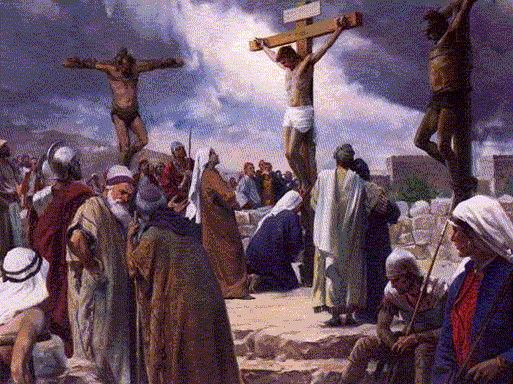
St. Leo tells us that he who looks with confidence on Jesus dead on the Cross is healed of the wounds inflicted by his 
sins: "Those who with faith look on Jesus dead on the Cross are healed from the wounds of sin." This is why every 
Christian should constantly keep before his eyes Jesus crucified, and say with St. Paul: I judged not myself to know anything among you, but Jesus Christ, and Him crucified. (1 Cor. ii. 2.) From which words it is clear that the Apostle did 
not desire any other knowledge in this world than that of knowing how to love Jesus crucified. 
My beloved Saviour, to obtain for me a good death Thou hast chosen one so full of suffering and desolation! I cast 
myself unreservedly into the arms of Thy mercy. Thou hast called me to penance, and, I hope, hast pardoned me; but if, 
through my own fault, Thou hast not yet pardoned. ah! pardon me now. I repent, O my Jesus! of having ever turned my 
back upon Thee, and of having driven Thee out of my soul. Give me Thy grace; but this is not enough, give me as well 
strength to love Thee with my whole soul during the remainder of my life; and when I come to die, grant me the grace to 
expire burning with love for Thee, and saying: My Jesus, I love Thee, I love Thee, in order to continue to love Thee for all 
eternity. From this moment I unite my death to Thy holy death, through which I hope to be saved: In Thee, O Lord, have I 
hoped; let me never be confounded. (Psalm xxx. 2.) O great Mother of God! thou art, after Jesus, my hope. In thee, O 

Lady, have I hoped; I shall not be confounded for ever


St. Paul, speaking of the love which the Eternal Father bore us, when He saw us dead through sin and willed to restore 
us to life by sending His own Son to die for us, calls this too great a love: But God (who is rich in mercy), for His 
exceeding charity wherewith He loved us, even when we were dead in sins, hath quickened us together in Christ. (Eph. ii. 
4. 5.) In like manner we ought to call the love wherewith Jesus willed to die for us too great a love. Hence, the same 
Apostle writes: We preach Christ crucified, unto the Jews indeed a stumbling- block, and unto the Gentiles foolishness. (1 
Cor. i. 23.) The death of Jesus on the Cross, according to St. Paul, appeared a stumbling- block to the Jews, because they 
expected Him to appear on earth full of worldly majesty, and not as one condemned to die as a criminal on the Cross. On 
the other hand, it seemed to the Gentiles folly that God should be willing to die, and such a death, for His creatures. 
Hence, St. Laurence Justinian has daringly explained: " We have seen wisdom itself infatuated through excessive love! " 
And in truth, does it not seem folly that God who is Almighty and infinitely happy in Himself should be willing of His 
own accord to be scourged, treated as a mock king, buffeted, spat upon in the face, condemned as a malefactor, abandoned 
by all and left to die on a Cross of shame to save miserable worms He Himself had created? Considering these things, the 
enamoured St. Francis, as he went through the country, wept and exclaimed, " Love is not loved! Love is not loved! " 
Hence St. Bonaventure said that he who wishes to persevere in loving Jesus Christ should ever represent to himself his 
divine Lord hanging on the Cross and dying for him: "Let him ever have before the eyes of his heart Christ dying on the 
Cross."

Doctors of the Church 2:4

Friday, 8 February 2013


Doctors of the Church Series-Part Five on the dangers of spiritual self-will

This is the fifth part of the series on the Doctors of the Church. I have covered two out of the thirty-five. (Update: you will understand the number when you get to the summary list of the first eleven, as some are from the perfection series).

I shall cover all of them from the point of view of my perfection series.

I shall include those honoured by both the East and the West. Seventeen who were declared as such before the great schism are to be included, of course. I have done Ephraim and John of Avila.

As there are only four women, my next set will cover them: SS. Catherine of Siena, Teresa of Avila, Therese of Lisieux and Hildegard of Bingen.

I am concentrating on their holiness and some of the writings. The reason a person is declared a Doctor of the Church is sort of like an honorary PhD. in holiness and excellence in writing. They have also shown that they are completely orthodox and true in doctrine.

One cannot, cannot be holy or find perfection outside of orthodoxy.

If a person insists on having areas where he or she is in disagreement with the Church in any way which is doctrinal, one is not on the way to holiness, but stuck in sin.

St. Catherine of Siena provides a perfect of example of obedience and clarity of mind. God gave her discernment, a gift which is part of prudence. Her dates are 1347-1380.

Her writings reflect deep prayer and a deep relationship with the Trinity.

Several days ago, I quoted her in depth on priests and holiness. Her she is again, from her Treatise on Prayer: 


"For, if the soul truly have light, she will wish to arrive at perfection. In this second perfect light are to be found two kinds of perfection; for they may be called perfect who have abandoned the general way of living of the world.

"One perfection is that of those who give themselves up wholly to the castigation of the body, doing great and severe penance. These, in order that their sensuality may not rebel against their reason, have placed their desire rather in the mortification of the body than in the destruction of their self-will, as I have explained to you in another place. These feed their souls at the table of penance, and are good and perfect, if their penance be illuminated by discretion, and founded on Me, if, that is to say, they act with true knowledge of themselves and of Me, with great humility, and wholly conformed to the judgment of My Will, and not to that of the will of man.

"But, if they were not thus clothed with My Will, in true humility, they would often offend against their own perfection, esteeming themselves the judges of those who do not walk in the same path. Do you know why this would happen to them? Because they have placed all their labor and desire in the mortification of the body, rather than in the destruction of their own will.

"Such as these wish always to choose their own times, and places, and consolations, after their own fashion, and also the persecutions of the world and of the Devil, as I have narrated to you in speaking of the second state of perfection.

"They say, cheating themselves with the delusion of their own self-will, which I have already called their spiritual self-will, 'I wish to have that consolation, and not these battles, or these temptations of the Devil, not, indeed, for my own pleasure, but in order to please God the more, and in order to retain Him the more in my soul through grace; because it seems to me that I should possess Him more, and serve Him better in that way than in this.' And this is the way the soul often fails into trouble, and becomes tedious and insupportable to herself; thus injuring her own perfection; yet she does not perceive it, nor that, within her, lurks the stench of pride, and there she lies.

" Now, if the soul were not in this condition, but were truly humble and not presumptuous, she would be illuminated to see that I, the Primary and Sweet Truth, grant condition, and time, and place, and consolations, and tribulations as they may be needed for your salvation, and to complete the perfection to which I have elected the soul.

"And she would see that I give everything through love, and that therefore, with love and reverence, should she receive everything, which is what the souls in the second state do, and, by doing so, arrive at the third state. Of whom I will now speak to you, explaining to you the nature of these two states which stand in the most perfect light." 

What Catherine is warning against is the great temptation to pride which happens in the Illuminative State. Here is the place where people become heretics or schismatics  insisting on their own insights or directions and separating themselves from Rome.

I believe that such men as Calvin and Knox became very holy before falling into certain ideas which carried them away from the Church and away from holiness. 

How many times have you witnessed a person who is charismatic, a leader in the Church and very pious suddenly fall away over one thing?

I have seen marriages break up when a pillar of the Church commits adultery or supports a child in a homosexual relationship, or who changes his mind about women priests and holds an opposite opinion.


The road to perfection STOPS and the soul slides back into darkness.

It happens too easily.

The experience of love and light make these men and women confident in God, but the temptation to be overly confident in themselves leads to sin.

They fall into self-deception and Catherine saw this happening in the Church. The Illuminative State brings love and power. But, humility must accompany this state or the temptations of pride creep into the soul.

After the active and passive purification, comes more enlightenment, as there are stages in the Illuminative State.

God prepares the soul for His Love. We must have our hearts and minds ready with no hindrances for that Love.

Wednesday, 4 December 2013

If this is not "big brother".....

http://www.washingtonpost.com/world/national-security/nsa-tracking-cellphone-locations-worldwide-snowden-documents-show/2013/12/04/5492873a-5cf2-11e3-bc56-c6ca94801fac_print.html

If this is not "big brother".....

http://www.washingtonpost.com/world/national-security/nsa-tracking-cellphone-locations-worldwide-snowden-documents-show/2013/12/04/5492873a-5cf2-11e3-bc56-c6ca94801fac_print.html

Yet another prayer request

A Latina friend of mine has a leaking roof, and the government will not have money to help her for three to five years. She takes care of four grandchildren during the day.

Please pray for someone to help her. There are so many people suffering at this time.

She does not want me to ask for money at this time from the blog, so please pray she finds a benefactor in the area.

Thanks.

UPDATE: Since asking for your prayers, a company said it will donate materials, but the woman needs men to do the job. Keep praying.


The Incredible Weakness of the Church In England

No longer Catholics 

LONDON, Dec. 4, 2013 (LifeSiteNews.com) – An extensive survey conducted by YouGov and designed by a leading secular sociologist have found that only small fraction of self-identified Catholics agree with Church teaching on “hot-button” moral issues like contraception, “gay marriage,” abortion and euthanasia. However, the survey also found that among weekly mass attendees, the number who support the Church's teachings is considerably higher.
Altogether 19 percent of the total 1062 self-identified Catholics surveyed said that abortion ought to be “banned altogether.” That number rose significantly among weekly mass attendees (17% of the total sample of 1062), but still only reached 42%, with another 29% of weekly mass attendees saying that the time limit for when abortion can be legally obtained should be lowered (abortion is currently legal practically on-demand up to 24 weeks gestation in the UK). 
.
Conducted ahead of the annual Westminster Faith Debates, the poll, designed by sociologist Prof. Linda Woodhead of Lancaster University, compared attitudes of Catholics towards a variety of moral and political issues. It broke the data down into various categories including age, frequency of church attendance and what religious factors influenced the respondents’ life decisions. 
Breaking down the numbers by age groups, 25 percent of the total respondents over 60 years old wanted a full ban on abortion, with that dropping to just 14 percent in the youngest age group of 18-24. Thirty-one percent of older respondents said the legal gestational age limit of 24 weeks for abortion should be lowered, and 22 percent of the youngest agreed.
The differences between age groups was perhaps most pronounced on the question of same-sex “marriage,” with 68 percent of those over 60 saying it is “wrong” and only 30 percent of the youngest Catholics agreeing with their elders. Twenty-four percent of Catholics aged 35-39 thought same-sex “marriage” was “wrong” and 22 per cent in that age range said they “don’t know.” 
Among weekly mass attendees, on the other hand, 68% agreed that same-sex "marriage" was wrong. 
Fifty-eight percent of respondents agreed that euthanasia should be legal.  Forty-one percent of those over 60 said that Britain should retain its law against euthanasia, with 46 percent saying euthanasia should be allowed. Thirty percent of the 18-24 age group wanted to retain the current law, and 58 percent wanted a change. The spread was even more broad for the 25-39 age group, with only 22 per cent opposing euthanasia and 62 per cent favouring a change to the law. 
However, among weekly mass attendees, opposition to euthanasia rose to 63 percent. 

Warning on false groups

I warned some people in Europe about the OSMA group. It is not orthodox.

The Catholic Bishops Conference of the Philippines (CBCP) were informed by the Apostolic Nunciature recently on the activity of the associations.
According to an article released by the CBCP, the “Roman Catholic Society of Pope Leo XIII” (Societas Catholica Romana Papae Leonis) and the Opus Sancti Michaelis Archangeli (OSMA) have spread through several countries.

On fish, bread and doughnuts...

This is "my" passage of Scripture. I am sure we all have one given to us by God at some point in our lives. Perhaps at our conversion or re-version, perhaps on a special occasion, such as a wedding day, or birth of a child, some passage stood out as very personal.


God decides what passages "belong" to us. I know two people besides me who were "given" particular passages when they came into the Church after falling away.

I have few talents. These are my fives loaves and two fish. But, God can take our one, or two, or three "talents" and use them for His Kingdom, if we let Him take those.

I wanted to publish my myriad plays, short stories, novellas, poetry, fairy tales, etc, mostly sitting in boxes in storage or on old disks and discs. That idea was not God's plan.

I wanted to finish a novel I began years ago. That was not God's plan.


I have a blog, which is not my blog, but God's and I can say this was His Idea, as the idea did not start with me.

Do not be afraid if God takes your fish and loaves and uses these in another way, unknown, unanticipated by you.

God makes new doughnuts every day....and bread and fish....And, I just discovered it is National Cookie Day. A food theme today.....


http://en.wikipedia.org/wiki/File:Timbits.jpg
Matthew 15:29-37

15 And when it was evening, his disciples came to him, saying: This is a desert place, and the hour is now past: send away the multitudes, that going into the towns, they may buy themselves victuals.
16 But Jesus said to them, They have no need to go: give you them to eat.

17 They answered him: We have not here, but five loaves, and two fishes.
18 He said to them: Bring them hither to me.
19 And when he had commanded the multitudes to sit down upon the grass, he took the five loaves and the two fishes, and looking up to heaven, he blessed, and brake, and gave the loaves to his disciples, and the disciples to the multitudes.
20 And they did all eat, and were filled. And they took up what remained, twelve full baskets of fragments.
21 And the number of them that did eat, was five thousand men, besides women and children.

Other doughnut posts may be found from the tag.

Thought for The Day from God

For if in the green wood they do these things, what shall be done in the dry?  Luke 23:31


http://en.wikipedia.org/wiki/Forest

Repost on Mini-Series on Grace....follow the tags

There is much confusion among Catholics less than 55 years old on the nature of grace. This is owing to bad catechesis and the Protestant mindset which crept into the Church in the 1970s. I am reposting this and one can go back and read the first four posts in this mini-series.


Christian Perfection and Contemplation According to St. Thomas Aquinas 
and St. John of the Cross


by Fr. Reginald Garrigou-Lagrange, O.P. (What would I do without this great man?)

Copyright 1937, Herder Book Co., 1937
Imprimatur and Nihil Obstat, 1937


ARTICLE IV
The Practical Consequences of the
Doctrine of St. Thomas on Grace


Page 1 


St. Thomas, following St. Augustine and opposing Pelagian or semi-Pelagian naturalism, grasped the depth and the height of our Lord's words: "Without Me you can do nothing," [1] and of St. Paul's words: "For it is God Who worketh in you, both to will and to accomplish, according to His good will." [2] "For who distinguisheth thee? Or what hast thou that thou hast not received?" [3] In the work of salvation we cannot distinguish any part that is exclusively ours; all comes from God, even our free co-operation, which efficacious grace gently and mightily stirs up in us and confirms.

This grace, which is always followed by its effect, is refused to us, as we said, only if we resist the Divine, auxilium praeveniens, sufficient grace, in which the efficacious help is already offered us, as fruit is in the flower. If we destroy the flower, we shall never see the fruit, which the influence of the sun and of the nourishment of the earth would have produced. Now man is sufficient to himself to fall; drawn from nothingness, he is by nature defectible. He is sufficiently assisted by God so that he falls only through his own fault, which thus deprives him of a new help. This is the great mystery of grace. We have elsewhere explained what St. Thomas and his best disciples teach about this mystery. [4]

With him and St. Augustine we must submit our intelligence before this Divine obscurity, and as Bossuet says, "confess these two graces (sufficient and efficacious), one of which leaves the will without excuse before God, and the other does not permit the will to glory in itself." [5] Is this not in conformity with what our conscience tells us? According to this doctrine, all that is good in us, naturally or supernaturally, has its origin in the Author of all good. Sin alone cannot come from Him, and the Lord allows it to happen only because He is sufficiently powerful and good to draw from it a greater good, the manifestation of His mercy or justice.


All grace is from God, all....and our free will either hinders or encourages holiness.

This teaching of the great doctors of grace lifts our mind to a lofty contemplation of God's action in the innermost depths of our heart. To prove this, we have only to demonstrate that this doctrine should lead those who understand it well to profound humility, to almost continual interior prayer, to the perfection of the theological virtues and of the corresponding gifts of the Holy Ghost. Besides, we find it in the writings of all the great masters of the spiritual life. Considering the importance and the difficulty of the problem, we shall affirm nothing in this article except according to the very words of Scripture, as the greatest doctors explain them.

This doctrine leads first of all to profound humility. According to this doctri
ne man has as his own, as something coming exclusively from himself, only his sin, as the Council of Orange declared.[6] He never performs any natural good act without the natural aid of Godor any supernatural good act without a grace which solicits or attracts him, and also efficaciously moves him to the salutary act. As St. Paul says: "Not that we are sufficient to think anything of ourselves as of ourselves; but our sufficiency is from God." [7] Even holy souls that have reached a high degree of charity are always in need of an actual grace in order to merit, to advance, to avoid sin, and to persevere in goodness. 

At every state, we need grace.


[8] They should say: "For the thoughts of mortal man are fearful, and our counsels uncertain," [9] "Thy will be done on earth as it is in Heaven . . . and lead us not into temptation." After striving greatly, they should admit: "We are unprofitable servants," [10] for the Lord might have chosen others who would have served Him much better. In all truth we should say, according to the teaching of St. Thomas, that there is no sin committed by another man which I might not commit in the same circumstances by reason of the infirmity of my free will, and of my own weakness (the Apostle Peter denied his Master three times). And if actually I have not fallen, if I have persevered, this is doubtless because I worked and struggled, but without Divine grace I should have done nothing. [ll] "Not to us, O Lord, not to us; but to Thy name give glory"; [12] "as the potter's clay is in his hand, to fashion and order it . . . so man is in the hand of Him that made him." [13] "Thy hands have made me and formed me"; [l4] "Thou hast redeemed us to God, in Thy blood." [15] "If I have not perished, it is because of Thy mercy." [16] "Into Thy hands I commend my spirit." [17] "This," says St. Augustine, "is what must be believed and said in all piety and truth, so that our confession may be humble and suppliant, and that all may be attributed to God." [18] Such is true humility. "Or what hast thou that thou hast not received? And if thou hast received, why dost thou glory, as if thou hadst not received it?" [19]

Efficacious grace 

The Saints, considering their own failures, say to themselves that if such and such a criminal had received all the graces the Lord bestowed on them, he would perhaps have been less unfaithful than they. The sight of the gratuity of the Divine predilections confirms them in humility. They recall our Lord's words: "You have not chosen Me: but I have chosen you."
This doctrine leads also to continual intimate prayer, to profound thanksgiving, to the prayer of contemplation.
It leads to intimate prayer; for this is a very secret grace that must be asked. We must ask not only the grace which solicits and excites the soul to good but also that grace which makes us will it, which makes us persevere, which reaches the depths of our heart and of our free will; that grace which moves us in these depths, so that we may be delivered from the concupiscence of the flesh and the eyes, and from the pride of life. God alone saves and snatches us from these enemies of our salvation. At the same time He does not wound our liberty, but establishes it by delivering us from the captivity of these things of earth.

Thus Scripture teaches us to pray: "Have pity on me, O Lord, according to Thine infinite mercy. Be propitious to a sinner. Help my unbelief. Create a clean heart in me, and renew a right spirit within me. Convert me, O Lord, make me return to Thee, and I shall return. [20] Thy will be done on earth as it is in Heaven." Give me Thy sweet and mighty grace in order that I may truly accomplish Thy holy will. As St. Augustine says: "Lord, give what Thou dost command, and command what Thou pleasest."

Thus again the Church prays in the Missal: "Lord, direct toward Thyself our rebellious wills; grant that unbelievers, who are unwilling to believe, may have a will to believe. Apply our hearts to good works. Give us good will. Convert us and draw us strongly to Thyself. Take from us our heart of stone and give us a heart of flesh, a docile and pure heart. Change our wills and incline them toward what is good." [21]

Such is the holy confidence of the prayer of the Church because she is sure that God is not powerless to convert the most hardened sinners. What should a priest do who cannot succeed in converting a dying sinner? Persuaded that God can convert this guilty will, above all the priest will pray. If, on the contrary, he imagines that God holds this will only from without, by circumstances, good thoughts, good inspirations, which remain external to the consent to salutary goodness, will not the priest himself delay too long in the use of superficial means? Will his prayer possess that holy boldness which we admire in the Saints, and which rests on their faith in the potent efficacy of grace?


I love the term here, "holy boldness" which is missing in most Catholics, who only want to be nice.

Likewise prayer should be, in a sense, continual, since our soul needs a new, actual, efficacious grace for every salutary act, for each new merit. With this in mind, we clearly see the profound meaning of our Lord's words: "We ought always to pray, and not to faint." [22] This truth is fully realized only in the mystical life, in which prayer truly becomes, as the fathers say, "the breath of the soul," which hardly ceases any more than that of the body. The soul constantly desires grace, which is like a vivifying breath renewing it and making it produce constantly new acts of love of God. Such ought to be the prayer of petition. And we ought also to thank God for all our good actions, since without Him we could have done nothing. This is what makes St. Paul say: "Pray without ceasing. In all things give thanks; for this is the will of God in Christ Jesus concerning you all." [23] "Speaking to yourselves in psalms and hymns and spiritual canticles, singing and making melody in your hearts to the Lord; giving thanks always for all things, in the name of our Lord Jesus Christ, to God and the Father." [24]

This doctrine of the intrinsic efficacy of grace leads also directly to the prayer of contemplation, which considers chiefly the profound action of God in us to mortify and to vivify, and which is expressed by the fiat of perfect abandonment. In contemplation we see realized in the intimate depths of souls the words of Scripture: "Thou are great, O Lord, forever. . . . For Thou scourgest, and Thou savest: Thou leadest down to hell, and bringest up again." [25] "Thy word, O Lord, which healeth all things." [26To utter a perfect fiat to this intense and hidden work of grace in us, even when it crucifies and seems to destroy all, is the most secret but also the most fruitful co-operation in God's greatest work. It is the prayer of Jesus in Gethsemane and that of the Blessed Virgin at the foot of the Cross.


If we are not crucified with Christ we shall not be perfected. Sometimes, it does seem like God is destroying all. A spouse dies, a child walks away from God and the Church, one loses a job, one gets cancer. Yet, these are the raw material for holiness.

Lastly, this doctrine reminds us that even for prayer efficacious grace is necessary. "Likewise the Spirit also helpeth our infirmity. For we know not what we should pray for as we ought; but the Spirit Himself asketh for us with unspeakable groanings. And He that searcheth the hearts, knoweth what the Spirit desireth; because He asketh for the Saints according to God." [27


I know this is true. I cannot pray, meditate, or read Scripture without the grace of God. Now, we begin to understand those in the Unitive State, that last level of perfection on earth.

This mystery is verified especially in the mystical union, often obscure and painful, in which the soul learns by experience what great need we have of grace in order to pray, as also to do good. But, says St. John of the Cross, [28] souls that have reached a certain degree of union "obtain from God all that they feel inspired to ask of Him, according to the words of David, 'Delight in the Lord, and He will give thee the request of thy heart' " (Ps. 36:4). Moreover, every humble, confident, persevering prayer by which we ask what is necessary or useful for our salvation is infallibly efficacious, because our Lord uttered such a promise and because God Himself caused this petition to well up in our hearts. Resolved from all eternity to grant us His benefactions, He leads us to ask them of Him. [29]

The life of the virtues follows a life of grace, the sharing of divine life.


This doctrine of the powerful efficacy of grace leads finally to great heights in the practice of the theological virtues. This it does because it is intimately bound up with the sublime mystery of predestination, the grandeur of which it fully preserves. St. Paul, in the Epistle to the Romans, tells us: "And we know that to them that love God, all things work together unto good, to such as, according to His purpose, are called to be Saints. For whom He foreknew, He also predestinated to be made conformable to the image of His Son; that He might be the first-born amongst many brethren. And whom He predestinated, them He also called. And whom He called, them He also justified. And whom He justified, them He also glorified. What shall we then say to these things? If God be for us, who is against us?" [30] St. Paul teaches the same doctrine in the Epistle to the Ephesians. [31]


St. Augustine [32] and St. Thomas [33] have explained these words of St. Paul without lessening their real meaning. Bossuet, their disciple, sums them up with his usual mastery by saying: "I do not deny the goodness of God toward all men, or the means which in His general providence He offers them for their eternal salvation. The Lord does not will that any should perish, but that all should return to penance. [34] But however great His designs may be on everyone, He fixes a certain particular gaze of preference on a number that is known to Him. All those on whom He gazes in this way, weep for their sins and are converted in their time. That is why Peter burst into tears when our Lord looked at him benignly. Peter's repentance was the result of the prayer which Christ had offered for the stability of his faith; for it was necessary, first of all, to rekindle his faith, and then to strengthen it that it might endure to the end. The same is true of all those whom His Father has given Him in a special manner. Of these He said: 'All that the Father giveth to Me shall come to Me.  . . . Now this is the will of the Father Who sent Me: that of all that He hath given Me, I should lose nothing; but should raise it up again in the last day' (John 6:37, 39).

  1. John 15:5.
2. Phil. 2:13.
3. See 1 Cor. 4:7.
4. God, His Existence and His Nature, II, 365 ff. It is not necessary that our failure precede the refusal of efficacious grace, in priority of time; priority of nature is sufficient, in the order of material causality, according to the principle of the mutual relations of causes explained by St. Thomas (Ia IIae, q.113, a.8 ad ium; cf. Ia IIae, q. l09, a. l, a. 8, 9, 10). It is God Who anticipates us by His grace when He justifies us, and it is we who are the first to abandon Him when we lose Divine grace: "God will not desert the justified, unless He is first deserted by them." Council of Trent, Sess. VI, chap. 2.
5. Bossuet, (Euvres compl
ètes, 1845, I, 643. Cf. the general index of Bossuet's works for references to "grace" (resistance to grace). See particularly Defense de la tradition, Bk. XI, chaps. 19-27: Demonstration of the efficacy of grace by the permission of sins into which God allows the just to fall in order to humble them. Permission of the triple denial of St. Peter: "Peter was justly punished for his presumption by the withdrawal of an efficacious help which would have effectively hindered his denial." Bossuet shows that such is the doctrine not only of St. Augustine but of St. John Chrysostom, of Origen, of St. Gregory the Great, and of St. John Damascene, since they say that Peter was deprived of help, a statement which cannot apply to sufficient grace, for without this grace he would have been utterly powerless to avoid the sin. The statement applies to an efficacious help which would have made him effectively avoid this fall. From all of which we see that sufficient grace indeed leaves our will without excuse before God, and that the efficacious grace which St. Peter received later does not permit us to glory in ourselves.
6. Canon 22: "No one has anything of his own except his deceitfulness and his sin." Denzinger. no. 195.
7. See 2 Cor. 3:5.
8. Cf. Ia IIae. q. 109. a. 2. 8, 9, 10.
9. Wis. 9:14.
10. Luke 17:10.
11. Cf. Del Prado. O.P., De gratia, III, 151.
12. Ps. 113:1.
13. Eccles. 33:18; Jer. 18:6.
14. Ps. 118:73.
15. Apoc. 5:9.
16. Lam. 3:22.
17. Ps. 30:6; Luke 23:46.
18. De dono perseverantiae, chap. 13.
19. See 1 Cor. 4:7.
20. Lam. 5:21.
21. On these prayers of the Church, cf. St. Augustine, Epist. ad Vital., 217 (al. 107), and Bossuet, Defense de la tradition, Bk. X, chap. 10.
22. Luke 18:1.
23. See 1 Thess. 5:17-18.
24. Ephes. 5:19-20.
25. Tob. 13:2.
26. Wis. 16:12.
27. Rom. 8:25-27.
28. The Dark Night of the Soul, Bk. II, chap. 20.
29. Cf. IIa IIae. q. 83, a. 2; St. Augustine. Enchirid., chap. 32; Bossuet. Defense de la tradition, Bk. XII, chap. 38.
30. Rom. 8:28-31.
31. St. Paul also says in the Epistle to the Ephesians. 1:3-6. 11-12: "Blessed be the God and Father of our Lord Jesus Christ, Who hath blessed us with spiritual blessings, in heavenly places, in Christ: as He chose us in Him before the foundation of the world, that we should be holy and unspotted in His sight in charity. Who hath predestinated us unto the adoption of children through Jesus Christ unto Himself: according to the purpose of His will: unto the praise of the glory of His grace, in which He hath graced us in His beloved Son.  . . . In whom we also are called by lot, being predestinated according to the purpose of Him Who worketh all things according to the counsel of His will. That we may be unto the praise of His glory, we who before hoped in Christ."
32. De praedestinatione sanctorum, chaps. 3, 6-11, 14, 15, 17; De dona perseverantiae, chaps. 1, 6, 7, 12, 16-20, 23; De correptione et gratia, chaps. 9, 12, 13, 14. See also on these texts, Del Prado, De gratia et Libero arbitrio, III, 555-564; II, 67-81, 259; and Bossuet, Defense de la tradition, Bk. XII, chaps. 13-20.
33. In Ep. ad Rom. 8:28; In Ep. ad Ephes., I, no. 5; Ia, q.23.
34. Cf 
2 Pet. 3:9.