I can only give you a link to my favorite reredos in the Western World...the Baptism of Christ in St. John's Co-Cathedral.
http://www.flickriver.com/photos/tags/reredos/interesting/
Saturday, 11 January 2014
Doctors of the Church 2:42
One of the most loved Doctors of the Church wrote, perhaps, more on love, than any other.
St. Alphonsus Ligouri gives us plain and simple ways to attain perfection. Here is a list from this link. I shall expound on the writings of this great saint of the next few days. The emphasis is always on purification of the heart. The work I shall be examining is on line here. St. Alphonsus knew that prayer is the key to purification of the heart.

1. To desire ardently to increase in the love of Jesus Christ.
2. Often to make acts of love towards Jesus Christ. Immediately on waking, and before going to sleep, to make an act of love, seeking always to unite your own will to the will of Jesus Christ.
3. Often to meditate on his Passion.
4. Always to ask Jesus Christ for his love.
5. To communicate often, and many times in the day to make spiritual Communions.
6. Often to visit the Most Holy Sacrament.
7. Every morning to receive from the hands of Jesus Christ himself your own cross.
8. To desire Paradise and death, in order to be able to love Jesus Christ perfectly and for all eternity.
9. Often to speak of the love of Jesus Christ.
10. To accept contradictions for the sake of Jesus Christ.
11. To rejoice in the happiness of God.
12. To do that which is most pleasing to Jesus Christ, and not to refuse him anything that is agreeable to him.
13. To desire and to endeavor that all should love Jesus Christ.
14. To pray always for sinners and for the souls in purgatory.
15. To drive from your heart every affection that does not belong to Jesus Christ.
16. Always to have recourse to the most holy Mary, that she may obtain for us the love of Jesus Christ.
17. To honor Mary in order to please Jesus Christ.
18. To seek to please Jesus Christ in all your actions,
19. To offer yourself to Jesus Christ to suffer any pain for his love.
20 To be always determined to die rather than commit a willful venial sin.
27. To suffer crosses patiently, saying, "Thus it pleases Jesus Christ."
22. To renounce your own pleasures for the love of Jesus Christ.
23. To pray as much as possible.
24. To practice all the mortifications that obedience permits.
25. To do all your spiritual exercises as if it were for the last time.
26. To persevere in good works in the time of aridity.
27. Not to do nor yet to leave undone anything through human respect.
28. Not to complain in sickness.
29. To love solitude, to be able to converse alone with Jesus Christ.
30. To drive away melancholy [i.e. gloom].
37. Often to recommend yourself to those persons who love Jesus Christ.
32. In temptation, to have recourse to Jesus crucified, and to Mary in her sorrows.
33. To trust entirely in the Passion of Jesus Christ.
34. After committing a fault, not to be discouraged, but to repent and resolve to amend.
35. To do good to those who do evil.
36. To speak well of all, and to excuse the intention when you cannot defend the action.
37. To help your neighbor as much as you can.
38. Neither to say nor to do anything that might vex him. And if you have been wanting in charity, to ask his pardon and speak kindly to him.
39. Always to speak with mildness and in a low tone.
40. To offer to Jesus Christ all the contempt and persecution that you meet with.
41. To look upon [religious] Superiors as the representatives of Jesus Christ.
42. To obey without answering and without repugnance, and not to seek your own satisfaction in anything.
43. To like the lowest employment.
44. To like the poorest things.
45. Not to speak either good or evil of yourself.
46. To humble yourself even towards inferiors.
47. Not to excuse yourself when you are reproved.
48. Not to defend yourself when found fault with.
49. To be silent when you are disquieted [i.e. upset].
50. Always to renew your determination of becoming a saint, saying, "My Jesus, I desire to be all Yours, and You must be all mine."
To be continued...


Repost and Please Pray for Priests NOW
Pray for Excellent Priests

More from St. Alphonsus:
The dignity of the priest is also estimated from the power that he has over the real and the mystic body of Jesus Christ. With regard to the power of priests over the real body of Jesus Christ, it is of faith that when they pronounce the words of consecration the Incarnate Word has obliged Himself to obey and to come into their hands under the Sacramental Species. We are struck with wonder when we hear that God obeyed the voice of Josue-----The Lord obeying the voice of man-----and made the sun stand when He said move not, O sun, towards Gabaon . . . and the sun stood still. But our wonder should be far greater when we find that in obedience to the words of his priests-----HOC EST CORPUS MEUM-----God Himself descends on the altar, that He comes wherever they call Him, and as often as they call Him, and places Himself in their hands, even though they should be His enemies. And after having come, He remains, entirely at their disposal; they move Him as they please, from one place to another; they may, if they wish, shut Him up in the tabernacle, or expose Him on the altar, or carry Him outside the church; they may, if they choose, eat His flesh and give Him for the food of others. "Oh, how very great is their power," says St. Laurence Justinian, speaking of priests. "A word falls from their lips and the body of Christ is there substantially formed from the matter of bread, and the Incarnate Word descended from Heaven, is found really present on the table of the altar! Never did Divine goodness give such power to the Angels. The Angels abide by the order of God, but the priests take Him in their hands, distribute Him to the faithful, and partake of Him as food for themselves."
With regard to the mystic body of Christ, that is, all the faithful, the priest has the power of the keys, or the power of delivering sinners from Hell, of making them worthy of Paradise, and of changing them from the slaves of Satan into the children of God. And God Himself is obliged to abide by the judgment of His priests, and either not to pardon or to pardon, according as they refuse or give absolution, provided the penitent is capable of it. "Such is," says St. Maximus of Turin, "this judiciary power ascribed to Peter that its decision carries with it the decision of God." The sentence of the priest precedes, and God subscribes to it, writes St. Peter Damian. Hence, St John Chrysostom thus concludes: The sovereign Master of the universe only follows the servant by confirming in Heaven all that the latter decides upon earth." Priests are the dispensers of the Divine graces and the companions of God." Consider the priests," says St. Ignatius, Martyr, "as the dispensers of Divine graces and the associates of God." "They are," says St. Prosper, "the glory and the immovable columns of the Church; thay are the doors of the eternal city; through them all reach Christ; they are the vigilant guardians to whom the Lord has confided the keys of the kingdom of Heaven; they are the stewards of the king's house, to assign to each according to His good pleasure His place in the hierarchy." Were the Redeemer to descend into a church, and sit in a confessional to administer the Sacrament of Penance, and a priest to sit in another confessional, Jesus would say over each penitent, "Ego te absolvo," the priest would likewise say over each of his penitents, "Ego te absolvo," and the penitents of each would be equally absolved. How great the honor that a king would confer on a subject whom he should empower to rescue from prison as many as he pleased! But far greater is the power that the eternal Father has given to Jesus Christ, and that Jesus Christ has given to his priests, to rescue from Hell not only the bodies but also the souls of the faithful: "The Son," says St. John Chrysostom, "has put into the hands of the priests all judgment; for having been as it were transported into Heaven, they have received this Divine prerogative. If a king gave to a mortal the power to release from prison all prisoners, all would pronounce such a one happy; but priests have received from God a far greater power, since the soul is more noble than the body."
...................................................
Thus the sacerdotal dignity is the most noble of all the dignities in this world." Nothing," says St. Ambrose, "is more excellent in this world." It transcends, says St. Bernard, "all the dignities of kings, of emperors, and of Angels." According to St. Ambrose, the dignity of the priest as far exceeds that of kings, as the value of gold surpasses that of lead. The reason is, because the power of kings extends only to temporal goods and to the bodies of men, but the power of the priest extends to spiritual goods and to the human soul. Hence, says St. Clement, "as much as the soul is more noble than the body, so much is the priesthood more excellent than royalty." "Princes," says St. John Chrysostom, "have the power of binding, but they bind only the bodies, while the priest binds the souls." The kings of the earth glory in honoring priests: "It is a mark of a good prince," says pope St. Marcellinus, "to honor the priests of God." "They willingly," says Peter de Blois, "bend their knee before the priest of God; they kiss his hands, and with bowed down head receIve his benediction." "The sacerdotal dignity," says St. Chrysostom, "effaces the royal dignity; hence the king inclines his head under the hand of the priest to receive his blessing."
Baronius relates that when the Empress Eusebia sent for Leontius, Bishop of Tripoli, he said that if she wished to see him, she should consent to two conditions: first, that on his arrival she should instantly descend from the throne, and bowing down her head, should ask his benediction; secondly, that he should be seated on the throne, and that she should not sit upon it without his permission: he added, that unless she submitted to these conditions he should never go to the palace. Being invited to the table of the Emperor Maximus, St. Martin, in taking a draught, first paid a mark of respect to his chaplain, and then to the emperor. In the Council of Nice, the Emperor Constantine wished to sit in the last place, after all the priests, and on a seat lower than that which they occupied; he would not even sit down without their permission. The holy king St. Boleslans had so great a veneration for priests, that he would not dare to sit in their presence. The sacerdotal dignity also surpasses the dignity of the Angels, who likewise show their veneration for the priesthood, says St. Gregory Nazianzen. All the Angels in Heaven cannot absolve from a single sin. The Angels guardian procure for the souls committed to their care grace to have recourse to a priest that he may absolve them: "Although," says St. Peter Damian, "Angels may be present, they yet wait lor the priest to exercise his power, but no one of them has the power of the keys-----of binding and of loosening." When St. Michael comes to a dying Christian who invokes his aid, the holy Archangel can chase away the devils, but he cannot free his client from their chains till a priest comes to absolve him. After having given the order of priesthood to a holy ecclesiastic, St. Francis de Sales perceived, that in going out he stopped at the door as if to give precedence to another. Being asked by the Saint why he stopped, he answered that God favored him with the visible presence of his Angel guardian, who before he had received priesthood always remained at his right and preceded him, but afterwards walked on his left and refused to go before him. It was in a holy contest with the Angel that he stopped at the door. St. Francis of Assisi used to say, "If I saw an Angel and a priest, I would bend my knee first to the priest and then to the Angel." Besides, the power of the priest surpasses that of the Blessed Virgin Mary; for, although this Divine Mother can pray for us, and by her prayers obtain whatever she wishes, yet she cannot absolve a Christian from even the smallest sin. "The Blessed Virgin was eminently more perfect than the Apostles," says Innocent III. "It was, however, not to her, but only to the Apostles, that the Lord intrusted the keys of the kingdom of Heaven." St. Bernardine of Sienna has written: "Holy Virgin, excuse me, for I speak not against thee: the Lord has raised the priesthood above thee." The Saint assigns the reason of the superiority of the priesthood over Mary; she conceived Jesus Christ only once; but by consecrating the Eucharist, the priest, as it were, conceives Him as often as he wishes, so that if the person of the Redeemer had not as yet been in the world, the priest, by pronouncing the words of consecration, would produce this great person of a Man-God. "O wonderful dignity of the priests," cries out St. Augustine; "in their hands, as in the womb of the Blessed Virgin, the Son of God becomes incarnate." Hence priests are called the parents of Jesus Christ: such is the title that St. Bernard gives them, for they are the active cause by which He is made to exist really in the consecrated Host. Thus the priest may, in a certain manner, be called the creator of his Creator, since by saying the words of consecration, he creates, as it were, Jesus in the Sacrament, by giving Him a Sacramental existence, and produces Him as a victim to be offered to the eternal Father. As in creating the world it was sufficient for God to have said, Let it be made, and it was created-----He spoke, and they were made-----so it is sufficient for the priest to say, "Hoc est corpus meum," and behold the bread is no longer bread, but the body of Jesus Christ. "The power of the priest," says St. Bernardine of Sienna, "is the power of the Divine person; for the transubstantiation of the bread requires as much power as the creation of the world." And St. Augustine has written, "O venerable sanctity of the hands! O happy function of the priest! He that created [if I may say so] gave me the power to create Him; and He that created me without me is Himself created by me!" "As the Word of God created Heaven and earth, so," says St. Jerome, "the words of the priest create Jesus Christ." "At a sign from God there came forth from nothing both the sublime vault of the Heavens and the vast extent of the earth; but not less great is the power that manifests itself in the mysterious words of the priest." The dignity of the priest is so great, that he even blesses Jesus Christ on the altar as a victim to be offered to the eternal Father. In the sacrifice of the Mass, writes Father Mansi, Jesus Christ is the principal offerer and victim; as minister, He blesses the priest, but as victim, the priest blesses Him.
..................................................
The greatness of the dignity of a priest is also estimated from the high place that he occupies. The priesthood is called, at the synod of Chartres, in 1550, the seat of the Saints. Priests are called Vicars of Jesus Christ, because they hold his place on earth. "You hold the place of Christ," says St. Augustine to them; "you are therefore His lieutenants." In the Council of Milan, St. Charles Borromeo called priests the representatives of the person of God on earth. And before him, the Apostle said: For Christ we are ambassadors, God, as it were, exhorting by us. When He ascended into Heaven, Jesus Christ left His priests after Him to hold on earth His place of mediator between God and men, particularly on the altar. "Let the priest," says St. Laurence Justinian, " approach the altar as another Christ."
According to St. Cyprian, a priest at the altar performs the office of Christ. When, says St. Chrysostom, you have seen a priest offering sacrifice,consider that the hand of Christ is invisibly extended. The priest holds the place of the Savior Himself, when, by saying "Ego te absolvo," he absolves from sin. This great power, which Jesus Christ has received from His eternal Father, He has communicated to His priests. "Jesus," says Tertullian, "invests the priests with His own powers." To pardon a single sin requires all the omnipotence of God. "O God, Who chiefly manifestest Thy almighty power in pardoning and showing mercy," etc., says the holy Church in one of her prayers. Hence, when they heard that Jesus Christ pardoned the sins of the paralytic, the Jews justly said: Who can forgive sins but God alone. But what only God can do by His omnipotence, the priest can also do by saying "Ego te absolvo a peccatis tuis;" for the forms of the Sacraments, or the words of the forms, produce what they signify. What the priest does what is wonderful, for by saying "Ego te absolvo" he changes the sinner from an enemy into the friend of God, and from the slave of Hell into an heir of Paradise. Cardinal Hugo represents the Lord addressing the following words to a priest who absolves a sinner: "I have created Heaven and earth, but I leave to you a better and nobler creation; make out of this soul that is in sin a new soul, that is, make out of the slave of Satan, that the soul is, a child of God. I have made the earth bring forth all kinds of fruit, but to thee I confide a more beautiful creation, namely, that the soul should bring forth fruits of salvation." The soul without grace is a withered tree that can no longer produce fruit; but receiving the Divine grace, through the ministry of a priest, it brings forth fruits of eternal life, St. Augustine says, that to sanctify a sinner is a greater work than to create Heaven and earth. And hast thou, says Job, an arm like God, and canst thou thunder with a voice like Him? Who is it that has an arm like the arm of God, and thunders with a voice like the thundering voice of God? It is the priest, who, in giving absolution, exerts the arm and voice of God, by which he rescues souls from Hell. According to St. Ambrose, a priest, in absolving a sinner, performs the very office of the Holy Ghost in the sanctification of souls. Hence, in giving priests the power of absolving from sin, the Redeemer breathed on them, and said to them, Receive ye the Holy Ghost: whose sins you shall forgive, they are foygiven, and whose sins you shall retain, they are retained. He gave them his own Spirit, that is, the Holy Ghost, the sanctifier of souls. and thus made them, according to the words of the Apostle, His own co-adjutors: We are God's co-adjutors. "On priests," says St. Gregory. "it is incumbent to give the final decision, for by the right that they have received from the Lord they now remit, now retain sins." St. Clement, then, had reason to say that the priest is, as it were, a God on earth. God, said David, stood in the congregation of the gods. These gods are, according to St. Augustine, the priests of God. Innocent III has written: "Indeed, it is not too much to say that in view of the sublimity of their offices the priests are so many gods." VI. Conclusion. How great, then, says St. Ambrose, the disorder to see in the same person the highest dignity and a life of scandal, a Divine profession and wicked conduct! What, says Salvian, is a sublime dignity conferred on an unworthy person but a gem enchased in mire? Neither doth any man, says St. Paul, take the honor to himself, but he that is called by God, as Aaron was. For Christ did not glorify Himself that He might be made a high priest, but He that said unto Him: Thou art my Son, this day have I begotten Thee. Let no one, he says, dare to ascend to the priesthood, without first receiving, as Aaron did, the Divine call; for even Jesus Christ would not of Himself assume the honor of the priesthood, but waited till His Father called Him to it. From this we may infer the greatness of the sacerdotal dignity. But the greater its sublimity, the more it should be dreaded. "For," says St. Jerome, "great is the dignity of priests; but also, when they sin, great is their ruin. Let us rejoice at having been raised so high, but let us be afraid of falling." Lamenting, St. Gregory cries out: "Purified by the hands of the priest the elect enter the Heavenly country, and alas! priests precipitate themselves into the fire of Hell!" The Saint compares priests to the Baptismal water which cleanses the Baptized from their sins, and sends them to Heaven, "and is afterwards thrown into the sink." |
Excellent Talks from Earlier This Past Year
Thanks to Diane for this posting. Following ones are on YouTube.
"Make your own relics!"
The second great phrase from the series is rebellling against God is called by apostates, "informed dissent".
As Father Casey points out, Lucifer is the first to teach "informed dissent."
http://te-deum.blogspot.com/2013/12/fr-bill-casey-cpm-on-toughest-opponent.html
"Make your own relics!"
The second great phrase from the series is rebellling against God is called by apostates, "informed dissent".
As Father Casey points out, Lucifer is the first to teach "informed dissent."
http://te-deum.blogspot.com/2013/12/fr-bill-casey-cpm-on-toughest-opponent.html
Any bishops or laity who support this administration should be ashamed...horrified
(CNN) - The Justice Department announced Friday it will recognize – for federal purposes – same-sex marriages performed for a short period in Utah.
The state on Wednesday said it would not recognize the approximately 1,000 marriages or marriage licenses issued for gay and lesbian couples, at least until the issue is fully resolved in the courts.
“These families should not be asked to endure uncertainty regarding their status as the litigation unfolds,” Attorney General Eric Holder said in a videotaped message.
“In the days ahead, we will continue to coordinate across the federal government to ensure the timely provision of every federal benefit to which Utah couples and couples throughout the country are entitled – regardless of whether they in same-sex or opposite-sex marriages,” he added.
Read more: CNN.com
Read more at http://clashdaily.com/2014/01/breaking-obama-administration-will-recognize-sex-marriages-utah/#rQ8XewO93pmrL5Fl.99
Again, on the cult of personality

Several times in the past five years, I have written on the cult of personality. After reading Paul C. Vitz, Faith of the Fatherless, it is clear to me that the substitution of tyrants could very well be because people have an inflated view of leaders as fathers. I make this extrapolation looking at the growing cult of personality, which revealed itself to me in 2007 in the States.
During the media crisis of the first few months of the current papacy, this was true. People wanted a perfect man to be pope. Well, he is not perfect. Neither am I. But, those most distressed are those who fall into the cult of personality.
Also, the huge over-idolization of movies stars, political leaders and even CEOs, has led more and more to the worship of persons, rather than the worship of God.
For a man to come into the world, claim to be the savior of all economic and political problems, and then be given the power to do so, a man usually called the Anti-Christ, would be easier and easier coup to "pull-off" in this climate of hero-worship.
The lack of fathers provides an entire club of people who are looking for someone to take care of them, to guide them, to mold them.
The popularity of super-hero movies may be part of this sensibility to the cult of personality.
See how easy it would be for one superman, one extremely talented leader to take over, using the emotional needs of an entire world of fatherless creatures.
Vitz noted that most atheists are highly intelligent, are ambitious, are arrogant and vain. This sounds like many of our so-called leaders today.
Envy and personal resentment cause arrogance, and even atheism. I see this close at hand. That many Americans now hate the good, the true and the beautiful, as Vitz notes atheist so, is a sad declaration of the attitudes of arrogance and hatred coming out of the world of the atheists.
Hatred leads to envy and envy leads to the politics of envy, which we now see in America. How easy it would be for one tyrant to stir up this envy to a frenzied state, and take control after the chaos of civil war.
We need to pray, reflect, study, act....or we shall be swept away in that chaos.
More on the growing Protestantization of Anglicanism
But, we Catholics knew the idea that so many Anglicans hold that they are "Catholic" was false.
Here is a good article on the changes of the Anglican baptism, which indicate a further "break" with the Anglo-Catholic tradition.
The WHOLE point of baptism is the rejection of sin and eternal death and the freeing up of all of us from being slaves to Satan, to being children of God and heirs of heaven. The removal of Original Sin is the direct result of the Crucifixion and Resurrection of Christ-His gift of salvation to us, by taking on our sins and our punishment as humans for Adam's sin.
New life, new grace, new virtues come after the rejection of Satan. DUH!
"...decaffeinated christenings" is the term used here and it fits....
http://blogs.telegraph.co.uk/news/damianthompson/100253955/satan-grateful-not-to-be-dissed-by-new-church-of-england-baptism-service-say-sources-close-to-hell/

Here is a good article on the changes of the Anglican baptism, which indicate a further "break" with the Anglo-Catholic tradition.
The WHOLE point of baptism is the rejection of sin and eternal death and the freeing up of all of us from being slaves to Satan, to being children of God and heirs of heaven. The removal of Original Sin is the direct result of the Crucifixion and Resurrection of Christ-His gift of salvation to us, by taking on our sins and our punishment as humans for Adam's sin.
New life, new grace, new virtues come after the rejection of Satan. DUH!
"...decaffeinated christenings" is the term used here and it fits....
http://blogs.telegraph.co.uk/news/damianthompson/100253955/satan-grateful-not-to-be-dissed-by-new-church-of-england-baptism-service-say-sources-close-to-hell/
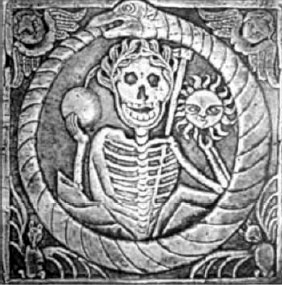
Pray for the soul of Ariel Sharon
http://www.france24.com/en/20140103-ariel-sharon-controversial-former-israeli-prime-minister-dies-age-palestinian/
This leader was one of the moving minds and soldiers in Israel, throughout most of my adult life. His legacy is "mixed". But, let us pray for him and pray for Israel and all the countries in the "Holy Land", which are constantly under siege.
http://www.france24.com/en/20140111-ariel-sharon-death-international-reactions-israel-france-uk-usa/
This leader was one of the moving minds and soldiers in Israel, throughout most of my adult life. His legacy is "mixed". But, let us pray for him and pray for Israel and all the countries in the "Holy Land", which are constantly under siege.
http://www.france24.com/en/20140111-ariel-sharon-death-international-reactions-israel-france-uk-usa/
One more comment on the Vitz book

Two positive points of Vitz encouraged me.
The first is that atheists have positively encouraged Catholics to debate the Faith from the standpoint of Reason, one of the main topics on Etheldredasplace. One can trace the myriad posts under the tags or labels of thinking like Catholics, and the others at the end of this post.
The second is that being a Catholic demands that we do not have idols. Atheists create their own gods, as Vitz notes, but the Catholic enters into the "spiritual journey (that) commonly requires the 'refiner's fire', which is the burning away of narcissistic constructs that obscure our understanding of God or are psychological substitutes for God. The very painful burning away of defenses, projections, and other 'comforts' eventually permits a love of God in the absence of rewards for the self".
That quotation, obviously, supports the long, long series on the Doctors of the Church and the seeking of perfection, over 500 posts, on this blog.
I hope people take advantage of these posts, which will not only help one's self, but also help defend the ideals and teachings of the one, holy, Catholic, and apostolic Church.
I shall have one more post referring to this book.

Book Review

I am finishing up this weekend, after a busybacksoon week, Paul C. Vitz' book Faith of the Fatherless. It is a difficult book to read as Vitz is applying psychological insights to the long list of famous, and not so famous, atheists.
If one is not interested in either the personal tales of atheists, or in the relationships between dads and sons or daughters, skip this book. However, if one wants to try and understand one of the many dynamics, which have caused a new generations of unbelievers, this book is superb.
I am at Chapter Six, which is on Autism and Atheism. Vitz is a brilliant psychologist and, in my opinion, a good sociologist as well. The "control group", including saints, provides an interesting view of those who did have either by nature, or grace, or both, a good relationship with the father. One example would be G. K. Chesterton, and another would be Blessed John Henry Newman, who had a a wonderful relationship with his father. Another fascinating person who had an excellent relationship with his father and mother was Alexis de Tocqueville.
The mystery of a boy becoming a man and a girl becoming a woman involves the parenting of strong, Christian fathers, who themselves are obedient to God the Father. This fact must be discussed in Catholic circles, in pre-marriage counseling, in baptism preparation.
A father may be absent in more ways than just death, or because of abandonment. Fathers who work too many hours, or who are away for lengths of time for employment, may also need to rethink the relationship they have with their children.
I know a doctor who works about 16 hours per day, but he always spends time with the children when he comes home, even if he is extremely tired. All his children are practicing Catholics. He has been also very clear regarding discipline.
I find Vitz a compelling author, but one must be in a strong "mood" to read the sad tales of the ruination of lives owing to the bad choices of those suffering from being fatherless.
Of course, grace is stronger than nature, but people make their own choices.
And, as Catholics, we must reckon with the mystery of evil.
One last point which I find interesting is Vitz' idea that atheists create another "god", another source of security to take the place of their fatherless faith. He lists the proclivity of atheists to make science or communism, only two of a long line of false "gods" into the center of their lives. Fascinating.
Friday, 10 January 2014
Are You Relevant or Irrelevant to The Times?
Irrelevant:
| beside the point, immaterial, not pertinent, not germane, off the subject, unconnected, unrelated, peripheral, extraneous, inapposite,inapplicable Are you important in your groups-family, church, workplace; can you stay on the subject of religion without fudging; are you connected to God; are you related to the Church; can people apply the name "Catholic" to you? Are you relevant? closely connected or appropriate to the matter at hand.
If people cannot identify you with being a Catholic, you have made yourself irrelevant to the world. The world needs Catholics more than ever at this time.
The martyrs were relevant, appropriate for their time, to the point, germane.
Are you germane, in the real sense of the word, of being related, having the same parents, being related?
Are you related to God and His People? Are you building Catholic community?
 |
A Memory from A Cold Day
The man lived in dumpsters. At first, I thought the noises he made were those made by a raccoon scrounging for food. I talked to a native in the area, found out it was a man, and started to leave hot food, a duvet, a throw, and warm clothes by the dumpster. These things disappeared.
I made hot bean soup, and Polish sausages, garlic bread, and other warm things.
That a man would live in a dumpster in Alberta in the winter where the temperature could go down to minus 50 Fahrenheit was shocking to me. I never saw the man in the dumpster, but he took my duvet, clothes and food. Then, about sixteen months later, after I had moved out of the area, I heard he had been accidentally killed. Apparently, he had been known by the police, and was mentally challenged. He was young when he died. In his forties, I heard......
No city is civilized which lets a man live in dumpsters. No people are civilized, which do not care for those who cannot take care of themselves.
I shall never forget the man I never saw--the man in the dumpster in Calgary. He reminds me of my sins. He reminds me that we live in mental and spiritual dumpsters of gross consumerism and greed. He reminds me that we have failed in our civilization and in our Christianity. I shall never forget him.
I made hot bean soup, and Polish sausages, garlic bread, and other warm things.
That a man would live in a dumpster in Alberta in the winter where the temperature could go down to minus 50 Fahrenheit was shocking to me. I never saw the man in the dumpster, but he took my duvet, clothes and food. Then, about sixteen months later, after I had moved out of the area, I heard he had been accidentally killed. Apparently, he had been known by the police, and was mentally challenged. He was young when he died. In his forties, I heard......
No city is civilized which lets a man live in dumpsters. No people are civilized, which do not care for those who cannot take care of themselves.
I shall never forget the man I never saw--the man in the dumpster in Calgary. He reminds me of my sins. He reminds me that we live in mental and spiritual dumpsters of gross consumerism and greed. He reminds me that we have failed in our civilization and in our Christianity. I shall never forget him.
Are You Committed to Truth?

One of the huge problem of some Catholics is the ignoring of the signs of the times. I do not mean signs of the Apocalypse. I am not into End-Times except in my fiction, which is fiction. But, I am, and have been since the 1970s, sensitive to the growing real time of trial and persecution of the Church.
I would like to ask my readers these questions.
Are you seeing the patterns and paradigms which are pointing to a destruction of civil rights for religious persons?
Are you seeing the possibilities of more than one major schism in the Church?
Are you clear about your own position to a possible time of pain and suffering for the universal Church?
Are you confronting your own sin and imperfections so that you will survive horrible persecution and, in addition , help others?
Are you training your children to be committed to Truth?
Are you willing to accept persecution in exchange for saving your immortal soul?
Are you willing to stand up in the public square and acclaim your faith?
Are you willing to be so committed to Truth, that you would die for the Church and Christ?
Are you committed to Truth, Who Is a Person?
Will you take time to read the perfection series on this blog?
By the way, if you are not committed to truth, you are allying yourself with lies,and the Father of Lies.
Doctors of the Church 2:41 Hilary
Hail this joyful day’s return
hail the Pentecostal morn,
morn when our ascended Lord
on his Church his Spirit poured! Alleluia!
Like to clove tongues of flame
on the twelve the Spirit came–
tongues, that earth may hear their call,
fire, that love may burn in all. Alleluia!
Lord, to you your people bend;
unto us your Spirit send;
blessings of this sacred day
grant us, dearest Lord, we pray. Alleluia!
You who did our forebears guide,
with their children still abide;
grant us pardon, grant us peace,
till our earthly wanderings cease. Alleluia!
Doctors of The Church 2:40 Hilary
Of course, you know his name means "happy". For homeschooling parents who follow the Oxford Term, his feast day marks the beginning of Hilary Term, on or about January 13th. This saint is also the patron of children with learning disabilities. He himself was classically educated, which warms my heart.
Here is more from this great French Doctor. This is a long passage, but I did not want to break it up. Again, it is from the saint's book on the Trinity. My comments are in blue.

The image is our soul and its faculties and the likeness is grace, states St. Bernard. We have lost the likeness, through sin, and regain it in and through Christ and His Church, through the sacramental life of the Church.
 We come to perfect knowledge of God through grace. This is a free gift from God, and when the CCC refers to 'divine life" in us, the authors mean grace.
 This means that all have the capacity to come to God and become one with Him. God does the work in us, if we but desire and cooperate.
The works we do are useless unless we are at the stage where God is doing the work through us. Look at the last two lines above. Unbelief stops the process of growing in holiness. The mind narrows and becomes concerned about useless things. Priorities change.
Some people give up, stating that holiness is not possible or too hard. I have heard people say that Catholicism is too hard. That is Hilary's point here. It is hard, but not impossible.
If we create a blockage in our own minds that we can never achieve holiness, perfection, then we shall not to do.

Does this sound familiar?
their narrow horizon, the other wisdom, which alone is Divine and perfect, seemed foolishness to them. Thus their foolishness actually consisted, in that feeble imagination which they mistook for wisdom. Hence it is that the very things which to them that perish are foolishness are the power of God to them that are saved; for these last never use their own inadequate faculties as a measure, but attribute to the Divine activities the omnipotence of heaven.
Hilary's great insight...those who do not believe in the Perfection of Christ do not believe in the possibility of their own...

Sadly, so many atheists hold this position today, as do many Protestants. They accept what is...rather than what can be.
God rejects the wisdom of the wise and the understanding of the prudent in this sense, that just because they recognise their own foolishness, salvation is granted to them that believe. Unbelievers pronounce the verdict of foolishness on everything that lies beyond their ken, while believers leave to the power and majesty of God the choice of the mysteries wherein salvation is bestowed. There is no foolishness in the things of God; the foolishness lies in that human wisdom which demands of God, as the condition of belief, signs and wisdom.

How many people make bargains with God? Bargaining is NOT part of the road to perfection. We cannot say, "God, if you do this, I shall do that." We cannot ask for consolations. On the contrary, many of God's closest friends did not have consolations. Hilary was married and had a daughter, His wife and daughter both died. He lived like a lay brother, as a secular monk. He did not have consolations.
If we get stuck in seeking consolations instead of absorbing suffering gladly, we shall not reach perfection and we shall not see God. This is why the Cross is so important to both St. Paul and St. Hilary They know from experience that suffering brings goodness, purity, direction, enlightenment.
It is the foolishness of the Jews to demand signs; they have a certain knowledge of the Name of God through long acquaintance with the Law, but the offence of the cross repels them. The foolishness of the Greeks is to demand wisdom; with Gentile folly and the philosophy of men they seek the reason why God was lifted up on the cross. And because, in consideration for the weakness of our mental powers, these things have been hidden in a mystery, this foolishness of Jews and Greeks turns to unbelief; for they denounce, as unworthy of reasonable credence, truths which their mind is inherently incapable of comprehending. But, because the world’s wisdom was so foolish,—for previously through God’s wisdom it knew not God, that is, the splendour of the universe, and the wonderful order which He planned for His handiwork, taught it no reverence for its Creator—God was pleased through the preaching of foolishness to save them that believe, that is, through the faith of the cross to make everlasting life the lot of mortals; that so the self-confidence of human wisdom might be put to shame, and salvation found where men had thought that foolishness dwelt.

I love this passage. It is our weaknesses, our "crosses" which bring us to perfection. But, we must crave, desire, with our whole hearts, and minds and souls the splendour which is a Person, Who is God. Not the law saves us, although once we are in Christ the law becomes easy. It is Christ Who saves us.
For Christ, Who is foolishness to Gentiles, and offence to Jews, is the Power of God and the Wisdom of God; because what seems weak and foolish to human apprehension in the things of God transcends in true wisdom and might the thoughts and the powers of earth.

Hilary is writing to the Dawkins of this world, to the list of foolish people found here, and there are so many: http://en.wikipedia.org/wiki/Lists_of_atheists (Why is the list of English atheists in politics so much longer than that of other countries?)
Hilary is also talking to the New Age proponents-the real holders of earthly philosophy.
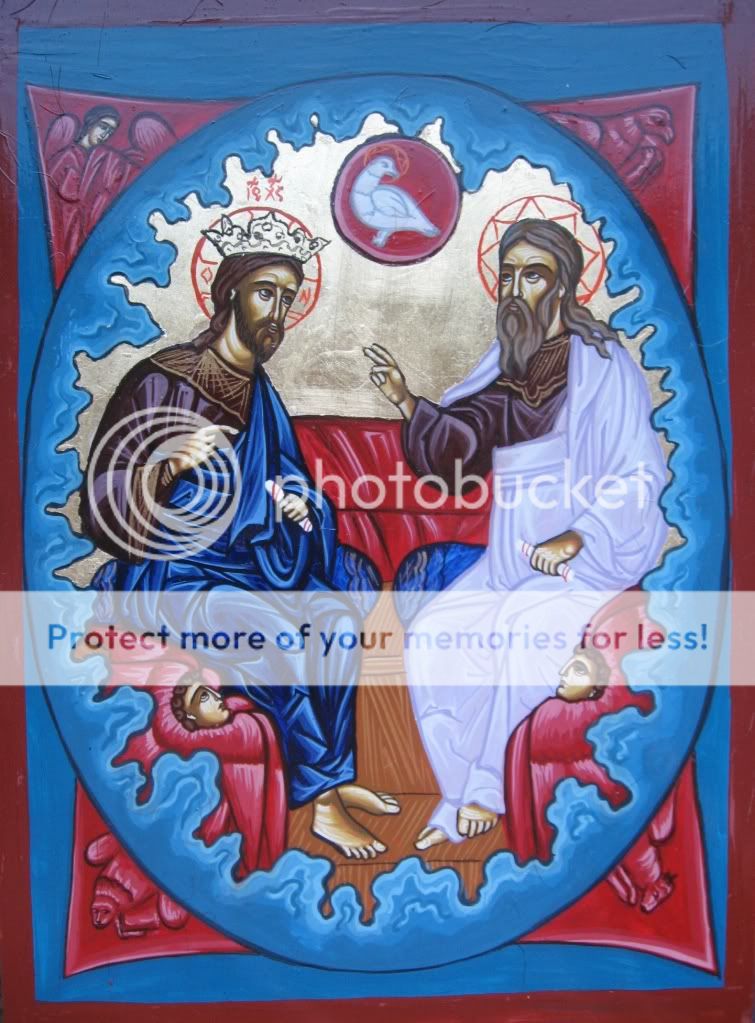
You hear the words, I and the Father are one649. Why do you rend and tear the Son away from the Father? They are a unity: an absolute Existence having all things in perfect communion with that absolute Existence, from Whom He is. When you hear the Son saying, I and the Father are one, adjust your view of facts to the Persons; accept the statement which Begetter and Begotten make concerning Themselves. Believe that They are One, even as They are also Begetter and Begotten. Why deny the common nature? Why impugn the true Divinity? You hear again, The Father in Me, and I in the Father650.
Of course, Hilary is writing to the Arians, but also to us who are seeking perfection. Why? We must come to the realization of the Indwelling of the Trinity in us, through baptism and confirmation, so that we do not squander our lives in foolishness, seeking either fame, fortune or false loves.
The only thing that matters is to desire and try to be saints, and saints are made, though suffering and grace. As the Trinity is one, so to we shall be one in God. This is our call, this is our goal. Hilary is, like Augustine and the others, not speaking from mere reflection or meditation, but from experience. He knew the Trinity from his conversion, from his walk with God, in his intellect, will, soul. As there is a perfect fullness of Christ in the Trinity, so as creatures, we are called to a perfection as much as we were created to be, to have, in Christ and in the Father, through the Spirit. As Christ is one, so we have our source in God and we, hopefully, go back to God at the end of our lives.
That this is true of Father and of Son is demonstrated by the Son’s works. Our science cannot envelope body in body, or pour one into another, as water into wine; but we confess that in Both is equivalence of power and fulness of the Godhead. For the Son has received all things from the Father; He is the Likeness of God, the Image of His substance. The words, Image of His substance651, discriminate between Christ and Him from Whom He is, but only to establish Their distinct existence, not to teach a difference of nature; and the meaning of Father in Son and Son in Father is that there is the perfect fulness of the Godhead in Both. The Father is not impaired by the Son’s existence, nor is the Son a mutilated fragment of the Father. An image implies its original; likeness is a relative term. Now nothing can be like God unless it have its source in Him; a perfect likeness can be reflected only from that which it represents; an accurate resemblance forbids the assumption of any element of difference. Disturb not this likeness; make no separation where truth shews no variance, for He Who said, Let us make man after our image and likeness652, by those words Our likeness revealed the existence of Beings, Each like the Other. Touch not handle not, pervert not. Hold fast the Names which teach the truth, hold fast the Son’s declaration of Himself. I would not have you flatter the Son with praises of your own invention; it is well with you if you be satisfied with the written word.
24. Again, we must not repose so blind a confidence in human intellect as to imagine that we have complete knowledge of the objects of our thought, or that the ultimate problem is solved as soon as we have formed a symmetrical and consistent theory. Finite minds cannot conceive the Infinite; a being dependent for its existence upon another cannot attain to perfect knowledge either of its Creator or of itself, for its consciousness of self is coloured by its circumstances, and bounds are set which its perception cannot pass.
 We come to perfect knowledge of God through grace. This is a free gift from God, and when the CCC refers to 'divine life" in us, the authors mean grace.
That we are totally dependent on grace to become perfect is a sure thing. We can chose to cooperate or not.
Its activity is not self-caused, but due to the Creator, and a being dependent on a Creator653 has perfect possession of none of its faculties, since its origin lies outside itself. Hence by an inexorable law it is folly for that being to say that it has perfect knowledge of any matter; its powers have limits which it cannot modify, and only while it is under the delusion that its petty bounds are coterminous with infinity can it make the empty boast of possessing wisdom. For of wisdom it is incapable, its knowledge being limited to the range of its perception, and sharing the impotence of its dependent existence. And therefore this masquerade654 of a finite nature boasting that it possesses the wisdom which springs only from infinite knowledge earns the scorn and ridicule of the Apostle, who calls its wisdom folly. He says, For Christ sent me not to baptize, but to preach the Gospel, not in the language of wisdom, lest the cross of Christ should be made void. For the word of the cross is foolishness to them that are perishing, but unto them that are being saved it is the power of God. For it is written, I will destroy the wisdom of the wise and the understanding of the prudent I will reject. Where is the wise? Where is the scribe? Where is the enquirer of this world? Hath not God made foolish the wisdom of this world? For seeing that in the wisdom of God the world through its wisdom knew not God, God decreed through the foolishness of preaching to save them that believe. For the Jews ask for signs and the Greeks seek after wisdom, but we preach Christ crucified, unto Jews indeed a stumbling-block and to Gentiles foolishness, but unto them that are called, both Jews and Greeks, Christ the power of God and the wisdom of God. Because the weakness of God is stronger than men, and the foolishness of God is wiser than men655. Thus all unbelief is foolishness, for it takes such wisdom as its own finite perception can attain, and, measuring infinity by that petty scale, concludes that what it cannot understand must be impossible. Unbelief is the result of incapacity engaged in argument. Men are sure that an event never happened, because they have made up their minds that it could not happen.

The works we do are useless unless we are at the stage where God is doing the work through us. Look at the last two lines above. Unbelief stops the process of growing in holiness. The mind narrows and becomes concerned about useless things. Priorities change.
Some people give up, stating that holiness is not possible or too hard. I have heard people say that Catholicism is too hard. That is Hilary's point here. It is hard, but not impossible.
If we create a blockage in our own minds that we can never achieve holiness, perfection, then we shall not to do.
25. Hence the Apostle, familiar with the narrow assumption of human thought that what it does not know is not truth, says that he does not speak in the language of knowledge, lest his preaching should be in vain. To save himself from being regarded as a preacher of foolishness he adds that the word of the cross is foolishness to them that perish. He knew that the unbelievers held that the only true knowledge was that which formed their own wisdom, and that, since their wisdom was cognisant only of matters which lay within
Does this sound familiar?
their narrow horizon, the other wisdom, which alone is Divine and perfect, seemed foolishness to them. Thus their foolishness actually consisted, in that feeble imagination which they mistook for wisdom. Hence it is that the very things which to them that perish are foolishness are the power of God to them that are saved; for these last never use their own inadequate faculties as a measure, but attribute to the Divine activities the omnipotence of heaven.
Hilary's great insight...those who do not believe in the Perfection of Christ do not believe in the possibility of their own...

Sadly, so many atheists hold this position today, as do many Protestants. They accept what is...rather than what can be.
God rejects the wisdom of the wise and the understanding of the prudent in this sense, that just because they recognise their own foolishness, salvation is granted to them that believe. Unbelievers pronounce the verdict of foolishness on everything that lies beyond their ken, while believers leave to the power and majesty of God the choice of the mysteries wherein salvation is bestowed. There is no foolishness in the things of God; the foolishness lies in that human wisdom which demands of God, as the condition of belief, signs and wisdom.

How many people make bargains with God? Bargaining is NOT part of the road to perfection. We cannot say, "God, if you do this, I shall do that." We cannot ask for consolations. On the contrary, many of God's closest friends did not have consolations. Hilary was married and had a daughter, His wife and daughter both died. He lived like a lay brother, as a secular monk. He did not have consolations.
If we get stuck in seeking consolations instead of absorbing suffering gladly, we shall not reach perfection and we shall not see God. This is why the Cross is so important to both St. Paul and St. Hilary They know from experience that suffering brings goodness, purity, direction, enlightenment.
It is the foolishness of the Jews to demand signs; they have a certain knowledge of the Name of God through long acquaintance with the Law, but the offence of the cross repels them. The foolishness of the Greeks is to demand wisdom; with Gentile folly and the philosophy of men they seek the reason why God was lifted up on the cross. And because, in consideration for the weakness of our mental powers, these things have been hidden in a mystery, this foolishness of Jews and Greeks turns to unbelief; for they denounce, as unworthy of reasonable credence, truths which their mind is inherently incapable of comprehending. But, because the world’s wisdom was so foolish,—for previously through God’s wisdom it knew not God, that is, the splendour of the universe, and the wonderful order which He planned for His handiwork, taught it no reverence for its Creator—God was pleased through the preaching of foolishness to save them that believe, that is, through the faith of the cross to make everlasting life the lot of mortals; that so the self-confidence of human wisdom might be put to shame, and salvation found where men had thought that foolishness dwelt.

I love this passage. It is our weaknesses, our "crosses" which bring us to perfection. But, we must crave, desire, with our whole hearts, and minds and souls the splendour which is a Person, Who is God. Not the law saves us, although once we are in Christ the law becomes easy. It is Christ Who saves us.
For Christ, Who is foolishness to Gentiles, and offence to Jews, is the Power of God and the Wisdom of God; because what seems weak and foolish to human apprehension in the things of God transcends in true wisdom and might the thoughts and the powers of earth.

26. And therefore the action of God must not be canvassed by human faculties; the Creator must not be judged by those who are the work of His hands. We must clothe ourselves in foolishness that we may gain wisdom; not in the foolishness of hazardous conclusions, but in the foolishness of a modest sense of our own infirmity, that so the evidence of God’s power may teach us truths to which the arguments of earthly philosophy cannot attain.
Hilary is also talking to the New Age proponents-the real holders of earthly philosophy.
For when we are fully conscious of our own foolishness, and have felt the helplessness and destitution of our reason, then through the counsels of Divine Wisdom we shall be initiated into the wisdom of God; setting no bounds to boundless majesty and power, nor tying the Lord of nature down to nature’s laws; sure that for us the one true faith concerning God is that of which He is at once the Author and the Witness.
Do not set boundaries to the graces that God wants to give to you. Do not limit Him or yourself in Him. If you limit His grace, you will not gain heaven, because the mediocre become evil so quickly.
To be continued...
Doctors of the Church 2:39 Hilary
What strikes me is how busy these Doctors of the Church were, running around putting out heretical fires and still praying intensely. So many of these fought against the Arians, a group of heretics who almost ruined the Church. At one time, it was estimated that fifty percent of the bishops of the world were Arians. Take heart, Catholics. Hilary's dates are 300-368. Busy man, holy saint....
Our perfection comes from Christ and not ourselves...
....let us see what this glory is which the Son expects to receive from the Father; and then our exposition will be complete. The sequel is, I have glorified Thee on the earth, having accomplished the work which Thou hast given Me to do. And now, O Father, glorify Thou Me with Thine own Self with the glory which I had with Thee before the world was. I have manifested Thy name unto men. It is, then, by the Son’s works that the Father is glorified, in that He is recognised as God, as Father of God the Only-begotten, Who for our salvation willed that His Son should be born as man, even of a virgin; that Son Whose whole life, consummated in the Passion, was consistent with the humiliation of the virgin birth.
How can we fear any humiliation?
Humility is recognizing that Christ became Incarnate and died for me. He left His Glory to become Man.
Thus, because the Son of God, all-perfect and born from everlasting in the fulness of the Godhead, had now by incarnation become Man and was ready for His death, He prays that He may be glorified with God, even as He was glorifying His Father on the earth; for at that moment the powers of God were being glorified in the flesh before the eyes of a world that knew Him not. But what is this glory with the Father, for which He looks?
 It is that, of course, which He had with Him before the world was. He had the fulness of the Godhead; He has it still, for He is God’s Son. But He Who was the Son of God had become the Son of man also, for The Word was made flesh. He had not lost His former being, but He had become what He was not before; He had not abdicated His own position, yet He had taken ours; He prays that the nature which He had assumed may be promoted to the glory which He had never renounced. Therefore, since the Son is the Word, and the Word was made flesh, and the Word was God, and was in the beginning with God, and the Word was Son before the foundation of the world; this Son, now incarnate, prayed that flesh might be to the Father what the Son had been. He prayed that flesh, born in time, might receive the splendour of the everlasting glory, that the corruption of the flesh might be swallowed up, transformed into the power of God and the purity of the Spirit. It is His prayer to God, the Son’s confession of the Father, the entreaty of that flesh wherein all shall see Him on the Judgment-day, pierced and bearing the marks of the cross; of that flesh wherein His glory was foreshown upon the Mount, wherein He ascended to heaven and is set down at the right hand of God, wherein Paul saw Him, and Stephen paid Him worship.
This splendour, which we shall only see when in Heaven, in the Beatific Vision, is given to us partially if we are willing to be perfected, emptying ourselves as Christ emptied Himself. He did not run from pain or even death, so how can we run from what is really hard in the call to perfection, to be like Christ, to be Christ in this world?
More later...to be continued.
One gets the energy for action from prayer. My comments in blue on a section from St. Hilary of Poitiers on The Trinity: Book Three, found here.
Our perfection comes from Christ and not ourselves...
....let us see what this glory is which the Son expects to receive from the Father; and then our exposition will be complete. The sequel is, I have glorified Thee on the earth, having accomplished the work which Thou hast given Me to do. And now, O Father, glorify Thou Me with Thine own Self with the glory which I had with Thee before the world was. I have manifested Thy name unto men. It is, then, by the Son’s works that the Father is glorified, in that He is recognised as God, as Father of God the Only-begotten, Who for our salvation willed that His Son should be born as man, even of a virgin; that Son Whose whole life, consummated in the Passion, was consistent with the humiliation of the virgin birth.
 |
| http://www.plymouthstpeter.co.uk/?p=325 |
Humility is recognizing that Christ became Incarnate and died for me. He left His Glory to become Man.
Thus, because the Son of God, all-perfect and born from everlasting in the fulness of the Godhead, had now by incarnation become Man and was ready for His death, He prays that He may be glorified with God, even as He was glorifying His Father on the earth; for at that moment the powers of God were being glorified in the flesh before the eyes of a world that knew Him not. But what is this glory with the Father, for which He looks?
And, because He has taken on our humanity, then we can share in His Perfection.

This splendour, which we shall only see when in Heaven, in the Beatific Vision, is given to us partially if we are willing to be perfected, emptying ourselves as Christ emptied Himself. He did not run from pain or even death, so how can we run from what is really hard in the call to perfection, to be like Christ, to be Christ in this world?
More later...to be continued.
Subscribe to:
Posts (Atom)