Will continue this in the next few days..
Wednesday, 16 October 2013
Hope readers do not mind
While I am in Malta, perhaps because it is a desert island, I am returning to the perfection series.
Will continue this in the next few days..

Will continue this in the next few days..


The purification of the senses and series continued....

The key to survival and progress is the acceptance of pain. One must learn to carry pain in one's heart and mind in order to go through the passive purification of the senses and the spirit.
Nothing matters, except that one continues to will to love God above all else, above all persons.
The focus is all.
A good habit at these stages is to meditate on the Crucifixion. One could have one nearby in prayer at all times.
One can look at the Cross, at the Beloved Crucified and join with Him in that suffering.
As one learns how to do this, a freedom becomes more obvious in one's spirit.
Fear disappears and a fresh and new reliance on Divine Providence occurs.
to be continued....
The purification of the senses and the spirit in the Dark Night....continued
We have faith in what we cannot comprehend or see. We have hope in what we cannot see, and we love through the will.
This process make take a short period of time or a long one. Those who cooperate and are not afraid of suffering progress much more quickly than those who do not.
God usually does not leave the soul in this state without brief moments of consolation.
To be continued....
The passive purification of the senses and the spirit, continued
All the saints experienced the passive purification of the senses and the spirit. St. John of the Cross is only one. The list is long of those who actually wrote about this painful and yet, sustaining period of growth in the spirit.
Garrigou-Lagrange quotes several of the saints regarding this, but here is only a few examples. I use these paragraphs to show the consistency of these saints who share their journeys with us. Many of my readers have expressed that they understand these stages. Perhaps this section will help. I am writing about this as many people get to this stage but then pull back. Do not pull back. The note on Tauler is so true. The void can only be filled by Christ Himself.
The last section is most beautiful. Like any lover, who wants to be united with the beloved and become one with him, so too, we enter in that daily desire for oneness and unity. I pray daily to be taken up into Christ and to become one with Him.
Is there anything else more worthy of our prayers than this desire?

Garrigou-Lagrange quotes several of the saints regarding this, but here is only a few examples. I use these paragraphs to show the consistency of these saints who share their journeys with us. Many of my readers have expressed that they understand these stages. Perhaps this section will help. I am writing about this as many people get to this stage but then pull back. Do not pull back. The note on Tauler is so true. The void can only be filled by Christ Himself.
The last section is most beautiful. Like any lover, who wants to be united with the beloved and become one with him, so too, we enter in that daily desire for oneness and unity. I pray daily to be taken up into Christ and to become one with Him.
Is there anything else more worthy of our prayers than this desire?

Hugh of St. Victor had compared the passive purification of the soul by grace and the love of God to the transformation which green wood undergoes when attacked by fire: "The dampness is consumed, the smoke diminishes, the victorious flame shows itself; . . . finally it communicates its own nature to the wood, which is set completely on fire. Likewise the love of God gradually grows in the soul, the passions of the heart at first resist, which causes many sufferings and troubles; this thick smoke must be dissipated. Then the love of God becomes more ardent, its flame more lively. . . and finally it penetrates the entire soul. The divine truth is found and assimilated by contemplation; the soul, detached from self, no longer seeks anything but God. He is for it all in all; it rests in His love and finds therein joy and peace. (11)
Speaking in like terms, Tauler says that the Holy Ghost creates a void in the depth of our souls where egoism and pride still dwell. He creates the void that He may heal us, and then He fills it to overflowing while continually increasing our capacity to receive.(12)
St. Teresa speaks of the passive purification of the spirit in the first chapter of the sixth mansion of The Interior Castle.
We read also in the life of St. Vincent de Paul that for four years he endured a trial of this type, which was marked by a persistent temptation against faith. The temptation was so strong that he wrote the Credo on a sheet of paper, which he carried over his heart and pressed from time to time to assure himself that he did not consent to the temptation.(13)
We should also keep in mind that St. John of the Cross, after Tauler, describes this state as it is in the saints in all its amplitude and intensity, such as he himself must have undergone it. But the purification is found in lesser degrees and under less purely contemplative forms, united, for example, to the great trials met with in the apostolate.
If the passive purification of the spirit seems extraordinary to us outside the normal way of sanctity, this is because we do not give enough thought to what a profound purification of the soul is necessary to receive immediately eternal life, the beatific vision of the divine essence, without having to pass through purgatory or after having done so. And when we read the exposition of this doctrine in the great masters, we read it perhaps through a certain curiosity about divine things, but without a sufficiently sincere desire for our own sanctification. If we had this desire, we would find in these pages what is suitable for us, we would see there the one thing necessary.
We must in one way or another pass through this crucible in order to have a concept of our Savior's passion, of the humility of Jesus and His love for us, that will not be only a confused concept, or only a theoretically distinct concept, but an experimental concept, without which there is no love of the cross or true sanctity.
We must tell ourselves that the world is full of crosses that have unfortunately been lost like that of the bad thief. God grant that our sufferings may not be fruitless and that our crosses may resemble that of the good thief, which served as a reparation for his sins. May our crosses resemble even more closely the cross of Jesus and configure us to Him. Sanctifying grace, as it grows, makes us more and more like to God; inasmuch as it is Christian grace, it assimilates us to Christ crucified, and should make us grow more like Him until our entrance into heaven. It should mark us with the likeness of our Savior who died for love of us.
A short trip to Gozo

A short history of Gozo from this site..http://www.maltesering.com/gozo.asp
I had a broef trip to the island today and saw some wonderful things, but not all. Maybe, God Willing, I shall go there again some day.
Gozo is the second largest island of the Maltese archipelago that consists of three islands known as Gozo, Comino, and Malta. Roughly circular in shape, 14km by 7km in area, Gozo is hilly and from the south-west to the north-west, the coast is entirely surrounded by cliffs. The hills of Gozo are curiously rounded and flat-topped, the result of hard rock lying on top of softer rock. The highest point on the island rising 190 meters above sea level, is Ta' Dbiegi hill on the outskirts of the village of San Lawrenz.
Gozo meaning "joy" in Castillian, is the name the Aragonese gave this island, when they possesed it in 1282. The idea of joy and pleasure is also conveyed by its Latin motto "Fertilis ab undis caput effero - a fruit land raising its head from the sea". The Phoenicians, when it was theirs in 700BC, called it "Gwl" or Gaulos, meaning a round ship, possibly in reference to the island's shape from a distance, a name which the romans kept when they took it over in 218AD. The Arabs, who came to rule this piece of land a thousand years ago, and who strongly influenced its Semitic language, left behind the name that has stuck in the vernacular: Ghawdex (pronounced Aw-desh).
History of Gozo
Gozo's history goes back to 5000BC, when a group from Sicily succeeded in crossing over on some form of sea-craft. These people who first colonised Gozo probably lived in caves around Il-Mixta on Ghajn Abdul Plateau on the outskirts of San Lawrence village, to the north-west of Gozo. This site consists of one huge cave seperated into two by a natural column and a man-made wall. Pottery shreds unearthed on this site are of a purer pedigree than any other pottery found elsewhere in the Maltese islands. This suggests that Gozo might have been settled earlier than Malta.
The Temple Period (4100 - 2500BC) This phase represents an important turning point in the cultural evolution of prehistoric man. The greatest undertaking of the pre-Phoenician Gozoitans are undoubtedly Ggantija Temples (3600 - 3000BC) situated in Xaghra, and documented as the oldest freestanding structure in the world. The temples take their name from the Maltese term "Ggant" meaning "giant", an apt name when one views the sheer size and height of these megaliths. Especially impressive are the cornerstones and the rear wall of the south temple.
The site consists of two temples, contained within a single outer wall. Although sharing a common facade, each temple unit has a seperate entrance. The south temple has a fave apse plan and is the older of the two, as well as being the larger and better preserved. The left apse in the second pair capstones. Some suggest it might refer to a triple divinity, a triade. The remains of a fire-reddened circular stone hearth, possibly where there are also remains of what was probably a small enclosure where oracles were delivered.
The north temple is considerably smaller, but with a more evolved four-apse plan having its rear apse replaced by a shallow niche. The entrance is very similar to that of the first temple, only the threshold is narrower and shorter.
The temples have exercised many a mathematical and engineering mind, seeking a solution to the mystery of how these huge stones were quarried, transported and then lifted upright in those primitive times. Local legend has it that the work was undertaken by a giantess called Sansuna, who lived on a diet of broad beans and water and carried the megaliths on her head. However it was stone balls, which one can see strewn around the site, which probably served as rollers to transport these huge blocks of stone to the site.
After the disappearance of the temple people, the islands were repopulated by an entirely different race.
Bronze Age (2500 - 700BC) Unlike their predecessors, these people were warlike people who used copper and bronze tools and weapons and who cremated their dead instead of burying them. Among the interesting remains, there are three dolmens on Ta' Cenc plateau. These consist of a horizontal, roughly shaped slab of limestone supported on three sides by blocks of stone.
Phoenicians and Carthaginians (700 - 218BC) The Phoenicians attracted by the local harbours, established a colony in Malta and Gozo. Around 550BC, the Phoenicians of Carthage took over and the Carthaginians, as they are better known, remained masters of the islands until 218BC. There are remains of a Punic rock-cut sanctuary at Ras il-Wardija, on the outskirts of Santa Lucija village, on the south-western tip of Gozo.
Romans (218 - AD 535) At the beginning of the second Punic War in 218BC, the Carthaginians were ousted by the Romans. In Gozo they created a municipium, autonomous of that of Malta with a republican sort of Government that minted its own coins. Under the Romans, Christianity reached the shores of the island for the first time. In AD 60, Saint Paul the Apostle, while journeying to Rome, was shipwrecked in Malta.
Byzantines (535 - 870) Around AD 535, the islands passed under the dominion of the East Roman Empire, that is under the rule of Byzantium. Very little is known of Byzantine times of Gozo.
Arabs (870 - 1127) In 870, the aglabid Arabs became sole masters of the Maltese archipelago. The Punic dialect that had originated with the Phoenicians was then greatly affected in its structure. The Arabs' stay is evidenced by many placenames and family names and especially by the name they gave to the island of Gozo - Ghawdex, that survives to this day.
European Domination (1127 - 1530) Count Roger the Norman freed the islands from the Arabs, who however remained masters paying a tribute. In 1127, the Norman's took formal possession and hence, Gozo and Malta shared the same fate of Sicily passing successively under the rule of Swabia (1194), Angou (1266) and Aragon (1282). Under these rulers, the island was governed by a series of fuedal lords whose sole interest was to exact the highest possible taxes from the inhabitants. Around 1397, the Gozitans created the Universitas Gaudisii - a corporation to defend local interests. From then onwards, the Gozitans fought hard to maintain their ancient privileges and freedom.
Knights of St. John (1530 - 1798) On 23 March 1530, the islands passed under the Knights of Saint John of Jerusalem, a chivalrous religious order initiated in 1099 and officially founded in Jerusalem in 1113. Initially they made no improvements in Gozo in 1551, the island suffered it worst siege in history. In July, the Citadel was besieged by the Turks of Sinan Pasha. The medieval walls without flanks and terreplein to resist gunpowder bombardment were easy prey to besiegers and the fortifications soon succumbed. A tombstone in the local cathedral conveys some of the horror in its commemoration of the nobleman Bernardo Dupuo, who died fighting the Turkish priates, after killing his own wife and daughters to save them from slavery and concubinage, two fates worse than death. The entire population of about 5000 was taken into slavery.
After the terror of 1551, recovery was slow and painful. Some Gozitan slaves were traced and ransomed, but life was shattered and families left permanently split asunder, their various members sold to different owners in far-off lands. Grand Master de le Sengle encouraged resettlement from Malta, by promising to waive the new settlers' debts of the previous four years, if they would take the risk of living in undefended territory. Others, it is said came over from nearby Sicily.
The vulnerability to pirates and slavery is the reason why villages in Gozo did not develop until the late 18th/early 19th century. Before that, the tiny population stayed close to the citadel, taking shelter within its walls between dusk and dawn, in line with a curfew order that was only lifted in 1637 and whenever there was notice of a raid by pirates. The villages remain, today, completely different in structure to those of Malta. They are open-ended and do not form the Maltese pattern of tightly-winding, narrow and easily-defended streets.
It was to be another 150 years before the Knights contemplated the reality of an undefended Gozo, left open to the Turks. They hurriedly built some defences, but by then the piratical raids were easing off, until they ceased altogether in 1708.
As a result of these raids, a reluctance to communicate information creeped irremediably into the Gozitan character. As one writer recently put it in his guide to Gozo, the Gozitans @have now accepted that not all tourists are direct descendants of 16th century Turkish slave-traders@, and their natural wariness has eased into friendliness, though they still prefer to keep their distance.
French (1798 - 1800) On 10 June 1798, the French under General Napolean Bonaparte, ousted the Knights from Malta. Their rule in Gozo was short-lived. In September the people rose against the French, who, on 28 October surrendered to the Gozitans. Gozo enjoyed a short period of autonomy until 5 September 1800, when the British took the Maltese islands under their protection.
British (1800 - 1964) Malta and Gozo became formally a British Crown Colony in 1813 and the island was slowly transformed into a fortress colony. Its resistance to the Axis bombardments during the second World War is legendary.
Malta and Gozo became a sovereign independent state within the Commonwealth on 21 September 1864 and were declared a Republic on 13 December 1974. Though ruled from Malta from time immemorial, Gozo has had semi-autonomous governments several times in its history, the last being the Gozo Civic Council between 1961 and 1973. The island is now governed like any other part of the Maltese islands. The executive functions of the central Government are carried out through the Ministry for Gozo, established on 14 May 1987.
The Temple Period (4100 - 2500BC) This phase represents an important turning point in the cultural evolution of prehistoric man. The greatest undertaking of the pre-Phoenician Gozoitans are undoubtedly Ggantija Temples (3600 - 3000BC) situated in Xaghra, and documented as the oldest freestanding structure in the world. The temples take their name from the Maltese term "Ggant" meaning "giant", an apt name when one views the sheer size and height of these megaliths. Especially impressive are the cornerstones and the rear wall of the south temple.
The site consists of two temples, contained within a single outer wall. Although sharing a common facade, each temple unit has a seperate entrance. The south temple has a fave apse plan and is the older of the two, as well as being the larger and better preserved. The left apse in the second pair capstones. Some suggest it might refer to a triple divinity, a triade. The remains of a fire-reddened circular stone hearth, possibly where there are also remains of what was probably a small enclosure where oracles were delivered.
The north temple is considerably smaller, but with a more evolved four-apse plan having its rear apse replaced by a shallow niche. The entrance is very similar to that of the first temple, only the threshold is narrower and shorter.
The temples have exercised many a mathematical and engineering mind, seeking a solution to the mystery of how these huge stones were quarried, transported and then lifted upright in those primitive times. Local legend has it that the work was undertaken by a giantess called Sansuna, who lived on a diet of broad beans and water and carried the megaliths on her head. However it was stone balls, which one can see strewn around the site, which probably served as rollers to transport these huge blocks of stone to the site.
After the disappearance of the temple people, the islands were repopulated by an entirely different race.
Bronze Age (2500 - 700BC) Unlike their predecessors, these people were warlike people who used copper and bronze tools and weapons and who cremated their dead instead of burying them. Among the interesting remains, there are three dolmens on Ta' Cenc plateau. These consist of a horizontal, roughly shaped slab of limestone supported on three sides by blocks of stone.
Phoenicians and Carthaginians (700 - 218BC) The Phoenicians attracted by the local harbours, established a colony in Malta and Gozo. Around 550BC, the Phoenicians of Carthage took over and the Carthaginians, as they are better known, remained masters of the islands until 218BC. There are remains of a Punic rock-cut sanctuary at Ras il-Wardija, on the outskirts of Santa Lucija village, on the south-western tip of Gozo.
Romans (218 - AD 535) At the beginning of the second Punic War in 218BC, the Carthaginians were ousted by the Romans. In Gozo they created a municipium, autonomous of that of Malta with a republican sort of Government that minted its own coins. Under the Romans, Christianity reached the shores of the island for the first time. In AD 60, Saint Paul the Apostle, while journeying to Rome, was shipwrecked in Malta.
Byzantines (535 - 870) Around AD 535, the islands passed under the dominion of the East Roman Empire, that is under the rule of Byzantium. Very little is known of Byzantine times of Gozo.
Arabs (870 - 1127) In 870, the aglabid Arabs became sole masters of the Maltese archipelago. The Punic dialect that had originated with the Phoenicians was then greatly affected in its structure. The Arabs' stay is evidenced by many placenames and family names and especially by the name they gave to the island of Gozo - Ghawdex, that survives to this day.
European Domination (1127 - 1530) Count Roger the Norman freed the islands from the Arabs, who however remained masters paying a tribute. In 1127, the Norman's took formal possession and hence, Gozo and Malta shared the same fate of Sicily passing successively under the rule of Swabia (1194), Angou (1266) and Aragon (1282). Under these rulers, the island was governed by a series of fuedal lords whose sole interest was to exact the highest possible taxes from the inhabitants. Around 1397, the Gozitans created the Universitas Gaudisii - a corporation to defend local interests. From then onwards, the Gozitans fought hard to maintain their ancient privileges and freedom.
Knights of St. John (1530 - 1798) On 23 March 1530, the islands passed under the Knights of Saint John of Jerusalem, a chivalrous religious order initiated in 1099 and officially founded in Jerusalem in 1113. Initially they made no improvements in Gozo in 1551, the island suffered it worst siege in history. In July, the Citadel was besieged by the Turks of Sinan Pasha. The medieval walls without flanks and terreplein to resist gunpowder bombardment were easy prey to besiegers and the fortifications soon succumbed. A tombstone in the local cathedral conveys some of the horror in its commemoration of the nobleman Bernardo Dupuo, who died fighting the Turkish priates, after killing his own wife and daughters to save them from slavery and concubinage, two fates worse than death. The entire population of about 5000 was taken into slavery.
After the terror of 1551, recovery was slow and painful. Some Gozitan slaves were traced and ransomed, but life was shattered and families left permanently split asunder, their various members sold to different owners in far-off lands. Grand Master de le Sengle encouraged resettlement from Malta, by promising to waive the new settlers' debts of the previous four years, if they would take the risk of living in undefended territory. Others, it is said came over from nearby Sicily.
The vulnerability to pirates and slavery is the reason why villages in Gozo did not develop until the late 18th/early 19th century. Before that, the tiny population stayed close to the citadel, taking shelter within its walls between dusk and dawn, in line with a curfew order that was only lifted in 1637 and whenever there was notice of a raid by pirates. The villages remain, today, completely different in structure to those of Malta. They are open-ended and do not form the Maltese pattern of tightly-winding, narrow and easily-defended streets.
It was to be another 150 years before the Knights contemplated the reality of an undefended Gozo, left open to the Turks. They hurriedly built some defences, but by then the piratical raids were easing off, until they ceased altogether in 1708.
As a result of these raids, a reluctance to communicate information creeped irremediably into the Gozitan character. As one writer recently put it in his guide to Gozo, the Gozitans @have now accepted that not all tourists are direct descendants of 16th century Turkish slave-traders@, and their natural wariness has eased into friendliness, though they still prefer to keep their distance.
French (1798 - 1800) On 10 June 1798, the French under General Napolean Bonaparte, ousted the Knights from Malta. Their rule in Gozo was short-lived. In September the people rose against the French, who, on 28 October surrendered to the Gozitans. Gozo enjoyed a short period of autonomy until 5 September 1800, when the British took the Maltese islands under their protection.
British (1800 - 1964) Malta and Gozo became formally a British Crown Colony in 1813 and the island was slowly transformed into a fortress colony. Its resistance to the Axis bombardments during the second World War is legendary.
Malta and Gozo became a sovereign independent state within the Commonwealth on 21 September 1864 and were declared a Republic on 13 December 1974. Though ruled from Malta from time immemorial, Gozo has had semi-autonomous governments several times in its history, the last being the Gozo Civic Council between 1961 and 1973. The island is now governed like any other part of the Maltese islands. The executive functions of the central Government are carried out through the Ministry for Gozo, established on 14 May 1987.

Interesting pericope from this morning's Office of Readings...
Zechariah 3:1-4
Douay-Rheims
3 And the Lord shewed me Jesus the high priest standing before the angel of the Lord: and Satan stood on his right hand to be his adversary.
2 And the Lord said to Satan: The Lord rebuke thee, O Satan: and the Lord that chose Jerusalem rebuke thee: Is not this a brand plucked out of the fire?
3 And Jesus was clothed with filthy garments: and he stood before the face of the angel.
4 Who answered, and said to them that stood before him, saying: Take away the filthy garments from him. And he said to him: Behold I have taken away thy iniquity, and have clothed thee with change of garments.

Tuesday, 15 October 2013
Thought for The Day
 |
| http://commons.wikimedia.org/wiki/File:Sassoferrato_-_Jungfrun_i_b%C3%B6n.jpg |
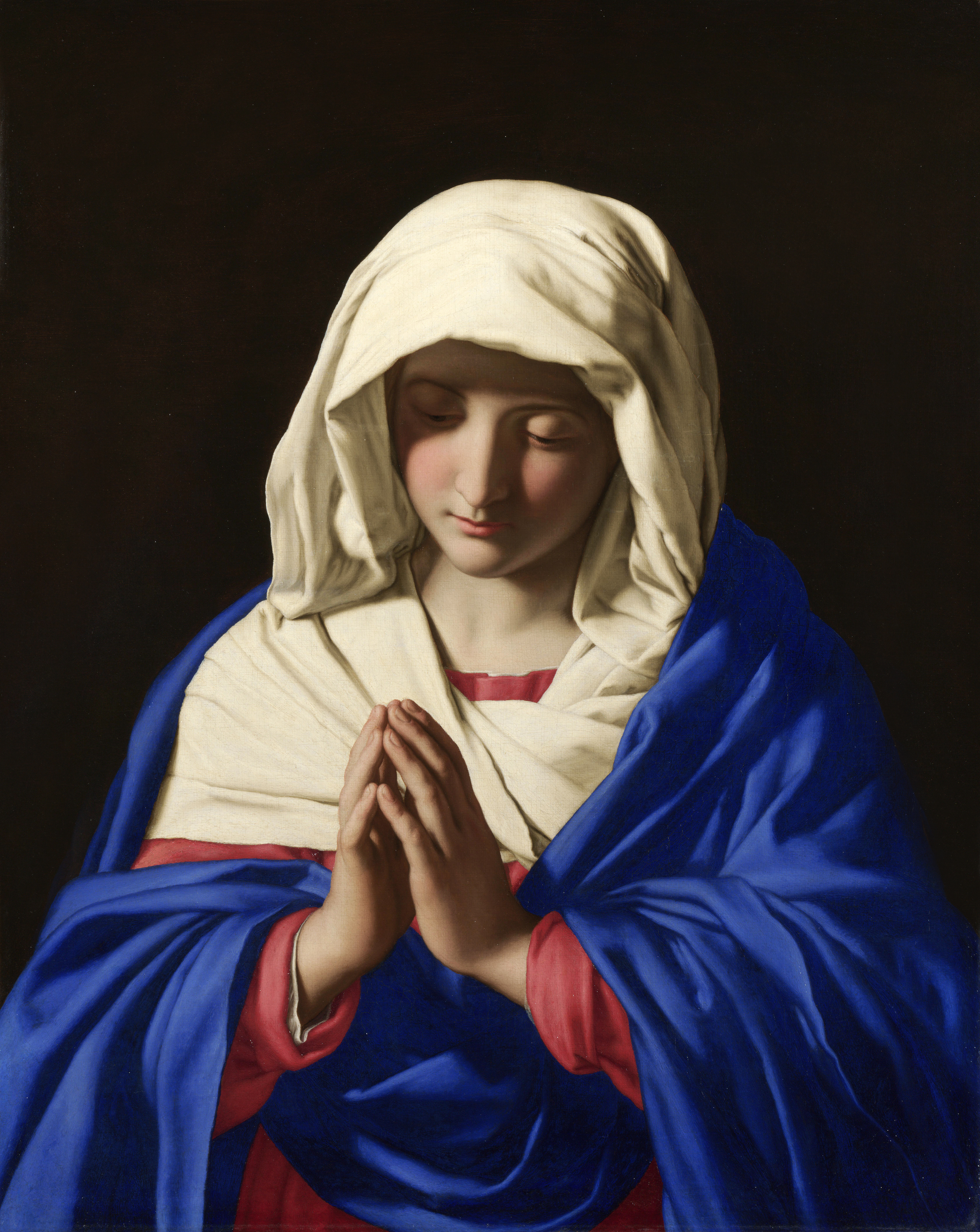
On Mary...
It was she, the second Eve, who, free from all sin, original or personal, and always more intimately united with her Son, offered Him on Golgotha to the Eternal Father for all the children of Adam, sin-stained by his unhappy fall.” Pope Ven. Pius XII, encyclical Mystici Corporis.
I shall be posting later tomorrow. This autumn is one of the hottest with some of the highest humidity seen in Malta for a long time. The weather is draining.
I grew up in Iowa where the corn pops on the stalk in late August (not really), but I must admit, this Maltese heat is some of the most intense I have experienced as an adult. Reminds me of Mississippi heat.
Being Tolerant Again
The priest at Mass asked people to be open to the Syrian and Somalian immigrants. As reported, hundreds of people have died coming from Africa to Sicily. Many of the dead are children and mothers of those children.
The Catholics here have, understandably, different views, as Malta is a very crowded island. There is housing here, but it is not inexpensive, although housing prices have crashed from 2007 highs. The government is not necessarily set up for dealing with large influxes of people. Many immigrants have been welcomed in Malta in the past. In fact, one of the charms of Malta is the multi-cultural population. Many North Africans have been coming here for years. The immigrants coming in now are from areas where civil wars are raging.
God bless them.
God bless Malta and give the leaders both in the government and in the Church great wisdom.

The Catholics here have, understandably, different views, as Malta is a very crowded island. There is housing here, but it is not inexpensive, although housing prices have crashed from 2007 highs. The government is not necessarily set up for dealing with large influxes of people. Many immigrants have been welcomed in Malta in the past. In fact, one of the charms of Malta is the multi-cultural population. Many North Africans have been coming here for years. The immigrants coming in now are from areas where civil wars are raging.
God bless them.
God bless Malta and give the leaders both in the government and in the Church great wisdom.
Some Back Posts on St. Teresa of Avila
04 Aug 2013
Teresa of Avila, Therese of Lisieux and John of the Cross and the Purification of the Spirit Pt. 24. Posted by Supertradmum. "ad lucem per crucem, and of the progressive configuration of the soul to Christ crucified."
15 Sep 2013
Fulton J. Sheen And St. Teresa of Avila. Posted by Supertradmum. Life, Truth, Love, states Ven. Fulton J. Sheen, are what we find in heaven. The soul who hates those would be tormented in heaven and that soul, who has ...
08 Feb 2013
St. John of Avila writes to a lady on what holiness is. Obviously, he was aware of those stages of perfection, and so inspired St. Teresa of Avila, to whom he wrote as well. He is summarizing all three stages here, purification, ...
02 Aug 2013
One can see the overlapping of ideas and experiences with St. Teresa of Avila. But, whereas Teresa is more descriptive, John is more systematic. 6. And in order to prove more completely how efficacious is this night of sense, ...
22 Sep 2013
The first thing, however, I want to note, is that the people of Ignatius's day, and in the days of St. Teresa of Avila, did not have access to Mass and the sacraments as we do now. People had to strive to be holy with perhaps only ...
24 Sep 2013
... by endeavoring to know God; for, beholding His greatness, we realize our own littleness; His purity shows us our foulness; and by meditating upon His humility we find how very far we are from being humble." Teresa of Avila.
09 Feb 2013
I am using a link to a post from last year for the two Teresas. Both Teresa of Avila and Therese, the Little Flower are Doctors of the Church. Sometimes, Teresa is call the Great Teresa and Therese is called the Little Therese.
14 Aug 2013
However, let us turn to St. Teresa of Avila's words for an explanation, and remember, she had not committed a mortal sin, but was shown the consequences of her evil tendencies if she did not allow God to purify her and the ...
26 Nov 2012
Here is St. Teresa of Avila's definitions, from her Life, taken from the Catholic Encyclopedeia. Also, the fruits of the prayer of quiet follow. May I note that only those who are in sanctifying grace and in complete orthodoxy with ...
03 Jun 2013
This process started for me in Missouri in 2009, when I had cancer and studied the word of Teresa of Avila and Catherine of Siena in my convalescence, beginning to understand the radical change one must allow God to do in ...
28 Feb 2012
Continuing the series on perfection, I have switched temporarily from Garrigou-Lagrange to the Interior Castle of St. Teresa of Avila. In this book, St. Teresa refers to the enlargement of the heart. Quoting Prime, Teresa writes, ...
06 Aug 2013
John of the Cross and Teresa of Avila, it seems that memory is to be avoided and the past completely set aside in the new life which God is demanding in the purification of both the senses and the soul. God has given me an ...
25 May 2013
Teresa of Avila, Angela of Foligno, Collete, Veronica Guiliani, Maria de Agreda, and Mary Magdalen de Pazzi, whose feast day is today. Here are some characteristics of a mystical marriage. The first is an almost continual ...
02 Sep 2012
She wrote hundreds of letters in her lifetime and a biography of her has just been published, literally, hot off the press. She was a mystic, in the unitive way, in the same category at St. Teresa of Avila, or St. John of the Cross.
08 Jun 2012
I seem to recall Saint Teresa of Avila writing in "Life" that, as a matter of policy, it's best to ignore elocutions, since all we need is obedience to the Church. This is what I normally tell those I meet who are "really into" some ...
26 Nov 2012
This is not the mystic state of St. Teresa of Avila or St. John of the Cross, but is the stage just prior to that state, which is called Extraordinary Contemplation. This higher contemplation is not a topic which I shall cover for several ...
04 Sep 2013
One does not know what to expect next if the symptoms are new and odd. One of the common themes in St. John of the Cross and St. Teresa of Avila is that of accepting suffering. One cannot choose the way it comes to one.
14 Aug 2013
As to books, just read the lives of the saints, and the Rule of St. Benedict, the writings of Therese the Little Flower and Teresa of Avila. One is called to a spirituality, such as Dominican-ism, or Franciscan-ism or Benedictine-ism ...
07 May 2012
So too were St. John of the Cross, St. Teresa of Avila.
St. Maximilian Kolbe and many, many other witnesses to the Faith. Many people are closed to repentance, especially if they are contracepting or in marriages which need ...
10 Jul 2013
This Rose and other roses like her, such as Catherine of Sienna, whose Illuminations I read while convalescing (two weeks) and Teresa of Avila, who I truly understand for the first time in my life, have led me to the realization ...
09 Feb 2013
Like Catherine, Teresa, and Therese, Hildegard cooperated with grace to come into unity with Christ. All these saints entered into the Unitive State. Catherine describes this, as does Teresa of Avila very clearly. Hildegard as ...
16 Mar 2013
So far, I have dipped into the writings of these great men women, Doctors of the Church, in the series. Hildegard of Binen Therese of Lisieux Teresa of Avila Catherine of Siena Augustine of Hippo Ambrose Albert the Great
08 Feb 2013
Catherine of Siena, Teresa of Avila, Therese of Lisieux and Hildegard of Bingen. I am concentrating on their holiness and some of the writings. The reason a person is declared a Doctor of the Church is sort of like an honorary ...
01 May 2012
2 comments: New Sister said... How can anyone read the writings of saints & then not inquire about/seek a spiritual director? (e.g., Francis de Sales, Teresa of Avila, John of the Cross, Faustina) Maybe that's the problem - lack ...
10 Mar 2013
Catherine of Siena Therese of Lisieux Teresa of Avila Hildegard of Bingen Augustine of Hippo Albert the Great Bede the Venerable Ephraim the Syrian Bernard of Clairvaux Peter Damian Ambrose Anselm of Canterbury
20 Nov 2012
Teresa of Avila and John of the Cross understood and practiced contemplative prayer. It is a grace, and I am convinced, for all Catholics. One must start with meditation, which is using the events in the Life of Christ in the Bible ...
18 Nov 2012
Teresa of Avila, Bernard, and many others, realizing that they were busy in the world as well. The contemplative prayer and meditation allowed them to be effective in the world. St. Catherine of Siena was a great player in the ...
10 Aug 2013
I could use more instruction on when it's appropriate to disclose sin because there are examples of saints who disclosed theirs – Saint Augustine and even the great Teresa of Avila, who in “Interior Castles” refrains from ...
02 Apr 2012
Continuing on the theme of perfection and middle-age, I come to the writings of St. John of the Cross and St. Teresa of Avila. She writes, "God gives Himself wholly to the soul which gives itself wholly to Him." Father Gabriel of ...
16 Feb 2013
There are a few saints I am sure who moved very quickly through these stages, but even Teresa of Avila took years and years. One must start as young as one can organize one's life to do so. These selections from St. Albert ...
12 Feb 2013
Emily said... One of my favorite verses--such a good reminder. Much like St. Teresa of Avila's bookmark. 12 February 2013 17:34 · Post a Comment · Newer Post Older Post Home. Subscribe to: Post Comments (Atom) ...
09 Aug 2012
I did the same thing, quite spontaneously. She loved the spirituality of the Carmelites, and so do I, although I am more Benedictine by practice and temperament. But, she took St. Benedict's name as well as Teresa of Avila's for ...
In today's Times of Malta
The civil union bill provides the main story on today's Time of Malta. That this issue is being pushed shows the decadence into which this once holy island has fallen. This movement towards sin and corruption breaks my heart. Last year, the government passed the IVF bill, which is another law now in direct contradiction with the teaching of the Catholic Church.
How sad that what is being pushed as the real first step towards ssm is going through into law. Civil Liberties Minister Helena Dalli published the bill yesterday.
As the newspaper reports, this law is based on the Danish Law of 1980, which basically gives all legal and financial recognition to gay couples as to heterosexual couples.
Neil Falzon who drafted the bill, stated that the underlying principle of this bill was same-sex marriage.
I shall pray the rosary, again, if I can, with those people on the Promenade, for Malta. Same sex couples have made Valletta and Sliema into havens for gay-pride.

How sad that what is being pushed as the real first step towards ssm is going through into law. Civil Liberties Minister Helena Dalli published the bill yesterday.
As the newspaper reports, this law is based on the Danish Law of 1980, which basically gives all legal and financial recognition to gay couples as to heterosexual couples.
Neil Falzon who drafted the bill, stated that the underlying principle of this bill was same-sex marriage.
I shall pray the rosary, again, if I can, with those people on the Promenade, for Malta. Same sex couples have made Valletta and Sliema into havens for gay-pride.

St. Teresa of Avila
Many people think that the saints had an easy time become perfect. And, of course, only those who did reach perfection in the stages written about so many times on this blog, are the ones which are canonized. But, this road was not strewn with roses for most of the saints. A few, especially the young ones, had tremendous graces which allowed them to become one with Christ early on. For the rest, like the Great Teresa, this road was strewn with rocks and she met with dangerous spiritual crevices.
One only has to read her writings to see this hard journey.
Today is the Feast Day of St. Teresa of Avila.
I shall re-post some of my blogs from the past on her today.

One only has to read her writings to see this hard journey.
Today is the Feast Day of St. Teresa of Avila.
I shall re-post some of my blogs from the past on her today.


Small Extraordinary Events
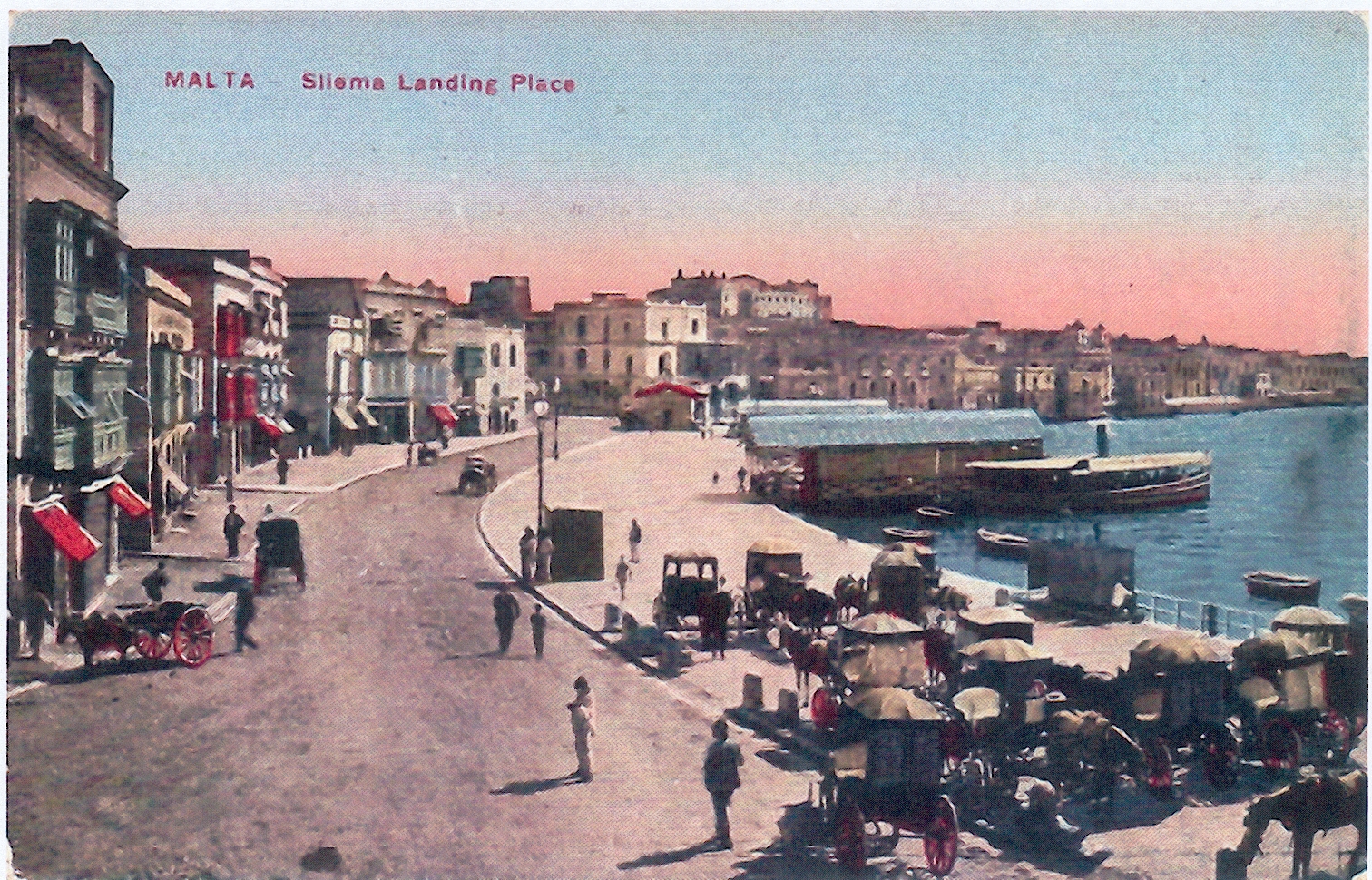
As I was taking my evening constitutional along the famous Sliema promenade, I happened upon the Legion of Mary saying the rosary in public. Of course, I joined them. We were praying for Malta, for several good reasons.
Then, as I continued my walk, I met a couple who live in Sliema saying their nightly rosary and I joined them. Again, these two were praying for Malta. Malta needs prayers. But, how wonderful that people feel free to pray in public. Several people joined us for a decade or so and moved on. I had the feeling that Mary was very pleased with this display of loyalty and devotion.
One man about my dad's age told me he had stopped to say the rosary, as he remembered when the Legion of Mary was popular in parishes.
God bless these good people and may all our prayers for Malta be answered.
Then, as I continued my walk, I met a couple who live in Sliema saying their nightly rosary and I joined them. Again, these two were praying for Malta. Malta needs prayers. But, how wonderful that people feel free to pray in public. Several people joined us for a decade or so and moved on. I had the feeling that Mary was very pleased with this display of loyalty and devotion.
One man about my dad's age told me he had stopped to say the rosary, as he remembered when the Legion of Mary was popular in parishes.
God bless these good people and may all our prayers for Malta be answered.
 |
| 1917 Postcard of Sliema |
Arguments on Nomenclature

Part of the problem is the over-protection of teens, from the point of view from parents in Gen X. Overprotecting children does not help them grow. I know children who are in their teens who have never walked anywhere, being carried in cars their entire lives from here to there.
I know parents who check up on their children almost constantly on the cell phone, creating hot-house plants instead of allowing youth people experiences that help them grow up.
But, one must start with language. A teen is not a child. A teen is a young adult, who should be learning skills for being independent at college or university. To keep calling teens children is to demean the process of maturation.
In addition to not giving young adults some freedom in movement and making decisions under parental guidance, another huge problem is that parents do not demand obedience from adults who are in the house and being supported.
I tell parents constantly that if they are still paying rent, food, travel, clothes, etc for their offspring, those children owe their parents obedience and honor. I have friends who absolutely disagree with their young adults' lifestyles, but still give them money and meet their needs.
This is not good parenting. One should not become friends with their offspring until these people earn such respect as adults.
One moves towards maturity in slow steps, but these steps have to be orchestrated by the parents. Parents need to plan how to make their children become young adults and finally adults.
Being financially responsible is one of those steps. Becoming mannerly and respectful is part of growing up.
Making good decisions about things is also a step to maturity, under the guidance of parents and under the authority of parents.
To be continued...
Monday, 14 October 2013
Romans in Malta
I spent the day with a friend in Rabat. This is the place where both Blessed John Paul II and Benedict XVI visited the Grotto of St. Paul. Fantastic Roman catacombs and a Roman villa allow one to see the influence of a long Roman occupation of Malta.

Here are a few photos.
There is also an art gallery and museum there which I shall need to visit again. I shall write about that tomorrow.
Too hot to write....
 |
| http://www.maltasicily.com/malta/en/1/to-see-and-do/cultural-site/cult_31/29-Roman+Villa.html |

Here are a few photos.
There is also an art gallery and museum there which I shall need to visit again. I shall write about that tomorrow.
Too hot to write....
| http://www.themaltaexperience.net/?p=398 |
 |
| http://www.maltabulb.com/tourist-attractions-in-malta.html |
Please note this....
PIUS XII
APOSTOLIC LETTER
SACRED convergent YEAR
CONSECRATION OF RUSSIA
TO THE IMMACULATE HEART OF MARY
TO THE IMMACULATE HEART OF MARY
As the year drew holy happily toward its end, after that by divine disposition was given to us to solemnly define the dogma of the Assumption body and soul into heaven of the great Mother of God, Virgin Mary, many from all over the world There expressed their vivid exultation, among them were those who did not, in sending thank you letters, begged so earnestly We consacrassimo the entire people of Russia, in distress of the present moment, to the Immaculate Heart of the same Virgin Mary.
This petition came to us extremely welcome, because if Our paternal affection embraces all peoples, especially caters to those that, although for the most part separate historical events from this Apostolic See, yet still retain the Christian name and are in a state that not only are they difficult to hear our voice and know the teachings of the Catholic doctrine, but are pushed with deceptive and pernicious arts to reject even the faith and the name of God
1. constant remembrance in prayer
As soon as we were elevated to the supreme pontificate, our thoughts turned to you, the people who make up a huge, famous in history for glorious deeds, for love of country, for hard work and thrift, for piety towards God and the Virgin Mary.
We never ceased to raise our prayers to God that always help you with His light and His divine help, and grant you all to be able to reach, along with the optimal material prosperity, even that freedom for which each you will be able to protect their human dignity, knowing the teachings of the true religion, and pay the debt to worship God not only in the depths of his own conscience, but also openly, in the exercise of public and private life.
After all you know that our predecessors, whenever he showed them a chance, nothing else had more at heart than to express to their goodwill and to offer you their help. Do you know that the Apostles of the Western Slavs, Saints Cyril and Methodius, who together with the Christian religion brought to the ancestors of those also civilization, they headed quest'alma city, because their apostolic activity was supported by the Romans popes. And while they make their entrance in Rome, our predecessor of happy memory Adriano III 'meets them in great witness of honor, accompanied by the clergy and people " ( 2 ) and, after approved and praised their work, not only elevates them to the episcopate, but he wants to consecrate himself with the solemn majesty of the sacred rites.
2. In a millennium from the first meetings
As for your ancestors, the Roman pontiffs, whenever circumstances permit it, tried to tighten or strengthen the bonds of friendship with them. Thus in the year 977 Our predecessor of happy memory Benedict VII sent his legates to the prince Jaropolk, brother of the famous Vladimir, and at the same Grand Prince Vladimir, under whose auspices shone for the first time among your people the name and civilization Christians, delegations were sent by our predecessors John XV in 991 and Sylvester II in 999, which was reciprocated by the same kindly Vladimir, who in turn sent messengers to the same Roman pontiffs. And it is noteworthy that at the time when this prince brought these people to the religion of Jesus Christ, the Christian East and West were united under the authority of the Roman Pontiff, as the supreme head of the whole church.
Indeed, not a few years later, in 1075, your prince Isjaslav Iaropolk sent his son to the supreme pontiff Gregory VII, and that Our predecessor of immortal memory, so he wrote to this prince and his august consort: "Your son, while visited the sacred thresholds of the Apostles, came to us, and because he wanted to get that kingdom for Our hand as a gift of Peter, having made profession of allegiance to the same prince of the apostles, requested him with devout supplications, ensuring no doubt that the his request would have been ratified and confirmed by you, if he had the favor and protection of apostolic authority. Since these votes and these requests seemed legitimate, both for your consent and for the devotion of the applicant, we finally have accepted, and we delivered by the Government of St. Peter of your kingdom, and with this intention with this burning desire, that blessed Peter with his intercession with God will guard you, your kingdom, and all your stuff, and you do have that same kingdom in peace and with all honor and glory to the end of your life. .... " ( 3 )
Also, it is to be noted and taken into consideration that the sum Isidore, Metropolitan of Kiev, in the ecumenical council is Florence, signed the decree which was solemnly sanctioned the union of the Eastern and Western church under the authority of the Roman pontiff, and this throughout his ecclesiastical province, that is, for the entire kingdom of Russia, and that penalty units he, as far as he looked, he remained faithful until the end of his earthly life.
3. Pages admirable generosity and love
And if in the meantime, and as a result, because of an accumulation of adverse circumstances, on the one hand and on the other communications became more difficult, and consequently more difficult union of souls - although until 1448 did not have any documents public declaring your church separated from the Apostolic See - this, however, in general, not be attributed to the Slavic people, and certainly not our predecessors, who always surrounded it with a fatherly love these people, and when it was possible for them took care to support them and to help them in every way.
Let's leave out quite a few other historical documents from which it appears the benevolence of our predecessors towards your nation, but we can not fail to mention briefly what did the Popes Benedict XV and Pius XI, when, after the first European conflict, especially in the southern regions of your home, huge multitudes of men, women, innocent boys and girls were hit by a terrible famine and extreme poverty. They in fact, driven by paternal affection towards your fellow countrymen, sent to these people food, clothing, and money collected by the entire family of Catholics, to meet all those hungry and unhappy, and be able to ease some of their calamity. And they provided our predecessors, according to their ability, not only the physical needs, but also to the spiritual, in fact, you do not pay to raise supplications to God, the Father of mercies and the source of all consolation (cf. 2 Cor 1.3 ), wished they were also held public prayers for your religious condition so upset and disturbed by the deniers and enemies of God, I decided to uproot from souls the faith and the very notion of Divinity. So the Supreme Pontiff Pius XI in 1930 established that on the day of the feast of St. Joseph, patron of the universal Church, "were erected common prayers to God. . . in the Vatican Basilica for the miserable conditions of religion in Russia ', ( 4 ) and he himself wished to be present, surrounded by a thick and pious multitude of people. Also in the solemn speech consistory exhorted all with these words: "We must pray to Christ. . . Redeemer of the human race, so be restored to peace and freedom to profess one's faith to the unhappy children of Russia. . . and we want according to this intention, that is, for Russia, those prayers are recited which Our Predecessor Leo XIII of happy memory has forced the priests to say with the people after the Holy Mass, the bishops and the regular and secular clergy with care seek to inculcate the above for their loyal or anyone attending the Mass, and this often recall to their memory. " ( 5 )
4. Impartiality of the Supreme Pontiff
We gladly confirm and renew this exhortation and this command, since the religious situation in this with you is certainly not better, and because we feel towards these people animated by the same genuine love and the same concerns.
At the outbreak of the last long and terrible conflict, we did everything that was in our power, with the word, with the exhortations and action, so that the disagreements were healed through fair and just peace, and so that the people everyone, without distinction of race, would join a friendly and brotherly, and collaborate together to achieve greater prosperity.
Ever, even at that time, came out of our mouth a word that might seem unfair or harsh to a part of the belligerents. We have certainly tried, as you had, any iniquity, and any violation of law, but what we did in order to avoid with all diligence what he could become, though unjustly, due to higher afflictions for oppressed peoples. And when somewhere you did not pressure us because in some way, either verbally or in writing, we approve the war waged against Russia in 1941, we agreed never to do so, as we expressed it openly February 25, 1946, in his speech before the sacred college and all the diplomatic missions accredited to the Holy See. ( 6 )
5. For the freedom of souls and for justice
When it comes to defending the cause of religion, of truth, of justice and of Christian civilization, certainly not we be silent, to this however have always turned our thoughts and our intentions, namely, that not by force of arms, but with the majesty of the law all people are governed, and each of them, in due possession of civil and religious liberty within the borders of their own country, should be conducted towards harmony, peace and the life of work, for which individual citizens can obtain the necessary things to food, to housing, livelihood and the government of their own family. Our words and our exhortations riguardarono and concern of all nations, and then you, too, that you are always present at our heart, and with which we wish to disasters and alleviate According to our forces.Those who love not the lie but the truth knows that throughout the course of the recent conflict hard We demonstrated impartial toward all belligerents, and what we have often proved with their words and actions, and we understand in Our ardent love all nations, even those whose leaders professed enemies of the Apostolic See, and also those in which the deniers of God fiercely oppose anything that smacks of Christian and divine, and try to erase it from the minds of the citizens. In fact, by the command of Jesus Christ, who gave the whole of the Christian people flock to St. Peter, Prince of the Apostles (cf. Jn 21, 15-17) - of which we are unworthy successor - We love with intense love for all peoples and we wish to procure the earthly prosperity and eternal salvation of everyone. All, therefore, is at war with weapons, both in contention for serious disagreements, we are considered by many as beloved children, and want nothing else, nothing else we ask God in prayer for them, if not their mutual concord , the just and true peace and prosperity increasing. Indeed, if some, because deceived by the lies and slanders, profess openly hostile towards us, We are driven towards them by a greater sympathy and a more ardent affection.
6. Condemnation of error and charity for the erring
No doubt we have condemned and rejected - as required by the duty of our office - the mistakes that proponents of atheistic communism teach and strive to propagate with high damage and ruin of the citizens, but the erring ones, far from rejecting them, we want them to come back to truth and be brought back to the right path. We have indeed brought to light and try these lies, which often presented under a false appearance of truth, precisely because we feed paternal affection towards you and seek your good. For we have the firm belief that you can not derive from these mistakes that enormous damage, since not only take away from your souls that supernatural light and supreme comfort those who come by piety and devotion to God, but also strip you of human dignity and the rightful freedom due to the citizens.
7. The powerful defense of the Mother of God
We know that many of you will retain their Christian faith in that inner sanctuary of conscience, that in no way leave you induce to encourage the enemies of religion, but rather crave profess the Christian teachings, unique and sure foundations of civilized life, not only privately, but if it were possible, as befits a free people, even openly. And we still, with the utmost Our hope and great comfort, that you loved and honored with ardent affection the Virgin Mary Mother of God, and who worshiped his sacred images. It is known that in the same Clemlino a temple was built - now sadly removed from the divine worship - dedicated to the Blessed Virgin Mary assumed into heaven, and this is a clear testimony of the love that you bring your ancestors and to the great Mother of God
However, we know that can not be less than the hope of salvation where the spirits turn with sincerity and ardent devotion to the Most Holy Mother of God since, while men strive, as wicked and powerful, to uproot from the hearts of citizens of the holy religion and Christian virtue, though satan himself trying to promote by all means fight this sacrilegious according to the judgment of the Apostle: ". . . we have to fight against flesh and blood, but against the princes and powers, against the ruling ofthis dark world and against the spiritual evil. . . "( Eph 6: 12), but if Mary interposes his powerful patronage, the gates of hell will not prevail. In fact, it is the most gracious and powerful Mother of God and of us all, and never has been heard in the world, that anyone has made use of appealing to her, and has not experienced his powerful intercession. Go on, then, as you are used to, to worship with fervent piety, to love passionately and to invoke her with these words, which are familiar to you: "To thee only have been granted, most holy and most pure Mother of God, to see you ever heard ' . (7 )
8. Fervent appeal for peace
We, too, together with you we raise our prayer to it, so that the Christian truth, dignity and support of human coexistence will be strengthened and vigoreggi between the peoples of Russia, and all the tricks of the enemies of religion, and all their errors and their perfidious arts are rejected far from you, so that the public and private morals again conform to the rules of the Gospel, especially to those among you who profess to be Catholic, though deprived of their pastors, resist with fortitude fearless against the assaults of wickedness up to death, so that just freedom which belongs to the human person, to the citizens and to Christians, all returned, as is their right, and first be restored to the church, which has the divine mandate to make disciples of all men in the truth religious and virtues, and finally, so that true peace may shine to your beloved nation and all of humanity, and this peace based on justice and charity direct happily fed by all nations for the common prosperity of the citizens and peoples that comes from mutual harmony of thought.
Is pleased with the benign Mother of our look with benign even to those who organize the ranks of militant atheists and give any boost to their initiatives. Want it illuminated with the light that comes from their minds, and direct with divine grace their hearts to salvation.
9. Consecration of the peoples of Russia to the Immaculate Heart of Mary
We, therefore, that more easily Our and your prayers are answered, and to give you a unique certificate of Our special benevolence, as a few years ago we consecrated the world to the Immaculate Heart of the Virgin Mother of God, so now, so very special, consecrate all the peoples of Russia to the Immaculate Heart same, in the sure confidence that with the powerful patronage of the Virgin Mary happily come true as soon as the votes that we, that you, that all good form for a true peace, a fraternal harmony, and the due freedom for all and first of all to the church, so that, through prayer that we lift up together with you and with all Christians, saving the kingdom of Christ, who is "a kingdom of truth and life, a kingdom of holiness and grace, a kingdom of justice, love and peace ", ( 8) in every part of the earth triumphs and consolidate stable.
And with humble prayer pray the same merciful mother Mary, why assist each of you in these disasters and get to her divine Son to your minds the light that comes from heaven, and implore for your souls that virtue and the fortress, so that, sustained by divine grace, can successfully overcome all ungodliness and error.
Rome, at Saint Peter's, 7 July 1952, the feast of Saints Cyril and Methodius, the fourteenth year of Our Pontificate.
PIO PP. XII
( 1 ) PIUS PP. XII, Epist. Exhortation. Sacred convergent year universae Russorum gentis Immaculato Mariae de Cordi consecratione, [Ad Universos Russiae Populos], 7 Iulii 1952: AAS 44 (1952), p. 505-511.
Subscribe to:
Posts (Atom)