Recent Posts

Friday, 16 August 2013

More Blog Poems for A Friday

Poems from The Ark


Poem One, The Violet


A moment of God showing one vulnerable and small
in the face of mysterious Love
The Spirit chooses my fate and leads me
as long as I am docile, like a small stream
against a high bank, like the sea contained

So, I am protected, like a child waiting
to hear the Voice of the Father saying
Oh Little One, where are you, where have you been
I have been waiting for you
in the field of lilies and wheat

Against the clear sky and the blue sea
which changes like moods, grey, white,
yet serene in its antiquity, touched by the oars
of Odysseus and witnessing the sails of Valletta
Who can judge the sea, who can judge one's self?

In a moment of particular judgement, I see the horror
of my sin, in the face of Pure Innocence and Goodness
He alone judges me and stands before the gate,
with The Woman at His Right Hand, she who is
All Beautiful and All Kindness

The Lady smiles and all is well, and all will be well
as she takes from Her Princely Son, the hand of those
who rely on her mercy and His forgiveness
Oh Great Ones, how can I look at your purity
How can I be anything at all except dust?

And, the King walks beside me, He Who is God
and Man, He walks as I walk through the trials set
by Him, for His Glory and my salvation
He walks with me, as He calls me sister, friend
and I am, but only because He has called me

But, one of His Little Ones, crowned not with jewels,
like those Pearls who have gone before in innocence
those Pearls who wear the emblem of perfection
No, my crown is merely flowers, which would die
in the other land, but here do not fade

Like a small child betrothed at an early age, not
understanding the King who will be her Spouse
like the trusting girl, who places her hand between
the large hands of the Father, blessing her, giving
her guidance and protection, I wait

Yet, I do not understand and deny any status, except
that of the violet by the pathway, which some step
over and some step on, and some notice, but for
a moment, then pass on. Like the violet, wild and only
there, because of a Roman matron who was lonely

for the Aventine brought some on the ship, so I wait
And, where is he, and what is he thinking and do
I even have a right to know, to wonder, about
someone who is so far above me, yet my brother
yet the one I choose to love, because I was given love

and said yes, because I am free to love
Like Peter, I was asked three times and three times
I said yes, because He Who asks knows the way
will be hard, yet the only way, the way to Rome
the way home to the heart of the Church

where all is serene, like the grey sea


Poem Two An Adventure in Grace

I alone see his youth, his tall and slender stature, his smile
which takes over his face and lights up those around him

I alone see through the mist of time to another day, in the
Hand of God, who outside time knows us in a stream of life

We are not just now, but were and will be in Him and if
He chooses, He shares the past, the present and the future

In a moment of Love, which takes me outside myself
into another time, a time of peace and innocence

How He sees me, how He sees him, young and innocence
awaiting an adventure in the Heart of Christ, Who is

and always was. The newness is eternity, is healing, is earthy
contentment for a time, a short time, yet holding all

in the breath of the air, in the flight of a bird, life lives
in a fullness, in a perfection which is God Alone

And, yet, He chooses to share this vision of perfection
of eternity with one who is so low, so insignificant

the small one called to wear a ring of power, if only
for awhile, realizing the authority and the pain, and

the joy of completion. Will he respond, will he say
yes to an adventure outside his imagination, yet imagined

by God from all time? Freedom to be all one can be takes
courage and a step outside time, forever changed, forever loved.

And because I love, I am given vision, the shared
vision of the Son of God, who gives His gifts as He wills

I did not ask for Love, Love came to me, in an instant
in a quiet, yet determined yes, a shadow of the Great Fiat

Her Perfection is a guide for me, who loves less freely,
less intensely, but with all the will I have

Her Yes gave me life, and my yes will invite life
on a smaller, less sacred, but redeemed manner

for am I not allowed to be part of redemption
am I not allowed to take part in the great dance

which is sacrifice, pain and joy, meeting in Love?
And, the Theotokos waits, while I am lead by two

to Her throne. She waits, knowing what is and
can be. She rejoices in the Will of Her Son and

she rejoices in giving wine to the wedding feast
the wine which is Her Son's blood and my salvation

Oh Queen, I did not know that He would lead me
to you and that you would lead me to Him

I did not know that I was to bring another with me
and that he would bring me with him, because this

was the Will of the Father, who knows who we are,
nothing and yet, sharers in the walk

But will we open our hearts and take courage?
Will we set aside fear and uncertainty for a

great adventure in grace? Stealing a line
from Raissa looking inward for meaning...


Poem Three-Orion

I look at the southern sky and see the Hunter
his belt streaming against the dark night

Strider, the one who hunts and holds his
weapon up to the heavens in the winter night

For months, he walks the sky, holding myriad
stars in his person, his sign reigning over the night

of my birth and that of My Saviour's, who sky
was ordained and who gave me my night

so close to His in birth. Orion, who I have
followed over the continents at the turn of night

over the seas of the south and the mountains
of the green lands, where the darkness of night

is marred by the full moon, Strider comes bringing
the cold and taking the cold, in the large sky of night

He looms, the giant and his dog, Tonight, planets
dance at his right, and far to the north, the night

streaks with mist, covering the Wain and hiding
the Galaxy which holds our small night

Orion claims the sky and will not yield to another
his hunt over the centuries does not change the night

but I change, I wait, I see the setting moon, ablaze
like a red star, as Orion turns into a different night

My constellation, my guide from the deepest bay
to the green valleys and hedges, lining the night

like braiding on a dress, like the scoring of a
perfect landscape, like the boundaries of night

Only the Sisters, the Pleaders compete for my
attention, but Orion kneels until the last night, waiting

to rest.


Poem Four—Stars in Orion

Twice in my lifetime, I have seen shooting stars
cross the belt of Orion.

Twice I have seen the dying pieces of rock
tossed into the sky

like the small flames from the sparklers
held by a child

in Mid-Summer. These arcs of light
cross my mind in memory

and I rejoice in the simplicity
of light in light in Orion

Blog Poem Two for The Dog Days

Second Poem for the Dog Days

The Romans most likely left this town in summer,
the heat being oppressive without the view of
Rome or Capri, but I am here, looking at the
pink and blue clouds coming off the Estuary.

At least, now, there are fish in the Thames again,
and there are children, but not those of  the Cantiaci,
rather of the Commonwealth. Heat and a modern
version of the fog keep me awake at night.

I cannot sleep as I hear those Londoners walking
home from the pub, or wherever, like characters
from Dickens, yelling their names under the lamplight,
telling their stories after midnight, as if no one could hear.

Eppillus would be amused at the various lovers' tiffs
surrounding his lands and punctuating the steam of the night.
But, I would rather listen to the silence, and miss the sea;
too far from the Thames are the waves off Dubris.

Sleep evades us all in London in August, and the ancients,
as well as the descendants of Austen, left for cooler climes.
Did they go to Aquae Sulis with their new loves, or Vectis with
the children and matrona, playing in the sand, dreaming

Of  Stabiae, and the Bay of Naples, with more clear springs
than those of Aquae Sulis and did the materfamilias complain
of the lack of shops and popinae as well as the humidity?
Will we ever see villa and canis again, and where is a decent

Wine to celebrate Vinalia rustica? But, no, not on these shores
under the sign of Canis major, whose star hides under the
clouds and fog from the Tames, who gives potter's a name.
No Opiconsivia here on the embankment.

So, I think of other things, listening as the small birds
which linger in the late summer wake and sing slow songs
without passion, but out of habit, or wanting to praise God,
which is what I do in the early dawn, of blue and pink

A mirror image of the dusk seen so many hours ago.

Two Blog Poems for A Friday

Boomers

Some say the millennium generation
have the most individualists
and that we boomers are
nothing but conformists
How wrong, how general
a statement of a generation
which holds old hippies,
politicos, idealists, realists,
back-to-the earthers, and
plain old fashioned grunts.

I see us as the great mixture
of competitive over-achievers
who went to Washington with
high hopes and no money
as well as the ones on motor
bikes who bought cheap shacks
on the Pacific now worth a
couple mill.

No, we were all different, and
happy in our eccentricities, those
of us who sang all the songs in
cars speeding along country
roads as well as the city folks
who we wanted to be but not
really. Boomers can't be
categorized and if you try,
we shall change, just for the
heck of it. We are the generation
of mercurial dreams....

Love in Stages

Under the same sky, along
the same, big river,
From Missouri, from Iowa, up
and down the Mississippi,
my parents have had 64 years
of married love in stages only
I have seen as I am the oldest
and witness to change.
They might not remember
the first years, when I was very
small and yet knew that they
were lovers, special to each
other with nick-names and
moments of passion which created
our big family.
I have an incredible memory
from age one and like any oldest
child, watched and wondered at my
parents as they grew up before my eyes.

The beginnings were romance and roses
love after war, and children, young,
not always understanding each other
and quiet days of worry. But that changed
to the expansiveness of busy times,
children, success, the loss of children,
sadness, and some disagreements which
I as a teen thought appropriate for the age.
Forty was so old, so old, from my young
eyes and forty-five was older, Their love
merged into love of home, children, a silent
change from youth to forbearance and
forgiveness, a necessary practice for two
so different, with varied expectations.
Give and take, dance and  bridge,
home and work, moving and staying put
all streaming into one river of acceptance
and changing dreams. Reality made
new partners in life. Commitments
renewed on the twenty-fifth and thirtieth
anniversaries, while children grew and left
and moved away farther into new lives.

A second stage of dancing and accepting
differences of onions, of aspirations, of
dreams and the dying of dreams. This type
of love was new to me, a love without
romance unless worked upon, like a
tapestry with a set pattern but unfinished.
I was not around to watch all the changes
of love, of life, of becoming one and
then two and then one again. I sensed
a change but could not tell where the
hearts lie.

A third stage popped into focus after
years of illness, each taking turns
at wellness and energy and sickness
and health. I saw what I had only imagined
was possible, love without the need
for return, love unrequited, love sacrificed
for the sake of the other-real love, real Love
unto death. Being in love and just being.

So, one couple can travel this route to
a certain type of freedom, of perfection,
but my path has been strangely fragmented.
My journey was not so neat, but more exotic.
Like a pilgrim with a shell and sack, I searched
for truth and love and found both in stages.
Three men led me to the same love. The first
all romance and roses, fine wines and
walks at midnight around the campus lake.
The second, the husband and father
a place in which I experienced the death
of expectations and the birth of a different
type of hope. But not to be til death us do part.
The third, unrequited, pure love, without
any hope, well a little, but full of the
joy of freedom and death to self. A holy
love which gives me a taste of heaven
What my parents did in one life-time,
I have accomplished in three, and yet
all love, all stages are gifts of time,
person, patience and a little
bit of luck. I think and write in
gratitude that love is real in stages.
Like the map of America, like
the Oregon Trail, like my ancestors
footsteps on the wooden stairs in
Iowa, Missouri, California, Oregon.
I trace the movements of love in
places, from Indiana to England
to Malta, and back again, through
the points on the globe to the brighter
points in the sky, those stars which
remained the same in all places,
like love, like guides to my soul.

Now, all three of us are at some
ends of some journeys undefined,
unseen, awaited in a faith we share.
We three cannot discuss such loves,
as we come from generations and nations
which did not do such things. We are
sharing in silence, in private, in the
quiet knowledge that love never ends.
The best things are those we cannot
articulate, but live, and live in stages.


Blog Poem for the Dog Days of August

The saint with the little white dog, walking through the wet streets
to San Girolamo della Carità  to sit in the shade and pray far from
the Vallicella, which he really did not like to visit...

To Santa Maria, Chiesa Nuova, he went under obedience, missing
his place on the left-hand side of the dark chapel. But, the youths 
needed him in those dog days, during the "dangerous part of the day"

When all slept, or sort of, the shutters closed to heat and eyes,  
ears could hear the names of Massimo or Martino wafting
over the eaves in sighs and shadows. The saint stood firm then.

And by the doors of the Venerabile, blessing all those pale
men, the "flowers of the martyrs" returning to England and
butchery. His songs would survive and come back to those

cold shores three hundred years later in another street, with
baroque and Counter-Reformation punch. The young are
still hot so far away, with love in their hearts and not much

in their heads, but beer and boredom. The little white dog
and saint knew best, and in the heat of the day found songs
to sing to cool the body and soul. Another Dog running

across the night sky, might find more peace than passion. But,
here, in this city of the dead and dying, of the voices of bravado
silenced forever by confusion, cowardice and fear, the good

saint still finds some young men to call his own.

Donlee-Blog Tale Five

Donlee knew she was a star-child. She came to being in a dream of Amy D's many years ago. Amy dreamed of Donlee without knowing her name, but she saw the star-child, the young girl in the sky. The dark sky formed a backdrop for Donlee's dance, the dance of the star-children. Her skirt was made of stars and when she danced, the stars flew off into the sky, as she twirled and twirled around. The darkness became illuminated with the dress-stars. Donlee twirled and danced in Amy's dream.

Amy saw Donlee only once, but Amy understood that Donlee was showing her a door, a door in the darkness. “See and enter” the voice offered Amy. And, the door, down the long, dark corridor, opened up into a blazing light, where nothing could be seem but light.

Donlee danced away. Amy grew up, got married, had children, but Donlee was not forgotten.

The star-child waited until Amy was old, old enough to become a grandmother, which she never did. Donlee waited.

Then, one night, in a cold and wet February, in a small house across the sea, Donlee came to dance in Amy's dreams again.


This was a different dance. The first dance was a dance of change and mystery, the opening of a new life of  husband, family, house, home.

Donlee was waiting for Amy to sleep again. Amy was now alone. Her husband and children were gone, so Donlee took pity on Amy and came into her dream.

On this night, Amy could not sleep. She was in pain, the pain of lost dreams, lost hopes, lost friendship, lost loves.

Amy got up and looked at the sky. She could Orion, the Strider, walking across the western sky, with his dogs. She could see, barely, the large and small dogs.

She could see Venus and Jupiter, but she did not see Donlee. Donlee waited. She waited and waited. Then, towards morning, when Saturn and  Mars were in the sky, Donlee entered Amy's dream. At first, Donlee had to sweep aside another dream of roses, yellow and white, of a large white arch across a garden and a small parkland. Then, through a long strange valley, Donlee saw her entrance into the dream. It was a low, small door, like that in an ancient house. The door looked as if one had to bow down very low to get in. But, Donlee, being a star-child, and small for her star-child age, did not have to bend low. She walked through the door into Amy's dream.

There, Amy saw a garden of green grass and very tall trees. On the edge of the forest was a well made of stone. Amy walked over to the stone well and looked into the water. Suddenly, the water shot up like a fountain into the bright sky, but the sky grew dark, dark as midnight, and there, coming through the door, was Donlee.

Amy watched, perplexed. Suddenly, the sky was bright as day, but Donlee was there, on the grass, dancing like a real girl, pink and blond and light as air. Her dress was white like mother-of pearl, but it was Donlee, dancing, spreading light over the grass and trees.

Amy did not at first recognize the star-child, as she looked like a little girl, any little girl. But, when Donlee laughed, Amy remembered her dream of thirty years before and knew it was the star-child. Donlee laughed and danced and danced, until she faded away.

Amy stood by the well, wondering why a star-child would be on the earth and not the the heavens, like before. She wondered why Donlee looked like any other child of the earth, instead of the star-child that she was.

Suddenly, a white horse appeared over the hill, near the trees, then another horse and another, three horses. Amy, in her dream, waited. Clouds rolled through the blue sky, and the horse stopped to eat grass. More horses came and then three men on horseback. One was on a black horse, and he wore silver and black armour. His face was covered. The second rider was in gold, with less armour, and a bow and arrow, on a golden horse. The third rider was all in white, and his horse was white. He wore no armour.

Amy waited, as a small boy in red and gold came over to her with a scroll. “Read and choose, Lady”, he said loudly. The horses and the men waited.

Amy looked at the scroll, and saw these words appearing as she read.

“You, Lady, may choose one rider. We give you a choice, the choice of the star-child. Look and choose.” Amy walked closer to the riders. The first in black looked kindly at her. He was an older man, in his prime, strong and gentle. She saw him reach out his gloved hand to her, but she moved on. The second was like a king, majestic, full of power and authority. His head was crowned with a golden circlet and small, very small red flowers. He laid down his bow and arrow, and held out his gloved hand, and Amy moved on. The third man without armour, wore a loose robe of pure white. He had nothing in his hands. He held out his hand and Amy took it. The strong hand pulled her up and Amy awoke.

Amy understood. The first kind knight was Death. She could escape pain and sorrow, disappointment and loneliness, but it was not her choice.

The second knight was worldly success and wealth, comfort and solace. She passed him by. The third knight was purity of heart and mind, single-mindedness, simplicity. Amy chose him.

In the morning, Amy woke up and a small brown bird landed on her window-sill. She looked, amazed, as the bird had the starry eyes of Donlee.

Amy had made her choice, and Donlee danced in another sky.

On Battles


One of the things I am puzzled by is the odd engaging in arguments in our Church over things which are extraneous to our Faith.

Private revelations are not necessary for our salvation. Period. Doctrine is necessary for our salvation. Liturgy is necessary for our salvation. Prayer is necessary for our salvation.

Choose your battles.

Blog Fairy Tale Four-The Ball of Fire


Reagalund looked at the clouds coming in over the dark sea. The moon, encircled by the rainbow, 
shone on the clouds, as they piled in above Reagalund's head. As she sat by the two old yews, which had been twisted by years of winds from the sea, Reagalund saw the rain clouds building, like steps in the sky,

All her life, Reagalund had lived by the yews, in the cold country of the rain and wind. She loved the moon and stars when these came out of the clouds, like lamps through the linens over the windows to keep out the mosquitoes. She thought the clouds looked like steps going up into the heaven, big, giant steps, for Orion, perhaps, the Strider, to walk up to seek his prey, chased by his dogs in the Western Sky.

But, tonight, there were only two lights in the sky, one small and still, the other, the moon.

The rains were coming and Reagalund wrapped her woollen cloak about her legs. She wore soft skin shoes and a linen dress under her heavy cape. Her father was a leader, not the king, but a leader of the clan.

Reagalund watched the clouds come in and in and in.  Far away, she thought she saw the twinkle of a small light, but she knew nothing was out on the sea. No tonight.

Reagalund's father, a widower, named Edmere, had gone into the town that morning with the dogs and some other men from the village. They would not be home before the moon set. It was far to the village and back and men only went there a few times a year for meetings with the king and for bartering. Her only brother, Edgar, had gone with them.


Tonight, Reagalund was excited. She would not sleep. This was the day her father had decided to ask the king for a mate for her. She knew who she wanted, the king's own son, Miccallan, but he was promised to a great king's daughter across the dark sea. Reagalund wondered what her father would do. The king could not ask his son to break his promise without shame and Miccallan had never seen Reagalund. She had seem him at the moot a year ago and loved him at once. He was with the great king's beautiful daughter, Sliem,  a tall, dark-haired, dark-eyed, exotic woman of many talents. But Reagalund was not beautiful. She was rather short, and had plain, brown hair and brown eyes. She was not rich like Sliem, whose jewels were from the ancient world, bought by her family and kept for centuries. But, Reagalund loved Miccallan and prayed for him to the unseen Spirit.

Monks had brought some new religion to Reagalund's father. They spoke of a Father, a  Son and a Spirit. They had fought with the old priests and won some strange contests of power. But, Reagalund knew that Micclan had followed the new religion and Sliem did not. 

She wondered at this.

Reagalund's heart had been won by the monks and she was baptised with her father and all the clan last spring. Since then, she carried her black book and  her small dog to the Church near the sea to hear the Mass, and sing the strange new chant the monks had brought. The prayers she said for Miccalan were prayers the monks had taught her.  But, so far, none of her prayers were answered.

She had prayed for Miccalan's mother, when she got the sickness of women, and died young. She had prayed for Miccalan's older brother, the king's heir, but he died of the wounds of the battles fought for the king over the sea. She had prayed for Miccalan himself, but he was betrothed to Sliem. 

Still, Reagalund prayed,as the monks had explained to her that the Triune God had His Will and she had to discover this Will. It had been His Will to take the young queen to heaven, and to take the heir to heaven. Now, Reagalund wondered if her prayers for Miccalan would be answered.

She only wanted God's Will, and thought that it seemed like her life with Miccalan was not God's Will. She had seen him from afar six times, and remembered the sound and smells of the days like a magical painting. Every detail seemed full of meaning, but he was not hers.

The rains began and Reagalund ran back to her own hut. Since she was of age, the monks watched over her and she did not live with her father and brother. On a low, rectangular stool in the corner of her room, a cross stood. The monks had given it to her when she was Confirmed. 

All was silent except the rain, but then something strange happened.

The dogs began to bark loudly and the rain stopped. Reagalund looked out and up at the sky. The rippling clouds looked like a large giant hand in the sky above the yews. And like a hand, the fingers stretched out to the horizon. There, racing out of the fingers of the cloud hand, like a ring falling from one of the fingers, was a huge fireball. The ball of fire passed through the clouds and came down towards the sea. It was not falling, but arching, as if drawn by a plan or design in the dark sky, In a short time, the fireball fell into the sea and steam came up and mingled with the clouds with a loud hissing noise. The dogs barked and ran to the edge of the cliff, yelping at the hissing, their cries mixing with the strange steam. Reagalund saw the monks running to the edge and two ran down the path to the beach. 

The clouds broke and the moon shown over the bubbling sea, as if showing the end of the fire to the world,

After a few minutes, all was quiet again. The dogs strayed back to the huts and the monks walked back to their Church speaking softly with one another. Reagalund thought that this fireball was some sort of sign. Then, the clouds came together and the rains started again, pelting the earth with giant drops, as if the sea was throwing its contents onto the earth. The young woman walked in the cold rain to her hut. She stood at the door for a long time wondering at the strange event.

She had only seen a fireball twice before and then, only after wild storms had ripped across the trees. Those fireballs had been green and danced across the tops of the fir trees, tracing the line of trees like a chain of light. Both times, the fireballs faded away in their dance over the trees.

This fireball was different It had been bright orange and yellow and white, clearly on fire and not the cold, green light of the other fireballs.

This fireball did not come with the storms, but came from the heavens, far above and through the clouds. 

This fireball did not dance, but plunged in an arc toward the sea, as if the sea were calling it down from the skies.

This fireball was truly fire, whereas the others were a strange light not made by men.

Suddenly, Reagalund felt cold and she laid down on her woollen bed. Soon, she was asleep in a heavy sleep without dreams. When she awoke, she heard the voices of her father and brother outside, talking with some others-the monks among them. The woman took a jug of milk, some cheese, and flat bread from a stone hole in the wall of her house and quickly ate and changed into her day clothes. Her dress was a pale orange and her cloak green. She put her soft shoes on her feet and went outside.

Her own little dog came up to meet her. She could see the men in the distance by the beach. Their voices had sounded closer in the cold, still air. The men, about seven, were looking at something in her father's hand.

Reagalund walked down to the beach and was greeted. Her father looked solemn, but welcoming. She went over to him and looked down at his gloved hand. He was holding an enormous diamond, the kind of which Reagalund had never seen before.

One of the monks spoke.

"It was on the beach. We think it is the fireball somehow washed up on the shore."

Reagalund's father placed it in her hand. The stone out-shown the fireball in brilliance and beauty. 
How could this be that gigantic flame which went into the deep sea? But, then, from where else did this come?

Edgar spoke loudly. “This belongs to us, as we are the oldest family in this village.” Edmere said softly, “No, son, it belongs to the Church and the monks, as it was sent from heaven and will stay in heaven on earth.”

The monks took the jewel. The eldest and abbot, Michael, said they would make it into a tabernacle for the Consecrated Hosts, and all agreed. But, Edgar was sullenly silent.

Later, Edgar came into Reagalund's hut. He threw himself down on the pile of warm skins in the corner. He seemed angry. “I wanted you to have the stone, Reagalund.” He grumbled.

“But, why, Brother? I do not need nor deserve such treasures. And, surely, Father is right.”

“I wanted it for your dowry, as I know you pine for the Prince Miccallan. He would have changed his mind and spurned Sleim for you.”

Reagalund looked at the floor, and then embraced Edgar. “Dear Edgar, love cannot be bought. It happens or it does not happen. The Holy Spirit of Love gives love, as the monks have taught us.”

Edgar sat up. “I saw the Princess yesterday at the moot, Sister, and she does not love Miccallan. She loves his position, his power, his status, his wealth. But, I saw that she did not love him. A man can tell. Why Miccallan loves her I cannot tell. You are worth more, in your simple gowns and simple Faith than her.”

Tears came to Reagalund's eyes. “You cannot see into his heart, nor can I, dear one.”

She took her brother's hands. “I shall pray that they are happy.”

Edgar continued. “Jesus does not care about a diamond. How useful it would be, for you. Now. You are of marriageable age and have no suitors.”

Reaglund stood uap. “I cannot be bought or sold, Brother, and I do not want a man who cares if I am rich or poor, beautiful or plain. I must be loved because I am Reagalund.”

“You are correct, as usual, and I am boring you. I am going hunting and shall see you tomorrow. I am going up into the hills.” Brother and sister kissed gently and he was gone.

Reagalund was left with her sad thoughts. Perhaps Miccallan loved this Princess in order to be a free man, and be happy with such treasures as beauty and wealth. She did not know.

One of the monks came to the door everyday for food. He, Brother Maurus, was there now. Reagalund gave him milk, bread, meat, and berries. “I have no fish today, Brother Maurus. The men said that the fireball frightened the fish to the bottom of the sea for many days to come.”

“Do not worry, Child.” Reagalund spoke quickly, “Brother, how do you know something is God's Will?” The monk stared kindly at the young woman. “If you are in grace, and you are, and you have a persistent thought, which will not go away, it is probably God's Will for you. Be at peace.”

“Thank you, Brother. I shall think on that.” And, he left. He wondered at her question and offered a silent prayer on the way back to the monastery.

Then, the winter set in and it was hard, the coldest and wettest in the memory of many old villagers. Some died, and the Church offered Masses and prayers for their souls. Almost fifty old and very young died of the cold and fevers. 

Among them was Edmere. Reagalund had gone to see her father an early, very frosty and cold dawn. The sky was black and the stars vibrant in the cold air. She knocked at his door, and there was no answer. She knocked again and the chill of the morning crept into her body and surrounded her heart. Something was wrong, as she could not hear the dogs or her father moving about in the dawn air.

She opened the door and the two dogs were lying next to the fur bedding. They raised their heads and looked sorrowfully at Reagalund. Her father lay still, too still. Reagalund knew.

She went over and touched his face. He was stone cold. The dogs began to whimper and Reagalund knelt by his bed. Edgar came up to the door. “Where is Father? He is wanted at a meeting.” Then, she stopped and noticed the dogs, and Reagalund's tears.

“Oh, no. no. Last night, he said he felt poorly and that he was going to bed early. I did not think anything of it. I did not think and now, now I cannot speak with him. He cannot hear.” The sister spoke first after a long time. “Go and get the monks and we shall take him to the Church.”

Edgar left, running and Reagalund took her Father's hand and kissed it. She wept. She felt like a failure, like a daughter who had not made her Father happy. She was not a bride.

Edgar and Brother Maurus came into the room with the priest, Father John. He blessed the body and then let Reagalund put Edmere's best clothes and armour on. The dogs watched silently, and Reagalund cried.

After the funeral and burial, the dogs came with Reagalund to her hut and she kept them. 

They stayed by the door for days and then, as if some strange magic were working, they both died the same night. Brother Maurus let the dogs be buried in Father's grave, which was still soft earth. He said it was good for them to rest with their master.

Reagalund felt pushed into a terrible loneliness. She knew Edgar would leave someday, as he wanted to do things in other places. He wanted to explore and hunt far away. Reagalund was lonely and was glad for the company of her small dog.


The winter continued and the rains came more, daily. 

Reagalund moved in and out of the hut covered in her green cape. Edgar hunted for the village and brought back much meat, so that there were no more deaths.

But, Reagalund felt a dying inside her. 

She could hardly remember Miccallan's face or his voice. She had not seen him for months and did not even know where he was. She knew he was not yet married, as the celebration would have encompassed the entire land. But, she knew nothing else.

She hated it that his voice and face were fading in her mind. But, several times, she felt his presence, as if he were standing next to her. She thought this was strange and prayed for her imagination to go away from such fantasies.

Then, as the thaw began, a strange thing happened. Rumors of Sleim travelled across the sea. Sleim the vibrant had married someone else. Another prince, older and richer than Miccallan had come to her and demanded that she come with him to his warm country far away. Sleim's father, the king, was angry, as this change would bring shame upon him and his people. Sleim defied her father, and left with the rich king. Both countries faced shame. 

And, there was talk of war.

Edgar was called to a council. He left, with a small bag under his cloak. A monk, Brother Maurus accompanied him to the moot. The village talked and talked, but all was conjecture. No one knew what was happening. Reagalund, after two mornings, went to the priest, Father John, and asked him what her brother carried.

“We gave him the fireball stone,” whispered the priest. “It will save the country from shame and the monks were happy to part with it. It can go into the Cathedral which the king is building for us all.”

Reagalund stared. “Whose idea was this?” she whispered.

The priest looked at her with great, kind eyes. “Edgar told us that he thought the diamond belonged to the country, to all, in the capital. He convinced us that this stone would cover some of the shame of Sleim's desertion. He also told us something else.” Reagalund felt her face become hot. She was ashamed. “Do not be alarmed, Reagalund. Let things happen. Let God's Will be done.”

“I cannot  be bought and I do not want Miccallan to think I want his position, or wealth, or status. I want none of that. I only love and I love freely. Even if he were not the prince, and a poor fisherman, I would love him no less.”

“I know this, Reagalund. I know this, which is why I agreed to the plan. Watch, wait, pray.”

Father John blessed the confused woman and she left. She did not know how to feel. She felt like she was being bartered. How could Edgar suggest such a thing?


But, as she sat by her door and listened to the waves on the shore, Reagalund began to understand Brother Maurus' words. How does one know God's Will? Let things happen. Pray, and stay in grace, knowing that your thoughts are from the Holy Spirit. Trust.”

Reagalund looked at the sky and realized that the fireball had come to her, for her. 

She was content to wait, to pray, to trust.


Thursday, 15 August 2013

More -pray for the Copts, please

http://www.nationalreview.com/corner/355761/peaceful-brotherhood-protesters-torching-coptic-christian-churches-andrew-c-mccarthy

Excellent article

http://www.davidwarrenonline.com/2013/08/15/chronicles-of-peace-peace/

Persecution Watch Again

http://www.asianews.it/news-en/Egypt,-Muslim-Brotherhood-assaults-22-Christian-churches-28745.html

I am so excited


In 1999, in Washington D. C., I saw the first day of the relics of St. Therese of Lisieux in the world journey of the beautiful remains throughout the U.S.A.  I had a profound experience of this Little Flower, after waiting out in the rain for several hours, while the special guests had a private Mass. I also had a fantastic discussion with the Carmelite friar who was in charge of the eastern journey of these relics from Washington to the Mississippi River.

At that time, I had been visiting Seton Home Schooling for a perspective job, which did not happen, but I met many saints while I was in Front Royal. The trip to Washington to see the relics was icing on the cake.

St. Therese is one of my personal patrons. The list gets longer as I get older, but she accompanied me from childhood, and was the first biography of a saint I read as a child.

Now, a relic of hers is coming to Dublin, to Whitefriar Street Church on Aungier Street from August 22-24th. I am so excited.

St. Therese is one reason why I am in Europe. She is loved by so many because of her little way of love which speaks to the heart of the laity.

From 10:30 to 6:00 for those three days, one may come and honour this saint of our times.

I am so excited.


Feast of the Assumption

                                                          Assumption of the Virgin Mary by Agostino Carracci


LESSON Eccli. 24:23-31 [Sirach]
As the vine I have brought forth a pleasant odour: and my flowers are the fruit of honour and riches.I am the mother of fair love, and of fear, and of knowledge, and of holy hope. In me is all grace of the way and of the truth, in me is all hope of life and of virtue. Come over to me, all ye that desire me, and be filled with my fruits. For my spirit is sweet above honey, and my inheritance above honey and the honeycomb. My memory is unto everlasting generations. They that eat me, shall yet hunger: and they that drink me, shall yet thirst. He that hearkeneth to me, shall not be confounded: and they that work by me, shall not sin. They that explain me shall have life everlasting.

Keep praying for Thomas Peters

http://tpetersrecovery.blogspot.ie/2013/08/surgery-update-success.html#comment-form

The Pigeons of Dublin

are seagulls. And do they have big feet one can hear on the rooftops. Or, I guess, it is more correct to say claws.....

http://www.broadsheet.ie/tag/seagulls/


Ashes to Ashes The Dark Night of the Soul 33


In the purification of the senses, all pleasure is denied to the body and the mind. The reason for this is not that God hates the body or the imagination the He created, but that one has sinned and turned away from God over and over again, creating patterns of sin which must be cleansed.

Remembering that only the perfect see God, one must cooperate with this purification of the senses.

Eating becomes a duty, not a pleasure. Normal things which use to bring a natural joy no longer do so. Some people begin to hate shopping, which use to bring them pleasure. One may find no pleasure in reading Scripture and meditation is impossible, as the imagination is cleansed.

One's memory dims except when God wants one to remember something for His Glory.

Nothing exterior causes comfort. And, if one keeps seeking comfort, one falls back out of the Dark Night until one decides to accept the pain of such sensual emptiness.

One prefers silence to music, even favourite composers.

Art, which delighted one in the past, just is. The beauty of one surroundings either is taken away or one no longer derives pleasure from such. Even the loss of one's own physical beauty is part of the movement of the purification. An illness, like cancer, or a look in the mirror as one ages, brings the reality of this loss forward into one's consciousness.

I have asked God to take away the desires I have for things, places, people. This is happening slowly. But, He took the initiative and removed so much from my life that I had to give up. This isolation and purging are graces. What the nuns and monks do willingly, some of us do at first, not willingly, but then so. All I want is to experience Him for His Own Sake and not for mine or any one else's

Why must one endure such pain? All is arid. One is in the desert.

John of the Cross has the answer. He calls this el sentido. The reason is concupiscence, which we inherit from original sin, pulls us down again and again, away from God and into ourselves.

St. Paul writes in Romans,

I find then a law, that when I have a will to do good, evil is present with me. For I am delighted with the law of God, according to the inward man: but I see another law in my members, fighting against the law of my mind, and captivating me in the law of sin, that is in my members. Unhappy man that I am, who shall deliver me from the body of this death? (Romans 7:21-25)

Here is St. John again, from a different point of view....

...the imperfections from which the soul frees itself in this dark night with respect to the fourth sin, which is spiritual gluttony, they may be found above, though they have not all been described there, because they are innumerable; and thus I will not detail them here, for I would fain make an end of this night in order to pass to the next, concerning which we shall have to pronounce grave words and instructions. Let it suffice for the understanding of the innumerable benefits which, over and above those mentioned, the soul gains in this night with respect to this sin of spiritual gluttony, to say that it frees itself from all those imperfections which have there been described, and from many other and greater evils, and vile abominations which are not written above, into which fell many of whom we have had experience, because they had not reformed their desire as concerning this inordinate love of spiritual sweetness. For in this arid and dark night wherein He sets the soul, God has restrained its concupiscence and curbed its desire so that the soul cannot feed upon any pleasure or sweetness of sense, whether from above or from below; and this He continues to do after such manner that the soul is subjected, reformed and repressed with respect to concupiscence and desire. It loses the strength of its passions and concupiscence and it becomes sterile, because it no longer consults its likings. Just as, when none is accustomed to take milk from the breast, the courses of the milk are dried up, so the desires of the soul are dried up. And besides these things there follow admirable benefits from this spiritual sobriety, for, when desire and concupiscence are quenched, the soul lives in spiritual tranquillity and peace; for, where desire and concupiscence reign not, there is no disturbance, but peace and consolation of God.

This purgation is painful. It involves a struggle. Even the usual comforts of the pleasures of the Mass and prayer are denied to one. But, one WILLS to love, which is the whole point of the Dark Night. One wills to love despite no warm fuzzies. A person can experience victory over concupiscence. 

Those who seek spiritual comforts will not be perfected on earth. 


John of the Cross and others state that many endure the purification of the senses, but few that of the spirit. I shall move on to that state in the next post on the Dark Night. Here is a glimpse of that state:


In this purgation [of the spirit], these two portions of the soul (estas dos partes del alma espiritual y sensitiva) will undergo complete purification, for one part is never adequately purged without the other. The real purgation of the senses begins with the spirit. Hence the night of the senses we explained should be called a certain reformation and bridling of the appetite rather than a purgation. The reason is that all the imperfections and disorders of the sensory part are rooted in the spirit and from it receive their strength


And, (todas las imperfecciones y desórdenes de la parte sensitiva tienen su fuerza y raíz en el espíritu). All good and evil habits reside in the spirit and until these habits are purged, the senses are not completely purified of their rebellions and vices.

The next step is more painful, and one cannot see where one is going, but lives totally by Faith. One fights this purgation, which is part of the suffering, but the roots of desire must be destroyed for God to come to the person in Union. Here is John again....

God divests the faculties, affections, and senses, both spiritual and sensory, interior and exterior. He leaves the intellect in darkness, the will in aridity, the memory in emptiness, and the affections in supreme afflication, bitterness and anguish, by depriving the soul of feeling and satisfaction it previously obtained from spiritual blessings (gusto que antes sentía de los bienes espirituales). For this privation is one of the conditions required that the spiritual form, which is the union of love, may be introduced in the spirit and united with it. The Lord works all of this in the soul by means of a pure and dark contemplation (todo lo cual obra el Señor en ella por medio de una pura y escura contemplación), as is indicated in the first stanza [of the poem, En una noche oscura]. Although we explained this stanza in reference to the first night of the senses, the soul understands it mainly in relation to this second night of the spirit, since this night is the principal purification of the soul.

We have, besides Christ, two who did not endure this Dark Night, as they were with God, one from conception and one from six months in the womb. Mary, Our Mother and Queen can help us through her prayers. St. John the Baptist, born in union with God, can also help us. Pray to them.

I may add that one can force a delay in this process by not accepting suffering and contemplation. I did this for years, running away from the call into purgation. One can start the process and then leap back into the life of the senses, which moves one away from perfection. Do not do this...but God is Faithful, and will call one back.


I know the month and year I ran away the first time from deep contemplation and this Dark Night, April of 1987. But, God allowed me my free will and led me to other paths before I was willing to join Him again in the Dark Night. Even that running away from suffering was part of His Will for my life. There is a mystery in all of this. He blessed me with His Love and kept calling me. That was a long time ago. God chipped away at my ego and sinfulness until I was ready to accept the journey again. Do not run away, but let God work all this good in you. One cannot move into union with God in any other way. One cannot.

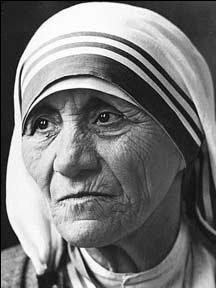
Also, remember Blessed Mother Teresa of Calcutta was in the Dark Night for at least 45 years. No complaints...only walking in Faith constantly, daily.


To be continued....