Recent Posts

Thursday, 17 October 2013

From two excellent sites--persecution watch again, again, again

EU requested to establish national surveillance units to monitor citizens suspected of “intolerance”

The European Council on Tolerance and Reconciliation (ECTR), comprising former heads of state and government leaders, has requested that the EU establishes national surveillance units to monitor citizens suspected of “intolerance”. The ECTR called its proposal the ‘Framework National Statute for the Promotion of Tolerance’.
European Dignity Watch, a civil rights watchdog group based in Brussels, has warned that this directive “aims to impose governmental control over the social and economic behavior of citizens in the widest possible sense.” The group says that the ECTR Framework’s basic principles are flawed and that it “interferes in an unprecedented manner with citizens’ freedom and rights” and “distorts the concepts of ‘justice’ and ‘equality’.” Through “a reversal of the burden of proof,” the proposal “encourages frivolous litigation” and will lead to “institutionalized public control” of private opinion and thought. Sophia Kuby, spokesman for European Dignity Watch said:
“Faith-based groups and schools, adherents of a particular religion or even just parents who want to teach their children certain moral values would all be put under general suspicion of being intolerant.” “Even worse,” she said, this language “could lead to the possibility that charges are brought on unclear or even without legal grounds.” She said it would “be a significant step backward,” and “would certainly be a dark day for European democracy.”
The surveillance proposals include the following chilling statements:
  • There is no need to be tolerant to the intolerant especially as far as freedom of expression is concerned.
  • “Members of vulnerable and disadvantaged groups” it adds, “are entitled to a special protection” in addition to the normal legal protections afforded by the state. This “special protection…may imply a preferential treatment” for those identified as “vulnerable”.
  • “It is important to stress that tolerance must be practised not only by Governmental bodies but equally by individuals, including members of one group vis-à-vis another.” It adds that the “guarantee of tolerance must be understood not only as a vertical relationship (Government-to-individuals) but also as a horizontal relationship (group-to-group and person-to-person).
     
    It is the obligation of the Government to ensure that intolerance is not practised either in vertical or in horizontal relationships.”
Protect the Pope comment: This sinister proposal to establish national surveillance units to monitor citizens suspected of “intolerance” has to be considered a serious threat to our freedom of religion and freedom of expression because it comes from former heads of state and government leaders and not some fringe extremist group of gay and secular lobbyists. If these proposals become law in the European Union then Catholics who uphold the teachings of the Church about the family and sexuality would be unjustly branded as ‘intolerant’ and subject to surveillance and punitive action by the state. Protect the Pope looks forward to reading the Conference of European Bishops response to this unprecedented threat to the Faith in Europe.

Posts on the signs of the times

Some re-posts of mine from another blog.

Read and ponder, please.

http://guildofblessedtitus.blogspot.com/2013/02/a-time-machine-back-to-1581-death-of.html


This will happen in Great Britain, America, Canada and most of the Western World. Catholics now have to prepare themselves for persecution, and follow the stages of such, which I have highlighted on my blog here. Some of us have seen this coming for over thirty years. And, many seminarians in the States and some in Great Britain, are prepared for martyrdom. I have been writing about Catholics with their heads in the sand about the reality of the tyranny of relativism since 2007. Some are waking up and listening. Most think that they can dialogue with the world. We are here to convert the world, not to dialogue with evil.

Aleksandr Isayevich Solzhenitsyn said years ago that good cannot dialogue with evil. That is what has happened to bring us in the Church to this spreading and planned persecution of Truth.

As Christ said, "He that is not with me, is against me: and he that gathereth not with me, scattereth."

We need to make choices now either to stand with Truth or not.

Also, read...

http://guildofblessedtitus.blogspot.com/2013/04/a-prediction-concerning-catholic.html

http://guildofblessedtitus.blogspot.com/2013/03/on-rational-discourse-and-blogging.html

http://guildofblessedtitus.blogspot.com/2013/07/stages-of-persecution.html

http://guildofblessedtitus.blogspot.com/2013/08/rethinking-new-evangelization.html

http://guildofblessedtitus.blogspot.com/2013/05/the-rational-catholicneeded.html


A Reminder from The Great Aleksandr Solzhenitsyn


from http://www.alor.org/Library/LegacyofTerror.htm

Marxism has always opposed freedom. I will quote just a few words from the founding fathers of communism, Marx and Engels
(I quote from the first Soviet edition of 1929)
"Reforms are a sign of weakness" (vol. 23, p. 339); 
"Democracy is more to be feared than monarchy and aristocracy," (vol. 2, p. 369);
"Political liberty is a false liberty, worse than the most abject slavery" (vol. 2, p. 394). 

In their correspondence Marx and Engels frequently said that after achieving power, terror would be indispensable, that "it will be necessary to repeat the year 1793. After achieving power, we'll be considered monsters, but we couldn't care less" (vol. 25, p. 187). 

Communism has never concealed the fact that it rejects all absolute concepts of morality. It scoffs at any consideration of "good" and "evil" as indisputable categories. Communism considers morality to be relative, to be a class matter. Depending upon circumstances and the political situation, any act, including murder, even the killing of thousands, could be good or could be bad. It all depends upon class ideology. 

And who defines class ideology? The whole class cannot get together to pass judgment. A handful of people determine what is good and what is bad. But I must say that in this very respect communism has been most successful. It has infected the whole world with the belief in the relativity of good and evil. Many people besides the Communists are carried away by this idea today. 

Among enlightened people it is considered rather awkward to use seriously such words as "good" and '"evil." Communism has managed to instill in all of us that these concepts are old-fashioned concepts and laughable. But if we are to be deprived of the concepts of good and evil, what will be left? Nothing but the manipulation of one another. We will decline to the status of animals. Both the theory and practice of communism are completely inhuman for that reason. 

Persecution Watch

http://www.washingtontimes.com/news/2013/oct/17/house-stenographer-sent-mental-exam-after-floor-ra/

NAPCIS and others......pay attention, parents

As a person with a Master's Teacher Certification from NAPCIS, I want to alert parents in America to the coming conference against the new Common Core Curriculum. Please pay attention to this.

Here are two links and when the conference gets a website up, I shall share this.

http://napcis.org/2013/09/09/common-core-conference-to-be-joined-by-bishop-murry/

http://napcis.org/2013/08/31/common-core-conference-announced/

The Merit of the Catholic Church


I have been talking with Protestants and other non-Catholics about the Merit of the Catholic Church and how all Christians and even some other good people, if they are saved, are saved through the Merits of the Catholic Church.

This discussion has revealed three sad aspects which I think I need to share with you.

First, the merits are diminishing, as good Catholics are diminishing. The grace which was increasingly strong under persecution of the martyrs and the great prayers of the Church is now not affecting the culture and our families.

Those orthodox Catholics who are still going to daily Mass, praying the rosary, fasting and doing other penances, add to the flow of grace. Are you adding to this grace which could convert the world, but is not?

Second,  Protestants, honestly, have become so worldly and compromising the Gospel, they are no longer Christians, but either practical pagans or practical atheists. If one is trying to evangelize Protestants or pagans, these worldly aspects, such as the acceptance of the idolatry of money, the institutionalization of greed, the acceptance of contraception and abortion, the total breaking away of the ideas of personal and final judgement, including the reality of hell and purgatory, and the relativism or acceptance of all religions as valid. These are times when one cannot fudge the Gospel message and the Apostolic Tradition of the Church.
Third, know that you will lose friends and family support, as I have, by holding on to orthodox positions regarding the Merit of the Catholic Church.  The idea that there is only one, true Church and that this Church has grace to bring to the world is no longer believed by the vast majority of Catholics. Relativism has placed a dam on the flow of graces going into the world. With the weaknesses of families, parents, with the teaching of bad priests, and the compromises of weak bishops, we are seeing the Merit of the Church basically weakened to the point of not being able to reach out to the world in order to convert it. And, because too many families want to dialogue with the world, especially as many siblings and even grandparents have left the Church, the idea that salvation comes through the Catholic Church is no longer believed by those closest to you.

The sadness of losing family support is a great suffering which I can share with many.

Think about the dwindling merit found in the Church. This is not like banking, by the way, but like a Light, which has been dimmed by the lack of the pursuit of holiness among the members of the Church.


A Letter to Parents

Dear Catholic Parents,

The time has come when you must take over the entire religious education of your children. This education includes faith and virtue formation. One cannot allow the schools, colleges, and universities now mostly run by Modernist Heretics to form your children. You have no choice but to find orthodox, Catholic schools, or to home school.

The souls of your children are your responsibility until they are adults and on their own. Your children owe you obedience while they are under your roof, including attending Church and living the Catholic lifestyles. If you allow them to live outside the Church while they are under your roof, you have abdicated your role as a father or mother.

Catholic Parents, if you do not take the responsibility of passing on the Faith to your children, the Church may die in your area. Catholic leadership has never been more necessary. And, most importantly, your children must, like you, become perfect, even as Our Heavenly Father is perfect.

The personal salvation of each one of us is in our own hands. Think like a Catholic, pray like a Catholic, and live daily life in the counter-culture which is true Catholicism.

God gave us His Son, Who established the Church on earth to help us in our salvation. Do not waste this great grace.

God bless you, fellow parents. Be clear and be strong. If you allow your children to conform to the world, God will judge you accordingly at the end of your life. To be a parent is a huge responsibility, not only in providing physical needs, but spiritual needs.

As I heard from God so clearly when my son was only 9 hours old, "When you die, I shall ask you one question. Did you pass your Faith on to your son?"


Supertradmum

Gossip and News

Thanks to wiki  http://en.wikipedia.org/wiki/Theatre_of_ancient_Greece
First... a rant on selling gossip

Do we really need to know nasty things about famous people? Biographies about the living or the dead have increasingly become merely sensational books slandering people with talking over coffee tidbits.

I do not think this is useful for history or for our souls. I have stopped reading anything but highly scholarly biographies, and then, even some of them, fall into the titillation mode.

Why do we need all the sexual details of John Maynard Keynes, Oscar Wilde, or Steve Jobs?

I find that those who indulge in such things merely add to a general negativity about life, the universe and everything. Cynicism is a sin, and for those reading one after another of the biographies of politicians or the rich and famous can so easily fall into cynicism.

Second...a rant on news.

For the first time in four years, I have seen CNN on the television here in Malta and I am shocked at the lack of news and lack of objectivity. CNN is into brainwashing, period. I did not see one objective news program in two sessions of sitting down with a friend. This group cannot calls itself a professional set of journalists.

The entire three shows I watched were not only of a low standard of reporting, using emotive, "yellow journalism" language, but also, repetitious interviews which "signified nothing".

Rants over....


What do you think of this?

http://www.theguardian.com/uk-news/2013/oct/17/uk-gchq-nsa-surveillance-inquiry-snowden?CMP=twt_gu

...a spokesperson for the Guardian said: "The prime minister is wrong to say the Guardian destroyed computer files because we agreed our reporting was damaging.
"We destroyed the computers because the government said it would use the full force of the law to prevent a newspaper from publishing anything about the NSA or GCHQ.

A Vision To Share

A friend of mine shared a little vision of those who are trying to pursue perfection. He saw people in separate little cells in a desert country praying and becoming perfect through suffering and self-denial.

Can you see yourself in this little vision? I have written in the past about St. Catherine of Siena's making a cell in one's mind....Can you do this, not only for your own protection, but for the building of the Church?

 "Build a cell inside your mind, from which you can never flee."  St. Catherine of Siena


On Humility, again....

Of course, humility is the answer. Here is long section from the great Garrigou-Lagrange. The boldface type is what I chose as particularly beautiful sections.


But there is first a similar purification of humility. Humility is commonly said to be the fundamental virtue which removes pride, the source of every sin. St. Augustine and St. Thomas for this reason compare it to the excavation that must be dug for the construction of a building, an excavation that needs to be so much deeper as the building is to be higher. Consequently, to deepen humility it does not suffice to scratch the soil a little, it is not sufficient that we ourselves dig, as we do in a thorough examination of conscience. To drive out pride, the Lord Himself must intervene through the special inspirations of the gifts of knowledge and understanding. He then shows the soul the hitherto unsuspected degree of its profound indigence and wretchedness and throws light on the hidden folds of conscience in which lie the seeds of death. Thus a ray of sunlight shining into a dark room shows all the dust, held in suspension in the air and previously imperceptible. Under the purifying divine light, as under a powerful projector, the soul sees in itself a multitude of defects it had never noticed; confounded by the sight, it cannot bear this light. It sees at times that by its repeated sins it has placed itself in a miserable state, a state of abjection. St. Paul, strongly tempted, felt his frailty keenly. Blessed Angela of Foligno seemed to herself an abyss of sin and wished to declare her state to everyone. St. Benedict Joseph Labre one day began his confession by saying: "Have pity on me, Father, I am a great sinner." The confessor, finding nothing seriously reprehensible in his accusation, said to him: "I see that you do not know how to go to confession." He then questioned the saint on the grossest sins, but obtained such humble answers so full of the spirit of faith, that he understood that his penitent, who confessed in this manner, was a saint.
Such is indeed the purification of humility, which is no longer only exterior, no longer the pouting or sad humility of one who holds aloof because people do not approve of him. It becomes true humility of heart, which loves to be nothing that God may be all; it bows profoundly before the infinite majesty of the Most High and before what is divine in every creature.

And, here is the great prayer of Our Lord in Humility.

Kontakion 1
Plagal of Fourth Tone

To You, the Champion Leader and Lord, the Vanquisher of Hades, I, Your creature and servant, offer a song of praise, for You have delivered me from eternal death. But as You have ineffable loving-kindness, deliver me from all dangers, that I may cry to You:
Jesus, Son of God, have mercy on me.


Be ready to stand up for your faith; be ready not to compromise

We cannot merely be good. We must be excellent.  This is one thing Garrigou-Lagrange notes is that God is constantly giving us many graces to which we can respond.  I have had a wonderful meditation on the varied levels of meaning of the Presentation of the Lord in the Temple. One is covered here by Garrigou-Lagrange. He notes that although Christ has come for all, many will fall into unbelief and rejection of Him personally.

Here is a snippet. I shall write more on the Presentation later.


...there are other collective trials which demand great uprightness of will: for example, when in the society in which we live some exceptional event occurs that obliges us, though at the cost of great sacrifices, to declare ourselves for God. Such events are visits from the Lord; in them are distinguished His true servants, who, instead of being merely good, must become excellent. With this meaning, the aged Simeon said of the coming of the Child Jesus into the world: "Behold this Child is set for the fall and for the resurrection of many in Israel, and for a sign which shall be contradicted; . . . that out of many hearts thoughts may be revealed." (3) In other words, Christ, who had come for the salvation of all, was to be an occasion of fall for many. Refusing to recognize the Savior in Him, they have fallen into infidelity. Thus the secret thoughts of the Pharisees were revealed, whereas they would have remained partly hidden had the Pharisees lived two centuries earlier. Something similar occurs when there is a great supernatural event, like the apparitions of the Blessed Virgin at Lourdes, an event about which the good and the bad are divided. There is, as Pascal says, sufficient light for those who wish to see and sufficient obscurity for those who do not wish to see. These great events, persecutions, or exceptional visits of the Lord, on the occasion of which the good and the tepid are profoundly divided, throw light on what we are saying here of the passive purification of the soul. In periods when the life of society is not marked by anything exceptionally bad or good, no less a purification is needed to reach sanctity than in periods of social upheaval.


Wednesday, 16 October 2013

Hope readers do not mind

While I am in Malta, perhaps because it is a desert island, I am returning to the perfection series.

Will continue this in the next few days..


The purification of the senses and series continued....


The key to survival and progress is the acceptance of pain. One must learn to carry pain in one's heart and mind in order to go through the passive purification of the senses and the spirit.

Nothing matters, except that one continues to will to love God above all else, above all persons.

The focus is all.

A good habit at these stages is to meditate on the Crucifixion. One could have one nearby in prayer at all times.

One can look at the Cross, at the Beloved Crucified and join with Him in that suffering.

As one learns how to do this, a freedom becomes more obvious in one's spirit.

Fear disappears and a fresh and new reliance on Divine Providence occurs.

to be continued....

The purification of the senses and the spirit in the Dark Night....continued

...Tauler, Second Sermon for Pentecost. See also the Sermon for the Fifth Sunday after Trinity Sunday, where he says: "Then there opens up a very deserted road, which is wholly somber and solitary. On this road God takes back all that He has given. Man is then so completely abandoned to himself that he no longer knows anything of God. He reaches a state of such anguish that he no longer knows whether he is on the right road. . . and this becomes so painful to him that this vast world seems too narrow to him. He has no longer any feeling of his God, he no longer knows anything about Him, and everything else displeases him. It is as if he were fastened between two walls, with a sword behind him and a sharp lance in front of him. Let him then sit down and say: 'Hail, O God, bitter bitterness full of all graces.' To love to excess and to be deprived of the good that one loves seems to him more painful trial than hell, if hell were possible on earth. All that one can then say to this man consoles him as much as would a stone. Less than anything else, he does not wish anyone to talk to him about creatures. . . . Take courage! The Lord is surely very near. Rest on the trunk of a very living true faith: soon all will go exceedingly well." This is the night and the profound emptiness which prepare the true deification of the soul. Elsewhere Tauler compares this state to that of a ship which has lost its sails and masts in a storm.

This is from Garrigou-Lagrange. Let me remind my dear readers that the only thing which gets us through this is Faith, Hope, and Willing Love.

We have faith in what we cannot comprehend or see. We have hope in what we cannot see, and we love through the will. 

This process make take a short period of time or a long one. Those who cooperate and are not afraid of suffering progress much more quickly than those who do not.

God usually does not leave the soul in this state without brief moments of consolation. 

To be continued....

The passive purification of the senses and the spirit, continued

All the saints experienced the passive purification of the senses and the spirit. St. John of the Cross is only one. The list is long of those who actually wrote about this painful and yet, sustaining period of growth in the spirit.

Garrigou-Lagrange quotes several of the saints regarding this, but here is only a few examples. I use these paragraphs to show the consistency of these saints who share their journeys with us. Many of my readers have expressed that they understand these stages. Perhaps this section will help. I am writing about this as many people get to this stage but then pull back. Do not pull back. The note on Tauler is so true.  The void can only be filled by Christ Himself.

The last section is most beautiful. Like any lover, who wants to be united with the beloved and become one with him, so too, we enter in that daily desire for oneness and unity. I pray daily to be taken up into Christ and to become one with Him.

Is there anything else more worthy of our prayers than this desire?


Hugh of St. Victor had compared the passive purification of the soul by grace and the love of God to the transformation which green wood undergoes when attacked by fire: "The dampness is consumed, the smoke diminishes, the victorious flame shows itself; . . . finally it communicates its own nature to the wood, which is set completely on fire. Likewise the love of God gradually grows in the soul, the passions of the heart at first resist, which causes many sufferings and troubles; this thick smoke must be dissipated. Then the love of God becomes more ardent, its flame more lively. . . and finally it penetrates the entire soul. The divine truth is found and assimilated by contemplation; the soul, detached from self, no longer seeks anything but God. He is for it all in all; it rests in His love and finds therein joy and peace. (11)
Speaking in like terms, Tauler says that the Holy Ghost creates a void in the depth of our souls where egoism and pride still dwell. He creates the void that He may heal us, and then He fills it to overflowing while continually increasing our capacity to receive.(12)
St. Teresa speaks of the passive purification of the spirit in the first chapter of the sixth mansion of The Interior Castle.
We read also in the life of St. Vincent de Paul that for four years he endured a trial of this type, which was marked by a persistent temptation against faith. The temptation was so strong that he wrote the Credo on a sheet of paper, which he carried over his heart and pressed from time to time to assure himself that he did not consent to the temptation.(13)
We should also keep in mind that St. John of the Cross, after Tauler, describes this state as it is in the saints in all its amplitude and intensity, such as he himself must have undergone it. But the purification is found in lesser degrees and under less purely contemplative forms, united, for example, to the great trials met with in the apostolate.
If the passive purification of the spirit seems extraordinary to us outside the normal way of sanctity, this is because we do not give enough thought to what a profound purification of the soul is necessary to receive immediately eternal life, the beatific vision of the divine essence, without having to pass through purgatory or after having done so. And when we read the exposition of this doctrine in the great masters, we read it perhaps through a certain curiosity about divine things, but without a sufficiently sincere desire for our own sanctification. If we had this desire, we would find in these pages what is suitable for us, we would see there the one thing necessary.
We must in one way or another pass through this crucible in order to have a concept of our Savior's passion, of the humility of Jesus and His love for us, that will not be only a confused concept, or only a theoretically distinct concept, but an experimental concept, without which there is no love of the cross or true sanctity.
We must tell ourselves that the world is full of crosses that have unfortunately been lost like that of the bad thief. God grant that our sufferings may not be fruitless and that our crosses may resemble that of the good thief, which served as a reparation for his sins. May our crosses resemble even more closely the cross of Jesus and configure us to Him. Sanctifying grace, as it grows, makes us more and more like to God; inasmuch as it is Christian grace, it assimilates us to Christ crucified, and should make us grow more like Him until our entrance into heaven. It should mark us with the likeness of our Savior who died for love of us.

A short trip to Gozo


A short history of Gozo from this site..http://www.maltesering.com/gozo.asp

I had a broef trip to the island today and saw some wonderful things, but not all. Maybe, God Willing, I shall go there again some day.

Gozo
  

Gozo is the second largest island of the Maltese archipelago that consists of three islands known as Gozo, Comino, and Malta. Roughly circular in shape, 14km by 7km in area, Gozo is hilly and from the south-west to the north-west, the coast is entirely surrounded by cliffs. The hills of Gozo are curiously rounded and flat-topped, the result of hard rock lying on top of softer rock. The highest point on the island rising 190 meters above sea level, is Ta' Dbiegi hill on the outskirts of the village of San Lawrenz.
Gozo meaning "joy" in Castillian, is the name the Aragonese gave this island, when they possesed it in 1282. The idea of joy and pleasure is also conveyed by its Latin motto "Fertilis ab undis caput effero - a fruit land raising its head from the sea". The Phoenicians, when it was theirs in 700BC, called it "Gwl" or Gaulos, meaning a round ship, possibly in reference to the island's shape from a distance, a name which the romans kept when they took it over in 218AD. The Arabs, who came to rule this piece of land a thousand years ago, and who strongly influenced its Semitic language, left behind the name that has stuck in the vernacular: Ghawdex (pronounced Aw-desh).
History of Gozo 
Gozo's history goes back to 5000BC, when a group from Sicily succeeded in crossing over on some form of sea-craft. These people who first colonised Gozo probably lived in caves around Il-Mixta on Ghajn Abdul Plateau on the outskirts of San Lawrence village, to the north-west of Gozo. This site consists of one huge cave seperated into two by a natural column and a man-made wall. Pottery shreds unearthed on this site are of a purer pedigree than any other pottery found elsewhere in the Maltese islands. This suggests that Gozo might have been settled earlier than Malta.

The Temple Period (4100 - 2500BC) This phase represents an important turning point in the cultural evolution of prehistoric man. The greatest undertaking of the pre-Phoenician Gozoitans are undoubtedly Ggantija Temples (3600 - 3000BC) situated in Xaghra, and documented as the oldest freestanding structure in the world. The temples take their name from the Maltese term "Ggant" meaning "giant", an apt name when one views the sheer size and height of these megaliths. Especially impressive are the cornerstones and the rear wall of the south temple.

The site consists of two temples, contained within a single outer wall. Although sharing a common facade, each temple unit has a seperate entrance. The south temple has a fave apse plan and is the older of the two, as well as being the larger and better preserved. The left apse in the second pair capstones. Some suggest it might refer to a triple divinity, a triade. The remains of a fire-reddened circular stone hearth, possibly where there are also remains of what was probably a small enclosure where oracles were delivered.

The north temple is considerably smaller, but with a more evolved four-apse plan having its rear apse replaced by a shallow niche. The entrance is very similar to that of the first temple, only the threshold is narrower and shorter.

The temples have exercised many a mathematical and engineering mind, seeking a solution to the mystery of how these huge stones were quarried, transported and then lifted upright in those primitive times. Local legend has it that the work was undertaken by a giantess called Sansuna, who lived on a diet of broad beans and water and carried the megaliths on her head. However it was stone balls, which one can see strewn around the site, which probably served as rollers to transport these huge blocks of stone to the site.

After the disappearance of the temple people, the islands were repopulated by an entirely different race.

Bronze Age (2500 - 700BC) Unlike their predecessors, these people were warlike people who used copper and bronze tools and weapons and who cremated their dead instead of burying them. Among the interesting remains, there are three dolmens on Ta' Cenc plateau. These consist of a horizontal, roughly shaped slab of limestone supported on three sides by blocks of stone.

Phoenicians and Carthaginians (700 - 218BC) The Phoenicians attracted by the local harbours, established a colony in Malta and Gozo. Around 550BC, the Phoenicians of Carthage took over and the Carthaginians, as they are better known, remained masters of the islands until 218BC. There are remains of a Punic rock-cut sanctuary at Ras il-Wardija, on the outskirts of Santa Lucija village, on the south-western tip of Gozo.

Romans (218 - AD 535) At the beginning of the second Punic War in 218BC, the Carthaginians were ousted by the Romans. In Gozo they created a municipium, autonomous of that of Malta with a republican sort of Government that minted its own coins. Under the Romans, Christianity reached the shores of the island for the first time. In AD 60, Saint Paul the Apostle, while journeying to Rome, was shipwrecked in Malta.

Byzantines (535 - 870) Around AD 535, the islands passed under the dominion of the East Roman Empire, that is under the rule of Byzantium. Very little is known of Byzantine times of Gozo.

Arabs (870 - 1127) In 870, the aglabid Arabs became sole masters of the Maltese archipelago. The Punic dialect that had originated with the Phoenicians was then greatly affected in its structure. The Arabs' stay is evidenced by many placenames and family names and especially by the name they gave to the island of Gozo - Ghawdex, that survives to this day.

European Domination (1127 - 1530) Count Roger the Norman freed the islands from the Arabs, who however remained masters paying a tribute. In 1127, the Norman's took formal possession and hence, Gozo and Malta shared the same fate of Sicily passing successively under the rule of Swabia (1194), Angou (1266) and Aragon (1282). Under these rulers, the island was governed by a series of fuedal lords whose sole interest was to exact the highest possible taxes from the inhabitants. Around 1397, the Gozitans created the Universitas Gaudisii - a corporation to defend local interests. From then onwards, the Gozitans fought hard to maintain their ancient privileges and freedom.

Knights of St. John (1530 - 1798) On 23 March 1530, the islands passed under the Knights of Saint John of Jerusalem, a chivalrous religious order initiated in 1099 and officially founded in Jerusalem in 1113. Initially they made no improvements in Gozo in 1551, the island suffered it worst siege in history. In July, the Citadel was besieged by the Turks of Sinan Pasha. The medieval walls without flanks and terreplein to resist gunpowder bombardment were easy prey to besiegers and the fortifications soon succumbed. A tombstone in the local cathedral conveys some of the horror in its commemoration of the nobleman Bernardo Dupuo, who died fighting the Turkish priates, after killing his own wife and daughters to save them from slavery and concubinage, two fates worse than death. The entire population of about 5000 was taken into slavery.

After the terror of 1551, recovery was slow and painful. Some Gozitan slaves were traced and ransomed, but life was shattered and families left permanently split asunder, their various members sold to different owners in far-off lands. Grand Master de le Sengle encouraged resettlement from Malta, by promising to waive the new settlers' debts of the previous four years, if they would take the risk of living in undefended territory. Others, it is said came over from nearby Sicily.

The vulnerability to pirates and slavery is the reason why villages in Gozo did not develop until the late 18th/early 19th century. Before that, the tiny population stayed close to the citadel, taking shelter within its walls between dusk and dawn, in line with a curfew order that was only lifted in 1637 and whenever there was notice of a raid by pirates. The villages remain, today, completely different in structure to those of Malta. They are open-ended and do not form the Maltese pattern of tightly-winding, narrow and easily-defended streets.

It was to be another 150 years before the Knights contemplated the reality of an undefended Gozo, left open to the Turks. They hurriedly built some defences, but by then the piratical raids were easing off, until they ceased altogether in 1708.

As a result of these raids, a reluctance to communicate information creeped irremediably into the Gozitan character. As one writer recently put it in his guide to Gozo, the Gozitans @have now accepted that not all tourists are direct descendants of 16th century Turkish slave-traders@, and their natural wariness has eased into friendliness, though they still prefer to keep their distance.

French (1798 - 1800) On 10 June 1798, the French under General Napolean Bonaparte, ousted the Knights from Malta. Their rule in Gozo was short-lived. In September the people rose against the French, who, on 28 October surrendered to the Gozitans. Gozo enjoyed a short period of autonomy until 5 September 1800, when the British took the Maltese islands under their protection.

British (1800 - 1964) Malta and Gozo became formally a British Crown Colony in 1813 and the island was slowly transformed into a fortress colony. Its resistance to the Axis bombardments during the second World War is legendary.

Malta and Gozo became a sovereign independent state within the Commonwealth on 21 September 1864 and were declared a Republic on 13 December 1974. Though ruled from Malta from time immemorial, Gozo has had semi-autonomous governments several times in its history, the last being the Gozo Civic Council between 1961 and 1973. The island is now governed like any other part of the Maltese islands. The executive functions of the central Government are carried out through the Ministry for Gozo, established on 14 May 1987.
  

Your Ad Here

Interesting pericope from this morning's Office of Readings...

Zechariah 3:1-4

Douay-Rheims 
And the Lord shewed me Jesus the high priest standing before the angel of the Lord: and Satan stood on his right hand to be his adversary.
And the Lord said to Satan: The Lord rebuke thee, O Satan: and the Lord that chose Jerusalem rebuke thee: Is not this a brand plucked out of the fire?
And Jesus was clothed with filthy garments: and he stood before the face of the angel.
Who answered, and said to them that stood before him, saying: Take away the filthy garments from him. And he said to him: Behold I have taken away thy iniquity, and have clothed thee with change of garments.


Tuesday, 15 October 2013

Thought for The Day

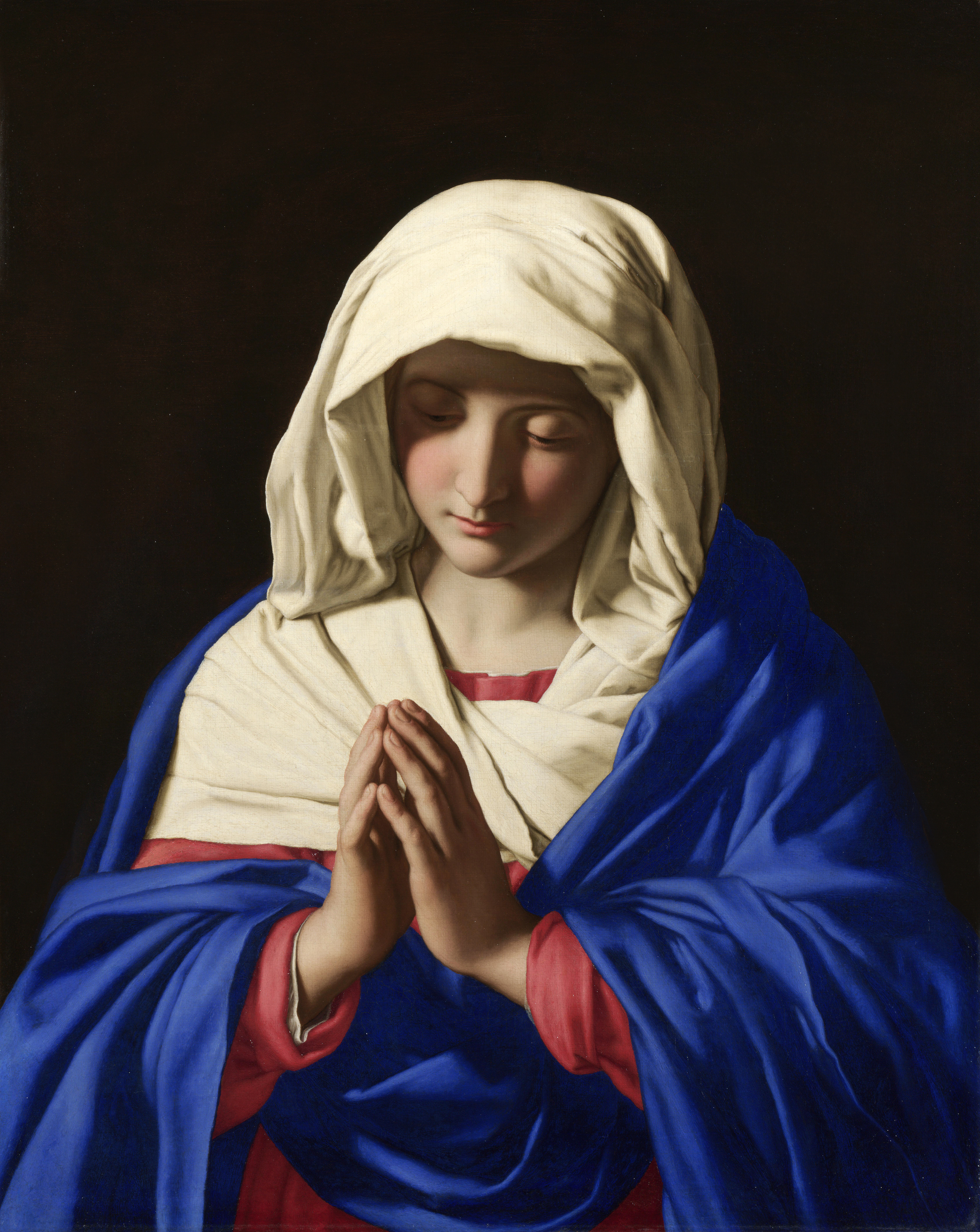
http://commons.wikimedia.org/wiki/File:Sassoferrato_-_Jungfrun_i_b%C3%B6n.jpg


On Mary...

It was she, the second Eve, who, free from all sin, original or personal, and always more intimately united with her Son, offered Him on Golgotha to the Eternal Father for all the children of Adam, sin-stained by his unhappy fall.” Pope Ven. Pius XII, encyclical Mystici Corporis.

I shall be posting later tomorrow. This autumn is one of the hottest with some of the highest humidity seen in Malta for a long time. The weather is draining.

I grew up in Iowa where the corn pops on the stalk in late August (not really), but I must admit, this Maltese heat is some of the most intense I have experienced as an adult. Reminds me of Mississippi heat.

Being Tolerant Again

The priest at Mass asked people to be open to the Syrian and Somalian immigrants. As reported, hundreds of people have died coming from Africa to Sicily. Many of the dead are children and mothers of those children.

The Catholics here have, understandably, different views, as Malta is a very crowded island. There is housing here, but it is not inexpensive, although housing prices have crashed from 2007 highs. The government is not necessarily set up for dealing with large influxes of people. Many immigrants have been welcomed in Malta in the past. In fact, one of the charms of Malta is the multi-cultural population. Many North Africans have been coming here for years.  The immigrants coming in now are from areas where civil wars are raging.

God bless them.

God bless Malta and give the leaders both in the government and in the Church great wisdom.