Recent Posts

Thursday, 5 December 2013

Doctors of the Church 2:6

Saturday, 9 February 2013

Part Eight Doctors of the Church: Hildegard of Bingen

I shall post three articles on this amazing saint. She has been very popular for years with, sadly, the new age set, who want her to be something she is not-a seer outside the tradition of the Church. She was a Benedictine, and obedient to Rome.

She was a holy woman who had many talents and gifts from God. She is fully based in the Catholic Church in doctrine. Like Julian of Norwich, Hildegard was given mystical experiences which she shared in her writings and songs. All these paintings and icons show Hildegard as a nun and teacher, which she was.  Her dates are 1098 to 1179 and you can see she lived to be quite old.

She shows us the way to perfection, as do the other female Doctors of the Church. I discovered her a long time ago and was happy to see her songs put on CDs many years ago. Wiki has an exhaustive list of her music made in modern times up to 2011 here. http://en.wikipedia.org/wiki/Discography_of_Hildegard_of_Bingen

But, Hildegard must be understood in the context of Catholic teaching, which she provides in her unique way. What I am interested in here is her life of perfection on earth. She will show us, in her writings, her understanding of love from the Unitive State.

If we had to categorize our lady doctors, we could put them all in the category of LOVE. Like Catherine, Teresa, and Therese, Hildegard cooperated with grace to come into unity with Christ. All these saints entered into the Unitive State.

Catherine describes this, as does Teresa of Avila very clearly. Hildegard as well shares characteristics of the Unitive State, as does Therese of Lisieux.

Let me backtrack one minute to Catherine of Siena, then move to Hildegard, so that these characteristics are clarified. Both selections are long, so bear with me.

Catherine describes the Unitive State here: we see the characteristics of the enlightened mind and soul, purified in the Love of God and exhibiting a fullness of caritas.

Humility and love, peace and tranquility of mind and purity of heart mark the saint in this state.

What applies to Catherine, Teresa and Therese, applies to Hildegard. What Catherine describes in rational terms, Hildegard gives us in a more personal manner. You will be able to compare the two ways of communication of love.

Catherine's words first.... Hildegard's words, next post.....


A TREATISE OF PRAYER from Catherine of Siena
20. Of the third and most perfect state, and of reason, and of the works done by the soul who has arrived at this light. And of a beautiful vision which this devout soul once received, in which the method of arriving at perfect purity is fully treated, and the means to avoid judging our neighbor is spoken of.

"Those who belong to the third state, which immediately follows the last, having arrived at this glorious light, are perfect in every condition in which they may be, and receive every event which I permit to happen to them with due reverence, as I have mentioned to you when speaking of the third and unitive state of the soul.
"These deem themselves worthy of the troubles and stumbling-blocks caused them by the world, and of the privation of their own consolation, and indeed of whatever circumstance happens to them. And inasmuch as they deem themselves worthy of trouble, so also do they deem themselves unworthy of the fruit which they receive after their trouble.

"They have known and tasted in the light My Eternal Will, which wishes naught else but your good, and gives and permits these troubles in order that you should be sanctified in Me. Wherefore the soul having known My Will, clothes herself with it, and fixes her attention on nothing else except seeing in what way she can preserve and increase her perfection to the glory and praise of My Name, opening the eye of her intellect and fixing it in the light of faith upon Christ crucified, My only-begotten Son, loving and following His doctrine, which is the rule of the road for perfect and imperfect alike.
"And see, how My Truth, the Lamb, who became enamored of her when He saw her, gives the soul the doctrine of perfection. She knows what this perfection is, having seen it practiced by the sweet and amorous Word, My only-begotten Son, who was fed at the table of holy desire, seeking the honor of Me, the Eternal Father, and your salvation.
"And, inflamed with this desire, He ran, with great eagerness, to the shameful death of the Cross, and accomplished the obedience which was imposed on Him by Me, His Father, not shunning labors or insults or withdrawing on account of your ingratitude or ignorance..... 


"It was as if the sweet and amorous Word, My Son, should have said to you: 'Behold, I have made the road, and opened the door with My Blood.' Do not you then be negligent to follow, laying yourselves down to rest in self-love and ignorance of the road, presuming to choose to serve Me in your own way, instead of in the way which I have made straight for you by means of My Truth, the Incarnate Word, and built up with His Blood. Rise up then, promptly, and follow Him, for no one can reach Me, the Father, if not by Him; He is the Way and the Door by which you must enter into Me, the Sea Pacific.
"When therefore the soul has arrived at seeing, knowing, and tasting, in its full sweetness, this light, she runs, as one enamored and inflamed with love, to the table of holy desire; she does not see herself in herself, seeking her own consolation either spiritual or temporal, but, like one who has placed his all in this light and knowledge, and has destroyed his own will, she shuns no labor from whatever source it comes, but rather enduring the troubles, the insults, the temptations of the Devil, and the murmurings of men, eats at the table of the most holy Cross, the food of the honor of Me, the Eternal God, and of the salvation of souls; seeking no reward, either from Me or from creatures, because she is stripped of mercenary love, that is of love for Me based on interested motives, and is clothed in perfect light, loving Me in perfect purity, with no other regard than for the praise and glory of My Name, serving neither Me for her own delight, nor her neighbor for her own profit, but purely through love alone.
"Such as these have lost themselves, and have stripped themselves of the Old Man, that is of their own sensuality, and, having clothed themselves with the New Man, the sweet Christ Jesus, My Truth, follow Him manfully. These are they who sit at the table of holy desire, having been more anxious to slay their own will than to slay and mortify their own body.
"They have indeed mortified their body, though not as an end in itself, but as a means which helps them to stay their own will, as I said to you when explaining that sentence that I wished few words and many deeds, and so ought you to do. Their principal desire should be to slay their own will, so that it may not seek or wish anything else than to follow My sweet Truth, Christ crucified, seeking the honor and glory of My Name and the salvation of souls.
"Those who are in this sweet light know it, and remain constantly in peace and quiet, and no one scandalizes them, for they have cut away that thing by which stumbling-blocks are caused, namely their own will. And all the persecutions, with which the world and the Devil can attack them, slide under their feet, standing, as they do, in the waters of many tribulations and temptations, and do not hurt them, for they remain attached to Me by the umbilical cord of fiery desire.
"Such a man rejoices in everything, nor does he make himself judge of My servants, or of any rational creature, but rejoices in every condition and in every manner of holiness which he sees, saying: 'Thanks be to You, Eternal Father, who have in Your House many mansions.' And he rejoices more in the different ways of holiness which he sees, than if he were to see all traveling by one road, because, in this way, he perceives the greatness of My Goodness become more manifest, and thus, rejoicing, draws from all the fragrance of the rose.
"And not only in the case of good, but even when he sees something evidently sinful, he does not fall into judgment, but rather into true and holy compassion, interceding with Me for sinners and saying, with perfect humility: 'To-day it is your turn, and tomorrow it will be mine unless the Divine Grace preserve me.'
"Enamor yourself, dearest daughter, of this sweet and excellent state, and gaze at those who run in this glorious light and holiness, for they have holy minds, and eat at the table of holy desire, and, with the light, have arrived at feeding on the food of souls, that is, the honor of Me, the Eternal Father, being clothed with burning love in the sweet garment of My Lamb, My only-begotten Son, namely His doctrine.
"These do not lose their time in passing false judgments, either on My servants or the servants of the world, and they are never scandalized by any murmurings of men, either for their own sake or that of others. That is to say, in their own case they are content to endure anything for My Name's sake; and when an injury is done to some one else, they endure it with compassion of this injured neighbor, and without murmuring against him who caused the injury, or him who received it, because their love is not disordinate, but has been ordered in Me, the Eternal God.
"And, since their love is so ordered, these souls, my dearest daughter, never take offense from those they love, nor from any rational creature, their will being dead and not alive, wherefore they never assume the right to judge the will of men, but only the will of My Clemency.


"These observe the doctrine which, as you know, was given you by My Truth at the beginning of your life, when you were thinking in what way you could arrive at perfect purity, and were praying to Me with a great desire of doing so. You know what was replied to you, while you were asleep, concerning this holy desire, and that the words resounded not only in your mind, but also in your ear. So much so, that, if you remember truly, you returned to your waking body, when My Truth said, 'Will you arrive at perfect purity, and be freed from stumbling-blocks, so that your mind may not be scandalized by anything?' Unite yourself always to Me by the affection of love, for I am the Supreme and Eternal Purity. I am that Fire which purifies the soul, and the closer the soul is to Me, the purer she becomes, and the further she is from Me, the more does her purity leave her; which is the reason why men of the world fall into such iniquities, for they are separated from Me, while the soul, who, without any medium, unites herself directly to Me, participates in My Purity.


"Another thing is necessary for you to arrive at this union and purity, namely, that you should never judge the will of man in anything that you may see done or said by any creature whatsoever, either to yourself or to others. My will alone should you consider, both in them and in yourself. And, if you should see evident sins or defects, draw out of those thorns the rose, that is to say, offer them to Me, with holy compassion.
"In the case of injuries done to yourself, judge that My will permits this in order to prove virtue in yourself, and in My other servants, esteeming that he who acts thus does so as the instrument of My will; perceiving, moreover, that such apparent sinners may frequently have a good intention, for no one can judge the secrets of the heart of man. That which you do not see you should not judge in your mind, even though it may externally be open mortal sin, seeing nothing in others, but My will, not in order to judge, but, as has been said, with holy compassion.


Repeat, as history begins to run away from us quickly

Wednesday, 20 November 2013


The Necessity for Perfection in Tribulation: Or, How Would You Respond in A Shipwreck?


I see around me, including in myself, how people respond to terrible things in their lives.

Here are some reactions and then, the Catholic answer to how we must learn to respond to hard times.

One, people shut down. This can mean that they totally stop communicating and withdraw into themselves, or that they go into tight family circles which are inward looking and do not reach out to anyone else.

Two, people panic and turn into emotional whirlwinds, trying this and that, not being focused, causing chaos in themselves and in their families. Sometimes this chaotic response causes odd behavior, like projection.

Three, some fall into a depression and gloom, and make very bad decisions, such as leaving families, quitting jobs, or even turning to drink and drugs.

Four, some become impatient, angry and aggressive. This seems to be the most common response among men, but women can also resort to such.

Five, gross negativity and just plain meanness are other types of reactions. These types of reaction spreads like a cancer and results in murmuring, the great sin of the Israelites in the desert. Complaining creates a miasma of unfaithfulness and turns people to evil by doubting God's Divine Providence.

What should be the real Catholic response?


One, the cooperation with God and grace to go through the stages of purification so that the virtues and gifts of the spirit can be released.

Two, the release of the virtues begins in the Dark Night but becomes full in the Illuminative State. Do not procrastinate.

Three, the virtues, as I have written many times here, are given at baptism and the gifts at confirmation, but are blocked by sin and the tendency to sin. Therefore, those virtues, which one can read about from the tags, must be nurtured through suffering, purification, prayer.

Four, now is the time to develop these virtues, gifts, which lead to the fruits: faith, hope, charity, prudence, justice, charity, temperance, wisdom, understanding, counsel, knowledge, fortitude, piety, and fear of the Lord.

But the fruit of the Spirit is love, joy, peace, forbearance, kindness, goodness, faithfulness, gentleness and self-control. Against such things there is no law. Galatians 5:22-23
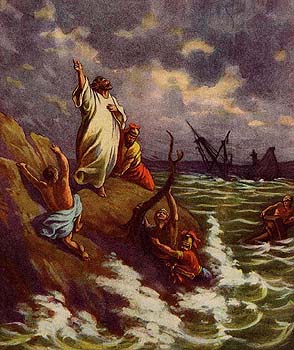
St. Paul was shipwrecked, scourged, imprisoned and so on. Do you think he was anxious, crabby, rude, impatient, angry? No.

Are you letting God purify you so that those virtues and gifts can flow? 

If you are not working on being virtuous in your daily life, how will you respond in very hard times?

More below on this theme....


19 Jul 2013
Two, she could not understand why the army of St. Joshua had to kill Canaanites. (Also connected to this, would be the slaughter of the Philistines by St. David.) Good questions. Yes, God did punish many of those who built ...
26 Jul 2013
Caleb and Joshua are two of my favourite Old Testament heroes. But, I tend to like the John Wayne men, such as David and the Maccabees. It is interesting that some of the most numinous and direct revelations of God and ...

27 Jul 2013
Joshua and Caleb had pure hearts, as did those who were the children of the slaves of Egypt. A new standard was necessary to enter, and conquer the Promised Land. That standard was purity of heart. Even though Moses is ...
26 Jul 2013
But, the GPS kicks in at one time and there is a narrow escape which needs angelic intervention-angels on horses may not work....studying Joshua and Maccabees for backup and see some very handsome, well-armoured ...
08 Dec 2012
Moses, Joshua, David, Daniel, and many others asked God for great things, including the revelation of the Glory of God. We do not ask because we are afraid to lose our own judgement. When we ask for God to do great things ...

09 Sep 2013
We call these men and women saints-Judith, Esther, Ruth, Joshua, Jacob, Abraham, Isaac, Moses, David, the prophets, the Maccabees, etc. They believed in the promise without the fullness of revelation. These were the ...

Doctors of the Church 2:5

Saturday, 9 February 2013


On the Doctors of the Church Part Seven-The Two Teresas

Part Seven in the Original Series is Part Five, as some are in the text, and some part of the perfection series. This may happen again and again, as texts were reused. But, in this case, six is here from another series. See the link below.

I am using a link to a post from last year for the two Teresas. Both Teresa of Avila and Therese, the Little Flower are Doctors of the Church. Sometimes, Teresa is call the Great Teresa and Therese is called the Little Therese.

They lead us to God more directly than most saints because of the honesty of their writings.


St. Teresa of Avila clarifies the way to perfection for us.

St. Therese of Lisieux gives us an everyday applicable way to holiness. She is perhaps the greatest saint canonized in the 20th Century.  Here is my link to what I wrote so I do not have to re-invent the wheel: enjoy.

 http://supertradmum-etheldredasplace.blogspot.co.uk/2012/02/perfection-part-six-teresas.html

This Is Cool

http://www.jpost.com/National-News/Unprecedented-finding-from-Hasmonean-period-unearthed-in-City-of-David-333898

Liturgical Words for The Day

Just for fun--sacrarium and piscina

sacrarium (plural sacraria)

  1. (in Ancient Rome) A place where sacred objects were kept, either in a temple (the adytum) or in a house (holding the penates)
  2. The area surrounding the altar of a Christian church; the sanctuary or piscina. Sometimes specifically a drain directly to the earth, perhaps including reference to a basin, for washing vessels from consecration.


A piscina is a shallow basin placed near the altar of a church, or else in the vestry or sacristy, used for washing the communion vessels. The sacrarium is the drain itself. Anglicans usually refer to the basin, calling it a piscina. Roman Catholics usually refer to the drain, and by extension, the basin, as the sacrarium. They are often made of stone and fitted with a drain, and are in some cases used to dispose of materials used in the sacraments and water from liturgical ablutions. They are found in Roman Catholic, Anglican, and Lutheranchurches, and a similar vessel is used in Eastern Orthodox churches.

from Wiki


More from The Meditations of the Passion of Our Lord by St. Alphonsus

O Loving heart of Jesus, inflame this poor heart of mine.

My Jesus, when shall I begin to love You, as You have loved me?
My God, when shall I die to everything, to live for You alone?
My beloved, make me love You even in the midst of sufferings.
You have loved me without reserve; I wish to love You without reserve.
My Jesus, make Yourself known, make Yourself loved by all.
My Jesus, grant that I may die, saying, I love You, I love You.
My God, suffer me not to lose You for ever.
Give me the grace to love You, and then do with me what You will.
At this hour, I might have been in hell, but now I love You, and I hope always to love You.
And what else do I desire, my God! but You, my chief, my only good?
My Jesus, in the day of judgment do not send me away from You.
My Jesus, how lovely are You; but by how few are You loved!


My Jesus, grant me Your love; I ask for nothing more.
You have died for me, I wish also to die for You.
O death of Jesus, from you I hope for a happy death.

O blood of Jesus, from you I hope for pardon of all my sins.

O wounds of Jesus, from you I hope to love Jesus for ever.

O agony of Jesus, from you I hope to bear peacefully the agony of my death.
O sorrows of Jesus, from you I hope for patience in contradictions.

O scourges of Jesus, deliver me from everlasting despair.

O tears of Mary, obtain for me sorrow for my sins.

O my own St. Joseph, by your happy death, obtain for me a good death.
O holy Apostles, by your blessed deaths obtain for me the grace to die in the love of God.
And what do I desire, either in this life or in the next, but You alone, my God?
O my Jesus, had I died in sin, I could never more love You; now I desire to love You and You alone.

My God, I love You, and I will love none but You.
St. Teresa, St. Philip Neri, my patrons, make me burn with the love of God with which you were inflamed.

My Jesus, by the pain which You did endure when Your right hand was pierced with the nail, give me perseverance in Your grace.

My Jesus, by the pain which You did endure when Your left hand was pierced with the nail, give me a true sorrow for my sins.
My Jesus, by the pain which You did endure when Your left foot was pierced with the nail, deliver me from the pains of hell.
My Jesus, by the pains which You did endure when Your right foot was pierced with the nail, give me the grace to love You eternally in heaven.
My Jesus, by the wound that was made in Your Sacred Heart, give me the grace to love You always in this life and in the next.

Love Is Not Loved

More from St. Alphonsus:


God with the Father, to take human flesh, so that as Man, by dying might pay the debt due to divine justice, and, as God, 
might make to it full satisfaction. The Passion has, moreover, made known how strict is the Justice of God. According to 
Saint John Chrysostom, it is not so much in hell that the strictness of divine justice is seen; it is revealed rather in seeing 
Jesus on the Cross; for in hell creatures are punished for sins of their own, while on the Cross we see a God cruelly treated 
to make satisfaction for the sins of men. And what obligation had Jesus to die for us? None: He was offered because it 
was His own will. (Isaias liii. 7.) He might have, with justice, abandoned man to perdition; but the love which He had for 
us, would not allow Him to see us lost; therefore He chose to give Himself up to so painful a death, that He might save us: 
He hath loved us and hath delivered Himself for us. (Eph. v. 2.) 
God had from all eternity loved man: I have loved thee with an everlasting love. (Jer. Xxxi. 3) But afterwards seeing 
that His justice obliged Him to condemn man and to keep him ever at a distance from Him and in hell, His mercy urged 
Him to find a way by which He might save him. But how? By making satisfaction to divine justice by His own death. 
And, consequently He willed that the condemnation to eternal death which man had merited should have been fixed to 
that very Cross on which He died, that thus it might be cancelled in His blood: Blotting out the writing of the decree that 
was against us, which was contrary to us, He hath taken the same out of the way, fastening it to the Cross. (Col. ii. 14.) 
Thus, by the merits of His own blood, He pardoned all our sins: Forgiving you all offences (Ibid.) At the same time He 
deprived the devils of the rights which they had acquired over us, carrying with Him in His triumph both His enemies and 
ourselves whom He had delivered, and who were till then the prey of the devils: And despoiling the principalities and 
powers, He hath exposed them confidently in open show, triumphing over them in Himself. (Col. ii. 15.) Theophylactus 
thus explains these words: "As a triumphant conqueror He carries with Him in His triumph the booty and the enemy

Calling Forth Love from All Our Hearts


Thoughts from St. Alphonsus  De Ligouri from The Meditations on the Passion of Our Lord:


St. Leo tells us that he who looks with confidence on Jesus dead on the Cross is healed of the wounds inflicted by his 
sins: "Those who with faith look on Jesus dead on the Cross are healed from the wounds of sin." This is why every 
Christian should constantly keep before his eyes Jesus crucified, and say with St. Paul: I judged not myself to know anything among you, but Jesus Christ, and Him crucified. (1 Cor. ii. 2.) From which words it is clear that the Apostle did 
not desire any other knowledge in this world than that of knowing how to love Jesus crucified. 
My beloved Saviour, to obtain for me a good death Thou hast chosen one so full of suffering and desolation! I cast 
myself unreservedly into the arms of Thy mercy. Thou hast called me to penance, and, I hope, hast pardoned me; but if, 
through my own fault, Thou hast not yet pardoned. ah! pardon me now. I repent, O my Jesus! of having ever turned my 
back upon Thee, and of having driven Thee out of my soul. Give me Thy grace; but this is not enough, give me as well 
strength to love Thee with my whole soul during the remainder of my life; and when I come to die, grant me the grace to 
expire burning with love for Thee, and saying: My Jesus, I love Thee, I love Thee, in order to continue to love Thee for all 
eternity. From this moment I unite my death to Thy holy death, through which I hope to be saved: In Thee, O Lord, have I 
hoped; let me never be confounded. (Psalm xxx. 2.) O great Mother of God! thou art, after Jesus, my hope. In thee, O 

Lady, have I hoped; I shall not be confounded for ever


St. Paul, speaking of the love which the Eternal Father bore us, when He saw us dead through sin and willed to restore 
us to life by sending His own Son to die for us, calls this too great a love: But God (who is rich in mercy), for His 
exceeding charity wherewith He loved us, even when we were dead in sins, hath quickened us together in Christ. (Eph. ii. 
4. 5.) In like manner we ought to call the love wherewith Jesus willed to die for us too great a love. Hence, the same 
Apostle writes: We preach Christ crucified, unto the Jews indeed a stumbling- block, and unto the Gentiles foolishness. (1 
Cor. i. 23.) The death of Jesus on the Cross, according to St. Paul, appeared a stumbling- block to the Jews, because they 
expected Him to appear on earth full of worldly majesty, and not as one condemned to die as a criminal on the Cross. On 
the other hand, it seemed to the Gentiles folly that God should be willing to die, and such a death, for His creatures. 
Hence, St. Laurence Justinian has daringly explained: " We have seen wisdom itself infatuated through excessive love! " 
And in truth, does it not seem folly that God who is Almighty and infinitely happy in Himself should be willing of His 
own accord to be scourged, treated as a mock king, buffeted, spat upon in the face, condemned as a malefactor, abandoned 
by all and left to die on a Cross of shame to save miserable worms He Himself had created? Considering these things, the 
enamoured St. Francis, as he went through the country, wept and exclaimed, " Love is not loved! Love is not loved! " 
Hence St. Bonaventure said that he who wishes to persevere in loving Jesus Christ should ever represent to himself his 
divine Lord hanging on the Cross and dying for him: "Let him ever have before the eyes of his heart Christ dying on the 
Cross."

Doctors of the Church 2:4

Friday, 8 February 2013


Doctors of the Church Series-Part Five on the dangers of spiritual self-will

This is the fifth part of the series on the Doctors of the Church. I have covered two out of the thirty-five. (Update: you will understand the number when you get to the summary list of the first eleven, as some are from the perfection series).

I shall cover all of them from the point of view of my perfection series.

I shall include those honoured by both the East and the West. Seventeen who were declared as such before the great schism are to be included, of course. I have done Ephraim and John of Avila.

As there are only four women, my next set will cover them: SS. Catherine of Siena, Teresa of Avila, Therese of Lisieux and Hildegard of Bingen.

I am concentrating on their holiness and some of the writings. The reason a person is declared a Doctor of the Church is sort of like an honorary PhD. in holiness and excellence in writing. They have also shown that they are completely orthodox and true in doctrine.

One cannot, cannot be holy or find perfection outside of orthodoxy.

If a person insists on having areas where he or she is in disagreement with the Church in any way which is doctrinal, one is not on the way to holiness, but stuck in sin.

St. Catherine of Siena provides a perfect of example of obedience and clarity of mind. God gave her discernment, a gift which is part of prudence. Her dates are 1347-1380.

Her writings reflect deep prayer and a deep relationship with the Trinity.

Several days ago, I quoted her in depth on priests and holiness. Her she is again, from her Treatise on Prayer: 


"For, if the soul truly have light, she will wish to arrive at perfection. In this second perfect light are to be found two kinds of perfection; for they may be called perfect who have abandoned the general way of living of the world.

"One perfection is that of those who give themselves up wholly to the castigation of the body, doing great and severe penance. These, in order that their sensuality may not rebel against their reason, have placed their desire rather in the mortification of the body than in the destruction of their self-will, as I have explained to you in another place. These feed their souls at the table of penance, and are good and perfect, if their penance be illuminated by discretion, and founded on Me, if, that is to say, they act with true knowledge of themselves and of Me, with great humility, and wholly conformed to the judgment of My Will, and not to that of the will of man.

"But, if they were not thus clothed with My Will, in true humility, they would often offend against their own perfection, esteeming themselves the judges of those who do not walk in the same path. Do you know why this would happen to them? Because they have placed all their labor and desire in the mortification of the body, rather than in the destruction of their own will.

"Such as these wish always to choose their own times, and places, and consolations, after their own fashion, and also the persecutions of the world and of the Devil, as I have narrated to you in speaking of the second state of perfection.

"They say, cheating themselves with the delusion of their own self-will, which I have already called their spiritual self-will, 'I wish to have that consolation, and not these battles, or these temptations of the Devil, not, indeed, for my own pleasure, but in order to please God the more, and in order to retain Him the more in my soul through grace; because it seems to me that I should possess Him more, and serve Him better in that way than in this.' And this is the way the soul often fails into trouble, and becomes tedious and insupportable to herself; thus injuring her own perfection; yet she does not perceive it, nor that, within her, lurks the stench of pride, and there she lies.

" Now, if the soul were not in this condition, but were truly humble and not presumptuous, she would be illuminated to see that I, the Primary and Sweet Truth, grant condition, and time, and place, and consolations, and tribulations as they may be needed for your salvation, and to complete the perfection to which I have elected the soul.

"And she would see that I give everything through love, and that therefore, with love and reverence, should she receive everything, which is what the souls in the second state do, and, by doing so, arrive at the third state. Of whom I will now speak to you, explaining to you the nature of these two states which stand in the most perfect light." 

What Catherine is warning against is the great temptation to pride which happens in the Illuminative State. Here is the place where people become heretics or schismatics  insisting on their own insights or directions and separating themselves from Rome.

I believe that such men as Calvin and Knox became very holy before falling into certain ideas which carried them away from the Church and away from holiness. 

How many times have you witnessed a person who is charismatic, a leader in the Church and very pious suddenly fall away over one thing?

I have seen marriages break up when a pillar of the Church commits adultery or supports a child in a homosexual relationship, or who changes his mind about women priests and holds an opposite opinion.


The road to perfection STOPS and the soul slides back into darkness.

It happens too easily.

The experience of love and light make these men and women confident in God, but the temptation to be overly confident in themselves leads to sin.

They fall into self-deception and Catherine saw this happening in the Church. The Illuminative State brings love and power. But, humility must accompany this state or the temptations of pride creep into the soul.

After the active and passive purification, comes more enlightenment, as there are stages in the Illuminative State.

God prepares the soul for His Love. We must have our hearts and minds ready with no hindrances for that Love.