Tuesday, 22 July 2014
Playing Tennis in The Face of Death
Although the great Mary Magdalen's Feast is today, in some places, either today or tomorrow, is the feast of one of my favorite martyrs, St. Philip Evans and his confrere were allowed outside while imprisoned, and on July 21st, when Fr. Evans was told he would be killed the next day, he was playing tennis. He finished his game. I hope the score was Love-All when he was told. Tennis and archery were "my sports" as a kid. I was good at shooting as well, but did not keep up with that. I was also good at sprint running. But, really did not like team sports. Well, INTJs are like this...wonder if St. Philip is an INTJ? He sounds more like an INFJ.
My kind of saint.........all from http://www.catholic.org/saints/saint.php?saint_id=580

My kind of saint.........all from http://www.catholic.org/saints/saint.php?saint_id=580
Father Philip Evans
Saint Philip Evans
Philip Evans was born in Monmouth in 1645, was educated atSt Omer, joined the Society of Jesus in Watten on 7 September 1665, and was ordained at Liège and sent to South Wales as a missionary in 1675.[1]
He worked in Wales for four years,[1] and despite the official anti-Catholic policy no action was taken against him. When the Oates' scare swept the country both Lloyd and Evans were caught up in the aftermath.[2] In November 1678 a John Arnold, of Llanvihangel Court near Abergavenny, a justice of the peace and hunter of priests, offered a reward of £200 (an enormous sum then) for his arrest.
Despite the manifest dangers Father Evans steadfastly refused to leave his flock. He was arrested at the home of a Mr Christopher Turberville at Sker, Glamorgan on 4 December 1678.
Father John Lloyd
Father John Lloyd, a Welshman and a secular priest (i.e., a priest not associated with any religious order), was a Breconshire man. He was educated first in Ghent, then at the English College, Valladolid, Spain, entering in 1649.[3] He took the 'missionary oath' on 16 October 1649 to participate in England Mission. Sent to Wales in 1654 to minister to covert Catholics, he lived his vocation while constantly on the run for 24 years. He was arrested at Mr Turberville's house at Penlline, Glamorganshire, 20 November 1678, and imprisoned in Cardiff Gaol.[4] There he was joined by the Jesuit, Philip Evans.[5]
Trial
Both priests were brought to trial in Cardiff on Monday, 5 May 1679.[4] Neither was charged with being associated with the plot concocted by Oates. Nonetheless, they were tried for being priests and coming into the principality of Wales contrary to the provisions of the law, and were declared guilty of treason for exercising their priesthood.
Executions
The executions took so long to be scheduled that it began to appear that they might not take place. The priests were allowed a good deal of liberty, even to leaving the prison for recreation.[2] The executions took place in Pwllhalog, Cardiff on 22 July 1679 [4]
Philip Evans was the first to die. He addressed the gathering in both Welsh and English saying, ‘Adieu, Father Lloyd! Though only for a little time, for we shall soon meet again'. John Lloyd spoke very briefly saying, ‘I never was a good speaker in my life'.
Canonisation and Feast Day
On 25 October 1970, both John Lloyd and Philip Evans, S.J. were canonised by Pope Paul VI.[1] Although they died on 22 July, this date is kept by the Catholic Church as the day of St Mary Magdalen, so their jointfeast day was assigned to 23 July. The same date is the assigned day of St Bridget of Sweden, who was later designated one of six patron saints of Europe by Pope John Paul II. This means that while churches dedicated to St John Lloyd or St Philip Evans can keep their feast on 23 July, other churches must commemorate St Bridget on that date. A voluntary celebration for St John Lloyd and St Philip Evans may be kept on a nearby date at the discretion of local communities.[6]


The Winnower
 |
| The Winnower Vernier Copy of Millet |
I had leadership training in high school, which I have referred to on this blog in the past. One of the things which I learned was that I had organizational skills. As an idea person, and a person who could see talent in others, I could help new situations become permanent.
God gave me a grace of discernment. Another thing I learned was to choose good friends and avoid bad company. I was not always so wise when young and made some mistakes, but on the whole, I was the one who walked out of bad parties, left situations which could be compromising, and sought out the wisdom of good people.
Have I been betrayed? Yes. Sometimes a person has to learn the hard way to trust one's gut reactions, or pick up on those little niggling feelings which may accompany reason.
In other words, one must, when choosing friends, follow one's conscience and ask this question. Will this person make me a better person?
If one has a friendship leading to marriage, one must ask this question. Will this person help me get to heaven?
Surround yourselves with good, solid Catholic friends. If you can pod, do it now. The time is short.
Here is St. Augustine...
Sermon LXI.
[CXI. Ben.]
On the words of the Gospel, Luke xiii. 21 and 23, where the kingdom of God is said to be “like unto leaven, which a woman took and hid in three measures of meal;” and of that which is written in the same chapter, “Lord, are they few that are saved?”
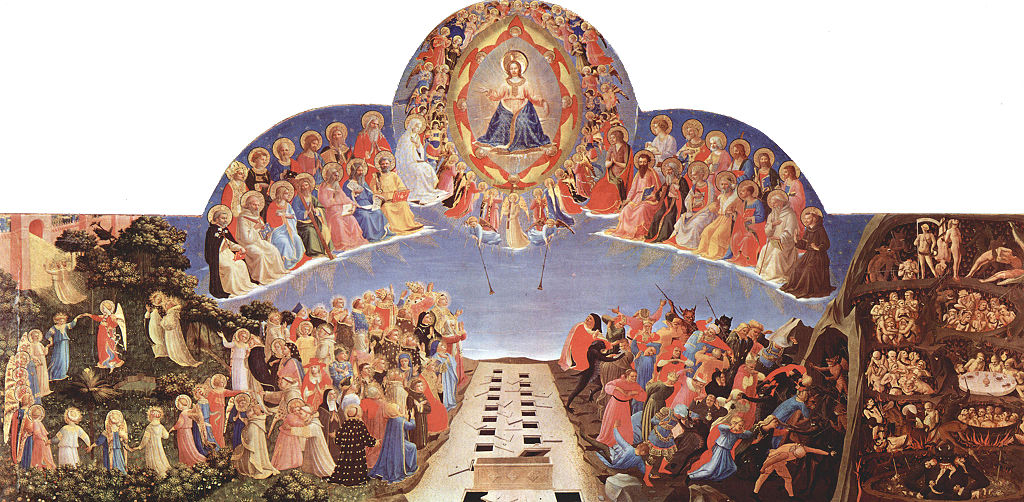
1. “The three measures of meal”3461 of which the Lord spake, is the human race. Recollect the deluge; three only remained, from whom the rest were to be re-peopled. Noe had three sons, by them was repaired the human race. That holy “woman who hid the leaven,” is Wisdom. Lo, the whole world crieth out in the Church of God, “I know that the Lord is great.”3462 Yet doubtless there are but few who are saved. Ye remember a question which was lately set before us out of the Gospel, “Lord,” it was said, “are there few that be saved?”3463 What said the Lord 446to this? He did not say, “Not few, but many are they who are saved.” He did not say this. But what said He, when He had heard, “Are there few that be saved? Strive to enter by the strait gate.”3464 When thou hearest then, “Are there few that be saved?” the Lord confirmed what He heard. Through the “strait gate” but “few” can “enter.” In another place He saith Himself, “Strait and narrow is the way which leadeth unto life, and few there be that go thereby: but broad and spacious is the way that leadeth to destruction, and many there be which walk thereby.”3465 Why rejoice we in great numbers? Give ear to me, ye “few.” I know that ye are “many,” who hear me, yet but “few” of you hear to obey. I see the floor, I look for the corn. And hardly is the corn seen, when the floor is being threshed; but the time is coming, that it shall be winnowed. But few then are saved in comparison of the many that shall perish. For these same “few” will constitute in themselves a great mass. When the Winnower shall come with His fan in His Hand, “He will cleanse His floor, and lay up the wheat into the garner; but the chaff He will burn with unquenchable fire.”3466 Let not the chaff scoff at the wheat; in this He speaketh truth, and deceiveth no one. Be ye then in yourselves among many a many, few though ye be in comparison of a certain many. So large a mass is to come out of this floor, as to fill the garner of heaven. For the Lord Christ would not contradict Himself, who hath said, “Many there are who enter in by the narrow gate, many who go to ruin through the wide gate;” contradict Himself, who hath in another place said, “Many shall come from the East and West.”3467 “Many” then are the “few;” both “few” and “many.” Are the “few” one sort, and the “many” another? No. But the “few” are themselves the “many;” “few” in comparison of the lost, “many in the society of the Angels. Hearken, dearly Beloved. The Apocalypse hath this written; “After this I beheld of all languages, and nations, and tribes, a great multitude, which no man can number, coming with white robes and palms.” 3468 This is the mass of the saints. With how much clearer voice will the floor say, when it has been fanned, separated from the crowd of ungodly, and evil, and false Christians, when those who “press” and do not “touch” (for a certain woman in the Gospel “touched,” the crowd “pressed” Christ), shall have been severed unto everlasting fire; when all they then, who are to be damned shall have been separated off, with how great assurance will the purified mass, standing at the Right Hand, fearing now for itself the admixture of no evil men, nor the loss of any of the good, now about to reign with Christ, say, “I know that the Lord is great”!3469
2. If then, my Brethren (I am speaking to the corn), if they acknowledge what I say, predestined unto life eternal, let them speak by their works, not by their voices. I am constrained to speak to you, what I ought not. For I ought to find in you matter of praise, not to seek subjects for admonition. Yet see I will say but a few words, I will not dwell upon it. Acknowledge the duty of hospitality, thereby some have attained unto God. Thou takest in some stranger, whose companion in the way thou thyself also art; for strangers are we all. He is a Christian who, even in his own house and in his own country, acknowledges himself to be a stranger. For our country is above, there we shall not be strangers. For every one here below, even in his own house, is a stranger. If he be not a stranger, let him not pass on from hence. If pass on he must, he is a stranger. Let him not deceive himself, a stranger he is; whether he will or not, he is a stranger. And he leaves that house to his children, one stranger to other strangers. Why? If thou wert at an inn, wouldest thou not depart when another comes? The same thou doest even in thine own house. Thy father left a place to thee, thou wilt some day leave it to thy children. Neither dost thou abide here, as one who is to abide always, nor to those who are so to abide, wilt thou leave it. If we are all passing away, let us do something which cannot pass away, that when we shall have passed away, and have come thither whence we may not pass away, we may find our good works there. Christ is the keeper, why dost thou fear lest thou shouldest lose what thou spendest on the poor? “Let us turn to the Lord,”
http://www.ccel.org/ccel/schaff/npnf106.vii.lxiii.html
Not Facing Our Reality
A very old person said to me in the past few days, that he did not want to be around to watch the falling apart of America. This man is not a great student of philosophy or theology. He believes too many of the stories of the msm. But, he senses something, as if the breezes of summer were whispering the end of his belief in the American Dream.
But, the problem with so many people who are now beginning to wake from the sleep of consumerism and the supposed meritocracy is this: the soul must be attended to by each one of us in these chaotic times.
How does one prepare for the end of democracy, or plague, or war? There is only one way, and that is pursuing holiness.
The pursuit of holiness is not a game, or a personal journey, but the call of the entire People of God.
I have tried to help my readers since 2007 prepare for the coming catastrophes which will bring down America. Some of my readers have listened and others have not.
The fact that so many people merely go on with their daily work as if the world around them has not changed is a tragic fact.
The fact that so many people still ignore their immortal souls and fight the graces given to them daily is a tragic fact.
We have been warned. I have warned. I shall warn and teach until God says, "Enough. Time is over for this ministry." I have not heard that yet.
But things are changing quickly, both here and abroad. Those who act as if nothing is wrong will perish both physically and spiritually.
Christ warned us in Matthew 23:37-39. But, this time, there is a different ark-the Catholic Church, whose faithful members will be ready for Christ's coming.

But, the problem with so many people who are now beginning to wake from the sleep of consumerism and the supposed meritocracy is this: the soul must be attended to by each one of us in these chaotic times.
How does one prepare for the end of democracy, or plague, or war? There is only one way, and that is pursuing holiness.
The pursuit of holiness is not a game, or a personal journey, but the call of the entire People of God.
I have tried to help my readers since 2007 prepare for the coming catastrophes which will bring down America. Some of my readers have listened and others have not.
The fact that so many people merely go on with their daily work as if the world around them has not changed is a tragic fact.
The fact that so many people still ignore their immortal souls and fight the graces given to them daily is a tragic fact.
We have been warned. I have warned. I shall warn and teach until God says, "Enough. Time is over for this ministry." I have not heard that yet.
But things are changing quickly, both here and abroad. Those who act as if nothing is wrong will perish both physically and spiritually.
Christ warned us in Matthew 23:37-39. But, this time, there is a different ark-the Catholic Church, whose faithful members will be ready for Christ's coming.
37 And as in the days of Noe, so shall also the coming of the Son of man be.
38 For as in the days before the flood, they were eating and drinking, marrying and giving in marriage, even till that day in which Noe entered into the ark,
39 And they knew not till the flood came, and took them all away; so also shall the coming of the Son of man be.
High School and Junior High Home Schoolers
Get the Premium Membership to Michael Voris' Church Militant, found here and use some of the series for home schooling youth 11-14.
http://www.churchmilitant.tv/
http://www.churchmilitant.tv/
Predestination Part Three
The third point which is generally accepted within the teaching of the Church regarding predestination is this:
"Thus even the free determination disposing one toward salvation is entirely included in the effect of predestination. 'There is no distinction,' says St. Thomas, 'between what flows from free will, and what is of predestination: as there is no distinction between what flows from a secondary cause and from a first cause.'"
All grace and all good works are from God, and therefore, within the call of God to eternal life with Him. We cannot merit anything without God's Will and God's grace. One is predisposed to God and following His ways because of predestination.
The Summa holds this discussion in Ia, q.23, a.5. as noted by Garrigou-Lagrange.
To write this in simple words, all goodness comes from God and returns to God.
Garrigou-Lagrange quotes the Second Council of Orange, Canon 9: "'It is God's gift when we think aright and restrain ourselves from walking in the path of error and corruption. As often as we do good, it is God who works in us and with us enabling us to act.' This canon is a recapitulation of Prosper's twenty-second sentence, which repeats the teaching of St. Augustine."
Again,the author quotes, too, St. Paul, from Phil. 2:15--"It is God who worketh in you, both to will and to accomplish."
The mystery of predestination is in the overlap of God's Providence and our response to His graces.
Canon 12 from the above Council notes this: "God so loves us, as we shall be by the gift of His grace, not as we are by our own merit."
No one can please God without sanctifying grace and no one has grace except from God.
And, those who are better than others, responding to grace, are simply more loved by God.
The modern democratic, socialist and communist sensibilities wants everyone to be the same, have the same, act the same. This is not in God's plan, and obviously, contrary to the teachings on grace and free will.
Garrigou-Lagrange writes, "....one is not more pleasing to God than another, without having received more from Him. If, on the contrary, grace became efficacious in actu secundo by our consent, then it would follow that of two men who received equal help, one would become better, and this without having loved more. helped more, or having received more from God." Such ideas go back to the year 500, states Garrigou-Lagrange
"Thus even the free determination disposing one toward salvation is entirely included in the effect of predestination. 'There is no distinction,' says St. Thomas, 'between what flows from free will, and what is of predestination: as there is no distinction between what flows from a secondary cause and from a first cause.'"
All grace and all good works are from God, and therefore, within the call of God to eternal life with Him. We cannot merit anything without God's Will and God's grace. One is predisposed to God and following His ways because of predestination.
The Summa holds this discussion in Ia, q.23, a.5. as noted by Garrigou-Lagrange.
To write this in simple words, all goodness comes from God and returns to God.
Garrigou-Lagrange quotes the Second Council of Orange, Canon 9: "'It is God's gift when we think aright and restrain ourselves from walking in the path of error and corruption. As often as we do good, it is God who works in us and with us enabling us to act.' This canon is a recapitulation of Prosper's twenty-second sentence, which repeats the teaching of St. Augustine."
Again,the author quotes, too, St. Paul, from Phil. 2:15--"It is God who worketh in you, both to will and to accomplish."
The mystery of predestination is in the overlap of God's Providence and our response to His graces.
Canon 12 from the above Council notes this: "God so loves us, as we shall be by the gift of His grace, not as we are by our own merit."
No one can please God without sanctifying grace and no one has grace except from God.
And, those who are better than others, responding to grace, are simply more loved by God.
The modern democratic, socialist and communist sensibilities wants everyone to be the same, have the same, act the same. This is not in God's plan, and obviously, contrary to the teachings on grace and free will.
Garrigou-Lagrange writes, "....one is not more pleasing to God than another, without having received more from Him. If, on the contrary, grace became efficacious in actu secundo by our consent, then it would follow that of two men who received equal help, one would become better, and this without having loved more. helped more, or having received more from God." Such ideas go back to the year 500, states Garrigou-Lagrange
Monday, 21 July 2014
Middle Class Spirituality
Years ago, I mean about five years ago, I had a discussion with a Latino friend of mine, a clergyman, about how Americans only want middle-class spirituality.
He and I were discussing why the Neo-Catechumenates were so successful with the Latino population, few which attend the Latin Mass in the Middle West.
We came up with several reasons why religion in the main in the Midwest is bonded to middle-class values.
Here are the points as I remember them, a list resembling some of the Modernist heresies condemned so long ago.
1) Religion is fine as long as it does not interfere with daily life.
2) Religion is fine as long as it underpins the American Dream.
3) Catholicism must be main stream to be successful.
4) Family comes before community at church, which means not socializing with those at Mass.
5) Paganism is part of life-especially middle-class lifestyles, which have money to dabble in the occult and pagan. So what?
6) To be zealous is to be dangerous and a trouble-maker-one must, above all things, conform to the majority.
7) To be really middle-class one must be a conformist and a consumerist first and foremost.
8) Aspirations for wealth on earth are more important that voluntary poverty, just as marriage is more important than choosing celibacy (the Protestant influence on the Catholic middle-class is heavy).
9) The poor "you will always have with you" means not that it is your duty, but no ones.
10) Middle-class Catholics are Democrats first and Catholics second.
11) To be orthodox is to be too Roman and not enough an "American Catholic".
12) Christ was of the middle-class (ROFL-there was no middle class in Bible times).
And, so on. The spirituality of the middle classes is this-"Yes, I want to be holy, but without suffering, without pain."
Hey, folks, that is not "costly discipleship" but "cheap discipleship" to refer to Bonhoeffer. I read the Cost of Discipleship at the age of 22 and this book changed my life. Middle class spirituality refuses the yoke of Christ.
One quotation will do for today.
"costly grace confronts us as a gracious call to follow Jesus, it comes as a word of forgiveness to the broken spirit and the contrite heart. It is costly because it compels a man to submit to the yoke of Christ and follow him; it is grace because Jesus says: 'My yoke is easy and my burden is light.' "
If Catholicism doesn't hurt, it is not the mode of holiness in your life.
Well, this clarified the hypocrisy
http://www.bloomberg.com/news/2014-07-21/clinton-earns-12-million-speaking-writing-after-service.html
Predestination Part Two
A learned friend of mine and I had a long conversation years ago on the fact that Pelagianism and Semipelagianism were two of the three most common heresies in Great Britain.
Both heresies deny the need for grace. Semipelagianism defines the idea that the special souls of the elect get special graces.
Semipelagianism also denies Original Sin and the effects of Original Sin. All people are given the graces necessary for salvation, which is the teaching of the Church. But, this grace is gratuitous in that God gives us grace. The problem comes into the minds of Catholics who do not understand that God knows in His Perfect Will and in His Permissive Will who will respond to His grace and who will not.
Garrigou-Lagrange notes three areas which are basic to all the teachers in the Catholic Church, gleaned from the various councils which helped to define predestination.
(1) "Predestination to the first grace is not because God foresaw our naturally good works, nor is the beginning of salutary acts due to natural causes; (2) predestination to glory is not because God foresaw we would continue in the performance of supernatural meritorious acts apart from the special gift of final perseverance; (3) complete predestination in so far as it comprises the whole series of graces from the first up to glorification, is gratuitous or previous to foreseen merits."
Now, SS. Thomas Aquinas and Augustine interpret these points as such. The first point may be understood as "To the man who does what he can with the help of actual grace, God does not refuse habitual grace."
On the second point, they understand that the grace of final perseverance is "intrinsically efficacious" and here is a quote from the Council of Orange--"God's help is always to be sought even for the regenerated and holy, that they may come to a happy end, or that they may continue in the performance of good works."
The Council of Trent notes, on the grace of final perseverance, that it is a "gift which cannot be obtained from any other than from Him who is able to establish him who standeth that he standeth perseveringly, and to restore he who falleth." It is the grace of complete gratuity.
The Council of Trent warns us all: "No one, moreover, so long as he is in this mortal life, ought so far to presume as regards the secret mystery of divine predestination as to determine for certain that he is assuredly among the number of the predestined; as if it were true that he who is justified either cannot sin any more, or if he do sin, that he ought to promise himself an assured repentance. For except by special revelation it cannot be known whom God hate chosen unto Himself."
We work out our salvation in fear and trembling.
To be continued...
Working on Garrigou-Lagrange's Predestination
Predestination is a teaching of the Catholic Church, and clarified over the centuries because of heresies.
At various councils, and in various decrees, the Church speaking against Prostentantism and Jansenism clearly defined what Christ meant by many statements in the Bible, and references in the Old Testament pointing to the salvation given to us by grace.
Many Catholics may be shocked, or at least, surprised, by Christ's statements in John 17:12, John 10:27-30, Matt. 22:14, Matt. 24:22, and John 15:15. St. Paul also refers to predestination in I Cor. 4:7, Phi. 2:13, Eph 1:3-7 and Romans, both in chapter 8 and chapter 11.
SS. Augustine, Thomas Aquinas and Robert Bellarmine, (one of the great minds behind Trent) also have added to the teaching.
If a reader does not have time to read all the above Scripture passages, the main one which may help define this series is Romans 8:28-30.
Chapters 9-12 of Ephesians, as Garrigou-Lagrange points out, defines two ideas, at least, which are helpful to this post. First, that God's gifts of salvation and grace are completely gratutitous and not earned by any human being.
Second, there is a teaching on "predilection" which may be seen in both the history of nations and of individuals.
One may ask these questions, humbly and sincerely: Why was I born a Catholic? How is it that God gave me graces of conversion? Why is it that I am following God, His Commandments and His Church and not others? How is it that I live in a place where there is freedom for Christians and not in a country where Christians either are missing entirely, or have been forced out, or killed?
The recent events in Mosul must cause all to reflect on the daily freedoms we have to worship God.
God is God and His decisions are free. Lagrange points out three areas which he will discuss:
1) "God has chosen certain persons to constitute the elect. 2) He has caused this election to be efficacious so that they will infallibly get to heaven...3) God's choice of the elect was entirely gratuitous and previous to any considerations of foreseen merits...."
In Romans, St. Paul writes this: "As H chose us in Him before the foundation of the world, that we should be holy" and "For whom He foreknew, (in His benevolence), He also predestined to be made conformable to the image of His Son."
St. Augustine writes this, as Garrigou-Lagrange notes: "Predestination is the foreknowledge and preparedness on God's part to bestow the favors by which all those are saved who are to be saved."
And, "God already knew, when He predestined, what He must do to bring His elect infallibly to eternal life."
Now, we are asked to work out our salvation in "fear and trembling", never taking it for granted. I think of one of my brothers who is a Baptist, sort-of, although no longer church-going, and who thinks that his salvation and forgiveness is a one time event. I cannot convince him of the necessity of confession and Sunday Mass, but I pray for him. The Protestant confused idea of predestination has caused a laxity among those who reject the sacramental life of the Church.
This mini-series will cover some of the main ideas in Garrigou-Lagrange's book. I hope you want to follow this intriguing topic.
At various councils, and in various decrees, the Church speaking against Prostentantism and Jansenism clearly defined what Christ meant by many statements in the Bible, and references in the Old Testament pointing to the salvation given to us by grace.
Many Catholics may be shocked, or at least, surprised, by Christ's statements in John 17:12, John 10:27-30, Matt. 22:14, Matt. 24:22, and John 15:15. St. Paul also refers to predestination in I Cor. 4:7, Phi. 2:13, Eph 1:3-7 and Romans, both in chapter 8 and chapter 11.
SS. Augustine, Thomas Aquinas and Robert Bellarmine, (one of the great minds behind Trent) also have added to the teaching.
If a reader does not have time to read all the above Scripture passages, the main one which may help define this series is Romans 8:28-30.
Chapters 9-12 of Ephesians, as Garrigou-Lagrange points out, defines two ideas, at least, which are helpful to this post. First, that God's gifts of salvation and grace are completely gratutitous and not earned by any human being.
Second, there is a teaching on "predilection" which may be seen in both the history of nations and of individuals.
One may ask these questions, humbly and sincerely: Why was I born a Catholic? How is it that God gave me graces of conversion? Why is it that I am following God, His Commandments and His Church and not others? How is it that I live in a place where there is freedom for Christians and not in a country where Christians either are missing entirely, or have been forced out, or killed?
The recent events in Mosul must cause all to reflect on the daily freedoms we have to worship God.
God is God and His decisions are free. Lagrange points out three areas which he will discuss:
1) "God has chosen certain persons to constitute the elect. 2) He has caused this election to be efficacious so that they will infallibly get to heaven...3) God's choice of the elect was entirely gratuitous and previous to any considerations of foreseen merits...."
In Romans, St. Paul writes this: "As H chose us in Him before the foundation of the world, that we should be holy" and "For whom He foreknew, (in His benevolence), He also predestined to be made conformable to the image of His Son."
St. Augustine writes this, as Garrigou-Lagrange notes: "Predestination is the foreknowledge and preparedness on God's part to bestow the favors by which all those are saved who are to be saved."
And, "God already knew, when He predestined, what He must do to bring His elect infallibly to eternal life."
Now, we are asked to work out our salvation in "fear and trembling", never taking it for granted. I think of one of my brothers who is a Baptist, sort-of, although no longer church-going, and who thinks that his salvation and forgiveness is a one time event. I cannot convince him of the necessity of confession and Sunday Mass, but I pray for him. The Protestant confused idea of predestination has caused a laxity among those who reject the sacramental life of the Church.
This mini-series will cover some of the main ideas in Garrigou-Lagrange's book. I hope you want to follow this intriguing topic.
 |
| http://upload.wikimedia.org/wikipedia/commons/thumb/3/3b/Fra_Angelico_009.jpg/1024px-Fra_Angelico_009.jpg |
Repost on A Franciscan Doctor of The Church
Tuesday, 12 February 2013
Part Sixteen on the Doctors of the Church and Perfection-Lawrence of Brindisi

A man's holiness and walk in perfection may be sensed and even defined by works. Lawrence of Brindisi shows a high stage of holiness in his ability to bring together the love of God with preaching, a call he answered in several countries in Europe. Here, he is calling on priests, specifically, to preach the Word of God so that people may come to perfection. He notes that the theological virtues of Faith, Hope and Charity are fed, are encouraged in the Scriptures.
Two points for those seeking perfection from this snippet, are that the reading of Scripture is absolutely necessary in the pursuit of perfection. This is one reason why priests and religious, such as the Benedictines, make time daily for the Lectio Divina. I am convinced that without the daily reading and pondering of Scripture, holiness is impossible.
Secondly, for the person seeking perfection, all sin must be overcome. The daily reading and pondering of Scripture aids, like water in the desert, this victory over sin. There is a grace in reading the Scriptures daily.
The highlights are my own. I am aware that there is a twelve volume set of his writings in print, but not on line.
Therefore, a snippet from the work, Preaching is an apostolic duty
There is a spiritual life that we share with the angels of heaven and with the divine spirits, for like them we have been formed in the image and likeness of God. The bread that is necessary for living this life is the grace of the Holy Spirit and the love of God. But grace and love are nothing without faith, since without faith it is impossible to please God. And faith is not conceived unless the word of God is preached. Faith comes through hearing, and what is heard is the word of Christ. The preaching of the word of God, then, is necessary for the spiritual life, just as the planting of seed is necessary for bodily life.
Christ says: The sower went out to sow his seed. The sower goes out as a herald of justice. On some occasions we read that the herald was God, for example, when with a living voice from heaven he gave the law of justice to a whole people in the desert.
On other occasions, the herald was an angel of the Lord, as when he accused the people of transgressing the divine law at Bochim, in the place of weeping. At this all the sons of Israel, when they heard the angel's address, became sorrowful in their hearts, lifted up their voices, and wept bitterly. Then again, Moses preached the law of the Lord to the whole people on the plains of Moab, as we read in Deuteronomy. Finally, Christ came as God and man to preach the word of the Lord, and for the same purpose he sent the apostles, just as he had sent the prophets before them.
Preaching therefore, is a duty that is apostolic, angelic, Christian, divine. The word of God is replete with manifold blessings, since it is, so to speak, a treasure of all goods. It is the source of faith, hope, charity, all virtues, all the gifts of the Holy Spirit, all the beatitudes of the Gospel, all good works, all the rewards of life, all the glory of paradise: Welcome the word that has taken root in you, with its power to save you.
For the word of God is a light to the mind and a fire to the will. It enables man to know God and to love him. And for the interior man who lives by the Spirit of God, through grace, it is bread and water, but a bread sweeter than honey and the honeycomb, a water better than wine and milk. For the soul it is a spiritual treasure of merits yielding an abundance of gold and precious stones. Against the hardness of a heart that persists in wrongdoing, it acts as a hammer. Against the world, the flesh and the devil it serves as a sword that destroys all sin.
Repeat on A Doctor of the Church
Tuesday, 12 February 2013
Part Fifteen: The Third Franciscan Doctor of the Church, Lawrence of Brindisi
I remember him as the chaplain of the Imperial Army which fought in the great Battle of Stulweissenburg, As the Catholic Encyclopedia notes: To pit 18,000 men against 80,000 Turks was a daring undertaking and the generals, hesitating to attempt it, appealed to Lorenzo for advice. Holding himself responsible for victory, he communicated to the entire army in a glowing speech the ardour and confidence with which he was himself animated. As his feebleness prevented him from marching, he mounted on horseback and, crucifix in hand, took the lead of the army, which he drew irresistibly after him. Three other Capuchins were also in the ranks of the army. Although the most exposed to danger, Lorenzo was not wounded, which was universally regarded as due to a miraculous protection. The city was finally taken, and the Turks lost 30,000 men. As however they still exceeded in numbers the Christian army, they formed their lines anew, and a few days later another battle was fought. It always the chaplain who was at the head of the army. "Forward!" he cried, showing them the crucifix, "Victory is ours." The Turks were again defeated, and the honour of this double victory was attributed by the general and the entire army to Lorenzo.
But, it is because of his great inner life of contemplation that I include him in this series on perfection and the Doctors of the Church. Again, to be declared a Doctor of the Church, besides great holiness, the saint must have produced writings which the Church can recommend. Again, I quote the Catholic Encyclopedia on line:
The known writings of St. Lorenzo of Brindisi comprise eight volumes of sermons, two didactic treatises on oratory, a commentary on Genesis, another on Ezechiel, and three volumes of religious polemics. Most of his sermons are written in Italian, the other works being in Latin. The three volumes of controversies have notes in Greek and Hebrew.
I am also amazed at the energies of such great saints in producing so many works while preaching, teaching, doing missionary work, organizing and running an order and in Lawrence's case, fighting battles.
In the next post, I shall highlight some of his writings.
Subscribe to:
Posts (Atom)