Recent Posts

Friday, 1 August 2014

Re-post on Vocations

Monday, 14 July 2014

A Long Post on Vocations


On Vocations, Again
This is a long post. Bear with me as I try to cover many points which have been observed in the Catholic communities with which I am familiar.
Those who are single and lay are called by God to share eternal life with Him. Those who are priests, nuns, sisters, brothers, are called to share eternal life with God.  Married people are called to share eternal life with God. There are saints on and off the calendar who are from every walk of life: carpenters, farmers, doctors, publishers, actors, lawyers, businessmen, musicians, composers, writers, and housewives.
Salvation is offered to all humans. God gives all sufficient grace for salvation. The “victim attitude” of so many Western Catholics creates confusion. Some Catholics actually believe that people cannot avoid serious sin, or that the rules of the Church are merely too hard for “normal humans”.
Until priests begin to teach natural law philosophy and the truth that God desires all people to get to heaven and provides them with the grace to do so, this victim mentality will continue.
Our salvation has been assured by the Passion, Death and Resurrection of Christ, but whether we each individually respond to grace is another question.
Today, I am thinking of the middle-aged and the elderly Catholics, who because of the mostly wishy-washy catechesis and poor sermons have fallen into the idea that some people are victims of fate or circumstances, or even health problems, and therefore cannot be “saved”.
Are we witnessing the gross apostasy of the majority of Catholics in the West?
It dawned on my this morning that those who are younger than 60 had some sort of marriage prep, or, to be more accurate, those who prepared for marriage in the 1980s on had to attend pre-Cana classes. Now, some of the presenters themselves were heretics regarding contraception, but, on the whole, Catholic married in the past thirty years were at least made aware of two facts: the existence of Humanae Vitae, and the truth that each person in the marriage helps, and because of the vow of marriage, must be dedicated to bringing the other person in the couple to heaven.
Most Catholics over the age of 60, unless they listened to EWTN or kept up with the apostolic letters of the popes, or read the encyclicals, have no clue; it seems, of the supernatural nature of their marriage relationships. How this lacuna of the realization that married is a vocation for salvation came to be is not the focus of this post.
However, it is time for priests and catechists to focus on the spiritual relationship of the husband and wife as the key to holiness in the domestic church. Some teachers, like Scott Hahn, have done this. But, such a lesson must be taught from the pulpit, on Sunday, for all to hear.
This need for teaching that the husband brings the wife to heaven and the wife brings the husband to heaven must be emphasized.
I have heard young men say that it is the duty of the wife to be religious, but not the husband. This is not only a terribly “Mediterranean” view that religion is only for women, but a view which is false.
The husband is the priest in the home, the leader of the faith. Without this leadership, the role falls to the woman, who must step into the breach and carry on, but in great suffering, and sadly, sometimes with opposition.
The husband and wife shepherd the children to accept their God-given vocations. Sadly, I know too many Catholic families where a job is more important than the real vocation to which the child is called.
Boys and girls frequently are told by their parents to succeed, to become wealthy, or at least comfortable. Few parents actually pay attention to the grace given to them as parents to know, understand and nurture the vocation of the child.
Example of failures reveal the pain and even loss of salvation for many people who have been told to go into banking, business, or another field, not because God called them, but because the parents either want to live a life of success through the children, or because Mammon, not God is god in the family.
It is the duty of both parents to cooperate with God concerning the vocations of their children.
Why they do not do this may be because they do not see that their own vocation as husband and wife are calls from God, not accidents, full of the graces given on their wedding day, for the final goal-the joy of heaven.
I know a man who is extremely talented as an artist. His family did not let him go into art, as it was not on the parental list of acceptable “jobs”.  The man pursued approved jobs, and has spent his life in great unhappiness. He has given up painting.
I know a woman who was called to engineering. She had a steel trap memory for the type of knowledge necessary for engineering. Yet, her middle-call parents had a list of acceptable jobs, and her vocation to be creative and happy using her math and scientific skills fell into dormancy.
A flower-arranger, a gardener, even teachers, are not acceptable “jobs” for many Catholic parents who only want their children to go into medicine, dentistry, banking or some other lucrative position rather than looking carefully at the gifts of these children.
I was thrilled in the monastery last year when the Mother General mentioned to me how fortunate the nuns were to have a member who was an artist. This talented nun painted the shields in the chapel representing the saints of Tyburn. The nun had painted other works of art, as well. Her gifts blessed the monastery for years, and in extension, the Church.
To be what God created a person to be and to do, and I believe we all have many, many gifts to use for His Glory, is the call of each of us.
Now, one can get to heaven even in a thwarted vocation, but God’s Kingdom missed out on a stone in the structure of the Church because from all eternity God had intended that stone to be part of His Church.
I ask parents, no, I beg parents, to pray about their children’s vocations and not decide for them what God wants them to do and to be.
I ask married couples to stop being so busy about many trivial things and begin to concentrate on their real vocation-bringing each other to heaven, sanctifying each other through the relationship made holy in the sacrament of marriage.
In the 2013 class of priests ordained in America, 50% stated that they did not have the support of family in their decision to be a priest. 50% did have support.
I know too many young men who, if they are supported, it is with a half-hearted nod to God.
Catholics do not understand that the seminaries no longer take care of all the needs of the students. These institutions are poor, not rich. It falls on the parent to provide for many things.
One father told me, “I did not expect to have to pay for more years of education for this boy. It is a long haul.”  The honor of having a son who will be a priest escapes this dad. He is proud of his other sons in business, but is having trouble with the call of this son.
Sad. And I know some sems who get no financial support from families, families which are in the financial position of helping.
Not cooperating with God in encouraging the vocation of a child may be a sin. It may lead to the loss of the soul of the person who did not follow his call. Most likely, the great joy and happiness that person could have experienced here on earth will not be so because of a vocation not followed.
Pray daily, parents, for the graces God will and does give you to encourage your children to be, to do, what God intended them to do.
Pray daily, parents, to set aside your own dreams and expectations of your children.
Pray, couples, to see how God wants you to lead your spouse to heaven. That He does want you to do this is the reason why you are married-your mutual salvation, and the salvation of any children who may come into the family.
If anyone thinks something is “missing” in one’s life, if anyone feels incomplete, that person must pray that he or she will die in the vocation to which God has called that person. It is never too late for God to find that room in the mansion He foresaw and prepared for you. It may be that a woman cannot join a contemplative order for reasons of age, but God still has a plan for you to fulfill your role as a contemplative, even in the world. If a man or a woman think they are too old to be married, realize that marriage is first and foremost for one’s salvation, and that unity may or may not create children. God is in charge and has created each one to be and to do what He intended.
To be continued…

Convocation of Consecrated Virgins, 2014

The 2014 Convocation of United States Consecrated Virgins, July 28 - Aug. 1 is ending today. The national conference for information for single women interested in becoming a consecrated virgin starts in a few days: 2014 National Information Conference, Aug. 5-8

Information is on the link. Sorry this note is so late.
 
The USACV is hosting the National Information Conference on the Vocation of Consecrated Virginity Lived in the World at the Malvern Retreat House in Malvern, PA. The conference is being offered for "women who are considering or preparing for the vocation of consecrated virginity lived in the world."

And


World Day for Consecrated Life

Celebrated in Parishes February 7-8, 2015
In 1997, Pope John Paul II instituted a day of prayer for women and men in consecrated life. This celebration is attached to the Feast of the Presentation of the Lord on February 2. This feast is also known as Candlemas Day; the day on which candles are blessed symbolizing Christ who is the light of the world. So too, those in consecrated life are called to reflect the light of Jesus Christ to all peoples. The celebration of World Day for Consecrated Life is transferred to the following Sunday in order to highlight the gift of consecrated persons for the whole Church.

Re-Post on The Consecrated Life


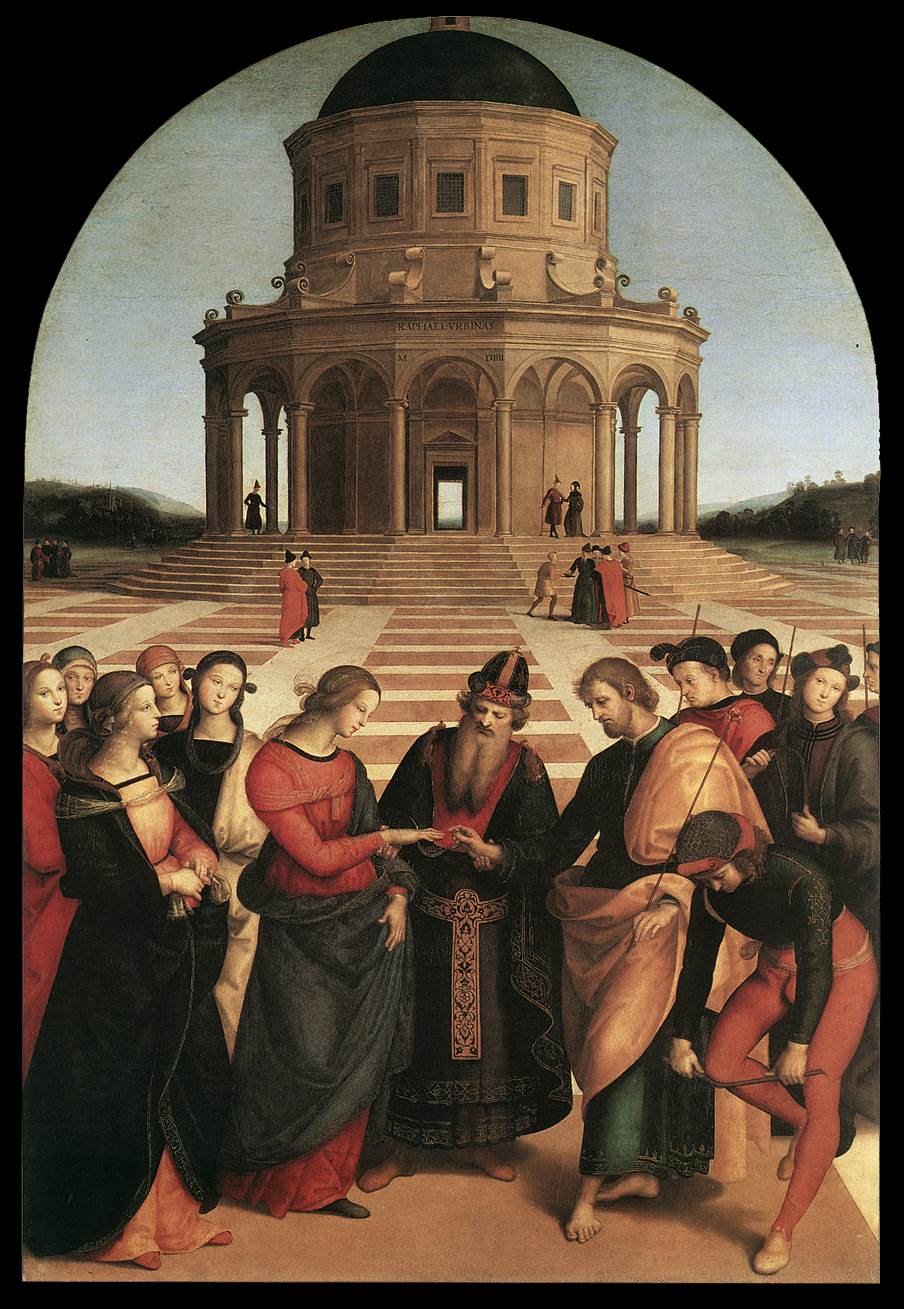
The Mystical Marriage of the Consecrated Virgin

St. Catherine of Siena's Mystical Marriage


To you, young people, I say: if you hear the Lord's call, do not reject it! Dare to become part of the great movements of holiness which renowned saints have launched in their following of Christ. Cultivate the ideals proper to your age, but readily accept God's plan for you if he invites you to seek holiness in the consecrated life. Admire all God's works in the world, but be ready to fix your eyes on the things destined never to pass away.
The Third Millennium awaits the contribution of the faith and creativity of great numbers of young consecrated persons, that the world may be made more peaceful and able to welcome God and, in him, all his sons and daughters. Blessed John Paul II


This quotation is from the Apostolic Letter Vita Consecrata explained below.


I write this for my English friends, and some young people in Malta, who had not heard of the life of the Consecrated Virgin. Starting with this excellent website, I shall merely list a few points on the vocation. Personally, I know two and both woman work for the Church in various capacities. Both are professional women and wonderful lights in the world. I highly suggest that some of the single persons who are women look into this as a possible call from God. The beauty of this life involves several levels of holiness-poverty, celibacy and obedience. One becomes a "sign of contradiction in the world".

Let me start with the Vatican document on the consecrated life. On March 25th, 1996, Blessed John Paul II promulgated the apostolic letter Vita Consecrata. Blessed John Paul II began this letter referring to love and the Mystery of the Transfiguration. His description of the call of virgins to this rule is sublime. One can click on the name and follow the text. Here are a few sections from this beautiful letter:

Consecrated persons, who embrace the evangelical counsels, receive a new and special consecration which, without being sacramental, commits them to making their own — in chastity, poverty and obedience — the way of life practised personally by Jesus and proposed by him to his disciples. Although these different categories are a manifestation of the one mystery of Christ, the lay faithful have as their specific but not exclusive characteristic, activity in the world; the clergy, ministry; consecrated men and women, special conformity to Christ, chaste, poor and obedient.
.....


The Institutes of Consecrated Life, through the profession of the evangelical counsels, must be conscious of their special mission in today's Church, and we must encourage them in that mission".The Fathers of the Ninth Assembly of the Synod of Bishops echoed this conviction: "Throughout the Church's history, consecrated life has been a living presence of the Spirit's work, a kind of privileged milieu for absolute love of God and of neighbour, for witness to the divine plan of gathering all humanity into the civilization of love, the great family of the children of God".The Church has always seen in the profession of the evangelical counsels a special path to holiness. The very expressions used to describe it — the school of the Lord's service, the school of love and holiness, the way or state of perfection — indicate the effectiveness and the wealth of means which are proper to this form of evangelical life, and the particular commitment made by those who embrace it.It is not by chance that there have been so many consecrated persons down the centuries who have left behind eloquent testimonies of holiness and have undertaken particularly generous and demanding works of evangelization and service.
......


Consecrated persons are asked to be true experts of communion and to practise the spirituality of communionas "witnesses and architects of the plan for unity which is the crowning point of human history in God's design".The sense of ecclesial communion, developing into aspirituality of communion, promotes a way of thinking, speaking and acting which enables the Church to grow in depth and extension. The life of communion in fact "becomes a signfor all the world and a compelling force that leads people to faith in Christ ... In this way communion leads to mission, and itself becomes mission"; indeed, "communion begets communion: in essence it is a communion that is missionary". In founders and foundresseswe see a constant and lively sense of the Church, which they manifest by their full participation in all aspects of the Church's life, and in their ready obedience to the Bishops and especially to the Roman Pontiff. Against this background of love towards Holy Church, "the pillar and bulwark of the truth" (1 Tim 3:15), we readily understand the devotion of Saint Francis of Assisi for "the Lord Pope",the daughterly outspokenness of Saint Catherine of Siena towards the one whom she called "sweet Christ on earth",the apostolic obedience and the sentire cum Ecclesia of Saint Ignatius Loyola,and the joyful profession of faith made by Saint Teresa of Avila: "I am a daughter of the Church".We can also understand the deep desire of Saint Theresa of the Child Jesus: "In the heart of the Church, my mother, I will be love".These testimonies are representative of the full ecclesial communion which the Saints, founders and foundresses, have shared in diverse and often difficult times and circumstances. They are examples which consecrated persons need constantly to recall if they are to resist the particularly strong centrifugal and disruptive forces at work today.


.......


The prophetic task of the consecrated life is brought into play by three major challenges addressed to the Church herself: they are the same challenges as ever, posed in new ways, and perhaps more radically, by contemporary society, at least in some parts of the world. These challenges relate directly to the evangelical counsels of chastity, poverty and obedience, impelling the Church, and consecrated persons in particular, to clarify and testify to the profound anthropological significance of the counsels. The decision to follow the counsels, far from involving an impoverishment of truly human values, leads instead to their transformation. The evangelical counsels should not be considered as a denial of the values inherent in sexuality, in the legitimate desire to possess material goods or to make decisions for oneself. Insofar as these inclinations are based on nature, they are good in themselves. Human beings, however, weakened as they are by original sin, run the risk of acting on them in a way which transgresses the moral norms. The profession of chastity, poverty and obedience is a warning not to underestimate the wound of original sin and, while affirming the value of created goods, it relativizes them by pointing to God as the absolute good. Thus, while those who follow the evangelical counsels seek holiness for themselves, they propose, so to speak, a spiritual "therapy" for humanity, because they reject the idolatry of anything created and in a certain way they make visible the living God. The consecrated life, especially in difficult times, is a blessing for human life and for the life of the Church.


Realizing this is a long post already, I would like to add the following from the website above. This list will help clarify the call. This call involves a commitment, and is a vocation. These women do not, obviously, belong to those groups of singles who do not commit themselves to anything. I would read and ponder this lovely detailed examination. I am so happy Blessed John Paul II re-organized this life-style. I hope readers understand that to make a decision for Christ should involve a relationship with the Church in a formal way, as we were not meant to be alone in the world, tossed and turned by circumstances, without focus.


From the Code of Canon Law:
• The virgin is consecrated to God by the diocesan Bishop according to a rite approved by the church. [Catechism of the Catholic Church, 922-924]
• She is betrothed mystically to Christ and dedicated to the service of the church.
• She enters a public state of consecrated life in the Church.
• She lives her life individually, under the direction of the diocesan Bishop.

From the Rite of Consecration to a Life of Virginity:
• The consecrated virgin is constituted a sacred person in the Church. [Introduction, No. 1]
• No particular service or spirituality is imposed; the consecrated virgin's time is spent in works of penance and of mercy, in apostolic activity, and in prayer, in accord with her state of life and spiritual gifts. [No. 2]
• She is strongly advised to recite the Liturgy of the Hours daily, and is committed to praying Morning and Evening Prayer. [No.2]
• Her life is one of perpetual virginity. [No.5]

Secular State:
The consecrated virgin remains in the secular state, providing completely for her own material needs, medical care, and retirement. At no time is the diocese financially responsible for her. [Sr. Sharon Holland, Consecrated Virgins for Today's Church, 1998, as printed in Consecrated Life, Vol. 24, No.2, pp. 257-75]

The consecrated virgin does not wear habit or veil, nor use the title "Sister," nor write "OCV" after her name. She witnesses subtly, but publicly and powerfully, by her virginal life given exclusively to Jesus Christ. Consecrated virgins today wear their ring, but their comportment, modesty in dress, simplicity in lifestyle all betoken their living of the evangelical counsels. [from Archbishop Burke, Questions and Answers in "Preparation Process," USACV Information Packet, revised August 2009]


I was going to post this tomorrow, but some readers wanted to know more about this. God bless you all. Tomorrow I shall write on the Order of Widows, which does not exist at this time, but did. There are some in Europe and the Vatican is working on a Rite.


Thursday, 31 July 2014

Anti-Semitism is alive and growing....a snippet

http://www.crisismagazine.com/2014/looks-like-duck-islamist-nazi-connection#.U9qTnOijNkE.twitter

And, if you are reading Disinformation, as I asked you all to do, you will find that the Russians used the fake book mentioned in the third paragraph here.

Hasan al-Banna, the founder of the Muslim Brotherhood and a friend of Husseini, was also impressed with the Nazis, and during the war he worked to establish a formal alliance with Hitler and Mussolini. Moreover, under directions from al-Banna, the Brotherhood Intelligence Service shared information with the Germans on the movements of the British Army.
Islamists and Nazis also shared an interest in anti-Semitic literature. According to Dalin and Rothmann:

Mein Kampf … remains a perennial best-seller in several Islamic countries. After the Six-Day War in 1967, Israeli soldiers discovered that many Egyptian prisoners carried small paperback editions of Mein Kampf, translated into Arabic… (Icon of Evil, p. 113)

 Like the Nazis, the Arabs also shared a firm belief in the authenticity of the viciously anti-Semitic tract The Protocols of the Elders of Zion. The first of many Arabic editions was published in 1921. It has been a best-seller in Islamic capitals ever since and remains required reading in many Arab universities. King Faisal was so enamored of the book that he ordered all Saudi hotels to put a copy in every room—presumably right alongside the Gideon Koran.


STS Vocation Day Tomorrow, And Today's Preview

Tomorrow, again, I am highlighting possible vocations in our Church. I cannot re-post all the things I have written, but some will be on the blog again tomorrow.

Here are some links and there will be re-posts. This first link caused controversy, but I stand by this.

 http://supertradmum-etheldredasplace.blogspot.com/2012/07/i-do-not-believe-that-being-single-is.html

 and......

Sunday, 26 January 2014

The Vocation of The Priest's Wife and The Three Marys


Because for many months, I was close to some Ordinariate priests and met and talked with some of the wives when I was in England, even briefly, I observed a key to the mystery of the married Ordinariate priest which I would like to share. I have also met other women in the role of  "priest wives".

The Catholic people on the whole are not accustomed to the vicar's wife. Indeed, when we lived in Petersfield years ago, it took the parish several months to accept a married ex-Anglican, now Catholic priest for a pastor. The objections were all based on ignorance and prejudice and in the end, the priest and his wife were not only happily accepted, but greatly loved.

The problem with the normal person in the pew is that these Catholics do not understand that if the husband, who is a Catholic priest has a vocation, his wife has a vocation as well. I understand this vocation of the priest's wife, which is more than being the wife of a man who happens to be a priest, and a mother to his children.

The vocation of the priest's wife consists of the greatest sacrifice a woman can give to the Church, her husband to take on another Bride, the Bride of Christ, which is the Church

The priest's wife is not the first woman in the priest's life She is the third woman in the priest's life, and yet, a great support to his ministry, a point to which I shall return.

The First Woman in the heart of the married priest is the Bride of Christ, the one, true, holy, Catholic and apostolic Church. He is her protector, her guide, her spouse as he is alter Christus.

The Second Woman in the heart of the married priest is the Blessed Virgin Mary, the Theotokos, the Mother of us all. The priest takes her guidance and love and honors her above all women.

The Third Woman is his wife. And, this wife is the servant of the servant. If she is a stay-at-home mom, she organizes the life of the priest so that he can maximize his day of service to the Church. She is not first, ever, and must be scheduled, and disciplined.

If the Third Woman has a job out of necessity, in order to help support the priest and family, as so many now must after losing their pensions, houses, and other goods by converting to the Catholic Church, even having to go back to work to make ends meet, this job is the gift she gives to not only the family, but to the Church, easing the financial burden of a diocese or the Ordinariate.

If the Third Woman is called to be active in the daily workings of the Church, especially if the children are grown and gone, her relationship with the parish will demand her time and gifts, and she will support the work of her husband as he sees fit. I know one priest's wife who does so many things that she is just as busy as he is.

A priest's wife has been called by God to give her husband to the Church, and to the world. She knows that she is called to serve, and to sacrifice the normal comforts of married life.

She will not be rich, or have the normal aspirations of a married woman in the world of the laity, because even though she is lay, she has a vocation to be in the world, and not of the world in a direct manner.

Her world is one like the women who served Christ and His apostles, so that they could live out the vocation of the apostolic call.

I greatly honor the wives of the priests of the Ordinariate and other priest's wives who have come in via different manners into the Catholic Church. May we honor them as we would honor those women at the foot of the Cross.

Like the married women, a mother of a priest sacrifices the time and attention of a son, grandchildren and all the protection and love a son would give to a mother is he were not married to the Bride of Christ. Mothers of priests should understand priest's wives from the perspective of giving up a natural relationship for a supernatural one, as these sons and these husbands do not belong to us, but to God.

 "Now there stood by the cross of Jesus His mother, and His mother’s sister, Mary [the wife] of Clopas, and Mary Magdalene." We call these women, Mary Salome, Mary wife of Clopas, and Mary Magdalene, the Three Marys, or the Three Maries. Mary Salome, wife of  Zebedee and mother of the "Sons of Thunder," James and John, aided Christ and His apostles and stood watching the horror of the Passion and Death of Our Lord. Like Mary the Mother of God, she is one of my models


These women ministered to Christ, set aside their own status, their own resources, their own lives for the sake of the Gospel.


So, too, do our sisters who are the wives of our Catholic priests.


Monday, 24 February 2014

On Josephite Marriages, Again


I have written about this before and have recently re-posted my original article on Josephite Marriages. Almost monthly, I am meeting couples who have chosen this way of holiness, as I noted in the first article I wrote two years ago.

Some saintly couples already noted on this blog chose Josephite Marriages, and I mentioned a fictional couple in my novella, who chose such a lifestyle.

As times become more perilous, couples may consider this path of holiness. Most of the couples I know who have chosen this path are just beyond child-bearing age. In other words, they made the decision to be completely chaste. As they had given God children, as expected from good Catholics, and as one of the huge reasons for marital relations no longer was possible, these couples prayed and spoke with spiritual directors about their decision.

The couples prayed first, of course, and came to the decision together, first.

As is most obvious, a Josephite Marriage is named after St. Joseph, who did not have marital relations with the Blessed Virgin Mary. This marriage was completely celibate, and some Josephite marriages are so.

There is a confusion among some modern people on the validity of a Josephite, or non-consummated marriages, unlike the ones described above. If a couple is married in the Church and has been living together for a length of time, the marriage is assumed consummated. A Josephite Marriage is called ratum tantum in Canon Law. Note, that when a couple are married in the Nuptial Mass, or with the Nuptial Blessing, they are "married".  In the Church today, a non-consummated marriage must still be the subject of an annulment if a party decides to leave the marriage, divorce, and re-marry.

One may reference this post and others under the tag, "marriage" on this blog for more information.

http://supertradmum-etheldredasplace.blogspot.com/2012/01/unusual-controversial-catholic-subject.html


Monday, 16 January 2012

An Unusual, Controversial Catholic Subject-Celibacy in Marriage

Now, I am not married, but I live a celibate life-style. However, I have an increasing number of friends, traditional Catholics, who have opted for celibacy in their marriages. This is not a new ideal in the Church, and although Christ wants most married couples to be fruitful and multiply, that is, to have the wonderful children God desires them to have, there have been and are couples, who for the sake of the kingdom, have chosen a different way. Of course, the norm, having children as God gives, creates saints, such as Blessed Louis and  Blessed Zelie Martin, Blessed Karl and Empress Zita, SS. Joachim and Anna, SS. Isidore and Maria (who vowed abstinence later in their marriage), and so on. This is not an exhaustive list.

However, the emphasis on celibacy should be rare, but seen as a call within a call. I also think there has to be good reason for not having children. The grand example are two of my favorite Catholics, Jacques and Raissa Maritain, who on the Isle of Wight, as Benedictine Oblates, took a vow of celibacy "for the sake of the Kingdom". Raissa writes in her diary, which I practically have memorized, that it was difficult for her, but she could see that Jacques was called to be in the world and she was his prayer backup, companion in holiness, and confidant, as well as best-friend. They shared philosophy, theology, and the dedication to bringing the Gospel into the workplace in the extreme. God called them to this.

I first met celibate married couples about twenty-five years ago. The first couple I met were in their forties and had a close relationship with the Church and the priest who was the pastor. They were very active in the Church, but did not have normal marital relations. They had chosen that way and had married later in life. The man had been in the Jesuit seminary for years, but left, as he did not think he had a priestly vocation. He found a wife who would support him in his spiritual walk. The second couple I met were in their early sixties. They had decided that past child-bearing age, they would make a celibate commitment. Since then, I have met another couple who have decided the same thing. Their "extra" time is spent in good works, praying and fasting. Obviously, these couples have spiritual directors. This call within a call is, also, obviously, by mutual consent.

Those with a worldly mindset and even some good Catholics may find this call repelling or unnatural. I would say that this call is rare, but not unnatural. I think that those who decide to live in the world, or are called so by God to remain among the laity, can exhibit a variety of calls "for the sake of the Kingdom". And, to be in a relationship which is celibate may be a sign of contradiction to the world as well as giving two people the necessary, daily support a brother and sister in Christ may give to each other. Intimacy has many faces, and the physical side of intimacy is only one aspect of relationship. I have written this to support my friends who have chosen this way and to encourage those who feel the need for companionship without sex to be comforted in that they are not alone. We are all called to be saints, and there are many ways, in Christ, through Mary, to be saints.

In addition, God did not intend people to live all alone. The fact that there are so many single, lonely individuals needs to be addressed by the Church. Those who for whatever reason cannot be a priest or nun or sister, have some options, but loneliness should not be the norm. Church communities have failed, especially in America, to support their singles. Many Catholics are singles for many reasons. There exists a judgmental attitude, which excludes those singles from the larger interaction in the Church. And, for those who desire celibacy in the world, that is an option, but it does not have to equal loneliness. I am very fortunate, as I do not experience the gnawing type of loneliness some do. I may miss my dear friends when apart from them, but that is different than the vague experience of loneliness many feel. We all need to reach out to those who feel this need, pray for them, and include them in our busy lives. To do otherwise is not to be Christian.


Books

I do not want this blog to turn into a book review center, but I shall share the rest of my reading list in the next two months or so.

Re-reading The Mystical Theology of St. Bernard by Etienne Gilson, and about to start, finally, as I gave away my first copy to a new cleric, The Fulfillment of All Desire by Ralph Martin.

If a reader would like to send me Henry Cardinal Manning's book, The Eternal Priesthood, please let me know.

After the above, I shall go back to the writings of the Pope Emeritus. He is a genius.

From Our Own Government Pages

http://www.cdc.gov/quarantine/aboutlawsregulationsquarantineisolation.html

Be careful which sources you choose

Go to Drudge for news. I read it but do not have time to share it here. Overseas, I can no longer trust RT since the Ukraine war started. I use online commentators. I suggest signing up for Newsmax. France 24 seems to show more and more pro-Christian comments and dicussions.

None of the television news is reliable in America. 

Sad days, but not surprising. Read Disinformation. Great book. One link from Drudge this morning-

http://charlotte.cbslocal.com/2014/07/31/liberian-official-ebola-outbreak-is-above-the-control-of-the-national-government/

Need Prayers

Dear Readers, 

Please pray for me, as I have had the worst all-day and night attack of asthma since the winter months. Needless to say, I am exhausted. Pray to St. Ignatius for me today on his day of entrance into heaven. He was exactly my age when he died on July 31, 1556 (aged 65). However, I am not ready to go yet and want to finish my purgatory on earth, and some unfinished service, God willing. Also. of course, I want to see my son ordained.
I was so fortunate to have excellent guides in my relative youth as to the spirituality of this great saint.

Ta muchly for prayers, however.

Manning Against The Modernists

For some time, I have thought that Henry Cardinal Manning should be canonized. He championed the papacy and the Church in difficult times, and almost single-handedly caused the Church to grow to great numbers through his teaching, personal pastoral care, and even fighting with the powers of evil in politics, as well as the Modernists in the Church.

He foresaw all the crumbling of British society we now see because of the watering down of religion in the school system. He prophesied what would happen to an increasingly secular society chasing after entertainment and status.

He rebuked the old guard Catholics who ignored the new Catholic teaching on social justice.

He saw that loyalty to Rome kept the Church united against the growing powers of nationalism.

He stood up for the working class, the poor, the sick.

Against the heresies of national churches separating themselves from Rome, he stood firm.

What has destroyed the status of the Church in both America and in Great Britain has been the heresies of Americanism and Anglicanism.

Without an independent, universal Catholic Church, bishops and priests fall into a parochialism which denies the authority of the pope, and, therefore, the authority of Christ Himself.

Manning saw this clearly.

To me, he is a great leader in the Church against Modernism.

I wish a real Catholic who understands the path of perfection, which Manning sought, would write a definitive biography.

Many one of the young trads would consider doing this.....

Transformation II

Our transformation through the Eucharist is one of becoming Christ for the world. Cardinal Burke, St. John Paul II and the Pope Emeritus all ponder the humility of the priest before the Eucharist.

If the priest allows himself to become transformed, truly living his role as alter Christus, then the people of God will see Christ clearly.

From the Pope Emeritus' "Letter Proclaiming a Year for Priests on the 150th Anniversary of the 'Dies Natalis' of the Cure of Ars," June 16, 2009.

Saint John Mary Vianney taught his parishoners primarily by the witness of his life. It was from his example that they learned to pray, halting frequently before the tabernacle for a visit to Jesus in the Blessed Sacrament....This way of educating the faithful to the Eucharistic presence and to communion proved most effective when they saw him celebrate the Holy Sacrifice of the Mass. Those present said that 'it was not possible to find a finer example of worship...He gazed upon the Host with immense love.'"

Transformation I

I think this is the second to the last posting on Cardinal Burke's excellent book. I want to move on to other things.

There are so many excellent ideas in it, I suggest you buy it.

One point I want to share concerns the transforming power of the Eucharist in our lives. Cardinal Burke, again referring to Sacramentum Caritatis, notes that Christ in Holy Communion transforms our entire life, every nook and cranny.

He writes, "Through our participation in the Eucharistic Sacrifice, we come to understand that we cannot compartmentalize any aspect of our life, in order to keep it from the transforming grace of Christ's Real Presence."

The persons who take Communion begin to think like Christ and act like Christ. As every person is transformed, all human activity may be transformed and finally, the transformation of the world.

Is this not what we all desire, deep down inside, to be changed in every way, to be purified, to become perfect, in union with the Beloved, Jesus Christ?


We Become What We Eat

One of the most profound ideas in Cardinal Burke's book is found in St. Augustine's Confessions. Cardinal Burke is quoting the Pope Emeritus in Sacramentum Caritatis. Cardinal Burke paraphrases Augustine. "Earthly food is assimilated into our very being; it becomes part of us. The Body of Christ, the Heavenly Food of our earthly pilgrimage, on the contrary, transforms us into the Food we consume, that is, Christ Whom we receive in Holy Communion."

The more one places one's self in the position of adoring and being with Christ in Adoration, the more one realizes that it is Christ Who is taking us into Himself. If we give ourselves totally, body and soul, to Christ in the Eucharist, we are offering up ourselves, as Cardinal Burke reminds us by referring to the Pope Emeritus, who is referring to St. Paul in Romans 12:1. We present Christ with "our bodies as a living sacrifice, holy and acceptable to God."

As we offer up ourselves, we become one with Christ, and in doing so, we join with the Church as well, the Mystical Body of Christ. Instead of normal food becoming us, we become Christ, when we partake in Holy Communion.

This section of the book is truly beautiful and one can meditate on such paragraphs.


On Mortification

It has been almost one year since I gave up chocolate, desserts and ales/beer for penance for three people who are agnostics. I share this with you to give you ideas on mortification.

Can you believe I have not lost any weight, and have actually gained weight while eating considerably less?

Well, when one chooses mortifications, the side-effects are up to God. I did not give up these things to lose weight.

I was talking to a friend about mortification recently. This is a misunderstood term. Mortification are things done over and above suffering. These must be voluntary and freely-chosen to gain merit.

Without mortification, we do not enter into the purgation of the senses or the spirit. We always will make an excuse for indulging in something.

Indulging one's self could be sin, or it could be an opportunity to stop and say "no".

One type of mortification could be not saying something in defense of one's self when one is in the right and the other person in the wrong. Another type of mortification could be serving someone one does not like. That irritable person at work? Buy them a cuppa.

Think about mortifications.

Suggestion

Read, if you have the chance, the Pope Emeritus, when he was Pope, Address to the Tribunal of the Roman Rota for the Inauguration of the Judicial Year (January 28, 2006): Acta Apostolicae Sedis 98 (2006), 138, in Sacramentum Caritatis, n. 29.

I always read footnotes. From Burke's book, p.102, footnote 7 to reference in text.

From Sacramentum Caritatis

A long time ago, I referred to this document, the post-synodal Apostolic Exhortation of then Pope Benedict XVI, Sacramentum Caritatis.

Raymond Cardinal Burke reminded me of these sections to which I referred so long ago. Read especially carefully the last one quoted on the priest shortage. This document also refers to the refusal of Communion for those out of communion with the Church-that is, those who are divorced and married without annulments. One can find this section at the link.


The order of the sacraments of initiation
18. In this regard, attention needs to be paid to the order of the sacraments of initiation. Different traditions exist within the Church. There is a clear variation between, on the one hand, the ecclesial customs of the East (50) and the practice of the West regarding the initiation of adults, (51) and, on the other hand, the procedure adopted for children. (52) Yet these variations are not properly of the dogmatic order, but are pastoral in character. Concretely, it needs to be seen which practice better enables the faithful to put the sacrament of the Eucharist at the centre, as the goal of the whole process of initiation. In close collaboration with the competent offices of the Roman Curia, Bishops' Conferences should examine the effectiveness of current approaches to Christian initiation, so that the faithful can be helped both to mature through the formation received in our communities and to give their lives an authentically eucharistic direction, so that they can offer a reason for the hope within them in a way suited to our times (cf. 1 Pet 3:15).
Initiation, the ecclesial community and the family
19. It should be kept in mind that the whole of Christian initiation is a process of conversion undertaken with God's help and with constant reference to the ecclesial community, both when an adult is seeking entry into the Church, as happens in places of first evangelization and in many secularized regions, and when parents request the sacraments for their children. In this regard, I would like to call particular attention to the relationship between Christian initiation and the family. In pastoral work it is always important to make Christian families part of the process of initiation. Receiving Baptism, Confirmation and First Holy Communion are key moments not only for the individual receiving them but also for the entire family, which should be supported in its educational role by the various elements of the ecclesial community. (53) Here I would emphasize the importance of First Holy Communion. For many of the faithful, this day continues to be memorable as the moment when, even if in a rudimentary way, they first came to understand the importance of a personal encounter with Jesus. Parish pastoral programmes should make the most of this highly significant moment.
II. The Eucharist and the Sacrament of Reconciliation
Their intrinsic relationship
20. The Synod Fathers rightly stated that a love for the Eucharist leads to a growing appreciation of the sacrament of Reconciliation. (54) Given the connection between these sacraments, an authentic catechesis on the meaning of the Eucharist must include the call to pursue the path of penance (cf. 1 Cor 11:27-29). We know that the faithful are surrounded by a culture that tends to eliminate the sense of sin (55) and to promote a superficial approach that overlooks the need to be in a state of grace in order to approach sacramental communion worthily. (56) The loss of a consciousness of sin always entails a certain superficiality in the understanding of God's love. Bringing out the elements within the rite of Mass that express consciousness of personal sin and, at the same time, of God's mercy, can prove most helpful to the faithful.(57) Furthermore, the relationship between the Eucharist and the sacrament of Reconciliation reminds us that sin is never a purely individual affair; it always damages the ecclesial communion that we have entered through Baptism. For this reason, Reconciliation, as the Fathers of the Church would say, is laboriosus quidam baptismus; (58) they thus emphasized that the outcome of the process of conversion is also the restoration of full ecclesial communion, expressed in a return to the Eucharist. (59)
Some pastoral concerns
21. The Synod recalled that Bishops have the pastoral duty of promoting within their Dioceses a reinvigorated catechesis on the conversion born of the Eucharist, and of encouraging frequent confession among the faithful. All priests should dedicate themselves with generosity, commitment and competency to administering the sacrament of Reconciliation. (60) In this regard, it is important that the confessionals in our churches should be clearly visible expressions of the importance of this sacrament. I ask pastors to be vigilant with regard to the celebration of the sacrament of Reconciliation, and to limit the practice of general absolution exclusively to the cases permitted, (61) since individual absolution is the only form intended for ordinary use. (62) Given the need to rediscover sacramental forgiveness, there ought to be a Penitentiary in every Diocese. (63) Finally, a balanced and sound practice of gaining indulgences, whether for oneself or for the dead, can be helpful for a renewed appreciation of the relationship between the Eucharist and Reconciliation. By this means the faithful obtain "remission before God of the temporal punishment due to sins whose guilt has already been forgiven." (64) The use of indulgences helps us to understand that by our efforts alone we would be incapable of making reparation for the wrong we have done, and that the sins of each individual harm the whole community. Furthermore, the practice of indulgences, which involves not only the doctrine of Christ's infinite merits, but also that of the communion of the saints, reminds us "how closely we are united to each other in Christ ... and how the supernatural life of each can help others." (65) Since the conditions for gaining an indulgence include going to confession and receiving sacramental communion, this practice can effectively sustain the faithful on their journey of conversion and in rediscovering the centrality of the Eucharist in the Christian life.
III. The Eucharist and the Anointing of the sick
22. Jesus did not only send his disciples forth to heal the sick (cf. Mt 10:8; Lk 9:2, 10:9); he also instituted a specific sacrament for them: the Anointing of the Sick.(66) The Letter of James attests to the presence of this sacramental sign in the early Christian community (cf. 5:14-16). If the Eucharist shows how Christ's sufferings and death have been transformed into love, the Anointing of the Sick, for its part, unites the sick with Christ's self-offering for the salvation of all, so that they too, within the mystery of the communion of saints, can participate in the redemption of the world. The relationship between these two sacraments becomes clear in situations of serious illness: "In addition to the Anointing of the Sick, the Church offers those who are about to leave this life the Eucharist as viaticum." (67) On their journey to the Father, communion in the Body and Blood of Christ appears as the seed of eternal life and the power of resurrection: "Anyone who eats my flesh and drinks my blood has eternal life and I will raise him up on the last day" (Jn 6:54). Since viaticum gives the sick a glimpse of the fullness of the Paschal Mystery, its administration should be readily provided for. (68) Attentive pastoral care shown to those who are ill brings great spiritual benefit to the entire community, since whatever we do to one of the least of our brothers and sisters, we do to Jesus himself (cf. Mt 25:40).
IV. The Eucharist and the Sacrament of Holy Orders
In persona Christi capitis
23. The intrinsic relationship between the Eucharist and the sacrament of Holy Orders clearly emerges from Jesus' own words in the Upper Room: "Do this in memory of me" (Lk 22:19). On the night before he died, Jesus instituted the Eucharist and at the same time established the priesthood of the New Covenant. He is priest, victim and altar: the mediator between God the Father and his people (cf. Heb 5:5-10), the victim of atonement (cf. 1 Jn 2:2, 4:10) who offers himself on the altar of the Cross. No one can say "this is my body" and "this is the cup of my blood" except in the name and in the person of Christ, the one high priest of the new and eternal Covenant (cf. Heb 8-9). Earlier meetings of the Synod of Bishops had considered the question of the ordained priesthood, both with regard to the nature of the ministry (69) and the formation of candidates.(70) Here, in the light of the discussion that took place during the last Synod, I consider it important to recall several important points about the relationship between the sacrament of the Eucharist and Holy Orders. First of all, we need to stress once again that the connection between Holy Orders and the Eucharist is seen most clearly at Mass, when the Bishop or priest presides in the person of Christ the Head.
The Church teaches that priestly ordination is the indispensable condition for the valid celebration of the Eucharist.(71) Indeed, "in the ecclesial service of the ordained minister, it is Christ himself who is present to his Church as Head of his Body, Shepherd of his flock, High Priest of the redemptive sacrifice." (72) Certainly the ordained minister also acts "in the name of the whole Church, when presenting to God the prayer of the Church, and above all when offering the eucharistic sacrifice." (73) As a result, priests should be conscious of the fact that in their ministry they must never put themselves or their personal opinions in first place, but Jesus Christ. Any attempt to make themselves the centre of the liturgical action contradicts their very identity as priests. The priest is above all a servant of others, and he must continually work at being a sign pointing to Christ, a docile instrument in the Lord's hands. This is seen particularly in his humility in leading the liturgical assembly, in obedience to the rite, uniting himself to it in mind and heart, and avoiding anything that might give the impression of an inordinate emphasis on his own personality. I encourage the clergy always to see their eucharistic ministry as a humble service offered to Christ and his Church. The priesthood, as Saint Augustine said, is amoris officium, (74) it is the office of the good shepherd, who offers his life for his sheep (cf. Jn 10:14-15).
The Eucharist and priestly celibacy
24. The Synod Fathers wished to emphasize that the ministerial priesthood, through ordination, calls for complete configuration to Christ. While respecting the different practice and tradition of the Eastern Churches, there is a need to reaffirm the profound meaning of priestly celibacy, which is rightly considered a priceless treasure, and is also confirmed by the Eastern practice of choosing Bishops only from the ranks of the celibate. These Churches also greatly esteem the decision of many priests to embrace celibacy. This choice on the part of the priest expresses in a special way the dedication which conforms him to Christ and his exclusive offering of himself for the Kingdom of God. (75) The fact that Christ himself, the eternal priest, lived his mission even to the sacrifice of the Cross in the state of virginity constitutes the sure point of reference for understanding the meaning of the tradition of the Latin Church. It is not sufficient to understand priestly celibacy in purely functional terms. Celibacy is really a special way of conforming oneself to Christ's own way of life. This choice has first and foremost a nuptial meaning; it is a profound identification with the heart of Christ the Bridegroom who gives his life for his Bride. In continuity with the great ecclesial tradition, with the Second Vatican Council (76) and with my predecessors in the papacy, (77) I reaffirm the beauty and the importance of a priestly life lived in celibacy as a sign expressing total and exclusive devotion to Christ, to the Church and to the Kingdom of God, and I therefore confirm that it remains obligatory in the Latin tradition. Priestly celibacy lived with maturity, joy and dedication is an immense blessing for the Church and for society itself.
The clergy shortage and the pastoral care of vocations
25. In the light of the connection between the sacrament of Holy Orders and the Eucharist, the Synod considered the difficult situation that has arisen in various Dioceses which face a shortage of priests. This happens not only in some areas of first evangelization, but also in many countries of long-standing Christian tradition. Certainly a more equitable distribution of clergy would help to solve the problem. Efforts need to be made to encourage a greater awareness of this situation at every level. Bishops should involve Institutes of Consecrated Life and the new ecclesial groups in their pastoral needs, while respecting their particular charisms, and they should invite the clergy to become more open to serving the Church wherever there is need, even if this calls for sacrifice. (78) The Synod also discussed pastoral initiatives aimed at promoting, especially among the young, an attitude of interior openness to a priestly calling. The situation cannot be resolved by purely practical decisions. On no account should Bishops react to real and understandable concerns about the shortage of priests by failing to carry out adequate vocational discernment, or by admitting to seminary formation and ordination candidates who lack the necessary qualities for priestly ministry (79). An insufficiently formed clergy, admitted to ordination without the necessary discernment, will not easily be able to offer a witness capable of evoking in others the desire to respond generously to Christ's call. The pastoral care of vocations needs to involve the entire Christian community in every area of its life. (80) Obviously, this pastoral work on all levels also includes exploring the matter with families, which are often indifferent or even opposed to the idea of a priestly vocation. Families should generously embrace the gift of life and bring up their children to be open to doing God's will. In a word, they must have the courage to set before young people the radical decision to follow Christ, showing them how deeply rewarding it is.

Want A Gift for A New Priest?

I would recommend Raymond Cardinal Burke's book I have been sharing, Divine Love Made Flesh,  as a beautiful gift for a seminarian, a new transitional deacon, or a new priest. The sections on the priesthood and the Eucharist are truly beautiful.

The section on priestly celibacy includes this idea, that celibacy is not merely to be understood in functional terms, as the Cardinal points out, "...but rather in terms of the union of the heart of the priest with the glorious pierced heart of Jesus in love of the flock."

Worthy of meditation... and there are more such profound ideas.


Wednesday, 30 July 2014

Important Apostolic Letter, 1998

http://www.vatican.va/holy_father/john_paul_ii/apost_letters/documents/hf_jp-ii_apl_05071998_dies-domini_en.html

So many families do not understand that the entire day of Sunday is for worship, not merely the time the members attend Mass. Cardinal Burke reminds us of the holiness of Sunday in his book.

Sigh, I Remember

A time before phone-trees....and automated calling. People need jobs, not robots.

What Is A Synod of Bishops?

Raymond Cardinal Burke in his book on the Eucharist, which I have been sharing this week, nicely explains what a synod of bishops is in the Church.

Here are his words:

"The Synod of Bishops is a solemn meeting of the Roman Pontiff with representative bishops from throughout the world to receive their consultation on questions of concern for the Church. The Synod of Bishops takes one of three forms: ordinary, extraordinary and special...An 'ordinary' assembly of the Synod of Bishops is convoked by the Holy Father 'to foster closer unity between the Roman Pontiff and the bishops, to assist the Roman Pontiff with their counsel in the preservation and growth of faith and morals and in the observance and strengthening of ecclesiastical discipline, and to consider questions pertaining to the activity of the Church in the world.'"

Cardinal Burke continues, "A meeting of the Synod of Bishops is  'extraordinary'  when it is called 'to treat affairs which require a speedy solution.'"


"A meeting of the Synod of Bishops is 'special,' if it is made up of members of a particular portion of the church.'"

The upcoming meeting in Rome of the assembly of bishops, in October, is an "extraordinary" Synod.

We should all be praying and fasting for the success of this Synod.