Recent Posts

Thursday, 2 August 2012

On the Maccabees and Hierarchies of Vocations: some to pray, some to minister, some to fight and some to do all three

Some Catholics have been taught erroneously that there is no longer a hierarchy of vocations. In the Midwestern part of the States, this was commonly taught by the priests in liberal dioceses: that marriage was equal to the call to the priesthood and religious life. Some priests insisted this "new teaching" was a result of Vatican II. Hmmm....

Blessed John Paul II has a neglected letter on this subject. In his Apostolic Exhortation Vita Consecrata, the Blessed writes this:


Many of the baptized throughout history have been invited to live such a life "in the image of Christ". But this is possible only on the basis of a special vocation and in virtue of a particular gift of the Spirit. For in such a life baptismal consecration develops into a radical response in the following of Christ through acceptance of the evangelical counsels, the first and essential of which is the sacred bond of chastity for the sake of the Kingdom of Heaven.This special way of "following Christ", at the origin of which is always the initiative of the Father, has an essential Christological and pneumatological meaning: it expresses in a particularly vivid way the Trinitarian nature of the Christian life and it anticipates in a certain way that eschatological fulfilment towards which the whole Church is tending.n the Gospel, many of Christ's words and actions shed light on the meaning of this special vocation.


All baptized and confirmed Catholics have the Indwelling of the Holy Spirit, but some are called to live this more clearly and closely in the Holy Spirit. Blessed John Paul II continues:


All are equally called to follow Christ, to discover in him the ultimate meaning of their lives, until they are able to say with the Apostle: "For to me to live is Christ" (Phil 1:21). But those who are called to the consecrated life have a special experience of the light which shines forth from the Incarnate Word. For the profession of the evangelical counsels makes them a kind of sign and prophetic statement for the community of the brethren and for the world; consequently they can echo in a particular way the ecstatic words spoken by Peter: "Lord, it is well that we are here" (Mt17:4). These words bespeak the Christocentric orientation of the whole Christian life. But they also eloquently express the radical nature of the vocation to the consecrated life: how good it is for us to be with you, to devote ourselves to you, to make you the one focus of our lives! Truly those who have been given the grace of this special communion of love with Christ feel as it were caught up in his splendour: he is "the fairest of the sons of men" (Ps 45:2), the One beyond compare.


I think that one reason there have been less vocations is that children and adolescents have not been challenge to be that icon of Christ in the world, have not been challenged to follow the radical call.

All people like a challenge. The best and the brightest want to be marines, brain surgeons, great writers, even inventors. Those who are challenged at an early age rise to the challenge.

St. Ignatius 
We have two generations of mediocrity owing to the fact that parents have not challenged their children, or rarely. Some parents have even let their children decide for themselves whether they want baptism. Parents will stand before God and be judged for this laxity.

John Paul II continues the old, old idea that the religious life and priesthood are special callings from God. The evangelical counsels are thus above all a gift of the Holy Trinity. The consecrated life proclaims what the Father, through the Son and in the Spirit, brings about by his love, his goodness and his beauty. In fact, "the religious state reveals the transcendence of the Kingdom of God and its requirements over all earthly things. To all people it shows wonderfully at work within the Church the surpassing greatness of the force of Christ the King and the boundless power of the Holy Spirit."The first duty of the consecrated life is to make visible the marvels wrought by God in the frail humanity of those who are called. They bear witness to these marvels not so much in words as by the eloquent language of a transfigured life, capable of amazing the world. To people's astonishment they respond by proclaiming the wonders of grace accomplished by the Lord in those whom he loves. To the degree that consecrated persons let themselves be guided by the Spirit to the heights of perfection they can exclaim: "I see the beauty of your grace, I contemplate its radiance, I reflect its light; I am caught up in its ineffable splendour; I am taken outside myself as I think of myself; I see how I was and what I have become. O wonder! I am vigilant, I am full of respect for myself, of reverence and of fear, as I would be were I before you; I do not know what to do, I am seized by fear, I do not know where to sit, where to go, where to put these members which are yours; in what deeds, in what works shall I use them, these amazing divine marvels!"


I talk to people who cannot see or do not want to see we are not all created the same. We all have different gifts and talents. I would love to be an Olympic swimmer. I have always loved tennis and wish I had more skill and talent. But, no, these are not my gifts.

There are levels of holiness. Even the Church recognizes this by calling some saints Great and some Doctors of the Church. All saints are holy, but they are not the same.

Tradition with a small "t" in the Church says that St. Francis is the saint most like Christ Himself. In the Old Testament, we are told in the Scriptures that St. David, the King, is "a man after God Own Heart".  St. Francis is not just the man who loved birds and tamed wolves. He has the stigmata. King David was not merely the one who killed Goliath and thousands of heathens, he ordered his kingdom and wrote beautiful hymns to God. He prophesied as well, and is a type of Christ.

Maccabees
By the way, yesterday in the old calendar, the Saints of the Maccabee Family use to be celebrated. Think on that-men who fought for freedom and the keeping of the Mosaic Law as well as the correct liturgical practices, who shed blood rather than witness the pollution of the sacred Temple, are saints.

Joshua

This feast needs to be emphasized now, in this time.

That was there vocation, as was Joshua's, to be warriors. Are there any men out there responding to that call?

Parents, challenge your children. Priests, religious and all in the consecrated life, re-read this beautiful letter. Challenge others to follow by entering the narrow path.

Wednesday, 1 August 2012

Many posts today


...and do not forget to use the search button for themes listed as tags.

On the Congregation for Catholic Education

This part of the Curia should be very busy these days.

I think if I just kept up with all the Vatican documents and read all of St. Thomas Aquinas and St. Augustine, I would be so happy and busy for the rest of my life.

A document on fostering priestly vocations has come out this year. Did you know there is a Congregation relating to this in the Vatican? Here is the Profile and then back to the document in a following post.


In 1588, with the Constitution "Immensa," Pope Sixtus V erected the "Congregatio pro universitate studii romani" to supervise the studies at the University of Rome and other notable universities of the time, including Bologna, Paris and Salamanca.
Leo XII, in 1824, created the "Congregatio studiorum" for the schools of the Papal States which, starting in 1870, began to exercise authority over Catholic universities. The 1908 reform by St. Pius X confirmed this responsibility. Seven years later, Pope Benedict XV erected in this Congregation the section for seminaries (which existed within the Consistorial Congregation), joined to it the "Congregatio studiorum," and gave it the title of "Congregatio de Seminariis et Studiorum Universitatibus."
Pope Paul VI in 1967 gave it the name "Sacra Congregatio pro institutione Catholica." Today's name - the Congregation for Catholic Education (in Seminaries and Institutes of Study) - was received in 1988 with John Paul II's "Pastor Bonus."
As do all congregations, it has a prefect, secretary and under-secretary who are, respectively, Cardinal Zenon Grocholewski, Archbishop Jean-Louis Bruguès, O.P., and Msgr. A.Vincenzo Zani. It has 31 members - cardinals, archbishops and bishops - a staff of 25, and 31 consultors. Within this congregation is the Pontifical Work of Priestly Vocations, whose president is Cardinal Grocholewski.
This dicastery has authority in three diverse sectors: over all seminaries (except those falling within the jurisdiction of the Congregations for the Evangelization of Peoples and for Oriental Churches) and houses of formation of religious and secular institutes; over all universities, faculties, institutes and higher schools of study, either ecclesial or civil dependent on ecclesial persons; over all schools and educational institutes depending on ecclesiastical authorities.
Activity within the Office for Seminaries includes apostolic visits to Catholic institutions, preparation to receive bishops during their "ad limina" visits, nomination of rectors and the erection of seminaries. It has produced the "Directives on the Preparation of Educators in Seminaries" and constituted the Commission for a More Just Distribution of Priests in the World. It also produces a magazine entitled "Seminarium."
The congregation's second section, the Office for Universities, is responsible for, among other activities, approving new statutes for new or existing educational centers, nominating or confirming rectors and deans and approving the conferment of "honoris causa" doctoral degrees. It has published norms - due to an increased request - for those institutes or universities wishing to merge.
The Office for Catholic Schools collaborates with other dicasteries of the Roman Curia on questions of mutual interest, has contacts with bishops and with pontifical representatives abroad to remain abreast of the educational systems throughout the world and maintains relations with national and international Catholic organizations on matters concerning Catholic education.
Some of the issues treated by this office regard the teaching of sex education in Catholic schools, problems related to the teaching of moral or religious matters in public schools, the closing of Catholic schools in some countries or, in others, the juridical recognition of Catholic schools and ecclesial goods and properties.
In 1994 the Congregation for Catholic Education, in collaboration with the Congregation for Institutes of Consecrated Life and Societies of Apostolic Life, organized the 1st Latin American Continental Congress on Vocations, which took place in Sao Paulo, Brazil, from May 23-27. The 32nd World Day of Prayer for Vocations occurred this year.
The congregation yearly publishes statistics on the number of seminarians and priestly ordinations throughout the world: these appear in both the Activity of the Holy See and in the Pontifical Yearbook or "annuario."
      

Great Britain, Mission Country

One in twelve people in Great Britain are Catholic, which means about five million people. Only one million attend Mass regularly. Great Britain is a missionary country greatly in need of both vocations to the priesthood and to the married life.

I know some families with lots of children-they are SSPX families. I do not know large Catholic families outside the TLM parishes. Why? We know the reason is the general rejection of Humanae Vitae and the refusal of so many priests to preach the truth about this encyclical.

St. Edmund Campion


Missionary countries need strong men and women to catechize and be good examples for the rest of the society. In a missionary country, one cannot sit back and pretend that the status quo is fine. Sadly, even some missionary priests from missionary orders are not as strong and upfront as they should be with the Faith.

That the Church was persecuted for hundreds of years here makes a difference to the pysche of some people. There is a fear culture about religion which does not exist in the States, yet. That fear culture here is based on the history of persecution and on too many "mixed marriages". Catholics are afraid to be Catholic. One can hope and pray that the next generation, who are chosing to live the life of Faith more outwardly than their parents can turn the tide. But, it will take something more than a generational change, it will take another persecution to make the Church grow and be strong here.

God has His ways to bring people to themselves and to salvation. We must pay attention, pray, decide, act.


Pray for missionaries.

Hampshire and Berkshire in Bloom

England in the countryside is truly beautiful. Traveling though Berkshire and Hampshire, one sees the roses blooming, baskets of annuals, swans in the small rivers and lakes, Copper and Purple Beeches, and chaffinches.

England at its best is not London today, but the old villages and towns with churches, small lanes which end up in pubs, children playing everywhere in the parks and old couples walking by the streams.

Forget the Olympics. Go for a walk in the country.

If you don't read Newsmax.com, you should

http://www.newsmax.com/Headline/huckabee-chick-fil-a-appreciation-christians/2012/07/31/id/447117

A Reminder of a Great Prayer


God has crated me to do Him some definite service. He has committed some work to me which He has not committed to another. I have my mission. I am a link in a chain, a bond of connection between persons. I shall do good and be a preacher of truth in my own place." Blessed John Henry Newman adapted....

Relativism and Naivete


Relativism causes naivete. I have realized that those young people and maybe not so young who make assumptions about the past or the present without study and without a moral view become increasingly relativistic.

The crusades were one subject and Islam was the other being discussed.

If one has not studied the past and if one has not looked at the reality of such news as comes out of the Middle East and Europe daily, and if one has no moral or religious framework with which to judge things, then all religions look the same.

That the Catholics fought for freedom is a reality. We have two days in our liturgical calendar which celebrate victories over the old armies of Islam. Some Catholics may not want to be reminded of that truth:September 12th, honors Mary giving Catholics and the West victory at the Battle of Vienna. October 7th, the Feast of the Most Holy Rosary, celebrates Mary intercession at the Battle of Lepanto.

Catholics have views on such things. We have a long tradition of freedom and the realization of a loving Father. We are sons and daughters of a king, not slaves.

The second problem in discussions concerning Islam and the Crusades is that some people want to make the argument personal. That is, because they know one good person who is a moderate Muslim, than all criticisms are not charitable.  Sadly, the moderate Muslims are those who are not practicing their own faith-they may not believe in sharia law. They could be ostracized by some in their own religion.

Relativism deadens the mind and pretends there are no differences in creeds or laws. Relativism is historically blind. The lack of true Catholic and classical education has led to this stage of denial in our cultures in the West.

Let us pray for all involved that their minds may be enlightened and they may desire truth.

Again, on private revelations.

I cannot repeat enough that private revelations do not have to be believed by Catholics. That some people become angry when their favorite apparition is not accepted is not charitable.

I do not mean, of course, the ones which are on the universal or even local calendars of the Church Liturgical year. Those are obviously approved. Therefore, the Catholic Church universally honors Mary as Our Lady of Fatima and Our Lady of Lourdes, among other older ones, and local names.

If the apparitions have not been approved, these are not on the calendar. The same is true for visions of Our Lord, such as the Divine Mercy and The Sacred Heart of Jesus. These wonderful visions and gifts to the Church are on the universal Church calendar.

Thanks to Wiki


I would hope that charity would prevail among those who follow newer and non-approved visions. These are not dogma or doctrine. One must not judge those who choose not to believe in apparitions or visions. If one has had a spiritual experience of the Holy Spirit through some apparition, be grateful, but do not assume that others must accept an unapproved apparition.


Tuesday, 31 July 2012

Romney looks more like a leader

http://apnews.myway.com/article/20120729/DA0AQGP80.html

On the sexualization of our children

A dear friend of mine from California and I had a long discussion on the sexualization of children. The entire society of the West has turned a horrible corner into darkness regarding children and sex.

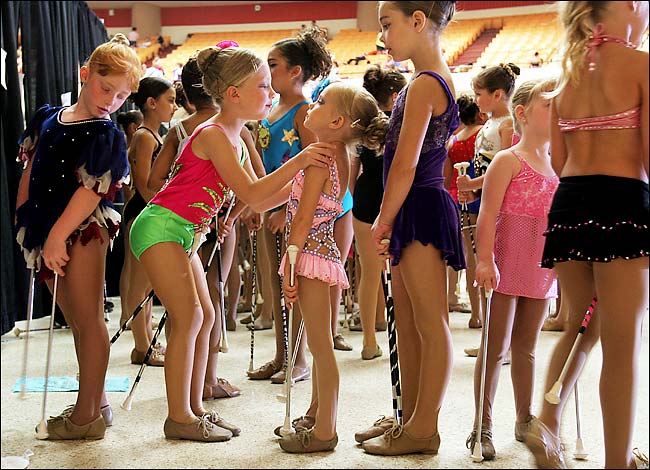
The EU and some Muslim countries want to lower the age of sexual consent to twelve. Some groups in the States have been politically working on this as well. But the most obvious area of sexualization is in the clothing industry. In America and in England for several years now, clothes which would have been termed "slutty" or "sexy" are being manufactured and sold to very young girls, as early as six.

Even clothes of older women, and my friend is seventy but extremely attractive, are now immodest and sexy.


What has happened is that those in charge of fashion have an agenda-sorry, this is true. If one looks at the pushing of the limits on clot'hing and tries to find modest fashions in most ordinary stores, one can be shocked Victoria Secrets are no longer secret and have sifted down to WalMart and higher end stores.

I gave up shopping at some stores years ago and could give a list of those which push sexy, immodest and trollops' clothes for all ages of women.

Many of my friends shop at Talbots, as the clothes there tend to be modest and not provocative.

But, mothers are to blame for how their girls dress.      

We Catholic women need to stop the sexualization of our children and grandchildren. Please pay attention. Pray to Mary Our Mother and Our Queen.


On the Stages of Perfection and a Warning.

Before I continue with the definitions of virtues and sins, it is very important that I re-iterate both the warnings of St. John of the Cross and Fr. Garrigou-Lagrange concerning the stages of growth in holiness towards perfection.

Knowing that God has called all of us to perfection, not merely chosen, obvious saints, Garrigou-Lagrange warns of becoming complacent, or falling into self-deceit regarding where one is in the levels of growth,

Now, we must work with the Holy Trinity in this walk, but we must not be deceived into thinking we are holier than we are.

Here are some of the points to remember:

1) Find a good confessor and/or spiritual director who understands and preferably has Thomistic, Scholastic background. In my limited experience, post-Vatican II trained priests without Scholastic understanding of sin and virtue cannot help one grow. The tendency too often is for priests to have lower expectations for holiness for the laity. This is not the believe of Garrigou-Lagrange.

2) Be absolutely honest with all sins, failings and weaknesses. Confessing weaknesses as well as sins helps a priest understand one better. If there are areas of healing which are necessary, share those in context of sinful behaviors.

3) If one's memory is not good, write down both sins and virtues combatting those sins. This can be done after the daily examination of conscience. I find mornings are better than evenings for this. But, one can do an examen in the evening.

4) Be honest about going backwards. St. John of the Cross and others refer to "Generous Souls", who do not avoid pain and are willing to be realistic about sin and weaknesses. If one avoids the Purgative Stage, for example, one will stay in that place until God is finished working.

5) Realize that we all have a duty to the Church to pursue perfection. No one has the real power of the Indwelling of the Holy Spirit without the life of the virtues. We cannot kid ourselves. The Holy Spirit can only work in power through a person who is humble, has purity of heart and a deep selflessness.

The rewards include a great intimacy with God, Christ and the Holy Spirit.

As always, I warn all against private revelations not approved. I think that the great saints, such as St. John of the Cross and St. Teresa of Avila have enough to say to us to keep us busy for a lifetime.

Also, be careful of extremes, which can indicate pride. My own namesake, St. Rose of Lima, did extreme things, but is a one-off type of girl. We cannot harm ourselves or not be able to meet the duties of the day in our pursuit of holiness. God bless you all.


Meditating on the Feeding of the Five Thousand

I am thinking today of the reading from Sunday on the Loaves and the Fishes. Apparently, there are still priests who insist it was just people being generous with what they had with them, instead of the Eucharistic miracle so clearly noted by St. John.

St. John was in exile when he wrote the Gospel. He had a keen mind and a pure heart. He was the apostle closest to Jesus and could say easily, that Christ had already decided He would create a miracle.

For those who believe in the Eucharist, this event is a prophecy, a pointing to the great miracle which occurs daily in every country of the world across the globe. This miracle of bread and wine becoming the Body and Blood of Christ reenacts the Passion and Death of Our Lord on Calvary.


I wonder it the priests who do not believe in the Feeding of the Five Thousand are also doubting, or do not believe in the True Presence?

Monday, 30 July 2012

Posts, comments and a few notes....

I have been astounded at the negative and personally insulting comments on the subject of femininity. I find this totally ironic, that a subject on Catholic culture, which has been obviously a problem in modern times, should cause such virulent reactions. I am most surprised at my sisters in Christ who are so angry. Why anger?

I would like to address a few points.

1) As on all blogs, this is my blog with both my opinions and Catholic teaching. When I give Catholic teaching, I use sources and quote texts. That should be clear to most readers. All blogs are similar and if one does not like a certain blogger, there are many others to look at on the Net.

2) Ad hominem arguments are never allowed to be printed. If one attacks the Pope, a teacher, or me, your comment goes into the bin. One needs to learn how to argue and not merely vent. I taught logic for years, as well as argumentation and some comments get an "F" grade. Follow the arguments and do not interject your own off the subject or use personal attack.

3) Why women are so upset at the clothing and modesty posts is really interesting to me. I am going to think about this fact a bit more.

4) Why some people keep referring to before and after Vatican II is also a mystery. Modesty is timeless, and acting life a woman and looking like a woman is timeless. Vatican II has nothing to do with how women dress. Sin does. There were books on modesty before Vatican II. They were in my classrooms at school and in my mother's classrooms. This is not a new topic in Catholic education or culture, but it is more pressing.

5) Men do not cause women to behave badly and women do not cause men to behave badly. We are all responsible for our own behavior.

6) I write for Catholics and those interested in Catholicism and for Christians who are open to hearing a Catholic point of view. I do not write for the entire world. Look at the title of the blog-A Traditional Catholic Blog. If one does not want a traditional Catholic viewpoint, I am sure there are hundreds of liberal blogs one can follow. Why waste my time and yours trying to change the blog?

7) I am a word-smith. I choose my words carefully. If one does not like a word, then give me a good argument on the word choice, not some rant about your ideology.

8) Catholic culture is fast disappearing. If one has never experienced it, I am sorry. I am trying to revive concepts which were taken for granted a mere 40 years ago. If young people do not believe that women wore hats or veils and dressed up for Mass, or that men also dressed up, you only have to look at old photos online of Mass attendance. I do not make things up.

9) Even when I was in graduate school in the early 1980s, most students wore skirts to Mass. Most girls dressed up. Where and when the rot set in I am not sure.

10) Androgyny is an evil ploy of the devil to fight the fact that God created us male and female. Satan hates the family structure, the Church, real men and real women. Satan hates Beauty, Who is God. Satan has created the Cult of the Ugly and androgyny. That can be a subject of another post here.

On Pride, Eustace and Peter Pan Men

It is in adversity that we are released from pride. However, Garrigou-Lagrange also tells us that we need to be healed of pride. But, he is not easy on us. The healing takes place in the adversity, in the contradictions.

Too many people fall for pop psychology which basically tells us we should go out and buy chocolate, or even sin in order to find healing. I sometimes think the mad dash for holidays and vacations for which western people spend millions of money each year is a misplaced seeking for healing and refreshment which can happen in one's own home.

Healing of the spiritual life is not a 20th century invention. The Catholic Church, especially in the Thomistic, Scholastic tradition has built upon the Scripture passage, Jeremiah 3:22. When I first read this passage many years ago, I almost jumped out of my seat at university. I realized that I had to cooperate with God as to healing my sins. Return, you rebellious children, and I will heal your rebellions. Behold we come to thee: for thou art the Lord our God.


This is why Confession is such a great sacrament and if possible, we should go weekly. God can heal us then.


So, the purification IS the healing. This concept may be earth-shaking to many people. We think in our modern era that healing is "warm fuzzies". No, healing is like the skinning of the dragon's layers in C. S. Lewis' The Voyage of the Dawn Treader (I have read the book, but not seen the new movie). Eustace must be healed of his horrible character defects learned and formed in a liberal family and liberal school environment. Lewis was prophesying future generations of awful kids growing into awful self-centered adults, who cannot see their own sin of pride.


We really hate Eustace and cannot stand his complete insensitivity to the needs of others. He is a dragon inside as well as outside. Without purification, Eustace would have grown up as another Peter Pan man, a theme on this blog. He would have been horribly without courage and self-less-ness. He would have remained a dragon within, only wanting to sit on gold with poisonous breath and deceitful eyes.


Let us hope we can all be so healed and repentant, allowing God to purify us.

Again on Pride and Its Remedy


Catherine of Siena is quoted by Garrigou-Lagrange. She states, " O cursed pride, based on self-love, how hast thou blinded the eye of their intellect, that while they seem to love themselves and be tender to themselves, they are in truth cruel. . . . They are really in the greatest poverty and misery, for they are deprived of the riches of virtue and have fallen from the heights of grace into the depths of mortal sin. They seem to see, but are blind for they know neither themselves nor Me." 


We must be hard on ourselves. So what are the virtues which remedy pride?


The Dominican tells us this:...a profound purification is needed. That which we impose on ourselves is not sufficient; there must be a passive purification by the light of the gifts of the Holy Ghost, which causes the bandage of pride to fall away, opens our eyes, shows us the depth of frailty and wretchedness that exists in us, the utility of adversity and. humiliation, and finally makes us say to the Lord: "It is good for me that Thou hast humbled me, that I may learn Thy justifications." (29) "It is good for us sometimes to suffer contradictions, and to allow people to think ill of us. . . . These are often helps to humility, and rid us of vainglory." (30) It is in adversity that we can learn what we really are and what great need we have of God's help: "What doth he know, that hath not been tried?" (31)
After this purification, pride and its effects will gradually be felt less. A person, instead of letting himself fall into jealousy toward those who have more natural or supernatural qualities, tells himself then that, as St. Paul remarks, the hand ought not be jealous of the eye, but, on the contrary, it should be happy because it benefits from what the eye sees. The same is true in the mystical body of Christ; far from becoming jealous, souls ought to enjoy in a holy manner the qualities they find in their neighbor. Though they do not possess them themselves, they benefit by them. They should rejoice over everything that cooperates in the glory of God and the good of souls. When this is the case, the bandage of pride falls away and the soul's gaze recovers its simplicity and penetration, which make it enter little by little into the inner life of God.

How hard this is to be contradicted. How hard it is not to really care what others think of us, and we must ask God to purify us. The remedy is thinking on God and realizing that all we have is from Him-all.


The remedy is the opposite of what the modern world tells us.


The remedy for pride is to tell ourselves that of ourselves we are not, that we have been created out of nothing by the gratuitous love of God, who continues freely to preserve us in existence; otherwise we would return to nothingness. And if grace is in us, it is because Jesus Christ redeemed us by His blood.


The remedy for pride is also to tell ourselves that there is in us something inferior to nothingness itself: the disorder of sin and its effects. As sinners, we deserve scorn and all humiliations; the saints have thought so, and they certainly judged better than we.
  
If we feel the sting of honest criticism, we are too proud. If we dislike people speaking against us, even unfairly, we are too proud. Better that I am thought less and not considered, than to be living in pride.


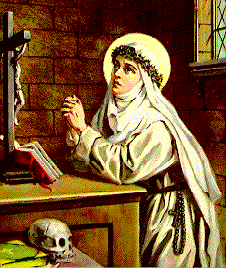
St. Catherine, pray for us.

A test...

The Feeding of the Five Thousand
John 6: 1 - 15


After this Jesus went to the other side of the Sea of Galilee, which is the Sea of Tiber'i-as.And a multitude followed him, because they saw the signs which he did on those who were diseased.Jesus went up on the mountain, and there sat down with his disciples.Now the Passover, the feast of the Jews, was at hand.Lifting up his eyes, then, and seeing that a multitude was coming to him, Jesus said to Philip, "How are we to buy bread, so that these people may eat?"This he said to test him, for he himself knew what he would do.Philip answered him, "Two hundred denarii would not buy enough bread for each of them to get a little."One of his disciples, Andrew, Simon Peter's brother, said to him,"There is a lad here who has five barley loaves and two fish; but what are they among so many?"10 Jesus said, "Make the people sit down." Now there was much grass in the place; so the men sat down, in number about five thousand.11 Jesus then took the loaves, and when he had given thanks, he distributed them to those who were seated; so also the fish, as much as they wanted.12 And when they had eaten their fill, he told his disciples, "Gather up the fragments left over, that nothing may be lost."13 So they gathered them up and filled twelve baskets with fragments from the five barley loaves, left by those who had eaten.14 When the people saw the sign which he had done, they said, "This is indeed the prophet who is to come into the world!"15 Perceiving then that they were about to come and take him by force to make him king, Jesus withdrew again to the mountain by himself.

This is a personal passage for me and has been since 1972. What I heard for the first time in Sunday Mass was the fact that Christ was testing the apostles. As the priest said, they were managing the feeding as if they were company managers-how much money do we have, how much do we need, what about this, what about that?

We must stop and trust in Providence for all things. All.

Thought on Perfection


See how the perfection of the Cross is folly in the eyes of the world precisely because it embraces what is abhorrent to human nature. It loves correction and submits to it; it not only takes pleasure in being corrected, but has no greater pleasure than in being reproved and corrected for faults and failings. They will arrive at the highest degree of perfection.

 St. Francis de Sales


God, give us the grace to have joy in correction. Give us patience and purity of heart. Help us to desire correction. Help us to desire community and relationship and open the doors for this to happen.


The Sin of Pride and Connected Sins


Continuing the discussion on Garrigou-Lagrange, one can see the definitions of sin clearly in his book. Some readers have asked me to define some of these sins, so  I shall continue to do so. The opposing virtue which combats the sin is extremely important. Before that, I want to give some reasons why we must intellectually understand sin and virtue.

Father Ripperger gave a great series of talks years ago, which may be online. He was in the Midwest at the time and some of my seminarian friends have heard him as well. One of the things he stressed over and over was that only the perfect see God and that we all must cooperate with God in our intellect, wills, appetites and all our faculties. I remember years ago a young person telling me that it was "too hard" to be a Catholic. He had a good point. But, one can chose the narrow way or the wide way.

We have to perfect our faculties. We cannot change our human nature. Father Ripperger pointed this out. Who we are, he stated, are adopted children of God and heirs of heaven. We can only be just in Christ. This is a paraphrase from one of his talks:


If God see Himself in you, He sees our Love for Him. He love us in and as our Nature, But...to please God is more..


Ripperger said that all the saints go through the same spiritual stages of the spiritual life. We cannot skip any stages.

Now, I am going to share one of the biggest points he made which is why I am using Garrigou-Lagrange. Ripperger notes that many theologians lost their faith when spirituality dissolved into feelings. 

I cannot stress this enough. In order to participate in the Indwelling of the Holy Trinity, Who comes to us in Baptism and Confirmation, we must be aware that grace builds on what God has given us in nature. We must use our faith and our reason, allowing grace to infuse our minds.

This is why I write this blog. This is why I started writing in 2007.


Now back to the Great Garrigou-Lagrange.

I could write on pride for a year and a day and not finish all the ins and outs of this sin. It is the primal sin.

For us, it could mean thinking we are better and smarter than anyone else. It could mean that we want to micro-manage our lives and those of others. It would mean that we speak down to others, or think evil of them when there is no evil there.

In another post, I mentioned that pride leads to other sins: vainglory, lying, curiosity, arrogance, presumption, rebellion, and failure to recognize one's faults.

This last one is why we need to be in community and why we need to be in relationship with others.

In slang, some of us say "Oh, she is full of herself". That is the person who has given in to the list of sins above. One of the sins under pride according to St. Bernard, to whom we owe the above list, is singularity.

Singularity is the sin of wanting to be the odd person out all the time. This sin is like purposeful eccentricity.  We may even think we are unusual, and not like others. This is distinctly pride.

That we are like all our brothers and sisters is true and that we are unique is true. But to purposefully try and be different for the sake of difference is pride. Garrigou-Lagrange says that pride perverts judgement, as it colors the way we see things.

To be continued...


Sunday, 29 July 2012

Article from The Weekly Standard-Pelosi is losing it....


Daniel Halper has called attention to Nancy Pelosi's remarkable
 interview with Al Hunt on the topic of Barack Obama and Israel.
 I'd note one comment in particular:
 Pelosi's claim that President Obama "has been there [Israel]
 over and over again."
Wow. I'm involved with the Emergency Committee for Israel.
 We have an ad up in several states calling attention to the fact
 that President Obama, who's been quite the world traveler,
 has never visited Israel as president. Did we make a terrible mistake?
 Were we unjust to President Obama? Do we have to pull down the ad?
No, no, and no. Contrary to Pelosi's apparent claim, President Obama
 hasn't been to Israel over and over again. He's never been as president,
 which is certainly what Pelosi implied. Well, maybe he visited Israel
 "over and over" before becoming president, and that's what Pelosi meant to say?
 No. When he was senator, Obama went on two trips to Israel,
 once with several other freshmen members of Congress, and
 then as a presidential candidate. And he'd never been interested
 enough in Israel to visit as a private citizen. So much for the notion
 that Obama's been "over and over again." 
So Pelosi is wrong, and the Emergency Committee is right.
 But Pelosi's resort to a whopper to try to reassure pro-Israel 
voters does suggest how worried Democrats must be about 
the reaction to Obama's attempt to create distance 
between his administration and Israel, as Obama's Israel policy gets more scrutiny.

Article by William Kristol found here.