Recent Posts

Monday, 10 December 2012

Desecration in France


 I got this report this morning. This is despicable.  

Samedi après-midi, un marin qui se rendait à la chapelle de la base navale de Toulon pour se recueillir a découvert un triste spectacle. On s'en est pris aux trois grands symboles de la foi catholique :
     - le St Sacrement (tabernacle renversé et brisé, les saintes espèces répandues sur le sol),
     - le baptistère (totalement brisé)
     - et l'ambon (pupitre où repose la Bible). La Bible a été jetée à terre et piétinée.
 
   Mgr Robert POINARD vicaire général, aumônier national Marine, a réagi sur internet:
 "Il y avait déjà depuis plusieurs semaines des signes avant-coureurs puisque le panneau d'affichage à la porte de la chapelle était régulièrement vidé de ses affiches, arrachées, froissées et jetées à terre. Il faut savoir que cette chapelle reste ouverte nuit et jour car des marins viennent y prier à n'importe quelle heure du jour ou de la nuit.(...) L'intolérance pénètre maintenant à l'intérieur des enceintes militaires : il y a de quoi être vraiment très inquiets.


FAITES CONNAITRE CET EVENEMENT ODIEUX..."
 Les actes cathophobres sont en train de se multiplier et il est important de le faire savoir.
Trois moyens d'action sont possibles:
1- Comme le demande Mgr POINARD, diffusez cette information à tous vos contacts.
2- Alertez les médias et, surtout, laissez un commentaire sur le site de "Var-Matin" en cliquant ici
3- Montrez aussi votre solidarité avec le vicaire général en lui envoyant un message à:

Saturday afternoon, a sailor who went to the chapel of the Toulon naval base to collect discovered a sad spectacle. We attacked the three symbols of the Catholic faith:
      - The Blessed Sacrament (tabernacle overturned and broken the sacred species scattered on the ground)
      - The baptistery (totally broken)
      - And the ambo (pulpit where rests the Bible). The Bible was thrown to the ground and trampled.
 
    Bishop Robert Poinard Vicar General, National Marine chaplain, reacted on the Internet:
  "There had already been several weeks since signs display panel to the door of the chapel was regularly emptied of its posters, torn, crumpled and thrown to the ground. Should know that this chapel is open night and day as sailors come to pray at any time of day or night. (...) now enters intolerance within military compounds: there is something to be really worried.
 
 
MAKE THIS EVENT odious ... "
  Catholic-phobes acts are now multiplying and it is important to know.
Three approaches are possible:
1 - As requested Bishop Poinard, spread this information to all your contacts.
2 - Alert the media and, most importantly, leave a comment on the site "Var-Matin" by clicking here secretariat.aumoneries@gmail.com or http://www.facebook.com/robert.poinard

Why no little sin can be ignored...

"Compromise leads to confusion. Confusion to corruption. Corruption to collapse. This is the process involved!" Fr. Bill Casey, CPM (Fathers of Mercy)

Let me unpack this excellent phrase. 


If we compromise anything, like those people who were suggesting after the TLM, (not in Dublin, but another place,) to take an illegal position, my conscience would become confused. One cannot have a keen conscience and muck about.


Two, confusion leads to more sin, like those who do illegal work not declaring income tax and so on. More sin piles on to more sin. Lying, cheating, stealing and so on.....


Three, corruption leads to collapse, which for a person is the loss of the soul and for a Catholic institution, a collapse into heresy and scandal.

Simple, really.

You are Solomon's ivory throne...


Conductus: O maria o felix
O maria   o felix puerpera
mater pia   cuius suxit ubera
qui creavit sidera:   munera
de te fluunt dulcia   
spiritus sancti cratera.
Aqua viva   clausa semper ianua
progressiva   stella non occidua
ficus sed non fatua   rigua
paradisi pascua
balsamus myrtus oliva,
Ioseph spica    humus de qua vipera
per quam sicca   ione perit hedera
sanans anguis vulnera   partica
funda tu davitica
pariens cedrum myrica,
Salomonis   thronus es eburneus
visionis   electrinus urceus
david sitim satians   puteus
tu septenus cereus
donis septenis radians,
Iacob scala   fac me celum scandere
mundi mala   carnem satan fugere.
Tollens eve misere   scandala
pietatis ubere
gratie fove sub ala.

O Mary, O happy childbearer,
holy mother who nursed 
the one who created the stars: gifts
of sweetness flow from you, 
chalice of the holy spirit. 
Living water, flowing through a door
ever shut, star never setting,
fruitful fig tree, watered
pasture of paradise,
balsam, myrtle, olive,
Joseph's ears of corn, earth whence came the worm
by which the dry gourd of Jonah perished,* 
staff that heals the serpent's bites,
you, David's sling,
shrub bearing a cedar;
You are Solomon's ivory throne,
vision's   amber water jar
the well that slakes David's thirst,
you sevenfold waxen light
shining forth with seven gifts,
Jacob's ladder: make me climb the heavens;
make me flee the world's evils, the flesh and Satan.
Removing the obstacles of Eve's misery,
feed us at thy holy breast
under the wings of grace. 
*[Jonah 4:6-8]


And one more for Our Dear Queen this week. Hail to Thee, O Mary, for being the Door to Life.  2002 album La Bele Marie - Songs to the Virgin from 13th-century France.

Our Lady of Guadalupe, pray for the Americas.


I envy the Medieval people their love of Mary in the culture

 Lullay: I saw a swete semly syght 
‘Lulay, lullow, lully, lullay,
 Bewy, bewy, lully, bewy,
 Lully, lullow, lully, lullay,
 Baw, baw, my barne,
 Slepe softly now.’ 
I saw a swete semly syght,
A blisful birde, a blossum bright
That murnyng made and mirth of mange;
A maydin moder, mek and myld,
In credil kep a knaue child
That softly sleep; sche sat and sange.
‘Lullay, lullow, lully, lullay,
Bewy, bewy, lully, bewy,
Lully, lullow, lully, lullay,
Baw, baw, my child,
Sleep softly now.’
I saw a sweet, beautiful sight,
a blissful maiden, a blossom bright,
who mourned and rejoiced together.
A maiden mother, meek and mild,
in a cradle kept her boy child,
who softly slept; she sat and sang.

I discovered this group a long time ago, in 1991 or so. I am a great lover of Medieval music of all sorts and to me, their re-introduction of some of the Marian carols was such a blessing.Somewhere is a box in Illinois, is my copy, along with other Anonymous 4 CDs


In Honour of Our Lady This Week


From An English Ladymass, Anonymous Four

Edi beo thu
Blessed be Thou, Queen of heaven,
comfort of men and bliss of angels,
unblemished mother and pure virgin,
such as no other is in the world.
As for Thee, it is most readily seen
that of all women Thou hast that prize.
My sweet Lady, hear my prayer
and have pity on me, if Thou wilt.
Thou didst ascend like the first dawn
that brings dark night to an end;
from Thee sprang a new light
that has lightened the whole world.
There is no other maid like Thee,
so fair, so beautiful, so ruddy,
so radiant, so bright; sweet Lady, pity me
and have mercy on Thy knight.
O blossom sprung forth from a root,
the Holy Ghost reposed upon Thee;
that was for mankind's salvation

to deliver their soul in exchange for one.
Gracious Lady, gentle and sweet,
I cry to Thee for mercy;
I am Thy man with hand and foot,
in every way I can.
Thou art earth for good seed;
the dew from heaven came down upon Thee;
from Thee sprang forth the blessed fruit —
the Holy Ghost has sown it on Thee here.
Bring us out of the grief and dread
that Eve has wickedly caused us;
Thou shalt lead us into heaven —
right sweet is that same dew.
Mother, full of gracious virtues,
maiden patient and well-taught,

I am in the bonds of Thy love,
and everything draws me to Thee.
Wouldst Thou shield me from the fiend,
as Thou art noble, willing and able;
help me to my life's end
and reconcile me with Thy son.

Translation by Ernest H. Sanders

More here from the Yoolis Night set and others.


Gabriel, fram heven-king
sent to þe maide sweete,
broute hir blisful tiding
and fair he gan hir greete:
‘Heil be þu, ful of grace ari3t!
For Godes son, þis heven-li3t,
for mannes love
wil man bicome
  and take
fles of þee, maide bri3t,
manken free for to make
of sen and devles mi3t.’
Mildelich him gan andswere
þe milde maide þanne:
‘Wichewise sold ich bere
a child withute manne?’
Þangel hir seid, ‘Ne dred tee nout;
þurw þoligast sal been iwrout
þis ilche þing
warof tiding
ich bringe;
al manken wurth ibout
þurw þine sweet childinge
and ut of pine ibrout.’
Wan þe maiden understood
and þangels wordes herde,
mildelich with milde mood
to þangel hie andswerde:
‘Ure lords þewe maid iwis

ich am, þat heer aboven is.
Anentis me
fulfurthed be
þi sawe
þat ich, sith his wil is,
a maid, withute law,
of moder have þe blis.’
Þangel went awei mid þan
 al ut of hire si3te;
hire womb arise gan
þurw þoligastes mi3te.
in hir wes Crist bilok anon,
sooth God, sooth man in fles and bon,
 and of hir fles
 ibore wes
  at time.
Warþurw us kam good won;
 he bout us ut of pine
and let him for us slon.
Maiden-moder makeles,
 of milce ful ibunde,
bid for us him þat tee ches,
 at wam þu grace funde,
þat he forgive us sen and wrake
and clene of evri gelt us make
 and heven-blis,
 wan ur time is
  to sterve,
us give, for þine sake,
 him so heer for to serve
þat he us to him take.

Gabriel, sent from the king of heaven 
to the sweet maiden, 
brought her happy news 
and greeted her courteously: 
“Hail be thou, full of grace indeed! 
For God’s son, this light of heaven, ! 


And more for listening and meditating............words above.


A Man Who Had a Heart For God


Daniel and David, windows made sometime after or close to 1132. Augsburg Cathedral.

Canterbury Cathedral, shortly after 1174, this window was part of the early restoration after the fire.


Psalm 100
A psalm for David himself. Douay Rheims.

Mercy and judgment I will sing to thee, O Lord: I will sing,
2 and I will understand in the unspotted way, when thou shalt come to me. I walked in the innocence of my heart, in the midst of my house.
3 I did not set before my eyes any unjust thing: I hated the workers of iniquities.
4 The perverse heart did not cleave to me: and the malignant, that turned aside from me, I would not know.
5 The man that in private detracted his neighbour, him did I persecute. With him that had a proud eye, and an unsatiable heart, I would not eat.
6 My eyes were upon the faithful of the earth, to sit with me: the man that walked in the perfect way, he served me.
7 He that worketh pride shall not dwell in the midst of my house: he that speaketh unjust things did not prosper before my eyes.
8 In the morning I put to death all the wicked of the land: that I might cut off all the workers of iniquity from the city of the Lord.
M

David in a Medieval manuscript of the Psalms. 

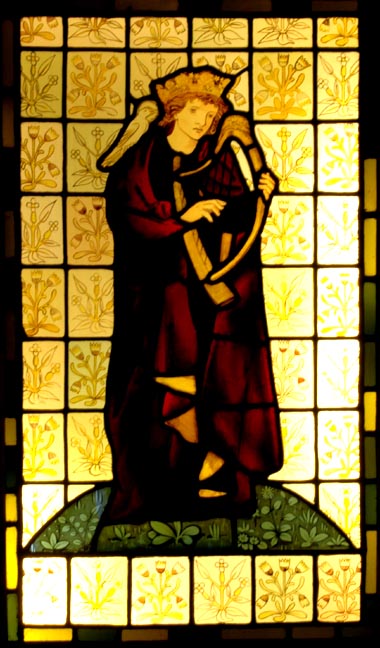
And a Victorian interpretation by Edward Burne-Jones, 1863.


King David


Many young Catholics do not realize that the Church has long honoured those in the Old Testament who were given grace. Unlike us in baptism, which is available to all, some had grace in the ancient times. St. David is considered the person most after the heart of God in the Old Testament.

Here is what Luke writes in Acts 13:22, quoting

 And when he had removed him, he raised them up David to be king: to whom giving testimony, he said: I have found David, the son of Jesse, a man according to my own heart, who shall do all my wills. DR


God tells Samuel that David is a man who loves and will obey Him. Here are some cross references which push the point. Saul had a disobedient will, but David, although he sinned, did repent and loved God. That is the key; he loved God passionately. This is clear in the Psalms.

1 Samuel 16:13 So Samuel took the horn of oil and anointed him in the presence of his brothers, and from that day on the Spirit of the LORD came upon David in power. Samuel then went to Ramah.


Psalm 89:20 I have found David my servant; with my sacred oil I have anointed him.

Acts 7:46 who enjoyed God's favor and asked that he might provide a dwelling place for the God of Jacob.
Acts 13:36 "For when David had served God's purpose in his own generation, he fell asleep; he was buried with his fathers and his body decayed.

Also, David is a type of Christ. He is priest, king, prophet. He is promised that the Messiah and the greatest king of all would come from his line, and this is Christ, of the House of David.


Indeed, we should honour St. David. The Medievals obviously did.

I trust farmers-real farmers


Exit polls conducted for The Associated Press and television networks found that rural voters accounted for just 14 percent of the turnout in last month's election, with 61 percent of them supporting Republican Mitt Romney and 37 percent backing President Barack Obama. Two-thirds of those rural voters said the government is doing too many things better left to businesses and individuals. 

http://hosted.ap.org/dynamic/stories/U/US_VILSACK_RURAL_AMERICA?SITE=AP&SECTION=HOME&TEMPLATE=DEFAULT&CTIME=2012-12-08-08-24-10

The Age-Old Question of Suffering and Our Grief

Why are the people of the Philippines being racked with yet another twist of the hurricane? Why has Japan experienced more earthquakes? Why is there famine in Somalia periodically?

We can understand war as a suffering as it is caused by people. We can understand financial recessions and depressions as well to a certain extent, as caused by people? What we have a hard time understanding are natural disasters such as drought, earthquakes and hurricanes.

Years ago, after Katrina, (and I went down to help for a while but got very ill), then priest, now Bishop Gerhard Wagner, said that the storm was retribution for serious sin. The press had a field day.

But, we must consider that we all and nature as well, suffer the results of Original Sin.

What does this mean? I got cancer. Adam's sin brought illness into the world. Japan had a tsunami. Original Sin destroyed the Divine balance of nature.

Just as we experience concupiscence even after baptism, so too nature is in disarray.

St. Paul states that: For we know that every creature groaneth and travaileth in pain, even till now. Romans 8:22 DR.

Like those who suffer from poverty or loneliness or pain of any sort, nature experiences a lack of order.
We cannot imagine the immensity of that First Sin. It was huge enough an event to cause God to become Man and die for our sins, freeing us from the consequences of Original Sin.

The denial of Original Sin is one of the most common heresies in the Church today. It is called in history Pelagianism, the home-grown British heresy very common in Britain today, started by a man named Pelagius in the 5th century. It was condemned in no less than four councils: Carthage from 412-418; Ephesus, 431; )
Orange 529; Trent, 1546.


The main reason people, even some lapsed Catholics do not baptise their children is the belief that all children are naturally good without grace. Pelagianists think that the will can choose good alone without the help of sanctifying grace. They deny concupiscence. They deny the weakening of the will as one of the results of Original Sin.

Nature, too, grieves at the Fall. We cannot imagine a perfect world. We cannot imagine animals at peace and in harmony with humans. We can hardly imagine perfection.

We have Our Lady and Christ to Whom to appeal for insight and knowledge. We have the Church which gives us grace. We shall never see nature at peace. When Christ comes again, it will be at the end of the world.

That we did not witness the earth before the Fall is part of our present grief. But, in heaven, all grief is healed and consoled.

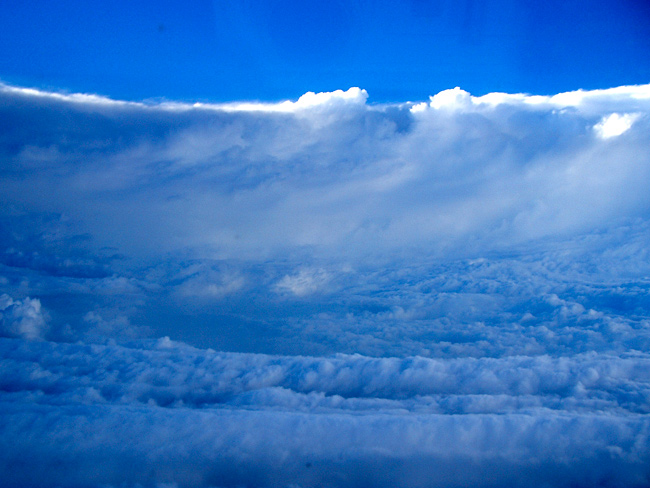
Photos Copywrite© of Mike Hollingshead
except first


And check out this video-this is in Nebraska.


Sunday, 9 December 2012

Multi-post day again.....it is very cold outside!


Multi-post day, at least ten and here are some cuties for your attention.

Is she going to post more today?


Stocking stuffer for men this Christmas?

Dismas, one of my readers, sent me this link for a lapel pin. Maybe this will give some men a sense of belonging to the tribe of courageous ones. Nice pin. You can order it here: http://veritatisthecartoon.blogspot.ie/2012/08/defy-tyranny-defend-faith-lapel-pin.html


A new voting bloc-no religious affiliation


News of the day which may not be news to some is that Obama won the vote from those who do not have religious affiliation. Here are two small sections from the article from NPR. Are we surprised?

http://www.npr.org/blogs/itsallpolitics/2012/12/09/166753248/add-this-group-to-obamas-winning-coalition-religiously-unaffiliated

Their overwhelming support of Obama proved crucial in a number of swing states where the president lost both the Catholic and Protestant vote by single and low-double digits, but won the "nones" by capturing 70-plus percent of their votes..........


 Pew has tracked their growth, and found that in 2010 about a quarter of those in the "millennial generation" defined themselves as religiously unaffiliated. That's up from the 20 percent of Gen X-ers who said they had no religious affiliation, and 13 percent of baby boomers who said the same.

The Pope Looks at the Two Figures of Advent: Mary and John the Baptist


In today's Angelus message, the Pope brings together the Old and the New Testaments, the prophetic word and the priestly line, the historical and the spiritual. I love St. John the Baptist as he is the greatest of men, as Christ said, and points us always to Christ. 

Here is part of today's message, again, found on the easier to us Vatican website. And, Caravaggio painted a young John. Very interesting. And, St. Augustine is quoted here again, but this time by the Pope, who is an Augustinian scholar.

Thanks, Wiki

In the season of Advent, the liturgy emphasizes, in particular, two figures who prepare the coming of the Messiah, the Virgin Mary and John the Baptist. Today St. Luke presents it, and does so with different characteristics from the other Evangelists. "All four Gospels put at the beginning of Jesus' ministry, the figure of John the Baptist and present it as its precursor. St. Luke has moved back the connection between the two figures and their respective missions ... Already in the conception and birth, Jesus and John are brought into relation with each other "( The childhood of Jesus , 23). This setting helps to understand that John, as the son of Zechariah and Elizabeth, both of priestly families, not only is the last of the prophets, but also represents the whole priesthood of the Old Covenant and therefore prepares men to the worship of the spiritual New Covenant inaugurated by Jesus (cf. ibid. 27-28). Luke also dispels any mythic reading that is often made ​​of the Gospels and places historically the life of John the Baptist, writing: "In the fifteenth year of Tiberius Caesar, when Pontius Pilate was governor ... during the high priesthood of Annas and Caiaphas" ( Lk 3:1-2).Within this historical framework lies the true great event, the birth of Christ, that his contemporaries will not even notice. By God the great men of history form the backdrop to small!
John the Baptist is defined as the "voice of one crying in the wilderness: Prepare the way of the Lord, make straight his paths" ( Lk 3:4). The voice proclaims the word, but in this case the Word of God above, as it is itself down to John the son of Zacharias in the wilderness (cf. Lk 3:2). He then plays a great role, but always in relation to Christ. St. Augustine says: "John is heading. Instead of the Lord says: "In the beginning was the Word" ( Jn 1:1). John is the voice that goes, Christ is the eternal Word who was in the beginning. If the item you take away the word, what is left? A faint sound. The voice without the word strikes but the hearing, but does not build up the heart "(Sermon 293, 3: PL 38, 1328). Our aim is to give today listening to that voice to give space and welcome to the heart of Jesus, the Word that saves us. In this time of Advent, prepare to see, with the eyes of faith, the humble stable in Bethlehem, God's salvation (cf. Lk 3:6). In the consumer society, in which they seek joy in things, the Baptist teaches us to live in an essential way, so Christmas is experienced not only as a party outside, but as the feast of the Son of God who came to bring peace to the people, life and true joy.

Happy Chanukah, Augustine, Cologne and West Point


Happy Chanukah to my Jewish friends. We Catholics love the Maccabees as symbols of the Church Militant.  They are saints and martyrs, honoured in the calendar. 

In the Church of St. Andreas in Cologne, there are stained glass windows of these men. Sadly, most of the photos cannot be reproduced here, so look these up.


Take time to read of the deeds of the Maccabees. 

Perhaps someone can tell me if the statue of Judah Maccabees is still at West Point. We have, in the States, moved so far away from our Judeo-Christian roots.


Here is a commentary and a quotation from St. Augustine on the Feast of the Maccabees, August 

1st Sermon 300. (Other Fathers of the Church commented on the Maccabean martyrs as well).


Let no one think that before there was a Christian people, there was no people of God. There was not at that time of the Old Dispensation, the usage of the Christian name. Nevertheless, the Christian people existed at that time (christianus etiam ille tunc populus fuit)...These Christian peoples were born of Abraham. When you admire the Maccabbean martyrs, do not think that they were not Christian martyrs (ne...illos martyres..putetis non fuisse christianos) They were Christians (christiani fuerunt), but the name of "Christian"was divulged only later, while the deeds proper to Christians anteceded the name.

http://www1.villanova.edu/content/villanova/mission/augustinianinstitute/lectures/staugustine/_jcr_content/widgetiparsys/download_7/file.res/as_1988.pdf


Parents: Get ready for the O Antiphons

Some children grow up with the Jesse Tree in Advent. I did this in my little family.

I went to a Catholic school where the nuns had the students say the O Antiphons before we broke up for the short, American holiday. We drew pictures of the symbols connected to the Messianic Names of Our Lord, which form the basis of the Antiphons.

In my Monastic Diurnal, these are called the Great Antiphons and are those said at the Magnificat at Vespers. This is a long tradition in the Benedictine Monasteries and most likely where these prophecies were put to verse and music.

That the good nuns had us saying these was a brilliant and simple way of having children join in the wonderful daily prayer of the Hours from the 17th-23rd.

I shall list these by day, but here is the entire set for you to ponder now as part of your Advent meditation.

All of these refer to the great prophet Isaiah, so we are also entering into the mystery of the Old Testament leading up to the New. The drawings are in the common domain. You can make ornaments for your children to put on the Jesse Tree. You could just print off this page and enlarge the drawings for colouring in and hanging up. Also, the prayers may be copied if one does not have a breviary.

By the way, for those who are going to the EF today, the first reading from the Epistle of Paul to the Romans 15:4-13 also refers to the same references from Isaiah concerning the Root of Jesse and the call of the Gentiles to the King of All Nations. That St. Paul knew the Old Testament inside and out and could apply these passages to Christ is part of our wonderful heritage as Catholics. Perhaps those early monks were inspired by the Holy Spirit to use St. Paul in the making of the Antiphons.


      December 17th


O Sapientia, quae ex ore Altissimi prodiisti,
attingens a fine usque ad finem,
fortiter suaviterque disponens omnia:
veni ad docendum nos viam prudentiae.

O Wisdom, coming forth from the mouth of the Most High,
reaching from one end to the other mightily,
and sweetly ordering all things:
Come and teach us the way of prudence.

 December 18th


O Adonai, et Dux domus Israel,
qui Moysi in igne flammae rubi apparuisti,
et ei in Sina legem dedisti:
veni ad redimendum nos in brachio extento.

O Adonai, and leader of the House of Israel,
who appeared to Moses in the fire of the burning bush
and gave him the law on Sinai:
Come and redeem us with an outstretched arm.

     December 19th


O Radix Jesse, qui stas in signum populorum,
super quem continebunt reges os suum,
quem Gentes deprecabuntur:
veni ad liberandum nos, jam noli tardare.

O Root of Jesse, standing as a sign among the peoples;
before you kings will shut their mouths,
to you the nations will make their prayer:
Come and deliver us, and delay no longer.


December 20th


O Clavis David, et sceptrum domus Israel;
qui aperis, et nemo claudit;
claudis, et nemo aperit:
veni, et educ vinctum de domo carceris,
sedentem in tenebris, et umbra mortis.

O Key of David and sceptre of the House of Israel;
you open and no one can shut;
you shut and no one can open:
Come and lead the prisoners from the prison house,


December 21st


O Oriens,
splendor lucis aeternae, et sol justitiae:
veni, et illumina sedentes in tenebris, et umbra mortis.

O Rising Sun,
splendour of light eternal and sun of righteousness:
Come and enlighten those who dwell in darkness and the shadow of death.


December 22nd


O Rex Gentium, et desideratus earum,
lapisque angularis, qui facis utraque unum:
veni, et salva hominem,
quem de limo formasti.

O King of the nations, and their desire,
the cornerstone making both one:
Come and save the human race,
which you fashioned from clay.


December 23rd


O Emmanuel, Rex et legifer noster,
exspectatio Gentium, et Salvator earum:
veni ad salvandum nos, Domine, Deus noster.

O Emmanuel, our king and our lawgiver,
the hope of the nations and their Saviour:
Come and save us, O Lord our God.

What to say to those who think religion causes wars...


The Vatican Website is a treasure trove of truth. Check it out on a regular basis. This past week, the Pope made several important statements. One can click on the main page, under the section, Latest, and get links to all the things this amazing Bishop of Rome has said recently. One can hardly keep up with him and he is brilliant. That the Holy Spirit has given us this man at this time is key.

There is a not so long an address to the International Theological Commission at its annual session from Friday, December 7th for you to read. I only want to highlight one part, which is a answer to a common comment in today's secular world.

Many atheists and agnostics blame the great world religions for violence. These lazy historians and arm-chair critics say things like, "Religions just cause wars", or "We would be better off with religions as these cause violence."

I see this comment on blogs and hear it among young people who do not want to commit to a faith.

Youth look at Christianity and Islam, for example, and blame violence on religious differences.

However, the Holy Father rightly shows all of us, the entire world, that only the pursuit of objective truth can bring peace.

This should be obvious. If everyone has their own interpretation of truth, which is called the heresy of relativism, or the heresy of individualism, then there is no consensus for truth. And, only in the Church is that consensus possible.

We have the Holy Spirit and the Teaching Magisterium of the Church to guide us. Do not pass up opportunities to meditate on the words of the Pope, who is God's gift to the Church.

We need to be able to encourage the seeking of objectivity. As I have written here many times in the perfection series, only those who can be objective can be saints.

If we persist in judgements based on our own criteria, we cannot approach God, Who is Truth.

Sin causes war, selfishness and ideologies which are godless cause war. True religion can only bring peace to the soul and, therefore, to the world.

When the Pope refers to agape in this section, he can bring us back to his work on love, which I wrote about on this blog. Follow the tags at the bottom. We must understand the principle of agape in order to restore harmony to the world.

I mistrust those who merely pray for world peace without knowing what God means by peace of the soul and mind and heart. Peace only comes with love and personal conversion.

Nothing else.

Here is a section of the Pope's address on this link-http://www.vatican.va/holy_father/benedict_xvi/speeches/2012/december/documents/hf_ben-xvi_spe_20121207_cti_it.html

The bold highlights are my emphases.

Today, however, it is particularly important to clarify the criteria that distinguish the sensus fidelium authentic from its counterfeits. In fact, it is not some kind of public opinion of the Church, and it is unthinkable to mention being able to challenge the teachings of the Magisterium, as the sensus fideium not grow in the authentically believer except to the extent in which he participates fully in the life of the Church, and this requires an adherence responsible to her Magisterium, the deposit of faith.
Today, this same supernatural sense of the faith of believers leads to react with force even against the notion that religions, especially the monotheistic religions are inherently bearers of violence, mainly because of the claim that they advance the existence of a universal truth. Some believe that only the "polytheism of values" to guarantee tolerance and civil peace and be in the spirit of a pluralistic democratic society. In this direction, your study on "the Triune God, unity of men.Christianity and monotheism "is alive actuality. On the one hand, it is essential to remember that the faith in one God, Creator of heaven and earth, meets the needs of rational metaphysical reflection, which is not weakened but strengthened and deepened by the revelation of the mystery of the Triune God. On the other hand, it should be noted that the shape of the final revelation of the mystery of God takes the life and death of Jesus Christ, which meets the Cross as "a lamb led to the slaughter" ( Is 53:7). The Lord came a radical rejection of all forms of hatred and violence in favor of the absolute primacy of ' agape . If, therefore, in history there have been or are forms of violence made ​​in the name of God, these are not to be attributed to monotheism, but historical causes, mainly the result of human errors. Rather it is the forgetfulness of God to immerse human societies in a form of relativism, which inevitably generates violence. When you deny the opportunity for everyone to refer to an objective truth, the dialogue is rendered impossible and violence, whether declared or hidden, becomes the rule of human relationships. Without openness to the transcendent, which allows you to find answers to questions about the meaning of life and the way of life in a moral manner, without opening this man becomes unable to act in accordance with justice and work for peace.
If the failure of the relationship between people and God brings with it a deep imbalance in the relationship between men themselves, reconciliation with God, made ​​by the Cross of Christ "our peace" ( Eph 2:14) is the fundamental source unit and fraternity. In this perspective, it also places your reflection on the third theme, that of the Social Doctrine of the Church throughout the Doctrine of the Faith. It confirms that the social doctrine is not an addition extrinsic, but without neglecting the contribution of a social philosophy, draws its principles underlying the very sources of the faith. This doctrine seeks to make effective, in the great diversity of social situations, the new commandment that the Lord Jesus has left us: "As I have loved you, so you also should love one another" ( Jn13:34).
We pray to the Immaculate Virgin, model of the listener and meditates on the Word of God, obtain for you the grace to serve joyfully always the understanding of faith for the benefit of the whole Church. Renewing the expression of my profound gratitude for your service to the Church, I assure you of my constant closeness in prayer and cordially impart to all of you my Apostolic Blessing.

On Private Revelations, again


I remind readers of the list on the right-hand side of this blog of many posts on the dangers of private revelations.

The preoccupation of this type of thing is growing among Catholics. This is a dangerous trend.

We are not required to believe private revelations, and we should only follow those which have been approved. Sometimes, a person is a Servant of God or Venerable for personal holiness, but the writings or visions are not approved.

Be careful. Get a good spiritual director. A Catholic must never persist in believing a condemned seer or  one warned about from the Vatican. This would not only be disobedience but pride, the Original Sin.

Do not lose your salvation because of a seer or visionary. Do not think that you know better than your local ordinary or Rome.

Perfection and humility continued

How does God bring about humility in us? The list below is partly from the book from New Melleray, I quoted earlier today..

For the lay person, illness may be the most common way, as we lose control over parts of our bodies and the abilities we take for granted.

These bodily afflictions are out of our control and are both consequences of  Original Sin and means of humiliation. Where I come from, a very Protestant area, people are still judged as sinners under the wrath of God for illness and failures. This is only partly true. To the extreme, this is heresy.

Another way God humbles the lay person is through financial set-backs and a lack of success in the world. Again, these events can be seen as opportunities for spiritual growth.

Another way is spiritual dryness, when God withholds comfort and lets a person live in the desert. This can go on for years and one must rely on Faith and Hope in a time when one does not feel Love.

Yet another manner in which God allows one to grow in humility are the hidden, interior pains of suffering which others may not see.

God needs to heal us all of our disorders caused by our sins and the sin of Adam.

We need to be healed of rebellion.

Humility, if accepted graciously, can be healing.

In the same book by the Cistercian I quoted earlier on the other posting,  the author writes this:
"...pride, by the process of compression , is eventually forced out of the heart; they are indeed terrestrial purgatories but at the same time propitious and hallowed spots where, by God's mercy, some temporal penalties, brief and light, can make sanctification for past delinquencies  can effect the remission of daily faults, can become the remedy of our weakness, a treasure of virtues and of merits, a testimony of our attachment to God, the price of divine friendship and the instrument of our perfection."

And here is the kicker, "The heart that has intimate knowledge of self, regards the last place in the house of God more than it deserves."

To summarize, the heart that is full of self cannot experience the Love of God.

This is much easier in a monastery, where the focus of life is perfection. But, we are also called to this challenge. The arguments of false teachers that we reach perfection through works is simply wrong. We must work out of contemplation and that begins with a basis of humility.

Become a saint


If you are not a saint or moving towards being a saint, you will not survive the coming persecutions.

Perfection is not an option. It is a necessary.

Do you want to be perfect?


St. Bernard of Clairvaux writes that great men ask God for great things. Moses, Joshua, David, Daniel, and many others asked God for great things, including the revelation of the Glory of God.

We do not ask because we are afraid to lose our own judgement. When we ask for God to do great things in our lives, He may ask something of us. And, indeed, He does. He will ask,"Peter, do you love Me?"

Francis de Sales is referred to in an old, but excellent book on formation from New Melleray, in Peosta, Iowa. This book was written in 1932 and is a translation of a French text for Cistercian novitates.

The quotation from St. Francis is put into a paraphrase. "According to St. Francis de Sales, attachment to our own judgement is one of the most necessary things to abandon is we desire to attain true humility and true perfection. It is, however, the last thing we part with, and hence there are so few perfect souls."

How does the lay person, who is in the world without being in obedience to a superior attain such perfection and move away from own's own judgement? And what is my own judgement? It is subjectivity instead of objectivity.

By humility.

This is very hard. We need to be dependent on God and His Church.

The anonymous monk continues: "Without humility, contemplation is impossible,. The proud man cannot give due adoration to God; he is too much occupies with self to realize the distance that separates the greatness of God form our nothingness, His infinite sanctity form our misery. Such a one attributes to himself the gift of heave and feels not obligation of returning thanks."

I hear from some lay persons that they do not think they are called to contemplation. Yes, we are if we want to see God. Humility and contemplation mean that we are objective about our own spiritual life. A good formation of conscience helps.

"Humility leads to purification of the heart and the perfection of charity", states St. Benedict in his Rule, VII.

What is humility and how do we know we have acquired this virtue? How do you answer these questions? This is a partial list.

Do you get angry when people are rude to you?
Do you get upset when people misunderstand you and criticize you?
Are you always wanting to be right and be first?
Can you give way to others in lines, in preference, in conversation?
Can you forgive others when they ignore you?
Can you suffer and be grateful for the suffering?
Can you be silent and listen instead of needing to be heard?
Can you be obedient to Holy Mother Church even if you do not understand something?
Can you decide to learn and seek answers and not be ignorant?
Is God always first in your life and in your decision making?
Do you love the Church?
Can you ask God to show you how sinful you really are?
Can you really believe that most people are better than you are?