Friday, 22 March 2013
A talk with Pope Francis would be a good idea for Biden...doncha' think?
http://www.weeklystandard.com/blogs/bidens-one-night-paris-hotel-tab-58500050_708799.html
That is more money than what I made in my entire working life....by far!
That is more money than what I made in my entire working life....by far!


Part of my mission statement revisited.
 I am a cultural warrior and have been for a very long time. When I was 16, when most of your parents were toddlers, my dad took one of my three brothers aside, with me, and said to us that to be Catholic was counter-cultural.
That was in 1965, so you can figure out how old I am.
My age is not the point, but to be counter-cultural is.
If you as younger Catholics do not know the long history of Catholic culture and civilization, that is, Western Civilization, created by the Greco-Roman-Catholic traditions, then you must learn it.
What we have now in the world is a shadow, a fading shadow of what was once Christendom
To be counter-cultural means you have to learn to think and act like a Catholic and not like the majority.


Europe is the Faith and the Faith is Europe--but no more...
On Infallibility: please review and think
A reminder of the Teaching of the Church on infallibility...and a few other things
http://supertradmum-etheldredasplace.blogspot.co.uk/2013/02/again-and-again-on-infallibility.html
http://supertradmum-etheldredasplace.blogspot.co.uk/2013/03/on-discernment-and-prudential-judgement.html
http://supertradmum-etheldredasplace.blogspot.co.uk/2013/01/on-infallibility-in-catholic-church.html
http://supertradmum-etheldredasplace.blogspot.co.uk/2013/01/the-promised-infallibility-posts.html
http://supertradmum-etheldredasplace.blogspot.co.uk/2013/01/a-serious-subject-and-nod-to-those-who.html
http://supertradmum-etheldredasplace.blogspot.co.uk/2012/12/to-open-up-another-discussion-selection.html
http://supertradmum-etheldredasplace.blogspot.co.uk/2013/02/again-and-again-on-infallibility.html
http://supertradmum-etheldredasplace.blogspot.co.uk/2013/03/on-discernment-and-prudential-judgement.html
http://supertradmum-etheldredasplace.blogspot.co.uk/2013/01/on-infallibility-in-catholic-church.html
http://supertradmum-etheldredasplace.blogspot.co.uk/2013/01/the-promised-infallibility-posts.html
http://supertradmum-etheldredasplace.blogspot.co.uk/2013/01/a-serious-subject-and-nod-to-those-who.html
http://supertradmum-etheldredasplace.blogspot.co.uk/2012/12/to-open-up-another-discussion-selection.html
Part Four--grace and salvation for "all" and the importance of reason
From the Catholic Encyclopedia:
The universality of grace is a necessary consequence of the will to save all men. For adults this will transforms itself into the concrete Divine will to distribute "sufficient" graces; it evidently involves no obligation on God to bestow only "efficacious" graces. If it can be established, therefore, that God grants to the three classes of the just, sinners, and infidels truly sufficient graces for their eternal salvation, the proof of the universality of grace will have been furnished. Without prejudice to this universality, God may either await the moment of its actual necessity before bestowing grace, or He may, even in time of need (e.g. in vehement temptation), grant immediately only the grace of prayer (gratia orationis sive remote sufficiens). But in the latter case he must be ever ready to confer immediate grace for action (gr. operationis s. proxime sufficiens), if the adult has made a faithful use of the grace of prayer.
Our religion is one of witnessing, of evangelizing. We are called by our baptism to go out an make disciples of all nations. This is no small statement from God, but a command. External preaching is essential. Grace builds on hearing the Word of God. Catholics greatly differ from the Protestants on this point. They do not believe that humans are really redeemed, that is, truly justified. Therefore, grace is more of a once and for all experience.
As to growing in holiness, yes, some Protestants do believe in that, but the universality of grace does not demand continual repentance and renewal, merely a recognition of one's personal salvation. We know it is presumptuous to rest and not keep striving after the goal.
God will not refrain in extraordinary cases from miraculous intervention in order to save a noble-minded heathen who conscientiously observes the natural moral law. He may either, in a miraculous manner, depute a missionary to him (Acts, i, 1 sqq.), or teach him the revealed truth through an angel (Cardinal Toletus), or he may come to his assistance by an interior private revelation. It is clear, nevertheless, that these different ways cannot be considered as everyday ordinary means. For the multitude of heathen this assistance must be found in a universal means of salvation equally independent of wonderful events and of the preaching of Christian missionaries. Some modern theologians discover it in the circumstance that the two dogmas mentioned above were already contained in the primitive supernatural revelation made in Paradise for all mankind. These truths were subsequently spread over the whole world, survive, as a meagre remnant, in the traditions of the pagan nations, and are orally transmitted from generation to generation as supernatural truths of salvation. The knowableness of these dogmas by unaided reason does not constitute an objection, for they are simultaneously natural and revealed truths. Once the condition of external preaching (cf. Rom., x, 17: "fides ex auditu") has thus been fulfilled, it only remains for God to hasten to mans assistance with his supernatural illuminating and strengthening grace and to initiate with the faith in God and retribution (which implicitly includes all else necessary for salvation) the process of justification. In this manner the attainment of the state of grace and of eternal glory becomes possible for the heathen who faithfully co-operates with the grace of vocation. However all this may be, one thing is certain: every heathen who incurs eternal damnation will be forced on the last day to the honest confession: "It is not for want of grace, but through my own fault that I am lost."
This last sentence would be denied by psychologists and social scientists who daily blame circumstances or nuture for people's sins, denying the fact that nature has been redeemed.
Later today, I shall look at efficacious grace.
Grace, Part Three--Merit and Holiness
The CCC is clear on merit and grace and this is like a summary of the perfection series! I do not think a commentary is necessary here. These selections from the CCC have been repeated in the Doctors of the Church series again and again. We see that the call to perfection demands a response on our part to graces freely given and earned by Christ. Do we say yes, or no?
2010 Since the initiative belongs to God in the order of grace, no one can merit the initial grace of forgiveness and justification, at the beginning of conversion. Moved by the Holy Spirit and by charity, we can then meritfor ourselves and for others the graces needed for our sanctification, for the increase of grace and charity, and for the attainment of eternal life. Even temporal goods like health and friendship can be merited in accordance with God's wisdom. These graces and goods are the object of Christian prayer. Prayer attends to the grace we need for meritorious actions.
2011 The charity of Christ is the source in us of all our merits before God. Grace, by uniting us to Christ in active love, ensures the supernatural quality of our acts and consequently their merit before God and before men. The saints have always had a lively awareness that their merits were pure grace.
- After earth's exile, I hope to go and enjoy you in the fatherland, but I do not want to lay up merits for heaven. I want to work for your love alone. . . . In the evening of this life, I shall appear before you with empty hands, for I do not ask you, Lord, to count my works. All our justice is blemished in your eyes. I wish, then, to be clothed in your own justice and to receive from your love the eternal possession of yourself.63
2012 "We know that in everything God works for good with those who love him . . . For those whom he fore knew he also predestined to be conformed to the image of his Son, in order that he might be the first-born among many brethren. And those whom he predestined he also called; and those whom he called he also justified; and those whom he justified he also glorified."64
2013 "All Christians in any state or walk of life are called to the fullness of Christian life and to the perfection of charity."65 All are called to holiness: "Be perfect, as your heavenly Father is perfect."66
- In order to reach this perfection the faithful should use the strength dealt out to them by Christ's gift, so that . . . doing the will of the Father in everything, they may wholeheartedly devote themselves to the glory of God and to the service of their neighbor. Thus the holiness of the People of God will grow in fruitful abundance, as is clearly shown in the history of the Church through the lives of so many saints.67
2014 Spiritual progress tends toward ever more intimate union with Christ. This union is called "mystical" because it participates in the mystery of Christ through the sacraments - "the holy mysteries" - and, in him, in the mystery of the Holy Trinity. God calls us all to this intimate union with him, even if the special graces or extraordinary signs of this mystical life are granted only to some for the sake of manifesting the gratuitous gift given to all.
2015 The way of perfection passes by way of the Cross. There is no holiness without renunciation and spiritual battle.68 Spiritual progress entails the ascesis and mortification that gradually lead to living in the peace and joy of the Beatitudes:
- He who climbs never stops going from beginning to beginning, through beginnings that have no end. He never stops desiring what he already knows.69
How wonderful that we are all called to this life, and not merely a few.
2016 The children of our holy mother the Church rightly hope for the grace of final perseverance and the recompense of God their Father for the good works accomplished with his grace in communion with Jesus.70Keeping the same rule of life, believers share the "blessed hope" of those whom the divine mercy gathers into the "holy city, the new Jerusalem, coming down out of heaven from God, prepared as a bride adorned for her husband."71
On Sufficient Grace--Part Two
Both actual and sanctifying grace are sufficient graces. This is a snippet on the first of two grace types in general; sufficient and efficacious ...........from
| Grace: Commentary on the Summa Theologica of St. Thomas, Chapter Six |
| Rev. Reginald Garrigou-Lagrange, O.P. found here |
The division of sufficient grace

Sufficient grace is manifold and involves the following.
1. External helps, such as external revelation, the preaching of the faith, exhortation, example, miracles, salutary trials, benefits, and indeed a certain disposition of events ordained by a special providence toward salvation.

2. Internal helps, which are either permanent (such as infused habits, for instance, sanctifying grace, the virtues and gifts) or transient (such as supernatural movements which excite in us indeliberate acts, pious thoughts and aspirations). Actual and sanctifying grace....
These helps are infallibly efficacious for producing those indeliberate acts, and sufficient for the de-liberate act for which they give the proximate power. These various helps are extremely useful; it is obvious that they render our powers noble and elevated; they are truly sufficient in their order, just as the intellectual faculty is for understanding; and they really confer the proximate power. But they are called merely sufficient with respect to salutary acts which, on account of man’s culpable resistance, are not performed. Indeed, as has been said, grace which is termed sufficient with respect to a perfect act, for example, contrition, is infallibly efficacious with respect to an imperfect act, such as attrition.9
Sufficient help is divided into remote and proximate. Proximate help is that by which a person can immediately perform a good work, such as the infused habits with respect to their acts, and with still greater reason indeliberate devout thoughts and aspirations inspired by God and inclining toward consent to the good. Remote sufficient help is that by which a person is not yet capable of the act, but can do something easier, for instance, pray, which, if he does it well, will enable him to act, for example, to overcome temptation. The Council of Trent (Sess. VI, chap. II) indicates this difference drawn from St. Augustine: “God does not command the impossible, but by commanding He teaches thee to do what thou canst (proximately suffcient help) and to ask for what thou canst not (remotely sufficient help.)”
The great lie of our time is that people cannot help doing bad things. Either they are mentally ill, in need of healing or simply weak. Free will is denied.
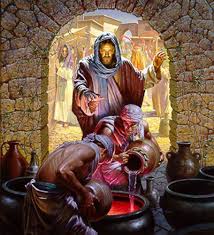 Thankfully, we have a clear teaching on the overlap of free will and God's gift of divine life-which is grace.
The great lie of our time is that people cannot help doing bad things. Either they are mentally ill, in need of healing or simply weak. Free will is denied.
Furthermore, sufficient help is divided into conferred help and offered sufficient help, which we would certainly receive were there not an obstacle. Sufficient help is also either immediate and personal or mediate, for instance, conferred upon the parents for their children who are incapable of receiving personal sufficient help; thus the parents might receive from God the pious thought of the necessity of having their children baptized and not do so. Hence truly and merely sufficient help does not consist in some one, indivisible, definite thing, but in many helps, whether external or internal, permanent or transitory, whereby a man has the proximate power of doing good or at least of praying, and nevertheless resists it.
All of this is commonly taught by Thomists; but in addition reference should be made to the opinion of Gonzalez de Albeda, O.P., in his Commentary on Ia, q. 19, a. 8, disp. 58, sect. 2, Naples, 1637, 11, 85. Gonzalez holds that sufficient grace gives the ultimate completion to the power, or proximate power in readiness to consent when God calls (in fact, it impels toward second act, although it does not remove the impediments to this act); on the contrary, efficacious grace simultaneously moves toward second act and removes all impediments, and hence it is not resisted.

One has a disposition from efficacious grace--whereas sufficient grace moves us, for example, to conversion and further holiness.
One has a disposition from efficacious grace--whereas sufficient grace moves us, for example, to conversion and further holiness.
Thus Gonzalez still preserves a real distinction between sufficient grace, impelling toward second act, and efficacious grace, surmounting obstacles; and he explains this distinction, not as residing in our free will, but before our consent, on the part of God Himself assisting us. He says (ibid.): “I consider that it ought to be held without doubt that the created will, only sufficiently helped by God, possesses the ultimate fullness of active power and the prevenient concurrence of God. . . . It is otherwise, however, with the created will efficaciously assisted; for the ultimate fullness in this latter case (efficaciously assisted) establishing it finally in first act is more particular and extrinsically efficacious with greater power to incline the will to consent here and now.”
Other texts of Father Gonzalez in the same connection should be consulted. We have examined this theory at length in another work.10 Gonzalez, then, maintains the principle of predilection, namely, no one would be better than another if he were not better loved by God. Cf. below, § 4, for the value of this opinion; and the excursus on efficacious grace, chap. I.
And, with apologies, the post on efficacious grace will appear later today, as I have come down ill with something--sorry.
And, with apologies, the post on efficacious grace will appear later today, as I have come down ill with something--sorry.
A short treatise on grace, moving towards perfection....
When talking with Protestants, I have become aware more and more that there is a problem with the word "grace".
When talking with Catholics, I have become aware more and more that there is a problem with the word "grace".
Unless one clarifies definitions in a discussion, many problems can arise.
Here is a quick summary of Catholic vs. Protestant ideas of grace. I hope this helps those who evangelize. This is Part One out of Five, and by no means is exhaustive. Quite the contrary--this is a toe in the water.
First, the Protestants broke away from the Catholic ideas of grace in order to separate grace from nature and grace from the sacraments.
Second, the definitions reveal a different relationship between the person and God.
Therefore, I am going to start with the Catholic definitions of grace and then move on to the Protestant ones.
Catholics believe in actual grace, prevenient grace and sanctifying grace.
Actual grace is, simply, grace given for a particular action.
Prevenient grace is described well in the Council of Trent as
....Justification is to be derived from the prevenient grace of God, through Jesus Christ, that is to say, from His vocation, whereby, without any merits existing on their parts, they are called; that so they, who by sins were alienated from God, may be disposed through His quickening and assisting grace, to convert themselves to their own justification, by freely assenting to and co-operating with that said grace.
And in the Catechism of the Catholic Church, this grace is here described and defined as God's favor--
1996 Our justification comes from the grace of God. Grace is favor, the free and undeserved help that God gives us to respond to his call to become children of God, adoptive sons, partakers of the divine nature and of eternal life.46
This is prevenient grace--the initial call to conversion and new life. Justification is a dual response of the will of the person to whom this grace is given and the call of God. Free will answers the call. It is also defined in 2001 below.
Sanctifying grace is that which is actually a sharing of God's Life. It is given in baptism and the other sacraments and becomes a habit of living. We cooperate, again, with sanctifying grace.
The third type is actual grace, which is grace given her and there to help us on our way. It is not habitual grace. The name tells us what it does-help us in an action. It is called a "help of God for salutary acts",
and, importantly, it solely comes from the merits of Christ Himself, as does all grace, but is passing. On the other hand, one lives in sanctifying grace.
Now, the Catholic Church teaches that actual grace illumines the mind and builds on nature. We are empowered by grace.
This is from the Catholic Encyclopedia...on Augustine and grace: this is the grace which makes the will strong-as against the problem of the weakened will, an inheritance of Original Sin.

The celebrated Provincial Council of Carthage (A.D. 418) confirmed his teaching when it declared that grace does not simply consist in the manifestation of the Divine precepts whereby we may know our positive and negative duties, but it also confers upon us the power to love and accomplish whatever we have recognized as righteous in things pertaining to salvation (cf. Denzinger, "Enchiridion", 10th ed., n. 104, Freiburg, 1908)
And again from the CE: the functions of the grace of the will may be systematically focussed in love; hence the concise declaration of the above-mentioned Synod of Carthage (1. c.): "Cum sit utrumque donum Dei, et scire Quid facere debeamus et diligere ut faciamus" (Since both are gifts of God -- the knowing what we ought to do, and the desire to do it). But care must be taken not to understand immediately, by this "love", perfect love of God, which comes only at the end of the process of justification as the crowning-stone of the edifice, even though Augustine (De Trinit., VIII, 10, and frequently) honours with the name caritas the mere love for good and any good motion of the will whatsoever. Berti (De theol. discipl., XIV, 7)...
And from the CCC:
1997 Grace is a participation in the life of God. It introduces us into the intimacy of Trinitarian life: by Baptism the Christian participates in the grace of Christ, the Head of his Body. As an "adopted son" he can henceforth call God "Father," in union with the only Son. He receives the life of the Spirit who breathes charity into him and who forms the Church.
1998 This vocation to eternal life is supernatural. It depends entirely on God's gratuitous initiative, for he alone can reveal and give himself. It surpasses the power of human intellect and will, as that of every other creature.47
2000 Sanctifying grace is an habitual gift, a stable and supernatural disposition that perfects the soul itself to enable it to live with God, to act by his love. Habitual grace, the permanent disposition to live and act in keeping with God's call, is distinguished from actual graces which refer to God's interventions, whether at the beginning of conversion or in the course of the work of sanctification.
2001 The preparation of man for the reception of grace is already a work of grace. This latter is needed to arouse and sustain our collaboration in justification through faith, and in sanctification through charity. God brings to completion in us what he has begun, "since he who completes his work by cooperating with our will began by working so that we might will it:"50
- Indeed, we also work, but we are only collaborating with God who works, for his mercy has gone before us. It has gone before us so that we may be healed, and follows us so that once healed, we may be given life; it goes before us so that we may be called, and follows us so that we may be glorified; it goes before us so that we may live devoutly, and follows us so that we may always live with God: for without him we can do nothing.51
- Now, a huge distinction between the Protestants and Catholics is the idea of the intellect and therefore, reason being able to bring one to God and the Truths of the Church.
- We also believe that good works can come from reason, and not just grace: here is the CE again:
- (The Catholic Church believes)...that natural man is capable of performing some naturally good works without actual grace, and particularly without the grace of faith, and that not all the deeds of infidels and pagans are sins. This is evidenced by the condemnation of two propositions of Baius by Pope Pius V in the year 1567: "Liberum arbitrium sine gratiae Dei adjutorio nonnisi ad peccandum valet" ("Free will without the aid of God's grace avails for nothing but sin." -- Prop. xxvii), and again: "Omnia opera infidelium sunt peccata et philosophorum virtutes sunt vitia " ("All the acts of infidels are sins, and their virtues are vices." -- Prop. 25). The history of paganism and everyday experience condemn, moreover, with equal emphasis these extravagant exaggerations of Baius. Among the duties of the natural moral law some -- as love for parents or children, abstention from theft and drunkenness -- are of such an elementary character that it is impossible to perceive why they could not be fulfilled without grace and faith at least by judicious, cultured, and noble-minded pagans. Did not the Saviour himself recognize as something good natural human love and fraternal greeting, such as they exist also among publicans and pagans? He denied to them only a supernatural reward (mercedem, Matt., v, 46 sq.). And Paul has explicitly stated that "the Gentiles, who have not the [Mosaic] law, do by nature [naturaliter, physei] those things that are of the law" (Rom., ii, 14). The Fathers of the Church did not judge differently.
And, yet, the pagans do not merit heaven by those good acts, as all merit is in and through Christ. - One more look at initial or prevenient grace in the CCC:
- 2010 Since the initiative belongs to God in the order of grace, no one can merit the initial grace of forgiveness and justification, at the beginning of conversion. Moved by the Holy Spirit and by charity, we can then merit for ourselves and for others the graces needed for our sanctification, for the increase of grace and charity, and for the attainment of eternal life. Even temporal goods like health and friendship can be merited in accordance with God's wisdom. These graces and goods are the object of Christian prayer. Prayer attends to the grace we need for meritorious actions.
2011 The charity of Christ is the source in us of all our merits before God. Grace, by uniting us to Christ in active love, ensures the supernatural quality of our acts and consequently their merit before God and before men. The saints have always had a lively awareness that their merits were pure grace.
- After earth's exile, I hope to go and enjoy you in the fatherland, but I do not want to lay up merits for heaven. I want to work for your love alone. . . . In the evening of this life, I shall appear before you with empty hands, for I do not ask you, Lord, to count my works. All our justice is blemished in your eyes. I wish, then, to be clothed in your own justice and to receive from your love the eternal possession of yourself.63
- However, only sanctifying grace, as the name notes, can make one holy and persist in holiness.
- Now, there is another division in grace which I shall look at in the next post...
Thursday, 21 March 2013
Perfection and Reality 3
And, He always knew Who He Was, the Son of God.
So, too, we are the adopted heirs, the daughters and sons of God.
That is part of our integrity and reality
Perfection and Reality Continued...
All these principles are the principles of our natural intelligence. They are first manifested in that spontaneous form of intelligence which we call common sense, that is, the natural aptitude of intelligence, before all philosophic culture, to judge things sanely. Common sense, natural reason, seizes these self-evident principles from its notion of intelligible reality. But this natural common sense could not yet give these principles an exact and universal formulation. [142].
Why is it that people are merely reacting to leadership as saviors instead of working out plans for themselves? How have we become so PASSIVE in our appropriation of reality?
It may be because of the bombardment of news, input, knowledge, BUT WITHOUT ANY PHILOSOPHICAL FRAMEWORK.
Natural intelligence presupposes that objects and subjects are separate from each other and that one is capable of judgement; that is, standing back and examining cause and effect.
So many people merely react, like billiard balls on a table after one is hit.
Where is free will in this constant reaction....? Why is the will frozen, or underdeveloped? Are you remembering that when each one of us die, we face God alone?
Are you, dear reader, really making choices in your life? Are you seeking or complacent in your knowledge?
To be continued....
Perfection and Reality

In this meantime, chew on this meaty statement from Garrigou-Lagrange on the use of our intellect, from his study on reality. I am very concerned by the fact that so many people can only argue from feelings and perception and not from logic. We have been given the capacity, the ability to use our intellect in matters of faith and morals. To do less is not to be an adult in the Faith.
A few days ago, I said I would write something on integrity, the connection to love and honesty.
Here is a beginning of this discussion.
| REALITY—A Synthesis Of Thomistic Thought |
CH 4. INTELLIGBLE BEING AND FIRST PRINCIPLES
St. Thomas, following Aristotle, teaches that the intelligible being, the intelligible reality, existing in sense objects is the first object of the first act of our intellect, i. e.: that apprehension which precedes the act of judging. Listen to his words: "The intellect's first act is to know being, reality, because an object is knowable only in the degree in which it is actual. Hence being, entity, reality, is the first and proper object of understanding, just as sound is the first object of hearing." [123] Now being, reality, is that which either exists (actual being) or can exist (possible being): "being is that whose act is to be." [124] Further, the being, the reality, which our intellect first understands, is not the being of God, nor the being of the understanding subject, but the being, the reality, which exists in the sense world, "that which is grasped immediately by the intellect in the presence of a sense object." [125] Our intellect, indeed, is the lowest of all intelligences, to which corresponds, as proper and proportioned object, that intelligible reality existing in the world of sense. [126] Thus the child, knowing by sense, for example, the whiteness and the sweetness of milk, comes to know by intellect the intelligible reality of this same sense object. "By intellect he apprehends as reality that which by taste he apprehends as sweet." [127].

In the intelligible reality thus known, our intellect seizes at once its opposition to non-being, an opposition expressed by the principle of contradiction: Being is not non-being. "By nature our intellect knows being and the immediate characteristics of being as being, out of which knowledge arises the understanding of first principles, of the principle, say, that affirmation and denial cannot coexist (opposition between being and non-being): and other similar principles." [128] Here lies the point of departure in Thomistic realism.
Thus our intellect knows intelligible reality and its opposition to nothing, before it knows explicitly the distinction between me and non-me. By reflection on its own act of knowledge the intellect comes to know the existence of that knowing act and its thinking subject. Next it comes to know the existence of this and that individual object, seized by the senses. [129] In intellective knowledge, the universal comes first; sense is restricted to the individual and particular.
If we do not use universals to apply to particulars, we may not be using the gift of Prudence.
A bit later, the writer notes this.
This limited moderate realism of Aristotle and Aquinas is in harmony with that natural, spontaneous knowledge which we call common sense. This harmony appears most clearly in the doctrine's insistence on the objective validity and scope of first principles, the object of our first intellectual apprehension. These principles are laws, not of the spirit only, not mere logical laws, not laws merely experimental, restricted to phenomena, but necessary and unlimited laws of being, objective laws of all reality, of all that is or can be.
There may be two generations of people who have no common sense, who cannot objectify. This is dangerous. Very.
Without the realization of the real world as separate from one's perceptions, a person cannot grow in perfection...this is the sin of the Pharisees-to persist in one's own reality after being faced with the Truth.
Why do people lie to themselves? For comfort? Out of fear?
To be continued...
Matthew 5:20-26
Jesus said to his disciples:
'If your virtue goes no deeper than that of the scribes and Pharisees, you will never get into the kingdom of heaven.
'You have learnt how it was said to our ancestors:
You must not kill; and if anyone does kill he must answer for it before the court. But I say this to you: anyone who is angry with his brother will answer for it before the court; if a man calls his brother "Fool" he will answer for it before the Sanhedrin; and if a man calls him "Renegade" he will answer for it in hell fire.
So then, if you are bringing your offering to the altar and there remember that your brother has something against you, leave your offering there before the altar, go and be reconciled with your brother first, and then come back and present your offering.
You must not kill; and if anyone does kill he must answer for it before the court. But I say this to you: anyone who is angry with his brother will answer for it before the court; if a man calls his brother "Fool" he will answer for it before the Sanhedrin; and if a man calls him "Renegade" he will answer for it in hell fire.
So then, if you are bringing your offering to the altar and there remember that your brother has something against you, leave your offering there before the altar, go and be reconciled with your brother first, and then come back and present your offering.
Come to terms with your opponent in good time while you are still on the way to the court with him, or he may hand you over to the judge and the judge to the officer, and you will be thrown into prison. I tell you solemnly, you will not get out till you have paid the last penny.'
Two Feasts for Benedict
Today is a huge Benedictine feast, the day of Benedict's death and his entry into heaven.
Here is my favorite painting of this event.
Happy feast day, all Benedictines and Cistercians.
It is in the Beuronesian style and is called The Ascent of St. Benedict.
I have seen this in Missouri.

Here is my favorite painting of this event.
Happy feast day, all Benedictines and Cistercians.
It is in the Beuronesian style and is called The Ascent of St. Benedict.
I have seen this in Missouri.
The Battle/ The War
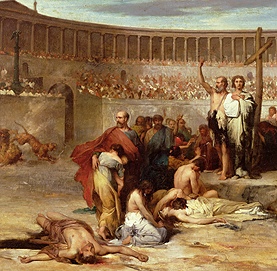
We have a phrase in the Midwest:
"If you can't stand the heat, get out of the kitchen."
As Catholics, we sometimes forget we are in a war. This is not my idea, but that of Christ, Paul, the Early Church Fathers, the Doctors of the Church and so on.
Christ has won the War-by His Passion and Death, by His Resurrection, we are freed from the punishment earned by our first parents.
We have been given life. We are redeemed, as is all creation, through the Cross.
The War is won, but like the last days of WWII, like in the mop-up leading to the capture of Berlin, many battles must be won to get to the goal.
It may seem like we put out one fire and another pops up. I feel like this as a blogger.
However, we have won the War, but we cannot get complacent.
No resting until all the captives have been set free.
This is our job as baptized Catholics.
The War is not over yet, although it has been won. This is why I blog.
There will be some casualties. But,
Philippians 1:6
Douay-Rheims
6 Being confident of this very thing, that he, who hath begun a good work in you, will perfect it unto the day of Christ Jesus.

A short thought from Cyril of Alexandria: Part 98: DoC and Perfection
 |
| Alexandria on the map in ancient times |
On Zephaniah 3:14-20 from here and my comments in blue.
Sing aloud, O daughter of Zion, shout, O Israel! Rejoice and exult with all your heart, O daughter of Jerusalem!
[...] As far as the deeper meaning of this passage is concerned, it clearly commands Jerusalem to rejoice exceedingly, to be especially glad, to be joyful wholeheartedly as its sins are wiped out through Christ.The spiritual and holy Zion – that is, the Church, the holy multitude of believers – is justified in Christ and only in him.
Only the Church is holy and therefore, if we are with the Church, we have a chance for holiness.
By him and through him we are also saved as we escape from the harm of the invisible enemies, for we have a Mediator who was incarnated in our form, the King of all, who is the Word of God the Father.Thanks to him, we have been delivered from the powers of evil.

If we allow God to purify us, we shall be freed from evil.
The Word of God is the armour of good will, the peace, the wall, the one who bestows incorruption, the arbiter of crowns, who has ended the war of the incorporeal Assyrians and made void the schemes of the demons. Do not fear, O Zion, let not your hands grow weak.
God wants the Church, the new Zion, to be strengthened by the grace of Christ.
[...] We have heard Christ himself renewing this ancient prophecy when he says that,you will have affliction in this world but have confidence, for I have overcome the world.
However, we shall suffer. There is no way around this....
For now he is in our midst as a strong warrior who gives victory we have no excuse to be feeble handed and weak kneed. Now we too can be confident that Christ who is the all-powerful God in our midst can redeem and save those who believe in him.
We must look to Christ and not to men.
For he dwells in our hearts through the Spirit and he has given us a spiritual and worthy joy.Why had the Holy Spirit been given us except in order to be our delight and joy and the grounds of our spiritual happiness?
St. Therese, the Little Flower, expressed that she had "unfelt joy"; we look not for consolation, but for inner peace and confidence in God despite all ills.
When Christ gave us joy through the Holy Spirit he renewed us by his own love. [...] He indeed laid down his own life and was numbered for our sake among the dead. Although by nature he was Life, he returned to life and renewed our nature in newness of life and restored it to its first likeness: if anyone is in Christ he is a new creation. For it pleased our God and Father to restore all things in him.
This restoration is real, not merely a cover-up or imputing. We are made new in Christ and the Father restores all things to Christ. We, too, become new creations, if we cooperate with grace.
Therefore Christ gathered together those who had been smashed up by sin, those Satan had torn apart and enfeebled, and, although they didn’t know what was happening, he brought them back to enter the straight paths of the way of justice.

Cyril of Alexandria (c. 376-444): Commentary on Zephaniah 43-44 (PG 71:1013-1017); tr Pluscarden; from the Monastic Office of Vigils, Sunday of the 28th Week in Ordinary Time, Year 1.
Tomorrow, I begin to look at Cyril of Jerusalem...
The language of politics and the Church: the Mind of Christ
By the way, some cardinal and bishops have been very quiet in the past week and some have been commenting regularly.
I am concerned about language being used.
For at least 50 years, the language regarding positions in the Church has changed.
For centuries, the Church described or defined people and ideas in two ways: orthodox or unorthodox.
Or, if you prefer, true or false; revealed or heretical; evil or good.
These terms served us well for a long time.
In the past week, I have seen terms such as "progressive", "centrist", "leftist", "right", "reactionary", "liberal" and "traditional".
Such terms are political and not theological or religious in meaning.
That such terms are being used consistently to described movements in the Church reveal the great problems of division within the Church.
Did Benedict have a vision of the universal Church which was so unique that the majority of cardinals did not share it? I think not.
I remind Catholics and other readers that men who pray are not the same as men who do not pray.

Men who live a life of self-denial, asking God for purification and perfection are not necessarily the same as men who think politically.
With regard to Church teaching, thinking politically is NOT putting on the m
Mind of Christ.
Seminarians should not think politically,
Priests should not think politically.
Bishops should not think politically.
Cardinals should not think politically.

Until we have truly holy men of God leading the Church, we shall have to rely more and more on the Truth of the Teaching Magisterium of the Church.

Do not fall into political thinking. Think like Christ, and if you do not know how to do that, pray for His Holy Spirit to purify your mind and heart.
The Mind of Christ is to be found in the Gospels and in the Tradition of the Church; in the Creed and in the teachings of the Councils; in the statements from the Chair of Peter.
The Mind of Christ is usually not found in interviews or television sound bites.
We have had warnings from some good men about modernism in the Church. Modernism is the great heresy of the last 150 years. Check out the definitions. Pay attention.
To stay with Rome does not mean being confused. It means learning what is the Mind of Christ.
The Mind of Christ is not socialism, or compromise on moral issues. Christ has not changed. His teachings have not changed.
Learn your faith. That is your duty as adult Catholics. Anything less will endanger your immortal soul.
Pray for Pope Francis. Pray.
Be sober-minded; be watchful. Your adversary the devil prowls around like a roaring lion, seeking someone to devour” (1 Peter 5:8).
I am concerned about language being used.
For at least 50 years, the language regarding positions in the Church has changed.
For centuries, the Church described or defined people and ideas in two ways: orthodox or unorthodox.
Or, if you prefer, true or false; revealed or heretical; evil or good.
These terms served us well for a long time.
In the past week, I have seen terms such as "progressive", "centrist", "leftist", "right", "reactionary", "liberal" and "traditional".
Such terms are political and not theological or religious in meaning.
That such terms are being used consistently to described movements in the Church reveal the great problems of division within the Church.
Did Benedict have a vision of the universal Church which was so unique that the majority of cardinals did not share it? I think not.
I remind Catholics and other readers that men who pray are not the same as men who do not pray.
Men who live a life of self-denial, asking God for purification and perfection are not necessarily the same as men who think politically.
With regard to Church teaching, thinking politically is NOT putting on the m
Mind of Christ.
Seminarians should not think politically,
Priests should not think politically.
Bishops should not think politically.
Cardinals should not think politically.
Until we have truly holy men of God leading the Church, we shall have to rely more and more on the Truth of the Teaching Magisterium of the Church.
Do not fall into political thinking. Think like Christ, and if you do not know how to do that, pray for His Holy Spirit to purify your mind and heart.
The Mind of Christ is to be found in the Gospels and in the Tradition of the Church; in the Creed and in the teachings of the Councils; in the statements from the Chair of Peter.
The Mind of Christ is usually not found in interviews or television sound bites.
We have had warnings from some good men about modernism in the Church. Modernism is the great heresy of the last 150 years. Check out the definitions. Pay attention.
To stay with Rome does not mean being confused. It means learning what is the Mind of Christ.
The Mind of Christ is not socialism, or compromise on moral issues. Christ has not changed. His teachings have not changed.
Learn your faith. That is your duty as adult Catholics. Anything less will endanger your immortal soul.
Pray for Pope Francis. Pray.
Be sober-minded; be watchful. Your adversary the devil prowls around like a roaring lion, seeking someone to devour” (1 Peter 5:8).
Part 97: DoC and Perfection: Cyril of Alexandria
And, do not think that these Doctors of the Church just sat around and prayed and thought all day.
They cut wood, drew water, harvested fields, travelled around Europe and Asia, reformed seminaries and monasteries, created dioceses and churches, had their own parishes. wrote lots of pastoral letters and sermons, advised Popes. ran around Europe and Asia some more stomping out heresies, some went into exile or were imprisoned or both, taught, .....and what do you do?
Our Lord Jesus Christ teaches us that to those who choose to love Him and to those who do His commandments the promise of His revelation is given.
To them,… and not to those who are otherwise minded and who do the contrary, He has conveyed this useful lesson in the words: He that hath My commandments and keepil eth them, he it is that loveth Me.
And a man has His commands when he has received the faith, and, laying it to heart, has let into his inmost soul the unpolluted and unmistakeable teaching of the Gospel commandments.
What we lost in Original Sin is redeemed by grace. Natural law becomes supernaturalized.
What we lost in Original Sin is redeemed by grace. Natural law becomes supernaturalized.
And he fulfils them by carrying them out into actuality, and by making haste to distinguish himself by the light of his actions.Such a man then is perfect and wholly wedded to righteousness, a shining light by his faith and conduct, who has witness borne him of his holiness after the pattern of Christ.
Notice that Cyril uses the word "light". This is the enlightenment state, following purgation.
[...] A man of this sort again, God the Father will surely love, and no less also the Son will love him. For as He is of the same Substance, so also has He the same Will as His Father.[...] To those who are thought worthy of the Divine love He promises that He will give a glorious reward and that He will crown them with exceeding great blessings.I will manifest Myself unto him, He says.
God loves this person as He Loves Himself. The promised reward is the Beatific Vision.
To the pure in heart the mystery of the Godhead will be clearly revealed, and Christ gives them light, illuminating the path of every duty by His Spirit, and unveiling Himself and making Himself visible as it were by the ineffable torchlight of the soul.
God becomes more visible and can reveal Himself more directly to the person who is illuminated and free from the habits of sin.
And those who have made their choice once for all are blessed and worthy of all admiration.And I think the prophet David was a man after this sort when he says, I will hear what the Lord God will say in me.
But, again, notice, a choice is involved. To be made perfect one must choose the hard way-out of one's comfort zone.
And so is also St Paul when he exhorts us, saying, If ye seek a proof of Christ that speaketh in me; For Christ speaks of things concerning Himself in His Saints by His Spirit, and reveals other mysteries besides.
Therefore it is true that knowing these things well, the Saints sometimes say, Unto us God revealed them through the Spirit.And they sometimes say, But we have the mind of Christ, meaning, by His mind, His Spirit.
To be continued....
Cyril of Alexandria (c. 376-444): Commentary on John, book 10. Thanks to Mark for the link.
Subscribe to:
Posts (Atom)