Recent Posts

Friday, 31 January 2014

A Reminder of The Dream of St. John Bosco


On Sunday night, May 3 [1868], the feast of the Patronage of Saint Joseph, Don Bosco resumed the narration of his dreams: 

I have another dream to tell you, a sort of aftermath of those I told you last Thursday and Friday which totally exhausted me. Call them dreams or whatever you like. 

I told you of a frightful toad threatening to devour me on the night of April 17. When it finally vanished, a voice said to me: 

“Why don't you tell them?” 
I turned in that direction and saw a distinguished person standing by my bed. Since I did not understand the reason for that censure, I asked:

“What should I tell my boys?” 

“What you have seen and heard in your last dreams and what you have wanted to know, which shall be revealed to you tomorrow night!” He then vanished. 

The next day I was continuously worried about the miserable night in store for me, and when evening came, I did not want to go to bed. I sat at my desk browsing through books until midnight. The mere thought of having to contemplate more terrifying scenes thoroughly frightened me. However, with great effort, I finally went to bed. 

In order not to sleep immediately, and fearful that my imagination might drag me into the previous dreams, I placed my pillow in a way that allowed me to practically sit on the bed. But, due to my tiredness, I unintentionally fell asleep. 

Soon I saw the man who had appeared to me the previous night standing by my bed. He said to me: “Get up and follow me!” 

“For Heaven's sake,” I protested, “leave me in peace. I am exhausted! I have been tormented by a toothache for several days now and need rest. Besides, my last dreadful dreams have completely worn me out.” 

I said this because this man's apparition always means anxiety, fatigue and terror for me. 

“Get up,” he repeated. “There is no time to lose.” 

I complied and followed him. As we walked, I asked him: 

“Where are you taking me?” 

“Come and you will see.” 

He led me to a vast, boundless plain, veritably a lifeless desert, with not a soul in sight, nor a tree or brook. Yellowed, dried-up vegetation added sadness to the desolate scene. I had no idea where I was or what was I to do. For a moment I even lost sight of my guide and feared that I was lost, utterly alone. Neither Fr. Rua nor Fr. Francesia nor anyone else was with me. When I finally saw my friend coming toward me, I sighed in relief and said: 

“Where am I?” 

“Come with me and you will find out!” 

“Well, I will go with you.” 

He led the way and I followed in silence, but after a long, dismal trudge, I began worrying whether I would ever be able to cross that vast expanse, what with my toothache and swollen legs. Suddenly I saw a road ahead. Breaking the silence I asked him my guide: 

“Where to now?” 

“This way,” he replied. 


..
We took the road. It was beautiful, wide, and neatly paved. Both sides were lined with magnificent verdant hedges covered with gorgeous flowers. Roses in particular peeped everywhere through the leaves. At first glance, the road was level and comfortable, and so I ventured upon it without the least suspicion. 

But after walking a while, I noticed that it almost imperceptibly kept sloping downward. Although it did not look at all steep, I found myself moving so swiftly downward that I felt I was effortlessly gliding through the air. Really, I was gliding and hardly using my feet. Our march was fast. Then the thought struck me that the return trip would be very long and arduous, I asked my friend: 

“How shall we get back to the Oratory?” 

“Do not worry,” he answered. “The Almighty wants you to come back to it. He Who leads you onward will also know how to lead you back.” 

The road was increasingly sloping downward. As we continued on our way, flanked by banks of roses and other flowers, I became aware that the Oratory boys and a multitude of others whom I did not know were following me on the same road. Somehow I found myself in their midst. 

As I was looking at them, I noticed that now one, now another, fell to the ground and then was instantly dragged by an unseen force toward a frightful opening in the ground, distantly visible, which led those unfortunate boys straight into a furnace. 

“What makes these boys fall?” I asked my companion. 

“Take a closer look,” he replied. 

I did. Traps were everywhere, some close to the ground, others at eye level, but all well concealed. Unaware of their danger, many boys got caught, and as they tripped, they would sprawl to the ground, legs in the air. Then, when they managed to get back on their feet, they would run headlong down the road toward the abyss. Some got trapped by the head, others by the neck, hands, arms, legs, or sides, and were pulled down instantly toward that hole. These ground traps, fine as spiders' webs and hardly visible, seemed very flimsy and harmless; yet I observed that every boy they snared fell to the ground. 

Noticing my astonishment, the guide remarked:

“Do you know what that is?” 


“Just some filmy fiber,” I answered. 

“It seems like nothing,” he said, “but it is human respect.” 

Seeing that many boys were being caught in those fibers, I asked: 

“Why do so many get caught? Who pulls them down?” 

“Go nearer and you will see!” he told me. 

I followed his advice but saw nothing peculiar. 

“Look closer,” he insisted. 

I picked up one of the traps and tugged. I immediately felt some resistance. I pulled harder, only to feel that, instead of drawing the thread of the trap closer, I was being pulled down myself. I followed where the thread led and soon found myself at the mouth of a frightful cave. I halted, unwilling to venture into that deep cavern, and again I started pulling the thread toward me. It gave a little, but only through a great effort on my part. 

I kept tugging, and after a long while a huge, hideous monster emerged, clutching a rope to which all those traps were tied together. He was the one who instantly dragged down anyone who got caught in them. 

It would be useless to match my strength with his, I said to myself. I would certainly lose. I could better fight him with the Sign of the Cross and with short ejaculations. 

Then I went back to my guide and he said to me: 

“Now you know who he is.” 

“I surely do! It is the Devil himself who places these traps to make my boys fall into Hell!”

Carefully examining many of the traps, I saw that each bore an inscription: Pride, Disobedience, Envy, the Sixth Commandment, Theft, Gluttony, Sloth, Anger, and so on. Stepping back a bit to see which ones trapped the greater number of boys, I discovered that the most dangerous were those of impurity, disobedience and pride. In fact, these three were linked to together. Many other traps also did great harm, but not as much as the first two. Still watching, I noticed many boys running faster than others. 

“Why such haste?” I asked.


“Because they are being dragged by the snare of human respect.” 

Looking even more closely, I spotted knives among the traps. A providential hand had put them there to cut oneself free. The bigger ones, symbolizing meditation, were for use against the trap of pride; others, not quite as large, symbolized spiritual reading well made. There were also two swords - one representing devotion to the Blessed Sacrament, especially through frequent Holy Communion, and the other devotion to the Blessed Virgin. There was also a hammer symbolizing confession, and other knives symbolizing devotion to St. Joseph, St. Aloysius and other Saints. By these means, quite a few boys were able to free themselves or evade capture. 

Indeed, I saw two boys walking safely through all those traps without being caught, either becuase of good timing - getting past it before before the trap sprung on them - or by sliding out of it if they got caught. 

When my guide saw that I had observed everything, he made me continue along that rose-hedged road. But the farther we went, the scarcer the roses became. Long thorns began to appear, and soon there were no more roses. The hedges became sun-scorched, leafless and thorn-studded. Withered branches torn from the bushes were strewn along the roadbed, littering it with thorns and making it difficult to walk through. 

We had come now to a gulch whose steep sides hid what lay beyond. The road, which increasingly sloped downward, was becoming ever more horrid, rutted and littered, bristling with rocks and boulders and making the march ever more difficult. 

I lost track of all my boys, most of whom had left this treacherous road for other paths. 

I kept going, but the farther I advanced, the more arduous and steep the descent became, so that I tumbled and fell several times, lying prostrate until I could catch my breath. Now and then my guide supported me or helped me to rise. At every step my joints seemed to give way, and I thought my shinbones would snap. 

Panting, I said to my guide: 

“My good fellow, my legs will not carry me another step. I just cannot go any farther.” 

He did not answer but continued walking. Taking heart, I followed. Finally, seeing me soaked in perspiration and thoroughly exhausted, he led me to a little clearing alongside the road. I sat down, took a deep breath, and felt a little better. From my resting place, the road I had already traveled looked very steep, jagged and strewn with loose stones, but what lay ahead seemed so much worse that I closed my eyes in horror. 

“Let us go back,” I pleaded. “If we go any farther, how shall we ever get back to the Oratory? I will never make it up this slope.” 

My guide sternly responded: “Now that we have come so far, do you want me to leave you alone?” 

At this threat, I wailed: 

“How can I survive without your help?” 

“Then follow me,” he added. 

We continued our descent, the road now becoming so frightfully steep that it was almost impossible to stand erect. 


And then, at the bottom of this precipice, at the entrance of a dark valley, an enormous building loomed into sight, its towering portal, securely locked, facing our road. When we finally reached the bottom, I became smothered by a suffocating heat, and I could see a dense, green-tinted smoke lit by flashes of scarlet flames rising from behind those enormous walls which loomed higher than mountains. 

"Where are we? What is this?" I asked my guide. 


"Read the inscription on that portal and you will understand." 

I looked up and read these words:Ubi non est redemptio - The place where there is no redemption. I realized that we were at the gates of Hell. 

The guide led me all around this horrible place. At regular distances bronze portals like the first overlooked precipitous descents; on each was an inscription, such as: "Depart from me, ye cursed, into everlasting fire, which was prepared for the Devil and his angels." (Mt 25: 41) "Every tree that yielded not good fruit, shall be cut down, and shall be cast into the fire." (Mt 7: 19) 

I tried to copy them into my notebook, but my guide restrained me: "There is no need. You have them all in Holy Scripture. You even have some of them inscribed on your porticoes." 

At such a sight, I wanted to turn back and return to the Oratory. As a matter of fact, I did try to start back, but my guide ignored my attempt. 

After trudging down into a steep, never-ending ravine, we again came to the foot of the precipice facing the first portal. Suddenly the guide turned to me with a changed and startled face, pointing to something with his hand: "Look!" he said. 

I looked up in terror and saw in the distance someone racing down the path at an uncontrollable speed. I kept my eyes on him, trying to identify him, and as he got closer, I recognized him as one of my boys. His disheveled hair was partly bristled and partly tossed back by the wind.


His arms were outstretched as though he were thrashing water to keep from going under. He wanted to stop, but could not. Tripping on the protruding stones, he kept falling even faster. 

"Let us help him! Let us stop him!" I shouted, holding out my hands toward him. 

"Let him go," the guide replied. 

"Why?" 

"Do you not know how terrible God's vengeance is? Do you think you can stop one who is fleeing from His blazing wrath?" 

Meanwhile the youth had turned his fiery gaze behind him in an attempt to see if God's wrath were still pursuing him. He precipitated himself toward the bottom of the ravine and crashed against that bronze portal as though he could find no other solution in his flight. 

"Why was he looking back in terror?" I asked. 

"Because God's wrath pierces all the gates of Hell and will reach and torment him even amidst the fire!" 

As the boy crashed into the portal, it sprang open with a roar of chains. Instantly two, then ten, then one hundred, then near a thousand inner portals opened with a deafening screech as if moved by the crash of the youth, who was dragged in by an invisible, very rapid and irresistible gale. 

As these bronze doors - one behind the other, though each at a considerable distance from the other - remained momentarily open, I saw far into the distance something like furnace jaws spouting fiery globes at the moment the youth hurtled into it. As swiftly as the portals had opened, they then clanged shut again. 

For a third time I tried to take notes, this time to write down the name of that unfortunate lad, but the guide again took me by the arm and said, "Wait, and look again." 


I could see a new scene. Three other boys of ours precipitated themselves down the same path. Screaming in terror and with arms outstretched, they were rolling down it, one behind the other like massive rocks. I also recognized them as they too crashed against that first portal. It sprang open and so did the other thousand. The three lads were sucked into that endless corridor amidst a long-drawn, fading infernal echo, and then the portals clanged shut again. At intervals, many other lads came tumbling down after them. 

I saw one unfortunate boy being pushed down the slope by an evil companion. Others fell alone or with others, arm in arm or side by side. Each of them bore the name of his sin on his forehead. I kept calling to them as they hurtled down, but they did not hear me. Again the portals would open thunderously and slam shut with a rumble. Then, dead silence! 

My guide explained to me: “These are some of the causes why many are eternally lost: Bad companions, bad books and bad habits." 

The traps I had seen earlier were indeed dragging the boys to ruin. Seeing so many falling into perdition, I cried out disconsolately, "If so many of our boys end up this way, we are working in vain. How can we prevent such tragedies?" 

My guide replied: "This is their present state and that is where they would go if they were to die now." 

"Then, let me jot down their names so that I may warn them and put them back on the path to Heaven." 

"Do you really believe that some of them would reform if you were to warn them? At first, your warning might impress them, but soon they will forget it, saying, 'It was just a dream,' and they will do worse things than before. Others, realizing they have been unmasked, will receive the Sacraments, but this will be neither spontaneous nor meritorious since they are not upright. Others will go to confession because of a momentary fear of Hell, but will still be attached to sin." 

"Then is there no way to save these unfortunate lads? Please, advise me how they can be saved." 

Here is the advice: "They have superiors; let them obey them. They have rules; let them observe them. They have the Sacraments; let them receive them."

A new group of boys came hurtling down the path, and the portals opened momentarily. 


“You should enter as well,” the guide said to me. 

I pulled back in horror. I could not wait to return to the Oratory to warn the boys lest others might be lost as well. 

My guide, however, insisted, “Come, you will learn much. But first tell me: Do you wish to go alone or with me?” He asked this to make me realize that I was not strong enough to go alone and, therefore, needed his friendly assistance. 


Dante watching the horrors of Hell
I replied: “Alone inside this horrible place without the solace of your goodness? How will I ever be able to find my way out without your help?” 

Then a thought came to my mind and raised my spirits. I said to myself: Before a person is condemned to Hell, he must pass by his judgment. And I still have not presented myself before the Supreme Judge. 

After that I said resolutely: “Then, let us go in.” 

We entered that narrow, horrible corridor, whizzing through it with lightning speed. Threatening inscriptions appeared under a veiled light over each one of the inner gateways. The corridor opened into a vast, gloomy courtyard with a small but incredibly thick door at the far end. Above it we could read this inscription: Ibunt impii in ignem aeternu - The impious shall go into the everlasting fire. [Mt 25: 46] The walls all around were filled with inscriptions. 

I asked my guide if I could read them, and he answered, “Do as you wish”. 

Then I examined everything. 

In one place it was written: Dabo ignem in carnes eorum ut comburantur in sempiternum Cruciabuntur die ac nocte in saecula saeculorum - I will give fire to their flesh and they will burn for ever. They will be tormented day and night forever and ever. [Judith 16: 21] 

In another place: Hic univérsitas malorum per omnia saecula saeculorum - In this place all the evil ones are put forever and ever. 

In others: Nullus est hic ordo, sed horror sempiternus inhabitat - There is no order in this place, but only eternal horror dwells here. [Job 10: 22] 

Fumus tormentorum suorum in aeternum ascendit - The smoke of their torments rises forever. [Apoc 14: 11] 

Non est pax impiis - For the impious there is no peace. [Isaiah 47: 22] 

Clamor et stridor dentium - [Here is] weeping and the gnashing of teeth. [Mt 8:12] 

As I moved around reading the inscriptions, my guide, who had been standing in the center of the courtyard, came up to me and said: 

“From here on, no one may have a companion to help him, a friend to comfort him, a heart to love him, a compassionate glance or a benevolent word to sustain him. All this is gone forever. Do you want to see and experience these things yourself?” 

“I only want only to see!” I answered. 

“Then come with me,” my friend replied, and, taking me by the hand, he led me to that small door and opened it. It opened onto a corridor at whose far end was a room with a large window that had a single crystal pane reaching from the pavement to the ceiling, which allowed the observer to look through. As soon as I entered the room, I felt an indescribable terror and stopped. 

Ahead of me I could see an immense cavern that extended far ahead ending in deep caves dug into the bowels of a mountain. They were all ablaze, but it was not an earthly fire with leaping tongues of flames, but a fire that made everything incandescent and white because of its high temperature. The entire cavern - walls, ceiling, floor, iron, stones, wood and coal - was white and glossy. That fire surpasses the fire of earth in heat thousands and thousands of times. Yet it did not consume what it burned or reduce it to ashes. It is impossible for me to describe that cavern in all its astounding reality. 


While I looked appalled at that place of torment, I saw a lad, oblivious of everything around him, arriving with an indescribable momentum. He emitted a most shrilling scream, like one who is about to fall into a cauldron of liquid bronze. Then, jumping into the center of the fire, he too became incandescent like the entire cavern and perfectly motionless, while the echo of his dying wail lingered for an instant more. 

Terribly frightened, I stared briefly at that unfortunate youth for a while. He seemed to be one of my Oratory boys, one of my sons.

“Isn't he one of my youth?” I asked my guide. “Isn’t he X?” 

“Yes, that is right,” he answered. 

“Why is he so still, so incandescent without being consumed?” 

“You chose to see. Do not speak. Observe and you will see. For,omnis enim igne salietur et omnis victima sale salietur - Everyone shall be immobilized by the fire. Every victim shall be conserved with salt. [Mk 9: 48] 

As I looked again, another boy came hurtling down into the cavern in a despairing fury and at a lightning speed. He too was from the Oratory. As he fell, he remained there immobile. He too emitted a shriek of pain that blended with the last echo of the scream that came from the youth who had preceded him. 

Other boys kept hurtling down with the same impetus, all screamed, and then all became equally motionless and incandescent, like those who had preceded them. I noticed that the first became immobile with one hand and one foot up into the air; the second boy was bent toward the floor. Others had their feet up or their faces glued to the floor. Still others supported themselves by only one foot or hand; others were sitting, standing, kneeling or lying on their backs or sides, their hands clutching their hair. 

Briefly, the scene resembled a large statuary group of youth set in every painful posture imaginable. Other lads hurtled into that same furnace. Some I knew; others were strangers to me. Then I recalled what is written in Scriptures to the effect that as one falls into Hell, so he shall remain forever. Lignum, in quocumque loco cecíderit, ibi erit - In the place the wood falls, there it remains. [Eccles 11:3] 

As my astonishment increased, I asked my guide: 

“When these boys run with such speed, do they not know they are coming here?” 

“Oh, yes, they surely do! They have been warned a thousand times, but they still choose to rush into the fire because they do not detest sin and are loath to forsake it. Furthermore, they despise and reject Divine Mercy, which calls them to do penance. Thus provoked, Divine Justice harries them, hounds them and goads them on so that they cannot halt until they reach this place.” 

“Oh, how terrible must be the desperation of these miserable boys who do not have any hope of leaving this place” - I exclaimed. 

“If you really want to know their innermost frenzy and fury, go a little closer,” my guide remarked. 

I took a few more steps, coming closer to the window, and looked inside. I saw that many of those poor wretches were savagely striking at each other causing terrible wounds; some were biting one another like mad dogs. Others were clawing their own faces and hands, tearing their own flesh and spitefully throwing it about. Just then the entire ceiling of that cavern became as transparent as crystal and revealed a patch of Heaven and their radiant companions safe for all eternity. 

The reprobates gnashed their teeth with envy, hardly breathing because they had once ridiculed those just youth.


I asked my guide, “Why do we hear no sound?” 

“Go closer!” he advised. 

Pressing my ear to the crystal window, I heard some screaming and weeping among the horrible contortions; others were blaspheming and making imprecations against those saints. It was a tumult of voices and cries, shrill and confused. 

I asked: “What are they saying? What are they shouting?”

He replied: “When they recall the happy lot of their good companions, they are obliged to admit, ‘We fools deemed their lives to be madness, and their end without honor. Behold, how they are numbered among the children of God, and their lot is among the saints. Thus we passed up the path of truth.’ [Wisdom 5:4-6] 

“They also cried out, ‘We wore ourselves out on the path of iniquity and destruction and walked through hard roads, but we ignored the way of the Lord. What has pride profited us? All those things have passed away like a shadow.’ [Wis 5: 7-9] 

“These are the melancholic canticles that sound here for all eternity. But screams, efforts, weeping are all useless. Omnis dolor irruet super eos - All sorrow fell over them! Here time is no more. Here is only eternity.” 

As, in utter terror, I viewed the condition of many of my boys, a thought suddenly struck me. 

I asked: “How is it possible that these boys are damned? Last night they were still alive at the Oratory!” 

The guide answered: “The boys you see here are all dead to God's grace. Were they to die now or persist in their evil ways, they would be damned. But we should not waste time. Let us go on.” 

He led me away from that terrible place and we went through a corridor deeper down to another underground cavern. Over its entrance I read: Dabit Dominus omnipotens ignem et vermes in carnes eorum, ut urantur et sentiant usque in sempiternum. [The Lord Almighty will give fire, and worms into their flesh, so that they may burn and may feel forever - Judith 16: 21] 


Here I could see the terrible remorse of those who had been formed in our schools:

• The memory of each unforgiven sin and its just punishment; 

• The thousands of means, many of them extraordinary, they had to convert to the Lord, persevere in the good and earn paradise;

• The memory of so many graces given by the Blessed Virgin that were ignored and the promises made to her that were not kept;

• The fact that they could have been saved by a small effort, and instead, now they are condemned forever! 

• So many good intentions that were not kept!

Hell is indeed paved with good intentions, as the proverb says. 

In that place I again saw those Oratory boys who I had seen before in the fiery furnace. Some are listening to me right now; others are former pupils or even strangers to me. I drew nearer to them and noticed that they were covered with worms and disgusting insects that gnawed and consumed their hearts, eyes, hands, legs and entire bodies, leaving them in such a miserable state that it defies description. Those unfortunate boys remained motionless and were a prey to every kind of torment without any possibility of avoiding them. 


Hoping that they could see me and I might be able to speak with them or to hear a word from them, I drew even nearer but no one spoke or even looked at me. I asked my guide why, and he explained that the damned are totally deprived of freedom. Each must endure the full weight of God’s punishment, with no change whatsoever in his state.

He added: “And now it is necessary for you to enter this fiery region you just have seen.” 

“No, no!” I objected in terror. “Before going to Hell, one has to be judged, and I have not been judged yet. So I do not want to go to Hell!” 

“Answer me,” he said, “what would you rather do: Visit Hell and save your boys, or stay outside and abandon them to their torments?” 

For a moment I was struck speechless. Then, I answered: “I love my boys and wish to save them all, but isn't there some other way without going to that place?” 

“Well,” he went on, “you still have time just as they do, provided you do all you can.” 

My heart felt a great relief as I heard those words and instantly I said to myself: I don't mind how much work it takes if I can rescue these beloved sons of mine from such torments. “Come inside then,” my guide went on, “and observe a proof of the Goodness and Mercy of God, who uses a thousand means to induce your boys to penance and save them from everlasting death.” 


Taking my hand, he led me into the cavern. As I stepped in, I found myself suddenly transported into a magnificent crystal hall. In the hall, at regular distances were large veils that covered other rooms that accessed the cavern. 

The guide pointed to one of those veils over which was written: The Sixth Commandment, and he exclaimed: “Transgressions against this commandment caused the eternal ruin of many boys.”

“Did they not go to confession?” 

“They did, but they either made a bad confession or purposely omitted the sins against the beautiful virtue of purity. For example, one said that he had committed such sins two or three times when it was four or five. Other boys who had fallen into that sin in their childhood were ashamed and never confessed it, or made a bad confession, or did not tell everything. 

“Others did not have the sorrow for their sin or lacked the purpose to avoid it in the future. There were even some who, rather than examine their consciences, spent their time trying to figure out ways to deceive their confessor. Anyone dying in this frame of mind shall be among the damned for all eternity. Only those who die truly repentant with the hope of eternal life shall be eternally happy. 

“Now do you want to see why the mercy of God brought you here?” 

He lifted the curtain and I saw at the end of the room a group of Oratory boys - all known to me - who were there because of this sin. Among them were some whose conduct seems to be good. 

“At least now you will surely let me take down their names so that I may warn them individually,” I begged.

“There is no need for that”, he answered. 

“Then what do you suggest I tell them?” 

“Always preach against immodesty. A generic warning will suffice. Bear in mind that even if you admonished them individually, they would make you a thousand promises, but not always sincerely. For firm resolution not to sin again, one needs God's grace, which will never be denied to your boys if they ask. God is so good that He manifests His power especially by being merciful and forgiving. On your part, pray and make sacrifices. As for the boys, let them listen to your admonitions and teachings and let them consult their consciences, which will tell them what to do.” 

He spent the next half hour discussing the requisites of a good confession. 

Afterward, my guide exclaimed in a loud voice several times, “Avertere! Avertere!” 

“What do you mean?” I asked. 

“They must change their lives! They must change their lives!"


Perplexed, I bowed my head and was going to withdraw, when he called me back again and said: “You have not yet seen everything.”

He turned and lifted another veil under which this inscription was written: Qui volunt dívites fieri, íncidunt in tentationem et láqueum diáboli [Those who desire to become rich, fall into temptation and into the snare of the Devil - 1 Tim 6: 9] 

“This does not apply to my boys!” I countered. “For they are as poor as I am. We are not rich and do not want to be. We give it no thought.” 

As the veil lifted, however, I saw in the room a group of boys, all known to me. They were in pain, like those I had seen before. Pointing to them, my guide remarked:

“As you see, the inscription does apply to your boys.” 

“Then explain to me the means of the word divites.”

“For example, the hearts of some boys are attached to material objects so that this disordered affection distances them from the love of God; they lack therefore, piety and recollection. The heart can be perverted not only by the use of riches, but also by the immoderate desire for them, especially when this desire is against the virtue of justice. 

“Your boys are poor, but remember that greed and idleness are bad counselors. Some of the boys committed substantial thefts in their native towns, and although they could make restitution, they are not concerned to do so. There are others who try to break into the pantry or the prefect's or treasurer’s office; others rummage in their companions’ trunks to steal food, money or other objects, and there are some who steal stationary and books for their own use...” 

After naming these boys and others as well, he continued: 

“Some are here for having stolen clothes, linen, blankets and comforters from the Oratory wardrobe in order to send them home to their families. Others, for some intentional damages they made and did not repair. Still others, for not returning objects they had borrowed or for keeping sums of money they were supposed to hand over to the superior.”

He concluded, saying:

“Now that you know who these boys are, admonish them, tell them to curb all vain, harmful desires, to obey God's law and to be zealous of their own honor, otherwise jealously shall lead them to greater excesses that shall plunge them into sorrow, death, and damnation.” 

I could not understand why such dreadful punishments should be meted out for infractions that boys held of little account, but my guide interrupted my thoughts by saying: “Remember what you were told when you saw those spoiled grapes on the wine.” 


Source:
Memorias Biograficas de San Juan Bosco,
Vol. 9, pp.
166-181

Perfection II:xvi


Perfection and Loneliness Re-Post


Today, we celebrate the greatest event a human has ever encountered-the Resurrection from the Dead.

You may think this is odd, but on this Day of Days, I want to write about loneliness in the spiritual walk. For a celibate, such as a priest, brother, nun, or sister, this call to loneliness is a vow, a special relationship with Christ, in the mystery of His Passion and Death.  For the lay person, who finds himself or herself alone in the world for whatever reason, this denial of intimacy is a Cross which will lead to the Resurrection.

That loneliness is a cross, a suffering, cannot be denied. For the widow or widower, or those who experience unrequited love, this loss of the beloved is a daily pain of the heart. However, on the road to perfection, such a gift of loneliness can be transformed into the path of NADA, the nothingness, of St. John of the Cross.

Why on this day of Resurrection do I write of loneliness? Because the denial of intimacy can lead to the freedom of attachments and the all-encompassing love, which is a Person. There is no vain selfishness in loneliness. It just is. The ego is reduced to a longing unfullfilled and emptied of expectation. One's natural tendency for intimacy is reduced to ashes. There is no consolation in this world, none. Loneliness and the lack of intimacy is real death.

But out of death comes the Resurrection. Out of the denial of one's real human need comes a shoot of life. The will dies and is replaced by the Divine Will. The heart dies and is replaced by the Divine Heart. St. John writes, "How shall hinder God from doing His own will in a soul that is detached and self-annihilated?" What can compare with the Love of God, Who is God? Ultimately, one is transformed by this Love. Such is the transformation of the Resurrection. Could Love experience more Love? Could Christ be more than He is or was before the Resurrection? NO. But, He has shown us the way as He came back into His full glory, with a glorified Body, which we shall see at the end of our own days on earth. How do we explain this, as God lived in Time, as the Incarnate God? Just as God matured from being an infant to a child to a Man, so He returns to us with His Glorified Body. Such is our hope--[51] Behold, I tell you a mystery. We shall all indeed rise again: but we shall not all be changed. [52] In a moment, in the twinkling of an eye, at the last trumpet: for the trumpet shall sound, and the dead shall rise again incorruptible: and we shall be changed. [53] For this corruptible must put on incorruption; and this mortal must put on immortality. [54] And when this mortal hath put on immortality, then shall come to pass the saying that is written: Death is swallowed up in victory. [55] O death, where is thy victory? O death, where is thy sting?
[56] Now the sting of death is sin: and the power of sin is the law. [57] But thanks be to God, who hath given us the victory through our Lord Jesus Christ. [58] Therefore, my beloved brethren, be ye steadfast and unmoveable; always abounding in the work of the Lord, knowing that your labour is not in vain in the Lord. Douay Rheims, Chapter 15 in 1 Corinthians

Perfection Series II:xv

Perfection Series for Holy Saturday  Re-Post

Faith, Hope and Reason


On this day of the waiting for God to emerge from the tomb, on this quiet day of contemplation and profound Hope, a post on Faith, Hope and Reason a la the great Doctor of the Church seems appropriate. St. John of the Cross tells us that we move beyond meditation, which is based on Scripture and the imagination, as well as dependent on grace, to contemplation. Contemplation is based on the three Cardinal Virtues, Faith, Hope and Charity, plus Reason, one of the pillars of Faith.

Father Gabriel in his book, which I have been following for the past week on this blog, points out how St. John examines contemplation as being outside of the active imagination and even makes mediation impossible. For those who pray and are used to a life, or period of time with meditation, this leaving of it for contemplation can be disturbing. One may think one is falling back away from gained graces when in reality, the real purification of the intellect and imagination have led one away from the self into a waiting of God, and a docility of spirit which totally trusts in the Trinity. St. John writes that "The Holy Ghost enlightens the recollected understanding (that is the soul's) in proportion to its recollection; and as there can be no greater recollection of the understanding than in faith, the Holy Ghost will not enlighten it in any other way more than in that of faith. The purer the soul is in the perfection of a living faith, the greater is the infusion of charity, and the more it is possessed by it and enrich it with His gifts, since charity is the cause and the means whereby He communicates these gifts." Here, in the Ascent, St. John warns of the over-attention given to spiritual comforts or phenomena. Too many people today, especially charismatics and so-called visionaries, have been led astray, I would state, by deception and therefore, by the evil one or by their own spirits, to a kind of fascination with spiritual candy instead of the NADA. The great beauty of the stage of pure contemplation is that one must rely totally on the nothing, on detachment and on God alone.

Passivity allows grace to flourish.

What I like about this section of the Ascent, is the emphasis on reason. Too many Catholics fall away from a real relationship with God at this stage by loosing a perspective of reasonable Faith, which pulls one back into humility with regard to a relationship with the Church. Herein lies the safety net of the spiritual life. Only in a close relationship with the Church can the imperfect soul gain contemplation. Father Gabriel comments, "As faith leads the intellect to God so hope prepares the memory for the divine transformation."

Here is a rub. We must allow God to empty even our memories. Relying on God alone, detaching ourselves from all senses, the memory of those senses, and even spiritual cookies, brings one to a real reliance in Hope. As in a love relationship with a human being, wherein one hopes for love but loves anyway without expectation, so the soul seeks God alone. All earthly things fall away and a quiet joy enters the heart, the heart of Hope. For those who experience this, this is a movement of real freedom. All longing is for God alone, and not for anything material or spiritual.

Sometimes, as St. John and St. Teresa note, the soul is so taken up with God, the person may forget to eat, study, drink, or talk. Those around this type of person must be aware of his or her complete reliance on God. Of course, this person is frequently completely hidden in God. Faith, Reason, Hope finally lead to the greatest of the virtues Love, which will be in the next posting on perfection.

I used to have a copy of a version of this icon of The Extreme Humility. Here we see Christ Himself, beyond Faith, Hope, Reason and only relying on Love. He allowed Himself to be stripped of all-NADA-for us.

So, we are invited to do the same and follow Him into the tomb of giving all for All.

Perfection Series II:xiv

Lenten Series of Perfection Re-Post--The Illuminative Stage


Father Gabriel continues with his clarification of St. John of the Cross' stages of purification.
The movement from the prayer of meditation, which uses the active imagination, to the prayer which does not rely on the senses is the movement from beginner to the next stage, which is contemplation. Contemplation is more pure, more spiritual than meditation. This is the stage of simple, yet prolonged prayer. This is also the stage of passive formation. God takes over and if the soul cooperates, there is a level of illumination which happens, connected to spiritual knowledge and discernment. Father Gabriel makes a very important distinction that that the soul should not take the initiative spiritually, but wait for the passive activity of God. The soul lets God take over, even one's actions. This implies a great trust as well as the detachment from all else. This Illuminative Way is a transition period.

One needs a spiritual director for all these stages, although, the infused knowledge, ironically in a way, gives one guidance directly.

Perfection Series for Holy Week Re-Post


Father Gabriel in his book on St. John of the Cross, writes this:


Love sujects the love to the object loved; it make him love all that the beloved will; it transforms the willl of the lover into the will of the beloved, so that it is as though there were no longer two will but only one: that of the beloved, to which the lover conforms himself completely.

Father is quoting St. John and paraphrasing a longer section. The first stage of the purification of the sensible part of the soul is something which most of us understand. Yet, how many times, do we start and stop this process, going backwards because we either lack courage or generosity, or, simply, love?

The lover, as Father points out, responds quickly to a suggestion or question. In fact, the true lover anticipates the requests or desires of the beloved. And, as he states, "To do things thoroughly, not by halves; such is the outstanding characteristic of Carmelite spirituality."

Part of the poem, only one of St. John's from the Ascent, reads

Strive always not after that which is most easy, but after that which is most difficult;
Not after that which giveth pleasure but after than which giveth none; 
Not after that which ministers repose but after that which ministers labour;
Not after great things but after little things;
Strive not to desire anything but rather nothing.


Without this purification, true contemplation cannot happen. It is the empty heart which can receive God.

Perfection Series II:xiii

The Demands of Love--Perfection Series continued


Continuing on the theme of perfection and middle-age, I come to the writings of St. John of the Cross and St. Teresa of Avila. She writes, "God gives Himself wholly to the soul which gives itself wholly to Him."

Father Gabriel of St. Mary Magdalen wrote a book in 1940 about the stages of the interior life. I used some of his insights in the title yesterday, the metaphysics of love.  In his chapter entitled, The Demands of Love, the good father points out that the person who continually seeks God, will be met by Him in Love. We need the Love of God in order to love Love. A good prayer is "God give me Your Love so that I can love You." As Father Gabriel and St. John of the Cross note, this union of love is infused, but the soul can prepare itself for such a meeting of Love. The real beginning of growth is St. John's idea of nothing, NADA. We must become detached from all things, people, the past, the future, living in the now and waiting for God to meet us, as we cooperate in a purification of the senses. The empty soul is a free soul.

And only in that soul is there room for God. The NADA, the nothing, leads to the All, the TODO. How many times have we loved someone and wanted desperately to give all, to be all for this person we love. We want to be our best, to grow in love, to make the other all he or she can be as well--we wish the best always for the beloved. And, like God, we want that beloved to reach a perfection of his or her self so that he or she can be happy with God for all eternity.

So, too, God wants all the best for us and for us to be happy with Him now and in eternity. To empty ourselves is like carving out a hole in our heart for God to come in and take over. NADA-TODO.

What does it mean to give our all for God? It simply means, Father Gabriel tells us, that complete conformity to the Will of God begins this giving of our all. This is the easy and the hard part. We, as Father writes, "divest" ourselves of all that is not God.

"God, take my heart and give me Your Heart. Break all my attachments to things, people, my history, my future. Be all to me."

The Doctor of the Church and Father Gabriel want the soul to do this without delay, quickly, with generosity. Generosity means that the soul allows God to strip one of all the detachments. This is partly the "active work of the soul", that is "to let one's self be despoiled." This can be painful or joyful, or even both.

Make a resolution this week, Holy Week, to follow the way of perfection, to start being generous with God.

The Metaphysics of Love--Perfection Series continued


Reading St. John of the Cross again, at a older age, makes me realize that the world today conspires to separate the middle-aged from their true vocation in life. At a certain stage, I would say between 55-60, to begin with an arbitrary set of five years, the older person's life changes from being concerned with the outward life, such as making money, buying a house, getting married, raising a family, taking care of parents, etc. to a slower paced yet infinitely important time of life. This is the time for the development of the interior life. Without this time, a person does not reach the perfection necessary to avoid purgatory, nor does that person come into the union with God, which is possible for all.

In my mini-series on perfection, Garrigou-Lagrange repeats that all Catholics are called to this higher call of oneness with God. This call, as I have described on this blog before now, is for the many, not the few.

In the time of middle-age, the pursuit of the active, exterior life should melt away into an inner energy of the building of the interior life. Now,in this day and age of financial unrest, many middle-aged people, including myself, find that we must keep working longer than we thought, as pensions have been cut, or have disappeared entirely. The restless pursuit of the necessary, food, lodging and so on, must continue later than the baby-boomers planned. This is a serious threat to our interior growth, so important for learning and obtaining love.

The society is against us, with the false, siren call of early retirement or incessant travelling. In fact, a financial crisis may help some people my age simply stay at home, and read, pray or wow, even study their Faith.

The restlessness of youth must be supplanted by a time of reflection and withdrawal from the world. If this does not happen, the Catholic cannot grow.

Being involved in parish duties is fine, but unless there is the awareness that the interior life is like a plant which needs tending on a daily basis, the spiritual life will wither and die in the spiritual life, there is no status quo--only going forward or going back.

My advice is to simplify. Husbands and wives in the empty nest, help each other pray and meditate. If one must work, the other must help that one to time and energy for this interior life. This must be considered a priority.

The metaphysics of love demands that we are purified by active and passive transformation. We can cooperate with God in the active purification, by giving time and energy to prayer and study. As I have said before here, we need to cooperate with grace, and God only comes to those who ask Him to come. The Indwelling of the Holy Spirit is given to all Catholics in the sacraments of the Church. But, the Holy Spirit will not work against our will. Actively, we seek God. Then, passively, we receive His gifts, His Love. But, this takes focus, the focus of the interior life.

to be continued.....

The Steps of Humility and Community; Perfection II:xii


St. Bernard writes that the first two steps of humility of the monk start and are accomplished outside the monastery.

These are:  In the fear of God to be constantly on watch against sin.

And

Not to love one's own will.

The first is the first step on the road to perfection as well. One must decide to be detached from all mortal and venial sin. One must live in the fear of the Lord concerning one's salvation. This determination is part of our baptismal promises.

One must be on the watch and not take our salvation for granted.

The second goal, which is also found outside the monastery, is not to love one's own will. This means having a spiritual director or a good, regular confessor. This means daily prayer. This means brutal honesty with one's self.

That these happen first before community is key to those who are thinking about community.

Community builds on the first and second conversions. Only when one is dedicated to the life of perfection, can one succeed in community. First, a conversion to Christ and then a conversion to the baptismal promises and the life of the virtues.

To be continued....


Thursday, 30 January 2014

Prayers, Please

http://www.lifesitenews.com/news/quebec-bishops-call-for-prayer-as-legislators-prep-to-vote-on-euthanasia-bi

For The Catholics Who Voted for This Man......

http://www.lifesitenews.com/news/obama-threatens-to-veto-bill-to-stop-taxpayer-funding-of-abortion

Community theme continued today


Not everyone is called to community, or at least, to the core groups. Some people need to be around communities which are strong and large enough to take in those who cannot for some reason make the big commitment. Some people are called to live orbital lives around communities.

God calls people to community, but in these times of the remnant, more people will need base communities in order to survive and pass on the Faith.

Some are called to support communities and be connected in some ways, such as those who are called to prayer and non-canonical "hermitages".  Even in the 1970s, a movement of people who lived celibate, hermit-like lives began in the cities, people who decided that they could work and be in the world, but not of the world. Some created small "cenacles". Many were single.

Those who are strong enough to start communities can make allowances for such independent types, who want some involvement, but not total.

But, here is the key to communities. Living close to each other. By definition, even an urban community, must be built around proximity to each other. I would add that community members absolutely should try and live as close to each other as a walk.

The two communities wherein I was involved from age 23 to age 30 plus, were communities wherein people actually sold their houses when houses came up for sale next to another community house and people created "pods". These neighborhood pods formed the real basis for daily and regular contact. The communities divided the people up in groups of 100, as in the Old Testament, and then these groups came together weekly, like on a Thursday night, and three times a week with a larger "podding". Once a month, the entire community would meet-2,000 strong.

All of us had ministries and almost all had outside jobs to support the houses and those who worked primarily in the community directly. When I was in community, I was involved in five different ministries.

These were lay ministries, including street evangelization or outreach, as well as inter-community ministries, such as child-catechesis.

We were also involved in same-sex rescue, which is now, I think, illegal in some states.

The energy for the ministries came from private prayer and group prayer, discernment and a solid life in Christ. And, yes, the model was both monastic and early church models.

One other point. All these communities were patriarchies. This is a basic truth of community life, that the men have to be the leaders. There were some women leaders, but the basis was the age-old model of the Church-patriarchy.

No feminists were in these communities. No women priests wannabees were in these communities.

I left for three reasons. I was no longer called to be in the lay community. I wanted to go back to more traditional Catholic worship (TLM eventually, of course), and I am an intellectual. Too many communities fell into an anti-intellectualism, which can be the bane of communal life.  I think Catholics have moved on and would not longer fall into that problem in 2014. I would hope so. The Church is more orthodox and more intellectual than it has been for years. Thank God for grace in these hard times.

I would say that a new ideal for the Catholic community today would be self-sufficiency. I had looked into off-grid housing years ago. These type of plans are legal in some places and illegal in others. But, any community starting up now must discuss the coming hard times. We have had plenty of warning.


More, more on community-on orders and the laity


Long ago, villages, towns and cities grew up around famous monasteries. Many events and projects conspire to make this happen. Monasteries raised sheep and needed shepherds, wool gatherers, wool carders, sellers, and so on. Monasteries raised grapes and needed help making wine, or cordials, or brandy. Lay people flocked to those areas for jobs, for protection, for Mass and for the schools their children could attend.

Entire communities rose up around monasteries.

This could happen again, in areas where the abbots have jobs. But, the problem is that Catholics no longer want to live where there are abbeys or monasteries. They do not want to sacrifice, or look into the possibilities for communities.

But, more than that, few abbots see the need, few understand the signs of the times. There are some, but few.

It is sad that the very leaders who could be helping the laity form base communities have either sold out to the secular world-view or have made idols of their own communities so as not to reach out any longer. Compromise in doctrinal matters can also be a problem. Few monasteries, for example, support the Latin Mass, which could draw people together.

Some religious orders are too wealthy, too complacent to need the laity or even think of expanding the ideal of community.

The other problem are new orders. Frankly, I would not be involved in orders with only diocesan approval , or those which have not yet received Pontifical approval. Why?


The Vatican approves orders which have sound formation and are not merely a group following a leader in some type of "cult of personality". Time and experience provide us with prudential judgement regarding orders. Some orders flare up and only last a short time. This is not good for the laity, if the laity are trying to set up a community.

We all know examples of failed or suppressed orders. The laity suffers under these difficult situations. The tried and true orders can be the best for new communities of the laity to join.

I believe the age of the oblate is over. I think some third orders are excellent, but sadly, too many chapters of oblates and third orders have been hijacked by feminists, heretics, and liturgical liberals. One cannot grow except in opposition to some of these groups. Years ago, I was asked to join a Carmelite third order in an area of America. When I began to talk with the women in the group, I discovered that many believed in women priests, contraception, and took part in dubious ministries involving new age stuff, like maze prayer and centering prayer.

How sad that such groups have fallen away from orthodoxy. One cannot become holy without the basis of orthodoxy.

The problem is that too many of the orders have fallen away into error. Some of the new excellent orders, such as the FSSPs, now have attached groups for the laity.

How these may evolve into real base communities remains to be seen.


If anyone has an orthodox, good community experience, not Charismatic, to share in comments, please do.

I am interested, as are others reading this blog. Do the nuns and brothers at Our Lady of the Angels Monastery have a lay community, for example?


Community posts again


When I was in community, it took me a long time as a young person to sort out a simple, simple thing.

The culture of an area, or the culture of a community cannot determine the community.

What do I mean? The community I originally belonged to was mostly Latino. This is a culture which can be part of a community, but cannot form the community. Then, I moved into a Scandinavian cultural community. Again, Christianity transcends culture and should.

No persons in a community can insist on cultural lifestyles if the community members are not from the same culture. The transcendent culture would be a Catholic culture.

For example, the Bruderhof is a culture, as well as a community. That there is great good coming out of the Bruderhoff movement does not mean that that culture is superior to other cultures. One does not have to sing like those in the Bruderhoff to get to heaven. One does not have to dress like those in the Bruderhoff to have a community.

Some communities do gravitate to a cultural definition simply because most of the members are from that background. But, this can be dangerous for those coming in to understand, and to agree to, if that culture is not necessary.

The original Catholic communities were urban, not agricultural. We must remember this. The early Church communities were in Antioch, Ephesus, Smyrna, Rome. All the worship was in the large churches, in the basilicas. The communities had to go into the country only after the Fall of the Roman Empire. In fact, High Masses came first, then Low Masses, which may surprise some people.

If someone is not comfortable with the culture of a community, that is, simply, not their community. God does not pick us up and place us in impossible cultural experiences, unless we are missionaries.

To insist on an Easterner from New York understanding and living a Midwest lifestyle can be a sign of the lack of love, and the lack of spiritual foundation of a community.

Some of us fit into certain cultures better than others. This is part of who we are. Again, some religious are Benedictines, some Dominicans, some Franciscans, and these groups all have their own culture.

Part of the call to community is not merely creating a sign of contradiction in the world, nor merely being anti-secular, but being something unified. This is why a philosophy, a rule, a way of life must be truly shared and not imposed. 

Having said all of the above, certain "cultural" norms can and even should be part of the community. For example, I would imagine that a community built around a TLM would see women in mantillas or hats, and men dressed up, not in jeans at Mass and so on.

To be continued................


More on community building


Someone asked me today to write more about community.

Please follow the tags. There are many posts on this subject. But, here are some helpful hints.

And, some are from St. Benedict and St. Bernard's ideas.

I shall list them as points.

1) The core group must be under the auspices of the Roman Catholic Church. If possible, a priest from the diocese should be involved with the permission of the Bishop.

2) The core group must be orthodox Catholics, not embracing any heresy or any deviations from Church teaching. This would include the priest.

3) Those in the core group could not be those in irregular marriages or not practicing Catholics. The reason for this is that the leaders must be pursuing holiness and cannot be in mortal sin.

4) There has to be a shared common philosophy or rule, and a shared common goal. Not all communities have the same ministry, for example. Just as religious orders have a charism to teach or preach or to pray in intercession, there should be a clear sharing of the charism. For example, some communities made be called to do street ministry, or publishing, or pro-life work.

5) All members at first should be practicing Catholics, in good standing with the Catholic Church, again, for stability and growth. The strong lead the weak and the weaker ones with problems which are serious can be ministered to by those who have the maturity and ability to reach out to them. For example, single moms would need help, and the elderly who are alone.

6) A "personal relationship" with Christ and His Mother is essential to the leaders, and to those who are building community. The community is not about the people but Christ.

7) Time and commitment must be a priority. Those who cannot or do not want to make the community a priority are not yet ready or simply not called to it. There is no value judgement here, as some are called and some are not. But, people should be seeing each other on a regular basis, such as in each other's houses for meals, and weekly meetings, or meetings twice a week, including prayer.

8) No wives without husbands and no husbands without wives involved can be involved. The marriage takes precedence over community However, parents have a right to bring along their children and if there is not order in the family to do this, the family should not be part of the core group

9) Singles can and should be part of the core group only if they have a spiritual director and only if their own lives are in order, which means they are living in sanctifying grace.

10) The community is not the goal but Christ is. Once the community becomes the idol, the call to serve and to be Christ in the world gets lost. Some religious communities have lost "their First Love", Christ, by making community the idol. I have seen this happen.

11) Time, finances and worldly goods must be shared to the extent that people want to share them, but all should share according to need, without making those who are poor identured slaves. The early communities did not have interior "class structures."

12) Levels of involvement are good to outline from the start, such as those who want total community, those who only want part, and those who want to be connected but in a lesser manner. These levels can be determined by the community, but at some point, there should be either a movement to more involvement or movement out of the community.

This was my personal experience of being in a lay community for seven years and then when I was asked to make a permanent commitment, I discerned that God wanted me elsewhere.

13) Some people will be permanently celibate to serve and work in their jobs and in the community. This is a good

14) All share in some work according to call and ability, but no one should be "above" setting up for meetings or making food. A "servant school" to learn how to serve each other is a possibility. We had this in my community and it was great fun as well as a good lesson in service.

15) Respect for those who are older, more spiritually mature and advanced into different types of ministry must be shown. For example, some widows or single women or men could be called to almost  full-time prayer for the sake of the ministries.

16) Communities are not just for extroverts. And, sensitivity to personality types means that no one should be forced into the same molds of behavior or needs.

17) Daily communal prayer is essential, even if just the rosary.

18) Daily personal study of the Scriptures, Catholic reading, and personal prayer time, must be made available for all involved, including moms.

19) Perfect honesty must be maintained and all manipulation absolutely forbidden. A "cult of personality" reveals a sick community.

20) Communities must not allow cliques. Period.

21) There should be no "obedience" issues, as this is what causes a community to become a cult. Some people could be in obedience to their spiritual directors, if this is their relationship. Wives, of course, in the Catholic Church, are under obedience to their husbands. But, no one else should be in a lay community. Obedience is the sign of a religious order.

To be continued............more later

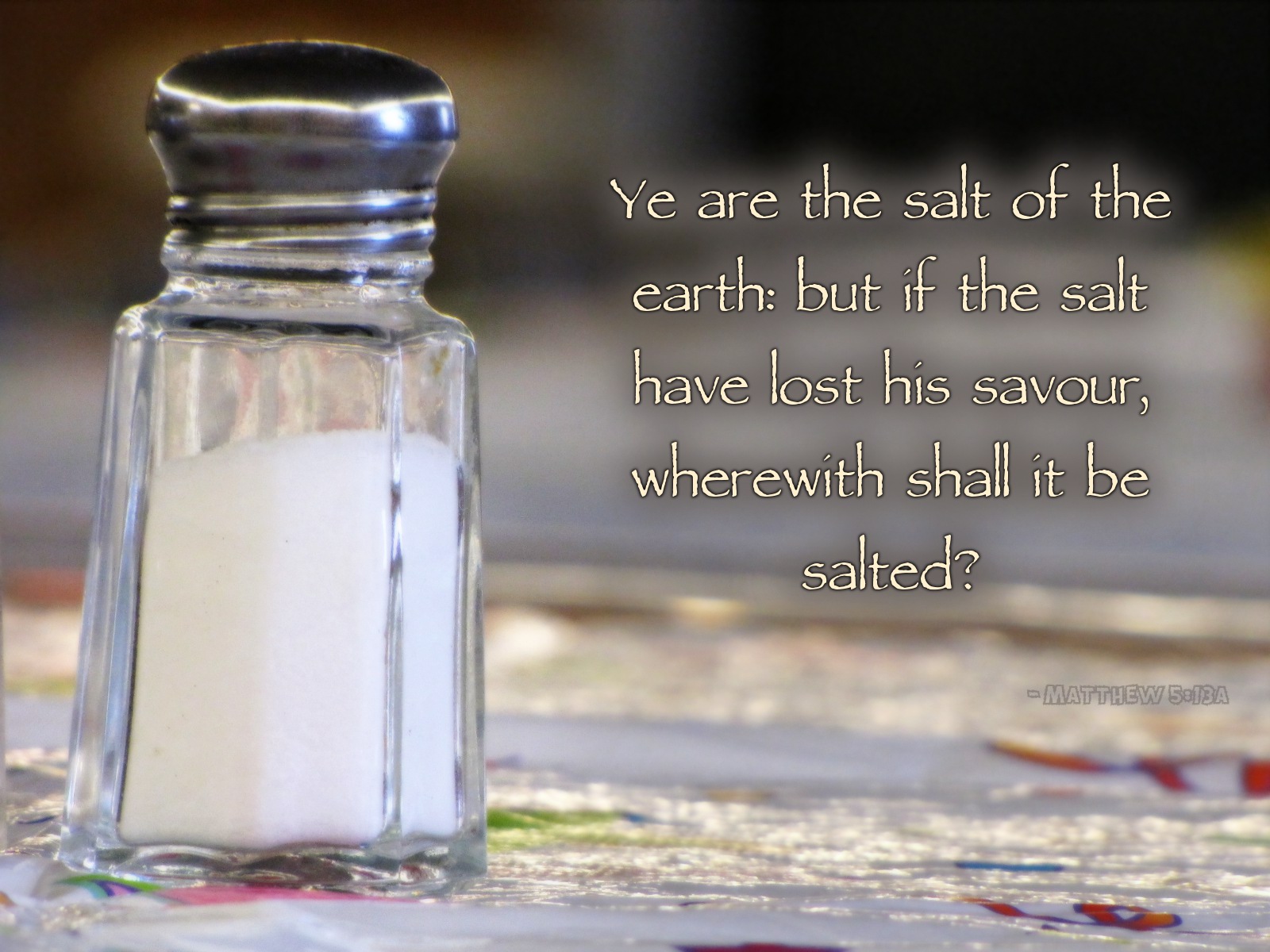
A Reminder....Are You The Salt of The Earth?


Our chronicles relate an even more dreadful happening. One of our brothers, well-known for his doctrine and holiness, was preaching in Germany. He represented the ugliness of the sin of impurity so forceful that a woman fell dead of sorrow in front of everyone. Then, coming back to life, she said, "When I was presented before the Tribunal of God, sixty thousand people arrived at the same time from all parts of the world; out of that number, three were saved by going to Purgatory, and all the rest were damned.
St. Leonard of Port Maurice

Hmm synchronicity-as Voris refers to salt today, which I saw after I wrote this.................................

Perfection Series II:xi

On the Lunge Line


Virtue is an extension of the interior life of the spirit. Narcissism is a result of many things, including a lack of discipline, as well as an inherited disorder. Narcissism can be taught. Some of the  children of today believe that the world revolves around them and that their parents are there to meet their needs. This narcissism has been created by the lack of parental authority in families Many parents praise their children without the children earning the praise. This is the irony of the over-use of the self-esteem. Like a horse on a lunge line, one needs to break the will, but not the spirit. The life of the virtue cannot be taught until the will is under an authority. The life of virtue follows the breaking away of a life of the habit of sin. Habitual sin must be broken before a child can develop the virtues. But, an emphasis on the virtues is necessary and the earlier a child learns kindness, humility, charity, honesty and the other virtues the better.

Habits learned early create a happier adolescent time. Children need to learn and love boundaries. Boundaries and virtues go together. The so-called modern idea that children can express anger or hatred without compunction creates a child without boundaries. How far have we moved away from natural law and the common sense rearing of children is too sadly seen in deviant behavior. The popular anarchist movement, in my mind, is connected to this lack of boundaries and lack of virtue. We only have ourselves to blame as parents if there is now one or two generations of children who have and are being raised without virtues. If the parent is not honest with himself or herself with regard to sin and perfection, the children will follow in the sad footsteps of those who do not understand the interior life. The interior life can only be won with discipline and dying to self. Such a journey must be part of child-raising by parents who have gone before them in mercy and justice.

Perfection Series II:x

Perfection The Teresas


Continuing the series on perfection, I have switched temporarily from Garrigou-Lagrange to the Interior Castle of St. Teresa of Avila. In this book, St. Teresa refers to the enlargement of the heart. Quoting Prime, Teresa writes, “Cum dilatasti cor meum. When thou shalt englarge my heart”, from Psalm 119. She notes that it is not in consolations, or the “spiritual sweetness” that the heart if made larger, more capable of Love. She is writing about the characteristics of the Fourth Mansion, a state commonly attained by serious Catholics. This is the stage of pursuing one's heart's desire, not through thinking, but through loving. Teresa writes a curious sentence: “So then do whatever most en-flames your heart to love.” Those who have reflected and learned some ways of meditative prayer, and even contemplation may find this an odd statement. Teresa is encouraging the enlargement of the heart through and in Love, the pursuit of Love. She is very keen to point out that most people might not even know what Love is, and I capitalize Love, as to me, it is a Person and not a feeling. Teresa states that joy does not start in the heart, but in the will, in the desire to please God and not to offend Him. Like a good bride who defers to her husband, Teresa knows that Love is in the Will, and not in some pursuit of feelings or consolations. That the will is connected to the dilation or enlargement of the heart is a mysterious movement of the Holy Spirit, bringing the person to an awareness that the life of God springs up spontaneously, not through effort, but through Love.

And, what is it that attracts Love to the heart through the will? Humility. Teresa makes it very clear that only the humble come to this well of interior life springing up and nourishing the soul. Only those who Love Love without self-interest, without expectation, experience humility. It is as if one must see one's self as the only person on the street, in a shop, going up the stairs in a flat, loving God just for the sake of loving Him and for no other reason.

Sometimes, I play a little game of Love. When I am in a small, ordinary place, like walking to the shops, or sitting on the bus, I think, “God, there is one small person in …..who is loving You.”
For awhile, I lived on top of a high set of flats, with no elevator. I had to walk up many flights of stairs, and if I had bags of groceries, it was hard. I would stop at the top of each flight and say, “Jesus, there is one person climbing the stairs, in …..who is loving You. There is one person at 2:00 in the afternoon, who is thinking only of You.” Joy flows from these little acts of the Will, the joy which Teresa states comes not from the heart, but from the depths of one's being.

Little things lead to Love and if one is humble and realizes that one only has little things to offer, joy follows. Humility, taking the small and offering to God, is also the Little Way of St. Theresa, the Little Flower, and here, the two Teresas overlap. The third step in this way of Love is to desire suffering. This separates us from the pagans, who at all costs, want to avoid suffering. If one truly loves someone, does not one want to share in the suffering of that person in order to relieve the loneliness and isolation, which suffering causes? The Little Flower wrote of the “unfelt joy”. This is the joy which does not console. It is a type of infused knowledge that one is suffering in and with Christ, without the consolations. Again, this wells up from an interior life of grace, freely given, but available to all, not some.

The last point in these steps to real enlargement of the heart is detachment, totally, from all things and all people and even, all places. Teresa writes that self-denial must be real. It cannot be a pretence. We must even be willing not to receive grace, if that is God's desire. To be holy only in so far as He has decided that for us. We need to be completely detached even from holiness.


There is a freedom given in all of this, which allows one to have a sense of salvation, through the mercy of God, not through deeds. Such freedom leads one to be bold in God, to evangelize just by being, to recollect immediately, to have discernment and to give peace to others in mysterious ways. So, is the heart enlarged to love all, but mostly to Love Love.

If one is in grace, one can trust the movements of the Holy Spirit. Going to Mass and Confession regularly increases personal discernment. When Teresa writes, “So then do whatever most en-flames your heart to love,” she is encouraging us to follow our heart, minds, and wills to follow the vocation, the way God has chosen for us. Garrigou-Lagrange believes this call to holiness and intense intimacy with God is for all Catholics. In following one's way, in humility and peace, God works His Will in each person to lead one to perfection. This is a real possibility. The Gospel challenge from Christ Himself, “Be perfect, even as your heavenly Father is perfect” is for all of us. To be continued.

Perfection Series II:ix

Perfection Children, Grace and Parental Duty


The great Spencer has a chilling video on his site on children. The entire episode reminded me of the Jesuit saying, "Give us a child in education before the age of five, and he is a Catholic for life." Or, paraphrases thereof.

Two concepts totally ignored in the liberal Catholic Church follow: firstly, the age of reason is still age seven in the formation of conscience. This indicates that a child by that age knows, by natural law, right from wrong. Of course, if the child has had good catechesis and good parenting, that child will have the advantage of grace building on nature-that is, the life-changing gifts of Baptism imprinted on the soul, aiding nature to move towards perfection. The subject of Baptism is found below in more than one posting, but we become children of God, heirs to heaven, freed from Original Sin, and given sanctifying grace, which means, the Indwelling of the Trinity.

If a child, who as a human has a proclivity towards natural law, then a child can choose sin and hatred over obedience and love.

This leads to a second teaching, which is that, sadly, children can go to Purgatory, and even Hell.
The liberals in the Church deny this idea, creating a false feeling of safety for bad parents, who have not catechized their own children. I know many. Excuses rain down like showers in Ireland--daily excuses from parents who hold these ideas, which are all wrong and even, damning, for themselves and their children. "We are letting her choose whether she wants to be a Christian when she gets older." She may die tomorrow. "He is too young to be scared of Hell." Look at his computer games-scarier than most things I would watch. "He cannot understand good and evil." Parents, that is your fault.

I write fairy tales. I have written stories for children for over forty years. I taught children before going back to university and college teaching (there are similarities). In my stories, people die, choose evil or good, are happy or sad. Art is not real, even fantasy, unless a similitude of the truth of life weaves through these stories.

Children choose good and evil daily. Children can go to Heaven, Hell, Purgatory. Adults must stop being in denial about their own responsibilities.

I have "heard" the voice of God clearly, startlingly, rarely in my life, except as the still, small voice, but I can put my hand on my heart and tell you all one event. The second day after my son's birth, and he was born late the night before, almost twenty-four years ago, I was holding him in the old Cuckfield Hospital in Hampshire, sitting on the side of the bed. It was a gloriously sunny April day. The lilacs and other flowers bloomed outside the window by my bed in the dormitory like wing. I was holding my tiny boy.

Suddenly, I could not hear anyone, not even the birds. My baby and I were wrapped in a deep silence. I heard God the Father say, "When you die, I shall ask you one thing. Did you pass your Faith on to your son?" I was stunned, humbled. I said, "Yes, Lord. I shall. I will." I did.

For all parents, please say "yes" and do your duty. And, pray for the lost child in the video above. Perfection consists in this, from Garrigou-Lagrange:

There are those who seem to think that it is sufficient to be saved and that it is not necessary to be a saint. It is clearly not necessary to be a saint who performs miracles and whose sanctity is officially recognized by the Church. To be saved, we must take the way of salvation, which is identical with that of sanctity. There will be only saints in heaven, whether they enter there immediately after death or after purification in purgatory. No one enters heaven unless he has that sanctity which consists in perfect purity of soul. Every sin though it should be venial, must be effaced, and the punishment due to sin must be borne or remitted, in order that a soul may enjoy forever the vision of God, see Him as He sees Himself, and love Him as He loves Himself. Should a soul enter heaven before the total remission of its sins, it could not remain there and it would cast itself into purgatory to be purified.
The interior life of a just man who tends toward God and who already lives by Him is indeed the one thing necessary. To be a saint, neither intellectual culture nor great exterior activity is a requisite; it suffices that we live profoundly by God. This truth is evident in the saints of the early Church; several of those saints were poor people, even slaves. It is evident also in St. Francis, St. Benedict Joseph Labre, in the Cure of Ars, and many others. They all had a deep understanding of these words of our Savior: "For what doth it profit a man, if he gain the whole world, and suffer the loss of his own soul?" (2) If people sacrifice so many things to save the life of the body, which must ultimately die, what should we not sacrifice to save the life of our soul, which is to last forever? Ought not man to love his soul more than his body? "Or what exchange shall a man give for his soul?" our Lord adds. (3) "One thing is necessary," He tells us.(4) To save our soul, one thing alone is necessary: to hear the word of God and to live by it. Therein lies the best part, which will not be taken away from a faithful soul even though it should lose everything else.

By the way, the word in Hebrew for "thing", dabar, also means word, work, matter, cause, act, judgment...In Revelation, a thing is not merely a concept, but a deed. And, the Word of God is efficacious, Christ Himself in the Flesh. When God asks us about a "thing", He does not merely mean intellectual assent, or triviality, but that which is and always will be.

An Older Vortex as A Reminder


How small is the remnant? Perfection II:viii

The Babylonian Captivity
The question of community and remnant go together in people's conversation.

The idea of community connects with the idea that a remnant would need support in order to survive.

This is true. But, for a moment, let me write about what a remnant really is.

And, how big is a remnant?

First of all, two New Testament passages refer to the remnant. In the second passage, the "seed" is the remnant.

Second, the remnant is saved by grace, by election, that is chosen by God, and are those who have kept the Ten Commandments and have the testimony of Jesus Christ, which is baptism.

Third, the remnant is those who persevere. And, are purified. Remember, that purification begins with orthodoxy.

Fourth, the remnant is the Church Militant, not the Church Mushy.

Fifth, the remnant has always really been small, contrary to romantic history of the Church.

Sixth, the one, true Faith is the faith of the remnant.

Seventh, the remnant may or may not have the sacraments or priests, therefore, the habit of prayer and holiness must be part of the members' daily lives.

Eighth, the remnant will be separated and not in great groups. Think about this. The remnant will be surrounded by pagans.

Ninth, the remnant will be and is now, responsible for passing down the Faith to the next generation.

Tenth, the remnant will be mostly hidden.


Romans 11:5

Douay-Rheims 
Even so then at this present time also, there is a remnant saved according to the election of grace.


Revelation 12:17

Douay-Rheims 
17 And the dragon was angry against the woman: and went to make war with the rest of her seed, who keep the commandments of God, and have the testimony of Jesus Christ.

Some people have been thinking out loud that few as 5,000 people in the future in Europe could be practicing, faithful Catholics. Does this shock you? This is not prophesy, but an idea which is extrapolated from numbers, events, observations. Be Catholic, be part of the remnant.


Important Article

http://www.tunbridgewells-ordinariate.com/blog/?p=9856