
Monday, 4 August 2014
Quick Rant!
Yes, the Church expects Catholics to study their religion. Yes, the Church expects parents to teach doctrine and practice to their children. Yes, this continues until we can no longer do so.
To be a Catholic and not read or study is to be a lax Catholic, unless one is physically/mentally not able. I see young children at the TLM reading books on farms and trucks, animals and princesses. Why? They should be reading child's missals or at least saint books. Habits begin early, very early.
 End of rant.....
To be a Catholic and not read or study is to be a lax Catholic, unless one is physically/mentally not able. I see young children at the TLM reading books on farms and trucks, animals and princesses. Why? They should be reading child's missals or at least saint books. Habits begin early, very early.


Poll Alert!
I am thinking of writing an e-book. I have done a rather poor, scattered personal poll but am interested in readers' views now.
Please take the poll at the right! Thanks. In America, the market for e-books is from 20-27% of books. If this is the case, the largest possibility for American readership from this blog would be, out of a readership of 50,000 "hits" per month, about 25,000 American minus repeats, or about 900 Yankees buying my e-book. Two friends tell me Europeans read e-books more. Hence, the poll. Of course, I would be writing in English.
Half my readership is from America and half from the rest of the world, at this time, roughly....monthly.
Please take the poll at the right! Thanks. In America, the market for e-books is from 20-27% of books. If this is the case, the largest possibility for American readership from this blog would be, out of a readership of 50,000 "hits" per month, about 25,000 American minus repeats, or about 900 Yankees buying my e-book. Two friends tell me Europeans read e-books more. Hence, the poll. Of course, I would be writing in English.
Half my readership is from America and half from the rest of the world, at this time, roughly....monthly.
 |
| http://upload.wikimedia.org/wikipedia/commons/thumb/0/00/Amazon_Kindle_3.JPG/220px-Amazon_Kindle_3.JPG |
bisy backson
One of those days today. I call these days, "getting my life in order days", which is a terrible exaggeration for doing the necessaries we all have to do to live in this world.
I would have much preferred to live in a world without ids, plastics cards, etc. I know people in the Midwest who are old enough to remember days when someone did not have to have health insurance. They just paid the doctor what one could, when one could.
No, we have complicated our lives to the point of missing the one thing necessary. We are all forced to be Marthas. This is why monasteries have Mother Generals and prioresses. I was so happy just cleaning the guest house! But, bisy backson.
No pooh-sticks today.

I would have much preferred to live in a world without ids, plastics cards, etc. I know people in the Midwest who are old enough to remember days when someone did not have to have health insurance. They just paid the doctor what one could, when one could.
No, we have complicated our lives to the point of missing the one thing necessary. We are all forced to be Marthas. This is why monasteries have Mother Generals and prioresses. I was so happy just cleaning the guest house! But, bisy backson.
No pooh-sticks today.

Repeating Ideas on The Passions-Part Four
Sadly, most of the world;s population lives in these undisciplined passions, which have become vices. We see this daily in wars and the excesses of entertainment and entertainers. Only the opposite virtues can wean us, or rather, tear us away from these vices.
And, I repeat, a parent cannot give what he or she does not have-the virtues. Virtue training in the home must be a regular and steady effort on the part of parents raising children.
Again, the Dominican Master, Garrigou-Lagrange, writes this to help us all:
The remedies for precipitation are easily indicated. Since this defect comes from the fact that we substitute our natural, hasty action for that of God, the chief remedy is to be found in a complete dependence in regard to God and in the conformity of our will to His. For this, we must reflect seriously before acting; pray humbly for the light of the Holy Ghost, and also heed the advice of our spiritual director, who has the grace of state to guide us. Then gradually precipitation will be replaced by habitual docility to the action of God in us. We shall be a little less satisfied with ourselves, and we shall find greater peace and, from time to time, true joy in God.
To discipline the passions, we must be alert to combat vivacity of temperament united to presumption, which springs from too great esteem of self; we must also contend against effeminacy, and against sloth, which would be even more harmful to the interior life. By this slow persevering work, on which we should daily examine ourselves, the ardent, the Boanerges, must become meek without losing true spiritual ardor, which is zeal for the glory of God and the salvation of souls. And the meek also, who are perhaps inclined by nature to effeminacy, heedlessness, and negligence, must become strong. Both will thus ascend by different slopes toward the summit of perfection. And they will see that it is a great thing to know how to discipline themselves gradually, to conduct themselves well, or to put it better, to know how to remain habitually faithful to grace, without which, in the order of salvation, we can do nothing.
Then the passions, no longer inordinate but disciplined, will become powers truly useful for the good of our soul and that of others. Audacity will be at the service of a fortitude that will dominate thoughtless fear when, for example, there is a question of coming promptly to the help of our neighbor in distress. Likewise meekness, which presupposes a great mastery over self, will repress anger so that it may never be anything but the holy indignation of zeal, of a zeal which, without losing any of its ardor, remains patient and meek and is the sign of sanctity.
The Dominant Passion Part Three on The Emotions
Garrigou-Lagrange reminds us that one can have a dominant passion which must be dealt with before one can grow in the virtues.
For example, I have seen grown-up people, even the elderly, wrapped up unhealthy fear, or middle-aged people caught in anger.
Some people have a dominant passion which becomes a real vice, like gluttony or greed.
I cannot make up in this blog for fifty years of a lack of teaching on the importance of not living a life controlled by the emotions, the passions.
Once, however, a person has been through the painful process of purification, the passions which are also purified, contribute to the growth of holiness in the person. For example, missionaries find that they have a passion for spreading the Gospel. One can love Christ passionately, and at first, as St. Bernard writes in his sermons which I am reading, even in a carnal way. But, soon, one passes beyond imagery into a level of purity in loving Christ. The emotions or passions are then purified to a degree where these no longer hinder the growth in the interior life.
Such happens in the Dark Night of the Spirit, when all imagery, all preconceived ideal and subjective thoughts about God die.
A middle-aged man said to me about a month ago something, which of course, I contradicted. He said that we live like animals through our passions.
He was justifying years of fornication, drinking and not going to church on Sunday. He has limited his soul to that of an animal.
He is living in a state of spiritual death. But, those who seek God in perfection need to be warned as to not jumping ahead of where they really are. I have warned against this before. In fact. some spiritual directors do not let their people read the mystics at all. One can imagine one is in a different place than one really is. I have highlighted some of the passage below in boldface type.
Here is Garrigou-Lagrange:
THE PASSIONS FROM THE ASCETICAL POINT OF VIEW
According to the principles we have just recalled, we shall consider the passions from the ascetical point of view in their relation to the interior life. From these principles it follows that the passions, being in themselves neither good nor bad, ought not to be extirpated like vices, but should be moderated, regulated; properly speaking, they should be disciplined by right reason illumined by faith. If they are immoderate, they become the roots of vices; if they are disciplined, they are placed at the service of the virtues. A man must not be inert and, as it were, made of straw, nor should he be violent and irascible.
Little by little the light of reason and the superior light of infused faith must descend into our sensible appetites that they may not be like those of an animal without reason, but those of a rational being, of a child of God, who shares in the intimate life of the Most High.
We should direct our thoughts to Christ's sensible appetites, which were pure and strong because of the virtues of virginity, patience, and constancy even to the death of the cross.(7) Let us also think of the sensibility of Mary, Virgin most pure and Mother of Sorrows, coredemptress of the human race. We shall thus see how our sensible appetites ought to be ever more and more subjected to our intellect illumined by faith, to our will vivified by charity, and how the light and living flame of the spirit ought to radiate over our emotions to sanctify them and place them at the service of God and of our neighbor. St. Paul exhorts us, saying: "Rejoice with them that rejoice; weep with them that weep." (8) This is characteristic of the saints; they manifest admirable delicacy of feeling for the afflicted; at times they alone can find words which uplift and fortify.
From this point of view, the passions must be moderated, not materially but proportionately to what reason requires in relation to a more or less lofty given end to be reached in given circumstances. Thus, without sinning, a person may experience great sadness, great fear, or lively indignation in certain grave circumstances. We read in Exodus II that Moses, seeing the Israelites adoring the golden calf, crushed this idol to dust and punished with great severity those who were most guilty. In the First Book of Kings,(10) the priest Heli is reprimanded for not having become indignant at the evil conduct of his sons. On the road to perfection, those who are naturally meek must become strong, and those who are naturally inclined to be strong-willed must become gentle. Both are climbing toward the summit by different slopes.
To drive a horse well, now the bit must be used, and now the
whip; the same applies to the governing of the passions. At times they must be checked, and at other times awakened, jolted, in order to react against sloth, inertia, timidity, or fear. At times a great effort is required to break an impetuous horse; the same is true of disciplining certain temperaments capable of great things. How beautiful it
is to see these temperaments transformed by the profound impress of a Christian character after ten or fifteen years of self-discipline!
With a view to the interior life, one must be particularly attentive, above all at the beginning, to a special point: that is, to be on guard against precipitation and also against the dominant passion, that it may not become a predominant fault. As we have already spoken of the predominant fault, we here insist on precipitation to be avoided or, as the expression goes, on impulsiveness, which inclines one to act without sufficient reflection.
With rash haste many beginners, otherwise very good, at times wish to make too rapid progress, more rapid than their degree of grace warrants. They desire to travel rapidly because of a certain unconscious presumption; then, when trial comes, they sometimes let themselves be cast down at least for a moment. This condition is similar to what happens also in young students at the beginning of their curiosity in their work; when it is satisfied or when application becomes too painful, negligence and sloth follow. As a matter of fact, the happy medium of virtue, which is at the same time a summit above two opposing vices, like strength above temerity and cowardliness, is not attained immediately.
Properly speaking, what is precipitation? St. Thomas (11) defines it as a manner of acting by impulsion of the will or of the passion, without prudence, precaution, or sufficient consideration. It is a sin directly opposed to prudence and the gift of counsel. It leads to temerity in judgment and is comparable to the haste of one who descends a staircase too rapidly and falls, instead of walking composedly.
From the moral point of view, one should descend in a thoughtful manner from reason, which determines the end to be attained, to the operations to be accomplished without neglecting the steps that intervene, that is, the memory of things past, intelligent attention to present circumstances, shrewdness in foreseeing obstacles that may arise, docility in following authorized advice. One must take time to deliberate before acting; "one should deliberate slowly and without haste," as Aristotle used to say. Afterward one must sometimes act with great promptness.
If, on the contrary, a person is inclined to action by the impulse of the will or of the passion, while neglecting the intervening steps we have just mentioned, the memory of the past, attention to the present, foresight of the future, and docility, such a person stumbles and falls. This is inevitable.
What are the causes of precipitation? As spiritual writers say, this defect comes from the fact that we substitute our own natural activity for the divine action. We act with feverish ardor, without sufficient reflection, without prayer for the light of the Holy Ghost, without the advice of our spiritual director. At times this natural haste is the cause of extremely imprudent acts that are very harmful in their results.
Natural haste often arises from the fact that we consider only the proximate end to be attained today, without seeing its relation to the supreme end toward which we must direct our steps. Seeing only this immediate human end, we direct our efforts toward it by natural. activity, without sufficient recourse to the help of God.
We can see in the training that Christ gave His apostles how often He warned them against this precipitation or natural haste, which causes a man to act without sufficient reflection and without a sufficiently great spirit of faith. Some pages back, we recalled that James and John on returning from their first apostolate, during which a town refused to receive their preaching, asked our Lord to send fire from heaven on this village. With divine irony, Christ then called them Boanerges,(12) or "sons of thunder," to remind them that they should be sons of God and, like Him, should also be patient in awaiting the return of sinners. James and John understood; so well indeed, that John at the end of his life could only say: "Love one another, this is the commandment of the Lord." In Christ's school, the Boanerges become gentle; yet they do not lose their ardor or their zeal, but this zeal becomes patient, gentle, and less fiery, and bears lasting fruits, the fruits of eternity.
We would do well also to remember how St. Peter, who was called to a high degree of sanctity, was cured of his rash haste and presumption. When our Lord announced His passion, Peter said to Him: "Although all shall be scandalized in Thee, I will never be scandalized. Jesus said to him: Amen I say to thee, that in this night before the cock crow, thou wilt deny Me thrice." (13) Humbled by his sin, Peter was cured of his presumption. He no longer counted on himself, but on divine grace by asking to be faithful to it; and grace led him to the very heights of sanctity by the way of martyrdom.
The precipitation we are speaking of sometimes leads young, generous, and ardent souls to wish to reach the summit of perfection more rapidly than grace, without any delay en route, without taking into consideration the intermediary degrees and the mortification necessary for disciplining the passions, as if they had already reached divine union. They sometimes read works on mysticism with avidity and curiosity, and gather from them beautiful flowers before fruit has time to form. They thus expose themselves to many illusions and, when disillusionment comes, they expose themselves to the danger of falling into spiritual sloth and pusillanimity. We should walk at a good pace, indeed with an ever firmer and more rapid step in proportion as we draw near to God who attracts us the more, but we must avoid what St. Augustine calls "great strides off the right road."
The effects of this haste and of the self-satisfaction that accompany it, are the loss of interior recollection, perturbation, and fruitless agitation, which has only the outward appearances of productive action, as glass beads counterfeit diamonds.
The remedies for precipitation are easily indicated. Since this defect comes from the fact that we substitute our natural, hasty action for that of God, the chief remedy is to be found in a complete dependence in regard to God and in the conformity of our will to His. For this, we must reflect seriously before acting; pray humbly for the light of the Holy Ghost, and also heed the advice of our spiritual director, who has the grace of state to guide us. Then gradually precipitation will be replaced by habitual docility to the action of God in us. We shall be a little less satisfied with ourselves, and we shall find greater peace and, from time to time, true joy in God.
For example, I have seen grown-up people, even the elderly, wrapped up unhealthy fear, or middle-aged people caught in anger.
Some people have a dominant passion which becomes a real vice, like gluttony or greed.
I cannot make up in this blog for fifty years of a lack of teaching on the importance of not living a life controlled by the emotions, the passions.
Once, however, a person has been through the painful process of purification, the passions which are also purified, contribute to the growth of holiness in the person. For example, missionaries find that they have a passion for spreading the Gospel. One can love Christ passionately, and at first, as St. Bernard writes in his sermons which I am reading, even in a carnal way. But, soon, one passes beyond imagery into a level of purity in loving Christ. The emotions or passions are then purified to a degree where these no longer hinder the growth in the interior life.
Such happens in the Dark Night of the Spirit, when all imagery, all preconceived ideal and subjective thoughts about God die.
A middle-aged man said to me about a month ago something, which of course, I contradicted. He said that we live like animals through our passions.
He was justifying years of fornication, drinking and not going to church on Sunday. He has limited his soul to that of an animal.
He is living in a state of spiritual death. But, those who seek God in perfection need to be warned as to not jumping ahead of where they really are. I have warned against this before. In fact. some spiritual directors do not let their people read the mystics at all. One can imagine one is in a different place than one really is. I have highlighted some of the passage below in boldface type.
Here is Garrigou-Lagrange:
THE PASSIONS FROM THE ASCETICAL POINT OF VIEW
According to the principles we have just recalled, we shall consider the passions from the ascetical point of view in their relation to the interior life. From these principles it follows that the passions, being in themselves neither good nor bad, ought not to be extirpated like vices, but should be moderated, regulated; properly speaking, they should be disciplined by right reason illumined by faith. If they are immoderate, they become the roots of vices; if they are disciplined, they are placed at the service of the virtues. A man must not be inert and, as it were, made of straw, nor should he be violent and irascible.
Little by little the light of reason and the superior light of infused faith must descend into our sensible appetites that they may not be like those of an animal without reason, but those of a rational being, of a child of God, who shares in the intimate life of the Most High.
We should direct our thoughts to Christ's sensible appetites, which were pure and strong because of the virtues of virginity, patience, and constancy even to the death of the cross.(7) Let us also think of the sensibility of Mary, Virgin most pure and Mother of Sorrows, coredemptress of the human race. We shall thus see how our sensible appetites ought to be ever more and more subjected to our intellect illumined by faith, to our will vivified by charity, and how the light and living flame of the spirit ought to radiate over our emotions to sanctify them and place them at the service of God and of our neighbor. St. Paul exhorts us, saying: "Rejoice with them that rejoice; weep with them that weep." (8) This is characteristic of the saints; they manifest admirable delicacy of feeling for the afflicted; at times they alone can find words which uplift and fortify.
From this point of view, the passions must be moderated, not materially but proportionately to what reason requires in relation to a more or less lofty given end to be reached in given circumstances. Thus, without sinning, a person may experience great sadness, great fear, or lively indignation in certain grave circumstances. We read in Exodus II that Moses, seeing the Israelites adoring the golden calf, crushed this idol to dust and punished with great severity those who were most guilty. In the First Book of Kings,(10) the priest Heli is reprimanded for not having become indignant at the evil conduct of his sons. On the road to perfection, those who are naturally meek must become strong, and those who are naturally inclined to be strong-willed must become gentle. Both are climbing toward the summit by different slopes.
To drive a horse well, now the bit must be used, and now the
whip; the same applies to the governing of the passions. At times they must be checked, and at other times awakened, jolted, in order to react against sloth, inertia, timidity, or fear. At times a great effort is required to break an impetuous horse; the same is true of disciplining certain temperaments capable of great things. How beautiful it
is to see these temperaments transformed by the profound impress of a Christian character after ten or fifteen years of self-discipline!
With a view to the interior life, one must be particularly attentive, above all at the beginning, to a special point: that is, to be on guard against precipitation and also against the dominant passion, that it may not become a predominant fault. As we have already spoken of the predominant fault, we here insist on precipitation to be avoided or, as the expression goes, on impulsiveness, which inclines one to act without sufficient reflection.
With rash haste many beginners, otherwise very good, at times wish to make too rapid progress, more rapid than their degree of grace warrants. They desire to travel rapidly because of a certain unconscious presumption; then, when trial comes, they sometimes let themselves be cast down at least for a moment. This condition is similar to what happens also in young students at the beginning of their curiosity in their work; when it is satisfied or when application becomes too painful, negligence and sloth follow. As a matter of fact, the happy medium of virtue, which is at the same time a summit above two opposing vices, like strength above temerity and cowardliness, is not attained immediately.
Properly speaking, what is precipitation? St. Thomas (11) defines it as a manner of acting by impulsion of the will or of the passion, without prudence, precaution, or sufficient consideration. It is a sin directly opposed to prudence and the gift of counsel. It leads to temerity in judgment and is comparable to the haste of one who descends a staircase too rapidly and falls, instead of walking composedly.
From the moral point of view, one should descend in a thoughtful manner from reason, which determines the end to be attained, to the operations to be accomplished without neglecting the steps that intervene, that is, the memory of things past, intelligent attention to present circumstances, shrewdness in foreseeing obstacles that may arise, docility in following authorized advice. One must take time to deliberate before acting; "one should deliberate slowly and without haste," as Aristotle used to say. Afterward one must sometimes act with great promptness.
If, on the contrary, a person is inclined to action by the impulse of the will or of the passion, while neglecting the intervening steps we have just mentioned, the memory of the past, attention to the present, foresight of the future, and docility, such a person stumbles and falls. This is inevitable.
What are the causes of precipitation? As spiritual writers say, this defect comes from the fact that we substitute our own natural activity for the divine action. We act with feverish ardor, without sufficient reflection, without prayer for the light of the Holy Ghost, without the advice of our spiritual director. At times this natural haste is the cause of extremely imprudent acts that are very harmful in their results.
Natural haste often arises from the fact that we consider only the proximate end to be attained today, without seeing its relation to the supreme end toward which we must direct our steps. Seeing only this immediate human end, we direct our efforts toward it by natural. activity, without sufficient recourse to the help of God.
We can see in the training that Christ gave His apostles how often He warned them against this precipitation or natural haste, which causes a man to act without sufficient reflection and without a sufficiently great spirit of faith. Some pages back, we recalled that James and John on returning from their first apostolate, during which a town refused to receive their preaching, asked our Lord to send fire from heaven on this village. With divine irony, Christ then called them Boanerges,(12) or "sons of thunder," to remind them that they should be sons of God and, like Him, should also be patient in awaiting the return of sinners. James and John understood; so well indeed, that John at the end of his life could only say: "Love one another, this is the commandment of the Lord." In Christ's school, the Boanerges become gentle; yet they do not lose their ardor or their zeal, but this zeal becomes patient, gentle, and less fiery, and bears lasting fruits, the fruits of eternity.
We would do well also to remember how St. Peter, who was called to a high degree of sanctity, was cured of his rash haste and presumption. When our Lord announced His passion, Peter said to Him: "Although all shall be scandalized in Thee, I will never be scandalized. Jesus said to him: Amen I say to thee, that in this night before the cock crow, thou wilt deny Me thrice." (13) Humbled by his sin, Peter was cured of his presumption. He no longer counted on himself, but on divine grace by asking to be faithful to it; and grace led him to the very heights of sanctity by the way of martyrdom.
The precipitation we are speaking of sometimes leads young, generous, and ardent souls to wish to reach the summit of perfection more rapidly than grace, without any delay en route, without taking into consideration the intermediary degrees and the mortification necessary for disciplining the passions, as if they had already reached divine union. They sometimes read works on mysticism with avidity and curiosity, and gather from them beautiful flowers before fruit has time to form. They thus expose themselves to many illusions and, when disillusionment comes, they expose themselves to the danger of falling into spiritual sloth and pusillanimity. We should walk at a good pace, indeed with an ever firmer and more rapid step in proportion as we draw near to God who attracts us the more, but we must avoid what St. Augustine calls "great strides off the right road."
The effects of this haste and of the self-satisfaction that accompany it, are the loss of interior recollection, perturbation, and fruitless agitation, which has only the outward appearances of productive action, as glass beads counterfeit diamonds.
The remedies for precipitation are easily indicated. Since this defect comes from the fact that we substitute our natural, hasty action for that of God, the chief remedy is to be found in a complete dependence in regard to God and in the conformity of our will to His. For this, we must reflect seriously before acting; pray humbly for the light of the Holy Ghost, and also heed the advice of our spiritual director, who has the grace of state to guide us. Then gradually precipitation will be replaced by habitual docility to the action of God in us. We shall be a little less satisfied with ourselves, and we shall find greater peace and, from time to time, true joy in God.
The Emotions Part Two--The Dark Night Again
The Dark Night of the Soul, which includes the Dark Night of the Senses and the Spirit, removes the domination of the passions in the soul.
As long as a person is tossed to and fro by their passions, there can be no spiritual growth.
Some of this post is a repetition of earlier ones on the Dark Night and the passions. But, because I have met so many young people under the age of fifty, who have never in their life heard any teaching on the passions or emotions, I thought it was time to repeat some words of Garrigou-Lagrange.
The capital sins are related to inordinate passions, and the predominant fault can be based on the passions. One of the things in the dark night times is the removal of fears, false idols, and anything which ties one to the passions.
THE PASSIONS FROM THE PSYCHOLOGICAL POINT OF VIEW
St. Thomas, who follows Aristotle and St. John Damascene, defines passion thus: "A movement of the sensitive appetite when we imagine good or evil. . . . A passion is properly to be found where there is corporeal transmutation." (2)
When we say that it is a movement of the sensible appetite, common to man and animal, a distinction is made between passion and a movement of the spiritual will, called the rational appetite. Neither must the movement of the sensible appetite be confused with corporeal movements: for example, with the beating of the heart that follows it. These movements of the sensitive appetite which are the passions manifestly exist in the animal: for example, when it desires its food, and in it passion is now under a mild form, as in the dove or the lamb, now under a violent form, as in the wolf, the tiger, or the lion.
Following Aristotle, St. Thomas distinguishes and classifies the different passions in a remarkable manner. He distinguishes first of all the concupiscible appetite, which inclines one to seek for sensible and delectable good and to flee injurious evil, and the irascible appetite, which inclines one to resist obstacles and, in spite of them, to obtain a difficult good. There are animals and men dominated by the irascible appetite, others dominated by the concupiscible.
In the concupiscible appetite, in regard to sensible good which attracts, three passions are distinguished: the love of this sensible good, whether it is present or absent; the desire of this good, if it is absent; the joy, if it is present. These movements of the sensible appetite are seen in the animal to which food is brought or from which it is removed.
On the contrary, in reference to evil to be avoided, we distinguish in the concupiscible, hatred, aversion, and sadness. Thus the lamb instinctively flees from the wolf.
In the irascible appetite, in reference to the good difficult to obtain (bonum arduum), there are the two passions of hope and of despair or dejection, according as this good appears obtainable or unobtainable. And in this same appetite, with regard to injurious evil to be repulsed, there is audacity and fear, according as this evil is easy or difficult to repulse, and also anger, if it is a question of a present evil to be surmounted or an insult to be avenged.
In the spiritual will there are analogous movements of love, desire, joy, hope, and so on, but these are of an immaterial order, whereas the passion is always accompanied by a movement of the organism, because of the fact that the sensible appetite is united to an organ.
Among all the passions, the first of all, presupposed by all the others, is sensible love: for example, in the animal, love of the food that it needs. From this love are born desire, joy, hope, audacity, or hatred of what is contrary, aversion, sadness, despair, fear, anger.(3)
From what we have said, it is evident that passion, as it has been defined, is not always lively, vehement, and dominant. However, many modern authors apply the term "passion" to a particularly intense movement of the sensible appetite and reserve "emotion" to others that are less strong.
PASSION FROM THE MORAL POINT OF VIEW
From the moral point of view, the passions have been widely discussed. The partisans of the morality of pleasure have said that all passions are good, as the legitimate expansion of our nature. This justification of the passions is found among both ancient and modern writers.
The Stoics, on the contrary, condemned the passions, saying that they are a movement which, opposed to right reason, troubles the soul. According to them, the wise man must suppress the passions and reach impassibility.
Aristotle, followed by St. Thomas, states more profoundly that the passions or emotions, considered as such, are morally neither good nor bad, but become morally good if they are aroused or regulated by right reason and the will which utilizes them as powers, or they become morally bad if they are not conformable to right reason. Their morality depends on the intention of the will, which is always either good or bad, according as it bears or does not bear on a worthy end. Thus, anger may be holy or, on the contrary, unreasonable. Christ willed to show holy indignation when driving the vendors from the Temple and overturning their tables.(4) Likewise, in Gethsemane Christ, who was about to expiate all our sins, willed to be sorrowful even unto death to make us understand the sorrow we should have for our own sins.
Therefore, if the passions or emotions are regulated, moderated by right reason, they are morally good; they are forces to be used in the service of virtue: for example, courage, which is a virtue, makes use of hope and audacity while moderating them. Likewise modesty, which is a laudable emotion, helps the virtue of chastity, and that other emotion, known as sensible pity toward the unfortunate, renders easy for us the exercise of the virtue of mercy. The act of virtue, St. Thomas says,(5) is even more meritorious when it makes good use of the passions in view of a virtuous end.
It is clear, in fact, that God has given us our sensible appetites, as He has given us our exterior senses and imagination, as He has given us our two arms, that we may use them in view of a moral good. Thus utilized, the passions when well regulated are powers. And whereas the so-called antecedent passion, which precedes judgment, clouds the reason, as happens in the fanatic or the sectarian, the so-called consequent passion, which follows the judgment of right reason illumined by faith, increases merit and shows the power of good will for a great cause. With this meaning, Pascal could say: "Nothing great is accomplished without passion," without this flame of sensibility, which is like the radiation of zeal or the ardor of love of God and of neighbor. This zeal consumed the hearts of the saints and showed itself in their courage and endurance.
But the inordinate or undisciplined passions become vices because of their inordinateness: sensible love becomes gluttony or luxury; aversion becomes jealousy, envy; audacity becomes temerity; fear becomes cowardliness or pusillanimity.
When these inordinate passions precede the judgment of reason, they trouble it and can diminish responsibility, merit, and demerit; when they follow judgment and are willed, they increase the malice of the act.(6) Then instead of being powers in the service of goodness, they are in the service of perversity. Whereas in the souls of the saints, of missioners, and of martyrs, a perfectly ordered passion is a power that manifests and serves the love of God and neighbor; in the soul of a criminal, it manifests and serves unbridled self-love.
In my short life, I see two passions which seem to be so common in people, especially the young, but not merely so. These are fear and misplaced love. Fear keeps one from facing one's faults-one is afraid to be known. Inordinate or misplaced love keeps one from being open to the love of God.
I suggest going back to the Dark Night series for more.
to be continued...
As long as a person is tossed to and fro by their passions, there can be no spiritual growth.
Some of this post is a repetition of earlier ones on the Dark Night and the passions. But, because I have met so many young people under the age of fifty, who have never in their life heard any teaching on the passions or emotions, I thought it was time to repeat some words of Garrigou-Lagrange.
The capital sins are related to inordinate passions, and the predominant fault can be based on the passions. One of the things in the dark night times is the removal of fears, false idols, and anything which ties one to the passions.
THE PASSIONS FROM THE PSYCHOLOGICAL POINT OF VIEW
St. Thomas, who follows Aristotle and St. John Damascene, defines passion thus: "A movement of the sensitive appetite when we imagine good or evil. . . . A passion is properly to be found where there is corporeal transmutation." (2)
When we say that it is a movement of the sensible appetite, common to man and animal, a distinction is made between passion and a movement of the spiritual will, called the rational appetite. Neither must the movement of the sensible appetite be confused with corporeal movements: for example, with the beating of the heart that follows it. These movements of the sensitive appetite which are the passions manifestly exist in the animal: for example, when it desires its food, and in it passion is now under a mild form, as in the dove or the lamb, now under a violent form, as in the wolf, the tiger, or the lion.
Following Aristotle, St. Thomas distinguishes and classifies the different passions in a remarkable manner. He distinguishes first of all the concupiscible appetite, which inclines one to seek for sensible and delectable good and to flee injurious evil, and the irascible appetite, which inclines one to resist obstacles and, in spite of them, to obtain a difficult good. There are animals and men dominated by the irascible appetite, others dominated by the concupiscible.
In the concupiscible appetite, in regard to sensible good which attracts, three passions are distinguished: the love of this sensible good, whether it is present or absent; the desire of this good, if it is absent; the joy, if it is present. These movements of the sensible appetite are seen in the animal to which food is brought or from which it is removed.
On the contrary, in reference to evil to be avoided, we distinguish in the concupiscible, hatred, aversion, and sadness. Thus the lamb instinctively flees from the wolf.
In the irascible appetite, in reference to the good difficult to obtain (bonum arduum), there are the two passions of hope and of despair or dejection, according as this good appears obtainable or unobtainable. And in this same appetite, with regard to injurious evil to be repulsed, there is audacity and fear, according as this evil is easy or difficult to repulse, and also anger, if it is a question of a present evil to be surmounted or an insult to be avenged.
In the spiritual will there are analogous movements of love, desire, joy, hope, and so on, but these are of an immaterial order, whereas the passion is always accompanied by a movement of the organism, because of the fact that the sensible appetite is united to an organ.
Among all the passions, the first of all, presupposed by all the others, is sensible love: for example, in the animal, love of the food that it needs. From this love are born desire, joy, hope, audacity, or hatred of what is contrary, aversion, sadness, despair, fear, anger.(3)
From what we have said, it is evident that passion, as it has been defined, is not always lively, vehement, and dominant. However, many modern authors apply the term "passion" to a particularly intense movement of the sensible appetite and reserve "emotion" to others that are less strong.
PASSION FROM THE MORAL POINT OF VIEW
From the moral point of view, the passions have been widely discussed. The partisans of the morality of pleasure have said that all passions are good, as the legitimate expansion of our nature. This justification of the passions is found among both ancient and modern writers.
The Stoics, on the contrary, condemned the passions, saying that they are a movement which, opposed to right reason, troubles the soul. According to them, the wise man must suppress the passions and reach impassibility.
Aristotle, followed by St. Thomas, states more profoundly that the passions or emotions, considered as such, are morally neither good nor bad, but become morally good if they are aroused or regulated by right reason and the will which utilizes them as powers, or they become morally bad if they are not conformable to right reason. Their morality depends on the intention of the will, which is always either good or bad, according as it bears or does not bear on a worthy end. Thus, anger may be holy or, on the contrary, unreasonable. Christ willed to show holy indignation when driving the vendors from the Temple and overturning their tables.(4) Likewise, in Gethsemane Christ, who was about to expiate all our sins, willed to be sorrowful even unto death to make us understand the sorrow we should have for our own sins.
Therefore, if the passions or emotions are regulated, moderated by right reason, they are morally good; they are forces to be used in the service of virtue: for example, courage, which is a virtue, makes use of hope and audacity while moderating them. Likewise modesty, which is a laudable emotion, helps the virtue of chastity, and that other emotion, known as sensible pity toward the unfortunate, renders easy for us the exercise of the virtue of mercy. The act of virtue, St. Thomas says,(5) is even more meritorious when it makes good use of the passions in view of a virtuous end.
It is clear, in fact, that God has given us our sensible appetites, as He has given us our exterior senses and imagination, as He has given us our two arms, that we may use them in view of a moral good. Thus utilized, the passions when well regulated are powers. And whereas the so-called antecedent passion, which precedes judgment, clouds the reason, as happens in the fanatic or the sectarian, the so-called consequent passion, which follows the judgment of right reason illumined by faith, increases merit and shows the power of good will for a great cause. With this meaning, Pascal could say: "Nothing great is accomplished without passion," without this flame of sensibility, which is like the radiation of zeal or the ardor of love of God and of neighbor. This zeal consumed the hearts of the saints and showed itself in their courage and endurance.
But the inordinate or undisciplined passions become vices because of their inordinateness: sensible love becomes gluttony or luxury; aversion becomes jealousy, envy; audacity becomes temerity; fear becomes cowardliness or pusillanimity.
When these inordinate passions precede the judgment of reason, they trouble it and can diminish responsibility, merit, and demerit; when they follow judgment and are willed, they increase the malice of the act.(6) Then instead of being powers in the service of goodness, they are in the service of perversity. Whereas in the souls of the saints, of missioners, and of martyrs, a perfectly ordered passion is a power that manifests and serves the love of God and neighbor; in the soul of a criminal, it manifests and serves unbridled self-love.
In my short life, I see two passions which seem to be so common in people, especially the young, but not merely so. These are fear and misplaced love. Fear keeps one from facing one's faults-one is afraid to be known. Inordinate or misplaced love keeps one from being open to the love of God.
I suggest going back to the Dark Night series for more.
to be continued...
On The Emotions Part One
I want to highlight the CCC on the passions, another word for the emotions. Over the years, I have noticed a lack of teaching on the emotions. I do not think I have heard one sermon in a NO or TLM parish on the passions.
I shall return to this subject again, as it is obvious that too many adults live through their emotions instead of using the great gift of reason.
to begin with.....my bold highlights in the text
PART THREE
LIFE IN CHRIST
SECTION ONE
MAN'S VOCATION LIFE IN THE SPIRIT
CHAPTER ONE
THE DIGNITY OF THE HUMAN PERSON
ARTICLE 5
THE MORALITY OF THE PASSIONS
1762 The human person is ordered to beatitude by his deliberate acts: the passions or feelings he experiences can dispose him to it and contribute to it.
I. PASSIONS
1763 The term "passions" belongs to the Christian patrimony. Feelings or passions are emotions or movements of the sensitive appetite that incline us to act or not to act in regard to something felt or imagined to be good or evil.
1764 The passions are natural components of the human psyche; they form the passageway and ensure the connection between the life of the senses and the life of the mind. Our Lord called man's heart the source from which the passions spring.40
1765 There are many passions. The most fundamental passion is love, aroused by the attraction of the good. Love causes a desire for the absent good and the hope of obtaining it; this movement finds completion in the pleasure and joy of the good possessed. The apprehension of evil causes hatred, aversion, and fear of the impending evil; this movement ends in sadness at some present evil, or in the anger that resists it.
1766 "To love is to will the good of another."41 All other affections have their source in this first movement of the human heart toward the good. Only the good can be loved.42 Passions "are evil if love is evil and good if it is good."43
II. PASSIONS AND MORAL LIFE
1767 In themselves passions are neither good nor evil. They are morally qualified only to the extent that they effectively engage reason and will. Passions are said to be voluntary, "either because they are commanded by the will or because the will does not place obstacles in their way."44 It belongs to the perfection of the moral or human good that the passions be governed by reason.45
1768 Strong feelings are not decisive for the morality or the holiness of persons; they are simply the inexhaustible reservoir of images and affections in which the moral life is expressed. Passions are morally good when they contribute to a good action, evil in the opposite case. The upright will orders the movements of the senses it appropriates to the good and to beatitude; an evil will succumbs to disordered passions and exacerbates them. Emotions and feelings can be taken up into the virtues or perverted by the vices.
1769 In the Christian life, the Holy Spirit himself accomplishes his work by mobilizing the whole being, with all its sorrows, fears and sadness, as is visible in the Lord's agony and passion. In Christ human feelings are able to reach their consummation in charity and divine beatitude.
1770 Moral perfection consists in man's being moved to the good not by his will alone, but also by his sensitive appetite, as in the words of the psalm: "My heart and flesh sing for joy to the living God."46
IN BRIEF
1771 The term "passions" refers to the affections or the feelings. By his emotions man intuits the good and suspects evil.
1772 The principal passions are love and hatred, desire and fear, joy, sadness, and anger.
1773 In the passions, as movements of the sensitive appetite, there is neither moral good nor evil. But insofar as they engage reason and will, there is moral good or evil in them.
1774 Emotions and feelings can be taken up in the virtues or perverted by the vices.
1775 The perfection of the moral good consists in man's being moved to the good not only by his will but also by his "heart."
40 Cf. Mk 7:21.
41 St. Thomas Aquinas, STh I-II,26 4, corp. art.
42 Cf. St. Augustine, De Trin., 8,3,4:PL 42,949-950.
43 St. Augustine, De civ. Dei 14,7,2:PL 41,410.
44 St. Thomas Aquinas, STh I-II,24,1 corp. art.
45 Cf. St. Thomas Aquinas, STh I-II,24,3.
46 Ps 84:2.
I shall return to this subject again, as it is obvious that too many adults live through their emotions instead of using the great gift of reason.
to begin with.....my bold highlights in the text
PART THREE
LIFE IN CHRIST
SECTION ONE
MAN'S VOCATION LIFE IN THE SPIRIT
CHAPTER ONE
THE DIGNITY OF THE HUMAN PERSON
ARTICLE 5
THE MORALITY OF THE PASSIONS
1762 The human person is ordered to beatitude by his deliberate acts: the passions or feelings he experiences can dispose him to it and contribute to it.
I. PASSIONS
1763 The term "passions" belongs to the Christian patrimony. Feelings or passions are emotions or movements of the sensitive appetite that incline us to act or not to act in regard to something felt or imagined to be good or evil.
1764 The passions are natural components of the human psyche; they form the passageway and ensure the connection between the life of the senses and the life of the mind. Our Lord called man's heart the source from which the passions spring.40
1765 There are many passions. The most fundamental passion is love, aroused by the attraction of the good. Love causes a desire for the absent good and the hope of obtaining it; this movement finds completion in the pleasure and joy of the good possessed. The apprehension of evil causes hatred, aversion, and fear of the impending evil; this movement ends in sadness at some present evil, or in the anger that resists it.
1766 "To love is to will the good of another."41 All other affections have their source in this first movement of the human heart toward the good. Only the good can be loved.42 Passions "are evil if love is evil and good if it is good."43
II. PASSIONS AND MORAL LIFE
1767 In themselves passions are neither good nor evil. They are morally qualified only to the extent that they effectively engage reason and will. Passions are said to be voluntary, "either because they are commanded by the will or because the will does not place obstacles in their way."44 It belongs to the perfection of the moral or human good that the passions be governed by reason.45
1768 Strong feelings are not decisive for the morality or the holiness of persons; they are simply the inexhaustible reservoir of images and affections in which the moral life is expressed. Passions are morally good when they contribute to a good action, evil in the opposite case. The upright will orders the movements of the senses it appropriates to the good and to beatitude; an evil will succumbs to disordered passions and exacerbates them. Emotions and feelings can be taken up into the virtues or perverted by the vices.
1769 In the Christian life, the Holy Spirit himself accomplishes his work by mobilizing the whole being, with all its sorrows, fears and sadness, as is visible in the Lord's agony and passion. In Christ human feelings are able to reach their consummation in charity and divine beatitude.
1770 Moral perfection consists in man's being moved to the good not by his will alone, but also by his sensitive appetite, as in the words of the psalm: "My heart and flesh sing for joy to the living God."46
IN BRIEF
1771 The term "passions" refers to the affections or the feelings. By his emotions man intuits the good and suspects evil.
1772 The principal passions are love and hatred, desire and fear, joy, sadness, and anger.
1773 In the passions, as movements of the sensitive appetite, there is neither moral good nor evil. But insofar as they engage reason and will, there is moral good or evil in them.
1774 Emotions and feelings can be taken up in the virtues or perverted by the vices.
1775 The perfection of the moral good consists in man's being moved to the good not only by his will but also by his "heart."
40 Cf. Mk 7:21.
41 St. Thomas Aquinas, STh I-II,26 4, corp. art.
42 Cf. St. Augustine, De Trin., 8,3,4:PL 42,949-950.
43 St. Augustine, De civ. Dei 14,7,2:PL 41,410.
44 St. Thomas Aquinas, STh I-II,24,1 corp. art.
45 Cf. St. Thomas Aquinas, STh I-II,24,3.
46 Ps 84:2.
The Popes And The Poor
St. John Paul II and the Pope Emeritus spoke and wrote about the poor. St. John XXIII wrote and spoke about the poor. Pope Pius XII and Pope Leo XIII wrote and spoke about the poor.
But, some Catholics are not listening still to the cry of the poor in our societies. The care of the poor is not the business of government, primarily, but the business of the Church.
Speaking, reflecting on and helping the poor is not the stuff of liberal Catholics only.
I personally know several trad families who are generous to the poor. These good Catholics go beyond what the minimum is for answering the corporal works of mercy.
I praise them.
In Mater et Magistra, the very first encylical I read as a very young person, St. John XXIII states this:
55. But however extensive and far-reaching the influence of the State on the economy may be, it must never be exerted to the extent of depriving the individual citizen of his freedom of action. It must rather augment his freedom while effectively guaranteeing the protection of his essential personal rights. Among these is a man's right and duty to be primarily responsible for his own upkeep and that of his family. Hence every economic system must permit and facilitate the free development of productive activity.
56. Moreover, as history itself testifies with ever-increasing clarity, there can be no such thing as a well-ordered and prosperous society unless individual citizens and the State co-operate in the economy. Both sides must work together in harmony, and their respective efforts must be proportioned to the needs of the common good in the prevailing circumstances and conditions of human life.
57. Experience has shown that where personal initiative is lacking, political tyranny ensues and, in addition, economic stagnation in the production of a wide range of consumer goods and of services of the material and spiritual order—those, namely, which are in a great measure dependent upon the exercise and stimulus of individual creative talent.
58. Where, on the other hand, the good offices of the State are lacking or deficient, incurable disorder ensues: in particular, the unscrupulous exploitation of the weak by the strong. For men of this stamp are always in evidence, and, like cockle among the wheat, thrive in every land.
However, it must be said that there the heresies of the Protestant Work Ethic and the false idea of Providence blessings being seen in this world have crept into the consciousness of so many Catholics. I see it daily. In an effort not to fall into the heresy of socialism, too many Catholics deny the call to help the poor, which is a personal call as well as a societal one.
Too many Catholics in America, as I have written on this blog, have middle class sensibilities. They do not understand that at any moment they could fall through the cracks and be very poor.
There are too many Catholics who cannot accept strangers or those who do not fit into their social set.
We are not judged on loving those who love us, but loving those who do not, at least at first, love us.
I need to forgive almost daily those who judge me, those who cannot trust someone who is poor, who is not situated comfortably. Even today, again, I met prejudice through someone who "does not know my family" and would never trust "someone who is online".
Forgive and forget...but we are not on the same wavelength and I cannot convince her otherwise. She is the one who closed a door to friendship in the Lord. God bless her.
At some time in the near future. in America and in Europe, there will be social and financial upheaval as we have never seen before in our lifetime.
Will you turn away someone at your door? Will you turn away from personally helping the poor?
My mother remembers her great-grandmother from Bohemia feeding tramps on her back porch during the recession. The old woman could not speak English but she made sandwiches and passed out beverages.
God blessed her with sons who became priests, all but two, and all her daughters became nuns out of eight or nine children.
There is a connection.
Perhaps more than any other recent pope, Pope Francis speaks of the poor readily. We need this teaching right now.
Sometimes, I hear TLM people say it is not their problem to help the poor, but the governments. Leo XIII and Pius XII would disagree with them.
to be continued....
But, some Catholics are not listening still to the cry of the poor in our societies. The care of the poor is not the business of government, primarily, but the business of the Church.
Speaking, reflecting on and helping the poor is not the stuff of liberal Catholics only.
I personally know several trad families who are generous to the poor. These good Catholics go beyond what the minimum is for answering the corporal works of mercy.
I praise them.
In Mater et Magistra, the very first encylical I read as a very young person, St. John XXIII states this:
55. But however extensive and far-reaching the influence of the State on the economy may be, it must never be exerted to the extent of depriving the individual citizen of his freedom of action. It must rather augment his freedom while effectively guaranteeing the protection of his essential personal rights. Among these is a man's right and duty to be primarily responsible for his own upkeep and that of his family. Hence every economic system must permit and facilitate the free development of productive activity.
56. Moreover, as history itself testifies with ever-increasing clarity, there can be no such thing as a well-ordered and prosperous society unless individual citizens and the State co-operate in the economy. Both sides must work together in harmony, and their respective efforts must be proportioned to the needs of the common good in the prevailing circumstances and conditions of human life.
57. Experience has shown that where personal initiative is lacking, political tyranny ensues and, in addition, economic stagnation in the production of a wide range of consumer goods and of services of the material and spiritual order—those, namely, which are in a great measure dependent upon the exercise and stimulus of individual creative talent.
58. Where, on the other hand, the good offices of the State are lacking or deficient, incurable disorder ensues: in particular, the unscrupulous exploitation of the weak by the strong. For men of this stamp are always in evidence, and, like cockle among the wheat, thrive in every land.
However, it must be said that there the heresies of the Protestant Work Ethic and the false idea of Providence blessings being seen in this world have crept into the consciousness of so many Catholics. I see it daily. In an effort not to fall into the heresy of socialism, too many Catholics deny the call to help the poor, which is a personal call as well as a societal one.
23. As for those who possess not the gifts of
fortune, they are taught by the Church that in God's sight poverty is no
disgrace, and that there is nothing to be ashamed of in earning their
bread by labor. This is enforced by what we see in Christ Himself, who,
"whereas He was rich, for our sakes became poor";(18) and who,
being the Son of God, and God Himself, chose to seem and to be
considered the son of a carpenter - nay, did not disdain to spend a
great part of His life as a carpenter Himself. "Is not this the
carpenter, the son of Mary?"(19)
24. From contemplation of this divine Model, it is
more easy to understand that the true worth and nobility of man lie in
his moral qualities, that is, in virtue; that virtue is, moreover, the
common inheritance of men, equally within the reach of high and low,
rich and poor; and that virtue, and virtue alone, wherever found, will
be followed by the rewards of everlasting happiness. Nay, God Himself
seems to incline rather to those who suffer misfortune; for Jesus Christ
calls the poor "blessed";(20) He lovingly invites those in
labor and grief to come to Him for solace;(21) and He displays the
tenderest charity toward the lowly and the oppressed. These reflections
cannot fail to keep down the pride of the well-to-do, and to give heart
to the unfortunate; to move the former to be generous and the latter to
be moderate in their desires. Thus, the separation which pride would set
up tends to disappear, nor will it be difficult to make rich and poor
join hands in friendly concord.
Too many Catholics in America, as I have written on this blog, have middle class sensibilities. They do not understand that at any moment they could fall through the cracks and be very poor.
There are too many Catholics who cannot accept strangers or those who do not fit into their social set.
We are not judged on loving those who love us, but loving those who do not, at least at first, love us.
I need to forgive almost daily those who judge me, those who cannot trust someone who is poor, who is not situated comfortably. Even today, again, I met prejudice through someone who "does not know my family" and would never trust "someone who is online".
Forgive and forget...but we are not on the same wavelength and I cannot convince her otherwise. She is the one who closed a door to friendship in the Lord. God bless her.
At some time in the near future. in America and in Europe, there will be social and financial upheaval as we have never seen before in our lifetime.
Will you turn away someone at your door? Will you turn away from personally helping the poor?
My mother remembers her great-grandmother from Bohemia feeding tramps on her back porch during the recession. The old woman could not speak English but she made sandwiches and passed out beverages.
God blessed her with sons who became priests, all but two, and all her daughters became nuns out of eight or nine children.
There is a connection.
Perhaps more than any other recent pope, Pope Francis speaks of the poor readily. We need this teaching right now.
Sometimes, I hear TLM people say it is not their problem to help the poor, but the governments. Leo XIII and Pius XII would disagree with them.
to be continued....
Saints of The Knights of Malta Part Four

I first came across St. Nuno Álvares Pereira at Whitefriars Church in Dublin, where I was attending Mass last summer at this time. I would go to Adoration as well, and one day, I noticed the Flag of St. George in the window and was intrigued by this saint.
But, there is a painting of him done in his lifetime, which is rare for a saint. He was a warrior as well as a Carmelite. I love this saint.
He was a soldier, a husband, a father and a Carmelite.

There is a fantastic blogspot dedicated to him here.
http://invitaminerva45.blogspot.com/2011/11/batalha-de-valverde-meados-de-outubro.html

Wiki also has an article, as well as the main site of these saints.
Sunday, 3 August 2014
On Angels and Humans

Some people have been awakened in the middle of the night for no apparent reason to discover a small fire, without smoke or scent, which could have become larger and killed them.
Some people have told me that they have seen angelic beings in dreams, with advice on a problem.
And, so on.
St. Padre Pio spoke with his angels. He is a great saint.
But, to those who have not experienced the care of their angels, I share this advice from St. Bernard of Clarivaux. Are you praying? Are you chaste? In Sermon Seven, this saint interprets the "princes of Judah" in the Psalms as the angels who rejoice when a good man strives for perfection.
Bernard, like Christ, has harsh words for those who are lukewarm. The angels come to those who praise God, as that is their main role. Bernard notes, "Whoever offers praise, his sacrifice honors me."
As we draw closer to God, through meditation, through active and, hopefully, finally, passive contemplation, we may be more aware of the angels.
They shrink from those in mortal sin, grieving at the death of the soul. They rejoice in the operations of grace in the soul.
Bernard humble states that he is helped in his spiritual life by those good men around him striving for perfection, and by the holy angels. He is also helped by the Church Triumphant, those saints in heaven who intercede for all of us.
Do not spurn your guardian angel. Move away from lukewarmness and repent of wasting grace.
We are surrounded by good angels.
Happy Lourdes Pilgrims And Workers from A & B Diocese

and some of the hospital staff....

OMVUSA
http://www.omvusa.org/
Someone today introduced me to this order. It promotes the spirituality of St. Ignatius. Readers might be interested in retreats from this international order.
Impressive group of sems....

Someone today introduced me to this order. It promotes the spirituality of St. Ignatius. Readers might be interested in retreats from this international order.
Impressive group of sems....
Types of Martyrdom
In the Latin and Orthodox traditions, there have been different terms for different types of martyrdom.
We all know that red martyrdom is that of shedding one's blood for the Faith.
But, there is a confusion about what is called "white" and "green" martyrdom.
I use an Orthodox site for this comment.
....the green martyrdom of the monastic and ascetical life deals with such attachments at their core, in the spiritual heart. Affirming nature, while grieving its fall in the universal sense as well as in the personal, the ascetical Christian weeps for his or her sins, gathering the senses into the spiritual heart through prayer, so as to be freed from carnality. The world is holy; it is not God. For the Christian ascetic, the redemption of the world and society can never be achieved through a social movement, much less through individual activism. This is the foundation of western liberation theology: that God's Kingdom comes through outward struggle and activism. Yet the Christian ascetic - the true green martyr - knows that the Lord said, "The Kingdom of God is within you," (Luke 17:21), and thus fights on the battlefield of the spiritual heart, since it is only on this battlefield that victory can be won in the only war that counts: the unseen, spiritual warfare.
http://www.orthodoxcanada.com/journal/2006-02-07.html
Some people call this white martyrdom. But, I think there is a bit of a difference. Some say that monastics, hermits and other people who leave society, such as the Desert Fathers, are white martyrs.
To me, the green martyr is a person in the world who suffers and lives a monastic type of life in the city or in the town. In other words, a lay person who does stay in society but suffers and lives in an ascetic manner may be experiencing green martyrdom. Asceticism is absolutely part of green martyrdom. One may choose this freely just as a martyr chooses instead of giving up on the Church or Christ.
Now the question is this. Does one choose martyrdom? No, not really, which is why there is in my mind a difference in white and green martyrdom.
Obviously, one who is a red martyr does not go looking for martyrdom. It is oppressed upon them from the persecutors. The white martyr, who chooses to go into a monastery and takes vows of poverty, chastity, obedience, and in the case of the Benedictines, stability, does choose, but in answer to a call from God.
The green martyr stays in the world, suffers either because God has given that suffering, or/and because the person chooses suffering and asceticism.
For example, a person I know has given up almost all his personal possessions, eats simply, has given up alcohol and prays several hours a day. He is an ascetic in the city. Few know his lifestyle.
Now, God has called him to do this, but he has also had suffering thrust upon him in terms of physical illness and huge family problems. Still, he knows that he is to have a cell in the world.

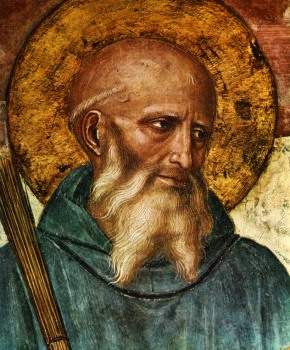
Green martyrdom may, therefore, be a combination of the non-choosing of the red and the choosing of the white. It is seen in icons, by the way, in the Orthodox tradition. Rose of Lima, who is my confirmation saint, is pictured as a green martyr. She was a lay person living in an ascetic manner. But, St. Benedict in Eastern iconography, is also shown in green, for green martyrdom. Sometimes, icons are confusing, as the writer may show both green and red, but this could mean the death of a martyr who was also an ascetic. Such are some icons of St. Andrew.
St. Cyril, of the great patrons of Europe, along with St. Benedict, Cyril and Methodius, is usually shown in green, the symbol of asceticism. His brother, Methodius, the monk, is also frequently painted in green.
 And, and important note. Only those who suffer and take on suffering for Christ's sake and for the sake of the Church are martyrs. Not everyone who suffers is a martyr.
A good source, believe it or not, for a list of the symbols of the saints is found here
http://en.wikipedia.org/wiki/Saint_symbolism
We all know that red martyrdom is that of shedding one's blood for the Faith.
But, there is a confusion about what is called "white" and "green" martyrdom.
I use an Orthodox site for this comment.
....the green martyrdom of the monastic and ascetical life deals with such attachments at their core, in the spiritual heart. Affirming nature, while grieving its fall in the universal sense as well as in the personal, the ascetical Christian weeps for his or her sins, gathering the senses into the spiritual heart through prayer, so as to be freed from carnality. The world is holy; it is not God. For the Christian ascetic, the redemption of the world and society can never be achieved through a social movement, much less through individual activism. This is the foundation of western liberation theology: that God's Kingdom comes through outward struggle and activism. Yet the Christian ascetic - the true green martyr - knows that the Lord said, "The Kingdom of God is within you," (Luke 17:21), and thus fights on the battlefield of the spiritual heart, since it is only on this battlefield that victory can be won in the only war that counts: the unseen, spiritual warfare.
http://www.orthodoxcanada.com/journal/2006-02-07.html
Some people call this white martyrdom. But, I think there is a bit of a difference. Some say that monastics, hermits and other people who leave society, such as the Desert Fathers, are white martyrs.
To me, the green martyr is a person in the world who suffers and lives a monastic type of life in the city or in the town. In other words, a lay person who does stay in society but suffers and lives in an ascetic manner may be experiencing green martyrdom. Asceticism is absolutely part of green martyrdom. One may choose this freely just as a martyr chooses instead of giving up on the Church or Christ.
Now the question is this. Does one choose martyrdom? No, not really, which is why there is in my mind a difference in white and green martyrdom.
Obviously, one who is a red martyr does not go looking for martyrdom. It is oppressed upon them from the persecutors. The white martyr, who chooses to go into a monastery and takes vows of poverty, chastity, obedience, and in the case of the Benedictines, stability, does choose, but in answer to a call from God.
The green martyr stays in the world, suffers either because God has given that suffering, or/and because the person chooses suffering and asceticism.
For example, a person I know has given up almost all his personal possessions, eats simply, has given up alcohol and prays several hours a day. He is an ascetic in the city. Few know his lifestyle.
Now, God has called him to do this, but he has also had suffering thrust upon him in terms of physical illness and huge family problems. Still, he knows that he is to have a cell in the world.
Green martyrdom may, therefore, be a combination of the non-choosing of the red and the choosing of the white. It is seen in icons, by the way, in the Orthodox tradition. Rose of Lima, who is my confirmation saint, is pictured as a green martyr. She was a lay person living in an ascetic manner. But, St. Benedict in Eastern iconography, is also shown in green, for green martyrdom. Sometimes, icons are confusing, as the writer may show both green and red, but this could mean the death of a martyr who was also an ascetic. Such are some icons of St. Andrew.
St. Cyril, of the great patrons of Europe, along with St. Benedict, Cyril and Methodius, is usually shown in green, the symbol of asceticism. His brother, Methodius, the monk, is also frequently painted in green.
A good source, believe it or not, for a list of the symbols of the saints is found here
http://en.wikipedia.org/wiki/Saint_symbolism
Pray for these sisters, please
http://www.op.org/en/content/dominican-sisters-iraq-stay-civilians-flee-mosul
Many Are Called, But Few Are Chosen-Perfection Series III: Part Eight
Christ reminds us of the hard way, the narrow way to heaven. The choosing to cooperate with grace is totally in our decisions. God is not to be blamed for any lost soul. Free will is a great gift. Who wants someone to love us under pressure, or duress? No, we want to be loved freely or not at all.
This is the message of God to His People. St. Bernard reminds us that we proceed to holiness, to perfection by stages, by steps. Only very few saints, mostly young saints, seem to have reached heights early in life and at a great pace.
For the rest of us, the steps are many. Someone discussed briefly with me the idea of confidence yesterday. I had not, at that point, realized the importance of St. Bernard's comment on confidence. When we have accepted the second grace of purification, we experience slowly the growth of the virtues. We begin to encounter God. This encounter gives us more confidence. Here is Bernard in his own words: " Growth in grace brings expansion of confidence. You will love with greater ardor, and knock on the door with greater assurance in order to gain what you perceive to be still wanting in you. 'The one who knocks will always have the door opened to him.' It is my belief that to a person do disposed, God will not refuse that most intimate kiss of all, a mystery of supreme generosity and ineffable sweetness." Sermon Three on the Song of Songs.
I am more and more aware of the vast majority of people who spend their days without prayers, without ever considering God. It is a fearful thing to refuse the call of God, who calls us, woos us, over and over and over.
The editor of the book I am using noted in one footnote that it seems that St. Bernard had access to not just the Vulgate, but to the Greek Septuagint. How interesting.
This is the message of God to His People. St. Bernard reminds us that we proceed to holiness, to perfection by stages, by steps. Only very few saints, mostly young saints, seem to have reached heights early in life and at a great pace.
For the rest of us, the steps are many. Someone discussed briefly with me the idea of confidence yesterday. I had not, at that point, realized the importance of St. Bernard's comment on confidence. When we have accepted the second grace of purification, we experience slowly the growth of the virtues. We begin to encounter God. This encounter gives us more confidence. Here is Bernard in his own words: " Growth in grace brings expansion of confidence. You will love with greater ardor, and knock on the door with greater assurance in order to gain what you perceive to be still wanting in you. 'The one who knocks will always have the door opened to him.' It is my belief that to a person do disposed, God will not refuse that most intimate kiss of all, a mystery of supreme generosity and ineffable sweetness." Sermon Three on the Song of Songs.
I am more and more aware of the vast majority of people who spend their days without prayers, without ever considering God. It is a fearful thing to refuse the call of God, who calls us, woos us, over and over and over.
The editor of the book I am using noted in one footnote that it seems that St. Bernard had access to not just the Vulgate, but to the Greek Septuagint. How interesting.
Are We Old Testament or New Testament People? Perfection Series III Part Seven

We, the New Testament People have the Incarnate One daily. We have the fullness of Truth, the answer to all the prophecies, the One Who Saves. We too quickly lose heart, lose Faith, lose Hope and then Love, because we forget Who Christ really is. We complain, we fuss, we fall into anxiety. Why?
The Dark Night is the time of Faith, when we cannot see where God is leading us and when He removes His immediate Presence because we are in sin. He waits, and gives us Hope when we turn to Him in that Faith.

Love is inspired by the grace of the Illuminative State. But, St. Bernard scolds us for not turning to Christ, for whom all those righteous people waited and held Faith for so long.
Another point the saint makes in this sermon is the fact that the angels came to the shepherds because they were "men of good will". The Good News comes to those who really want peace.
He quotes the Scriptures: this is from Luke 2.
8 And there were in the same country shepherds watching, and keeping the night watches over their flock.
9 And
behold an angel of the Lord stood by them, and the brightness of God
shone round about them; and they feared with a great fear.
10 And the angel said to them: Fear not; for, behold, I bring you good tidings of great joy, that shall be to all the people:
11 For, this day, is born to you a Saviour, who is Christ the Lord, in the city of David.
12 And this shall be a sign unto you. You shall find the infant wrapped in swaddling clothes, and laid in a manger.
13 And suddenly there was with the angel a multitude of the heavenly army, praising God, and saying:
14 Glory to God in the highest; and on earth peace to men of good will.
15 And
it came to pass, after the angels departed from them into heaven, the
shepherds said one to another: Let us go over to Bethlehem, and let us
see this word that is come to pass, which the Lord hath shewed to us.
16 And they came with haste; and they found Mary and Joseph, and the infant lying in the manger.
17 And seeing, they understood of the word that had been spoken to them concerning this child.
18 And all that heard, wondered; and at those things that were told them by the shepherds.
Notice that the angels do not say peace to all men. Bernard notes that they speak to those who were not evil, like Herod, who did not have "good will" towards men.
This is one of the mysteries both of Divine Providence and predestination, as I referred to in early posts last month. God knows to whom He can share His Good News, Himself.
He comes to the humble, which is why the Illuminative State follows the Dark Night. Christ came at night. He brought His Light into the Darkness. And the first to see Christ in the manger were those humble ones.
to be continued....
Saints of The Knights of Malta Part Three
Blessed Gerard had an entire website to himself. The pictures and photographs are worth seeing.
You may read his story here.
 Blessed Gerard has been noted on this blog before today.
Subscribe to:
Posts (Atom)