Tuesday, 24 September 2013
Quotation Summing Up The Perfection Series

"We shall never learn to know ourselves except by endeavoring to know God; for, beholding His greatness, we realize our own littleness; His purity shows us our foulness; and by meditating upon His humility we find how very far we are from being humble." Teresa of Avila


Read and catch up
http://www.theguardian.com/commentisfree/series/glenn-greenwald-security-liberty
http://rt.com/news/brazil-roussef-nsa-usa-278/
Snippet from article............
http://rt.com/news/brazil-roussef-nsa-usa-278/
Snippet from article............
Brazilian President Dilma Rousseff lambasted US spying on her country at Tuesday’s UN summit, calling it a “breach of international law.” She further warned that the NSA surveillance, revealed since June, threatened freedom of speech and democracy.
“Meddling in such a manner in the lives and affairs of other countries is a breach of international law and as such it is an affront to the principles that should otherwise govern relations among countries, especially among friendly nations,” Rousseff declared.
“Without the right to privacy, there is no real freedom of speech or freedom of opinion,” Rousseff told the gathering of world leaders. “And therefore, there is no actual democracy,” she added, criticizing the fact that Brazil had been targeted by the US.
“A country's sovereignty can never affirm itself to the detriment of another country's sovereignty,” she added.
“A country's sovereignty can never affirm itself to the detriment of another country's sovereignty,” she added.
From France 24--Prayers Needed
Nuns, orphans trapped in Syria's Maalula: church
AFP - Nearly 40 nuns and orphans are trapped inside a convent in the Syrian Christian town of Maalula, where regime troops are battling rebel forces, the Greek Orthodox Patriarchate said Tuesday.
The famed town, where residents still speak Aramaic, the language Jesus Christ is thought to have spoken, has been the scene of clashes since earlier this month.
"The Mar Takla convent is living through painful days because it is in the middle of the zone where fire is being exchanged, which makes getting supplies difficult and dangerous," the Damascus-based Patriarchate said in a statement
More here
http://www.france24.com/en/20130924-nuns-orphans-trapped-syrias-maalula-church
.
Feast of Our Lady of Walsingham

O Mary, recall the solemn moment when Jesus, your divine son, dying on the cross, confided us to your maternal care. You are our mother, we desire ever to remain your devout children. let us therefore feel the effects of your powerful intercession with Jesus Christ. make your name again glorious in the shrine once renowned throughout England by your visits, favours, and many miracles.
Pray, O holy mother of God, for the conversion of England, restoration of the sick, consolation for the afflicted, repentance of sinners, peace to the departed.
O blessed Mary, mother of God, our Lady of Walsingham, intercede for us.
Amen.
I wanted to be in Walsingham today, but had to change my plans. This is the Feast of Our Lady of Walsingham. If you want to learn more about Our Lady and the history, read my play here.
http://supertradmum-etheldredasplace.blogspot.ie/2013/06/walsingham-drama-in-three-acts.html
and more information...
http://supertradmum-etheldredasplace.blogspot.ie/2013/04/the-martyrs-of-walsingham.html
Continue to pray for a House of Adoration there. The house is still for sale.
http://www.primelocation.com/for-sale/details/17463066?search_identifier=2d43b978d76d437ed9001f65faefe874
http://supertradmum-etheldredasplace.blogspot.ie/2013/08/ah-someone-was-thinking-of-me-in.html
http://supertradmum-etheldredasplace.blogspot.ie/2013/05/cast-your-bread-upon-waters-for-after.html
Interesting....Russia is interesting
http://www.reuters.com/article/2013/09/20/us-russia-koran-idUSBRE98J0YW20130920
Try and find a Bible in Saudi Arabia, where Mass is forbidden.
Try and find a Bible in Saudi Arabia, where Mass is forbidden.
St. Thomas Aquinas on Hell (in part)

99. God's mercy and justice towards the damned
Article 4. Whether the punishment of Christians is brought to an end by the mercy of God?
Objection 1. It would seem that at least the punishment of Christians is brought to an end by the mercy of God. "For he that believeth and is baptized shall be saved" (Mark 16:16). Now this applies to every Christian. Therefore all Christians will at length be saved.Objection 2. Further, it is written (John 6:55): "He that eateth My body and drinketh My blood hath eternal life." Now this is the meat and drink whereof Christians partake in common. Therefore all Christians will be saved at length.
Objection 3. Further, "If any man's work burn, he shall suffer loss: but he himself shall be saved, yet so as by fire" (1 Corinthians 3:15), where it is a question of those who have the foundation of the Christian faith. Therefore all such persons will be saved in the end.
On the contrary, It is written (1 Corinthians 6:9): "The unjust shall not possess the kingdom of God." Now some Christians are unjust. Therefore Christians will not all come to the kingdom of God, and consequently they will be punished for ever.
Further, it is written (2 Peter 2:21): "It had been better for them not to have known the way of justice, than after they have known it, to turn back from that holy commandment which was delivered to them." Now those who know not the way of truth will be punished for ever. Therefore Christians who have turned back after knowing it will also be punished for ever.
I answer that, According to Augustine (De Civ. Dei xxi, 20,21), there have been some who predicted a delivery from eternal punishment not for all men, but only for Christians, although they stated the matter in different ways. For some said that whoever received the sacraments of faith would be immune from eternal punishment. But this is contrary to the truth, since some receive the sacraments of faith, and yet have not faith, without which "it is impossible to please God" (Hebrews 11:6). Wherefore others said that those alone will be exempt from eternal punishment who have received the sacraments of faith, and professed the Catholic faith. But against this it would seem to be that at one time some people profess the Catholic faith, and afterwards abandon it, and these are deserving not of a lesser but of a greater punishment, since according to 2 Peter 2:21, "it had been better for them not to have known the way of justice than, after they have known it, to turn back." Moreover it is clear that heresiarchs who renounce the Catholic faith and invent new heresies sin more grievously than those who have conformed to some heresy from the first. And therefore some have maintained that those alone are exempt from eternal punishment, to the end in the Catholic faith, however guilty they may have been of other crimes. But this is clearly contrary to Holy Writ, for it is written (James 2:20): "Faith without works is dead," and (Matthew 7:21) "Not every one that saith to Me, Lord, Lord, shall enter into the kingdom of heaven: but he that doth the will of My Father Who is in heaven": and in many other passages Holy Scripture threatens sinners with eternal punishment. Consequently those who persevere in the faith unto the end will not all be exempt from eternal punishment, unless in the end they prove to be free from other crimes.
Reply to Objection 1. Our Lord speaks there of formed faith [Cf. II-II, 4, 3] "that worketh by love [Vulgate: 'charity'; Galatians 5:6]": wherein whosoever dieth shall be saved. But to this faith not only is the error of unbelief opposed, but also any mortal sinwhatsoever.
Reply to Objection 2. The saying of our Lord refers not to those who partake only sacramentally, and who sometimes by receiving unworthily "eat and drink judgment" to themselves (1 Corinthians 11:29), but to those who eat spiritually and are incorporated with Him by charity, which incorporation is the effect of the sacramental eating, in those who approach worthily [Cf.III, 80, 1,2,3]. Wherefore, so far as the power of the sacrament is concerned, it brings us to eternal life, although sin may deprive us of that fruit, even after we have received worthily.
Reply to Objection 3. In this passage of the Apostle the foundation denotes formed faith, upon which whosoever shall build venial sins [Cf. I-II, 89, 2] "shall suffer loss," because he will be punished for them by God; yet "he himself shall be saved" in the end "by fire," either of temporal tribulation, or of the punishment of purgatory which will be after death.
Article 5. Whether all those who perform works of mercy will be punished eternally?
Objection 1. It would seem that all who perform works of mercy will not be punished eternally, but only those who neglect those works. For it is written (James 2:13): "Judgment without mercy to him that hath not done mercy"; and (Matthew 5:7): "Blessed are the merciful for they shall obtain mercy."Objection 2. Further, (Matthew 25:35-46) we find a description of our Lord's discussion with the damned and the elect. But this discussion is only about works of mercy. Therefore eternal punishment will be awarded only to such as have omitted to practiceworks of mercy: and consequently the same conclusion follows as before.
Objection 3. Further, it is written (Matthew 6:12): "Forgive us our debts, as we also forgive our debtors," and further on (Matthew 6:14): "For if you will forgive men their offenses, your heavenly Father will forgive you also your offenses." Therefore it would seem that the merciful, who forgive others their offenses, will themselves obtain the forgiveness of their sins, and consequently will not be punished eternally.
Objection 4. Further, a gloss of Ambrose on 1 Timothy 4:8, "Godliness is profitable to all things," says: "The sum total of aChristian's rule of life consists in mercy and godliness. Let a man follow this, and though he should suffer from the inconstancy of the flesh, without doubt he will be scourged, but he will not perish: whereas he who can boast of no other exercise but that of the body will suffer everlasting punishment." Therefore those who persevere in works of mercy, though they be shackled with fleshly sins, will not be punished eternally: and thus the same conclusion follows as before.
On the contrary, It is written (1 Corinthians 6:9-10): "Neither fornicators . . . nor adulterers," etc. "shall possess the kingdom of God." Yet many are such who practice works of mercy. Therefore the merciful will not all come to the eternal kingdom: and consequently some of them will be punished eternally.
Further, it is written (James 2:10): "Whosoever shall keep the whole law, but offend in one point, is become guilty of all." Therefore whoever keeps the law as regards the works of mercy and omits other works, is guilty of transgressing the law, and consequently will be punished eternally.
I answer that, As Augustine says in the book quoted above (De Civ. Dei xxi, 22), some have maintained that not all who have professed the Catholic faith will be freed from eternal punishment, but only those who persevere in works of mercy, although they be guilty of other crimes. But this cannot stand, because without charity nothing can be acceptable to God, nor does anything profit unto eternal life in the absence of charity. Now it happens that certain persons persevere in works of mercy without having charity. Wherefore nothing profits them to the meriting of eternal life, or to exemption from eternal punishment, as may be gathered from 1 Corinthians 13:3. Most evident is this in the case of those who lay hands on other people's property, for after seizing on many things, they nevertheless spend something in works of mercy. We must therefore conclude that all whosoever die in mortal sin, neither faith nor works of mercy will free them from eternal punishment, not even after any length of time whatever.
Reply to Objection 1. Those will obtain mercy who show mercy in an ordinate manner. But those who while merciful to others are neglectful of themselves do not show mercy ordinately, rather do they strike at themselves by their evil actions. Wherefore such persons will not obtain the mercy that sets free altogether, even if they obtain that mercy which rebates somewhat their due punishment.
Reply to Objection 2. The reason why the discussion refers only to the works of mercy is not because eternal punishment will be inflicted on none but those who omit those works, but because eternal punishment will be remitted to those who after sinning have obtained forgiveness by their works of mercy, making unto themselves "friends of the mammon of iniquity" (Luke 16:9).
Reply to Objection 3. Our Lord said this to those who ask that their debt be forgiven, but not to those who persist in sin. Wherefore the repentant alone will obtain by their works of mercy the forgiveness that sets them free altogether.
Reply to Objection 4. The gloss of Ambrose speaks of the inconstancy that consists in venial sin, from which a man will be freed through the works of mercy after the punishment of purgatory, which he calls a scourging. Or, if he speaks of the inconstancy of mortal sin, the sense is that those who while yet in this life fall into sins of the flesh through frailty are disposed to repentance by works of mercy. Wherefore such a one will not perish, that is to say, he will be disposed by those works not to perish, through grace bestowed on him by our Lord, Who is blessed for evermore. Amen.
http://www.newadvent.org/summa/5099.htm
Partial Answer to A Priest on Noise in The Mass
 |
| Mary and Martha-thanks so wikimedia |
http://blog.adw.org/2013/09/pastoral-perspectives-on-silence-in-church/
A smart friend of mine sent me this article. Take time to read it. Not only is it shocking, but it shows the depth of the falling away of the sense of Fear of the Lord and persistence of people centered worship. Humanism is alive and well in the Church.
I am only going to correct a few of the errors I see in this priest's thinking. I have not read the comments, either, but only the article.
First, large Churches existed from day one and from day one, contrary to popular belief, the Masses were mostly solemn high Masses. Small, intimate Masses only happened after the Church was heavily persecuted, and the simplicity of the Liturgy corresponded either to the need for hiding, or for the need of the displacement of the Mass from the urban areas to the country. Catholicism, as we see in Revelation, was urban from the start and the Mass would have been ornate. Contrary to Protestant belief, the Mass was more complicated and an expression of "high liturgy" for many reasons, including the main one, which was that the Bishop presided.
Now, the idea of silence was already common in both pagan and Jewish liturgical celebrations. We see St. Paul reminding the women to be silent in Church, not because they wanted to read, but because they were gossiping about who was getting married, who was pregnant again and who got a new donkey.
The ideal of silence in the Liturgy has, for centuries, been connected to Fear of the Lord, and the understanding of Transcendence.
This sense of Transcendence was part of the congregations sense of the sacred. God was God and duty plus appropriate worship was due to Him. The idea of respect would have been prevalent in the early Christian times, as the people were used to hierarchies and the appropriateness of behavior.
Which leads me to my second point. The moderns have no sense of appropriateness in dress, speech, eating, drinking, praying and so on. They have no sense of the sacred. How this happened is a combination of many things, including the changes in the Liturgy, but I blame the entire cultural shift in the past thirty years to the ideal and, indeed, idolization, of CASUAL.
Being casual is equal to sincerity, and sincerity is not a virtue. As I noted a few posts ago, one can make a heresy out of sincerity. Being casual indicates several psychological problems, such as a lack of boundaries and a certain type of narcissism which allows a person to think that they never need to conform to outside, cultural values.
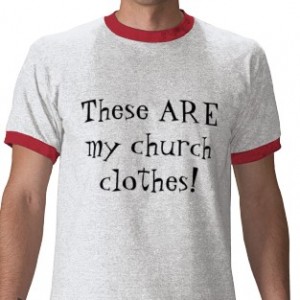
This priest is also confused on then nature of our relationship with God. We are creatures, sons and daughters of the Most High, owing God worship which is due to Him because He is God and because we are not gods.
That people go to Church on Sunday for community is the another point I want to cover. Wrong, wrong, wrong,
as community should be happening daily, during the week, with people building community. Some of you may remember that after many frustrating Sundays in parishes where the noise level was worse than in Marks and Spencers, it dawned on me that the reason why people talked so much before and after Mass, was that they did not have real relationships during the week. If there was real community, as in the old TLM days, people would not need to talk on Sunday, as they would be fraternizing, helping each other out and so on during the week.
One last point-when do people listen to God? If we do not have silence in our lives, we cannot hear God. and there are times when the entire community should be listening to God.
I can write more and maybe I shall, but not tonight. God bless this priest and may he learn to love God more than people. We love people because we love God, not for their own sakes. This idea is missing in this article.
A Reminder of What We Are Up Against in The Media

Reminder of Rules for Radicals by Saul Alinsky
- “Power is not only what you have, but what the enemy thinks you have."
- “Never go outside the expertise of your people.”
- “Whenever possible, go outside the expertise of the enemy.”
- “Make the enemy live up to its own book of rules.”
- “Ridicule is man’s most potent weapon.”
- “A good tactic is one your people enjoy.”
- “A tactic that drags on too long becomes a drag.”
- “Keep the pressure on. Never let up.”
- “The threat is usually more terrifying than the thing itself.”
- "The major premise for tactics is the development of operations that will maintain a constant pressure upon the opposition."
- “If you push a negative hard enough, it will push through and become a positive.”
- “The price of a successful attack is a constructive alternative.”
- “Pick the target, freeze it, personalize it, and polarize it.”
Monday, 23 September 2013
Archbishop of Dublin, as well as other things
http://gloria.tv/?media=502976
Archbishop Diarmuid Martin and another view on the Pope. Interesting.

Archbishop Diarmuid Martin and another view on the Pope. Interesting.
Sent from a friend--EU vs. People of Ireland
If you do not believe in BB, then read this. I sincerely hope Great Britain votes to get out of the EU soon. This entire movement of abolishing the Seanad is bizarre.
The Editor,Southern Star,Illen St.Skibbereen,Co. Cork.23rd September 2013Dear Editor,The proposed abolition of the Seanad under the political guise of "saving money" is a deliberate attempt to blind voters to the legal changes that will result if the referendum is passed. The Referendum Commission, on the other hand, provides an independent guide which is easy to interpret.“If the referendum is passed: This possibility of the reference of Bills to the people by the President will be removed from the Constitution”. (referendum2013.ie/Guide_Booklet_2013-eng.pdf) “If this referendum is passed:Only the approval of the Dáil will be required for the adoption of suchEU laws and decisions. (referendum2013.ie/Guide_Booklet_2013-eng.pdf)” Former Attorney General, Michael McDowell, a highly respected Barrister, lays it on the line for us: if this referendum is passed the politicians in Dail Eireann need never again hold a referendum on EU laws and legislation.He warns that we are "surrendering our national veto". We are giving the Dail "power to adopt far reaching measures which can over-ride our Constitution under the guise of enhanced EU co-operation".Regarding the setting up of a new Court of Appeal, it is clear to see where that particular referendum originated. EU Commissioner, Viviane Reding is forthright regarding Judicial reform across the Eurozone, "It is exactly in this context that since 2011 already experts from the European Commission’s Justice department have been going to the programme countries (Ireland, Latvia, Portugal and Greece) to see how the justice systems work there and to give tailored recommendations to these countries on where further progress in the area of judicial reform might be needed" She also tells us in the same report "whenever a national court upholds EU law, it acts as a ‘European Union court’" (Effective Justice Systems and Economic Growth 27/03/2013 Viviane Reding)No wonder debate is being stifled. Both referenda are about implementing EU laws and recommendations and designed to move Ireland fully into line with the EU. The Irish Constitution is in their way. They need us, the people, to clear the obstruction by signing away our Constitutional rights.We are reminded in the Referendum Commission booklet that "The Constitution belongs to you and you can decide whether or not to change it". The electorate cannot claim ignorance of these facts, we have been informed. We must look beyond the political spin and, with God's help, a very strong No vote will succeed in blocking this deceitful power grab.
Yours sincerely,Theresa Heaney
A note to a famous priest--some people choose hell
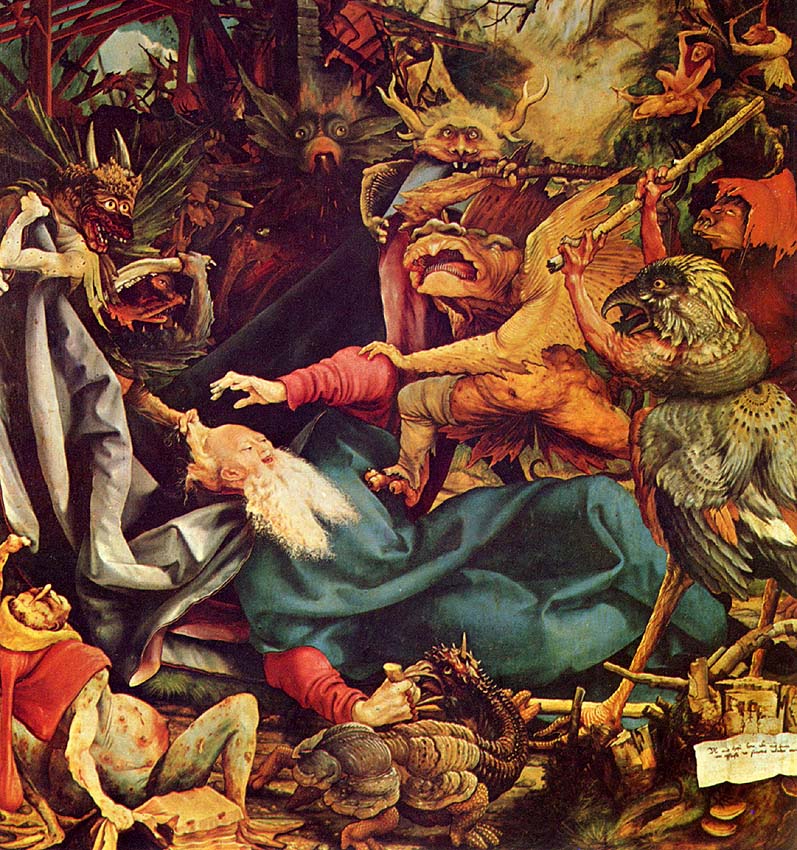 |
| Bosch detail of hell |
PLAYBOY: Do you think much about death?
ALINSKY: No, not anymore. There was a period when I did, but then suddenly it came to me, not as an intellectual abstraction. but as a deep gut revelation, that someday I was going to die. That might sound silly, because it's so obvious, but there are very few people under 40 who realize that there is really a final cutoff point to their existence, that no matter what they do their light is someday going to be snuffed out. But once you accept your own mortality on the deepest level, your life can take on a whole new meaning. If you've learned anything about life, you won't care any more about how much money you've got or what people think of you, or whether you're successful or unsuccessful, important or insignificant. You just care about living every day to the full, drinking in every new experience and sensation as eagerly as a child, and with the same sense of wonder.
PLAYBOY: Having accepted your own mortality, do you believe in any kind of afterlife?
ALINSKY: Sometimes it seems to me that the question people should ask is not "Is there life after death?" but "Is there life after birth?" I don't know whether there's anything after this or not. I haven't seen the evidence one way or the other and I don't think anybody else has either. But I do know that man's obsession with the question comes out of his stubborn refusal to face up to his own mortality. Let's say that if there is an afterlife, and I have anything to say about it, I will unreservedly choose to go to hell.
PLAYBOY: Why?
ALINSKY: Hell would be heaven for me. All my life I've been with the have-nots. Over here, if you're a have-not, you're short of dough. If you're a have-not in hell, you're short of virtue. Once I get into hell, I'll start organizing the have-nots over there.
PLAYBOY: Why them?
ALINSKY: They're my kind of people.
Interview with Saul Alinsky
----------------------
Thought from Today's Saint

“Keep close to the Catholic Church at all times, for the Church
alone can give you true peace, since she alone possesses Jesus, the
true Prince of Peace, in the Blessed Sacrament.”
Happy Feast Day of St. Pio of Pietrelcina
01 Sep 2013
Prayer must be persistent. Persistence denotes faith. All that you ask in prayer with faith, you will receive. Padre Pio. Email ThisBlogThis!Share to TwitterShare to Facebook. Labels: prayer ...
01 Sep 2013
Anonymous said... Supertradmum, Please forgive me if you received this before, I find this process a bit confusing. A fellow Franciscan and friend recently gave me a relic of Padre Pio. I have done some reading on him and ...
01 Sep 2013
Padre Pio said something which is applicable to the Dark Night. He said this: "Temptation is like the soap. It seems to soil but in reality cleans." When one first hears this, it does not make sense. But the great temptations of the ...
01 Sep 2013
More Padre Pio Quotations · Padre Pio Quotations · Jumping into the fire · Read, Think, Act · Listening to This, Right Now · Some of us just can't · Immediate Prayers Needed · Dark Night Part 47-Temptations · Dark Night Part ...
Vatican Insider on The Women's Question And Our Role Models
 |
| St. Rufina |
In the years of militant atheism in the USSR State communities of the few Orthodox parishes consisted mainly of lay women. As they say, the faith in the twentieth century in Russia was saved from grandmas church that, despite the atheistic propaganda, continued to attend church services, sure to put icons and Bibles in chests, baptized secretly grandchildren ... Patriarch Kirill never misses an opportunity to emphasize the heroism of these women in their faithfulness to God and to the Church.
This snippet from an article from La Stampa should catch the attention of our Catholic women.
http://vaticaninsider.lastampa.it/inchieste-ed-interviste/dettaglio-articolo/articolo/chiesa-church-iglesia-orthodoxia-ortodossia-orthodox-28045/
While many people are pushing for unorthodox positions of women in the Church such as women's ordination and women deacons, a question settled in Church teaching already, the Orthodox Church has a different emphasis according to Vatican Insider.
I want to take the issue further by stating that Catholic women who are orthodox with a small o and who are wondering what their role is to consider the role of women in the early Church.
 |
| St. Macrina |
We have hundreds of female saints from the first centuries of Church history, and these women are the ones we should be looking to for guidance, both in understanding their history and in prayer.
Let me give just a few names to share the great heritage, that "cloud of witnesses" of women, part of the Church Triumphant.
I suggest meditating on the lives of these early sisters in the Lord. We need their strength and courage in the days to come. Also, home schooling mums may want to do a series on women saints with their girls.
(Thanks to Wiki for the two paintings.)
The fifth and sixth medical ethics isms-Deontology and Rights Theory

Deontology departs from pragmatic philosophies of ethics. The extreme of Deontology would be those who follow Ayn Rand's Objectivism. Deontology is all about motives. One can make a decision out of duty, but the right or wrongness of that decision is based on one's motives.
I have been talking about this with two people this weekend. Motives are one thing and actions another. If you have read Kant, you will recognize this ism. The goodness of an action is based on good will and the badness of an action is based on bad will. Kant, however, believed in moral absolutes, but today's Deontologists do not.
Of course, a pro-lifer immediately sees the huge flaw in this approach to ethics. If a person has good reasons, and good will, the action is good.
Nope.
Rights Theory involves these sources:
•UN Declaration on Human Rights (1948)
•UN Declaration of the Rights of the
Child (1959)
•Charter of Fundamental Rights of
the European Union (2001)
•UNESCO Declaration on Bioethics and
Human Rights (1995-2007)
Does a person have a right to an abortion? Does a person have a right to die? And so on....
Enough, this is like reading Screwtape Letters four times in a row...
The third and fourth medical isms-Consequentialism and Utilitarianism

Consequentialism is the philosophical system which can be divided into these types: Mohist consequentialism, also known as state consequentialism,[4] is an ethical theory which evaluates the moral worth of an action based on how much it contributes to the welfare of a state. (wiki). This type is directly related to the Utilitarianism of Jeremy Bentham, who is mentioned in the curriculum I am looking at today.
or
...rule consequentialism holds that moral behavior involves following certain rules. However, rule consequentialism chooses rules based on the consequences that the selection of those rules have. Rule consequentialism exists in the forms of rule utilitarianism and rule egoism. (wiki) And, egoism here means that... Ethical egoism can be understood as a consequentialist theory according to which the consequences for the individual agent are taken to matter more than any other result. (wiki)
Obviously, both of these approached of consequentialism, and there are more, move far away from any Faith-based philosophy of morality.
A doctor who has a Faith-based morality in some countries and states would not be able to point out any other moral system or guide the patient to a religious based one if that is not the patient's own framework.
Pragmatism is the goal of consequentialism. The goal is merely to help the patient do something-decide on an action.
What is ignored here, is St. Thomas Aquinas' idea of double effect from the Catholic point of view. Sadly, the med students would not be taught that important nuance that consequences. In case you forgot what that is, here is a summary, which really needs to be flushed out.
Thomas Aquinas is credited with introducing the principle of double effect in his discussion of the permissibility of self-defense in the Summa Theologica (II-II, Qu. 64, Art.7). Killing one's assailant is justified, he argues, provided one does not intend to kill him. Aquinas observes that “Nothing hinders one act from having two effects, only one of which is intended, while the other is beside the intention. … Accordingly, the act of self-defense may have two effects: one, the saving of one's life; the other, the slaying of the aggressor.” As Aquinas's discussion continues, a justification is provided that rests on characterizing the defensive action as a means to a goal that is justified: “Therefore, this act, since one's intention is to save one's own life, is not unlawful, seeing that it is natural to everything to keep itself in being as far as possible.” However, Aquinas observes, the permissibility of self-defense is not unconditional: “And yet, though proceeding from a good intention, an act may be rendered unlawful if it be out of proportion to the end. Wherefore, if a man in self-defense uses more than necessary violence, it will be unlawful, whereas, if he repel force with moderation, his defense will be lawful.”
Aquinas does not actually say that intending to kill the assailant as a means to self-defense would be prohibited. The passage can be interpreted as formulating a prohibition on apportioning one's efforts with killing as the only goal guiding one's actions, which would lead one to act with greater viciousness than the goal of self-defense would allow. In contrast, Augustine had earlier maintained that killing in self-defense was not permissible, maintaining that “private self-defense can only proceed from some degree of inordinate self-love.”
Later versions of the double effect principle all emphasize the distinction between causing a morally grave harm as a side effect of pursuing a good end and causing a harm as a means of pursuing a good end. We can summarize this by noting that for certain categories of morally grave actions, for example, causing the death of a human being, the principle of double effect combines a special permission for incidentally causing death for the sake of a good end (when it occurs as a side effect of one's pursuit of that end) with a general prohibition on instrumentally causing death for the sake of a good end (when it occurs as part of one's means to pursue that end). The prohibition is absolute in traditional Catholic applications of the principle. Two traditional formulations appear below.
The New Catholic Encyclopedia provides four conditions for the application of the principle of double effect:
- The act itself must be morally good or at least indifferent.
- The agent may not positively will the bad effect but may permit it. If he could attain the good effect without the bad effect he should do so. The bad effect is sometimes said to be indirectly voluntary.
- The good effect must flow from the action at least as immediately (in the order of causality, though not necessarily in the order of time) as the bad effect. In other words the good effect must be produced directly by the action, not by the bad effect. Otherwise the agent would be using a bad means to a good end, which is never allowed.
- The good effect must be sufficiently desirable to compensate for the allowing of the bad effect“ (p. 1021).
The conditions provided by Joseph Mangan include the explicit requirement that the bad effect not be intended
I am amazed that there are any Catholic doctors in some nations and wonder how long it will be before America has none.
to be continued....
The second medical ism-Communitarianism
The neo-Thomist philosopher Jacques Maritain wrote against the communal ideals of the Utopianism of both communism and socialism. Sadly, he was not heeded.
In the medical profession, the ism of Communitarianism is taught. There two types of Communitarianism but both views belittle the role and identity of the individual in society.
The individual or person no longer is seen as having dignity outside the community.
In an utopian world view, the individual becomes merely a cog in the wheel for the state to use for production. The two main types of this ism are briefly described here
In the medical profession, the ism of Communitarianism is taught. There two types of Communitarianism but both views belittle the role and identity of the individual in society.
The individual or person no longer is seen as having dignity outside the community.
In an utopian world view, the individual becomes merely a cog in the wheel for the state to use for production. The two main types of this ism are briefly described here
- Philosophical communitarianism considers classical liberalism to be ontologically and epistemologically incoherent, and opposes it on those grounds. Unlike classical liberalism, which construes communities as originating from the voluntary acts of pre-community individuals, it emphasizes the role of the community in defining and shaping individuals. Communitarians believe that the value of community is not sufficiently recognized in liberal theories of justice.
- Ideological communitarianism is characterized as a radical centrist ideology that is sometimes marked by leftism on economic issues and moralism or conservatism on social issues. This usage was coined recently. When the term is capitalized, it usually refers to the Responsive Communitarian movement of Amitai Etzioni and other philosophers.
- http://en.wikipedia.org/wiki/Communitarianism
Obviously, the two merge in the undermining of the dignity of the person. And, in medical training, the question would impinge, for example on the use of fetal material for research or the taking of organs from a person not really dead by Catholic standards.
This type of ism makes the good of the whole more important than the good of the one. (Why do I sound like a Star Trek movie?).
The society, the state becomes more important than the individual.
Medical decisions are thus made on that premise. Do you want to be sacrificed for the good of the State? Enter in abortion and euthanasia.
This ism is being taught across the Western world in medical schools.
Subscribe to:
Posts (Atom)