Recent Posts

Thursday, 10 April 2014

Evil and May Lead to One World Religion

http://www.npr.org/blogs/thetwo-way/2014/04/10/301432378/gospel-of-jesus-wife-papyrus-not-a-forgery-harvard-says

By denying the Gospels, one denies the one, true, apostolic Church.

By deny the Gospels, one denies the Incarnation and the Divinity of Christ.

By pushing this news, a link to Islam and other religions is created. See how a one world religion can easily be established....

Spring is here

Chipper Jones at camp yesterday...

The Forced Acceptance of Sin


Roe v. Wade allowed Americans to accept serious sin. The Lambeth Conference in England allowed Anglicans to contracept.

The courts are ruling for sin over and over and over. Catholic Churches in England may leave the entire civil marriage, that is the signing of the registries, to the State.

Catholic schools and Catholic churches must not accept government money. I have said this for years.

The Catholic Church will be a remnant. Priests will disappear. I have written about this on this blog on the two postings on false marriages.

As one priest said in England at Mass, the passing of the ssm law in Great Britain will change to life of all people, all Catholics.

Are you ready? Are you getting you children ready for the onslaught of evil and the great persecution of the organized Church?

see all my posts on this topic...

The Error of World Peace


This morning I attended a children's Mass with a very large school.  During the recessional, I was startled by the words of the song. The children have been brainwashed to want world peace more than the Kingdom of God.  Think of this. The new world order has become more important than this kingdom of God-this phrase-world peace- is more important than these words of Christ:

I am come to cast fire on the earth; and what will I, but that it be kindled? DR Luke 12:49 

Christ did not come for peace, folks, but for the establishment of the Church.  The peace of God does surpass all understanding, but this means that one must join into the Church Militant. The peace comes with humility and grace, and is not an "outside" peace, but an inside peace.

I believe that this generation of children in Catholic schools, Anglican schools, and other religious schools have been taught to want world peace, and not to work for the Kingdom of God.

The only world peace which will come will come through only two means.

The first is through a false world government which would overcome all nations. 

The second is through the real Kingdom of God, the peace which comes to those who trust in God first, and who carry on the Truth of the Catholic Church.

Think on this, folks. Your children and your grandchildren have been prepared to turn against the one, holy, Catholic and apostolic Church. This will happen if you do not teach them otherwise. 


April is a .....

depending on your point of view, cruel or kind month. I cannot believe that this month charts the tenth day today. Where does time go?

I am traveling today, and, therefore, slowing down the posts. As one can see, the number of posts for this month is staggering, so scroll back and enjoy.

God is good, always.

Learning from The Past and Two Reposts Connected to Love


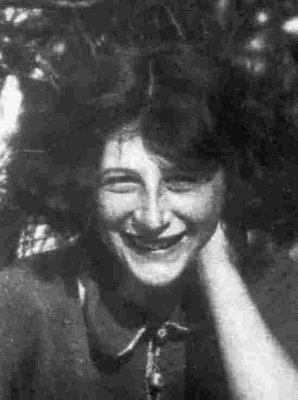
As a young person, I discovered Simone Weil.

What a blessing. She taught me to wait.

And, it is obvious, that although she refused to enter the Catholic Church and instead, remained in the Jewish fold, she knew God as few do.

Here is one quotation from her and a link from the past.

“Love of God is pure when joy and suffering inspire an equal degree of gratitude.” 
 Gravity and Grace


Only one who loves can write this. Only one who has met God in suffering and come to see the love in purgation can say this. Gratitude comes from a humble heart. 

I love this pure and profoundly simple philosopher. May God bless her and may His Face shine upon her.

Monday, 24 June 2013

Waiting for God and Waiting on God vs. the Self-Hug of Indulgence: Weil and Jones


As a very young person, I discovered Simone Weil. Remember, last year, I had a photo of her grave on this blog. http://supertradmum-etheldredasplace.blogspot.co.uk/2012/03/thoughts-on-simone-weil.html

I also attended, over thirty years ago, a superb conference on her at Notre Dame. I had already read her books but the conference presenters were top-drawer. Sadly, it was not well attended.


Already, the need to listen to spirituality of love and suffering was becoming too tedious for most young people.

Suffering is part of the journey to God and cannot and should not be avoided. Weil has a few points I would like to highlight today.

The first is that she says that Christianity is the religion of slaves. What she means is that only those who are humbled in this world can appreciate this religion. She couples this with the extreme poverty of St. Francis. Her desire to be a vagabond was born of the ideal of purity, separating herself out from the world, and being totally dependent on God.

A slave is totally dependent on his or her master. Louis de Montfort uses this imagery in his consecration to Mary. We are repealed by the idea of slavery, as we identify ourselves as sons and daughters of God.

However, those of us who have had the good fortune of being in love understand the ideal of waiting on a person's every need or desire. Indeed, in the Scriptures, we have this phrase from Psalm 132:2 DR:

Behold as the eyes of the servants are on the hands of their masters, As the eyes of the handmaid are on the hands of her mistress: so are our eyes unto the Lord our God, until he have mercy on us.


The second idea I want to note is that Weil experienced a personal love relationship with God, which even in the midst of great suffering, sustained her. The mystery of His Presence was given to her, and she notes that His Presence of Love was there even in suffering. I understand this. One can be suffering intensely and know all the time that Christ is with one. This Presence is Love, but He is not the Comforter at this point.

The third point is key. Weil notes that Christ wants us to prefer Truth to Him. What she means it that if we seek Truth, and Christ is Truth, we shall find Him. But, if we stray from Truth, we lose Him.

Those who seek consolations are not seeking Truth. These people kid themselves that they are seeking God, but in reality, they are seeking only themselves, in a self-hug of indulgence.

Another point to highlight for today, and I shall come back to her another day, is that one can meditate and contemplate using the Our Father alone. For years, Weil contemplated the Our Father daily, and from that prayer came great graces for her. We do not have to be complicated in our prayers. Christ Himself gave us the Our Father, and in that prayer is all we need for Love to blossom.

I read Weil over and over as a young woman, and her love for and in Christ is ever new. The greatest sadness to me is that she could not bring herself to be baptized, although Christ met her again and again. She decided for the sake of her Jewish brothers and sisters, to stay outside in the vestibule of the Church.

One more last point is key. Weil states that God uses rejects, castaways, wastes. I can identify with that for many reasons. God shines forth most clearly in those who are low and lowly. But, the world does not see this. Neither do some Catholics, who are so bent on middle-class spirituality, that they miss God, who is waiting for them. They miss Him, as David Jones writes, "For it is easy to miss him, at the turn of a civilisation."

(If and when I eventually get to heaven, after seeing Christ, Mary and Bernard of Clairvaux, I want to see David Jones. I am sad I never met him, but he died in 1974, six years before I came to England.)

Thanks to Wiki for Photo


A, a, a, DOMINE DEUS

I said, Ah! what shall I write?
I enquired up and down.
(He’s tricked me before
with his manifold lurking-places.)
I looked for His symbol at the door.
I have looked for a long while
at the textures and contours.
I have run a hand over the trivial intersections.
I have journeyed among the dead forms
causation projects from pillar to pylon.
I have tired the eyes of the mind
regarding the colours and lights.
I have felt for His wounds
in nozzles and containers.
I have wondered for the automatic devices.
I have tested the inane patterns
without prejudice.
I have been on my guard
not to condemn the unfamiliar.
For it is easy to miss Him
at the turn of a civilisation.
I have watched the wheels go round in case I might see the
living creatures like the appearance of lamps, in case I might see
the Living God projected from the Machine. I have said to the
perfected steel, be my sister and for the glassy towers I thought I
felt some beginnings of His creature, but A,a,a, Domine Deus,
my hands found the glazed work unrefined and the terrible
crystal a stage-paste . . . Eia, Domine Deus.
David Jones, in The Sleeping Lord and Other Fragments (1974)
The 70th anniversary of Simone Weil's death is on August 24th. 

Thursday, 22 March 2012

Thoughts on Simone Weil

Simone Weil is one of my favorite philosophers and being in France reminds me of her great contribution to the mystical theology which joined philosophy, political activism and mystic thought.

She is buried in Ashford, Kent and last year, I visited her grave with a friend of mine. Simone was only 34 for she died and her writing may appeal to young people. I read her over thirty years ago and I had the honor of attending a three day conference at the University of Notre Dame concerning her thought. Simone never became a Catholic, although she loved Christ and His saints, such as St. Francis. She said she wanted to sit on the steps of the great cathedral which was the Church, waiting outside with her people, the Jews. I think she may have had the Baptism of Desire.

What is significant is Simone, who came from a brilliant family, represents the end of a generation of mystical philosophers, so common on the Continent in the 19th and early 20th centuries. As philosophy became more and more modern, post-modern, etc., separation between prayer and philosophy, between religious experience and philosophy and theology and philosophy has been irrevocably broken. Her death and her small grave symbolize to me the end of the great tradition of philosophy being the handmaid of theology.

At the end, she had a disease or condition which made it difficult for her to eat. Her biographer said this of her, that as she identified with the sufferings of the Jews and others in the War,  "As for her death, whatever explanation one may give of it will amount in the end to saying that she died of love."Sir Richard Lodowick Edward Montagu Rees, 2nd Baronet translated many of her works and wrote a biography of her. May her spirit of compassion and real thought be passed down to other youths who may want to restore philosophy to its rightful place in the Church and in the world.


Repost Plus on Patience


Elder Macarius (not Macriius the Great of old)stated that....
No matter how little you love God, He still loves you; loves you so much that He showers all this grief and pain on you, making your punishment in this world so great  that it may perhaps suffice to amend you, and make unnecessary the dread punishments of the next.  These others you may be spared!
Your past and present torments and sufferings are poured down upon you to test your faith and steel it; they also work to curb your lusts and passions.  Humble yourself.  God succors the humble.  


"patience produces roses."


I do not know where Garrigou-Lagrange found this phrase, but this is so true.

One must become very patient and wait for God. One must willingly be objective and see one's sins in the horror which these are. One must fight temptations to impatience.

Above all, at this stage, one must learn how to suffer, perhaps even constantly.

My comments in blue.


THE EFFECTS OF THE PASSIVE PURIFICATION OF THE SENSES
If we bear these trials well, they produce precious effects in us. It is said that "patience produces roses." Among the effects of the passive purification of the senses, must be numbered a profound and experimental knowledge of God and self.


St. John of the Cross points out: "These aridities and the emptiness of the faculties as to their former abounding, and the difficulty which good works present, bring the soul to a knowledge of its own vileness and misery." (20)

This is a repetition from an earlier post, but cannot be said too often. Knowledge of self brings humility. Can anyone really love another person unless one knows who one is?


This knowledge is the effect of nascent infused contemplation, which shows that infused contemplation is in the normal way of sanctity. St. John of the Cross says: "The soul possesses and retains more truly that excellent and necessary virtue of self-knowledge, counting itself for nothing, and having no satisfaction in itself, because it sees that of itself it does and can do nothing. This diminished satisfaction with self, and the affliction it feels because it thinks that it is not serving God, God esteems more highly than all its former delights and all its good works." (21)
With this knowledge of its indigence, its poverty, the soul comprehends better the majesty of God, His infinite goodness toward us, the value also of Christ's merits, of His precious blood, the infinite value of the Mass, and the value of Communion. "God enlightens the soul, making it see not only its own misery and meanness, . . . but also His grandeur and majesty." (22) 

St. Bernard of Clairvaux notes in his sermons on the Song of Songs that God, the Bridegroom, demands an honesty from the Bride and removes Himself from her if she is caught in falsities. The Bride must decide to be completely honest with herself in order to be loved and to love.


St. Teresa speaks in like manner: "For instance, they read that we must not be troubled when men speak ill of us, that we are to be then more pleased than when they speak well of us, . . . with many other things of the same kind. The disposition to practice this must be, in my opinion, the gift of God, for it seems to me a supernatural good." (23) "People may desire honors or possessions in monasteries as well as outside them (yet the sin is greater as the temptation is less), but such souls, although they may have spent years in prayer, or rather in speculations (for perfect prayer eventually destroys these vices), will never make great progress nor enjoy the real fruit of prayer." (24)

One must be completely detached from everything and, also, objective about one's self and others.

St. Catherine of Siena, too, taught the same doctrine: that the knowledge of God and that of our indigence are like the highest and the lowest points of a circle which could grow forever.(25) This infused knowledge of our misery is the source of true humility of heart, of the humility which leads one to desire to be nothing that God may be all,amare nesciri et pro nihilo reputari. Infused knowledge of the infinite goodness of God gives birth in us to a much more lively charity, a more generous and disinterested love of God and of souls in Him, a greater confidence in prayer.
As St. John of the Cross says: "The love of God is practiced, because the soul is no longer attracted by sweetness and consolation, but by God only. . . . In the midst of these aridities and hardships, God communicates to the soul, when it least expects it, spiritual sweetness, most pure love, and spiritual knowledge of the most exalted kind, of greater worth and profit than any of which it had previous experience, though at first the soul may not think so, for the spiritual influence now communicated is most delicate and imperceptible by sense." (26)

Again, this section is worth repeating. Does not one love someone not for what that person can give us, but merely, or not merely, who that person is? Do we not desire to be with the Beloved without wanting anything but Him?

The soul travels here in a spiritual light and shade; it rises above the inferior obscurity which comes from matter, error, and sin; it enters the higher obscurity which comes from a light that is too great for our weak eyes. It is the obscurity of the divine life, the light of which is inaccessible to the senses and to natural reason. But between these two obscurities, the lower and the higher, there is a ray of illumination from the Holy Ghost; it is the illuminative life which truly begins. Then are realized the Savior's words: "He that followeth Me walketh not in darkness, but shall have the light of life," (27) and he already has it.  

The obscurity is not frightening, but like a cave which is safe from all the storms of life. This safe place is like being in the womb of God. Then, in this dimness, one receives a light which penetrates all the darkness. However, one soon realizes that the light and the dark are the same thing. One cannot comprehend the light from God, as this life is too great to understand or even absorb, so for the person receiving this light, this creates a temporary darkness, as when a light is switched on and one's eyes have to take a few seconds to adjust to the light. However, when one gets accustomed to the light, one begins to see more and more Truth, Who is God.

Under this light, affective charity becomes effective and generous. Through the spirit of sacrifice it more and more takes first place in the soul; it establishes peace in us and gives it to others. Such are the principal effects of the passive purification of the senses, which subjects our sensibility to the spirit and spiritualizes that sensibility. Thus this purification appears in the normal way of sanctity. 


Normal means normal. God wants all people to undergo this process-all. And, as purgatory is punishment, God desires that all enter into this purification now, on earth, where there is merit. 

Later the passive purification of the spirit will have as its purpose to supernaturalize our spirit, to subject it fully to God in view of perfect divine union, which is the normal prelude to that of eternity.

Someone asked me today how long this passive purification takes. I have no idea. I think some nuns in the monastery may experience this in the third to fifth year, before final vows. For others, this happens before they enter, and for others, a long time, perhaps until death. I do not know how long this takes. 

 These are the superior laws of the life of grace, or of its full development, in its relation to the two parts of the soul. The senses should, in the end, be fully subjected to the spirit, and the spirit to God.

First, the rational takes over and then the spirit. There is nothing anti-intellectual about this process.

Finally, it should be pointed out that the passive purification of the senses, even for those who enter it, is more or less manifest and also more or less well borne. St. John of the Cross points out this fact when he speaks of those who show less generosity: "The night of aridities is not continuous with them, they are sometimes in it, and sometimes not; they are at one time unable to meditate, and at another able as before. . . . These persons are never wholly weaned from the breasts of meditations and reflections, but only, as I have said, at intervals and at certain seasons." (28)

The key at this stage is to recognize that meditation must be given up and not sought. One lives in Faith and in the knowledge that God will reveal Himself as He pleases.

 In The Living Flame, the mystical doctor, explaining why this is so, says: "Because these souls flee purifying suffering, God does not continue to purify them; they wish to be perfect without allowing themselves to be led by the way of trial which forms the perfect." (29)

Perhaps the most important point is found in the above statement. One must accept trial and suffering. The nuns at Tyburn understand this. They accept penances and take on more than "necessary" in order to cooperate with this passive purification. The crosses sent by God do not matter. Suffering does not matter. One must accept this way, if one wants to be united to the Crucified God. If one pulls back, the graces are withheld until one opens one's heart again and again, begging the Bridegroom to return. God chooses the trials, a person does not.

Just in case you missed this on the blog before...

The Icon of Extreme Humility

Litany of Humility

O Jesus! meek and humble of heart, Hear me.
From the desire of being esteemed, Deliver me, Jesus.
From the desire of being loved, Deliver me, Jesus.
From the desire of being extolled, Deliver me, Jesus.
From the desire of being honored, Deliver me, Jesus.
From the desire of being praised, Deliver me, Jesus.
From the desire of being preferred to others, Deliver me, Jesus.
From the desire of being consulted, Deliver me, Jesus.
From the desire of being approved, Deliver me, Jesus.
From the fear of being humiliated, Deliver me, Jesus.
From the fear of being despised, Deliver me, Jesus.
From the fear of suffering rebukes, Deliver me, Jesus.
From the fear of being calumniated, Deliver me, Jesus.
From the fear of being forgotten, Deliver me, Jesus.
From the fear of being ridiculed, Deliver me, Jesus.
From the fear of being wronged, Deliver me, Jesus.
From the fear of being suspected, Deliver me, Jesus.
That others may be loved more than I, Jesus, grant me the grace to desire it.
That others may be esteemed more than I, Jesus, grant me the grace to desire it.
That, in the opinion of the world, others may increase and I may decrease, Jesus, grant me the grace to desire it.
That others may be chosen and I set aside, Jesus, grant me the grace to desire it.
That others may be praised and I unnoticed, Jesus, grant me the grace to desire it.
That others may be preferred to me in everything, Jesus, grant me the grace to desire it.
That others may become holier than I, provided that I may become as holy as I should, Jesus, grant me the grace to desire it.
Rafael Cardinal Merry del Val (1865-1930)

Perfection Series II: xlx

Song of Songs from the Winchester Bible

The denial of self-will  and the denial of self-love are the two largest necessities in the journey to perfection. All the saints who write on perfection note that these two tendencies, the one to want what one wants instead of deferring to the Will of God, and the second to love one's self more than loving God form the biggest obstacles to holiness.

To be rid of self-will means that one has no preferences in one's life as to events, attachments, things, people, plans. St. Alphonsus got to the point where he could write that he had no preferences at all in his life for anything.

The lacking of preferences includes not having favorite foods, clothes, houses, music, paintings and so on. But, this level of holiness is not merely "hating" things, but appreciating the place these things have in one's life, which is, simply secondary to the will and to the love of God.

Self-love may be much harder to overcome than self-will. Illness destroys self-will, for example, as does poverty, as one can no longer decide places, things and events for one's self. A person who is confined to bed in a prolonged illness finds that giving up one's will is essential to peace.

Self-love has to do with preferring one's self to God. The mystery of self-love is that most people miss what this actually means. Self-love means seeing one's self as the real sinner one is. One comes to see the horribleness of one's sins in the fact of the Purity and Greatness of God. Humility overcomes both self-will and self-love,  but many people fight the purification process God allows, even for years and years, missing the point of suffering.

Suffering can be and is frequently wasted. One can be struck down with illness and be angry, instead of resigned, for example. Or one can be thrust into poverty and hate being poor, raging against God.

One can hate the rich, be stuck in the sin of envy, instead of accepting poverty as a mercy, a grace.

Only God can help us through the purgation of self-will and self-love. And, only a tremendous love of God gets one through this stage.

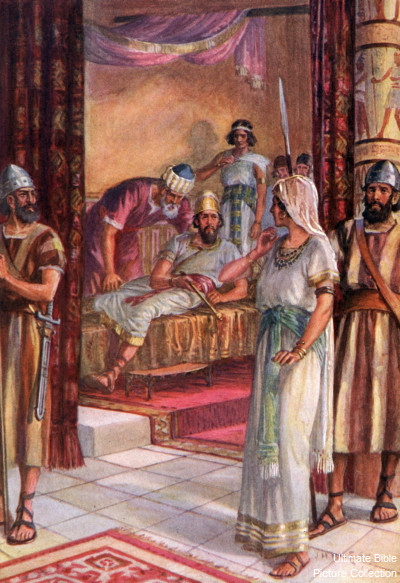
I compare this purgation to a woman getting ready for a marriage. Maybe she is overweight and is determined to look fantastic on her wedding day. She decides to go on a diet, exercise, take care of her body in a new way, as she will soon be in an intimate relationship with the beloved. If one is wealthy enough, a woman may go to spas and get ready for the wedding day in style. We see this process in the Book of Esther.


Esther represents the soul preparing for God in an allegorical interpretation.

Esther 2

Douay-Rheims 
2 After this, when the wrath of king Assuerus was appeased, he remembered Vasthi, and what she had done and what she had suffered:
2 And the king's servants and his officers said: Let young women be sought for the king, virgins and beautiful,
3 And let some persons be sent through all the provinces to look for beautiful maidens and virgins: and let them bring them to the city of Susan, and put them into the house of the women under the hand of Egeus the eunuch, who is the overseer and keeper of the king's women: and let them receive women's ornaments, and other things necessary for their use.
4 And whosoever among them all shall please the king's eyes, let her be queen instead of Vasthi. The word pleased the king: and he commanded it should be done as they had suggested.
5 There was a man in the city of Susan, a Jew, named Mardochai, the son of Jair, the son of Semei, the son of Cis, of the race of Jemini,
6 Who had been carried away from Jerusalem at the time that Nabuchodonosor king of Babylon carried away Jechonias king of Juda,
7 And he had brought up his brother's daughter Edissa, who by another name was called Esther: now she had lost both her parents: and was exceeding fair and beautiful. And her father and mother being dead, Mardochai adopted her for his daughter.
8 And when the king's ordinance was noised abroad, and according to his commandment many beautiful virgins were brought to Susan, and were delivered to Egeus the eunuch: Esther also among the rest of the maidens was delivered to him to be kept in the number of the women.
9 And she pleased him, and found favour in his sight. And he commanded the eunuch to hasten the women's ornaments, and to deliver to her her part, and seven of the most beautiful maidens of the king's house, and to adorn and deck out both her and her waiting maids.
10 And she would not tell him her people nor her country. For Mardochai had charged her to say nothing at all of that:
11 And he walked every day before the court of the house, in which the chosen virgins were kept, having a care for Esther's welfare, and desiring to know what would befall her.
12 Now when every virgin's turn came to go in to the king, after all had been done for setting them off to advantage, it was the twelfth month: so that for six months they were anointed with oil of myrrh, and for other six months they used certain perfumes and sweet spices.
13 And when they were going in to the king, whatsoever they asked to adorn themselves they received: and being decked out, as it pleased them, they passed from the chamber of the women to the king's chamber.
14 And she that went in at evening, came out in the morning, and from thence she was conducted to the second house, that was under the hand of Susagaz the eunuch, who had the charge over the king's concubines: neither could she return any more to the king, unless the king desired it, and had ordered her by name to come.
15 And as the time came orderly about, the day was at hand, when Esther, the daughter of Abihail the brother of Mardochai, whom he had adopted for his daughter, was to go in to the king. But she sought not women's ornaments, but whatsoever Egeus the eunuch the keeper of the virgins had a mind, he gave her to adorn her. For she was exceeding fair, and her incredible beauty made her appear agreeable and amiable in the eyes of all.
16 So she was brought to the chamber of king Assuerus the tenth month, which is called Tebeth, in the seventh year of his reign.
17 And the king loved her more than all the women, and she had favour and kindness before him above all the women, and he set the royal crown on her head, and made her queen instead of Vasthi.


One should be working on the spiritual life just as one works on the physical life of the body. Prayer is like dieting and mortification like exercise. Such things hurt, but the end, the goal is a new soul, a soul less burdened by sin and corruption, a soul cleansed of concupiscence.


Such is the time of the Dark Night. One is working hard to prepare for the revelation of the Bridegroom, getting ready to be at "one's best". Only love can provide such a motivation for the suffering of the Dark Night.

Purity and goodness won the heart of the king in the Book of Esther. So, too, the purified soul wins the Heart of God. Is not purgation worth this Love?

To be continued...

The Snowballing of Evil in The West

http://catholiclane.com/belgiums-terrible-decline/

Wednesday, 9 April 2014

Heartbreak


And if you love them that love you, what thanks are to you? for sinners also love those that love them. Luke 6:32 DR

I have been staying with dear, dear friends and tutoring, but because the farmers surrounding the house are beginning to start the annual burning of the brush, I have to leave the area. Two fires this past week have caused me to be very ill with asthma.

Sadly, I have to leave. Prayers for my travels would be appreciated. I shall keep you all posted.

This is not a report of the same fires, but gives you an idea of the drought we are experiencing here.

Brush Fires Blaze In Scott County

  • Source: KWQC-TV Davenport
  • Published: 03/23/2014 09:35 PM
VIDEO: There was fire after fire today in northern Scott County, first in Long Grove and then in McCausland. Firefighters said this is just the beginning. Not one, but two in the same day. Making these the first two of the season for Chief Keith Louck of the Long Grove Fire Department. "This was the first one we've had and obviously now McCausland's got the second one right now," said Chief Louck. He had just put out 30 acres worth of fire on a cut corn field in Long Grove with help from McCausland, Eldridge and Donahue when his team was quickly sent to another in McCausland. Tall grass in a marsh wildlife refuge caught on fire when a neighbor was burning brush. "Unless we get a lot of spring rain, unless the greenery comes through then we don't have to worry about it as much," said Chief Louck. "But, until then this is what we have to deal with." Today's brush fire in Long Grove started with someone burning, then the winds quickly changed and caught a corn field on fire. "It's nothing we can get away from and we never will," said Chief Louck. In McCausland crews could only get to the fire by four-wheeler or by foot. They had to pull over 1,000 feet of hose through muddy marshland to get water...

The month of five planets


Jupiter, Saturn, Mars, Venus and Saturn are visible this month.

Last night I saw Mars and this morning, before dawn, a bright Venus in the eastern sky.

I find this first site the easiest to navigate for sky charts. If your skies are clear, take advantage of the celestial show.

In addition, the meteor shower of the Lyrids starts about April 21 for our viewing. The last time I saw this was in Kent in 2012 and the shower was spectacular. One may have to stand outside in the cold, however.

http://hubblesite.org/explore_astronomy/tonights_sky/

Here is the chart for the meteor showers.

http://stardate.org/nightsky/meteors

And here is information on Venus, which I saw in brilliance in the summer of 2012 in London and am now seeing in the east in Iowa, rising about two hours before dawn.

One has to be up earlier to see Venus at "her" best.

Here is yet one more great site for info.

http://starrynightskyevents.blogspot.com/

OK Break Time

Almost forty posts in two days...taking a break....

See you later.


Persecution Watch

http://morningstarnews.org/

Someone from England sent me this today--sigh, sniff, burble


Perfection Series II: lxix

SELF-WILL from St. Alphonsus
There is no obstacle more harmful in striving after perfection than the gratification of self-will. “If,” says St. Bernard, “you can induce men to give up their self-will, there is no Hell for them to fear.” According to St. Peter Damian, self-will destroys all the virtues. “As the will of God is the source of all good,” says St. Anselm, “the will of man is the origin of all evil.” “He,” says St. Bernard, “who constitutes himself a master and follows the suggestions of self-will subjects himself to a veritable fool.”
The devil, as St. Augustine remarks, became what he is by self-will. Therefore, in his war against pious souls, his most effective and deadly weapon is their self-will. Cassian relates that the Abbot Achilles, when asked by a disciple what weapons the devil employed in attacking the souls that are consecrated to God, replied: Against the great ones of this world, he uses pride; against men of business, avarice; against the young, incontinence; but against those who are given to piety, his principal weapon is self-will. The Abbot Pastor expresses the same idea in different words: “When we follow our own will, the devil has no need of assailing us, for our self-will then takes the place of the devil, and indeed of the worst that there is.” The Holy Ghost admonishes us: “Turn away from thy own will. If thou give to thy soul her desires, she will make thee a joy to thy enemies.” (Ecclus. 18:30–31). An action has its greatest value from the obedience through which it is performed. The worst feature of any action is when it is prompted by self-will.
Consequently, says Trithemius, the devil hates nothing more than obedience, for, in the words of St. Teresa, “The devil well knows that on obedience the salvation of our souls depends. This is why he tries so hard to prevent it.” It was the custom of St. Philip Neri to exhort all his penitents to practice renunciation of their own will, for in this, he used to say, true sanctity consists. “The more you take away from your self-will, the more you add to virtue,” says St. Jerome. “In the sight of God,” says St. Coletta, “the renunciation of self-will is more meritorious than the sacrifice of all the riches of the world.”


“I wish for very little,” says St. Francis de Sales, “and for this little I have but feeble desire.” He meant to say that in his desires his own will was never considered, but simply the Will of God; so that he was prepared to give up everything as soon as he saw that it was not in conformity with the divine Will. “O what sweetness,” says St. Mary Magdalen de Pazzi, “there is in the words ‘The Will of God.’”
If you, Christian soul, desire to become holy and enjoy uninterrupted peace, strive as often as you can to mortify your will. Do nothing for your own satisfaction, but everything to please God. To this end renounce all vain desires and inordinate inclinations. Worldly-minded people are intent upon following their own will as much as they possibly can; it is the constant aim of the Saints to mortify their will, and they seek opportunities for doing so. St. Andrew Avellino made a vow always to oppose his own will. Make it a practice at least every day to perform a few acts of self-denial.
Let us conclude with the words which Father Torres wrote to a devout person to encourage her in the practice of self-denial: “As God has given you an opportunity to suffer and endure abandonment, endeavor to increase His love in your heart, a love that is as strong as death. May this love detach you from all creatures and from your very self in order that nothing may hinder you in clinging to your Lord with all your thoughts, desires and inclinations. Do all for Him and in union with Him. Before your crucified Saviour make a daily renunciation of all the inclinations and attachments you find within your soul. Protest that you desire no other honor but the shame of Jesus Christ; no other treasure but His love; no other comforts but His Cross; no other object but Himself, your Lord and God.” http://www.ecatholic2000.com/liguori/school/perfect.shtml#__RefHeading___Toc347270301

Perfection Series II: lxix: Detachment


TRUE DETACHMENT from St. Alphonsus Ligouri
Our detachment from the things of this earth is proved by our resignation to the Will of God in temporal disasters, such as financial loss by accident or theft. Faith teaches us that nothing happens without the permission of God. If, therefore, we suffer the loss of our good name or our temporal possessions, God does not of course will the sin that is thereby committed, but He wills or permits the suffering that falls to our lot and He wills it for our good. When a messenger came to the pious Job and announced that the Sabeans had stolen all his belongings and murdered his children, the holy man replied: “The Lord gave, and the Lord hath taken away.” He did not say: “The Lord gave and the Sabeans have taken away,” but: “The Lord gave and the Lord hath taken away: as it hath pleased the Lord, so is it done: blessed be the name of the Lord.” (Job 1:21). Finally, we prove to evidence that we possess the spirit of detachment when we are ready to sacrifice everything we have—riches, honors, dignities, position—in short, every temporal advantage, rather than offend God.
Such were the sentiments of the holy martyrs. Dacian, the Governor of the Province of Tanigma, addressed the young deacon Vincent in the following words: “My boy, you are still young; the smiles and favors of fortune await you. To possess them, all you need do is to renounce your religion; obey the Emperor and escape an ignominious death.” Vincent turned to Bishop Valerius, who with him stood before the Governor, and said: “My Father, if you wish, I shall answer for you too.” The holy Bishop, who stood prepared to suffer everything for the love of Jesus Christ, replied: “Yes, my son; as I have already commissioned you to preach the word of God, now I commission you to confess our faith.” Hereupon Vincent declared to the Governor that both Valerius and himself adored but one God and that they could not and would not adore devils, for such were the gods of the Roman empire. “Moreover,” he said, “do not imagine you will influence us by threats or promises. There is nothing in this world to compare with the honor and the happiness of dying for Jesus Christ.” Enraged at this fearlessness of the holy deacon, the Governor cried out: “Either sacrifice to the gods or your contempt will cost you your lives.” The holy deacon replied with a loud voice: “I have already told you that you could do us no greater favor than to put us to death for Jesus Christ, and you may rest assured that you will grow weary torturing us before we are tired of being tormented.”
Let us now consider some of the means that are necessary for acquiring this detachment from the things of earth. In the first place, to remove all inordinate attachment from the heart it is necessary to dwell on the thought of death. The day of death is called “the day of loss” because on this day the riches and honors and pleasures of earth are lost. On this account, says St. Ambrose, we should not really call these things our own because we cannot bring them with us into the next world, where only virtue can accompany us. That man was right therefore who, when realizing the vanity of the world, wrote on a skull the following words: “To one who thinks, everything here below seems deserving of contempt.” But why are there so many unhappy lovers of this earth? Because there are so few who think of death.
Poor children of Adam, says the Holy Ghost, why do you not banish from your hearts all earthly attachment? “Why do you love vanity and seek after lying?” (Ps.4:3). What happened to your forefathers will happen to you. They too loved the dwelling that is now yours; now they are no more; they have gone into eternity, and you shall follow them. http://www.ecatholic2000.com/liguori/school/perfect.shtml

Update on Military Rosary Project

 
Haitian eating mudcakes
 Dear Military Rosary benefactor or      Rosary maker:                                     

 Spring 2014 

 “Update on Haiti Rosary Factory“    
                                                  
   In the last couple of years our Iowa parishes have made thousands of Holy Land Military Rosaries.  The olive wood crucifix for these Rosaries is purchased from the Catholic families living in Bethlehem, this being their sole means of livelihood. These rosaries continue to be a great source of blessing as a prayer aid for military personnel, parishioners of all ages, patients in hospitals and hospice wards. I believe that the Holy Land Crucifix is a connection to Christ in the Garden of Olive and a reminder to us of the land where Jesus walked.  For anyone praying the Rosary, I encourage you to ask the grace to ‘pray with the heart’—which involves the special grace of praying the Rosary while contemplating the Scriptures, with devotion and Divine love. Also I believe that the Scripture from Isaiah 2:2 applies, which states that 'Swords will be turned into plowshares...”, so my loose translation of this is, "Parachute cords will be turned into Rosary cords...".
Baking mudcakes to eat

   With our parishes having a sister parish in Haiti, we are establishing a ‘Rosary Factory’ in Haiti.  An opportunity to begin this project came recently when Liz McDermott, the rep from ServeHaiti, recently visited Haiti.  Here is her report after I gave her rosary supplies to take with her on her Haiti trip:
Liz said she worked with the local chapter of the Vincent DePaul Society in Haiti to train workers there to assemble the Holy Land Military Rosary.  She paid the workers a working wage for each Rosary made, and the Haitian workers were delighted to have some work in a country where the unemployment rate is about 70%.   Liz took 1000 Rosary materials, and cloth cases for her February, 2014 trip down to the sister parish in Haiti, who assembled the Rosaries and cases. Then Liz and the ServeHaiti volunteers brought the finished Rosaries and cases. I mail the majority of the Rosaries   to the Catholic Chaplains in Afghanistan and around the world.  I also give samples to Rosary groups in parishes to promote the praying of the family Rosary.   Our quantities of assembled Rosaries will dramatically increase this year as we have a donor who will match the first $15,000 worth of donations for this project in 2014.
  
P.S.   Any donations for the Rosary Factory should be addressed to “SS Philip & James”, with a notation: ‘Special Haiti Project’.
P.S.S.  —our new website is now up:  www.holylandmilitaryrosary.org

Fr Bill Kneemiller
 SS Philip & James Church                                                                                                                 
606 Fulton St, PO Box 7                                                                                                                            
Grand Mound, IA  52751
 kneemillerw@diodav.org    (563)321-0124


 The Holy Land Military Rosary


eating mud cakes in Haiti


# 1 reason for the need to create jobs in Haiti:

There are sections of Haiti where the poverty is so severe that the people are eating clay cakes made with salt and a little vegetable oil to have something to put in their stomach.  We can do better than this!


Dear Military Rosary supporter:                                                                            26 Jan 2014

“Inverted Jenny Biplane Stamp Project”

Recently I read that the Post Office issued a commemorative stamp of the ‘Inverted Jenny’ biplane stamp a few months ago. This stamp is a commemoration of the famous error of the biplane flying upside down.   The post office Commissioner approved issuing 6 pages of these stamps nation-wide with the biplane flying right side up.  This means that anyone who buys one of these pages of six, $2 stamps will have an instantly rare stamp, with an estimated worth at least $25,000 for the page.

The reason I’m mentioning this to the Rosary supporter folk is that I’m inviting folks around the state of Iowa to buy a page of these stamps. If by a 100,000 to one chance you get a page of stamps of the ‘Inverted Jenny’ flying right side up, please consider donating part of your good fortune to our Rosary Factory in Haiti. If you know anyone who has a business mailing packages please encourage them to buy these stamps while they are still available.
Thanks, Fr Bill Kneemiller
PS: Our Rosary Factory in Haiti is beginning in earnest this year.  Also, at the end of July I am sponsoring a trip down to Branson, MO for a ‘Rosary Factory Convention’—my favorite vacation place.  I can get rooms down in Branson for $55/ a night for a double, up until the month of July, 2014.