Recent Posts

Monday, 4 May 2015

Spurning Knowledge

Several months ago, I was speaking with a highly intelligent cab driver in another state, who noted that people were getting too touchy about everything. He is a Christian, a convert from Islam, who told me that he could no longer talk about any topics in the cab, as the vast majority of people he drove on long trips which was my case, would take offense at any political, religious, or moral topic.

His ability to reason was part of his conversion.

We discussed this phenomenon and decided that there exists a huge difference in generations regarding the ability to discuss something or even, to be corrected.

This fine man of about forty-something noted that few could stand being challenged in their ideas, and that many people were full of demons, unexplained hang-ups on certain topics, which ended conversations.

As a mature Christian, coming from a background where nothing could be discussed in open conversations concerning his former faith, he noted that opinions seemed more important than truth to people, and agendas clouded people's minds about wanting to find out the truth.

Yesterday, a friend of mine, Mr. B., told me the same thing, which reminded me of this former discussion. He said that in some discussions, one touches demons in the souls of others, who then cannot respond rationally.

Mr. B. said that when one brings up a topic and someone is stuck in an agenda and refuses to listen to rational discourse, that person falls back into opinion, rather than reasonable openness. For example, if a person is a practicing homosexual and one wants to discuss the possibility of this lifestyle being unnatural or even against the natural law of God, there seems to be a strong resistance to even be open to the truth. There can be no discussion. Why?

All topics should be able to be discussed, and logic should be the common ground for discussions. But, here is the problem according to my two friends above-no one has been taught in the past twenty or so years to really look at various points of view about a subject and few people believe in absolute truth.

In addition, most people do not want to break out of their own fairy tale land of comfort in order to pursue the truth. Sloth is the name of the game.

Another friend said exactly the same thing as Mr. B. Ms. K reminded me that when we were in school, we learned to do research by using the library card catalogs and journals. We had to use research skills to find out sources for our papers. We could not use merely our own unsubstantiated feelings or opinions. The instructors in our various subjects, whether history, English, or the sciences, even in high school, demanded that we get experts and peer-reviewed articles to substantiate our viewpoints.

Now, everyone thinks they are entitled to uneducated guesses, or just their own viewpoints without any recourse to study or reading.

Too many young people refuse, for example, to look up articles on line on the Catholic positions, including the various sites which present the encyclicals, and the Catechism of the Catholic Church.
There is no excuses for ignorance if one is online, yet ignorance remains. Why?

It seems that we are witnessing a large portion of society who just do not want to admit that their worlds of completely made-up, false comfort may be coming to an end. Too many people do not want to face the truth about moral or religious issues.

This type of chosen ignorance is not the same as involuntary or invincible ignorance. When information is available and people do not avail themselves of this information, only two conclusions may be reached and these are that sloth makes them lazy, or that lust makes them complacent.

Sloth is one of the greatest sins of the new group of people who refuse to read or study unless they absolutely are forced to do so. The idea of learning for the joy of learning seems to be fading in our society. And, when asked to move out of their comfort zones of prejudices and agendas, these people refuse to admit that they will not read, study or discuss.

What is going on? When I was a student, we sat around as kids for hours discussing life, the universe and everything. We had discussions on math, science, history, literature, movies, music, art and so on. Is this happening anywhere?

Religious discussions seemed very popular when I was in high school, with Lutheran kids wanting to share their ideas with the Methodists and the Catholics and so on. No kids talked about money or shopping, as those topics were boring. We were idea kids, and we wanted to learn about what made each other religious or non-religious. We wanted to know.

Now, as my cab driver stated, one cannot even bring up interesting topics without getting the lazy answers from the “I don't know and I don't want to find out” types, or from the “This is too hard, and I want to avoid confrontation” types, or the “I take offense as to what you are saying” types.

But, discussion is not always confrontation. In fact, the give and take of discussion should be exciting. It should be, primarily, the sharing and the mutual discovery of Truth. Ah, but there is the rub.

Do people really want to find out the truth about anything, themselves, others, the state of the world, the state of wars, and so on?

Too many young people are chasing after false dreams of various versions of the so-called American Dream, which no longer exists in reality. Too many young people really want only lives of things, including treating people as things. Too many only want comforts and not challenges.

When a civilization loses the desire for knowledge, it is dead, not decaying, but dead.

It is a fact that this younger generation is not as intelligent as the previous ones. Father Ripperger calls this devolution-that we are as humans getting more and more stupid. Why?

Sin is the answer. Sin makes one stupid. Sin makes one stop asking the basic questions of life, like “Why am I here?” or “What if the goal of a human being's life?” When a people stop asking or seeking after the meanings of things or of systems, it means they have chosen lust, greed, vanity, pride, avarice, hatred, sloth over Truth. Sin deadens the imagination and fills the soul with trivia.

My cabby friend noted that people got upset about everything, were hyper-touchy because they did not want to be challenged about life.

Guess what? We are all about to be challenged as never before...when the dollar explodes, when there is war which entails a draft, when persecution of the Catholic Church becomes enshrined in law, many people will be challenged to leave their comfort zones of the denial of absolute truth.

Knowledge is there for the taking. We live in an era where more knowledge has been available to the common man and woman than ever before. What took years of hard research and work to find can be found with one Google entry. Nothing is arcane, or few things are.

There is no excuse for ignorance. For those who want to remain ignorant of God's ways, His plan for salvation, His hierarchy of morals and laws, the days are coming when they will have to make a choice, with or without knowledge.

I refuse to spoon-feed. I never did as a teacher. I taught my students how to do research, and most importantly, how to think. I taught them how to discuss rationally important questions. They left my classes changed because I challenged them to leave the comfortable areas of opinion and laziness. They grew up, as learning how to think marks the boy from the man, the girl from the woman.

Teaching people who do not want to learn how to think can be a real difficulty. But, God has a way of doing that. It is called tribulation. The trials of the Hebrew People in the Old Testament were punishment for sin, but also wake-up calls to think through the messages of repentance proclaimed over and over by the prophets, most of whom were murdered by their own people.

The prophets were killed because people did not want to listen and think about their sins.

To repent, one must stop and think, reflect, learn, be willing to learn more about one's self and God.

Without self-knowledge and knowledge of God, one is doomed to stupidity cocooned in pride.

I pity the young ones who have never learned how to think. I suggest a long retreat with the guidance of St. Ignatius and the examination of Scripture and one's own life.

But, those who are content with trivia and content with agendas will not step out into unknown territory, which is what the spiritual world is.

Those who are willing to step out of their fanciful lives of comfort will find God, as He is Truth and He wants to be found. Those who do not, sadly, will perish and never live in the glory to which God has called each one of us, the glory of knowing God, Who is Love.

There are many reasons why people do not want to learn-pride being the first reason. Sloth, as I noted above, another. Today, I was watching a manager in a shop get upset because she had trained a person to do something, a simple task, and that person just did not do what she was told. Did she not listen? Was she not capable of understanding? This manager has gone through many, many employees in her shop and she cannot find “suitable people”. Why?

I thought about this and realized that all the young people she had hired and fired over the past two months, all about the ages between 18-28, had never learned three basic things-the first being obedience. They just did not know how to follow orders and obey, because no one had ever demanded that they obey anyone from little on.

The second reason is that these young people never had to take responsibility for any job at home. They never had to “do” anything, had no standards to meet in school, had no real challenges of meeting someone's expectations. The third reason is that they had never learned to think through a problem from the beginning to the end, even a simple one. They simply had to be told over and over what to do, as in spoon-feeding, not having to figure something out on their own.

I pity this manager, but she and others in charge of personnel, who have told me that they cannot find “suitable help”, have a problem on their hands which is huge-the devolution of the human being to the point where these young people simply cannot think. I saw one young man leave work yesterday and he yelled at a driver in front of his car, who was going slowly in order to find a street behind the shop. This young man was completely out of control of his emotions. The other driver was being careful and this young man was so impatient to leave, he could not control his outburst, which was totally unjustified. I witnessed all this from the sidewalk.

Living in the emotions rather than reason spells decay for a culture. This young man will not make it in the world, as he cannot keep his negative emotions to himself. He cannot reason his feelings into order. He will be the next one fired from the shop, as he irritates customers.

So, what we have is a young man who cannot control himself, who does not care about those around him, who cannot live in a society where manners and decorum when waiting on customers is necessary for the smooth running of a shop.

I have seen the coming and going of at least twelve employees in two months. Are there so many young people who cannot learn, cannot control themselves, and who take offense easily? My cabby friend would just shake his head and say, “Told you so.”


Yes, I am getting to gradualism-Three

So, how is St. John Paul II against the heresy of gradualism, which denies free will and grace?

Here, he is clear that marriage is a decision which demands the virtue of faith, given to all in baptism. In this grace, we all become prophets to the truth. We, through our lay lives in marriage, strengthen the Church and evangelize the unbelieving.

Again, God does not ask the impossible, and we all are given the theological virtue of faith, which like all the virtues, is made perfect in practice.

Do gradualists think the saint's words are mere poetry? Do they not believe this infallible document themselves? Have they never experienced the growth of faith through suffering in their own lives?

Maybe, maybe not...The entire point of gradualism is that people should be allowed the sacrilege of receiving Christ while they are in sin, instead of following the teaching of sacrifice and suffering put forward by St. John Paul II and others.

At the time of the wedding vow, faith is operative in both couples, unless there is an impediment, which only the Church can decide. In that moment, the couple agrees not only to love each other and subsequent offspring, but to evangelize through the sacrament and to build up the Church through their real, total love. They enter into the love of God Himself.

To throw this away, and worse, to turn against this sublime teaching mocks God, and God will not be mocked.

As a sharer in the life and mission of the church, which listens to the word of God with reverence and proclaims it confidently,[120] the Christian family fulfills its prophetic role by welcoming and announcing the word of God: It thus becomes more and more each day a believing and evangelizing community.
Christian spouses and parents are required to offer "the obedience of faith."[121] They are called upon to welcome the word of the Lord, which reveals to them the marvelous news--the good news--of their conjugal and family life sanctified and made a source of sanctity by Christ himself. Only in faith can they discover and admire with joyful gratitude the dignity to which God has deigned to raise marriage and the family, making them a sign and meeting place of the loving covenant between God and man, between Jesus Christ and his bride, the church.
The very preparation for Christian marriage is itself a journey of faith. It is a special opportunity for the engaged to rediscover and deepen the faith received in baptism and nourished by their Christian upbringing. In this way they come to recognize and freely accept their vocation to follow Christ and to serve the kingdom of God in the married state.
The celebration of the sacrament of marriage is the basic moment of the faith of the couple. This sacrament, in essence, is the proclamation in the church of the good news concerning married love. It is the word of God that "reveals" and "fulfills" the wise and loving plan of God for the married couple, giving them a mysterious and real share in the very love with which God himself loves humanity. Since the sacramental celebration of marriage is itself a proclamation of the word of God, it must also be a "profession of faith" within and with the church, as a community of believers, on the part of all those who in different ways participate in its celebration.

Marriage is not just between two people to control lust. The witness of marriage in the Church transcends the sub-human and brings people to a chance for perfection.

This profession of faith demands that it be prolonged in the life of the married couple and of the family. God, who called the couple to marriage, continues to call them in marriage.[122] In and through the events, problems, difficulties and circumstances of everyday life, God comes to them, revealing and presenting the concrete "demands" of their sharing in the love of Christ for his church in the particular family, social and ecclesial situation in which they find themselves.
The discovery of and obedience to the plan of God on the part of the conjugal and family community must take place in "togetherness," through the human experience of love between husband and wife, between parents and children, lived in the spirit of Christ.
Thus the little domestic church, like the greater church, needs to be constantly and intensely evangelized: hence its duty regarding permanent education in the faith.
52. To the extent in which the Christian family accepts the Gospel and matures in faith, it becomes an evangelizing community. Let us listen again to Paul VI: "The family, like the church, ought to be a place where the Gospel is transmitted and from which the Gospel radiates. In a family which is conscious of this mission, all the members evangelize and are evangelized.

Here we are back to my theme yesterday, that we are all called to evangelize and no one is left out of this command, not even the mother at home, or the dad at work.

We HAVE the grace to stay married and to be married in Christ. We are given that grace and we only have to agree to living in that grace.

This apostolic mission of the family is rooted in baptism and receives from the grace of the sacrament of marriage new strength to transmit the faith, to sanctify and transform our present society according to God's plan.
Particularly today the Christian family has a special vocation to witness to the paschal covenant of Christ by constantly radiating the joy of love and the certainty of the hope for which it must give account: "The Christian family loudly proclaims both the present virtues of the kingdom of God and the hope of a blessed life to come."[125]

Remember how I wrote yesterday that I had a missionary heart? All who are married are given that for their children and for the parish, the entire Church.

It should not be forgotten that the service rendered by Christian spouses and parents to the Gospel is essentially an ecclesial service. It has its place within the context of the whole church as an evangelized and evangelizing community. Insofar as the ministry of evangelization and catechesis of the church of the home is rooted in and derives from the one mission of the church and is ordained to the upbuilding of the one body of Christ,[128] it must remain in intimate communion and collaborate responsibly with all the other evangelizing and catechetical activities present and at work in the ecclesial community at the diocesan and parochial levels.
54. Evangelization, urged on within by irrepressible missionary zeal, is characterized by a universality without boundaries. It is the response to Christ's explicit and unequivocal command: "Go into all the world and preach the Gospel to the whole creation."[129]

Anything less is not the individual or couple living out their baptismal calls.

The Christian family's faith and evangelizing mission also possesses this Catholic missionary inspiration. The sacrament of marriage takes up and reproposes the task of defending and spreading the faith, a task that has its roots in baptism and confirmation,[130] and makes Christian married couples and parents witnesses of Christ "to the end of the earth,"[131] missionaries, in the true and proper sense, of love and life.
A form of missionary activity can be exercised even within the family. This happens when some member of the family does not have the faith or does not practice it with consistency. In such a case the other members must give him or her a living witness of their own faith in order to encourage and support him or her along the path toward full acceptance of Christ the savior.[132]
Animated in its own inner life by missionary zeal, the church of the home is also called to be a luminous sign of the presence of Christ and of his love for those who are "far away," for families who do not yet believe and for those Christian families who no longer live in accordance with the faith that they once received. The Christian family is called to enlighten "by its example and its witness those who seek the truth. "[133]
Just as at the dawn of Christianity Aquila and Priscilla were presented as a missionary couple,[134] so today the church shows forth her perennial newness and fruitfulness by the presence of Christian couples and families who dedicate at least a part of their lives to working in missionary territories, proclaiming the Gospel and doing service to their fellow man in the love of Jesus Christ.
Christian families offer a special contribution to the missionary cause of the church by fostering missionary vocations among their sons and daughters[135] and, more generally, "by training their children from childhood to recognize God's love for all people."[136]

Do some of the fathers in the synod not get it that marriage sanctifies? Adultery leads to perdition. Period. How is it that they think that those in mortal sin, according to Divine Law and the mystery of the sacrament, can receive grace? They cannot, and, in fact, insult God by putting their sin in His Face, as it were. Again, those who insists on this position cannot understand the freedom of will we all have, and grace, given to all.

56. The sacrament of marriage is the specific source and original means of sanctification for Christian married couples and families. It takes up again and makes specific the sanctifying grace of baptism. By virtue of the mystery of the death and resurrection of Christ, of which the spouses are made part in a new way by marriage, conjugal love is purified and made holy: "This love the Lord has judged worthy of special gifts, healing, perfecting and exalting gifts of grace and of charity."[138]

So we become saints in marriage. Yes, this is possible, with free will choosing real love through grace.


The gift of Jesus Christ is not exhausted in the actual celebration of the sacrament of marriage, but rather accompanies the married couple throughout their lives. This fact is explicitly recalled by the Second Vatican Council when it says that Jesus Christ "abides with them so that just as he loved the church and handed himself over on her behalf, the spouses may love each other with perpetual fidelity through mutual self-bestowal...For this reason, Christian spouses have a special sacrament by which they are fortified and receive a kind of consecration in the duties and dignity of their state. By virtue of this sacrament, as spouses fulfill their conjugal and family obligations they are penetrated with the spirit of Christ, who fills their whole lives with faith, hope and charity. Thus they increasingly advance toward their own perfection as well as toward their mutual sanctification, and hence contribute jointly to the glory of God."[139]
Christian spouses and parents are included in the universal call to sanctity. For them this call is specified by the sacrament they have celebrated and is carried out concretely in the realities proper to their conjugal and family life.[140] This gives rise to the grace and requirement of an authentic and profound conjugal and family spirituality that draws its inspiration from the themes of creation, covenant, cross, resurrection and sign, which were stressed more than once by the synod.
Christian marriage, like the other sacraments, "whose purpose is to sanctify people, to build up the body of Christ, and finally, to give worship to God,"[141] is in itself a liturgical action glorifying God in Jesus Christ and in the church. By celebrating it, Christian spouses profess their gratitude to God for the sublime gift bestowed on them of being able to live in their married and family lives the very love of God for people and that of the Lord Jesus for the church, his bride.

And if people fail, we have the sacrament of confession. One does not have to dump the conjugal relationship. One can forgive, one can ask forgiveness.

 An essential and permanent part of the Christian family's sanctifying role consists in accepting the call to conversion that the Gospel addresses to all Christians, who do not always remain faithful to the "newness" of the baptism that constitutes them "saints." The Christian family too is sometimes unfaithful to the law of baptismal grace and holiness proclaimed anew in the sacrament of marriage.
Repentance and mutual pardon within the bosom of the Christian family, so much a part of daily life, receive their specific sacramental expression in Christian penance. In the encyclical Humanae Vitae, Paul VI wrote of married couples: "And if sin should still keep its hold over them, let them not be discouraged, but rather have recourse with humble perseverance to the mercy of God, which is abundantly poured forth in the sacrament of penance."[146]

There is much in this encyclical on children, the family and preparation for marriage, but I am going to skip to these next selections.

And here the Pope-Saint addresses priest directly:

Priests and deacons, when they have received timely and serious preparation for this apostolate, must unceasingly act toward families as fathers, brothers, pastors and teachers, assisting them with the means of grace and enlightening them with the light of truth. Their teaching and advice must therefore always be in full harmony with the authentic magisterium of the church, in such a way as to help the people of God to gain a correct sense of the faith to be subsequently applied to practical life. Such fidelity to the magisterium will also enable priests to make every effort to be united in their judgments in order to avoid troubling the consciences of the faithful.

In the church, the pastors and the laity share in the prophetic mission of Christ: The laity do so by witnessing to the faith by their words and by their Christian lives; the pastors do so by distinguishing in that witness what is the expression of genuine faith from what is less in harmony with the light of faith; the family, as a Christian community, does so through its special sharing and witness of faith.

and again....the synod referred to here is the one in 1981
. ...the church cannot ignore the time of old age with all its positive and negative aspects. In old age married love, which has been increasingly purified and ennobled by long and unbroken fidelity, can be deepened. There is the opportunity of offering to others in a new form the kindness and the wisdom gathered over the years and what energies remain. But there is also the burden of loneliness, more often psychological and emotional rather than physical, which results from abandonment or neglect on the part of children and relations. There is also suffering caused by ill-health, by the gradual loss of strength, by the humiliation of having to depend on others, by the sorrow of feeling that one is perhaps a burden to one's loved ones, and by the approach of the end of life. These are the circumstances in which, as the synod fathers suggested, it is easier to help people understand and live the lofty aspects of the spirituality of marriage and the family, aspects which take their inspiration from the value of Christ's cross and resurrection, the source of sanctification and profound happiness in daily life, in the light of the great eschatological realities of eternal life.
In all these different situations let prayer, the source of light and strength and the nourishment of Christian hope, never be neglected.

Yes, I am getting to gradualism--2

St. John Paul II in Familiaris Consortio explains exactly the situation we see today, in 2015. He quotes the truly prophetic document, Humanae Vitae.

"The spouses participate in it as spouses, together, as a couple, so that the first and immediate effect of marriage (res et sacramentum) is not supernatural grace itself, but the Christian conjugal bond, a typically Christian communion of two persons because it represents the mystery of Christ's incarnation and the mystery of his covenant. The content of participation in Christ's life is also specific: Conjugal love involves a totality, in which all the elements of the person enter--appeal of the body and instinct, power of feeling and affectivity, aspiration of the spirit and of will. It aims at a deeply personal unity, the unity that, beyond union in one flesh, leads to forming one heart and soul; it demands indissolubility and faithfulness in definitive mutual giving; and it is open to fertility (cf. Humanae Vitae, 9). In a word, it is a question of the normal characteristics of all natural conjugal love, but with a new significance which not only purifies and strengthens them, but raises them to the extent of making them the expression of specifically Christian values."[33]
14. According to the plan of God, marriage is the foundation of the wider community of the family, since the very institution of marriage and conjugal love is ordained to the procreation and education of children, in whom it finds its crowning.

Where is this emphasis on purity in the words of some synod members? Have they forgotten that God always gives one grace sufficient to the task at hand-always? God never asks the impossible, which means that some of the false leaders in the synod have little faith, or simply, do not believe in grace.

And, as Pope Paul VI predicted, once marriage is undermined in a society, the Kingdom of God is damaged by compromise and laxity, or worse, serious sin. And, virginity is only understandable in the light of holy marriage as well. If human sexuality is denigrated in marriage, so, too, it is in celibacy.

When marriage is not esteemed, neither can consecrated virginity or celibacy exist; when human sexuality is not regarded as a great value given by the creator, the renunciation of it for the sake of the kingdom of heaven loses its meaning.
Rightly indeed does St. John Chrysostom say: "Whoever denigrates marriage also diminishes the glory of virginity. Whoever praises it makes virginity more admirable and resplendent. What appears good only in comparison with evil would not be particularly good. It is something better than what is admitted to be good that is the most excellent good."

And, hey, where is the example the married should expect from the holy celibates? Or have they left the path of celibacy themselves so that they no longer understand real love? If so, I personally feel sorry for them-what they are missing is the Love of the Bridegroom, Christ Himself.

Christian couples therefore have the right to expect from celibate persons a good example and a witness of fidelity to their vocation until death. Just as fidelity at times becomes difficult for married people and requires sacrifice, mortification and self-denial, the same can happen to celibate persons, and their fidelity, even in the trials that may occur, should strengthen the fidelity of married couples

Self-knowledge, THIS IS THE KEY.

Every man and woman in the world knows that adultery is a great evil to individuals, to children, to society. Self-knowledge allows one to be honest about one's sins. We all have to face our sins. All.

And without love in the world as an example for us all, we fall back into fear and self-conceit.


The inner principle of that task, its permanent power and its final goal, is love: Without love the family is not a community of persons and, in the same way, without love the family cannot live, grow and perfect itself as a community of persons. What I wrote in the encyclical Redemptor Hominis applies primarily and especially within the family as such: "Man cannot live without love. He remains a being that is incomprehensible for himself, his life is senseless, if love is not revealed to him, if he does not encounter love, if he does not experience it and make it his own, if he does not participate intimately in it.

Love can be seen in suffering. I see this daily, in myself, in those I love who are experiencing great pain either physically or mentally, in those who have lost a spouse to death or abandonment. Suffering does not deny love, Never....and it is only in the true sacrament of marriage that the Holy Spirit resides, not in false marriages of convenience or comfort. He will not be present unless those who underwent such a free choice contrary to God's Plan allow themselves to suffer in a new way of abstinence and even breaking-up for the sake of God.

What has been forgotten in the Synod is that love for God trumps all over loves, and that we cannot truly love another outside of love for God.

This conjugal communion sinks its roots in the natural complementarity that exists between man and woman and is nurtured through the personal willingness of the spouses to share their entire life project, what they have and what they are: For this reason such communion is the fruit and the sign of a profoundly human need. But in the Lord Christ God takes up this human need, confirms it, purifies it and elevates it, leading it to perfection through the sacrament of matrimony: the Holy Spirit who is poured out in the sacramental celebration offers Christian couples the gift of a new communion of love that is the living and real image of that unique unity which makes of the church the indivisible mystical body of the Lord Jesus.

Outside of life in the Holy Spirit, there is no life, only death. And the dignity of a man and a woman is seriously compromised by divorce and remarriage without the annulment of the Church. We see this clearly in false man-made religions which think polygamy is OK.

God loves each one of us too much for such a half-love, or quarter-love instead of total love.

I am reminded of a powerful scene in the newer movie on Anna of Siam, not the musical, where the king finally comes to realize what it means to love one woman. In this scene, he dances with Anna and admits that one woman can suffice a man, if that man truly loves. True love comes with total love.

The gift of the spirit is a commandment of life for Christian spouses and at the same time a stimulating impulse so that every day they may progress toward an ever richer union with each other on all levels--of the body, of the character, of the heart, of the intelligence and will, of the soul[47] --revealing in this way to the church and to the world the new communion of love, given by the grace of Christ.
Such a communion is radically contradicted by polygamy: This, in fact, directly negates the plan of God which was revealed from the beginning, because it is contrary to the equal personal dignity of men and women, who in matrimony give themselves with a love that is total and therefore unique and exclusive. As the Second Vatican Council writes: "Firmly established by the Lord, the unity of marriage will radiate from the equal personal dignity of husband and wife, a dignity acknowledged by mutual and total love."

This paragraph is so powerful, I hardly know how to unpack it. That love is unity, you have read on this blog regarding the pursuit of perfection. But, St. John Paul II really experienced God's union, or he would not have been able to write this passage below. The Catholic couple reveals Christ to us. How beautiful.

Christ renews the first plan that the creator inscribed in the hearts of man and woman, and in the celebration of the sacrament of matrimony offers "a new heart": thus the couples are not only able to overcome "hardness of heart,"[51] but also, and above all, they are able to share the full and definitive love of Christ, the new and eternal covenant made flesh. Just as the Lord Jesus is the "faithful witness,"[52] the "yes" of the promises of God[53] and thus the supreme realization of the unconditional faithfulness with which God loves his people, so Christian couples are called to participate truly in the irrevocable indissolubility that binds Christ to the church, his bride, loved by him to the end.[54]

The gift of the sacrament is at the same time a vocation and commandment for the Christian spouses, that they may remain faithful to each other forever, beyond every trial and difficulty, in generous obedience to the holy will of the Lord: "What therefore God has joined together, let not man put asunder."[55]

We daily see religions which do not hold the spiritual or physical equality of women in marriage.

Here is the Pope on this....

In creating the human race "male and female,"[64] God gives man and woman an equal personal dignity, endowing them with the inalienable rights and responsibilities proper to the human person. God then manifests the dignity of women in the highest form possible, by assuming human flesh from the Virgin Mary, whom the church honors as the mother of God, calling her the new Eve and presenting her as the model of redeemed woman. The sensitive respect of Jesus toward the women that he called to his following and his friendship, his appearing on Easter morning to a woman before the other disciples, the mission entrusted to women to carry the good news of the resurrection to the apostles--these are all signs that confirm the special esteem of the Lord Jesus for women. The apostle Paul will say: "In Christ Jesus you are all children of God through faith . . . There is neither slave nor free, there is neither male nor female; for you are all one in Christ Jesus."[65]

And here...

Authentic conjugal love presupposes and requires that a man have a profound respect for the equal dignity of his wife: "You are not her master," writes St. Ambrose, "but her husband; she was not given to you to be your slave, but your wife.... Reciprocate her attentiveness to you and be grateful to her for her love."[69] With his wife a man should live "a very special form of personal friendship."[70] As for the Christian, he is called upon to develop a new attitude of love, manifesting toward his wife a charity that is both gentle and strong like that which Christ has for the church.[71]

So, you are thinking, what has this to do with gradualism?

Here we go...individuals want to blame God for their sins. They want to deny both their own freedom to choose sin or holiness, and they want to change the teaching of the Church to accommodate this lie. But, the Church did not make up all these beautiful thoughts and rules of guidance for a holy life. God did and He entrusted His Church to share these truths.

The second lie is the denial of grace, which I have written about here on this blog under the tag grace and synod.

St. John Paul II again....

In the field of conjugal morality the church is teacher and mother and acts as such.
As teacher, she never tires of proclaiming the moral norm that must guide the responsible transmission of life. The church is in no way the author or the arbiter of this norm. In obedience to the truth which is Christ, whose image is reflected in the nature and dignity of the human person, the church interprets the moral norm and proposes it to all people of good will without concealing its demands of radicalness and perfection.

And is it hard to be holy, to give in total love?  Yes, yes, yes....Love is in the will. 

But it is one and the same church that is both teacher and mother. And so the church never ceases to exhort and encourage all to resolve whatever conjugal difficulties may arise without ever falsifying or compromising the truth: She is convinced that there can be no true contradiction between the divine law on transmitting life and that on fostering authentic married love.[91] Accordingly, the concrete pedagogy of the church must always remain linked with her doctrine and never be separated from it. With the same conviction as my predecessor, I therefore repeat: "To diminish in no way the saving teaching of Christ constitutes an eminent form of charity for souls."[92]
On the other hand, authentic ecclesial pedagogy displays its realism and wisdom only by making a tenacious and courageous effort to create and uphold all the human conditions--psychological, moral and spiritual--indispensable for understanding and living the moral value and norm.
There is no doubt that these conditions must include persistence and patience, humility and strength of mind, filial trust in God and in his grace, and frequent recourse to prayer and to the sacraments of the eucharist and of reconciliation.[93] Thus strengthened, Christian husbands and wives will be able to keep alive their awareness of the unique influence that the grace of the sacrament of marriage has on every aspect of married life including, therefore, their sexuality: The gift of the Spirit, accepted and responded to by husband and wife, helps them to live their human sexuality in accordance with God's plan and as a sign of the unitive and fruitful love of Christ for his church.

What the synod fathers of a certain bent, and bent is the word, are forgetting is that evil moves governments not to support marriage and children. Too many governments have passed laws contrary to both natural and revealed law.

Yes, it is hard to be happily and comfortably married today. But, that is because, primarily. societies have fallen into the hands of the enemies of marriage. JPII is too aware of this...


...the church openly and strongly defends the rights of the family against the intolerable usurpations of society and the state. In particular the synod fathers mentioned the following rights of the family: --The right to exist and progress as a family, that is to say, the right of every human being, even if he or she is poor, to found a family and to have adequate means to support it;
--The right to exercise its responsibility regarding the transmission of life and to educate children;
--The right to the intimacy of conjugal and family life;
--The right to the stability of the bond and of the institution of marriage;
--The right to believe in and profess one's faith and to propagate it;
--The right to bring up children in accordance with the family's own traditions and religious and cultural values, with the necessary instruments, means and institutions;
--The right, especially of the poor and the sick, to obtain physical, social, political and economic security;
--The right to housing suitable for living family life in a proper way;
--The right to expression and to representation, either directly or through associations, before the economic, social and cultural public authorities and lower authorities;
--The right to form associations with other families and institutions in order to fulfill the family's role suitably and expeditiously;
--The right to protect minors by adequate institutions and legislation from harmful drugs, pornography, alcoholism, etc.;
--The right to wholesome recreation of a kind that also fosters family values;
--The right of the elderly to a worthy life and a worthy death;
--The right to emigrate as a family in search of a better life.[112]

Satan and individual sin attack marriage, but the solution is not to change the institution, but one's interior life.

Sin is our choice in following the easy ways out of suffering, and I would state that most sin if not all, is an attempt to avoid sacrifice and suffering.

Gradualists believe not only in the two lies above, the denial of free will, and the denial of grace, but in the connection between the building of the Kingdom of God on earth and marriage. Gradualists do not seem to have Faith. They have lost the ability to think like Christ, like the Church, in believing that with grace all things are possible. ALL. And less some people think I write out of ignorance of suffering in marriage, let me assure them this is not so. I learned to accept grace and love in the will. I learned Love. And love gives life.

The Christian family also builds up the kingdom of God in history through the everyday realities that concern and distinguish its state of life. It is thus in the love between husband and wife and between the members of the family--a love lived out in all its extraordinary richness of values and demands: totality, oneness, fidelity and fruitfulness"[118]--that the Christian family's participation in the prophetic, priestly and kingly mission of Jesus Christ and of his church finds expression and realization. Therefore, love and life constitute the nucleus of the saving mission of the Christian family in the church and for the church.

And, yes, there will be one more on this subject....later on today...


Sunday, 3 May 2015

No I did not ignore Athanasius Yesterday--Here Is Our Athanasius

I have an entire series on the Doctors of the Church, so use the tags.

However, if we ever needed such a stalwart warrior of the Faith as Athanasius, it is now.

His clarity of mind and spirit are needed in the current members of the Synod. The truth is that we had an Athanasius speaking to us clearly on the definition of marriage as ordained by Christ, and this was St. John Paul II, who is still with us in the Church Triumphant.

I want to quote some short bits from Familiaris Consortio, which need to be considered seriously by the Synod fathers this year.

Illuminated by the faith that gives her an understanding of all the truth concerning the great value of marriage and the family and their deepest meaning, the church once again feels the pressing need to proclaim the Gospel, that is the "good news," to all people without exception, in particular to all those who are called to marriage and are preparing for it, to all married couples and parents in the world.
The church is deeply convinced that only by the acceptance of the Gospel are the hopes that man legitimately places in marriage and in the family capable of being fulfilled.
Willed by God in the very act of creation,[3] marriage and the family are interiorly ordained to fulfillment in Christ[4] and have need of his graces in order to be healed from the wounds of sin[5] and restored to their "beginning,"[6] that is, to full understanding and the full realization of God's plan.
At a moment of history in which the family is the object of numerous forces that seek to destroy it or in some way to deform it, and aware that the well-being of society and her own good are intimately tied to the good of the family,[7] the church perceives in a more urgent and compelling way her mission of proclaiming to all people the plan of God for marriage and the family, ensuring their full vitality and human and Christian development, and thus contributing to the renewal of society and of the people of God.

Notice that marriage between a man and a woman has been willed by God from the very beginning of the creation of humans. Only in Christ can marriages be sustained and healed. Not by changing the definition of marriage as that special relationship, as seen both in natural and revealed law, as the union between a man and a woman for the procreation of children and for their mutual contentment.

The Papal Saint saw the horrible evils besetting marriage, and now, some false leaders in the Church, just like Arius, want to change the Church's teaching in order to accommodate their own desires

We all have the graces we need to be holy and get to heaven. The Pope actually in this encyclical, which is infallible and supports over 2,000 years of teaching, comes against gradualism, which has so many people confused.

Let us look together at a few of his paragraphs. It is clear that this saint understands the stresses of the times.

Since God's plan for marriage and the family touches men and women in the concreteness of their daily existence in specific social and cultural situations, the church ought to apply herself to understanding the situations within which marriage and the family are lived today, in order to fulfill her task of serving.[8]
This understanding is therefore an inescapable requirement of the work of evangelization. It is, in fact, to the families of our times that the church must bring the unchangeable and ever new gospel of Jesus Christ, just as it is the families involved in the present conditions of the world that are called to accept and to live the plan of God that pertains to them. Moreover, the call and demands of the spirit resound in the very events of history, and so the church can also be guided to a more profound understanding of the inexhaustible mystery of marriage and the family by the circumstances, the questions and the anxieties and hopes of the young people, married couples and parents of today...

Before getting into gradualism, the Pope states clearly that the Church is not a democracy and does not follow the ideals of the majority. God's Word has always been accepted by the remnant.

The "supernatural sense of faith,"[13] however, does not consist solely or necessarily in the consensus of the faithful. Following Christ, the church seeks the truth, which is not always the same as the majority opinion. She listens to conscience and not to power, and in this way she defends the poor and the downtrodden. The church values sociological and statistical research when it proves helpful in understanding the historical context in which pastoral action has to be developed and when it leads to a better understanding of the truth. Such research alone, however, is not to be considered in itself an expression of the sense of faith.
Because it is the task of the apostolic ministry to ensure that the church remains in the truth of Christ and to lead her ever more deeply into that truth, the pastors must promote the sense of faith in all the faithful, examine and authoritatively judge the genuineness of its expressions and educate the faithful in an ever more mature evangelical discernment.

And St. John Paul II tells us that the world undermines God's teaching in many ways.

...signs are not lacking of a disturbing degradation of some fundamental values: a mistaken theoretical and practical concept of the independence of the spouses in relation to each other; serious misconceptions regarding the relationship of authority between parents and children; the concrete difficulties that the family itself experiences in the transmission of values; the growing number of divorces; the scourge of abortion; the ever more frequent recourse to sterilization; the appearance of a truly contraceptive mentality.
At the root of these negative phenomena there frequently lies a corruption of the idea and the experience of freedom, conceived not as a capacity for realizing the truth of God's plan for marriage and the family, but as an autonomous power of self-affirmation, often against others, for one's own selfish well-being.

And, we are not moving towards progress in this world, but devolution, the falling into more and more darkness. Here is JPII's take on this briefly:

This shows that history is not simply a fixed progression toward what is better, but rather an event of freedom, and even a struggle between freedoms that are in mutual conflict, that is, according to the wellknown expression of St. Augustine, a conflict between two loves: the love of God to the point of disregarding self, and the love of self to the point of disregarding God.

We are called to love God first, in complete freedom, to the point of self-denial.

OK, now the first blow against gradualism is the constant call of each of us to conversion:


What is needed is a continuous, permanent conversion which, while requiring an interior detachment from every evil and an adherence to good in its fullness, is brought about concretely in steps which lead us ever forward. Thus a dynamic process develops, one which advances gradually with the progressive integration of the gifts of God and the demands of his definitive and absolute love in the entire personal and social life of man. Therefore an educational growth process is necessary in order that individual believers, families and peoples, even civilization itself, by beginning from what they have already received of the mystery of Christ, may patiently be led forward, arriving at a richer understanding and a fuller integration of this mystery in their lives.

What the Pope means here by gradual is not letting a person remain in sin and receive the sacraments, but the gradual learning of the life of virtue when one is in sanctifying grace. JPII assumes that one in grace will grow holier by appropriating "interior detachment". Detachment from the consolation of this world would be an exterior sign of the growing detachment interiorly.

One cannot grow in faith, hope and love while in adultery, or same-sex relationships, as one has removed one's self from the event of conversion to God's Will, preferring one's own version of truth, choosing to be a little god one's self and determine right from wrong, which is relativism.

In this next section, the saint explains the greatness of love, in sacrificial love, as true love, demanded from all of us in each one of our situations.

God created man in his own image and likeness:[20] calling him to existence through love, he called him at the same time for love.
God is love[21] and in himself he lives a mystery of personal loving communion. Creating the human race in his own image and continually keeping it in being. God inscribed in the humanity of man and woman the vocation, and thus the capacity and responsibility, of love and communion[22]. Love is therefore the fundamental and innate vocation of every human being.
As an incarnate spirit, that is, a soul which expresses itself in a body and a body informed by an immortal spirit, man is called to love in his unified totality. Love includes the human body, and the body is made a sharer in spiritual love.
Christian revelation recognizes two specific ways of realizing the vocation of the human person, in its entirety, to love: marriage and virginity or celibacy. Either one is in its own proper form an actuation of the most profound truth of man, of his being "created in the image of God."
Consequently sexuality, by means of which man and woman give themselves to one another through the acts which are proper and exclusive to spouses, is by no means something purely biological, but concerns the innermost being of the human person as such. It is realized in a truly human way only if it is an integral part of the love by which a man and a woman commit themselves totally to one another until death. The total physical self-giving would be a lie if it were not the sign and fruit of a total personal self-giving, in which the whole person, including the temporal dimension, is present: If the person were to withhold something or reserve the possibility of deciding otherwise in the future, by this very fact he or she would not be giving totally.

How beautiful that the standard of God for marriage demands of us that we are truly most human when we are called to love until death, in a great decision, yes, in the will, of sacrificial love.

Such total giving is not possible when one wants one's own way, one's own temporary comfort, outside the natural and revealed laws of God.

The only "place" in which this self-giving in its whole truth is made possible is marriage, the covenant of conjugal love freely and consciously chosen, whereby man and woman accept the intimate community of life and love willed by God himself,[23] which only in this light manifests its true meaning. The institution of marriage is not an undue interference by society or authority, nor the extrinsic imposition of a form. Rather, it is an interior requirement of the covenant of conjugal love which is publicly affirmed as unique and exclusive in order to live in complete fidelity to the plan of God, the creator. A person's freedom, far from being restricted by this fidelity, is secured against every form of subjectivism or relativism and is made a sharer in creative wisdom.

True conjugal love, even in suffering, reveals something way beyond the couple. This covenant reveals God's Bridal Love for His People, the Church. 

Those cardinals and bishops who want to undermine God's perfect plan for marriage also want to undermine God's Love for His Church.

Is it possible that these men, and I could name several, have never experienced this Bridal Love themselves, and, therefore, cannot believe that God calls us all to this?

to be continued tomorrow..


On The Acheiropoieton

Recently, because of the generosity of readers, and thanks again to those who helped, I now have a real chapel, almost complete, lacking only the portable altar, some more brass candlesticks, and linens. Of course, if it is God's Will, I want to be able to be in a diocese where the bishop will let me have the Eucharist in a monstrance for adoration daily.

One of the icons which now adorns one wall is that of the Face Painted Without Hands. The acheiropoieton may have been the image of Christ left on the veil of Veronica, or an original painting by St. Luke, who also in tradition, is the painter of the first icon of Our Lady as well. These are called Hodegetria. 
Salus Populi Romani


This image above is supposedly the original painted by St. Luke of Mary in the house of St. John.

Most of you know that the name Veronica means "true icon", true image of Christ. She, in her compassion and courage, is also a true image of Christ.

This icon now in temporary abode hails from Russia. The soft, loving, and compassionate Face of Christ fills the room with peace and a quiet joy.


I could not find this exact depiction on line, but it is very similar to this one above, only lighter, airier.

Early on, I decided on icons as these are easy to move and I have collected icons since 1994 or so. Some of mine are in storage, and pray I can get someone to help me go through the few things I have there. I do have a few statues, as seen in the photo last week. but I only now have four out.

Thanks.


St. Luke, as well as being a physician and great friend of Our Lady, also was a painter. The original Face of Christ, and the Mary may be contradicted by other claims, but that he did paint their likeness is an ancient tradition in the Church.

On Having A Missionary Heart

The world has always hated missionaries. Look at the long list of martyred missionaries just among the Jesuit Order itself.

This is a partial list from wiki, on the ones which have pages. The list is much longer.


Y


And I add Z, Francis Xavier...http://en.wikipedia.org/wiki/Francis_Xavier

Recently, I have been thinking of the life of two Jesuits, St. Francis Xavier and St. Nicholas Owen.  St. Francis Xavier stated if there had been enough missionaries at the time he was travelling to China, China could have been converted. The Chinese, he believed, were then open to God's Word.

The fact that there are not enough missionaries and this is the fault of the laity for not raising children with missionary hearts.

Do you think it is easy being a missionary? No. Francis Xavier died at 46, being abandoned by his own countrymen, and worn out from his exertions.  He faced opposition, loneliness, separation from his family and friends, especially St. Ignatius Loyola. He faced horrible trips in nasty ships and overland. He kept the serious discipline of prayer and the Examen daily despite difficulties we cannot imagine. And, he came from a comfortable family, one not use to pain and poverty.

Do you think it is easy for anyone with a missionary heart to work in this world consistently? Daily, I walk to a nasty restaurant where the food and service are substandard, where the music is evil, where I sit and blog for those who need encouragement in the Church Militant and for those who want to learn the truth.

I have two foot injuries and back pain and yet I sit in uncomfortable surroundings to blog for you. I shall be in another place in two weeks and I do not even know where this will be. And, yet, I pray and blog, study, and read for the upbuilding of God's Church. I know I shall not live as long as my parents, who are 87 and 92, as all this poverty and moving takes a great toll on the body. I am thousands of miles away from those I love the most, as were the missionaries to North America. Holy detachment helps one not to think of them but with love for their salvation and in prayer. The soul is purified through such trials, and this is God's plan for all of us. To step out of our comfort zones and share His Love with all we can in our state in life. We are all called to this.

I understand why St. Paul wrote his brag and why St. Edmund Campion did as well. Proud to be Catholics, proud in God's own glory to spread the love of the Trinity to all. Nothing is too difficult, is what St. Francis Xavier teaches me.

Why? Because I have zeal for spreading the Good News of Christ, because I love Christ. I have been to many countries doing what I hope is God's Will. Look at this map from wiki on the travels of St. Francis and ask yourselves, "Where are the missionaries?"

"Xavier f map of voyages asia". Licensed under CC BY-SA 3.0 via Wikimedia Commons - http://commons.wikimedia.org/wiki/File:Xavier_f_map_of_voyages_asia.PNG#/media/File:Xavier_f_map_of_voyages_asia.PNG


I wish I had started blogging earlier, but I was a single mum raising a boy, I hope, to be a saint.

The other Jesuit who has been part of my thoughts is St. Nicholas Owen, mentioned on this blog before today. Here is that link. http://supertradmum-etheldredasplace.blogspot.com/2015/04/mea-culpa-nicholas-owen.html

For a long time, Nicholas was a lay man, but he worked with so many Jesuits who were martyred that he was inspired by the lives and deaths of those for whom he worked. 

His life is a great one to share with your boys, Moms and Dads. 

Sadly, too many Americans have been raised to be weak and not strong. I have also written on this before, and I add those posts at the end of this one.

Time for weak kids is over....over.

Saturday, 8 February 2014


Are your children in the Church Militant or the Church Mushy?

There is a famous story of a young girl in France, who was Jewish. On her way home from school, on July 15 or 16, 1942, she witnessed the infamous Vel d’Hiv roundup, when up to 13,000 Jews in Paris were taken to the old stadium Vélodrome d'Hiver and sent to Auschwitz. 

The young girl had enough sense not to go home, but turned around and went to the closest house. She knocked on the door and an older woman answered. The woman opened the door, looked at the girl, and let her in.

Through out the entire war and occupation of Paris, this woman pretended that this girl was her own. 

The child was saved by a brave woman, who would have been killed, if she was discovered hiding a Jewess.

The young girl was about twelve years old. 


I am sharing some of the details as I am writing to parents a harsh but necessary lesson.

As parents, it is our duty to protect our children from harm. 

It is not our duty to protect them from the truth of coming times of trials. Children in the next years will be facing a number of extremely difficult situations which will change their lives. 

These changes should not come as a shock or surprise to even those in grade school.

Like this young girl, who knew what was happening, and used her common sense to survive, we need to be training children to live in the Church Militant, not the Church Mushy.

There is a wrong way that parents look at suffering. Too many want to pretend that their children will not suffer. But, we have a duty to prepare our children spiritually for suffering.

What does this mean? I have written many posts on the formation of virtue in children from a young age. 

That is merely the first step. Formation in the virtues means reading books about virtues, going to Mass in the week, going to regular confession, saying the rosary, going to proper Adoration.


When my son was eight, I took him to the abortion vigil across from where a clinic was being built, and he said the rosary with the group there. The priest who led the vigils told me recently that my young son confided in him that he wanted to be a priest. 

There is a connection. Another priest who influenced my son at the age of thirteen came out of the Serbian-Croatian wars as a young man. He shared stories of horrible persecution, and so did his wife. They lost family members because of their religion. They are Byzantine Catholics. 

The lives of the martyrs should be shown as soon as possible, especially such great movies as A Man for All Seasons. Ten to twelve would be an appropriate age to begin with movies, but books can be read much earlier. One can share the news about the Christians being persecuted in Syria, or Bethlehem or Saudi Arabia, or Pakistan and show children the lives modern martyrs. Families can pray for these Christians.


Age 13-14

Agnes, Lucy, Tarcisius, Agatha, Odilo, Hugh of Lincoln,Peter Yu Tae-cho, the Ulma children, Ambrosio Kibuuka, Denis Ssebuggwawo, Kizito, Reparata,  and José Luis Sánchez del Río are either Servants of God or Blesseds, or Saints. 

They are all martyrs, and so are the seven sons of the Mother in the Book of Maccabees, which you can find here. http://supertradmum-etheldredasplace.blogspot.com/2013/08/the-mother-of-seven-brothers.html


They were aged three to eighteen when they were martyred-all of the above. The Church honors them. There are many more child or adolescent saints who were martyred. 

Denis SSebuggwawo, Age 16

I was reading books about the early martyrs at age seven. So was my son.

The third step, as stories and movies is step two, would be the praying to martyrs, especially if the child is named after one. I named my son after two martyrs, knowing the days to come would bring suffering, and he would need strong patrons. 

Talk about the reality of the political situation if it begins to impinge on the family. Do not hide the truth, for example, if your church is shut down because of the lack of vocations or a priest shortage, share this with the family. If there are heresies or contraception taught in the schools, talk about this. Children need to know the future of the Church as real and affecting their lives. This would be step four.

Step five would be explaining to them that to be a Catholic means making a decision for Christ and His Church even in hard times. 

Our children are surrounded more and more by people who hate the Church, hate Christ, and the ways of God. Step six would include discussions on what it means to be in the world, but not of the world. And, I would hope that parents would be living a life which is teaching this truth on a daily basis.

Parents, it is our duty to raise saints, not marshmallow children.


Those in the Church Mushy may not be able to save their souls in the times to come. We are responsible for teaching our children how to become saints in a hostile world.

And, of course, if you are helping your children become closer to Jesus, they will know that they are not alone.

Say the Guardian Angel prayer daily. I do. 

to be continued....


Grieving Over Lost Generations

Perhaps it is because God let me live for a while in California. Perhaps it is because God let me live for a while in New York. Perhaps it is one reason I have had to live in 12 states and visit 26 states,as well as living in Canada and Europe.

The Church is weak everywhere, but there are pockets of resistance. However, geography has had an impact. The old pioneer spirit has lasted much longer between the Ohio River and the Rockies than elsewhere.

It is obvious that the Church is much weaker on both coasts. It is obvious that there are more non-church going people than in the Midwest or the South.

Memories of Christianity have been snuffed out like smoking candles for two generations here.

I blame parents, fully, and not priests. In some missionary countries, Catholicism was kept solidly by the laity underground.

But, now, it is so clear to me that those generations of youth who had no Catholicity at home may very well be so closed as to not even want to consider converting.


I see this in the two generations after mine. Obviously, the Baby Boomer parents did not do their jobs.

God allowed me to see the rot in Catholic schools in the 1980s. Even then, I decided if I ever married and had children to home school them.

God allowed me to see the hypocrisy and outright hostility to Rome when St. John Paul II asked all the colleges and universities which are Catholic to insist on all teachers taking the Oath and Promise, so many times posted on this blog.

The laity is responsible for the end of the Christian culture in America and Europe, but more than that, those clergy, priests, bishops, and cardinals, who spread modernism or were just too selfish and greedy for power to object to the status quo, caved in.

For many, there are no preachers, no teachers, no missionaries.

It will get worse.

I am, today, grieving over the children who are now adults, who are labeled GenX. They are the most in danger, as they are true materialists.


I grieve for those Millennials who are children of the GenXers, who have never, ever had to sacrifice, do chores at home, work for anything and were raised as hothouse plants.

To be a member of the Church Militant is hard work. To be a saint is hard work.

It means sacrificing "stuff" to raise your children Catholic. It means being salt, being the sign of contradiction in the world, to really stand up daily for the Faith and never compromise.

My generation will be judged strongly, as we had the last of the great education of Catholics.

And, as I had Classical Education, I, too, shall be judged severely, which is one reason I continue this blog.  I have to make up for the wasted years, the sins of leading others astray when I was a youth.

Millions of people in America and Europe would go to hell today is there was a nuclear or natural, or planned disaster. Do not kid yourselves about this.

Stop spending time on trivia, any type of trivia is time away from your salvation and the salvation of others.


The last two generations spend more money on entertainment than all the rest before them. My friends in Iowa told me this.

When I was married, we went out to eat maybe four times a year,max. My parent went out once a month, but they had more money than my little family.

Now, I have some friends in the two coastal areas, California and the East Coast tell me that people go out everyday to eat and do not eat at home.

One of my dear friends, in her early forties, and an excellent cook, told me last March that people in her generation do not know how to cook. She is a Gen Xer. Their moms did not teach them how to cook, sew, can, clean, or take care of children.

The Millennials cannot do these things, either.

When my son was ten, for Christmas, I gave him a tool kit and a cook book. He can fix anything and is a fantastic cook.

Why? I made him do these things at home. He likes working with his hands.

How many kids have never done anything like fix steps, paint walls, plan and take care of an entire garden, learn easy plumbing jobs for maintenance, make things, bake.

Two generations are lost. I am not sure they can be found. If you are not planning podding, it may be too late.

Windows of opportunity for existing Catholics will open up, but, again, the time of mercy is short, coming to a close. I know this.

Our Lady warned us at Fatima, and Christ spoke to us over and over again about the consequences of sin.

In both nature and supernature, there are consequences.


Get holy, teach your children to be saints, to be martyrs.

If you are not, you are derelict in your duty as parents.

A wise woman said to me several days ago that it is clear to here why there are no vocations. Young people are simply too far away from God to hear His Voice. They have been totally seduced and given in to satan.

God forgive us parents for all our failings, for the results are two lost generations.

I was taught leadership training, that we could change the world and make it Catholic, moral, good, focused. What happened?

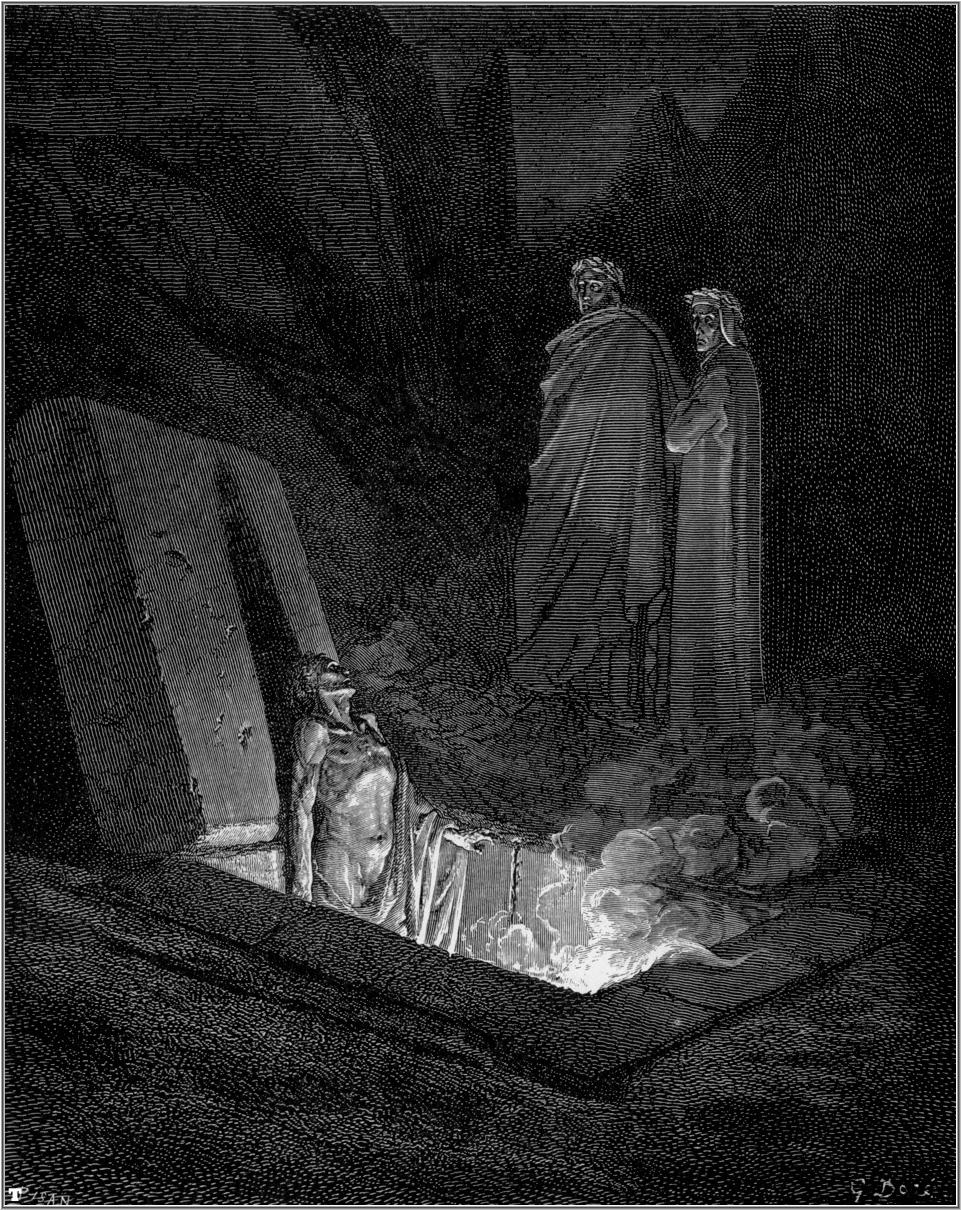
(PS: There is a manga on Dante's Divine Comedy. Has anyone read it? Is it good?)

And, in case you missed this, this is how lost they are...the lost generation. They make bad good and good bad.

 http://www.telegraph.co.uk/culture/culturenews/9140869/Dantes-Divine-Comedy-offensive-and-should-be-banned.html

More here and follow the tags at the bottom...

 http://supertradmum-etheldredasplace.blogspot.com/2014/06/death-of-civilization.html

and here


Friday, 14 February 2014


Another Lost Generation

Between WWI and WWII, a generation of men and women appeared who earned the label of the "Lost Generation" in Europe. These were the men born between 1883 to 1900. This label was not used for Americans, although American authors picked it up as a term, as few went to war, and this was the generation who really built up America in both industry and agriculture. 

However, in Europe, those who were in their twenties in the 1920s seemed to have been characterized by the trauma of being young in the years of the war, and not having the greatest of role models, as so many of the best and the brightest had been killed in WWI. 

We are now seeing a second "Lost Generation". But, which generation is the lost one? Some people, including myself, see more hope in the individualism of the Millenials than the over-conforming people of Gen-X. 

But, with regard to religion, the Gen-Xers are a "mixed bag" of those who go to church simply because it is still the thing to do, and those who are completely secularized. Gen-Xers in America are those born from 1965-1980. In America, the Baby Boomer cut off in 1965, but in Europe, as people after WWII delayed marriage, it is considered a bit later.


The Generations DefinedRoughly, 25-30 years is a generation. But, this is not merely based on age, but on a shared culture, and as the culture changes more quickly, so will the generational years be shortened. 

The Millenials are those born after 1980, or from 1981. 

A lost generation is one which lacks purpose because of being traumatized by war. The Baby Boomers, on the whole, are a positive, optimistic group who were highly successful, living in a time when education was still at a higher level, and where competition was considered a good. No one was afraid to speak of leadership training, for example, which is now a dirty phrase among the politically correct crowd.

The Gen-Xers have had focus as well but on the things of this world-money and status and this generation have been seen as much more conformist than the Baby Boomers. In America, the great symbol of the Gen-Xers was the SUV. Kids in my son's generation grew up watching DVDs and eating on the way to and from school in the family SUV.

This is the techno generation....and they are more introverted and loners.

But, the Millenials are not only more individualistic, they are the new lost generation.


They have not been traumatized by war, but by complete chaos in the world. They have been traumatized by watching wars and terrorism, violence and paganism on TV and in movies. They are surrounded by anti-heroes.

And, there is one huge reason for this. They were not "parented". Too many Gen-Xers wanted to be friends with their children, to the point of letting them call them by their first names. The Millenials have not been formed at all in the virtues, except for the few. 

"Here are Paula and Sam, my parents, " is something I began to hear in the generation who were never disciplined, never "grounded", whose parents just "talked" to them as discipline was without consequences.

I saw the huge change as I had stopped college teaching in 1986, and stopped working with youth as a chaplain in 1987 to get married and be a stay-at-home mom in 1988. When I returned to the world of academia, in 1997, I was shocked at the change. 

For the first time, I met youth who had never been disciplined, and never been inside a church. I was teaching in a Catholic high school, before going back to college teaching, and quickly saw the rot of the lack of parenting.

This is also the generation whose parents have never taught them any moral framework, and who have never learned to share. Why share when there are only two kids in the family?

The new lost generation is not inclined to religion or, ironically, are more religious than their parents. So, the extremes are more clearly seen in their groupings.

They are lost because they are beginning to perceive that they have no futures economically, and many have to put off marriage and having families because they are out of work. According to a Pew Research Document, 16% of the American Millenials of working age in 2013 were living in poverty, compared to 8% of the first wave of Baby Boomers.

Twice as many.....

We are losing our children or grandchildren to the greatest age of neo-paganism the world has ever seen. A post-Christian world is worse than a pre-Christian one, and parents who refused to form their children with religion and morals have created this lost generation. The rise of the occult in this generation is shocking and a direct result of the laissez faire attitude of parents.

It will be the job of those religious Millenials to bring some of their own generation into the Church, as few listened to anyone else. The peer group is all. The lost generation continue the heritage of  "peter pans" and "predators" instead of "protectors". 

But, sadly, the movement of converts will not make much of a difference to numbers, as the older generations die off and the new ones do not take their place in the pews. Up to one-third of this generation have been killed in abortion. 

The new lost generation have lost their souls. Pray that these young men and women are open to God's call and grace, given to all despite the failings of their parents.