Recent Posts

Saturday, 9 February 2013

General Paul Vallely on Drones and ....(in another link that) New CIA Nominee is possibly an Islamic Convert Going Around Twittersphere

from  http://www.newsmax.com/Newsfront/obama-drone-strikes-vallely/2013/02/08/id/489560

“We know some of the drones are being based out of Saudi Arabia with targets in Yemen, but yet you have the Saudis basically still continuing to support radical Islam and Mohabism at the same time they're fighting off al-Qaida,” the general said. “So the whole Middle East is a dichotomy and my feeling is we just don’t have a good strategy anymore how to deal with these global threats.”

Vallely said he's also concerned, as are many other Americans, that Obama has granted himself broader powers without consulting Congress through his use of executive orders and classified documents. 

“We have growing here a tyrannical form of government which is supposed to be a shared government with Congress, the White House, and the courts . . . They’re trying to consolidate power solely within the White House and the executive branch while at the same time diminishing the court’s input, he said. 

Vallely noted, however, that Congress in his view is “inept and weakened" and therefore won't shut off funding for the drone program despite "what we see happening.”

The retired general also raised concerns about Defense Secretary Leon Panetta's testimony Thursday about the terrorist attack last September on the U.S. Consulate in Benghazi, Libya. 

He described Panetta's comments as "smoke and mirrors."

“The threat has been there, it was there,” he said. “It seems that the administration, including [former Secretary of State Hillary] Clinton and Panetta, and even Gen. [Martin] Dempsey, were trying to say, 'Well this is what we’re going to try to do now in the future.' But they didn’t act in time, they didn’t act to even send in and execute a rescue operation no matter how many hours it was going to take.”

Vallely also spoke out against John Brennan as Obama's nominee for CIA director, accusing him of being “basically a supporter of Islam.”


And here are Brennan's own words:


On May 26, 2010, John Brennan, deputy national security advisor for homeland security, delivered a speech[1] at the Center for Strategic and International Studies, a Washington-based think tank.

The speech reads as something of a paean to Barack Obama from whom all inspiration for current security policies is deemed to flow (and, as such, echoes a speech Brennan delivered to the same center on August 6, 2009[2]). It draws on themes that Obama enunciated in Cairo in June 2009[3] when he tried to mollify Arab and Muslim opinion. He distinguished between "violent extremists" and "true Muslims"; he vaunted "centuries of coexistence" without mention of jihad or crusades, and he blamed recent tensions solely on "colonialism." He spoke of Islamic tolerance without any hint of rampant and extreme religious intolerance in Muslim countries. Islam, Obama argued, "is not part of the problem in combating violent extremism—it is an important part of promoting peace."

Brennan's speeches extend these themes and thereby vividly demonstrate the distance the U.S. government has traveled in its counterterrorism policies. Excerpts from Brennan's May 26, 2010 speech follow with commentary by the editors.

Jihad Is Not a Problem

John Brennan: The President's strategy is absolutely clear about the threat we face. Our enemy is not "terrorism" because terrorism is but a tactic. Our enemy is not "terror" because terror is a state of mind, and as Americans we refuse to live in fear. Nor do we describe our enemy as "jihadists" or "Islamists" because jihad is a holy struggle, a legitimate tenet of Islam, meaning to purify oneself or one's community, and there is nothing holy or legitimate or Islamic about murdering innocent men, women, and children.

Middle East Quarterly: To speak of jihad exclusively as a means of purifying oneself or one's community reveals either ignorance or deliberate obfuscation on Brennan's part. Jihad through war against unbelievers is rooted in the Qur'an and the Hadith (reports on the sayings and acts of Muhammad). Historian Michael Bonner in his authoritative study of jihad, Jihad in Islamic History, as well as other writers, has shown that throughout history there has been an inordinate emphasis on armed jihad, in the context of invasions and conquests and, in our day, terrorism.[4] Bernard Lewis, viewed by many as the current dean of academic research into Islam, contends that "the overwhelming majority of classical theologians, jurists, and traditionalists … understood the obligation of jihad in a military sense."[5]

This is not to say that the nonviolent interpretation of jihad is false. Jihad unquestionably means "effort" and the Sufi understanding of the word as an inner struggle against base inclinations is historically substantiated. But this reading has its origin in a non-authoritative collection of hadith and, while influential, has certainly not been the mainstream Muslim understanding of the term through the centuries.
Brennan skirts these points with rhetoric. "Our enemy is not 'terror' because terror is a state of mind." Actually terror in the context of the enemies America faces is a tactic. Victims of jihadists are not murdered by a "state of mind"; this wording both dishonors the dead and minimizes a great danger.

Who the Enemy Is

Brennan: Indeed, characterizing our adversaries this way would actually be counterproductive. It would play into the false perception that they are religious leaders defending a holy cause, when in fact they are nothing more than murderers, including the murder of thousands upon thousands of Muslims. This is why Muslim leaders around the world have spoken out—forcefully, and often at great risk to their own lives—to reject al-Qaeda and violent extremism. And frankly, their condemnations often do not get the recognition they deserve, including from the media.
Moreover, describing our enemy in religious terms would lend credence to the lie—propagated by al-Qaeda and its affiliates to justify terrorism—that the United States is somehow at war against Islam. The reality, of course, is that we never have been and will never be at war with Islam. After all, Islam, like so many faiths, is part of America.

Instead, the President's strategy is clear and precise. Our enemy is al-Qaeda and its terrorist affiliates. For it was al-Qaeda who attacked us so viciously on 9/11 and whose desire to attack the United States, our allies, and our partners remains undiminished. And it is its affiliates who have taken up al-Qaeda's call to arms against the United States in other parts of the world.

MEQ: Brennan, the non-Muslim, dismisses the clearly articulated religious claims of the jihadists and their leaders and presumes to know the true nature of Islam, exemplified by Muslim condemners of Al-Qaeda. His remarks are breathtaking in their condescension. (note: today in the twittersphere, there is talk of Brennan's conversion to Islam  )

By severing the link to Islam and terming America's foes "al-Qaeda and its terrorist affiliates," Brennan hampers the U.S. government from confronting the sources of the problem. He disregards the wide backing for Islamist violence by vast Islamist organizations whose followers praise armed jihad, whose imams and sheikhs defend its perpetrators, and whose acolytes create charities that channel funds to the international jihadist apparatus. What are we to make of the Muslim Brotherhood and its ancillaries in the United States, Canada, Australia, and Europe; the Pakistani Tablighi Jamaat, with members in over 150 countries; the Deobandi movement which gave rise to the Afghan Taliban? Are they all somehow terribly misinformed as to the wellsprings of their beliefs? Why no mention of the Salafi movement and Wahhabism, the official creed of wealthy Saudi Arabia, which exerts an influence out of proportion to its size by its funding of extremist mosques and madrassas (Islamic schools) steeped in hatred of the West?

Finally what is one to make of bromides such as "Islam, like so many faiths, is part of America"? Certainly Muslims, like other faith communities in the United States are welcome to worship as they see fit. Allowing one's enemy to define the terms of engagement in this way is a recipe for disaster. Rather than pointing out that America has come to the defense of Muslims in many countries (Bosnia, Kosovo, Somalia, Kuwait, Iraq, and Afghanistan) during recent years, or that Muslim Americans are freer here than anywhere in the Middle East, the deputy national security advisor reassures us that the government he represents is not "at war with Islam."


 http://www.meforum.org/2949/john-brennan-jihad-holy-struggle

Let us make our homes, "the pledge of a world redeemed"


From today's Morning Prayer-Lauds

Let our striving for your kingdom not fall short through selfishness or fear:
  may the universe be alive with the Spirit, and our homes be the pledge of a world redeemed.
– Father, send us your Spirit.


This prayer seems to me to be particularly timely after all the political events which have caused us all so much distress since the beginning of the year.

Let us not fall into either self-pity, self-centeredness or craven fear. Let us trust Divine Providence, at all times, daily.

Let us pray for the Holy Spirit to come to all on the earth.

Let us make our homes, "the pledge of a world redeemed".

A pledge is a promise, an oath, a commitment. A promise of redemption looks towards eternal life.

An oath of redemption is the fulfilment of our baptismal promises. A commitment is our covenant with God, made in baptism, set in confirmation and watered like a precious plant with the grace of the sacraments.

This phrase means to me that we create a space of redemption, a place of solitude and peace, a place where saints can be made and grow, in our very houses.

Forget the mad rush of commercialism and consumerism. Forget the need to be doing something all the time.

Make your homes into signs of redemption.  I repeat; a pledge is a promise, an oath, a commitment.

Make you homes a covenant of grace with the Holy Trinity. Make your homes the Kingdom of God at hand.


Let our striving for your kingdom not fall short through selfishness or fear:
  may the universe be alive with the Spirit, and our homes be the pledge of a world redeemed.
– Father, send us your Spirit.

Pope Benedict XVI on St. Hildegard of Bingen...Part Eleven and Some Words of Caution


I add one more on Hildegard, simply because I want to end this section with the words of Pope Benedict XVI. Also, read these words thinking of all the great ladies, Teresa, Therese, Catherine, Hildegard, and the greatest of all, Mary. It is important for me to stress the solid foundation of Hildegard as rooted in Catholic theology and spirituality.

We need to see her firmly in the Benedictine tradition of monastic order and prayer, as well as the medieval tradition of mysticism. Her writings are not those of some odd, eccentric woman who reaches down to an age of feminism, but the story of the response of every Christian to the Love of the Indwelling of the Trinity.

That the New Age movement has kidnapped her is most unfortunate, as the interpretations lead people astray. She is not a seer of the goddess movement, nor a prophet of feminism. Here is the Pope from the 2010  series of talks on the saint. This selection from the series is in italics, as usual, for this blog.


http://commons.wikimedia.org/wiki/File:J_Forbes_Ruins_at_Bingen_abbey_1817.jp
 In a letter to St Bernard the mystic from the Rhineland confesses: "The vision fascinates my whole being: I do not see with the eyes of the body but it appears to me in the spirit of the mysteries.... I recognize the deep meaning of what is expounded on in the Psalter, in the Gospels and in other books, which have been shown to me in the vision. 


This vision burns like a flame in my breast and in my soul and teaches me to understand the text profoundly" (Epistolarium pars prima I-XC: CCCM 91).


Hildegard's mystical visions have a rich theological content. They refer to the principal events of salvation history, and use a language for the most part poetic and symbolic. For example, in her best known work entitled Scivias, that is, "You know the ways" she sums up in 35 visions the events of the history of salvation from the creation of the world to the end of time. With the characteristic traits of feminine sensitivity, Hildegard develops at the very heart of her work the theme of the mysterious marriage between God and humanity that is brought about in the Incarnation. On the tree of the Cross take place the nuptials of the Son of God with the Church, his Bride, filled with grace and the ability to give new children to God, in the love of the Holy Spirit (cf. Visio tertia: PL 197, 453c).


From these brief references we already see that theology too can receive a special contribution from women because they are able to talk about God and the mysteries of faith using their own particular intelligence and sensitivity. I therefore encourage all those who carry out this service to do it with a profound ecclesial spirit, nourishing their own reflection with prayer and looking to the great riches, not yet fully explored, of the medieval mystic tradition, especially that represented by luminous models such as Hildegard of Bingen.


The Rhenish mystic is also the author of other writings, two of which are particularly important since, like Scivias, they record her mystical visions: they are the Liber vitae meritorum (Book of the merits of life) and the Liber divinorum operum (Book of the divine works), also called De operatione Dei. In the former she describes a unique and powerful vision of God who gives life to the cosmos with his power and his light. Hildegard stresses the deep relationship that exists between man and God and reminds us that the whole creation, of which man is the summit, receives life from the Trinity. The work is centred on the relationship between virtue and vice, which is why human beings must face the daily challenge of vice that distances them on their way towards God and of virtue that benefits them. The invitation is to distance themselves from evil in order to glorify God and, after a virtuous existence, enter the life that consists "wholly of joy".


In her second work that many consider her masterpiece she once again describes creation in its relationship with God and the centrality of the human being, expressing a strong Christo-centrism with a biblical-Patristic flavour. The Saint, who presents five visions inspired by the Prologue of the Gospel according to St John, cites the words of the Son to the Father: "The whole task that you wanted and entrusted to me I have carried out successfully, and so here I am in you and you in me and we are one" (Pars III, Visio X: PL 197, 1025a).


Finally, in other writings Hildegard manifests the versatility of interests and cultural vivacity of the female monasteries of the Middle Ages, in a manner contrary to the prejudices which still weighed on that period. Hildegard took an interest in medicine and in the natural sciences as well as in music, since she was endowed with artistic talent. Thus she composed hymns, antiphons and songs, gathered under the title: Symphonia Harmoniae Caelestium Revelationum (Symphony of the Harmony of Heavenly Revelations), that were performed joyously in her monasteries, spreading an atmosphere of tranquillity and that have also come down to us. For her, the entire creation is a symphony of the Holy Spirit who is in himself joy and jubilation.


This last part is a good way to summarize the entire perfection series on this blog: "The spiritual life must be tended with great dedication."

The popularity that surrounded Hildegard impelled many people to seek her advice. It is for this reason that we have so many of her letters at our disposal. Many male and female monastic communities turned to her, as well as Bishops and Abbots. And many of her answers still apply for us. For instance, Hildegard wrote these words to a community of women religious: "The spiritual life must be tended with great dedication. At first the effort is burdensome because it demands the renunciation of caprices of the pleasures of the flesh and of other such things. But if she lets herself be enthralled by holiness a holy soul will find even contempt for the world sweet and lovable. All that is needed is to take care that the soul does not shrivel" (E. Gronau, Hildegard. Vita di una donna profetica alle origini dell'età moderna, Milan 1996)

Readers, I purposefully did not use some of the drawings done by artists in the past twenty years concerning  her visions and understanding of Love. Many of those do not reflect the connections between Christ and the soul, or the long history of the Illuminative and Unitive Ways which we have in the Catholic Church.

Doctors of the Church...to be continued....

Part Ten of Doctors of the Church--The Four Ladies Plus the Most Perfect of All

In summary, the four female Doctors of the Church show us that the Illuminative State involves the enlightening of the mind and soul with grace, and the Unitive State brings the Bridal Love of Christ to the soul, enveloping the saint in grace.

These four ladies reflect the best of characteristics of women who were united with God while still on earth. That their writings help us peek into the souls of those who know God and are completely known by God is a great grace for us.

These, our sisters in Christ, lead the way to perfection.

Suffering, purgation, cleansing, filling, enlightenment, filling.

Their writings fall into the categories of theology and spirituality, guiding us and encouraging us.

Of course, they point to the most perfect of all of God's creations, the most perfect of all women, the Blessed Virgin Mary, the Theotokos, who was created from the moment of her conception in perfection and the fullness of grace.

The Immaculate Conception, (as do the four lady saints), leads us to a union with Christ, each as we were created to have.

May Our Queen and Mother Mary, Teresa, Therese, Catherine and Hildegard look kindly on us today as we just glimpse at their greatness in the Spirit.

Part Nine Doctors of the Church: Hildegard of Bingen

The lofty words of Catherine introduce us to the more mysterious, yet colorful words of Hildegard. Here we have her describing the Illuminative and Unitive States. Her books are Scivias ."Know the Way" 1151. Liber vitae meritorum "Book of Life's Merits" or "Book of the Rewards of Life", and Liber divinorum operum ,"Book of Divine Works", also known as De operatione Dei, "On God's Activity" both composed around 1173 according to some historians.

I like it that she lived to write at the age of 75 or so. This is encouraging. She lived to be 81.

Here she describes the Illuminative State and specifically, infused knowledge:

And it came to pass ... when I was 42 years and 7 months old, that the heavens were opened and a blinding light of exceptional brilliance flowed through my entire brain. And so it kindled my whole heart and breast like a flame, not burning but warming... and suddenly I understood of the meaning of expositions of the books...


Her infused knowledge included a vision of Wisdom and Love similar to those of the Old Testament. Boethius as well wrote of Lady Philosophy which some see as Wisdom. Wisdom has been called Sophia in the Greek and has the attributes of a woman. However, we are not to be confused about the "gender" of the Holy Spirit as male or female. The vision given to Hildegard stresses the female aspect of Wisdom.


The aspect of Love here is touching and poetic, but based on a unity with God.


I heard a voice saying to me, "This Lady whom you see is Love, who has Her dwelling place in eternity. When God wished to create the world, He leaned down, and with tender Love, provided all that was needed, as a parent prepares an inheritance for a child. And thus, in a mighty blaze the Lord ordained all His works.
Then creation recognized its Creator in its own forms and appearances. For in the beginning, when God said, "Let it be!" and it came to pass, the means and the Matrix of creation was Love, because all creation was formed through Her as in the twinkling of an eye.


And, on the unity of Love, she wrote from the vision of the Holy Spirit:

May the Holy Spirit cleanse you from all faults of malice, and win you the friendship of Love, most sweet, most tender; who captured the mighty Stag and poured forth song above all heavens; who entered the bridal chamber of all the King's mysteries; and who revealed Herself in all Her beauty in the mirror of the Cherubim.

She is Divine Wisdom. She watches over all people and all things in heaven and on earth, being of such radiance and brightness that, for the measureless splendor that shines in Her, you cannot gaze on Her face or on the garments She wears. For She is awesome in terror as the Thunderer's lightening, and gentle in goodness as the sunshine. Hence, in Her terror and Her gentleness, She is incomprehensible to mortals, because of the dread radiance of divinity in Her face and the brightness that dwells in Her as the robe of Her beauty. She is like the Sun, which none can contemplate in its blazing face or in the glorious garment of its rays. For She is with all and in all, and of beauty so great in Her mystery that no one could know how sweetly She bears with people, and with what unfathomable mercy She spares them.


Pope Benedict XVI wrote this of her:

During the years when she was superior of the Monastery of St Disibodenberg, Hildegard began to dictate the mystical visions that she had been receiving for some time to the monk Volmar, her spiritual director, and to Richardis di Strade, her secretary, a sister of whom she was very fond. As always happens in the life of true mystics, Hildegard too wanted to put herself under the authority of wise people to discern the origin of her visions, fearing that they were the product of illusions and did not come from God. She thus turned to a person who was most highly esteemed in the Church in those times: St Bernard of Clairvaux, of whom I have already spoken in several Catecheses. He calmed and encouraged Hildegard. However, in 1147 she received a further, very important approval. Pope Eugene III, who was presiding at a Synod in Trier, read a text dictated by Hildegard presented to him by Archbishop Henry of Mainz. The Pope authorized the mystic to write down her visions and to speak in public. From that moment Hildegard's spiritual prestige continued to grow so that her contemporaries called her the "Teutonic prophetess". This, dear friends, is the seal of an authentic experience of the Holy Spirit, the source of every charism: the person endowed with supernatural gifts never boasts of them, never flaunts them and, above all, shows complete obedience to the ecclesial authority. Every gift bestowed by the Holy Spirit, is in fact intended for the edification of the Church and the Church, through her Pastors, recognizes its authenticity.

More to come in a third posting.....


Part Eight Doctors of the Church: Hildegard of Bingen

I shall post three articles on this amazing saint. She has been very popular for years with, sadly, the new age set, who want her to be something she is not-a seer outside the tradition of the Church. She was a Benedictine, and obedient to Rome.

She was a holy woman who had many talents and gifts from God. She is fully based in the Catholic Church in doctrine. Like Julian of Norwich, Hildegard was given mystical experiences which she shared in her writings and songs. All these paintings and icons show Hildegard as a nun and teacher, which she was.  Her dates are 1098 to 1179 and you can see she lived to be quite old.

She shows us the way to perfection, as do the other female Doctors of the Church. I discovered her a long time ago and was happy to see her songs put on CDs many years ago. Wiki has an exhaustive list of her music made in modern times up to 2011 here. http://en.wikipedia.org/wiki/Discography_of_Hildegard_of_Bingen

But, Hildegard must be understood in the context of Catholic teaching, which she provides in her unique way. What I am interested in here is her life of perfection on earth. She will show us, in her writings, her understanding of love from the Unitive State.

If we had to categorize our lady doctors, we could put them all in the category of LOVE. Like Catherine, Teresa, and Therese, Hildegard cooperated with grace to come into unity with Christ. All these saints entered into the Unitive State.

Catherine describes this, as does Teresa of Avila very clearly. Hildegard as well shares characteristics of the Unitive State, as does Therese of Lisieux.

Let me backtrack one minute to Catherine of Siena, then move to Hildegard, so that these characteristics are clarified. Both selections are long, so bear with me.

Catherine describes the Unitive State here: we see the characteristics of the enlightened mind and soul, purified in the Love of God and exhibiting a fullness of caritas.

Humility and love, peace and tranquility of mind and purity of heart mark the saint in this state.

What applies to Catherine, Teresa and Therese, applies to Hildegard. What Catherine describes in rational terms, Hildegard gives us in a more personal manner. You will be able to compare the two ways of communication of love.

Catherine's words first.... Hildegard's words, next post.....


A TREATISE OF PRAYER from Catherine of Siena
20. Of the third and most perfect state, and of reason, and of the works done by the soul who has arrived at this light. And of a beautiful vision which this devout soul once received, in which the method of arriving at perfect purity is fully treated, and the means to avoid judging our neighbor is spoken of.

"Those who belong to the third state, which immediately follows the last, having arrived at this glorious light, are perfect in every condition in which they may be, and receive every event which I permit to happen to them with due reverence, as I have mentioned to you when speaking of the third and unitive state of the soul.
"These deem themselves worthy of the troubles and stumbling-blocks caused them by the world, and of the privation of their own consolation, and indeed of whatever circumstance happens to them. And inasmuch as they deem themselves worthy of trouble, so also do they deem themselves unworthy of the fruit which they receive after their trouble.

"They have known and tasted in the light My Eternal Will, which wishes naught else but your good, and gives and permits these troubles in order that you should be sanctified in Me. Wherefore the soul having known My Will, clothes herself with it, and fixes her attention on nothing else except seeing in what way she can preserve and increase her perfection to the glory and praise of My Name, opening the eye of her intellect and fixing it in the light of faith upon Christ crucified, My only-begotten Son, loving and following His doctrine, which is the rule of the road for perfect and imperfect alike.
"And see, how My Truth, the Lamb, who became enamored of her when He saw her, gives the soul the doctrine of perfection. She knows what this perfection is, having seen it practiced by the sweet and amorous Word, My only-begotten Son, who was fed at the table of holy desire, seeking the honor of Me, the Eternal Father, and your salvation.
"And, inflamed with this desire, He ran, with great eagerness, to the shameful death of the Cross, and accomplished the obedience which was imposed on Him by Me, His Father, not shunning labors or insults or withdrawing on account of your ingratitude or ignorance..... 


"It was as if the sweet and amorous Word, My Son, should have said to you: 'Behold, I have made the road, and opened the door with My Blood.' Do not you then be negligent to follow, laying yourselves down to rest in self-love and ignorance of the road, presuming to choose to serve Me in your own way, instead of in the way which I have made straight for you by means of My Truth, the Incarnate Word, and built up with His Blood. Rise up then, promptly, and follow Him, for no one can reach Me, the Father, if not by Him; He is the Way and the Door by which you must enter into Me, the Sea Pacific.
"When therefore the soul has arrived at seeing, knowing, and tasting, in its full sweetness, this light, she runs, as one enamored and inflamed with love, to the table of holy desire; she does not see herself in herself, seeking her own consolation either spiritual or temporal, but, like one who has placed his all in this light and knowledge, and has destroyed his own will, she shuns no labor from whatever source it comes, but rather enduring the troubles, the insults, the temptations of the Devil, and the murmurings of men, eats at the table of the most holy Cross, the food of the honor of Me, the Eternal God, and of the salvation of souls; seeking no reward, either from Me or from creatures, because she is stripped of mercenary love, that is of love for Me based on interested motives, and is clothed in perfect light, loving Me in perfect purity, with no other regard than for the praise and glory of My Name, serving neither Me for her own delight, nor her neighbor for her own profit, but purely through love alone.
"Such as these have lost themselves, and have stripped themselves of the Old Man, that is of their own sensuality, and, having clothed themselves with the New Man, the sweet Christ Jesus, My Truth, follow Him manfully. These are they who sit at the table of holy desire, having been more anxious to slay their own will than to slay and mortify their own body.
"They have indeed mortified their body, though not as an end in itself, but as a means which helps them to stay their own will, as I said to you when explaining that sentence that I wished few words and many deeds, and so ought you to do. Their principal desire should be to slay their own will, so that it may not seek or wish anything else than to follow My sweet Truth, Christ crucified, seeking the honor and glory of My Name and the salvation of souls.
"Those who are in this sweet light know it, and remain constantly in peace and quiet, and no one scandalizes them, for they have cut away that thing by which stumbling-blocks are caused, namely their own will. And all the persecutions, with which the world and the Devil can attack them, slide under their feet, standing, as they do, in the waters of many tribulations and temptations, and do not hurt them, for they remain attached to Me by the umbilical cord of fiery desire.
"Such a man rejoices in everything, nor does he make himself judge of My servants, or of any rational creature, but rejoices in every condition and in every manner of holiness which he sees, saying: 'Thanks be to You, Eternal Father, who have in Your House many mansions.' And he rejoices more in the different ways of holiness which he sees, than if he were to see all traveling by one road, because, in this way, he perceives the greatness of My Goodness become more manifest, and thus, rejoicing, draws from all the fragrance of the rose.
"And not only in the case of good, but even when he sees something evidently sinful, he does not fall into judgment, but rather into true and holy compassion, interceding with Me for sinners and saying, with perfect humility: 'To-day it is your turn, and tomorrow it will be mine unless the Divine Grace preserve me.'
"Enamor yourself, dearest daughter, of this sweet and excellent state, and gaze at those who run in this glorious light and holiness, for they have holy minds, and eat at the table of holy desire, and, with the light, have arrived at feeding on the food of souls, that is, the honor of Me, the Eternal Father, being clothed with burning love in the sweet garment of My Lamb, My only-begotten Son, namely His doctrine.
"These do not lose their time in passing false judgments, either on My servants or the servants of the world, and they are never scandalized by any murmurings of men, either for their own sake or that of others. That is to say, in their own case they are content to endure anything for My Name's sake; and when an injury is done to some one else, they endure it with compassion of this injured neighbor, and without murmuring against him who caused the injury, or him who received it, because their love is not disordinate, but has been ordered in Me, the Eternal God.
"And, since their love is so ordered, these souls, my dearest daughter, never take offense from those they love, nor from any rational creature, their will being dead and not alive, wherefore they never assume the right to judge the will of men, but only the will of My Clemency.


"These observe the doctrine which, as you know, was given you by My Truth at the beginning of your life, when you were thinking in what way you could arrive at perfect purity, and were praying to Me with a great desire of doing so. You know what was replied to you, while you were asleep, concerning this holy desire, and that the words resounded not only in your mind, but also in your ear. So much so, that, if you remember truly, you returned to your waking body, when My Truth said, 'Will you arrive at perfect purity, and be freed from stumbling-blocks, so that your mind may not be scandalized by anything?' Unite yourself always to Me by the affection of love, for I am the Supreme and Eternal Purity. I am that Fire which purifies the soul, and the closer the soul is to Me, the purer she becomes, and the further she is from Me, the more does her purity leave her; which is the reason why men of the world fall into such iniquities, for they are separated from Me, while the soul, who, without any medium, unites herself directly to Me, participates in My Purity.


"Another thing is necessary for you to arrive at this union and purity, namely, that you should never judge the will of man in anything that you may see done or said by any creature whatsoever, either to yourself or to others. My will alone should you consider, both in them and in yourself. And, if you should see evident sins or defects, draw out of those thorns the rose, that is to say, offer them to Me, with holy compassion.
"In the case of injuries done to yourself, judge that My will permits this in order to prove virtue in yourself, and in My other servants, esteeming that he who acts thus does so as the instrument of My will; perceiving, moreover, that such apparent sinners may frequently have a good intention, for no one can judge the secrets of the heart of man. That which you do not see you should not judge in your mind, even though it may externally be open mortal sin, seeing nothing in others, but My will, not in order to judge, but, as has been said, with holy compassion.


On the Doctors of the Church Part Seven-The Two Teresas

Part Seven in the Original Series is Part Five, as some are missing. This may happen again and again, as texts were lost.

I am using a link to a post from last year for the two Teresas. Both Teresa of Avila and Therese, the Little Flower are Doctors of the Church. Sometimes, Teresa is call the Great Teresa and Therese is called the Little Therese.

They lead us to God more directly than most saints because of the honesty of their writings.


St. Teresa of Avila clarifies the way to perfection for us.

St. Therese of Lisieux gives us an everyday applicable way to holiness. She is perhaps the greatest saint canonized in the 20th Century.  Here is my link to what I wrote so I do not have to re-invent the wheel: enjoy.

 http://supertradmum-etheldredasplace.blogspot.co.uk/2012/02/perfection-part-six-teresas.html

All for you...........


There are more than 2,000 posts on this blog.

All for you...

This is my daily valentine for you and for God.

I love the Church so much, Christ's Bride. I write for the Church and those thinking of joining the Church.

Love, read, study, learn, pray, act....from your sister in Christ an early valentine.

Friday, 8 February 2013

Part Six on Catherine of Siena--lay and young

I close this section on Catherine of Siena with two notes.

First of all, she was a lay person, not a nun or a sister. So those who think the way of perfection is not for us only have to look at her own life.

God gives His graces to the laity as well as to the religious and priests.

Second, she died at a very young age. Youth can be holy. We sometimes give too much of a pass to unruly youth, forgetting that formation for holiness can and should start early.

The earlier a child learns the ways of God, the more he or she will grow in holiness on earth.

We need holy children. Only the holy will persevere in the days to come. Only the holy...........

And, I am adding something to this post: a quotation from the great saint.

"A soul that love God perfectly ends by forgetting herself and all other creatures. In God, she finds all that can delight the heart; all beauty, all sweetness, al quietness, and all peace. And to the bond of love between her and God drawing closer, she comes,  as it were, to be wholly transformed in Him. And, at length it comes to pass that she can love, delight in, think of, and remember no other thing Him only."

Doctors of the Church Series-Part Five on the dangers of spiritual self-will

This is the fifth part of the series on the Doctors of the Church. I have covered two out of the thirty-five.

I shall cover all of them from the point of view of my perfection series.

I shall include those honoured by both the East and the West. Seventeen who were declared as such before the great schism are to be included, of course. I have done Ephraim and John of Avila.

As there are only four women, my next set will cover them: SS. Catherine of Siena, Teresa of Avila, Therese of Lisieux and Hildegard of Bingen.

I am concentrating on their holiness and some of the writings. The reason a person is declared a Doctor of the Church is sort of like an honorary PhD. in holiness and excellence in writing. They have also shown that they are completely orthodox and true in doctrine.

One cannot, cannot be holy or find perfection outside of orthodoxy.

If a person insists on having areas where he or she is in disagreement with the Church in any way which is doctrinal, one is not on the way to holiness, but stuck in sin.

St. Catherine of Siena provides a perfect of example of obedience and clarity of mind. God gave her discernment, a gift which is part of prudence. Her dates are 1347-1380.

Her writings reflect deep prayer and a deep relationship with the Trinity.

Several days ago, I quoted her in depth on priests and holiness. Her she is again, from her Treatise on Prayer: 


"For, if the soul truly have light, she will wish to arrive at perfection. In this second perfect light are to be found two kinds of perfection; for they may be called perfect who have abandoned the general way of living of the world.

"One perfection is that of those who give themselves up wholly to the castigation of the body, doing great and severe penance. These, in order that their sensuality may not rebel against their reason, have placed their desire rather in the mortification of the body than in the destruction of their self-will, as I have explained to you in another place. These feed their souls at the table of penance, and are good and perfect, if their penance be illuminated by discretion, and founded on Me, if, that is to say, they act with true knowledge of themselves and of Me, with great humility, and wholly conformed to the judgment of My Will, and not to that of the will of man.

"But, if they were not thus clothed with My Will, in true humility, they would often offend against their own perfection, esteeming themselves the judges of those who do not walk in the same path. Do you know why this would happen to them? Because they have placed all their labor and desire in the mortification of the body, rather than in the destruction of their own will.

"Such as these wish always to choose their own times, and places, and consolations, after their own fashion, and also the persecutions of the world and of the Devil, as I have narrated to you in speaking of the second state of perfection.

"They say, cheating themselves with the delusion of their own self-will, which I have already called their spiritual self-will, 'I wish to have that consolation, and not these battles, or these temptations of the Devil, not, indeed, for my own pleasure, but in order to please God the more, and in order to retain Him the more in my soul through grace; because it seems to me that I should possess Him more, and serve Him better in that way than in this.' And this is the way the soul often fails into trouble, and becomes tedious and insupportable to herself; thus injuring her own perfection; yet she does not perceive it, nor that, within her, lurks the stench of pride, and there she lies.

" Now, if the soul were not in this condition, but were truly humble and not presumptuous, she would be illuminated to see that I, the Primary and Sweet Truth, grant condition, and time, and place, and consolations, and tribulations as they may be needed for your salvation, and to complete the perfection to which I have elected the soul.

"And she would see that I give everything through love, and that therefore, with love and reverence, should she receive everything, which is what the souls in the second state do, and, by doing so, arrive at the third state. Of whom I will now speak to you, explaining to you the nature of these two states which stand in the most perfect light." 

What Catherine is warning against is the great temptation to pride which happens in the Illuminative State. Here is the place where people become heretics or schismatics  insisting on their own insights or directions and separating themselves from Rome.

I believe that such men as Calvin and Knox became very holy before falling into certain ideas which carried them away from the Church and away from holiness. 

How many times have you witnessed a person who is charismatic, a leader in the Church and very pious suddenly fall away over one thing?

I have seen marriages break up when a pillar of the Church commits adultery or supports a child in a homosexual relationship, or who changes his mind about women priests and holds an opposite opinion.


The road to perfection STOPS and the soul slides back into darkness.

It happens too easily.

The experience of love and light make these men and women confident in God, but the temptation to be overly confident in themselves leads to sin.

They fall into self-deception and Catherine saw this happening in the Church. The Illuminative State brings love and power. But, humility must accompany this state or the temptations of pride creep into the soul.

After the active and passive purification, comes more enlightenment, as there are stages in the Illuminative State.

God prepares the soul for His Love. We must have our hearts and minds ready with no hindrances for that Love.


On the honor and dignity of married love-from Humanae Vitae


I hope you all realize that the contraception mentality led to the passing of the redefinition of marriage. Once child-bearing is separated from marriage, the covenant changes to a mere search for pleasure.


From Humanae Vitae

Love and the moral order in marriage.....prophetic words from Pope Paul VI


Faithfulness to God's Design
13. Men rightly observe that a conjugal act imposed on one's partner without regard to his or her condition or personal and reasonable wishes in the matter, is no true act of love, and therefore offends the moral order in its particular application to the intimate relationship of husband and wife. If they further reflect, they must also recognize that an act of mutual love which impairs the capacity to transmit life which God the Creator, through specific laws, has built into it, frustrates His design which constitutes the norm of marriage, and contradicts the will of the Author of life. Hence to use this divine gift while depriving it, even if only partially, of its meaning and purpose, is equally repugnant to the nature of man and of woman, and is consequently in opposition to the plan of God and His holy will. But to experience the gift of married love while respecting the laws of conception is to acknowledge that one is not the master of the sources of life but rather the minister of the design established by the Creator. Just as man does not have unlimited dominion over his body in general, so also, and with more particular reason, he has no such dominion over his specifically sexual faculties, for these are concerned by their very nature with the generation of life, of which God is the source. "Human life is sacred—all men must recognize that fact," Our predecessor Pope John XXIII recalled. "From its very inception it reveals the creating hand of God." (13)

Christ and the Multitude


Why I do my blog...........God calls us all to work with Him in the field. Some of us are teachers. May God bless all our works in Him.
Mark 6: 30 - 34

30The apostles returned to Jesus, and told him all that they had done and taught.
31And he said to them, "Come away by yourselves to a lonely place, and rest a while." For many were coming and going, and they had no leisure even to eat.
32And they went away in the boat to a lonely place by themselves.
33Now many saw them going, and knew them, and they ran there on foot from all the towns, and got there ahead of them.
34As he went ashore he saw a great throng, and he had compassion on them, because they were like sheep without a shepherd; and he began to teach them many things.

Just wonderin'

The Americans and Europeans, as well as the Asians and Australians, by my blog-counter, love the perfection series.

But, the English do not. I wonder why? Maybe some Brits can help me with this one. Maybe too much Dawkins and C. Hitchens?

I think it has to do with the fact that the English have a hard time not going with the flow these days.

I think the post-Vatican II idea of "dialogue with the world" has created too much compromise in the Catholic laity here.

I have traditional friends who cannot make intimate friendships any more with so-called Catholics in their parishes, who are disobedient regarding contraception, same-sex marriage, and a host of other things. They find priests who allow them to continue their non-Catholic lifestyles. They are never challenged.

Perfection starts with orthodoxy.


The Holy Trinity Order of St. John Matha

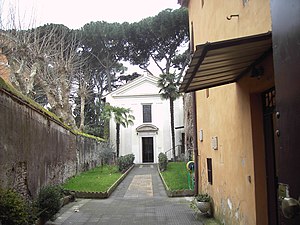
  Today is the feast day of St. John of Matha, born in 1154 and died in 1213. Sadly, his order is no longer doing the original charism for the order, which would be helping Catholics in the Muslim countries, like the troubles in  Mali, Nigeria, etc. Originally, this order was established to rescue Catholic saints from the Muslims. St. John of Matha. San Tommaso in Formis, which has a Cosmati mosaic showing the freeing of slaves., shows the main reason for the order.  Modern, revisionist history states that non-Christians held these slaves, which means, really the Muslims were holding them as slaves for ransom. 

St, John, pray for our brothers and sisters in Egypt, Mali, Nigeria....


A great cartoon Fr. Z highlighted


Part four and more on St. John of Avila


St. John of Avila writes to a lady on what holiness is. Obviously, he was aware of those stages of perfection, and so inspired St. Teresa of Avila, to whom he wrote as well. He is summarizing all three stages here, purification, illumination, and unity in love, as perfect charity comes in unity.

Here is the short letter.


St, John of Avila, part three of the series on the Doctors of the Church


For priests, there is a wonderful letter in this book, Letters of Blessed John of Avila, found here, on preparation for Mass. Here is only one page on that selection: I like the phrase, "Retire into the secrecy of your own heart"...there is so much here. BTW, a fellow blogger of mine, Reluctant Sinner, has a good post on St. John of Avila at this site.


For the laity today, I copy a section on his comments on persecution.


To be continued...............

Doctors of the Church series, part two


This is the second in a long series I am going to do here on the Doctors of the Church. Highlighting their spirituality will cover both categories of the seeking of perfection and the lives of the saints. Enjoy.

Last year, the Pope made St. John of Avila a doctor of the Church. Many people do not know him. His feast day, which I celebrated in Ireland, is on December 14th.

Here is a snippet from the Mass where the Pope made this declaration along with St. Hildegard of Bingen.


At this point, let us pause for a moment to appreciate the two saints who today have been added to the elect number of Doctors of the Church. Saint John of Avila lived in the sixteenth century. A profound expert on the sacred Scriptures, he was gifted with an ardent missionary spirit. He knew how to penetrate in a uniquely profound way the mysteries of the redemption worked by Christ for humanity. A man of God, he united constant prayer to apostolic action. He dedicated himself to preaching and to the more frequent practice of the sacraments, concentrating his commitment on improving the formation of candidates for the priesthood, of religious and of lay people, with a view to a fruitful reform of the Church.

Saint Hildegard of Bingen, an important female figure of the twelfth century, offered her precious contribution to the growth of the Church of her time, employing the gifts received from God and showing herself to be a woman of brilliant intelligence, deep sensitivity and recognized spiritual authority. The Lord granted her a prophetic spirit and fervent capacity to discern the signs of the times. Hildegard nurtured an evident love of creation, and was learned in medicine, poetry and music. Above all, she maintained a great and faithful love for Christ and his Church.

St. John was going to be a missionary, but was asked to stay and help restore Catholicism in Andalusia. He is important to me as he wrote on Christian perfection, which is a theme of this blog.

His sermons and writings influenced SS. John of the Cross, Teresa of Avila, Francis Borgia and others.

More later...


.
I would like to have a copy of "Audi Fili", a perfect book for Lent,  English translation, 1620) and "Spiritual Letters" English translation, 1631, London and Stanbrook Abbey, 1904, if someone has those laying about.....and not using them. I think of all the books in the libraries of monasteries being ignored, simply because those coming in are so few, or that they need the basics of the Catechism, the milk and not the meat, yet.

Here is a selection from an online book found here. To be continued..................

Singles Update


I have not written a post on singles for a while and none of them responded to my call for info on the patron saint of singles.  Tsk-tsk.

http://supertradmum-etheldredasplace.blogspot.co.uk/2013/02/st-mel.html

Well, I still challenge you all to consider marriage, (Guys, you have to ASK), or the religious state, or the priesthood.

Go for it.

I shall pray for you. And remember, there are many posts on being single on this blog. Many, many.

On being a bride......from St. Ephrem and the beginning of a new series

In response to those who want more lives of the saints, I am going to concentrate in Lent on the Doctors of the Church. There are so many, I am sure it will keep both readers and me busy in looking at the lives of these wonderful people. However, I shall not concentrate on biographies, but key ideas from each one. 


I start with the great Syrian, Ephrem of Syria.

St. Ephraem, or Ephraim, (306 – 373), was the first to call Mary, the Bride of Christ. The second selection here is part of his hymn to Mary.

But, this saint also referred to the soul, each person's soul, as a Bride of Christ.

I cannot stress this idea enough here, as I have on this blog.

If we realize that the soul is Christ's Bride, we would respond quite differently to grace. Meditate on this saying of the great saint.


The soul is Your bride,

The body Your bridal chamber,
Your guests are the senses and the thoughts,
And if a single body is a wedding feast for You,
How great is Your banquet for the whole Church!
- St. Ephrem


Please take time to read all those posts on love here on this blog. Perhaps these will help you in Lent to come closer to Christ and understand how much you are loved and cherished by Christ Himself, Who is God and Who woos you. Here is a section from St. Ephrem on Mary as the Bride of Christ.

To Your Mother, Lord, no man knew what name to give. Should he call her Virgin, her Child stood ...; and married no man knew her to be! If then none comprehended Your Mother, who shall suffice for You?
For she was, alone, Your Mother; along with all, Your Sister. She was Your mother, she was Your Sister. She along with chaste women was Your betrothed. With everything You adorned Her, You ornament of Your Mother.
For she was Your Bride by nature ere You had come; she conceived You not by nature after You had come, O Holy One, and was a Virgin when she had brought You forth in holiness, Mary gained in You, O Lord, the honours of all married women. She conceived ... within her without marriage. There was milk in her breasts, not after the way of nature. You made the thirsty land suddenly a fountain of milk.
If she carried You, Your mighty look made her burden light; if she gave You to eat, it was because You were hungry; if she gave You to drink [it was], because You were thirsty; willingly if she embraced You, You, the coal of mercies, kept her bosom safe.
A wonder is Your Mother. The Lord entered her, and became a servant: the Word entered her, and became silent within her; thunder entered her, and His voice was still: the Shepherd of all entered her; He became a Lamb in her, and came forth bleating.
The Belly of Your Mother changed the order of things, O You that orders all! The rich went in, He came out poor: the High One went in, He came out lowly. Brightness went into her and clothed Himself, and came forth a despised form.


Below is a short Lenten Prayer by St. Ephrem.