http://hasthelargehadroncolliderdestroyedtheworldyet.com/
and, it won't so don't worry. LOL!
Saturday, 3 January 2015
The Real Deal Two
REALITY—A Synthesis Of Thomistic Thought by Garrigou-Lagrange
The Divine Will, Antecedent And Consequent
"The will," says St. Thomas, [1454] "is related to things as they are in themselves, with all their particular circumstances. Hence we will a thing simply (simpliciter) when we will it with all its concrete circumstances. This will we call the consequent will. Thus it is clear that everything which God wills simpliciter comes to pass."
If, on the contrary, we will a thing in itself good, but independently of its circumstances, this will is called the antecedent will, or conditional will, since the good in question is not realized here and now. That man should live, says St. Thomas, [1455] is good. But if the man is a murderer, it is good that he be executed. Antecedently, God wills that harvests come to maturity, but He allows for some higher good, that not all harvests do in fact mature. Similarly, He wills antecedently the salvation of all men, though for some higher good, of which He alone is judge, He permits some to sin and perish.
But, since God never commands the impossible, His will and love make the observance of His commandments possible to all men, to each according to his measure. He gives to each, says St. Thomas, [1456] more than strict justice requires. It is thus that St. Thomas harmonizes God's antecedent will, of which St. John Damascene speaks, with God's omnipotence.
Nothing comes to pass, either in heaven or on earth, unless God either brings it to pass in mercy, or then in justice permits it. This principle, taught in the universal Church, shows that there is in God a conditional and antecedent will, relative to a good which does not come to pass, the privation of which He permits in view of some higher good.
To this principle we must add another: [1457] God does not command the impossible. From these two revealed principles derives the distinction between God's efficacious consequent will and His antecedent will, which is the source of sufficient grace.
All that God wills, He does. This principle has no exception. All that God wills (purely, simply, unconditionally) comes to pass without our freedom being thereby in any way forced, because God moves that freedom sweetly and strongly, actualizing it, not destroying. He wills efficaciously that we freely consent and we do freely consent. The supreme efficacy of divine causality, says St. Thomas, [1458] extends to the free mode of our acts.
Many repeat these principles, but do not see that they contain the foundation of the distinction between the two kinds of grace, one that is self-efficacious, the other simply sufficient which man may resist, but not without divine permission.
Hence we find that in the ninth century, to terminate the long controversy with Gottschalk, the Council of Thuzey (860): at the instance of the Augustinian bishops, harmonized God's will of universal salvation with the sinner's responsibility. That Council's synodal letter [1459] contains this sentence: Whatever He has willed in heaven or on earth, God has done. For nothing comes to pass in heaven or on earth that He does not in mercy bring to pass or permits to come to pass in justice.
Since God's love is the cause of created goodness, says St. Thomas, [1460] no created thing would be better than another, if God did not give one a great good than He gives to another. This is equivalent to St. Paul's word: [1461] What hast thou that thou hast not received?
Christian humility rests on two dogmas, that of creation from nothing, and that of the necessity of grace for each and every salutary act. Now this same principle of God's predilection contains virtually the doctrine of gratuitous predestination, because the merits of the elect, since they are the effects of their predestination, cannot be the cause of that predestination. [1462].
Even all there is of being and action in sin must come from God, Source of all being and of all activity. [1463] As the divine will cannot indeed, either directly or indirectly, will the disorder which is in sin, so neither can divine causality produce that disorder. Disorder is outside the adequate object of God's omnipotence, more than sound is outside the object of sight. As we cannot see sound, so God cannot cause the disorder of sin. Nothing is more precise and precisive, if we may use the word, than the formal object of a power. [1464] The good and the true are not really distinct in the object, yet the intellect attains in that object only the truth, and the will only the good. In our organism, it is impossible to confuse the effects of weight with the effects of electricity, say, or of heat. Each cause produces only its own proper effect. And thus God is the cause, not of the moral disorder in sin, but only what there is in sin of being and action. No reality comes to pass, to repeat the principle, unless God has willed it, and nothing of evil unless God has permitted it. How necessary, then, it is that the theologian, after drawing conclusion from principles, should remount from conclusions to principles, thus clarifying his conclusions for those who do not see the bond that binds all consequences to the primal verities.
If, then, one of two sinners is converted, that conversion is the effect of a special mercy. And if a just man never sins mortally after his baptism, this perseverance is the effect of a still greater mercy. These simple remarks are enough to show the gratuity of predestination.
Molina, refusing to admit that grace is intrinsically self-efficacious, maintains that it is efficacious only by our consent, foreseen from eternity by scientia media. Thus we have a good which comes to pass without God having efficaciously willed it, contrary to the principle we have just laid down.
Molina does indeed attempt to defend that principle. God, having seen by scientia media that Peter, placed in such and such circumstances, would with sufficient grace be in fact converted, wills to place him in those favorable circumstances rather than in others where he would be lost. But this explanation surely reduces the absolute principle of predilection to a relative, indirect, and extrinsic principle. Grace is efficacious, not of itself and intrinsically, but only by circumstances which are extrinsic to the salutary act. With equal aid, yea with less aid, says Molina, one rises, the other perseveres in obstinacy. One who thus rises, St. Paul would say, has something he has not received.
Who can resist God's will? St. Paul [1465] answers this question with a hymn on the mysterious depths of God's wisdom. Why God draws this man and not that man, says St. Augustine, [1466] judge not unless you would misjudge. Predestination, says St. Thomas, [1467] cannot have the merits of the elect as cause, because these merits are the effects of predestination, which is consequently gratuitous, dependent on the divine good pleasure.
Not infrequently we meet authors who, in explaining this mystery, wish to speak more clearly than St. Paul, St. Augustine, and St. Thomas. Superficially, they may be more clear. But is not this superficial clarity incompatible with the sense of mystery? Willy-nilly, these authors return to Molina. One of them recently wrote as follows: "Here is the mystery of predestination. Since God knew from all eternity that Judas would not profit by the sufficient grace accorded to him, why did God not give to Judas, as He did to the good robber, those graces to which He knew that Judas would correspond? ".
This explanation is Molinistic, since it rests on scientia media, since it implies in God's foreknowledge a passivity, depending on the course man would take, were he put in such and such circumstances, and which he will take if in fact he is placed there. The dilemma remains: Is God's knowledge causal and determining? Or is it rather caused and determined? There is no medium.
If we follow the principle commonly received that all good comes from God's efficacious will and all evil from God's permission, then it is not sufficient to say with the author just quoted: God knew what would happen if, etc. We must rather say: God permitted the final impenitence of Judas. Had God not permitted it, it would not have come to pass and God could not have infallibly foreseen it. And God would not have permitted it, had He willed efficaciously to save Judas. But God did efficaciously will the conversion of the penitent robber, because He willed efficaciously his salvation (gratuitous predestination to glory). [1468].
The free will moved and aroused by God, says the Council of Trent, can dissent if it will. This declaration, which was prepared by Dominic Soto, a Thomist, and by many Augustinians, is not a condemnation of self-efficacious grace. Grace actualizes our liberty, but leaves intact the freedom to resist. [1469] As he who is seated retains real power to rise, so he who chooses a particular road has real power to refuse it freely. Real power to resist is one thing, actual resistance is something else. [1470].
No one, then, can be better than another unless he be loved more by God. Divine predilection is the foundation of predestination. [1471] Bannez says nothing more than does St. Thomas. [1472] Molina, more frank than some of his followers, recognized that his own doctrine is not that of St. Thomas. [1473].
As regards reprobation, it consists precisely, says St. Thomas, [1474] in God's will to permit sin (negative reprobation) and of inflicting punishment of damnation for sin (positive reprobation).
Hence it is wrong to say, as has been recently said, that permission of sin is found in the same way among the elect as it is among the reprobate. Final impenitence is never found among the elect.
Nothing comes to pass unless God wills it efficaciously, if it is good, or permits it if it is evil. God never commands the impossible. From these two most fundamental principles arises the distinction between efficacious grace, which is the effect of the intrinsically efficacious will of God, and sufficient grace, which is the effect of God's antecedent will, accompanied by permission of sin. The first grace gives the actual doing of salutary acts, the second gives real power for salutary acts. But—we cannot repeat it too often—sufficient grace is a blossom wherein efficacious grace is offered, yet so that, if man resists, he merits privation of the efficacious grace which, without this resistance, he would have received.
A very great mystery, certainly. God cannot be unjust, cries St. Paul. [1475] What creature can claim to have first given anything to God, so as to claim a reward? But this much is manifest in this chiaro oscuro: we are dealing here with the transcendent pre-eminence of the deity, wherein are harmonized infinite justice, infinite mercy, and supreme freedom. Final perseverance comes from infinite mercy. Final impenitence is a just punishment. The infinity of all God's attributes will be manifest only in the immediate vision of God as he is in Himself.
Let us learn, says Bossuet, [1476] to make our intelligence captive, to confess these two graces (sufficient and efficacious): one of which leaves our will without excuse before God, while the other forbids all self-glorification. Resistance to grace is an evil which comes only from ourselves. Non-resistance to grace is a good, which would not come to pass here and now, had not God from all eternity efficaciously willed it so.
Let us notice some common errors, especially in the minds of those who are just being introduced into this doctrine. It is an error to think that some receive only efficacious graces and others only those which are sufficient. All of us receive both kinds of graces. Even those in mortal sin receive from time to time efficacious graces, to make, say, an act of faith, or of hope. But often too they resist the sufficient grace which inclines them to conversion, whereas good servants of God often receive sufficient graces which they do not resist and which are followed by efficacious graces.
We should note too that there are various kinds of sufficient grace. There are first exterior graces, as, e. g.: a sermon, a good example, a proper guidance. Then interior graces, as, e. g.: that of baptism, the infused virtues and graces, which give us the proximate power to act supernaturally. Thirdly, there are actual graces, graces of illumination, which give us good thoughts, graces of attraction which incline us to salutary consent, even though consent does not follow. [1477] A grace which efficaciously produces attrition is, as regards contrition, a sufficient grace. [1478].
Sufficient grace often urges us insistently not to resist God's will, manifested to us by our superior, say, or by our director. For a year, it may be, or two years, or many years, circumstances strengthen what is demanded of us in God's name, and still we remain deceived by our selfishness, though prayers are said for us, and Masses celebrated for our intention. Notwithstanding all light and attraction that comes from these graces, we may still reach a state of hardening in sin. Behold I stand at the gate and knock.
Resistance comes from the soul alone. If resistance ceases, the warmth of grace begins, strongly and sweetly, to penetrate our coldness. The soul begins to realize that resistance is her own work, that non-resistance is itself a good that comes from the Author of all good, that it must pray for this good, as the priest prays just before his Communion at Mass: "Grant, O Lord, that I may ever cling to Thy precepts, and let me never be separated from Thee."
One who keeps the commandments sincerely is certainly better than he who, though fully able, does not keep them. He is therefore bound to special gratitude to God who has made him better. Hence our present distinction, between grace sufficient and grace efficacious, is the foundation of a gratitude intended to be eternal. The elect, as St. Augustine [1479] so often says, will sing forever the mercy of God, and will clearly see how this infinite mercy harmonizes perfectly with infinite justice and supreme freedom. [1480].
The Thomistic synthesis sets all these principles in bold relief, thereby preserving the spirit of theological science which judges all things, not precisely and primarily by their relation to man and man's freedom, but by their relation to God, the proper object of theology, to God, the source and goal of all life, natural and supernatural. Truth concerning God is the sun which illumines our minds and wills on the road that rises to eternal life, to the unmediated vision of the divine reality.


If you want the real deal.....
http://www.thesumma.info/reality/reality60.php
REALITY—A Synthesis Of Thomistic Thought
by Garrigou-Lagrange
REALITY—A Synthesis Of Thomistic Thought
by Garrigou-Lagrange
CH59: EFFICACIOUS GRACE
Treating the questions of God's foreknowledge, of predestination and of grace, many Molinists, in order to denote themselves as Thomists, refer to classic Thomism under the name of "Bannesianism." Informed theologians see in this practice an element of pleasantry, even of comedy.
Our purpose here is to insist on a principle admitted by all theologians, a principle wherein Thomists see the deepest foundation of the distinction between grace sufficient and grace efficacious.
The Problem
Revelation makes it certain that many graces given by God do not produce the effect (at least the entire effect) toward which they are given, while other graces do produce this effect. Graces of the first kind are called sufficient graces. They give the power to do good, without bringing the good act itself to pass, since man resists their attraction. The existence of such graces is absolutely certain, whatever Jansenists say. Without these graces, God, contrary to His mercy and His justice, would command the impossible. Further, since without these graces sin would be inevitable, sin would no longer be sin, and could not justly be punished. Judas could have really here and now avoided his crime, as could the impenitent robber who died near our Savior.
Graces of the second kind are called efficacious. They not only give us real power to observe the precepts, but carry us on to actual observance, as in the case of the penitent robber. The existence of actual efficacious grace is affirmed, equivalently, in numerous passages of Scripture. Ezechiel [1437] says, for example: I will give you a new heart and put in you a new spirit, I will take away your heart of stone, and give you a heart of flesh. I will put My spirit in you and bring it about that you follow My commands and observe and practice My laws. Again, the Psalmist says: [1438] All that God wills, He does. The word "wills" must here be understood as meaning all that God wills, not conditionally, but absolutely. Thus He wills a man's free conversion, that of Assuerus, e. g.: at the prayer of Esther: [1439] Then God changed the wrath of the King into mildness. God's omnipotence is, in these texts, assigned as reason for the infallible efficacy of God's decree. [1440].
The Second Council of Orange, against the Semi-Pelagians, after citing many of these texts, says of the efficaciousness of grace: [1441] Whenever we do good, God, in us and with us, brings our work to pass. Hence there is a grace which not only gives real power to act right (a power which exists also in him who sins): but which produces the good act, even while, far from excluding our own free cooperation, it arouses rather this cooperation, carries us on to consent.
St. Augustine [1442] thus explains these same texts: God, by His power, most hidden and most efficacious, turns the king's heart from wrath to mildness.
The great majority of older theologians, Augustinians, Thomists, Scotists, hold that the grace called efficacious is efficacious of itself, because God wills it to be so, not because we will it to be so, by an act of consent foreseen by God. God is, not a mere spectator, but the Author of salvation. How is grace self-efficacious? Here these older authors differ. Some recur to the divine motion called premotion, some to what they call "victorious delectation," some to a kind of attraction. But, amid all differences, they agree that grace is of itself efficacious.
Molina, on the contrary, maintains that grace is efficacious extrinsically, by our consent, foreseen by scientia media. This scientia media has always been rejected by Thomists, who say that it implies a passivity in God relative to our free determinations (futuribilia, and future): and that it leads to "determination by circumstances" (since it is by knowledge of these circumstances that God would foresee what man would choose). Thus the very being and goodness of the will and salutary choice would come from man and not from God. Granted equal grace to each, says Molina, [1443] it can come to pass that one is converted, the other not. Even with a smaller aid of grace one can rise, while another with greater grace does not rise, and remains hardened.
Molina's opponents answer thus: Here we have a good, the good of a salutary act, which does not come from God, Source of all good. How then maintain the word of Jesus: [1444] Without Me you can do nothing? Or that of St. Paul: [1445] What hast thou that thou hast not received? If, with equal grace, and amid equal circumstances, one is converted and the other not, then the convert has a good which he has not received.
Molinists object: If, in order to do good, you demand, besides sufficient grace, also self-efficacious grace, does sufficient grace really and truly give you a real power to act?
It does, so Thomists reply, if it is true that real power to act is distinct from the act itself; if it is true [1446] that the architect, before he actually builds, has a real power to build, that he who is seated has a real power to rise; that he who is sleeping is not blind, but has a real power to see. Further, if the sinner would not resist sufficient grace, he would receive the efficacious grace, which is offered in the preceding sufficient grace, as fruit is offered in the blossom. If he resists he merits privation of new aid.
But does St. Thomas explicitly distinguish self-efficacious grace from that grace which gives only the power to act?He does, and often. God's aid, he says, [1447] is twofold. God gives the power, by infusing strength and grace, by which man becomes able and apt to act. But He gives further the good act itself, by interiorly moving and urging us to good... since His power, by His great good will, operates in us to will and to do. Again: [1448] Christ is the propitiation for our sins, for some efficaciously, for all sufficiently, because His blood is sufficient price for the salvation of all, but does not have efficacy except in the elect, because of impediment. Does God remedy this impediment? He does, often, but not always. And here lies the mystery. God, he says, [1449] withholds nothing that is due. And he adds: [1450] God gives to all sufficient aid to keep from sin. Again, speaking of efficacious grace: [1451] If it is given to this sinner, it is by mercy; if it is refused to another, it is by justice.
Thomists add, [1452] in explanation: Every actual grace which is self-efficacious for an imperfect act, say attrition, is sufficient for a more perfect salutary act, say contrition. This is manifestly the doctrine of St. Thomas. [1453] If man resists the grace which gives him the power to do good, he merits privation of the grace which would carry him on to actual good deed. But the saint has not merely distinguished the two graces, he has pointed out the deepest foundation for this distinction.
Referring Back to The Heresies Series--Demonic Assault on The Church
First, there was an attack on the Liturgy.
Then, there was an attack on the priesthood.
After that, there was an attack on the sacraments, especially marriage and the Eucharist.
Now, there is an attack on grace and the Church's teaching on predilection.
Now, there is also an attack on the entire set of truths about the Fall of Man, Original Sin and even the Redemption of Christ.
Next, there will be an attack on the very nature of God's relationship to humans.
Are you all paying attention?
My series is a resource. If you have questions, ask now.
Too many priests are full of false optimism.
Thoughts on my own birthday
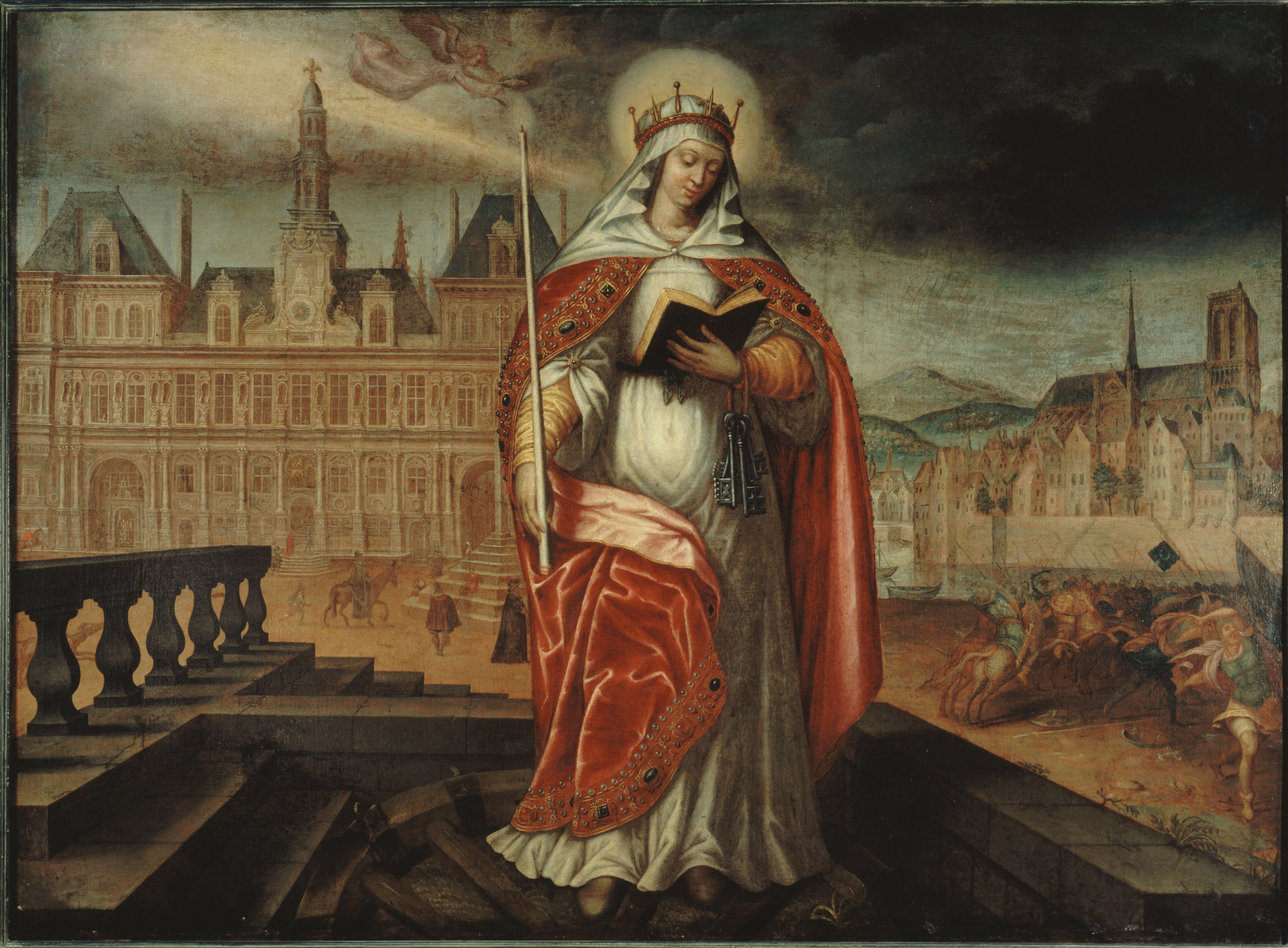 |
| St. Genevieve, Patroness of Paris from Wiki |
Where old age begins is an interesting question. I do not feel old.
My parents, who have been married 67 years today, are old. Dad is 91 and Mom 85 for a few more days, when she turns 86. Now, I think it is fair to say that they are old. They do not act old and spend many days having lunch at Panera's. They still live in the family home and are extremely independent.
I was born on their first wedding anniversary, thereby spoiling a good time. I was a month early, as most of us were in our family. By the way, if one would buy 1949 Moet & Chandon Brut to celebrate my parent's anniversary and my birthday, one would have to go to Holland and put out about 400 Euros for the bottle. A Bollinger from the same year is much less expensive.

Never did I intend to stay in the Midwest, as most Iowans leave after getting one of the best educations in the world, whether Catholic or secular. Emigration from Iowa is well-known. Having said that, two of my siblings live in state and one, like me, does not.
I am the oldest of eight, four of whom died. My sister Beth Ann, and an unnamed, but baptized boy, are in heaven. The other two are in God's mercy. Three brothers, all smarter and way more successful than I am, are younger, but we are all Boomers.
As I think of my life, I am happy in my friends. God has been generous in giving me wonderful Catholic friends of all ages, and wonderful non-Catholic friends of all ages. I treasure them all even though we may live thousands of miles apart. My friends are my family. Most of my friends are either much older than I am or much younger, which is interesting. I have only two friends about my age.
As those ancestors of mine lived to be very old, in their mid to late nineties. I have a good chance of being ancient as well. But, perhaps not. God alone knows our day of leaving this earth, and all we can do is be ready.
Today, I want to thank my Dear Readers for enriching my life in so many ways. I am more intelligent, happier, stronger, and hopefully, spiritually better, because of YOU.
When I started this blog, it was for a handful of students. Little did I imagine that readers from most countries in the world would find this blog.
 Thank you! You deserve a piece of cake, but as I am not having any, just pretend. At home, we always got to choose our dessert for our birthday, and I always chose Boston Cream Pie, which my mother makes like a chef. So, here is our virtual dessert for the day.
And, happy feast of St. Genevieve, after whom I was almost named, but (imo, thank God), was not.
I cannot imagine being SupertradGen, but I do love France. St. Genevieve lived to be old, somewhere between 79 and 93. Her prayers saved Paris from Attila the Hun. Very cool.
My birthday pressie to myself is to turn on the electric-meter-heater-monster.
I share a birthday with J. R. R. Tolkien, Mel Gibson, Pola Negri, Sergio Leone, Stephen Stills, Michael Schumacher, (God heal him), and various others. There are many saints whose feast day is today, mostly martyrs, bishops, abbots, virgins, and one, Daniel of Padua, patron saint of women whose husbands are away at war-something to keep in mind in these troubled times. Several of the saints for January 3rd are either French or ended up in France, which is where I shall be sometime this month in order to celebrate Robbie Burns Night with some ex-pats! Of course, I shall tell you all about it, and about the haggis, which I actually like to eat. I have made Cock-a-leekie soup many times myself, and I am looking forward to listening to the addressing of the haggis. Here is the text, translated, just in case you cannot wait until January 25th.

Fair and full is your honest, jolly face,
Great chieftain of the sausage race!
Above them all you take your place,
Stomach, tripe, or intestines:
Well are you worthy of a grace
As long as my arm.
The groaning trencher there you fill,
Your buttocks like a distant hill,
Your pin would help to mend a mill
In time of need,
While through your pores the dews distill
Like amber bead.
His knife see rustic Labour wipe,
And cut you up with ready slight,
Trenching your gushing entrails bright,
Like any ditch;
And then, O what a glorious sight,
Warm steaming, rich!
Then spoon for spoon, the stretch and strive:
Devil take the hindmost, on they drive,
Till all their well swollen bellies by-and-by
Are bent like drums;
Then old head of the table, most like to burst,
'The grace!' hums.
Is there that over his French ragout,
Or olio that would sicken a sow,
Or fricassee would make her vomit
With perfect disgust,
Looks down with sneering, scornful view
On such a dinner?
Poor devil! see him over his trash,
As feeble as a withered rush,
His thin legs a good whip-lash,
His fist a nut;
Through bloody flood or field to dash,
O how unfit.
But mark the Rustic, haggis-fed,
The trembling earth resounds his tread,
Clap in his ample fist a blade,
He'll make it whistle;
And legs, and arms, and heads will cut off
Like the heads of thistles.
You powers, who make mankind your care,
And dish them out their bill of fare,
Old Scotland wants no watery stuff,
That splashes in small wooden dishes;
But if you wish her grateful prayer,
Give her [Scotland] a Haggis!
St John Today on Purification

1 John 2:29-3:6New Revised Standard Version Catholic Edition
29 If you know that he is righteous, you may be sure that everyone who does right has been born of him.
3 1 See what love the Father has given us, that we should be called children of God; and that is what we are. The reason the world does not know us is that it did not know him. 2 Beloved, we are God’s children now; what we will be has not yet been revealed. What we do know is this: when he is revealed, we will be like him, for we will see him as he is. 3 And all who have this hope in him purify themselves, just as he is pure.
4 Everyone who commits sin is guilty of lawlessness; sin is lawlessness. 5 You know that he was revealed to take away sins, and in him there is no sin. 6 No one who abides in him sins; no one who sins has either seen him or known him.
The First Shedding of The Blood of The Son of God

Christ was innocent of sin and did not have to shed blood for us. This is the first time, but, as we know, not the last.
Let us pause today and thank Jesus for coming to save us through His Blood.
Feast of The Holy Name of Jesus-January 3, 2015

Litany of the Holy Name of Jesus
V. Lord, have mercy on us.R. Christ, have mercy on us.
V. Lord, have mercy on us. Jesus, hear us.
R. Jesus, graciously hear us.
V. God the Father of Heaven
R. Have mercy on us.
V. God the Son, Redeemer of the world,
R. Have mercy on us.
V. God the Holy Spirit,
R. Have mercy on us.
V. Holy Trinity, one God,
R. Have mercy on us.
V. Jesus, Son of the living God, R. Have mercy on us.
Jesus, splendor of the Father, [etc.]
Jesus, brightness of eternal light.
Jesus, King of glory.
Jesus, sun of justice.
Jesus, Son of the Virgin Mary.
Jesus, most amiable.
Jesus, most admirable.
Jesus, the mighty God.
Jesus, Father of the world to come.
Jesus, angel of great counsel.
Jesus, most powerful.
Jesus, most patient.
Jesus, most obedient.
Jesus, meek and humble of heart.
Jesus, lover of chastity.
Jesus, lover of us.
Jesus, God of peace.
Jesus, author of life.
Jesus, example of virtues.
Jesus, zealous lover of souls.
Jesus, our God.
Jesus, our refuge.
Jesus, father of the poor.
Jesus, treasure of the faithful.
Jesus, good Shepherd.
Jesus, true light.
Jesus, eternal wisdom.
Jesus, infinite goodness.
Jesus, our way and our life.
Jesus, joy of Angels.
Jesus, King of the Patriarchs.
Jesus, Master of the Apostles.
Jesus, teacher of the Evangelists.
Jesus, strength of Martyrs.
Jesus, light of Confessors.
Jesus, purity of Virgins.
Jesus, crown of Saints.
V. Be merciful, R. spare us, O Jesus.
V. Be merciful, R. graciously hear us, O Jesus.
V. From all evil, R. deliver us, O Jesus.
From all sin, deliver us, O Jesus.
From Your wrath, [etc.]
From the snares of the devil.
From the spirit of fornication.
From everlasting death.
From the neglect of Your inspirations.
By the mystery of Your holy Incarnation.
By Your Nativity.
By Your Infancy.
By Your most divine Life.
By Your labors.
By Your agony and passion.
By Your cross and dereliction.
By Your sufferings.
By Your death and burial.
By Your Resurrection.
By Your Ascension.
By Your institution of the most Holy Eucharist.
By Your joys.
By Your glory.
V. Lamb of God, who takest away the sins of the world,
R. spare us, O Jesus.
V. Lamb of God, who takest away the sins of the world,
R. graciously hear us, O Jesus.
V. Lamb of God, who takest away the sins of the world,
R. have mercy on us, O Jesus.
V. Jesus, hear us.
R. Jesus, graciously hear us.
Let us pray.
O Lord Jesus Christ, You have said, "Ask and you shall receive, seek, and you shall find, knock, and it shall be opened to you." Grant, we beg of You, to us who ask it, the gift of Your most divine love, that we may ever love You with our whole heart, in word and deed, and never cease praising You.
Give us, O Lord, as much a lasting fear as a lasting love of Your Holy Name, for You, who live and are King for ever and ever, never fail to govern those whom You have solidly established in Your love. R. Amen.
Friday, 2 January 2015
Instincts and More On The Eve of My Birthday
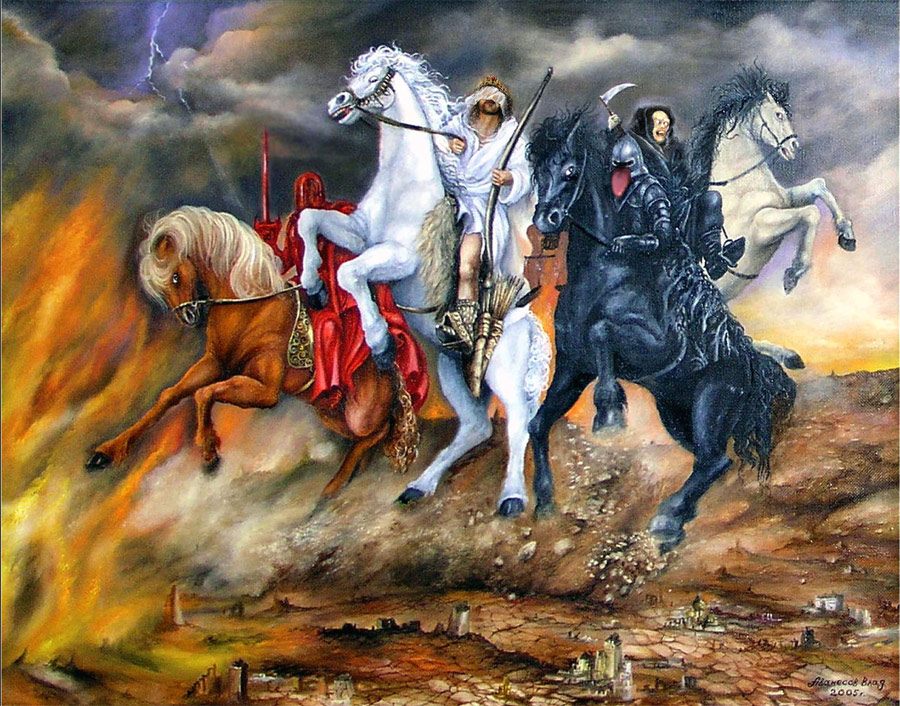
About two and a half weeks ago, I sensed a huge shift in evil and good in and over Malta and Europe. Something happened. This instinct is not based on the increased persecution of the Christians by the Muslims, nor the saber-rattling of the Russians, which have the Poles, Finns, and Lithuanians nervous.
God has allowed something to change, and we have been warned for a long time about the last, great tribulation of the Church. He is removing His protective Hand and allowing Satan a time to sift us all. I have written some fiction based on three days of visions I saw in the summer of 2008, some of which was verified by two other people, one who lived hundreds of miles away. As you know, I am not into private revelations, and believe that God merely inspires our imaginations. But, I was first warned by a small voice, in French, which is interesting. to pay attention to what was going to be shown to me over the next three days at the time. Again, details do not matter much, but as Hamlet said, "The readiness is all." When we see things like this, we are not adding to revelation, but being warned of what has already been revealed. There is no new revelation.
My novellas are partly base on those visions, which happened when I was wide awake, starting in the evening, moving into the night, and in the day time as well as into the night for three days. Twice I have had messages in French, which indicates something to me personally. I understand some simple things in French, my third language after English and Latin.
Since 2000, I warned my Catholic students that they were in the Age of the Martyrs. It has begun in earnest. If you think you can avoid suffering by moving somewhere, forget it. All the West will be engulfed by evil.
The reason why I want to stay in Europe is that this is part of my "destiny" as I cannot avoid suffering here. There are different kinds of suffering.
I do not need to go into detail and I am not infallible, nor a seer, but God showed me plainly in July, 2008, a series of happenings involving the States and the Western World. It does not matter what the details are, but the message was "get ready".
Now, many others see the same thing by watching politics and by paying attention. This is good, as we are rational creatures and need to use our brains.
2008 was seven years ago, and we have had time to do what we need to do to get ready for the greatest era of suffering the Church has ever seen.
The Church will be so weakened that only those who have a relationship with God the Father, the Son of God Christ and the Holy Spirit will keep the Faith. This is why I have written the perfection series, to help you all get holy, and ready for persecution.
Do not think America or Europe will emerge unscathed from the Wrath of God brought on, mostly by the millions of aborted babies crying out for justice. One other sin which cries out to God for vengeance, and I have written about this on the blog, is sodomy. If you do not believe me, here again, is the CCC note on this fact: 1867 The catechetical tradition also recalls that there are "sins that cry to heaven": the blood of Abel,139 the sin of the Sodomites,140 the cry of the people oppressed in Egypt,141 the cry of the foreigner, the widow, and the orphan,142 injustice to the wage earner.143

Do not think that you will have access to Mass or the sacraments to keep you going. You will have to keep yourself going and this is why I have begged you to pod.
I cannot impress upon my readers enough the coming catastrophes. which God will permit for four reasons: one, to create saints for His Kingdom, two to bring about converts, three, to chastise us all, and four, to purify the Church.
I cannot count the ostrich photos on this blog or the number of posts on the stages of persecution. The Church has many, many enemies, both within and without.
Are you ready?
If not, get ready. We are heading for the Last Battle, which will not be short, but will result in the glory of God.
One opinion-another German/Russian Treaty
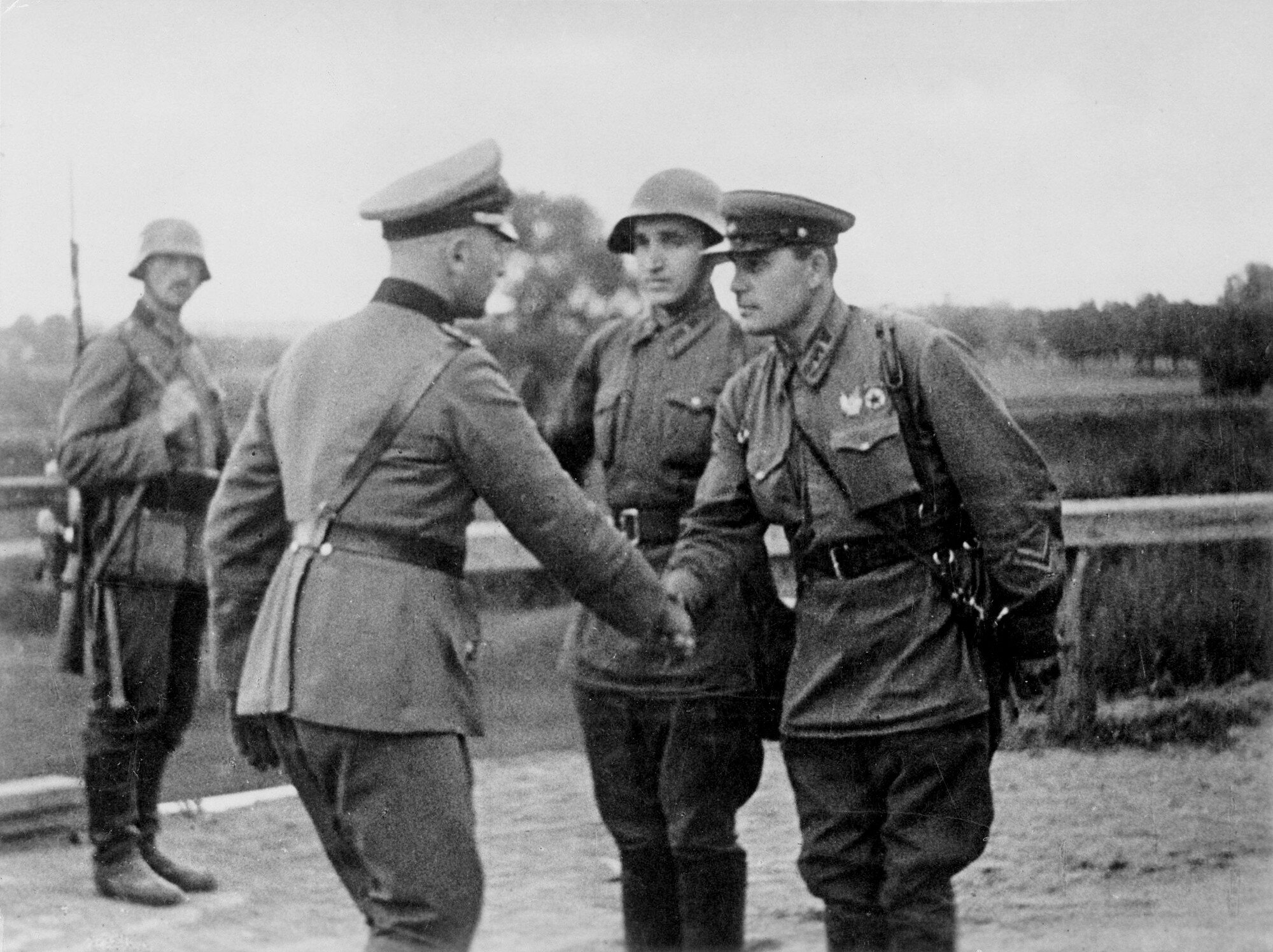 |
| https://upload.wikimedia.org/wikipedia/commons/9/99/Spotkanie_Sojusznik%C3%B3w.jpg |
"Brest-Litivosk 1918, Rappallo, 1922, Treaty of Berlin 1926, Molotov-Ribbentrop pact 1939.
I think Russia is enticing Germany to her side", from my friend....
I heard this from a military man today, and I decided to share with you the wiki bits on the 1922 treaty. It will be about the Ukraine. Do not kid yourselves, this is coming. I have known there would be war soon maybe from something like this since 2008 at least. I am not sure it would involve Germany and Russia, but America is out of the picture in the EU and nations will start making moves. Putin does not like the Muslims, as we know from history.
And, the economy of Russia "needs a war" like America did in 1940.
Here is the wiki bit from the Treaty of Rapallo entry.
The plenipotentiary of the German Government, namely Freiherr von Maltzan, Permanent Under-Secretary for Foreign Affairs; the plenipotentiary of the Socialist Soviet Republic of the Ukraine, namely, Herr Waldemar Aussem, Member of the Central Executive Committee for all Ukraine, and also the plenipotentiary of the Government of the Socialist Soviet Republic of White Russia, the Socialist Soviet Republic of Georgia, the Socialist Soviet Republic of Azerbaijan, the Socialist Soviet Republic of Armenia, and the Republic of the Far East, namely Herr Nikolaus Krestinski, plenipotentiary and Ambassador of the Russian Socialist Soviet Republic in Berlin; having communicated their full powers, which were found in good and due form, agreed to the following provisions:
Article 1
The Treaty signed at Rapallo, on April 16, 1922, between the German Reich and the Russian Socialist Soviet Republic shall apply, mutatis mutandis, to the relations between the German Reich, on the one hand, and; [1] the Socialist Soviet Republic of the Ukraine; [2] the Socialist Soviet Republic of White Russia; [3] the Socialist Soviet Republic of Georgia; [4] the Socialist Soviet Republic of Azerbaijan; [5] the Socialist Soviet Republic of Armenia, and; [6] the Republic of the Far East,---- hereinafter referred to as States allied the R S F S R --- on the other hand. As regards Article 2 of the Treaty of Rapallo, this shall be valid for the application down to April 16, 1922, of the laws and measures specified therein.
Article 2
The German Government and the Government of the Socialist Soviet Republic of the Ukraine are agreed that the determination and the settlement of such claims as may have arisen in favour either of the German Government or of the Government of the Ukraine since the conclusion of the state of war between Germany and the Ukraine during the period in which German troops were present in the Ukraine shall be reserved.
This comment on the Buchanan post deserves attention
Gearing up for World War IV.
Here is how I see it playing out...
Step 1: Sanctions against Russia
Step 2: Rise of Nationalism in Russian and to a extent Germany
Step 3: Belarussian hyperinflation
Step 4: Belarussians wish to rejoin Greater Russia ( Belarus means "white russia" the soil there is grey or white in color)
Step 5. NATO sets a "red line". Russia reoccupies Belarus.
Step 6. "Border Incident" with Poland or Lithuania
Step 7: German nationalists seize power in Germany.
Seek re-alignment with Russian/NATO/EU/Banking System
offer to trade Koingsburg/Kalingrad/East Prussia for Belarus and Right Bank Ukraine.
Step 8: General War
Russia re-occupies Right Bank Ukraine. Iran seizes parts of Caucasian regions/ Greater Persia. Azerbaijan/Baku area perhaps Shi'a portion of Iraq. China perhaps siezes parts of India and Afghanistan and Africa for mineral resources. Perhaps even Taiwan.
Rump Ukraine with realign with Poland and perhaps Lithuania/Latvia.
Questions:
At what point will German nationalists side with the new order?
Where will the new partition lines be drawn.
How will this play out in East Asia/Pacific? Will Japan seek greater alignment with China or Korea?
When will the US get involved?
Where will the Polish/Lithuanian border incident occur?
If we had kept the Feast of the Circumcision

...we would have celebrated the naming of Jesus on January 1.
Tomorrow is His Name Feast in the NO.
Vintage Buchanan
http://buchanan.org/blog/is-war-in-the-cards-for-2015-15413
“According to the respected Moscow ‘Levada Center,’ which measures political sentiment in Russian society,” the New York Observer reports, “74 percent of Russians have negative feelings towards the USA. … In the 1990s, 80 percent had positive attitude toward America.
“Currently, 76 percent of Russians hate Obama personally and only a meager 2 percent like him. … These are the maximum peaks of anti-American feelings in Russia in years. … Just last week Visa and MasterCard completely stopped their operations in Crimea, leaving more than 2 million people there without access to their money.”
Of course, this does not happen here
"A fine Pugin chasuble!"
Published on Dec 17, 2014
Traditional Roman Catholic Mass, organised by the Durham Chapter of Juventutem. Excuse any mistakes -there was time for only a few minutes rehearsal for the singers and no practice at all for the servers!
Traditional Roman Catholic Mass, organised by the Durham Chapter of Juventutem. Excuse any mistakes -there was time for only a few minutes rehearsal for the singers and no practice at all for the servers!
Nice

A sweet reader of another blog on another blog said that Etheldredasplace was the "Garrigou". Out of about 8950 posts, at least one fourth either quote the great Dominican, Garrigou-Lagrange, or refer to his works. Possibly more than 2,000....I do not keep track. Maybe closer to a third....
I have referred to Third Ages of the Interior Life many times, as it is the cornerstone of the perfection series, Grace, Providence, Predestination, Beatitude, Christ the Savior, and other books. On my desk is his Reality—A Synthesis Of Thomistic Thought, which I have also used on the blog.
I noticed that Rorate has an excellent article on the suppression of Thomism, which is not new, as this was happening when I was studying philosophy a very long time ago now.
Yes, I am an unabashed Thomist. If you want Thomism, this is one of the blogs!
And, while thinking of saints, besides St. Thomas Aquinas, the two other most quoted saints on this blog are St. Catherine of Siena, and of course, St. Bernard of Clairvaux, my favorite. The two Carmelites, Teresa and Therese come in on the top ten list as well as St. Benedict and St. Augustine.
By the way, I am going to write on The Trinity and God the Creator, extensively, soon.
Disorders and Demons
In the past several years, because of the shortage of exorcists, many lay people have "come forward" to pray over people regarding demons.
Now, I have written many times on this blog that most of those people, who are usually charismatics, should not be in this type of ministry. One of the problems is that they are not under any authority of a bishop, they have not been trained by professional exorcist priests, they are not necessarily living the strict type of life necessary for a person who does pray for "deliverance" and they are not necessarily the persons who should be out on the front lines.
After many years, almost 40, of observing, studying and learning about these ministries myself, (and the Catholic Church does not want us to use that term as lay people, btw), I have come to the conclusions that the vast majority of people in so-called deliverance "ministries" should be not be involved at all.
One of the primary problems is the lack of orthodoxy among many of these people. I know, personally, women who regularly pray over others without a priest present, who believe in women priests and civil unions for gays.
Just one example of the inappropriateness of some groups' members.
Without training and discipline, these people, mostly women, cause more harm than good.
So, I have a few bullet points concerning this problem, which is out-of-control in the West, in the States, in Canada, and in Europe.
- Never let anyone touch you or pray over you unless an bishop appointed exorcist is present.
- Never let another person pressure you about falling down or speaking in tongues. Many, if not, most, tongues are false, even demonic.
- Never tell people you do not know you innermost secrets.
- If a person is known to have unorthodox opinions contrary to Catholic teaching, not only avoid them but report them to the bishop or chancery office as someone representing the Church falsely.
- Be aware that much of the language in these "ministries" is from either Protestant or New Age sources and do not apply to Catholic theology. There is much confusion about the "baptism of the Spirit, Confirmation, Confession, and sin.
- Ask questions about a group. Ask many questions as to orthodoxy, authority, training.
- Realize that the devil appears as an angel of light and some people who seem wonderful and have great "witnesses" are not what they seem to be.
- Read Catholic books, not Protestant ones, on healing and deliverance. Listen to the many talks by Fr. Chad Ripperger.
- Never go to a Protestant service for healing or deliverance. Satan laughs at Protestants, as he knows that only the authority given in the Catholic Church is the true authority.
- Beware of groups which charge money for healing or deliverance. These are truly false "ministries".
- If a so-called "minister" has a life or family life which is "not in order", avoid them. For example, a so-called minister was working in deliverance and having an extra-marital affair. That woman would not be working with or in God's grace.
I have written about some of these things before and I thought the wild healing and deliverance groups of the seventies and eighties were fading away. Not so....
Demons can use anyone to bring people out of the one, true, holy, apostolic Catholic Church, even those who seem to be doing good deeds. I have known people become more ill and more oppressed by being prayed over by those who are "out of order".
I Lied

Months ago, I said I would not write any more posts on community. I lied.
I have been thinking about community while I have been in Malta. Malta is an island of communities, but they rarely overlap.
Most Maltese and Gozitans see their families as their primary communities, which is natural and good. This was a greater good when the families were all practicing Catholics, but with the falling away of the youth and the dying out of the stalwart old Catholics, family life is no longer Catholic community life.
Many families do not go to church together. And, with the new large and obvious immigrant populations, there are new non-Christians communites which do not overlap.
Of course, the old British ex-pat communities do not overlap, either. If I could, I would draw many, many circles over Malta which never, like Venn Diagrams, create subsets. These are the isolated and intrinsic communities of Malta and Gozo.
But, with the loss of religion as the glue keeping families together, some communities have faded away. And, as in all EU countries, young people move for careers elsewhere. The new people coming to Malta have money, but many are self-employed or connected to foreign companies. Therefore, the overlapping of business communities is changing as well
It is extremely interesting to me, to live for months in a country the size of my home city, that I have discovered many Maltese and Gozitans who have rarely been to other places outside their own towns or cities. When I discuss that I get on a bus and go to the English Mass in Sliema from St. Andrew's, people are astounded. I am, apparently, outside my so-called community. But, there is none here.
Neighbors say hello but no one goes into each other's houses, like we use to do in the Midwest.
Houses are family bastions, or have been. But, Malta and Gozo need a big dose of community building. The government thinks that events like marathons and holiday concerts do the trick, but those things are ephemeral. Real community is about the day to day commitment of others to each other.
There is nothing like the Bruderhof here, no groups which come together and stay together for religious purposes. Most of the orders are dying out, except for one or two, and like the families, those institutions which were based on religion are having trouble finding people to join in any really committed way.
I am becoming convinced of two phenomena. One is that cities absolutely must have a core of Christian communities in order to serve each other and for the sake of evangelization. The group which comprises my best friends here is one which is made up of very close friends who are also mature Catholic women, but they are very small, even for Malta.
The second thing of which I am convinced is that those of us who have experienced community must get on with creating some before it is too late and it is almost too late.
Real communities have faith, hope, and love at the core. A long time ago, a woman in England told me I was a community builder. Sadly, I have not had the ability to live in one place long enough to do this. As a catalyst type of person, I know I am a community builder. I know how not only to organize but to encourage, which the early Christians did by having communities.
Families need communities to survive. To think that the small, or even large family unit can survive in a vacuum is a fantasy. Sometimes families move thinking that they will find a community and are disappointed when this just does not happen.
Communities just do not happen. People have to be committed to making them happen. I am afraid that the increasing fragmentation of the Maltese culture will make it harder and harder to have real communities.
I pray for a renewal of the Church here, because the Church must be the center of any real, working, effective community. I love Malta and her people, but I fear for the future of the Church here unless people work at community. If I could stay, I would build community, as I have in other places. Individual families, or even extended families wherein young ones are not getting married, not having children, cannot sustain the Faith on their own.
It is time to start thinking of real podding in Malta.
Yesterday's Series
If you missed the series concerning the Synod yesterday, go back and read all ten posts.
Being Christmasy
As I do not have a tree, I thought I would share some of my favorite ornaments with you today on the blog.
Have fun!
![]()


Have fun!
Subscribe to:
Posts (Atom)