Recent Posts

Friday, 25 January 2013

A Serious Subject and a Nod to Those Who Want More Lives of the Saints

Deus, qui universum mundum
beati Pauli Apostoli praedicatione docuisti:
da nobis, quaesumus;
ut, qui eius hodie Conversionem colimus,
per eius exempla gradiamur.

O God, who instructed the whole world
by the preaching of the Blessed Apostle Paul:
grant us, we beseech You,
that we, walking in life toward You according to the examples of him,
whose conversion we are celebrating today,
may be witnesses of Your truth in the world.


O God, who taught the whole world
through the preaching of the blessed Apostle Paul,
draw us, we pray, nearer to you
through the example of him whose conversion we celebrate today,
and so make us witnesses to your truth in the world


Collects; second translation thanks to Fr. Z.


Happy Feast of St. Paul, and may he help us on our way to perfection in the Love of Christ.

And from the days of John the Baptist until now, the kingdom of heaven suffereth violence, and the violent bear it away. Matthew 11:12 DR

In the past, some of my friends asked me why the Church only canonizes Catholics. Well, here are some reasons listed below.

The Catholic Encyclopedia is a good place to start, with an excellent article on canonization. I cannot recommend the CE on line or in book form without a warning that there are many articles infected by the modernist heresies, which crept into the original publication over a 100 years ago. However, when I refer or recommend an article, I have vetted these. Now, the process was changed under Blessed John Paul II, but this post in on the particular question of Protestants or non-Catholics being recognized as holy.

Here is a section: As was taught by St. Augustine (Quaest. in Heptateuch., lib. II, n. 94; Reply to Faustus XX.21),Catholics, while giving to God alone adoration strictly so-called, honour the saints because of the Divine supernatural gifts which have earned them eternal life, and through which they reign with God in the heavenly fatherland as His chosen friends and faithful servants. In other words, Catholics honour God in His saints as the loving distributor of supernatural gifts. The worship oflatria (latreia), or strict adoration, is given to God alone; the worship of dulia (douleia), or honour and humble reverence, is paid the saints; the worship of hyperdulia (hyperdouleia), a higher form of dulia, belongs, on account of her greater excellence, to the Blessed Virgin Mary. The Church (AugustineReply to Faustus XX.21; cf. City of God XXII.10) erects her altars to God alone, though in honour and memory of the saints and martyrs. There is Scriptural warrant for such worship in the passages where we are bidden to venerate angels (Exodus 23:20 sqq.Joshua 5:13 sqq.Daniel 8:15 sqq.10:4 sqq.; Luke 2:9 sqq.Acts 12:7 sqq.Revelation 5:11 sqq.7:1 sqq.Matthew 18:10; etc.), whom holy men are not unlike, as sharers of the friendship of God. And if St. Paul beseeches the brethren (Romans 15:302 Corinthians 1:11Colossians 4:3Ephesians 6:18-19) to help him by their prayers for him to God, we must with even greater reason maintain that we can be helped by the prayers of the saints, and ask their intercession with humility. If we may beseech those who still live on earth, why not those who live in heaven?

and again, more clarity on the nature of canonization...

Canonization, therefore, creates a cultus which is universal and obligatory. But in imposing this obligation the pope may, and does, use one of two methods, each constituting a new species of canonization, i.e. formal canonization and equivalentcanonization. Formal canonization occurs when the cultus is prescribed as an explicit and definitive decision, after due judicial process and the ceremonies usual in such cases. Equivalent canonization occurs when the pope, omitting the judicial process and the ceremoniesorders some servant of God to be venerated in the Universal Church; this happens when such a saint has been from a remote period the object of veneration, when his heroic virtues (or martyrdom) and miracles are related by reliablehistorians, and the fame of his miraculous intercession is uninterrupted. Many examples of such canonization are to be found inBenedict XIV; e.g. Saints RomualdNorbertBrunoPeter NolascoRaymond NonnatusJohn of Matha, Felix of ValoisQueen Margaret of ScotlandKing Stephen of HungaryWenceslaus Duke of Bohemia, and Gregory VII. Such instances afford a goodproof of the caution with which the Roman Church proceeds in these equivalent canonizationsSt. Romuald was not canonized until 439 years after his death, and the honour came to him sooner than to any of the others mentioned. We may add that this equivalent canonization consists usually in the ordering of an Office and Mass by the pope in honour of the saint, and that mere enrollment in the Roman Martyrology does not by any means imply this honour (Benedict XIV, l, c., xliii, no 14).

and the fact that it is infallible....
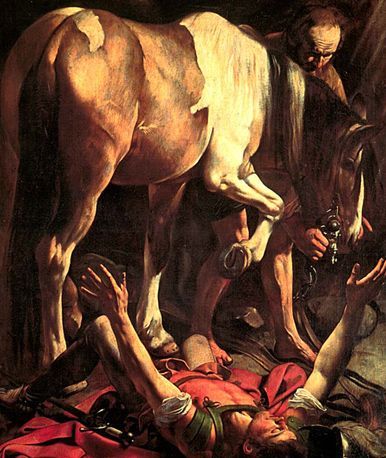
The Conversion of St. Paul

This general agreement of theologians as to papal infallibility in canonization must not be extended to beatification, not withstanding the contrary teaching of the canonical commentary known as "Glossa" [in cap. un. de reliquiis et venerat. SS. (III, 22) in 6; Innocent., Comm. in quinque Decretalium libros, tit. de reliquiis, etc., no 4; Ostiensis in eumd. tit. no 10; Felini, cap. lii, De testibus, etc., X (II, 20); Caietani, tract. De indulgentiis adversus Lutherum ad Julium Mediceum; Augustini de Ancona, seu Triumphi, De potestate eccl., Q. xiv, a. 4). Canonists and theologians generally deny the infallible character of decrees ofbeatification, whether formal or equivalent, since it is always a permission, not a command; while it leads to canonization, it is not the last step. Moreover, in most cases, the cultus permitted by beatification, is restricted to a determined province, city, orreligious body (Benedict XIV, op. cit., I, xlii). Some, however, have thought otherwise (Arriaga, Theol., V, disp. 7, p. 6; Amicus, Theol., IV, disp. 7, p. 4, no 98; Turrianus on II-II, V, disp. 17, no 6; Del Bene, De S. Inquisit. II, dub. 254).

Now for the real question:

The first rule of looking at the holiness and/or heroic virtue of a person is that they are actually orthodox with regard to the Teachings of the Catholic Church and that their lives have been a witness of the Church Militant.

For example, if a person was good and an excellent apologist, but never became a Catholic when he had the chance, one would wonder at the mind of that person with regard to the Mind of Christ. The only true teaching we have in this world is in the Teaching Magisterium of the Church and the Kingdom of God subsits in the Catholic Church and not outside it. The reality of having one foot in a Protestant denomination and the other in the Catholic Church shows that the person was not conformed totally to the witness of Faith needed for canonization.
The Visitation

There are many people in heaven who are not canonized. I have a sister who died at one, in grace, and without sin, being baptised  She is absolutely innocent and with God, but not canonized. Her life is not one to be examined and modelled by others, although she shares in the Beatific Vision. I hope she prays for her much less than perfect sister.

Her life was a hidden one of innocence and God called her to Him early. The saints are those to whom we look for guidance and as examples of holiness while still on earth. This is the key point. While millions of people have died in the Faith and either gone directly to heaven or have been purified in a purgatorial state, few have given us the witness of Faith, Hope and Charity needed to be declared saints.

Orthodoxy is the basis for this holiness. This is like staring on page one in the Algebra book and proceeding to Trig and Calculus, building on learned skills. One must start with having the Mind of Christ, who established His Church on earth, a visible institution headed by His Own Vicar, the Pope. Can one have the Mind of Christ outside the Church? Yes, but the question would be, why then did this person not convert and join the Church, the visible sign of unity and the Kingdom of God on earth?

Not becoming a Catholic when one is pursuing or being given the grace to enter into the life of perfection is a serious situation. It may indicate that a person is living in an irregular situation, such as C. S. Lewis marrying a divorced and not annulled woman, or having prejudices from his Northern Irish upbringing. We cannot see the soul, but outward actions reveal the limits or extensions of holiness.

Canonized people are held up by Holy Mother Church are our guides and models. The Church, after a longish process, declares that, with miracles, this person showed, while on earth, a level of conformity to the Mind of Christ, which led them through the stages of purification, illumination and unity at some level.

Martyrs of Korea
Miracles are merely signs of that conformity, that oneness with Christ and His Mystical Body, the Church.

We are talking about PERFECTION here. A non-Catholic can be a very moral person, having experiences of grace and even infused knowledge to a certain extent, because God is generous in His grace, but the question is, why is that person not joining the Church? What is the obstacle in their life which precludes outward unity and the fulfillment of God's Will for them, for it is God's Will that all be saved in and through the Church?

Carmelite Martyrs of Compiegne 
There is an obstacle to complete union. I was an RCIA coordinator and director in the past, and I can assure you that only when the obstacles keeping people out of the Church were realized and faced did those good people see the beauty of the Church and God's plan for salvation in and through the Church.

Some of these obstacles were: not complete agreement on contraception or abortion; not complete agreement about marriage laws; not complete agreement about the nature of the Papacy and infallibility; misunderstandings about the nature of grace; misunderstandings about the nature of the priesthood; faulty Christology;  confusion as to the history and meaning of the Church; the nature of the Church herself was misunderstood;  non-compliance regarding IVF and sterilization; irregular marriages; just plain prejudice and so on....

Those who came into the Church under my care had no doubts as to the real teaching of Christ as preserved in His Church. If they could not come to understanding, they accepted the gift of faith in order to believe and then understand. So too, was the beginning of the lives of the saints.

Some Christians are living and believing like Catholics and only have one obstacle to overcome, such as the papacy, or the idea of the visible Church. God offers them grace and then, they convert. It is exciting to see.

The entire idea that the Kingdom of God subsits in the Catholic Church and no where else was the deciding factor for some who finally accepted the grace to join Rome and be part of the Mystical Body of Christ.

Holiness demands orthodoxy. If one is looking at the saints, one can see some imperfections of temperament or even a lack of intellectual prowess. But, the real deciding point for Holy Mother Church is did these good people join with Christ in all things while on earth, in their minds, souls, hearts, intellect, will? In addition, the Church asks for signs of a life of virtue to a high degree. One cannot be a martyr, by the way, without at least arriving at the beginning of the Illuminative State, as the process of martyrdom is purgation. This  is why so many of the martyrs were able to stand, for example, at Tyburn and forgive their enemies, as well as pray for the King and Queen. They had arrived at a great holiness in their lives of suffering and purgation to enter into the life of virtue and conformity to Christ in His Suffering, as sign of  the Illuminative State.

If the answer is yes to all the above, a person cause may go forward, as we say. The Church can state that the saint is a model:

For who hath known the mind of the Lord, that we may instruct him? But we have the mind of Christ. 1 Corinthians 2:26, DR


St,Herman of Alaska
BTW: there is a Roman Catholic Church agreement with the Orthodox to honour post-schism saints. I shall find this for you on line, somehow, as I saw it in print years ago in Canada at a Ukrainian study centre  It was written in the 1920s. We were already honouring pre-schism saints, such as SS. Olga, Vladimir the Great and many others..... 

In addition, there are several icon companies selling icons of some non-canonized Catholics, non-Catholics, even non-Christians and pagans, as if these people were saints. Do not bother--these are not "windows into heaven" if these depict such persons as Gandhi, Albert Einstein, Black Elk, Cesar Chavez,  C. S. Lewis, James Lloyd Breck. Cardinal Bernadine of Chicago, Thomas Merton (in a yoga pose), Martin Luther King, or homosexual "saints" such as Mychal Judge, Mark Bingham, Harvey Milk, or such people as Oscar Romero, John Donne, We-wha the Zuni shaman, and the worst one I have ever seen, Merlin of Britain , which was actually a soft-porn icon.

Why we need the Church.....and why we need the basis of orthodoxy.


I thought racism had to do with a race.........


I saw this earlier on Drudge. I would like the entire range of Star Wars Legos. People will probably be upset with TLOR sets as well.

Lego accused of racism with Star Wars set

Lego has been accused of racism by the Turkish community over a Star Wars model that supposedly resembles one of Istanbul’s most revered mosques. from The Telegraph 

Lego accused of racism with Star Wars set
The anger was provoked by "Jabba's Palace", a model from Lego's Star Wars product range based on the series of Star Wars films Photo: HANDOUT
Austria’s Turkish community said the model was based on Hagia Sophia mosque in Istanbul and that the accompanying figures depicted Asians and Orientals as people with “deceitful and criminal personalities.”
The Turkish Cultural Community of Austria released a statement calling for Lego to apologise for affronting religious and cultural feelings.
The anger was provoked by “Jabba’s Palace”, a model of the home of Jabba the Hutt from Lego’s Star Wars product range based on the blockbusting series of science fiction films.
Jabba is the large slug-like creature who holds Han Solo captive in the film Return of the Jedi, and his palace is the setting for several crucial scenes, including using Princess Leia as his slave.
Jabba’s domed home and accompanying watchtower bear, according to the statement, an unwanted resemblance to Istanbul’s great Hagia Sophia, and another mosque in Beirut.

Yeah, a real cleric from the comments on the letter below

Deacon Roger
16 January 2013 15:46 (5 of 15) The Tablet Blog

The issue is not the rights of those who may be homosexual but our understanding of the nature of marriage. We are all created in the image and likeness of God. I therefore prefer to see the individual not the label as these are limiting and unhelpful concepts. However, I cannot simply sit on the fence of life. Through the gift of ordination I am asked to uphold the teachings of the Church and you can't achieve this by staying silent. Whilst I prefer to be popular and liked this is not an issue to be avoided. However, I have not seen anyone using strident or hurtful words, but simply stating the Church's understanding of marriage. I have preached twice on the subject and these are the only occasions where I have received immediate responses after Mass. In particular general appreciation that I have spoken about the issue and confronted the underlying confused ideas of our political masters. As a permanent deacon I can't recall anyone asking me to sign this letter, but I would be happy to do so. In my view there has been limited direction from the hierarchy, which might explain why many clergy felt compelled to sign this letter.
Good comment, and let me see if they publish my comments.

In The Tablet, and read the comments from those who call themselves Catholic


I do not understand this type of fudging on clear and pastorally sensitive Church teaching.


Methinks he doth protest too much.....and, when the super-sensitivity about the courageous priests who signed the Telegraph letter? http://m.thetablet.co.uk/blogs/445/17 vs. http://supertradmum-etheldredasplace.blogspot.co.uk/2013/01/bravo-brave-priests-and-bishops.html

In addition, his underlining philosophy regarding society's role in all of this smacks of socialism and not Catholicism. 

Comments...

Gay marriage debate: aggressive posturing by Church serves no one
Fr Martin Boland, Dean of Brentwood Cathedral18 January 2013, 9:00
Although I am opposed to the coalition Government's plan to recognise same-sex marriage in law, I have, nevertheless, been left feeling uneasy about some aspects of the debate surrounding this subject, and in particular by the manner and terms in which the problem has been discussed.
It is true that respectful and thoughtful debate has taken place. I am grateful to those teachers in the Church who have tried 'to speak the truth in love'. They have sought to present the Catholic position in a way that is reasonable and theologically compassionate while recognising the lived experience of those involved. On the Feast of the Holy Family, I read Archbishop Vincent Nichols' pastoral letter on this subject to the people of my parish. It was a model of moderation, pastoral sensitivity and clear reasoning.
However, there have been those within the Church who have chosen to employ intellectually blunt and confrontational arguments when discussing this matter. As the temperature of the debate rises, so there is a danger that their voices will become more strident. I wonder how helpful this is?
Although the polemical sound bite may capture the attention of the media, I wonder if it helps us address the complexity of the issues raised in a mature and informed way? Is an adversarial approach to those who disagree with us, the correct way to appeal to the reason and consciences of men and women? Whether this Government finally succeeds in introducing this legislation, what many people both within and outside the Church will remember is the language and demeanour which was used to present our arguments.
These questions are also of more general concern and are particularly pertinent to those who hold any teaching position or claim any theological competence within the Church. Responding to the issues of our age with a militant defensiveness, or a prescriptiveness that oversimplifies issues will not serve us well. The frustration the Church might feel in the face of liberal modernity should not be used as an excuse for a kind of latent ecclesiastical aggression. Sabre-rattling may make us feel manly, but it also deafens us both to the truth of people's lives and God's will for us. If those who teach in the Church choose to communicate in an idiom which alienates significant numbers of people then the liberating message of Christ risks being either treated with suspicion, received selectively or completely rejected. Seeking to patronise or infantilise the laity in this area can only serve to weaken the teaching authority of the Church.
Good teaching depends on a profound humility. None of us possesses a complete, final knowledge of all things. For example, our understanding, as many commentators have made clear, of the nature and meaning of the homosexual orientation is, at this point in time, incomplete. We may have a greater understanding of this sexual orientation than a century ago, but there is still more for us to know, to question and to understand. We should therefore hesitate to offer lapidary judgements about those who possess this orientation and humbly recognise that simplistic readings of natural law in this regard may not be entirely helpful.
People may have a very clear idea of what the Church's teachers do not find acceptable. But can those same teachers articulate any viable and life-giving ways by which people might live? For example, what, if any, social, legal or moral respect should those with a homosexual orientation be afforded?
On Saturday a letter was published in The Telegraph. It was signed by over 1,000 priests. I was not one of those because I knew nothing about this letter. Our ecclesial unity and sacerdotal identity are jeopardised if responses to important issues are managed in such a way that they do not involve the whole presbyterate. We should resist the creation of a two-tier presbyterate - those with a voice, who appear to have influence and those who feel they have neither voice nor influence. Priests need to be sure that well-meaning groups who feel strongly about certain issues have the considered approval of our bishops. In all our arguments and campaigns, preserving our unity in faith must take priority. If that does not happen, then it may be that we do not only lose the argument of the day but we lose our very reason for being.
Fr Martin Boland is Dean of Brentwood Cathedral and parish priest of Holy Cross and All Saints', Warley

The Potato Mind vs. the Mind of Christ


I do not mind liberals having good arguments but if they refuse to read or study, I have no time for such laziness of mind. The sin of sloth is a deadly sin.  We forget that this sin applies to the mind as well as the body.

Slothfulness is not merely being a couch potato, but having a potato mind...........stuffed with starch and mush.

Number one rule in apologetics, is that those in conversation with you must be open to reading the REAL teaching of the Catholic Church and not what someone may think is Catholic. Bearing in mind that the majority of Catholic adults are lazy and would rather watch television than read the Bible daily or read what comes from this and the previous Popes, I can hardly start a conversation with GenX.

The Millennials read. Yes, they do. They may be getting all their information on line, but they read.

I have been, as my Protestant brothers and sisters say, edified by the number of Millennials who are trying to find out what the Church REALLY states on many subjects, rather than what the lame secular or even so-called Catholic media states.

Not all newspapers and periodicals deserve our attention.

I shall know when there is a revival of the Faith in England, Scotland, Wales and Ireland when I no longer see The Tablet sold in the back of churches.

That day cannot happen too soon.

When I taught Argumentation and Logic, my first rule of thumb for the courses was to teach the students to find reliable sources of information.

Go to the Vatican website, EWTN, and the many blogs on the side of this one. Go to the original sources. Learn which are the reliable commentators

Truth must be sought with a mind open to putting on the mind of Christ.


Poll Results


The results of the poll have been so remarkably consistent that I am declaring it ended, and here give the results for topics.

At the top and by far the winner is the category for Saints and Martyrs. I must admit I was surprised by this, as their are many sites on saints. But, I shall do more posts on these subjects as you all want to read hagiography, which is a good thing.

Second, and I was not surprised by this is the Perfection Series. This will continue and be more frequent for several reasons which I shall explain later.

Third, the category of Singles and Vocations held a strong position. Again, I was surprised, as I did not think so many singles read the blog as to merit this number. But, there it is and I shall write more on those two worthy topics.

Fourth, the topic of Education surprised me and I can write much more on that, now that I know it is fourth on your list of important. This is my easiest topic on which to write, as I worked as a curriculum advisor for years and help set up some private schools including one college.

Fifth, two topics tied and are related: Socialism and Post-Post Modernism, both of which are great interests of mine in helping people understand the importance of these movements. Again, these choices represent the interest of the youngest readers among us. Gramsci did not come in the top five, but as he is connected to these movements, I shall not ignore his letters at all. If I count Gramsci alone, he came in at Seventh Place and the following would be one more down on the list; Other and English and French Politics beneath him.

Sixth, Art, Poetry, Aesthetics and American Politics tied for this place. Hmmm, interesting and of course I shall continue to write on these, but perhaps less on the American Politics side.

Seventh, is the odd category of Other. You all can make suggestions. Maybe you like memory lane, fashion or the cartoons or memes?

Eighth place is held by French and English Politics and I have to admit I was surprised as many commentators add to the interest of these topics. However, there may be a difference between the poll takers and the commentators (?).

So. the overall interests are spiritual rather than political. This has helped me, as I want to meet the needs of those who read the blog, and respond to what is important. However, I shall do this poll again in six months or so to see if there is a change.

I find it interesting that the comments made in number do not necessarily correspond to the popularity of the topics.

Very interesting.......but do not hold me to the order of this list at all times, as the Spirit moves where He Wills.....and I try to respond. However, I take this order seriously.

Predestination, again


Gregory Johnson wrote this here:

Though the fact may surprise some who frame the debate in terms of divine sovereignty, it must be stated that Augustine is not an enemy of the free will.  In fact, Augustine is vehement in his defense of free will on occasion.  In one of his earliest writings, On Free Will, Augustine argues for human free will over against the Manichees among whom he had once been numbered.  And as his debates with the Pelagians over election flared up later in life, Augustine was equally forceful in asserting both the freedom of the will and the resulting human responsibility.  It was for this reason that Augustine wrote On Grace and Free Will only one year before his primary work on election, On the Predestination of the Saints.  Every man has the ability to choose that which he desires; every man has free will.
            Augustine was accused by some of changing his position on free will from his earlier work, but Augustine claimed that no change in his thinking took place.  Pelagius himself at times quoted from Augustine's On Free Will as an authority to defend his views.  By proof-texting Augustine's affirmation of the free will in this earlier writing, the Pelagians argued that Augustine had originally held to a doctrine of the will's moral ability to believe apart from grace, as did they themselves.  Augustine rejects this argument.  In his Retractiones, Augustine insists that his earlier work On Free Will was simply not concerned with predestination, but with anthropology over against the Manichees.[3]  For Augustine, the two debates can be distinct, for, unlike Pelagius, Augustine does not see election as a debate about God's sovereignty or man's natural freedom to choose.  The will is not the center of the debate as Augustine frames it; the necessity of God's grace within the individual's experience is central.
I am convinced that heretics like Calvin had great graces but became stuck on the point of predestination, which is easy to do. When one looks at goodness and evil, one must always come back to the Teachings of the Church in humility and frankness. Doctrine trumps experience if there is a problem of understanding. We can come to understanding through experience, but conforming our minds to Christ through the Church opens the door to that understanding. Again, we go to Augustine and one of my favourite theologians, St. Anselm.
Here is Augustine: crede, ut intelligas, "believe so that you may understand"; Tract. Ev. Jo., 29.6. I wish I had one huge library of all Augustine's works and those of Aquinas. Sigh, would be a large library room for sure.............
We need to come to understanding, as much as possible, in order to make our Faith that of an adult and not merely an obedient, albeit, good, child.
Here is Anselm: 
I do not endeavor, Lord, to penetrate Thy heights, for in no wise do I compare my understanding with Thine; but I long to understand in some degree Thy truth which my heart believes and loves. For I do not seek to understand in order that I may believe, but I believe in order to understand. For this also I believe-that unless I believe I shall not understand. Prosologion
("faith seeking understanding" or " fides quaerens intellectum")
The mystery of will and grace, understanding and belief  forms much of the thought of Augustine and Anselm. But, we also have Thomas on Augustine here from Garrigou-Lagrange:

This principle of predilection presupposes, according to St. Thomas, a decree of the divine will rendering our salutary acts intrinsically efficacious (Ia, q. 19, a. 8). For, if they were efficacious on account of our foreseen consent, of two men equally loved and helped by God, one would be better in some respect. He would be better of himself alone and not on account of divine predilection. But this principle must be reconciled with another which ought to be maintained with equal firmness: “God does not command the impossible, but He teaches thee by commanding to do what thou canst and to ask what thou canst not, and He helps thee that thou mayest be able” (St. Augustine, De natura et gratia, chap. 43, no. 50, and the Council of Trent, Denz., no. 804). Herein lies a great mystery of reconciliation between infinite mercy, infinite justice, and supreme liberty. They are indeed reconciled in the intimate life of the Deity, but of Deity as such we have no positive or proper conception: “Deity is above being, above unity, which are contained in it formally and eminently.” (Cf. Revue thomiste, May-June, 1937, the author’s article, “Le fondement suprême de la distinction des deux grâces suffisante et efficace.”)1 These conclusions from the treatise on God are, then, presupposed in the present discussion.


Pat Buchanan at his best: "transparent nonsense"


We should have voted this man in years ago. He understands the Constitution and the Republic--Pat Buchanan at his best...my bold highlighting.
"Obama has hijacked the American Revolution".
“Second Term Begins With a Sweeping Agenda for Equality,” ran the eight-column banner in which the Washington Post captured the essence of Obama’s second inaugural. There he declared:
“What binds this nation together … what makes us exceptional – what makes us American – is our allegiance to an idea, articulated in a declaration made more than two centuries ago.
Obama then quoted our Declaration of Independence:
“We hold these truths to be self-evident, that all men are created equal, that they are endowed by their Creator with certain unalienable rights, that among these are life, liberty and the pursuit of happiness.”
Our “union,” Obama went on, was “founded on the principles of liberty and equality.”
Nice prose – and transparent nonsense.
How could the American Union have been founded on the principle of equality, when “equality” is not mentioned in the Constitution, the Bill of Rights or the Federalist Papers? How could equality be a founding principle of a nation, six of whose 13 original states had legalized slavery, and five of whose first seven presidents owned slaves all their lives?
What Obama preached in his inaugural was not historical truth but progressive propaganda, an Orwellian rewrite of American history.
Undeniably, the post-Civil War 13th, 14th and 15th amendments established an equality of constitutional rights. And from the Brown decision of 1954 through the civil rights acts of the 1960s, there was established an equality of civil rights. Black Americans were assured equal access to schools, public accommodations, the voting booth and housing. And Congress and the people overwhelmingly supported those laws.
But if the nation did not establish equality of constitutional rights until the 1860s and equality of civil rights until the 1960s, how can Obama claim that “equality” has been the feature that “makes us American” and “binds this nation together.”
How can he say that our commitment to equality is what makes us “exceptional” – when every Western country believes in equal rights for all of its citizens, and it was the French Revolution, not ours, that elevated “egalite” to a founding principle.
And when he says equality “is the star that guides us still,” exactly what kind of equality is Obama talking about?
Answer: The equality of which Obama speaks is not an equality of rights but an equality of results, an idea that dates not to the Founding Fathers, who would have been appalled by the idea, but to the 1960s.
This equality is not a founding principle of the republic. It is ideological contraband. For such equality can only be achieved at the price of freedom, our true founding principle.
That idea that “all of us are created equal – is the star that guides us still,” said Obama in his inaugural, “just as it guided our forebears through Seneca Falls, and Selma, and Stonewall.”
Astonishing. The president is here making the brazen claim that the roots of modern feminism and gay rights can be traced straight back to the Founding Fathers and founding principles of our republic.
But how? The sanctum sanctorum of modern feminism is Roe v. Wade, the discovery of a constitutional right to an abortion. Yet, for every generation of Americans before 1973, abortion was a heinous crime.
And can anyone seriously argue that a barroom brawl with cops by homosexual patrons of Stonewall Inn in Greenwich Village in 1969 was but another battle in the long war for liberty begun at Lexington, Concord and Bunker Hill?
How could that be, when the author of the declaration Obama cites, Thomas Jefferson, believed homosexuality should be treated as rape, and George Washington ordered homosexuals drummed out of his army?
What Obama was attempting at the Capitol, with his repeated lifts from Jefferson and Abraham Lincoln, was to portray his own and his party’s egalitarianism as a continuation of the great cause that triumphed at Yorktown and Appomattox.
He is hijacking the American Revolution, claiming an ancestral lineage for his ideology that is utterly fraudulent and bogus.
Feminism, the gay-rights movement and the post-1965 civil-rights movement, with their demand for equality not simply of rights but of rewards, cannot be achieved without trampling on the freedoms for which the patriot fathers fought. And they cannot triumph without creating a permanent, mammoth and redistributionist state more powerful, intrusive and dictatorial than anything George III ever dreamed of.
The freedom of all Americans to compete academically, athletically, artistically and economically must inevitably result in an inequality of incomes, wealth and rewards.
Why? Because all men and women are by nature and nurture unequal. Some are talented, ambitious, industrious, lucky. And in a free society, such men and women will always reap a disproportionate share of fame and fortune.
The only way to equalize rewards is to take from those who have earned and give to those who have not. And that requires the kind of redistributionst regime the Founding Fathers would have risen up against.
As Obama’s America rises, the old republic falls.

A Difference between Americans and the British


I like them. They talk about things. We never talk about things.

At dinner, the British sanitize conversations and talk about the weather and medical conditions. People in America, if they are intelligent, talk about ideas, although some people just talk about vacations and money, which fall into the the British categories of boring subjects.


Predestination continued....


I highly suggest a reading of Garrigou-Lagrange's Predestination, as well as his book, Providence. I do not want to spend much time on the blog examining these, as both subjects are extremely dense and need reflection on the part of the reader.

However, I want to highlight one point from Predestination and that is the difference between sufficient and efficacious grace. This type of distinction is necessary for the road to perfection, which is why I include it on the blog.

Firstly, Garrigou-Lagrange (who should be canonized), notes that all dispositions in men are willed by God. This is a hard saying for the democratic and egalitarian notions of 21st century humans. Nonetheless, the Church, through Aquinas and others teaches that God's Will determines each one of our individualities and characters, as well as our dispositions for grace.

However, we do have free will within that larger plan.

Here is the first part of this discussion and I have highlighted key points:


SS.  Peter and Paul
...the basic principles of the solution are first enunciated in the treatise on God, Ia, q. 14, a. 8: “The knowledge of God is the cause of things inasmuch as His will is joined to it.” And further, Ia, a. 19, a.  4: “The effects determined by the infinite perfection of God proceed in accordance with the determination of His will and intellect” (that is, by a decree of the divine will). Again, Ia, q. 19, a. 6 ad I: “Whatever God wills absolutely, is done (otherwise He would not be omnipotent), although what He wills antecedently (or only conditionally) may not be done,” for in this instance God permits the opposite evil for the sake of a greater good; thus He wills antecedently that all the fruits of the earth come to maturity, but He permits that many actually do not reach this maturity. It is similar in the matter of the salvation of men. St. Thomas goes on to explain this in the same article (ad I ): On consequent or unconditional will. “The will is compared to things according as they are in themselves; but in themselves they are individual.
Hence we will something absolutely inasmuch as we will it considering all its individuating circumstances; this is to will consequently.” Thus whatever God (omnipotent) wills absolutely is done; although what He wills antecedently may not be done.
Antecedently God wills a thing according as it is good in itself, for example, that all men be saved, that all His commands be ever fulfilled; but at the same time He permits to some extent the opposite evil for the sake of a greater good, and thus “what He wills only antecedently or conditionally is not done.”
Hence it is said in psalm 134:6: “Whatsoever the Lord pleased He hath done, in heaven, in earth.” And the Council of Toucy (PL, CXXVI, 123) adds: “For nothing is done in heaven or on earth, except what God either graciously does Himself or permits to be done, in His justice.” That is to say, no good, here and now, in this man rather than in another, comes about unless God Himself graciously wills and accomplishes it, and no evil, here and now, in this man rather than another, comes about unless God Himself justly permits it to be done.  Nevertheless God does not command the impossible, and grants even to those who do not actually observe His commandments the power of observing them. 


Blessed Karl, Zita and Family

But those who observe His commandments are better than others and would not keep them in fact, had not God from eternity efficaciously decreed that they should observe these precepts. Thus, these good servants of God are more beloved and assisted by Him than others, although God does not command the impossible of the others.

Furthermore, this very resistance to sufficient grace is an evil which would not occur, here and now, without the divine permission, and nonresistance itself is a good which would not come about here and now except for divine consequent will. Therefore, there is a real difference between sufficient grace, to which is attached the divine permission of sin and by reason of which the fulfillment of the commandments is really possible, and efficacious grace, on the other hand, which is a greater help whence follows not only the real possibility of observing the commandments, but their effective fulfillment. 

In this mini-series on perfect, both types of grace are seen as necessary. He continues:

...in sufficient grace, efficacious grace is offered to us, as the fruit is in the flower; but if resistance is made on account of our defectibility, then we deserve not to receive efficacious grace. For this reason Bossuet declares: “Our intellect must be held captive before the obscurity of the divine mystery and admit two graces (sufficient and efficacious) of which the former leaves our will without any excuse before God, and the latter does not permit the will to glory in itself.” (Å’uvres complètes, Paris, 1845, I, 644.)
St. Thomas states further (Ia, q. 19, a. 8): “Since the divine will is efficacious in the highest degree, it follows not only that those things are done which God wills to be done, but also that they are done in the way God wills them to be done. But God wills certain things to be done necessarily, others contingently, that there may be order among things for the completion of the universe.” This is the basis of grace efficacious in itself. Again (Ia, q. 20, a. 2): “The will of God is the cause of all things, and hence, necessarily, to the extent that a thing has being or any good whatever, it is willed by God. Therefore, since loving is nothing else but wishing well to someone, it is evident that God loves all things that are, but not in the way that we do. . . . Our will is not the cause of goodness in things,” including the goodness of our choices, as appears from Ia, q. 19, a. 

Sufficient grace brings about conversion and the acceptance of the salvific act of God on the Cross, and efficient grace allows for the perfect and intended Will of God to be done.

This second aspect of graces, that is efficient grace, is behind vows and committments of the religious and the respond to holiness through a vocation of the priests and those in married life.

St. Philip Howard
God moves our will to will His Will. 

The next definition which follows naturally is that of predilection. Again, I highlight certain parts for understanding.

There follows from this the great principle of predilection, by which the whole treatise on grace is elucidated and which is formulated in Ia, q. 20, a. 3: “Since the love of God is the cause of the goodness of things, no one would be better than another if God did not will a greater good to one than to another.” Likewise, in article 4 of the same question and also in Ia, q. 23, a. 4: “In God, love precedes election.” Already it is evident that the man who, in fact, observes the commandments is better than the one who is able to do so but actually does not. Therefore he who keeps the commandments is more beloved and assisted. In short, God loves that man more to whom He grants that he keep the commandments than another in whom He permits sin.
St. Tarcisius Statue
This principle of predilection is valid for all created being, even free beings, and for all their acts, natural or supernatural, easy or difficult, initial or final; in other words, no created being would be in any respect better if it were not better loved by God. This truth is clear in the philosophical order, for it flows from the principle of causality and of the eminently universal causality of the will or love of God. In the order of grace, this principle is revealed by several scriptural texts, for instance: “I will have mercy on whom I will, and I will be merciful to whom it shall please Me” (Exod. 33:19); and “For who distinguisheth thee? Or what hast thou that thou hast not received?” (I Cor. 4:7.)

One of the greatest heresies of these modern times is that of universal salvation. The entire discussion of grace and predilection must occur in the context of the possibility of either salvation or damnation.

In our flawed thinking, we assume that God does not love those who choose to spurn both sufficient and efficacious graces, but that is not true.

He loves all peoples. But, His Love is not like ours, limited in both scope and imagination, in gifts or talents, in successes or failures.

A St. Charles Borromeo and a St. Benedict Labre both glorify God is different manners and both praise God together in Heaven. 

There is only one Blessed Virgin Mary, Mother of God.

There is only one St. Joseph, one St. Paul, one St. Maximilian Kolbe.

Even the saints are not equal. Some are martyrs and some are doctors of the Church; some were children when they died and some were very old. Grace varies even in holiness.

And, to remind all of us, there is a difference between salvation and holiness. The saint is one who has demonstrated on earth his predilection. The idea of purgatory remains for those who have not been totally purified on earth and have not entered into the Illuminative or Unitive States.

One must be orthodox completely to be on the road to perfection. I cannot stress this enough. One can attain heaven without being perfected on earth, but the Kingdom of God suffers when those of us who could follow this road, the call for all, and refuse. If one has any disobedience, no matter how small, with the Teaching Magisterium of the Church, one is not on the road to perfection. One must beg for humility and grace if one has problems in an area, or even two.

Pray for humility to be the saint God desires you to be. Most of us are "little ones".

I use to tell the story of St. Tarcisius to my son. Here is a summary of his life made by Teófilo de Jesús

Tarcisius was a twelve-year-old acolyte during one of the fierce Roman persecutions of the third century, probably during that of Valerian. Each day, from a secret meeting place in the catacombs where Christians gathered for Mass, a deacon would be sent to the prisons to carry the Eucharist to those Christians condemned to die. At one point, there was no deacon to send and so St. Tarcisius, an acolyte, was sent carrying the "Holy Mysteries" to those in prison. On the way, he was stopped by boys his own age who were not Christians but knew him as a playmate and lover of games. He was asked to join their games, but this time he refused and the crowd of boys noticed that he was carrying something. Somehow, he was also recognized as a Christian, and the small gang of boys, anxious to view the Christian "Mysteries," became a mob and turned upon Tarcisius with fury. He went down under the blows, and it is believed that a fellow Christian drove off the mob and rescued the young acolyte. The mangled body of Tarcisius was carried back to the catacombs, but the boy died on the way from his injuries. He was buried in the cemetery of St. Callistus, and his relics are claimed by the church of San Silvestro in Capite. Taken from "The One Year Book of Saints" by Rev. Clifford Stevens, published by Our Sunday Visitor Books, Huntington, IN 46750.

Read more: http://vivificat1.blogspot.com/2012/11/like-in-days-of-st-tarcisius.html#ixzz2ItXmnlh5


 To be continued....