Recent Posts

Friday, 15 March 2013

Part 85: DoC and Perfection: St. Basil "Ουρανοφαντωρ"

Some very cool chant http://www.abbaziagreca.it/en/origins/basil.asp

I love St. Basil. I used to have a magnificent icon of him which I gave to a Basilian priest. One reason I love this Doctor of the Church so much is that he helped us to understand the Holy Spirit. Also, he wrote so much, he keeps one quite busy and, in addition, he died early. I am always astounded as to how much work these men and women accomplished; he has over 300 letters alone.

Grace.

But, here is a snippet to begin a few posts on St. Basil. From Letter VIII.  My comments are in blue.


So much must suffice for the present on the subject of the adorable and holy Trinity.  It is not now possible to extend the enquiry about it further.  Do ye take seeds from a humble person like me, and cultivate the ripe ear for yourselves, for, as you know, in such cases we look for interest.  But I trust in God that you, because of your pure lives, will bring forth fruit thirty, sixty, and a hundred fold.  For, it is said, Blessed are the pure in heart, for they shall see God.1865  And, my brethren, entertain no other conception of the kingdom of the heavens than that it is the very contemplation of realities.  This the divine Scriptures call blessedness.  For “the kingdom of heaven is within you.”1866

Immediately, we see the key points of perfection: 1) that only the pure in heart see God'; 2) contemplation brings about the awareness of the kingdom of heaven,; and 3) the kingdom of heaven is within us.

Perfection is possible and needed to see God, and because of the sacraments, we have the Indwelling of the Holy Spirit, and, therefore, the Kingdom of God within. For the modern person, the busyness of daily life impinges on the pursuit of holiness, of perfection. 


Contemplation is the thinking awareness of the attributes of God. It is not meditation on a passage of Scripture, but the direct, immediate focusing on God Himself, and where He meets one.

The inner man consists of nothing but contemplation.  The kingdom of the heaven, then, must be contemplation.  Now we behold their shadows as in a glass; hereafter, set free from this earthly body, clad in the incorruptible and the immortal, we shall behold their archetypes, we shall see them, that is, if we have steered our own life’s course aright, and if we have heeded the right faith, for otherwise none shall see the Lord.  For, it is said, into a malicious soul Wisdom shall not enter, nor dwell in the body that is subject unto sin.1867  And let no one urge in objection that, while I am ignoring what is before our eyes, I am philosophizing to them about bodiless and immaterial being.  It seems to me perfectly absurd, while the senses are allowed free action in relation to their proper matter, to exclude mind alone from its peculiar operation.  Precisely in the same manner in which sense touches sensible objects, so mind apprehends the objects of mental perception.  This too must be said that God our Creator has not included natural faculties among things which can be taught.  No one teaches sight to apprehend colour or form, nor hearing to apprehend sound and speech, nor smell, pleasant and unpleasant scents, nor taste, flavours and savours, nor touch, soft and hard, hot and cold.  Nor would any one teach the mind to reach objects of mental perception; and just as the senses in the case of their being in any way diseased, or injured, require only proper treatment and then readily fulfil their own functions; just so the mind, imprisoned in flesh, and full of the thoughts that arise thence, requires faith and right conversation which make “its feet like hinds’ feet, and set it on its high places.”1868  

Basil moves from an orthodox treatment on the Holy Spirit to a thoughtful contemplation of God. He is noting that the mind, the intellect, as part of the soul, is made for contemplation.

How astounding is this idea for modern men and women, who, too often, only see what is material and not what is spiritual.

What helps the mind in contemplation? Basil tells us it is faith and right conversation.

How simple this sounds and yet, how deep...as one is raised above the mindlessness of daily stress and work to be brought into the high places. 


Surround yourself with good and holy friends, people who want to be perfect as well.


The same advice is given us by Solomon the wise, who in one passage offers us the example of the diligent worker the ant,1869 and recommends her active life; and in another the work of the wise bee in forming its cells,1870 and thereby suggests a natural contemplation wherein also the doctrine of the Holy Trinity is contained, if at least the Creator is considered in proportion to the beauty of the things created.

But look here, busy lay person. Basil tells all of us that the ant and the bee thrive in work and that we too, in doing our duty, find the Holy Trinity is the simplicity of our lives. All living things have a beauty created by God and in that beauty is the natural ability to do what one must to find God.

Before I leave, here is a bit about his amazing family. He was born in 330. To be continued...

St Basil’s mother St Emilia was the daughter of a martyr. On the Greek calendar, she is commemorated on May 30. St Basil’s father was also named Basil. He was a lawyer and renowned rhetorician, and lived at Caesarea.
Ten children were born to the elder Basil and Emilia: five sons and five daughters. Five of them were later numbered among the saints: Basil the Great; Macrina (July 19) was an exemplar of ascetic life, and exerted strong influence on the life and character of St Basil the Great; Gregory, afterwards Bishop of Nyssa (January 10); Peter, Bishop of Sebaste (January 9); and Theosebia, a deaconess (January 10).


Why the Perfection Series? Again....


I have written this little mission statement before as to why I decided to start the perfection series last year. There will be over 400 posts on this before I finish it, which should be within the next month.

Why perfection?

Reasons:

1) All Christians are called to "be perfect even as your heavenly Father is perfect" by Christ.  Matthew 5:48 is not a suggestion but a command.

We do not have an option to ignore a statement from the Second Person of the Blessed Trinity, the Son of God Himself.

2) Garrigou-Lagrange, to whose book I shall return at the end, traces this call and explains that it is not merely the call of the few mystics but a call for all. This book inspired me several years ago, when I was battling cancer, and it inspires me still. He shows the steps clearly and forms the basis for my earliest posts and the last ones, which are to come.

3) All Catholics need to embrace this road to perfection in order to withstand the wildfire of immorality and the destruction of cultures and even civilizations. An option to not be strong is not available to us. In our weakness, we turn to grace for strength.

4) Our families and communities need out perfection. If we are all moving together towards that goal, which is really to be Christ in the world, we shall help each other, especially our children, in the passing down and evangelizing of the Gospel. Without this pursuit of perfection, all our actions are useless, as these come from us and not from God.

5) Baptism makes us children of God and heirs of heaven. Seeking perfection flows from the graces and gifts of baptism and confirmation. We have what we need if we cooperate.

6) Significantly, all the Doctors of the Church reveal to us how to become perfect. They personally embraced the way and call us through their lives and writings to do the same.

7) Not last, but last today, many priests and nuns have stopped teaching the way of perfection, which was taught in earlier days. This lack of teaching has led to a mediocrity in the Church, and one can see the results of being neither hot, nor cold.

To be continued...

BTW, pray to Mary, Our Mother, the only Creature created perfectly, the Immaculate Conception.

Part 84: DoC: A Hymn of St. Hilary


Hail this joyful day’s return

hail the Pentecostal morn,
morn when our ascended Lord
on his Church his Spirit poured! Alleluia!
Like to clove tongues of flame

on the twelve the Spirit came–
tongues, that earth may hear their call,
fire, that love may burn in all. Alleluia!
Lord, to you your people bend;

unto us your Spirit send;
blessings of this sacred day
grant us, dearest Lord, we pray. Alleluia!
You who did our forebears guide,

with their children still abide;
grant us pardon, grant us peace,
till our earthly wanderings cease. Alleluia!

Part 83: DoC and Perfection: Hilary of Poitiers

Of course, you know his name means "happy". For homeschooling parents who follow the Oxford Term, his feast day marks the beginning of Hilary Term, on or about January 13th. This saint is also the patron of children with learning disabilities. He himself was classically educated, which warms my heart.

Here is more from this great French Doctor. This is a long passage, but I did not want to break it up. Again, it is from the saint's book on the Trinity. My comments are in blue.

You hear the words, I and the Father are one649. Why do you rend and tear the Son away from the Father? They are a unity: an absolute Existence having all things in perfect communion with that absolute Existence, from Whom He is. When you hear the Son saying, I and the Father are one, adjust your view of facts to the Persons; accept the statement which Begetter and Begotten make concerning Themselves. Believe that They are One, even as They are also Begetter and Begotten. Why deny the common nature? Why impugn the true Divinity? You hear again, The Father in Me, and I in the Father650. 

Of course, Hilary is writing to the Arians, but also to us who are seeking perfection. Why? We must come to the realization of the Indwelling of the Trinity in us, through baptism and confirmation,  so that we do not squander our lives in foolishness, seeking either fame, fortune or false loves.

The only thing that matters is to desire and try to be saints, and saints are made, though suffering and grace. As the Trinity is one, so to we shall be one in God. This is our call, this is our goal. Hilary is, like Augustine and the others, not speaking from mere reflection or meditation, but from experience. He knew the Trinity from his conversion, from his walk with God, in his intellect, will, soul. As there is a perfect fullness of Christ in the Trinity, so as creatures, we are called to a perfection as much as we were created to be, to have, in Christ and in the Father, through the Spirit. As Christ is one, so we have our source in God and we, hopefully, go back to God at the end of our lives.


That this is true of Father and of Son is demonstrated by the Son’s works. Our science cannot envelope body in body, or pour one into another, as water into wine; but we confess that in Both is equivalence of power and fulness of the Godhead. For the Son has received all things from the Father; He is the Likeness of God, the Image of His substance. The words, Image of His substance651, discriminate between Christ and Him from Whom He is, but only to establish Their distinct existence, not to teach a difference of nature; and the meaning of Father in Son and Son in Father is that there is the perfect fulness of the Godhead in Both. The Father is not impaired by the Son’s existence, nor is the Son a mutilated fragment of the Father. An image implies its original; likeness is a relative term. Now nothing can be like God unless it have its source in Him; a perfect likeness can be reflected only from that which it represents; an accurate resemblance forbids the assumption of any element of difference. Disturb not this likeness; make no separation where truth shews no variance, for He Who said, Let us make man after our image and likeness652, by those words Our likeness revealed the existence of Beings, Each like the Other. Touch not handle not, pervert not. Hold fast the Names which teach the truth, hold fast the Son’s declaration of Himself. I would not have you flatter the Son with praises of your own invention; it is well with you if you be satisfied with the written word.

The image is our soul and its faculties and the likeness is grace, states St. Bernard. We have lost the likeness, through sin, and regain it in and through Christ and His Church, through the sacramental life of the Church.

24. Again, we must not repose so blind a confidence in human intellect as to imagine that we have complete knowledge of the objects of our thought, or that the ultimate problem is solved as soon as we have formed a symmetrical and consistent theory. Finite minds cannot conceive the Infinite; a being dependent for its existence upon another cannot attain to perfect knowledge either of its Creator or of itself, for its consciousness of self is coloured by its circumstances, and bounds are set which its perception cannot pass. 

We come to perfect knowledge of God through grace. This is a free gift from God, and when the CCC refers to 'divine life" in us, the authors mean grace. 

That we are totally dependent on grace to become perfect is a sure thing. We can chose to cooperate or not.

Its activity is not self-caused, but due to the Creator, and a being dependent on a Creator653 has perfect possession of none of its faculties, since its origin lies outside itself. Hence by an inexorable law it is folly for that being to say that it has perfect knowledge of any matter; its powers have limits which it cannot modify, and only while it is under the delusion that its petty bounds are coterminous with infinity can it make the empty boast of possessing wisdom. For of wisdom it is incapable, its knowledge being limited to the range of its perception, and sharing the impotence of its dependent existence. And therefore this masquerade654 of a finite nature boasting that it possesses the wisdom which springs only from infinite knowledge earns the scorn and ridicule of the Apostle, who calls its wisdom folly. He says, For Christ sent me not to baptize, but to preach the Gospel, not in the language of wisdom, lest the cross of Christ should be made void. For the word of the cross is foolishness to them that are perishing, but unto them that are being saved it is the power of God. For it is written, I will destroy the wisdom of the wise and the understanding of the prudent I will reject. Where is the wise? Where is the scribe? Where is the enquirer of this world? Hath not God made foolish the wisdom of this world? For seeing that in the wisdom of God the world through its wisdom knew not God, God decreed through the foolishness of preaching to save them that believe. For the Jews ask for signs and the Greeks seek after wisdom, but we preach Christ crucified, unto Jews indeed a stumbling-block and to Gentiles foolishness, but unto them that are called, both Jews and Greeks, Christ the power of God and the wisdom of God. Because the weakness of God is stronger than men, and the foolishness of God is wiser than men655. Thus all unbelief is foolishness, for it takes such wisdom as its own finite perception can attain, and, measuring infinity by that petty scale, concludes that what it cannot understand must be impossible. Unbelief is the result of incapacity engaged in argument. Men are sure that an event never happened, because they have made up their minds that it could not happen.

This means that all have the capacity to come to God and become one with Him. God does the work in us, if we but desire and cooperate.
The works we do are useless unless we are at the stage where God is doing the work through us. Look at the last two lines above. Unbelief stops the process of growing in holiness. The mind narrows and becomes concerned about useless things. Priorities change.

Some people give up, stating that holiness is not possible or too hard. I have heard people say that Catholicism is too hard. That is Hilary's point here. It is hard, but not impossible.

If we create a blockage in our own minds that we can never achieve holiness, perfection, then we shall not to do.

25. Hence the Apostle, familiar with the narrow assumption of human thought that what it does not know is not truth, says that he does not speak in the language of knowledge, lest his preaching should be in vain. To save himself from being regarded as a preacher of foolishness he adds that the word of the cross is foolishness to them that perish. He knew that the unbelievers held that the only true knowledge was that which formed their own wisdom, and that, since their wisdom was cognisant only of matters which lay within 


Does this sound familiar?

their narrow horizon, the other wisdom, which alone is Divine and perfect, seemed foolishness to them. Thus their foolishness actually consisted, in that feeble imagination which they mistook for wisdom. Hence it is that the very things which to them that perish are foolishness are the power of God to them that are saved; for these last never use their own inadequate faculties as a measure, but attribute to the Divine activities the omnipotence of heaven. 

Hilary's great insight...those who do not believe in the Perfection of Christ do not believe in the possibility of their own...


Sadly, so many atheists hold this position today, as do many Protestants. They accept what is...rather than what can be.

God rejects the wisdom of the wise and the understanding of the prudent in this sense, that just because they recognise their own foolishness, salvation is granted to them that believe. Unbelievers pronounce the verdict of foolishness on everything that lies beyond their ken, while believers leave to the power and majesty of God the choice of the mysteries wherein salvation is bestowed. There is no foolishness in the things of God; the foolishness lies in that human wisdom which demands of God, as the condition of belief, signs and wisdom. 


How many people make bargains with God? Bargaining is NOT part of the road to perfection. We cannot say, "God, if you do this, I shall do that."  We cannot ask for consolations. On the contrary, many of God's closest friends did not have consolations. Hilary was married and had a daughter, His wife and daughter both died. He lived like a lay brother, as a secular monk. He did not have consolations. 

If we get stuck in seeking consolations instead of absorbing suffering gladly, we shall not reach perfection and we shall not see God. This is why the Cross is so important to both St. Paul and St. Hilary  They know from experience that suffering brings goodness, purity, direction, enlightenment.

It is the foolishness of the Jews to demand signs; they have a certain knowledge of the Name of God through long acquaintance with the Law, but the offence of the cross repels them. The foolishness of the Greeks is to demand wisdom; with Gentile folly and the philosophy of men they seek the reason why God was lifted up on the cross. And because, in consideration for the weakness of our mental powers, these things have been hidden in a mystery, this foolishness of Jews and Greeks turns to unbelief; for they denounce, as unworthy of reasonable credence, truths which their mind is inherently incapable of comprehending. But, because the world’s wisdom was so foolish,—for previously through God’s wisdom it knew not God, that is, the splendour of the universe, and the wonderful order which He planned for His handiwork, taught it no reverence for its Creator—God was pleased through the preaching of foolishness to save them that believe, that is, through the faith of the cross to make everlasting life the lot of mortals; that so the self-confidence of human wisdom might be put to shame, and salvation found where men had thought that foolishness dwelt. 


I love this passage. It is our weaknesses, our "crosses" which bring us to perfection. But, we must crave, desire, with our whole hearts, and minds and souls the splendour which is a Person, Who is God. Not the law saves us, although once we are in Christ the law becomes easy. It is Christ Who saves us.

For Christ, Who is foolishness to Gentiles, and offence to Jews, is the Power of God and the Wisdom of God; because what seems weak and foolish to human apprehension in the things of God transcends in true wisdom and might the thoughts and the powers of earth.


26. And therefore the action of God must not be canvassed by human faculties; the Creator must not be judged by those who are the work of His hands. We must clothe ourselves in foolishness that we may gain wisdom; not in the foolishness of hazardous conclusions, but in the foolishness of a modest sense of our own infirmity, that so the evidence of God’s power may teach us truths to which the arguments of earthly philosophy cannot attain. 

Hilary is writing to the Dawkins of this world, to the list of foolish people found here, and there are so many: http://en.wikipedia.org/wiki/Lists_of_atheists  (Why is the list of English atheists in politics so much longer than that of other countries?)

Hilary is also talking to the New Age proponents-the real holders of earthly philosophy.

For when we are fully conscious of our own foolishness, and have felt the helplessness and destitution of our reason, then through the counsels of Divine Wisdom we shall be initiated into the wisdom of God; setting no bounds to boundless majesty and power, nor tying the Lord of nature down to nature’s laws; sure that for us the one true faith concerning God is that of which He is at once the Author and the Witness.

Do not set boundaries to the graces that God wants to give to you. Do not limit Him or yourself in Him. If you limit His grace, you will not gain heaven, because the mediocre become evil so quickly.

To be continued...


Please, read this on the Guild Blog....

http://goo.gl/lpv3k

Real Love and Blogs

We as Catholics have free will. We have brains. We can read facts and watch videos. We can judge using prudence, temperance, wisdom. We have the duty to not live in pretense or to lie to ourselves or others because it is convenient.

Facts are not opinions.

Logic is the rational discourse without name calling or ad hominem arguments.

I tried to publish on a blog today one entry which was a link to facts and I was not published. I made no comment.

How odd.

Some Catholics have lost the ability to really love. Real love is tough love.

It is not based on sentimentality or on wishful thinking.

If I love someone, I know their faults and failings and love them still.

I never want to love a myth, or a construct of my imagination.

That is some type of infatuation rather than real love.

If someone loves me, I want them to know me, not love an idea of me.

Too many people want only peace and nicities. Some people are afraid of the truth of events and people.

I want to love in truth.

Any other type of loyalty is adolescent and unworthy of a child of God.

We all must love like adults and not like children. Both optimism and pessimism are untruthful.

Reality and love go together.

This blog is dedicated to Truth, and Truth is a Person, Jesus Christ.

I pray to Him for discernment and peace, not for comfort.

To call the Latin Mass simply a perference or an asthetic choice is not to understand what the TLM actually is.

It is an entire way of life-the most beautiful thing God has given us in action and efficacy.

The TLM is not merely one's personal taste for liturgy.

It is much more. It changes one's life and makes one different than one was going to the NO.

It changes families.

It changes parishes.

It changes marriages.

We must not be afraid to question liturgical changes or problems.

Morals are connected to liturgy.

Thinking is connected to liturgy

How I pray is how I live.

There is a qualitative difference in the TLM from the NO.

Both are valid, but there is a difference.

Real love demands that we do not shrink from rationally discussing facts regarding the implementation or not of the Summorum Pontificum.

Ask anyone who is a traditional person from Malta.

Ask anyone, like me, who had lived for years in a diocese which made the TLM almost impossible to attend.

Ask anyone, like me, where the closest TLM for years was five hours away.

Most of my life I have attended the NO.

But, there is a difference. This is not a matter of taste but of grace.

Real love demands that we look at facts and pray for the truth in all things.


Part 82: Perfection and Doctors of the Church: Hilary of Poitiers

What strikes me is how busy these Doctors of the Church were, running around putting out heretical fires and still praying intensely. So many of these fought against the Arians, a group of heretics who almost ruined the Church. At one time, it was estimated that fifty percent of the bishops of the world were Arians. Take heart, Catholics. Hilary's dates are 300-368. Busy man, holy saint....
  
One gets the energy for action from prayer. My comments in blue on a section from St. Hilary of Poitiers on The Trinity: Book Three, found here.

Our perfection comes from Christ and not ourselves...

....let us see what this glory is which the Son expects to receive from the Father; and then our exposition will be complete. The sequel is, I have glorified Thee on the earth, having accomplished the work which Thou hast given Me to do. And now, O Father, glorify Thou Me with Thine own Self with the glory which I had with Thee before the world was. I have manifested Thy name unto men. It is, then, by the Son’s works that the Father is glorified, in that He is recognised as God, as Father of God the Only-begotten, Who for our salvation willed that His Son should be born as man, even of a virgin; that Son Whose whole life, consummated in the Passion, was consistent with the humiliation of the virgin birth. 


http://www.plymouthstpeter.co.uk/?p=325
How can we fear any humiliation?

Humility is recognizing that Christ became Incarnate and died for me. He left His Glory to become Man.


Thus, because the Son of God, all-perfect and born from everlasting in the fulness of the Godhead, had now by incarnation become Man and was ready for His death, He prays that He may be glorified with God, even as He was glorifying His Father on the earth; for at that moment the powers of God were being glorified in the flesh before the eyes of a world that knew Him not. But what is this glory with the Father, for which He looks?


And, because He has taken on our humanity, then we can share in His Perfection.


 It is that, of course, which He had with Him before the world was. He had the fulness of the Godhead; He has it still, for He is God’s Son. But He Who was the Son of God had become the Son of man also, for The Word was made flesh. He had not lost His former being, but He had become what He was not before; He had not abdicated His own position, yet He had taken ours; He prays that the nature which He had assumed may be promoted to the glory which He had never renounced. Therefore, since the Son is the Word, and the Word was made flesh, and the Word was God, and was in the beginning with God, and the Word was Son before the foundation of the world; this Son, now incarnate, prayed that flesh might be to the Father what the Son had been. He prayed that flesh, born in time, might receive the splendour of the everlasting glory, that the corruption of the flesh might be swallowed up, transformed into the power of God and the purity of the Spirit. It is His prayer to God, the Son’s confession of the Father, the entreaty of that flesh wherein all shall see Him on the Judgment-day, pierced and bearing the marks of the cross; of that flesh wherein His glory was foreshown upon the Mount, wherein He ascended to heaven and is set down at the right hand of God, wherein Paul saw Him, and Stephen paid Him worship.

This splendour, which we shall only see when in Heaven, in the Beatific Vision, is given to us partially if we are willing to be perfected, emptying ourselves as Christ emptied Himself. He did not run from pain or even death, so how can we run from what is really hard in the call to perfection, to be like Christ, to be Christ in this world?

More later...to be continued.

Thursday, 14 March 2013

From Father Finigan--Update and Accuracy


Thursday, 14 March 2013


An apology to Rorate Caeli and a correction on TLM provision in Buenos Aires from Fr. Finigan's Blog


http://the-hermeneutic-of-continuity.blogspot.co.uk/2013/03/an-apology-to-rorate-caeli-and.html
My post on the Old Rite Mass in Argentina was in response to several comments I read in various places stating that there is no provision for theusus antiquior in Argentina. I did not intend to make any criticism of theRorate Caeli blog (which did not make that assertion) and I apologise if that impression was given. I am also happy to link to NC's post How Summorum Pontificum was blocked and trampled on in Buenos Aires: facts, not fantasy and disinformation.

So although Cardinal Bergoglio did initially arrange for a Mass according to the norms of Summorum Pontificum, it was such that the readings were from the modern lectionary in the vernacular - so far in accord with SP - but also with lay readers which is not provided for in SP. Attendance at the Mass dwindled and it was discontinued.


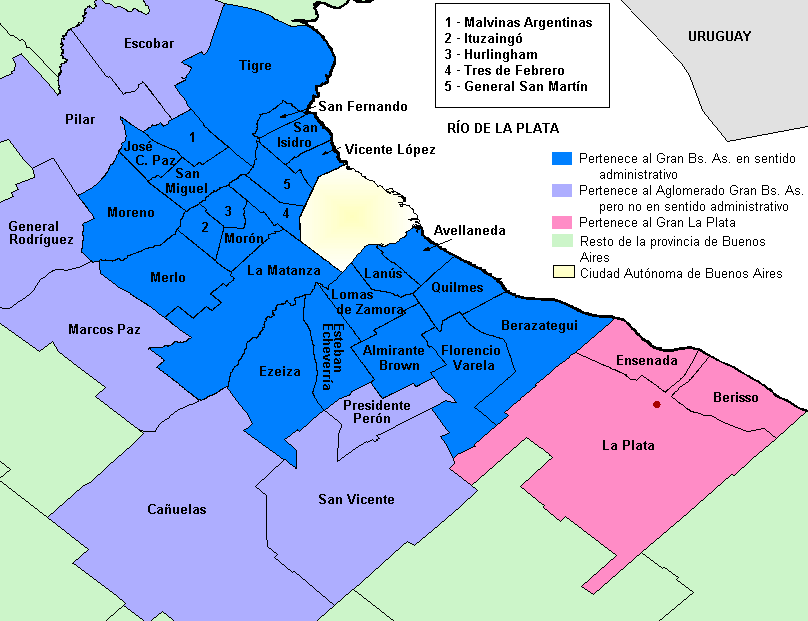
Just to be clear also, the Masses which are on the google map that I linked to are all outside the diocese of Buenos Aires which is just the area in white onthis map.


I write this post in the interest of accuracy. As is probably fairly obvious, I am trying to post as many positive things about Pope Francis as I can. However that is a useless exercise if the truth is not adhered to carefully. The purpose of this post is not to fan the flames of criticism of our new Holy Father but to be as accurate as possible. Let us pray the God will guard and guide the Holy Father in all his responsibilities, including his governance of the Sacred Liturgy.


from Supertradmum....the truth will always set one free.
I have tried to do my research on this. And, I am convinced that Rorate is correct here.

This is worth reading and thanks to Prof Basto for heads-up as I was off-line for some time today....

i published the link to the Rorate article and to Prof. Basto's comment.

I am sorry to disappoint people by bringing this up, but this is a real concern, not to be overlooked. I suggest you read and pray.


A summary of this article on Rorate from Prof. Basto:

Rorate Caeli, .....has this information in a brand new article called “How Summorum Pontificum was blocked and trampled on in Buenos Aires: facts, not fantasy and disinformation”:

http://rorate-caeli.blogspot.com/2013/03/how-summorum-pontificum-was-blocked-and.html

According to them:

(1) although Argentina has the largest traditionalist community in South America, no TLM was permitted by Card. Bergoglio in the Archiocese of Buenos Aires under the Apostolic Letter Ecclesia Dei;

(2) when Summorum Pontificum was issued, then Card. Bergoglio arranged for a TLM in 48 hours but this was a mutilated TLM as Card Bergoglio ordered the readings to be done using the Novus Ordo Calendar and Lectionary, so the readings were not of the Mass, and not of the 1962 Missal;

(3) instead of their being TLMs in the parishes, Card. Bergoglio actively suppressed priests who tried to implement Summorum Pontificum, and ordered them to stop the Masses. Instead, as if the Ecclesia Dei regime was still in force, Cardinal Bergoglio appointed a TLM chaplain, unfriendly to Tradtion, that celebrated the mutilated TLM with Novus Ordo readings ONCE A MONTH in a crypt;

(4) Cardinal Bergoglio, it is important to remember, wasn’t the Archbishop of all of Argentina, only of the City of Buenos Aires. The City of Buenos Aires, Federal Capital, is not to be confused with the Province of Buenos Aires (just like, say, one cannot confuse Washington State with Washington, DC). Buenos Aires Province surrounds Buenos Aires City, but the City is not a part of the Province (so Buenos Aires Province is like Maryland, whereas Buenos Aires City is like Washington DC). The Archdiocese of Buenos Aires, over which Card. Bergoglio, now Pope Francis, presided, included only the territory of the Federal Capital, Buenos Aires City. And then again, there was the jurisdiciton of the Military Ordinary, etc. While there are now TLMs under Summorum Pontificum in Buenos Aires Province, there is no TLM in Buenos Aires City under the jurisdiction of the Buenos Aires Archdiocese. So Card. Bergoglio’s Archdiocese soon became again a Summorum Pontificum free zone.

(5) Why? Because on the first TLM there were more than 100 people in attendance, but the TLM being only once a month, only in the crypt of one single Church in the whole City, and, especially, because it was not a true TLM, but a mutilated mixture of TLM and Novus Ordo with Novus Ordo calendar and readings, the numbers fell, and, when only a handful of people remained, the Archdiocese cancelled the TLMs. And by prohibiting individual initiatives by priests who wanted to pray the TLM in their churches, Cardinal Bergoglio effectively killed the application of Summorum Pontificum in the area under his jurisdicion."

Interesting article and thoughtful

http://www.patheos.com/blogs/standingonmyhead/2013/03/why-did-pope-francis-go-to-st-mary-major.html


Very interesting political-conclave comment here

http://www.firstthings.com/blogs/firstthoughts/2013/03/14/weigel-bergoglio-was-used-in-2005/#respond

Interesting Italian Take....

http://www.ilsalvagente.it/Sezione.jsp?titolo=Angelo%20Scola%20''bruciato''%20dalla%20vicinanza%20a%20Ratzinger&idSezione=20217

Because we are Catholics.....from Iowa, reactions on the New Pope


From the Jebbies


Vol XVII, No. 614 March 2013

Father General
  
STATEMENT OF THE SUPERIOR GENERAL OF THE SOCIETY OF JESUS

In the name of the Society of Jesus, I give thanks to God for the election of our new Pope, Cardinal Jorge Mario Bergoglio, S.J., which opens for the Church a path full of hope.

All of us Jesuits accompany with our prayers our brother and we thank him for his generosity in accepting the responsibility of guiding the Church at this crucial time. The name of "Francis" by which we shall now know him evokes for us the Holy Father's evangelical spirit of closeness to the poor, his identification with simple people, and his commitment to the renewal of the Church. From the very first moment in which he appeared before the people of God, he gave visible witness to his simplicity, his humility, his pastoral experience and his spiritual depth.

"The distinguishing mark of our Society is that it is . . . a companionship . . . bound to the Roman Pontiff by a special bond of love and service." (Complementary Norms, No. 2, § 2) Thus, we share the joy of the whole Church, and at the same time, wish to express our renewed availability to be sent into the vineyard of the Lord, according to the spirit of our special vow of obedience, that so distinctively unites us with the Holy Father (General Congregation 35, Decree 1, No. 17).


P. Adolfo Nicolás S.J.
                                                                                                       Superior General

Nice post reminder from 2009

http://rorate-caeli.blogspot.com/2010/07/may-holy-family-join-us-in-this-war-of.html

The moment of silence

thanks to Reuters


I pray for our new Pope, and he seems to be humble and gentle of spirit, as I said yesterday.

I pray for also for the SSPX and for all my friends, who like I did, still do, live in dioceses and even in countries, like Malta, where there are NO TLMs.

This is not a small problem. This is not a matter of taste. There is a different spirituality which grows in and around those who go to the TLM. TLM families do not contracept. Many home school. Vocations come out of TLM parishes in rates way above ordinary NO parishes. People who attend TLMs have told me of the changes in their families, in their children. The children thrive in discipline and grace.

Marriages are strengthened in the participation of the Latin Mass

I, for one, hate outdoor Masses and have found some elements of WYD as distinct ruptures with Tradition. This is an understatement.

I, for one, want a Pope who will encourage the vocations to TLM orders and who will appoint TLM bishops, and chastise those who disobey him in this area.

The spirituality of this good, new Pope is connected with how he celebrates the liturgy.

I am so touched that he prayed and that over 100,000 people joined him in silence.

That, to me, was an excellent sign, a sign of where our priority should be-a life focused on Christ.

We are not a cult which falls into the worship of a person, like North Korea, or even America now to some extent.

We are not people who put our trust in princes, but in God.

But, that trust can only be real and from prayer.

This good man who is Francis has a huge task ahead of him as the world reels out of control and into gross immorality.

He will have my prayers

I hope and pray he encourages the TLM.

Good blog from LMS

However, I am concerned about the SSPX situation. These, too, are my brothers and sisters in Christ.

http://www.lmschairman.org/2013/03/god-bless-pope-francis.html

Part 81: DoC and John of Damascus

I find it interesting and perplexing that some of the new translations of the Creed omit  "and He descended into hell."

In this search for perfection, one is stopped by the realization that part of our basic belief is that Christ went into hell after His death and freed those righteous who were waiting for salvation.

Heaven had been closed by the sin of Adam and only the New Adam, Christ, could open those gates.


What has the harrowing of hell to do with perfection? Read this bit by John of Damascus first found here.


Chapter XXIX.—Concerning the Descent to Hades.

The soul2245 when it was deified descended into Hades, in order that, just as the Sun of Righteousness2246 rose for those upon the earth, so likewise He might bring light to those who sit under the earth in darkness and shadow of death2247: in order that just as He brought the message of peace to those upon the earth, and of release to the prisoners, and of sight to the blind2248, and became to those who believed the Author of everlasting salvation and to those who did not believe a reproach of their unbelief2249, so He might become the same to those in Hades2250: That every knee should bow to Him, of things in heaven, and things in earth and things under the earth2251. And thus after He had freed those who had been bound for ages, straightway He rose again from the dead, shewing us the way of resurrection.

As to perfection of one's own person, this passage points to several facts which apply to Christ and each one of us. First, Christ went into hell to free others only after His perfect act of obedience to God; the Passion and Resurrection. Only after purgation and obedience does one have the power to help others.

Second, the light and freedom which Christ brought into darkness, bring healing and release from sin, can only be achieved through one's own freedom in and with Christ. Third, each one of us has a resurrection into the stage of Illumination. But, that only follows pain and suffering in order to be purified. There is no easy way around this.
John states here that Christ shows us the way of resurrection. It is death and renewal. Without death, there is no new life. And, that death is the death of self-will and denial of one's own rights and privileges.
Each one of us, in our lives, copies the way which Christ has shown us. If we avoid the Cross, there is not harrowing of the hell in one's own spirit. Each one of us remains a slave to sin and in darkness. If one follows Christ, one will not only journey on the way to perfection, but also, become like Him.
What more do we want? Tomorrow, I move on to another great Doctor of the Church.


Vatican Insider Interview with New Pope when He was Cardinal

http://vaticaninsider.lastampa.it/en/inquiries-and-interviews/detail/articolo/america-latina-latin-america-america-latina-12945/

English Translation of Pope Francis' Words

http://www.catholicreview.org/article/home/text-of-pope-francis-is-remarks-from-balcony-after-his-election

Acton Institute List of Pope Facts

http://blog.acton.org/archives/51491-9-things-you-should-know-about-pope-francis.html