http://rt.com/news/gm-crops-uk-eu-lobby-599/
Years ago, in Iowa (well, in 2010), some of my excellent students did in-depth studies, with my encouragement, on this fact of GM foods. If you start to really do serious research, the results are alarming.
Monsanto is BIG in my home state of Iowa. Big money is given to both state universities for GM research and development.
Only Waitrose will now have GM free meat, specifically chickens. All the rest have caved in....more on this later.
I love Waitrose...
http://www.dailymail.co.uk/news/article-2308369/Sainsburys-M-S-tear-Frankenfeed-ban.html
Thursday, 13 June 2013
Malta Today: and a comment from Cardinal Burke
Posted by
Supertradmum
I love my friends who tell me they are homosexual, but, they know from this blog or conversations, I cannot support their lifestyle or choices. We may agree on many things, such as politics and the culture, but not on this one point.
The good Cardinal Burke has a new comment on this. I pray that all the good, talented, loving men and women I know who have chosen the path of gay identity may come back to the Truth. God bless you all. What else can I say?
More on CNA found here....
http://www.catholicnewsagency.com/news/cardinal-burke-backs-pro-life-legislative-efforts/
Cardinal Burke emphasized, “it is important that good Catholics enter into politics to influence a change in the direction in which a number of nations are going, which is very anti life and anti family.”
He also spoke about the growing European pressure for Poland and Ireland to legalize abortion and same-sex “marriage.”
“The Church has a very critical role to play in Ireland and Poland,” he stated.
“I can’t believe that the people of Poland and Ireland, once they understand what is happening, will not stand up in defense of human life.”
“The important thing is that the citizens be well informed about what is happening, which is against the most fundamental moral truth, and that they be encouraged to resist,” the cardinal said.
On storms and abortion....and money
Posted by
Supertradmum
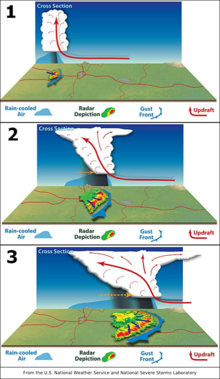
As I sit in a really cold room this morning, I am grateful that my family members were not affected by the huge storm which passed though their area. The storms were caused by a derecho, which means that the winds move in a straight line, and can cause tornadoes.
Here is a photo from Wiki and a chart from Wiki. http://en.wikipedia.org/wiki/Derecho
Today, I am homesick, which rarely happens. I love the heat of summer and miss the exciting weather. Living in a cold, damp climate despite the beautiful gardens, for the last few months, makes me want blue skies and hot temperatures. I am supposed to be going to Ireland very soon, invited by a friend, and I am not sure I can face two things there-the horrible weather and the new culture of death. What is worse, horrible weather or the death of babies? The press goes on and on about people lost in storms and is silent on the huge killing of babies in the womb. Double standards. Anti-child. Utilitarianism. The world is fast becoming anti-life in a wholesale fashion.
http://www.independent.ie/irish-news/government-publishes-abortion-legislation-29341959.html
This new law is being pushed to be passed by summer....whenever summer arrives, I do not know, sitting in this cold room, with a fire and my coat on over my jammies....
The state of anti-life in Ireland shows how quickly a culture can change. This is one prophecy that Robert Hugh Benson got wrong in his great book, The Lord of the World. One hundred years ago, although he could imagine Great Britain turning evil, he could not envision Ireland doing so.
Tragic...Ireland has lost her identity. She has made up another one, which has money as god. I spoke with a woman last night and noted that some of the English and some of the Irish talk about how much things cost all the time. No exaggeration. Where I come from, to speak of the price of things and complain is really bad form. These discussions, which happen daily reveal two things-one, money is god and therefore needs such obvious attention; two, people avoid serious discussions, such as abortion, ssm, etc. and talk nonsense or trivia in order not to upset others. Oh, dear....
The Soul in the Dark
Posted by
Supertradmum
St. John of the Cross noted that the house which is stilled, that is, one in which the senses are mortified, the fire of the passions put out, and the appetites, is in the Dark Night of the Soul. In this phase, the person does not have any consolations or clarity about God.
This is the stage of waiting. There is great suffering in this stage, as a person has no trust in his or her own judgement and are not moved by consolations. The person lives in a holy fear, and a dryness. The reason for this dryness is so that the soul seeks God only.
John of the Cross gives us three signs of the Dark Night.
1) Self-knowledge causes pain and suffering.Truth about one's self brings a misery. Self-knowledge brings true humility.
2) There are no consolations, either from God or from men. This is a good sign, as God is weaning the person away from all things but Himself.
3) The soul in literally in the dark about all things, including what he should do and his own spiritual life.
One could add two more points outside these three; these are the necessity of silence and the loss of memory, which means that one is no longer concerned about the sins and failings of others.
Nothing matters but the search for God.
But, this search is NOT ACTIVE. In the passive purgation of the soul and body, God does all the work. One only needs to cooperate with grace and suffering. Mother Teresa's dark night was almost 50 years of silence and turmoil.
St. Gemma Galgani described her dark night:
No one will believe you and you will suffer scorn and reproof. No one will give you comfort; not even those you look up to. In fact, all will reproach you and you will feel great confusion. What will cause you more grief will be that the Heavens will be like bronze to you . Jesus will appear to you as a severe judge. You will pray, but you will feel as if you did not. You will look for Jesus, but you will not find Him.
You will feel that He is rejecting you. When you will try to recollect yourself, you will feel distracted. When you call upon the Blessed Mother and the Saints, no one will pity you. You will feel that everyone has abandoned you. When you will go to confession in order to receive Jesus, you shall not feel anything, and furthermore you will feel aversion for these things. When you will practice devotions, it will be out of necessity, and you will feel as if it was wasted time. You will believe, but without belief, you will hope, but as if you had no hope. You will love Jesus as if you did not love Him, because during this time you will not feel Him. You will hate living and you shall be afraid of death; you will not even be able to cry...
This is the stage of waiting. There is great suffering in this stage, as a person has no trust in his or her own judgement and are not moved by consolations. The person lives in a holy fear, and a dryness. The reason for this dryness is so that the soul seeks God only.
John of the Cross gives us three signs of the Dark Night.
1) Self-knowledge causes pain and suffering.Truth about one's self brings a misery. Self-knowledge brings true humility.
2) There are no consolations, either from God or from men. This is a good sign, as God is weaning the person away from all things but Himself.
3) The soul in literally in the dark about all things, including what he should do and his own spiritual life.
One could add two more points outside these three; these are the necessity of silence and the loss of memory, which means that one is no longer concerned about the sins and failings of others.
Nothing matters but the search for God.
But, this search is NOT ACTIVE. In the passive purgation of the soul and body, God does all the work. One only needs to cooperate with grace and suffering. Mother Teresa's dark night was almost 50 years of silence and turmoil.
St. Gemma Galgani described her dark night:
No one will believe you and you will suffer scorn and reproof. No one will give you comfort; not even those you look up to. In fact, all will reproach you and you will feel great confusion. What will cause you more grief will be that the Heavens will be like bronze to you . Jesus will appear to you as a severe judge. You will pray, but you will feel as if you did not. You will look for Jesus, but you will not find Him.
You will feel that He is rejecting you. When you will try to recollect yourself, you will feel distracted. When you call upon the Blessed Mother and the Saints, no one will pity you. You will feel that everyone has abandoned you. When you will go to confession in order to receive Jesus, you shall not feel anything, and furthermore you will feel aversion for these things. When you will practice devotions, it will be out of necessity, and you will feel as if it was wasted time. You will believe, but without belief, you will hope, but as if you had no hope. You will love Jesus as if you did not love Him, because during this time you will not feel Him. You will hate living and you shall be afraid of death; you will not even be able to cry...
One must persist in prayer, even though one is in the dark.
I have cheated and gone back to the perfection discussion because of questions. But, a good teacher is always the one who gets off the main point and goes off on tangents.
I never taught to a test...I covered more than the tests..............
To be continued...
I have cheated and gone back to the perfection discussion because of questions. But, a good teacher is always the one who gets off the main point and goes off on tangents.
I never taught to a test...I covered more than the tests..............
To be continued...
Thomas Aquinas and Modesty 3
Posted by
Supertradmum
As I noted in one of the recent posts on modesty, this virtue is connected to the virtue of temperance.
Our society has completely lost reverence for temperance, which is the virtue of restraint.
Here is the Catholic Encyclopedia on Temperance, followed by a short section of Thomas. One can clearly see that the CE article is based on Thomistic Philosophy
Temperance is here considered as one of the four cardinal virtues. It may be defined as the righteous habit which makes a man govern his natural appetite for pleasures of the senses in accordance with the norm prescribed by reason. In one sense temperance may be regarded as a characteristic of all the moral virtues; the moderation it enjoins is central to each of them. It is also according to St. Thomas (II-II:141:2) a special virtue. Thus, it is the virtue which bridles concupiscence or which controls the yearning for pleasures and delights which most powerfully attract the human heart. These fall mainly into three classes: some are associated with the preservation of the human individual; others with the perpetuation of the race, and others still with the well-being and comfort of human life. Under this aspect temperance has for subordinate virtues, abstinence, chastity, and modesty.Abstinence prescribes the restraint to be employed in the partaking of food and drink. Obviously the measure of this self-restraint is not constant and invariable. It is different for different persons as well as for different ends in view. The diet of an anchorite would not do for a farm labourer. Abstinence is opposed to the vices of gluttony and drunkenness. The disorder of these is that food and drink are made use of in such wise as to damage instead of benefit the bodily health. Hence gluttony and drunkenness are said to be intrinsically wrong. That does not mean, however, that they are always grievous sins. Gluttony is seldom such; drunkenness is so when it is complete, that is when it destroys the use of reason for the time being. Chastity as a part of temperance regulates the sensual satisfactions connected with the propagation of the human species. The contrary vice is lust. As these pleasures appeal with the special vehemence to human nature, it is the function of chastity to impose the norm of reason. Thus it will decide that they are altogether to be refrained from in obedience to a higher vocation or at any rate only availed of with reference to the purposes of marriage. Chastity is not fanaticism; much less is it insensibility. It is the carrying out of the mandate of temperance in a particular department where such a steadying power is acutely needed.
The virtue of modesty, as ranged under temperance, has as its task the holding in reasonable leash of the less violent human passions. It brings into service humility to set in order a man's interior. By transfusing his estimates with truth, and increasing his self-knowledge it guards him against the radical malice of pride. It is averse to pusillanimity, the product of low views and a mean-spirited will. In the government of the exterior of a man modesty aims to make it conform to the demands of decency and decorousness (honestas). In this way his whole outward tenor of conduct and method of life fall under its sway. Such things as his attire, manner of speech, habitual bearing, style of living, have to be made to square with its injunctions. To be sure the cannot always be settled by hard and fast rules. Convention will often have a good deal to say in the case, but in turn will have its propriety determined by modesty. Other virtues are enumerated by St. Thomas as subordinate to temperance inasmuch as they imply moderation in the management of some passion. It ought to be noted, however, that in its primary and generally understood sense temperance is concerned with what is difficult for a man, not in so far as he is a rational being precisely, but rather in so far as he is an animal. The hardest duties for flesh and blood are self-restraint in the use of food and drink and of the venereal pleasures that go with the propagation of the race. That is why abstinence and chastity may be reckoned the chief and ordinary phases of this virtue. All that has been said receives additional force of we suppose that the self-control commanded by temperance is measured not only by the rule of reason but by the revealed law of God as well. It is called a cardinal virtue because the moderation required for every righteous habit has in the practice of temperance a specially trying arena. The satisfactions upon which it imposes a check are at once supremely natural and necessary in the present order of human existence. It is not, however, the greatest of moral virtues. That rank is held by prudence; then come justice, fortitude, and finally temperance.
http://www.newadvent.org/cathen/14481a.htm
Thomas writes on temperance and refers to modesty as well.
Origen says (Hom. viii super Luc.): "If thou wilt hear the name of this virtue, and what it was called by the philosophers, know that humility which God regards is the same as what they called metriotes, i.e. measure or moderation." Now this evidently pertains to modesty or temperance. Therefore humility is a part of modesty or temperance.
I answer that, As stated above (137, 2, ad 1; 157, 3, ad 2), in assigning parts to a virtue we consider chiefly the likeness that results from the mode of the virtue. Now the mode of temperance, whence it chiefly derives its praise, is the restraint or suppression of the impetuosity of a passion. Hence whatever virtues restrain or suppress, and the actions which moderate the impetuosity of the emotions, are reckoned parts of temperance. Now just as meekness suppresses the movement of anger, so does humility suppress the movement of hope, which is the movement of a spirit aiming at great things. Wherefore, like meekness, humility is accounted a part of temperance. For this reason the Philosopher (Ethic. iv, 3) says that a man who aims at small things in proportion to his mode is not magnanimous but "temperate," and such a man we may call humble. Moreover, for the reason given above (Question 160, Article 2), among the various parts of temperance, the one under which humility is comprised is modesty as understood by Tully (De Invent. Rhet. ii, 54), inasmuch as humility is nothing else than a moderation of spirit: wherefore it is written (1 Peter 3:4): "In the incorruptibility of a quiet and meek spirit."
Reply to Objection 1. The theological virtues, whose object is our last end, which is the first principle in matters of appetite, are the causes of all the other virtues. Hence the fact that humility is caused by reverence for God does not prevent it from being a part of modesty or temperance.
Reply to Objection 2. Parts are assigned to a principal virtue by reason of a sameness, not of subject or matter, but of formal mode, as stated above (137, 2, ad 1; 157, 3, ad 2). Consequently, although humility is in the irascible as its subject, it is assigned as a part of modesty or temperance by reason of its mode.
Reply to Objection 3. Although humility and magnanimity agree as to matter, they differ as to mode, by reason of which magnanimity is reckoned a part of fortitude, and humility a part of temperance.
Question 161 same part http://www.newadvent.org/summa/3161.htm
Why this is connected to modesty is the application of the virtue of temperance to meekness and quietness.
Modesty is meek and quiet. Loud talk, or raucous actions show the opposite spirit. Sometimes, we see older women being loud and over-exuberant, and we know that there is something not quite right with their spirits. The meek and humble woman speaks quietly and is not strident. This is the COMPETE opposite of the feminist mode.
Temperance and meekness indicate that a soul has found peace within herself. What has clothing to do with this, one may ask?
Modesty does not attract anyone. Modesty humbly causes a person to be overlooked. Can one imagine the difference between a modest woman and one who purposefully draws attention, even sexual attention to herself?
As I have warned women about the 3Ps, I warn men about the woman who has to be the center of attention in a room of men, the woman who flirts and entices. These characteristics are the opposite of modesty.
A little lesson from Jane Austen....on the lack of modesty in one case and the shock that immodesty should cause in a good, innocent soul.
You may wonder at a combination of Thomas Aquinas and Jane Austen. Austen understood, as did Thomas, and Aristotle, that the virtues of fortitude, justice, nnd temperance are the moral virtues, which are the natural virtues.
Natural virtues "preserve", protect and perfect human nature. The moral virtues perfect the appetites. Prudence, by the way, is an intellectual virtue.
Temperance it is which restrains the undue impulse of concupiscence for sensible pleasure, while fortitude causes man to be brave when he would otherwise shrink, contrary to reason, from dangers or difficulties. Temperance, then, to consider it more particularly, is that moral virtue which moderates in accordance with reason the desires and pleasures of the sensuous appetite attendant on those acts by which human nature is preserved in the individual or propagated in the species. The subordinate species of temperance are:
http://www.newadvent.org/cathen/15472a.htm
Our society has completely lost reverence for temperance, which is the virtue of restraint.
Here is the Catholic Encyclopedia on Temperance, followed by a short section of Thomas. One can clearly see that the CE article is based on Thomistic Philosophy
Temperance is here considered as one of the four cardinal virtues. It may be defined as the righteous habit which makes a man govern his natural appetite for pleasures of the senses in accordance with the norm prescribed by reason. In one sense temperance may be regarded as a characteristic of all the moral virtues; the moderation it enjoins is central to each of them. It is also according to St. Thomas (II-II:141:2) a special virtue. Thus, it is the virtue which bridles concupiscence or which controls the yearning for pleasures and delights which most powerfully attract the human heart. These fall mainly into three classes: some are associated with the preservation of the human individual; others with the perpetuation of the race, and others still with the well-being and comfort of human life. Under this aspect temperance has for subordinate virtues, abstinence, chastity, and modesty.Abstinence prescribes the restraint to be employed in the partaking of food and drink. Obviously the measure of this self-restraint is not constant and invariable. It is different for different persons as well as for different ends in view. The diet of an anchorite would not do for a farm labourer. Abstinence is opposed to the vices of gluttony and drunkenness. The disorder of these is that food and drink are made use of in such wise as to damage instead of benefit the bodily health. Hence gluttony and drunkenness are said to be intrinsically wrong. That does not mean, however, that they are always grievous sins. Gluttony is seldom such; drunkenness is so when it is complete, that is when it destroys the use of reason for the time being. Chastity as a part of temperance regulates the sensual satisfactions connected with the propagation of the human species. The contrary vice is lust. As these pleasures appeal with the special vehemence to human nature, it is the function of chastity to impose the norm of reason. Thus it will decide that they are altogether to be refrained from in obedience to a higher vocation or at any rate only availed of with reference to the purposes of marriage. Chastity is not fanaticism; much less is it insensibility. It is the carrying out of the mandate of temperance in a particular department where such a steadying power is acutely needed.
The virtue of modesty, as ranged under temperance, has as its task the holding in reasonable leash of the less violent human passions. It brings into service humility to set in order a man's interior. By transfusing his estimates with truth, and increasing his self-knowledge it guards him against the radical malice of pride. It is averse to pusillanimity, the product of low views and a mean-spirited will. In the government of the exterior of a man modesty aims to make it conform to the demands of decency and decorousness (honestas). In this way his whole outward tenor of conduct and method of life fall under its sway. Such things as his attire, manner of speech, habitual bearing, style of living, have to be made to square with its injunctions. To be sure the cannot always be settled by hard and fast rules. Convention will often have a good deal to say in the case, but in turn will have its propriety determined by modesty. Other virtues are enumerated by St. Thomas as subordinate to temperance inasmuch as they imply moderation in the management of some passion. It ought to be noted, however, that in its primary and generally understood sense temperance is concerned with what is difficult for a man, not in so far as he is a rational being precisely, but rather in so far as he is an animal. The hardest duties for flesh and blood are self-restraint in the use of food and drink and of the venereal pleasures that go with the propagation of the race. That is why abstinence and chastity may be reckoned the chief and ordinary phases of this virtue. All that has been said receives additional force of we suppose that the self-control commanded by temperance is measured not only by the rule of reason but by the revealed law of God as well. It is called a cardinal virtue because the moderation required for every righteous habit has in the practice of temperance a specially trying arena. The satisfactions upon which it imposes a check are at once supremely natural and necessary in the present order of human existence. It is not, however, the greatest of moral virtues. That rank is held by prudence; then come justice, fortitude, and finally temperance.
http://www.newadvent.org/cathen/14481a.htm
Thomas writes on temperance and refers to modesty as well.
Origen says (Hom. viii super Luc.): "If thou wilt hear the name of this virtue, and what it was called by the philosophers, know that humility which God regards is the same as what they called metriotes, i.e. measure or moderation." Now this evidently pertains to modesty or temperance. Therefore humility is a part of modesty or temperance.
I answer that, As stated above (137, 2, ad 1; 157, 3, ad 2), in assigning parts to a virtue we consider chiefly the likeness that results from the mode of the virtue. Now the mode of temperance, whence it chiefly derives its praise, is the restraint or suppression of the impetuosity of a passion. Hence whatever virtues restrain or suppress, and the actions which moderate the impetuosity of the emotions, are reckoned parts of temperance. Now just as meekness suppresses the movement of anger, so does humility suppress the movement of hope, which is the movement of a spirit aiming at great things. Wherefore, like meekness, humility is accounted a part of temperance. For this reason the Philosopher (Ethic. iv, 3) says that a man who aims at small things in proportion to his mode is not magnanimous but "temperate," and such a man we may call humble. Moreover, for the reason given above (Question 160, Article 2), among the various parts of temperance, the one under which humility is comprised is modesty as understood by Tully (De Invent. Rhet. ii, 54), inasmuch as humility is nothing else than a moderation of spirit: wherefore it is written (1 Peter 3:4): "In the incorruptibility of a quiet and meek spirit."
Reply to Objection 1. The theological virtues, whose object is our last end, which is the first principle in matters of appetite, are the causes of all the other virtues. Hence the fact that humility is caused by reverence for God does not prevent it from being a part of modesty or temperance.
Reply to Objection 2. Parts are assigned to a principal virtue by reason of a sameness, not of subject or matter, but of formal mode, as stated above (137, 2, ad 1; 157, 3, ad 2). Consequently, although humility is in the irascible as its subject, it is assigned as a part of modesty or temperance by reason of its mode.
Reply to Objection 3. Although humility and magnanimity agree as to matter, they differ as to mode, by reason of which magnanimity is reckoned a part of fortitude, and humility a part of temperance.
Question 161 same part http://www.newadvent.org/summa/3161.htm
Why this is connected to modesty is the application of the virtue of temperance to meekness and quietness.
Modesty is meek and quiet. Loud talk, or raucous actions show the opposite spirit. Sometimes, we see older women being loud and over-exuberant, and we know that there is something not quite right with their spirits. The meek and humble woman speaks quietly and is not strident. This is the COMPETE opposite of the feminist mode.
Temperance and meekness indicate that a soul has found peace within herself. What has clothing to do with this, one may ask?
Modesty does not attract anyone. Modesty humbly causes a person to be overlooked. Can one imagine the difference between a modest woman and one who purposefully draws attention, even sexual attention to herself?
As I have warned women about the 3Ps, I warn men about the woman who has to be the center of attention in a room of men, the woman who flirts and entices. These characteristics are the opposite of modesty.
A little lesson from Jane Austen....on the lack of modesty in one case and the shock that immodesty should cause in a good, innocent soul.
You may wonder at a combination of Thomas Aquinas and Jane Austen. Austen understood, as did Thomas, and Aristotle, that the virtues of fortitude, justice, nnd temperance are the moral virtues, which are the natural virtues.
Natural virtues "preserve", protect and perfect human nature. The moral virtues perfect the appetites. Prudence, by the way, is an intellectual virtue.
Temperance it is which restrains the undue impulse of concupiscence for sensible pleasure, while fortitude causes man to be brave when he would otherwise shrink, contrary to reason, from dangers or difficulties. Temperance, then, to consider it more particularly, is that moral virtue which moderates in accordance with reason the desires and pleasures of the sensuous appetite attendant on those acts by which human nature is preserved in the individual or propagated in the species. The subordinate species of temperance are:
- abstinence, which disposes to moderation in the use of food;
- sobriety, which inclines to moderation in the use of spirituous liquors;
- chastity, which regulates the appetite in regard to sexual pleasures; to chastity may be reduced modesty, which is concerned withacts subordinate to the act of reproduction.
- continence, which according to the Scholastics, restrains the will from consenting to violent movements or concupiscence;
- humility, which restrains inordinate desires of one's own excellence;
- meekness, which checks inordinate movements of anger;
- modesty or decorum, which consists in duly ordering the external movements of anger; to the direction of reason.
http://www.newadvent.org/cathen/15472a.htm
Wednesday, 12 June 2013
Goodbye to Kent, Again
Posted by
Supertradmum
My short stay has been shrouded in mist or high winds and cold. A pathetic fallacy for the Dark Night of the Soul.....
A comment on the 3ps
Posted by
Supertradmum
Anita made a great comment on the last post of yesterday on the 3Ps. Here is her comment. She is a lawyer.
May I add one thing? Ladies, if a man asks you to move in and shack up, he is NOT NOT NOT a protector. That guy is a jerk by definition and you should have nothing to do with him. The whole point of living together without getting married is precisely to be able to walk away from both it and whatever comes of it. You will not get him to marry you by moving in (or, as most often happens, moving him in to your place, while you pay the bills). Nor will you get him to marry you by having his children. And, although this is purely anecdotal, most of the domestic violence cases I see working in the criminal justice system are people living in concubinage. So, to recap: a man who asks you to be his concubine is by definition either a Peter Pan or a predator, and not a protector. Period.
Stop Now and Reconsider
Posted by
Supertradmum
I have been saying the same things to friends for over ten years and I have tried to do what I have said.
Create a community.
If you are isolated, move to where you will have support in your Catholic life.
Do it.
I am disappointed with lay communities in Ireland and England. Either they are full of undisciplined, hippy-type, New Age, unorthodox Catholics, or they are Anabaptist. This is why I want a Eucharistic centered strictly TLM one. The others are not really Catholic.
Not places for the conservative, orthodox, trad Catholic--the TLM communities are mostly in the expensive big cities. I perfectly understand my friends who have gone to the SSPX for community.
I simply cannot do that, but I wish I could.
Find a community or create one.
Understand what happened here in the 15th Century. Catholicism was outlawed. One man started it all, with parasites and ambitious men supporting his wicked appetites.
Do not persist in thinking this state of persecution cannot happen again.
Do not be stupid.
Create a community.
Do it.
I am disappointed with lay communities in Ireland and England. Either they are full of undisciplined, hippy-type, New Age, unorthodox Catholics, or they are Anabaptist. This is why I want a Eucharistic centered strictly TLM one. The others are not really Catholic.
Not places for the conservative, orthodox, trad Catholic--the TLM communities are mostly in the expensive big cities. I perfectly understand my friends who have gone to the SSPX for community.
I simply cannot do that, but I wish I could.
Find a community or create one.
Understand what happened here in the 15th Century. Catholicism was outlawed. One man started it all, with parasites and ambitious men supporting his wicked appetites.
Do not persist in thinking this state of persecution cannot happen again.
Do not be stupid.
Thoughts on Blogging and Silence
Posted by
Supertradmum
My all-time favorite blogger and mentor in many areas was Dr. Sanity. Sadly, she stopped blogging after the November, 2012 American presidential election. I understood why she decided to stop blogging, but I was bereft of one of the greatest prophets on line. She was the heart of clarity and discernment in the blogosphere. Like me, only at a much higher level of intelligence and training, she blogged against the growing narcissism and tyrannies of our elected and non-elected officials. We both followed all of this decay since the mind 2000s.
She is a genius.
She said what I knew instinctively, but from a professional and highly gifted viewpoint.
Her silence is a loss to us all. However, I now understand, especially after the revelations of the past few days, why she enclosed herself in silence.
Her action is the same impulse I have had for years concerning the contemplative life. In silence is wisdom.
One cannot reflect without silence. One cannot hear the delicate, very soft voice of God without silence.
I must go into more silence, which I have known since September of 2012. However, as I am not physically able to join those excellent contemplative nuns, I need to find another place.
The house of prayer in Walsingham may be the answer, if this is God's Will. Pray for me to find this place or another one. Silent places can be anywhere, but must be stable.
The blog will continue, at least for now, but one cannot grow closer to God without giving Him time.
Just as we want to spend time with the person we love the most, phoning them in the day and waiting to see them in quiet excitement, so too we wait for God.
The purification of the senses and the spirit demands silence. One can create a certain amount in one's self, with discipline and grace and carry that silence around with them-the little cell of the mind, as St. Bernard calls it. But, the more, the Presence of God, who tends to speak more and more quietly as we move towards Him into silence, demands silence of a special nature.
We talk too much.
We listen to trivial words too much. We surround ourselves with noise. Satan has created the noisy culture so that we cannot hear God.
We need to move into more silence, or else we shall not be able to persevere in the coming days. Elijah was hiding from one of the worst tyrants in the Old Testament, Jezebel. She was horrid. She was the original wicked witch of the west, or rather, east.
He fled into a cave out of fear, but God called him out in courage and resolve. Do not be afraid. Be careful, but do not be afraid. Elijah had to anoint the real king before he died. Dr. Sanity left when the false king took over. She is in her virtual cave, but not out of fear.
For her, there is nothing left to say.
I am not quite at that point, but almost. The time will come when words will not be necessary.
Ask God to put His words in your heart, in your mind, and in your soul. The still, small voice is God.
She is a genius.
She said what I knew instinctively, but from a professional and highly gifted viewpoint.
Her silence is a loss to us all. However, I now understand, especially after the revelations of the past few days, why she enclosed herself in silence.
Her action is the same impulse I have had for years concerning the contemplative life. In silence is wisdom.
One cannot reflect without silence. One cannot hear the delicate, very soft voice of God without silence.
I must go into more silence, which I have known since September of 2012. However, as I am not physically able to join those excellent contemplative nuns, I need to find another place.
The house of prayer in Walsingham may be the answer, if this is God's Will. Pray for me to find this place or another one. Silent places can be anywhere, but must be stable.
The blog will continue, at least for now, but one cannot grow closer to God without giving Him time.
Just as we want to spend time with the person we love the most, phoning them in the day and waiting to see them in quiet excitement, so too we wait for God.
The purification of the senses and the spirit demands silence. One can create a certain amount in one's self, with discipline and grace and carry that silence around with them-the little cell of the mind, as St. Bernard calls it. But, the more, the Presence of God, who tends to speak more and more quietly as we move towards Him into silence, demands silence of a special nature.
We talk too much.
We listen to trivial words too much. We surround ourselves with noise. Satan has created the noisy culture so that we cannot hear God.
We need to move into more silence, or else we shall not be able to persevere in the coming days. Elijah was hiding from one of the worst tyrants in the Old Testament, Jezebel. She was horrid. She was the original wicked witch of the west, or rather, east.
He fled into a cave out of fear, but God called him out in courage and resolve. Do not be afraid. Be careful, but do not be afraid. Elijah had to anoint the real king before he died. Dr. Sanity left when the false king took over. She is in her virtual cave, but not out of fear.
For her, there is nothing left to say.
I am not quite at that point, but almost. The time will come when words will not be necessary.
Ask God to put His words in your heart, in your mind, and in your soul. The still, small voice is God.
1 Kings 19:11-13
Douay-Rheims 1899 American Edition (DRA)
11 And he said to him: Go forth, and stand upon the mount before the Lord: and behold the Lord passeth, and a great and strong wind before the Lord over throwing the mountains, and breaking the rocks in pieces: the Lord is not in the wind, and after the wind an earthquake: the Lord is not in the earthquake.
12 And after the earthquake a fire: the Lord is not in the fire, and after the fire a whistling of a gentle air.
13 And when Elias heard it, he covered his face with his mantle, and coming forth stood in the entering in of the cave, and behold a voice unto him, saying: What dost thou here, Elias? And he answered:
14 With zeal have I been zealous for the Lord God of hosts: because the children of Israel have forsaken thy covenant: they have destroyed thy altars, they have slain thy prophets with the sword, and I alone am left, and they seek my life to take it away.
15 And the Lord said to him: Go, and return on thy way through the desert to Damascus: and when thou art come thither, thou shalt anoint Hazael to be king over Syria.
Tuesday, 11 June 2013
More on The Three Ps
Posted by
Supertradmum
A reader asked me to go over the characteristics of men who are Predators, Peter Pans or Protectors.
I have written about this for a long time, and most of my knowledge is from teacher training for at-risk-students, when we learned about predators, and from experience, as well as helping out with marriage prep in the Church in years past. I also took counseling courses in the past for jobs in the Church which demanded such skills in order to refer people on to professionals as needed. These categories have moved out of counseling classes into the popular parlance.
Firstly, however, a number of pastors and a famous psychiatrist also talked to me about such terms for the categories as earlier at 1994, when I was working with people with marriage irregularities in a parish. I shall give a lay person's interpretation of the terms as succinctly as I can. I am NOT describing illnesses or conditions such as bipolar or other such things. I am not describing clinical Personality Disorders, although this traits could be found in such persons. I am not getting into clinical definitions of such.
Secondly, one can, by observation of habits and character, determine if a man falls into one of these three categories. I am not talking about male children, but adult men. The signs are not always obvious, at first.
Not seeing the obvious may be a problem in figuring out the evil character of the predator male. He is the one who sees women as sex objects, women as merely to be used for money or status, and is a man who manipulates for his own gain in this life. Such a man is one who marries for money and not love. Such a man wants a trophy wife who makes him look good in public.
He is also a bully and domineering, sucking life out of the women around him, whom he frequently charms at first before showing his true nastiness. A predator is selfish to the core and expects a woman to do what he wants to do. Sadly, he has learned the tricks to make women do what he wants, and he is used to his own way. Sometimes, this type of man is an adulterer or philanderer, as he is into power, not love. He is a liar.
If a young woman is beginning to think her boyfriend is a liar, get out of the relationship. Lying is a sign of a predator.
There are too many predators. If a young woman feels like she is giving her will over to such a man, she should get out of the relationship now. Too many young women want to please a man so badly that they fall into the predators' traps.
Predators only care about their own needs and cannot love. Frequently, they are also violent in speech, and even in action. Predators in families create domestic abuse. Too often women who are victims protect these predators, which is absolutely the wrong thing to do, as this status gives them more power.
Predators can seem charming, but hints are sexual aggressiveness, rudeness, and self-centeredness. Sadly, some cultures teach men to be predators. You can figure out which ones do this.
Peter Pans are the perpetual adolescent boy-men. They, also, are frequently narcissistic but in reality mostly non-committal, and use women to feed their need for a mommy. Peter Pans take no responsibility for themselves and constantly blame others either in the now or in the past for their faults and failures.
The Peter Pan is the man women love to take care of--ick. These men, again, seem charming and boyish, and exciting, as they seem unusual, but in reality they have not grown up spiritually or emotionally. In a marriage, they manipulate the women into doing everything to keep the marriage going, and see themselves as victims. A Peter Pan wants to create an environment where he has no responsibility. He rarely takes control of his life, much less that of a family. He may not ever want to get married, as that state would interfere with his constant boyhood life.
Many times Peter Pans start getting involved in a relationship with a woman leading to marriage, but then, break it off, as they get scared of the responsibility. If married, this type of man sometimes cannot cope with children, as he want to be the kid in the family. Peter Pans cannot discipline, as they have no self-discipline.
Modern Western Civilization is full of Peter Pans, and I know many. They do not fulfill the call to grow up into the persons God created them to be. They are sad, really. Many are "mama boys", and one does not want to marry a man who puts his mother before his wife.
Protectors are from God. They are men who have pursued their spiritual life and have become adults. They are not afraid of responsibility or being religious. They are usually trained from little on to be a man, but not always. I have known Protectors who came from awful family situations. Grace is freely given.
Protectors are exemplified in two men I know who gave up the careers they wanted to do in order to pursue careers which they knew would support a wife and as many children as God would give them. One is a doctor and the other a surgeon, and they have lots of lovely Catholic children and now, grandchildren.
They sacrificed dreams for being husbands and fathers, and God has blessed them. They are providers and men of sacrifice. A man who is willing to sacrifice his own comfort for that of his wife and children is a Protector.
Another Protector I know took care of his mother and three siblings after the father left home, never to return. This good Protector watched over his mother until she died in her nineties. His wife told me that he was her Protector as well, of course.
Protector men help their children to be saints and good citizens. They take an active part in the raising of the children, and also help the wife have time to pursue her prayer and daily Bible reading. They have a personal relationship with God and understand the role of the man as head of the family.
If you are single and you bump into a single Protector, you will recognize the courtesy and gentlemanly behavior he exhibits towards you.
Young women, if you are dating someone who is not a gentleman, get out of that relationship. Do not think that you can change a Peter Pan or Predator into a Protector.
Only God can do that.
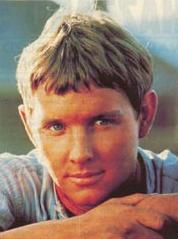
One of my favorite movies as a young person was The Man from Snowy River. The man in the story, Jim Craig, has to earn the right to have his land. He works to earn his rightful inheritance, horses, and finally, a wife. Good order, that. He became a Protector as he grew up.
I have written about this for a long time, and most of my knowledge is from teacher training for at-risk-students, when we learned about predators, and from experience, as well as helping out with marriage prep in the Church in years past. I also took counseling courses in the past for jobs in the Church which demanded such skills in order to refer people on to professionals as needed. These categories have moved out of counseling classes into the popular parlance.
Firstly, however, a number of pastors and a famous psychiatrist also talked to me about such terms for the categories as earlier at 1994, when I was working with people with marriage irregularities in a parish. I shall give a lay person's interpretation of the terms as succinctly as I can. I am NOT describing illnesses or conditions such as bipolar or other such things. I am not describing clinical Personality Disorders, although this traits could be found in such persons. I am not getting into clinical definitions of such.
Secondly, one can, by observation of habits and character, determine if a man falls into one of these three categories. I am not talking about male children, but adult men. The signs are not always obvious, at first.
Not seeing the obvious may be a problem in figuring out the evil character of the predator male. He is the one who sees women as sex objects, women as merely to be used for money or status, and is a man who manipulates for his own gain in this life. Such a man is one who marries for money and not love. Such a man wants a trophy wife who makes him look good in public.
He is also a bully and domineering, sucking life out of the women around him, whom he frequently charms at first before showing his true nastiness. A predator is selfish to the core and expects a woman to do what he wants to do. Sadly, he has learned the tricks to make women do what he wants, and he is used to his own way. Sometimes, this type of man is an adulterer or philanderer, as he is into power, not love. He is a liar.
If a young woman is beginning to think her boyfriend is a liar, get out of the relationship. Lying is a sign of a predator.
There are too many predators. If a young woman feels like she is giving her will over to such a man, she should get out of the relationship now. Too many young women want to please a man so badly that they fall into the predators' traps.
Predators only care about their own needs and cannot love. Frequently, they are also violent in speech, and even in action. Predators in families create domestic abuse. Too often women who are victims protect these predators, which is absolutely the wrong thing to do, as this status gives them more power.
Predators can seem charming, but hints are sexual aggressiveness, rudeness, and self-centeredness. Sadly, some cultures teach men to be predators. You can figure out which ones do this.
Peter Pans are the perpetual adolescent boy-men. They, also, are frequently narcissistic but in reality mostly non-committal, and use women to feed their need for a mommy. Peter Pans take no responsibility for themselves and constantly blame others either in the now or in the past for their faults and failures.
The Peter Pan is the man women love to take care of--ick. These men, again, seem charming and boyish, and exciting, as they seem unusual, but in reality they have not grown up spiritually or emotionally. In a marriage, they manipulate the women into doing everything to keep the marriage going, and see themselves as victims. A Peter Pan wants to create an environment where he has no responsibility. He rarely takes control of his life, much less that of a family. He may not ever want to get married, as that state would interfere with his constant boyhood life.
Many times Peter Pans start getting involved in a relationship with a woman leading to marriage, but then, break it off, as they get scared of the responsibility. If married, this type of man sometimes cannot cope with children, as he want to be the kid in the family. Peter Pans cannot discipline, as they have no self-discipline.
Modern Western Civilization is full of Peter Pans, and I know many. They do not fulfill the call to grow up into the persons God created them to be. They are sad, really. Many are "mama boys", and one does not want to marry a man who puts his mother before his wife.
Protectors are from God. They are men who have pursued their spiritual life and have become adults. They are not afraid of responsibility or being religious. They are usually trained from little on to be a man, but not always. I have known Protectors who came from awful family situations. Grace is freely given.
Protectors are exemplified in two men I know who gave up the careers they wanted to do in order to pursue careers which they knew would support a wife and as many children as God would give them. One is a doctor and the other a surgeon, and they have lots of lovely Catholic children and now, grandchildren.
They sacrificed dreams for being husbands and fathers, and God has blessed them. They are providers and men of sacrifice. A man who is willing to sacrifice his own comfort for that of his wife and children is a Protector.
Another Protector I know took care of his mother and three siblings after the father left home, never to return. This good Protector watched over his mother until she died in her nineties. His wife told me that he was her Protector as well, of course.
Protector men help their children to be saints and good citizens. They take an active part in the raising of the children, and also help the wife have time to pursue her prayer and daily Bible reading. They have a personal relationship with God and understand the role of the man as head of the family.
If you are single and you bump into a single Protector, you will recognize the courtesy and gentlemanly behavior he exhibits towards you.
Young women, if you are dating someone who is not a gentleman, get out of that relationship. Do not think that you can change a Peter Pan or Predator into a Protector.
Only God can do that.
One of my favorite movies as a young person was The Man from Snowy River. The man in the story, Jim Craig, has to earn the right to have his land. He works to earn his rightful inheritance, horses, and finally, a wife. Good order, that. He became a Protector as he grew up.
From the CCC on dress and the reception of Holy Communion
Posted by
Supertradmum
Respect is NOT short-shorts, or very short skirts or sweaters over leggings......
see these all here and in Ireland...
not modest
see these all here and in Ireland...
not modest
Modesty is a Virtue
Posted by
Supertradmum
Part Two for today on modesty--
We speak with our bodies more than our words. Modesty is a virtue. It is a virtue in the depth of the soul and connected to prudence, temperance, chastity, charity, and discretion.
Modesty lets one decrease and God increase, as St. John the Baptist spoke of himself and Christ.
If modesty is a virtue, and it is, why is it not cultivated? Why is it ignored?
Why is there confusion? It is an intuition which comes from the interior of the Holy Spirit. If the intuition is lacking, why? It is about respect for one's self and one's brothers and sisters in the Lord.
Women create unhealthy curiosity, and if a woman dresses like a man, she might be a cause of temptation for a woman with ssa.
The interior life shines forth to the exterior.
The forms taken by modesty vary from one culture to another. Everywhere, however, modesty exists as an intuition of the spiritual dignity proper to man. It is born with the awakening consciousness of being a subject. Teaching modesty to children and adolescents means awakening in them respect for the human person (CCC 2524).
Modesty protects the mystery of persons and their love. It encourages patience and moderation in loving relationships; it requires that the conditions for the definitive giving and commitment of man and woman to one another be fulfilled. Modesty is decency. It inspires one's choice of clothing. It keeps silence or reserve where there is evident risk of unhealthy curiosity. It is discreet (CCC 2522).
Some ideas here http://www.catholichomeandgarden.com/catholic_modesty.htm
We speak with our bodies more than our words. Modesty is a virtue. It is a virtue in the depth of the soul and connected to prudence, temperance, chastity, charity, and discretion.
Modesty lets one decrease and God increase, as St. John the Baptist spoke of himself and Christ.
If modesty is a virtue, and it is, why is it not cultivated? Why is it ignored?
Why is there confusion? It is an intuition which comes from the interior of the Holy Spirit. If the intuition is lacking, why? It is about respect for one's self and one's brothers and sisters in the Lord.
Women create unhealthy curiosity, and if a woman dresses like a man, she might be a cause of temptation for a woman with ssa.
The interior life shines forth to the exterior.
The forms taken by modesty vary from one culture to another. Everywhere, however, modesty exists as an intuition of the spiritual dignity proper to man. It is born with the awakening consciousness of being a subject. Teaching modesty to children and adolescents means awakening in them respect for the human person (CCC 2524).
Modesty protects the mystery of persons and their love. It encourages patience and moderation in loving relationships; it requires that the conditions for the definitive giving and commitment of man and woman to one another be fulfilled. Modesty is decency. It inspires one's choice of clothing. It keeps silence or reserve where there is evident risk of unhealthy curiosity. It is discreet (CCC 2522).
Some ideas here http://www.catholichomeandgarden.com/catholic_modesty.htm
Modesty and Evangelization
Posted by
Supertradmum
Well, the most angry and strident comments are ALWAYS on this topic.
Both here and in the States, there are wonderful young women between 18-36 who have been called to the New Evangelization. Many get degrees and certifications in catechesis from colleges and universities. I have worked with some of these women in the past.
They are smart and savvy about the teaching of the Church. They love Christ and His People.
But, too often, in fact frequently, they belie their commitment to God and their own femininity with choice of their clothes.
In my work with youth, I have attended workshops and even presentations, as well as been involved in street ministry with youth who have serious issues concerning dress.
Here is a partial list:
leggings under short skirts or shorts
tight jeans
low cut tops and tops which show the midriff
sloppy rugby or football shirts
dumping jeans
blouses which fall off one shoulder
tight sleeveless tops
boho syle, which is messy
bling or what are called harem sandals
occultic symbols in earrings and bracelets
tattoos
and so on.
These obvious signs reveal two problems which indicated a lack of interior conversion. In the old days, one could not be in ministry so many years after conversion in order to get the world out of one's soul. The time was usually two years.
The two problems are these: one, some young women HATE femininity in themselves, and see this gift of God as weakness. These women need healing or some type of psychology awareness of this hatred of themselves which is revealed in the wearing of men's clothing, such as football jerseys and boy cut jeans.
A woman shall not wear a man's garment, nor shall a man put on a woman's cloak, for whoever does these things is an abomination to the Lord your God. Deuteronomy 22:5
The second problem is that some of these women are coming out of highly sexualized lives and have not been weaned from sexy clothes.
Likewise also that women should adorn themselves in respectable apparel, with modesty and self-control, not with braided hair and gold or pearls or costly attire. 1 Timothy 2:9
It is the duty of those who are training them for evangelization to bring these young women to the realization that such dress is contrary to Christian womanhood.
We live in a pagan culture, not a Christian culture. Why do we conform to pagan dress? If a woman is drawing attention to herself sexually, or in a messy manner, she is not evangelizing the Gospel I know. She is advertising herself.
We speak with our bodies more than with our words.
I do not listen to them. I do not support their groups.
Something is wrong.
And, here is a website for modest clothing.
http://zeliesroses.blogspot.co.uk/
New Bishop for East Anglia
Posted by
Supertradmum
NO surprises here.
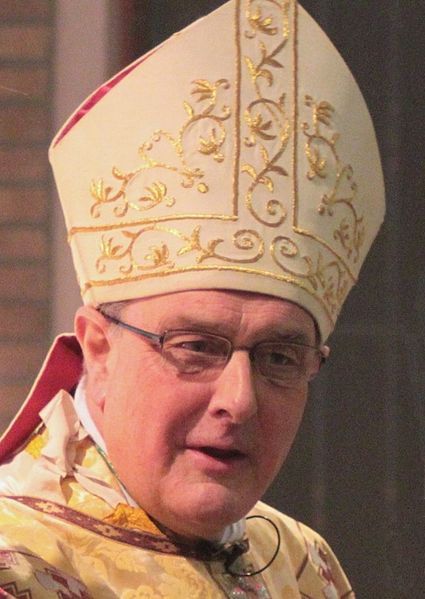
Bishop Elect Alan Hopes, we pray for you. Photo is from James Bradley
A New Sem for Brentwood
Posted by
Supertradmum
A young man I know, Paschal Uche, the youth with the smile who greeted Pope Benedict XVI when he came to England, is going in for Brentwood.
Pray for him.
Pray for him.
Thomas Aquinas Two
Posted by
Supertradmum
continuing...
In the last post, one sees that Thomas is quoting Boethius, the Scriptures and Gregory the Great. Thomas is calling up the long tradition of the Church to help us understand contemplation.
Contemplation is not for beginners. I repeat the passage:
The contemplative life consists in a certain liberty of mind. For Gregory says (Hom. iii in Ezech.) that "the contemplative life obtains a certain freedom of mind, for it thinks not of temporal but of eternal things." And Boethius says (De Consol. v, 2): "The soul of man must needs be more free while it continues to gaze on the Divine mind, and less so when it stoops to bodily things." Wherefore it is evident that the active life does not directly command the contemplative life, but prescribes certain works of the active life as dispositions to the contemplative life; which it accordingly serves rather than commands. Gregory refers to this when he says (Hom. iii in Ezech.) that "the active life is bondage, whereas the contemplative life is freedom."
The liberty of mind has come from the purification found in the two stages of purifying of the senses and of the spirit, found in the Dark Night of the Soul.
This happens several stages after the purification of sin and sinful habits.
Note the chart posted last Thursday.
Now, John of the Cross plainly states, as I noted yesterday, that some people get upset with those who pursue this life of constant communion with God.
Those who are enslaved to the bondage of trivia want to bring everyone else down to their level.
I was struggling with someone in authority being mean to me last year. A priest said, simply, "Focus on Christ". At first, I was upset with a phrase I thought was not only naive, but underestimating the problem. I was like Martha, complaining about my sister in Christ. I did not see that I could have been forgetting about her, and, instead, concentrating on the one thing which mattered-Christ's Love.
Then, I saw the soundness of this advice. If I kept focused on Christ, I no longer saw the meanness, and I was united in the Passion, as Christ was treated very badly. But, I only had to look at Christ, not at my own pathetic suffering. What resulted, after a long time, was a quiet joy.
This is why one must surround one's self with those who love God and want to live in that love.
One of the most horrible distractions is money, and this may be counteracted with trust in Divine Providence, as noted above in the first quotation from Gregory.
I have left the blue links on in New Advent for your benefit.
To be continued....
In the last post, one sees that Thomas is quoting Boethius, the Scriptures and Gregory the Great. Thomas is calling up the long tradition of the Church to help us understand contemplation.
Contemplation is not for beginners. I repeat the passage:
The contemplative life consists in a certain liberty of mind. For Gregory says (Hom. iii in Ezech.) that "the contemplative life obtains a certain freedom of mind, for it thinks not of temporal but of eternal things." And Boethius says (De Consol. v, 2): "The soul of man must needs be more free while it continues to gaze on the Divine mind, and less so when it stoops to bodily things." Wherefore it is evident that the active life does not directly command the contemplative life, but prescribes certain works of the active life as dispositions to the contemplative life; which it accordingly serves rather than commands. Gregory refers to this when he says (Hom. iii in Ezech.) that "the active life is bondage, whereas the contemplative life is freedom."
The liberty of mind has come from the purification found in the two stages of purifying of the senses and of the spirit, found in the Dark Night of the Soul.
This happens several stages after the purification of sin and sinful habits.
Note the chart posted last Thursday.
Now, John of the Cross plainly states, as I noted yesterday, that some people get upset with those who pursue this life of constant communion with God.
Those who are enslaved to the bondage of trivia want to bring everyone else down to their level.
I was struggling with someone in authority being mean to me last year. A priest said, simply, "Focus on Christ". At first, I was upset with a phrase I thought was not only naive, but underestimating the problem. I was like Martha, complaining about my sister in Christ. I did not see that I could have been forgetting about her, and, instead, concentrating on the one thing which mattered-Christ's Love.
Then, I saw the soundness of this advice. If I kept focused on Christ, I no longer saw the meanness, and I was united in the Passion, as Christ was treated very badly. But, I only had to look at Christ, not at my own pathetic suffering. What resulted, after a long time, was a quiet joy.
This is why one must surround one's self with those who love God and want to live in that love.
One of the most horrible distractions is money, and this may be counteracted with trust in Divine Providence, as noted above in the first quotation from Gregory.
I have left the blue links on in New Advent for your benefit.
To be continued....
Thomas Aquinas Series ONE and ONE-HALF
Posted by
Supertradmum
In this series, I want to concentrate on prayer and Thomas Aquinas. It seems to me in this terrible time of the destructive of Western Civilization by those very people elected to protect it, that we need to focus on the interior life, as I did in the perfection series, remembering that only a relationship with God will bring us through tribulation to God.
Thomas Aquinas was all but forgotten after the upheavals in seminaries and Catholic higher education after Vatican II. I know this from experience.
I shall share that later.
Today, I want to start with a bit of Thomas from the Summa Theologica on contemplation 2:2;82.1. And this numbering is how I shall do references in this series-Second Part of the Second Part, Question 82, Article 1.
The contemplative life consists in a certain liberty of mind. For Gregory says (Hom. iii in Ezech.) that "the contemplative life obtains a certain freedom of mind, for it thinks not of temporal but of eternal things." And Boethius says (De Consol. v, 2): "The soul of man must needs be more free while it continues to gaze on the Divine mind, and less so when it stoops to bodily things." Wherefore it is evident that the active life does not directly command the contemplative life, but prescribes certain works of the active life as dispositions to the contemplative life; which it accordingly serves rather than commands. Gregory refers to this when he says (Hom. iii in Ezech.) that "the active life is bondage, whereas the contemplative life is freedom."
As you all can see, this could be part of the perfection series, but I want the flexibility to depart from that theme.
What Thomas states here is that paying attention to the interior life and being in communion with God gives one objectivity regarding actions. When one is concentrating on God, all else falls into focus. Most commonly, people allow the active life to take over the mind, heart, soul to the detriment of spiritual growth.
How many conversations does one need on food, travel, daily trivia?
The danger of losing one's soul forever frequently lies in the over indulgence of attention to the actions of the day, rather than being reflective. A disposition of quiet listening to God even during work hours develops this ability to stay in the Presence of God, even though one does not experience Him. He is there and one's Faith reaches out for relationship.
The activities of the day can be secondary and still done well to the interior life.
Gregory's comment, quoted by Thomas, the the active life is bondage seems obvious to me.
Silence creates freedom.
We all talk too much and talk too much on useless topics. Silence allows God to talk to us.
Are we listening? We must.
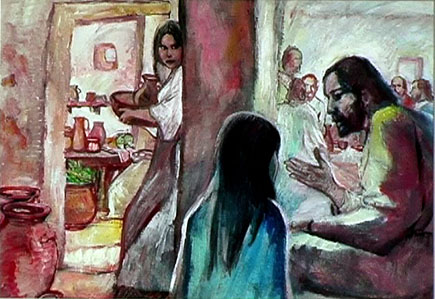
Now, in the Dark Night, one does not hear God or perceive His Presence, but rests in the passive purification, like Mary of Bethany at the feet of Jesus.
Thomas uses this pericope to show that the contemplative is the higher state, no quantitatively but qualitatively.
Martha could have been in contemplation while she was working, and if she was, she would not have criticized Mary/
This freedom of thought is key and is connected to what John of the Cross states is the loss of memory of all but God.
We do not need to think of the Marys if we are Marthas who remain in contemplation when working. The nuns do this in Tyburn. It is possible to be very busy and recollected in silence. But, one must concentrate on God and not on anyone or anything else. The work flows from the contemplation.
to be continued...
Subscribe to:
Posts (Atom)