Sunday, 13 January 2013
Now, the Masons can be blamed for many errors, but soccer?

"Fatwa By Saudi Sheikh: Soccer Players Are Infidels," from MEMRI a la Spencer:
 |
| On several sites..... |
Tell this to fans in Argentina, Brazil, Spain, England.................
On December 5, 2012, Saudi sheikh Suleiman Al-'Alwan, a popular Salafi-jihadi cleric, was released after being imprisoned without a trial for nine years.[1] Al-'Alwan's trial began only recently; he is accused of having ties to Al-Qaeda and issuing fatwas permitting terrorist attacks in Saudi Arabia and targeting Western interests in the world and in the Saudi kingdom.[2]Since his release, Al-'Alwan has received many visitors, including sheikhs and former students, and has been asked to give his opinion on religious questions. On December 23, 2012, in response to a question posed by a Saudi youth, Al-'Alwan said that soccer was a form of heresy: "Soccer is a Masonic game meant to distance Muslims from their religion and faith, and most of the public that follows [soccer games] is loyal to the infidels." Al-'Alwan called soccer players criminals and infidels: "[When] a man watches a [soccer] game, God forbid, he is watching deviant criminals and sinful infidels, even if they are Muslims." He added: "There is a serious problem with [soccer] games, which is the refereeing, which follows manmade laws, not Allah's laws."[3]It should be mentioned that shortly after his release, Al-'Alwan also accused Egyptian President Muhammad Mursi of heresy for failing to implement shari'a law in Egypt, and condemned Egypt's new constitution because it guarantees religious freedom and treats Christians as equal to Muslims. In addition, he held Mursi responsible for causing the deaths of Salafis in Sinai.[4]Al-'Alwan's fatwa was harshly criticized by Saudi columnist Muhammad bin 'Abd Al-Latif Aal Al-Sheikh, who wrote in the Saudi government daily Al-Jazirah that Al-'Alwan reminds him of Taliban sheikhs....


There is no true religious experience without....
 |
| St. Bernadette of Lourdes |
1) There is no true religious experience without complete orthodoxy. Without complete orthodoxy, there can be no true holiness.
2) There is no true religious experience without doctrine. Experience must go hand in hand with the Revelation of the Church and the Tradition of the Church. There is no such thing as "pastoral" experience separate from doctrine.
3) Not all the writings of saints have been approved doctrinally. Some have. I have more on this on other postings. There are levels of writings. A person's holiness does not dictate that ALL their writings are without error or interpretation.
4) There is a huge difference between personal meditation and divine revelations. The Church is clear on this. One must make sure one is not believing something is infallible which is merely the meditations of a good person, and, therefore, limited. Only papal statements from the Chair of Peter are infallible. And, as I have noted before, the various congregations in the Vatican, have authority over us, if approved and signed by the correct authorities.
5) There is no true religion experience outside a life of sanctifying grace. The Deceitful One can mock God with false experiences. The great saints warn us of this.
6) There is no true religious experience which is from God from other, arcane sources. Clairvoyants, for example, get their knowledge from demons, not God. There is no mocking God regarding seeking religious experiences outside the mainstream of the Church's teaching.
7) There is no true religious experience outside of Christ, God the Father, and the Holy Spirit. If someone denies the Trinity, the experiences must be seen as suspect.
8) The Church has the duty and right to teach and guide us regarding religious experience. If some experience is condemned, one must avoid those books, readings, sites on line on pain of losing one's immortal soul. Following false seers is one of the most serious of sins. Obedience is key.
9) There is no true religious experience is someone is making money from such. This should be obvious.
If there are charges for talks, books, DVDs, CDs, etc., smell a rat. Sorry, but what is freely given is free.
Industries have been made from modern religious experiences which have not been approved by the Church. To me, this is common sense....
10) There is no true religious experience without extreme humility...........and personal holiness.
Saturday, 12 January 2013
Bravo, Brave Priests and Bishops
I have just read through the list of signatures of the British priests and bishops who have signed the petition against same sex civil marriage and for traditional, natural law marriage, between a man and a woman. I was proud to see the vocation director for Arundel and Brighton on the list, plus some other excellent priests I know. God bless them all, and may the Pope look at this list, as we have some empty bishoprics.
The best of the new Ordinariate priests have signed as well.
See today's TELEGRAPH.
The English Church
Well, it is not really, but it is the only church in Valletta with an English Mass. St. Barbara's also has Adoration on Fridays and yesterday, Christ in the Eucharist was surrounded by poinsettias. Lovely.
This is an old church. Like so many others, kneeling is not for the faint of heart. Many churches in Malta demand that one kneels on the floor, as at the Co-Cathedral, or on old wooden and dirty, rough kneelers.
One gets used to it.
Black skirts are not a good idea for wearing to St. Barbara's I discovered in 2011.


This church is on Republic Street, where many of the shops are, and the front of the Palace, or ministry buildings of this capitol.
This is an old church. Like so many others, kneeling is not for the faint of heart. Many churches in Malta demand that one kneels on the floor, as at the Co-Cathedral, or on old wooden and dirty, rough kneelers.
One gets used to it.
Black skirts are not a good idea for wearing to St. Barbara's I discovered in 2011.
This church is on Republic Street, where many of the shops are, and the front of the Palace, or ministry buildings of this capitol.
St. Aelred
One of my favourite saints is St. Aelred. He was a gentle soul and has some of the best writings on friendship. I reread his writings, among other things, while in the monastery. I shall write more about him later. His writings are part of a long poem I intend to put on this blog at some time.
Happy Feast of St. Aelred!
A repeated post--a timely warning
Wednesday, 1 February 2012
The Cradle of Modernist Heresies
In 1983, Cardinal Josef Ratzinger, who was prefect of the Congregation for the Doctrine of the Faith, now Pope Benedict XVI, issued a document under the name of the Declaration on Masonic Associations. The link is on the name.
In that document, the long history of the condemnation of Freemasonry by the Church, since 1738, was reiterated and clearly defined. The original condemnation of Clement XII, In eminenti apostolatus specula was upheld.
Since that time, I have had many Catholics, in the United States and in Europe claim that the Church had removed the automatic excommunication on a Catholic who joined the Masons. This is not and has never been so. One has to understand that the Church's condemnation of Masonry is based not merely on the fact that it is a secret organization, but that it upholds several Modernist heresies. Firstly, Cardinal Ratizinger wrote that:
Therefore the Church’s negative judgment in regard to Masonic association remains unchanged since their principles have always been considered irreconcilable with the doctrine of the Church and therefore membership in them remains forbidden. The faithful who enrol in Masonic associations are in a state of grave sin and may not receive Holy Communion.
He went on to state that no bishop had any right to change this. It is interesting that the SSPX press, Angelus Press, has one of the best books on the evils and pitfalls of Masonry. One can find ithere. However, I want to concentrate on a few of the Modernist heresies found in Freemasonry.
Indifferentism leads to a relativism about religion, stating that all are either the same, or so subjective as to mean only what a person sincerely believes. This pluralism leads to another aspect that because all religions are relative and the same, these beliefs have no role in the public life, cannot affect politics, or governmental decisions. Of course, as the Catholic Church is the One, Holy, Catholic and Apostolic Church, this heresy is condemned as contrary to both Revelation and Tradition. Indifferentism leads to a denial of the supernatural, as if all beliefs are equal or subjective, there is no hierarchy, no Revelation from God. Also denied in this heresy would be dogma, for the same reasons. It is interesting that in the Catholic Encyclopedia of 1907, itself peppered with some Modernist heresies, that this statement from Newman is quoted in the section on indifferentism:
No truth, however sacred, can stand against it (the Catholic Church) in the long run; and hence it is that in the Pagan world, when our Lord came, the last traces of the religious knowledge of former times were all but disappearing from those portions of the world in which the intellect had been active and had a career" (Apologia, chap. v).
The second heresy of many in Masonry is eirenism.This is what I call the forgotten heresy. The condemnation of eirenism is found in Pope Pius XII's encyclical, Humani Generis. This great work condemns existentialism, historicism (Gramsci watch), immanentism and other isms. The point of eirenism is, in the words of the Pope: setting aside the questions which divide men, they aim not only at joining forces to repel the attacks of atheism, but also at reconciling things opposed to one another in the field of dogma. And as in former times some questioned whether the traditional apologetics That branch of the science of theology which explains the reasons for the Church's existence and doctrine of the Church did not constitute an obstacle rather than a help to the winning of souls for Christ, so today some are presumptuous enough to question seriously whether theology and theological methods, such as with the approval of ecclesiastical authority are found in our schools, should not only be perfected, but also completely reformed, in order to promote the more efficacious propagation throughout the world among men of every culture and religious opinion. This heresy clearly seeks after a type of syncretism, a religion of unity, wherein divisions vanish and people come together to worship some sort of agreed upon god. I would venture to say that eirenism leads directly to Worship of the State. This is the atmosphere of religion and philosophy in the United States at this very moment. The State declares that there is no religious right to conscience, thereby setting up its own standards for so-called moral or ethical behavior. To use an example, abortion is ok because a Supreme Court decision determined it was so, and because further legislation supports it. The State has substituted itself for the Church in matters of conscience. Wake up, American Catholics. So, the heresies sleeping in Masonry have awakened and taken over the mind-set of the nation's leaders. Simple and neat. What is happening and has happened in Catholic education, wherein schools are rebelling against the Teaching Magisterium (look here in California today, this minute) is a direct result of the concepts of eirenism. Schools and other facilities play down differences for the sake of community unity to the detriment of Catholic Teaching. It is too late to change this huge momentum, hidden in Masonry by choice, and held in some minds by lethargy and laziness. To take the easiest way out, to placate, to be politically correct is eirenism. As Catholics, we do not have much time to read all of these documents, but what is happening today in America, with the attack on the Church from the present administration concerning freedom of religion and freedom on conscience is an attack prophesied by all the documents above. If Church leaders knew their own teaching, they would have seen this coming, or even better, stopped these idealistic heresies from fomenting in the people in the pews. And, as laymen, we only have ourselves to blame if we find ourselves marginalize, persecuted, imprisoned, martyred. See my post below on the stages of persecution and the ideologies which push these heresies. The one I have left for this posting is Freemasonry, which seems to hold many of the Modernist heresies and is able to produce these in the market place as goods.  "When asked by a young monk if they were of the greatest generation because they saw and cast out devils, and prayed, fasted, and converted and healed people, the Abba answered. 'No, we are not the greatest generation. We have obvious power. The next generation will see Christ establish His Kingdom among the Nations, and there will be unity for awhile. But, the greatest generation is the one, which under great persecution, will survive. They are the greatest and the last.'" |
Why Gramsci Hated the Church

He hated the Church and saw it as the only, real threat to Marxism.
Why?
Here is a mini-list of ten ideals of the professional radical. There are more:
2) The Church is still the great influence in Italian society, albeit, by 2013, not as much as in Gramsci's day. This influence, according to Gramsci, keeps the poor under the thumb of tyrannical priests. He somehow forgets that the Church was responsible for education, hospitals, culture. However, he is not interested in Christian culture and wants the State to take over charity until it is abolished by a complete socialist system. Hey, this is happening even in America.
He hates top down rule. Except for the need to control the proletariat......
3) He does not (I use present tense as his writings live on) believe in absolutes: morality, truth, sublime mysticism, prayer, the afterlife. How sad. To him, absolutism of any type keeps humans from progressing. This, to me, is a weakness in his thinking. No soul, no vision.
5) He wants history to be in the hands of people, not God. Our God is a God of History, the Incarnate One, Jesus Christ, Second Person of the Blessed Trinity. If God creates and enters history, the hegemony of people is, well, a dead idea from the start.
6) Gramsci truly believes in the "I will not serve" pride of the greatest fallen angel. He does not want man, generically, to serve any one. Oops, he does want people to serve the State!
7) The philosophical concept of the human is vastly different in the Teaching of the Church and communism.
The Church teaches that each individual has a personal spiritual destiny, a unique soul, and the chance to be an heir of Heaven and a son or daughter of God. The Gramscians see individuals as both, ironically, having free will and in charge of their own destiny BUT only with the tyrannical "help" of the State.
8) The Church Militant is awake and aware of any encroachment to the Kingdom of God. A Kingdom of Men cannot supplant God's work, and Gramsci can see the power of that belief. Faith of any kind is THE threat to communism. He wants to supplant one elite for another.

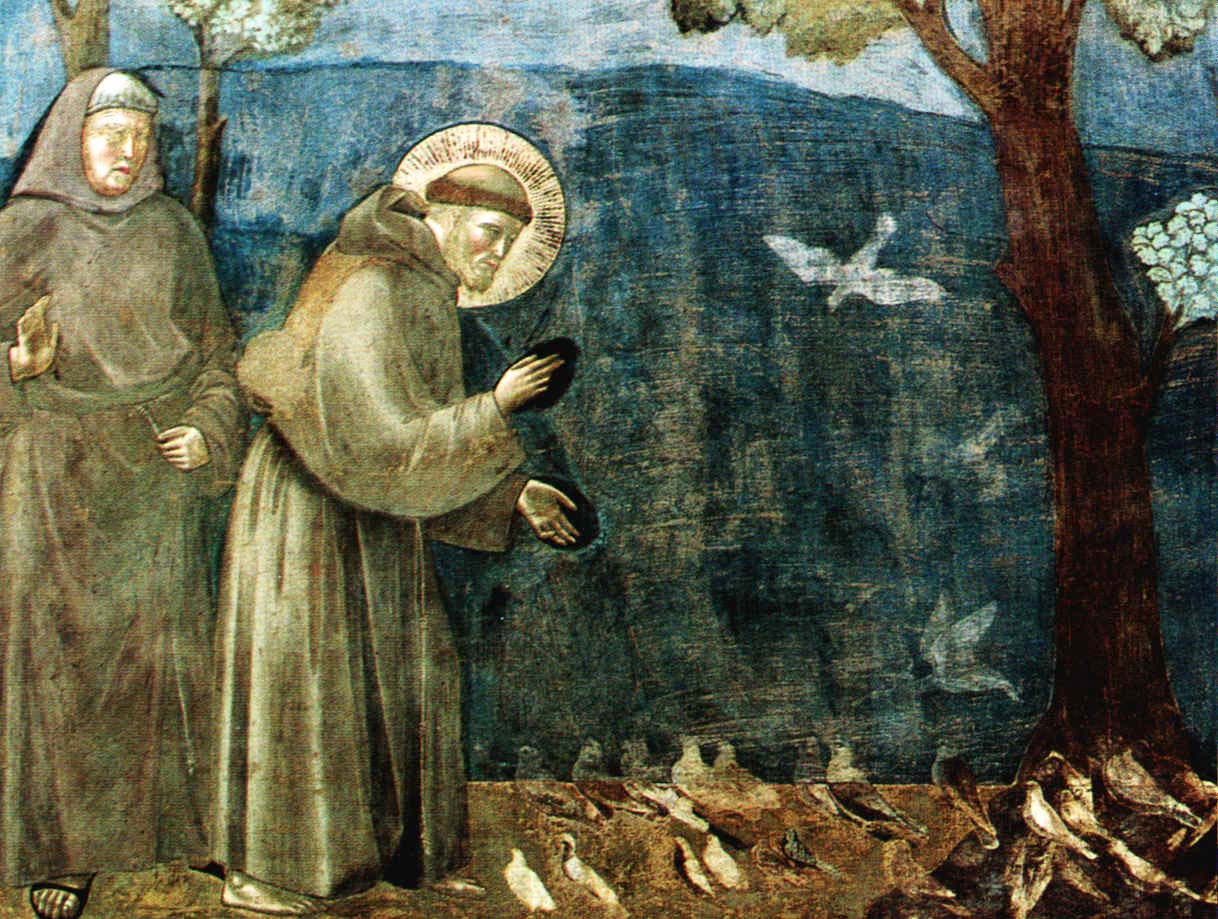
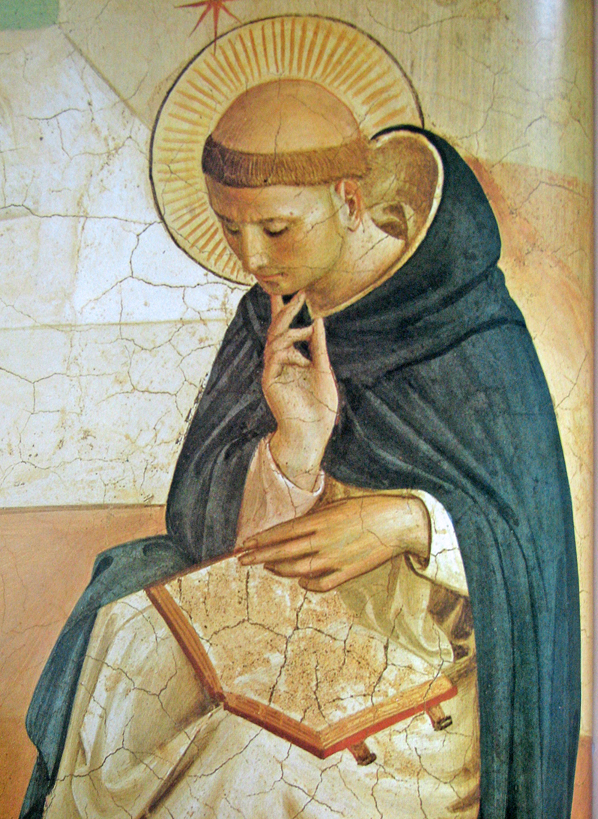
10) He hates the strong, mass movements of the Church-Dominicans, Franciscans, Jesuits, as threatening the independence of human beings by supposedly imposing ideals on a stupid, simple populace. He sees the power of these movements.
Well, if one does not believe in one's own eternal soul, or Heaven or Hell, or the Seen God, Christ, Who shows us the Unseen Father, these ideas could make sense.
But, they do not . As the first premise is wrong, bad thinking, illogical.
Sadly, Gramsci's ideals have succeeded, especially among Jesuits, whom he hates. Liberation Theology is only one way this Order has collapsed into the Gramsci camp.
Read, study, pray, act...............be Catholic.
The Next Church in my Pilgrimage

The Mass there is always crowded and the church is a great place to pray. There are many side altars, as most Valletta churches have, and some phenomenal art work. There are five Masses a day there, which is a great blessing. Also, on Sunday mornings, there is always Confession. If one is going to the Co-Cathedral for Mass, one can pop into St. Francis's Church first for Confession. I have several friends who do that.
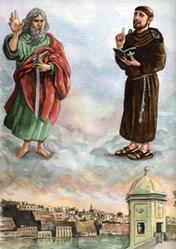
The Franciscans have been very important in Malta, and I am happy to say that I saw one dressed in his complete habit walking in Valletta. He could have been from outside of Malta, but he reminded me of the great heritage of the Franciscans here.
I did not have time to visit more of my beloved churches in Malta. But, I hope you enjoyed this little pilgrimage.
Here is a painting by an English artist, Mark Satchwill depicting both St. Paul and St. Francis over Malta. His website is below the painting.
 |
| http://www.ebsqart.com/Artist/Mark-Satchwill/16287/Art-Portfolio/Gallery/Religious-Portraits/1/ |
Shocking

I went to an adoration chapel this morning. There were two ladies who talked loudly the entire time. One had a cell phone which went off and she proceeded to talk on it. This all happened in front of the Blessed Sacrament in the Monstrance.
I went up to the two women once and pointed out that Jesus was present in the Monstrance and would they please stop talking.
They did not.
I am truly, truly shocked.
I stayed there for an hour, as I thought Christ was suffering again in the Garden of Gethsemane when His disciples fell asleep. These women are asleep.
They do not know God.
I prayed for them. And, when I left, I thought is there no place in the world where there is silence before God in His humble, vulnerable state, the Eucharist?
Yesterday, at Mass, two women in the front pew talked until the Consecration. One man got up and "shhhed" them, but they did not stop talking. The priest continued and said nothing.
Why is this happening? These are Maltese, not tourists. These are Catholics, not Protestants.
Why?
The Church of the Circumcision

One of my favourite churches in Malta, in Valletta, is the Church of the Circumcision. I love the statue of Our Lord just taken down from the Cross in one of the side altars.

Also, I love the painting of the first rendering of the Sacred Heart by Batoni, a copy from the Gesu and one of several in Malta, including one at Our Lady of Victories mentioned yesterday. I have written about this painting before on this blog.
There are also some letters of St. Ignatius of Loyola in this church. It is called the Jesuit Church, but the Jesuits are no longer there.


I also love the two small shrines of St. Pius X and the Holy Face of Jesus.
The Adoration Chapel, my tour continued
.jpg)
The Franciscans Sisters of the Heart of Jesus serve the Adoration Chapel usually called the House of Adoration, a small place of quiet in Valletta. I lived for months within blocks of it and only discovered it at the end of my stay in 2011.

Again, it is so small, but such a wonderful place to worship Christ in the Eucharist. When I visited yesterday, I felt like I was coming home.

This order of nuns takes care of the elderly and those with mental conditions. God bless them for this ministry and the all day Adoration.
Friday, 11 January 2013
Be patient
Readers, if you see typos, know I am mostly using a small cell and cannot always see the entire article. I am correcting things after posting as my cell will not let me preview.
I shall be so grateful when I can get back to regular computer use. Be patient. Thank you.
Reminder of Poll
As I am thinking of all the possible topics about which I may write, the age/generation reading my blog is a factor regarding choices.
Pilgrimage Tour continued
My own pilgrimage tour also takes me today to the little church down the steps from St. Paul's Street in Valletta. If one did not know it was there, one would pass it by........
In the Franciscan Church of St. Mary of Jesus is the Miraculous Crucifix. The was done by the artist Frate Umile Pintoro do Petralis Soprano (Palermo). It is not only a masterpiece of Baroque Art, but miraculous.
The people of Malta pray to Jesus Crucified in times of trouble.

Of course, I pray twice before the crucifix with my list of names and petitions. The image is moving.
It shall remain embedded in my memory.

Blessed Ignatius Falzon (Nazju Falzon) (1813–1865), who was a catechist, is buried in this church as well. And, he also received petitions. One can go right up to his grave and put one's hands on the burial place. I prayed to him much in 2011, as I am at heart a catechist, and I think he is behind me starting up the blog again.
I shall continue the tour on the blog tomorrow.
In the Franciscan Church of St. Mary of Jesus is the Miraculous Crucifix. The was done by the artist Frate Umile Pintoro do Petralis Soprano (Palermo). It is not only a masterpiece of Baroque Art, but miraculous.
The people of Malta pray to Jesus Crucified in times of trouble.
Of course, I pray twice before the crucifix with my list of names and petitions. The image is moving.
It shall remain embedded in my memory.
Blessed Ignatius Falzon (Nazju Falzon) (1813–1865), who was a catechist, is buried in this church as well. And, he also received petitions. One can go right up to his grave and put one's hands on the burial place. I prayed to him much in 2011, as I am at heart a catechist, and I think he is behind me starting up the blog again.
I shall continue the tour on the blog tomorrow.
Today, a pilgrimage tour
 |
| Restorations in Our Lady of Victories |
This little jewel is usually called the Church of Our Lady of Victories by locals, as it was dedicated in gratitude for the victory of the Knights of St. John Hospitallers over the Muslims in 1656.
Grandmaster Jean de la Vallette, (1557-1568) laid the foundation stone on March 28th, 1566. He was originally buried here, but his bones were moved to the fantastic St. John's Co-Cathedral in 1579.
This barrel vaulted church is being restored with the help of a Malta bank. The best thing for me is the Icon of Our Lady of Victories, which is covered in silver, like Our Lady of Caraffa. Also, there is a precious statue of the Infant of Prague, given by the Sovereign Military Order of Malta. Today it is dressed in dark purple.

I climbed up to the top on 18th century stone stairs, all twisting and turning to look at the ceiling paintings restoration. When done, this will prove to be an amazing site. And, as there are no coincidences, people from the Courtauld Institute in London are in charge of the restorations.
The Jesus Bambino is still on the altar today, as He is on all the altars from Christmas Day in Malta. I was glad to see Him amidst the poinsettias, which as some of you know, are my flowers particularly.
For my male friends

Here is a bit from The Glories of Mary.
It is written of the Eternal Father, that God so loved the world as to give his only-begotten Son (Jn 3:16), so also we can say of Mary, that she so loved the world as to give her only-begotten Son.
So with St. Anselm I will cry: “Let my heart languish and my soul melt away and be consumed with love of you, my beloved Savior Jesus and my dear Mother Mary! But because I cannot love you unless you give me grace, then give me grace, O Jesus and Mary — by your merits, not mine — to love you as you deserve to be loved. O God, lover of humankind, you loved sinful human beings to the point of death. Will you deny your love and your Mother’s to anyone who begs for it?

St. Alphonsus on being orthodox-completely: Do not be your own pope.
The essence of perfection is to embrace the will of God in all things, prosperous or adverse. In prosperity, even sinners find it easy to unite themselves to the divine will; but it takes saints to unite themselves to God’s will when things go wrong and are painful to self-love. Our conduct in such instances is the measure of our love of God. St. John of Avila used to say: “One ‘Blessed be God’ in times of adversity, is worth more than a thousand acts of gratitude in times of prosperity[20].”
Furthermore, we must unite ourselves to God’s will not only in things that come to us directly from his hands, such as sickness, desolation, poverty, death of relatives, but likewise in those we suffer from man -- for example, contempt, injustice, loss of reputation, loss of temporal goods and all kinds of persecution. On these occasions we must remember that whilst God does not will the sin, he does will our humiliation, our poverty, or our mortification, as the case may be. It is certain and of faith, that whatever happens, happens by the will of God: “I am the Lord forming the light and creating the darkness, making peace and creating evil[21].” From God come all things, good as well as evil. We call adversities evil; actually they are good and meritorious, when we receive them as coming from God’s hands: “Shall there be evil in a city which the Lord hath not done[22]?” “Good things and evil, life and death, poverty and riches are from God[23].”
It is true, when one offends us unjustly, God does not will his sin, nor does he concur in the sinner’s bad will; but God does, in a general way, concur in the material action by which such a one strikes us, robs us or does us an injury, so that God certainly wills the offense we suffer and it comes to us from his hands. Thus the Lord told David he would be the author of those things he would suffer at the hands of Absalom: “I will raise up evils against thee out of thy own house, and I will take thy wives before thy face and give them to thy neighbor[24].” Hence too God told the Jews that in punishment for their sins, he would send the Assyrians to plunder them and spread destruction among them: “The Assyrian is the rod and staff of my anger . . . I will send him to take away the spoils[25].” “Assyrian wickedness served as God’s scourge for the Hebrews[26]‘‘ is St. Augustine’s comment on this text. And our Lord himself told St. Peter that his sacred passion came not so much from man as from his Father: “The chalice which my Father hath given me, shall I not drink it[27]?”
When the messenger came to announce to Job that the Sabeans had plundered his goods and slain his children, he said: “The Lord gave and the Lord taketh away[28].” He did not say: “The Lord hath given me my children and my possessions, and the Sabeans have taken them away.” He realized that adversity had come upon him by the will of God. Therefore he added: “As it hath pleased the Lord, so is it done. Blessed be the name of the Lord[29].” We must not therefore consider the afflictions that come upon us as happening by chance or solely from the malice of men; we should be convinced that what happens, happens by the will of God. Apropos of this it is related that two martyrs, Epictetus and Atho, being put to the torture by having their bodies raked with iron hooks and burnt with flaming torches, kept repeating: “Work thy will upon us, O Lord.” Arrived at the place of execution, they exclaimed: “Eternal God, be thou blessed in that thy will has been entirely accomplished in us[30].’’
Cesarius points up what we have been saying by offering this incident in the life of a certain monk: Externally his religious observance was the same as that of the other monks, but he had attained such sanctity that the mere touch of his garments healed the sick. Marveling at these deeds, since his life was no more exemplary than the lives of the other monks, the superior asked him one day what was the cause of these miracles.
He replied that he too was mystified and was at a loss how to account for such happenings. “What devotions do you practice?” asked the abbot. He answered that there was little or nothing special that he did beyond making a great deal of willing only what God willed, and that God had given him the grace of abandoning his will totally to the will of God.
“Prosperity does not lift me up, nor adversity cast me down,” added the monk. “I direct all my prayers to the end that God’s will may be done fully in me and by me.” “That raid that our enemies made against the monastery the other day, in which our stores were plundered, our granaries put to the torch and our cattle driven off -- did not this misfortune cause you any resentment?” queried the abbot.
“No, Father,” came the reply. “On the contrary, I returned thanks to God -- as is my custom in such circumstances -- fully persuaded that God does all things, or permits all that happens, for his glory and for our greater good; thus I am always at peace, no matter what happens.” Seeing such conformity with the will of God, the abbot no longer wondered why the monk worked so many miracles[31]. So many priests I know are not orthodox in the Faith. If a person is off on one point of Catholic teaching, that person is not on the road to holiness.
That point can be following private revelations either warned about, condemned or simply not approved by the Church. Is your soul worth this apparently small disobedience?
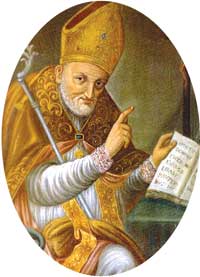
This has been the guidance of the Church for centuries. One must be obedient in every small thing.
Examine yourselves today.
One can be blocked in prayer if one is not in keeping with the guidance and Teaching Magisterium of the Church.
Some people decide to ignore the CDF, or even the Pope's Apostolic Letters in order to hold on to their own ideologies or Protestant ideals.
I cannot change this mystical truth, that the road of perfection, including purification, illumination, and union with God can only happen in real obedience.
To be in obedience is to be in conformity with God's Will. How do we know the Will of God?
Simple. We follow the teachings of the Church.
Do not get stuck on your favourite aspects of the spiritual life if these are contrary to the guidance and teaching of the Church.
You will not be holy. You will strive and strive. Your power to do good in the world will be limited or non-existent. You will not experience the Love Who is a Person and Total Purity, unless you are obedient in small things as well as the large.
I hear people saying, "Well, I believe this, but the Church cannot tell me about this....", or "Liberal bishops cannot tell me what to do" or "Rome is so full of corruption in the departments, I do not have to follow the advice."
Are you holier than Rome?
Here is the trust of the saint. And, God is with His Church, always.
The liturgical changes have confused some people. But, the abuses were not dictated by the Church.
Read what this Pope writes and what Blessed John Paul II wrote. Read the saints' writings. Wait for Rome if matters of private revelation. Take guidance seriously.
Do not endanger your immortal soul because of your own limited ideas.
The narcissism of the world effects how many Catholics think. Do not be your own pope or your own church, deciding what is true and not.....do not be a narcissistic Catholic
Pray for Excellent Priests

More from St. Alphonsus:
The dignity of the priest is also estimated from the power that he has over the real and the mystic body of Jesus Christ. With regard to the power of priests over the real body of Jesus Christ, it is of faith that when they pronounce the words of consecration the Incarnate Word has obliged Himself to obey and to come into their hands under the Sacramental Species. We are struck with wonder when we hear that God obeyed the voice of Josue-----The Lord obeying the voice of man-----and made the sun stand when He said move not, O sun, towards Gabaon . . . and the sun stood still. But our wonder should be far greater when we find that in obedience to the words of his priests-----HOC EST CORPUS MEUM-----God Himself descends on the altar, that He comes wherever they call Him, and as often as they call Him, and places Himself in their hands, even though they should be His enemies. And after having come, He remains, entirely at their disposal; they move Him as they please, from one place to another; they may, if they wish, shut Him up in the tabernacle, or expose Him on the altar, or carry Him outside the church; they may, if they choose, eat His flesh and give Him for the food of others. "Oh, how very great is their power," says St. Laurence Justinian, speaking of priests. "A word falls from their lips and the body of Christ is there substantially formed from the matter of bread, and the Incarnate Word descended from Heaven, is found really present on the table of the altar! Never did Divine goodness give such power to the Angels. The Angels abide by the order of God, but the priests take Him in their hands, distribute Him to the faithful, and partake of Him as food for themselves."
With regard to the mystic body of Christ, that is, all the faithful, the priest has the power of the keys, or the power of delivering sinners from Hell, of making them worthy of Paradise, and of changing them from the slaves of Satan into the children of God. And God Himself is obliged to abide by the judgment of His priests, and either not to pardon or to pardon, according as they refuse or give absolution, provided the penitent is capable of it. "Such is," says St. Maximus of Turin, "this judiciary power ascribed to Peter that its decision carries with it the decision of God." The sentence of the priest precedes, and God subscribes to it, writes St. Peter Damian. Hence, St John Chrysostom thus concludes: The sovereign Master of the universe only follows the servant by confirming in Heaven all that the latter decides upon earth." Priests are the dispensers of the Divine graces and the companions of God." Consider the priests," says St. Ignatius, Martyr, "as the dispensers of Divine graces and the associates of God." "They are," says St. Prosper, "the glory and the immovable columns of the Church; thay are the doors of the eternal city; through them all reach Christ; they are the vigilant guardians to whom the Lord has confided the keys of the kingdom of Heaven; they are the stewards of the king's house, to assign to each according to His good pleasure His place in the hierarchy." Were the Redeemer to descend into a church, and sit in a confessional to administer the Sacrament of Penance, and a priest to sit in another confessional, Jesus would say over each penitent, "Ego te absolvo," the priest would likewise say over each of his penitents, "Ego te absolvo," and the penitents of each would be equally absolved. How great the honor that a king would confer on a subject whom he should empower to rescue from prison as many as he pleased! But far greater is the power that the eternal Father has given to Jesus Christ, and that Jesus Christ has given to his priests, to rescue from Hell not only the bodies but also the souls of the faithful: "The Son," says St. John Chrysostom, "has put into the hands of the priests all judgment; for having been as it were transported into Heaven, they have received this Divine prerogative. If a king gave to a mortal the power to release from prison all prisoners, all would pronounce such a one happy; but priests have received from God a far greater power, since the soul is more noble than the body."
...................................................
Thus the sacerdotal dignity is the most noble of all the dignities in this world." Nothing," says St. Ambrose, "is more excellent in this world." It transcends, says St. Bernard, "all the dignities of kings, of emperors, and of Angels." According to St. Ambrose, the dignity of the priest as far exceeds that of kings, as the value of gold surpasses that of lead. The reason is, because the power of kings extends only to temporal goods and to the bodies of men, but the power of the priest extends to spiritual goods and to the human soul. Hence, says St. Clement, "as much as the soul is more noble than the body, so much is the priesthood more excellent than royalty." "Princes," says St. John Chrysostom, "have the power of binding, but they bind only the bodies, while the priest binds the souls." The kings of the earth glory in honoring priests: "It is a mark of a good prince," says pope St. Marcellinus, "to honor the priests of God." "They willingly," says Peter de Blois, "bend their knee before the priest of God; they kiss his hands, and with bowed down head receIve his benediction." "The sacerdotal dignity," says St. Chrysostom, "effaces the royal dignity; hence the king inclines his head under the hand of the priest to receive his blessing."
Baronius relates that when the Empress Eusebia sent for Leontius, Bishop of Tripoli, he said that if she wished to see him, she should consent to two conditions: first, that on his arrival she should instantly descend from the throne, and bowing down her head, should ask his benediction; secondly, that he should be seated on the throne, and that she should not sit upon it without his permission: he added, that unless she submitted to these conditions he should never go to the palace. Being invited to the table of the Emperor Maximus, St. Martin, in taking a draught, first paid a mark of respect to his chaplain, and then to the emperor. In the Council of Nice, the Emperor Constantine wished to sit in the last place, after all the priests, and on a seat lower than that which they occupied; he would not even sit down without their permission. The holy king St. Boleslans had so great a veneration for priests, that he would not dare to sit in their presence. The sacerdotal dignity also surpasses the dignity of the Angels, who likewise show their veneration for the priesthood, says St. Gregory Nazianzen. All the Angels in Heaven cannot absolve from a single sin. The Angels guardian procure for the souls committed to their care grace to have recourse to a priest that he may absolve them: "Although," says St. Peter Damian, "Angels may be present, they yet wait lor the priest to exercise his power, but no one of them has the power of the keys-----of binding and of loosening." When St. Michael comes to a dying Christian who invokes his aid, the holy Archangel can chase away the devils, but he cannot free his client from their chains till a priest comes to absolve him. After having given the order of priesthood to a holy ecclesiastic, St. Francis de Sales perceived, that in going out he stopped at the door as if to give precedence to another. Being asked by the Saint why he stopped, he answered that God favored him with the visible presence of his Angel guardian, who before he had received priesthood always remained at his right and preceded him, but afterwards walked on his left and refused to go before him. It was in a holy contest with the Angel that he stopped at the door. St. Francis of Assisi used to say, "If I saw an Angel and a priest, I would bend my knee first to the priest and then to the Angel." Besides, the power of the priest surpasses that of the Blessed Virgin Mary; for, although this Divine Mother can pray for us, and by her prayers obtain whatever she wishes, yet she cannot absolve a Christian from even the smallest sin. "The Blessed Virgin was eminently more perfect than the Apostles," says Innocent III. "It was, however, not to her, but only to the Apostles, that the Lord intrusted the keys of the kingdom of Heaven." St. Bernardine of Sienna has written: "Holy Virgin, excuse me, for I speak not against thee: the Lord has raised the priesthood above thee." The Saint assigns the reason of the superiority of the priesthood over Mary; she conceived Jesus Christ only once; but by consecrating the Eucharist, the priest, as it were, conceives Him as often as he wishes, so that if the person of the Redeemer had not as yet been in the world, the priest, by pronouncing the words of consecration, would produce this great person of a Man-God. "O wonderful dignity of the priests," cries out St. Augustine; "in their hands, as in the womb of the Blessed Virgin, the Son of God becomes incarnate." Hence priests are called the parents of Jesus Christ: such is the title that St. Bernard gives them, for they are the active cause by which He is made to exist really in the consecrated Host. Thus the priest may, in a certain manner, be called the creator of his Creator, since by saying the words of consecration, he creates, as it were, Jesus in the Sacrament, by giving Him a Sacramental existence, and produces Him as a victim to be offered to the eternal Father. As in creating the world it was sufficient for God to have said, Let it be made, and it was created-----He spoke, and they were made-----so it is sufficient for the priest to say, "Hoc est corpus meum," and behold the bread is no longer bread, but the body of Jesus Christ. "The power of the priest," says St. Bernardine of Sienna, "is the power of the Divine person; for the transubstantiation of the bread requires as much power as the creation of the world." And St. Augustine has written, "O venerable sanctity of the hands! O happy function of the priest! He that created [if I may say so] gave me the power to create Him; and He that created me without me is Himself created by me!" "As the Word of God created Heaven and earth, so," says St. Jerome, "the words of the priest create Jesus Christ." "At a sign from God there came forth from nothing both the sublime vault of the Heavens and the vast extent of the earth; but not less great is the power that manifests itself in the mysterious words of the priest." The dignity of the priest is so great, that he even blesses Jesus Christ on the altar as a victim to be offered to the eternal Father. In the sacrifice of the Mass, writes Father Mansi, Jesus Christ is the principal offerer and victim; as minister, He blesses the priest, but as victim, the priest blesses Him.
..................................................
The greatness of the dignity of a priest is also estimated from the high place that he occupies. The priesthood is called, at the synod of Chartres, in 1550, the seat of the Saints. Priests are called Vicars of Jesus Christ, because they hold his place on earth. "You hold the place of Christ," says St. Augustine to them; "you are therefore His lieutenants." In the Council of Milan, St. Charles Borromeo called priests the representatives of the person of God on earth. And before him, the Apostle said: For Christ we are ambassadors, God, as it were, exhorting by us. When He ascended into Heaven, Jesus Christ left His priests after Him to hold on earth His place of mediator between God and men, particularly on the altar. "Let the priest," says St. Laurence Justinian, " approach the altar as another Christ."
According to St. Cyprian, a priest at the altar performs the office of Christ. When, says St. Chrysostom, you have seen a priest offering sacrifice,consider that the hand of Christ is invisibly extended. The priest holds the place of the Savior Himself, when, by saying "Ego te absolvo," he absolves from sin. This great power, which Jesus Christ has received from His eternal Father, He has communicated to His priests. "Jesus," says Tertullian, "invests the priests with His own powers." To pardon a single sin requires all the omnipotence of God. "O God, Who chiefly manifestest Thy almighty power in pardoning and showing mercy," etc., says the holy Church in one of her prayers. Hence, when they heard that Jesus Christ pardoned the sins of the paralytic, the Jews justly said: Who can forgive sins but God alone. But what only God can do by His omnipotence, the priest can also do by saying "Ego te absolvo a peccatis tuis;" for the forms of the Sacraments, or the words of the forms, produce what they signify. What the priest does what is wonderful, for by saying "Ego te absolvo" he changes the sinner from an enemy into the friend of God, and from the slave of Hell into an heir of Paradise. Cardinal Hugo represents the Lord addressing the following words to a priest who absolves a sinner: "I have created Heaven and earth, but I leave to you a better and nobler creation; make out of this soul that is in sin a new soul, that is, make out of the slave of Satan, that the soul is, a child of God. I have made the earth bring forth all kinds of fruit, but to thee I confide a more beautiful creation, namely, that the soul should bring forth fruits of salvation." The soul without grace is a withered tree that can no longer produce fruit; but receiving the Divine grace, through the ministry of a priest, it brings forth fruits of eternal life, St. Augustine says, that to sanctify a sinner is a greater work than to create Heaven and earth. And hast thou, says Job, an arm like God, and canst thou thunder with a voice like Him? Who is it that has an arm like the arm of God, and thunders with a voice like the thundering voice of God? It is the priest, who, in giving absolution, exerts the arm and voice of God, by which he rescues souls from Hell. According to St. Ambrose, a priest, in absolving a sinner, performs the very office of the Holy Ghost in the sanctification of souls. Hence, in giving priests the power of absolving from sin, the Redeemer breathed on them, and said to them, Receive ye the Holy Ghost: whose sins you shall forgive, they are foygiven, and whose sins you shall retain, they are retained. He gave them his own Spirit, that is, the Holy Ghost, the sanctifier of souls. and thus made them, according to the words of the Apostle, His own co-adjutors: We are God's co-adjutors. "On priests," says St. Gregory. "it is incumbent to give the final decision, for by the right that they have received from the Lord they now remit, now retain sins." St. Clement, then, had reason to say that the priest is, as it were, a God on earth. God, said David, stood in the congregation of the gods. These gods are, according to St. Augustine, the priests of God. Innocent III has written: "Indeed, it is not too much to say that in view of the sublimity of their offices the priests are so many gods." VI. Conclusion. How great, then, says St. Ambrose, the disorder to see in the same person the highest dignity and a life of scandal, a Divine profession and wicked conduct! What, says Salvian, is a sublime dignity conferred on an unworthy person but a gem enchased in mire? Neither doth any man, says St. Paul, take the honor to himself, but he that is called by God, as Aaron was. For Christ did not glorify Himself that He might be made a high priest, but He that said unto Him: Thou art my Son, this day have I begotten Thee. Let no one, he says, dare to ascend to the priesthood, without first receiving, as Aaron did, the Divine call; for even Jesus Christ would not of Himself assume the honor of the priesthood, but waited till His Father called Him to it. From this we may infer the greatness of the sacerdotal dignity. But the greater its sublimity, the more it should be dreaded. "For," says St. Jerome, "great is the dignity of priests; but also, when they sin, great is their ruin. Let us rejoice at having been raised so high, but let us be afraid of falling." Lamenting, St. Gregory cries out: "Purified by the hands of the priest the elect enter the Heavenly country, and alas! priests precipitate themselves into the fire of Hell!" The Saint compares priests to the Baptismal water which cleanses the Baptized from their sins, and sends them to Heaven, "and is afterwards thrown into the sink." |
Pray for Holy, Excellent Priests Today

Many of the great saints told us that there were few holy priests. If you find one, or even two, be grateful. I have been most fortunate in my life to have met holy and intellectual, orthodox and simple priests, all who have helped me on my way.
Here is St. Alphonsus on the importance of the priesthood. I shall quote more later.
The dignity of the priest is estimated from the exalted nature of his offices. Priests are chosen by God to manage on earth all his concerns and interests. " Divine," says St. Cyril of Alexandria, "are the offices confided to priests." St. Ambrose has called the priestly office a Divine profession. A priest is a minister destined by God to be a public ambassador of the whole Church, to honor Him, and to obtain His graces for all the faithful. The entire Church cannot give to God as much honor, nor obtain so many graces, as a single priest by celebrating a single Mass; for the greatest honor that the whole Church without priests could give to God would consist in offering to Him in sacrifice the lives of all men. But of what value are the lives of all men compared with the sacrifice of Jesus Christ, which is a sacrifice of infinite value? What are all men before God but a little dust? As a drop of a bucket, as a little dust. They are but a mere nothing in His sight: All nations are before Him as if they had no being at all. Thus, by the celebration of a single Mass, in which he offers Jesus Christ in sacrifice, a priest gives greater honor to the Lord, than if all men by dying for God offered to Him the sacrifice of their lives. By a single Mass, he gives greater honor to God than all the Angels and Saints, along with the Blessed Virgin Mary, have given or shall give to Him; for their worship cannot be of infinite value, like that which the priest celebrating on the altar offers to God. Moreover, in the holy Mass, the priest offers to God an adequate thanksgiving for all the graces bestowed even on the Blessed in Paradise; but such a thanksgiving all the Saints together are incapable of offering to Him. Hence it is, that on this account also the priestly dignity is superior even to all celestial dignities. Besides, the priest, says St. John Chrysostom, is an ambassador of the whole world, to intercede with God and to obtain graces for all creatures.. The priest, according to St. Ephrem, "treats familiarly with God." To priests every door is open. Jesus has died to institute the priesthood. It was not necessary for the Redeemer to die in order to save the world; a drop of His Blood, a single tear, or prayer, was sufficient to procure salvation for all; for such a prayer, being of infinite value, should be sufficient to save not one but a thousand worlds. But to institute the priesthood, the death of Jesus Christ has been necessary. Had he not died, where should we find the victim that the priests of the New Law now offer? a victim altogether holy and immaculate, capable of giving to God an honor worthy of God. As has been already said, all the lives of men and Angels are not capable of giving to God an infinite honor like that which a priest offers to Him by a single Mass.
Subscribe to:
Posts (Atom)