Recent Posts

Friday, 27 September 2013

The Predominant Fault of Some Women Two

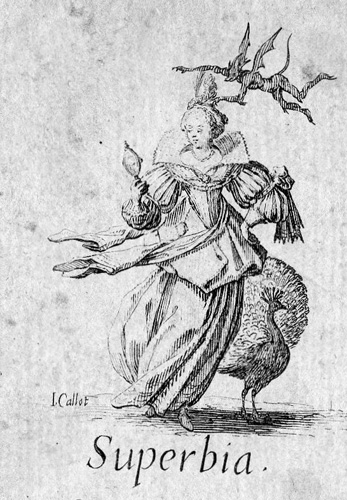
The second most common predominant fault of women could be pride. This is the primordial sin and one easy to fall into. But, if this is the main, underlining fault of all faults, it must be rooted out through serious attention, prayer, fasting. Pride can be inherited in a family where family pride continues to separate people from God.

Pride stops all growth in holiness. For a woman, this is deadly, as in order for her to be holy, the virtues must flourish into the small daily loveliness we see in the saints, such as St. Therese of Lisieux and St. Gemma Galgani.

Here is Aquinas on pride: thanks to New Advent's Summa.

Question 162. Pride


Pride is directly opposed to the virtue of humility, which, in a way, is concerned about the same matter as magnanimity, as stated above (161, 1, ad 3). Hence the vice opposed to pride by default is akin to the vice of pusillanimity, which is opposed by default to magnanimity. For just as it belongs to magnanimity to urge the mind to great things against despair, so it belongs to humility to withdraw the mind from the inordinate desire of great things against presumption. Now pusillanimity, if we take it for a deficiency in pursuing great things, is properly opposed to magnanimity by default; but if we take it for the mind's attachment to things beneath what is becoming to a man, it is opposed to humility by default; since each proceeds from a smallness of mind.


On the same way, on the other hand, pride may be opposed by excess, both to magnanimity and humility, from different points of view: to humility, inasmuch as it scorns subjection, to magnanimity, inasmuch as it tends to great things inordinately. Since, however, pride implies a certain elation, it is more directly opposed to humility, even as pusillanimity, which denotes littleness of soul in tending towards great things, is more directly opposed to magnanimity.


A sin may destroy a virtue in two ways. On one way by direct contrariety to a virtue, and thus pride does not corrupt every virtue, but only humility; even as every special sin destroys the special virtue opposed to it, by acting counter thereto. On another way a sin destroys a virtue, by making ill use of that virtue: and thus pride destroys every virtue, in so far as it finds an occasion of pride in every virtue, just as in everything else pertaining to excellence. Hence it does not follow that it is a general sin.


...Pride regards a special aspect in its object, which aspect may be found in various matters: for it is inordinate love of one's excellence, and excellence may be found in various things.


Those women who are proud honestly believe they are better than other people. They are the proverbial "snobs".  They also live a life of complete narcissism, thinking that the entire world revolves around them. This predominant fault is the First Sin of our First Parents. One can fall into pride concerning status, money, power, beauty and so on.  Pride wants to be served instead of wanting to serve.


In a marriage, pride in a woman belittles a man and dominates him and the children. Pride also manipulates, lies, and causes dissension. Women, battle this if this is your predominant fault. Life is more than all about you.


The Predominant Fault of Some Women

Just to be fair, I have been talking with lovely, good Catholic women who want to become saints. They would be in the category of the really beautiful women who are working on virtues.

What has been shared with me are two main predominant faults; vainglory and pride.

Vainglory is one of the Seven Deadly Sins-Vanity. And, this is connected to the two posts I did on inner beauty and the life of the virtues.

Vainglory may be described as Thomas Aquinas states:

Question 132. Vainglory


Now the sin of vainglory, considered in itself, does not seem to be contrary to charity as regards the love of one's neighbor: yet as regards the love of God it may be contrary to charity in two ways. On one way, by reason of the matter about which one glories: for instance when one glories in something false that is opposed to the reverence we owe God, according to Ezekiel 28:2, "Thy heart is lifted up, and Thou hast said: I am God," and 1 Corinthians 4:7, "What hast thou that thou hast not received? And if thou hast received, why dost thou glory, as if thou hadst not received it?" Or again when a man prefers to God the temporal good in which he glories: for this is forbidden (Jeremiah 9:23-24): "Let not the wise man glory in his wisdom, and let not the strong man glory in his strength, and let not the rich man glory in his riches. But let him that glorieth glory in this, that he understandeth and knoweth Me." Or again when a man prefers the testimony of man to God's; thus it is written in reproval of certain people (John 12:43): "For they loved the glory of men more than the glory of God."


In another way vainglory may be contrary to charity, on the part of the one who glories, in that he refers his intention to glory as his last end: so that he directs even virtuous deeds thereto, and, in order to obtain it, forbears not from doing even that which is against God. On this way it is a mortal sin. Wherefore Augustine says (De Civ. Dei v, 14) that "this vice," namely the love ofhuman praise, "is so hostile to a godly faith, if the heart desires glory more than it fears or loves God, that our Lord said (John 5:44): How can you believe, who receive glory one from another, and the glory which is from God alone, you do not seek?"

Now the end of vainglory is the manifestation of one's own excellence, as stated above (A1,4): and to this end a man may tend in two ways. On one way directly, either by words, and this is boasting, or by deeds, and then if they be true and call for astonishment, it is love of novelties which men are wont to wonder at most; but if they be false, it is hypocrisy. On another way a man strives to make known his excellence by showing that he is not inferior to another, and this in four ways. First, as regards the intellect, and thus we have "obstinacy," by which a man is too much attached to his own opinion, being unwilling to believe one that is better. Secondly, as regards the will, and then we have "discord," whereby a man is unwilling to give up his own will, and agree with others. Thirdly, as regards "speech," and then we have "contention," whereby a man quarrels noisily with another. Fourthly as regards deeds, and this is "disobedience," whereby a man refuses to carry out the command of his superiors.


One needs to grow in humility and God will give a person many opportunities for this.


Praise God, Women, when God allows the ebbing of your looks, the lessening your personal power, the clouding of your intelligent and the suffering of illness. All of these trials breakdown vainglory.


To be continued...more on this here 


http://supertradmum-etheldredasplace.blogspot.ie/2013/09/the-predominant-fault-of-some-women-two.html


See also http://supertradmum-etheldredasplace.blogspot.ie/2013/09/on-beauty.html

and

http://supertradmum-etheldredasplace.blogspot.ie/2013/09/on-beauty-two.html

I love this generation-creative and clever and more independent


Thursday, 26 September 2013

More Discussions with Millennials


Well, the problems of bad catechesis proliferate. I have been talking with so many young people who either are cradle Catholics or are converts who came through local RCIAs.  There seems to be a lack of understanding in three areas which they have brought up to me.

The first is a woeful lack of knowledge of the Creed. The Creed, of course, is the main subject of the CCC, and therefore, some good commentary is available to all people from age 12 up or so. As Catholics, we are a credal people and not to have understood or studied the Creed reveals that the basics have not been taught.  Without an understanding of the Creed, one is, sadly, an ignorant Catholic. But, this information is not secret and can be found on line as well as in the printed version of the CCC and the Compendium.

The second area of concern revealed in these conversations is almost no knowledge of what Tradition and Revelation mean. Most Catholics think like Protestants and think that only the information in the Scripture is binding, or infallible. The lacuna of understanding regarding where infallibility lies disturbs me. One meets two extremes in the younger Catholics-one, some think all the Pope states is infallible; two, some do not know what teachings are infallible. Sadly, some priests have given bad teaching on these points. A Catholic must know what the teachings of the Church are in order the think and live like a Catholic.

The third area of confusion has to do with sexual ethics. The younger Catholics have not been given clear and consistent teaching locally on ssm, ssa, NFP, and chastity.

However, the good news is that many of the Millennials want the real deal about Catholic teaching. Many of the seminarians have noted that they are more conservative, that is, more Catholic than their parents. Good thing, too....

To be continued....


Mater Misericordiae Will Add to This Number

2013 Worldwide Abortion Count Sept 17th 30,628,000 unborn children killed so far this year.


What a blasphemy for Mater Hospital.

Be Open, Please

This is the time to consider helping with the House of Adoration. Please pray about being part of this project.

Irish Catholic Hospital Agrees To Do Abortions

http://www.catholicculture.org/news/headlines/index.cfm?storyid=19166

Have mercy on us, God. They could have held the Catholic position and said no. Horrible. So many people who cooperate with evil do not understand that the evil is now their responsibility.

Second Street Preacher Arrested in Great Britain

http://northlondonchurch.org/ministers-blog/post/another-arrested-street-preacher

How sad that some middle age and older women are rude.

Tolkien, Auden, Sheen and The Pearl Poet All in One Post

As I am  borrowing the latest publication from  J.R.R. Tolkien, The Fall of Arthur, and finally beginning to read it, I shall comment on this amazing poem later.

Tolkien's writings have formed the imagination of several generations of readers and cinema buffs, of course. But, the genius of his writings escapes most eyes. He is truly one of the last centuries' greatest philologists. Recall, also, that he was one of those scholars who worked on the Jerusalem Bible.

Having the joy of teaching the Arthurian myths to classes of eager students long ago, I have studied the various works concerning Arthur, Guinevere and Lancelot, including the Mabinogion. Of course, my studies in David Jones would have been another connection to the corpus of works.

I have a strange academic background at the doctoral level, as I took the courses at ND for a Medieval Literature Degree as well as the Modern Poetry and Literature Degree, as I could not make up my mind which to follow for a career. Then, after all my exams and beginning my thesis, I ended up in Theology at Bristol. As it happened, the overlaps proved invaluable. I think I am one of the few people who has actually read some of the arcane Middle English poems and Breton lais which would have been the stuff of Tolkien's daily study. However, his amazing talents lie in earlier poetry, from the Anglo-Saxon and Norse periods, which I studied a bit, but did not pursue as a specialty. Of course, who does not love all of these great poems and epics, even in translation? W. H. Auden, another great scholar, said that Tolkien's poem in The Return of the King, concerning the Battle of Pelennor Fields was the best example of the ancient genre. Quite a compliment from one of the best poets of the 20th Century......


 Here is a section

We heard of the horns in the hills ringing, 
the swords shining in the South-kingdom. 
Steeds went striding to the Stoningland 
as wind in the morning. War was kindled. 
There Théoden fell, Thengling mighty, 
to his golden halls and green pastures 
in the Northern fields never returning, 
high lord of the host. Harding and Guthláf 
Dúnhere and Déorwine, doughty Grimbold, 
Herefara and Herubrand, Horn and Fastred, 
fought and fell there in a far country: 
in the Mounds of Mundburg under mould they lie 
with their league-fellows, lords of Gondor. 
Neither Hirluin the Fair to the hills by the sea, 
nor Forlong the old to the flowering vales 
ever, to Arnach, to his own country 
returned in triumph; nor the tall bowmen, 
Derufin and Duilin, to their dark waters, 
meres of Morthond under mountain-shadows. 
Death in the morning and at day's ending 
lords took and lowly. Long now they sleep 
under grass in Gondor by the Great River. 
Grey now as tears, gleaming silver, 
red then it rolled, roaring water: 
foam dyed with blood flamed at sunset; 
as beacons mountains burned at evening; 
red fell the dew in Rammas Echor.
The Lord of the Rings
Song of the Mounds of Mundberg, The Return of the King Book 5, Chapter 'The Battle of the Pelennor Fields'.


His review of that book from 1956 may be found here.

http://www.nytimes.com/1956/01/22/books/tolkien-king.html?_r=0


As I tell friends, one of the reasons I loved the Medieval studies so much was that all the nice students were in Medieval and the nasty ones in Modern.  Hmmm. And, as another aside, I still have one of my 1970s calendars of Tolkien, by the Hildebrandt brothers, one of whom, Greg, some of you may recognize as the painter of the famous portrait of Ven. Fulton J. Sheen. This calendar is the only one I have left, although I bought them each year in the seventies for several years.


Here is a sample of one of my favorite poems below. I shall get back to the Tolkien later. For some history on the Arthurian texts, check out this site here. By the way, a person has to be a little crazy to take an entire class on The Faerie Queene.


A selection from The Perle.


245


250


255


260
'O perle', quod I, 'in perle3 py3t,
Art þou my perle þat I haf playned,
Regretted by myn one on ny3te?
Much longeyng haf I for þe layned,
Syþen into gresse þou me agly3te.
Pensyf, payred, I am forpayned,
And þou in a lyf of lykyng ly3te,
In Paradys erde, of stryf vnstrayned.
What wyrde hat3 hyder my iuel vayned,
And don me in þys del and gret daunger?
Fro we in twynne wern towen and twayned,
I haf ben a joyle3 juelere.'That juel þenne in gemme3 gente
Vered vp her vyse wyth y3en graye,
Set on hyr coroun of perle orient,
And soberly after þenne con ho say:
'Sir, 3e haf your tale mysetente,
To say your perle is al awaye,
Þat is in cofer so comly clente
As in þis gardyn gracios gaye,
Hereinne to lenge for euer and play,
Þer mys nee mornyng com neuer nere.
Her were a forser for þe, in faye,
If þou were a gentyl jueler.
265


270


275


280


285
'Bot, jueler gente, if þou schal lose
Þy ioy for a gemme þat þe wat3 lef,
Me þynk þe put in a mad porpose,
And busye3 þe aboute a raysoun bref;
For þat þou leste3 wat3 bot a rose
Þat flowred and fayled as kynde hyt gef.
Now þur3 kynde of þe kyste þat hyt con close
To a perle of prys hit is put in pref.
And þou hat3 called þy wyrde a þef,
Þat o3t of no3t hat3 mad þe cler;
Þou blame3 þe bote of þy meschef,
Þou art no kynde jueler.'A juel to me þen wat3 þys geste,
And iuele3 wern hyr gentyl sawe3.
'Iwyse', quod I, 'my blysfol beste,
My grete dystresse þou al todrawe3.
To be excused I make requeste;
I trawed my perle don out of dawe3.
Now haf I fonde hyt, I schal ma feste,
And wony wyth hyt in schyr wod-schawe3,
And loue my Lorde and al his lawe3
Þat hat3 me bro3t þys blys ner.
Now were I at yow by3onde þise wawe3,
I were a ioyful jueler.'

290


295


300


305


310
'Jueler', sayde þat gemme clene,
'Wy borde 3e men? So madde 3e be!
Þre worde3 hat3 þou spoken at ene:
Vnavysed, for soþe, wern alle þre.
Þou ne woste in worlde quat on dot3 mene;
Þy worde byfore þy wytte con fle.
Þou says þou trawe3 me in þis dene,
Bycawse þou may wyth y3en me se;
Anoþer þou says, in þys countré
Þyself schal won wyth me ry3t here;
Þe þrydde, to passe þys water fre --
Þat may no ioyfol jueler.

VI
'I halde þat iueler lyttel to prayse
Þat leue3 wel þat he se3 wyth y3e,
And much to blame and vncortayse
Þat leue3 oure Lorde wolde make a ly3e,
Þat lelly hy3te your lyf to rayse,
Þa3 fortune dyd your flesch to dy3e.
3e setten hys worde3 ful westernays
Þat leue3 noþynk bot 3e hit sy3e.
And þat is a poynt o sorquydry3e,
Þat vche god mon may euel byseme,
To leue no tale be true to try3e
Bot þat hys one skyl may dem.


315


320


325


330


335
'Deme now þyself if þou con dayly
As man to God worde3 schulde heue.
Þou sayt3 þou schal won in þis bayly;
Me þynk þe burde fyrst aske leue,
And 3et of graunt þou my3te3 fayle.
Þou wylne3 ouer þys water to weue;
Er moste þou ceuer to oþer counsayle:
Þy corse in clot mot calder keue.
For hit wat3 forgarte at Paradys greue;
Oure 3orefader hit con mysse3eme.
Þur3 drwry deth bo3 vch man dreue,
Er ouer þys dam hym Dry3tyn deme.''

Deme3 þou me', quod I, 'my swete,
To dol agayn, þenne I dowyne.
Now haf I fonte þat I forlete,
Schal I efte forgo hit er euer I fyne?
Why schal I hit boþe mysse and mete?
My precios perle dot3 me gret pyne.
What serue3 tresor, bot gare3 men grete
When he hit schal efte wyth tene3 tyne?
Now rech I neuer for to declyne,
Ne how fer of folde þat man me fleme.
When I am partle3 of perle myne,
Bot durande doel what may men deme?'


340


345


350


355

'Thow deme3 no3t bot doel-dystresse',
Þenne sayde þat wy3t. 'Why dot3 þou so
For dyne of doel of lure3 lesse
Ofte mony mon forgos þe mo.
Þe o3te better þyseluen blesse,
And loue ay God, in wele and wo,
For anger gayne3 þe not a cresse.
Who nede3 schal þole, be not so þro.
For þo3 þou daunce as any do,
Braundysch and bray þy braþe3 breme,
When þou no fyrre may, to ne fro,
Þou moste abyde þat he schal deme.
'

Deme Dry3tyn, euer hym adyte,
Of þe way a fote ne wyl he wryþe.
Þy mende3 mounte3 not a myte,
Þa3 þou for sor3e be neuer blyþe.
Stynt of þy strot and fyne to flyte,
And sech hys blyþe ful swefte and swyþe.
Þy prayer may hys pyté byte,
Þat mercy schal hyr crafte3 kyþe.
Hys comforte may þy langour lyþe
And þy lure3 of ly3tly fleme;
For, marre oþer madde, morne and myþe,
Al lys in hym to dy3t and deme.' 


http://www.billstanton.co.uk/pearl/pearl_old.htm

On Beauty Two

When I was in my twenties and thirties, the popular Bible studies for women were based on the characteristics of certain women in the Bible. Most of these were Protestant based. Such holy women as Ruth, Esther, Judith and others were highlighted with a particular virtue. I do not know if these are still floating around out there, and I have written my own thoughts on some women on this post, which you can find. I have emphasized Judith, Ruth and Deborah.

Of course, we have the most perfect woman of all as our model, Mary, Mother of God.

However, besides her great faith, hope and love, what virtues can we see in order to emulate her daily?

Let us look at a few. Mary's obedience is the hallmark of the Annunciation, as well as her meekness and trust in Providence. We do not see a panicking youth, but a calm and cooperating spirit open to God's Will.

We also see prudence, as Mary did not run out and tell people of her special position. A mark of a real saint is humility, another virtue.

The silent years of Christ in the home of Joseph and Mary remind us that Mary had to have and did, of course, all the virtues a woman needs in running a peaceful house. I like to think of Mary having the fullness of the Spirit and therefore the fullness of the virtues of temperance, justice, prudence and fortitude. We know in our own lives how much we, as women, need these virtues.

Remember, we are entering into perilous times, when the woman with virtue will be needed more than ever. A great trust in Providence will be a necessity.

Ask Mary for a removal of the blocks we put up in our lives through sin which stop the flow of the virtues given at baptism and the gifts of confirmation. Ask to become an interiorly beautiful woman.

It is our duty as women to learn humility and beg God for the full loosening of the virtues in our lives.

The times demand this.


On Beauty

When I was younger, I use to marvel at these handsome men who married less than pretty women. I would think in my adolescent brain, "What does he see in her?" Well, those men had more sense than those who chose for exterior beauty only. These handsome men saw the real beauty of these plain girls-their virtues. Two of my plain friends are extremely holy women.

Listening to Father Chad Ripperger on what type of woman makes a good wife, I was thrilled to hear him say that virtue is more important than beauty. He went so far to say that if a woman is ugly but virtuous, marry her.

This problem of not looking for the virtuous but for the outward beauty for men is that they buy the culture's obsession with beauty instead of virtue. The women of our culture are also obsessed with outward beauty.


As Catholics, we have models of virtuous women, which I shall write about in my next post.

Now, do we have to dress like the Amish? No, and we have had this conversation on this blog before. But, the problem is not merely modesty. The lack of formation from parents allow this preoccupation with outward looks instead of inward beauty. One can look at my series on virtues and formation for more on that subject.

One question has to be, how can we adjust our views either as parents or as women on developing inward beauty? What does it mean to be a virtuous woman?  Fr. Ripperger goes through the famous Biblical passage from Proverbs 31-10-31. This is a good meditation for both parents and daughters.

However, the real problem lies in the predominant faults of pride and vainglory. A parent can actually encourage faults rather than form the opposite virtues. This is a hard lesson for many moms to learn, but frequently they pass on their preoccupation with the latest cloths to their daughters. To be "in" becomes more important than being virtuous. Moms can encourage the predominant faults of pride and vainglory.

I am in complete agreement with Father Ripperger on this point. Single men, if you find a virtuous woman, marry her. Do not pass her up if she is not Miss America or poor. In fact, those plain women and poor women may have become virtuous because they were not raised to be princesses. They did not expect the handsome prince because they were and are humble.

As Father Ripperger states, if a man marries a virtuous woman, his life will be happy. If a man marries for beauty instead without virtue, he will be miserable.

To be continued....


Apply this to the Church

The cause which is blocking all progress today is the subtle scepticism which whispers in a million ears that things are not good enough to be worth improving. If the world is good we are revolutionaries, if the world is evil we must be conservatives. These essays, futile as they are considered as serious literature, are yet ethically sincere, since they seek to remind men that things must be loved first and improved afterwards. G. K. Chesterton "In Defence Of A New Edition" - Preface to the second edition (1902)

Wednesday, 25 September 2013

Little Sisters of the Poor Sue Government over Obamacare


http://washingtonexaminer.com/little-sisters-of-the-poor-sue-over-obamacare-fines-contraception-requirement/article/2536338

"We cannot violate our vows by participating in the government's program to provide access to abortion-inducing drugs,” Sister Loraine Marie said of a class-action lawsuit filed against the mandate on behalf of multiple religious organizations that provide health benefits.

The destruction of marriage for those Americans still asleep

I write for my fellow Catholics who still believe in this government. I write for my fellow Catholics who voted for Obama twice. I write for my fellow Catholics who do not seem to know that all the Popes for over one hundred years have condemned socialism.

You have not been paying attention. A marriage tax in Obamacare...

Wake up!

http://pjmedia.com/blog/the-wedding-tax/

Socialism undermines the family on purpose and takes away the sacredness of marriage.

Ireland Abortion Alert

25 SEPTEMBER 2013


ACTION ALERT:

Late term abortionist to speak in Dublin: RTÉ presenter chairing talk


Dear Lynda,
This Saturday, a US based late-term abortionist, Shelley Sella, will speak at the Irish Film Institute before the screening of a movie paying homage to those who specialise in late-term abortion. 
Sella has been accused by a former abortion nurse, Tina David, of stabbing to death a 35 week old baby who survived an abortion in her care. She, and three other late-term abortionists are feted in the movie, After Tiller, which glosses over the horror of late-term abortion.
One of those three is LeRoy Carhart, an abortionist based in Maryland, where Jennifer McKenna Morbelli, and her 33-week-old preborn daughter, Madison Leigh, died in his clinic of February of this year.
Let's be clear: Sella and her colleagues perform abortions right up until birth. This is grim, horrific stuff - yet it is all santised in the movie, After Tiller, which portrays late-term abortionists as kindly, compassionate doctors.
No mention is made, of course, of Kermit Gosnell or other 'house of horrors' abortion clinics where almost full term babies are killed every day. The Irish media have, predictably, done all they can to promote the movie - with the Irish Times running a wholly uncritical and sympathetic interview with Sella last week, where adoption, foetal pain, and better options for mothers were all dismissed with standard propoganda statements from the abortion industry.
Keelin Shanley will interview Sella prior to the screening; no doubt another soft conversation where abortionists are held up as modern-day saints. 

Ezine_ShelleySella

SPEAK UP FOR UNBORN BABIES AND AGAINST THIS PROMOTION OF LATE-TERM ABORTION.

Call or email the following organisations and tell them you wish to complain about their sponsorship of an event which is condoning and praising the barbaric practice, and practitioners, of late-term abortions, and indeed the fact that your taxes are funding it.
Ask them, as a taxpayer, to demand that this film - and its 'protagonist' - which commends this sickening practice be withdrawn from the program. Should this be refused, demand that your taxes are withdrawn as sponsorship.

PLEASE CALL / EMAIL THE FOLLOWING:

Irish Film Institute (IFI) on: 01 679 5744 or info@irishfilms.ie
Arts Council of Ireland (who fund the IFI) on: 01 6180200 or reception@artscouncil.ie
Broadcasting Authority of Ireland (BAI) on: 01 6441200 or info@bai.ie 
RTÉ on: 01 2083111 or complaints@rte.ie
The Irish Film Board on: 091561398 or info@irishfilmboard.ie 
Please call us on 01 8730465 to let us know how you have got on. Many thanks!
Read an excellent analysis of the movie here.
*On foetal pain, an anesthesiology professor at Vanderbilt University Medical Center, Dr. Ray Paschall, who has done more surgeries with foetal anesthesia than any doctor in the world, said that babies feel pain not only before birth but before viability.
His statement follows the work of Dr. Kawaljeet Anand, who has argued that a foetus or premature newborn may actually feel pain more intensely than an older newborn. He asserted in a 2007 congressional testimony on foetal pain legislation that a "foetus at 20 to 32 weeks of gestation would experience a much more intense pain than older infants or children or adults" because certain pain mechanisms are in play much earlier, while "fibers which dampen and modulate the experience of pain" are delayed until between 32-34 weeks.

Trend Ted Cruz on Twitter

#KeepCruzing now

18 hour filibuster against Obamacare

The man is a hero!

Weep, pray....

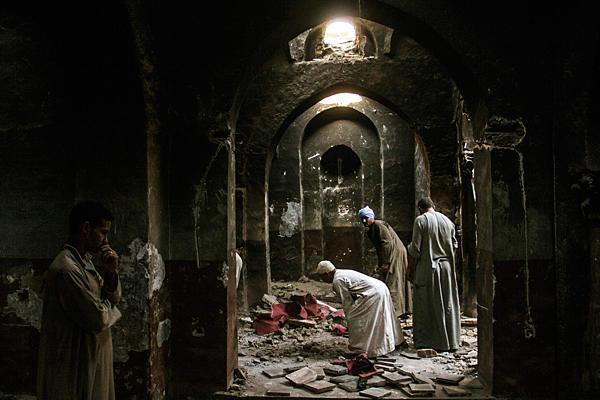
When a wave of attacks on churches and Christian properties swept across Egypt last month, this city was hit the worst. 
Minya's streets are now lined with burned-out hulks. Church interiors have been reduced to ash. The once-cheerful turquoise exterior of a Christian orphanage is now streaked black from the fire that gutted it. Destroyed wheelchairs sit outside a burned-out Jesuit center that worked with disabled people. Torched schools, shops, and monasteries lie in ruins. On one street, several Christian-owned shops are reduced to scorched rubble. Nearby, an untouched snack shop blares a song that proclaims “Egypt is Islamic ...
more here

http://www.copticworld.org/articles/2617/?utm_source=twitterfeed&utm_medium=twitter

Mums from .....

http://pjmedia.com/lifestyle/2013/09/23/my-son-jihad-glorifying-evil-in-france/

Russian Patriarch States Syrian Christians Near Extinction

http://www.raymondibrahim.com/muslim-persecution-of-christians/russian-patriarch-to-obama-syrias-christians-nearing-extermination/

Wishful Thinking

I copied this list from an old novel I have been reading which is sickening sweet about a country priest in the 19th century. The book is not worth reading. The word I would use it cloying. However, the little list of papers the priest wanted to write and never did reminded me how far seminary training has fallen into disarray. Can you imagine your modern priests having the ability to wax eloquent on these subjects?

Pray for seminarians in America, Europe, Africa, South America, etc.  They need to have the mental training to fight modernism and the evils of the day not only with prayer and fasting, but with their good minds.

The classical education reinstated by St. Anselm in the seminaries has all but disappeared.
I. Mental Philosophy.

I. The Influence of Plato on the Early Christian Church.
II. The Influence of Aristotle on the Mediæval Church.
III. The Neo-Platonists.
IV. The Argument in St. Augustine on the Immortality of the Soul. (Is it Tenable?)
V. The Atomic Theory of Democritus, and the Modern Discoveries in Astronomy.
VI. The Influence of the Inductive Philosophy on Modern Disbelief.
VII. Was Spinoza an Atheist?
VIII. Is Descartes the Father of Modern Rationalism?
IX. St. Anselm's Proof of the Existence of God.
X. The Cosmological Argument of St. John Damascene.
XI. The Argument from Intuition. 
XII. Aspects of Modern Pantheism.
XIII. Christian Idealism.
XIV. Malebranche and Fénelon.
XV. Boëthius.
XVI. Catholic Philosophers of the Nineteenth Century.
XVII. The Connection between Soul and Body (Tertullian).
XVIII. The Chaldæan Doctrine of the Soul (εσσαμενοσ πυριρυρ).
XIX. The Idea of Personality.
XX. The Identification of Life and Motion.
XXI. Maine de Biran.
XXII. The Popularization of Catholic Philosophy.


II. Ecclesiastical History.

I. The Alexandrian School.
II. The Writings of Clement.
III. Origen, and his Works.
IV. Ephrem the Syrian, and his Works.
V. The Apologists.
VI. The Three Cappadocians.
VII. Julian and his Contemporaries.
VIII. The Council of Nicæa.
IX. St. Augustine and the Donatists.
X. The Saints of the Catacombs.
XI. The Discipline of the Secret.
XII. The Libyan and Nitrean Anchorites
XIII. The Stylites.
XIV. Communion in the Early Church.
XV. Mediævalism.
XVI. The Case of Honorius.
XVII. Hildebrand. 
XVIII. Alexander VI. and Savonarola.
XIX. Origin and Spread of Monasticism.
XX. The Influence of the Irish Monks on the Continent of Europe.
XXI. Schools of Philosophy.
XXII. Port-Royal, Pascal, Nicole, Arnauld.
XXIII. The Rise and Progress of Jansenism.
XXIV. Gallicanism and National Churches.


Can one imagine having such discussions today with the local pp?