Recent Posts

Tuesday, 16 December 2014

Discernment Part Three

Two of my male friends have been complaining to me of lazy priests in their parishes or nearby ones.

Sloth is a common sin among us. See my posts below.

Here is Garrigou-Lagrange on this point.

In the letter of Fr. de Paredes, General of the Order of Preachers in the year 1926, which is to be found at the beginning of the new edition of the Constitutions, the following description is given of the spirit of human nature (p. 20): "Although a man's holiness is the result of God's grace working in his soul, it presupposes on our part a long and difficult process of purification and transformation of everything within us, until we have destroyed completely the old self which is corrupted by the desires of the flesh and put on the new self 'which is created in God's image, justified and sanctified through the truth.' Hence the need for the spirit of obedience, self-denial, and sacrifice with which we must all observe these rules perseveringly and to the letter . . ."
In contrast: "Any human relaxation, any spirit of faintheartedness, any concession made on these matters to human considerations, any unlawful dispensation which is not based on the Constitutions, may all be considered as a deviation from duty on the part of superiors . . . and, on the part of his subjects, as a disowning of their obligation to sanctify themselves and make themselves fit instruments for carrying out their sacred ministry. Such surrender to slothfulness would make it clear that our motive in entering the religious state was not to pursue the ideal set before us by God and the Church but simply to solve the problem of life here on earth with the minimum of trouble, so that in the religious state we might be more certain of receiving all the necessities of life and the more easily provide for ourselves comforts which we might not have enjoyed in the world.


We are all called to this life of virtue...all by and in and through our baptism.

Pray for priests today to follow the way of perfection. We need holy priests, and we need holy families to raise holy priests.

to be continued....

01 Feb 2014
These are reviews of repeats this past week and long ago, but someone mentioned sloth to me and I guess I wanted to encourage this person on the way to perfection. Most Americans are work-alcoholics. We have the ...
21 Dec 2013
Those adult Catholics, who do not study their faith and persist in ignorance fall into intellectual sloth, leading to ignorance, for which one is culpable. In America and in Europe, I do not believe there is such a thing as invincible ...
21 Jun 2013
I have noted that anti-intellectualism is not only dividing the Church into groupings, but weakening the Church's ability to evangelize. Sloth is behind this anti-intellectualism, as sloth is not only a sin of the body but of the mind.
21 Jun 2013
Hence sloth implies a certain weariness of work, as appears from a gloss on Psalm 106:18, "Their soul abhorred all manner of meat," and from the definition of some who say that sloth is a "sluggishness of the mind which ...

26 Mar 2014
Could be a sign of spiritual sloth. Posted by Supertradmum. Lay people are in the world to make the world holy. We are called to convert, to evangelize those who are falling away. We are the salt of the world. Christ said this of ...
25 Sep 2013
Sloth leads to abdication of roles, a nine to five attitude towards duty, a curtailing of personal growth. That sloth can be found in some who are priests is a tragedy for the laity. Without leadership, the ship of the Church crashes ...
06 Aug 2012
According to St. Gregory and St. Thomas,(12) pride or arrogance is more than a capital sin; it is the root from which proceed especially four capital sins: vanity or vainglory, spiritual sloth or wicked sadness which embitters, ...
18 Nov 2014
I am beginning to believe that the basic sin of the laity is sloth. One will not get to heaven by feeding the emotions with consolations and messages, but one will form one's conscience by studying the CCC and the teachings of ...

12 Sep 2014
(1) There are temperaments inclined to effeminacy, indolence, sloth, gluttony, and sensuality. Others are inclined especially to anger and pride. We do not all climb the same slope toward the summit of perfection: those who are ...
22 Dec 2013
Envy is, like sloth, not always considered a serious sin. There are three aspects to envy. The first is jealousy, in which one is fearful of losing something one has. This could be a girlfriend, or a position at work, for examples.
23 Jun 2013
The antidote to Sloth, according to Prudentius, is the virtue called Diligence, which may be seen as connected to Justice, Prudence and Temperance. Diligence is zeal for the Faith and industry-hard work, in other words.
12 Aug 2012
As I was defining and examining the great sins, here is Newman perfectly describing sloth and cowardice, as well as acedia, that melancholy which causes inaction in the spiritual life and a cynicism. And it must be confessed, ...

10 Feb 2014
Some souls, because of their negligence or spiritual sloth, do not pass from the age of beginners to that of proficients. These are retarded souls; in the spiritual life they are like abnormal children, who do not happily pass ...
06 May 2014
Twice I started theses on Newman and have not, for good reasons, not sloth, not been able to finish these. I have been studying him off and on for over 30 years, but only really read this phrase today. Amazing how when one ...
13 Aug 2014
Acedia (sloth), hatred of spiritual things, whence are born: malice, rancor, pusillanimity, discouragement, spiritual torpor, forgetfulness of the precepts, seeking after forbidden things. in regard to one's neighbour, Envy, from ...
21 Aug 2013
For others, the cause could be sloth, not cultivating a prayer life, or not receiving the sacraments frequently. A habit of sin can destroy faith. One of the greatest enemies of faith is materialism, the belief that the life on earth is ...

12 Sep 2014
(1) There are temperaments inclined to effeminacy, indolence, sloth, gluttony, and sensuality. Others are inclined especially to anger and pride. We do not all climb the same slope toward the summit of perfection: those who are ...
07 Feb 2014
This psychiatrist explored the reality of evil,. and even more fascinating, the fact that some people actually choose evil on purpose, rather than the good. Peck pointed to self-deceit, laziness or sloth, and narcissism as some of ...
15 Nov 2014
The great sin of men who are refusing the call is one of sloth. It is too easy to just be single, go with the flow, live a completely self-centered life. Those who are answering the call understand that the day of the comfortable ...
14 Jun 2014
And what is it that clouds it? The venial sins that we commit so easily—sins of worldliness, sins of self-indulgence, sins of temper, sins of jealousy, sins of pride, sins of vain-glory, sins of sloth, and the like; wherever there is any ...

22 Jul 2012
Lust and Sloth (who has beads) point to the need for deep, persistent prayer, as do all the other Deadly Sins. Garrigou-Lagrange writes that we must ask God, seek Him, for enlightenment as to one's predominant fault.
25 Jan 2013
I do not mind liberals having good arguments but if they refuse to read or study, I have no time for such laziness of mind. The sin of sloth is a deadly sin. We forget that this sin applies to the mind as well as the body.
14 Sep 2014
This causes sorrow, but only for the person who has not put the nail in the predominant faults of vainglory, pride, presumption. sloth, gluttony, anger, and so on. When one is made holy, one is no longer upset about people ...
10 Feb 2014
Perseverance is not easy: a struggle must be carried on against self, against spiritual sloth, against the devil, who inclines us to discouragement. Many souls, on being deprived of the first consolations which they received, turn ...

28 Jan 2014
And, I state that sloppiness is Sloth. In the past 30 months, I have had the sad experience of meeting some priests who are anti-intellectual and think it a virtue. These priests, and they number four, are into private revelations, ...
01 Dec 2014
One, replace hatred, anger, sloth, and all the deadly sins with love and the other virtues. Without living a life of virtue, you and I shall not remain faithful to the end. Second, teach your children and help older family members ...
13 Aug 2014
The list of this pre-saint's sin is staggering: lust, pride, curiosity, wastefulness of time, spiritual sloth, anger, heresy, and so on. I have actually, heard from the mouths of priests, that St. Augustine was too hard on himself.
09 Jan 2014
Most people who do not pursue knowledge fall into the sin of sloth. Another reason could be pride, as one may not want to know one is sinning, one is choosing evil. If one is running away from God, then one may ignore the ...

18 Sep 2013
If the predominant fault is sloth, one will not study the Catholic teachings, but want others, like seers, to tell them truths. Of course, this is a laziness. Garrigou-Lagrange states that sloth is the hardest fault of all to destroy as a ...
28 Jan 2013
The necessity of this purification, as the saint shows in the same book,(3) arises from the defects of beginners, which may be reduced to three: spiritual pride, spiritual sensuality, and spiritual sloth. St. John of the Cross teaches ...
27 Jul 2012
According to St. Gregory and St. Thomas,(12) pride or arrogance is more than a capital sin; it is the root from which proceed especially four capital sins: vanity or vainglory, spiritual sloth or wicked sadness which embitters, ...
04 Aug 2014
At times they must be checked, and at other times awakened, jolted, in order to react against sloth, inertia, timidity, or fear. At times a great effort is required to break an impetuous horse; the same is true of disciplining certain ...

Discernment Part Two

Perfection comes with a price. This price is suffering. This suffering helps one discern and allows one to endure the Dark Night before coming into Illumination. Here is Garrigou-Lagrange again, briefly on determining what one is dealing with within a person who either is one's self trying to cooperate with grace, or if one is in a position of counseling, such as a priest, working with others.

This suffering is the sharing of Christ's Own suffering, a theme in the mini-series on reparation, repeated as links at the end of this post. But, before one gets to this point, the list of sins and tendencies discussed in the predominant fault posts. must be eliminated. Notice, this quotation overlaps with what Raissa stated about venial sin.


It would be comparatively easy to describe the signs of this spirit by opposing it to the spirit of God, noting at the same time certain differences from the spirit of the devil. As we have said already, this spirit of human nature is the inclination to judge, will, and act in a merely natural way. But notice the meaning of the word "natural." It is not intended to refer to human nature in its essential condition as capable of elevation to the supernatural order, but either to fallen nature not yet revivified by grace or to regenerate human nature, which still bears the four wounds left by original sin and now further aggravated by personal sin. These wounds, although scarring, will never be completely healed in this life.
They are wounds inherited by the entire human race from the sin of its first parents and only imperfectly healed by the water of Baptism, since this sacrament does not destroy concupiscence. This is very beneficial to our spiritual training, for we can thus acquire merit in overcoming our inordinate desires with the aid of God's grace. There is also another advantage to be gained from this imperfect healing; men might otherwise receive Baptism merely to avoid the penalties of this life and not because of the glory of eternal life. We are Christ's heirs, "only we must share his sufferings, if we are to share his glory" (Rom. viii, 17). Cf. St. Thomas, Ilia, q. 69, a. 3. But these four wounds are further aggravated by our own personal sins which diminish our natural inclination to virtue by putting a strong obstacle in its way a tendency to evil. "By sin (even by venial sin in those baptized) man's reason becomes obscured especially in directing what is to be done and the will is hardened against good; the difficulty of acting well is increased, and more fuel is added to the fire of concupiscence" (la Ilae, q. 85, a. 3).
Therefore the spirit of fallen or wounded nature is a bias towards the concupiscence still present within us, inclining us to sin and thus to sloth and cowardice in our irascible appetite, malice in our will, negligence, imprudence or deceit in the intellect. In a word, it is a spirit of self-satisfaction, inordinate love of self, egoism. And this spirit of self-love, as St. Thomas has shown, dedicates a man to the concupiscence of the flesh, the concupiscence of the eyes, and the pride of life.3

This triple concupiscence is in its turn a dangerous slope towards the seven capital sins vain glory, envy, anger, avarice, sloth, gluttony, lust which are able to call even more grievous sins into being (la Ilae, q. 84, a. 4). According to St. John of the Cross (Dark Night of the Soul, bk. I, cc. 2-7) these capital sins may also appear in the spiritual order; for instance, spiritual gluttony which is an excessive desire for spiritual consolation loved for its own sake and not for the sake of God, and also spiritual pride. But these sins are not the most evil fruit of the spirit of nature; they prepare the way for even more serious sins, such as unbelief, despair, hatred of God.
When considered in this way the wounded nature described by St. Thomas does not differ from the nature portrayed in the Imitation of Christ (bk. Ill, c. 54).
But now let us study the spirit of human nature in its relation to the principal virtues of mortification, humility, faith, hope, and charity. As soon as we apply the first rule for the discernment of spirits "it is by their fruit that you will know them" we find that this natural spirit is never inclined to exterior or interior mortification, neither is it prepared to accept humiliations. As the masters of the spiritual life have always pointed out, nature is not anxious to be put to death and even in the life of prayer she is a spiritual glutton for consolation, which is totally opposed to the spirit of faith and true love of God.

This is one reason I have written so much about the danger of following consolations and false seers. One who does so avoids living in the virtue of faith, which demands walking in darkness and without consolations. As noted, St. John of the Cross warns against such spiritual candy.

Years ago, I had a mental picture which was applied to a certain prayer group close to London. I saw the bleeding Crucified Savior in a field, surrounded by sweeties, wrapped in colored papers. The leaders of the prayer group were ignoring Christ and bending over picking up the candies. The Saviour on the Cross was being ignored. This is what happens when people strive after consolations and "messages". Suffering is set aside for sweeties.

What happens when Catholics forget about suffering and purgation is the proliferation of false ministries.

Egoism takes over. Useless and self-seeking activity abounds in the Church today because of this problem. Such is the preoccupation with social justice or/and psychology at the expense of the pursuit of holiness.

A soul which is influenced by this spirit will cease to make further progress and abandon the spiritual life, once it has encountered its first difficulties or period of aridity. It hides its inattention to the interior life under the cloak of an energetic apostolate, devoting all its energy to external activity which has ceased to be supernatural and become entirely superficial. Such a person is confusing charity with philanthropy, humanism, and liberalism. Gradually this natural activity loses its initial drive; it begins as a burst of energy, changes into a general hurry, and finally, slows down to a leisurely pace.

Garrigou-Lagrange is warning priests about such sterile activity but this applies to the laity as well.

Human nature begins to groan as soon as it has to face contradiction or trial, since it is far from willing to shoulder the cross. And thus by degrees it sinks into despair. Its initial fervour was no stronger than the flame which leaps from a bundle of straw only to die away again as quickly as it appeared.
This spirit of nature reveals itself as completely egoistic with no regard for the glory of God or the saving of souls. No longer the love of God and one's neighbour but a disordered love of self occupies pride of place in the soul.
But this spirit is quick in trying to justify itself by appealing to a theory which takes as its fundamental principle: moderation in all things. We must avoid excess in our self-denial and spiritual exercises. We are not obliged to strive for mystical perfection, that would be the error of Mysticism. In fact, if a person makes it his daily practice to read a chapter from the Imitation of Christ for his spiritual profit, he is already a mystic. We must do nothing more than follow the ordinary way: virtus stat in medio.

Have not some of my readers been warned by their family members that they are too zealous? There is no middle ground in the spiritual life.

to be continued..


31 Oct 2014
Two parts: one, yes one can make reparation while not through the purification process, such as when one is in the Dark Night, but it depends for what the reparation is being made...and I add that most likely, reparation before ...
31 Oct 2014
We can make reparation for our friends in order to enter into more perfect friendships. If one sees an imperfection in a friend, one may pray and do penance so that person becomes a saint. Leading others to perfection through ...
19 Oct 2014
If one is called to Reparation, one takes on a little bit of this compassion for others and suffers with that person in order for them to reach heaven. Those who are in difficult relationships understand this concept.
18 Oct 2014
And so on...do not waste any opportunity to pray, to do reparation. Again, I think that most reparation is for our own sins and predominant faults until we are in the Illuminative State, but I am willing to be corrected on that matter.

14 Oct 2014
Those for whom God has placed on own hearts and in our minds great love, who are in need of having someone do reparation for them, are those to whom God wants you to focus your prayers and energies. Mortification ...
14 Oct 2014
Second, Psyche's reparation made it possible for Orual to have an excellent life, but as she is so full of pride, denial and ingratitude, she must be brought to see her sins and that fact that Pysche did all the work of reparation so ...
18 Oct 2014
If you are a young woman and feel the call to live a life of Reparation, there is an order for you. The Sisters of Reparation of the Sacred Heart have this website. I highly recommend some of my younger readers to consider this ...
18 Oct 2014
We can make reparation for our friends in order to enter into more perfect friendships. If one sees an imperfection in a friend, one may pray and do penance so that person becomes a saint. Leading others to perfection through ...

15 Oct 2014
Chose that priest, bishop or cardinal who seems farthest away from the truth of the sanctity of marriage and do reparation for him starting today. Here is the prayer given to us by Pope Pius XI. Ask, no beg, the Reparatress to ...
16 Oct 2014
St. Margaret Mary did make reparation while on earth, suffering not only from her companions in the convent, but from the revelations from Christ, Who showed her His loving Heart, wounded by ungrateful humanity. Today is ...
02 May 2014
... York This Sunday in Reparation for Abortion. Posted by Supertradmum · http://spuc-director.blogspot.co.uk/2014/05/walk-in-reparation-for-abortion-in-york.html · Email ThisBlogThis!Share to TwitterShare to FacebookShare ...
07 Aug 2013
Repetition on reparation. If anyone is moved to help me with the Adoration House in Walsingham, please contact me. After this week, the need should be more obvious than ever-praying and adoring in reparation for sins ...

13 Jun 2013
Reparation for sins comes either in this life or in purgatory. This is joyful reparation. God is good. My heart is full of love and love is what it is all about. Do you not want to be purged of all things which are displeasing to God?
04 Dec 2013
A friend of mine told me that she saw a pattern in my life praying for a certain type of person. She noted that reparation can be made for some, and that one can learn to excel in the virtue of charity, because of intercessory ...


On Discernment Part One

This bit of information is taken from a book by Garrigou-Lagrange, The Priest in Union with Christ...the one I have asked for in my last post.

I want to highlight the gift of discernment, as it is misunderstood. I have written somewhat on this before, but the term is misused almost daily.

Discernment is part of the gift of knowledge given to all Catholics in the sacrament of confirmation.
But, it must be developed, as all the gifts must be and released from sin and the tendencies to sin, such as the predominant fault. One can learn to discern by asking God to enlighten one's knowledge and by purity of heart.

Here is a snippet on discerning the spirit of God from this book. I shall examine this before going on to more selections.

The spirit of God is an internal prompting or tendency of the soul to judge, love, will and act in a supernatural way. It incites the soul to avoid sin by mortifying the flesh and by practising humility, and to tend towards God by obedience, piety, faith, confidence, and charity both affective and effective. This divine spirit is, therefore, particularly evident in the promptings of the Holy Ghost which correspond to the seven gifts.

Notice that God gives one discernment to judge (yes, contrary to the pc crowd), to love, will and act all in and through grace. God's life is us brings us to accept and choose mortification and actually practice humility, not merely endure it.

Notice the list of virtues which emanate from God's life in us: obedience, piety, faith, confidence (in Providence) and love. Again, the gifts of confirmation are evident when one cooperates with purification.

Now, the great Dominican continues with the oppositions to the real life of virtues.

Opposed to the spirit of God is the spirit of human nature, which is characterized as an inclination to judge, will and act in an excessively human manner, following the lead of fallen nature which tends towards its own ease and advantage. It is a spirit of egoism, a spirit of individualism. Prudence, for example, is no longer treated as the virtue directing man's acts to moral perfection and rightly ordering all the other moral virtues, but as the virtue needed for finding means of avoiding every inconvenience. Similarly, mediocrity takes the place of the happy medium of virtue.

Again, the ego must go before one can live the life of the virtues, a theme reiterated in the first two perfection series. Notice that egoism and individualism kill the spirit of God in one. And, this movement away from the supernatural life leads to mediocrity.

How often to I hear that men and women are not called to perfection, either in comments or in conversation? Here is Garrigou-Lagrange on this point.

This spirit of mediocrity also invades the sphere of the theological virtues by continually denying further possible development to full perfection, as if they were bound by their nature to be nothing more than average virtues, as though it were possible for man to err by excess in his belief or hope in God or in his love for God, just as a man might love his country to excess by placing it before God.

The saints did not settle for second best, but pursued Christ and His love. Those who deny the road to perfection want to minimize the effort needed to become united to Christ. The criticism some hear today is that they are too zealous for God. God rewards this zeal.

The trouble with not choosing the path to perfection is that one chooses a road away from God's will. If one is not moving forward in the life of grace, one is sliding backwards. This paragraph is a short version of the chapters in other books by this great priest describing the predominant fault as well as the capital sin of sloth-see my posts below on this.

The spirit of human nature will always be found to result in tepidity and eventually in sloth, and the person who yields to its promptings commits numerous venial sins, which gradually become more and more deliberate until at last he falls into mortal sin. Sometimes it has a peculiar affectionate character revealing itself in sentimental attachments to creatures, in an emotional love for them which takes the place of that genuine love existing primarily in the will. And it is but a step from romantic sentiment to carnal prudence and stupidity, which give a man an earthbound vision of everything even of divine things so that he only regards their capacity to satisfy his senses or his pride. Cf. Summa, Ila Ilae, q. 55, q. 46.1

In discerning "spirits",  Garrigou-Lagrange is simple, and profound, as usual.

In every soul one or other of these three spirits is predominant: the spirit of the devil in the wicked, the spirit of human nature in the lukewarm, the spirit of God in those who are beginning to dedicate themselves generously to the way of perfection, even though they may yet experience the influence of the spirit of nature from time to time and also of the devil.

Note that some people have given themselves over to wickedness and mediocrity. Men and women daily make choices which lead them one way or the other.

Now comes the role of discernment in all of this. 

The priest explains that 

The discernment of spirits signifies the power of judging correctly the spirit which is ordinarily predominant in some individual. This power may be either acquired or infused. If acquired, it consists in the correct application of the principles of moral theology under the guidance of acquired and infused prudence, and it is perfected to a greater or less degree by the inspiration of the gift of counsel.

All who are baptized and confirmed may acquire discernment through the study of moral theology, prayer, and the use of prudence and counsel, also given by God to us. Infused discernment is given to some for God's use. For example, a person or priest on an exorcist team may have infused discernment in order to help with the identification of demons.

Some spiritual directors who are priests or lay exhibit this infused discernment.

Garriogue-Lagrange helps us understand how to determine the spirits within a person.

What is the fundamental principle to be observed in the discerning of spirits? It is the one laid down by Christ himself: "it is by their fruit that you will know them", because "any sound tree will bear good fruit, while any tree that is withered will bear fruit that is worthless; that worthless fruit should come from a sound tree, or good fruit from a withered tree, is impossible" (Matt, vii, 17, 18, 20).
The good fruit which should result from the spiritual life are the virtues, the gifts of the Holy Ghost, and actions corresponding to the virtues and gifts. Therefore the discernment of spirits must be based on the principal virtues which are, in ascending order of perfection: chastity and mortification; humble obedience; faith, hope, and charity. We will now apply this principle to the three kinds of spirits.

The obvious is sometimes overlooked. The fruits of grace, that is God's life in us, are the virtues, the gifts of the Holy Spirit, and the resulting actions. These are bound up by sin and egoism until a person allows God to purify the soul, heart and mind.

Notice the order of fruits: 
  • chastity
  • mortification
  • humble obedience
  • faith
  • hope
  • charity
I shall continue this later today.....to be continued...


16 Apr 2014
Discernment. Posted by Supertradmum. Dante appropriately defines the concept of contrapasso in his presentation of divisive shades, the most clear-cut manifestation of a logical relationship between the offense and the ...
21 May 2013
Discernment is a gift which comes with the purification of the imagination and conscience. One must be orthodox for keen discernment. Many charismatics think that the term "discernment of spirits" has to do with figuring out ...
03 Mar 2013
An excellent lesson is that given by St. Ignatius Loyola in his "Spiritual Exercises". Here we find rules for the discernment of spirits and, being clearly and briefly formulated, these rules indicate a secure course, containing in ...
06 Jul 2012
Norms Regarding the Manner of Proceeding in the Discernment of Presumed Apparitions or Revelations. Posted by Supertradmum. NOTE: update at bottom of page and more on this tomorrow in a long post.... By the way, for ...
28 Feb 2014
9) One is a heretic in some way, perhaps not even knowing that one is not completely orthodox, If one chooses not to be orthodox, such as maintaining a position of "informed dissent", one will lose discernment quickly.


Well, like being in the Dark Night


Monday, 15 December 2014

News from SPUC

Midwives who refuse to do abortions: verdict due Wednesday


London, 15 December 2014On Wednesday the Supreme Court will give its judgment in the case of two midwives who refuse to help provide abortions.

The Court has announced that judgment will be handed down in the case of midwives Mary Doogan and Connie Wood on 17 December at 9.45am. The midwives, from Glasgow's Southern General Hospital, have a conscientious objection to abortion. Abortions account for a very small proportion of the cases on the hospital's labour ward. The hospital has brought the appeal in an effort to ensure that all midwives working as labour ward co-ordinators can be required to oversee abortion procedures.

The hospital argues that the statutory protection of conscientious objectors in the Abortion Act 1967 does not apply to almost all of the functions of labour ward co-ordinators.

The decision will be relevant to the extent to which NHS bodies across Britain are required to recognise the moral rights of those who object to abortion. Mary and Connie are Catholics, but the Abortion Act refers to those who have a conscientious objection to abortion without reference to any religious beliefs, meaning that the judgment will be relevant to medical personnel, of all religions and none, who do not wish to take part in abortion.

Mary Doogan commented: “Connie and I became midwives to help mothers safely deliver their babies, and that is what we have always tried to do. I hope that through fighting this case we will help ensure that midwives in future are able to practice according to their conscience.”

The Society for the Protection of Unborn Children have funded the midwives’ legal costs throughout the case.

Mary and Connie's fight to protect midwives' rights was opposed by the pro-abortion leadership of the Royal College of Midwives.

The case was heard on 11 November before Baroness Hale and Lords Wilson, Reed, Hughes and Hodge.

Pray for the dead.....thank God it is over this time

http://www.bbc.com/news/world-australia-30485355  Among the dead a mother of three...killed right before Christmas....do we hear about those who perished?

Updates: http://www.ibtimes.co.uk/sydney-siege-channel-7-host-natalie-barr-breaks-down-tears-realising-she-knew-victim-katrina-1479683

http://www.dailymail.co.uk/news/article-2875643/Australian-leader-lays-flowers-memorial.html

http://www.dailymail.co.uk/news/article-2875716/He-locked-Online-petition-gets-68-000-signatures-hours-gunman-bail-murder-multiple-sex-assaults-brought-Sydney-standstill.html

Continuing with Jacob Perfection Series VIII Part XXVIII


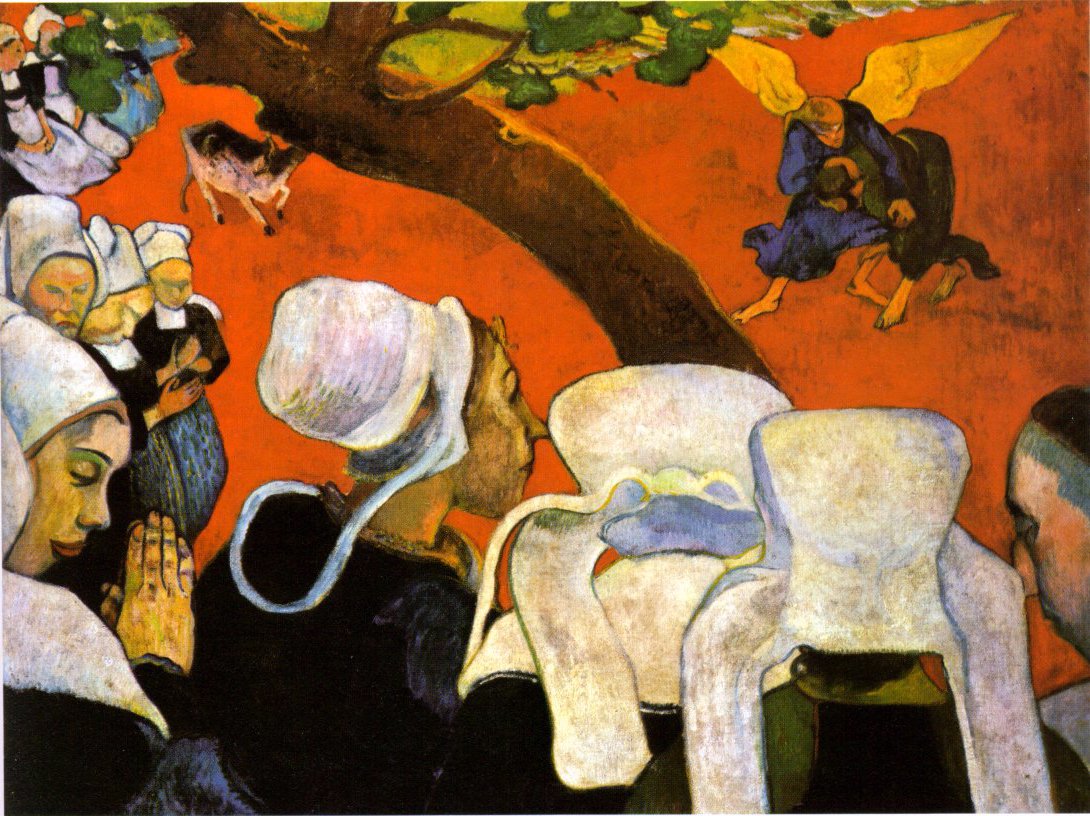
Since the late 1970s, the section in Genesis concerning Jacob wrestling with God has been part of my spiritual life.

Some of you have read my second poem on this event.

Here is the Scriptural passage again.

Genesis 32:22-32Douay-Rheims

22 And rising early he took his two wives, and his two handmaids, with his eleven sons, and passed over the ford of Jaboc.
23 And when all things were brought over that belonged to him,
24 He remained alone: and behold a man wrestled with him till morning.
25 And when he saw that he could not overcome him, he touched the sinew of his thigh, and forthwith it shrank.
26 And he said to him: Let me go, for it is break of day. He answered: I will not let thee go except thou bless me.
27 And he said: What is thy name? He answered: Jacob.
28 But he said: Thy name shall not be called Jacob, but Israel: for if thou hast been strong against God, how much more shalt thou prevail against men?
29 Jacob asked him, Tell me by what name art thou called? He answered: Why dost thou ask my name? And he blessed him in the same place.
30 And Jacob called the name of the place Phanuel, saying: I have seen God face to face, and my soul has been saved.
31 And immediately the sun rose upon him, after he was past Phanuel; but he halted on his foot.
32 Therefore the children of Israel, unto this day, eat not the sinew, that shrank in Jacob's thigh: because he touched the sinew of his thigh and it shrank.


Raissa, being of Jewish descent, has a keen insight into this great event, which I have pondered on and off for years. I knew that Jacob's wrestling was the same as mine, or yours, in confronting God and demanding, after struggle, the blessing. 

I understood that this wrestling is part of each person's spiritual journey, as we encounter God with all our flaws and sins, having to be purified. I knew that we had to wrestle with God's Great Holiness in order to be made holy ourselves, to be blessed, and that frequently, this involves physical pain, not merely emotional or psychological pain. I knew, also, that as Jacob won the blessing, we too must win merit, with grace.

As I noted in my poem, the struggle is the completion of God's call of Jacob, which was initiated in deceit. But, Raissa adds this insight, making the struggle all the more real. "The eternal (spiritual) life, I understand this now, can appear as an enemy, risen up against our soul, our unique root-possession It fights against us in order to be conquered, that is to say won. Thus it is God who triumphs in the triumph of Jacob. For that was Jacob's victory: he won God by letting himself be vanquished by him."

Of course, God wins. But, each one of us wins God, "And Jacob," states Raissa, "won God by letting himself be mortified in his flesh."

I have been continually mortified in my flesh, by cancer, asthma, many other illnesses in the past, and just the aches and pains of getting old. I have not aged well, moving from being very attractive, to ugly, as someone told me in so many words yesterday, to my humiliation, but truth.

This mortification, of the dying of the flesh is absolutely part of the Dark Night of the Senses. One must become detached from one's own strength, (and I was very strong physically), and one's physical presence in the world. One learns one's complete physical reliance on God.

Jacob won God's love and the blessing of the covenant through suffering the humiliation of being attacked by God in the night. We not only offer our things and relationships to God, but also our very bodies. One loses confidence in this battle, which I am sure Jacob lost, as he limped for the rest of his life. But, God does not want us to have confidence in our own physical or spiritual abilities--only in Him.

AWAITING THE COMMAND

I have had sciatica for exactly 40 years on and off. To endure the continual reminder of mortification of the flesh is part of the wrestling with the self, the ego.

We cannot be perfect without losing some bodily perfection, and so, God in His goodness, allows those of us who are more stubborn long lives to give back to Him daily. Jacob learned the hard way to become one with God. A not-so-good priest told me years ago that humility was not humiliation. Nope, he was wrong. We are humiliated in the realization of our limitations in order that God's strength shines forth through us, not our own. God allowed Himself to be humbled through gross humiliations. He willed that men would beat him, He willed the crucifixion, and that He would be naked on the cross. God was in control, and He is in control of our lives as well. "Do you think I cannot call on my Father, and He will at once put at my disposal more than twelve legions of angels?" (Matthew 26:53)


Jacob's wound was an indication, as Raissa notes, that God won the wrestling match. But, Jacob won God's heart as well, through the death of his ego.

to be continued....


Synchronicity, Perfection Series VIII Part XXVII The Old and The New Law

Just the other day, I was meditating on the life of David, who is one of my favorite persons in the Old Testament. His heart, it is said, was like unto God's, full of love.

My thoughts centered on the fact that after God disciplined David for killing Uriah, by taking away the baby of Bathsheba, David was still allowed to keep his soul-mate, after a series of serious sins.

God forgave murder, adultery, lying, arrogance, and most likely, pride. David obviously was playing God by taking Uriah's wife and killing him.

Yet, as Raissa points out in my reading of her today, God was "displeased" with David, forgave him and let him keep Bathsheba and the kingdom of Jerusalem.

Raissa notes several points with regard to this mystery which I merely was pondering a few days ago.

One, God's mercies are clear in the Old Testament.

Two, the Old Testament is written after the facts of history and with a perspective of God's mercy.

Three, the law of the Old Testament is NOT as severe as that of the New. (We have Christ Incarnated, the Church, the sacraments, grace in abundance, 2,000 years of teaching and so on, I add.)

That we are held to a higher level of expectations becomes a revelation like a strong light in our lives. One must, as I wrote yesterday as well, move away from even venial sin, not merely the gross sins of St. David. We are called to put on the Mind of Christ. And, we have all we need from baptism and the other sacraments in order to do this.

http://supertradmum-etheldredasplace.blogspot.com/2014/12/perfection-series-viii-part-xxii-venial.html

Raissa goes on to say that when our time in the Church is written, (and I am not sure it will be), our time will be seen as a time of great mercies.

to be continued....


Footnote to yesterday's post on marriage

http://supertradmum-etheldredasplace.blogspot.com/2014/12/part-xxvi-of-perfection-series-xiii.html

I used the short quotation on marriage from Raissa, but I want to expand using a footnote of Jacques regarding the perfection of the species as one of the reasons for marriage.

He writes this: "For the perfecting of the species, that is to say in order that the highest exigencies of the natural law with regard to the human species should be recognised and supernaturally confirmed and that the rigour which is thus demanded from each one should raise the moral level of the species."

This type of idea is why I keep saying that lay people must stop blaming the clergy and nuns for the lack of faith among the laity.

We are all called to the perfection of the species, and marriage is one way in which this is done.

How?

For each person to come to perfection demands that rigour noted by Jacques. That following of God's moral law is absolutely the duty of each one of us. All humans experience natural law, even in this perverted world, which denies natural law, even as a basis of human law. as we see with abortion laws, for one example, as human laws in contradiction to natural law.

The Ten Commandments are merely an extra clarification of natural law. Jacques is noting that those in marriage relationships, in families, need to see how their individual and group actions inform the larger world. First, the couple and family recognize natural law and then take the next step, which is putting it into context of the soul, heart, mind, the very reason why people were created in the first place.

This supernatural confirmation happens in virtue training, in the formation of character, in cooperation with the graces received in baptism. Parents have this duty to lead their children into the life of virtue, but of course, they cannot lead where they are not willing to go themselves.

The moral level of the species has dropped and this is the fault of the laity, as well as the clergy and other religious. No one is exempt from blame, or repentance and accepting the duty, the call of God to perfection.

What Raissa expressed so beautifully, Jacques summarizes, like the excellent philosopher he was, the whole point of the perfection of individuals in marriage leading to the perfection of the species.

Follow the tags for many of my posts on virtues and virtue training.

To be continued....


Update from Australia

http://www.abc.net.au/


Manager of Lindt cafe says there are 50 hostages, including staff. 

from The Guardian

http://www.theguardian.com/technology/2014/dec/14/privacy-is-not-dead-microsoft-lawyer-brad-smith-us-government

from Bloomberg news

http://www.bloomberg.com/politics/articles/2014-12-14/hostages-taken-in-sydney-cafe-as-islamic-flag-reportedly-flown

I predicted this months ago on this blog

http://nypost.com/2014/12/14/elizabeth-warren-poses-a-challenge-to-hillary-in-2016/