Recent Posts

Thursday, 30 August 2012

On the fear of having children...

I have been conversing with some young people, between the ages of 22-32. It is very interesting and sad to know that some members of the Millennials are terrified of having and raising children. I have mentioned this before on this blog, but I am so sad at this knowledge that I want to expand the conversation here.

Here are some of the reasons why these young people, both male and female, have explained this fear to me.

One, they are from families of one or two children and have no experience of young children.

Two, none of their friends or uncles or aunts, have younger siblings or children, so that have no experience of babysitting.

Three, in England, as well as in some other EU countries, child rearing is so restricted that some young people fear the government invasion into their lives. One said to me that my generation could discipline as we thought best, but no longer is this possible. James Dobson is not allowed in the EU.

Four, such natural things as breast feeding, changing nappies, and rocking a baby seem like alien practices.

Five, the youth have not seen good marriages, happy parents and happy, disciplined children.

Six, the youth have not seen large families.

Seven, young men do not want to support a stay-at-home mom. They are not familiar with such a life-style.

Now, the youth with whom I have been discussing these points are all Europeans, but in some places, the American experience may be the same. As they were talking, I felt so sad. My childhood and teen years seem like they happened on another planet.

My immediate family of five was the smallest in the neighbourhood.  We had tons of kids to play with, to babysit, to be around. We had no choice in the matter. We played, ate, lived with kids. We learned to fold nappies, make baby food, heat up bottles of milk, push a pram or push-chair, burp babies, clean up after baby mess and generally do things daily which seemed natural and necessary, as well as good.


No big deal...We had bunk beds and trundle beds. Most of my generation did not have our own bedroom until we were in late high school. One of my fellow students in high school came from a family of twenty children all from the same mom and dad. She lost her oldest brother in Viet Nam. The mother went to Mass everyday, as the dad came home from work at lunch time so she could get to noon Mass. They had family meetings once a week and we all thought they were cool.

We played games together. We watched television together. We could play baseball and have two complete teams with two families. We had dramas and fairs in the summer, all run by the neighbourly kids. When autumn came, the kids split up into their own school groups and walked to school together. We did chores together and grew up watching boys and girls become men and women.


When the girls played with the doll-houses, we always pretended we had our own rooms. Dream.

The fear of having children is also exacerbated by the lies of the medical profession that having a baby is an illness. Having a baby should be seen as a normal activity, not something special or unique.

I feel so sad. We had so much fun. We learned so much. I encouraged these youth not to be afraid.


On Benedictine Spirituality--a mini-series, part one

The next few posts will include small meditations on some aspects of Benedictine Spirituality. If readers have not seen the DVD Tyburn Convent: Gloria Deo, A Film Documentary, I highly suggest getting it.

One of the aspects I want to emphasize is the connection between learning and the love of God, which I have mentioned on this blog before.The Love of Learning and the Desire for God: A Study of Monastic Culture by Jean Leclercq. 

Today, I want to highlight two points from the text, which are in the Rule. The first is the daily reading of the Lectio Divina. The readings from the Scriptures are followed by meditation and prayer. The emphasis in on the Word of God. Although St. Benedict did not invent this method of study and prayer, he implemented it and established it as part of his Rule.


The reading itself is a sacred movement. The meditation follows and the prayer, naturally would end the process. It is obvious that some intellectual and rational approaches are here employed. As Leclercq noted, a monk had to learn how to read and understand Scripture. The monks had and wrote books. They copied books. The Scriptures were copied and re-copied, embellished with art and designs which still astonish the world. 

The novice had and still has to read and study the Rule. Therefore, even in the earliest days, the novice had to know how to read and discuss the Rule. Reading in the refectory was done out loud, and reading in the quiet times could have been done in a low voice. Silent reading was also done and still is. Leclercq notes that active reading, reading out loud, is connected to meditation. The reader listens as well as begins to understand the text.

To listen, to think, to act out of reflection is a little phrase I add to some of my posts. I got this from St. Benedict-think, pray, reflect, act. This movement of the mind and heart is all part of being involved in the Lectio Divina.

As children, at least in the old days, we would learn "by heart", a way of learning to which Leclercq refers. Some of you may remember reciting poetry in school and learning by heart by repeating the poem out loud for homework. The monk would do the same. And, the daily recitation of the Hours, the Breviary, as well as the singing of the Chant, would bring about memorization.

The second point is that the reading of the Rule would lead to an appropriation of those rules. Reading and studying change the mind and the heart. As the novice would learn the Rule, he would begin to make it his own. The doctor studies medicine until he can do operations "by heart". So, too, the monk learns the Rule so that he can live it. Thus, says Leclercq, monastic life is based on the reading and understanding of literature. For a word-smith like myself, this is not only consoling, but very attractive and beautiful.

The repetition is part of meditation and meditation is part of learning. To be continued...


Wednesday, 29 August 2012

Recommending Fr. Z Today

Recommending two great discussions going on on Father Z's blog at this moment

http://wdtprs.com/blog/2012/08/quaeritur-at-which-parish-should-i-register/#comment-361609

and

http://wdtprs.com/blog/2012/08/holy-communion-services-mistaken-to-be-as-good-as-mass/#comment-361621

Prayers for Sems

Please pray for seminarians everywhere. Today, pray for the sems from the Diocese of Davenport and Arudel and Brighton. These dioceses need many more men to serve the population.

Diocese of Davenport Seminarians, 2012

And pray, please, for this seminarian, in the Diocese of Arundel and Brighton, here seen playing Tranio in The Taming of the Shrew in the green and lace costume.


Christ called him the greatest man who ever lived...

Christ said that John the Baptist was the greatest man who ever lived in Luke 7:28.  "I tell you, among those born of women there is no one greater than John ..."

I have never heard a sermon in my long years as a Catholic on this subject. John here is called by the Son of God the greatest man who ever lived, greater than all the patriarchs of the Old Testament, the apostles, the martyrs, the doctors of the Church and even, St. Joseph. He was the only person conceived in original sin but born pure and full of the Holy Spirit because of the Visitation of Mary to Elizabeth.


In the Byzantine Church, today is a great feast. Happy Feast Day to the Co-Cathedral of St. John in Valletta, Malta.

Bernard on Peter and John


St. Bernard of Clairvaux has a fascinating sermon on two aspects of love regarding St. John and St. Peter. St. Bernard,  in St. Peter and St. John, XLI, In Joannic Evang; Tract CXXIV.  Bernard says the Peter loved Christ more than John, but that Christ loved John more than He did Peter. This is a great mystery, but Bernard breaks down the problem by stating that Peter represents the Church Militant, the Church on earth and John represents the Church Triumphant in heaven.

What does Bernard mean? He explains that the two types reveal how we Catholics are in our relationship to Christ on earth and in heaven. Peter, who is full of zeal, is the Head of the Church and must organize, protect and lead. John, who is resting on the breast of Christ, represents the soul in heaven, abiding in the love of God for all eternity.

Peter is all action and progress. John is rest and reflection.

Bernard uses the typical approach to the Scriptures in which persons are seen as "types" or even in "allegories" regarding spiritual truths. The great mystic gives us much to think upon in this sermon.

On St. Benedict's Rule


It is very hard coming back to the ordinary world after a sublime retreat. A retreat should change a person, and I am somewhat pleased with some change. But, what is most important is that I come back again realizing the great gift of the Benedictine Rule for the Church. St. Benedict's Rule seems to allow for a variety of gifts and backgrounds instead of insisting on sameness among the women. At the convent where I was on retreat, I met many nuns from widely different backgrounds and stations in life. This variety of gifts, and even nationalities creates a rich tapestry of talents and character.

However, the Rule transcends differences by being both flexible and "strict" in certain areas. I personally think that the balance of work and prayer allows for a healthy atmosphere.

Benedictines truly live in community. The communal life opens up opportunities for development and growth. The "extrovert" and delightful guest mistress told me that when she entered in her thirties, she was very timid. Out of obedience, she was asked to be the guest mistress, which is a hugely active role in a community which opens its doors to perpetual adoration, Mass, the hours and retreats.

Some commentators have labelled the Rule as "moderate". In 2012, most people would see such a life-style as extreme.

Having a Benedictine heart, I love the pace of the monastic day and the balance of prayer, service, and work. I think one would have to be a little bit hyper-active to be a Benedictine.

There is always work. Here is a section from Chapter 72:

Just as there is an evil zeal of bitterness
which separates from God and leads to hell,
so there is a good zeal
which separates from vices and leads to God
and to life everlasting.
This zeal, therefore, the sisters should practice 
with the most fervent love.
Thus they should anticipate one another in honor (Rom. 12:10);
most patiently endure one another's infirmities,
whether of body or of character; 
vie in paying obedience one to another -- 
no one following what she considers useful for herself, 
but rather what benefits another -- ; 
tender the charity of sisterhood chastely; 
fear God in love;
love their Abbess with a sincere and humble charity;
prefer nothing whatever to Christ.
And may He bring us all together to life everlasting!


Tuesday, 28 August 2012

On virtues, commitment and perfection


We have a culture of priests who deny that perfection can be sought. Many singles in the confessional hear priests denying the role of discipline and obedience in the lay life. The priests' ideas reflect the aberrations of the culture. Instead of shaping the culture, they have succumbed to the falsity of individualism and selfishness.

There are so many distractions in the single world which have ZERO spiritual value. For those who choose the religious life, or the priesthood today, means that they choose a context of people praying every day, sharing 6:30 Vespers, and having a talk about the Blessed Virgin Mary afterwards over breakfast. But, one must choose that way or marriage. Marriage, if one works at it, is a way to heaven through a different spirituality.

Work for single people, run by single people leaves no spirituality or substantive recreation. 

Single people even go to work on holiday, being career-centric. This has been the case for over 100 years. Blaming the Enlightening is an excuse for the lack of spirituality. The single life is a reaction to the family. It is rebellion. This generation lives in reaction, as they have no common ground. Those single people have no common frame of reference even in pop culture.

This generation of singles is not homogeneous in any way, even in recreation.

In the past, there was a blending of single activities and married and family activities. The culture is, perhaps, in some places finding communal values, but the single people never see families-they have never seen a successful family or even a baby. Seriously, I have had young people tell me that have never held a baby.

We grew up in neighbourhoods swarming with kids. We took care of our brothers and sisters, as well as other babies from other families. 

That the culture of priests reflections the individuality of this generation at the level of accepting a false view of society is dangerous. Perfection can only be found in relationships. 

If this generation is not encouraged by priests to seek perfection in a community and not encouraged to seek holiness at all, they will not reach the level of holiness God has called them to achieve. I believe this and so do some religious, with whom I have spoken..

Think, reflect, act.

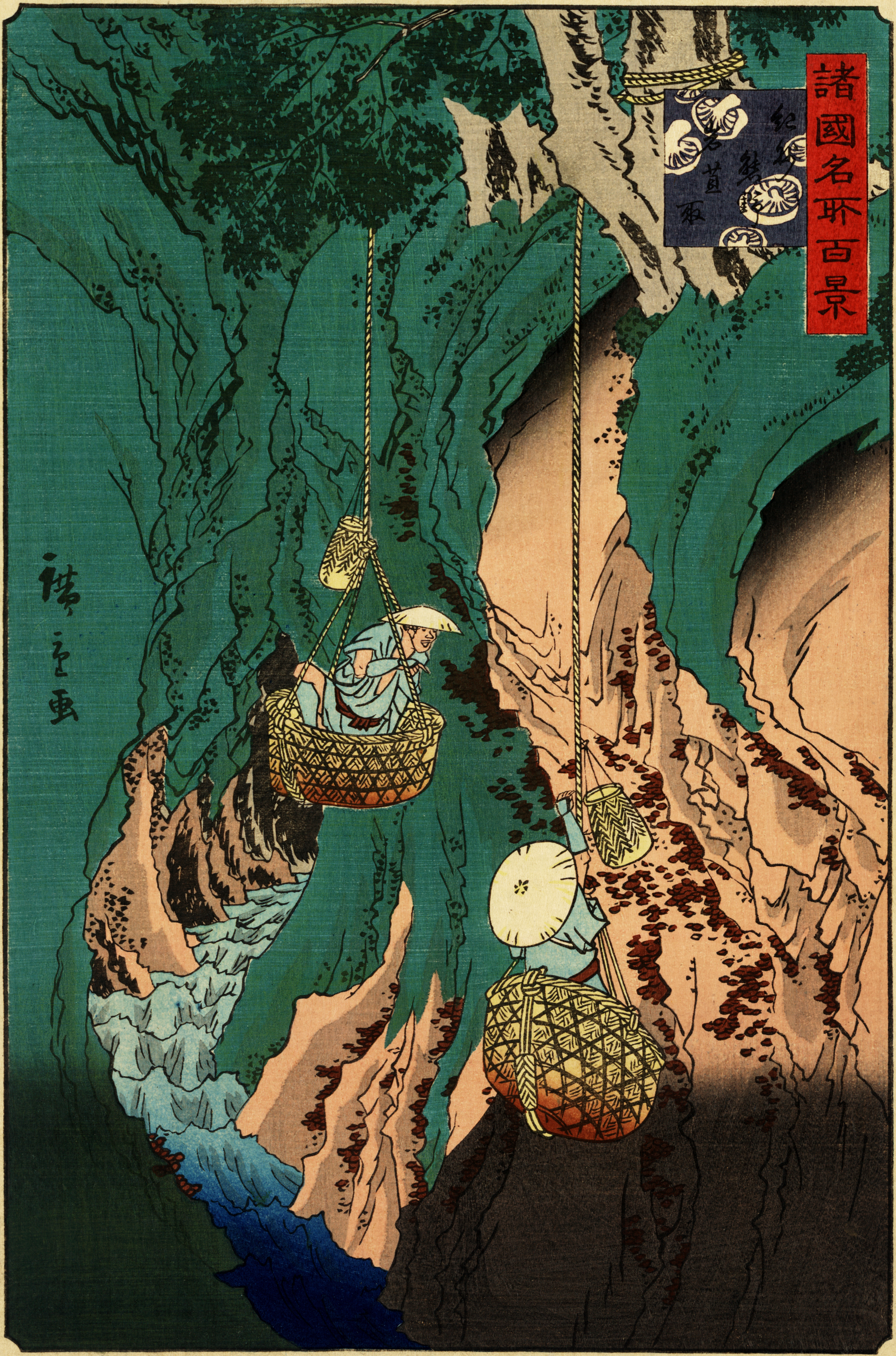
Fungi collecting...

For you to think and look at on a Tuesday morning...fungi collecting in Japan.

Thanks to Wiki

http://upload.wikimedia.org/wikipedia/commons/8/8a/Hiroshige_II_-_Kishu_kumano_iwatake_tori_-_Shokoku_meisho_hyakkei.jpg

the violence of affliction...clarifies the good

Thanks, wiki


Wherefore, though good and bad men suffer alike, we must not suppose that there is no difference between the men themselves, because there is no difference in what they both suffer. For even in the likeness of the sufferings, there remains an unlikeness in the sufferers; and though exposed to the same anguish, virtue and vice are not the same thing. For as the same fire causes gold to glow brightly, and chaff to smoke; and under the same flail the straw is beaten small, while the grain is cleansed; and as the lees are not mixed with the oil, though squeezed out of the vat by the same pressure, so the same violence of affliction proves, purges, clarifies the good, but damns, ruins, exterminates the wicked. And thus it is that in the same affliction the wicked detest God and blaspheme, while the good pray and praise. So material a difference does it make, not what ills are suffered, but what kind of man suffers them. For, stirred up with the same movement, mud exhales a horrible stench, and ointment emits a fragrant odor.


Happy Feast Day of St. Augustine

JonathanCatholic Again


Jesus, Mary, and the Pots


In this post, I would like to give you all a meditation on one of my favorite Scripture passages from the Gospel according to St. John 2:1-11, with two supporting passages.

“And the third day, there was a marriage in Cana of Galilee: and the mother of Jesus was there. And Jesus also was invited, and his disciples, to the marriage. And the wine failing, the mother of Jesus saith to him: They have no wine. And Jesus saith to her: Woman, what is that to me and to thee? my hour is not yet come. His mother saith to the waiters: Whatsoever he shall say to you, do ye. Now there were set there six waterpots of stone, according to the manner of the purifying of the Jews, containing two or three measures apiece. Jesus saith to them: Fill the waterpots with water. And they filled them up to the brim. And Jesus saith to them: Draw out now, and carry to the chief steward of the feast. And they carried it. And when the chief steward had tasted the water made wine, and knew not whence it was, but the waiters knew who had drawn the water; the chief steward calleth the bridegroom, And saith to him: Every man at first setteth forth good wine, and when men have well drunk, then that which is worse. But thou hast kept the good wine until now. This beginning of miracles did Jesus in Cana of Galilee; and manifested his glory, and his disciples believed in him.”- St. John 2:1-11, Douay-Rheims

With that in mind, read these two passages of Sacred Scripture:

“For God, who commanded the light to shine out of darkness, hath shined in our hearts, to give the light of the knowledge of the glory of God, in the face of Christ Jesus. But we have this treasure in earthen vessels, that the excellency may be of the power of God, and not of us.”- 2nd Corinthians 4:6-7, Douay-Rheims

“There was a woman once that appealed to Eliseus (more commonly known today as Elisha the Prophet) for aid; her husband had been among the disciples of the prophets. Master, she said, you knew my husband for a faithful servant of yours, and one that feared the Lord. Now he is dead, and here is a creditor of mine that will come and take away my two sons, to be his bondsmen. What would you have me do for you? asked Eliseus. How much have you by you? My lord, she answered, I have nothing left in my house at all but a drop of oil to anoint myself with. Go then, said he, and borrow empty jars from all your neighbours, and do not stint yourself. Then go home, and lock the door on yourself and your two sons within; fill all these jars with the oil, and set them aside when they are full. So the woman went, and locked the door on herself and her two sons, and they began holding out the jars for her, while she filled them. When she had filled them, and, asking one of her sons for a fresh jar, was told that he had no more, the oil gave out.”- 4th Kings 4:1-6 (more commonly known today as 2nd King 4:1-6) Msgr. Ronald Knox Bible


In the first passage from the Gospel according to St. John, we can see an incredible allegory hidden just under the surface. St. Paul tells us that, mystically, we can be likened to earthen vessels, literally, clay pots or jars. Before conversion, we are hollow and filled with merely ourselves, just like the clay pots that Our Lord ordered to be brought to Him were empty, and then filled with only water. At His command, however, the formerly destitute pots are filled with wine, the physical sign of the Blood of Christ. This is a fantastic allegory for the Christian life. When our strength as mankind had failed utterly, just like the wine, symbolizing life, had failed at the Wedding in Cana, Jesus Christ, the eternal Son of God, came forward in His human nature, and transformed by His grace, through the intercession of Mary as we see in this passage, our poverty into His riches, our destitution into His royalty, and our beggary into His Life, His very self, His Blood in the Eucharist. All of this is done not separate from, but rather in cooperation with, the intercession of Mary in accordance with the will of God. And what command to we hear ringing in Our Lady’s grace-filled decree? “Do whatever He tells you.” This is our standing orders for our Queen, to bend the knee to Christ the King, and to do everything that He tells us. So shall we be filled with the Blood of Jesus Christ, which is Life and Love Itself. For we have this excellency in earthen vessels, says the divine and blessed Apostle, the Light of God shining forth in the darkness, present in and with our souls, infused into our very being, making us the light of the world in the Light Himself.

In the second passage, as well, we may see a likeness to the Christian life in allegorical form. This allegory fits perfectly with the allegory from St. John chapter 2, as we shall see. In this picture, we see presented to the holy Prophet a great famine in the land of Israel. Prosperity has turned into poverty, and lady was saddled with a debt that she could not possibly pay, such that her very children were to be taken into slavery to that man to whom she owed the debt. The olive oil was consequently so scarce that there was barely a drop remaining. And when he, the Prophet of God, comes upon this sad state of affairs, what does he do? He multiplies by grace the oil, filling all of the earthen vessels, until there is no longer any remaining. There is enough oil to fill all of them, so much in fact, that the ocean of oil floods over and annihilates the debt owed by the lady to the creditor. Now apply this to the Christian life: the People of God, Israel, were in a great famine prior to the coming of Our Lord Jesus. There was a great famine in the land, more real and more gripping than any physical famine. There was a famine of the knowledge of God, and a great bondage to sin, which gripped the souls of men and forced them into slavery, to sin and to the one who had the power of sin, the devil. Here enters Our Lord and Our Lady. Jesus Christ comes and willingly takes upon Himself the nature of a slave, being made in the likeness of men, and dies under the hand of evil sent from the devil to attempt to consume Him, taking our debt upon Himself. And He is not by Himself and alone; the true Lady, whose Son He is, participates in His sorrowful Passion and watches her Son being given over to death and the punishment of sin for our sake. She willingly offers Him up for our benefit, and assumes the role of the destitute and devastated Mother, thought she was the most blessed creature who ever existed. Before the eternal Son of God, Jesus Christ, was born of Mary His Mother, the Holy Spirit was scarce and not to be found in His personal fullness among Israel. Just as the oil, which is a symbol for the Holy Ghost, was so gloriously multiplied so as to fill all earthen vessels, so too after the Passion of Christ was the Holy Ghost poured out most abundantly upon the Church and even unto today such that not a single soul in the Church need be destitute of His powerful and plenteous Presence. And in this Almighty Spirit, as St. Paul says, there is liberty, and freedom from the weight of sin, to which we were hopelessly in debt prior to the grace of God. We have such a treasure, says the divine and blessed Apostle, dwelling in our earthen vessels, the Body and Blood of Christ, and His Spirit; and in them, all Life.


Inspiration for this expanded meditation was received from Venerable Fulton J. Sheen, with supplemental material from Dr. Scott Hahn, professor at the Franciscan University of Steubenville, Ohio.

Monday, 27 August 2012

St. Monica, pray for us

Happy Feast of St. Monica. This is my favourite painting of St. Monica and St. Augustine. God bless all mums and sons today and bring them all closer to God. A mother's influence is great, for good or for evil. Let us pray for all mums with babies in the womb, that these babies are cherished for nine months and after.

Thanks, wiki


Being single and being on retreat two


I have been reading the Sermons of St. Bernard of Clairvaux, specifically on the Feeding of the Five Thousand. Without going into great detail, one of the points St. Bernard makes, which has been made by many saints, is that of gratitude.

In a Western society, where we are so use to thinking we have gained the goods we have, or in thinking that we are entitled to goods, we forget too easily that all good things come from the Hands of God.

The goods we have from God include spiritual blessings, as well as material blessings.

The goods denied us are also blessings from God. As St. Bernard states, we must be
thankful for the sins we did not commit, for the temptations from which Christ has shielded us. We are to thank God for each virtue we receive and for each occasion of goodness He allows us.

I have been on retreat, which is always a treat which I do not take for granted. For some of us, a yearly retreat is a great reason for gratitude, and I thank God for my few days with Him and His companions in grace..

I am grateful for the Eucharist and the silence, the rhythm of prayer and reflection and conversation with the other guests.

I am grateful for my entire life, which has been a blessing, and it is not over, so there will be more blessings for which to thank the Lord.

Here in the convent, I met a woman whose only child died of brain cancer at the age of eleven. She has not only kept her faith, but is a light to all who meet her.

The day after the funeral of her child, her husband filed for divorce, leaving her alone in the world. I have met so many women who are alone in the world, I am beginning to realize that any love is a reason for gratitude.

The world has created an environment hostile to single, divorced and widowed women. Why? I think because of the lack of gratitude. A grateful man does not leave an older woman for a younger one. A grateful father does not leave the mother of his child. A grateful man does not ignore his widowed mother.

Gratitude is a sign of predestination. Gratitude from St. Bernard’s view is absolutely necessary to please God. The ungrateful will not see God. They cannot even see their families or brothers and sisters in Christ, so how can they see God?

In a community or in a parish, one must never take friendship for granted. It is always a gift.

Thank God for your friends in Christ and be grateful daily. Keep a gratitude journal and list daily things for which you are grateful. St. Bernard told his monks to remember all that God has given them and all the dangers from which they have been spared. Be grateful and rejoice in all things.

Being single and being on retreat


Being on retreat, I had a chance to pray, read and talk with some of the good Benedictine nuns at Tyburn.

One of the nuns said a startling but true thing which I want to share. She stated that when single women, even those who have been working of their spiritual life while in the world enter, “they have to start all over again.” Basically, the nun noted that those of us in the world as singles do not have a clue as to how little our efforts create merit or growth.

Why?

There are two reasons. The first is that singles are not living in a community or daily in commitment with a husband or wife, and therefore can deceive themselves as to the level and growth of their personal holiness. I have said something like this before on this blog, but to have an spiritual authority state clearly that one cannot grow in holiness in a vacuum was a clarification and completeness to what I have believed. The point is that living day to day in committed relationships is earth-shakingly different than living on one’s own and meeting with a counselor or spiritual director occasionally.

The second reason is that one needs a vow, to be committed fully to something or someone.

Again, I have written about this here and received both affirmation and censure. The point is that a vow gives grace which one does not have without that vow.

Grace follows grace and either in marriage or in the consecrated life, one receives grace upon grace not accessible in the single state.

 Like the works of St. Thomas Aquinas, or Augustine, the writings of Bernard of Clairvaux give us endless spiritual milk to drink on these points.

In his sermon, On Humility and Patience, Bernard writes this, “Some endure humiliation with bitterness, other with patience, others again with gladness. The first class are culpable, the second are innocent, the last are just. Although innocence may be considered a part of justice, still the perfection of justice belongs to humility. Now, he is truly humble who can say from his heart, ‘It is good for me that Thou has humbled me.’”

Someone in the single state does not have the chance for either the first or the second type of humility, unless God intervenes directly and humbles the person over and over and over again. This is possible, through hardships, loss of work, illness and isolation.

In this series of sermons on the Songs of Songs, Bernard refers to the rebuke given to the Bride by the Bridegroom. The Bridegroom casts out the Bride is she is ignorant of herself. “If thou know not thyself..”  The effect is one of terror. If we are not sometimes terrified, something is wrong in our spiritual life. To avoid the flesh, the earthly desires, and the temptations, one must know one’s self. Christ will cast us into dire situations in order for us to grow in self-knowledge.

God calls us out to the desert. Like the Bride, the soul endeavors to seek God in the emptiness. But, there must be rest in that emptiness.  St. Bernard continues, “…go forth from My sanctuary, which is thine own heart, where thou hast been accustomed to receive with rapture the hidden and holy impression of wisdom and truth.”

Note, however, that one cannot go out unless one has received. To do otherwise is not to be protected against the world and the devil. This point cannot be overestimated.

Several women around the table yesterday talked of being in the world “unprotected” by men. This is a dangerous world. They are all Europeans and all have experienced hardships brought about by the lack of one to protect them. Some of the experiences were neglect, spiritual and physical. Some involved violence. All involved rejection.

The Bridegroom, Christ, calls to them to healing and love. But, only in Him is this possible.  Christ calls them and all of us to knowledge and as this knowledge only comes through the Church and the Sacraments, it is in the Church we must seek healing and love. And, in the sacraments-this is a huge misunderstanding among Catholics. Only through the sacraments is there sanctifying grace.

We who read these posts and others which are similar have either been called by God or are being called by God. The second ignorance of self is to fall away after having responded to the call of God.

Now, Bernard is speaking to monks who have chosen the narrow way. He is speaking to those who have made vows. As one of the nuns said here yesterday, to take vows either in the religious life or in marriage is a completely different life-style than remaining, as she said, “floating around in the world”.  She knows herself because she is in a community as a late vocation. She knows herself because she daily follows Christ through the graces of her vocation. Her life changed when she made vows.

We have been given, as Bernard states, a “nature the power of intelligence is a special prerogative…” We do not follow the way of brute animals or stupidity. We do not follow hypocrisy, which Bernard calls heresy.  But self-knowledge comes on with the knowledge of God. This is the way-prayers, fasting, commitment, the sacraments, the Church.

If we follow God and come to know Him, we shall know ourselves.

St. Bernard, like myself, worries about those who do not fear God.  This brings us to wisdom. And love, brings us to perfection, one of my favorite themes.

But, as clear in the discussion with the ladies on the retreat, we must be enabled to both fear and love God.

I would always start with a regular confessor and/or spiritual director.  Regular confession creates an atmosphere for humility to grow.

Secondly, as the nun said yesterday, one cannot grow holy alone. It is impossible, and therefore, one must choose to surround one’s self with companions who also want to be holy. If one is surrounded by the worldly, one cannot grow. If one surrounds one’s self with worldly activities, one misses chances for reflection and holiness.

St. Bernard states that until our particular judgment, we do not know if we have become worthy of love or hate from God, in His mercy and His justice. “The soul has nothing to lose,” says the great saint, from humility, “no matter how low she bends.”

I am reading the life of Mother Adele Garnier, the foundress of the Congregation of Adorers of the Sacred Heart of Jesus of Montmarte.  She wrote that in 15 days, at one point in her later life, God healed her of sins and fears which she could not do herself. It was direct, in prayer, over a short period of time. But, she had made a vow and the vow brought grace. She also stated that because of the days in which she lived, ten years after being a religious, at an older age and some maturity, she had virtually no counsel from priests as she needed. She admitted in her letters that it was very difficult to find the right person to lead her.  One then goes to God, often, seriously, and insistently.

Sainthood for some is like an explosion of grace, for some a long process. But, in all ways, the Church is there, through the saints and the sacraments to guide us.

One need not look constantly at one’s progress of the soul. But, a steady work in progress, with others who are Catholic and mature, is necessary.

The nun said that singles think they are finding God and becoming holy and then when they enter or get married, they realize they have to start all over again. Starting all over again might bring despair, but it should, especially in the sacrament of marriage or in vows to a religious order, bring hope. And, hope, states St. Bernard, is the key to experiencing love and healing.

Good News for Malta

Praise God. Many people in the States have joined me over the summer praying that the TLM would be "released" in Malta. I have recently found out that there are ten, yes ten, TLMs planned in the near future for that island. Keep praying. The TLM community and one person in particular have been working very hard for the success of the Tridentine Mass there. Pray for a revival of the Faith in Malta.

Guest Blogger, JonathanCatholic


Gnosis, Love, and the Incarnation


One of the first heresies ever combated by the Church in her history was Gnosticism. The very first was likely the heresy of the Judaizers, who sought in the AD 50’s and 60’s to prevail against Saint Paul and the other Apostles. They were destructive in that they held and taught, against the doctrine of the Apostles, that it was necessary for Gentile converts to be circumcised and observe the Law of Moses in order to be brought into the Body of Christ. This charge largely came from the Jewish elements of the Church, as Gentiles came pouring into the Church in Asia Minor and in Rome. Later, in the AD 70’s and continuing on for the next two centuries, as the Gentiles became the majority of the members of the Church, a heresy sprang up mysteriously from the midst of the Church that splintered into dozens of groups which began to write false gospels in the second century. These groups as a whole are loosely referred to as Gnosticism, and they represented a heretical group of individuals that claimed to be Christians but who demonically worshipped a plethora of gods they called aeons, of which two of them were, they believed, ‘Christ’ and the ‘Holy Ghost.’ Further, they suggested the great calumny of evil that the God of the Old Testament, the Creator of matter, was the evil in the cosmos and the equivalent of the devil, and that the true God, the true good, was the Unknown One, from whom all aeons emanated and who sent ‘Christ,’ whom they believed to be the Serpent in the Garden of Eden. ‘Christ’ in their system came not to become Incarnate of the Holy Ghost and the Virgin Mary, and be made man; rather, in their ravings, He came to enlighten man to the gnosis that we are spiritual and not matter, and we are therefore Gods and do not need a redeemer, and must merely realize our own divinity to be free from the shackles of sacrifice, the physical body, and morality, all of which were seen as the evil products of the evil Old Testament Deity, the Lord of Hosts. Through this gnosis, or knowledge, they believed man could be liberated from his body and achieve salvation as pure spirits in the presence of the Unknown One.

All of the splintered groups of Gnostics were very divided on which particular brand of their mythology they were pedaling, but they had universal disdain for the orthodox Christians who they viewed as unspiritual and naïve idiots, carnal and silly men who had to work for whatever salvation they could accomplish, since they clung to the physical world and believed matter was inherently good. The early Christians bothered them immensely with their physical Sacraments, such as Baptism and the Eucharist, and the sacramental Sign of the Cross, which were all living reminders of their living faith in God, the Creator of Heaven and Earth and of all things visible and invisible. Despite their diversity, two things were universally common among all groups of Gnostics. First, they utterly repudiated the Incarnation. They universally denied the Catholic teaching that Christ was the eternal Son of God who became truly and fully man for our sake, and they despised the notion that God would unite Himself to us creatures of spirit and matter fully, becoming consubstantial with us while remaining eternally consubstantial with the Father. They ridiculed the notion that He would suffer in the flesh, and that the Blood of God would be poured out for our sakes. In short, the Incarnation was too messy for them, and went against their belief that matter as evil and spirit alone was good. It was this attitude that St. John the Divine wrote so strongly and so dogmatically against, warning His sheep in the AD 90’s prior to His passing from this life:

“Dearly beloved, believe not every spirit, but try the spirits if they be of God: because many false prophets are gone out into the world. By this is the Spirit of God known. Every spirit which confesseth that Jesus Christ is come in the flesh, is of God: And every spirit that dissolveth Jesus, is not of God: and this is Antichrist, of whom you have heard that he cometh, and he is now already in the world.”- 1st St. John 4:1-3

And:

“And now I beseech thee, Lady (the local, particular Church St. John was addressing), not as writing a new commandment to thee, but that which we have had from the beginning, that we love one another. And this is charity, that we walk according to his commandments. For this is the commandment, that, as you have heard from the beginning, you should walk in the same: For many seducers are gone out into the world, who confess not that Jesus Christ is come in the flesh: this is a seducer and an antichrist.”- 2nd St. John 1:5-7


The second universal characteristic of all the Gnostic heretical groups was that all of them repudiated true love, charitas, the willing of the good of the other as other, and exalted pure knowledge, or gnosis in the Greek, above love and without love. It is from this word of knowledge in the Greek, gnosis, that they received their name. Knowledge was the final goal and love was considered weak and unnecessary. With this ignoring of supernatural love, which is the purpose of man throughout this life as Christ and the Apostles taught, vice and sin flourished among them, such that St. John linked rejecting charity and rejecting the commandments of morality as a composite whole with those who were the seducers, who had gone out into the world not confessing Jesus Christ, true God and true man.

The reason why Gnosticism is important to understand is because it has made a vigorous comeback in the West in our day under the cloak of such words as “New Age spirituality” or “spiritual, not religious,” or various other clichés. The false prophets abound. Even among many former Christians in the West, Gnostic ideas have taken hold. Remember the original Gnostics: The precise mythology that was presented by any one group was irrelevant. In varied groups today, many want to adopt the same two general characteristics: first, a scoffing at that testimony which Christendom shows forth to the world, that God truly became man, and assumed human nature into Himself, in order to wed Himself to us forever in true charity, and second, rejecting that true charity which can only flow from the physical Incarnation of God. I would like to draw your attention to this very important connection, the connection between the two rejections of Gnosticism in all ages and what binds them together.

We must understand this essential truth: the heart of authentic love is the Incarnation. God partaking of flesh and blood and the sheer physicality of the Incarnation is something that the devil hates, as do the demons. All evil shudders at it; the Blood of God, as its celebrated Litany states, is the victory over demons, and over all evil, because it represents the depths to which Love Himself descended. God is Charity, as St. John reminds us, and the God who is Charity cannot be separated from the physicality of the Incarnation because this is The Cosmic Expression of Unfathomable Love. If you want to deepen your prayer life, your meditations, and further your distance from the devil and all evil in this world, no matter who you are, close your eyes, and embrace the Crucified God, dead and risen. The more physical you can describe His taking on flesh and His Passion, the more literal you can be about the Blood of God poured forth, the more you embrace the logical outcomes of the Incarnation such as the fact that the Blessed Virgin is the Mother of God, the further you are from evil and the closer you are to God. St. John certainly didn’t mince words when He wrote, in the original Greek, that the Logos was made ‘sarx,’ or that we are to ‘trogon’ His ‘sarka.’ Logos means ‘Word’ as a Divine Title for God the Son, sarx and sarka are almost crudely literal words to describe ‘flesh,’ such as you might describe a red steak or a slab of meat, and trogon means ‘to gnaw’ on, or emphatically, ‘to eat, chew, and consume’ the Body of the Lord. The rejection of the physicality and literal reality of the Incarnation of God leads directly to the misunderstanding of what true love entails: Absolute Union of a Person to another person in body and spirit, in the midst of sacrifice, humility, and faithfulness. All these things are the Person of Our Lord, our Divine Spouse. This is the heart of Christian Charity, and separated from it, we will never find it, but will find ourselves Gnostics. Remember this Charity, for it is the Charity of the Incarnation, and the Offense thereof, that gave the Martyrs strength undergo their tortures and deaths. And we come to embrace this Charity which strengthens us in the Holy Eucharist, where Jesus Christ awaits us, to embrace us.

“I give glory to Jesus Christ the God who bestowed such wisdom upon you; for I have perceived that ye are established in Faith immovable, being as it were nailed on the Cross of the Lord Jesus Christ, in flesh and in spirit, and firmly grounded in Love in the Blood of Christ… I endure all these things, seeing as He Himself enables me, who is perfect Man.”

“But mark ye those who hold strange doctrine touching the grace of Jesus Christ which came to us, how that they are contrary to the mind of God. They (the Gnostics) have no care for Love, none for the widow, none for the orphan, none for the afflicted, none for the prisoner, none for the hungry or thirsty. They abstain from the Eucharist and from prayer, because they allow not that the Eucharist is the Flesh of our Saviour Jesus Christ, which Flesh suffered for our sins, and which the Father of His goodness raised up. They therefore that gainsay the good Gift of God perish by their questionings. But it were expedient for them to have Love, that they may also rise again.”

- both from St. Ignatius, Bishop of Antioch, to the Church at Smyrna under St. Polycarp their Bishop, shortly before his Martyrdom in AD 107

Cute Monday


I am on retreat, so here is a cute Monday set of photos, instead of a cute Wednesday set.


I love all animals, well, except maybe pythons, alligators and crocodiles...


and what does one do on a hot day in America?


For the "ahh" factor, a loon mum and chicks...I love loons...thanks to Largo for the pics.


Sunday, 26 August 2012

Does anyone care about women in Egypt?

http://www.ft.com/cms/s/0/018a4fc6-eddd-11e1-8d72-00144feab49a.html#axzz24ZE2kbce

Read this article from the Financial Times. Here is a snippet:

Over the recent Eid al-Fitr holidays, about two dozen volunteers gathered for the first time at subway stations to try to give a bit of relief to women shopping and travelling during days off. Without nearly enough resources to stop the sometimes wanton public tormenting of women, they concentrate on the most egregious violation: men storming the subway cars meant to shelter women from the groping hands, ogling eyes and foul-mouthed catcalls of males.
“The problem is that 50 per cent of the population is scared of the other 50 per cent, so that women can’t go out or work,” said Nihal Saad Zaghloul, an activist with the group Basma, a civil society group that emerged from the revolution, which initiated the harassment patrols. “The men feel they can do it. They know they will not be punished, so they do it.”


...the vast majority of victims were dressed like Wafa Abdel Fattah, a 23-year-old employee of a call centre, wearing a loose-fitting gown and a beige headscarf over her hair, an outfit covering all but her face and hands.
“I have been harassed so many times it’s like a routine,” she says, after getting off the subway. “The young men come into the women’s compartment and they give us dirty looks or say nasty things. Once, a man slapped a woman in the face.”

A great website ... and start a new trend...

Ladies, I found some great sites for patterns for dresses from different eras. The sites also refer to classes and other tips for sewing. For the modest Catholic girl and woman, these can be helpful and intriguing places on-line. This first one has a "show and tell" as well.

Also, one can still find older patterns from the 1960s and 1970s for weddings and formal wear. I think the Jane Austen look could become the new trend for Catholic weddings. An elegant, elderly friend of mine invented one time, when I was complaining years ago that I did not have anything "trendy", a wonderful phrase.

"My dear, YOU set the trend." For some of these below, I would use a little "lace".


A mother-of-the bride could wear something like the first photos, or anyone for evening wear. Here is another site.

The Knight Blogger

This weekend, JonathanCatholic is helping me out with posts so that I can have a real retreat. Thank you, Jonathan, for being so considerate and kind.

Here is one of three.


Saint Paul, Grace, and the Body of Christ

“Often have I tried to force them into blaspheming, by inflicting punishment on them in one synagogue after another; nay, so unmeasured was my rage against them that I used to go to foreign cities to persecute them. It was on such an errand that I was making my way to Damascus, with powers delegated to me by the chief priests, when, journeying at midday, I saw, my lord king, a light from heaven, surpassing the brightness of the sun, which shone about me and my companions. We all fell to the ground, and I heard a voice which said to me, in Hebrew, Saul, Saul, why do you persecute me? This is a thankless task of yours, kicking against the goad. Who are you, Lord? I asked. And the Lord said, I am Jesus, whom Saul persecutes. Rise up, and stand on your feet; I have shewn myself to you, that I may single you out to serve me, as the witness of this vision you have had, and other visions you will have of me. I will be your deliverer from the hands of your people, and of the Gentiles, to whom I am now sending you. You shall open their eyes, and turn them from darkness to light, from the power of Satan to God, so that they may receive, through faith in me, remission of their sins and an inheritance among the saints. Whereupon, king Agrippa, I did not show myself disobedient to the heavenly vision.”- Acts of the Apostles 26:11-19 Knox Bible

If one is a frequent reader of Sacred Scripture, it is easy to pick up on patterns of thought that show up in the various authors of Scripture. For instance, St. Matthew, in authoring his Gospel, sought to show how Jesus was Messiah promised in the Old Covenant, the One who fulfilled it in the New Covenant in His Blood. St. John, on the other hand, in authoring his Gospel, sought to show the New Covenant in more or less its own Light, and penetrated the Mysteries of the Inner Life of the Holy Trinity as revealed to us in the Incarnation and the Person of Christ. The Holy Ghost moved on both of these men in different ways, forming their thought and their teachings to what He wished them to be to benefit the Catholic Church, and then guiding their expression of those teachings in writing and inspiring their Scriptures as the Primary Author. St. Paul is no exception to this rule. Although the Holy Ghost overshadowed him and inspired the Sacred Scripture that he penned as the Primary Author, nevertheless distinctive of Paul’s thought show up in His writings, for God loves to mediate His power through human beings and their uniqueness.
There are two special distinctive in St. Paul’s thought that I want to call attention to, two emphases, that I believe can be traced back to the conversion of the good Apostle on the Road to Damascus. It appears that when Our Lord Jesus called St. Paul to Himself and commissioned him an Apostle, He gave to him two profound Truths in that encounter that St. Paul would never forget. These two Truths that he repeatedly passed on to his Churches were:1) The fact that we must attribute everything in our lives to grace, withholding none of the glory to ourselves in this life but rendering it freely to God, and making no boast of ourselves or our righteousness while honoring other Christians as greater than ourselves. In Pauline thought and in all of St. Paul’s prolific works, this fact shines forth brilliantly. He presents salvation as a process of being continually called over a lifetime of Christian life to the Father who alone is our chief and supernatural end, through the Son who alone is our Divine and Infinite Mediator, and in the Holy Ghost who alone is the very power and presence of God in our lives liberating us from evil and protecting us and divinizing us, and all of this being made possible only by the grace of Christ. Protestants misunderstand this Pauline concept of grace and think that believing that the grace of Christ is responsible for everything we are and all that we receive somehow excludes both others in the family of God (such as Our Lady) being involved in the working of that grace, and even that it excludes us, the ones on whom the grace is acting, from acting in a joyous and real return unto God. Barring Protestant misunderstanding, ‘grace alone,’ or sola gratia, is actually a Catholic concept and one that we must always bear in mind. All of the Apostles taught grace was necessary for all of our salvation, but St. Paul particularly emphasized it. This makes sense, when you consider his teaching in light of his conversion. Christ literally plucked him visibly out of his own identity and made Saul into Paul dramatically and for the entire world to see; that must have been humbling to St. Paul, and he must have carried with him that memory of grace over his whole life. St. Paul still calls to us, through his Scripture especially, telling us to bow to grace, to allow it into our lives, and to surrender utterly to God so that we boast of nothing and rely on Him for everything. May we all heed that call.
“But, in these days, God's way of justification has at last been brought to light, one which was attested by the law and the prophets, but stands apart from the law; God's way of justification through faith in Jesus Christ, meant for everybody and sent down upon everybody without distinction, if he has faith. All alike have sinned, all alike are unworthy of God's praise. And justification comes to us as a free gift from his grace, through our redemption in Jesus Christ. God has offered him to us as a means of reconciliation, in virtue of faith, ransoming us with his Blood. Thus God has vindicated his own holiness, showing us why he overlooked our former sins in the days of his forbearance; and he has also vindicated the holiness of Jesus Christ, here and now, as one who is himself holy, and imparts holiness to those who take their stand upon faith in him. What has become, then, of your pride? No room has been left for it. On what principle? The principle which depends on observances (of the Mosaic, Old Covenant Law)? No, the principle which depends on faith.”- Romans 3:21-27 Knox Bible
“Only, the grace which came to us was out of all proportion to the fault. If this one man's fault brought death on a whole multitude, all the more lavish was God's grace, shown to a whole multitude, that free gift he made us in the grace brought by one Man, Jesus Christ.”- Romans 5:15 Knox Bible
“…but he (Christ) told me, My grace is enough for you; my strength finds its full scope in your weakness. More than ever, then, I delight to boast of the weaknesses that humiliate me, so that the strength of Christ may enshrine itself in me.”- 2nd Corinthians 12:9 Knox Bible
“Our sins had made dead men of us, and he, in giving life to Christ, gave life to us too; it is his grace that has saved you; raised us up too, enthroned us too above the heavens, in Christ Jesus. He would have all future ages see, in that clemency which he showed us in Christ Jesus, the surpassing richness of his grace. Yes, it was grace that saved you, with a faith for its instrument; it did not come from yourselves, it was God's gift, not from any action of yours, or there would be room for pride. No, we are his design; God has created us in Christ Jesus, pledged to such good actions as he has prepared beforehand, to be the employment of our lives.”- Ephesians 2:5-10
“Beloved, you have always shown yourselves obedient; and now that I am at a distance, not less but much more than when I am present, you must work to earn your salvation, in anxious fear. Both the will to do it and the accomplishment of that will are something which God accomplishes in you, to carry out his loving purpose… In him (Jesus Christ) I would render my account, not claiming any justification that is my own work, given me by the [Mosaic] Law, but the justification that comes from believing in Jesus Christ, God's gift on condition of our faith. Him I would learn to know, and the virtue of his Resurrection, and what it means to share his Sufferings, moulded into the pattern of his death, in the hope of achieving resurrection from the dead. Not that I have already won the prize, already reached fulfilment. I only press on, in hope of winning the mastery, as Christ Jesus has won the mastery over me. No, brethren, I do not claim to have the mastery already, but this at least I do; forgetting what I have left behind, intent on what lies before me, I press on with the goal in view, eager for the prize, God's heavenly summons in Christ Jesus. All of us who are fully grounded must be of this mind, and God will make it known to you, if you are of a different mind at present. Meanwhile, let us all be of the same mind, all follow the same rule, according to the progress we have made. “-Philippians 2:12-13, 3:9-16
“Has he not saved us, and called us to a vocation of holiness? It was not because of anything we had done; we owe it to his own design, to the grace lavished on us, long ages ago, in Christ Jesus. Now it has come to light, since our Saviour Jesus Christ came to enlighten us; now he has annulled death, now he has shed abroad the rays of life and immortality, through that gospel.”- 2nd Timothy 1:9-10

2) The second aspect of St. Paul’s writing was that, out of all the New Testament authors, he alone uses the title “Body of Christ” to refer to the Church which He founded, the Catholic Church. It’s easy enough to imagine why: His conversion! What did Christ say to him when He appeared to him on the way? “I am Jesus, whom you are persecuting.” Notice that Christ makes no distinction between Himself and His Church; the Church that St. Paul was persecuting was His very Body, and St. Paul understood this! He saw, in the unique circumstances of his conversion, how Christ was enlightening him to the sublime reality of the Church and intimacy She has with Christ. She is His Body, His Fullness, His Bride; Christ and His Body constitute the Totus Christus, the whole Christ, for though Christ has no absolute need of us, nevertheless He willed to not be complete without us. In the mystical Body of Christ, as St. Paul enlightens us, we are all members of the one Christ, partakers of His one Flesh, His one Blood, and His one Divinity. As St. Paul teaches us, in Baptism we are brought into communion with Christ and all who constitute His Body, most preeminently (I would even say, in a sense, singularly) the Blessed Virgin Mary. Through the power of the Holy Ghost overshadowing the waters, we are knit, every one of us, into the Body of Christ and constituted Christ’s Body just as His Body was formed in the Blessed Virgin Mary. In Confirmation, the unity of the Holy Ghost within the Body of Christ is strengthened in the pouring out of His Presence together with His graces. And finally, in the Holy Eucharist, we come to the fullness of communion with Christ and His members, for it is because we partake of Christ that are one Body, says St. Paul. Finally, the most important aspect of the teaching of St. Paul that the Church is the Body of Christ is that it highlights the Divine marital love with which Christ loves His Church. For in the great Mystery of the Incarnation, God the Son proceeded forth from God the Father and through the Holy Ghost was made man, coming down from Heaven personally to be made one flesh with His Bride, the Church. Just as man leaves his father and mother to cleave to his wife, and the two become one flesh, so too, St. Paul teaches us, the eternal Son of God, our true Spouse, went forth from God and descended to earth to be made one flesh with His Bride, His Church, and so constitute His Church to be His Body, completely physically and spiritually united to Him.
“And it shall be in that day (the institution of the New Covenant), saith the Lord, That she (The Church) shall call me: My Husband, and she shall call me no more Baali (which means, ‘My owner’ in a harsher and less intimate sense than Husband). And I will take away the names of Baalim (Idols) out of her mouth, and she shall no more remember their name. And in that day I will make a Covenant (in the assumption of humanity into God in the Incarnation, the Covenant in the Body and Blood of God) with them, with the beasts of the field, and with the fowls of the air, and with the creeping things of the earth: and I will destroy the bow, and the sword, and war out of the land: and I will make them sleep secure. And I will espouse thee (wed you, marry you) to me for ever: and I will espouse thee to me in justice, and judgment, and in mercy, and in commiserations. And I will espouse thee to me in faith: and thou shalt know that I am the Lord.”- Osee (Hosea the Prophet) 2:16-20 Douay Rheims
“Wives must obey their husbands as they would obey the Lord.The man is the head to which the woman's body is united, just as Christ is the head of the Church, he, the Saviour on whom the safety of his body depends; and women must owe obedience at all points to their husbands, as the Church does to Christ. You who are husbands must show love to your wives, as Christ showed love to the Church when he gave himself up on its behalf. He would hallow it, purify it by bathing it in the water to which his word gave life; he would summon it into his own presence, the Church in all its beauty, no stain, no wrinkle, no such disfigurement; it was to be holy, it was to be spotless. And that is how husband ought to love wife, as if she were his own body; in loving his wife, a man is but loving himself. It is unheard of, that a man should bear ill-will to his own flesh and blood; no, he keeps it fed and warmed; and so it is with Christ and his Church; we are limbs of his body; flesh and bone, we belong to him. That is why a man will leave his father and mother and will cling to his wife, and the two will become one flesh. Yes, those words are a high mystery, and I am applying them here to Christ and his Church.”- Ephesians 5:22-32 Knox Bible
“He has put everything under his dominion, and made him the Head to which the whole Church is joined, so that the Church is his Body, the Completion of him who everywhere and in all things is complete… [be] eager to preserve that unity the Spirit gives you, whose bond is peace. You are one Body, with a single Spirit; each of you, when he was called, called in the same hope; with the same Lord, the same faith, the same Baptism; with the same God, the same Father, all of us, who is above all beings, pervades all things, and lives in all of us. “- Ephesians 1:22-23, 4:3-6
“Each of us has one body, with many different parts, and not all these parts have the same function; just so we, though many in number, form one Body in Christ, and each acts as the counterpart of another.”- Romans 12:4-5
“…the Lord claims your bodies. And God, just as he has raised our Lord from the dead, by his great power will raise us up too. Have you never been told that your bodies belong to the body of Christ? And am I to take what belongs to Christ and make it one with a harlot? God forbid… Let every man give his wife what is her due, and every woman do the same by her husband; he, not she, claims the right over her body, as she, not he, claims the right over his (this is fulfilled in the Holy Eucharist, where the Priest calls down Christ Himself, Body, Blood, Soul, and Divinity, onto the Altar and to be united to himself and the faithful after him. Christ’s Body is made present in the Churches when the Priest calls Him, because His Body is ours, and ours, is His). “- 1st Corinthians 6:13-15, 7:3-4 Knox Bible
“I am speaking to you as men of good sense, weigh my words for yourselves. We have a Cup that we bless, is not this Cup we bless a participation in Christ's Blood? Is not the bread we break a participation in Christ's Body? The one bread makes us one Body, though we are many in number; the same bread is shared by all. Or look at Israel, God's people by (bodily) nature; do not those who eat their sacrifices associate themselves with the Altar of Sacrifice (in the New Covenant, the Altar of Sacrifice is primarily the Cross and secondarily the Altar-Table in our Churches; with both we associate ourselves when we partake of the Sacrifices of the Body and Blood of Christ)?”- 1st Corinthians 10:15-18 Knox Bible
“A man's body is all one, though it has a number of different organs; and all this multitude of organs goes to make up one body; so it is with Christ. We too, all of us, have been Baptized into a single Body by the power of a single Spirit, Jews and Greeks, slaves and free men alike, we have all been given drink at a single Source, the one Spirit. The Body, after all, consists not of one organ but of many.”- 1st Corinthians 12:12-14 Knox Bible

Thanks be to God for giving us the great gift, by His grace, of St. Paul to guide us and teach us in the excellency of Jesus Christ our Lord. St. Paul, we pray thee, intercede for us in the presence of Christ, He who you so dearly loved in this life. Guide us all and be with us all, in the unity of the Body of Christ, which unity is so strong that death has no power to break it. Glory be to the Father, and to the Son, and to the Holy Ghost; as it was in the beginning, is now, and ever shall be, world without end. Amen!