Recent Posts

Showing posts with label St. David. Show all posts

Thursday, 16 July 2015

Where are the athleta Christi?

http://www.crisismagazine.com/2015/europe-a-land-without-love

I taught ancient Greek and Roman History. My students loved the stories of Marathon and even
Thermopylae. The great exploits of the armies of Sparta and Athens inspired generations of students before my classes read about the battles which made Europe Europe.

Same with the history of the battles of Vienna and Lepanto. Same with the Battle of the Bulge.

Tyrants who hated liberty and tyrants who hated God lay in the dust because of brave men, like my dad, still alive at 92, and a World War II veteran.

The above article reveals a perspective not new to me. I remember asking my class of mostly young men in 2003 in Alaska if they would fight another war to save the Church and the West. The answer was a resounding "No"! I knew my students, all Catholic, and I knew what their answer would be, but I was still disappointed.

Boys who do not learn to sacrifice do not become men.

Patriotism is a minor virtue. It springs from the virtue of duty towards one's parents, a command of God to honor one's parents,and by extension, one's home land.

Patriotism includes a love of place, of a people with whom one can identify. The great heresies of individualism, an American blight, and relativism, both parts of the heresy of Modernism, has ruined the hearts of so many Americans and Catholics. The lack of patriotism is a lack of identity with the common good.

Some love countries other than, or in addition to the land of their births. I am like that type of person. loving the country which gave me my son, and moving there years before I was married and had a child because of a deep identity with this certain country.

One cannot always explain a "spiritual home" but for me, the Faith which built Europe, was still more obvious in Great Britain, than in Protestant America, despite years of oppression, when I move there so many, many years ago.

What causes love of a country is this identity, and for me, the identity of Catholicism. Having read history in college, as well as theology and philosophy, I knew the great heritage of thought and practice which made Europe unique, totally believing even as a young person, like Belloc, that Europe was the Faith and the Faith was Europe. I loved the heritage of art, architecture, music, education, even food, which was the heritage of Christian Europe.

I read every book (and still have every book) on this subject that Christopher Dawson ever wrote as early as the late 1970s. Because I knew history, I could sense the signs of the times. Because I knew my religion, I understood what was happening on the European front of the war, as well as on the American front.

The Catholic Church has lost great influence in the European world, just as Protestantism morphed into secularism in America. We know witness the rise of pagan nations, and paganism is rooted in selfishness, self-love and not love of a people or nation.

This passing of patriotism must be mourned by those of us who understand what this death of the heart means. Charity towards neighbor dies in a land of those who do not love their country. Civilization dies once individual desires take the place of sacrifice for the common good.

Men like my dad who spent their youth in trenches fighting against the real tyranny of  Nazism perhaps no longer exist in the numbers needed to preserve freedom. And, when a nation turns its back on God, to be honest, freedom no longer exists to preserve.

God will let nations die for lack of love, love of patria, love of neighbor, love of Him. He will punish nations which turn to lust, greed, gluttony, pride and so on. He will let people go their own way until there is no other way to turn but to Him.

This movement of punishment, death and rebirth forms a persistent theme in the Old Testament, when God called His People to repentance over and over through the words and deeds of the Prophets, who frequently, where killed rather than heeded. 

Christ Himself prophesied the Fall of Jerusalem and He wept, one of the few times mentioned of His weeping.

O Jerusalem, Jerusalem, killing the prophets and stoning those who are sent to you! How often would I have gathered your children together as a hen gathers her brood under her wings, and you would not! Luke 13:34

Satan has successfully spent years emasculating the men of my and following generations. Leadership simply cannot be found, either in the Church or in the State. We face the death of nations for one simple reason. Without Christianity, without God being the center of one's life, men stay as children, lost in the never, never land of self , pleasure, sloth.

How many times I have written about the "peter pans". The Lost Boys were lost not only physically but mentally, psychologically, spiritually. But, even they fought in the story, pushed to rescue and defend their own little world.

We have no defense, no cohesive energy to withstand whatever enemies decide to come against us. Women who are Christian have seen this for two, if not three, generations, lamenting the lack of protectors and the overwhelming presence of predators among the males with whom they come into contact at work, college, or even in church.

We await the canonization of the first couple to be canonized together, Louis and Zelie Martin. Louis was a quiet, monklike man who God called to raise a house of saints. His type, the sacrificial man, is so rare that the day of his canonization, along with that of his brave and loving wife, will be a tribute to a truly lost generation.

Catholics forget that God commanded the take-over of the Promised Land. Abraham fought, Moses fought, Joshua fought, Gideon fought. David fought--all saints, all men of God.

No Charles Martel, no Charlemagne, no Men of the West, no Louis Martin walks the streets of Athens today, or Chicago, or Canberra. The heart needs God, needs Christ to be a patriot.

All the pagan cities fell to the energies of the new generations of those focused on Christ and His Kingdom. Christendom died a long time ago, but now, even the vestiges of civilization crumble from the lack of will and, more importantly, the lack of virtue.

War began in Heaven. It was an extremely short war, but the battles continue on Earth. St. Michael, one of the lower echelons of the heavenly host, won the day. However, the mop-up falls to us.

Thirteen years ago, when I was facing death, I told my young son that I wanted a certain phrase on my tombstone. This phrase was one I had pondered for many, many years before this occurrence. 

Now, we do not even have heroes of fiction.

I put the phrase in boldface.

“I wish it need not have happened in my time," said Frodo.

"So do I," said Gandalf, "and so do all who live to see such times. But that is not for them to decide. 

All we have to decide is what to do with the time that is given us.”

 J.R.R. Tolkien, The Fellowship of the Ring

I decided to become a saint, and to raise a saint. That is what Louis and Zelie Martin decided to do.

That is the call of every Catholic parent. Some saints may become leaders, even leaders of war.

Pray that God puts a heart of warriors into some of the sons born to real Catholics today. The great spiritual war is not over, yet.

I have given God a spiritual warrior. May other parents give their sons to God, both for prayer and penance, and even for war.

St. David, pray for us. St. Martin, pray for us. Saint Joan of Arc, pray for us. St. George, pray for us.

(P.S. Did you read the encyclical in the previous post on the Church Militant in my repost?)


Thursday, 25 June 2015

From Today's Office

Having died to that which held us prisoners, we are discharged from the law. Let us serve God, then, in a new way, the way of the spirit, in contrast to the old way, the way of a written code.

For those who love God, the written law is unnecessary, not because it is not binding, but because one obeys out of love and not because of the external law. When one becomes free from sin, through Christ, one is discharged from the outside law because the natural law becomes informed by grace.

Law becomes internalized through love. One wants only to please God and not men. Yesterday, we heard in the Scriptures that God said David was a man "after His Own Heart". 

David loved God, and God loved David. The relationship between David and God prefigures our own relationship with Christ, through the Church, the sacraments, and especially the Eucharist. Today, we see a prefiguring of that symbol in the fact that the priest in today's reading gives David the temple bread for his hungry soldiers.

Then, the high priest present to David his old sword, kept for posterity, used to cut off the head of Goliath years ago. David represents the Church Militant. Prayer first, action second.

David represents one of the patriachs whose lives reveal the plan of God in the world, preparing the world for Christ. This is our job as well, to bring Christ into the world through prayer and evangelization. But, nothing can be done without purity of heart, the theme of today's readings.

1 Samuel 21:2-10,22:1-5

Thou art our trust, O King of kings, from today's hymn at Lauds.


Tuesday, 14 April 2015

Insight from Lauds

Sometimes, a person, like me, can read the same passages daily or weekly from Scripture, such as the psalms in Lauds, and just "read" the words.

Suddenly, here and there, an insight pops out of the page of the Breviary, and one sees something new for the first time.

This happened early this morning at Tuesday Lauds in the Monastic Diurnal, the morning prayer of the Benedictines.

Reading the famous Psalm 50, these lines jumped out at me. Notice the language of perfection here.

St. David shows us that when one is purified, one experiences joy, not happiness, which is different, and one is strengthened in humility and self-knowledge which leads to perfection. This is what happened to him when Nathan pointed out David's gross sins of murder and adultery.

Then, David tells us that we can teach the ways of God to the unjust, the pagans, those who are sinners, and convert the wicked.

Then....

The blood from which David must be and has been delivered is that of lust and murder, as well as deceit and pride. Once delivered, he praises the justice of God, which also brought him mercy and forgiveness.


When Nathan the prophet came to him after he had sinned with Bethsabee.....


14 Restore unto me the joy of thy salvation, and strengthen me with a perfect spirit.
15 I will teach the unjust thy ways: and the wicked shall be converted to thee.
16 Deliver me from blood, O God, thou God of my salvation: and my tongue shall extol thy justice.

Monday, 15 December 2014

Synchronicity, Perfection Series VIII Part XXVII The Old and The New Law

Just the other day, I was meditating on the life of David, who is one of my favorite persons in the Old Testament. His heart, it is said, was like unto God's, full of love.

My thoughts centered on the fact that after God disciplined David for killing Uriah, by taking away the baby of Bathsheba, David was still allowed to keep his soul-mate, after a series of serious sins.

God forgave murder, adultery, lying, arrogance, and most likely, pride. David obviously was playing God by taking Uriah's wife and killing him.

Yet, as Raissa points out in my reading of her today, God was "displeased" with David, forgave him and let him keep Bathsheba and the kingdom of Jerusalem.

Raissa notes several points with regard to this mystery which I merely was pondering a few days ago.

One, God's mercies are clear in the Old Testament.

Two, the Old Testament is written after the facts of history and with a perspective of God's mercy.

Three, the law of the Old Testament is NOT as severe as that of the New. (We have Christ Incarnated, the Church, the sacraments, grace in abundance, 2,000 years of teaching and so on, I add.)

That we are held to a higher level of expectations becomes a revelation like a strong light in our lives. One must, as I wrote yesterday as well, move away from even venial sin, not merely the gross sins of St. David. We are called to put on the Mind of Christ. And, we have all we need from baptism and the other sacraments in order to do this.

http://supertradmum-etheldredasplace.blogspot.com/2014/12/perfection-series-viii-part-xxii-venial.html

Raissa goes on to say that when our time in the Church is written, (and I am not sure it will be), our time will be seen as a time of great mercies.

to be continued....


Wednesday, 20 August 2014

Perfection Series IV: Part 10 Illuminative State And Work


In the Illuminative State, two things happen. One is that new energies, wisdom, infused knowledge and goodness pour forth from the stream which is God's Love in the person. God can now "trust Himself" to His bride, because she has humbled he
rself in His Presence.

Can one imagine God trusting an impure mind, a compromised heart, a mediocre soul?

He woos, waits, withdraws Himself until the person begs Him for love. The Bridegroom is like a jealous" Lover, wanting the bride to Himself.

St. Bernard of Clairvaux notes that Christ the Bridegroom, like any good husband, glories in His wife. But, how can God glory in a person who is not pure of heart?

Suddenly, the purgation of the senses and spirit, the darkness is flooded with love and light.

Then, second, God comes and leads the person to the work He has saved for them to do on this earth.

Again, the weakness of the Church is that too many impure brides are running around working out of their egos and not Christ's love and grace.

One "sees" all of this in the Illuminative State. One see one's smallness and the greatness of God. Gratitude, as Bernard points out, is a sign of grace, a sign of enlightenment.

Those great saints who began orders, like Benedict, Francis, Dominic, Ignatius, and John Bosco, were in the Illuminative State when they wrote their rules. They were thinking and acting with the mind of Christ.

David understood that the works of the Lord are not the works of the wicked, and sometimes, the wicked may be sitting in church, week after week, not allowing God into the deep recesses of their spirits.


This psalm could be the psalm of the Church right now.


Psalm 27

[1] A psalm for David himself. Unto thee will I cry, O Lord: O my God, be not thou silent to me: lest thou be silent to me, I become like them that go down into the pit. [2] Hear, O Lord, the voice of my supplication, when I pray to thee; when I lift up my hands to thy holy temple. [3] Draw me not away together with the wicked; and with the workers of iniquity destroy me not: Who speak peace with their neighbour, but evils are in their hearts. [4] Give them according to their works, and according to the wickedness of their inventions. According to the works of their hands give thou to them: render to them their reward. [5] Because they have not understood the works of the Lord, and the operations of his hands: thou shalt destroy them, and shalt not build them up.
[6] Blessed be the Lord, for he hath heard the voice of my supplication. [7] The Lord is my helper and my protector: in him hath my heart confided, and I have been helped. And my flesh hath flourished again, and with my will I will give praise to him. [8] The Lord is the strength of his people, and the protector of the salvation of his anointed. [9] Save, O Lord, thy people, and bless thy inheritance: and rule them and exalt them for ever.

Monday, 21 October 2013

Finally, the fruition of the gifts of the Holy Spirit

Psalm 22

Douay-Rheims 
22 A psalm for David. The Lord ruleth me: and I shall want nothing.
He hath set me in a place of pasture. He hath brought me up, on the water of refreshment:
He hath converted my soul. He hath led me on the paths of justice, for his own name's sake.
For though I should walk in the midst of the shadow of death, I will fear no evils, for thou art with me. Thy rod and thy staff, they have comforted me.

Thou hast prepared a table before me against them that afflict me. Thou hast anointed my head with oil; and my chalice which inebriateth me, how goodly is it!

And thy mercy will follow me all the days of my life. And that I may dwell in the house of the Lord unto length of days.


Do not think that the fruits of the Holy Spirit will come into being without all the blocks of the soul, mind, and body being removed.

Here is a reminder of these fruits: charity, joy, peace, patience, benignity (another name for kindness), goodness, long suffering, mildness, faith, modesty, continency, and chastity.

Why is it that the fruits of the Holy Spirit do not come into fullness without the Dark Night of the Senses/

The answer is simple. We all have huge blocks in our souls to the growth of these fruits. 

Blocks can be seen as one-to-one correspondences with the fruits.

Selfishness block love or charity.

Anxiety and internal chaos blocks peace.

Impatience, of course, blocks patience, as does anger.

Kindness is also blocked by impatience, anger, greed, and judgement.

Goodness is blocked by concupiscence and tendencies towards sin. Greed also blocks goodness.

Long suffering is blocked by impatience, anger and pride.

Mildness is blocked by pride.

Faith is blocked by greed, selfishness, and anxiety.

Modesty is blocked by pride and selfishness, lust and greed.

Continency is blocked by lust.

Chastity is also blocked by lust and selfishness.

And, so on. One could look at one's own main faults and do a one-to-one check list.

One's particular faults block all these fruits.

To be continued.....


King David Again

I write a lot about King David. He, like the other saints, reached the heights of union with God and reveals so much of this love through his psalms.

David, as tradition tells us, had a heart like God's. This means that he loved God.

St. John of the Cross writes that David "affirms that a person obtains in this night these four benefits: the delight of peace; a habitual remembrance of God, and solicitude concerning Him; cleanness and purity of soul; and the practice of virtue."

Psalm 77 reveals this movement of the soul for us.


"My soul refused consolations, I remembered God and found consolation, and exercised my self, and my soul swooned away...I meditated at night in my heart, and I exercised myself, and swept and purified my spirit..."

What a correct description of the Dark Night of the passive purification this is.

St. John notes that anger and impatience leave one at this stage of the passive purification.  One becomes accepting of one's slow progress towards union and one accepts one's sinful nature with patience, realizing that God wills for one to become perfect.

The clearest sign of King David's holiness is his freedom of spirit.  This liberty comes through the passive purgation.

And, just as the theological and cardinal virtues come out in the Dark Night, so, too, the twelve fruits of the Holy Spirit are free to flourish. I shall write more about this later today.

Again, we all have these fruits, but none of these are operative without the experience of purgation.....

to be continued...


Monday, 9 September 2013

Presumption Part Two: Reason

The glorious teaching of the Catholic Church shows us that we all have the gift of reason. The CCC is, again, a good place to start. As humans, we have free will and reason, two of the ways in which we have been created in the image and likeness of God.

II. WAYS OF COMING TO KNOW GOD
31 Created in God's image and called to know and love him, the person who seeks God discovers certain ways of coming to know him. These are also called proofs for the existence of God, not in the sense of proofs in the natural sciences, but rather in the sense of "converging and convincing arguments", which allow us to attain certainty about the truth. These "ways" of approaching God from creation have a twofold point of departure: the physical world, and the human person.
32 The world: starting from movement, becoming, contingency, and the world's order and beauty, one can come to a knowledge of God as the origin and the end of the universe.

As St. Paul says of the Gentiles: For what can be known about God is plain to them, because God has shown it to them. Ever since the creation of the world his invisible nature, namely, his eternal power and deity, has been clearly perceived in the things that have been made.7
And St. Augustine issues this challenge: Question the beauty of the earth, question the beauty of the sea, question the beauty of the air distending and diffusing itself, question the beauty of the sky. . . question all these realities. All respond: "See, we are beautiful." Their beauty is a profession [confessio]. These beauties are subject to change. Who made them if not the Beautiful One [Pulcher] who is not subject to change?8

One of the huge problems is the lack of reflection among the young. When do they stop their stampede towards pleasure in order to think about life, God, the universe...as it were......
33 The human person: with his openness to truth and beauty, his sense of moral goodness, his freedom and the voice of his conscience, with his longings for the infinite and for happiness, man questions himself about God's existence. In all this he discerns signs of his spiritual soul. The soul, the "seed of eternity we bear in ourselves, irreducible to the merely material",9 can have its origin only in God.
34 The world, and man, attest that they contain within themselves neither their first principle nor their final end, but rather that they participate in Being itself, which alone is without origin or end. Thus, in different ways, man can come to know that there exists a reality which is the first cause and final end of all things, a reality "that everyone calls God".10
35 Man's faculties make him capable of coming to a knowledge of the existence of a personal God. But for man to be able to enter into real intimacy with him, God willed both to reveal himself to man and to give him the grace of being able to welcome this revelation in faith. The proofs of God's existence, however, can predispose one to faith and help one to see that faith is not opposed to reason.

Section 33 is important for this discussion. All humans have reason and therefore a sense of goodness and a conscience. Reason separates us from the other animals which only have instincts. 

One of the gravest false teachings of the day is the denial of reason. Reasonable people can come to know God and be open to more knowledge which God has given us in revelation.

Reason and revelation form our faith. Here is the CCC again.

III. THE KNOWLEDGE OF GOD ACCORDING TO THE CHURCH
36 "Our holy mother, the Church, holds and teaches that God, the first principle and last end of all things, can be known with certainty from the created world by the natural light of human reason."11 Without this capacity, man would not be able to welcome God's revelation. Man has this capacity because he is created "in the image of God".12
37 In the historical conditions in which he finds himself, however, man experiences many difficulties in coming to know God by the light of reason alone:

Though human reason is, strictly speaking, truly capable by its own natural power and light of attaining to a true and certain knowledge of the one personal God, who watches over and controls the world by his providence, and of the natural law written in our hearts by the Creator; yet there are many obstacles which prevent reason from the effective and fruitful use of this inborn faculty. For the truths that concern the relations between God and man wholly transcend the visible order of things, and, if they are translated into human action and influence it, they call for self-surrender and abnegation. The human mind, in its turn, is hampered in the attaining of such truths, not only by the impact of the senses and the imagination, but also by disordered appetites which are the consequences of original sin. So it happens that men in such matters easily persuade themselves that what they would not like to be true is false or at least doubtful.13
38 This is why man stands in need of being enlightened by God's revelation, not only about those things that exceed his understanding, but also "about those religious and moral truths which of themselves are not beyond the grasp of human reason, so that even in the present condition of the human race, they can be known by all men with ease, with firm certainty and with no admixture of error". 14
IV. HOW CAN WE SPEAK ABOUT GOD?
39 In defending the ability of human reason to know God, the Church is expressing her confidence in the possibility of speaking about him to all men and with all men, and therefore of dialogue with other religions, with philosophy and science, as well as with unbelievers and atheists.
40 Since our knowledge of God is limited, our language about him is equally so. We can name God only by taking creatures as our starting point, and in accordance with our limited human ways of knowing and thinking.


41 All creatures bear a certain resemblance to God, most especially man, created in the image and likeness of God. The manifold perfections of creatures - their truth, their goodness, their beauty all reflect the infinite perfection of God. Consequently we can name God by taking his creatures" perfections as our starting point, "for from the greatness and beauty of created things comes a corresponding perception of their Creator".15
42 God transcends all creatures. We must therefore continually purify our language of everything in it that is limited, image-bound or imperfect, if we are not to confuse our image of God--"the inexpressible, the incomprehensible, the invisible, the ungraspable"--with our human representations.16 Our human words always fall short of the mystery of God.
43 Admittedly, in speaking about God like this, our language is using human modes of expression; nevertheless it really does attain to God himself, though unable to express him in his infinite simplicity. Likewise, we must recall that "between Creator and creature no similitude can be expressed without implying an even greater dissimilitude";17 and that "concerning God, we cannot grasp what he is, but only what he is not, and how other beings stand in relation to him."18

I am convinced that young people choose and as the text highlighted above states, persuade themselves against reason to accept evil.

That children do not use reason at the age of adolescence is the fault of the parents and teachers, in this age of relativism. But, still, God gives grace to all and invites all to come to Him. 

Do we need revelation? Yes,and we need missionaries. But, reason can lead one to be open to the Gospel message. 

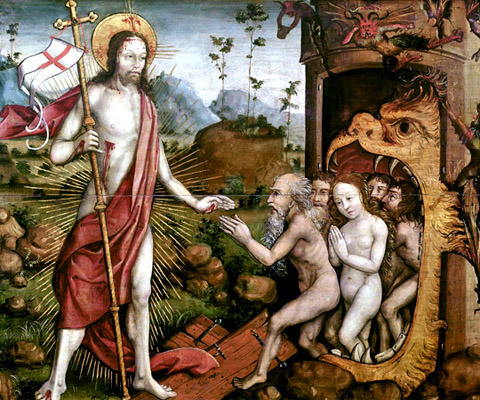
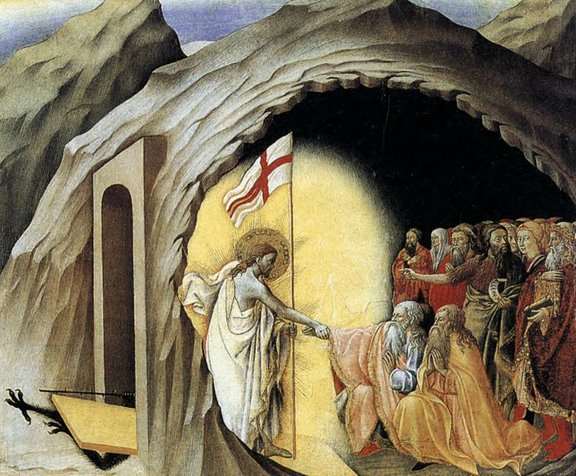
To deny reason and free will is heresy. Remember, Christ descended into hell, as stated in our creed, and released those who waited for His Redemption. Adam and Eve are the first who come to mind and we honor them as saints. 

Those in Judaism who accepted God's Law and revelation were also among those freed from hell. We call these men and women saints-Judith, Esther, Ruth, Joshua, Jacob, Abraham, Isaac, Moses, David, the prophets, the Maccabees, etc. 

They believed in the promise without the fullness of revelation. These were the righteous, being made so by faith. They believed in the revelation given to them. And, through the use of reason. 

Revelation and Reason--both God's gifts to us....


To be continued....


Monday, 2 September 2013

Last Post on The Dark Night-Post 50: The Cardinal Virtues

Well, at least for a long while...I shall take a break from discussing the Dark Night. But, in this last post, let me note what St. John of the Cross tells us, that all the virtues are liberated and come to the fore in the Dark Night, finally coming into a greater power in the Illumination state. But, this Dark Night is the time for the maturation of faith, hope and love especially.

I want to mention just a few significant aspects of the Dark Night concerning the cardinal virtues.

One, the Dark Night is a grace. One can and must ask for this. Many people do not realize what they are experiencing and become disheartened or depressed, which is not necessary and hinders the process of learning to trust in God. This trust is an act of faith. The cardinal virtue becomes operative at a new level, as one cannot see clearly. 

The Dark Night is the time of faith. Living in faith is easier when God strips all away.

As a grace, a time of grace, one who knows what is happening has the advantage of resting in God to finish the task of purgation. David allowed himself to be purged of sin, and Saul did not. One became humble, and one remained proud. One became obedient, and one remained a rebel to the end. One accepted the truth and one did not. One king lived in faith, and the other lost his faith.

Two, one cannot become holy without suffering and in this suffering, hope is born. Suffering rids us of all that stands between us and God. Cooperating with suffering and becoming humble in the face of suffering is contrary to what most modern people think. One may feel alone in this suffering. Therefore, knowing that God is in control is of the utmost importance. Saul thought his suffering was all punishment from God, but he did not repent. He missed the point of redemption. He lost hope. Hope follows faith, and is the virtue which brings us confidence in what is not seen.


Three, the Dark Night brings self-knowledge and love. David loved God, but had to come to terrible self-knowledge before that final union of God could occur. He had to see his innermost evil and no longer lie to himself. Remember, he had a heart that was willing to be changed. Because of his great love for God, which overcame self-love and attachments to others, he finally came into union with Love, Who is God.

Timing is entirely up to God and as one learns both real patience and humility in the Dark Night, one can expect some length of time to be involved. However, I have known young people, in their early twenties or thirties, move through these stages of purgation fairly quickly, accepting suffering and resting in God.

The remembrance that God seeks us out to love us gets one through the hard times. God is always seeking us, but in the Dark Night, He changes the milestone.

St. John of the Cross is more clear on this stage than St. Teresa of Avila, simply because he has the theological and philosophical background to make it less mysterious and more accessible to the mind.

John explains what Teresa describes. Both are good,

St. David in the Psalms explains and describes his journey of purification, understanding this time of darkness moving into light. The fact that David could move from sin, to repentance, to the acceptance of suffering and judgment, to the realization that his sin was against God alone, to knowledge of his entire sinful state, to the understanding of the justice of God, and then to the knowledge of His deep mercy, are stages of intense spiritual growth. David ends up walking in faith and praising God, hoping, trusting Him and living in the Love Who is God.

Notice how that movement involves faith, hope and love, the cardinal virtues used and liberated in the Dark Night of the Soul,  a movement seen in this famous psalm of David.

Psalm 50 Miserere. The repentance and confession of David after his sin. The fourth penitential psalm. Douay Rheims


[1] Unto the end, a psalm of David, [2] When Nathan the prophet came to him after he had sinned with Bethsabee.
 [3] Have mercy on me, O God, according to thy great mercy. And according to the multitude of thy tender mercies blot out my iniquity. [4] Wash me yet more from my iniquity, and cleanse me from my sin. [5] For I know my iniquity, and my sin is always before me.
[6] To thee only have I sinned, and have done evil before thee: that thou mayst be justified in thy words and mayst overcome when thou art judged. [7] For behold I was conceived in iniquities; and in sins did my mother conceive me. [8] For behold thou hast loved truth: the uncertain and hidden things of thy wisdom thou hast made manifest to me. [9] Thou shalt sprinkle me with hyssop, and I shall be cleansed: thou shalt wash me, and I shall be made whiter than snow. [10] To my hearing thou shalt give joy and gladness: and the bones that have been humbled shall rejoice.
[11] Turn away thy face from my sins, and blot out all my iniquities. [12] Create a clean heart in me, O God: and renew a right spirit within my bowels. [13] Cast me not away from thy face; and take not thy holy spirit from me. [14] Restore unto me the joy of thy salvation, and strengthen me with a perfect spirit. [15] I will teach the unjust thy ways: and the wicked shall be converted to thee.
[16] Deliver me from blood, O God, thou God of my salvation: and my tongue shall extol thy justice. [17] O Lord, thou wilt open my lips: and my mouth shall declare thy praise. [18] For if thou hadst desired sacrifice, I would indeed have given it: with burnt offerings thou wilt not be delighted.[19] A sacrifice to God is an afflicted spirit: a contrite and humbled heart, O God, thou wilt not despise. [20] Deal favourably, O Lord, in thy good will with Sion; that the walls of Jerusalem may be built up.
[21] Then shalt thou accept the sacrifice of justice, oblations and whole burnt offerings: then shall they lay calves upon thy altar.
Now, I have written on all these points at length in the perfection series as well, but I just wanted to remind you of these simple truths with regard to the cardinal virtues.

Friday, 2 August 2013

Dark Night of the Soul, Part 19

As mentioned before in the perfection series, St. David himself is an example of one who knew this movement of the Holy Spirit. John of the Cross makes here the distinction between the dark night of the senses-the purification of the senses, and the dark night of the spirit, the purification of the spirit.
John of the Cross' texts are all from the same site.  One can see the overlapping of ideas and experiences with St. Teresa of Avila. But, whereas Teresa is more descriptive, John is more systematic.


6. And in order to prove more completely how efficacious is this night of sense, with its aridity and its desolation, in bringing the soul that light which, as we say, it receives there from God, we shall quote that passage of David, wherein he clearly describes the great power which is in this night for bringing the soul this lofty knowledge of God. He says, then, thus: ‘In the desert land, waterless, dry and pathless, I appeared before Thee, that I might see Thy virtue and Thy glory.’90 It is a wondrous thing that David should say here that the means and the preparation for his knowledge of the glory of God were not the spiritual delights and the many pleasures which he had experienced, but the aridities and detachments of his sensual nature, which is here to be understood by the dry and desert land. No less wondrous is it that he should describe as the road to his perception and vision of the virtue of God, not the Divine meditations and conceptions of which he had often made use, but his being unable to form any conception of God or to walk by meditation produced by imaginary consideration, which is here to be understood by the pathless land. So that the means to a knowledge of God and of oneself is this dark night with its aridities and voids, although it leads not to a knowledge of Him of the same plenitude and abundance that comes from the other night of the spirit, since this is only, as it were, the beginning of that other.
7. Likewise, from the aridities and voids of this night of the desire, the soul draws spiritual humility, which is the contrary virtue to the first capital sin, which, as we said, is spiritual pride. Through this humility, which is acquired by the said knowledge of self, the soul is purged from all those imperfections whereinto it fell with respect to that sin of pride, in the time of its prosperity. For it sees itself so dry and miserable that the idea never even occurs to it that it is making better progress than others, or outstripping them, as it believed itself to be doing before. On the contrary, it recognizes that others are making better progress than itself.


8. And hence arises the love of its neighbours, for it esteems them, and judges them not as it was wont to do aforetime, when it saw that itself had great fervour and others not so. It is aware only of its own wretchedness, which it keeps before its eyes to such an extent that it never forgets it, nor takes occasion to set its eyes on anyone else. This was described wonderfully by David, when he was in this night, in these words: ‘I was dumb and was humbled and kept silence from good things and my sorrow was renewed.’91 This he says because it seemed to him that the good that was in his soul had so completely departed that not only did he neither speak nor find any language concerning it, but with respect to the good of others he was likewise dumb because of his grief at the knowledge of his misery.