Recent Posts

Friday, 4 January 2013

Idea from Tina--on kings and things.........

I cannot, and most likely,  not see Les Miserables, however, I read the book a long time ago as a youth.

I would rather recommend The Scarlet Pimpernel, which I have written about on this blog.

To be Catholic is to be wary of some types of republican movements, especially the Godless French Revolution, which was greed in action.

As to monarchies, some were good and some were bad. No civil system is perfect, as we all only have one King, who is Christ the King and one queen, who is Mary, Queen of Heaven and Earth.

Now, if a King is a saint, fine, but even the prophets of the Old Testament warned Israel of Kings.

Samuel had words from God to say about kings, and we cannot deny the truths here. Although I abhor the French Revolution and do not want to see it glamorized, I cannot state that God wants monarchies. God wants nations to adore Him and to serve Him.

If I had to choose, I suppose I would chose a monarchy over the mob rule of democracy. I am a great fan and have taught de Tocqueville. Here are to quotations on which to chew.


1 Samuel:8:9-18: 


Now therefore hearken unto their voice: howbeit yet protest solemnly unto them, and shew them the manner of the king that shall reign over them. 
10: And Samuel told all the words of the LORD unto the people that asked of him a king. 
11: And he said, This will be the manner of the king that shall reign over you: He will take your sons, and appoint them for himself, for his chariots, and to be his horsemen; and some shall run before his chariots. 
12: And he will appoint him captains over thousands, and captains over fifties; and will set them to ear his ground, and to reap his harvest, and to make his instruments of war, and instruments of his chariots. 
13: And he will take your daughters to be confectionaries, and to be cooks, and to be bakers. 
14: And he will take your fields, and your vineyards, and your oliveyards, even the best of them, and give them to his servants. 
15: And he will take the tenth of your seed, and of your vineyards, and give to his officers, and to his servants. 
16: And he will take your menservants, and your maidservants, and your goodliest young men, and your asses, and put them to his work. 
17: He will take the tenth of your sheep: and ye shall be his servants. 
18: And ye shall cry out in that day because of your king which ye shall have chosen you; and the LORD will not hear you in that day.


Demoncracy in America--Chapter XV: Unlimited Power Of Majority,  And Its Consequences—Part II
Tyranny Of The Majority
How the principle of the sovereignty of the people is to be understood—Impossibility of conceiving a mixed government—The sovereign power must centre somewhere—Precautions to be taken to control its action—These precautions have not been taken in the United States—Consequences.
I hold it to be an impious and an execrable [execrable: extremely bad or unpleasant] maxim that, politically speaking, a people has a right to do whatsoever it pleases, and yet I have asserted that all authority originates in the will of the majority. Am I then, in contradiction with myself?
A general law—which bears the name of Justice—has been made and sanctioned, not only by a majority of this or that people, but by a majority of mankind. The rights of every people are consequently confined within the limits of what is just. A nation may be considered in the light of a jury which is empowered to represent society at large, and to apply the great and general law of justice. Ought such a jury, which represents society, to have more power than the society in which the laws it applies originate?
When I refuse to obey an unjust law, I do not contest the right which the majority has of commanding, but I simply appeal from the sovereignty of the people to the sovereignty of mankind. It has been asserted that a people can never entirely outstep the boundaries of justice and of reason in those affairs which are more peculiarly its own, and that consequently, full power may fearlessly be given to the majority by which it is represented. But this language is that of a slave. A majority taken collectively may be regarded as a being whose opinions, and most frequently whose interests, are opposed to those of another being, which is styled a minority. If it be admitted that a man, possessing absolute power, may misuse that power by wronging his adversaries, why should a majority not be liable to the same reproach? Men are not apt to change their characters by agglomeration; nor does their patience in the presence of obstacles increase with the consciousness of their strength. *c And for these reasons I can never willingly invest any number of my fellow-creatures with that unlimited authority which I should refuse to any one of them.
c
[ No one will assert that a people cannot forcibly wrong another people; but parties may be looked upon as lesser nations within a greater one, and they are aliens to each other: if, therefore, it be admitted that a nation can act tyrannically towards another nation, it cannot be denied that a party may do the same towards another party.]
I do not think that it is possible to combine several principles in the same government, so as at the same time to maintain freedom, and really to oppose them to one another. The form of government which is usually termed mixed has always appeared to me to be a mere chimera. Accurately speaking there is no such thing as a mixed government (with the meaning usually given to that word), because in all communities some one principle of action may be discovered which preponderates over the others. England in the last century, which has been more especially cited as an example of this form of Government, was in point of fact an essentially aristocratic State, although it comprised very powerful elements of democracy; for the laws and customs of the country were such that the aristocracy could not but preponderate in the end, and subject the direction of public affairs to its own will. The error arose from too much attention being paid to the actual struggle which was going on between the nobles and the people, without considering the probable issue of the contest, which was in reality the important point. When a community really has a mixed government, that is to say, when it is equally divided between two adverse principles, it must either pass through a revolution or fall into complete dissolution.
I am therefore of opinion that some one social power must always be made to predominate over the others; but I think that liberty is endangered when this power is checked by no obstacles which may retard its course, and force it to moderate its own vehemence.
Unlimited power is in itself a bad and dangerous thing; human beings are not competent to exercise it with discretion, and God alone can be omnipotent, because His wisdom and His justice are always equal to His power. But no power upon earth is so worthy of honor for itself, or of reverential obedience to the rights which it represents, that I would consent to admit its uncontrolled and all-predominant authority. When I see that the right and the means of absolute command are conferred on a people or upon a king, upon an aristocracy or a democracy, a monarchy or a republic, I recognize the germ of tyranny, and I journey onward to a land of more hopeful institutions.
In my opinion the main evil of the present democratic institutions of the United States does not arise, as is often asserted in Europe, from their weakness, but from their overpowering strength; and I am not so much alarmed at the excessive liberty which reigns in that country as at the very inadequate securities which exist against tyranny.
When an individual or a party is wronged in the United States, to whom can he apply for redress? If to public opinion, public opinion constitutes the majority; if to the legislature, it represents the majority, and implicitly obeys its injunctions; if to the executive power, it is appointed by the majority, and remains a passive tool in its hands; the public troops consist of the majority under arms; the jury is the majority invested with the right of hearing judicial cases; and in certain States even the judges are elected by the majority. However iniquitous or absurd the evil of which you complain may be, you must submit to it as well as you can.

Thursday, 3 January 2013

Letter to Mothers of Priests and Seminarians

CARDINAL MAURO PIACENZA WRITES TO MOTHERS OF PRIESTS, SEMINARIANS Prefect for the Congregation for the Clergy Notes Role of Family in Forming Vocations Ann Schneible ROME, January 3, 2013 (Zenit.org). Writing on the occasion of the solemnity of Mary Mother of God (January 1), Prefect for the Congregation for the Clergy, Cardinal Mauro Piacenza, addressed a letter to mothers of priests and seminarians. "In welcoming the Eternal Word into her immaculate womb," he wrote, "Mary Most Holy gave birth to the Eternal High Priest, Jesus Christ, the only Savior of the world… By adhering to God's Will, Mary participated in a unique and unrepeatable way in the mystery of our redemption, thereby becoming the Mother of God, the Gate of Heaven and the Cause of our Joy." Cardinal Piacenza continued: "In a similar way, the entire Church looks with admiration and deep gratitude upon all mothers of priests and of those who, having received this lofty vocation, have embarked upon the path of formation." Cardinal Piacenza noted the role of the family in helping young men to be receptive to the call of the priesthood. In particular, he continued, "the participation given to mothers of priests is quite unique and special. For unique and special are the spiritual consolations which they derive from having carried in the womb one who has become Christ's minister. Indeed, every mother cannot but rejoice in seeing the life of her son not only fulfilled but also clothed with a most exceptional divine favor which embraces and transforms it for all eternity." Even though the separation between a mother and her son is more "radical than any other separation," he continued, "the Church's two thousand years of experience teaches us that when a man is ordained a priest, his mother 'receives' him an a completely new and unexpected way; so much so that she is called to see in the fruit of her own womb a "father" who by God's will is called to generate and accompany a multitude of brothers and sisters to eternal life. Every mother of a priest mysteriously becomes a 'daughter of her son.' Towards him, she may therefore also exercise a new motherhood through the discreet yet extremely efficacious and inestimably precious closeness of prayer, and by offering of her own life for the ministry of her son." "This new 'fatherhood' - for which the Seminarian is prepared, which the priest has been given, and which benefits all God's People - needs to be accompanied by assiduous prayer and personal sacrifice, in order that a priest's free adherence to the divine will may continually be renewed and strengthened, that he may never tire in the battle of faith, and that he may unite his own life ever more completely to the Sacrifice of Christ the Lord." Cardinal Piacenza concludes: "Mothers of priests and seminarians thus represent a true and veritable 'army,' which from earth offers prayers and sacrifice to heaven, and from heaven intercedes in even greater number so that every grace and blessing may be poured out upon the lives of the Church's sacred ministers."

Trust in God

Today a priest in Malta, who has never seen me before, confirmed two aspects of the call of my life which I clearly discerned while praying during those months in the monastery. It is humbling to know that the Holy Spirit moves in His holy priests in order to guide us. I gave the priest absolutely no information, and yet, he read my soul. He knew nothing of my quest in prayer, nor my writing. He spoke purely from the Holy Spirit. I have been told he is a holy priest, although young. He is more orthodox than most. My vocation is my penance for the rest of my life. Imagine being given your vocation as penance. I was so stunned, I had to ask him to repeat what he said.

 Now that I know the big overall plan, I must trust in Divine Providence to work out the details. I do not have the ability to do such. First, I am called to intense daily prayer, specifically contemplative prayer. Contemplative prayer is a combination of struggling with one's humanity, the old man, and daily entering into the Love of God. This means living in strict simplicity, relying completely on Divine Providence and being not conforming. I have known this for a long time but could not see how it fit in the world.

 So far, so good. Allowing God to take one deeper into prayer is usually the call of the contemplative nun, and all of us to a certain extent, as necessary for perfection a la my long series. But, here is the second part of this call of mine.....Hosea 4:6...My people are starving for want of knowledge. This is the real reason God sent me out, as He could have given me strength for the schedule, had it been His Will. I clearly discerned before the Blessed Sacrament....my people are starving, feed my lambs, feed my sheep. And, a stranger, a priest in Malta plus a writer, and the Holy Spirit, confirmed these inspirations. I must pray many hours of each day, write, and blog.

God will have to take care of the physical details, but at least now I can stop wasting time looking for the ministries God is not calling me to do. Prayers, please, dear readers. The where and how take great trust in God.

Comedy and Tragedy--for Sarah, four


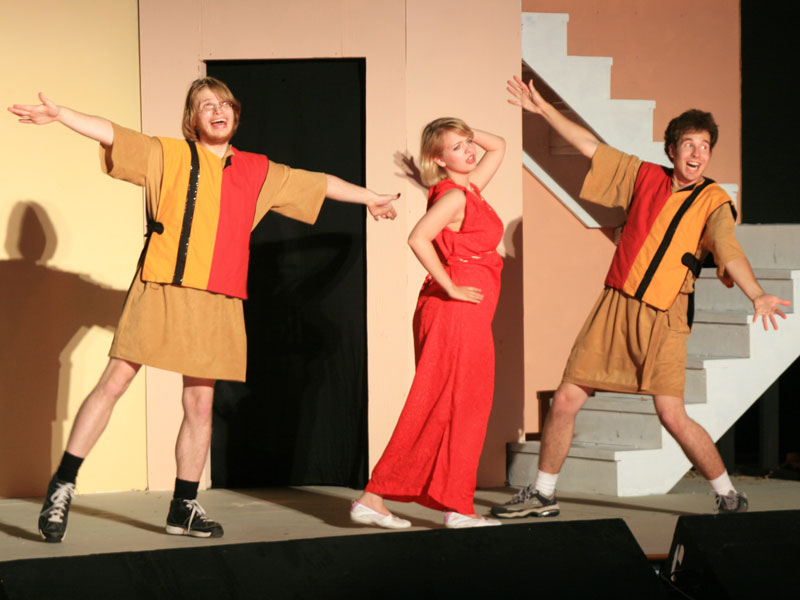
Aristophanes was making fun of something in The Clouds. His play is the first in the world which is a comedy of ideas. Can you imagine if Aristophanes had not invented this form? In the play, a man places his son in an academy called a "thinkery", the "Phrontisterion"to learn how to think because he is in debt to many creditors. Ah, if we had such schools today. But, I digress. And, the school fails miserably  but that is another discussion.

The point of the comedy was to make fun of the intellectual life of Athens. It would be as if we were writing a play about the Nobel Prize committee. What is the point of comedy? To shine a light on the foibles of humans, on revealing the silliness of some societies in certain areas and to correct by fun.

That this play was not popular at first is obvious. Who wants a social critic in the capitol? But the point of the artist, and in this case, one of the best in the world, is that we must look with love and reality on ourselves in order to better ourselves.

It is not an anti-intellectual play, but criticizes the false use of intellectualism. Also, in the original, it is thought that the Clouds, the deities who are the patrons of thinkers, came in singing, like chorus girls. Hence, the making of this play into a musical.

If we cannot laugh at ourselves, we are doomed to extinction. I always thought the dinosaurs ended their long reign because they could not smile or laugh. But, then, they had no immortal souls. Those of us who are artists must be able to stand back and laugh. Not merely in derision, but in the quiet knowledge that we all fall short of the glory of God.

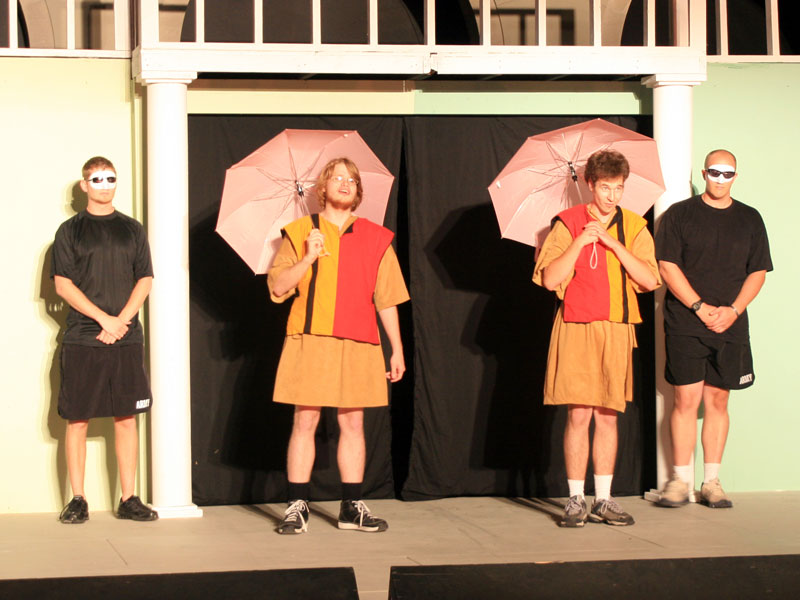
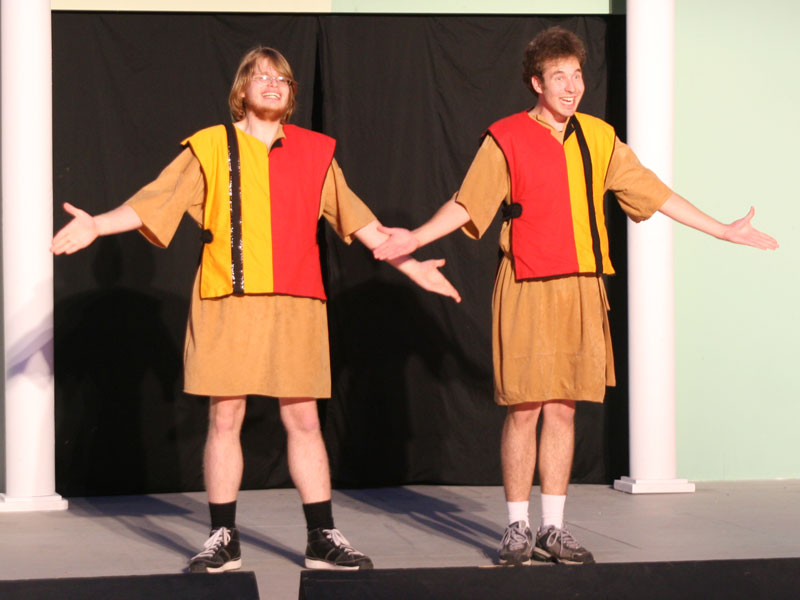
By the way, in the Genesius production, Plato was added to the philosopher Socrates just for fun.......


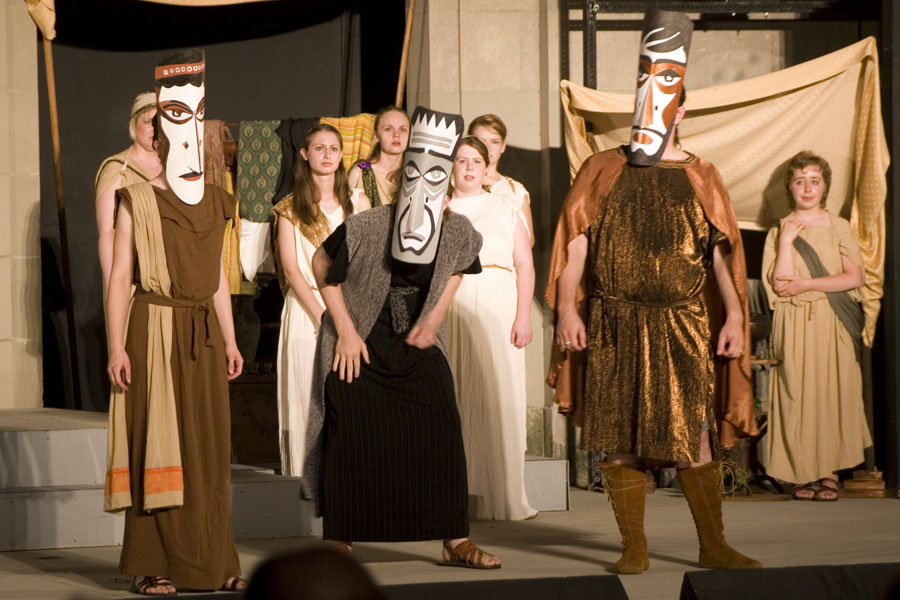
Supertradson on the left; 2008
Supertradson second from left as Plato in The Clouds
Supertradson as Plato in The Clouds; 2008


Art and the eternal--for Sarah, three

Supertradson  is on the right


The idea that societies can be secular and survive is a myth. Even the great ancient civilizations, such as Assyria, the Alexandrian Empire, Greece, Rome, China under the emperor, Japan under the emperors, etc., had religion as the cohesive bond of the people.

All civilizations have art, as both an expression of nationalism or empire and as an expression of religious belief.

The civilizations to which I refer had a center of power and money, an army and a religion which bond the people together in a common vision.

Supertradson is on the right


Art comes from vision. Although the artist is the prophet is an society, but only if he is religious, he must speak to a people, a community, who can understand his language, whether that of poetry or painting or sculpture or drama.

Greek drama is still some of the most sublime in the world, revealing the depth of human psychology, growth and death more than perhaps any drama in world history. That we still watch and learn from Aeschylus, Sophocles, Euripides and others is the triumph of a civilization which because it was tied to religion was tied to universal truths.

Only universal truths, the shared natural law and shared dreams of humans are worthy of art.

Supertradson is in the middle


Some individualists want to destroy the vision of what it means to be human. We are not merely animals, but animals with immortal souls.

The role of the artist is to hinge the inspiration involving that immortality with the universal experience of all men and women.

Why are some plays "eternal"? I can watch Seven Against Thebes or the Oresteia, or the Oedipus Cycle endless times, learning something about myself and others each time.

The artist who is in touch with the universal is in touch with his soul.


David Jones wrote of the great break, which he claimed was the First World War, which split the West not only nationally or internationally, but caused the great schisms of imagery and metaphor.

We no longer understand each others language. Why study Gawain if the Chalice of Christ is not important and if purity is no longer a desired virtue?

The artists who want to ignore the universal do so at their own peril. Art, like all work, life anything "techne" has a purpose. The purpose is not merely entertainment but the revealing of the human soul for the purpose of exhilaration and growth.

To see art as merely a means of personal healing or personal engagement with the world is like taking a newborn baby and putting him in a dark room, denying him the experience of others and the world God created. The universal experience of life is not all negative and those who are wounded can decide to break out of the dark room in to the light by looking at their brother and sister artists.

Read, watch, learn, study, pray, make...........create something other than yourself.

That is what Satan does, create things in his own image and likeness and that is death.

Supertradson is on the right


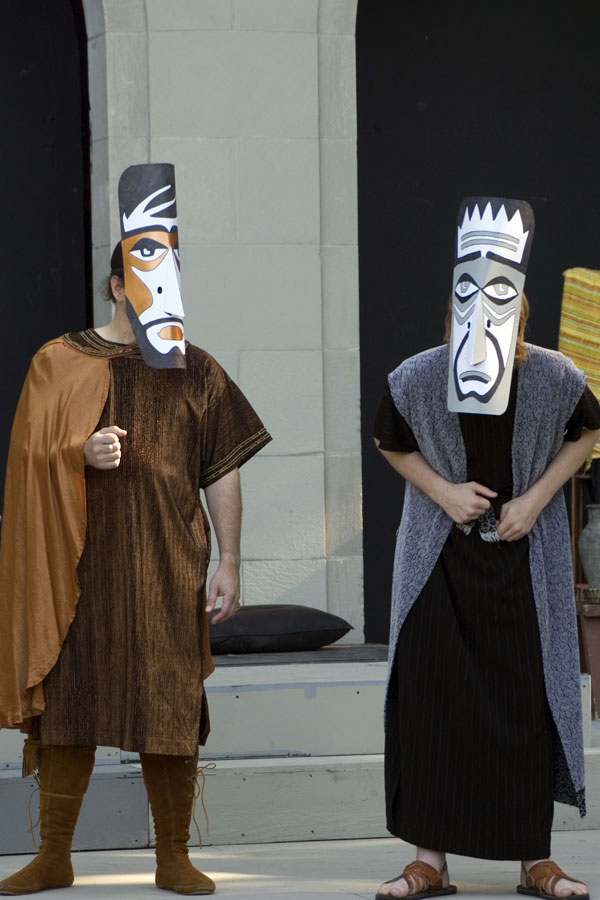
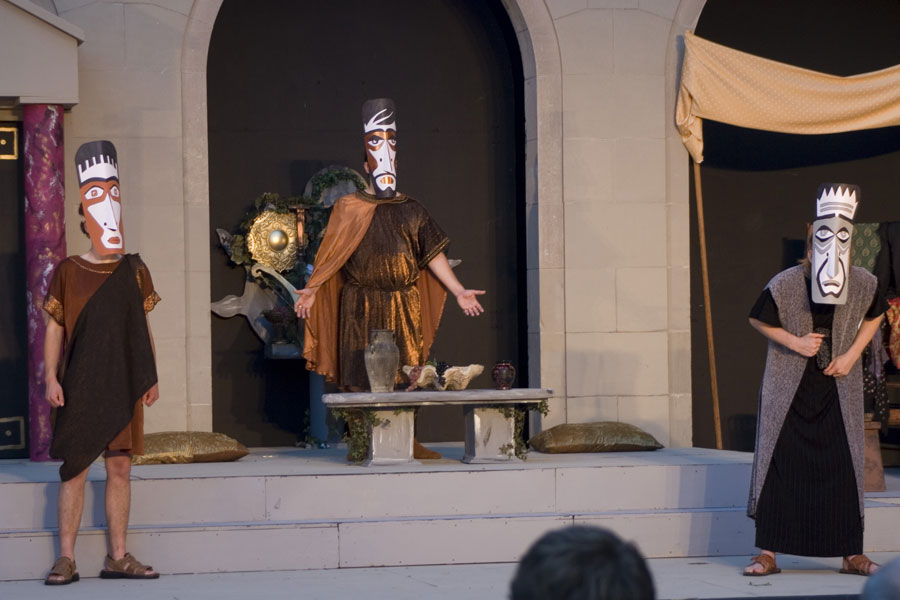
By the way, the Genesius Guild in Illinois in the Quad Cities is the only drama group which uses the traditional masks yearly in the summer stock. My own son has played in Aeschylus.  Sometimes one must celebrate the honor of the human experience in both tragedy and comedy.

Supertradson is on the right
Art explores and celebrates. It helps us understand who we are and where we are going. It is universal and spiritual, if the artist is in touch with his soul.


The Memorial of the Holy Name of Jesus


Today is the memorial of the Holy Name of Jesus. This day celebrates the Name given by the angel from God the Father.

The Word Made Flesh was given a sacred name meaning Saviour. The root is Joshua, the great warrior, strategist, leader, prophet and priest of his people.

 He was a type of Christ. Christ has both a human and sacred name. And, when we love someone, is not that person's name numinous?

 I remember being eighteen and writing the name of my favorite boyfriend over and over in calligraphy. Do we, for various rational and emotional reasons, for reasons of family, not love certain names?

 Love the Name of Jesus. Love Him above all else.

Prayers and Winter in Iowa

Today is my birthday, and the 65 wedding anniversary of my dear parents, who are alive, well, active and quite independent. I ruined my parents anniversary by coming early. I am always early for things, even today. Offer them a prayer and congratulations for being such a good couple, and for the fact that they passed down the Holy Catholic Faith to me.

Please pray for me, as a strange situation has occurred in my life here and it needs a positive resolution. Ah, but what is new?


Wednesday, 2 January 2013

On kindness

The nuns had a retreat day a week or so ago on the theme of kindness. Now, in an enclosed order, kindness may be the most important virtue, stemming from forgiveness, that a person may bestow on others. Daily, we sin against each other merely out of our weaknesses and imperfections, not malice. One nun reminded me that the strong in spirit must always be kind to those who are weaker. Seeing myself mostly in the weak category, I realized that any strength I did have was solely from graces. Because I am so pitifully weak, I must rely on God for everything. Any strength I have is directly from trusting completely on Divine Providence alone. Some people hate me and others for this confidence. Seriously, I have met those who want me to be miserable in poverty. I am so sorry for radiating joy in need..not really...I am not sorry. Those in joy irritate the grasping and greedy, who want the joy but not the suffering. I may be on a day-to-day schedule in God's Hands, and I am joyful. To those who want me to be miserable I can only say, trust in God. The joy wells up and overcomes fear. But, this joy only comes with ridicule, criticism, false judgement and marginalization. The crabby ones want me to join in their unhappiness. Sorry, give me the mattress on the floor and a cheerful heart, give me kindness to those who hate and disdain me. You can have it all and have an empty heart. I shall be kind to those in darkness. And, believe me, those in darkness, hate the light.

For Sarah, Two

A, a, a, DOMINE DEUS

I said, Ah! what shall I write?
I enquired up and down.
(He’s tricked me before
with his manifold lurking-places.)
I looked for His symbol at the door.
I have looked for a long while
at the textures and contours.
I have run a hand over the trivial intersections.
I have journeyed among the dead forms
causation projects from pillar to pylon.
I have tired the eyes of the mind
regarding the colours and lights.
I have felt for His wounds
in nozzles and containers.
I have wondered for the automatic devices.
I have tested the inane patterns
without prejudice.
I have been on my guard
not to condemn the unfamiliar.
For it is easy to miss Him
at the turn of a civilisation.
I have watched the wheels go round in case I might see the
living creatures like the appearance of lamps, in case I might see
the Living God projected from the Machine. I have said to the
perfected steel, be my sister and for the glassy towers I thought I
felt some beginnings of His creature, but A,a,a, Domine Deus,
my hands found the glazed work unrefined and the terrible
crystal a stage-paste . . . Eia, Domine Deus.
David Jones, in The Sleeping Lord and Other Fragments (1974)


The problem with artists since the Impressionists, is that artists have become increasingly separated from the classical training and from understanding the role of the intellect in art. Anti-intellectualism is the bane of Western Culture in 2013, bringing us to the gross relativistic attitude that art is merely the immediate expression of the particular artist, or, worse, propaganda.

The first was highlighted for me as long ago as 2002, when a radio interviewer sought out a young artist at the Toronto Art Expo (http://www.torontoartexpo.com/), who blatantly claimed that if she splashed or hit mud on a board one morning, as she felt like doing that, the piece was "art", as it was an emotional expression of who she was at that moment in time.

The radio interviewer was "gob-smacked" and I just laughed out loud, pointing out the relativistic  individualistic heresy to my son, who was standing in the kitchen waiting for pizza. The artist as prophet was dead in Toronto, and instead we heard the artist as arch-narcissist. Who cares who she felt one fine morning in Canada, if the result of her expression was not only ugly, but totally anti-intellectual?

OK, I shall get negative feedback on this one, as artists too often defend their private revelations as an expression of the zeitgeist.  I would hope that artists would lead us OUT of the zeitgeist into the world of transcendent Beauty and Truth, but I am an idealist.

So, the anti-intellectuals see art as almost the private interpretation of realities, when in reality, they may be only speaking to the few who are living only in their passions and on the emotional levels of existence, or worse, those who just do not give a d.... and want the latest painting of the most popular artist in their living rooms. "I have a ......." someone said to me recently. I was not impressed.

Anti-intellectualism kills real religion and real art, dead. Without engaging the brain, the rational, the logical and the analogical, one is doomed to boring repetitions of crayon drawings on the kindergarten walls of the world's schools.

You know this ALL STARTED with private interpretation of the Bible. Then, we had reader-response to great novels, and personal interpretations of poetry and essays, rather than studies of form and content.

Thank God for Ezra Pound, T. S. Eliot and my favourite, David Jones, for spotting the problems early and attempting to stem the tide of macpoetry. That they did not succeed is merely a symptom of the age of advertising, commercialism and the death of the religious spirit in art.

If an artist separates the spiritual and the historical, the cultural and the contextual from his art, he will fall into
schizophrenia, the breakdown of the connection between the real and the emotions, and for the artist, this is death. We have enough of this type of art, from the early 20th century on...we do not need more. We know what the problem is....

To be continued....

For Sarah, Part One


I promised a friend I would write on the Illative Sense in Newman with regard to my idea that poetry and other forms of art appeal directly to this sense. I am writing a longer piece on this and it was part of my dissertation which I have temporarily set aside until I get more funds to continue. Let me explain. For Newman, his Illative Sense is the part of the mind, or even the soul, which bridges the logical, ratio, ability to understand God and religious principles, especially absolute truths and commitment to that truth, or assent to that truth. He describes this ability, or sense as the leap of belief, when the rational part of us is incapable of fully apprehending basic truths about God. He does not believe that the rational ability of man can apprehend or define God, the great effort of Anselm and Aquinas, but rather that there is in us this bridge which leads to the "yes" of faith. I have been thinking for years that art and artists have this Illative Sense built into their psyches and into the process of art. Why do I think this? In the process of art, one works with the material of one's art. If it is painting, the tools, the paint, canvas or whatever and the creative process are necessary for the art to occur. But, in the aesthetic process, there is a mysterious interplay of personal inspiration, the very word indicating a movement of the spirit of a person, and the materials. And, in a true artist, not a commercial artist or a propagandist, the pursuit of Truth and Beauty allow the artist to enter a transformational  creative state, which is usually labelled the aesthetic sense.

However, there is something else happening here, which is the mysterious bridge between the soul and the mind of the artist, a bridge between the spiritual realities which the artist tries to absorb and concretely communicate and the spiritual sense. I think that Newman's Illative Sense may be part of this bridge. In other words, the very thing which leads us to a higher form of thinking, regarding religion, that part of being human which demands an absolute commitment to Truth and Beauty (and if an artist denies or departs from this he is a charlatan and fake), he is denying the real source of the inspiration. To be inspired is what the Greeks understood as the appropriation of the daemon, or the taking over of the soul by some mysterious muse or muses, who almost made the artist into a superman, a person who transcends his own self in order to create. This is called poesis and mimesis. Poesis properly only belongs to God, as it is creating ex nihilo and mimesis is the creating from the mirror of nature. We can only copy and our art works are a pale reflection of all Beauty and Truth. Aristotle, in Nicomachean Ethics, one of my favorite books, uses the term phronesis to mean practical wisdom. Some critics have seen this as prudence and others as merely wisdom. Prudence is the virtue we Catholics receive in Confirmation, if we really receive that sacrament in grace and is the application of the mind and soul of wisdom to ever day events and discernment. However, in the use of the rational mind, we make such leaps immediately or with due process of rationalization, but in areas of religious impetus, with what Newman calls the Illative Sense. The artist more than other people by nature, by gift and perhaps by temperament, uses his intellect with the added gifts of prudence and inspiration. I think this movement of the spirit and the Spirit may be either the same or overlap in the Illative Sense.

The movement of the artistic process must include a spiritual awareness which bridges the rational with the affirmation of belief. One who is an artist knows, just knows, when something is right and true about his art. If it is not true, one starts over again, working both with the material and the inspiration. But, the capacity to sense what is true, good and beautiful may rest in this Illative Sense, the same thing which brings one to accept a truth of the Church or an attribute of God with which one is struggling.


 To be continued... copyright 2013

Short post, serious thought

The TLM is a better Mass for the laity; because of the silence, it teaches meditation and contemplation. The NO, emphasizing the exterior, destroys this ability and keeps lay persons from appropriating adult levels of faith. One cannot enter into or follow the three stages of the interior life without cultivating silence and interior awareness

The Year of Faith.


I have been so caught up with life that I have not written a post on the excellent call to consider the true Faith and to ask for the gift of faith in this Year of Faith. Faith means many things to many people, and some people claim they do not have any faith, but all humans believe in something, even if it is not religious in content. One can believe in unseen realities told to us by scientists, politicians and even the medical community, believing without seeing or even understanding. This is an aspect of faith.

One can believe in one's own self and have confidence in unseen talents or abilities or even passions in the soul. One believes in one's friends. One believes in one's football team. In this Year, one can face the need for the adult appropriation of the Faith. At a certain age, it is the responsibility of each person to understand and believe in the faith because it is one's own and not belonging to either a parent or a priest. A priest in Ireland told me recently that the reason the Irish have lost their faith is that they stayed at a child-like faith level and did not read or study or pray into their maturity.

In this Year of Faith, please help those around you come to their own appropriation of the Faith through faith, hope and love.

Tuesday, 1 January 2013

The artist as prophet

Popular among the Romantic Poets in England and their Trancendentalist comrades in America, was the idea that artists, be they painters, writers, poets or musicians, were prophets in society. Their duty was to bring the increasingly dull populace, enamored with money and industry, back to the love of nature through metaphor and simile. I would like to turn this secularist idea on its head and say that the prophets, especially those in the Old Testament, were artists. We can see this in the Christmas season with the singing of the beautiful words of Isaiah and David, as well as some of the minor prophets. The problem with so many modern artists is that they see art purely as self-expression, surprise, surprise, and forget that mimesis is the mirror of poesis, which is found alone in God, the only real creator ex nihilo. We artists imitate and if we love God Who is Beauty, we shall be prophets. Without love, there is no true art, merely propaganda. Without love, there is no true prophecy. To be continued...

Social Engineering

Well, applying for jobs and having some discussions with Catholic employers, including diocesan gurus, I have discovered the tyranny of the EU regarding sponsorship. Religious orders, as well as parishes, and dioceses no longer can take postulants, seminarians or employees from non EU countries without going through a long process that may not end up with a positive issue. That men cannot come from Viet Nam, where so many seminaries have either been closed or have strict government quotas, is only one example. When did Great Britain and Eire lose their sovereignty? Rhetorical question.

New Year Reflections

One of the challenges in evangelization is knowing when to give up and move on. In this world, too often we hang around a dead corpse, lamenting death, when starving people, hungry and open, are waiting for food. In Europe and in America, dioceses, parishes, priests, and lay persons keep defending the rotten schools called Catholic. I cannot discuss with some priests, and have not been able to do so for twenty-five years, the fact that so many teachers and educators have not been asked to make the oath and promise. Or why taking money from corrupt governments who control curriculumm is a good...it is not.I have a Master Teaching Certificate from NAPCIS. Look it up and make some resolutions about what you really want to support...a real Catholic school or a fake one. It is merely pride to pretend something is what it is not.

Happy Feast Day, Mary


We love you, dear Mother of God and ask your intercession.

More honorable than the Cherubim, and more glorious beyond compare than the Seraphim, without corruption you gave birth to God the Word: True Theotokos, we magnify you.

Monday, 31 December 2012

Well, yet another Gramsci post; without the Spirit, the intellect stagnates and dies

Did philosophers and revolutionaries honestly believe that humans can be intellectuals without the life of the Spirit? Did and do they honestly want a better life while denying the soul?

Some critics of the Church since the Enlightenment state that the teachers and Popes did not address the modern issues of politics, science and modernism. This is a misunderstanding of the times and the teachings. Since the publication of Marx and Engels, the Church has been on the offensive, not the defensive regarding teaching concerning the effects of tyrannies, the materialists dialectic and the supposed war between the classes. All the popes since 1848 have addressed these ideologies. The problem has been in the implementation at the local levels of the clarity of the Teaching Magisterium.

Why? Many priests fell into error and carried those errors into the pulpit for the last two-hundred years. Many priests and even bishops themselves were and are communists and push for that version of a world-view, based on materialism, rather the the spiritual message of the Kingdom of God.

As laity, it is our duty to take care of our brothers and sisters in poverty or troubles.

Gramsci was clear that the Church was the only institution to understand what he and other revolutionaries wanted in the culture wars and the destruction of Western civilization, itself created largely by Christendom.

Here is one of  his quotations. Gramsci understood that both Faith and Reason were held together in the Catholic Church, that Revelation and the Teaching Magisterium provided a cohesive block against the fragmentation of society.

The strength of religions, and of the Catholic Church in particular, has lain, and still lies, in the fact that they feel very strongly the need for the doctrinal unity of the whole mass of the faithful and strive to ensure that the higher intellectual stratum does not get separated from the lower. The Roman church has always been the most vigorous in the struggle to prevent the “official” formation of two religions, one for the “intellectuals” and the other for the “simple souls” … That the Church has to face up to a problem of the “simple” means precisely that there has been a split in the community of the faithful. This split cannot be healed by raising the simple to the level of the intellectuals  .... but only by imposing an iron discipline on the intellectuals so that they do not exceed certain limits of differentiation and so render the split catastrophic and irreparable. 

Catholic intellectuals, including the laity, have a duty to combat the lies of the ideologies which have almost overcome the concepts of freedom and individualism. Our definition of the individual is not that of the socialist.  We are unique creatures, each one having a purpose, not to be subsumed by the bloated government. 

Those who are the enemy delight in the fragmentation of society, and society is built on natural, moral law and not the laws of men. This is the key to the strength of the Church...that we have recognized that man-made structures are doomed to tyranny and/or chaos.

Tyranny will come to America and chaos to Europe for the purposeful loss of the culture wars has occurred. 

That Gramsci only saw the discipline of the Church as evil, rather than a guideline of the Holy Spirit intended to persevere Truth mirrors his own lack of Faith and Reason. 

The man or woman who will not bend to God, will not bend to the Church. Humility in scholarship is key.

We are on the edge, as most people will choose material comfort over truth. This is the sad decline of the human spirit. The remnant Church holds the real intellectual unity of a society, which Gramsci wanted through his groups of intellectuals at all levels.

Of course, this burgeoning of intellectual life has not happen, and in fact, societies are less intellectual now than in the recent past. Atheism makes one closed to the entire spiritual world, and therefore, the world of creativity and newness.

There has been a split in the Church, but not the one mentioned in the above quotation. The real split is between those who see the Spirit working in the Church and those who want to make the Church into their own image and likeness, into their own ideological institution. Hence, the liberal intellectuals have sold out to the Gramscian ideal of "intellectualism" but separated from the soul.

This state in a person or government is suicide. The intellectual gifts are connected to the spirit of man and woman, to the soul, to prayer and illumination.

Gramsci's material mind-set could not imagine an institution which is actually empowered by  GOD HIMSELF.  That the Trinity dwells in each baptized Catholic and that there is insight and intellectual freedom partly defines us as made in the image and likeness of God.

Gramsci wanted men and women to be made in his image and likeness--and that is the primal sin of the angels; I will not serve.

Without the Holy Spirit and the individual free spirit of men and women, the intellect dies.

We are in that stage of Western Civilization. At the end of the year, we can only look forward to making ourselves and our families strong against the Gale of Stupidity and Barbarism which will engulf some reading this in their lifetime.


The passing of a year


For some, the passing of the year is a sad time, as the dying year brought love and life. Sometimes a fear or dread of the future covers this day and evening. Some go to parties or dances to celebrate a new year of life and light. Some go to forget a painful year. Some just go for the diversion. But, at the passing of 2012, I think most Americans can stop and think that as Catholics we have lost the culture war and must try either to regain our battle strategies, or, choose another path of resistance to the growing evil. That evil is growing can only be denied by those who will go out tonight for diversion from the pain of reality. Christ lived in real time and real history. He is the God-Man who came into time to redeem the time and us, as well as all of nature. If we cooperate with Christ's grace and vision and truth, this day would mean another time of reflection and a hope for new life. New life most probably will not be material. New life must be spiritual and interior. This day, stop and have an examination of conscience. Look at the good and bad of the year and resolve to pray more, adore more, and allow Christ to change you, so that you can face the years to come. These will not be pleasant.

The Generation Gaps

Entering a new year, in which a few days I shall have a birthday,and meeting wonderful people who have family and love each other across four generations, I am struck by the numerous generation gaps. The gaps are not based on age but on experience and technology. I have friends in their sixties and seventies who are on line, on facebook, read blogs, text and email each other. I have other friends in the same age group who do none of these things. Sadly, they are cut off from a generation or three who communicate using technology...but more than that, these good people are unaware of a strong conservative movement online...one which is both political and religious. More and more international contacts are "on the same page" in these spheres. The dangers to the Catholic Faith, especially the clergy, and the real enemies of national identities and freedom control the traditional media. Herein lies the "knowledge gap". This is a huge part of the generation gaps....where we find truth or lies...where we encourage truth. The remnant Church in all countries of our glorious universal Church need to band together. Ironically, even the international groups of anarchists are more united than some Catholics.

The Masterpiece in Malta-The Beheading of St. John the Baptist by Caravaggio