Recent Posts

Monday, 9 December 2013

Doctors of the Church 2:17

Wednesday, 13 February 2013

Part Eighteen on Doctors of the Church and Perfection: St. Francis de Sales

Here is a section on imperfection from St. Francis de Sales. Tomorrow, the Dominicans, but this great saint of love is worth reading. 

Thus Saint Jerome says that Saint Paula had so strong a tendency to excessive sorrow, that when she lost her husband and children she nearly died of grief: that was not a sin, but an imperfection, since it did not depend upon her wish and will. Some people are naturally easy, some oppositions; some are indisposed to accept other men's opinions, some naturally disposed to be cross, some to be affectionate--in short, there is hardly any one in whom some such imperfections do not exist. Now, although they be natural and instinctive in each person, they may be remedied and corrected, or even eradicated, by cultivating the reverse disposition.

The reverse dispositions are the key.

For example, if one is talkative, be more silent. If one is prone to negativity, be more positive; if one is prone to be overly-affectionate and clinging, be more objective; if one is disposed to be judgemental, be more accepting and kind

Not rocket science...but we need graces and God is only too happy to give us such if we ask. 

Here is more on perfection from the great saint.


1. Prayer opens the understanding to the brightness of Divine Light, and the will to the warmth of Heavenly Love--nothing can so effectually purify the mind from its many ignorances, or the will from its perverse affections. It is as a healing water which causes the roots of our good desires to send forth fresh shoots, which washes away the soul's imperfections, and allays the thirst of passion.

2. But especially I commend earnest mental prayer to you, more particularly such as bears upon the Life and Passion of our Lord. If you contemplate Him frequently in meditation, your whole soul will be filled with Him, you will grow in His Likeness, and your actions will be moulded on His. He is the Light of the world; therefore in Him, by Him, and for Him we shall be enlightened and illuminated; He is the Tree of Life, beneath the shadow of which we must find rest;--He is the Living Fountain of Jacob's well, wherein we may wash away every stain. Children learn to speak by hearing their mother talk, and stammering forth their childish sounds in imitation; and so if we cleave to the Savior in meditation, listening to His words, watching His actions and intentions, we shall learn in time, through His Grace, to speak, act and will like Himself. Believe me, my child, there is no way to God save through this door. Just as the glass of a mirror would give no reflection save for the metal behind it, so neither could we here below contemplate the Godhead, were it not united to the Sacred Humanity of our Saviour, Whose Life and Death are the best, sweetest and most profitable subjects that we can possibly select for meditation. It is not without meaning that the Saviour calls Himself the Bread come down from Heaven;--just as we eat bread with all manner of other food, so we need to meditate and feed upon our Dear Lord in every prayer and action. His Life has been meditated and written about by various authors. I should specially commend to you the writings of Saint Bonaventura, Bellintani, Bruno, Capilla, Grenada and Da Ponte.
3. Give an hour every day to meditation before dinner;--if you can, let it be early in the morning, when your mind will be less cumbered, and fresh after the night's rest. Do not spend more than an hour thus, unless specially advised to do so by your spiritual father.
4. If you can make your meditation quietly in church, it will be well, and no one, father or mother, husband or wife, can object to an hour spent there, and very probably you could not secure a time so free from interruption at home.
5. Begin all prayer, whether mental or vocal, by an act of the Presence of God. If you observe this rule strictly, you will soon see how useful it is.
6. It may help you to say the Creed, Lord's Prayer, etc., in Latin, but you should also study them diligently in your own language, so as thoroughly to gather up the meaning of these holy words, which must be used fixing your thoughts steadily on their purport, not striving to say many words so much as seeking to say a few with your whole heart. One Our Father said devoutly is worth more than many prayers hurried over.
7. The Rosary is a useful devotion when rightly used, and there are various little books to teach this. It is well, too, to say pious Litanies, and the other vocal prayers appointed for the Hours and found in Manuals of devotion,--but if you have a gift for mental prayer, let that always take the chief place, so that if, having made that, you are hindered by business or any other cause from saying your wonted vocal prayers, do not be disturbed, but rest satisfied with saying the Lord's Prayer, the Angelic Salutation, and the Creed after your meditation.
8. If, while saying vocal prayers, your heart feels drawn to mental prayer, do not resist it, but calmly let your mind fall into that channel, without troubling because you have not finished your appointed vocal prayers. The mental prayer you have substituted for them is more acceptable to God, and more profitable to your soul. I should make an exception of the Church's Offices, if you are bound to say those by your vocation--in such a case these are your duty.
9. If it should happen that your morning goes by without the usual meditation, either owing to a pressure of business, or from any other cause, (which interruptions you should try to prevent as far as possible,) try to repair the loss in the afternoon, but not immediately after a meal, or you will perhaps be drowsy, which is bad both for your meditation and your health. But if you are unable all day to make up for the omission, you must remedy it as far as may be by ejaculatory prayer, and by reading some spiritual book, together with an act of penitence for the neglect, together with a stedfast resolution to do better the next day.

Great Times in Kiev

Thanks to Lisa for this: on the destroying of the statue of Lenin 

in http://www.nytimes.com/2013/12/09/world/europe/kiev-teems-with-pro-europe-protesters-as-thousands-more-gather.html?pagewanted=all&_r=1&

One of the hammerers wore his hair in a Mohawk; another was a priest in black vestments. 

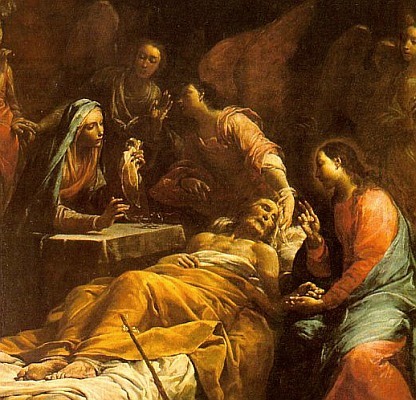
Thoughts on Death Part One


Not a popular subject-death. Most Americans and others flee from the thought of death and the euthanasia movement, so strong in Europe, denies the normal, human path of suffering leading to natural death.

God controls life. God controls death. When men and women try to take control over both life and death, they fall into serious sins: contraception, abortion, euthanasia.

As I watch a snow storm out of this window today, I am reminded that so many people actively avoid thinking of suffering, of death.

I think of death daily-my own, that of those who are far away from God, that of the victims, the aborted ones.

The American Dream constitutes a push against the idea of death.

Be comfortable, be happy, buy things, surround yourself with noise, surround yourself with entertainment.

Have the television and radio on all day so as never to reflect.  Be so active in doing so many things that you never have time to think on sin, punishment, heaven, hell, purgatory.

It is obvious from where I am sitting that this diocese has forgotten about death. There has not been a daily Mass for two weeks in my parish. There has not been a priest available for two weeks for confession.

The church has been locked-no Adoration, no rosaries, no prayer meetings. This is the season of Advent-we should be preparing for the Coming of Christ. This should be a time of intense spirituality.

Instead, people have filled their time with trivia-bake sales, shopping for Christmas, decorating the inside and outside of houses, using so much money for things which do not count, with money which should be given to the poor. I am ashamed to be an American.

All of these pursuits deny the real reason for Christmas. Christ came to save us from death and eternal separation from God.

Here is a reading from the First Mass on Christmas, the Midnight Mass. This is an exhortation, one to which priests rarely refer at Christmas. This reading notes that Christ came for our purification.

I shall continue with thoughts on preparing for death in this week to come....

Titus 2: 11-15
Léctio Epístolæ beáti Pauli Apóstoli ad Titum. Caríssime: Appáruit grátia Dei Salvatóris nostri ómnibus homínibus, erúdiens nos, ut, abnegántes impietátem et sæculária desidéria, sóbrie et juste et pie vivámos in hoc sæculo: exspectántes beátam spem, et advéntum glóriæ magni Dei et Salvatóris nostri Jesu Christi: qui dedit semetípsum pro nobis, ut nos redímeret ab omni iniquitáte, et mundaret sibi pópulum acceptábilem, sectatórem bonórum operum. Hæc lóquere et exhortáte, in Christo Jesu Dómino nostro.
Deo Gratias.
Lesson from the Epistle of Blessed Paul the Apostle to Titus. Dearly beloved, The grace of God our Saviour hath appeared to all men, instructing us, that, denying ungodliness and worldly desires, we should live soberly and justly and godly in this world, looking for the blessed hope and coming of the glory of the great God and our Saviour Jesus Christ: Who gave Himself for us, that He might redeem us from all iniquity, and might cleanse to Himself a people acceptable, a pursuer of good works.These things speak and exhort: in Christ Jesus our Lord.
Thanks be to God.


Doctors of the Church 2:16

Wednesday, 13 February 2013

St. Francis de Sales, the Fourth Franciscan out of Three!!!!!! Doctors of the Church Series continued


I made a terrible mistake and apologize to the Franciscans. St. Francis de Sales, Doctor of the Church, was a Third Order Franciscan

Naughty me. Mea culpa....

So, before tackling the great Dominicans, I need to cover this great man's writings on spirituality. This is Part 17 of the series.

He was only 56 when he died in 1622, but left behind wonderful writings for us. Here is a bit of his great insights into the holy life.

I concentrate today on the second purification on the way to perfection. This Doctor is a great saint for teaching us the way to perfection.

Notice how the saint refers to the mind as an attribute of the soul. Without going into that study, his ideas are close to those of St. Bernard of Clairvaux (my favourite DoC) who also saw the mind as part of the soul. This idea is not so common in modern theologians.

His clarity about breaking away from the habits of venial sin can be traced here in these selections from Introduction to the Devout Life.  The pages can be found before, one and after this link.


Be sure, my child, that if you seek to lead a devout life, 
you must not merely forsake sin; but you must further 
cleanse your heart from all affections pertaining to sin; for, to say nothing of the danger of a relapse, these wretched affections will perpetually 
enfeeble your mind, and clog it, so that you will be unable to be diligent, 
ready and frequent in good works, wherein nevertheless lies the very essence of all true devotion. 

Souls which, in spite of having forsaken sin, 
yet retain such likings and longings, remind us of those persons who, without being actually ill, are pale and sickly, languid in all they do, eating without appetite, 
sleeping without refreshment, laughing without mirth, 
dragging themselves about rather than walking briskly. 

Such souls as I have described lose all the grace of their good deeds, which are probably few and feeble, through their spiritual languor.

This last point has been made by Garrigou-Lagrange and other writers; that we get no merit unless we are in the state of illumination. I know this is hard, but it is true.

The work we do in the Illumination State comes from the Holy Spirit, and not from ourselves. 
Here is the great saint on this purification of tendencies.

We must make up our minds not to commit even one venial sin in order to avoid these tendencies to sin. I finally found one good priest in London, and a younger one at that, who understands this and can give absolution accordingly, instead of denying that this is possible. We need more priests who understand that we must fight against the tendencies to venial sin.


You will find then, my child, that besides the mortal sins and their affections from which your soul has already been purged, you are beset by sundry inclinations and tendencies to venial sin; mind, I do not say you will find venial sins, but the inclination and tendency to them. Now, one is quite different from the other. We can never be altogether free from venial sin,--at least not until after a very long persistence in this purity; but we can be without any affection for venial sin.
It is altogether one thing to have said something unimportant not strictly true, out of carelessness or liveliness, and quite a different matter to take pleasure in lying, and in the habitual practice thereof. But I tell you that you must purify your soul from all inclination to venial sin;--that is to say, you must not voluntarily retain any deliberate intention of permitting yourself to commit any venial sin whatever. It would be most unworthy consciously to admit anything so displeasing to God, as the will to offend Him in anywise. Venial sin, however small, is displeasing to God, although it be not so displeasing as the greater sins which involve eternal condemnation; and if venial sin is displeasing to Him, any clinging which we tolerate to mortal sin is nothing less than a resolution to offend His Divine Majesty. Is it really possible that a rightly disposed soul can not only offend God, but take pleasure therein?
These inclinations, my child, are in direct opposition to devotion, as inclinations to mortal sin are to love:--they weaken the mental power, hinder Divine consolations, and open the door to temptations;--and although they may not destroy the soul, at least they bring on very serious disease. 

"Dead flies cause the ointment to send forth a stinking savour," says the Wise Man.He means that the flies which settle upon and taste of the ointment only damage it temporarily, leaving the mass intact, but if they fall into it, and die there, they spoil and corrupt it. Even so venial sins which pass over a devout soul without being harboured, do not permanently injure it, but if such sins are fostered and cherished, they destroy the sweet savour of that soul--that is to say, its devotion. The spider cannot kill bees, but it can spoil their honey, and so encumber their combs with its webs in course of time, as to hinder the bees materially. Just so, though venial sins may not lose the soul, they will spoil its devotion, and so cumber its faculties with bad habits and evil inclinations, as to deprive it of all that cheerful readiness which is the very essence of true devotion; that is to say, if they are harboured in the conscience by delight taken therein. 
A trifling inaccuracy, a little hastiness in word or action, some small excess in mirth, in dress, in gaiety, may not be very important, if these are forthwith heeded and swept out as spiritual cobwebs;--but if they are permitted to linger in the heart, or, worse still, if we take pleasure in them and indulge them, our honey will soon be spoilt, and the hive of our conscience will be cumbered and damaged. But I ask again, how can a generous heart take delight in anything it knows to be displeasing to its God, or wish to do what offends Him?


So this saint backs up St. Benedict on frivolity and unnecessary mirth, as in the other posts today and previously on laughter and silliness.


Sunday, 8 December 2013

Rejecting the Gospel of Christ-Part Two

St. Peter, the first pope, at one time rejected Christ and Christ's Gospel. This fact, recorded in all four Gospels, reminds us of the reality of Christ's Passion and Death-that all, but John and Mary, rejected Him, the God-Man, in His hour of suffering.

This point, of the rejection of Christ, is the second point in my little Advent mediation today. Here is the passage first.

John 18:15-27

Douay-Rheims 
15 And Simon Peter followed Jesus, and so did another disciple. And that disciple was known to the high priest, and went in with Jesus into the court of the high priest.
16 But Peter stood at the door without. The other disciple therefore, who was known to the high priest, went out, and spoke to the portress, and brought in Peter.
17 The maid therefore that was portress, saith to Peter: Art not thou also one of this man's disciples? He saith: I am not.
18 Now the servants and ministers stood at a fire of coals, because it was cold, and warmed themselves. And with them was Peter also, standing, and warming himself.
19 The high priest therefore asked Jesus of his disciples, and of his doctrine.
20 Jesus answered him: I have spoken openly to the world: I have always taught in the synagogue, and in the temple, whither all the Jews resort; and in secret I have spoken nothing.
21 Why asketh thou me? ask them who have heard what I have spoken unto them: behold they know what things I have said.
22 And when he had said these things, one of the servants standing by, gave Jesus a blow, saying: Answerest thou the high priest so?
23 Jesus answered him: If I have spoken evil, give testimony of the evil; but if well, why strikest thou me?
24 And Annas sent him bound to Caiphas the high priest.
25 And Simon Peter was standing, and warming himself. They said therefore to him: Art not thou also one of his disciples? He denied it, and said: I am not.
26 One of the servants of the high priest (a kinsman to him whose ear Peter cut off) saith to him: Did I not see thee in the garden with him?
27 Again therefore Peter denied; and immediately the cock crew

One can assume that fear prompted St. Peter into denying Christ. Peter did not want to be crucified as well. That could have happened, although St. John, who stayed around Christ, was not arrested.
What is it about suffering which makes people want to run away? The great saints all suffered, but in our climate of comfort, these saints may have been ignored by Catholics today.
The list is long. 
The second reason St. Peter could have desired to avoid suffering, besides his desire not to experience physical pain himself, was that he simply did not love Christ enough to stay with Him.
Most of us have loved someone. We want to be with that person even in dark times. But, that means giving up our own comfort zones, our own expectations.
It means joining with and in the suffering of another.
for love is strong as death, states Song of Songs 8:6. 
But, if we do not love, we shall daily, hourly flee death. I am convinced that the cult of conformity has destroyed the once strong Catholic ability to stand back from daily temptations to forget Christ and follow Him. Most are following the world, the flesh, and the devil. 
I am going to write a long mini-series on preparing for death, something Catholics use to think about daily.
This practice died after the changes following Vatican II. Sadly, with the heresies of communism, socialism, materialism, consumerism, utopianism taking over the imaginations of so many Catholics, the real Gospel message has been forgotten.
Love creates the life of the kingdom of God, not politics, not the avoidance of suffering.
To be continued....


Rejecting the Gospel of Christ-Part One

Isaiah
Recently, I have been reflecting on the Passion of Christ. This, oddly, is my Advent reading and study. What has struck me over and over are two points I would like to share this morning.

The first is that Christ, as God-Man, the Second Person of the Blessed Trinity, was calling the Jewish people to a completely new emphasis in their faith, which was foretold by the prophets (Advent readings abound), but mostly ignored.

The reason the prophecies were ignored and finally rejected, and the fact that this rejection led to Christ's suffering and death, provides us all with a simple reflection for our own times.

Christ was not the political, military Messiah the Jews had come to prefer. Like so a many at the time of Christ, liberation no longer meant freedom from sin, but from oppressors. The materialist, utopian ideal of a Jewish nation dominated the imaginations and aspirations of the people, especially under the harsh rule of the Romans (one of many harsh rulers, of course).

I have traveled in recent years to five countries and have discovered that the ideal of utopianism has supplanted the hope of the kingdom of God. This is one of the great evils of both socialism and communism. Political realities are important, but not at the expense of the ignoring of spiritual realities. If some Catholics talk about money and politics constantly, and do not talk about God and His Plan for us all, their hearts are simply in the wrong place.

The Kingdom of Man has replaced the Kingdom of God in their hearts.

Matthew did quote Isaiah 9, the great Messianic prophecy, in his Gospel-but what did Matthew mean?

Matthew 4:12-17

Douay-Rheims 
12 And when Jesus had heard that John was delivered up, he retired into Galilee:
13 And leaving the city Nazareth, he came and dwelt in Capharnaum on the sea coast, in the borders of Zabulon and Nephthalim;
14 That it might be fulfilled which was said by Isaias the prophet:
15 Land of Zabulon and land of Nephthalim, the way of the sea beyond the Jordan, Galilee of the Gentiles:
16 The people that sat in darkness, hath seen great light: and to them that sat in the region of the shadow of death, light is sprung up.
17 From that time Jesus began to preach, and to say: Do penance, for the kingdom of heaven is at hand.
Look how Matthew skillfully place Isaiah 9 in the context of the Kingdom of Heaven, which is an internal, spiritual kingdom. Of course, if one truly repents, is purified and reveals the virtues of this kingdom, things would change- but not all.
Too many Catholics, including priests, stress the exterior changes and ignore the interior repentance needed. 
Too many Catholics are too busy, too noisy, not listening to the real call of the Messiah in their hearts.
To be continued....


Why is it that the EU is not getting it right?


Enda Kenny rumor of the day- EPP nomination for EU Council President may be his.

Irish comments welcomed...

Doctors of the Church 2:15

Tuesday, 12 February 2013

Part Sixteen on the Doctors of the Church and Perfection-Lawrence of Brindisi


A man's holiness and walk in perfection may be sensed and even defined by works. Lawrence of Brindisi shows a  high stage of holiness in his ability to bring together the love of God with preaching, a call he answered in several countries in Europe. Here, he is calling on priests, specifically, to preach the Word of God so that people may come to perfection. He notes that the theological virtues of Faith, Hope and Charity are fed, are encouraged in the Scriptures.

Two points for those seeking perfection from this snippet, are that the reading of Scripture is absolutely necessary in the pursuit of perfection. This is one reason why priests and religious, such as the Benedictines, make time daily for the Lectio Divina. I am convinced that without the daily reading and pondering of Scripture, holiness is impossible.

Secondly, for the person seeking perfection, all sin must be overcome. The daily reading and pondering of Scripture aids, like water in the desert, this victory over sin. There is a grace in reading the Scriptures daily.

The highlights are my own. I am aware that there is a twelve volume set of his writings in print, but not on line.

Therefore, a snippet from the work, Preaching is an apostolic duty


There is a spiritual life that we share with the angels of heaven and with the divine spirits, for like them we have been formed in the image and likeness of God. The bread that is necessary for living this life is the grace of the Holy Spirit and the love of God. But grace and love are nothing without faith, since without faith it is impossible to please God. And faith is not conceived unless the word of God is preached. Faith comes through hearing, and what is heard is the word of Christ. The preaching of the word of God, then, is necessary for the spiritual life, just as the planting of seed is necessary for bodily life.


     Christ says: The sower went out to sow his seed. The sower goes out as a herald of justice. On some occasions we read that the herald was God, for example, when with a living voice from heaven he gave the law of justice to a whole people in the desert.

     On other occasions, the herald was an angel of the Lord, as when he accused the people of transgressing the divine law at Bochim, in the place of weeping. At this all the sons of Israel, when they heard the angel's address, became sorrowful in their hearts, lifted up their voices, and wept bitterly. Then again, Moses preached the law of the Lord to the whole people on the plains of Moab, as we read in Deuteronomy. Finally, Christ came as God and man to preach the word of the Lord, and for the same purpose he sent the apostles, just as he had sent the prophets before them.

     Preaching therefore, is a duty that is apostolic, angelic, Christian, divine. The word of God is replete with manifold blessings, since it is, so to speak, a treasure of all goods. It is the source of faith, hope, charity, all virtues, all the gifts of the Holy Spirit, all the beatitudes of the Gospel, all good works, all the rewards of life, all the glory of paradise: Welcome the word that has taken root in you, with its power to save you.

     For the word of God is a light to the mind and a fire to the will. It enables man to know God and to love him. And for the interior man who lives by the Spirit of God, through grace, it is bread and water, but a bread sweeter than honey and the honeycomb, a water better than wine and milk. For the soul it is a spiritual treasure of merits yielding an abundance of gold and precious stones. Against the hardness of a heart that persists in wrongdoing, it acts as a hammer. Against the world, the flesh and the devil it serves as a sword that destroys all sin. 

Are you snowed in?

The past week has been a huge posting week. I always take advantage everyday of the wifi which I can find and I do not anticipate having options except day by day.

So, if you are need things to read, just look at the past week.

God bless you all, especially my brothers and sisters snowed in somewhere.


Lord, have mercy on the United States

Meanwhile, more than a dozen states that have set up their own exchanges plan to spend tens of millions in taxpayer dollars funding community group “assisters” to promote their marketplaces. Many of those “assisters” could also include local Planned Parenthood affiliates, providing additional streams of Obamacare funding to the largest abortion provider in the nation. The District of Columbia awarded $375,000—one of the largest “assister” grants in the District—to Planned Parenthood Metropolitan D.C. to help enroll citizens in the District’s state-based health care exchange.
Likewise, California, Minnesota, and Vermont have awarded a total of over $700,000 to local Planned Parenthood affiliates to aid individuals’ enrollment in their exchanges, and many more states will likely follow suit. http://www.heritage.org/research/reports/2013/11/obamacare-s-potential-new-funding-streams-for-abortion-providers?utm_content=buffer8ea54&utm_source=buffer&utm_medium=twitter&utm_campaign=Buffer

It is possible that many individuals and families who would otherwise object to paying for abortion coverage may not even be aware of the surcharge on their insurance. Obamacare regulations allow insurers to disclose the existence and amount of the abortion surcharge only at the time of enrollment, and that warning may be as little as a single sentence in a massive plan document.[4] The rules also prohibit issuers from itemizing the additional charge for abortion coverage on premium bills.

For those living in the 27 states without opt-out laws, individuals and families wishing to avoid health plans with abortion coverage could have few or no options in their state’s exchanges. In general, they could either:
  • Enroll in a health plan that includes abortion coverage. Many individuals and families enrolled in such plans will be forced to pay an additional abortion surcharge, with limited disclosure of the additional payment’s existence.
  • Enroll in an exchange plan or private plan that does not include abortion coverage—if one is available. Some individuals may be able to enroll in exchange plans in which the issuers have chosen not to cover elective abortion. Individuals and families could ostensibly also enroll in private coverage in an exchange that does not include abortion. But there is no guarantee that those abortion-free plans will provide overall benefits comparable to the plans that include abortion coverage.
  • Enroll in the federally run multi-state plan that will not include abortion coverage. One of the multi-state plans sponsored by the Office of Personnel Management (OPM) is required to exclude abortion coverage. However, OPM is required to offer those plans in only 60 percent of state exchanges in 2014, eventually offering coverage in every state by 2017.[5] There is no guarantee that this option will be available in every state during the first few years of Obamacare implementation or remain an attractive option thereafter.

Thought for The Second Sunday in Advent

Romans 15:4-9

Douay-Rheims 
For what things soever were written, were written for our learning: that through patience and the comfort of the scriptures, we might have hope.
Now the God of patience and of comfort grant you to be of one mind one towards another, according to Jesus Christ:
That with one mind, and with one mouth, you may glorify God and the Father of our Lord Jesus Christ.
Wherefore receive one another, as Christ also hath received you unto the honour of God.
For I say that Christ Jesus was minister of the circumcision for the truth of God, to confirm the promises made unto the fathers.
But that the Gentiles are to glorify God for his mercy, as it is written: Therefore will I confess to thee, O Lord, among the Gentiles, and will sing to thy name.


One translation reads, in the first part, Everything that was written long ago in the scriptures was meant to teach us something about hope from the examples scripture gives of how people who did not give up were helped by God. And may he who helps us when we refuse to give up, help you all to be tolerant with each other, following the example of Christ Jesus, so that united in mind and voice you may give glory to the God and Father of our Lord Jesus Christ.

I love this part of Romans as the words encourage those who are going through hard times to persevere in prayer and hope. With so many distractions and negations of the inner life around us, it is important to cling to these words of St. Paul.
Tolerance is not accepting sin, but being patience with ourselves, caught up in sin, and with others as well.
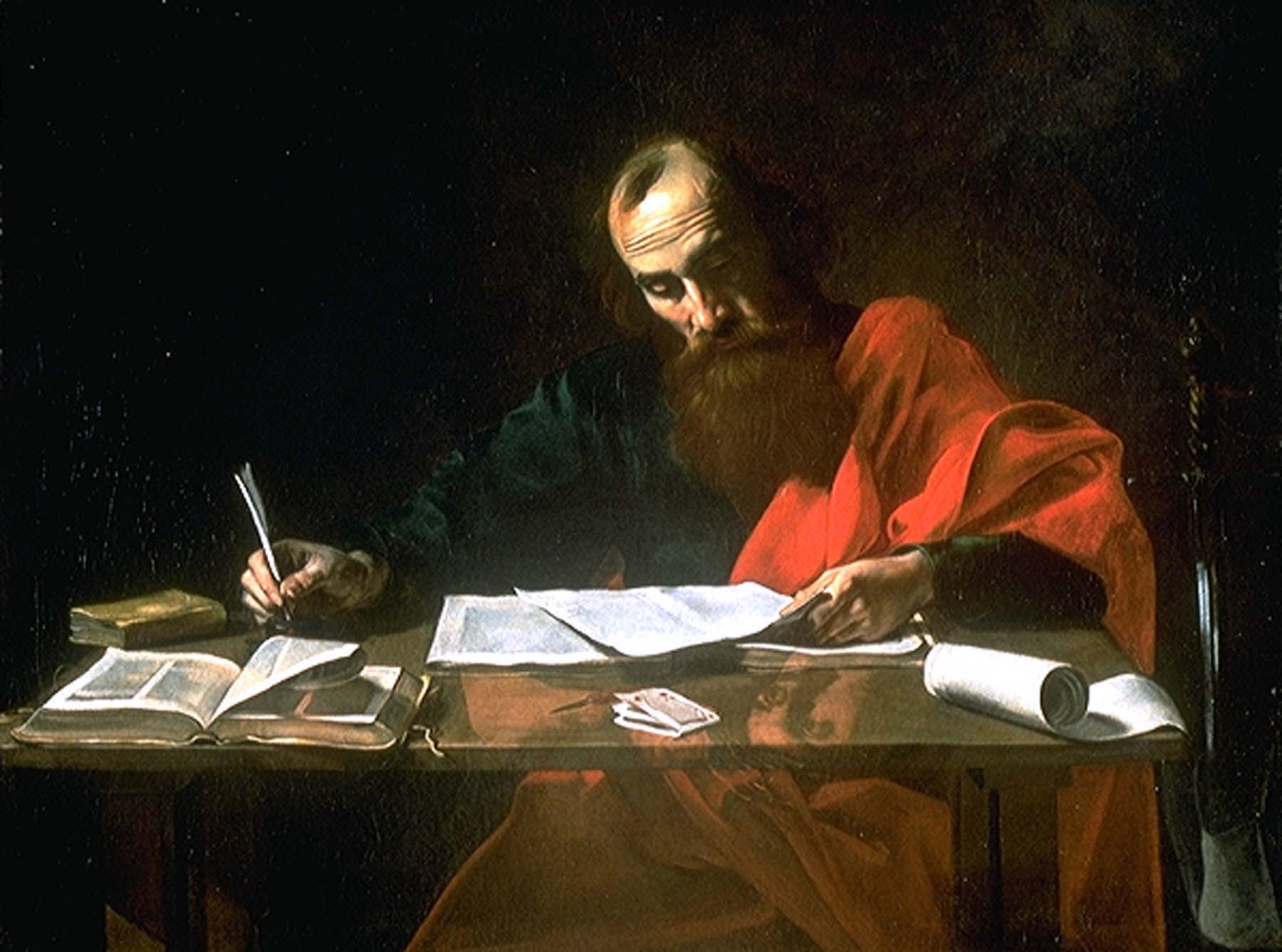
St. Paul is so real in his words for us today.


Doctors of the Church 2:29

St. Basil wrote these words on gratitude.  I would like to describe a dear friend of mine who is full of gratitude, a forgotten virtue.

She is one of the most peaceful and gracious persons I know. I have rarely heard her complain in the long years I have known her. Sadly, as we do not live close to each other, I do not see her often, but let me describe this good, Catholic woman.

She is grateful for her entire life, including the time when she was far away from God. Her re-version to the Catholic Church began a life of gratitude.

She always praises God for all things, all the gifts in her life. She knows she has earned nothing. He has given all.

She never, never complains. She may state facts about her health, (which is not as good as one would like), just to let me know what is happening in her life, but she does not complain.

She never speaks negatively about anyone. If she must share something serious, it is always in an attitude of intercessory prayer. She does not spread gossip or negativity about anyone.

She never complains about the weather, the economy, and is positive about God working in our times, albeit through hardships.

Her attitude is one of complete gratitude to God for life, her children, her husband, her daily work.

She knows from where all good gifts come. And, she thanks God for all these.

Because of being out in the world shopping for food and other chores, I have overheard many conversations of very many unhappy people. I want to say to those who have lived in Iowa their entire lives, "Why complain about the weather? It has always been this way?"

I am convinced that complaining and a lack of gratitude come from pride-a person wants something to be or to go in a certain way, and if life does not meet the demands of that person, that person is not grateful.

We live in a time of trial, but we can even be grateful for that, as saints come out of tribulation.

St. Basil writes this:

What words can adequately describe God’s gifts? They are 
so numerous that they defy enumeration. They are so great 
that any one of them demands our total gratitude in 
response. 

Yet even though we cannot speak of it worthily, there is one gift which no 
thoughtful man can pass over in silence. God fashioned man in his own image 
and likeness; he gave him knowledge of himself; he endowed him with the ability 
to think which raised him above all living creatures; he permitted him to delight in 
the unimaginable beauties of paradise, and gave him dominion over everything 
upon earth. 

Then, when man was deceived by the serpent and fell into sin, which led to death 
and to all the sufferings associated with death, God still did not forsake him. He 
first gave man the law to help him; he set angels over him to guard him; he sent 
the prophets to denounce vice and to teach virtue; he restrained man’s evil 
impulses by warnings and roused his desire for virtue by promises. Frequently, 
by way of warning, God showed him the respective ends of virtue and of vice in 
the lives of other men. Moreover, when man continued in disobedience even 
after he had done all this, God did not desert him. 

No, we were not abandoned by the goodness of the Lord. Even the insult weoffered to our Benefactor by despising his gifts did not destroy his love for us. On 
the contrary, although we were dead, our Lord Jesus Christ restored us to life 
again, and in a way even more amazing than the fact itself, for his state was 
divine, yet he did not cling to his equality with God, but emptied himself to 
assume the condition of a slave. 

He bore our infirmities and endured our sorrows. He was wounded for our sake 
so that by his wounds we might be healed. He redeemed us from the curse by 
becoming a curse for our sake, and he submitted to the most ignominious death 
in order to exalt us to the life of glory. Nor was he content merely to summon us 
back from death to life; he also bestowed on us the dignity of his own divine 
nature and prepared for us a place of eternal rest where there will be joy so 
intense as to surpass all human imagination. 

How, then, shall we repay the Lord for all his goodness to us? He is so good that 
he asks no recompense except our love: that is the only payment he desires. To 
confess my personal feelings, when I reflect on all these blessings I am 
overcome by a kind of dread and numbness at the very possibility of ceasing to 
love God and of bringing shame upon Christ because of my lack of recollection 
and my preoccupation with trivialities. 

Persecution Watch in Russia

http://www.asianews.it/news-en/Russia:-seven-churches-burned-in-one-year-in-Tatarstan-29713.html

Doctors of the Church 2:14

Tuesday, 12 February 2013

Part Fifteen: The Third Franciscan Doctor of the Church, Lawrence of Brindisi

The Capuchin had a brain the size of a planet. Not only did he excel in the usual studies of his time, (1559-1619), but he knew most of the European languages as well as the Semitic languages, making him not only a Biblical scholar, but beloved of the Jews, many of whom he converted.

I remember him as the chaplain of the Imperial Army which fought in the great Battle of Stulweissenburg,  As the Catholic Encyclopedia notes: To pit 18,000 men against 80,000 Turks was a daring undertaking and the generals, hesitating to attempt it, appealed to Lorenzo for advice. Holding himself responsible for victory, he communicated to the entire army in a glowing speech the ardour and confidence with which he was himself animated. As his feebleness prevented him from marching, he mounted on horseback and, crucifix in hand, took the lead of the army, which he drew irresistibly after him. Three other Capuchins were also in the ranks of the army. Although the most exposed to danger, Lorenzo was not wounded, which was universally regarded as due to a miraculous protection. The city was finally taken, and the Turks lost 30,000 men. As however they still exceeded in numbers the Christian army, they formed their lines anew, and a few days later another battle was fought. It always the chaplain who was at the head of the army. "Forward!" he cried, showing them the crucifix, "Victory is ours." The Turks were again defeated, and the honour of this double victory was attributed by the general and the entire army to Lorenzo.

But, it is because of his great inner life of contemplation that I include him in this series on perfection and the Doctors of the Church. Again, to be declared a Doctor of the Church, besides great holiness, the saint must have produced writings which the Church can recommend. Again, I quote the Catholic Encyclopedia on line:

The known writings of St. Lorenzo of Brindisi comprise eight volumes of sermons, two didactic treatises on oratory, a commentary on Genesis, another on Ezechiel, and three volumes of religious polemics. Most of his sermons are written in Italian, the other works being in Latin. The three volumes of controversies have notes in Greek and Hebrew.

I am also amazed at the energies of such great saints in producing so many works while preaching, teaching, doing missionary work, organizing and running an order and in Lawrence's case, fighting battles.

In the next post, I shall highlight some of his writings.


Saturday, 7 December 2013

Consumerism and Materialism Part Two


Materialism is the philosophical system which emphasizes several points. Here is a short list of the most commonly held beliefs of the materialist.

1) The material universe is all there is. There is no spiritual life, no soul. Matter is primary.

2) God does not exist, only Man. Man is a god, and all "truth" emanates from humans.

3) Therefore, Man determines what is real and unreal. All reality ultimately is subjective.

4) The goal of humans is to create material utopias on earth as that is all there is.

5) Any type of spiritual realities are based on unseen energies or forces, which can be explained in material, not spiritual terms.

6) Materialism is connected to utilitarianism and functionalism, more isms which reduce humans to who is useful in a society (utiliarianism) and reduces all feelings, beliefs, thoughts as being located in sensory phenomenon, or learned behavior. For example, functionalism would dictate that morals are merely learned cultural norms and not related to anything spiritual, such as natural law.

7) Materialism leads to such other false ideas as intentionality, deconstructionism and post-deconstructionism and post-post modernism,etc.

8) Dialectic Materialism is Marxism, as defined by Marx himself based on Hegel, partly. This system of thought leads to Gramsci's ideas of hegemony.

Perhaps one can see overlaps in the two "ism" of materialism and consumerism.

Both remove the focus of the interior life of men and women. Both demand centering on the world and the flesh. Both deny the ultimate goal of humans, which is eternal life.

Both ultimately kill the soul, not only of individuals but of nations, cultures, even religious communities.

To be continued....


Consumerism and Materialism: Part One


In some Catholic circles, there is confusion as to two terms ending in "ism".  I want to clarify this as one can understand the predominant faults of two continents by examining this two seriously false manners of thinking.

First of all, consumerism is the plague and greatest evil of American society, imo. Consumerism is a philosophy and now, a complete way of life, which emphasizes the constant buying of things. Consumerism most likely grew up in the middle classes, who confused the American dream of happiness with having things.

The incessant preoccupation of buying and selling takes up the time of many families, including Catholic families.

This obsession with having things, the latest trends, reveals a mind-set of concentrating on the here and now and forgetting that we are made for eternal life. Ironically, many members of the Catholic Church in America have fallen into the idolatry of things, bigger, better, newer.

Part of the obsession with consumerism is the insistence on comfort. Few want to live without comfort. I think this really struck me many years ago when electric Venetian blinds, run with a remote, were invented.

Such frivolities cause American Catholics to read the sales, collect coupons, buy things which are not necessary.

Consumerism becomes a way of life, pushing people into shopping almost everyday, thinking they need things which they do not need. Shopping has become a form of entertainment, not something to be done for because one needs something.

Consumerism connects to the American ideal of conformity. America has always been a conformist society, at least since the end of the 19th century, but before that time, de Tocqueville warned us all about conformity.

A lady this last week told me how hard it was to keep up with the other women in her church group. She said that everyone talks about the newest thing or the latest vacation they have bought. She is a stay-at-home mom who thinks she has suffered from not having and not keeping up with her fellow Catholic sisters. I tried to encourage her in her good choices, but she feels pained by this lack of things and activity.

Consumerism dulls the conscience as well, as this philosophy demands a focus on the exterior world, rather than the interior life.

One reason I have loved living in Europe is the absence in many places of consumerism. The hot pursuit of things and comfort seem less, and the societal demand for conformism is definitely less. One can be more of an individual, even an eccentric, in Europe. I have a dear friend, who because of arthritis, wears slippers everywhere. She does not care what other people think.

But, the evil of that continent is materialism-the topic of the next post.

To be continued...